Aoifinn Devitt: This series was made possible by the kind support of Wellington Management, one of the world’s largest independent asset managers focused on delivering long-term investment excellence for clients and their beneficiaries, as well as Nile Capital Group, a sector-focused, operationally oriented private equity firm based in the Los Angeles area.
McKeever (Mac) Conwel: You know, there are a lot of organizations and VCs who say our doors are open for diversity, we’ll talk to anybody. Well, it doesn’t help if your doors are open and nobody knows that your doors exist. You’re better served to actually go out those doors and go find those entrepreneurs, go find those opportunities. And that’s a lot more work and it’s harder, but you’re going to need to do that if you want to do this work.
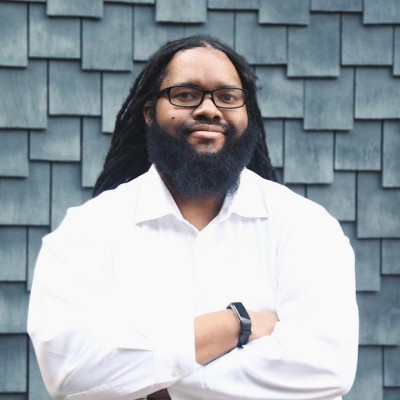
Aoifinn Devitt: Our next guest doesn’t just go out into the community to find entrepreneurs. He creates his own community to allow the next generation of founders to develop their social capital and thrive. I’m Aoifinn Devitt, and welcome to the 50 Faces Podcast, a podcast committed to revealing the richness and diversity of the world of investment by focusing on its people and their stories. I’m joined today by McKeever, or Mac, Conwell II, who is managing partner at Rare Breed Ventures, a venture capital firm based in the Baltimore area. He’s held various roles, including as a software engineer, an entrepreneur in residence at the NewMe Accelerator, a fund manager at Maryland Technology Development Corporation, where he was a member of the seed investment team, and various advisory and consulting roles in the tech space. Rare Breed Ventures is a pre-seed fund that aims to invest in exceptional founders outside the large tech ecosystems earlier than everyone else. Welcome, Mac. Thanks for joining me today.
McKeever (Mac) Conwel: Thank you for the invite. I’m glad to be here.
Aoifinn Devitt: Well, let’s start by talking about your background and your entry into the tech world. Where did it start?
McKeever (Mac) Conwel: So for me, my start into the tech world probably starts with as a kid, you know, when as a young one, I spent a lot of time doing a lot of engineering after-school programs and things like that. That’s where my like love for engineering comes from. And then when I went to college, I studied computer science.
Aoifinn Devitt: And then when you look back at the various training that you did, what do you draw on most today as an early stage investor?
McKeever (Mac) Conwel: I think what I lean on today is more so from my experience, not so much from the early days, but more so my experience as an entrepreneur myself, right? Like a lot of how I approach being an investor comes from the way I wish people had approached being an investor when I was an entrepreneur, right? Like I aspire to be, you the investor I always wanted.
Aoifinn Devitt: Well, we’re certainly going to dig into some of those perhaps missing parts, I think, of your own experience when we look at that experience as an investor now. When we spoke earlier, you mentioned that your time at the NewMe Accelerator in 2013 really was a turning point for you. Can you talk about this?
McKeever (Mac) Conwel: Yeah, the thing about the NewMe Accelerator was it was the first accelerator for underrepresented founders. It started in 2011, and Their first class got featured in a CNN special, Blacks in Silicon Valley, which was amazing. And so I ended up being in the third class and that was a turning point because one, I ended up spending several months in San Francisco and got to see what Silicon Valley was all about and what made Silicon Valley what it was, right? The other thing that that accelerator did was it connected us to the who’s who of Silicon Valley. I mean, during my time going through that accelerator, I met Eric Eric Ries, the, the writer of The Lean Startup, Ben Horowitz, Mitch Kapoor, Ken Coleman, like titans of industry. And then I also got to meet a lot of individuals who would later go on to be very influential in my life, like Charles Hudson, Richard Kirby, Marlon Nichols. These were all Black men who were VCs who were working at various funds back then who all have their own funds today. And are people I can reach out to and I look towards for guidance to help in my journey. And like all of that started in my time in NewMe through 2012 and 2013. The other thing that was really instructive was beyond the investment network and getting to meet the folks in Silicon Valley, but also the network within the accelerator itself, right? If you look at the first 4 classes of the NewMe accelerator, there’s 9 investors who came out of that who are all people I know and I’m cool with and who are my friends. And so, that was a really instructive time. And that time has carried me through to where I am today.
Aoifinn Devitt: And you talked earlier about your own experience of raising capital as a founder. Can you talk a little bit about that? What was missing in that experience that you’re trying to correct now as you’re an investor yourself?
McKeever (Mac) Conwel: I think the biggest thing for me when I first got started was I didn’t know anything, right? Like, I just, I didn’t know the basics around raising capital or even what venture capital was. I joke with people, but it’s true. When I started my first company in 2010, I didn’t know what a startup was. I didn’t know what a VC was. I didn’t know what networking was. Which is probably a crazy idea considering I was already 6 years into a very successful career as a software engineer, right? Making the transition over to management at the time. And so like starting my first company, I didn’t know anything. And it was so hard for me to meet and find people who were willing to share that information. And it wasn’t that there weren’t people who weren’t willing to share the information or that the information didn’t already exist somewhere online, but like, I didn’t know where to go for it. Anybody to talk to, right? No, there was nobody who looked like me who was sharing this information. And so I had to go into settings and go into rooms and go into organizations where I didn’t feel comfortable because I was the only person who looked like me. And then having to get comfortable with being in those settings and recognize like, oh, we all have a commonality of we all love business. We all love companies. We all love our companies. We all love learning. Right. And so then you get acclimated to it, but it took me 2 and a half years to get to that point. And so now I spend a lot of my time just educating folks on like just the basics of venture capital, fundraising, and just entrepreneurship in general and like how all of this stuff works. And so that’s probably the biggest thing for me.
Aoifinn Devitt: Just going back a little, maybe before your career as a software engineer, when you were at college and maybe learning the ropes, and, you know, sometimes networking is something that’s instilled at that stage. Did you have the benefit of any I suppose, mentors back at your college days or your early career who maybe instilled those kinds of skills in you?
McKeever (Mac) Conwel: I didn’t. And really the biggest thing I had going into college was my father, right? I had my father who was my guiding light in life and who was helping me stay on the right path of being a good man. But like, you know, my father was a postal worker and before that he was in the military. Right. He didn’t know these things. He didn’t do these things. And, you know, as a computer science major, like, they’re not talking about networking. And you got to remember, so like, I’m in school in ’05, ’04, you know, ’06. During that time, like, startups weren’t the big exciting thing they are today. The iPhone hadn’t even come out yet. Being a computer scientist wasn’t a cool thing. The only reason I chose that as my major was I really I really thought I was going to build robots. And so when I got to school, I didn’t know anything about majors. I should have went into electrical engineering. That’s more aligned with what I wanted to do. But they told me that computer scientists did that work. And so I listened. I got there, figured out that that’s not really what they did. But when I looked up how much computer scientists made coming out of college, I decided, well, this is going to be my major. So I literally chose this major because of how much money you can make. But I didn’t have any mentors in college pushed me or pointed me in the right directions of all that. What really changed in college, I guess you could call this a mentor, was when I, my sophomore year of school, I got an internship with the Department of Defense. And as part of the student program, there’s 300 of us. And of the 300 students, about 30 of us were Black. So of that, those young people, that became my core group of friends in my early 20s. Well, out of that group, there was a gentleman by the name of Patrick Jackson. He is now the CTO of a company in Silicon Valley called Disconnectus. It’s a VPN company. And Patrick was the first person I met who was obsessed with startups, but we didn’t call it startups. It’s really, he wanted to be the Black Mark Zuckerberg, right? This is a gentleman who, he was the first person I saw make an iPhone app. I think he made his first app in like ’08. I think iPhone comes out in ’07. He’s making iPhone apps in ’08, right? You know, he’s making websites, you know, and generating revenue. And then In ’09, he quit his job with the government and moved to San Francisco because him and some friends had started a business and some people who used to work at Google gave them money. And at the time, that was like mind-blowing to me and the rest of my friends. And we didn’t even understand what was happening. We didn’t understand that these people were investors. We didn’t understand that our friend was starting a startup and chasing the Silicon Valley dream. Like, we didn’t have the words to put to it. We just knew that as software engineers ourselves, we had the skill set to do something similar. And so, that was kind of like the beginning of moving in that direction. So, I always credit Pat for the reason why me and some other of my friends started moving in that direction.
Aoifinn Devitt: And it’s interesting because you mentioned not having the words to put to it, but I also think there probably wasn’t the role model, that number of role models out there, or there wasn’t the visibility around perhaps that many Black founders or entrepreneurs or venture capitalists Would you say that that lack of representation was an issue as well?
McKeever (Mac) Conwel: 100%. I mean, the lack of representation leads to the lack of knowledge, right? Like, like Arlen Hamilton is a thing today. So if you’ve heard of Arlen Hamilton, you’ve heard of her story, you at least heard venture capital or the phrase investor or angel investor. Like, you’ve heard these points because you’ve gotten to see it through her story. When I started in 2010, That story wasn’t there, right? Like there were stories that existed, but they weren’t in my purview. Like even when I was talking to students at historically Black colleges in 2015, 2016, there were still many students in those departments that had never heard of TechCrunch, right? They didn’t know what any of these tech blogs were or had ever heard of individuals like Michael Arrington, right, or barely have ever heard of who Ben Horowitz was, right? And so like the lack of people in our community who had gone on to do things in the space, meaning there was lack of opportunity for us to learn about it. And so for me, it was just, I didn’t have that, you know. I didn’t know where to go to find it. I didn’t know where you could hear about this stuff. Like it literally took me 2 and a half, almost 3 years of doing this work, getting in, figuring out that you have to be in these events and go to these spaces and then realize, okay, once you get in these spaces, you got to build relationships with these folks that you don’t know. There was this whole journey and process to it. Well, now, you know, if you follow me on Twitter, you’ll get access to like this whole world without having to go through all the struggles I had to. But then again, I’m talking about you have to be able to find me, right? Which is why I spend so much time doing podcasts and doing blogs and tweeting a lot, because I want people to find me so they can get that education, so they can learn these things. But there’s far more role models and people you can look to today than when I got started. Right.
Aoifinn Devitt: Well, let’s start with what your Twitter handle is. Can you share that so people can follow you on Twitter?
McKeever (Mac) Conwel: Absolutely. So it’s @MacConwell, M-A-C-C-O-N-W-E-L-L. W-E-L-L. It’s just my name. The name that shows up is Mac the VC. So, if you go on Twitter and search Mac the VC, you’ll find me as well.
Aoifinn Devitt: Well, that’s a great first step, but let’s get back to some other interventions that you’ve seen to work, because certainly more role models like you, more ways of shortcutting perhaps the years that you put in before you realize what it took. What have you seen that works in terms of, you know, maybe assisting diverse founders today? And is it just about having more diversity in the venture space?
McKeever (Mac) Conwel: Some of it’s about having more diversity in the venture space. That makes a difference. The greatest thing I can point to, to that working is after having two startups and coming back to Baltimore, I ended up working for the Maryland Technology Development Corporation, or TEDCO, which is essentially the investment arm for early-stage companies in the state of Maryland. And I started a pre-seed fund specifically for underrepresented— for initially for Black founders. In the first year of me running it, I generated all this interest from all these Black founders, and everybody was like, how did you do this? We’ve never seen this kind of, you know, outpouring of interest from these entrepreneurs before. And I said, well, I just— I went to where they are, you know, I went to go be where they were. And they were like, fine, can you recreate this for the Latin community locally? And I was like, I could try, but I’m never going to do that as well because I’m not a member of that community. It was really easy for me to do that Black entrepreneurs, because I was one. I knew where they were. I knew where they hung out. I knew the language and the language barriers there. I don’t know that for the Latin community. So I could try that. And I can probably do okay at that. But if I partner with somebody who’s a member of that community, I will probably get a lot more done and get a lot further. And so having more diversity is definitely a piece, but you’re not always going to have that luxury. And if not, the other piece is one, getting out. You know, there are a lot of organizations and VCs who say our doors are open for diversity, we’ll talk to anybody. Well, it doesn’t help if your doors are open and nobody knows that your doors exist, right? You’re better served to actually get— go out those doors and go find those entrepreneurs, go find those opportunities. And that’s a lot more work and it’s harder, but you’re going to need to do that if you want to do this work. The other thing is being willing to give these founders grace, right? A lot of investors are always looking for the quickest way to get to a no so they can move on to the next opportunity. Right. And so it can make you jaded and make you less gracious towards founders where if a founder is making a mistake or doing some things wrong, you take that as a red flag and you want to move on. Well, when you’re talking to underrepresented founders who may not know the lingo, who may not have gotten all the experiences or the training or read all the blogs or listened to all the podcasts, then there existed a space for VCs to give those founders some grace, right? To give those founders education. If a founder says, hey, Mac, will you sign an NDA? I don’t just say no and like turn them away. I use it as a teachable moment. So many VCs will just turn that entrepreneur away because they feel like you haven’t been doing this long enough. You haven’t learned the ropes. I don’t have time for you. Well, no, you should have time for them, right? Or if an entrepreneur doesn’t know all the right lingo or all the right words, that’s okay. I will still listen to the pitch all the way through because if I listen to your pitch all the way through, I’m just trying to listen for the business. I don’t need to hear the right buzzwords. I don’t need to hear all the flashy sentences. I need to hear that you got a good and strong business. You don’t need to be able to talk properly to have all the right words to figure that out, right? And so giving entrepreneurs the ability to go through their pitch and listen to them, hear them out, and even if they’re not the most polished or they don’t know all the right words, listen for the business case. Because I could teach you all the other stuff. I could teach you how to pitch. I could teach you what VR, AR, AL, like I could teach you all those things. I can’t teach you how to be a good entrepreneur and build a good business. Right. Cause there’s so much more that goes into that. I can help you build a good business, but I can’t teach you some of the intangibles it takes to be an amazing entrepreneur, to create an awesome business. Right. And so I think more VCs need to do that.
Aoifinn Devitt: Well, that’s great. And you’ve really given us a bit of a sense of your vision for what a VC really should be. Can you talk about that in the context of Rare Breed? And I’m particularly interested in what you’re doing at the pre-seed stage and what the pipeline is as well.
McKeever (Mac) Conwel: For Rare Breed, well, one, the pipeline is amazing, right? Deal flow is incredible. There’s so many amazing entrepreneurs all across this country of all races, sexes, creeds. Like, there’s so many amazing entrepreneurs out there that, like, there ain’t no— there’s no such thing as a pipeline issue. We could talk about a funnel issue with a lot of these underrepresented founders being at the top of the funnel and having harder ways to move through. But that’s a longer discussion, right? At Rare Breed, what we aspire to be is the firm that never misses out on the next Spanx. And for those who don’t know, you know, Spanx went on to become a billion-dollar business. But as the founder was starting the business, nobody wanted to fund her because most traditional VCs don’t understand women’s undergarments. Or how that can be such a powerful company. But for me, I tell my team that what we care about is customer acquisition, experience, and retention. If you can show me, you know, how to find your customers, that your customers like your product, and they like it so much that they keep coming back, you probably have a chance to be a good business. That has nothing to do with your market or any of the other stuff that we as VCs talk about, right? But it gets down to the fundamentals of the business of can you find your customers? Do your customers want to buy it? And will they keep coming back? If you can do those three things and do those three things well, you might have a shot at being a good business. And that’s how we try to strip our biases out or away from when we make decisions in the companies that we talk to.
Aoifinn Devitt: It’s very interesting. I think I heard about that Spanx, that actually the ideas didn’t get off the ground because most of the VCs were male until I think the products were sent to some of the VCs’ spouses or their secretaries. So, basically, that was the only female sort of test market they could do. Do you have to have a very diverse team, or are you sort of literally trying to get into the shoes of your founders and their customers and see it through that lens? Or is it just this customer focus? And I suppose if you’re at the pre-seed stage, do all of the founders have a chance to maybe prove they have repeat customers if they haven’t even had seeding yet?
McKeever (Mac) Conwel: That’s the hard chicken and the egg piece, right? So most of the companies we invest in will have already had some traction, will have some customers. Every now and then we will invest in a company that is pre-product, that is pre-launch. It’s not often, right? Just because, again, back to the deal flow, I’m going to see in a given quarter, on the low end, I’m going to see 500 companies, right? On the low end. And if we add my team in, we’re going to see 750. And of that, I mean, We’ll invest in somewhere between 0 and 6 companies, right? That’s a lot of companies to see in very few investments. And so the thing that tends to separate the companies out is going to be their traction or how many customers they have or how big of a waiting list they have. But, you know, every now and then you’ll find really amazing opportunities going after industries that are so antiquated. That you could take a bit more of a chance on, right? It’s not going to happen every day. As far as the team, I’m the only full-time person on my team. I do have a venture partner, 2 investors, and then 3 fellows, but I use my broader network as well, right? Like, I don’t have a team large enough and diverse enough to really, you know, speak to all these communities, but I definitely do have investors in my network that span the gamut, as well as friends. And I use them very often because I’m not going to know everything, right? If I see a company that’s, you know, in the women’s undergarment space, well, if they got a strong business case, I’m already going to be interested. I’ll probably send it to a few women investors and even entrepreneurs that I know just to get their feedback, right? And to the point where, you know, my fellows and the other investors on my team, they’re all Gen Zers, right? Well, we’re invested in a Gen Z dating app called Monet. The reason why I saw the value in what Monet was doing was because of them. Because, you know, they’re over here telling me about this amazing app, it’s so exciting. I’m like, I don’t get it. But the more and more Gen Z folks I had in my orbit telling me about how great this app was, I was like, okay, I got to meet the team. And then the team blew me away and their traction and growth was exceptional. I probably don’t take a look at that investment without having those individuals on my team. Right. And so I’ve learned over time to listen to all the voices around me to get a full view of what a market is or could be and not try to be stuck with my own thoughts and being stuck in my own mind. Because I know just like anybody else, I have my own biases too.
Aoifinn Devitt: And it all clearly comes back to network as well, since you can draw on that network now and their expertise. The venture arena is known to have a high failure rate, as is probably the founder arena. What have you learned from some of the setbacks and challenges and even investment mistakes that you’ve experienced over the course of your career so far?
McKeever (Mac) Conwel: Being hypersensitive to things that could be legitimate red flags, right? Like paying attention to the way a founder treats other people, the way a founder treats their team, the way a founder treats their co-founders. Speaks volumes for the way they’re going to run their business. Making sure that the lines of communication are always open between me and my founders and making my— and helping my founders understand that the best time for them to reach out to me is when things aren’t going good. Like, when things are going good and going well, we can all say happy things and cheer each other up and boost each other’s egos, but it’s when things are going bad that I hope you reach out to me as soon as possible, right? I can do far more for you when things are going bad than when things are going good. And I’ve had companies in my previous portfolios fail because the founders were scared to reach out to me and tell me they were having some issues. It ultimately led to the company, you know, closing down, when if they had reached out to me right away, probably could have saved the company and kept things going. And so being critical around The red flags are things that feel like little things. It’s almost like dating, right? You know, when you go on the first date, every now and then, you know, while you’re talking, somebody may say something that is interesting or something that may be a red flag, but you know, it’s the first date and they laugh and joke it off and you probably think nothing of it, right? Well, in actuality, that was a real flag they just shared with you, and so you should pay attention to it. It’s the same thing. So being— trying to have that discerning ear and discerning eye for things that could be real red flags and making sure to pay attention to the red flags and make sure that those lines of communication are really well open for my founders, for them to know, like, hey, when things are going bad, contact me. Like, I am here to support you and help you in everything, not just when it’s going good.
Aoifinn Devitt: And how much emphasis do you put on personal contact, you know, actually meeting the person and picking up on the unspoken words, perhaps some of the body language, the cues? I would imagine that’s extremely important and perhaps not— hasn’t been easy over the past year.
McKeever (Mac) Conwel: Yeah. I mean, we launched this fund during the pandemic, so investing while not being able to be in person has become a thing. But, you know, when you’re investing in a company as a team, we always have a meeting with the team and that gives us a chance to ask them questions as a team and see how they interact, to see if they’re talking over each other. If they’re arguing with each other, if they are on the same page with things. You know, when you have a team where the co-founders disagree, that’s a red flag. When you got founders who are talking over each other or being demonstrative and correcting each other, that’s a bit of a red flag. You know, one of the, the number one reasons for companies failing are co-founder issues. Right. So, try to pay attention to that. So, you can see those things in Zoom, you know, just like you can see them in an office room or at a lunch, right? Like, if you sit with somebody for long enough, it’ll come out.
Aoifinn Devitt: Absolutely. So, you’ve already talked about a number of the key people who influenced you along your career so far. You mentioned your father, you mentioned some of the mentors you met at the accelerator, as well as even earlier than that. Were there any key pieces of advice that you received that have stayed with you? And maybe guided you through your career, or any creed or motto that you live by?
McKeever (Mac) Conwel: Some of the best advice I’ve gotten, well, one is always be growing your network, right? Like, network is so important and it’s such a thing that people talk about, but they— I don’t think they put it in the best of context. So like, your network is your net worth. What that means is The ability to pick up the phone and call somebody to get a problem solved, it’s so amazing. Like the same way to have the ability to go to your phone, pick it up and call a plumber that you know, who you know is going to do good work and give you a good price, is as value, if not more, to being able to pick up your phone and talk to somebody you know to get a deal done for a customer or to get a partnership going. Like, the ability to do that comes from your ability to grow your network and create these relationships over time. And so being pushed to do that more has been life-changing. The other thing was, as an entrepreneur, to focus on customer acquisition at the earliest stages, because A lot of founders think that if you have a good idea or a good product, you should be able to get funding from investors. And what I had to learn and what I talk a lot about is, as an entrepreneur, when you see other companies raising money pre-product or pre-revenue, 9 times out of 10, it has nothing to do with the business and everything to do with their network. And if you do not have the same network or the same kind of network as them, then you’re not comparing apples to apples. And so if you’re just starting out and you don’t have that network and you’re trying to grow your business, the focus on getting customers or your customer acquisition is showing demand. Because if you can show large enough demand, money will come. And now, is it going to be hard to show them the demand? Do you have to jump through some hoops? Are you going to struggle, especially if you don’t have the funding up front? Yep, you sure are. But it doesn’t mean it’s impossible. It doesn’t mean you can’t do it. Is it going to be harder than others? Yeah. If you don’t have that kind of friends and family capital, it’s going to be harder, but it’s doable. Right. And so that was one thing I had to learn and absorb as an entrepreneur.
Aoifinn Devitt: And it’s interesting because I think an aspect of networking, in my view anyway, is giving and taking. It’s not just about taking. And I think sometimes people can underestimate the giving part, but you clearly are both a giver. I say primarily a giver, actually, given what we’ve been discussing about here. But how do you encourage the young people to give? I’ve come across people who I won’t hear from for 10 years, and then they’ll come to me asking me for something. And I might be less inclined to help them if I haven’t heard from them in 10 years.
McKeever (Mac) Conwel: So, I tell people, you know, try, like, you know, build a personal CRM, right? You want to keep or put a spreadsheet together of all the people you’ve met. And, you know, every quarter or every 6 months, just send them a note, try to stay in touch. And no, you’re not going to be able to stay in touch with everybody. You’re not going to have the strongest relationships with everybody. And there are going to be some people that you, you might not reach out to for 5 to 10 years. Right. But when you do reach out to them, be very genuine, be sincere. And if you are looking to be transactional or get something from them, make sure you offer something too.
Aoifinn Devitt: My last question is around any advice you might have for your younger self. I mean, looking back at that young computer science student, is there anything that you know now that you wish you had known at that stage besides the networking point, maybe in addition to that?
McKeever (Mac) Conwel: I would have told myself to start listening to audiobooks or reading more sooner. It was only maybe 3 or 4 years ago where I really started listening to audiobooks. I had a good friend of mine who was listening to a bunch of books and gaining all this knowledge. He kept telling me how I needed to do it, how I needed to get on it. And one of the greatest things you can do is become a voracious reader and reading a lot of nonfiction, especially if you want to be an entrepreneur or be in the space, reading these business books, because there are so many people who have already gone through a bunch of the stuff you’re going through, who have made the mistakes, who have had the heartaches, who have had a hard time going through it, who can, who you can learn from their stories. Is a true cheat code in this business. Being able to take in that information will be truly helpful for you. So, I wish I had started doing that sooner.
Aoifinn Devitt: Well, I look forward to putting in the show notes a list of books that you recommend in that respect because— and we are looking forward to whenever you decide to put your own thoughts into one. I think that would be wonderful. So, thank you so much, Mack. You mentioned giving grace to entrepreneurs, and I think that grace that you give and the generosity with which you give it and try to lift up this next generation is really palpable through this podcast. So thank you so much for coming here and sharing your insights with us.
McKeever (Mac) Conwel: Thank you for allowing me to come and spend this time with you, and hopefully your audience is able to gain something from this.
Aoifinn Devitt: I’m Aoifinn Devitt. Thank you for listening to the 50 Faces Podcast. If you liked what you heard and would like to tune in to hear more inspiring investors and their journeys, please subscribe on Apple Podcasts or wherever you get your podcasts. This podcast is for informational purposes only and should not be construed as investment advice, and all views are personal and should not be attributed to the organizations and affiliations of the host or any guest.
Aoifinn Devitt: This series was made possible by the kind support of Wellington Management, one of the world’s largest independent asset managers focused on delivering long-term investment excellence for clients and their beneficiaries, as well as Nile Capital Group, a sector-focused, operationally oriented private equity firm based in the Los Angeles area.
McKeever (Mac) Conwel: You know, there are a lot of organizations and VCs who say our doors are open for diversity, we’ll talk to anybody. Well, it doesn’t help if your doors are open and nobody knows that your doors exist. You’re better served to actually go out those doors and go find those entrepreneurs, go find those opportunities. And that’s a lot more work and it’s harder, but you’re going to need to do that if you want to do this work.
Aoifinn Devitt: Our next guest doesn’t just go out into the community to find entrepreneurs. He creates his own community to allow the next generation of founders to develop their social capital and thrive. I’m Aoifinn Devitt, and welcome to the 50 Faces Podcast, a podcast committed to revealing the richness and diversity of the world of investment by focusing on its people and their stories. I’m joined today by McKeever, or Mac, Conwell II, who is managing partner at Rare Breed Ventures, a venture capital firm based in the Baltimore area. He’s held various roles, including as a software engineer, an entrepreneur in residence at the NewMe Accelerator, a fund manager at Maryland Technology Development Corporation, where he was a member of the seed investment team, and various advisory and consulting roles in the tech space. Rare Breed Ventures is a pre-seed fund that aims to invest in exceptional founders outside the large tech ecosystems earlier than everyone else. Welcome, Mac. Thanks for joining me today.
McKeever (Mac) Conwel: Thank you for the invite. I’m glad to be here.
Aoifinn Devitt: Well, let’s start by talking about your background and your entry into the tech world. Where did it start?
McKeever (Mac) Conwel: So for me, my start into the tech world probably starts with as a kid, you know, when as a young one, I spent a lot of time doing a lot of engineering after-school programs and things like that. That’s where my like love for engineering comes from. And then when I went to college, I studied computer science.
Aoifinn Devitt: And then when you look back at the various training that you did, what do you draw on most today as an early stage investor?
McKeever (Mac) Conwel: I think what I lean on today is more so from my experience, not so much from the early days, but more so my experience as an entrepreneur myself, right? Like a lot of how I approach being an investor comes from the way I wish people had approached being an investor when I was an entrepreneur, right? Like I aspire to be, you the investor I always wanted.
Aoifinn Devitt: Well, we’re certainly going to dig into some of those perhaps missing parts, I think, of your own experience when we look at that experience as an investor now. When we spoke earlier, you mentioned that your time at the NewMe Accelerator in 2013 really was a turning point for you. Can you talk about this?
McKeever (Mac) Conwel: Yeah, the thing about the NewMe Accelerator was it was the first accelerator for underrepresented founders. It started in 2011, and Their first class got featured in a CNN special, Blacks in Silicon Valley, which was amazing. And so I ended up being in the third class and that was a turning point because one, I ended up spending several months in San Francisco and got to see what Silicon Valley was all about and what made Silicon Valley what it was, right? The other thing that that accelerator did was it connected us to the who’s who of Silicon Valley. I mean, during my time going through that accelerator, I met Eric Eric Ries, the, the writer of The Lean Startup, Ben Horowitz, Mitch Kapoor, Ken Coleman, like titans of industry. And then I also got to meet a lot of individuals who would later go on to be very influential in my life, like Charles Hudson, Richard Kirby, Marlon Nichols. These were all Black men who were VCs who were working at various funds back then who all have their own funds today. And are people I can reach out to and I look towards for guidance to help in my journey. And like all of that started in my time in NewMe through 2012 and 2013. The other thing that was really instructive was beyond the investment network and getting to meet the folks in Silicon Valley, but also the network within the accelerator itself, right? If you look at the first 4 classes of the NewMe accelerator, there’s 9 investors who came out of that who are all people I know and I’m cool with and who are my friends. And so, that was a really instructive time. And that time has carried me through to where I am today.
Aoifinn Devitt: And you talked earlier about your own experience of raising capital as a founder. Can you talk a little bit about that? What was missing in that experience that you’re trying to correct now as you’re an investor yourself?
McKeever (Mac) Conwel: I think the biggest thing for me when I first got started was I didn’t know anything, right? Like, I just, I didn’t know the basics around raising capital or even what venture capital was. I joke with people, but it’s true. When I started my first company in 2010, I didn’t know what a startup was. I didn’t know what a VC was. I didn’t know what networking was. Which is probably a crazy idea considering I was already 6 years into a very successful career as a software engineer, right? Making the transition over to management at the time. And so like starting my first company, I didn’t know anything. And it was so hard for me to meet and find people who were willing to share that information. And it wasn’t that there weren’t people who weren’t willing to share the information or that the information didn’t already exist somewhere online, but like, I didn’t know where to go for it. Anybody to talk to, right? No, there was nobody who looked like me who was sharing this information. And so I had to go into settings and go into rooms and go into organizations where I didn’t feel comfortable because I was the only person who looked like me. And then having to get comfortable with being in those settings and recognize like, oh, we all have a commonality of we all love business. We all love companies. We all love our companies. We all love learning. Right. And so then you get acclimated to it, but it took me 2 and a half years to get to that point. And so now I spend a lot of my time just educating folks on like just the basics of venture capital, fundraising, and just entrepreneurship in general and like how all of this stuff works. And so that’s probably the biggest thing for me.
Aoifinn Devitt: Just going back a little, maybe before your career as a software engineer, when you were at college and maybe learning the ropes, and, you know, sometimes networking is something that’s instilled at that stage. Did you have the benefit of any I suppose, mentors back at your college days or your early career who maybe instilled those kinds of skills in you?
McKeever (Mac) Conwel: I didn’t. And really the biggest thing I had going into college was my father, right? I had my father who was my guiding light in life and who was helping me stay on the right path of being a good man. But like, you know, my father was a postal worker and before that he was in the military. Right. He didn’t know these things. He didn’t do these things. And, you know, as a computer science major, like, they’re not talking about networking. And you got to remember, so like, I’m in school in ’05, ’04, you know, ’06. During that time, like, startups weren’t the big exciting thing they are today. The iPhone hadn’t even come out yet. Being a computer scientist wasn’t a cool thing. The only reason I chose that as my major was I really I really thought I was going to build robots. And so when I got to school, I didn’t know anything about majors. I should have went into electrical engineering. That’s more aligned with what I wanted to do. But they told me that computer scientists did that work. And so I listened. I got there, figured out that that’s not really what they did. But when I looked up how much computer scientists made coming out of college, I decided, well, this is going to be my major. So I literally chose this major because of how much money you can make. But I didn’t have any mentors in college pushed me or pointed me in the right directions of all that. What really changed in college, I guess you could call this a mentor, was when I, my sophomore year of school, I got an internship with the Department of Defense. And as part of the student program, there’s 300 of us. And of the 300 students, about 30 of us were Black. So of that, those young people, that became my core group of friends in my early 20s. Well, out of that group, there was a gentleman by the name of Patrick Jackson. He is now the CTO of a company in Silicon Valley called Disconnectus. It’s a VPN company. And Patrick was the first person I met who was obsessed with startups, but we didn’t call it startups. It’s really, he wanted to be the Black Mark Zuckerberg, right? This is a gentleman who, he was the first person I saw make an iPhone app. I think he made his first app in like ’08. I think iPhone comes out in ’07. He’s making iPhone apps in ’08, right? You know, he’s making websites, you know, and generating revenue. And then In ’09, he quit his job with the government and moved to San Francisco because him and some friends had started a business and some people who used to work at Google gave them money. And at the time, that was like mind-blowing to me and the rest of my friends. And we didn’t even understand what was happening. We didn’t understand that these people were investors. We didn’t understand that our friend was starting a startup and chasing the Silicon Valley dream. Like, we didn’t have the words to put to it. We just knew that as software engineers ourselves, we had the skill set to do something similar. And so, that was kind of like the beginning of moving in that direction. So, I always credit Pat for the reason why me and some other of my friends started moving in that direction.
Aoifinn Devitt: And it’s interesting because you mentioned not having the words to put to it, but I also think there probably wasn’t the role model, that number of role models out there, or there wasn’t the visibility around perhaps that many Black founders or entrepreneurs or venture capitalists Would you say that that lack of representation was an issue as well?
McKeever (Mac) Conwel: 100%. I mean, the lack of representation leads to the lack of knowledge, right? Like, like Arlen Hamilton is a thing today. So if you’ve heard of Arlen Hamilton, you’ve heard of her story, you at least heard venture capital or the phrase investor or angel investor. Like, you’ve heard these points because you’ve gotten to see it through her story. When I started in 2010, That story wasn’t there, right? Like there were stories that existed, but they weren’t in my purview. Like even when I was talking to students at historically Black colleges in 2015, 2016, there were still many students in those departments that had never heard of TechCrunch, right? They didn’t know what any of these tech blogs were or had ever heard of individuals like Michael Arrington, right, or barely have ever heard of who Ben Horowitz was, right? And so like the lack of people in our community who had gone on to do things in the space, meaning there was lack of opportunity for us to learn about it. And so for me, it was just, I didn’t have that, you know. I didn’t know where to go to find it. I didn’t know where you could hear about this stuff. Like it literally took me 2 and a half, almost 3 years of doing this work, getting in, figuring out that you have to be in these events and go to these spaces and then realize, okay, once you get in these spaces, you got to build relationships with these folks that you don’t know. There was this whole journey and process to it. Well, now, you know, if you follow me on Twitter, you’ll get access to like this whole world without having to go through all the struggles I had to. But then again, I’m talking about you have to be able to find me, right? Which is why I spend so much time doing podcasts and doing blogs and tweeting a lot, because I want people to find me so they can get that education, so they can learn these things. But there’s far more role models and people you can look to today than when I got started. Right.
Aoifinn Devitt: Well, let’s start with what your Twitter handle is. Can you share that so people can follow you on Twitter?
McKeever (Mac) Conwel: Absolutely. So it’s @MacConwell, M-A-C-C-O-N-W-E-L-L. W-E-L-L. It’s just my name. The name that shows up is Mac the VC. So, if you go on Twitter and search Mac the VC, you’ll find me as well.
Aoifinn Devitt: Well, that’s a great first step, but let’s get back to some other interventions that you’ve seen to work, because certainly more role models like you, more ways of shortcutting perhaps the years that you put in before you realize what it took. What have you seen that works in terms of, you know, maybe assisting diverse founders today? And is it just about having more diversity in the venture space?
McKeever (Mac) Conwel: Some of it’s about having more diversity in the venture space. That makes a difference. The greatest thing I can point to, to that working is after having two startups and coming back to Baltimore, I ended up working for the Maryland Technology Development Corporation, or TEDCO, which is essentially the investment arm for early-stage companies in the state of Maryland. And I started a pre-seed fund specifically for underrepresented— for initially for Black founders. In the first year of me running it, I generated all this interest from all these Black founders, and everybody was like, how did you do this? We’ve never seen this kind of, you know, outpouring of interest from these entrepreneurs before. And I said, well, I just— I went to where they are, you know, I went to go be where they were. And they were like, fine, can you recreate this for the Latin community locally? And I was like, I could try, but I’m never going to do that as well because I’m not a member of that community. It was really easy for me to do that Black entrepreneurs, because I was one. I knew where they were. I knew where they hung out. I knew the language and the language barriers there. I don’t know that for the Latin community. So I could try that. And I can probably do okay at that. But if I partner with somebody who’s a member of that community, I will probably get a lot more done and get a lot further. And so having more diversity is definitely a piece, but you’re not always going to have that luxury. And if not, the other piece is one, getting out. You know, there are a lot of organizations and VCs who say our doors are open for diversity, we’ll talk to anybody. Well, it doesn’t help if your doors are open and nobody knows that your doors exist, right? You’re better served to actually get— go out those doors and go find those entrepreneurs, go find those opportunities. And that’s a lot more work and it’s harder, but you’re going to need to do that if you want to do this work. The other thing is being willing to give these founders grace, right? A lot of investors are always looking for the quickest way to get to a no so they can move on to the next opportunity. Right. And so it can make you jaded and make you less gracious towards founders where if a founder is making a mistake or doing some things wrong, you take that as a red flag and you want to move on. Well, when you’re talking to underrepresented founders who may not know the lingo, who may not have gotten all the experiences or the training or read all the blogs or listened to all the podcasts, then there existed a space for VCs to give those founders some grace, right? To give those founders education. If a founder says, hey, Mac, will you sign an NDA? I don’t just say no and like turn them away. I use it as a teachable moment. So many VCs will just turn that entrepreneur away because they feel like you haven’t been doing this long enough. You haven’t learned the ropes. I don’t have time for you. Well, no, you should have time for them, right? Or if an entrepreneur doesn’t know all the right lingo or all the right words, that’s okay. I will still listen to the pitch all the way through because if I listen to your pitch all the way through, I’m just trying to listen for the business. I don’t need to hear the right buzzwords. I don’t need to hear all the flashy sentences. I need to hear that you got a good and strong business. You don’t need to be able to talk properly to have all the right words to figure that out, right? And so giving entrepreneurs the ability to go through their pitch and listen to them, hear them out, and even if they’re not the most polished or they don’t know all the right words, listen for the business case. Because I could teach you all the other stuff. I could teach you how to pitch. I could teach you what VR, AR, AL, like I could teach you all those things. I can’t teach you how to be a good entrepreneur and build a good business. Right. Cause there’s so much more that goes into that. I can help you build a good business, but I can’t teach you some of the intangibles it takes to be an amazing entrepreneur, to create an awesome business. Right. And so I think more VCs need to do that.
Aoifinn Devitt: Well, that’s great. And you’ve really given us a bit of a sense of your vision for what a VC really should be. Can you talk about that in the context of Rare Breed? And I’m particularly interested in what you’re doing at the pre-seed stage and what the pipeline is as well.
McKeever (Mac) Conwel: For Rare Breed, well, one, the pipeline is amazing, right? Deal flow is incredible. There’s so many amazing entrepreneurs all across this country of all races, sexes, creeds. Like, there’s so many amazing entrepreneurs out there that, like, there ain’t no— there’s no such thing as a pipeline issue. We could talk about a funnel issue with a lot of these underrepresented founders being at the top of the funnel and having harder ways to move through. But that’s a longer discussion, right? At Rare Breed, what we aspire to be is the firm that never misses out on the next Spanx. And for those who don’t know, you know, Spanx went on to become a billion-dollar business. But as the founder was starting the business, nobody wanted to fund her because most traditional VCs don’t understand women’s undergarments. Or how that can be such a powerful company. But for me, I tell my team that what we care about is customer acquisition, experience, and retention. If you can show me, you know, how to find your customers, that your customers like your product, and they like it so much that they keep coming back, you probably have a chance to be a good business. That has nothing to do with your market or any of the other stuff that we as VCs talk about, right? But it gets down to the fundamentals of the business of can you find your customers? Do your customers want to buy it? And will they keep coming back? If you can do those three things and do those three things well, you might have a shot at being a good business. And that’s how we try to strip our biases out or away from when we make decisions in the companies that we talk to.
Aoifinn Devitt: It’s very interesting. I think I heard about that Spanx, that actually the ideas didn’t get off the ground because most of the VCs were male until I think the products were sent to some of the VCs’ spouses or their secretaries. So, basically, that was the only female sort of test market they could do. Do you have to have a very diverse team, or are you sort of literally trying to get into the shoes of your founders and their customers and see it through that lens? Or is it just this customer focus? And I suppose if you’re at the pre-seed stage, do all of the founders have a chance to maybe prove they have repeat customers if they haven’t even had seeding yet?
McKeever (Mac) Conwel: That’s the hard chicken and the egg piece, right? So most of the companies we invest in will have already had some traction, will have some customers. Every now and then we will invest in a company that is pre-product, that is pre-launch. It’s not often, right? Just because, again, back to the deal flow, I’m going to see in a given quarter, on the low end, I’m going to see 500 companies, right? On the low end. And if we add my team in, we’re going to see 750. And of that, I mean, We’ll invest in somewhere between 0 and 6 companies, right? That’s a lot of companies to see in very few investments. And so the thing that tends to separate the companies out is going to be their traction or how many customers they have or how big of a waiting list they have. But, you know, every now and then you’ll find really amazing opportunities going after industries that are so antiquated. That you could take a bit more of a chance on, right? It’s not going to happen every day. As far as the team, I’m the only full-time person on my team. I do have a venture partner, 2 investors, and then 3 fellows, but I use my broader network as well, right? Like, I don’t have a team large enough and diverse enough to really, you know, speak to all these communities, but I definitely do have investors in my network that span the gamut, as well as friends. And I use them very often because I’m not going to know everything, right? If I see a company that’s, you know, in the women’s undergarment space, well, if they got a strong business case, I’m already going to be interested. I’ll probably send it to a few women investors and even entrepreneurs that I know just to get their feedback, right? And to the point where, you know, my fellows and the other investors on my team, they’re all Gen Zers, right? Well, we’re invested in a Gen Z dating app called Monet. The reason why I saw the value in what Monet was doing was because of them. Because, you know, they’re over here telling me about this amazing app, it’s so exciting. I’m like, I don’t get it. But the more and more Gen Z folks I had in my orbit telling me about how great this app was, I was like, okay, I got to meet the team. And then the team blew me away and their traction and growth was exceptional. I probably don’t take a look at that investment without having those individuals on my team. Right. And so I’ve learned over time to listen to all the voices around me to get a full view of what a market is or could be and not try to be stuck with my own thoughts and being stuck in my own mind. Because I know just like anybody else, I have my own biases too.
Aoifinn Devitt: And it all clearly comes back to network as well, since you can draw on that network now and their expertise. The venture arena is known to have a high failure rate, as is probably the founder arena. What have you learned from some of the setbacks and challenges and even investment mistakes that you’ve experienced over the course of your career so far?
McKeever (Mac) Conwel: Being hypersensitive to things that could be legitimate red flags, right? Like paying attention to the way a founder treats other people, the way a founder treats their team, the way a founder treats their co-founders. Speaks volumes for the way they’re going to run their business. Making sure that the lines of communication are always open between me and my founders and making my— and helping my founders understand that the best time for them to reach out to me is when things aren’t going good. Like, when things are going good and going well, we can all say happy things and cheer each other up and boost each other’s egos, but it’s when things are going bad that I hope you reach out to me as soon as possible, right? I can do far more for you when things are going bad than when things are going good. And I’ve had companies in my previous portfolios fail because the founders were scared to reach out to me and tell me they were having some issues. It ultimately led to the company, you know, closing down, when if they had reached out to me right away, probably could have saved the company and kept things going. And so being critical around The red flags are things that feel like little things. It’s almost like dating, right? You know, when you go on the first date, every now and then, you know, while you’re talking, somebody may say something that is interesting or something that may be a red flag, but you know, it’s the first date and they laugh and joke it off and you probably think nothing of it, right? Well, in actuality, that was a real flag they just shared with you, and so you should pay attention to it. It’s the same thing. So being— trying to have that discerning ear and discerning eye for things that could be real red flags and making sure to pay attention to the red flags and make sure that those lines of communication are really well open for my founders, for them to know, like, hey, when things are going bad, contact me. Like, I am here to support you and help you in everything, not just when it’s going good.
Aoifinn Devitt: And how much emphasis do you put on personal contact, you know, actually meeting the person and picking up on the unspoken words, perhaps some of the body language, the cues? I would imagine that’s extremely important and perhaps not— hasn’t been easy over the past year.
McKeever (Mac) Conwel: Yeah. I mean, we launched this fund during the pandemic, so investing while not being able to be in person has become a thing. But, you know, when you’re investing in a company as a team, we always have a meeting with the team and that gives us a chance to ask them questions as a team and see how they interact, to see if they’re talking over each other. If they’re arguing with each other, if they are on the same page with things. You know, when you have a team where the co-founders disagree, that’s a red flag. When you got founders who are talking over each other or being demonstrative and correcting each other, that’s a bit of a red flag. You know, one of the, the number one reasons for companies failing are co-founder issues. Right. So, try to pay attention to that. So, you can see those things in Zoom, you know, just like you can see them in an office room or at a lunch, right? Like, if you sit with somebody for long enough, it’ll come out.
Aoifinn Devitt: Absolutely. So, you’ve already talked about a number of the key people who influenced you along your career so far. You mentioned your father, you mentioned some of the mentors you met at the accelerator, as well as even earlier than that. Were there any key pieces of advice that you received that have stayed with you? And maybe guided you through your career, or any creed or motto that you live by?
McKeever (Mac) Conwel: Some of the best advice I’ve gotten, well, one is always be growing your network, right? Like, network is so important and it’s such a thing that people talk about, but they— I don’t think they put it in the best of context. So like, your network is your net worth. What that means is The ability to pick up the phone and call somebody to get a problem solved, it’s so amazing. Like the same way to have the ability to go to your phone, pick it up and call a plumber that you know, who you know is going to do good work and give you a good price, is as value, if not more, to being able to pick up your phone and talk to somebody you know to get a deal done for a customer or to get a partnership going. Like, the ability to do that comes from your ability to grow your network and create these relationships over time. And so being pushed to do that more has been life-changing. The other thing was, as an entrepreneur, to focus on customer acquisition at the earliest stages, because A lot of founders think that if you have a good idea or a good product, you should be able to get funding from investors. And what I had to learn and what I talk a lot about is, as an entrepreneur, when you see other companies raising money pre-product or pre-revenue, 9 times out of 10, it has nothing to do with the business and everything to do with their network. And if you do not have the same network or the same kind of network as them, then you’re not comparing apples to apples. And so if you’re just starting out and you don’t have that network and you’re trying to grow your business, the focus on getting customers or your customer acquisition is showing demand. Because if you can show large enough demand, money will come. And now, is it going to be hard to show them the demand? Do you have to jump through some hoops? Are you going to struggle, especially if you don’t have the funding up front? Yep, you sure are. But it doesn’t mean it’s impossible. It doesn’t mean you can’t do it. Is it going to be harder than others? Yeah. If you don’t have that kind of friends and family capital, it’s going to be harder, but it’s doable. Right. And so that was one thing I had to learn and absorb as an entrepreneur.
Aoifinn Devitt: And it’s interesting because I think an aspect of networking, in my view anyway, is giving and taking. It’s not just about taking. And I think sometimes people can underestimate the giving part, but you clearly are both a giver. I say primarily a giver, actually, given what we’ve been discussing about here. But how do you encourage the young people to give? I’ve come across people who I won’t hear from for 10 years, and then they’ll come to me asking me for something. And I might be less inclined to help them if I haven’t heard from them in 10 years.
McKeever (Mac) Conwel: So, I tell people, you know, try, like, you know, build a personal CRM, right? You want to keep or put a spreadsheet together of all the people you’ve met. And, you know, every quarter or every 6 months, just send them a note, try to stay in touch. And no, you’re not going to be able to stay in touch with everybody. You’re not going to have the strongest relationships with everybody. And there are going to be some people that you, you might not reach out to for 5 to 10 years. Right. But when you do reach out to them, be very genuine, be sincere. And if you are looking to be transactional or get something from them, make sure you offer something too.
Aoifinn Devitt: My last question is around any advice you might have for your younger self. I mean, looking back at that young computer science student, is there anything that you know now that you wish you had known at that stage besides the networking point, maybe in addition to that?
McKeever (Mac) Conwel: I would have told myself to start listening to audiobooks or reading more sooner. It was only maybe 3 or 4 years ago where I really started listening to audiobooks. I had a good friend of mine who was listening to a bunch of books and gaining all this knowledge. He kept telling me how I needed to do it, how I needed to get on it. And one of the greatest things you can do is become a voracious reader and reading a lot of nonfiction, especially if you want to be an entrepreneur or be in the space, reading these business books, because there are so many people who have already gone through a bunch of the stuff you’re going through, who have made the mistakes, who have had the heartaches, who have had a hard time going through it, who can, who you can learn from their stories. Is a true cheat code in this business. Being able to take in that information will be truly helpful for you. So, I wish I had started doing that sooner.
Aoifinn Devitt: Well, I look forward to putting in the show notes a list of books that you recommend in that respect because— and we are looking forward to whenever you decide to put your own thoughts into one. I think that would be wonderful. So, thank you so much, Mack. You mentioned giving grace to entrepreneurs, and I think that grace that you give and the generosity with which you give it and try to lift up this next generation is really palpable through this podcast. So thank you so much for coming here and sharing your insights with us.
McKeever (Mac) Conwel: Thank you for allowing me to come and spend this time with you, and hopefully your audience is able to gain something from this.
Aoifinn Devitt: I’m Aoifinn Devitt. Thank you for listening to the 50 Faces Podcast. If you liked what you heard and would like to tune in to hear more inspiring investors and their journeys, please subscribe on Apple Podcasts or wherever you get your podcasts. This podcast is for informational purposes only and should not be construed as investment advice, and all views are personal and should not be attributed to the organizations and affiliations of the host or any guest.