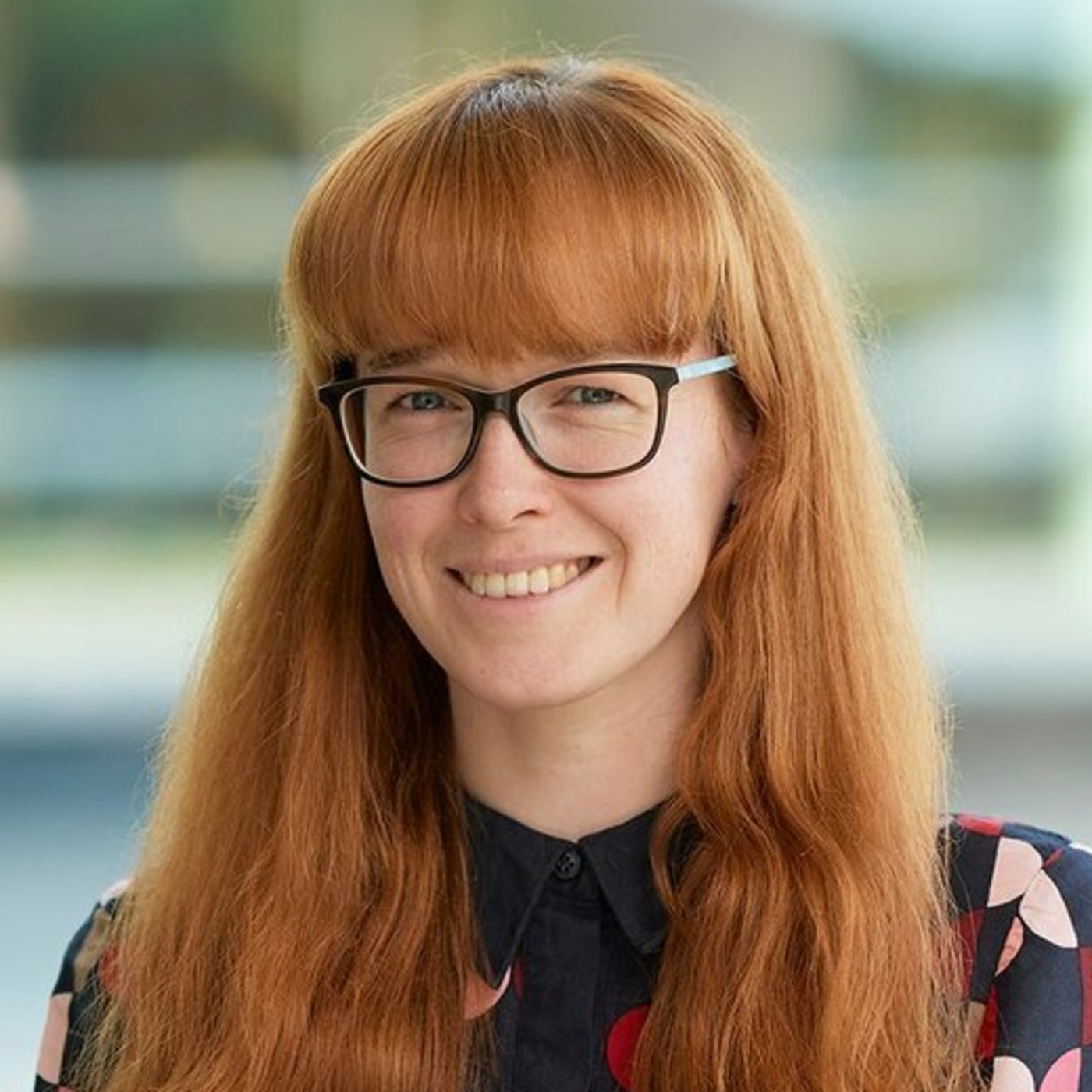
Kirsty Gibson: I think your core investment beliefs are always sort of evolving and changing, but I think that they’re just becoming clearer. I think you might go through times in which you might make these big changes in your beliefs, but I guess for me, my beliefs have probably been fairly certain for the last sort of decade plus, but I’ve developed my thinking in a little bit more detail. So I think the starting point is to have long-term performance, you have to embrace what others lack the capability or the willingness to undertake. So you have to be different, basically, in some way, shape, or form. And I think while others are focused on short-term horizons and the spurious precision of more short-term models, I can analyze underlying business models and I can ask myself, what if— like, what if things went right? What if that opportunity was unlocked?
Aoifinn Devitt: I’m Aoifinn Devitt, and welcome to the 50 Faces Podcast, a podcast committed to revealing the richness and diversity of the world of investment by focusing on its people and their stories. I’m joined today by Aoifinn Devitt, who’s an investment manager at Baillie Gifford, where she has spent over 13 years. Welcome, Kirsty. Thanks for joining me today.
Kirsty Gibson: Thank you for having me.
Aoifinn Devitt: What’s your background and career journey? Because I think there’s some pretty interesting things in there that we discussed that I’d love to talk about.
Kirsty Gibson: Yeah, so I actually spent most of my teens hoping to become a professional ballet dancer, and the spoiler there is I didn’t. I failed at doing that. Instead, I attended Edinburgh University and I studied economics undergraduate, and I did a postgraduate in carbon management. And I actually discovered Bailey Gifford through ballet. So I went to see Scottish Ballet perform, and I saw that there was this company that sponsored one of the ballet dancers, which turned out to be Bailey Gifford. And I thought, who would sponsor a ballet dancer? That’s quite a random thing to do. And so I looked them up, I found the trainee role, and I applied, and I got the role. So I guess the rest is history from that perspective.
Aoifinn Devitt: Fantastic. Well, finally, an example of how sponsorship makes sense. I suppose that’s often something where it’s very difficult to draw the link between sponsoring these cultural events and the and well, clearly there is one right there. Let’s make that one very clear. And then the master’s in carbon management— what was it that interested— this happened before or after Betty Gifford? And what interested you in that?
Kirsty Gibson: Yeah, so this is before. So this is before I applied for the job. I guess in my mind, I think academia can become very siloed, and what I really liked about the carbon management master’s when I looked into it was it was about bringing people from all sorts of backgrounds together. And trying to think about how you would go about solving a really big problem. The subjects of the degree were economics, but there was also elements of business, and there was also science. So people’s backgrounds actually ranged from somebody like me with an economics background, who obviously had a natural affinity more towards the economic subjects, but there were also people who had backgrounds in engineering. There were quite a few people who worked in forestry around the world. There was even somebody who owned a vineyard. We all came together. And it was also deliberate that many people came from many different locations globally, so Canada, Costa Rica, Cambodia, Portugal, the UK, etc. It was sort of a real melting pot. And I think that really appealed to me because I started to think about, you know, there are some really big challenges in the world, and I’m not sure that there’s a singular way of solving them. I think you need to bring lots of people together. So I guess indirectly what I learned from my carbon management degree, partly because it became a sort of foundational building block in my thinking, is that indirectly it’s really influenced my job. But it’s not, I guess, on a day-to-day basis, it probably isn’t directly massively useful. It’s more that it’s become— I’ve built on those original building blocks ever since in my thinking. I think it’s really helped my thinking on topics like sustainability and impact early before these topics were really, really trendy or popular. And that really meant that I gained some clarity on how I thought about them before they became a really hot topic. And I think that made me more able to define those topics for myself as opposed to having an industry definition sort of pushed upon me.
Aoifinn Devitt: That’s really interesting. It reminds me of how I viewed my own MBA. It wasn’t so much— it was for that kind of ability to think across disciplines and to think about the application versus the theory. And it was a very rich degree, as well as the network and the global aspect that you mentioned there as well. Just before we, we go into the investment side and your investment beliefs, on the carbon management side, would you say that you talked about thinking maybe against the industry conventional wisdom or having some beliefs of your own? Anything that you have held as true since then with respect to carbon management that you think the rest of us maybe misunderstood or overlooked?
Kirsty Gibson: Yeah, I mean, I, I just think something that I developed, like, like I say, from those building blocks that I learned, is I think that there are, you know, there’s not a singular way that you can have impact as an investor. Like, I think there are multiple different ways, and I don’t think any of those ways are necessarily more important than others. They will, at the individual level, you will be able to decide which is more important. So I think there’s impact you can have by owning businesses that are doing good things in the world and trying to solve problems, right? That’s obviously having an impact, but it’s kind of— you’re passively contributing in that impact because you’re not directly allocating capital at that point in time. Like, you’re buying shares of a company, but that is— you’re just swapping shares with other people. But, you know, that’s fine if those are the companies that you want to invest in and do it that way. That’s absolutely fine. I think you can also have an impact through long-term ownership of stocks, being that long-term supportive shareholder. I think knowing that they have those long-term supportive shareholders on their shareholder register often encourages companies to try new things and to address those larger problems and to go after those bigger problems in time. So I’d say that’s to do with sort of ownership impact. And then I think, I think the final way is direct capital impact. So whether that be, you know, you’re allocating money at IPOs, in private markets, or through capital raises to businesses that you can sort of directly impact as well. And I know where my preferences lie in which I think is the most impactful. But I don’t think that that means that that’s the right way of thinking about it. I think you as an individual need to decide which you think is more important for you.
Aoifinn Devitt: Really interesting. Maybe we’ll come back to that, the long-term shareholder advantages, because I think it makes me see that it’s really so much more than transactional, as is life more, so much more than transactional. It’s not just the fact that you own a share, it’s the fact that who you are, how you conduct yourself, whether you’re a cheerleader, whether you’re a potential collaborator in terms of idea sharing and, and bringing it. And that’s something I think is often overlooked But we are ultimately humans behind these transactions, so I think it’s key. Um, moving to the investment beliefs arena, would you say you have any core investment beliefs? And now in a portfolio management role, and have they evolved over time?
Kirsty Gibson: Yeah, I mean, I think your core investment beliefs are always sort of evolving and changing, but I think that they’re just becoming clearer. I think you might go through times in which you might make these big changes in your beliefs, but I guess for me, my beliefs have probably been fairly certain for the last sort of decade plus, but I’ve developed my thinking in a little bit more detail. So I think the starting point is to have long-term performance, you have to embrace what others lack the capability or the willingness to undertake. So you have to be different, basically, in some way, shape, or form. And I think while others are focused on short-term horizons and the spurious precision of more short-term models, I can analyze underlying business models and I can ask myself, what if Like, what if things went right? What if that opportunity was unlocked? And our data that we have within Baillie Gifford and our academic data that we’ve seen, and also our lived experience, tells us that it’s not about how often you’re right, it’s about how much you can make for clients when you are. So there’s a willingness as well to look wrong you have to embrace if you’re going to be a long-term investor. And in some cases, that’s actually being wrong. Like, you will be wrong on quite a lot of occasions. So in pursuit of those occasional times when we are right to a degree that is actually quite hard to comprehend initially, and so that requires patience and that requires a long-term perspective. So my philosophy, I would describe it as being rooted around this idea of sustainability, but I don’t think about that idea of sustainability in a narrow sense. I think about it very broadly. So, I mean sustained value creation. And sustained value creation means solving problems, because you— sustained value creation is something that goes on for a long period of time, so you need to be solving a problem that’s valuable. And I think that leads me to growth businesses, because growth businesses look to address a problem and to deliver a solution. And I think that leads me to investing over the long term, because it takes time ultimately to solve problems, right? It’s not something that happens overnight. And not every company can successfully solve problems either. So that was what leads me to what I would call an exceptional growth business, and that’s what I’m looking to find in my investment style. And then I think the final thing that I would add into that, and this is something that probably has developed over the past sort of decade, would be you that, know, culture really matters, and not in a kind of hand-wavy positive or negative Glassdoor review sort of way. Instead, I’m talking about how motivation and ambition are shaped by life experience and how that manifests in the day-to-day operations of a business. So if I was to summarize that, I’d say my core investment beliefs are long-term and growth with a willingness to look wrong, and a belief that culture is far more important than the broader market believes it to be.
Aoifinn Devitt: And I would presume that culture piece leads you to focus quite a bit on management, given that they are ultimately— it’s being enacted through them and it’s essentially enforced through them and furthered through them. And then getting into the current focus, how you translate that into portfolios, stock picking at Betty Gifford, can you talk to us about the fund of which you are investment manager and how you bring all these beliefs to bear?
Kirsty Gibson: Yeah, so I’m an investment manager on our US equity growth team, so I spend the majority of my time researching and discussing some of the most exciting businesses in the US today across public and private markets. We’re all generalists on the team, so we follow our enthusiasm, but because Baillie Gifford hires people from a very broad range of backgrounds, from linguists and economists to historians, scientists— some people even have medical degrees, for example— our enthusiasms and areas of interest are often very varied, and so we do get good sort of broad coverage of different areas. And for example, so this year alone, I’ve looked at businesses spanning like autonomous trucking, food delivery, cables, building products, aggregates, secondhand cars, healthcare. So, you know, you’ve got a huge range of different companies out there. And whilst the team that I sit within is relatively small, there’s more than sort of 50 or so people at Baillie Gifford that look at US companies in their funds as well. So we have a good sort of exposure to a broader number of companies, and we all share those insights internally as well. Now, you sort of mentioned how we integrate some of those topics that I mentioned, like the culture. We have a sort of question framework that we write our reports up in, and one of the questions within that is we talk about what’s distinctive about this company’s culture? And ultimately, why does it increase the probability that this business will be successful? And I think that’s really important because I think it’s really important to separate this idea of a company having good or a bad culture. I think ultimately it’s about whether a culture is effective at helping a business to execute on its long-run opportunity. And assessing that’s hard. I’m not going to say it’s easy. I will spend time looking at who’s running that business, you know, what’s their life experience, how do they think about the world, How has that thinking evolved? How do I think they may or may not make decisions in the future? I’ll try and understand how that filters down to within the organisation itself, you know, what motivates people within the organisation. If possible, you know, we’ll spend time with the company, we’ll go and try out the products, meet other people within the firm as well, but you start to build up a picture. But ultimately, you have to remember that it is a hypothesis that you’re investing behind. Like, we’re not in the business of certainties. I mean, it’d be great if we were, But ultimately, it’s long-term hypotheses around many of these questions, whether that be a company’s culture or its market opportunity or its edge, for example.
Aoifinn Devitt: Two really interesting threads I’d love to pull on, and a little bit separate, so I’ll do that one at a time. One is this notion of some of this long-term opportunity, but yet we seem to be operating in a world with shorter cycles, and definitely product cycles, innovation, AI has been transformative. And I suppose I’ve even heard the thesis that 5-year strategies don’t make a great deal of sense right now either, because you have to be kind of almost iterating on the go. Have you seen some cultures which were fit for purpose and ceased to be because simply an industry evolves? And how have you kind of maybe adapted to that, say, in the last few years?
Kirsty Gibson: I can’t give you a specific example of a company. I’m sure there are some, but I can’t sort of pull one out to the top of my mind at the moment. But I think ultimately right now, one of the most important aspects of a company’s culture is going to be adaptability. So, you’re gonna need structural adaptability, you know, so you’re gonna have to be able to adapt your product, adapt your teams potentially, your infrastructure potentially as well. So, I think it’s very difficult for businesses who have invested very, very large amounts of money into physical infrastructure, for example, that is connected to the last paradigm. It’s very difficult for those companies to be adaptable. And I think one of the things, know, you I, I would definitely disagree with this idea that, you know, 5-year funds are difficult right now. I think the challenge is finding the right people to invest behind, and those are the people that are going to be better, far better than I am, for example, at navigating those periods of change with their business model and, you know, being able to take their company and their culture with them. Now, I think they need— in many respects, it’s about them looking and saying, well, how has my long-run opportunity changed? How has my vision of the world changed when I’ve integrated some of this new information? And in many cases, the long-run vision has not evolved that much, but there’s new integrations that need to take place in order to execute that, or to maybe get you there faster than you’ve been in the past. And so, I think that’s all about who’s managing the team, the vision, who’s going to follow them, and why do they have the credibility that people are going to follow them? And then, attached to that as well, I guess, there’s an element of the kind of structural makeup of a business and whether or not actually you just fundamentally have the ability to make big changes and adapt quite quickly, or whether or not you’re stuck in a different paradigm. And that’s not to say companies that are capital intensive can’t make changes and won’t survive. There will be businesses, but in some industries, maybe that’s not necessarily the case.
Aoifinn Devitt: Very interesting, this openness to change, adaptability. And the second thread was public versus private. So you said you look across both. We are hearing that more companies are choosing to stay private for longer, going private because they appreciate just the ability to focus and not be so short-term, perhaps. Do you see a difference in terms of the public-private landscape, and how do you choose where to spend your time?
Kirsty Gibson: Yes, I mean, ultimately the reason that Baillie Gifford as a whole decided to do more work in private markets was because we do believe that companies are staying private for longer. There are companies at the moment that have multi-hundred-million-dollar market caps that are in the private markets, right? Go back a decade, 20 years, that that just, just wouldn’t have happened, right? The traditional trajectory at the time was that you, you scaled to a certain level, you raised capital, you became a small cap, and then you would progress your way through you becoming, know, a mid-cap and then into a larger cap if necessary. I mean, there are businesses now IPOing— there are still businesses IPOing sub-$10 billion, but there are businesses coming to market now at $10, $20, $30, $40, $50 billion in market cap. And I think private markets are different. There are some similarities though as well. I think in terms of how you analyze the businesses and the opportunity sets in front of them, I think there’s a lot of overlap. And I think because we’re looking to invest in private markets at those later stages, the kind of growth equity stage, ultimately You are looking to invest in the private markets. Hopefully within, you know, a raise or two, they would potentially list, although we don’t push companies to list. We don’t mind if they stay private. And the way I think about the portfolio that I run that has both public and private in is, I think, in a very holistic sense, I have the flexibility to own public or private companies. I don’t have a requirement to own a certain percentage of either, and consequently, I can look at it as a much more holistic portfolio and say, where do I see the best opportunity? You know, if I saw a company that was private and a company was public that were both exactly the same, valuations, etc., everything was the same, I would most likely buy the public business because it’s much more liquid. But with a private company, in many cases there are no public market competitors. And that’s what’s great about being able to cross into that area of the market as well, is that that’s a part of the market where you can find, you know, potentially the big winners of tomorrow and own them. And like we talked about earlier, build that relationship with them, that long-term relationship with them, from when they are a private investor through the IPO process and continue to hold them into the public markets as well.
Aoifinn Devitt: Really interesting. And we’ve been talking a bit about just that changing shape of the market, even over the course of your career, just how the public-private balance is changing. Can you talk about a little bit the challenges that are facing active management today? Not only more companies staying private, but maybe some of the momentum, some of the technical factors. How do you think about that?
Kirsty Gibson: I think the greatest challenge about active management today is that the shorter term you are, the more propensity you have, I think, to want to hug the market because there’s more career risk, right, of being wrong. If you’re not set up in a way that, that rewards long-term investment focus, then there’s a career risk by taking anything that you think to be bolder bet. So the temptation is you end up sort of quasi-hugging the market, and a client ends up paying an active fee for ultimately looking like a passive fund. And I think one of the challenges facing the active market is potentially that everybody gets kind of lumped in that category, right? So it’s like, well, actually active managers are not truly active. And I think, you know, what we see with our funds is we do have truly active funds. I think there’s a challenge at the moment as well that the concentration of the market, particularly in the US, has made things more difficult. And I think that it’s leading more people towards passive. And I know that passive can play a really important role in people’s portfolios. There’s a caveat here. I am a growth manager. I have a bias towards growth investments, but I don’t think that it’s the safe haven that people believe it to be. If you think about the fact passive funds reward yesterday’s winners, and that’s the biggest firms, that’s, that’s how they’re set up. And don’t get me wrong, some big winners of the last 5 years could continue to be the big winners of the next 5 years, but I don’t think that’s a given. And that’s why I think it’s really important that if you’re going to own passive funds, I think you want to pair them with something that is genuinely active. You know, the only certainty that we know is that the future is never certain and that further change and evolution is probably going to come over the next few years. And I think that’s one of the challenges facing the industries, is ensuring that people realize that passive is not necessarily completely safe. There are challenges within that. And then, you know, the active industry, we need to make sure that it is genuinely active and that people are delivering value for the fees and things that clients are paying.
Aoifinn Devitt: And that’s a great segue to my question about client use case for a strategy such as yours, as clearly they can choose between passive and active. But do you think, given particularly in your sector and growth, we have seen increased kind of interest as with intraday volatility, sort of increased intra-stock volatility, that maybe they need to think about their growth allocation as having maybe a different risk-reward characteristic. Do you think this is kind of your, your, this is not maybe your grandmother’s equity market and maybe you’re not your grandmother’s equity allocation. It needs to be maybe thought about differently and sized differently. Has that come up at all as you think about how to work with clients?
Kirsty Gibson: Yeah, I mean, we will often say now pair us with passive. Like I was just saying earlier, I think if you’re going to have a passive allocation, that’s fine. But do you not want to own a chunk of what might be the future, those growth names of the future? And I think ultimately it’s in the hands of the underlying client, and they know their underlying clients far, far better than I do as to how much that percentage should be. But I guess for me, I think that there needs to be some percentage that’s about investing in the future rather than investing in the past. And like I say, I, I’m not saying that the large companies in passive indexes are not going to be successful going forward. You know, we own some of them in the portfolio that I run, but we don’t own all of them. And I also think that there are companies coming through that might be in that, you know, $20 to $100 billion range that could be the next $1 trillion business. And so it’s making sure that you have some exposure to that, but I think it’s ultimately the client’s decision as to exposure that they want to have to that. But I think you’re right in that in order to beat the market, you need to be different from the market, and that’s going to bring with it some degree of volatility. But you can maybe deal with that through sizing, as opposed to just saying, I’m not going to have anything that’s volatile, full stop.
Aoifinn Devitt: And now I’ll go back to one section I’ve been looking forward to. In your case, because of your background as a ballet dancer, but you look at maybe back at your kind of earlier influences and earlier activities, and now we’ve talked a lot about your investment approach and your insights from carbon management. Did any of that relate to things you learned as a ballet dancer? And do you ever go back to— whether it’s the approach to choreography, or it’s the focus on the long term, or it’s a resilience around rejection— do you bring any traits from that time of your life into your current one?
Kirsty Gibson: Yeah, I mean, I think the biggest one— and I think probably I’ve only realized this, so I should add, I still do do ballet, not as well as I did before, but, you know, it’s kind of one of those things that’s been part of my life such long time, it’s hard to give it up, even though I can see myself going into sort of steady decline as I get older. I think the big thing for me is that it’s one of those things that on a day-to-day basis you can just have a bad day, right? You, you know you can do it well, you’ve done all the preparation, and it can just be a bad day for turning, for example. Your body’s not in tune in the way that you expect it to be. And I think it’s also something that, that reminds me quite a lot of investment management, in that you can always get better. Like, you can always practice more, you can always tweak more, you can always keep learning. It’s not a very static thing, you know. There isn’t a— I don’t think any ballet dancer would say like, I have mastered everything. Like, there’s always more things to learn and more things that you can grow and build on. And I think there is a lot of similarities there in terms of you’ve got the basics, you know the technical skills, and then you can start to add the creativity on top of that as well. Like you mentioned as well, that The better you get at it, the more freedom almost you have to experiment. And I think that’s also true in the way that you think about, or I think about managing money. It’s allowed me to pursue and spend a lot more time developing my thinking on something like culture, et cetera, which is very difficult to do if you are starting out and you don’t know the basics of a discounted cash flow or how to value a business. Like, you’re not gonna have a lot of credibility in spending your time thinking about management teams if you’ve not got to that point.
Aoifinn Devitt: No, I love that focus on continual improvement and long-term kind of focus on education and learning. And when you look back at your career so far, and if you mentioned, you said, hey, you didn’t become a ballet dancer, I’m not sure that was ultimately a massive setback given where you are today, but were there any lessons learned across the course of your career that you can mention?
Kirsty Gibson: Yeah, I mean, obviously I’ve learned from very specific occasions, you know, a missed opportunity And I’d say that sins of omission in this industry are much more painful than sins of commission, because you can only ever lose 100% of the money you invest, but you can gain a lot more on the upside. So not buying something is usually a good learning experience. And then obviously, you know, if you got the industry or the market opportunity or something wrong as well, so the sins of commission. But more than anything, I think that the mistakes that I have made have taught me that I am truly a high-growth investor. So I have reflected, I’ve learned, I’ve moved forward, but no setback or challenge or mistake has ever made me fearful and unable to act. And I think that tells you a lot about who you are as an investor. None of the setbacks that I’ve had or the mistakes that I’ve made have made me seriously, seriously question the foundations or my core beliefs. You know, I have reflected, I’ve honed, I’ve more deeply probed what I believe in. In times of or, difficulty, you know, times when things haven’t quite worked out. I wouldn’t say that I’ve ever got to the point where I’m like, maybe these underlying core investment beliefs I have about being long-term, about being growth, about the asymmetry of stock markets, are just wrong. I don’t think I’ve got that far, which tells me in, in my heart that this is the right investment style for me as well.
Aoifinn Devitt: Really interesting. And on that risk tolerance, risk appetite side, is that something that you believe people it’s inside them, they’re born with essentially sort of a DNA which maybe can be developed and nurtured obviously with the right setting, but do you think it’s something that you kind of come— it comes pre-baked?
Kirsty Gibson: Yeah, I, I think it’s about personality to some extent, and I don’t think it’s like one type of personality is like this and other types are not. I personally believe that you discover who you are as an investor, right? You don’t decide. So your investment style is therefore in much in the way I’ve been talking about management teams, about how the way they see the world and the problems they look to solve is a reflection of their life experience. Like, I guess that’s the same is true of an investment manager, right? And their investment style is a reflection of their life experience and how they see the world. And you know what I think is really interesting? So I have a hypothesis that what allows me to deal with the uncertainty of the investment management role you know, I don’t actually think I’ll ever know if I’m actually good at this job. Timing seems, you know, sometimes I look good, my performance looks good, sometimes it doesn’t, etc. Is that I put quite a lot of structure or control around other parts of my life. Like, I am like hyper-organized, and I love everything to be organized. Like, I love a box in a cupboard, for example. Like, I like to put things within things. And interestingly, I actually see similarities in my colleagues or other people in the industry that, you know, finding something to control is what almost allows them to have a lot less control in another area. So yeah.
Aoifinn Devitt: That’s a really fascinating insight into the personality of investors, so thank you for sharing that. Looking at key people or mentors, were there any particular for you across the course of your career that had an impact? And it does not have to be an exhaustive list.
Kirsty Gibson: I think the biggest one for me would probably be my ballet teacher. So that’s not quite in my career, but She was just amazing. She— or she is, but she was, you know, when I was talking about— she’s an amazing lady who I never saw get angry, but she would express disappointment in people, not because they did something wrong, because they didn’t try or they didn’t practice. And I just never wanted to disappoint her. I’m sure I did, but it was that she taught me that anything I wanted, I had to put the time and the effort and the hard work in to get. She would help me, but it was on me to do it. And I’m not sure she would have brought that characteristic out in everyone, but for someone who was already quite driven to work hard, it just cemented to me that, like, applying yourself and hard work and a bit of luck can just get you a hugely long way in what you do. And I just really like that idea that, you know, she just said, well, I think you can do more. Like, I think you can achieve more. I think if you put more effort in— and it made you go, yeah, yeah, I can ‘You can put more effort in. I’ll go home and practice that. I will do that.’ And I really like that. It’s not pushing, it’s encouraging you, it’s developing in you that ability to drive yourself forward. And I just think that that’s so important.
Aoifinn Devitt: That’s amazing. I think we all have had one teacher like that in our lives, and if we’re lucky, it’s that high expectation for you. And then, as you said, being the receptive vessel for that— is not everybody would respond the same way. So clearly, when the chemistry is right, it can lead to great things. And my final question is around any words of advice that you might have for your younger self, or maybe any creed or motto that you live by now, anything you can share?
Kirsty Gibson: I think in some respects I’d like to tell my younger self to chill out a bit more, but I think that would probably make me less suited to this role. Like, I almost think that being that person is probably got me to where I am. So I probably would just say, it’ll be fine, just reassure my sort of younger self that it’ll be fine. I also love— I personally really like, I think it’s Sheryl Sandberg, which is just be nice, work hard. I just think it’s a really good way to live your life, right? It’s not about judging yourself versus other people or anything like that. It’s about hard work, making yourself the best person that you can be, and trying to help other people be the best version that they can be as well. Trying, I say, not always succeeding, but trying.
Aoifinn Devitt: But I was looking for an appropriate ballet-related quote to finish this, and I actually— the ones were not suitable because most of the ones I found were relating to about following your passion. And I think what I’ve heard from this discussion is so much more than passion. It’s passion with analysis, with probing, with continuous improvement. And I think that is so insightful and just useful for us as we think about what it is that makes an investor and develops an investor. So thank you so much for coming here and sharing this exceptionally rich journey with us.
Kirsty Gibson: Thank you very much for having me.
Aoifinn Devitt: I’m Aoifinn Devitt. Thank you for listening to the 50 Faces podcast. If you liked what you heard and would like to tune in to hear from more inspiring investors and their personal journeys, please subscribe on Apple Podcasts, wherever you get your podcasts. This podcast is for informational purposes only and should not be construed as investment advice, and all views are personal and should not be attributed to the organizations and affiliations of the host or any guest.
Kirsty Gibson: I think your core investment beliefs are always sort of evolving and changing, but I think that they’re just becoming clearer. I think you might go through times in which you might make these big changes in your beliefs, but I guess for me, my beliefs have probably been fairly certain for the last sort of decade plus, but I’ve developed my thinking in a little bit more detail. So I think the starting point is to have long-term performance, you have to embrace what others lack the capability or the willingness to undertake. So you have to be different, basically, in some way, shape, or form. And I think while others are focused on short-term horizons and the spurious precision of more short-term models, I can analyze underlying business models and I can ask myself, what if— like, what if things went right? What if that opportunity was unlocked?
Aoifinn Devitt: I’m Aoifinn Devitt, and welcome to the 50 Faces Podcast, a podcast committed to revealing the richness and diversity of the world of investment by focusing on its people and their stories. I’m joined today by Aoifinn Devitt, who’s an investment manager at Baillie Gifford, where she has spent over 13 years. Welcome, Kirsty. Thanks for joining me today.
Kirsty Gibson: Thank you for having me.
Aoifinn Devitt: What’s your background and career journey? Because I think there’s some pretty interesting things in there that we discussed that I’d love to talk about.
Kirsty Gibson: Yeah, so I actually spent most of my teens hoping to become a professional ballet dancer, and the spoiler there is I didn’t. I failed at doing that. Instead, I attended Edinburgh University and I studied economics undergraduate, and I did a postgraduate in carbon management. And I actually discovered Bailey Gifford through ballet. So I went to see Scottish Ballet perform, and I saw that there was this company that sponsored one of the ballet dancers, which turned out to be Bailey Gifford. And I thought, who would sponsor a ballet dancer? That’s quite a random thing to do. And so I looked them up, I found the trainee role, and I applied, and I got the role. So I guess the rest is history from that perspective.
Aoifinn Devitt: Fantastic. Well, finally, an example of how sponsorship makes sense. I suppose that’s often something where it’s very difficult to draw the link between sponsoring these cultural events and the and well, clearly there is one right there. Let’s make that one very clear. And then the master’s in carbon management— what was it that interested— this happened before or after Betty Gifford? And what interested you in that?
Kirsty Gibson: Yeah, so this is before. So this is before I applied for the job. I guess in my mind, I think academia can become very siloed, and what I really liked about the carbon management master’s when I looked into it was it was about bringing people from all sorts of backgrounds together. And trying to think about how you would go about solving a really big problem. The subjects of the degree were economics, but there was also elements of business, and there was also science. So people’s backgrounds actually ranged from somebody like me with an economics background, who obviously had a natural affinity more towards the economic subjects, but there were also people who had backgrounds in engineering. There were quite a few people who worked in forestry around the world. There was even somebody who owned a vineyard. We all came together. And it was also deliberate that many people came from many different locations globally, so Canada, Costa Rica, Cambodia, Portugal, the UK, etc. It was sort of a real melting pot. And I think that really appealed to me because I started to think about, you know, there are some really big challenges in the world, and I’m not sure that there’s a singular way of solving them. I think you need to bring lots of people together. So I guess indirectly what I learned from my carbon management degree, partly because it became a sort of foundational building block in my thinking, is that indirectly it’s really influenced my job. But it’s not, I guess, on a day-to-day basis, it probably isn’t directly massively useful. It’s more that it’s become— I’ve built on those original building blocks ever since in my thinking. I think it’s really helped my thinking on topics like sustainability and impact early before these topics were really, really trendy or popular. And that really meant that I gained some clarity on how I thought about them before they became a really hot topic. And I think that made me more able to define those topics for myself as opposed to having an industry definition sort of pushed upon me.
Aoifinn Devitt: That’s really interesting. It reminds me of how I viewed my own MBA. It wasn’t so much— it was for that kind of ability to think across disciplines and to think about the application versus the theory. And it was a very rich degree, as well as the network and the global aspect that you mentioned there as well. Just before we, we go into the investment side and your investment beliefs, on the carbon management side, would you say that you talked about thinking maybe against the industry conventional wisdom or having some beliefs of your own? Anything that you have held as true since then with respect to carbon management that you think the rest of us maybe misunderstood or overlooked?
Kirsty Gibson: Yeah, I mean, I, I just think something that I developed, like, like I say, from those building blocks that I learned, is I think that there are, you know, there’s not a singular way that you can have impact as an investor. Like, I think there are multiple different ways, and I don’t think any of those ways are necessarily more important than others. They will, at the individual level, you will be able to decide which is more important. So I think there’s impact you can have by owning businesses that are doing good things in the world and trying to solve problems, right? That’s obviously having an impact, but it’s kind of— you’re passively contributing in that impact because you’re not directly allocating capital at that point in time. Like, you’re buying shares of a company, but that is— you’re just swapping shares with other people. But, you know, that’s fine if those are the companies that you want to invest in and do it that way. That’s absolutely fine. I think you can also have an impact through long-term ownership of stocks, being that long-term supportive shareholder. I think knowing that they have those long-term supportive shareholders on their shareholder register often encourages companies to try new things and to address those larger problems and to go after those bigger problems in time. So I’d say that’s to do with sort of ownership impact. And then I think, I think the final way is direct capital impact. So whether that be, you know, you’re allocating money at IPOs, in private markets, or through capital raises to businesses that you can sort of directly impact as well. And I know where my preferences lie in which I think is the most impactful. But I don’t think that that means that that’s the right way of thinking about it. I think you as an individual need to decide which you think is more important for you.
Aoifinn Devitt: Really interesting. Maybe we’ll come back to that, the long-term shareholder advantages, because I think it makes me see that it’s really so much more than transactional, as is life more, so much more than transactional. It’s not just the fact that you own a share, it’s the fact that who you are, how you conduct yourself, whether you’re a cheerleader, whether you’re a potential collaborator in terms of idea sharing and, and bringing it. And that’s something I think is often overlooked But we are ultimately humans behind these transactions, so I think it’s key. Um, moving to the investment beliefs arena, would you say you have any core investment beliefs? And now in a portfolio management role, and have they evolved over time?
Kirsty Gibson: Yeah, I mean, I think your core investment beliefs are always sort of evolving and changing, but I think that they’re just becoming clearer. I think you might go through times in which you might make these big changes in your beliefs, but I guess for me, my beliefs have probably been fairly certain for the last sort of decade plus, but I’ve developed my thinking in a little bit more detail. So I think the starting point is to have long-term performance, you have to embrace what others lack the capability or the willingness to undertake. So you have to be different, basically, in some way, shape, or form. And I think while others are focused on short-term horizons and the spurious precision of more short-term models, I can analyze underlying business models and I can ask myself, what if Like, what if things went right? What if that opportunity was unlocked? And our data that we have within Baillie Gifford and our academic data that we’ve seen, and also our lived experience, tells us that it’s not about how often you’re right, it’s about how much you can make for clients when you are. So there’s a willingness as well to look wrong you have to embrace if you’re going to be a long-term investor. And in some cases, that’s actually being wrong. Like, you will be wrong on quite a lot of occasions. So in pursuit of those occasional times when we are right to a degree that is actually quite hard to comprehend initially, and so that requires patience and that requires a long-term perspective. So my philosophy, I would describe it as being rooted around this idea of sustainability, but I don’t think about that idea of sustainability in a narrow sense. I think about it very broadly. So, I mean sustained value creation. And sustained value creation means solving problems, because you— sustained value creation is something that goes on for a long period of time, so you need to be solving a problem that’s valuable. And I think that leads me to growth businesses, because growth businesses look to address a problem and to deliver a solution. And I think that leads me to investing over the long term, because it takes time ultimately to solve problems, right? It’s not something that happens overnight. And not every company can successfully solve problems either. So that was what leads me to what I would call an exceptional growth business, and that’s what I’m looking to find in my investment style. And then I think the final thing that I would add into that, and this is something that probably has developed over the past sort of decade, would be you that, know, culture really matters, and not in a kind of hand-wavy positive or negative Glassdoor review sort of way. Instead, I’m talking about how motivation and ambition are shaped by life experience and how that manifests in the day-to-day operations of a business. So if I was to summarize that, I’d say my core investment beliefs are long-term and growth with a willingness to look wrong, and a belief that culture is far more important than the broader market believes it to be.
Aoifinn Devitt: And I would presume that culture piece leads you to focus quite a bit on management, given that they are ultimately— it’s being enacted through them and it’s essentially enforced through them and furthered through them. And then getting into the current focus, how you translate that into portfolios, stock picking at Betty Gifford, can you talk to us about the fund of which you are investment manager and how you bring all these beliefs to bear?
Kirsty Gibson: Yeah, so I’m an investment manager on our US equity growth team, so I spend the majority of my time researching and discussing some of the most exciting businesses in the US today across public and private markets. We’re all generalists on the team, so we follow our enthusiasm, but because Baillie Gifford hires people from a very broad range of backgrounds, from linguists and economists to historians, scientists— some people even have medical degrees, for example— our enthusiasms and areas of interest are often very varied, and so we do get good sort of broad coverage of different areas. And for example, so this year alone, I’ve looked at businesses spanning like autonomous trucking, food delivery, cables, building products, aggregates, secondhand cars, healthcare. So, you know, you’ve got a huge range of different companies out there. And whilst the team that I sit within is relatively small, there’s more than sort of 50 or so people at Baillie Gifford that look at US companies in their funds as well. So we have a good sort of exposure to a broader number of companies, and we all share those insights internally as well. Now, you sort of mentioned how we integrate some of those topics that I mentioned, like the culture. We have a sort of question framework that we write our reports up in, and one of the questions within that is we talk about what’s distinctive about this company’s culture? And ultimately, why does it increase the probability that this business will be successful? And I think that’s really important because I think it’s really important to separate this idea of a company having good or a bad culture. I think ultimately it’s about whether a culture is effective at helping a business to execute on its long-run opportunity. And assessing that’s hard. I’m not going to say it’s easy. I will spend time looking at who’s running that business, you know, what’s their life experience, how do they think about the world, How has that thinking evolved? How do I think they may or may not make decisions in the future? I’ll try and understand how that filters down to within the organisation itself, you know, what motivates people within the organisation. If possible, you know, we’ll spend time with the company, we’ll go and try out the products, meet other people within the firm as well, but you start to build up a picture. But ultimately, you have to remember that it is a hypothesis that you’re investing behind. Like, we’re not in the business of certainties. I mean, it’d be great if we were, But ultimately, it’s long-term hypotheses around many of these questions, whether that be a company’s culture or its market opportunity or its edge, for example.
Aoifinn Devitt: Two really interesting threads I’d love to pull on, and a little bit separate, so I’ll do that one at a time. One is this notion of some of this long-term opportunity, but yet we seem to be operating in a world with shorter cycles, and definitely product cycles, innovation, AI has been transformative. And I suppose I’ve even heard the thesis that 5-year strategies don’t make a great deal of sense right now either, because you have to be kind of almost iterating on the go. Have you seen some cultures which were fit for purpose and ceased to be because simply an industry evolves? And how have you kind of maybe adapted to that, say, in the last few years?
Kirsty Gibson: I can’t give you a specific example of a company. I’m sure there are some, but I can’t sort of pull one out to the top of my mind at the moment. But I think ultimately right now, one of the most important aspects of a company’s culture is going to be adaptability. So, you’re gonna need structural adaptability, you know, so you’re gonna have to be able to adapt your product, adapt your teams potentially, your infrastructure potentially as well. So, I think it’s very difficult for businesses who have invested very, very large amounts of money into physical infrastructure, for example, that is connected to the last paradigm. It’s very difficult for those companies to be adaptable. And I think one of the things, know, you I, I would definitely disagree with this idea that, you know, 5-year funds are difficult right now. I think the challenge is finding the right people to invest behind, and those are the people that are going to be better, far better than I am, for example, at navigating those periods of change with their business model and, you know, being able to take their company and their culture with them. Now, I think they need— in many respects, it’s about them looking and saying, well, how has my long-run opportunity changed? How has my vision of the world changed when I’ve integrated some of this new information? And in many cases, the long-run vision has not evolved that much, but there’s new integrations that need to take place in order to execute that, or to maybe get you there faster than you’ve been in the past. And so, I think that’s all about who’s managing the team, the vision, who’s going to follow them, and why do they have the credibility that people are going to follow them? And then, attached to that as well, I guess, there’s an element of the kind of structural makeup of a business and whether or not actually you just fundamentally have the ability to make big changes and adapt quite quickly, or whether or not you’re stuck in a different paradigm. And that’s not to say companies that are capital intensive can’t make changes and won’t survive. There will be businesses, but in some industries, maybe that’s not necessarily the case.
Aoifinn Devitt: Very interesting, this openness to change, adaptability. And the second thread was public versus private. So you said you look across both. We are hearing that more companies are choosing to stay private for longer, going private because they appreciate just the ability to focus and not be so short-term, perhaps. Do you see a difference in terms of the public-private landscape, and how do you choose where to spend your time?
Kirsty Gibson: Yes, I mean, ultimately the reason that Baillie Gifford as a whole decided to do more work in private markets was because we do believe that companies are staying private for longer. There are companies at the moment that have multi-hundred-million-dollar market caps that are in the private markets, right? Go back a decade, 20 years, that that just, just wouldn’t have happened, right? The traditional trajectory at the time was that you, you scaled to a certain level, you raised capital, you became a small cap, and then you would progress your way through you becoming, know, a mid-cap and then into a larger cap if necessary. I mean, there are businesses now IPOing— there are still businesses IPOing sub-$10 billion, but there are businesses coming to market now at $10, $20, $30, $40, $50 billion in market cap. And I think private markets are different. There are some similarities though as well. I think in terms of how you analyze the businesses and the opportunity sets in front of them, I think there’s a lot of overlap. And I think because we’re looking to invest in private markets at those later stages, the kind of growth equity stage, ultimately You are looking to invest in the private markets. Hopefully within, you know, a raise or two, they would potentially list, although we don’t push companies to list. We don’t mind if they stay private. And the way I think about the portfolio that I run that has both public and private in is, I think, in a very holistic sense, I have the flexibility to own public or private companies. I don’t have a requirement to own a certain percentage of either, and consequently, I can look at it as a much more holistic portfolio and say, where do I see the best opportunity? You know, if I saw a company that was private and a company was public that were both exactly the same, valuations, etc., everything was the same, I would most likely buy the public business because it’s much more liquid. But with a private company, in many cases there are no public market competitors. And that’s what’s great about being able to cross into that area of the market as well, is that that’s a part of the market where you can find, you know, potentially the big winners of tomorrow and own them. And like we talked about earlier, build that relationship with them, that long-term relationship with them, from when they are a private investor through the IPO process and continue to hold them into the public markets as well.
Aoifinn Devitt: Really interesting. And we’ve been talking a bit about just that changing shape of the market, even over the course of your career, just how the public-private balance is changing. Can you talk about a little bit the challenges that are facing active management today? Not only more companies staying private, but maybe some of the momentum, some of the technical factors. How do you think about that?
Kirsty Gibson: I think the greatest challenge about active management today is that the shorter term you are, the more propensity you have, I think, to want to hug the market because there’s more career risk, right, of being wrong. If you’re not set up in a way that, that rewards long-term investment focus, then there’s a career risk by taking anything that you think to be bolder bet. So the temptation is you end up sort of quasi-hugging the market, and a client ends up paying an active fee for ultimately looking like a passive fund. And I think one of the challenges facing the active market is potentially that everybody gets kind of lumped in that category, right? So it’s like, well, actually active managers are not truly active. And I think, you know, what we see with our funds is we do have truly active funds. I think there’s a challenge at the moment as well that the concentration of the market, particularly in the US, has made things more difficult. And I think that it’s leading more people towards passive. And I know that passive can play a really important role in people’s portfolios. There’s a caveat here. I am a growth manager. I have a bias towards growth investments, but I don’t think that it’s the safe haven that people believe it to be. If you think about the fact passive funds reward yesterday’s winners, and that’s the biggest firms, that’s, that’s how they’re set up. And don’t get me wrong, some big winners of the last 5 years could continue to be the big winners of the next 5 years, but I don’t think that’s a given. And that’s why I think it’s really important that if you’re going to own passive funds, I think you want to pair them with something that is genuinely active. You know, the only certainty that we know is that the future is never certain and that further change and evolution is probably going to come over the next few years. And I think that’s one of the challenges facing the industries, is ensuring that people realize that passive is not necessarily completely safe. There are challenges within that. And then, you know, the active industry, we need to make sure that it is genuinely active and that people are delivering value for the fees and things that clients are paying.
Aoifinn Devitt: And that’s a great segue to my question about client use case for a strategy such as yours, as clearly they can choose between passive and active. But do you think, given particularly in your sector and growth, we have seen increased kind of interest as with intraday volatility, sort of increased intra-stock volatility, that maybe they need to think about their growth allocation as having maybe a different risk-reward characteristic. Do you think this is kind of your, your, this is not maybe your grandmother’s equity market and maybe you’re not your grandmother’s equity allocation. It needs to be maybe thought about differently and sized differently. Has that come up at all as you think about how to work with clients?
Kirsty Gibson: Yeah, I mean, we will often say now pair us with passive. Like I was just saying earlier, I think if you’re going to have a passive allocation, that’s fine. But do you not want to own a chunk of what might be the future, those growth names of the future? And I think ultimately it’s in the hands of the underlying client, and they know their underlying clients far, far better than I do as to how much that percentage should be. But I guess for me, I think that there needs to be some percentage that’s about investing in the future rather than investing in the past. And like I say, I, I’m not saying that the large companies in passive indexes are not going to be successful going forward. You know, we own some of them in the portfolio that I run, but we don’t own all of them. And I also think that there are companies coming through that might be in that, you know, $20 to $100 billion range that could be the next $1 trillion business. And so it’s making sure that you have some exposure to that, but I think it’s ultimately the client’s decision as to exposure that they want to have to that. But I think you’re right in that in order to beat the market, you need to be different from the market, and that’s going to bring with it some degree of volatility. But you can maybe deal with that through sizing, as opposed to just saying, I’m not going to have anything that’s volatile, full stop.
Aoifinn Devitt: And now I’ll go back to one section I’ve been looking forward to. In your case, because of your background as a ballet dancer, but you look at maybe back at your kind of earlier influences and earlier activities, and now we’ve talked a lot about your investment approach and your insights from carbon management. Did any of that relate to things you learned as a ballet dancer? And do you ever go back to— whether it’s the approach to choreography, or it’s the focus on the long term, or it’s a resilience around rejection— do you bring any traits from that time of your life into your current one?
Kirsty Gibson: Yeah, I mean, I think the biggest one— and I think probably I’ve only realized this, so I should add, I still do do ballet, not as well as I did before, but, you know, it’s kind of one of those things that’s been part of my life such long time, it’s hard to give it up, even though I can see myself going into sort of steady decline as I get older. I think the big thing for me is that it’s one of those things that on a day-to-day basis you can just have a bad day, right? You, you know you can do it well, you’ve done all the preparation, and it can just be a bad day for turning, for example. Your body’s not in tune in the way that you expect it to be. And I think it’s also something that, that reminds me quite a lot of investment management, in that you can always get better. Like, you can always practice more, you can always tweak more, you can always keep learning. It’s not a very static thing, you know. There isn’t a— I don’t think any ballet dancer would say like, I have mastered everything. Like, there’s always more things to learn and more things that you can grow and build on. And I think there is a lot of similarities there in terms of you’ve got the basics, you know the technical skills, and then you can start to add the creativity on top of that as well. Like you mentioned as well, that The better you get at it, the more freedom almost you have to experiment. And I think that’s also true in the way that you think about, or I think about managing money. It’s allowed me to pursue and spend a lot more time developing my thinking on something like culture, et cetera, which is very difficult to do if you are starting out and you don’t know the basics of a discounted cash flow or how to value a business. Like, you’re not gonna have a lot of credibility in spending your time thinking about management teams if you’ve not got to that point.
Aoifinn Devitt: No, I love that focus on continual improvement and long-term kind of focus on education and learning. And when you look back at your career so far, and if you mentioned, you said, hey, you didn’t become a ballet dancer, I’m not sure that was ultimately a massive setback given where you are today, but were there any lessons learned across the course of your career that you can mention?
Kirsty Gibson: Yeah, I mean, obviously I’ve learned from very specific occasions, you know, a missed opportunity And I’d say that sins of omission in this industry are much more painful than sins of commission, because you can only ever lose 100% of the money you invest, but you can gain a lot more on the upside. So not buying something is usually a good learning experience. And then obviously, you know, if you got the industry or the market opportunity or something wrong as well, so the sins of commission. But more than anything, I think that the mistakes that I have made have taught me that I am truly a high-growth investor. So I have reflected, I’ve learned, I’ve moved forward, but no setback or challenge or mistake has ever made me fearful and unable to act. And I think that tells you a lot about who you are as an investor. None of the setbacks that I’ve had or the mistakes that I’ve made have made me seriously, seriously question the foundations or my core beliefs. You know, I have reflected, I’ve honed, I’ve more deeply probed what I believe in. In times of or, difficulty, you know, times when things haven’t quite worked out. I wouldn’t say that I’ve ever got to the point where I’m like, maybe these underlying core investment beliefs I have about being long-term, about being growth, about the asymmetry of stock markets, are just wrong. I don’t think I’ve got that far, which tells me in, in my heart that this is the right investment style for me as well.
Aoifinn Devitt: Really interesting. And on that risk tolerance, risk appetite side, is that something that you believe people it’s inside them, they’re born with essentially sort of a DNA which maybe can be developed and nurtured obviously with the right setting, but do you think it’s something that you kind of come— it comes pre-baked?
Kirsty Gibson: Yeah, I, I think it’s about personality to some extent, and I don’t think it’s like one type of personality is like this and other types are not. I personally believe that you discover who you are as an investor, right? You don’t decide. So your investment style is therefore in much in the way I’ve been talking about management teams, about how the way they see the world and the problems they look to solve is a reflection of their life experience. Like, I guess that’s the same is true of an investment manager, right? And their investment style is a reflection of their life experience and how they see the world. And you know what I think is really interesting? So I have a hypothesis that what allows me to deal with the uncertainty of the investment management role you know, I don’t actually think I’ll ever know if I’m actually good at this job. Timing seems, you know, sometimes I look good, my performance looks good, sometimes it doesn’t, etc. Is that I put quite a lot of structure or control around other parts of my life. Like, I am like hyper-organized, and I love everything to be organized. Like, I love a box in a cupboard, for example. Like, I like to put things within things. And interestingly, I actually see similarities in my colleagues or other people in the industry that, you know, finding something to control is what almost allows them to have a lot less control in another area. So yeah.
Aoifinn Devitt: That’s a really fascinating insight into the personality of investors, so thank you for sharing that. Looking at key people or mentors, were there any particular for you across the course of your career that had an impact? And it does not have to be an exhaustive list.
Kirsty Gibson: I think the biggest one for me would probably be my ballet teacher. So that’s not quite in my career, but She was just amazing. She— or she is, but she was, you know, when I was talking about— she’s an amazing lady who I never saw get angry, but she would express disappointment in people, not because they did something wrong, because they didn’t try or they didn’t practice. And I just never wanted to disappoint her. I’m sure I did, but it was that she taught me that anything I wanted, I had to put the time and the effort and the hard work in to get. She would help me, but it was on me to do it. And I’m not sure she would have brought that characteristic out in everyone, but for someone who was already quite driven to work hard, it just cemented to me that, like, applying yourself and hard work and a bit of luck can just get you a hugely long way in what you do. And I just really like that idea that, you know, she just said, well, I think you can do more. Like, I think you can achieve more. I think if you put more effort in— and it made you go, yeah, yeah, I can ‘You can put more effort in. I’ll go home and practice that. I will do that.’ And I really like that. It’s not pushing, it’s encouraging you, it’s developing in you that ability to drive yourself forward. And I just think that that’s so important.
Aoifinn Devitt: That’s amazing. I think we all have had one teacher like that in our lives, and if we’re lucky, it’s that high expectation for you. And then, as you said, being the receptive vessel for that— is not everybody would respond the same way. So clearly, when the chemistry is right, it can lead to great things. And my final question is around any words of advice that you might have for your younger self, or maybe any creed or motto that you live by now, anything you can share?
Kirsty Gibson: I think in some respects I’d like to tell my younger self to chill out a bit more, but I think that would probably make me less suited to this role. Like, I almost think that being that person is probably got me to where I am. So I probably would just say, it’ll be fine, just reassure my sort of younger self that it’ll be fine. I also love— I personally really like, I think it’s Sheryl Sandberg, which is just be nice, work hard. I just think it’s a really good way to live your life, right? It’s not about judging yourself versus other people or anything like that. It’s about hard work, making yourself the best person that you can be, and trying to help other people be the best version that they can be as well. Trying, I say, not always succeeding, but trying.
Aoifinn Devitt: But I was looking for an appropriate ballet-related quote to finish this, and I actually— the ones were not suitable because most of the ones I found were relating to about following your passion. And I think what I’ve heard from this discussion is so much more than passion. It’s passion with analysis, with probing, with continuous improvement. And I think that is so insightful and just useful for us as we think about what it is that makes an investor and develops an investor. So thank you so much for coming here and sharing this exceptionally rich journey with us.
Kirsty Gibson: Thank you very much for having me.
Aoifinn Devitt: I’m Aoifinn Devitt. Thank you for listening to the 50 Faces podcast. If you liked what you heard and would like to tune in to hear from more inspiring investors and their personal journeys, please subscribe on Apple Podcasts, wherever you get your podcasts. This podcast is for informational purposes only and should not be construed as investment advice, and all views are personal and should not be attributed to the organizations and affiliations of the host or any guest.