Aoifinn Devitt: This podcast series is kindly sponsored by Evanston Capital. For over 20 years, Evanston Capital has had a key focus in identifying early-stage investment managers it believes are capable of generating long-term value-added returns in complex, innovative strategy areas. The series is also sponsored by Alvine Capital. Alvine Capital is a specialist investment manager and placement boutique with a particular focus on alternative assets, a significant presence in London and Stockholm.
Rich: But what’s grown really quickly and kind of some of the larger mandates are mandates that are more a keep up with me model where they have a sophisticated in-house team, a CIO, other team members who are just as smart, just as expert as our team members. And they’re not looking for us to tell them what to do, but they’re looking for us to add value as they whiteboard that out and figure out how to democratize access to private market alternatives or which areas of the private credit industry are going to offer the best diversification opportunity and return enhancement going forward. They’re struggling with cutting-edge issues and investments and they want a partner who’s going to add value to that. But it’s a partner. It’s not somebody to tell them what to do. And in implementation, again, we’re going to do that together. I’m Aoifinn.
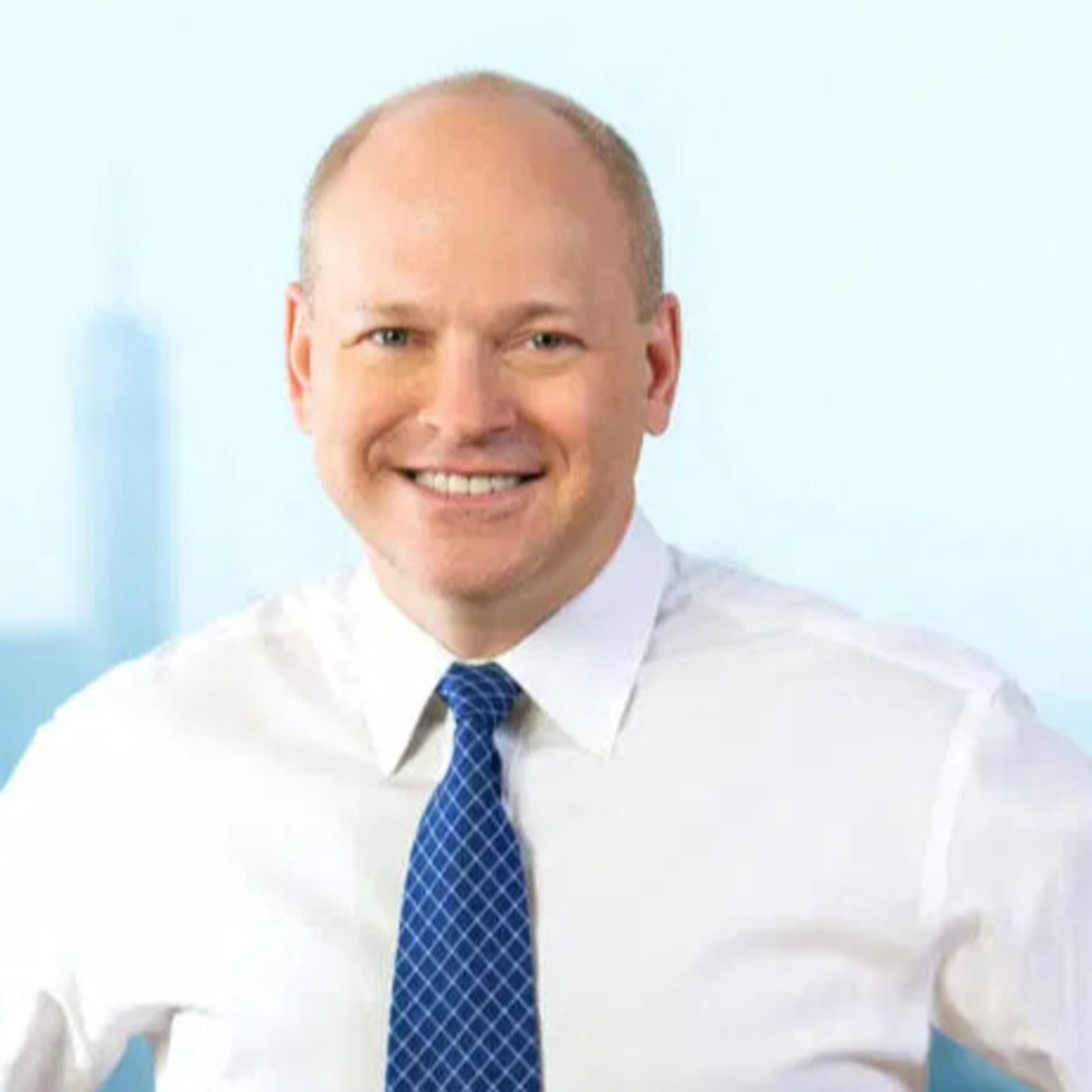
Aoifinn Devitt: Devitt, and welcome to the 50 Faces Podcast, a podcast committed to revealing the richness and diversity of the world of investment by focusing on its people and their stories. I’m joined today by Rich Nuzzum, who is Head of OCIO at Franklin Templeton. He joined Franklin Templeton from Mercer, where he spent more than 3 decades providing investment consulting advice to institutional investors. He holds an MBA in Analytic Finance and Accounting from the University of Chicago. And a bachelor’s degree in mathematical sciences and mathematical economic analysis from Rice University. He also did graduate work in international economics at Tokyo University. Welcome, Rich. Thanks for joining me today.
Rich: Thanks very much for having me on.
Aoifinn Devitt: Well, I’d love to talk about your background and career journey. Can you talk us through that? And then I’m going to definitely ask about Tokyo.
Rich: Yeah, sure. So I’m the son of two school teachers, and that had pros and cons. The pros was I got to go to some really good schools that they taught at, and the cons included that my dad would know and my mom would know if I bombed a test blessed before I did because all the other teachers were their friends. But really blessed with a very strong education up through high school and then was awarded a scholarship, a full scholarship to attend Rice University for undergrad, and then earned another fellowship to study, again a full scholarship to study at Tokyo University for graduate school. So I didn’t know about endowments as investors at that point. I didn’t know where the money came from, but I owe a lot to families that gave money to those schools and those schools for setting up an endowment and scholarship that enabled me to get a very strong education coming from a household where we had two teachers’ salaries to support myself and my two brothers.
Aoifinn Devitt: Well, that’s wonderful how it’s coming full circle now in your career today that you are contributing essentially to the health of those endowments through helping them on the investment side. And I am intrigued by the Tokyo stint. Can you tell me a little bit about that? And was it all through Japanese? And I’d love to hear how that molded you. As an investor, as a professional?
Rich: Yeah, so I was awarded what they call a Mombusho Fellowship by the Japanese Ministry of Education to study at Tokyo University. And I’d had a year of Japanese language. When I got off the plane, I quickly realized nobody in Japan had studied the same textbooks I had. I was much less good at speaking Japanese than I thought I was. And all of my courses were in Japanese. All the discussion, it was mainly discussion format, and about half the readings were Japanese, half English. So the English readings were a bit easier. So I was at Tokyo University to study international economics, and that was great. But really, I was spending most of my time trying to progress my knowledge of spoken and written Japanese language. The cultural immersion was incredible as a young adult to get dropped into the deep end that way. I was one of two non-Japanese in the international economics programs, and even the other guy was half Japanese. So I really kind of stood out in that classroom. And Japan’s one of the places where the culture is much less Americanized, Westernized than in many other parts of the world, even developing and frontier parts of the world. And it’s still one of the places where you go for business, you’re expected to bring your interpreter. If you don’t speak Japanese, that’s your problem. It’s not the client’s. Whereas in a lot of other countries, English as a second language is the main business language. So I got dumped in the deep end on language and on culture, and I had that early experience of doing something really difficult. I was used to making good grades in classes and suddenly I kind of barely understood the class discussion, had difficulty getting the readings done on time, horrible difficulties writing essays in Japanese to respond to questions if I even understood the question. But that was all good in terms of building resiliency and nothing I’ve done in my life after that has been remotely as difficult as trying to make grades in graduate school at Tokyo University when I barely spoke the language.
Aoifinn Devitt: That does seem extremely difficult for sure. And I’d love to then ask about your investment beliefs because you came out having studied economics and maybe the exposure to it, certainly a different market may have affected that and maybe gives you better understanding as to how nuances manifest on the ground. And then after 3 decades at Mercer, how would you say, do you have any crystallized investment beliefs at this point and have they changed over time?
Rich: Well, for my part of the value chain, the part I focused on, which is helping clients with objectives, governance, and strategic asset allocation, and then helping them pick investments investment managers, investment strategies, and implement that through. The main thing I’ve learned and continually seen reinforced over 35 years so far is that it’s the soft skills that are hard. Listening actively to people, understanding their questions, where they’re coming from, surfacing their risk tolerance, and really helping diverse groups, investment committees, boards, management committees, helping diverse groups come together when there’s a lot of uncertainty, and they’re taking high-stakes decisions. They’re potentially embracing liquidity, embracing complexity, trying to fund innovation in the real economy, trying to take advantage of innovation in the investment markets. But with all that, there’s no guarantees. And they’re doing this for large amounts of other people’s money and with a mission in mind. So high stakes amidst uncertainty, diverse decision-making, really the soft skills that a good trusted advisor strategist can provide to that. Are really important. Anybody can run the efficient frontier math. There is art in coming up with good forward-looking assumptions, but the math and the technical stuff, that’s something that anybody smart can get into the books and figure out. The soft skills to really help a committee come together and take decisions and act on them, particularly in the midst of a crisis, that’s really hard. Some other investment beliefs that have been reinforced for me by experience are that Humility is really important in investment, and we express that mathematically by diversifying our portfolios. If we were arrogant about what we thought would happen, we’d just load up on those positions and that would be the portfolio. That’s a recipe for disaster in a crisis. That’s a recipe for disaster when something unforeseen happens. And so I think humility and diversification are both really critical. And one sort of proof statement is you never want to exceed your client’s real risk tolerance. And there’s lots of organizations where even if they think they’re pursuing an economic objective, their stakeholders are actually going to hold them accountable for how they do against peer group. So I, as an extreme case, I was working for one college endowment and a new investment committee chairperson came in and he wanted to compare their results to the median return and the universal returns of their football conference, which had 12 football teams in it. And he pointed out, we benchmark everything else against that conference, teacher salaries, programs, admission rates, so on and so forth. Why wouldn’t we benchmark the endowment return against that? Well, On the one hand, you can kind of see his logic and it’s a simple, readily available comparison. On the other hand, if you’re after a client-specific investment objective, peer group median, what other people like you have got to, isn’t necessarily the right answer. But if you’re going to be peer group median benchmarked, you’d better understand that because that is your default strategic asset allocation. And any risk you take against that in the short term is a coin flip. And if you underperform, then the investment managers, the partners might not be around for the recovery. So I think understanding your client’s real risk tolerance is another, and objectives, and what will be revealed in a crisis, that’s part of the art of helping asset owners make investment decisions.
Aoifinn Devitt: Really interesting. And I think that will probably segue into my question about the OCIO business that you’re focused on today, because OCIO is one of those terms that maybe means something different to different people. And after 3 decades at Mercer, you’re now heading up this business. What’s on your mind, I suppose, today, and what’s your main focus?
Rich: The main way I define OCO is strategic advice bundled with some level of discretionary implementation of the portfolio. But to your point, Aoifinn, there’s 15 or 16 different terms out there— multi-manager, fiduciary management, structured partnership, lift-out, on and on and on. And then there’s variations of OCO. So You asked about what’s happened during my time in industry. When I started involvement with OSEO, it was around helping governance-constrained clients where the investment committee might be very sophisticated, but they decided not to hire in-house investment staff or not to maintain that kind of team going forward. And so they were looking for a partner to handle implementation and they wanted strategic advice bundled with implementation, but in a kind of do-it-for-me model. That’s still an important part of demand in the industry. But what’s grown really quickly and kind of some of the larger mandates are mandates that are more a keep up with me model where they have a sophisticated in-house team, a CIO, other team members who are just as smart, just as expert as our team members. And they’re not looking for us to tell them what to do, but they’re looking for us to add value as they whiteboard that out and figure out how to democratize access to private market alternatives or which areas of the private credit industry are going to offer the best diversification diversification opportunity and return enhancement going forward. They’re struggling with cutting-edge issues and investments, and they want a partner who’s going to add value to that. But it’s a partner, it’s not somebody to tell them what to do. And in implementation, again, we’re going to do that together. So that keep-up-with-me model of OCO is growing really quickly. And then since joining Franklin Templeton, I’ve gotten a lot more exposure to retail and defined contribution financial intermediaries. Which is where the democratization of access to private market alternatives is playing out globally. And we’re helping individuals diversify their portfolios at a time when public market equities have never been more highly valued nor as concentrated as they are today. And so I think diversification is really going to matter and have a chance to pay off going forward. So I feel like democratizing access to private market alternatives is hugely important, is also hugely difficult. And so in that retail space, there’s another definition of OCO, which is not strategic advice bundled with discretionary implementation, but instead it’s our head office CIO function used to maintain approved lists for us, model portfolios, did our risk tolerance questionnaire, loaded up assumptions into our optimizer, did all these things for us. Even at our scale, we need to focus our resources on serving our clients. Can you help with that? So it’s outsourcing in the sense of Can you partner with our in-house team to leverage them and augment them and lend your scale to do things better and cheaper and faster than they might have, including coming out with market commentary when there’s a crisis or an unexpected Fed action or an unexpected employment report? Just get stuff into the hands of our advisors so we can do a better job with our clients. So that definition of wholesale is also out there now, which doesn’t necessarily bring discretionary management of assets with it. But it is kind of mission critical to retail and defined contribution financial intermediaries that are trying every day to do more for their advisors and customers with the same or less resources.
Aoifinn Devitt: And Franklin Templeton has that over $1.6 trillion in assets as a firm. Clearly there are some products there such as private credit products among many that could be used. Do you have an open architecture approach to your OCIO or what’s your approach to using in-house products?
Rich: We do. My team can access any capability from any investment manager in the industry and we do allocate allocate capital to a lot of non-affiliated investment managers. Having said that, if you look at AUM growth in the OCIO industry, it is clear that a lot of clients are opting for what I’ll call a vertically integrated model, where at least part of the implementation at the securities management level is done in-house. And I’ll give you two concrete examples of why that potentially has benefit. One is, if you think back to the global financial crisis, when swaps traded through treasuries and yield spreads gapped out on credit, high yield, distressed debt, there was a need for a change in basically every fixed income portfolio on the planet, either to get a better match with liabilities or to grab a hold of some of those opportunities if the client had liquidity and risk budget available. In a vertically integrated model, OCIOs were able to make those adjustments for clients within hours or days. In the worst case, they had to go back to the client and say, our guidelines specify X in this market environment. Based on our understanding of your strategy, we think you should want us to do Y. If you want us to do Y, we need you to sign here to modify our guidelines. Is that okay? And that was a quick conversation. And then they could implement that within hours, or maybe the conversation took a couple days. For a non-vertically integrated OCO, one with no underlying securities management capabilities, they might have been quick to recognize the same threats, the same need for change, the same opportunities. But once the client said yes, it took days to weeks to appoint new sub-advisors, open custody accounts for those sub-advisors, physically move capital around. So the whole market learned in the global financial crisis and has been reminded in other crises, a vertically integrated OSO can be much more agile than a non-vertically integrated OSO, and that can matter economically. The other area where vertical integration is adding value is in access to semi-liquid and evergreen private market alternatives. Where if you have the scale to build those multi-client pooling funds and you have those available and you really understand the content down, not just to the underlying general partners but to what they’re holding, you can make diversification, liquidity, access, return enhancement all available to your clients relatively quickly and easily. And to clients that may need what I’ll call esoteric liquidity, where that particular client may need liquidity at a time when other clients aren’t going to be getting in line, there’s no structure that’s completely guaranteed to be liquid in a crisis. We saw that in the global financial crisis where in the US we gated passively managed index funds as an industry because security lending pools had issues. But the semi-liquid evergreen structures do offer individual client liquidity absent a huge market crisis, and that’s very attractive. But it’s difficult to do that if you’re not vertically integrated in the private market space.
Aoifinn Devitt: We’re going to take a quick break to hear from Evanston Capital Management, one of the sponsors of this podcast series. I sat down with Kristin Vangelder, who is partner and co-CIO at Evanston Capital Management, and I asked her to describe her investment philosophy and some of the culture at the firm.
Speaker C: Don’t be too afraid to make mistakes. This industry, I think, attracts a lot of Type A personalities and people that can have a hard time accepting anything that’s less than perfect. And I think I put myself in that category, but mistakes do provide these important opportunities for growth. And I think really lasting lessons that help shape you as a person, as an investor, and as a team, as an investment team at Evanston, we often talk about how only making the safe decisions or investing with the crowd likely isn’t the way to, you know, generate distinguished results.
Aoifinn Devitt: And now back to the show. As we look to 2026 now, so you mentioned democratization of alternatives, private credit, to name a few, some of the areas that you’re focused on. Any other, I suppose, breadth that you are getting requests for, whether that be resilience, maybe portfolio protection, some of the concern to maybe lock in some of the returns you’ve seen, anything to do with impact? Jess, I’d love to hear some of the range of questions that you’re getting asked and that you’re tackling.
Rich: So it’s always a mistake to generalize across clients, but I’ll try to aggregate it up. I think Conversations about private credit are ubiquitous because clients can observe the yield to maturity at purchase. So they kind of know the expected return. It’s not somebody putting a finger in the wind or talking about 180 years of history or building a bottom-up building block. They can observe the yield to maturity on a given security or set of securities and then go from there to decide, is this an area we want to take risk in or not? And the diversification opportunity is real as well as the return enhancement. So private credit, you started your question with that. That is the hottest area. But infrastructure and impact investing are right behind, and there’s lots of flavors of infrastructure. But again, return enhancement with diversification. And in the case of infrastructure, you’re frequently locking in a cash flow yield for the long term with some inflation hedging, some real return advantages. So that is attractive. We’ve seen a big shift in the industry. Again, really dangerous to generalize about anything to do with environmental, social, or governance issues. But for clients that care about a particular issue, shifting from screening their portfolio or divestment as an approach or tilting to impact investing to capture an economic return and also have impact on that issue, that the money’s moving towards impact investing in the industry. And so that remains a very hot area, but very client-specific by issue and geography and where in the value chain they see the economic activity are having that impact. And then hedge funds are back and as a smarter way to try to beat the public equity markets, also for risk mitigation or for inflation hedging or any combination of the three. And the way I’d explain that is hedge funds have actually delivered equity-like expected returns with bond-like volatility. What they haven’t done is keep up with this huge bull market in public equities, but they shouldn’t have been expected to do that. The value prop was equity-like expected returns with bond-like volatility, and they delivered that for 3 decades in a row. And so as clients look forward and think about, well, I’ve got a lot of public market equity exposure and I’ve got similar betas in my private equity exposure and even coming through in my private credit spreads, how do I get diversification? Hedge funds are getting another look and you can customize your mix to get return enhancement, risk mitigation, inflation hedging. Or mix of all three. But if you believe in active management at all, let’s say that you’re my favorite active manager. If I give you a long-only portfolio that’s benchmark constrained, okay, you may be able to beat the market. If I also give you access to, hey, you can also sell short, you can be niche and concentrated, you can use leverage, you can use derivatives, you can be very esoteric because I’m going to complement you with other managers. Well, now you have a much better chance of beating the market because I’m taking all the shackles off. It’s, it’s Aoifinn unconstrained. So hedge funds getting another look also, and another look when clients are a little bit worried about liquidity. And so hedge fund managed accounts or kind of separately custodied accounts, they can control the liquidity. They can have position level transparency now that maybe wasn’t readily available from good names 10 years ago, or it was difficult to set that up administratively. So hedge funds have evolved, but they are getting another look by clients who want real diversification, return enhancement, and inflation hedging., but without continuing to eat into their liquidity budget.
Aoifinn Devitt: My last question on the technical side, how much has the concept of total return investing captured the imagination of clients broadly? We hear a lot in isolated cases at large, say pension funds, endowments, and certainly some of the industry groups are speaking a lot about it. There was an article in the Financial Times about, I think they called it the buzzy concept of total return. How do you see that and do you see it as being fundamentally different.
Rich: I think when you have a client that can take a total return or total portfolio approach or otherwise pursue an economic objective and not get tied up in asset class labels and asset class definitions and really embrace innovation in the real economy and fund that and innovation in the investment management industry. So use new forms of private credit, new forms of infrastructure, debt or equity. That’s great. The only danger in that is if your ultimate stakeholders are peer group median benchmarked and you pursue that kind of approach in the short term, you’re flipping a coin 50/50 on whether you’ll be able to maintain the program. If you outperform your peer group median, you’re fine. If after 3 to 5 years you did everything that an investment professional would agree with, you diversified, you eliminated your home country bias, you were really sophisticated, you picked great names. But what your stakeholders are seeing is this huge J-curve in private markets. You’re paying much more fees than your peers, and because your fees were home country biased, maybe loaded up on the Mag 7, loaded up on the US dollar, loaded up on the US economy, know, you didn’t have a very diversified portfolio for the trailing 1, 3, 5, and 10 years, they’ve crushed you at lower fees. That’s really hard to explain to stakeholders that are not really sophisticated investment professionals. And we’ve seen a number of programs get whipsawed and entire investment committees fired, entire staffs fired, where they pursued a more sophisticated approach, a diversified approach with more allocation to private markets and so on. And they didn’t really have stakeholder buy-in to that. And their stakeholders looked at the results and said, well, we’re not going to let this keep running because we don’t understand why we’re underperforming a 60/40 portfolio underperforming all our peers and paying so much more in external fees and these huge staff salaries to get less return. So it just doesn’t compute. So again, if your client’s peer group median benchmarked, you’d better understand that. And it’s not like somebody is going to hand you a piece of paper that says we’re peer group median benchmarked. You have to look at their governance, their objectives, their stakeholders, how they get funded, and think about is this robust enough that it’s going to survive a more naive portfolio outperforming in the short term so that you can stick around for all those private market investments to pay off net of fees.
Aoifinn Devitt: Definitely a fascinating time we’re at in terms of the evolution. I’d love to just go to some personal reflections now. So 3 decades at Mercer, I’m sure you’ve seen much evolution over the course of that time, a changing industry, changing asset classes, and there probably were some highs and lows in there, whether market related or not. Was there anything that you learned lessons from that you can share here or any particular high points you can share?
Rich: So I’m flattered to get the chance to share lessons learned. I don’t feel like I’m really old enough to do that, but I’ll try. In terms of career advice for people, when I look back over my career, my biggest career opportunities, the things that really let me become senior in the industry and influence large organizations and my biggest personal learnings came out of my biggest disappointments. So the 5 or 6 times that I got passed over for the job I wanted, didn’t get it, it went to a colleague and I got asked to do something else, those turned out to be my biggest learning opportunities. You know, there was a point in my career about 20 years ago now when the firm named a new global leader for investment consulting, and I, I really wanted that job. I thought I was the best candidate for that job. I just I was so crushed when my longtime boss and mentor, Tim Gardner, went with another really smart, really good colleague for that role. And out of that, I got asked to lead the OCO business instead, which was small and loss-making and not growing and, you know, kind of disappointing everybody. But that got me into the side of the business and really is one of the things that kind of made my career. And I could go through 5 other examples, but when I look back at Every time I got passed over, didn’t get the promotion, was asked to do something else, even, even moved to the side in a reorg structure, you know, lateral move or maybe even down, that turned out to you be, know, the best thing to happen in my career. More recently, in one reorg, I got— my prior employer merged its investment and retirement business, and I got pushed out of the Americas role for investment and asked to lead emerging markets, which was a much smaller business. But I was able to do so well in that role that a year later, when they needed a global leader, I got that job. So I went from getting pushed to the side or pushed down to getting this promotion that I’d only dreamed of, you know, because I was given that chance to shine. Also, by the way, I met the woman who’s now my fiancée. She was in South Africa working, and I never would have, like, been able to meet her if I hadn’t got that job. So both professionally and personally, that paid off massively. I mean, I owe so much to my prior employer for effectively demoted me, but then they recognized the results I was able to achieve in that role and promoted me into the global role. And, and life goes on. So I think for anybody who suffers a huge career setback, disappointment, you know, I owe a lot to my dad because the first 2 times it’s happened, he pointed out, hey, this might be the best thing that ever happened to you because look at the learning opportunity you’ve got doing this and you’re going to do it well and give it a couple of years. And I did. And it paid off every time. So I think Generally in learning, learning comes from your failures. When you go out and succeed, this happens in sports, this happens all over, you know, you don’t learn as much as when you’re failing.
Aoifinn Devitt: I love that concept. Every demotion has a silver lining, I suppose you could say. And congratulations on your engagement as well. That is a wonderful story to come from that. Well, I think we’ve already laced quite a bit of advice throughout this discussion, but I suppose to sew it up, it would be nice to talk about any creed or motto with which you see the world? I think we’ve talked about some advice career-wise, but is there anything you can leave us with in terms of the— whether professional or personal?
Rich: Again, I’m flattered to get asked. I think being nice and being the same person with everybody really, really pays off. And trying to help people. And you never know when, you know, somebody’s trying to sell to you and then 5 years later they end up on an endowment committee and you’re asking them for coaching and you’re really asking them to be a reference for you. You know, so we have long careers. Our industry is actually pretty small, pretty tight, and it functions off word of mouth. And I guess particularly for OSEO services or investment consulting, you know, if you think about in your normal life when you’ve had to pick a lawyer, if you’ve ever needed one, or a contractor for your house or babysitter for your kids, you do it off word of mouth reputation. You have your friends and family work with this person. Do they think they’re good? And then when you meet with your finalists, It’s the feel you get. It’s do, do I think they’re going to do a good job for me? And if they do, you’ll tell other people to use them. And if they don’t, you’ll tell other people, whatever you do, don’t use them. So I think being nice and consistent and doing a good job. And you asked for a motto. So it’s today’s success breeds tomorrow’s opportunity. And again, sometimes even your failure. I’ve had a half dozen clients where the first time we went for it, we didn’t win. You know, they had a relationship with somebody else. Somebody else did better pre-consulting or whatever on the day. They couldn’t move other committee members. And then 3 years later, they came back. We got another chance. We won the business. And in one case, I went to O’Hare afterwards and ran into one of the board members at a Johnny Rockets hamburger place. We’re both trying to get some food before we get on our flights. And he said, Rich, we should have hired you 3 years ago. That was a big mistake, but we’ve got you now. And so, you know, even when you miss out on an opportunity, doing it gracefully, following up, staying in touch, Sometimes you have to be number 2 before you can be number 1 in the industry. But that does pay off. We’re all hopefully in this for the long term and with life expectancy and healthy living increasing and so on, we could be in this for the very long term. There aren’t that many of us who have defined benefit plans, so we’re probably going to be in this for the long term. It’s a great space to be in. We get to fund innovation in the real economy. We get to learn every day about new things, get to follow the markets. There’s a lot to love in this industry, but I think being nice really pays off.
Aoifinn Devitt: Well, those are wonderful reflections. And since you are so nice, I’m going to ask one more question, if that’s okay. And the reason I’m asking is because I think it’s very pertinent for some of the pension funds in the UK right now, of which are now required to incorporate advice as part of their pooling structure. These are some of the local government’s pooled pension funds. And I think the question is how you transition from being a consultant to thinking like an owner, to thinking like that CIO, because OCIO, for me, the meaning of that is you are putting yourself in the shoes of a CIO of that entity. It’s somewhat different from being a consultant. Do you develop skills to think like an owner?
Rich: I think there’s a continuum of governance models. And as a consultant, because I lived and worked 11 years in Asia and the client base there were sovereign wealth funds and large insurers, you know, wealth is very concentrated in Asia and most of the countries, the top 2 or 3 funds have 95% of the assets and there isn’t really a mid-market. My clients were living with risk daily and had a daily dashboard. So even as their consultant, It wasn’t quarterly meetings and looking at information that was 6 weeks old and trying to steer the ship that way. It was, “This happened in the markets yesterday. Rich, you’re our advisor. You understand our strategy. You understand how we’re set up. What do we do about it? And can we do it in-house or do we do it external?” And so what I’m trying to say is there are consultants where they’ve had to live with risk daily because their clients live with risk daily. And so you can be a consultant and still have that mindset. More generally, if you think of the investment consulting model as You’re going to meet with the committee quarterly. You’re going to be looking at information that’s 4 to 6 weeks old, and you’re trying to drive the car by looking in the rearview mirror. Okay, there’s a huge gap between that and living with risk day in and day out on a daily dashboard. And, and what you can do when you’re driving by looking in the rearview mirror is pretty constrained. You can still set a good strategic asset allocation. You can still use good investment managers and fund innovation for the long term on a forward-looking basis. But you’re going to miss a lot of short-term opportunities because you’re just not fast enough. You know, as a concrete example, in the global financial crisis, we had 6 to 9 months where distressed debt and high-yield debt were offering these huge opportunities when you could buy secondary on the private markets at, you know, $0.60 on the dollar instead of $0.80 or $0.85 on the dollar against NAV. In the COVID drawdown, that similar period was 2 to 6 weeks depending on which opportunity we’re talking about. In the gilts crisis, it was 2 to 3 days. With the mini crisis, banking this, it was almost less than a trading day because the two big troughs happened over a weekend. And we went into the weekend thinking we had a big problem. By the end of the weekend, the regulators and some private market firms kind of announced we’re going to do X to rescue these banks two weekends in a row. So what I’m trying to get across is the duration of those opportunities is becoming more fleeting. And so the advantage of living daily, whether you’re in a consulting model with in-house staff or whether, you know, you’re in an wholesale model, the advantage of living daily is probably bigger on a go-forward basis in terms of grabbing opportunities, even mitigating the risk of threats. But if you’re in that traditional consulting model, you can still play for the long term and try to make a comparative advantage about you’re long-term oriented. Maybe you’re not path dependent, maybe you have a good liquidity budget. You can try to play your strengths, but it is a more constrained governance model.
Aoifinn Devitt: Well, that’s a very thorough answer. I like the focus on the daily, that kind the knot in your stomach that you get when you watch daily can sometimes be an important connector between the OCIO and the client. So thank you so much, Rich. We started with a lot of self-awareness here in this conversation, speaking about your roots and how you’re privileged to be able to attend some schools thanks to some endowments. And then we ended with a sense of how the career has come full circle. So thank you so much for coming here and sharing your insights with us.
Rich: Thanks for giving me the opportunity. Really appreciate it.
Aoifinn Devitt: I’m Aoifinn Devitt. Thank you for listening to the 50 Faces podcast. If you liked what you heard and would like to tune in to hear from more inspiring investors and their personal journeys, please subscribe on Apple Podcasts or wherever you get your podcasts. This podcast is for informational purposes only and should not be construed as investment advice, and all views are personal and should not be attributed to the organizations and affiliations of the host or any guest.
Aoifinn Devitt: This podcast series is kindly sponsored by Evanston Capital. For over 20 years, Evanston Capital has had a key focus in identifying early-stage investment managers it believes are capable of generating long-term value-added returns in complex, innovative strategy areas. The series is also sponsored by Alvine Capital. Alvine Capital is a specialist investment manager and placement boutique with a particular focus on alternative assets, a significant presence in London and Stockholm.
Rich: But what’s grown really quickly and kind of some of the larger mandates are mandates that are more a keep up with me model where they have a sophisticated in-house team, a CIO, other team members who are just as smart, just as expert as our team members. And they’re not looking for us to tell them what to do, but they’re looking for us to add value as they whiteboard that out and figure out how to democratize access to private market alternatives or which areas of the private credit industry are going to offer the best diversification opportunity and return enhancement going forward. They’re struggling with cutting-edge issues and investments and they want a partner who’s going to add value to that. But it’s a partner. It’s not somebody to tell them what to do. And in implementation, again, we’re going to do that together. I’m Aoifinn.
Aoifinn Devitt: Devitt, and welcome to the 50 Faces Podcast, a podcast committed to revealing the richness and diversity of the world of investment by focusing on its people and their stories. I’m joined today by Rich Nuzzum, who is Head of OCIO at Franklin Templeton. He joined Franklin Templeton from Mercer, where he spent more than 3 decades providing investment consulting advice to institutional investors. He holds an MBA in Analytic Finance and Accounting from the University of Chicago. And a bachelor’s degree in mathematical sciences and mathematical economic analysis from Rice University. He also did graduate work in international economics at Tokyo University. Welcome, Rich. Thanks for joining me today.
Rich: Thanks very much for having me on.
Aoifinn Devitt: Well, I’d love to talk about your background and career journey. Can you talk us through that? And then I’m going to definitely ask about Tokyo.
Rich: Yeah, sure. So I’m the son of two school teachers, and that had pros and cons. The pros was I got to go to some really good schools that they taught at, and the cons included that my dad would know and my mom would know if I bombed a test blessed before I did because all the other teachers were their friends. But really blessed with a very strong education up through high school and then was awarded a scholarship, a full scholarship to attend Rice University for undergrad, and then earned another fellowship to study, again a full scholarship to study at Tokyo University for graduate school. So I didn’t know about endowments as investors at that point. I didn’t know where the money came from, but I owe a lot to families that gave money to those schools and those schools for setting up an endowment and scholarship that enabled me to get a very strong education coming from a household where we had two teachers’ salaries to support myself and my two brothers.
Aoifinn Devitt: Well, that’s wonderful how it’s coming full circle now in your career today that you are contributing essentially to the health of those endowments through helping them on the investment side. And I am intrigued by the Tokyo stint. Can you tell me a little bit about that? And was it all through Japanese? And I’d love to hear how that molded you. As an investor, as a professional?
Rich: Yeah, so I was awarded what they call a Mombusho Fellowship by the Japanese Ministry of Education to study at Tokyo University. And I’d had a year of Japanese language. When I got off the plane, I quickly realized nobody in Japan had studied the same textbooks I had. I was much less good at speaking Japanese than I thought I was. And all of my courses were in Japanese. All the discussion, it was mainly discussion format, and about half the readings were Japanese, half English. So the English readings were a bit easier. So I was at Tokyo University to study international economics, and that was great. But really, I was spending most of my time trying to progress my knowledge of spoken and written Japanese language. The cultural immersion was incredible as a young adult to get dropped into the deep end that way. I was one of two non-Japanese in the international economics programs, and even the other guy was half Japanese. So I really kind of stood out in that classroom. And Japan’s one of the places where the culture is much less Americanized, Westernized than in many other parts of the world, even developing and frontier parts of the world. And it’s still one of the places where you go for business, you’re expected to bring your interpreter. If you don’t speak Japanese, that’s your problem. It’s not the client’s. Whereas in a lot of other countries, English as a second language is the main business language. So I got dumped in the deep end on language and on culture, and I had that early experience of doing something really difficult. I was used to making good grades in classes and suddenly I kind of barely understood the class discussion, had difficulty getting the readings done on time, horrible difficulties writing essays in Japanese to respond to questions if I even understood the question. But that was all good in terms of building resiliency and nothing I’ve done in my life after that has been remotely as difficult as trying to make grades in graduate school at Tokyo University when I barely spoke the language.
Aoifinn Devitt: That does seem extremely difficult for sure. And I’d love to then ask about your investment beliefs because you came out having studied economics and maybe the exposure to it, certainly a different market may have affected that and maybe gives you better understanding as to how nuances manifest on the ground. And then after 3 decades at Mercer, how would you say, do you have any crystallized investment beliefs at this point and have they changed over time?
Rich: Well, for my part of the value chain, the part I focused on, which is helping clients with objectives, governance, and strategic asset allocation, and then helping them pick investments investment managers, investment strategies, and implement that through. The main thing I’ve learned and continually seen reinforced over 35 years so far is that it’s the soft skills that are hard. Listening actively to people, understanding their questions, where they’re coming from, surfacing their risk tolerance, and really helping diverse groups, investment committees, boards, management committees, helping diverse groups come together when there’s a lot of uncertainty, and they’re taking high-stakes decisions. They’re potentially embracing liquidity, embracing complexity, trying to fund innovation in the real economy, trying to take advantage of innovation in the investment markets. But with all that, there’s no guarantees. And they’re doing this for large amounts of other people’s money and with a mission in mind. So high stakes amidst uncertainty, diverse decision-making, really the soft skills that a good trusted advisor strategist can provide to that. Are really important. Anybody can run the efficient frontier math. There is art in coming up with good forward-looking assumptions, but the math and the technical stuff, that’s something that anybody smart can get into the books and figure out. The soft skills to really help a committee come together and take decisions and act on them, particularly in the midst of a crisis, that’s really hard. Some other investment beliefs that have been reinforced for me by experience are that Humility is really important in investment, and we express that mathematically by diversifying our portfolios. If we were arrogant about what we thought would happen, we’d just load up on those positions and that would be the portfolio. That’s a recipe for disaster in a crisis. That’s a recipe for disaster when something unforeseen happens. And so I think humility and diversification are both really critical. And one sort of proof statement is you never want to exceed your client’s real risk tolerance. And there’s lots of organizations where even if they think they’re pursuing an economic objective, their stakeholders are actually going to hold them accountable for how they do against peer group. So I, as an extreme case, I was working for one college endowment and a new investment committee chairperson came in and he wanted to compare their results to the median return and the universal returns of their football conference, which had 12 football teams in it. And he pointed out, we benchmark everything else against that conference, teacher salaries, programs, admission rates, so on and so forth. Why wouldn’t we benchmark the endowment return against that? Well, On the one hand, you can kind of see his logic and it’s a simple, readily available comparison. On the other hand, if you’re after a client-specific investment objective, peer group median, what other people like you have got to, isn’t necessarily the right answer. But if you’re going to be peer group median benchmarked, you’d better understand that because that is your default strategic asset allocation. And any risk you take against that in the short term is a coin flip. And if you underperform, then the investment managers, the partners might not be around for the recovery. So I think understanding your client’s real risk tolerance is another, and objectives, and what will be revealed in a crisis, that’s part of the art of helping asset owners make investment decisions.
Aoifinn Devitt: Really interesting. And I think that will probably segue into my question about the OCIO business that you’re focused on today, because OCIO is one of those terms that maybe means something different to different people. And after 3 decades at Mercer, you’re now heading up this business. What’s on your mind, I suppose, today, and what’s your main focus?
Rich: The main way I define OCO is strategic advice bundled with some level of discretionary implementation of the portfolio. But to your point, Aoifinn, there’s 15 or 16 different terms out there— multi-manager, fiduciary management, structured partnership, lift-out, on and on and on. And then there’s variations of OCO. So You asked about what’s happened during my time in industry. When I started involvement with OSEO, it was around helping governance-constrained clients where the investment committee might be very sophisticated, but they decided not to hire in-house investment staff or not to maintain that kind of team going forward. And so they were looking for a partner to handle implementation and they wanted strategic advice bundled with implementation, but in a kind of do-it-for-me model. That’s still an important part of demand in the industry. But what’s grown really quickly and kind of some of the larger mandates are mandates that are more a keep up with me model where they have a sophisticated in-house team, a CIO, other team members who are just as smart, just as expert as our team members. And they’re not looking for us to tell them what to do, but they’re looking for us to add value as they whiteboard that out and figure out how to democratize access to private market alternatives or which areas of the private credit industry are going to offer the best diversification diversification opportunity and return enhancement going forward. They’re struggling with cutting-edge issues and investments, and they want a partner who’s going to add value to that. But it’s a partner, it’s not somebody to tell them what to do. And in implementation, again, we’re going to do that together. So that keep-up-with-me model of OCO is growing really quickly. And then since joining Franklin Templeton, I’ve gotten a lot more exposure to retail and defined contribution financial intermediaries. Which is where the democratization of access to private market alternatives is playing out globally. And we’re helping individuals diversify their portfolios at a time when public market equities have never been more highly valued nor as concentrated as they are today. And so I think diversification is really going to matter and have a chance to pay off going forward. So I feel like democratizing access to private market alternatives is hugely important, is also hugely difficult. And so in that retail space, there’s another definition of OCO, which is not strategic advice bundled with discretionary implementation, but instead it’s our head office CIO function used to maintain approved lists for us, model portfolios, did our risk tolerance questionnaire, loaded up assumptions into our optimizer, did all these things for us. Even at our scale, we need to focus our resources on serving our clients. Can you help with that? So it’s outsourcing in the sense of Can you partner with our in-house team to leverage them and augment them and lend your scale to do things better and cheaper and faster than they might have, including coming out with market commentary when there’s a crisis or an unexpected Fed action or an unexpected employment report? Just get stuff into the hands of our advisors so we can do a better job with our clients. So that definition of wholesale is also out there now, which doesn’t necessarily bring discretionary management of assets with it. But it is kind of mission critical to retail and defined contribution financial intermediaries that are trying every day to do more for their advisors and customers with the same or less resources.
Aoifinn Devitt: And Franklin Templeton has that over $1.6 trillion in assets as a firm. Clearly there are some products there such as private credit products among many that could be used. Do you have an open architecture approach to your OCIO or what’s your approach to using in-house products?
Rich: We do. My team can access any capability from any investment manager in the industry and we do allocate allocate capital to a lot of non-affiliated investment managers. Having said that, if you look at AUM growth in the OCIO industry, it is clear that a lot of clients are opting for what I’ll call a vertically integrated model, where at least part of the implementation at the securities management level is done in-house. And I’ll give you two concrete examples of why that potentially has benefit. One is, if you think back to the global financial crisis, when swaps traded through treasuries and yield spreads gapped out on credit, high yield, distressed debt, there was a need for a change in basically every fixed income portfolio on the planet, either to get a better match with liabilities or to grab a hold of some of those opportunities if the client had liquidity and risk budget available. In a vertically integrated model, OCIOs were able to make those adjustments for clients within hours or days. In the worst case, they had to go back to the client and say, our guidelines specify X in this market environment. Based on our understanding of your strategy, we think you should want us to do Y. If you want us to do Y, we need you to sign here to modify our guidelines. Is that okay? And that was a quick conversation. And then they could implement that within hours, or maybe the conversation took a couple days. For a non-vertically integrated OCO, one with no underlying securities management capabilities, they might have been quick to recognize the same threats, the same need for change, the same opportunities. But once the client said yes, it took days to weeks to appoint new sub-advisors, open custody accounts for those sub-advisors, physically move capital around. So the whole market learned in the global financial crisis and has been reminded in other crises, a vertically integrated OSO can be much more agile than a non-vertically integrated OSO, and that can matter economically. The other area where vertical integration is adding value is in access to semi-liquid and evergreen private market alternatives. Where if you have the scale to build those multi-client pooling funds and you have those available and you really understand the content down, not just to the underlying general partners but to what they’re holding, you can make diversification, liquidity, access, return enhancement all available to your clients relatively quickly and easily. And to clients that may need what I’ll call esoteric liquidity, where that particular client may need liquidity at a time when other clients aren’t going to be getting in line, there’s no structure that’s completely guaranteed to be liquid in a crisis. We saw that in the global financial crisis where in the US we gated passively managed index funds as an industry because security lending pools had issues. But the semi-liquid evergreen structures do offer individual client liquidity absent a huge market crisis, and that’s very attractive. But it’s difficult to do that if you’re not vertically integrated in the private market space.
Aoifinn Devitt: We’re going to take a quick break to hear from Evanston Capital Management, one of the sponsors of this podcast series. I sat down with Kristin Vangelder, who is partner and co-CIO at Evanston Capital Management, and I asked her to describe her investment philosophy and some of the culture at the firm.
Speaker C: Don’t be too afraid to make mistakes. This industry, I think, attracts a lot of Type A personalities and people that can have a hard time accepting anything that’s less than perfect. And I think I put myself in that category, but mistakes do provide these important opportunities for growth. And I think really lasting lessons that help shape you as a person, as an investor, and as a team, as an investment team at Evanston, we often talk about how only making the safe decisions or investing with the crowd likely isn’t the way to, you know, generate distinguished results.
Aoifinn Devitt: And now back to the show. As we look to 2026 now, so you mentioned democratization of alternatives, private credit, to name a few, some of the areas that you’re focused on. Any other, I suppose, breadth that you are getting requests for, whether that be resilience, maybe portfolio protection, some of the concern to maybe lock in some of the returns you’ve seen, anything to do with impact? Jess, I’d love to hear some of the range of questions that you’re getting asked and that you’re tackling.
Rich: So it’s always a mistake to generalize across clients, but I’ll try to aggregate it up. I think Conversations about private credit are ubiquitous because clients can observe the yield to maturity at purchase. So they kind of know the expected return. It’s not somebody putting a finger in the wind or talking about 180 years of history or building a bottom-up building block. They can observe the yield to maturity on a given security or set of securities and then go from there to decide, is this an area we want to take risk in or not? And the diversification opportunity is real as well as the return enhancement. So private credit, you started your question with that. That is the hottest area. But infrastructure and impact investing are right behind, and there’s lots of flavors of infrastructure. But again, return enhancement with diversification. And in the case of infrastructure, you’re frequently locking in a cash flow yield for the long term with some inflation hedging, some real return advantages. So that is attractive. We’ve seen a big shift in the industry. Again, really dangerous to generalize about anything to do with environmental, social, or governance issues. But for clients that care about a particular issue, shifting from screening their portfolio or divestment as an approach or tilting to impact investing to capture an economic return and also have impact on that issue, that the money’s moving towards impact investing in the industry. And so that remains a very hot area, but very client-specific by issue and geography and where in the value chain they see the economic activity are having that impact. And then hedge funds are back and as a smarter way to try to beat the public equity markets, also for risk mitigation or for inflation hedging or any combination of the three. And the way I’d explain that is hedge funds have actually delivered equity-like expected returns with bond-like volatility. What they haven’t done is keep up with this huge bull market in public equities, but they shouldn’t have been expected to do that. The value prop was equity-like expected returns with bond-like volatility, and they delivered that for 3 decades in a row. And so as clients look forward and think about, well, I’ve got a lot of public market equity exposure and I’ve got similar betas in my private equity exposure and even coming through in my private credit spreads, how do I get diversification? Hedge funds are getting another look and you can customize your mix to get return enhancement, risk mitigation, inflation hedging. Or mix of all three. But if you believe in active management at all, let’s say that you’re my favorite active manager. If I give you a long-only portfolio that’s benchmark constrained, okay, you may be able to beat the market. If I also give you access to, hey, you can also sell short, you can be niche and concentrated, you can use leverage, you can use derivatives, you can be very esoteric because I’m going to complement you with other managers. Well, now you have a much better chance of beating the market because I’m taking all the shackles off. It’s, it’s Aoifinn unconstrained. So hedge funds getting another look also, and another look when clients are a little bit worried about liquidity. And so hedge fund managed accounts or kind of separately custodied accounts, they can control the liquidity. They can have position level transparency now that maybe wasn’t readily available from good names 10 years ago, or it was difficult to set that up administratively. So hedge funds have evolved, but they are getting another look by clients who want real diversification, return enhancement, and inflation hedging., but without continuing to eat into their liquidity budget.
Aoifinn Devitt: My last question on the technical side, how much has the concept of total return investing captured the imagination of clients broadly? We hear a lot in isolated cases at large, say pension funds, endowments, and certainly some of the industry groups are speaking a lot about it. There was an article in the Financial Times about, I think they called it the buzzy concept of total return. How do you see that and do you see it as being fundamentally different.
Rich: I think when you have a client that can take a total return or total portfolio approach or otherwise pursue an economic objective and not get tied up in asset class labels and asset class definitions and really embrace innovation in the real economy and fund that and innovation in the investment management industry. So use new forms of private credit, new forms of infrastructure, debt or equity. That’s great. The only danger in that is if your ultimate stakeholders are peer group median benchmarked and you pursue that kind of approach in the short term, you’re flipping a coin 50/50 on whether you’ll be able to maintain the program. If you outperform your peer group median, you’re fine. If after 3 to 5 years you did everything that an investment professional would agree with, you diversified, you eliminated your home country bias, you were really sophisticated, you picked great names. But what your stakeholders are seeing is this huge J-curve in private markets. You’re paying much more fees than your peers, and because your fees were home country biased, maybe loaded up on the Mag 7, loaded up on the US dollar, loaded up on the US economy, know, you didn’t have a very diversified portfolio for the trailing 1, 3, 5, and 10 years, they’ve crushed you at lower fees. That’s really hard to explain to stakeholders that are not really sophisticated investment professionals. And we’ve seen a number of programs get whipsawed and entire investment committees fired, entire staffs fired, where they pursued a more sophisticated approach, a diversified approach with more allocation to private markets and so on. And they didn’t really have stakeholder buy-in to that. And their stakeholders looked at the results and said, well, we’re not going to let this keep running because we don’t understand why we’re underperforming a 60/40 portfolio underperforming all our peers and paying so much more in external fees and these huge staff salaries to get less return. So it just doesn’t compute. So again, if your client’s peer group median benchmarked, you’d better understand that. And it’s not like somebody is going to hand you a piece of paper that says we’re peer group median benchmarked. You have to look at their governance, their objectives, their stakeholders, how they get funded, and think about is this robust enough that it’s going to survive a more naive portfolio outperforming in the short term so that you can stick around for all those private market investments to pay off net of fees.
Aoifinn Devitt: Definitely a fascinating time we’re at in terms of the evolution. I’d love to just go to some personal reflections now. So 3 decades at Mercer, I’m sure you’ve seen much evolution over the course of that time, a changing industry, changing asset classes, and there probably were some highs and lows in there, whether market related or not. Was there anything that you learned lessons from that you can share here or any particular high points you can share?
Rich: So I’m flattered to get the chance to share lessons learned. I don’t feel like I’m really old enough to do that, but I’ll try. In terms of career advice for people, when I look back over my career, my biggest career opportunities, the things that really let me become senior in the industry and influence large organizations and my biggest personal learnings came out of my biggest disappointments. So the 5 or 6 times that I got passed over for the job I wanted, didn’t get it, it went to a colleague and I got asked to do something else, those turned out to be my biggest learning opportunities. You know, there was a point in my career about 20 years ago now when the firm named a new global leader for investment consulting, and I, I really wanted that job. I thought I was the best candidate for that job. I just I was so crushed when my longtime boss and mentor, Tim Gardner, went with another really smart, really good colleague for that role. And out of that, I got asked to lead the OCO business instead, which was small and loss-making and not growing and, you know, kind of disappointing everybody. But that got me into the side of the business and really is one of the things that kind of made my career. And I could go through 5 other examples, but when I look back at Every time I got passed over, didn’t get the promotion, was asked to do something else, even, even moved to the side in a reorg structure, you know, lateral move or maybe even down, that turned out to you be, know, the best thing to happen in my career. More recently, in one reorg, I got— my prior employer merged its investment and retirement business, and I got pushed out of the Americas role for investment and asked to lead emerging markets, which was a much smaller business. But I was able to do so well in that role that a year later, when they needed a global leader, I got that job. So I went from getting pushed to the side or pushed down to getting this promotion that I’d only dreamed of, you know, because I was given that chance to shine. Also, by the way, I met the woman who’s now my fiancée. She was in South Africa working, and I never would have, like, been able to meet her if I hadn’t got that job. So both professionally and personally, that paid off massively. I mean, I owe so much to my prior employer for effectively demoted me, but then they recognized the results I was able to achieve in that role and promoted me into the global role. And, and life goes on. So I think for anybody who suffers a huge career setback, disappointment, you know, I owe a lot to my dad because the first 2 times it’s happened, he pointed out, hey, this might be the best thing that ever happened to you because look at the learning opportunity you’ve got doing this and you’re going to do it well and give it a couple of years. And I did. And it paid off every time. So I think Generally in learning, learning comes from your failures. When you go out and succeed, this happens in sports, this happens all over, you know, you don’t learn as much as when you’re failing.
Aoifinn Devitt: I love that concept. Every demotion has a silver lining, I suppose you could say. And congratulations on your engagement as well. That is a wonderful story to come from that. Well, I think we’ve already laced quite a bit of advice throughout this discussion, but I suppose to sew it up, it would be nice to talk about any creed or motto with which you see the world? I think we’ve talked about some advice career-wise, but is there anything you can leave us with in terms of the— whether professional or personal?
Rich: Again, I’m flattered to get asked. I think being nice and being the same person with everybody really, really pays off. And trying to help people. And you never know when, you know, somebody’s trying to sell to you and then 5 years later they end up on an endowment committee and you’re asking them for coaching and you’re really asking them to be a reference for you. You know, so we have long careers. Our industry is actually pretty small, pretty tight, and it functions off word of mouth. And I guess particularly for OSEO services or investment consulting, you know, if you think about in your normal life when you’ve had to pick a lawyer, if you’ve ever needed one, or a contractor for your house or babysitter for your kids, you do it off word of mouth reputation. You have your friends and family work with this person. Do they think they’re good? And then when you meet with your finalists, It’s the feel you get. It’s do, do I think they’re going to do a good job for me? And if they do, you’ll tell other people to use them. And if they don’t, you’ll tell other people, whatever you do, don’t use them. So I think being nice and consistent and doing a good job. And you asked for a motto. So it’s today’s success breeds tomorrow’s opportunity. And again, sometimes even your failure. I’ve had a half dozen clients where the first time we went for it, we didn’t win. You know, they had a relationship with somebody else. Somebody else did better pre-consulting or whatever on the day. They couldn’t move other committee members. And then 3 years later, they came back. We got another chance. We won the business. And in one case, I went to O’Hare afterwards and ran into one of the board members at a Johnny Rockets hamburger place. We’re both trying to get some food before we get on our flights. And he said, Rich, we should have hired you 3 years ago. That was a big mistake, but we’ve got you now. And so, you know, even when you miss out on an opportunity, doing it gracefully, following up, staying in touch, Sometimes you have to be number 2 before you can be number 1 in the industry. But that does pay off. We’re all hopefully in this for the long term and with life expectancy and healthy living increasing and so on, we could be in this for the very long term. There aren’t that many of us who have defined benefit plans, so we’re probably going to be in this for the long term. It’s a great space to be in. We get to fund innovation in the real economy. We get to learn every day about new things, get to follow the markets. There’s a lot to love in this industry, but I think being nice really pays off.
Aoifinn Devitt: Well, those are wonderful reflections. And since you are so nice, I’m going to ask one more question, if that’s okay. And the reason I’m asking is because I think it’s very pertinent for some of the pension funds in the UK right now, of which are now required to incorporate advice as part of their pooling structure. These are some of the local government’s pooled pension funds. And I think the question is how you transition from being a consultant to thinking like an owner, to thinking like that CIO, because OCIO, for me, the meaning of that is you are putting yourself in the shoes of a CIO of that entity. It’s somewhat different from being a consultant. Do you develop skills to think like an owner?
Rich: I think there’s a continuum of governance models. And as a consultant, because I lived and worked 11 years in Asia and the client base there were sovereign wealth funds and large insurers, you know, wealth is very concentrated in Asia and most of the countries, the top 2 or 3 funds have 95% of the assets and there isn’t really a mid-market. My clients were living with risk daily and had a daily dashboard. So even as their consultant, It wasn’t quarterly meetings and looking at information that was 6 weeks old and trying to steer the ship that way. It was, “This happened in the markets yesterday. Rich, you’re our advisor. You understand our strategy. You understand how we’re set up. What do we do about it? And can we do it in-house or do we do it external?” And so what I’m trying to say is there are consultants where they’ve had to live with risk daily because their clients live with risk daily. And so you can be a consultant and still have that mindset. More generally, if you think of the investment consulting model as You’re going to meet with the committee quarterly. You’re going to be looking at information that’s 4 to 6 weeks old, and you’re trying to drive the car by looking in the rearview mirror. Okay, there’s a huge gap between that and living with risk day in and day out on a daily dashboard. And, and what you can do when you’re driving by looking in the rearview mirror is pretty constrained. You can still set a good strategic asset allocation. You can still use good investment managers and fund innovation for the long term on a forward-looking basis. But you’re going to miss a lot of short-term opportunities because you’re just not fast enough. You know, as a concrete example, in the global financial crisis, we had 6 to 9 months where distressed debt and high-yield debt were offering these huge opportunities when you could buy secondary on the private markets at, you know, $0.60 on the dollar instead of $0.80 or $0.85 on the dollar against NAV. In the COVID drawdown, that similar period was 2 to 6 weeks depending on which opportunity we’re talking about. In the gilts crisis, it was 2 to 3 days. With the mini crisis, banking this, it was almost less than a trading day because the two big troughs happened over a weekend. And we went into the weekend thinking we had a big problem. By the end of the weekend, the regulators and some private market firms kind of announced we’re going to do X to rescue these banks two weekends in a row. So what I’m trying to get across is the duration of those opportunities is becoming more fleeting. And so the advantage of living daily, whether you’re in a consulting model with in-house staff or whether, you know, you’re in an wholesale model, the advantage of living daily is probably bigger on a go-forward basis in terms of grabbing opportunities, even mitigating the risk of threats. But if you’re in that traditional consulting model, you can still play for the long term and try to make a comparative advantage about you’re long-term oriented. Maybe you’re not path dependent, maybe you have a good liquidity budget. You can try to play your strengths, but it is a more constrained governance model.
Aoifinn Devitt: Well, that’s a very thorough answer. I like the focus on the daily, that kind the knot in your stomach that you get when you watch daily can sometimes be an important connector between the OCIO and the client. So thank you so much, Rich. We started with a lot of self-awareness here in this conversation, speaking about your roots and how you’re privileged to be able to attend some schools thanks to some endowments. And then we ended with a sense of how the career has come full circle. So thank you so much for coming here and sharing your insights with us.
Rich: Thanks for giving me the opportunity. Really appreciate it.
Aoifinn Devitt: I’m Aoifinn Devitt. Thank you for listening to the 50 Faces podcast. If you liked what you heard and would like to tune in to hear from more inspiring investors and their personal journeys, please subscribe on Apple Podcasts or wherever you get your podcasts. This podcast is for informational purposes only and should not be construed as investment advice, and all views are personal and should not be attributed to the organizations and affiliations of the host or any guest.