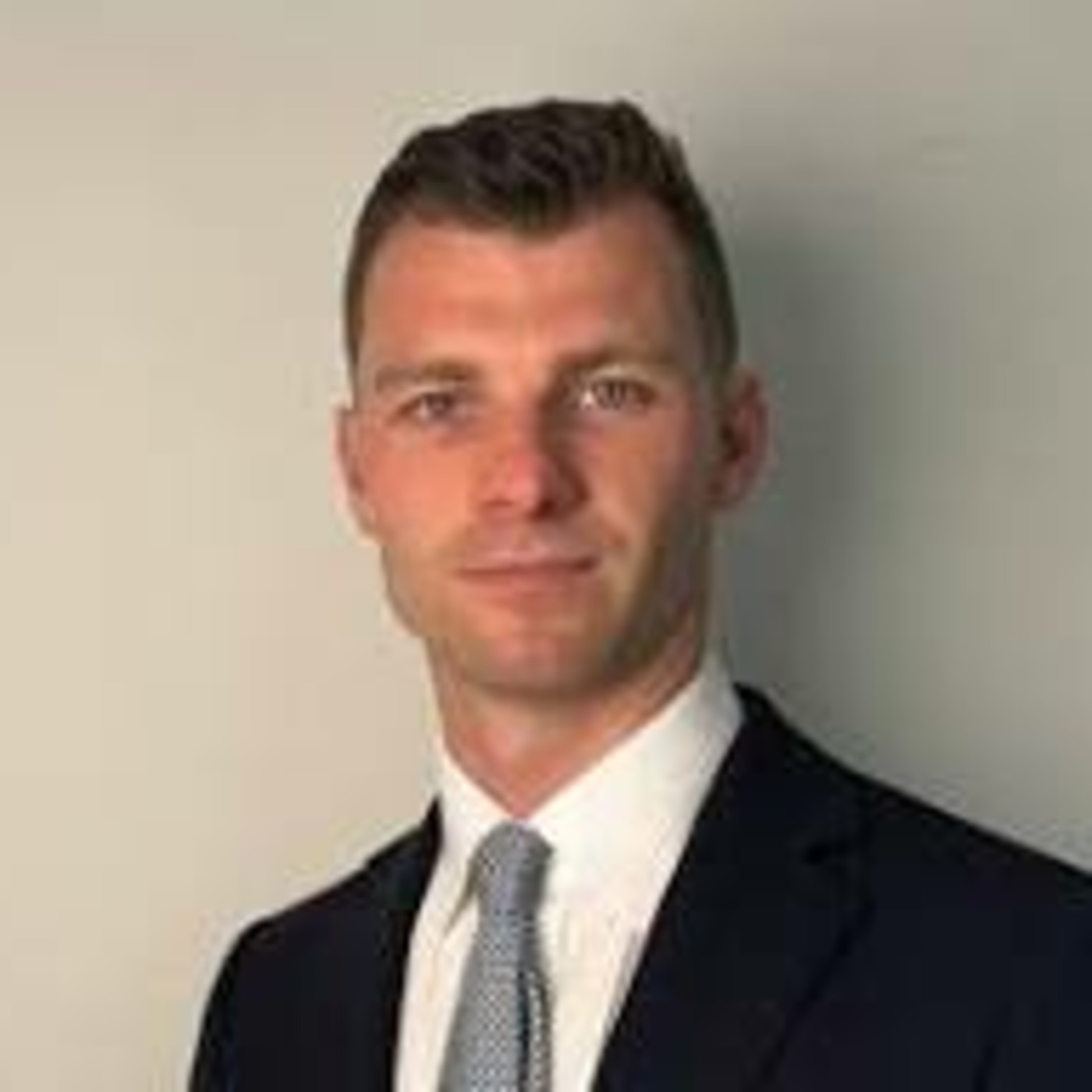
Ryan Boothroyd: I think there’s a misconception around partnership, and the misconception is that you have to be a large firm to deliver partnership effectively. And when I think about our current relationships, a lot of our strongest partnerships are not with the largest institutions. In fact, sometimes the largest institutions can be difficult to navigate because there’s bureaucracy, there’s stasis. It’s difficult sometimes to get what we need from them. And I think what it’s about is not about the breadth of your offering. It’s not about being able to give us lots of different bells and whistles that you write about in RFPs and things. I think it’s more about kind of mutual understanding. So having an understanding of the specific needs, constraints, interests of the client, and then proactively suggesting or offering ways to help them with those.
Aoifinn Devitt: I’m Aoifinn Devitt, and welcome to the 50 Faces Podcast, a podcast committed to revealing the richness and diversity of the world of investment by focusing on its people and their stories. This series is supported by BenefitStreet Partners. BenefitStreet Partners is a leading global alternative credit asset manager offering clients investment solutions across a broad range of complementary credit strategies, including direct lending, special situations, structured credit, high yield bonds, leveraged loans, and commercial real estate debt and equity. This episode is also supported by PIMCO, a global leader in active fixed income with deep expertise across public and private markets. PIMCO invests their clients’ capital in income and credit opportunities to span the liquidity spectrum, leveraging their decades of expertise navigating complex debt markets. I’m joined today by Ryan Boothroyd, who’s Head of External Management at Border to Coast Pensions Partnership. Which manages over £100 billion of regulated assets on behalf of LGPS funds across the UK. He previously was a Senior Asset Allocation Specialist at LNG, and prior to his first period at Border2Coast, was an Investment Manager at Janus Henderson and later Railpen. Welcome, Ryan. Thanks for joining me today.
Ryan Boothroyd: Hi, Even.
Aoifinn Devitt: I’d love to just have you trace your background and how you entered finance and whether there were any surprising turns for you along that way.
Ryan Boothroyd: I came into finance without having much family background in that space, so I grew up in a pretty normal Northern England household. My dad was a driving instructor. My mum worked in a school office, so there wasn’t a huge amount of investment management experience in the household, but it was something that when I started to do economics at school became clearly of interest. After that, the route was relatively straightforward. I’ve always been pretty focused and driven when I’ve got an objective about something. So when I realized that this is what I wanted to do, I went through the usual process of getting some internships when I was at university and getting a graduate job in the space and then kind of working from there. But I’ve had a few, you know, I’ve had a few wobbles along the way. I’m a relatively creative person outside of finance, so I’ve had a few career crises before starting to settle into the investment management industry. So I was convinced I was going to be an architect for a period of time. I was also going to be a writer for a period of time, which, given some of the current developments, might have not been the most stable long-term career path. But yeah, we got there in the end. It was a relatively standard career path, but it took a lot of work for me to do it because I didn’t really have a role model or a playbook to copy. So I had to kind of figure out as I went along what I was supposed to be doing. Yeah, seemed to get there in the end.
Aoifinn Devitt: Really interesting. Well, I’m just thinking of the, the arc comparison between being an architect and a portfolio architect essentially, which is what an asset allocator does. And I think there’s a lot more similarities sometimes in these disciplines than we think. And certainly the creative side, and we can get to that later as we discuss your investment philosophy, just the creative side seems to be more of a premium on that today. And just in terms of investment beliefs and philosophy, you speak, write a lot on LinkedIn. I think you’ve expressed an interest in writing even more on LinkedIn, and we certainly welcome the input there. When you think about investment beliefs, what are they today and how would you characterize them in broad terms?
Ryan Boothroyd: So firstly, for someone whose job is to find great active managers, I think I have a degree of skepticism about people’s ability to do that consistently well over time. I think there’s a really high bar and it’s a higher bar than the industry projects. Sometimes I think if you speak to any fund manager, they’ll tell you how incredible they are and how unique they are and how they can, you know, consistently add value over indices. I think the data is pretty clear that that’s not true. So I think the bar to really good quality active management is high. I think it’s really important. I think it’s a core part of how, particularly when your starting point is the current index, which is so skewed and the expected returns from the index are so low, I think the role of active managers is more important than ever. But generally, people really need to be excellent. They need to have a fantastic process and an ability to implement that. Efficiently over time to do well. So I think the starting point when I think about investing is there’s got to be a high bar to adding value. It’s not an easy discipline. I’m generally a general believer loosely in efficient markets, even if not entirely. I think one of the things more conceptually that’s changed over time is I think I used to be pretty contrarian. And I think generally when I managed my own fund, I found the reality of that was My perceptions changed based on the reality of managing that fund. I think what I’ve come to realize over time is that there’s a lot of value embedded in prices and the way that prices move. And so I’ve probably started to consider momentum to be a more powerful factor in some instances, particularly over shorter time horizons than valuation sometimes is. I think taking that a step further, I would say generally I’ve got a preference for investment outcomes that can be driven themselves, that are not based on the need for other people to come in and recognize recognize a particular valuation anomaly, for example, and to right itself. I think it’s a lot easier to find opportunities where, for example, from an earnings perspective, you know a company’s going to grow consistently at 10 to 15% a year. That share price movement then is kind of within their own destiny, if you see what I mean. If they can do that consistently over 10 years, you know it’s going to be a market-beating investment. I think it’s a little bit more complicated when you’re looking at valuation. There’s still an important role from a long-term asset allocation perspective when it comes to valuation, but I think you need to be a little bit more clear that there’s a catalyst and a pathway to that valuation anomaly being rectified, particularly in a world where there’s so much index investment that goes on in equities. I think 10 or 15 years ago, you had a huge number of active stock pickers who were actively rooting for undervalued opportunities. That’s less so now. If anything, the marginal dollar that gets invested in equity markets is invested in the largest companies, not the cheapest companies. And so I think you need to fight that a little bit as a value manager. So yeah, just broadly to summarize, I think Active management’s really important, but the bar should be pretty high. And I think you need to be very careful about assuming that someone else is going to kind of come and bail you out on your investment thesis.
Aoifinn Devitt: I think that’s really interesting what you said about contrarian investing. And I suppose if I think of the most high-profile contrarian investors, they tend to be investors with a much different risk framework and so just basically architecture or DNA than a public pension plan. For example, they may be a hedge fund, they may be a prop desk or a family office with perhaps a different kind of a risk tolerance. And I suppose there’s a difference between being a contrarian and being someone who’s less contrarian, but is still very actively challenging and skeptical of narratives, which I think is the really important part is being able to challenge. When you talked in recently about one of your first articles after you’re saying you would be speaking more on LinkedIn and just about some of your points of view was around the model of combining internal expertise with external partnerships. And you wrote about what you look for in a partner. Can you elaborate on that a little, given your role as head of external manager research? What are you looking for in an external partner?
Ryan Boothroyd: Yeah, I think there’s a misconception around partnership, and the misconception is that you have to be a large firm to deliver partnership effectively. And when I think about our current relationships, a lot of our strongest partnerships are not with the largest institutions. In fact, sometimes the largest institutions can be difficult to navigate. Because there’s bureaucracy, there’s, you know, stasis. It’s difficult sometimes to get what we need from them. And I think what it’s about is not about the breadth of your offering. It’s not about being able to give us lots of different bells and whistles that you write about in RFPs and things. I think it’s more about kind of mutual understanding. So having an understanding of the specific needs, constraints, interests of the client, and then proactively suggesting or offering ways to help them with those. So the most successful partnerships we have are when I don’t even know that the client director has emailed someone else within Border2Coast. For example, one of the internal portfolio managers saying, oh, I know you guys have been talking about XYZ sector based on when we caught up a few months ago. Here’s something that one of our PMs has just been talking about on this space. It’s kind of proactive. It feels like an extension of our team. That works really, really well. What doesn’t work well is we get consistently, oh, we’ll give you a quarterly call with our economist if you give us X 100 million. That tends to be— we’ve got no shortage of potential calls with economists. I can ring up 15 tomorrow and get them to come and give us an overview. I think the day-to-day practicalities of this flexibility, understanding our needs is critical. And I think when they work well, it’s a two-way flow. So when we have strong partners, they learn stuff from us because they learn about our preferences. That then informs perhaps how they speak to other asset owners, for example, and There’s a kind of self-reinforcing aspect to it. So yeah, I think that the general misconception is that this is something that you get with huge asset managers that have got giant teams, but really it’s about, to be honest, having one or two very good client people who can navigate the internal bureaucracy of an asset manager effectively to kind of find things for you and that know you well.
Aoifinn Devitt: That’s a really, I think, a reassuring point to some of the smaller, mid-size boutique managers who may feel getting— that they’re getting crowded out by the rise of the mass fund, which I think we also often overlook that some of those mass asset managers or large-size asset managers have really just got mass— such scale that there is many individuals getting lost in that shuffle. And I think it’s an interesting point as well around understanding your DNA as a client, which is going to be a very unique set of needs and evolving needs, particularly in your case as you continue to grow. So I suppose a nice message to hear. When it comes to this growth, because clearly Border2Coast is poised for tremendous growth, that $100 billion number I mentioned at the beginning is based on the growth of your number of partners to 18. What is at the forefront of your mind now as Border2Coast continues to grow and as your role continues to grow in it?
Ryan Boothroyd: Yeah, I mean, I think it’s a pivotal moment, really. I described it to our team as this idea of the hinge of history, which is there’s like specific points in time where there’s a, you can have a disproportionate impact on something. And I think we’re at that moment for the LGPS. And that’s, to be honest, one of the reasons why I wanted to come back to head up the team. I think specifically, it’s about demonstrating that there are benefits to scale, clear demonstrable benefits to scale. There’s no point in us having more AUM for no reason, because if we don’t show some kind of benefit from that, then all we’re doing is creating a large inefficient blob in the market that’s not going to, you know, help improve the outcomes of all of our members. So I think really it’s about demonstrating how we can use this great privilege that we have, essentially, to kind of improve investment outcomes. And that might be because we’re giving more access to specific areas. It might be that we are able to influence more companies with our collective voice. I think critically, it’s about demonstrating that in practice. When I think about my team specifically, you know, a lot of my work at the moment is trying to get into a more institutionalized process. So we’ve kind of grown organically. Now we’re getting to a scale where we’ve got 20+ manager relationships. Current AUM is $20 billion, but it’s going to increase materially. A significant amount of the new assets will be externally managed. And so it’s like, how do we put in place a structure that is fit for the next 10, 15 years and being one of the UK’s largest asset owners? So I’m spending a lot of time trying to institutionalize that a little bit. We need to make sure we keep our LGPS DNA. We need to make sure that people feel like they aren’t working in a, in a civil service, for example, or some large kind of very controlled structure. But we do need to have certain demonstratable ways of introducing cross-debate or accountability, for example. So I’ve done a lot of work like philosophically and from a structural perspective on the team and getting that in place. But yeah, generally it’s about, we’ve had the consolidation phase 1, we’re in consolidation phase 2. We’ve done a great job of saving costs in consolidation phase 1. I think consolidation phase 2 is continuing that, but making sure that we’re seen as an internationally recognized a recognized, excellent asset owner. So it’s about value as much as it is about saving costs.
Aoifinn Devitt: And speaking of that, you have the benefit, I suppose, of not having a tremendous amount of legacy. There’s a sense in which you’re a £100 billion startup in some ways, despite having had the, the legacy business. Maybe this is a great opportunity to incorporate AI technology, uh, more efficient tech stack into this process that you’re building and institutionalizing. How are you thinking about incorporating that? And I’m bearing in mind that it is a fluid area. Into your process?
Ryan Boothroyd: Yeah. I mean, I think there’s a whole conversation around technology generally. We are at the moment in the middle of putting in place BlackRock’s Aladdin system, which is kind of the gold standard of portfolio management systems. That’s a huge and intense process. Whenever I speak to an investment manager about this, they all have a sharp intake of breath because the ones who’ve been through it, you know, it can take multiple years. We’re trying to do it in one year, but when it’s done, it will be a huge foundational platform. Before we even get into AI, it’s going to just give us a totally kind of market-leading way of managing both individual part of our portfolios and our own individual propositions. So I think that decision is kind of an investment, but it’s a really positive, good one. So that’s kind of the foundational tech stack at the moment. But yeah, when we think about AI, we are still— I would describe us as AI curious. We’re not AI native, I would say, but we’re doing a lot of work, particularly with some of our investment managers. I was on the phone with one yesterday, understanding how they’re using it and if there’s lessons that we can learn. And I think at the moment, we’re still in the phase of incremental improvements. Particularly in things like research, consolidating huge amounts of information efficiently, drafting things quickly and effectively is very good for that. One of the guys in my team is kind of a data-focused APM. And I think a lot of his work, he’s shown that there’s abilities to kind of improve outputs and create things that look nice and don’t take huge amounts of time to kind of format. So there’s kind of incremental gains. The next step is, how do we actually embed this more significantly in the process? And that’s the kind of stage we’re at the moment. And I think a big challenge for large institutions, particularly ones like ours, is getting the confidence and the governance and the information security to start to move away from, for example, just using something like Microsoft Copilot into using something a little bit more, typically a direct relationship with one of the big model builders is the way that most asset managers do. So that’s kind of the next step for us, the next frontier, if you like. But the, the foundation is like getting Aladdin installed to start with. That’s gonna be transformational. The AI is kind of the icing on top.
Aoifinn Devitt: And it’s interesting. I would think there’s also, given this hinge moment, which I, I love that analogy, there is a tremendous amount of change, which is when clients are at their most sensitive, most vulnerable, perhaps. So this is probably not the moment to do mass outsourcing of client relations to AI, for example, to, to really bring that human touch there. When you think because of this massive growth and change and new products coming on board, plus a new advisory function on the pipeline, which will involve a lot more tailoring around these different individual underlying client DNAs, how do you see new products and solutions develop? You’ve already been one of the early movers with the Climate Solutions Fund, but do you see other new solutions on the horizon?
Ryan Boothroyd: Yeah, we’ve been pretty progressive. I think Climate Solutions, I think UK opportunities as well are two that really stand out from that perspective. The core thing on new products is there’s two aspects. I think there’s the advisory service, which you’ve already talked about. I think there’s a strong need for us to build credibility there. You know, we’re doing this from scratch. We’ve made some really strong hires in that space, including, you know, senior advisors who’ve got a long track record of advising LGPS funds, which is a good starting point. But that needs to be integrated effectively. The way this works most effectively, and I’ve seen this model in practice a few times, we had this model at RailPen. This works well when there’s an integration between the investment team and the advisory team, but there’s also a kind of a tension and kind of a competitive tension, if you like. So it’s like the advisory team is really driving the underlying needs of the clients. And so they need to be able to hold the investment team to account, but there’s also synergies and positive aspects of being in the same building as part of an extension of the same team. And so we can get a credible advisory function in place quite quickly, but really making it excellent is about embedding it into the structure in the right way with the right oversight mechanisms, et cetera. And I think there’s still— that’s going to be a work in progress for a while. The second aspect is what we call investment management services, which is basically the idea that we’ve typically managed individual propositions, but there’s now going to be management of the entire vertical portfolio, if you like, for a given partner fund. And so that’s where, for example, Aladdin becomes really critical, but also putting in place a really high-quality risk ALM-type system, which we’re in the process of doing at the moment as well. So getting that working effectively, having confidence that we can move cache effectively between different propositions, that we can express dynamic views where possible, that kind of stuff is going to take a little bit of time as well. It’s well developed at the moment, but there’s still kind of— we’re putting the finishing touches to it. And I think all of this underscores the fact that we are trying to, rather than say on April 1st everything needs to change from day one, we are taking a much more measured view, which I think is the right view. And we’re only kind of rolling things out as and when we think we’ve credible capability. There’s a huge amount of work going on in the background. And so I think we’re really moving in the right direction there, and I think we’re pretty close in most cases. But what we’re not trying to do is rush into something that we don’t think is ready to go, if that makes sense. So yeah, generally, I mean, just final thing on my team, there’s not a huge amount of stuff to launch. I think we’ve got a pretty coherent fund range, and a lot of my challenge has been making sure that that fund range is coherent and gives the right building blocks for that IMS piece to do the asset allocation. But I think, you know, maybe there’s the odd bit that, for example, some of our incoming funds have had exposure to over time that we’ve not really built, that we might want to consider whether or not there’s, you know, there’s a gap in the market for something like that. But generally it’s at the margin, and probably the direction is actually as much about consolidation of existing funds and actually slimming down the fund range in certain areas as much as it is expanding it.
Aoifinn Devitt: We’re going to hear from one of the sponsors of the series, Benefit Street Partners, BSP. I sat down with Rich Fearn, President and CEO of BSP, and asked him about the growing awareness of the private credit asset class from a time when people barely wanted to speak about it until today.
Ryan Boothroyd: Today, it’s the only thing people want to talk about, which I think is funny. Things have come full circle, you know, so maybe, maybe that’s the time you should think about skating to where the puck’s going. I think private credit is still an attractive relative value, certainly is relative to the liquid markets. But for example, one thing that we’ve been focusing on is maybe the better relative value today is real estate credit, real estate lending. Why? Because the real estate market has gone through a lot of turmoil. The office sector has all but imploded in many parts of the country. Interest rates having gone up has impacted negatively real estate values. There’s a lot of carnage. And as a result, we love dislocation, because often it creates the best opportunity.
Aoifinn Devitt: And now back to the show. And when it comes to sustainability, so you have just finished your own master’s in sustainability. Congratulations on that. Clearly at the forefront of investors’ minds in terms of how sustainability and their responsible investment policy, how it is integrated across their entire portfolio. Much of that will now be passing in terms of implementation. To Borders Coast, how are you thinking about the sustainability piece? And if you could also share a little bit of what you, your motivation behind the master’s and what you learned from that.
Ryan Boothroyd: On the motivation, I got to a stage in my career where I was kind of ready to do some more formal learning. It’d been 10+ years since I’d finished my CFA, and I felt like on the investment side I had it covered, you know, doing an MBA, for example, I felt was relatively low value and would’ve been very expensive. So I think it would’ve been a, a very expensive investment, but potentially a low ROI. Which we don’t like. So in the end, I thought actually the one area where you need credibility, particularly if you’re going to be a senior leader in the kind of asset owner space, as is probably my aspiration, having credibility on sustainability is really important. And that’s kind of what led me to do the master’s. And what I particularly liked about it was it’s not a finance crowd, it’s a really broad range. So you’ve got people who run coco cooperatives in South America, you’ve got people who work for media organizations, you’ve got people who work for the army. It’s a really wide breadth. And so that network was super interesting and kind of changed the way that I thought about certain areas, because you can very quickly get blinkered and have a very finance-driven approach to sustainability. We think about it in a very specific way, about reporting, about debates around engagement versus divestment, all this kind of stuff. Whereas actually going out and speaking to someone whose job it is to run a charity in Kenya is a humbling and interesting experience. More broadly, some of sustainability has kind of lost a bit of its original meaning. I think when we think about how we’re investing, our underlying investors, we’ve got a 50-plus-year investment horizon. To me, it’s about making sure that the assets or the companies that we’re investing in are still around in 50 years’ time to pay those cash flows. And that naturally means there has to be a broader consideration of the risks that those companies are exposed to outside of short-term, quarter-on-quarter pressures, such as margin compression or slight rises in interest rates. And a lot of those issues are kind of big systemic issues. An obvious one being AI. We talked about AI earlier. But I mean, I think the potential to have your business model disrupted within 18 months has probably never been higher. And that’s not the sort of risk that is necessarily captured in an efficient way by looking at the financial accounts. You can read as many accounts as you want. You’re not going to see that coming because it’s inherently forward-looking and rapidly moving force. And so I think from my perspective, sustainability is about making sure that those types of considerations are captured more broadly. A lot of them naturally are environmental, some of them around good governance. I think they naturally align to what we’d consider typical ESG factors, but it’s broader than that. What we try and do at Borders Coast is recognize that people have different views on this. Our most powerful stance is when we stand together collectively. So what we try and do is get a collective agreement on a broad set of principles and then proceed from that basis. I think when you look at, for example, some of the work we’ve done on stewardship and some of the outcomes there. We’re having some pretty tangible impacts. You look at the— we did a huge piece with the water companies last year, and I think there are literal changes in the water quality of certain beaches across several of our local authorities based on that work. And so I think there’s genuine tangible kind of impact that we can have there.
Aoifinn Devitt: The role of, say, nature as an asset class, that has certainly started emerging as part of asset allocation. It’s not one of the 9 buckets, as far as I know, that is currently emerging from the regulations, but it is touching the real asset asset class, the infrastructure asset class, and forming part of the responsible investment policy as well as net zero ambitions. How do you see that starting to develop? And in terms of what you see today as an investible opportunity set, where is it versus where it could be perhaps? Do you think that that will continue to be a viable opportunity set and growing?
Ryan Boothroyd: I mean, it’s a very nascent area and it’s still developing as a, a kind of investible opportunity. I would characterize it still in the somewhere between philanthropy and testing stage, depending on exactly how you look at it. The danger is you end up going for something that is badged as nature, but actually it’s not really having a tangible impact. And I think a lot of the stuff that you see in some of the nature-based solutions that are around at the moment, some of them, not all of them, but some of them are a bit borderline when it comes to the actual potential impact. And so I think there’s probably a little bit more development in that market before you see real opportunities for kind of large institutional capital that’s actually going to drive additional change. And it’s that kind of additionality component that’s critical here. It’s typically been seen as a risk factor, the fact that companies generally are exploiting nature and they are essentially externalizing that cost, but they’re keeping the benefits. So you get the revenues, but you aren’t recognizing the costs. And that allows arguably an unsustainable profit stream to persist over time. And so I think the more recognition of things like biodiversity and the more that leads to things like litigation, the more you’ll start to see that gap close. And so those companies that have persistently violated nature to generate profits will start to see more difficulty in doing that over time. And so you’ll start to see profitability hits. The most interesting areas I’ve seen in the space are stuff we did at LNG, which was this idea of debt-for-nature swaps, which is super interesting. And the idea generally is that you help to restructure the debt of a country that has a huge amount of natural nature resource. And as part of that debt restructuring, you offer them a lower interest rate, But some of the savings are put towards, for example, ocean conservation in a particular area. And they did some really interesting deals in that space. So I think the more that that kind of market can develop, the better. But at the moment, there’s still some aspects of it, I think, that are either too far down the philanthropy route for something that would be considered a kind of medium-term investment-driven decision for a lot of our partner funds, or not providing enough impact that they’re a bit more about perception of a kind of nature benefit rather than a tangible nature benefit. But that will probably change in the next sort of 5 years.
Aoifinn Devitt: So watch this space, I suppose, is the best advice. And certainly with all the change, I’m sure there— technology, climate tech, etc., we will see an emerging body of products. But I think getting back to what you said earlier about the appeal still for a group of your size to still work with smaller boutique managers, that’s often where many of the nature products are emerging from. So I suppose encouraging for them there too. I’d love to move to some personal reflections now. So you’ve spoken a little bit about your career journey and some of the creative diversions that you pursued and then ultimately finding your calling in investment here. Would you say there were any highs and lows or setbacks along that way that you learned lessons from?
Ryan Boothroyd: Yeah, there’s plenty of highs. I mean, I think we’re really privileged in this industry to do a job that is super interesting, surrounded by very thoughtful, intelligent people, and that also pays very well, to be perfectly honest. I think that’s a, you know, whenever I speak to newer entrants to the industry, I remind them of that fact, that we have a huge privilege. We have basically the best combination of job factors that you can imagine. And so I never kind of let people forget that. I think I’ve been particularly enjoying leading the team, the size of the team that we have now here. So, you know, there’s more than 10 of us now, depending on exactly how you categorize it. And so that’s been a new kind of highlight for me. Lows, there’ve been a few lows as well. I remember quite early in my career, I was quite fortunate. I was made a portfolio manager at Henderson arguably before I should have been. I was thinking I was 24 or 25 at the time, and that was quite unusual. And one of the first things I uncovered when I took on that role was that there’d been a significant trading error that had been persisting for a matter of months, and it was several hundred million pounds worth of trading error at this stage. And trying to unwind that was a pretty humbling and difficult process. I also was kind of nearly broken by an internship I did at a large US investment bank when I was at university. That pretty nearly focused me on becoming a farmer or something. I nearly walked away from the whole idea of investment management after that 12 weeks, but I’m still here. I’ve recovered from it. I think the general thing with these lows, lows is when you reflect on them, you tend to find that they were actually positive learning experiences. It sounds a bit cliché, but generally that resilience and that ability to just keep putting one foot in front of the other is massively undervalued, I think, as a personal trait.
Aoifinn Devitt: And so trying to channel that energy a little bit has been the one thing that’s positive that’s come out of It’s an interesting reflection because I think we’ve all been thinking about the apprenticeship model and AI, getting back to this tech stack replacement of some junior personnel. But what you’re describing in that internship sounds akin to a hazing, even though maybe not explicitly designed as a hazing. And I think that the work, but as you mentioned, that builds resilience and it certainly builds perhaps a mindset in order to navigate complex organizations. And again, that’s the other benefit of going through the apprenticeship phase. And besides simply the modeling and the other kind of maybe grunt work that can be replaced by AI. So I think well noted there in terms of that. When we’re thinking about, you know, grunt phases and internship phases and hierarchies and navigating them, have there been any key people across the course of your career or just your life in general that have had a formative role?
Ryan Boothroyd: Yeah, particularly career-wise, I’ve had quite a few. I mean, when I joined Henderson, I hadn’t been working that long, and I got given this fantastic opportunity to just learn and read and absorb as much information as possible. And so there were two guys there, Bill McQuaker and Paul O’Connor, who were the kind of heads of multi-asset. And they kind of were huge advocates. They gave me a huge amount of responsibility and way more responsibility than I probably should have been given, but it was fantastic as a development opportunity. And they kind of instilled that real investment passion. And then I think about some of the senior leaders that I worked with most recently at L&G. So someone like John Rowe or Emil van der Heijdenburg, these are kind of the heads of multi-asset there. John, all about communications, about being able to describe stuff well. This is a business. He used to do this kind Every time we had an offsite, he would do the same presentation, which is investment management is no different from running a jam factory. You’ve got to make the jam, you’ve got to market the jam, you’ve got to sell the jam, or you’re going bust. And I think that was really useful as an interesting kind of commercial mindset. It was about, this is not just about getting the best investment performance. And I think about this when I evaluate managers, it’s about the whole package. You’ve got to be able to describe what you do well. And this is a real bugbear of mine, and it’s a real area that I tend to focus on, that communications element. And then Emil, it was about having a senior leader who actually really cared about the nuances of individuals on the team. And a lot of the time in my career, the people who are given management responsibility in this sector are often the best portfolio managers. That often doesn’t translate to being the best people managers. So I’ve had some pretty difficult people managers over time because they’re just not really— it’s not an interest that they have. Whereas Emil is one of those people, and he’s currently CIO of LNG, but he’s one of those people who could do the investment stuff but also really cared about instilling a culture of collaboration and caring about individual members of staff and their needs, all the way down to kind of graduates. So I think that lesson was particularly important. So all 4 of them have been pretty big influences on me.
Aoifinn Devitt: And just to close this out, are there any words of wisdom that you have maybe lived by or can share, or wish maybe your younger self had known as you are in this exciting new phase of your career, but that you can share with our audience?
Ryan Boothroyd: Yeah, whenever I get asked this, particularly by younger members of staff, I always say The best thing you can do is figure out as early as possible what your unique strengths are relative to everyone else, and then you should lean into them. I figured out pretty quickly that I’m a perfectly capable portfolio manager, but I am never going to be the best portfolio manager in the world. I’m never going to be the best analyst in the world. There’s always people, you know, I’ve got more analytical depth than me. What I can do effectively, and it’s a very important skill, is I’m very good at communicating things that are pretty complicated to people and making sure that they can understand it. And so being able to lean into that Even though deep down in my head, I just want to project myself as being, you know, Bill Ackman or something. What I realized quite quickly was there was a lot more value to the organization, particularly to more senior people, in having someone who could provide clarity and insight into what you were doing. And it just builds trust with clients. It’s a really valuable skill. And so leaning into that was huge. So whenever I speak to anyone about this, I always say, look at yourself deeply, try and understand where you are uniquely better something than your peers, and then try and lean into that as part of your career strategy.
Aoifinn Devitt: Well, thank you so much, Ryan. The work you are doing at Border2Coast is mission critical, I think, not only to the hundreds of thousands of beneficiaries that your underlying clients work for, those stakeholders, but also for the next phase of British growth in the economy, for the financial services, and for it really taking its place on the world stage alongside other institutional investors So I couldn’t be more confident with someone like yourself heading up the external manager research function. And thank you so much for sharing such a broad set of insights here with us.
Ryan Boothroyd: Thanks.
Aoifinn Devitt: I’m Aoifinn Devitt. Thank you for listening to the 50 Faces Podcast. If you liked what you heard and would like to tune in to hear more inspiring investors on their personal journeys, please subscribe on Apple Podcasts or wherever you get your podcasts. This podcast is for informational purposes only and should not be construed as investment advice. And all views are personal and should not be attributed to the organizations and affiliations of the host or any guest.
Ryan Boothroyd: I think there’s a misconception around partnership, and the misconception is that you have to be a large firm to deliver partnership effectively. And when I think about our current relationships, a lot of our strongest partnerships are not with the largest institutions. In fact, sometimes the largest institutions can be difficult to navigate because there’s bureaucracy, there’s stasis. It’s difficult sometimes to get what we need from them. And I think what it’s about is not about the breadth of your offering. It’s not about being able to give us lots of different bells and whistles that you write about in RFPs and things. I think it’s more about kind of mutual understanding. So having an understanding of the specific needs, constraints, interests of the client, and then proactively suggesting or offering ways to help them with those.
Aoifinn Devitt: I’m Aoifinn Devitt, and welcome to the 50 Faces Podcast, a podcast committed to revealing the richness and diversity of the world of investment by focusing on its people and their stories. This series is supported by BenefitStreet Partners. BenefitStreet Partners is a leading global alternative credit asset manager offering clients investment solutions across a broad range of complementary credit strategies, including direct lending, special situations, structured credit, high yield bonds, leveraged loans, and commercial real estate debt and equity. This episode is also supported by PIMCO, a global leader in active fixed income with deep expertise across public and private markets. PIMCO invests their clients’ capital in income and credit opportunities to span the liquidity spectrum, leveraging their decades of expertise navigating complex debt markets. I’m joined today by Ryan Boothroyd, who’s Head of External Management at Border to Coast Pensions Partnership. Which manages over £100 billion of regulated assets on behalf of LGPS funds across the UK. He previously was a Senior Asset Allocation Specialist at LNG, and prior to his first period at Border2Coast, was an Investment Manager at Janus Henderson and later Railpen. Welcome, Ryan. Thanks for joining me today.
Ryan Boothroyd: Hi, Even.
Aoifinn Devitt: I’d love to just have you trace your background and how you entered finance and whether there were any surprising turns for you along that way.
Ryan Boothroyd: I came into finance without having much family background in that space, so I grew up in a pretty normal Northern England household. My dad was a driving instructor. My mum worked in a school office, so there wasn’t a huge amount of investment management experience in the household, but it was something that when I started to do economics at school became clearly of interest. After that, the route was relatively straightforward. I’ve always been pretty focused and driven when I’ve got an objective about something. So when I realized that this is what I wanted to do, I went through the usual process of getting some internships when I was at university and getting a graduate job in the space and then kind of working from there. But I’ve had a few, you know, I’ve had a few wobbles along the way. I’m a relatively creative person outside of finance, so I’ve had a few career crises before starting to settle into the investment management industry. So I was convinced I was going to be an architect for a period of time. I was also going to be a writer for a period of time, which, given some of the current developments, might have not been the most stable long-term career path. But yeah, we got there in the end. It was a relatively standard career path, but it took a lot of work for me to do it because I didn’t really have a role model or a playbook to copy. So I had to kind of figure out as I went along what I was supposed to be doing. Yeah, seemed to get there in the end.
Aoifinn Devitt: Really interesting. Well, I’m just thinking of the, the arc comparison between being an architect and a portfolio architect essentially, which is what an asset allocator does. And I think there’s a lot more similarities sometimes in these disciplines than we think. And certainly the creative side, and we can get to that later as we discuss your investment philosophy, just the creative side seems to be more of a premium on that today. And just in terms of investment beliefs and philosophy, you speak, write a lot on LinkedIn. I think you’ve expressed an interest in writing even more on LinkedIn, and we certainly welcome the input there. When you think about investment beliefs, what are they today and how would you characterize them in broad terms?
Ryan Boothroyd: So firstly, for someone whose job is to find great active managers, I think I have a degree of skepticism about people’s ability to do that consistently well over time. I think there’s a really high bar and it’s a higher bar than the industry projects. Sometimes I think if you speak to any fund manager, they’ll tell you how incredible they are and how unique they are and how they can, you know, consistently add value over indices. I think the data is pretty clear that that’s not true. So I think the bar to really good quality active management is high. I think it’s really important. I think it’s a core part of how, particularly when your starting point is the current index, which is so skewed and the expected returns from the index are so low, I think the role of active managers is more important than ever. But generally, people really need to be excellent. They need to have a fantastic process and an ability to implement that. Efficiently over time to do well. So I think the starting point when I think about investing is there’s got to be a high bar to adding value. It’s not an easy discipline. I’m generally a general believer loosely in efficient markets, even if not entirely. I think one of the things more conceptually that’s changed over time is I think I used to be pretty contrarian. And I think generally when I managed my own fund, I found the reality of that was My perceptions changed based on the reality of managing that fund. I think what I’ve come to realize over time is that there’s a lot of value embedded in prices and the way that prices move. And so I’ve probably started to consider momentum to be a more powerful factor in some instances, particularly over shorter time horizons than valuation sometimes is. I think taking that a step further, I would say generally I’ve got a preference for investment outcomes that can be driven themselves, that are not based on the need for other people to come in and recognize recognize a particular valuation anomaly, for example, and to right itself. I think it’s a lot easier to find opportunities where, for example, from an earnings perspective, you know a company’s going to grow consistently at 10 to 15% a year. That share price movement then is kind of within their own destiny, if you see what I mean. If they can do that consistently over 10 years, you know it’s going to be a market-beating investment. I think it’s a little bit more complicated when you’re looking at valuation. There’s still an important role from a long-term asset allocation perspective when it comes to valuation, but I think you need to be a little bit more clear that there’s a catalyst and a pathway to that valuation anomaly being rectified, particularly in a world where there’s so much index investment that goes on in equities. I think 10 or 15 years ago, you had a huge number of active stock pickers who were actively rooting for undervalued opportunities. That’s less so now. If anything, the marginal dollar that gets invested in equity markets is invested in the largest companies, not the cheapest companies. And so I think you need to fight that a little bit as a value manager. So yeah, just broadly to summarize, I think Active management’s really important, but the bar should be pretty high. And I think you need to be very careful about assuming that someone else is going to kind of come and bail you out on your investment thesis.
Aoifinn Devitt: I think that’s really interesting what you said about contrarian investing. And I suppose if I think of the most high-profile contrarian investors, they tend to be investors with a much different risk framework and so just basically architecture or DNA than a public pension plan. For example, they may be a hedge fund, they may be a prop desk or a family office with perhaps a different kind of a risk tolerance. And I suppose there’s a difference between being a contrarian and being someone who’s less contrarian, but is still very actively challenging and skeptical of narratives, which I think is the really important part is being able to challenge. When you talked in recently about one of your first articles after you’re saying you would be speaking more on LinkedIn and just about some of your points of view was around the model of combining internal expertise with external partnerships. And you wrote about what you look for in a partner. Can you elaborate on that a little, given your role as head of external manager research? What are you looking for in an external partner?
Ryan Boothroyd: Yeah, I think there’s a misconception around partnership, and the misconception is that you have to be a large firm to deliver partnership effectively. And when I think about our current relationships, a lot of our strongest partnerships are not with the largest institutions. In fact, sometimes the largest institutions can be difficult to navigate. Because there’s bureaucracy, there’s, you know, stasis. It’s difficult sometimes to get what we need from them. And I think what it’s about is not about the breadth of your offering. It’s not about being able to give us lots of different bells and whistles that you write about in RFPs and things. I think it’s more about kind of mutual understanding. So having an understanding of the specific needs, constraints, interests of the client, and then proactively suggesting or offering ways to help them with those. So the most successful partnerships we have are when I don’t even know that the client director has emailed someone else within Border2Coast. For example, one of the internal portfolio managers saying, oh, I know you guys have been talking about XYZ sector based on when we caught up a few months ago. Here’s something that one of our PMs has just been talking about on this space. It’s kind of proactive. It feels like an extension of our team. That works really, really well. What doesn’t work well is we get consistently, oh, we’ll give you a quarterly call with our economist if you give us X 100 million. That tends to be— we’ve got no shortage of potential calls with economists. I can ring up 15 tomorrow and get them to come and give us an overview. I think the day-to-day practicalities of this flexibility, understanding our needs is critical. And I think when they work well, it’s a two-way flow. So when we have strong partners, they learn stuff from us because they learn about our preferences. That then informs perhaps how they speak to other asset owners, for example, and There’s a kind of self-reinforcing aspect to it. So yeah, I think that the general misconception is that this is something that you get with huge asset managers that have got giant teams, but really it’s about, to be honest, having one or two very good client people who can navigate the internal bureaucracy of an asset manager effectively to kind of find things for you and that know you well.
Aoifinn Devitt: That’s a really, I think, a reassuring point to some of the smaller, mid-size boutique managers who may feel getting— that they’re getting crowded out by the rise of the mass fund, which I think we also often overlook that some of those mass asset managers or large-size asset managers have really just got mass— such scale that there is many individuals getting lost in that shuffle. And I think it’s an interesting point as well around understanding your DNA as a client, which is going to be a very unique set of needs and evolving needs, particularly in your case as you continue to grow. So I suppose a nice message to hear. When it comes to this growth, because clearly Border2Coast is poised for tremendous growth, that $100 billion number I mentioned at the beginning is based on the growth of your number of partners to 18. What is at the forefront of your mind now as Border2Coast continues to grow and as your role continues to grow in it?
Ryan Boothroyd: Yeah, I mean, I think it’s a pivotal moment, really. I described it to our team as this idea of the hinge of history, which is there’s like specific points in time where there’s a, you can have a disproportionate impact on something. And I think we’re at that moment for the LGPS. And that’s, to be honest, one of the reasons why I wanted to come back to head up the team. I think specifically, it’s about demonstrating that there are benefits to scale, clear demonstrable benefits to scale. There’s no point in us having more AUM for no reason, because if we don’t show some kind of benefit from that, then all we’re doing is creating a large inefficient blob in the market that’s not going to, you know, help improve the outcomes of all of our members. So I think really it’s about demonstrating how we can use this great privilege that we have, essentially, to kind of improve investment outcomes. And that might be because we’re giving more access to specific areas. It might be that we are able to influence more companies with our collective voice. I think critically, it’s about demonstrating that in practice. When I think about my team specifically, you know, a lot of my work at the moment is trying to get into a more institutionalized process. So we’ve kind of grown organically. Now we’re getting to a scale where we’ve got 20+ manager relationships. Current AUM is $20 billion, but it’s going to increase materially. A significant amount of the new assets will be externally managed. And so it’s like, how do we put in place a structure that is fit for the next 10, 15 years and being one of the UK’s largest asset owners? So I’m spending a lot of time trying to institutionalize that a little bit. We need to make sure we keep our LGPS DNA. We need to make sure that people feel like they aren’t working in a, in a civil service, for example, or some large kind of very controlled structure. But we do need to have certain demonstratable ways of introducing cross-debate or accountability, for example. So I’ve done a lot of work like philosophically and from a structural perspective on the team and getting that in place. But yeah, generally it’s about, we’ve had the consolidation phase 1, we’re in consolidation phase 2. We’ve done a great job of saving costs in consolidation phase 1. I think consolidation phase 2 is continuing that, but making sure that we’re seen as an internationally recognized a recognized, excellent asset owner. So it’s about value as much as it is about saving costs.
Aoifinn Devitt: And speaking of that, you have the benefit, I suppose, of not having a tremendous amount of legacy. There’s a sense in which you’re a £100 billion startup in some ways, despite having had the, the legacy business. Maybe this is a great opportunity to incorporate AI technology, uh, more efficient tech stack into this process that you’re building and institutionalizing. How are you thinking about incorporating that? And I’m bearing in mind that it is a fluid area. Into your process?
Ryan Boothroyd: Yeah. I mean, I think there’s a whole conversation around technology generally. We are at the moment in the middle of putting in place BlackRock’s Aladdin system, which is kind of the gold standard of portfolio management systems. That’s a huge and intense process. Whenever I speak to an investment manager about this, they all have a sharp intake of breath because the ones who’ve been through it, you know, it can take multiple years. We’re trying to do it in one year, but when it’s done, it will be a huge foundational platform. Before we even get into AI, it’s going to just give us a totally kind of market-leading way of managing both individual part of our portfolios and our own individual propositions. So I think that decision is kind of an investment, but it’s a really positive, good one. So that’s kind of the foundational tech stack at the moment. But yeah, when we think about AI, we are still— I would describe us as AI curious. We’re not AI native, I would say, but we’re doing a lot of work, particularly with some of our investment managers. I was on the phone with one yesterday, understanding how they’re using it and if there’s lessons that we can learn. And I think at the moment, we’re still in the phase of incremental improvements. Particularly in things like research, consolidating huge amounts of information efficiently, drafting things quickly and effectively is very good for that. One of the guys in my team is kind of a data-focused APM. And I think a lot of his work, he’s shown that there’s abilities to kind of improve outputs and create things that look nice and don’t take huge amounts of time to kind of format. So there’s kind of incremental gains. The next step is, how do we actually embed this more significantly in the process? And that’s the kind of stage we’re at the moment. And I think a big challenge for large institutions, particularly ones like ours, is getting the confidence and the governance and the information security to start to move away from, for example, just using something like Microsoft Copilot into using something a little bit more, typically a direct relationship with one of the big model builders is the way that most asset managers do. So that’s kind of the next step for us, the next frontier, if you like. But the, the foundation is like getting Aladdin installed to start with. That’s gonna be transformational. The AI is kind of the icing on top.
Aoifinn Devitt: And it’s interesting. I would think there’s also, given this hinge moment, which I, I love that analogy, there is a tremendous amount of change, which is when clients are at their most sensitive, most vulnerable, perhaps. So this is probably not the moment to do mass outsourcing of client relations to AI, for example, to, to really bring that human touch there. When you think because of this massive growth and change and new products coming on board, plus a new advisory function on the pipeline, which will involve a lot more tailoring around these different individual underlying client DNAs, how do you see new products and solutions develop? You’ve already been one of the early movers with the Climate Solutions Fund, but do you see other new solutions on the horizon?
Ryan Boothroyd: Yeah, we’ve been pretty progressive. I think Climate Solutions, I think UK opportunities as well are two that really stand out from that perspective. The core thing on new products is there’s two aspects. I think there’s the advisory service, which you’ve already talked about. I think there’s a strong need for us to build credibility there. You know, we’re doing this from scratch. We’ve made some really strong hires in that space, including, you know, senior advisors who’ve got a long track record of advising LGPS funds, which is a good starting point. But that needs to be integrated effectively. The way this works most effectively, and I’ve seen this model in practice a few times, we had this model at RailPen. This works well when there’s an integration between the investment team and the advisory team, but there’s also a kind of a tension and kind of a competitive tension, if you like. So it’s like the advisory team is really driving the underlying needs of the clients. And so they need to be able to hold the investment team to account, but there’s also synergies and positive aspects of being in the same building as part of an extension of the same team. And so we can get a credible advisory function in place quite quickly, but really making it excellent is about embedding it into the structure in the right way with the right oversight mechanisms, et cetera. And I think there’s still— that’s going to be a work in progress for a while. The second aspect is what we call investment management services, which is basically the idea that we’ve typically managed individual propositions, but there’s now going to be management of the entire vertical portfolio, if you like, for a given partner fund. And so that’s where, for example, Aladdin becomes really critical, but also putting in place a really high-quality risk ALM-type system, which we’re in the process of doing at the moment as well. So getting that working effectively, having confidence that we can move cache effectively between different propositions, that we can express dynamic views where possible, that kind of stuff is going to take a little bit of time as well. It’s well developed at the moment, but there’s still kind of— we’re putting the finishing touches to it. And I think all of this underscores the fact that we are trying to, rather than say on April 1st everything needs to change from day one, we are taking a much more measured view, which I think is the right view. And we’re only kind of rolling things out as and when we think we’ve credible capability. There’s a huge amount of work going on in the background. And so I think we’re really moving in the right direction there, and I think we’re pretty close in most cases. But what we’re not trying to do is rush into something that we don’t think is ready to go, if that makes sense. So yeah, generally, I mean, just final thing on my team, there’s not a huge amount of stuff to launch. I think we’ve got a pretty coherent fund range, and a lot of my challenge has been making sure that that fund range is coherent and gives the right building blocks for that IMS piece to do the asset allocation. But I think, you know, maybe there’s the odd bit that, for example, some of our incoming funds have had exposure to over time that we’ve not really built, that we might want to consider whether or not there’s, you know, there’s a gap in the market for something like that. But generally it’s at the margin, and probably the direction is actually as much about consolidation of existing funds and actually slimming down the fund range in certain areas as much as it is expanding it.
Aoifinn Devitt: We’re going to hear from one of the sponsors of the series, Benefit Street Partners, BSP. I sat down with Rich Fearn, President and CEO of BSP, and asked him about the growing awareness of the private credit asset class from a time when people barely wanted to speak about it until today.
Ryan Boothroyd: Today, it’s the only thing people want to talk about, which I think is funny. Things have come full circle, you know, so maybe, maybe that’s the time you should think about skating to where the puck’s going. I think private credit is still an attractive relative value, certainly is relative to the liquid markets. But for example, one thing that we’ve been focusing on is maybe the better relative value today is real estate credit, real estate lending. Why? Because the real estate market has gone through a lot of turmoil. The office sector has all but imploded in many parts of the country. Interest rates having gone up has impacted negatively real estate values. There’s a lot of carnage. And as a result, we love dislocation, because often it creates the best opportunity.
Aoifinn Devitt: And now back to the show. And when it comes to sustainability, so you have just finished your own master’s in sustainability. Congratulations on that. Clearly at the forefront of investors’ minds in terms of how sustainability and their responsible investment policy, how it is integrated across their entire portfolio. Much of that will now be passing in terms of implementation. To Borders Coast, how are you thinking about the sustainability piece? And if you could also share a little bit of what you, your motivation behind the master’s and what you learned from that.
Ryan Boothroyd: On the motivation, I got to a stage in my career where I was kind of ready to do some more formal learning. It’d been 10+ years since I’d finished my CFA, and I felt like on the investment side I had it covered, you know, doing an MBA, for example, I felt was relatively low value and would’ve been very expensive. So I think it would’ve been a, a very expensive investment, but potentially a low ROI. Which we don’t like. So in the end, I thought actually the one area where you need credibility, particularly if you’re going to be a senior leader in the kind of asset owner space, as is probably my aspiration, having credibility on sustainability is really important. And that’s kind of what led me to do the master’s. And what I particularly liked about it was it’s not a finance crowd, it’s a really broad range. So you’ve got people who run coco cooperatives in South America, you’ve got people who work for media organizations, you’ve got people who work for the army. It’s a really wide breadth. And so that network was super interesting and kind of changed the way that I thought about certain areas, because you can very quickly get blinkered and have a very finance-driven approach to sustainability. We think about it in a very specific way, about reporting, about debates around engagement versus divestment, all this kind of stuff. Whereas actually going out and speaking to someone whose job it is to run a charity in Kenya is a humbling and interesting experience. More broadly, some of sustainability has kind of lost a bit of its original meaning. I think when we think about how we’re investing, our underlying investors, we’ve got a 50-plus-year investment horizon. To me, it’s about making sure that the assets or the companies that we’re investing in are still around in 50 years’ time to pay those cash flows. And that naturally means there has to be a broader consideration of the risks that those companies are exposed to outside of short-term, quarter-on-quarter pressures, such as margin compression or slight rises in interest rates. And a lot of those issues are kind of big systemic issues. An obvious one being AI. We talked about AI earlier. But I mean, I think the potential to have your business model disrupted within 18 months has probably never been higher. And that’s not the sort of risk that is necessarily captured in an efficient way by looking at the financial accounts. You can read as many accounts as you want. You’re not going to see that coming because it’s inherently forward-looking and rapidly moving force. And so I think from my perspective, sustainability is about making sure that those types of considerations are captured more broadly. A lot of them naturally are environmental, some of them around good governance. I think they naturally align to what we’d consider typical ESG factors, but it’s broader than that. What we try and do at Borders Coast is recognize that people have different views on this. Our most powerful stance is when we stand together collectively. So what we try and do is get a collective agreement on a broad set of principles and then proceed from that basis. I think when you look at, for example, some of the work we’ve done on stewardship and some of the outcomes there. We’re having some pretty tangible impacts. You look at the— we did a huge piece with the water companies last year, and I think there are literal changes in the water quality of certain beaches across several of our local authorities based on that work. And so I think there’s genuine tangible kind of impact that we can have there.
Aoifinn Devitt: The role of, say, nature as an asset class, that has certainly started emerging as part of asset allocation. It’s not one of the 9 buckets, as far as I know, that is currently emerging from the regulations, but it is touching the real asset asset class, the infrastructure asset class, and forming part of the responsible investment policy as well as net zero ambitions. How do you see that starting to develop? And in terms of what you see today as an investible opportunity set, where is it versus where it could be perhaps? Do you think that that will continue to be a viable opportunity set and growing?
Ryan Boothroyd: I mean, it’s a very nascent area and it’s still developing as a, a kind of investible opportunity. I would characterize it still in the somewhere between philanthropy and testing stage, depending on exactly how you look at it. The danger is you end up going for something that is badged as nature, but actually it’s not really having a tangible impact. And I think a lot of the stuff that you see in some of the nature-based solutions that are around at the moment, some of them, not all of them, but some of them are a bit borderline when it comes to the actual potential impact. And so I think there’s probably a little bit more development in that market before you see real opportunities for kind of large institutional capital that’s actually going to drive additional change. And it’s that kind of additionality component that’s critical here. It’s typically been seen as a risk factor, the fact that companies generally are exploiting nature and they are essentially externalizing that cost, but they’re keeping the benefits. So you get the revenues, but you aren’t recognizing the costs. And that allows arguably an unsustainable profit stream to persist over time. And so I think the more recognition of things like biodiversity and the more that leads to things like litigation, the more you’ll start to see that gap close. And so those companies that have persistently violated nature to generate profits will start to see more difficulty in doing that over time. And so you’ll start to see profitability hits. The most interesting areas I’ve seen in the space are stuff we did at LNG, which was this idea of debt-for-nature swaps, which is super interesting. And the idea generally is that you help to restructure the debt of a country that has a huge amount of natural nature resource. And as part of that debt restructuring, you offer them a lower interest rate, But some of the savings are put towards, for example, ocean conservation in a particular area. And they did some really interesting deals in that space. So I think the more that that kind of market can develop, the better. But at the moment, there’s still some aspects of it, I think, that are either too far down the philanthropy route for something that would be considered a kind of medium-term investment-driven decision for a lot of our partner funds, or not providing enough impact that they’re a bit more about perception of a kind of nature benefit rather than a tangible nature benefit. But that will probably change in the next sort of 5 years.
Aoifinn Devitt: So watch this space, I suppose, is the best advice. And certainly with all the change, I’m sure there— technology, climate tech, etc., we will see an emerging body of products. But I think getting back to what you said earlier about the appeal still for a group of your size to still work with smaller boutique managers, that’s often where many of the nature products are emerging from. So I suppose encouraging for them there too. I’d love to move to some personal reflections now. So you’ve spoken a little bit about your career journey and some of the creative diversions that you pursued and then ultimately finding your calling in investment here. Would you say there were any highs and lows or setbacks along that way that you learned lessons from?
Ryan Boothroyd: Yeah, there’s plenty of highs. I mean, I think we’re really privileged in this industry to do a job that is super interesting, surrounded by very thoughtful, intelligent people, and that also pays very well, to be perfectly honest. I think that’s a, you know, whenever I speak to newer entrants to the industry, I remind them of that fact, that we have a huge privilege. We have basically the best combination of job factors that you can imagine. And so I never kind of let people forget that. I think I’ve been particularly enjoying leading the team, the size of the team that we have now here. So, you know, there’s more than 10 of us now, depending on exactly how you categorize it. And so that’s been a new kind of highlight for me. Lows, there’ve been a few lows as well. I remember quite early in my career, I was quite fortunate. I was made a portfolio manager at Henderson arguably before I should have been. I was thinking I was 24 or 25 at the time, and that was quite unusual. And one of the first things I uncovered when I took on that role was that there’d been a significant trading error that had been persisting for a matter of months, and it was several hundred million pounds worth of trading error at this stage. And trying to unwind that was a pretty humbling and difficult process. I also was kind of nearly broken by an internship I did at a large US investment bank when I was at university. That pretty nearly focused me on becoming a farmer or something. I nearly walked away from the whole idea of investment management after that 12 weeks, but I’m still here. I’ve recovered from it. I think the general thing with these lows, lows is when you reflect on them, you tend to find that they were actually positive learning experiences. It sounds a bit cliché, but generally that resilience and that ability to just keep putting one foot in front of the other is massively undervalued, I think, as a personal trait.
Aoifinn Devitt: And so trying to channel that energy a little bit has been the one thing that’s positive that’s come out of It’s an interesting reflection because I think we’ve all been thinking about the apprenticeship model and AI, getting back to this tech stack replacement of some junior personnel. But what you’re describing in that internship sounds akin to a hazing, even though maybe not explicitly designed as a hazing. And I think that the work, but as you mentioned, that builds resilience and it certainly builds perhaps a mindset in order to navigate complex organizations. And again, that’s the other benefit of going through the apprenticeship phase. And besides simply the modeling and the other kind of maybe grunt work that can be replaced by AI. So I think well noted there in terms of that. When we’re thinking about, you know, grunt phases and internship phases and hierarchies and navigating them, have there been any key people across the course of your career or just your life in general that have had a formative role?
Ryan Boothroyd: Yeah, particularly career-wise, I’ve had quite a few. I mean, when I joined Henderson, I hadn’t been working that long, and I got given this fantastic opportunity to just learn and read and absorb as much information as possible. And so there were two guys there, Bill McQuaker and Paul O’Connor, who were the kind of heads of multi-asset. And they kind of were huge advocates. They gave me a huge amount of responsibility and way more responsibility than I probably should have been given, but it was fantastic as a development opportunity. And they kind of instilled that real investment passion. And then I think about some of the senior leaders that I worked with most recently at L&G. So someone like John Rowe or Emil van der Heijdenburg, these are kind of the heads of multi-asset there. John, all about communications, about being able to describe stuff well. This is a business. He used to do this kind Every time we had an offsite, he would do the same presentation, which is investment management is no different from running a jam factory. You’ve got to make the jam, you’ve got to market the jam, you’ve got to sell the jam, or you’re going bust. And I think that was really useful as an interesting kind of commercial mindset. It was about, this is not just about getting the best investment performance. And I think about this when I evaluate managers, it’s about the whole package. You’ve got to be able to describe what you do well. And this is a real bugbear of mine, and it’s a real area that I tend to focus on, that communications element. And then Emil, it was about having a senior leader who actually really cared about the nuances of individuals on the team. And a lot of the time in my career, the people who are given management responsibility in this sector are often the best portfolio managers. That often doesn’t translate to being the best people managers. So I’ve had some pretty difficult people managers over time because they’re just not really— it’s not an interest that they have. Whereas Emil is one of those people, and he’s currently CIO of LNG, but he’s one of those people who could do the investment stuff but also really cared about instilling a culture of collaboration and caring about individual members of staff and their needs, all the way down to kind of graduates. So I think that lesson was particularly important. So all 4 of them have been pretty big influences on me.
Aoifinn Devitt: And just to close this out, are there any words of wisdom that you have maybe lived by or can share, or wish maybe your younger self had known as you are in this exciting new phase of your career, but that you can share with our audience?
Ryan Boothroyd: Yeah, whenever I get asked this, particularly by younger members of staff, I always say The best thing you can do is figure out as early as possible what your unique strengths are relative to everyone else, and then you should lean into them. I figured out pretty quickly that I’m a perfectly capable portfolio manager, but I am never going to be the best portfolio manager in the world. I’m never going to be the best analyst in the world. There’s always people, you know, I’ve got more analytical depth than me. What I can do effectively, and it’s a very important skill, is I’m very good at communicating things that are pretty complicated to people and making sure that they can understand it. And so being able to lean into that Even though deep down in my head, I just want to project myself as being, you know, Bill Ackman or something. What I realized quite quickly was there was a lot more value to the organization, particularly to more senior people, in having someone who could provide clarity and insight into what you were doing. And it just builds trust with clients. It’s a really valuable skill. And so leaning into that was huge. So whenever I speak to anyone about this, I always say, look at yourself deeply, try and understand where you are uniquely better something than your peers, and then try and lean into that as part of your career strategy.
Aoifinn Devitt: Well, thank you so much, Ryan. The work you are doing at Border2Coast is mission critical, I think, not only to the hundreds of thousands of beneficiaries that your underlying clients work for, those stakeholders, but also for the next phase of British growth in the economy, for the financial services, and for it really taking its place on the world stage alongside other institutional investors So I couldn’t be more confident with someone like yourself heading up the external manager research function. And thank you so much for sharing such a broad set of insights here with us.
Ryan Boothroyd: Thanks.
Aoifinn Devitt: I’m Aoifinn Devitt. Thank you for listening to the 50 Faces Podcast. If you liked what you heard and would like to tune in to hear more inspiring investors on their personal journeys, please subscribe on Apple Podcasts or wherever you get your podcasts. This podcast is for informational purposes only and should not be construed as investment advice. And all views are personal and should not be attributed to the organizations and affiliations of the host or any guest.