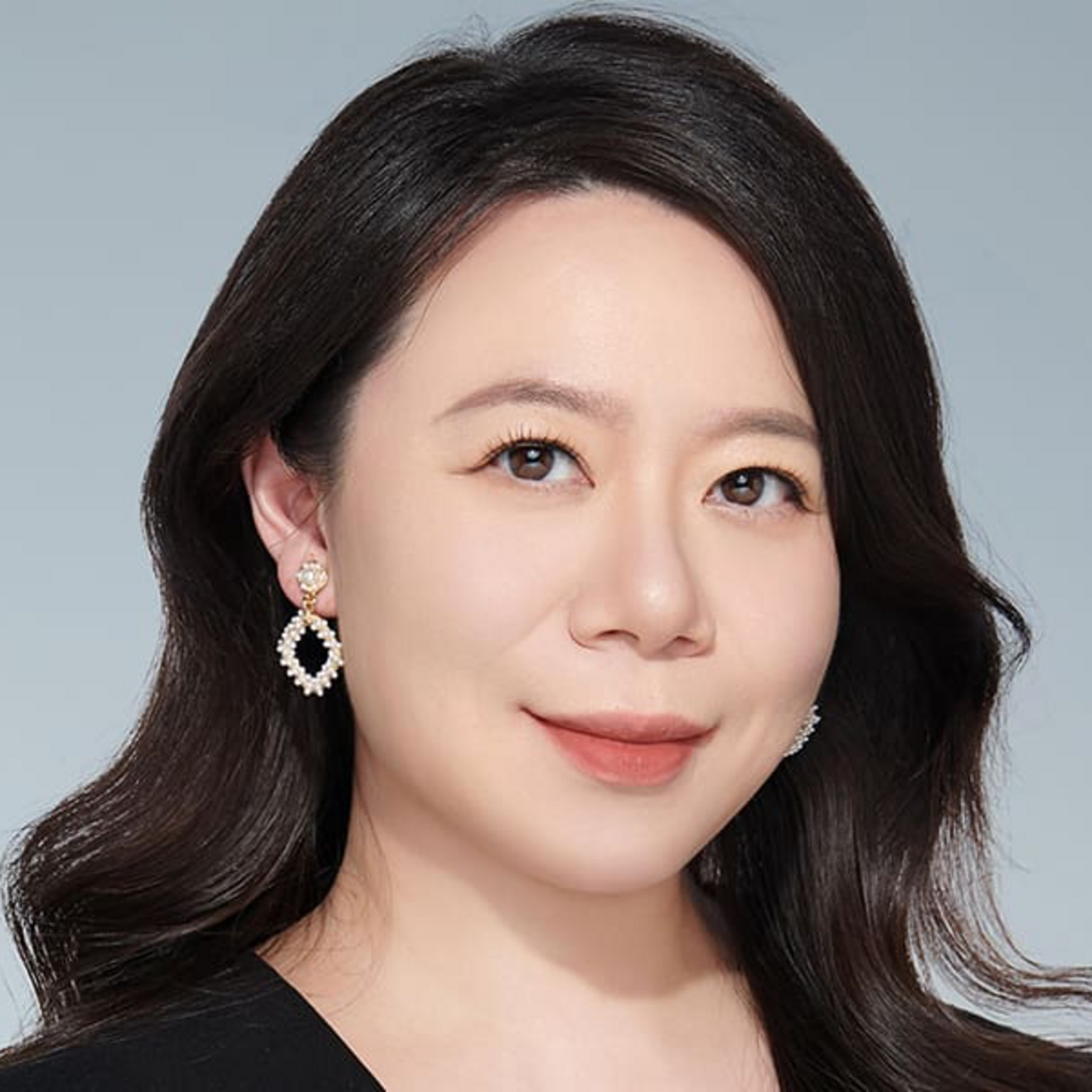
This podcast series is kindly sponsored by Evanston capital. For over 20 years, Evanston Capital has had a key focus in identifying early stage investment managers it believes are capable of generating long term value added returns in complex innovative strategy areas. This series is also sponsored by Alvine Capital. Alvine Capital is a specialist investment manager and placement boutique with a particular focus on alternative assets. A significant presence in London and Stockholm. The advice I was given at the very beginning was we need to have a seat at the table. And that’s what I believed in. I wanted to have the seat at a table. But fast forward to where it is now. I had started to see it very differently. I saw the table, you know, the rules, the expectations that I mentioned earlier, that wasn’t built with everyone in mind. There were people who naturally fit and then find their ways to the table easier and there are people who find it very difficult to see all the invisible layers around that table. So I think in a way, if we all wait for a seat there, then we will ultimately be playing by the rules that were set out a very long time ago that wasn’t with everyone in mind. So I guess that has really evolved to not just have a seat at the table, but maybe what we need to do is build a new table to build a better table. I’m Aoifinn Devitt and welcome to the 50 Faces podcast, a podcast committed to revealing the richness and diversity of the world of investment by focusing on its people and their stories. I’m joined today by Lynn Yu, who until recently is in the strategic trustees business at Goldman Sachs Asset Management in London where she was responsible for key relationships in the UK institutional market. She’s a leader who operates at the fascinating intersection of human behavior and global markets and spent over a decade building partnerships with some of the world’s largest institutional investors. She has a degree in Experimental psychology from Oxford and is a TEDx speaker on the power of being different. Welcome Lyn, thanks for joining us today. Thank you so much for having me. Well, I’d like to start with your background and I will note that one of the first times I came across your profile and we got to know each other was after reading a wonderful post you put on LinkedIn entitled this Little Girl is Me. So I knew you had an interesting background. I knew it was not a conventional path to finance, so would love to hear a little bit about that. Absolutely. To answer that, I probably have to take you back to my first Friday night drinks in London when I first joined an investment bank as an analyst. I’ve always considered myself to be funny, but I actually discovered that I was apparently only funny in China, which is where I grew up. I didn’t get jokes. I mean, when everyone was laughing, I was the one that is stone faced. But then when someone else told the jokes, I was the only one who laughed. No one else did. And that was all pretty embarrassing. But I think it really got to this point that I actually said to my colleagues in the pub that before entering into the world of finance, I have considered being a comedian because back home people said I was hilarious. That’s when they all started to laugh and then until they realized I wasn’t actually joking. So one of my colleagues who leaned over and said, lin, I think you have definitely made the right career choice, that is in finance and investment banking. It was a very awkward start, but it was also a defining moment. Growing up in China, there was this kind of unprecedented economic development and the pursuit of excellence was our baseline. But I was always very curious to see how that can apply and translate into different, more developed markets. So fast forward to more than a decade later. I realized being different was not a hurdle, it could actually be an edge. And they allowed me to see the contrast and some of the underlying patterns that a single market perspective wouldn’t provide. I’m also pleased to report that I have moved from trying to understand the jokes in the publisher to maybe being the person who can connect the dots between different markets. And that turned out to be a pretty useful skill after all. Wonderful. Well, I love that story. I bet you’re not the only one who had the culture shock of British humor and integrating into that. And would you say then in terms of the surprising turns from moving from experimental psychology into finance, obviously behavioral finance was part of that. First of all, I’d love to ask you what learnings you took from there into your role in finance and how that path evolved. Absolutely. I think to answer the part about the behavioral finance element. So my path really wasn’t a straight line. I initially studied computer science because I’ve always been very drawn to the numbers. But I kept finding myself fascinated by this one variable that data couldn’t explain, and that is the people. So I remember when Daniel Kahneman, being the first psychologist winning the Nobel Prize in economic that was a real light bulb moment for me because it makes sense that markets aren’t just numbers moving, there are people reacting to numbers. And that really led me to switch my major to focus on experimental psychology and behavioral finance and that intersection of financial markets and human behavior that really stayed with me throughout. So I naturally look for some of the why behind the decisions and not just the what. And then to give you an example about some of the kind of the surprising turns or things that I didn’t expect, I think at the earlier stage of my career, I assumed that success in building client relationships was really based on two things. One is this, the technical depths of it. The second is the natural social commonalities. Now, I think the technical part was interesting because I actually didn’t realize that coming from China, there was an assumption that people would say I must be very good at math, very good with numbers. I was naturally that technical person. It was the true, that was not run at all. And then it became almost the easier part. Then I realized the really hard part was the lack of immediate social touch points with people here. But the surprising turn really came from the meetings that I have discovered this interesting pattern. Because when I present to clients with a lot of data, when there was already exhausting amount of data, I lose the clients. But when I share the why, the underlying mindsets, the behavior drivers, they just paid much more attention and then giving much more time that perspectives and stories that I provided really added context to the numbers. And the result was almost like a total shift in what makes a business relationship endure, in my view, because I was surprised by how often months or even years later clients would come up to me and say, oh, I still remember that insight that you shared. It changed how we viewed entire narrative. I mean, looking back, this is almost obvious. Clients don’t remember another product pitch, but they won’t forget the person who really helped them shape their thinking. So I think that’s really where I had some clarity that we have infinite amount of data in how we operate, but our goal is not to find more numbers for our clients. It’s really to find that kind of insight with the human behavior drivers. And that’s really where the strategy begins. That’s absolutely fascinating and I think a pretty salutary thing to hear. Just as we think about as with the encroachment of AI, some of the robotization of some of the advice that’s given, and just that sheer volume of data that we’re dealing with, I think it’s a good reminder that we don’t necessarily need more data, but we do need better interpretation and better solution building around that data. So it’s a good segue, actually to my question about the whole, I suppose, discipline of building client relationships and strategic partnerships. And you spent over a decade leading business client Relationships at Goldman Sachs Asset Management over that period of time, how did you see the institutional clients needs evolve? I think there has been a real shift in the industry as we alluded to earlier in how we work with clients. It’s a real movement from the products to the solutions, from being a platform to being a true partner. That also means that we don’t just speak to the investment teams as what we were before, but very much so that we increasingly engage with the CIOs and often the CEOs of our client organizations when we speak to the CEOs today. From my experiences, there are three questions that almost always come up in conversations and that really illuminate what our clients are thinking about. The first that everyone always asks is, where is growth coming from? I guess that’s not a surprise. There is a lot of uncertainty and growth is increasingly challenging to find. So the leaders really want to identify the geographies they’re missing or the untapped segments that have genuine potential. So because of the footprint that expertise the platform enables, we can help the clients to connect the dots and frame the opportunities in a way that is actionable. So essentially, they need their partners to have an intellectual footprint that they don’t have on the ground. The second question is, how can I, as CEOs of the organization, work better with my board? Even the best opportunity, as we know, will not materialize if the internal governance isn’t aligned. So this is not about doing the job for the chief exec. It’s much more about providing the market data, the benchmark that allows the board to feel confident in the strategic direction, to navigate that uncertainty. And then the third and the last one, this one, always come up with a smile from our clients is what our competitors are doing. So they’re not necessarily looking for intelligence. When they ask what the competitors are doing. It’s much more about context. So they want to understand how their peers are navigating the same environment, what partnerships are becoming the standard, and where they might be falling behind. So this is where we see the true thought partnership happens because clients no longer talk about products. They want you to help them think through their decisions. So I think ultimately OA points to that. Clients are looking for a map to navigate uncertainty in this environment at every level. So being a partner today really means to bring that clarity that turns a complicated market into an actionable path forward for the client. Now to how we met, and this was, I think it was during peak Covid, when everybody was sharing stories of their own path. I mentioned the LinkedIn post that was so captivating. And this gets around the topic of diversity and obviously you’ve mentioned having had a different background to some of your peers in the UK when coming into finance. When we look at the diversity in the financial services industry, what’s your kind of thought on where we are in that respect? Any particular initiatives or programs that you’ve seen that make a difference? Yeah, I think the conversation about diversity have evolved a lot and the case for it is already well established. I think what is interesting is how the focus differs across different regions as well. So, for example, in Europe, the conversation often centers around identity. It is about representation with the formal structure and ensuring the organization reflects the society operates in. Whereas in Asia, by contrast, that discussion is much more at the functional level. So it’s a lot less about identity, but it’s much more about performance. And then the focus is more on how diversity allows a team to navigate very different local market complexities. But I think, you know, the challenge everywhere is the same is how we can move beyond the optics and ensure that it actually shapes the decisions and more importantly, the outcomes. So, for me, diversity is definitely a strategic and performance asset. And representation is not really about being the only one in the room. It’s about making sure I won’t be the last person in that room. We’re going to take a quick break to hear from Evanston Capital Management, one of the sponsors of this podcast series. I sat down with Adam Blitz, CEO and co CIO at Evanston Capital Management, and asked them about some of the nuances of their portfolio construction and why they sometimes like to select specialist or smaller managers. We spend a lot of time on implementation and just simply when you’re a smaller manager, your footprint in the market is less. If you change your mind on a name, you can get out of it generally more easily. And again, most of these specialist managers tend to be smaller in terms of the assets under management and they kind of go hand in hand with one another. And that flexibility, if you’re wrong on a name or you just want to get out of a name or you change your mind or you want to size up a smaller cap name in your portfolio, just have more ability to do that if you’re a specialist manager who’s not managing a ton of money. And now back to the show. So obviously you’ve had a long career. Now at this point with building client relationships, working across different geographies, have there been any setbacks or challenges that you’ve experienced and any lessons learned from Them, Absolutely. I mean, they happen. And then I think, you know, if I come back to not just what works, but why it happened. And then I think that’s perhaps a framework that I looked at some of these setbacks because early in my career I stumbled over some of the invisible rules in meeting rooms. Who speaks, who gets noticed, what counts as contributing. At first I thought it must be me, maybe because I wasn’t speaking enough or not speaking in the right way. But then I realized that maybe sometimes the setback isn’t just about you. There is a bigger picture. So the assumption that were baked into the meetings, whose voice naturally get heard more, who counts more as a leadership style. And then I realized that the gap is not just in the skills and then it’s actually in the different expectations. So many of those setbacks that I have that I had to navigate the space right, how to speak, frame, make the perspective count, but they all become almost like a signal. It shows where I can kind of step up or where I can actually add value, that I know that the viewpoints are different. So I guess the setbacks, as difficult as they were at the time, it became a kind of invitation. The invitation to also to lead differently, to drive the conversations, not just to be part of it and to really create an impact on your own terms, not just to be conformed to what it was before. I love that. Really insightful. And then thinking about people. We’ve spoken about mentorship, I think in many of our meetings that we’ve had about key people that have been perhaps a motivating force in your life. I think that came up in the little girl is me post. Anyone that you can speak to. And I do always mention that this does not have to be an exhaustive list. Absolutely. I mean, I’ve been influenced by people at every stage of my life, as you can imagine. But my parents really gave me the foundation, the curiosity, resilience and the courage to choose my own path. They live through unprecedented changes. Seeing China was 14 years ago to what it was now, what it has become today. They have navigated massive generational shifts, the one child policy and the total social transformation. So watching them adapt and succeed despite every setback has really taught me that the environment might change, but your character is your constant. So when I first arrived in the uk, I was starting from zero. I had no network, no local connections, I had no one to turn to. So it wasn’t a single moment of having one person. It was almost a long intentional journey of building a life from the Ground up some very fortunate through that process to have friendships, mentors, sponsors, clients, and clients who have become friends. I guess over time I realized that even influence that wasn’t just about a single person. It is that cumulative, it is intentional. And then it is the result that every person who took a chance on me or shared the insight when I was still finding my way and tied to that in terms of sharing insights, was there any wisdom or either advice for your younger self or just a kernel of wisdom that you internalize and maybe can share with us now? It’s really interesting because we spoke at some of the events tying to the diversity front. The advice I was given at the very beginning was we need to have a seat at the table. And that’s what I believed in. I wanted to have the seat at a table. But fast forward to where it is now. I had started to see it very differently. I saw the table, you know, the rules, the expectations that I mentioned earlier, that wasn’t built with everyone in mind. There were people who naturally fit and then find their ways to the table easier. And there are people who find it very difficult to see all the invisible layers around that table. So I think in a way, if we all wait for a seat there, then we will ultimately be playing by the rules that were set out a very long time ago that wasn’t with everyone in mind. So I guess that has really evolved to not just have a seat at a table, but maybe what we need to do is build a new table to build a better table. And then I guess that’s really where I’m thinking and then evolved in terms of the next steps. And then I don’t know if you find that resonating, but that certainly was something that was a surprise to me, but also something that was transformative that I live by now. Well, I love that idea of making space at the table by just essentially kind of forging away a path to that. And that is actually how I’ve always characterized your presence in the industry. I think of the iron hand, the velvet glove. I think your delivery is so soft and solicitous of other people’s comforts and generally, I think unobtrusive. Yet at the same time it has chosen a self awareness, utter commitment to the client’s well being and a humility that is rare in our industry, but I think is so refreshing. So thank you so much, Lynne, for coming here and sharing your insights with us. That’s amazing. Thank you so much. I’m Aoifinn Devitt. Thank you for listening to the 50 Faces podcast. If you liked what you heard and would like to tune in to hear from more inspiring investment professionals and their stories, please tune in on Apple Podcasts or wherever you get your podcasts. This podcast is for informational purposes only and should not be construed as investment advice and all views are personal and should not be attributed to the organizations and affiliations of the host or any guest.
This podcast series is kindly sponsored by Evanston capital. For over 20 years, Evanston Capital has had a key focus in identifying early stage investment managers it believes are capable of generating long term value added returns in complex innovative strategy areas. This series is also sponsored by Alvine Capital. Alvine Capital is a specialist investment manager and placement boutique with a particular focus on alternative assets. A significant presence in London and Stockholm. The advice I was given at the very beginning was we need to have a seat at the table. And that’s what I believed in. I wanted to have the seat at a table. But fast forward to where it is now. I had started to see it very differently. I saw the table, you know, the rules, the expectations that I mentioned earlier, that wasn’t built with everyone in mind. There were people who naturally fit and then find their ways to the table easier and there are people who find it very difficult to see all the invisible layers around that table. So I think in a way, if we all wait for a seat there, then we will ultimately be playing by the rules that were set out a very long time ago that wasn’t with everyone in mind. So I guess that has really evolved to not just have a seat at the table, but maybe what we need to do is build a new table to build a better table. I’m Aoifinn Devitt and welcome to the 50 Faces podcast, a podcast committed to revealing the richness and diversity of the world of investment by focusing on its people and their stories. I’m joined today by Lynn Yu, who until recently is in the strategic trustees business at Goldman Sachs Asset Management in London where she was responsible for key relationships in the UK institutional market. She’s a leader who operates at the fascinating intersection of human behavior and global markets and spent over a decade building partnerships with some of the world’s largest institutional investors. She has a degree in Experimental psychology from Oxford and is a TEDx speaker on the power of being different. Welcome Lyn, thanks for joining us today. Thank you so much for having me. Well, I’d like to start with your background and I will note that one of the first times I came across your profile and we got to know each other was after reading a wonderful post you put on LinkedIn entitled this Little Girl is Me. So I knew you had an interesting background. I knew it was not a conventional path to finance, so would love to hear a little bit about that. Absolutely. To answer that, I probably have to take you back to my first Friday night drinks in London when I first joined an investment bank as an analyst. I’ve always considered myself to be funny, but I actually discovered that I was apparently only funny in China, which is where I grew up. I didn’t get jokes. I mean, when everyone was laughing, I was the one that is stone faced. But then when someone else told the jokes, I was the only one who laughed. No one else did. And that was all pretty embarrassing. But I think it really got to this point that I actually said to my colleagues in the pub that before entering into the world of finance, I have considered being a comedian because back home people said I was hilarious. That’s when they all started to laugh and then until they realized I wasn’t actually joking. So one of my colleagues who leaned over and said, lin, I think you have definitely made the right career choice, that is in finance and investment banking. It was a very awkward start, but it was also a defining moment. Growing up in China, there was this kind of unprecedented economic development and the pursuit of excellence was our baseline. But I was always very curious to see how that can apply and translate into different, more developed markets. So fast forward to more than a decade later. I realized being different was not a hurdle, it could actually be an edge. And they allowed me to see the contrast and some of the underlying patterns that a single market perspective wouldn’t provide. I’m also pleased to report that I have moved from trying to understand the jokes in the publisher to maybe being the person who can connect the dots between different markets. And that turned out to be a pretty useful skill after all. Wonderful. Well, I love that story. I bet you’re not the only one who had the culture shock of British humor and integrating into that. And would you say then in terms of the surprising turns from moving from experimental psychology into finance, obviously behavioral finance was part of that. First of all, I’d love to ask you what learnings you took from there into your role in finance and how that path evolved. Absolutely. I think to answer the part about the behavioral finance element. So my path really wasn’t a straight line. I initially studied computer science because I’ve always been very drawn to the numbers. But I kept finding myself fascinated by this one variable that data couldn’t explain, and that is the people. So I remember when Daniel Kahneman, being the first psychologist winning the Nobel Prize in economic that was a real light bulb moment for me because it makes sense that markets aren’t just numbers moving, there are people reacting to numbers. And that really led me to switch my major to focus on experimental psychology and behavioral finance and that intersection of financial markets and human behavior that really stayed with me throughout. So I naturally look for some of the why behind the decisions and not just the what. And then to give you an example about some of the kind of the surprising turns or things that I didn’t expect, I think at the earlier stage of my career, I assumed that success in building client relationships was really based on two things. One is this, the technical depths of it. The second is the natural social commonalities. Now, I think the technical part was interesting because I actually didn’t realize that coming from China, there was an assumption that people would say I must be very good at math, very good with numbers. I was naturally that technical person. It was the true, that was not run at all. And then it became almost the easier part. Then I realized the really hard part was the lack of immediate social touch points with people here. But the surprising turn really came from the meetings that I have discovered this interesting pattern. Because when I present to clients with a lot of data, when there was already exhausting amount of data, I lose the clients. But when I share the why, the underlying mindsets, the behavior drivers, they just paid much more attention and then giving much more time that perspectives and stories that I provided really added context to the numbers. And the result was almost like a total shift in what makes a business relationship endure, in my view, because I was surprised by how often months or even years later clients would come up to me and say, oh, I still remember that insight that you shared. It changed how we viewed entire narrative. I mean, looking back, this is almost obvious. Clients don’t remember another product pitch, but they won’t forget the person who really helped them shape their thinking. So I think that’s really where I had some clarity that we have infinite amount of data in how we operate, but our goal is not to find more numbers for our clients. It’s really to find that kind of insight with the human behavior drivers. And that’s really where the strategy begins. That’s absolutely fascinating and I think a pretty salutary thing to hear. Just as we think about as with the encroachment of AI, some of the robotization of some of the advice that’s given, and just that sheer volume of data that we’re dealing with, I think it’s a good reminder that we don’t necessarily need more data, but we do need better interpretation and better solution building around that data. So it’s a good segue, actually to my question about the whole, I suppose, discipline of building client relationships and strategic partnerships. And you spent over a decade leading business client Relationships at Goldman Sachs Asset Management over that period of time, how did you see the institutional clients needs evolve? I think there has been a real shift in the industry as we alluded to earlier in how we work with clients. It’s a real movement from the products to the solutions, from being a platform to being a true partner. That also means that we don’t just speak to the investment teams as what we were before, but very much so that we increasingly engage with the CIOs and often the CEOs of our client organizations when we speak to the CEOs today. From my experiences, there are three questions that almost always come up in conversations and that really illuminate what our clients are thinking about. The first that everyone always asks is, where is growth coming from? I guess that’s not a surprise. There is a lot of uncertainty and growth is increasingly challenging to find. So the leaders really want to identify the geographies they’re missing or the untapped segments that have genuine potential. So because of the footprint that expertise the platform enables, we can help the clients to connect the dots and frame the opportunities in a way that is actionable. So essentially, they need their partners to have an intellectual footprint that they don’t have on the ground. The second question is, how can I, as CEOs of the organization, work better with my board? Even the best opportunity, as we know, will not materialize if the internal governance isn’t aligned. So this is not about doing the job for the chief exec. It’s much more about providing the market data, the benchmark that allows the board to feel confident in the strategic direction, to navigate that uncertainty. And then the third and the last one, this one, always come up with a smile from our clients is what our competitors are doing. So they’re not necessarily looking for intelligence. When they ask what the competitors are doing. It’s much more about context. So they want to understand how their peers are navigating the same environment, what partnerships are becoming the standard, and where they might be falling behind. So this is where we see the true thought partnership happens because clients no longer talk about products. They want you to help them think through their decisions. So I think ultimately OA points to that. Clients are looking for a map to navigate uncertainty in this environment at every level. So being a partner today really means to bring that clarity that turns a complicated market into an actionable path forward for the client. Now to how we met, and this was, I think it was during peak Covid, when everybody was sharing stories of their own path. I mentioned the LinkedIn post that was so captivating. And this gets around the topic of diversity and obviously you’ve mentioned having had a different background to some of your peers in the UK when coming into finance. When we look at the diversity in the financial services industry, what’s your kind of thought on where we are in that respect? Any particular initiatives or programs that you’ve seen that make a difference? Yeah, I think the conversation about diversity have evolved a lot and the case for it is already well established. I think what is interesting is how the focus differs across different regions as well. So, for example, in Europe, the conversation often centers around identity. It is about representation with the formal structure and ensuring the organization reflects the society operates in. Whereas in Asia, by contrast, that discussion is much more at the functional level. So it’s a lot less about identity, but it’s much more about performance. And then the focus is more on how diversity allows a team to navigate very different local market complexities. But I think, you know, the challenge everywhere is the same is how we can move beyond the optics and ensure that it actually shapes the decisions and more importantly, the outcomes. So, for me, diversity is definitely a strategic and performance asset. And representation is not really about being the only one in the room. It’s about making sure I won’t be the last person in that room. We’re going to take a quick break to hear from Evanston Capital Management, one of the sponsors of this podcast series. I sat down with Adam Blitz, CEO and co CIO at Evanston Capital Management, and asked them about some of the nuances of their portfolio construction and why they sometimes like to select specialist or smaller managers. We spend a lot of time on implementation and just simply when you’re a smaller manager, your footprint in the market is less. If you change your mind on a name, you can get out of it generally more easily. And again, most of these specialist managers tend to be smaller in terms of the assets under management and they kind of go hand in hand with one another. And that flexibility, if you’re wrong on a name or you just want to get out of a name or you change your mind or you want to size up a smaller cap name in your portfolio, just have more ability to do that if you’re a specialist manager who’s not managing a ton of money. And now back to the show. So obviously you’ve had a long career. Now at this point with building client relationships, working across different geographies, have there been any setbacks or challenges that you’ve experienced and any lessons learned from Them, Absolutely. I mean, they happen. And then I think, you know, if I come back to not just what works, but why it happened. And then I think that’s perhaps a framework that I looked at some of these setbacks because early in my career I stumbled over some of the invisible rules in meeting rooms. Who speaks, who gets noticed, what counts as contributing. At first I thought it must be me, maybe because I wasn’t speaking enough or not speaking in the right way. But then I realized that maybe sometimes the setback isn’t just about you. There is a bigger picture. So the assumption that were baked into the meetings, whose voice naturally get heard more, who counts more as a leadership style. And then I realized that the gap is not just in the skills and then it’s actually in the different expectations. So many of those setbacks that I have that I had to navigate the space right, how to speak, frame, make the perspective count, but they all become almost like a signal. It shows where I can kind of step up or where I can actually add value, that I know that the viewpoints are different. So I guess the setbacks, as difficult as they were at the time, it became a kind of invitation. The invitation to also to lead differently, to drive the conversations, not just to be part of it and to really create an impact on your own terms, not just to be conformed to what it was before. I love that. Really insightful. And then thinking about people. We’ve spoken about mentorship, I think in many of our meetings that we’ve had about key people that have been perhaps a motivating force in your life. I think that came up in the little girl is me post. Anyone that you can speak to. And I do always mention that this does not have to be an exhaustive list. Absolutely. I mean, I’ve been influenced by people at every stage of my life, as you can imagine. But my parents really gave me the foundation, the curiosity, resilience and the courage to choose my own path. They live through unprecedented changes. Seeing China was 14 years ago to what it was now, what it has become today. They have navigated massive generational shifts, the one child policy and the total social transformation. So watching them adapt and succeed despite every setback has really taught me that the environment might change, but your character is your constant. So when I first arrived in the uk, I was starting from zero. I had no network, no local connections, I had no one to turn to. So it wasn’t a single moment of having one person. It was almost a long intentional journey of building a life from the Ground up some very fortunate through that process to have friendships, mentors, sponsors, clients, and clients who have become friends. I guess over time I realized that even influence that wasn’t just about a single person. It is that cumulative, it is intentional. And then it is the result that every person who took a chance on me or shared the insight when I was still finding my way and tied to that in terms of sharing insights, was there any wisdom or either advice for your younger self or just a kernel of wisdom that you internalize and maybe can share with us now? It’s really interesting because we spoke at some of the events tying to the diversity front. The advice I was given at the very beginning was we need to have a seat at the table. And that’s what I believed in. I wanted to have the seat at a table. But fast forward to where it is now. I had started to see it very differently. I saw the table, you know, the rules, the expectations that I mentioned earlier, that wasn’t built with everyone in mind. There were people who naturally fit and then find their ways to the table easier. And there are people who find it very difficult to see all the invisible layers around that table. So I think in a way, if we all wait for a seat there, then we will ultimately be playing by the rules that were set out a very long time ago that wasn’t with everyone in mind. So I guess that has really evolved to not just have a seat at a table, but maybe what we need to do is build a new table to build a better table. And then I guess that’s really where I’m thinking and then evolved in terms of the next steps. And then I don’t know if you find that resonating, but that certainly was something that was a surprise to me, but also something that was transformative that I live by now. Well, I love that idea of making space at the table by just essentially kind of forging away a path to that. And that is actually how I’ve always characterized your presence in the industry. I think of the iron hand, the velvet glove. I think your delivery is so soft and solicitous of other people’s comforts and generally, I think unobtrusive. Yet at the same time it has chosen a self awareness, utter commitment to the client’s well being and a humility that is rare in our industry, but I think is so refreshing. So thank you so much, Lynne, for coming here and sharing your insights with us. That’s amazing. Thank you so much. I’m Aoifinn Devitt. Thank you for listening to the 50 Faces podcast. If you liked what you heard and would like to tune in to hear from more inspiring investment professionals and their stories, please tune in on Apple Podcasts or wherever you get your podcasts. This podcast is for informational purposes only and should not be construed as investment advice and all views are personal and should not be attributed to the organizations and affiliations of the host or any guest.