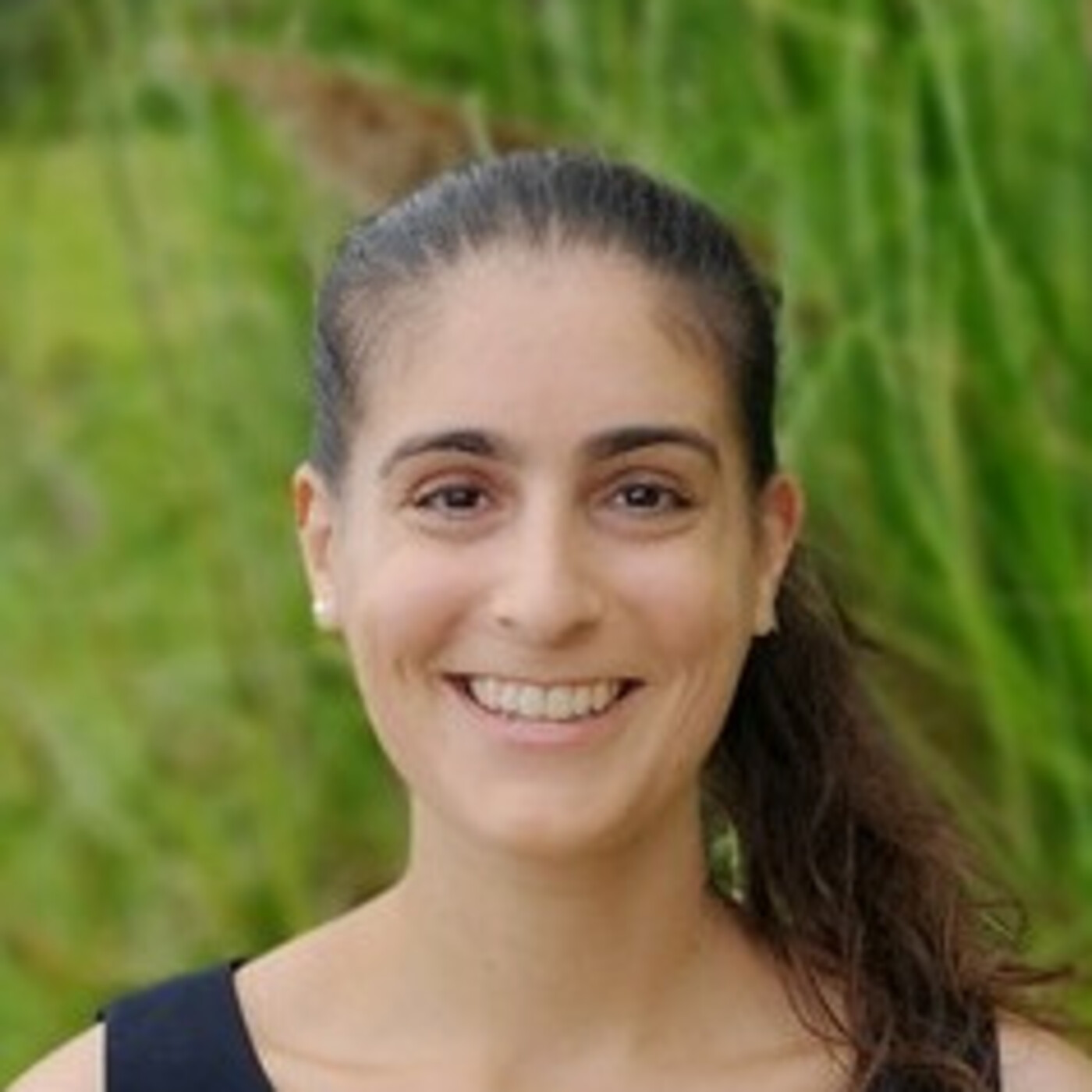
Aoifinn Devitt: How can you train yourself to get outside your comfort zone? And why is that where the magic really happens? Let’s find out next. I’m Aoifinn Devitt, and welcome to this 50 Faces Focus series, which showcases inspiring Israeli women in tech and beyond. I’m joined today by Eleanor Swery, who is a solutions engineer at Rookout. She describes herself as working at the intersection of the physical and digital worlds and has a PhD in mechanical engineering from the University of Auckland. Born in Israel, she moved to New Zealand at the age of 10 and moved back to Israel 2 years ago. Welcome, Elinor. Thank you for joining me today.
Elinor: Thanks. It’s a pleasure being here.
Aoifinn Devitt: So, can you talk us through your career journey, maybe starting right back where you grew up and how it took you from New Zealand to Israel?
Elinor: Absolutely. So, uh, for some background, I was born in Israel and when I was 10, my parents decided to move to New Zealand. They wanted to go on a bit of an adventure and we ended up being there. So, I went to school, university, and worked there. And at some point in my career, I realized that in order to really grow and expand, I had to join an industry in a bigger market. So, I had the pleasure of working at IBM, a large corporate in New Zealand, and then I moved to a brilliant startup there, Soul Machines. And I think I had one of the best jobs. I worked with international clients working with cutting-edge technology, But at one point you realize that you can’t get up at the middle of the night every night in order to work with international clients. And there’s really a limited pool of people you can learn from in such a small place. So I looked at my opportunities. There was an option of moving to Silicon Valley, San Francisco. But I realized that if I am looking at moving somewhere professionally speaking, in order to interact with as many brilliant minds as possible, then coming back to Israel was a no-brainer. We have every large tech company is based here, the Facebooks, Googles, Amazons of the world. But what makes Israel really special is the fact that it’s a startup nation. So there are so many startups here in so many different topics, so many brilliant minds working tirelessly and doing so really successfully. So I kind of took the plunge and I decided that in order to really push myself and continue to grow, I had to move. And I don’t regret it. So, so far it’s been fantastic being in Tel Aviv. Being in Israel really immerses you in everything that happens in the tech world. You go to events, at least so this year, But you go to events, you meet people, interact with folks, and you really hear of awesome stuff that’s taking place here and really shaping the world from this industry.
Aoifinn Devitt: And in terms of the cultural shift, you’ve made two changes, I suppose, even though you grew up in Israel to the age of 10. Was there much of a cultural shift from Israel to New Zealand? And then given you spent much of your university years in New Zealand, then back again, or did you find that that transition was not so challenging?
Elinor: Yeah, that’s a great question. People often ask me where I’m from and I start stressing out because I was born in Israel, I grew up in New Zealand, I’ve worked around the world. I’m a bit of a child of the world. I do remember when moving from Israel to New Zealand, there was a large culture shift, but perhaps I didn’t feel it as much because I was just a 10-year-old. There were different things that you did feel that were vastly different. But I can talk more about the recent move. So from New Zealand to Israel. When I moved to Israel, I had a job lined up and I thought I was all sorted. I’m Israeli, I speak the language, I grew up here. And I remember on my first day of work, it was the biggest shock ever. And little things that you just didn’t even think of. And I felt like the biggest Kiwi in the world, which is not a bad thing. I just didn’t expect it. I’m much quieter than folks You here. Know, in conversations, I listen to people instead of jumping in and interrupting, much more polite. And you feel it on a daily basis. And I think I’m in a privileged position to kind of take all the good attributes from the Kiwi culture and blend them into the great attributes of the Israeli culture. And I think that’s, that’s really a great place to be, being that child of the world, knowing how different cultures act and interact and kind of merging the positives of both of those.
Aoifinn Devitt: And how about the language barrier? You said you grew up speaking Hebrew. Did you still have that at a level that you were happy with when you went back into the professional world? Or do you find that much of what you do is conducted English now?
Elinor: Yeah, so I would say that 90% of the work here is done in English, and it does depend on the company you work for. So if you work for an international-based company in Israel, everything is done in English. At the startups, it’s more of a mix, so it really depends on who the folks are at that company and whether everyone speaks Hebrew or not. Documentation-wise, everything is done in English, which is fantastic, but some of the conversations do take place in Hebrew. People here are very welcoming. Everyone knows English and they would switch to English. But for me, it was really important to speak Hebrew from the get-go. I didn’t want to be that person who just resorted to English and then never expanded on their language skills. I would say that when I came here, my Hebrew was at the level of a 10-year-old. So although I spoke fluently, I didn’t have much of an accent. Having technical discussions or business discussions in Hebrew was a challenge. And it was something that I felt straight away, but it wasn’t a barrier. It wasn’t an issue. It is something that I wanted to work on. And one of the things that I decided to do a few months into my move was actually start studying towards an MBA. Now, someone with my background doing mechanical engineering, I would have never decided, I would have never thought of doing something like that. But I figured it was the perfect way to really improve my business speak, my vocabulary, focusing on a specific area in Hebrew. And that so far works wonders. But in terms of international folks moving to Israel, it’s certainly not a barrier not being fluent in the language.
Aoifinn Devitt: Speaking of the MBA, just even going back to your earlier education, so were you always someone who was going to enter into an engineering field? Did you like maths and sciences at school? What prompted you to pursue that course?
Elinor: Yeah, I did. I loved maths and science throughout my entire schooling years, but I never knew what that would lead to. And I think that’s something important when we interact with kids, and we always ask them, what do you want to be when you grow up? No one knows. Well, most of the people I’ve met don’t know what they want to be when they grow up. And it also is even more complicated by the fact that things change all the time. So all the roles I’ve had so far in my career didn’t really exist when I was at school. If we go back to school, I did— I loved maths and science, and I enjoyed solving real-world problems. And eventually, towards the end of my schooling career, I realized that the engineering is the thing that combines all of those things, and that’s why I went down that path. I also, when I started engineering, I didn’t know which specialization I would go into. So in my first year, you kind of have courses from a number of different disciplines, and when I tried those, I realized that I enjoyed mechanical engineering the most, and that’s why I went down that path. But I definitely wasn’t that person who at age 10 knew what they wanted to do when they grow up.
Aoifinn Devitt: When it came to pursuing a PhD, what prompted you to take it to the next level, and was there anything in particular that you focused on there?
Elinor: Yes, so I absolutely loved my degree. I enjoyed every single moment of it. It was 4 years of pure bliss. I remember I pretty much lived on campus. I had so much fun learning all the different topics and also applying them. So an engineering degree is, is a very applied degree, for homework, you get to work on actual problems that you can imagine in the real world. And I absolutely loved it. Now, towards the end of my degree, I started applying for jobs. I had a number of offers. And then one of the lecturers approached me and said, listen, like, I’ve been giving you all these references for these jobs, but have you considered a PhD? And to be honest, I haven’t really. I wanted to do something more applied, something more practical. And I kind of pictured PhDs as being stuck in a lab and doing theory, you know, for 4 years. But we sat down and he had a brilliant project lined up, which kind of ticked all the boxes of everything that I was looking for. So during my bachelor degree, I did my honors project on composite material manufacturing. So composite materials are your carbon fibers, you know, used in cars and airplanes. And I looked at those materials. And the lecturer at the time came to me and said, there’s a brilliant project, it’s funded, it’s going to be with BMW, you know, it’s a real-world application, it’s going to be used in industry, here’s an amazing scholarship. And it was kind of an opportunity that you can’t say no to. So I grabbed it with both hands and I started working on it. In 3 and a half years, I finished with a PhD and absolutely no regrets. I had the most amazing time. My PhD was a carry-on of my honours project. So looking at how do we optimize the way in which composite materials are manufactured. And it combined many different facets of science. So there was a lot of software engineering involved, there was finite element simulations, I did a lot of computer vision, kind of gave me the opportunity to combine many different facets into the one research project. But most importantly, for me, it was a real-life project. So I worked with a number of large companies they use this data, they incorporate it into their processes, and there was real benefit to this research. It wasn’t just something that went in my thesis and collected dust in a library.
Aoifinn Devitt: Then what prompted you then to transition into business from there?
Elinor: Yes, so towards the end of my PhD was another period of time when I tried to look at what to do next, and I realized that the stuff that I enjoyed the most about my PhD was taking the PhD, taking the research that I’ve developed, and bringing it to other people. So I really thrived in going to conferences and sharing my research and sharing the outputs. I think I went to 12 conferences in my 3 and a half years, which is unheard of. And I really made particular focus on going to companies, taking this research to them, seeing what their needs were, how they can benefit from it, and how they can apply it. During my PhD, I spent 6 months, I was based in Munich, but really going all around Europe, going to different research centers, interacting with them and seeing how they can apply my findings. And that was what I enjoyed the most, was bridging the gap between the research, the technical world, and the people who will use it in the business world ultimately, seeing how can I evangelize this research, this new technology, and really make sure that people leverage it to improve their processes, to improve their products.. And so knowing that that was what I enjoyed the most about the research, I kind of started looking at how can I apply that in a job in the industry? You know, what does that role look like? And so that was my focus. That was what I was looking for. I was looking for roles that would be— I would be that person, that translator, that bridge bringing different teams from different disciplines together. Now, I didn’t know at the beginning what that role would look like, whether it even existed or not. And I did a lot of searching. I went to a lot of events. I met a lot of people. And at one of those events, it was an event hosted by an organization called SheSharp focusing on bringing girls into the tech industry. There was a girl who actually described her role as a digital consultant at IBM. And as she was describing what she does on a daily basis, I was just glued to her talk. Everything she said was everything that I wanted to do. Put aside the fact that I haven’t worked in the digital sector before, the actual essence of her role was perfect. You know, every day she did something else. She worked with different industries, different people. She brought new technologies to them and made sure that they would get as much value and as much benefit out of them. And after that talk, I knew that that was what I had to do. You know, you have your light bulb moment, and I remember that for the rest of my life, even though I spent months and months trying to figure out what I wanted to do, talk to different people. It was up to that point, once I heard that, her talk, I knew that’s what I wanted to do. And then I did everything I could to get that job and to essentially do what she was doing.
Aoifinn Devitt: And when you moved into that role, did you find you were working with many other PhDs, or was that sort of a novelty?
Elinor: Yeah, so I joined IBM as a digital consultant, um, and what was brilliant about the way that IBM is structured is that they take people from many different backgrounds, many different disciplines, disciplines. As a digital consultant, you have to work in different industries, be it banking or utilities or government. And so it’s important for IBM to bring that diversity into its workforce. So I do remember when I started working at IBM, I worked with— so some of my colleagues were lawyers, were accountants, people from tech, all sorts of different backgrounds going into this role. There weren’t many PhDs as such in the firm, but there were lots of brilliant minds from different backgrounds who came in to do a similar role to me. As I progressed through my career, so after IBM, I joined a company called Soul Machines, and around half the company was research-based. So there were lots of PhDs there, again from different backgrounds, looking at computer vision and natural language processing. And I enjoyed that the most. So when you look at where you work and who you work with, it’s really important for me to work with a diverse set of brilliant minds. If you can go to your job and learn lots from other people, it’s a massive bonus for me. And so, that is something that’s really important for me. And throughout my career, I’ve had that opportunity. I’ve had the opportunity to work with some of the most brilliant minds and learn amazing things from them.
Aoifinn Devitt: It sounds like you’ve had a very rich experience in the companies in which you’ve worked, but I think it is quite notable that it was listening to another woman in tech that you were really drawn to enter the area yourself. Do you think that there is a representation problem in tech in general? Maybe not enough women, not enough diversity?
Elinor: Yeah, I’m super grateful for that lightbulb moment I had listening to her talk. I think one of the biggest issues is that people don’t know what’s available in tech, and so they don’t necessarily enter it. Yes, there is a representation problem. You know, if I look at my mechanical engineering days, there was an even bigger representation problem, but I don’t necessarily look at it as a problem. For those of us in the industry, I try and make the most of it. So I try and look at it as an opportunity. So being in a minority, there’s lots of things that work for you, right? So you go to events, you stand out, people remember you, and I try to make the most of it. But yes, there’s a problem and we do need to work on it because as I said, one of the most important things is to work with a diverse set of minds. And if you don’t have diversity in your workforce, then the output isn’t going to be as good. I’m still trying to see what it is that we can do about it. You know, if you can see others like you, you can be like them. You know, if it wasn’t for me seeing what she did, I probably would have never entered that industry. For younger girls, if they know that this industry is for them and they don’t just see comics and TV shows filled with nerdy guys, if they know that this industry is for them as well, then they might consider entering them. So I think it’s a really complex environment and we do need to be aware of it. We need to be aware of the fact you that, know, younger girls don’t necessarily know what’s available in in the, the industry, and they also don’t necessarily see themselves. So we need to proactively work towards that.
Aoifinn Devitt: Do you think this is a global problem? Is it specific to certain regions?
Elinor: Yes, I think it is global. I think some regions do it better than others, and I think it’s up to us to really make sure we present ourselves as well as possible. I can tell you that over the last week, most of my meetings were with men, and I’m— I see myself as an ambassador, so I need to make— to show them that, you know, people like me, women, can bring lots to the table. Look, I think if we look at the different countries that I’ve worked at, each country has its different flavor. So I’ve spent a lot of time obviously in New Zealand and in Australia, very similar in terms of that. People are very open, they’re welcoming, but women are incredibly underrepresented. And in the States, I’ve spent some time there. Again, you need to— in the States, it’s very important to network with people and have things in common with them to get into different opportunities. And I think in some sense, women miss out on that a bit. And here in Israel, I think the problem is less in your face. There are brilliant women holding incredible high technical roles, And although they are underrepresented, I think it’s— the problem isn’t as bad here. So, I can tell you that at Nexa, at my last company, our VP of Engineering was a woman, two engineering team leaders were women, and really people don’t look at you and say, oh, you’re a woman, you must be doing this or you must be doing that. So, I think people here are much more open to it, but there’s definitely room for growth and room to improve.
Aoifinn Devitt: And looking back now at your own career, who were some of the key people who influenced you in your career or in life so far and in what way?
Elinor: So I think family-wise, if I look at all the women, all the older women in my family, everyone has worked. So from my grandmothers to my aunts to my mom, everyone has worked their whole lives, and having a career was very important to them. And I think growing up with that mentality has had an incredible level of influence on me. I remember one story that my grandmother told me. So she actually immigrated from Scotland to Israel in in the, the early 1950s, And when she was in Europe, she was incredibly active in helping Jews immigrate to Israel. When she came to Israel, she did many, many jobs. She spoke many different languages. And then she said that when she met my grandfather, her husband, he was looking for love, but she was looking for someone that she can open a farm with and get working with. So again, even when it came to marrying, her focus was on continuing to produce things. So, this work ethic at my family was really strong. And I think that’s what has led me to always believing in working really, really hard. So, all the female influences from my family has had a major influence on the way I do things in life.
Aoifinn Devitt: And often this intergenerational wisdom that gets passed down can stay with us in the forms of nuggets of advice that influence how we see the world. Is there any one piece of advice that you received or any creed or motto that you live by?
Elinor: Absolutely. So one of my favorite mottos that I live by is that growth and comfort can’t coexist. So in order to grow, you really need to step outside of your comfort zone. And in all of my social media platforms, and I have a big poster in my home, there’s, there’s a picture of a circle, and inside it says your comfort zone. And then outside of that circle is where the magic happens. And I really, really try and live by this. So it’s very easy to stay in our comfort zones, be comfortable, comfortable, do what we know what works, but that’s not where the magic happens. And so on a daily basis, I question myself, am I in my comfort zone or am I in that area where the magic happens? Do I need to push outside of my comfort zone? Do I need to learn more? Do I need to challenge myself more in order to let the magic happen? And I think by questioning myself on a daily basis, I’m really able to see whether it is I’m focusing on the right thing, whether I’ve become complacent, or if I need to start looking at shifting things around in order to continue to grow and to continue to expand.
Aoifinn Devitt: And just say for someone else for whom maybe getting outside their comfort zone is not a natural or an easy thing— I’m sure it’s not easy for anyone— are there any things that can help that, maybe in terms of a support network, or you just, know, someone who’s done it before that’s kind of basically paved that path before you? Have you found anything that makes it somewhat easier to make the leap?
Elinor: Yes, so one of the most important things is surrounding yourself with like-minded people. So surrounding yourself with people who are continuously pushing themselves, who are continuously expanding. When you sit and interact with folks like that, you just want to do more. It kind of gets passed on to you. One of the most prominent examples for me was that when I was working at Soul Machines, one of the people that I worked with very closely, ex-Olympian, he had two gold medals and he was new to the tech field, but he was continuously thirsty to learn more. And his enthusiasm and energy, you just, you couldn’t help but be part of it. And so, I’m a true believer if you surround yourself with really motivated people, that gets rubbed off onto you and you just play off each other’s energies. So, that’s really important.
Aoifinn Devitt: It’s so true. I always say there are certain people in my life who really energize me. And I think it’s for that same reason you mentioned, is because they push themselves, They strive for excellence, they dig deeper, and just the magnetic effect of people like that can really be quite impactful in one’s own life. So, I completely agree with you. My last question is around any advice you might have for your younger self. Maybe looking back now to that engineering student, maybe finishing your degree, is there anything that you know now after being in your career for some time that you maybe wished you had known then?
Elinor: Yes. One of the things that I have learned over the years was that you shouldn’t stress out about the future. When I, at the end of my bachelor’s degree, when I I just, when was looking at whether I should be going into the workforce, I had a number of job opportunities. I spent a number of months going through all those different opportunities and tried to optimize my decision, so much so that I had the different options mapped on a spreadsheet. I tried to give, I looked at different aspects of life and see how these different opportunities would impact those aspects of life. I tried to predict, you know, it was a crazy research project and it was just too stressful. I tried to look you at, know, how would one decision impact the rest of my life? And if I try to give myself, my younger self, a piece of advice is that we can’t predict the future. You know, if I took one job, I wouldn’t know what it would lead to. I couldn’t have guessed that this is what my career journey would look like if I took the PhD or not.. And so I think it’s really important to focus on making a decision. Yes, we need to look and make big life decisions properly, but don’t try and predict too much around the future. All the different job opportunities that I had were good. They were good decisions. And sometimes it is important to go with your gut instinct and choose what your heart wants as opposed to, oh yes, this is going to be paving the best life possible for me. So again, for my younger self is don’t stress out too much about the future. Things change on such a frequent basis that we can’t predict what’s going to happen. And it’s the most important to make sure that what you’re doing now, you enjoy the most and you get the most out of.
Aoifinn Devitt: Well, thank you so much, Eleanor. It’s been a real pleasure speaking with you. You are such an inspiring ambassador, not only for mechanical engineering, but for women in tech. And I don’t know if this was in or outside your comfort zone, but we are really honored that you chose to take part in this podcast and share your wisdom with us. Thank you.
Elinor: An absolute pleasure. Thank you.
Aoifinn Devitt: I’m Aoifinn Devitt. Thank you for listening to our 50 Faces Focus Series. If you liked what you heard and would like to tune in to hear more inspiring Israeli women in tech and beyond, please subscribe on Apple Podcasts or wherever you get your podcasts. This podcast is for informational purposes only and should not be construed as investment advice, and all views are personal and should not be attributed to the organizations and affiliations of the host or any guest.
Aoifinn Devitt: How can you train yourself to get outside your comfort zone? And why is that where the magic really happens? Let’s find out next. I’m Aoifinn Devitt, and welcome to this 50 Faces Focus series, which showcases inspiring Israeli women in tech and beyond. I’m joined today by Eleanor Swery, who is a solutions engineer at Rookout. She describes herself as working at the intersection of the physical and digital worlds and has a PhD in mechanical engineering from the University of Auckland. Born in Israel, she moved to New Zealand at the age of 10 and moved back to Israel 2 years ago. Welcome, Elinor. Thank you for joining me today.
Elinor: Thanks. It’s a pleasure being here.
Aoifinn Devitt: So, can you talk us through your career journey, maybe starting right back where you grew up and how it took you from New Zealand to Israel?
Elinor: Absolutely. So, uh, for some background, I was born in Israel and when I was 10, my parents decided to move to New Zealand. They wanted to go on a bit of an adventure and we ended up being there. So, I went to school, university, and worked there. And at some point in my career, I realized that in order to really grow and expand, I had to join an industry in a bigger market. So, I had the pleasure of working at IBM, a large corporate in New Zealand, and then I moved to a brilliant startup there, Soul Machines. And I think I had one of the best jobs. I worked with international clients working with cutting-edge technology, But at one point you realize that you can’t get up at the middle of the night every night in order to work with international clients. And there’s really a limited pool of people you can learn from in such a small place. So I looked at my opportunities. There was an option of moving to Silicon Valley, San Francisco. But I realized that if I am looking at moving somewhere professionally speaking, in order to interact with as many brilliant minds as possible, then coming back to Israel was a no-brainer. We have every large tech company is based here, the Facebooks, Googles, Amazons of the world. But what makes Israel really special is the fact that it’s a startup nation. So there are so many startups here in so many different topics, so many brilliant minds working tirelessly and doing so really successfully. So I kind of took the plunge and I decided that in order to really push myself and continue to grow, I had to move. And I don’t regret it. So, so far it’s been fantastic being in Tel Aviv. Being in Israel really immerses you in everything that happens in the tech world. You go to events, at least so this year, But you go to events, you meet people, interact with folks, and you really hear of awesome stuff that’s taking place here and really shaping the world from this industry.
Aoifinn Devitt: And in terms of the cultural shift, you’ve made two changes, I suppose, even though you grew up in Israel to the age of 10. Was there much of a cultural shift from Israel to New Zealand? And then given you spent much of your university years in New Zealand, then back again, or did you find that that transition was not so challenging?
Elinor: Yeah, that’s a great question. People often ask me where I’m from and I start stressing out because I was born in Israel, I grew up in New Zealand, I’ve worked around the world. I’m a bit of a child of the world. I do remember when moving from Israel to New Zealand, there was a large culture shift, but perhaps I didn’t feel it as much because I was just a 10-year-old. There were different things that you did feel that were vastly different. But I can talk more about the recent move. So from New Zealand to Israel. When I moved to Israel, I had a job lined up and I thought I was all sorted. I’m Israeli, I speak the language, I grew up here. And I remember on my first day of work, it was the biggest shock ever. And little things that you just didn’t even think of. And I felt like the biggest Kiwi in the world, which is not a bad thing. I just didn’t expect it. I’m much quieter than folks You here. Know, in conversations, I listen to people instead of jumping in and interrupting, much more polite. And you feel it on a daily basis. And I think I’m in a privileged position to kind of take all the good attributes from the Kiwi culture and blend them into the great attributes of the Israeli culture. And I think that’s, that’s really a great place to be, being that child of the world, knowing how different cultures act and interact and kind of merging the positives of both of those.
Aoifinn Devitt: And how about the language barrier? You said you grew up speaking Hebrew. Did you still have that at a level that you were happy with when you went back into the professional world? Or do you find that much of what you do is conducted English now?
Elinor: Yeah, so I would say that 90% of the work here is done in English, and it does depend on the company you work for. So if you work for an international-based company in Israel, everything is done in English. At the startups, it’s more of a mix, so it really depends on who the folks are at that company and whether everyone speaks Hebrew or not. Documentation-wise, everything is done in English, which is fantastic, but some of the conversations do take place in Hebrew. People here are very welcoming. Everyone knows English and they would switch to English. But for me, it was really important to speak Hebrew from the get-go. I didn’t want to be that person who just resorted to English and then never expanded on their language skills. I would say that when I came here, my Hebrew was at the level of a 10-year-old. So although I spoke fluently, I didn’t have much of an accent. Having technical discussions or business discussions in Hebrew was a challenge. And it was something that I felt straight away, but it wasn’t a barrier. It wasn’t an issue. It is something that I wanted to work on. And one of the things that I decided to do a few months into my move was actually start studying towards an MBA. Now, someone with my background doing mechanical engineering, I would have never decided, I would have never thought of doing something like that. But I figured it was the perfect way to really improve my business speak, my vocabulary, focusing on a specific area in Hebrew. And that so far works wonders. But in terms of international folks moving to Israel, it’s certainly not a barrier not being fluent in the language.
Aoifinn Devitt: Speaking of the MBA, just even going back to your earlier education, so were you always someone who was going to enter into an engineering field? Did you like maths and sciences at school? What prompted you to pursue that course?
Elinor: Yeah, I did. I loved maths and science throughout my entire schooling years, but I never knew what that would lead to. And I think that’s something important when we interact with kids, and we always ask them, what do you want to be when you grow up? No one knows. Well, most of the people I’ve met don’t know what they want to be when they grow up. And it also is even more complicated by the fact that things change all the time. So all the roles I’ve had so far in my career didn’t really exist when I was at school. If we go back to school, I did— I loved maths and science, and I enjoyed solving real-world problems. And eventually, towards the end of my schooling career, I realized that the engineering is the thing that combines all of those things, and that’s why I went down that path. I also, when I started engineering, I didn’t know which specialization I would go into. So in my first year, you kind of have courses from a number of different disciplines, and when I tried those, I realized that I enjoyed mechanical engineering the most, and that’s why I went down that path. But I definitely wasn’t that person who at age 10 knew what they wanted to do when they grow up.
Aoifinn Devitt: When it came to pursuing a PhD, what prompted you to take it to the next level, and was there anything in particular that you focused on there?
Elinor: Yes, so I absolutely loved my degree. I enjoyed every single moment of it. It was 4 years of pure bliss. I remember I pretty much lived on campus. I had so much fun learning all the different topics and also applying them. So an engineering degree is, is a very applied degree, for homework, you get to work on actual problems that you can imagine in the real world. And I absolutely loved it. Now, towards the end of my degree, I started applying for jobs. I had a number of offers. And then one of the lecturers approached me and said, listen, like, I’ve been giving you all these references for these jobs, but have you considered a PhD? And to be honest, I haven’t really. I wanted to do something more applied, something more practical. And I kind of pictured PhDs as being stuck in a lab and doing theory, you know, for 4 years. But we sat down and he had a brilliant project lined up, which kind of ticked all the boxes of everything that I was looking for. So during my bachelor degree, I did my honors project on composite material manufacturing. So composite materials are your carbon fibers, you know, used in cars and airplanes. And I looked at those materials. And the lecturer at the time came to me and said, there’s a brilliant project, it’s funded, it’s going to be with BMW, you know, it’s a real-world application, it’s going to be used in industry, here’s an amazing scholarship. And it was kind of an opportunity that you can’t say no to. So I grabbed it with both hands and I started working on it. In 3 and a half years, I finished with a PhD and absolutely no regrets. I had the most amazing time. My PhD was a carry-on of my honours project. So looking at how do we optimize the way in which composite materials are manufactured. And it combined many different facets of science. So there was a lot of software engineering involved, there was finite element simulations, I did a lot of computer vision, kind of gave me the opportunity to combine many different facets into the one research project. But most importantly, for me, it was a real-life project. So I worked with a number of large companies they use this data, they incorporate it into their processes, and there was real benefit to this research. It wasn’t just something that went in my thesis and collected dust in a library.
Aoifinn Devitt: Then what prompted you then to transition into business from there?
Elinor: Yes, so towards the end of my PhD was another period of time when I tried to look at what to do next, and I realized that the stuff that I enjoyed the most about my PhD was taking the PhD, taking the research that I’ve developed, and bringing it to other people. So I really thrived in going to conferences and sharing my research and sharing the outputs. I think I went to 12 conferences in my 3 and a half years, which is unheard of. And I really made particular focus on going to companies, taking this research to them, seeing what their needs were, how they can benefit from it, and how they can apply it. During my PhD, I spent 6 months, I was based in Munich, but really going all around Europe, going to different research centers, interacting with them and seeing how they can apply my findings. And that was what I enjoyed the most, was bridging the gap between the research, the technical world, and the people who will use it in the business world ultimately, seeing how can I evangelize this research, this new technology, and really make sure that people leverage it to improve their processes, to improve their products.. And so knowing that that was what I enjoyed the most about the research, I kind of started looking at how can I apply that in a job in the industry? You know, what does that role look like? And so that was my focus. That was what I was looking for. I was looking for roles that would be— I would be that person, that translator, that bridge bringing different teams from different disciplines together. Now, I didn’t know at the beginning what that role would look like, whether it even existed or not. And I did a lot of searching. I went to a lot of events. I met a lot of people. And at one of those events, it was an event hosted by an organization called SheSharp focusing on bringing girls into the tech industry. There was a girl who actually described her role as a digital consultant at IBM. And as she was describing what she does on a daily basis, I was just glued to her talk. Everything she said was everything that I wanted to do. Put aside the fact that I haven’t worked in the digital sector before, the actual essence of her role was perfect. You know, every day she did something else. She worked with different industries, different people. She brought new technologies to them and made sure that they would get as much value and as much benefit out of them. And after that talk, I knew that that was what I had to do. You know, you have your light bulb moment, and I remember that for the rest of my life, even though I spent months and months trying to figure out what I wanted to do, talk to different people. It was up to that point, once I heard that, her talk, I knew that’s what I wanted to do. And then I did everything I could to get that job and to essentially do what she was doing.
Aoifinn Devitt: And when you moved into that role, did you find you were working with many other PhDs, or was that sort of a novelty?
Elinor: Yeah, so I joined IBM as a digital consultant, um, and what was brilliant about the way that IBM is structured is that they take people from many different backgrounds, many different disciplines, disciplines. As a digital consultant, you have to work in different industries, be it banking or utilities or government. And so it’s important for IBM to bring that diversity into its workforce. So I do remember when I started working at IBM, I worked with— so some of my colleagues were lawyers, were accountants, people from tech, all sorts of different backgrounds going into this role. There weren’t many PhDs as such in the firm, but there were lots of brilliant minds from different backgrounds who came in to do a similar role to me. As I progressed through my career, so after IBM, I joined a company called Soul Machines, and around half the company was research-based. So there were lots of PhDs there, again from different backgrounds, looking at computer vision and natural language processing. And I enjoyed that the most. So when you look at where you work and who you work with, it’s really important for me to work with a diverse set of brilliant minds. If you can go to your job and learn lots from other people, it’s a massive bonus for me. And so, that is something that’s really important for me. And throughout my career, I’ve had that opportunity. I’ve had the opportunity to work with some of the most brilliant minds and learn amazing things from them.
Aoifinn Devitt: It sounds like you’ve had a very rich experience in the companies in which you’ve worked, but I think it is quite notable that it was listening to another woman in tech that you were really drawn to enter the area yourself. Do you think that there is a representation problem in tech in general? Maybe not enough women, not enough diversity?
Elinor: Yeah, I’m super grateful for that lightbulb moment I had listening to her talk. I think one of the biggest issues is that people don’t know what’s available in tech, and so they don’t necessarily enter it. Yes, there is a representation problem. You know, if I look at my mechanical engineering days, there was an even bigger representation problem, but I don’t necessarily look at it as a problem. For those of us in the industry, I try and make the most of it. So I try and look at it as an opportunity. So being in a minority, there’s lots of things that work for you, right? So you go to events, you stand out, people remember you, and I try to make the most of it. But yes, there’s a problem and we do need to work on it because as I said, one of the most important things is to work with a diverse set of minds. And if you don’t have diversity in your workforce, then the output isn’t going to be as good. I’m still trying to see what it is that we can do about it. You know, if you can see others like you, you can be like them. You know, if it wasn’t for me seeing what she did, I probably would have never entered that industry. For younger girls, if they know that this industry is for them and they don’t just see comics and TV shows filled with nerdy guys, if they know that this industry is for them as well, then they might consider entering them. So I think it’s a really complex environment and we do need to be aware of it. We need to be aware of the fact you that, know, younger girls don’t necessarily know what’s available in in the, the industry, and they also don’t necessarily see themselves. So we need to proactively work towards that.
Aoifinn Devitt: Do you think this is a global problem? Is it specific to certain regions?
Elinor: Yes, I think it is global. I think some regions do it better than others, and I think it’s up to us to really make sure we present ourselves as well as possible. I can tell you that over the last week, most of my meetings were with men, and I’m— I see myself as an ambassador, so I need to make— to show them that, you know, people like me, women, can bring lots to the table. Look, I think if we look at the different countries that I’ve worked at, each country has its different flavor. So I’ve spent a lot of time obviously in New Zealand and in Australia, very similar in terms of that. People are very open, they’re welcoming, but women are incredibly underrepresented. And in the States, I’ve spent some time there. Again, you need to— in the States, it’s very important to network with people and have things in common with them to get into different opportunities. And I think in some sense, women miss out on that a bit. And here in Israel, I think the problem is less in your face. There are brilliant women holding incredible high technical roles, And although they are underrepresented, I think it’s— the problem isn’t as bad here. So, I can tell you that at Nexa, at my last company, our VP of Engineering was a woman, two engineering team leaders were women, and really people don’t look at you and say, oh, you’re a woman, you must be doing this or you must be doing that. So, I think people here are much more open to it, but there’s definitely room for growth and room to improve.
Aoifinn Devitt: And looking back now at your own career, who were some of the key people who influenced you in your career or in life so far and in what way?
Elinor: So I think family-wise, if I look at all the women, all the older women in my family, everyone has worked. So from my grandmothers to my aunts to my mom, everyone has worked their whole lives, and having a career was very important to them. And I think growing up with that mentality has had an incredible level of influence on me. I remember one story that my grandmother told me. So she actually immigrated from Scotland to Israel in in the, the early 1950s, And when she was in Europe, she was incredibly active in helping Jews immigrate to Israel. When she came to Israel, she did many, many jobs. She spoke many different languages. And then she said that when she met my grandfather, her husband, he was looking for love, but she was looking for someone that she can open a farm with and get working with. So again, even when it came to marrying, her focus was on continuing to produce things. So, this work ethic at my family was really strong. And I think that’s what has led me to always believing in working really, really hard. So, all the female influences from my family has had a major influence on the way I do things in life.
Aoifinn Devitt: And often this intergenerational wisdom that gets passed down can stay with us in the forms of nuggets of advice that influence how we see the world. Is there any one piece of advice that you received or any creed or motto that you live by?
Elinor: Absolutely. So one of my favorite mottos that I live by is that growth and comfort can’t coexist. So in order to grow, you really need to step outside of your comfort zone. And in all of my social media platforms, and I have a big poster in my home, there’s, there’s a picture of a circle, and inside it says your comfort zone. And then outside of that circle is where the magic happens. And I really, really try and live by this. So it’s very easy to stay in our comfort zones, be comfortable, comfortable, do what we know what works, but that’s not where the magic happens. And so on a daily basis, I question myself, am I in my comfort zone or am I in that area where the magic happens? Do I need to push outside of my comfort zone? Do I need to learn more? Do I need to challenge myself more in order to let the magic happen? And I think by questioning myself on a daily basis, I’m really able to see whether it is I’m focusing on the right thing, whether I’ve become complacent, or if I need to start looking at shifting things around in order to continue to grow and to continue to expand.
Aoifinn Devitt: And just say for someone else for whom maybe getting outside their comfort zone is not a natural or an easy thing— I’m sure it’s not easy for anyone— are there any things that can help that, maybe in terms of a support network, or you just, know, someone who’s done it before that’s kind of basically paved that path before you? Have you found anything that makes it somewhat easier to make the leap?
Elinor: Yes, so one of the most important things is surrounding yourself with like-minded people. So surrounding yourself with people who are continuously pushing themselves, who are continuously expanding. When you sit and interact with folks like that, you just want to do more. It kind of gets passed on to you. One of the most prominent examples for me was that when I was working at Soul Machines, one of the people that I worked with very closely, ex-Olympian, he had two gold medals and he was new to the tech field, but he was continuously thirsty to learn more. And his enthusiasm and energy, you just, you couldn’t help but be part of it. And so, I’m a true believer if you surround yourself with really motivated people, that gets rubbed off onto you and you just play off each other’s energies. So, that’s really important.
Aoifinn Devitt: It’s so true. I always say there are certain people in my life who really energize me. And I think it’s for that same reason you mentioned, is because they push themselves, They strive for excellence, they dig deeper, and just the magnetic effect of people like that can really be quite impactful in one’s own life. So, I completely agree with you. My last question is around any advice you might have for your younger self. Maybe looking back now to that engineering student, maybe finishing your degree, is there anything that you know now after being in your career for some time that you maybe wished you had known then?
Elinor: Yes. One of the things that I have learned over the years was that you shouldn’t stress out about the future. When I, at the end of my bachelor’s degree, when I I just, when was looking at whether I should be going into the workforce, I had a number of job opportunities. I spent a number of months going through all those different opportunities and tried to optimize my decision, so much so that I had the different options mapped on a spreadsheet. I tried to give, I looked at different aspects of life and see how these different opportunities would impact those aspects of life. I tried to predict, you know, it was a crazy research project and it was just too stressful. I tried to look you at, know, how would one decision impact the rest of my life? And if I try to give myself, my younger self, a piece of advice is that we can’t predict the future. You know, if I took one job, I wouldn’t know what it would lead to. I couldn’t have guessed that this is what my career journey would look like if I took the PhD or not.. And so I think it’s really important to focus on making a decision. Yes, we need to look and make big life decisions properly, but don’t try and predict too much around the future. All the different job opportunities that I had were good. They were good decisions. And sometimes it is important to go with your gut instinct and choose what your heart wants as opposed to, oh yes, this is going to be paving the best life possible for me. So again, for my younger self is don’t stress out too much about the future. Things change on such a frequent basis that we can’t predict what’s going to happen. And it’s the most important to make sure that what you’re doing now, you enjoy the most and you get the most out of.
Aoifinn Devitt: Well, thank you so much, Eleanor. It’s been a real pleasure speaking with you. You are such an inspiring ambassador, not only for mechanical engineering, but for women in tech. And I don’t know if this was in or outside your comfort zone, but we are really honored that you chose to take part in this podcast and share your wisdom with us. Thank you.
Elinor: An absolute pleasure. Thank you.
Aoifinn Devitt: I’m Aoifinn Devitt. Thank you for listening to our 50 Faces Focus Series. If you liked what you heard and would like to tune in to hear more inspiring Israeli women in tech and beyond, please subscribe on Apple Podcasts or wherever you get your podcasts. This podcast is for informational purposes only and should not be construed as investment advice, and all views are personal and should not be attributed to the organizations and affiliations of the host or any guest.