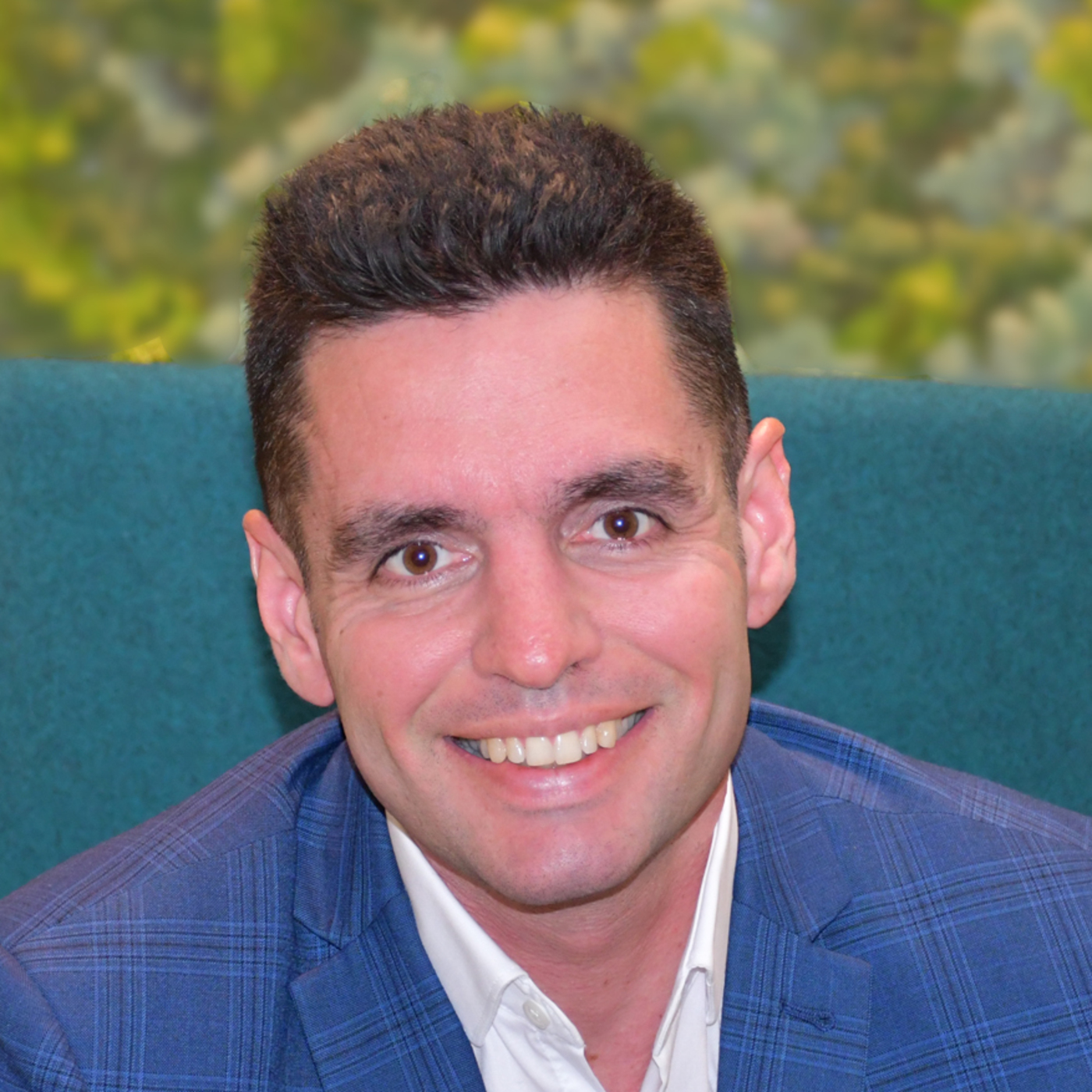
Aoifinn Devitt: Our next guest grew up in a Yorkshire pit village and now works in a large allocator in Edinburgh. When tackling challenges in his own life or in the investment industry as a whole, he asks himself a simple question: how hard can it be?
David Hickey: So I’m interested in diversity not because I’m some sort of woke social justice warrior. I’m interested in diversity from an economic point of view. It doesn’t make sense to me that when you have various talent pools, and every talent pool is fairly similar in terms of it’s going to be a bell curve with talented people on one end. Now, if we’re only picking the talented people from the pool of white men, that means that we’re missing the talented people from the pools of women, from the pools of ethnic minorities. From an economic point of view, that doesn’t make any sense at all. It means that we’re missing out on talent that’s there waiting for us as investors.
Aoifinn Devitt: I’m Aoifinn Devitt, and welcome to the 50 Faces podcast, a podcast committed to revealing the richness and diversity of the world of investment by focusing on its people and their stories. I’m joined today by David Hickey, who is portfolio manager and responsible investment lead at the Lothian Pension Fund, which is a public pension fund based in Edinburgh with £8 billion in assets under management. He previously was a fund manager for a European small-cap equity team. David is a prominent voice in furthering the cause of responsible investing and creating diversity within the financial services arena. As such, he is a perfect candidate for this podcast. Welcome, David. Thank you for joining me today.
David Hickey: Thank you very much for having me.
Aoifinn Devitt: Let’s talk about your journey into investment. Where did it start? Where did you go to school? What did you study at university?
David Hickey: Well, I’m from a pit village in Doncaster, so I was brought up in a place called Rossington, which is really an area, one of the last mining areas in the UK. And in fact, the last deep coal mine in England was just down the road from me at a place called Harworth. So it was a very working-class area, very old-school Yorkshire. And I went to school there, just to a regular comprehensive school called Hayfield School. My academic career was okay. It wasn’t anything to write home about. I was one of these kids that was very bright but lacked application, probably because I was pretty much bored all the time. I could get all the work I had in class done in the first 10 minutes, and then I just had nothing to do. And I was, I think, a little bit of a handful. At school. Somehow managed to make my way through GCSEs, A-levels, and was accepted through clearing, I might point out, to study physics at the University of Manchester. So that’s, yeah, that’s a potted version of my early education.
Aoifinn Devitt: And how do we move from physics to investment?
David Hickey: Well, It’s a really good question. When I graduated from Manchester, I’d done a lot in the academic sphere. I was pretty good at experimental physics. I’d go as far to say as one of the best in my year at experimental physics because I’m a bit of a tinkerer and I like to just get on and try things and see how it turns out. So I could turn my hands to most things in a lab setting, and I had done some, some summer internships in various departments at the university, really with a view to going on and doing a PhD in physics. But I did notice while I was working there that a lot of the PhD candidates and the postgrads were pretty disenchanted with academic life despite the fact they’d only been in it a very short amount of time. They didn’t appear to be enjoying what they did. I know they weren’t very well paid, both at doctoral and postdoctoral level, and they were very much martyrs to their science. And I’ll be honest, I didn’t want to get into a position where I felt that my science was holding me back and that I was some sort of martyr myself to just be devoting my life to the love of science and getting nothing back from it. And I thought, you know what, I’ve been in school long enough. It’s time to go and earn some money. Now, at that time, like many people looking to graduate, I didn’t know what I was doing. I didn’t really know much about the world of work. Again, I came from quite a humble background, so we knew about the kind of regular jobs that people in my area did, working in shops, working in offices, and so on and so forth. But the world of professional work was a little bit of a mystery to me and to most of my friends. So what I did know is that I knew that finance existed, that finance was a thing, and that I could go and get a job in finance because I was good with numbers. And that’s literally where the inspiration came from. With my partner at the time, we were looking at places to move to. We thought London was a bit too big and faceless. We had contacts in Edinburgh. I knew Edinburgh had a finance center, so we upped sticks, moved to Edinburgh, and I pounded the pavement with CVs trying to get temporary roles, going through recruitment consultant after recruitment consultant, and got a job within a couple of days of moving here. And then sat down and tried to work out how I was going to progress my career into something proper, as it were. So the first proper job I had, if you could call it a proper job, it seemed proper at the time, was working as an independent financial advisor for a company I won’t name because it didn’t go very well. At all. I didn’t agree with some of the practices they were employing, and I refused to toe the line with the management and ended up having to leave that role fairly abruptly. But through my time there, I realized that the investment side, specifically the OX Unit Trust, looked quite interesting. I was able to use that interest and the knowledge that I’d gained to make a move into sales at what at the time was called ISIS Investment Management, a name that I’m sure they’re very glad they dropped well over a decade ago, which became F&C Asset Management. I was in sales at F&C.
Aoifinn Devitt: Very interesting. And just a quick thing on that career path, nowadays it seems that even at the undergraduate level, students are doing internships, maybe they’re more career-focused. There also seem to be a lot of these graduate trainee schemes. Do you think that it’s a different sort of arena right now for your average graduate? Would someone still be pounding the pavement speaking to headhunters?
David Hickey: I think there are different ways of pounding pavements. I don’t think you pound pavements anymore. I think you pound social media and you pound your LinkedIn contacts. And try and do things like that. I know at the time there were internships available to people like me. Like I said, I did some internships in the university and they were paid internships, but not really having a picture of what was open to me and what I could potentially do, It meant that when I left university, I was kind of clueless. I mean, it’s as simple as that. I didn’t know what I was doing. I didn’t know what was on offer. And like I said, I went for finance, but I know now that finance is 10,000 different jobs in 10,000 different firms and that no role is exactly the same as the next one. At the time, it was literally, I’d like to earn some money. I’ve got my degree now. I’ll move into finance. And it was only after that really that I narrowed that down through a process of discovery through doing what I actually wanted to do.
Aoifinn Devitt: And it’s interesting, you made the shift from being in sales at some point to being an allocator, which you are now. How did that shift happen? And do you think it was an important rite of passage for you to spend some time in sales? And what did you learn from it?
David Hickey: Yeah, I think that that was super important. You know, looking back, you know, at 21, 22, when I graduated, you know, I wasn’t a particularly mature individual. I mean, I’m sure many people would argue I’m not particularly mature now, even at 40 years old. But certainly back then, it was very early on and I wasn’t particularly focused. And the thing with sales that allowed me to use my natural skills, I am very talkative, I’m very approachable, I’m a good problem solver. So when you’re in sales and sales support and your brokers, your IFAs that you’re dealing with and your wealth managers that you’re dealing with come to you and ask you questions and require solutions, I could get that fired up quite quickly. Now, as part of that, I wanted to educate myself on what investments actually were. So in doing that, I took my IMC and the sales team were good enough to support me through that. And I learned a bit more and I was like, this is really, really interesting. And I entered a an investment competition with one of the Financial Times professional magazines. And it was some multi-manager thing where you pick 10 funds and see how they perform throughout the year. And if you’re doing well, you get invited to these lunches and stuff. Anyway, it turned out I did really well in that. And I was actually in the first quarter, I was placed first in the entire country. So I thought, oh, this is great. This investment works really easy. I’ll just keep cracking on with this. And I eventually came second, I think, in the category that I’d entered after a year’s investment. Me, of course, at the time thinking, I clearly know what I’m doing. On reflection, it was absolute pure luck. But if you can’t be good, be lucky, right? And so, you know, I had a great stroke of luck there, but of course, people around me looked at that and thought, maybe this kid does know what he’s doing. And with support from my sales team, they were good enough to organize for me a work experience slot working 2 weeks with the UK Smaller Companies Fund at F&C, or ISIS as it was then. So that was working with fund managers Stephen Grant and Mike Willis. And during that 2 weeks, they showed me the ropes. They let me go to company meetings. I met chief executives, I met chairmen, And I was just absolutely in love with the role. I was like, wow, I’m 25 years old at that point. I’m sat in the room talking to billionaire entrepreneurs about their business and learning from them how they invest and how they think about the world. And I really caught the bug and I was like, this is what I want to do. So with that, I spoke to the guys on the team and they said, yeah, we think you’ve got what it takes, but you’ve obviously got a difficulty here that you’d be needing to go for graduate roles. You’re a few years out of university and, you know, you’ve got a 2:1 master’s degree from Manchester. You’re going to be up you against, know, guys and girls with first-class degrees from your Oxfords and Cambridges of the world. You need to do something to set yourself apart. So Mike Willis said, what I would recommend to you is you do the CFA qualification. At the time, I didn’t really know what CFA was, so I said, yeah, that sounds like a a good, good plan. Well, will that get me a job? He says, it will get your foot in the door. I says, right then, I’ll do CFA then, just on a whim again, committed to doing CFA Level 1 without really understanding what it was all about.
Aoifinn Devitt: So.
David Hickey: Went into that and financed myself through the first level of CFA. Now, at the time— so we’re talking 2006— at the time, graduates didn’t do that. Graduates were not funding themselves through CFA to set them apart. So it meant that I was able to get the attention of many graduate schemes that I don’t think I would have got the attention of given just my undergraduate qualifications. And after a few interviews and various things, I was offered a role, a switch to a role within F&C working with Crispin Longdon and Frank Rushbrook on the European small-cap fund there and the European Assets Trust. Investment Trust. So, yeah, made it across. But there were an awful lot of naysayers. It has to be said that people said, you cannot make the move from sales to front office. No one does it. And there’s nothing that gives us a reason to think that you’re going to be able to do it. And like the fairly confident guy I was, I was like, well, just watch me and see what happens. And to be fair, one of them who had told me not to get my hopes up and that it was really very unlikely to happen once I got the job sent me some champagne and then took me out for dinner next time he came up from London. And gave me a big pat on the back. So that was good.
Aoifinn Devitt: That’s a wonderful story. I have to admit, I didn’t know it was supposed to be so difficult to make the switch. What I have heard actually is that a number of allocators believe it’s quite a very good development stage to spend some time in sales. It makes you a little more humble. It makes you a little more empathetic to those who are trying to sell to you. And humble, as I said, in the sense that it’s not easy. So I think there’s an appreciation to say if you end up on the fundraising side, you want to raise funds in a firm you’re running yourself, it’s certainly not easy to deliver on those targets.
David Hickey: I absolutely agree with you. I think knowing better what your target audience looks like and having that slightly broader level of experience when you’re coming into the the front office, I think is invaluable. And I certainly wouldn’t have been able to make the impact that I’ve made without that level of professional experience in that slightly different sphere.
Aoifinn Devitt: I want to move to talk about responsible investing and diversity, but at first I’d like to just finish on some of this career path discussion. It seems like it’s all gone very well. Have there been any setbacks or challenges along the way, and what have you learned from them?
David Hickey: Well, we haven’t got to that part yet. Yeah, I think we left the conversation at getting a job at F&C, and that was 2006, moving into the front office. Now, the first 2 years of that were dead easy. I thought investment was very, very easy because we were in a gently upward sloping bull market. And I remember that if a stock moved more than 2% in a day, you’d get on the phone to a broker and ask what was happening because there was a big movement that day. Little did any of us know that the great financial crisis was just around the corner. And we’d be seeing days where we’d be losing 8% and 9% in the small-cap realm in a single day. You know, that’s a big hit when you are working and you just see the whole screen is red, all your stocks are going down, and literally all you can do is just hold on and hope for the best. Now, we did get a good bounce after GFC. You know, the small caps were very hard hit. We got a reasonably good bounce. Despite that, the company as a whole was looking to cut costs and decided to move the assets that we ran down to the London office and make us redundant. So I was made redundant in the summer of 2010. I was given the amount of time I’d spent with the you company, know, I was given a decent redundancy package. Really, really helped quite a lot. But then I was going out into a jobs market where even at the best of times there aren’t a lot of roles in the allocation space. And in 2010, there was no roles, no roles at all. So I was out of work for a year. It took a year from being made redundant at F&C to getting my job at Lothian Pension Fund. And the only work that I did during that year is a friend of mine was a garden designer and I used to do laboring work for her. So yeah, I spent months and months doing gardening, mowing lawns, digging holes, And that was kind of the only work I could find. And then a job came up at Lothian Pension Fund and I jumped at it.
Aoifinn Devitt: That’s great advice. I’m just trying to think of the correlation between landscape design and portfolio construction. I suppose both have to be well balanced and pretty. So you can always bring— there’s always some use of skill gained somewhere. But that’s remarkable. I mean, it is, I think, a very true depiction of what it is like when one does lose a job. And I think there will be a whole generation now facing similar insecurity. I think the key thing is be prepared for a long search, but clearly to keep your nose to the grindstone and looking.
David Hickey: I think that that’s true, yeah. And there will be a lot of people in this position going forward. And if I had any advice for them, I would say just get out and find a job because it’s really good for your mental health. I never expected to go from a well-paid professional role to digging holes for £10 cash an hour. You really need to take the longer picture and just say, look, this is temporary. I’m doing this just for now, but I’ve got a work ethic and I’m going to put that work ethic to play and I’m going to get on and I’m going to do a job instead of sitting home and feeling sorry for myself. And it is really easy to sit at home and feel sorry for yourself. And anyone that does that, I have got the deepest sympathy for that point of view. But if you can get out there and do anything, even volunteering or something, you know, it’s going to give you some of that spark back. And I think that was probably part of what helped me get the role at Lothian, you know, that, that experience of having to do that. It’s like going out, digging holes. It really puts your mind in gear to want to do better. You know, you’ve had better, you know, the, the interview comes along and you think, right, I’ve come off site. Jumped into a suit and come to this interview. I need to get this job. That’s all the push you need, I think, sometimes, that realization that you can get it back. It’s a big step, but a very difficult one.
Aoifinn Devitt: Yeah, absolutely. And then in terms of key people or any key advice, I mean, whether it be during that time or just over the course of your career, Anyone you’d like to mention?
David Hickey: I think at that time there were some wonderful people that helped me. I mean, Stephen Grant, right from day one in 2005, has been a great help to me. And I still see Stephen regularly now and we still talk business. And he runs a company called Rivera. So he’s still doing UK small cap. I think another one who was most unexpected during that time was a guy called David Houston. And David works at Uranova. And I knew David from group meetings that we’ve done. I, you know, didn’t really have much of a relationship with him, David reached out to me when I’d been made redundant, and he said, look, I’ve not got a job for you, I’ve not got anything for you at the moment, he says, but, you know, I have some things that can help. And he’d been made redundant not long before and walked into a new job, and he had some vouchers, and these vouchers were provided by his old employer to allow him to get coaching for CVs, getting a new CV written, getting some interview skills sorted and things like that. And he took me out to lunch, gave me some tips, people to speak to, and he gave me these vouchers. And, you know, it was those that allowed me to rebuild my CV, to properly prepare for competency-based interviews. And David didn’t owe me anything. He didn’t really know me. He’d heard what had happened to me and he thought it was unfair and he just wanted to help. And I still talk to David now, a decade on. He’s coming up to retirement, I think, and spends as much time on the golf course as anything else. But he’s a great guy and I owe him a lot.
Aoifinn Devitt: How incredibly generous and what a great sign of his humanity. I think it’s true that they say when the tide goes out, well, we know who’s swimming naked in terms of investors, but also when the tide goes out, I think we really know who our friends are and who will display that kind of humanity as he did. It’s wonderful to hear that. Just before we move to talk about the responsible investing, which I want to get to at the end, I would love to know what it is you like most about the investment world and then Can you answer whether you think it’s diverse enough, and if not, what we can do about it?
David Hickey: Well, for me, the investment world, this job is the most interesting job in the world. I’m an equity manager. I’ve been in equity management now since 2006, as I mentioned. My job is so varied on a day-to-day basis. You don’t know what you’re going to to go into work and you see, know, the market’s open, anything could have happened. I mean, who saw COVID-19 coming? You know, this certainly wasn’t the year that we expected, and it wasn’t the reaction from the market that we expected. You know, so I can go from talking to billionaire CEOs like the last investment meeting I had, the last company meeting I had, was with François-Henri Pinault, who is the CEO and chairman of Kering Group, the owner of Gucci and various other fashion brands. That’s a man who is worth $38 billion. And we sit and we have lunch and we chat about how he runs his business and also how he runs his football club because he’s a bit of a football nut. So we do talk football as well. When I’m there. So I can go from that to talking to people like Adam Matthews at the Church of England Pensions Board. He’s the director of ethics there. And we can go to talking about what’s happening with the mining tailings project, where he’s trying to work with other investors to prevent another Brunnerhilde disaster. So there’s so much variety, even that in one day can be two completely different things. This is before you start talking about other companies, other franchises, all these different sectors that I cover because I’m a generalist manager throughout Europe. I can be covering all the different RI subjects, which we will get on to later. But we all know that climate change is a big thing and I could be working collaboratively with other people there as well and talking to, again, chief execs and CFOs about their plans for coal-fired plants that they, that they hold. So it’s just the most varied and interesting job. If you’re a curious mind, this job is infinitely satisfying. And, you know, sometimes I wake up and I can’t believe that I get paid to do this. I am so, so lucky.
Aoifinn Devitt: Do enough people get paid to do it? Is it diverse enough? And what can we do about it?
David Hickey: Quite frankly, no, it’s not. It’s not. It’s nothing like diverse enough. It is majority white men in terms of you know, who the actual fiduciary managers are, there are huge gender pay gaps, there are huge ethnicity pay gaps in the industry. And yeah, it’s something that we really, really need to fix. Now, at Lothian, we’ve been pushing on this and I’ve been pushing very hard internally. I feel like I sound like a broken record at times, but I know that my seniors are are working extremely hard on fixing this. We’ve gone from no female investment managers a couple of years ago to we’ve hired a property team now and we have a female PM and a female asset manager there. We have another woman joining the team in September. Really, really looking forward to that. So we are making some progress, but it’s not enough. I think one of the arguments people make is there’s not enough turnover in the industry, and that’s fair enough. We do try and have a consistency of management over time. And as investors ourselves, when we’re appointing external managers, we look at things like tenure and how long have you been with the company, how long have you been running the product, etc., etc. And I think one of the problems with that, certainly with a gender diversity point of view, is this obsession with track record. So, you know, people have— you’ll launch a product, you’ll get a 3-year track record together. If that’s good, then you don’t want to break that. And one of the issues that we find is that companies appear to expect women to be able to do normal things like maybe start a family and things like that. And you will see they will be told, well, you’ll lose your track record, so you’re effectively out of the business at that point, which is patently unfair. This idea that a woman should start a family and then just have to completely give up her career because we don’t have any mechanisms to stop that performance measurement and then start it later. Or even just assume that that woman has set up a philosophy around how that fund will work that can be employed by someone else in her absence and that we can allow that to continue. And I think it’s issues like that that really stop women progressing in the industry. Certainly when I started, I went to a lot of graduate recruitment events and there was lots of young women there. And in the early part of my career, you’re kind of 50/50. I mean, it genuinely did feel 50/50 with women and men at junior levels. And then in the early ’30s, they all seemed to get shuffled out. And I looked around one day and there was all these women I worked with had gone and there was just the guys left. And for me, that felt structural, that there’s something inherent in how we’re running the industry that keeps women out. And I think part of that is probably down to childcare issues. That is, you know, the ability to take enough maternity leave as you would want to start your family, however long you choose to have, and be able to come back into your role as it was and continue it. I think flexibility in the industry is not very good, you although, know, it’s got a lot better this year. And I think this is Pandora’s box opening in that, you know, companies have said in the past you need to be in early. You know, we’re going to have an 8 AM team meeting and look at what’s happening in the markets today. I know my broker’s side, they will all have meetings as soon as the pre-market open meetings and then have to, you know, send the notes out early days so that the Fund managers have the notes when they arrive at the desk at 7:30, 8:00 in the morning. And that is not conducive to having a young family or maybe children that you need to get to school. So there’s lots of these micro issues that stop women getting on. And these are things that we’ve got to fix. And I find it really interesting recently that this was pointed out to the London Stock Exchange, that they have the longest trading hours in the world and that shortening those trading hours would allow more flexibility and that would allow more women into the industry. And the stock exchange said no, which just seems mad to me. And yet we’re all sat at home at the moment We’ve been sat here for months, we’re all sat doing work as and when we can around the rest of our life in a remote setting, on systems that work perfectly well outside of the office. And we’ve proven now that the entire industry can work flexibly. And I really hope that that allows some of those problems to be put into the past. It will allow companies to realize that flexible working can allow them to have a more diverse workforce, certainly on the gender side.
Aoifinn Devitt: It’s really interesting. Certainly this COVID shutdown and remote working has upset the apple cart. I guess I don’t know how it’s going to be reconstructed. I actually don’t know. I think I have some concerns about maybe what this will mean for women. They certainly are shouldering the burden of childcare right now. I think, Fabien, I would agree with you on balance that one should be optimistic. Now that we’ve talked about the G in ESG, if you consider gender parity and diversity to be a part of a governance issue, you look at responsible investing throughout your role here as an asset allocator. How did you become interested in this? Does it infuse your entire approach to investment?
David Hickey: It really reaches back, right back to the start when I was in sales at ISIS, what is now Bank of Montreal. So when I started out with ISIS, we had the stewardship range, which came from the Friends Providence side of the business. And the stewardship funds were one of the earliest solutions in the marketplace. Place for green funds. And they were very popular in a small subset of advisors that wanted to offer these kind of ethical vehicles. So I found that very interesting and it was a big part of our sales offering as well. When I moved to Lothian Pension Fund, We had small amounts of ESG that we did. We were signed up to UNPRI, we’d signed up to the UK Stewardship Code. We were doing our voting with our partners Hermes Eos and doing engagement with that. A lot of it was outsourced, it has to be said. But we were fulfilling our duties as an investor. Fast forward to 2015, 2016, my colleague Marlene, who was an analyst on the fund, she retired and she’d always done the PRI questionnaire. So when the CIO was looking for someone to take up the mantle and do the ESG questionnaire. I said, ah, I’ll do it, how hard can it be? And turns out it was actually really, really hard because PRI, you really need to know what’s happening at all levels of your business in all the different asset classes. So I had a really, really, really steep learning curve to kind of get all that on board. And through doing that, I was able to see where the gaps were, where we were saying we were doing things, but in reality, if you took the real spirit of it, we probably weren’t doing it as well as we could. And there was all sorts of opportunities given that we’d brought assets in-house and we were now at this point running a majority of our equities in-house. We were able to apply a lot more of the ESG measurement directly to the internal investment processes. So I was able to take that project of filling out PRI to work out how to improve the process on an iterative basis, take the scoring, improve the process, and do the same the next year and the next year. So we’ve gone from that really and To the point that this year we launched a new standalone document called our statement for responsible investment principles. And that lays out asset class by asset class what we are doing in terms of RI. And that’s been a big leap forward. That Statement of Responsible Investment Principles is, is an optional document for us as an LGPS fund. We have to have a Statement of Investment Principles, and that refers obliquely to what we’re doing for RI, but certainly not in the same amount of detail as this. So this is really a new policy document that the investment team have brought with the committee to the table and said, this is going to be our approach going forward. And it covers things like voting, engagement, and it’s very, very heavy on climate change and our approach to carbon reduction.
Aoifinn Devitt: It’s interesting because just tying to the discussion we had earlier about any potential young members of the workforce who find themselves currently looking for work, I would say that there’s so much innovation and new learning going on in the realm of responsible investing, that it could be quite a good place to gain skills in, or at least to read up on and become somewhat of an expert. Because certainly when it comes to innovation, I do think that most asset management will touch on this as an innovative source going forward. Would you agree with that?
David Hickey: I couldn’t agree more. I speak to a lot of young people actually in the course of my work, and I do some volunteering outside, so I do mentoring I work with Future Asset, who are a Scottish organization that encourage school-age girls into careers in investment management. I’ve been working with GAIN, which is the Girls Are Investors Network. Again, similar idea, encouraging university-age girls to become investors. And all these people I speak to, these bright young things, they’re all interested. In responsibility and sustainability. No longer do we have these pictures of Gordon Gekko being the target of people’s career aspirations. People are wanting to take maybe the school strikes that they’ve been on and try and implement that into the workplace that they’re working on and move the dial in a more sustainable direction. And this is now an unstoppable force. This is going to move to all asset classes. And basically anyone that’s not doing it is going to end up a dinosaur. And what we are going to see is that I think in 10 years’ time, there will be no responsible investment. And there will be no ESG. There will just be investment and it will all be the same thing. It will all be so tied in to the core of what every single asset owner and asset manager is doing that we don’t have to worry about all these terminologies anymore. The problem is at the moment it’s still a very much emerging area, but it means that we do get to pioneer it. And if bright young people are coming in with fresh ideas and helping us older, more experienced faces that have maybe not quite as up to date on what’s happening now, helping us to come up with new solutions, then that’s exactly what we need. We need that fresh injection. Into the industry. And then this is where we swivel back to diversity. You know, to get these different ideas and opinions into the industry, we need a diversity of thought, we need diversity of lived experience. You know, if everyone is a— and I’m going to use the term again— if everyone coming in is a maybe a white male who’s been to a private school and has been to Oxford and Cambridge, yes, they can provide diversity of thought, but their diversity of experience isn’t going to be huge. The way they see the world and the way that they’ve experienced life is probably going to be quite similar from one to the other to the other. But if you start thinking about an Asian girl from Birmingham, you think about a young Black man from the inner city of London, the way that they experience the world is fundamentally different to the way that someone like me has experienced the world. And that brings something to the table, that brings a broader thought, and that allows us to be more effective investors when that voice is in the room. It gives us a larger picture of what’s happening in the world. And for me, this is where responsibility comes in. It’s about picking all these different voices up and taking account of all of them. This is stakeholder capitalism. This is the way things are moving. And really, that’s how everyone needs to be looking going forward.
Aoifinn Devitt: And that’s so well put, David. And I think it’s hard to argue with the point that this diversity makes us all better. It enriches all of us. So it’s an absolute essential next step. You have a very diverse career. You have a lot of outside interests, clearly. Is there any creed or motto that you live by that joins this all together?
David Hickey: I think I may have mentioned it earlier. And my motto has always been, how hard can it be? And it’s really a motto about having a go, just have a go, just see how it can work. It has allowed me to really make a big mark on my industry, on my company and on my industry, because I’ll maybe have a go at things that other people wouldn’t. I mean, the answer to how hard can it possibly be is normally way harder than you expected in the beginning, but just by having a go, and by shooting for the stars, you know, you can make a huge difference. If you shoot for the stars and miss, you can still land on the moon. That’s how I see it. You don’t have to have perfection. Just reach as far as you can, try as much as you can, don’t take no for an answer, you know, and remain authentic and keep your vision and just keep trying.
Aoifinn Devitt: Well, that is a, a beautiful place to end it. Some great words of wisdom there. Thank you, David. It has been a pleasure speaking with you today, and thanks for sharing your insights with us.
David Hickey: And, uh, again, thank you very much for having me. It’s been, uh, an absolute honor. Thank you.
Aoifinn Devitt: I’m Aoifinn and David. Thank you for listening to the 50 Faces Podcast. If you liked what you heard and would like to tune in to hear more inspiring investors and their personal journeys, please subscribe on Apple Podcasts or wherever you get your podcasts. This podcast is for informational purposes only and should not be construed as investment advice, and all views are personal and should not be attributed to the organizations and affiliations of the host or any guest.
Aoifinn Devitt: Our next guest grew up in a Yorkshire pit village and now works in a large allocator in Edinburgh. When tackling challenges in his own life or in the investment industry as a whole, he asks himself a simple question: how hard can it be?
David Hickey: So I’m interested in diversity not because I’m some sort of woke social justice warrior. I’m interested in diversity from an economic point of view. It doesn’t make sense to me that when you have various talent pools, and every talent pool is fairly similar in terms of it’s going to be a bell curve with talented people on one end. Now, if we’re only picking the talented people from the pool of white men, that means that we’re missing the talented people from the pools of women, from the pools of ethnic minorities. From an economic point of view, that doesn’t make any sense at all. It means that we’re missing out on talent that’s there waiting for us as investors.
Aoifinn Devitt: I’m Aoifinn Devitt, and welcome to the 50 Faces podcast, a podcast committed to revealing the richness and diversity of the world of investment by focusing on its people and their stories. I’m joined today by David Hickey, who is portfolio manager and responsible investment lead at the Lothian Pension Fund, which is a public pension fund based in Edinburgh with £8 billion in assets under management. He previously was a fund manager for a European small-cap equity team. David is a prominent voice in furthering the cause of responsible investing and creating diversity within the financial services arena. As such, he is a perfect candidate for this podcast. Welcome, David. Thank you for joining me today.
David Hickey: Thank you very much for having me.
Aoifinn Devitt: Let’s talk about your journey into investment. Where did it start? Where did you go to school? What did you study at university?
David Hickey: Well, I’m from a pit village in Doncaster, so I was brought up in a place called Rossington, which is really an area, one of the last mining areas in the UK. And in fact, the last deep coal mine in England was just down the road from me at a place called Harworth. So it was a very working-class area, very old-school Yorkshire. And I went to school there, just to a regular comprehensive school called Hayfield School. My academic career was okay. It wasn’t anything to write home about. I was one of these kids that was very bright but lacked application, probably because I was pretty much bored all the time. I could get all the work I had in class done in the first 10 minutes, and then I just had nothing to do. And I was, I think, a little bit of a handful. At school. Somehow managed to make my way through GCSEs, A-levels, and was accepted through clearing, I might point out, to study physics at the University of Manchester. So that’s, yeah, that’s a potted version of my early education.
Aoifinn Devitt: And how do we move from physics to investment?
David Hickey: Well, It’s a really good question. When I graduated from Manchester, I’d done a lot in the academic sphere. I was pretty good at experimental physics. I’d go as far to say as one of the best in my year at experimental physics because I’m a bit of a tinkerer and I like to just get on and try things and see how it turns out. So I could turn my hands to most things in a lab setting, and I had done some, some summer internships in various departments at the university, really with a view to going on and doing a PhD in physics. But I did notice while I was working there that a lot of the PhD candidates and the postgrads were pretty disenchanted with academic life despite the fact they’d only been in it a very short amount of time. They didn’t appear to be enjoying what they did. I know they weren’t very well paid, both at doctoral and postdoctoral level, and they were very much martyrs to their science. And I’ll be honest, I didn’t want to get into a position where I felt that my science was holding me back and that I was some sort of martyr myself to just be devoting my life to the love of science and getting nothing back from it. And I thought, you know what, I’ve been in school long enough. It’s time to go and earn some money. Now, at that time, like many people looking to graduate, I didn’t know what I was doing. I didn’t really know much about the world of work. Again, I came from quite a humble background, so we knew about the kind of regular jobs that people in my area did, working in shops, working in offices, and so on and so forth. But the world of professional work was a little bit of a mystery to me and to most of my friends. So what I did know is that I knew that finance existed, that finance was a thing, and that I could go and get a job in finance because I was good with numbers. And that’s literally where the inspiration came from. With my partner at the time, we were looking at places to move to. We thought London was a bit too big and faceless. We had contacts in Edinburgh. I knew Edinburgh had a finance center, so we upped sticks, moved to Edinburgh, and I pounded the pavement with CVs trying to get temporary roles, going through recruitment consultant after recruitment consultant, and got a job within a couple of days of moving here. And then sat down and tried to work out how I was going to progress my career into something proper, as it were. So the first proper job I had, if you could call it a proper job, it seemed proper at the time, was working as an independent financial advisor for a company I won’t name because it didn’t go very well. At all. I didn’t agree with some of the practices they were employing, and I refused to toe the line with the management and ended up having to leave that role fairly abruptly. But through my time there, I realized that the investment side, specifically the OX Unit Trust, looked quite interesting. I was able to use that interest and the knowledge that I’d gained to make a move into sales at what at the time was called ISIS Investment Management, a name that I’m sure they’re very glad they dropped well over a decade ago, which became F&C Asset Management. I was in sales at F&C.
Aoifinn Devitt: Very interesting. And just a quick thing on that career path, nowadays it seems that even at the undergraduate level, students are doing internships, maybe they’re more career-focused. There also seem to be a lot of these graduate trainee schemes. Do you think that it’s a different sort of arena right now for your average graduate? Would someone still be pounding the pavement speaking to headhunters?
David Hickey: I think there are different ways of pounding pavements. I don’t think you pound pavements anymore. I think you pound social media and you pound your LinkedIn contacts. And try and do things like that. I know at the time there were internships available to people like me. Like I said, I did some internships in the university and they were paid internships, but not really having a picture of what was open to me and what I could potentially do, It meant that when I left university, I was kind of clueless. I mean, it’s as simple as that. I didn’t know what I was doing. I didn’t know what was on offer. And like I said, I went for finance, but I know now that finance is 10,000 different jobs in 10,000 different firms and that no role is exactly the same as the next one. At the time, it was literally, I’d like to earn some money. I’ve got my degree now. I’ll move into finance. And it was only after that really that I narrowed that down through a process of discovery through doing what I actually wanted to do.
Aoifinn Devitt: And it’s interesting, you made the shift from being in sales at some point to being an allocator, which you are now. How did that shift happen? And do you think it was an important rite of passage for you to spend some time in sales? And what did you learn from it?
David Hickey: Yeah, I think that that was super important. You know, looking back, you know, at 21, 22, when I graduated, you know, I wasn’t a particularly mature individual. I mean, I’m sure many people would argue I’m not particularly mature now, even at 40 years old. But certainly back then, it was very early on and I wasn’t particularly focused. And the thing with sales that allowed me to use my natural skills, I am very talkative, I’m very approachable, I’m a good problem solver. So when you’re in sales and sales support and your brokers, your IFAs that you’re dealing with and your wealth managers that you’re dealing with come to you and ask you questions and require solutions, I could get that fired up quite quickly. Now, as part of that, I wanted to educate myself on what investments actually were. So in doing that, I took my IMC and the sales team were good enough to support me through that. And I learned a bit more and I was like, this is really, really interesting. And I entered a an investment competition with one of the Financial Times professional magazines. And it was some multi-manager thing where you pick 10 funds and see how they perform throughout the year. And if you’re doing well, you get invited to these lunches and stuff. Anyway, it turned out I did really well in that. And I was actually in the first quarter, I was placed first in the entire country. So I thought, oh, this is great. This investment works really easy. I’ll just keep cracking on with this. And I eventually came second, I think, in the category that I’d entered after a year’s investment. Me, of course, at the time thinking, I clearly know what I’m doing. On reflection, it was absolute pure luck. But if you can’t be good, be lucky, right? And so, you know, I had a great stroke of luck there, but of course, people around me looked at that and thought, maybe this kid does know what he’s doing. And with support from my sales team, they were good enough to organize for me a work experience slot working 2 weeks with the UK Smaller Companies Fund at F&C, or ISIS as it was then. So that was working with fund managers Stephen Grant and Mike Willis. And during that 2 weeks, they showed me the ropes. They let me go to company meetings. I met chief executives, I met chairmen, And I was just absolutely in love with the role. I was like, wow, I’m 25 years old at that point. I’m sat in the room talking to billionaire entrepreneurs about their business and learning from them how they invest and how they think about the world. And I really caught the bug and I was like, this is what I want to do. So with that, I spoke to the guys on the team and they said, yeah, we think you’ve got what it takes, but you’ve obviously got a difficulty here that you’d be needing to go for graduate roles. You’re a few years out of university and, you know, you’ve got a 2:1 master’s degree from Manchester. You’re going to be up you against, know, guys and girls with first-class degrees from your Oxfords and Cambridges of the world. You need to do something to set yourself apart. So Mike Willis said, what I would recommend to you is you do the CFA qualification. At the time, I didn’t really know what CFA was, so I said, yeah, that sounds like a a good, good plan. Well, will that get me a job? He says, it will get your foot in the door. I says, right then, I’ll do CFA then, just on a whim again, committed to doing CFA Level 1 without really understanding what it was all about.
Aoifinn Devitt: So.
David Hickey: Went into that and financed myself through the first level of CFA. Now, at the time— so we’re talking 2006— at the time, graduates didn’t do that. Graduates were not funding themselves through CFA to set them apart. So it meant that I was able to get the attention of many graduate schemes that I don’t think I would have got the attention of given just my undergraduate qualifications. And after a few interviews and various things, I was offered a role, a switch to a role within F&C working with Crispin Longdon and Frank Rushbrook on the European small-cap fund there and the European Assets Trust. Investment Trust. So, yeah, made it across. But there were an awful lot of naysayers. It has to be said that people said, you cannot make the move from sales to front office. No one does it. And there’s nothing that gives us a reason to think that you’re going to be able to do it. And like the fairly confident guy I was, I was like, well, just watch me and see what happens. And to be fair, one of them who had told me not to get my hopes up and that it was really very unlikely to happen once I got the job sent me some champagne and then took me out for dinner next time he came up from London. And gave me a big pat on the back. So that was good.
Aoifinn Devitt: That’s a wonderful story. I have to admit, I didn’t know it was supposed to be so difficult to make the switch. What I have heard actually is that a number of allocators believe it’s quite a very good development stage to spend some time in sales. It makes you a little more humble. It makes you a little more empathetic to those who are trying to sell to you. And humble, as I said, in the sense that it’s not easy. So I think there’s an appreciation to say if you end up on the fundraising side, you want to raise funds in a firm you’re running yourself, it’s certainly not easy to deliver on those targets.
David Hickey: I absolutely agree with you. I think knowing better what your target audience looks like and having that slightly broader level of experience when you’re coming into the the front office, I think is invaluable. And I certainly wouldn’t have been able to make the impact that I’ve made without that level of professional experience in that slightly different sphere.
Aoifinn Devitt: I want to move to talk about responsible investing and diversity, but at first I’d like to just finish on some of this career path discussion. It seems like it’s all gone very well. Have there been any setbacks or challenges along the way, and what have you learned from them?
David Hickey: Well, we haven’t got to that part yet. Yeah, I think we left the conversation at getting a job at F&C, and that was 2006, moving into the front office. Now, the first 2 years of that were dead easy. I thought investment was very, very easy because we were in a gently upward sloping bull market. And I remember that if a stock moved more than 2% in a day, you’d get on the phone to a broker and ask what was happening because there was a big movement that day. Little did any of us know that the great financial crisis was just around the corner. And we’d be seeing days where we’d be losing 8% and 9% in the small-cap realm in a single day. You know, that’s a big hit when you are working and you just see the whole screen is red, all your stocks are going down, and literally all you can do is just hold on and hope for the best. Now, we did get a good bounce after GFC. You know, the small caps were very hard hit. We got a reasonably good bounce. Despite that, the company as a whole was looking to cut costs and decided to move the assets that we ran down to the London office and make us redundant. So I was made redundant in the summer of 2010. I was given the amount of time I’d spent with the you company, know, I was given a decent redundancy package. Really, really helped quite a lot. But then I was going out into a jobs market where even at the best of times there aren’t a lot of roles in the allocation space. And in 2010, there was no roles, no roles at all. So I was out of work for a year. It took a year from being made redundant at F&C to getting my job at Lothian Pension Fund. And the only work that I did during that year is a friend of mine was a garden designer and I used to do laboring work for her. So yeah, I spent months and months doing gardening, mowing lawns, digging holes, And that was kind of the only work I could find. And then a job came up at Lothian Pension Fund and I jumped at it.
Aoifinn Devitt: That’s great advice. I’m just trying to think of the correlation between landscape design and portfolio construction. I suppose both have to be well balanced and pretty. So you can always bring— there’s always some use of skill gained somewhere. But that’s remarkable. I mean, it is, I think, a very true depiction of what it is like when one does lose a job. And I think there will be a whole generation now facing similar insecurity. I think the key thing is be prepared for a long search, but clearly to keep your nose to the grindstone and looking.
David Hickey: I think that that’s true, yeah. And there will be a lot of people in this position going forward. And if I had any advice for them, I would say just get out and find a job because it’s really good for your mental health. I never expected to go from a well-paid professional role to digging holes for £10 cash an hour. You really need to take the longer picture and just say, look, this is temporary. I’m doing this just for now, but I’ve got a work ethic and I’m going to put that work ethic to play and I’m going to get on and I’m going to do a job instead of sitting home and feeling sorry for myself. And it is really easy to sit at home and feel sorry for yourself. And anyone that does that, I have got the deepest sympathy for that point of view. But if you can get out there and do anything, even volunteering or something, you know, it’s going to give you some of that spark back. And I think that was probably part of what helped me get the role at Lothian, you know, that, that experience of having to do that. It’s like going out, digging holes. It really puts your mind in gear to want to do better. You know, you’ve had better, you know, the, the interview comes along and you think, right, I’ve come off site. Jumped into a suit and come to this interview. I need to get this job. That’s all the push you need, I think, sometimes, that realization that you can get it back. It’s a big step, but a very difficult one.
Aoifinn Devitt: Yeah, absolutely. And then in terms of key people or any key advice, I mean, whether it be during that time or just over the course of your career, Anyone you’d like to mention?
David Hickey: I think at that time there were some wonderful people that helped me. I mean, Stephen Grant, right from day one in 2005, has been a great help to me. And I still see Stephen regularly now and we still talk business. And he runs a company called Rivera. So he’s still doing UK small cap. I think another one who was most unexpected during that time was a guy called David Houston. And David works at Uranova. And I knew David from group meetings that we’ve done. I, you know, didn’t really have much of a relationship with him, David reached out to me when I’d been made redundant, and he said, look, I’ve not got a job for you, I’ve not got anything for you at the moment, he says, but, you know, I have some things that can help. And he’d been made redundant not long before and walked into a new job, and he had some vouchers, and these vouchers were provided by his old employer to allow him to get coaching for CVs, getting a new CV written, getting some interview skills sorted and things like that. And he took me out to lunch, gave me some tips, people to speak to, and he gave me these vouchers. And, you know, it was those that allowed me to rebuild my CV, to properly prepare for competency-based interviews. And David didn’t owe me anything. He didn’t really know me. He’d heard what had happened to me and he thought it was unfair and he just wanted to help. And I still talk to David now, a decade on. He’s coming up to retirement, I think, and spends as much time on the golf course as anything else. But he’s a great guy and I owe him a lot.
Aoifinn Devitt: How incredibly generous and what a great sign of his humanity. I think it’s true that they say when the tide goes out, well, we know who’s swimming naked in terms of investors, but also when the tide goes out, I think we really know who our friends are and who will display that kind of humanity as he did. It’s wonderful to hear that. Just before we move to talk about the responsible investing, which I want to get to at the end, I would love to know what it is you like most about the investment world and then Can you answer whether you think it’s diverse enough, and if not, what we can do about it?
David Hickey: Well, for me, the investment world, this job is the most interesting job in the world. I’m an equity manager. I’ve been in equity management now since 2006, as I mentioned. My job is so varied on a day-to-day basis. You don’t know what you’re going to to go into work and you see, know, the market’s open, anything could have happened. I mean, who saw COVID-19 coming? You know, this certainly wasn’t the year that we expected, and it wasn’t the reaction from the market that we expected. You know, so I can go from talking to billionaire CEOs like the last investment meeting I had, the last company meeting I had, was with François-Henri Pinault, who is the CEO and chairman of Kering Group, the owner of Gucci and various other fashion brands. That’s a man who is worth $38 billion. And we sit and we have lunch and we chat about how he runs his business and also how he runs his football club because he’s a bit of a football nut. So we do talk football as well. When I’m there. So I can go from that to talking to people like Adam Matthews at the Church of England Pensions Board. He’s the director of ethics there. And we can go to talking about what’s happening with the mining tailings project, where he’s trying to work with other investors to prevent another Brunnerhilde disaster. So there’s so much variety, even that in one day can be two completely different things. This is before you start talking about other companies, other franchises, all these different sectors that I cover because I’m a generalist manager throughout Europe. I can be covering all the different RI subjects, which we will get on to later. But we all know that climate change is a big thing and I could be working collaboratively with other people there as well and talking to, again, chief execs and CFOs about their plans for coal-fired plants that they, that they hold. So it’s just the most varied and interesting job. If you’re a curious mind, this job is infinitely satisfying. And, you know, sometimes I wake up and I can’t believe that I get paid to do this. I am so, so lucky.
Aoifinn Devitt: Do enough people get paid to do it? Is it diverse enough? And what can we do about it?
David Hickey: Quite frankly, no, it’s not. It’s not. It’s nothing like diverse enough. It is majority white men in terms of you know, who the actual fiduciary managers are, there are huge gender pay gaps, there are huge ethnicity pay gaps in the industry. And yeah, it’s something that we really, really need to fix. Now, at Lothian, we’ve been pushing on this and I’ve been pushing very hard internally. I feel like I sound like a broken record at times, but I know that my seniors are are working extremely hard on fixing this. We’ve gone from no female investment managers a couple of years ago to we’ve hired a property team now and we have a female PM and a female asset manager there. We have another woman joining the team in September. Really, really looking forward to that. So we are making some progress, but it’s not enough. I think one of the arguments people make is there’s not enough turnover in the industry, and that’s fair enough. We do try and have a consistency of management over time. And as investors ourselves, when we’re appointing external managers, we look at things like tenure and how long have you been with the company, how long have you been running the product, etc., etc. And I think one of the problems with that, certainly with a gender diversity point of view, is this obsession with track record. So, you know, people have— you’ll launch a product, you’ll get a 3-year track record together. If that’s good, then you don’t want to break that. And one of the issues that we find is that companies appear to expect women to be able to do normal things like maybe start a family and things like that. And you will see they will be told, well, you’ll lose your track record, so you’re effectively out of the business at that point, which is patently unfair. This idea that a woman should start a family and then just have to completely give up her career because we don’t have any mechanisms to stop that performance measurement and then start it later. Or even just assume that that woman has set up a philosophy around how that fund will work that can be employed by someone else in her absence and that we can allow that to continue. And I think it’s issues like that that really stop women progressing in the industry. Certainly when I started, I went to a lot of graduate recruitment events and there was lots of young women there. And in the early part of my career, you’re kind of 50/50. I mean, it genuinely did feel 50/50 with women and men at junior levels. And then in the early ’30s, they all seemed to get shuffled out. And I looked around one day and there was all these women I worked with had gone and there was just the guys left. And for me, that felt structural, that there’s something inherent in how we’re running the industry that keeps women out. And I think part of that is probably down to childcare issues. That is, you know, the ability to take enough maternity leave as you would want to start your family, however long you choose to have, and be able to come back into your role as it was and continue it. I think flexibility in the industry is not very good, you although, know, it’s got a lot better this year. And I think this is Pandora’s box opening in that, you know, companies have said in the past you need to be in early. You know, we’re going to have an 8 AM team meeting and look at what’s happening in the markets today. I know my broker’s side, they will all have meetings as soon as the pre-market open meetings and then have to, you know, send the notes out early days so that the Fund managers have the notes when they arrive at the desk at 7:30, 8:00 in the morning. And that is not conducive to having a young family or maybe children that you need to get to school. So there’s lots of these micro issues that stop women getting on. And these are things that we’ve got to fix. And I find it really interesting recently that this was pointed out to the London Stock Exchange, that they have the longest trading hours in the world and that shortening those trading hours would allow more flexibility and that would allow more women into the industry. And the stock exchange said no, which just seems mad to me. And yet we’re all sat at home at the moment We’ve been sat here for months, we’re all sat doing work as and when we can around the rest of our life in a remote setting, on systems that work perfectly well outside of the office. And we’ve proven now that the entire industry can work flexibly. And I really hope that that allows some of those problems to be put into the past. It will allow companies to realize that flexible working can allow them to have a more diverse workforce, certainly on the gender side.
Aoifinn Devitt: It’s really interesting. Certainly this COVID shutdown and remote working has upset the apple cart. I guess I don’t know how it’s going to be reconstructed. I actually don’t know. I think I have some concerns about maybe what this will mean for women. They certainly are shouldering the burden of childcare right now. I think, Fabien, I would agree with you on balance that one should be optimistic. Now that we’ve talked about the G in ESG, if you consider gender parity and diversity to be a part of a governance issue, you look at responsible investing throughout your role here as an asset allocator. How did you become interested in this? Does it infuse your entire approach to investment?
David Hickey: It really reaches back, right back to the start when I was in sales at ISIS, what is now Bank of Montreal. So when I started out with ISIS, we had the stewardship range, which came from the Friends Providence side of the business. And the stewardship funds were one of the earliest solutions in the marketplace. Place for green funds. And they were very popular in a small subset of advisors that wanted to offer these kind of ethical vehicles. So I found that very interesting and it was a big part of our sales offering as well. When I moved to Lothian Pension Fund, We had small amounts of ESG that we did. We were signed up to UNPRI, we’d signed up to the UK Stewardship Code. We were doing our voting with our partners Hermes Eos and doing engagement with that. A lot of it was outsourced, it has to be said. But we were fulfilling our duties as an investor. Fast forward to 2015, 2016, my colleague Marlene, who was an analyst on the fund, she retired and she’d always done the PRI questionnaire. So when the CIO was looking for someone to take up the mantle and do the ESG questionnaire. I said, ah, I’ll do it, how hard can it be? And turns out it was actually really, really hard because PRI, you really need to know what’s happening at all levels of your business in all the different asset classes. So I had a really, really, really steep learning curve to kind of get all that on board. And through doing that, I was able to see where the gaps were, where we were saying we were doing things, but in reality, if you took the real spirit of it, we probably weren’t doing it as well as we could. And there was all sorts of opportunities given that we’d brought assets in-house and we were now at this point running a majority of our equities in-house. We were able to apply a lot more of the ESG measurement directly to the internal investment processes. So I was able to take that project of filling out PRI to work out how to improve the process on an iterative basis, take the scoring, improve the process, and do the same the next year and the next year. So we’ve gone from that really and To the point that this year we launched a new standalone document called our statement for responsible investment principles. And that lays out asset class by asset class what we are doing in terms of RI. And that’s been a big leap forward. That Statement of Responsible Investment Principles is, is an optional document for us as an LGPS fund. We have to have a Statement of Investment Principles, and that refers obliquely to what we’re doing for RI, but certainly not in the same amount of detail as this. So this is really a new policy document that the investment team have brought with the committee to the table and said, this is going to be our approach going forward. And it covers things like voting, engagement, and it’s very, very heavy on climate change and our approach to carbon reduction.
Aoifinn Devitt: It’s interesting because just tying to the discussion we had earlier about any potential young members of the workforce who find themselves currently looking for work, I would say that there’s so much innovation and new learning going on in the realm of responsible investing, that it could be quite a good place to gain skills in, or at least to read up on and become somewhat of an expert. Because certainly when it comes to innovation, I do think that most asset management will touch on this as an innovative source going forward. Would you agree with that?
David Hickey: I couldn’t agree more. I speak to a lot of young people actually in the course of my work, and I do some volunteering outside, so I do mentoring I work with Future Asset, who are a Scottish organization that encourage school-age girls into careers in investment management. I’ve been working with GAIN, which is the Girls Are Investors Network. Again, similar idea, encouraging university-age girls to become investors. And all these people I speak to, these bright young things, they’re all interested. In responsibility and sustainability. No longer do we have these pictures of Gordon Gekko being the target of people’s career aspirations. People are wanting to take maybe the school strikes that they’ve been on and try and implement that into the workplace that they’re working on and move the dial in a more sustainable direction. And this is now an unstoppable force. This is going to move to all asset classes. And basically anyone that’s not doing it is going to end up a dinosaur. And what we are going to see is that I think in 10 years’ time, there will be no responsible investment. And there will be no ESG. There will just be investment and it will all be the same thing. It will all be so tied in to the core of what every single asset owner and asset manager is doing that we don’t have to worry about all these terminologies anymore. The problem is at the moment it’s still a very much emerging area, but it means that we do get to pioneer it. And if bright young people are coming in with fresh ideas and helping us older, more experienced faces that have maybe not quite as up to date on what’s happening now, helping us to come up with new solutions, then that’s exactly what we need. We need that fresh injection. Into the industry. And then this is where we swivel back to diversity. You know, to get these different ideas and opinions into the industry, we need a diversity of thought, we need diversity of lived experience. You know, if everyone is a— and I’m going to use the term again— if everyone coming in is a maybe a white male who’s been to a private school and has been to Oxford and Cambridge, yes, they can provide diversity of thought, but their diversity of experience isn’t going to be huge. The way they see the world and the way that they’ve experienced life is probably going to be quite similar from one to the other to the other. But if you start thinking about an Asian girl from Birmingham, you think about a young Black man from the inner city of London, the way that they experience the world is fundamentally different to the way that someone like me has experienced the world. And that brings something to the table, that brings a broader thought, and that allows us to be more effective investors when that voice is in the room. It gives us a larger picture of what’s happening in the world. And for me, this is where responsibility comes in. It’s about picking all these different voices up and taking account of all of them. This is stakeholder capitalism. This is the way things are moving. And really, that’s how everyone needs to be looking going forward.
Aoifinn Devitt: And that’s so well put, David. And I think it’s hard to argue with the point that this diversity makes us all better. It enriches all of us. So it’s an absolute essential next step. You have a very diverse career. You have a lot of outside interests, clearly. Is there any creed or motto that you live by that joins this all together?
David Hickey: I think I may have mentioned it earlier. And my motto has always been, how hard can it be? And it’s really a motto about having a go, just have a go, just see how it can work. It has allowed me to really make a big mark on my industry, on my company and on my industry, because I’ll maybe have a go at things that other people wouldn’t. I mean, the answer to how hard can it possibly be is normally way harder than you expected in the beginning, but just by having a go, and by shooting for the stars, you know, you can make a huge difference. If you shoot for the stars and miss, you can still land on the moon. That’s how I see it. You don’t have to have perfection. Just reach as far as you can, try as much as you can, don’t take no for an answer, you know, and remain authentic and keep your vision and just keep trying.
Aoifinn Devitt: Well, that is a, a beautiful place to end it. Some great words of wisdom there. Thank you, David. It has been a pleasure speaking with you today, and thanks for sharing your insights with us.
David Hickey: And, uh, again, thank you very much for having me. It’s been, uh, an absolute honor. Thank you.
Aoifinn Devitt: I’m Aoifinn and David. Thank you for listening to the 50 Faces Podcast. If you liked what you heard and would like to tune in to hear more inspiring investors and their personal journeys, please subscribe on Apple Podcasts or wherever you get your podcasts. This podcast is for informational purposes only and should not be construed as investment advice, and all views are personal and should not be attributed to the organizations and affiliations of the host or any guest.