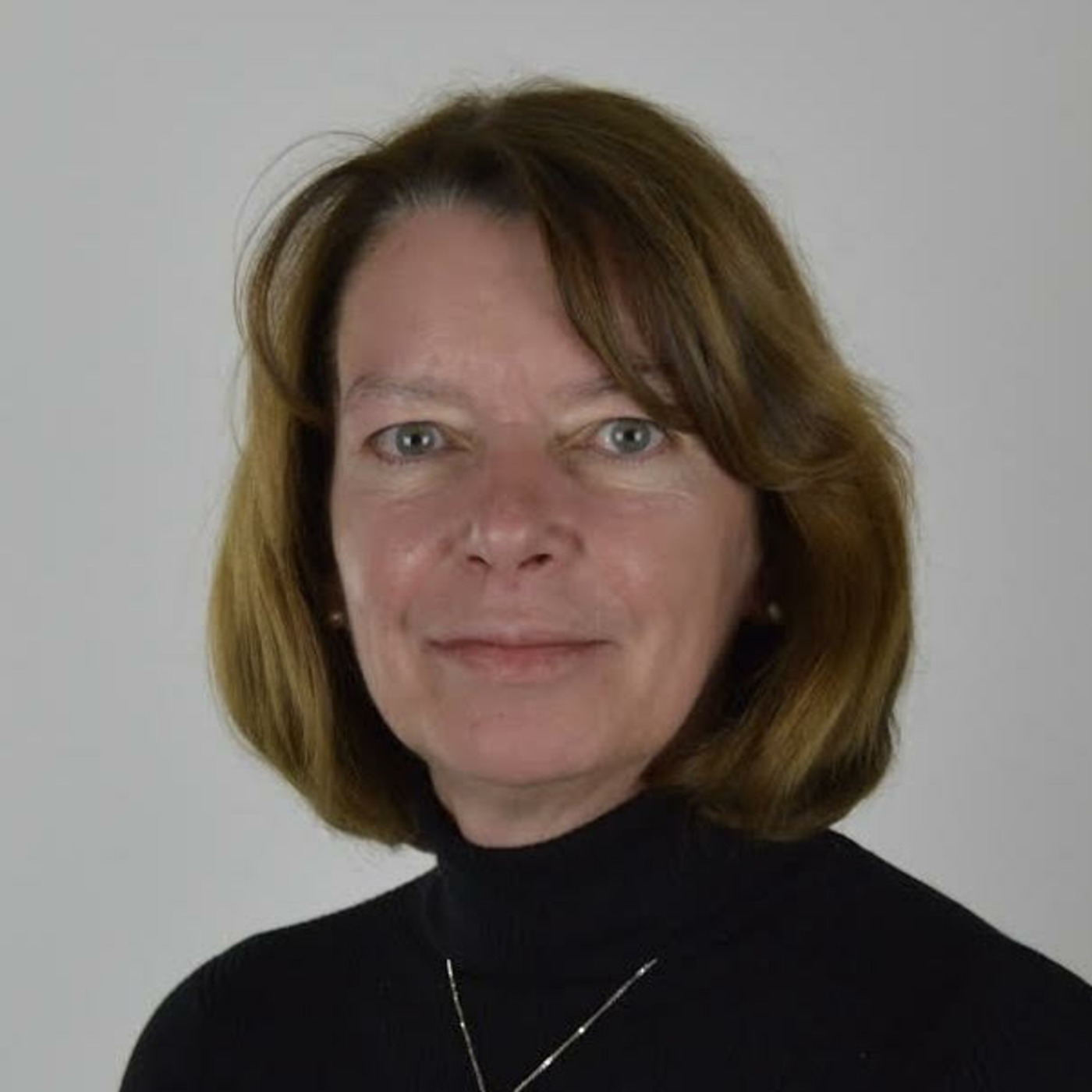
Aoifinn Devitt: Brought to you with the kind support of Federated Hermes Inc., a leading global investment manager. Guided by their conviction that responsible investing is the best way to create wealth over the long term, their investment solutions span equity, fixed income, alternative and private markets, multi-asset and liquidity strategies, and a range of separately managed accounts distributed through intermediaries worldwide. Our next guest started her career reading the English news in Bahrain. Hear how her key strengths of communication have carried her through various industries to become a pillar in the world of investing. I’m Aoifinn Devitt, and welcome to the 50 Faces Podcast., a podcast committed to revealing the richness and diversity of the world of investment by focusing on its people and their stories. I’m joined today by Carrie Dufane, who is Head of Institutional Client Solutions at Fidante Partners. She’s had a long career that has involved over 2 decades of working with institutional investors and consultants, but also a number of other intriguing positions. Welcome, Carrie. Thanks for joining me today.
145. Kerry Duffain: Thank you very much for inviting me, Aoifinn.
Aoifinn Devitt: Well, I used the word intriguing earlier because what you told me about some of your first roles was actually something completely unexpected and very interesting. So can we go back to your background, where you grew up and how you first entered the professional world? Uh, yes.
145. Kerry Duffain: So I originally grew up in Wiltshire, but then when I was relatively young, my parents relocated to the Middle East and I ended up going to boarding school in Gloucestershire. And when I finished school, I decided to take a, a gap year. And I moved out to the Middle East to join my parents and landed a job reading the news in Bahrain, which was an incredible experience, very much thinking on your feet and doing a number of different things, you know, editing the news, editing the videos, the films, and then actually reading the news. And at the time it was the only English news program in the Middle East, actually. So that was really interesting. I then moved on to a number of other roles. I lived in Germany for a number of years. And then I moved back to the UK and did a role involving engineering purchasing at a brewery in deepest rural Dorset, and then moved north up to Liverpool where I worked as an area sales manager for an electronics company. And that was fascinating as well because you really got a granular look at British industry, you know, going in and out of the shop floors of major manufacturers. But my entry point into the financial world was I started working for a small independent M&A company in London, and I was immediately hooked. It was a whole new world of finance, and I wanted to know more about it. So I then moved to a Swiss bank to do internal audit and compliance, just to gain more experience in the financial world. And then finally, my first job in asset management was with a small quantitative asset manager. And that’s when I knew what I really wanted to do.
Aoifinn Devitt: And looking back at all those different roles, would you say there were any common threads throughout them? So you mentioned having to think on your feet from the very beginning and, you know, the factory floor, having to be kind of a jack of all trades and, you know, being able to be quite nimble. Would you say that any of those, how do they kind of, I suppose, groom you, coach you for the role you ultimately did in finance?
145. Kerry Duffain: Well, I think adaptability is absolutely key. But it’s also a willingness to learn and an insatiable curiosity as to how things work. And whatever role you do, there are always going to be challenges. And I think about each role, first of all, it’s about watching and learning and then thinking, how can I add value? But it’s also about being willing to take risk about different roles, changing roles, and then you acquire sort of quite a different skill set. That can be applied pretty much across the board.
Aoifinn Devitt: And given that you were plunged into many new, perhaps unfamiliar environments, how did you learn to adapt? Any particular skills that you employed to adapt in across the various places? Because you did mention you moved around a lot geographically as well.
145. Kerry Duffain: Yes, I think it’s embracing the culture of whichever firm you end up in and working as part of a team. But as I said, it’s first of you all, know, listening and learning. And then getting to really know the business and making it your business to know more about the business, because then you can adapt, you can adapt your skillset and think, know, you what can I bring to this role that will you enhance, know, my company’s performance? And it doesn’t really matter what role you do. I think that’s, that’s absolutely key. Very important.
Aoifinn Devitt: So you said you were hooked on the world of investing. What do you enjoy most about it? And what would you say were your keys to success now? As you have been quite successful in your role as a business builder?
145. Kerry Duffain: Yes, I think that I like to see myself as a business builder. I think I’ve worked in a variety of different institutions, and while some of them can be very large, what does tend to sort of run as a thread through my career is that most of the businesses has been at an early stage of their development. And that’s actually what I love about it, is building out the business, because then you’re not confined to one particular role, you’re able to do a lot more. And it’s as you evolve, as the business evolves, you know, gradually then people will be separated out into their roles. But I think it’s having the ability to look at the business and think, how can we build this out? How do we make the most of the resources we’ve got? What challenges are we going to face? How can we get round those? That’s what’s really exciting for me. And also, I mean, I’ve worked across a number of different investment products. And each time you learn more, that’s the exciting thing. It’s, it’s a world that doesn’t stand still.
Aoifinn Devitt: And one of the reasons I thought you’d be so good on this podcast is because what I have observed of you over the years is just a resolute focus on really that wearing out that shoe leather that, that we talk about in, in business building, you know, taking trains around the country, even at times when maybe the product you had on offer wasn’t necessarily what what the clients were looking for, you still nurtured those relationships and spent your time on trains around the country. How important are those relationships in your view?
145. Kerry Duffain: Oh, absolutely key. I think in my role, whether it be as consultant relations or sales or client service, which is where I initially started, building out those relationships is so important. And you’re right, even if you don’t have the product that is necessarily suitable, for your clients or your prospects, it takes a lot of work to build those relationships out. And if you don’t have a product that fits at any point in time, it’s still really important. You can’t just pick them up and then drop them and then pick them up again. It has to be a constant, and it’s a lot of hard work maintaining those relationships. And as you say, a lot of shoe leather, but it’s also something I enjoy. I mean, people are endlessly fascinating. And when you combine that you with, know, asset management, it’s a great place to be. And it still is, you know, even with technological advancements, it’s still very much a people business. And that’s really what I enjoy. And I think it’s also about understanding your market. You know, if you put a lot of work into understanding a particular market segment, you should maintain that because they’re going to be constantly evolving. And again, just to keep up with developments, keep up with how your market sector may be impacted by new regulations, you know, the move to ESG, impact investing. It’s really important to understand your client’s motivations and the challenges that they may be facing because ultimately you’re there to help them with a solution.
Aoifinn Devitt: And how about the challenge of getting no for an answer? And how do you build your skin, I suppose, to be thick enough to take that and still kind of push through?
145. Kerry Duffain: I think you’re always gonna get no. Do you know, I think it’s actually when you get a response from a client or a prospect, whether it’s yes or no, they’ve answered you and you know one way or the other. So, you know, you’ve got a definitive path. You know, no, maybe because you don’t have the right product. No, maybe because they’re too busy. It’s still important to keep open the lines of communication. And yes, it can be very dispiriting at times when you, you know, I always say that you have a day where you make a number of calls and everything goes well, and you’ve suddenly got 5, 6, 7 meetings. And then you have other days where you make 5 calls and you get told no 5 times in a row. And at that point, it’s important to stop and actually take a step back and then try again another day.
Aoifinn Devitt: There’s only so much, I suppose, a human can take, even with the thickest of skins. And you’ve been in the industry now for some decades and have seen an evolution of demand. And you mentioned your attitude of constantly learning. Can we just talk about two things? One is the evolution of interest in alternatives and the other around the integration and awareness of ESG factors. How have you seen those two factors evolve over the course of your career?
145. Kerry Duffain: It’s been very interesting. You know, 20 years ago, the only alternative assets that a lot of investors would have had was exposure to property and maybe some private equity if they were very daring. But there has been a massive sea you change, know, and 10, 12 years ago, you know, it was only then that hedge funds were beginning to become more mainstream. But I think that the appetite for alternatives has now You exploded. Know, from everything from cryptocurrencies to music royalties, you know, every different flavor of fixed income, risk transfer strategies, you know, a bewildering array of options for investors. But I think in terms of where demand is focused at the moment, it really depends on which market sector you’re looking at and what they’re trying to achieve, whether it be things like cash flow matching or pure diversification or generating yield or downside or, protection, you know, strategies that will perform in a rising rate environment. You know, it one depends on the sort of macro and what’s going on in the economy, but two, it also is very much dependent on what’s happening in that particular market segment and what they’re trying to achieve. Now, on ESG, again, I go back 20 years and, you know, there were people starting to screen for unethical companies, and there was not one-size-fits-all, but there was always some degree of an awareness within pension funds that they were looking to perhaps invest in a more ethical way. And in this respect, I think the local authority pension funds have been one of the early movers. One of the biggest changes I’ve seen is in the insurance sector. The insurance companies have come up the curve incredibly quickly. And they’re recognizing that they can be a significant force for change, particularly with climate change. So I think as asset managers, we also have a responsibility to— whilst we need to generate returns for our clients, we need to also recognize that their desire to help change is significant and should be recognized. So it has to be embedded authentically in your investment processes.
Aoifinn Devitt: Absolutely, and I think it’s really interesting that you mentioned that it is the local authorities that are at the forefront of this, and it’s certainly dominating a lot of conversations that I’m sitting on. And, you know, you mentioned your industry experience, and also where you started, I’m sure, was perhaps not a bastion of, say, gender equality. How would you say that the diversity of the industry has changed, in your view, over the course of your career?
145. Kerry Duffain: Well, I think it’s changed dramatically. And you say, you know, sort of, I’ve worked in some interesting roles. You know, I practically stopped the production line at a major car manufacturer when I appeared on the shop floor because you just didn’t see women in that environment. And if I think back to that time and what’s happening now, I mean, the change has been immense. And there’s a huge number of initiatives going on, but it will be interesting to see how that really feeds through to absolute change. I mean, I’d like to see more things like apprenticeships accessing a sort of wider pool of talent and backgrounds that would bring different perspectives and also increase the diversity of thinking in our industry. I mean, I think as an industry we still hire from a relatively what I would call narrow gene pool, you know, and there’s still certain attitudes that are inherent in who we hire. I mean, I can point to applying for a job where I had 15 years’ experience in the industry and got turned down because I didn’t have a degree. You know, I think more school initiatives, you know, bringing more financial awareness to children at an early age, making sure that children are aware that asset management’s a career option. You know, I certainly didn’t think about asset management when I was back at school. I don’t think we knew it existed. And I think they’re still relatively true today.
Aoifinn Devitt: Absolutely, it is still true today, and I don’t quite understand why that is, that we’re not doing a better job of advertising ourselves. I think there’s sometimes a sense that if you don’t have money, you’ve no business managing other people’s money or even being in the business of managing money, which I think has never been the case, that there’s been that kind of bias against people in it once you get into it. But it is definitely a barrier at the outset. I’m just going back to some of your own personal reflections now, given how long I’ve known you on the circuit. Have there been any setbacks or challenges throughout your career that you have learned lessons from that you can share?
145. Kerry Duffain: When I look back over my career, I feel incredibly fortunate that I’ve had so many different opportunities and experiences. And I think when you have setbacks, you know, that is a learning experience and it’s something that you can apply going forward, whether it’s something you want to have in avoid doing in the future, or how you can deal with it the next time you might encounter something similar. I think there are always new challenges, and each of the roles I’ve done has probably built on everything I’ve learned previously. You know, my true love is building out businesses, and I think with the kind of experiences I’ve had across a variety of different asset management firms You know, I think that’s something that I’m very good at, but it’s been a learning process.
Aoifinn Devitt: Because of course there have been some businesses that I suppose were startups that maybe didn’t ultimately develop the way you would have hoped.
145. Kerry Duffain: Yes, no, that’s true, but I mean, I think it’s equally true of some of the, the other asset management firms that I’ve worked. You know, I think one of the biggest things I’ve learned is the warning sign is when the client is no longer the focus of what you should be doing, or or whether if you are just a very small cog in a much larger financial services company, you know, that client focus isn’t always there. And that’s, that’s kind of a warning sign for me.
Aoifinn Devitt: In asset management, sometimes we talk about investment-led or sales-led firms. Have you any experience of either? And do you think that there’s one model that is better, or do you think that certain models are different or appropriate for different types of companies?
145. Kerry Duffain: I’ve worked in a number of firms you where, know, the chief executive has actually been very marketing-focused, and that promotes a very can-do attitude because he had a— he really wanted to sell. So that was, you know, well, if we don’t have it now, we’ll go back and make it. And then I’ve been in environments where it’s much more structured and it’s been led you by, know, somebody who’s a business leader. And I you think, know, it really depends on— that sort of engenders the culture. Of the company. I think it needs to sort of be a mix of several different things, and there needs to be a focus. And somebody, I think, once coined the phrase sort of three-legged stool. It needs to be somebody who’s got a business focus, somebody who’s got a client focus, and then somebody who’s got to focus on how the business operates. And, and those three things should come together. In my experience, that works the best, right?
Aoifinn Devitt: And I think also you mentioned someone who at least has experience of knowing how long the sales cycle can be and having realistic expectations around that, because that I think is often a mismatch that people presume that institutional capital can be generated overnight when actually the lead time could be a lot longer.
145. Kerry Duffain: It can be incredibly long. I’ve worked with clients where it’s taken 18 months to 2 years, you know, to raise that capital, particularly if you’re working on sort of closed-ended funds where the investment strategies tend to be a little bit more complex. You know, I see myself more as a translator as opposed to being a sort of technical expert. It’s really the skill set is to find the strategy that fits the client or how you can adapt your strategy and how you can explain it to them to illustrate what it can do for them. I think that’s key.
Aoifinn Devitt: And when you look back at your career, have you had any mentors? Did anyone kind of show you the ropes like that or any other key people? Who’ve made an impression on you?
145. Kerry Duffain: I’ve been very fortunate to work with some amazing people, both on the long-only side and on the alternative side. I think formatively, I think it’s probably my parents that influenced me the most. It was because I was never told that there was something I couldn’t do. And so that leads you to think that you could do something in a sort of positive way. I mean, if I take my father who actually started his career blacksmith’s apprentice and ended up being the chief training engineer for a major airline and then retrained as a golf professional when he retired. I think it sort of bred into me in some respects, but as I say, within the industry, I mean, certainly one of my first CIOs, Alan Brown, was absolutely inspirational and really encouraged me. It was the first time really somebody had said, right, we’re going to make you head of client service and off you go. I had a tremendous sense of belief in what I could do and what I could do for the company. So yes, he does still stand out.
Aoifinn Devitt: I think someone with that level of experience can spot capability pretty quickly. That’s wonderful that the opportunity came your way. And when you look at maybe any words of wisdom or pieces of advice that you’ve received over the years, is there anything that you can share there?
145. Kerry Duffain: I had to have my list. Carpe diem, seize the day, and don’t be frightened of taking risks or facing challenges. Going back to Alan, one of the things that he told me was always surround yourself with the best people you can because they’ll make you look good. And then talking to a client the other day, one of the things she said is never ask people to do something that you either haven’t done or aren’t prepared to do. And I think those three things will probably be advice that I’d give.
Aoifinn Devitt: Well, I definitely share carpe diem. That’s always been one of my own first calling cards, and I think I attribute it to Dead Poets Society that I watched as a teen, but it’s a wonderful piece of advice. And looking back to your younger self, to the young newsreader in Bahrain, is there any advice that you would have, anything you know now that you wish you had known then?
145. Kerry Duffain: I think there’s a lot of things I wish I’d known then. You know, I’d wish I’d probably got to asset management faster, but I think I have been incredibly fortunate to have that sort of diversity of experiences. And I think again, to my younger self, you know, don’t be frightened, seize the opportunity.
Aoifinn Devitt: Well, thank you so much, Carrie. You are and continue to be an inspiration. I always think of you as one of the pillars of our industry. It was wonderful to see you on the circuit recently and your energy, your engaged commitment is just so stabilizing, I think, in an industry that often is subject to great change. So thank you for coming here and for sharing your insights into business building with us.
145. Kerry Duffain: Thank you very much, Aoifinn. I’ve really enjoyed it.
Aoifinn Devitt: I’m Aoifinn and David, thank you for listening to the 50 Faces podcast. If you liked what you heard and would like to tune in to hear more inspiring investors and their personal journeys, please subscribe on Apple Podcasts or wherever you get your podcasts. This podcast is for informational purposes only and should not be construed as investment advice, and all views are personal and should not be attributed to the organizations and affiliations of the host or any guest.
Aoifinn Devitt: Brought to you with the kind support of Federated Hermes Inc., a leading global investment manager. Guided by their conviction that responsible investing is the best way to create wealth over the long term, their investment solutions span equity, fixed income, alternative and private markets, multi-asset and liquidity strategies, and a range of separately managed accounts distributed through intermediaries worldwide. Our next guest started her career reading the English news in Bahrain. Hear how her key strengths of communication have carried her through various industries to become a pillar in the world of investing. I’m Aoifinn Devitt, and welcome to the 50 Faces Podcast., a podcast committed to revealing the richness and diversity of the world of investment by focusing on its people and their stories. I’m joined today by Carrie Dufane, who is Head of Institutional Client Solutions at Fidante Partners. She’s had a long career that has involved over 2 decades of working with institutional investors and consultants, but also a number of other intriguing positions. Welcome, Carrie. Thanks for joining me today.
145. Kerry Duffain: Thank you very much for inviting me, Aoifinn.
Aoifinn Devitt: Well, I used the word intriguing earlier because what you told me about some of your first roles was actually something completely unexpected and very interesting. So can we go back to your background, where you grew up and how you first entered the professional world? Uh, yes.
145. Kerry Duffain: So I originally grew up in Wiltshire, but then when I was relatively young, my parents relocated to the Middle East and I ended up going to boarding school in Gloucestershire. And when I finished school, I decided to take a, a gap year. And I moved out to the Middle East to join my parents and landed a job reading the news in Bahrain, which was an incredible experience, very much thinking on your feet and doing a number of different things, you know, editing the news, editing the videos, the films, and then actually reading the news. And at the time it was the only English news program in the Middle East, actually. So that was really interesting. I then moved on to a number of other roles. I lived in Germany for a number of years. And then I moved back to the UK and did a role involving engineering purchasing at a brewery in deepest rural Dorset, and then moved north up to Liverpool where I worked as an area sales manager for an electronics company. And that was fascinating as well because you really got a granular look at British industry, you know, going in and out of the shop floors of major manufacturers. But my entry point into the financial world was I started working for a small independent M&A company in London, and I was immediately hooked. It was a whole new world of finance, and I wanted to know more about it. So I then moved to a Swiss bank to do internal audit and compliance, just to gain more experience in the financial world. And then finally, my first job in asset management was with a small quantitative asset manager. And that’s when I knew what I really wanted to do.
Aoifinn Devitt: And looking back at all those different roles, would you say there were any common threads throughout them? So you mentioned having to think on your feet from the very beginning and, you know, the factory floor, having to be kind of a jack of all trades and, you know, being able to be quite nimble. Would you say that any of those, how do they kind of, I suppose, groom you, coach you for the role you ultimately did in finance?
145. Kerry Duffain: Well, I think adaptability is absolutely key. But it’s also a willingness to learn and an insatiable curiosity as to how things work. And whatever role you do, there are always going to be challenges. And I think about each role, first of all, it’s about watching and learning and then thinking, how can I add value? But it’s also about being willing to take risk about different roles, changing roles, and then you acquire sort of quite a different skill set. That can be applied pretty much across the board.
Aoifinn Devitt: And given that you were plunged into many new, perhaps unfamiliar environments, how did you learn to adapt? Any particular skills that you employed to adapt in across the various places? Because you did mention you moved around a lot geographically as well.
145. Kerry Duffain: Yes, I think it’s embracing the culture of whichever firm you end up in and working as part of a team. But as I said, it’s first of you all, know, listening and learning. And then getting to really know the business and making it your business to know more about the business, because then you can adapt, you can adapt your skillset and think, know, you what can I bring to this role that will you enhance, know, my company’s performance? And it doesn’t really matter what role you do. I think that’s, that’s absolutely key. Very important.
Aoifinn Devitt: So you said you were hooked on the world of investing. What do you enjoy most about it? And what would you say were your keys to success now? As you have been quite successful in your role as a business builder?
145. Kerry Duffain: Yes, I think that I like to see myself as a business builder. I think I’ve worked in a variety of different institutions, and while some of them can be very large, what does tend to sort of run as a thread through my career is that most of the businesses has been at an early stage of their development. And that’s actually what I love about it, is building out the business, because then you’re not confined to one particular role, you’re able to do a lot more. And it’s as you evolve, as the business evolves, you know, gradually then people will be separated out into their roles. But I think it’s having the ability to look at the business and think, how can we build this out? How do we make the most of the resources we’ve got? What challenges are we going to face? How can we get round those? That’s what’s really exciting for me. And also, I mean, I’ve worked across a number of different investment products. And each time you learn more, that’s the exciting thing. It’s, it’s a world that doesn’t stand still.
Aoifinn Devitt: And one of the reasons I thought you’d be so good on this podcast is because what I have observed of you over the years is just a resolute focus on really that wearing out that shoe leather that, that we talk about in, in business building, you know, taking trains around the country, even at times when maybe the product you had on offer wasn’t necessarily what what the clients were looking for, you still nurtured those relationships and spent your time on trains around the country. How important are those relationships in your view?
145. Kerry Duffain: Oh, absolutely key. I think in my role, whether it be as consultant relations or sales or client service, which is where I initially started, building out those relationships is so important. And you’re right, even if you don’t have the product that is necessarily suitable, for your clients or your prospects, it takes a lot of work to build those relationships out. And if you don’t have a product that fits at any point in time, it’s still really important. You can’t just pick them up and then drop them and then pick them up again. It has to be a constant, and it’s a lot of hard work maintaining those relationships. And as you say, a lot of shoe leather, but it’s also something I enjoy. I mean, people are endlessly fascinating. And when you combine that you with, know, asset management, it’s a great place to be. And it still is, you know, even with technological advancements, it’s still very much a people business. And that’s really what I enjoy. And I think it’s also about understanding your market. You know, if you put a lot of work into understanding a particular market segment, you should maintain that because they’re going to be constantly evolving. And again, just to keep up with developments, keep up with how your market sector may be impacted by new regulations, you know, the move to ESG, impact investing. It’s really important to understand your client’s motivations and the challenges that they may be facing because ultimately you’re there to help them with a solution.
Aoifinn Devitt: And how about the challenge of getting no for an answer? And how do you build your skin, I suppose, to be thick enough to take that and still kind of push through?
145. Kerry Duffain: I think you’re always gonna get no. Do you know, I think it’s actually when you get a response from a client or a prospect, whether it’s yes or no, they’ve answered you and you know one way or the other. So, you know, you’ve got a definitive path. You know, no, maybe because you don’t have the right product. No, maybe because they’re too busy. It’s still important to keep open the lines of communication. And yes, it can be very dispiriting at times when you, you know, I always say that you have a day where you make a number of calls and everything goes well, and you’ve suddenly got 5, 6, 7 meetings. And then you have other days where you make 5 calls and you get told no 5 times in a row. And at that point, it’s important to stop and actually take a step back and then try again another day.
Aoifinn Devitt: There’s only so much, I suppose, a human can take, even with the thickest of skins. And you’ve been in the industry now for some decades and have seen an evolution of demand. And you mentioned your attitude of constantly learning. Can we just talk about two things? One is the evolution of interest in alternatives and the other around the integration and awareness of ESG factors. How have you seen those two factors evolve over the course of your career?
145. Kerry Duffain: It’s been very interesting. You know, 20 years ago, the only alternative assets that a lot of investors would have had was exposure to property and maybe some private equity if they were very daring. But there has been a massive sea you change, know, and 10, 12 years ago, you know, it was only then that hedge funds were beginning to become more mainstream. But I think that the appetite for alternatives has now You exploded. Know, from everything from cryptocurrencies to music royalties, you know, every different flavor of fixed income, risk transfer strategies, you know, a bewildering array of options for investors. But I think in terms of where demand is focused at the moment, it really depends on which market sector you’re looking at and what they’re trying to achieve, whether it be things like cash flow matching or pure diversification or generating yield or downside or, protection, you know, strategies that will perform in a rising rate environment. You know, it one depends on the sort of macro and what’s going on in the economy, but two, it also is very much dependent on what’s happening in that particular market segment and what they’re trying to achieve. Now, on ESG, again, I go back 20 years and, you know, there were people starting to screen for unethical companies, and there was not one-size-fits-all, but there was always some degree of an awareness within pension funds that they were looking to perhaps invest in a more ethical way. And in this respect, I think the local authority pension funds have been one of the early movers. One of the biggest changes I’ve seen is in the insurance sector. The insurance companies have come up the curve incredibly quickly. And they’re recognizing that they can be a significant force for change, particularly with climate change. So I think as asset managers, we also have a responsibility to— whilst we need to generate returns for our clients, we need to also recognize that their desire to help change is significant and should be recognized. So it has to be embedded authentically in your investment processes.
Aoifinn Devitt: Absolutely, and I think it’s really interesting that you mentioned that it is the local authorities that are at the forefront of this, and it’s certainly dominating a lot of conversations that I’m sitting on. And, you know, you mentioned your industry experience, and also where you started, I’m sure, was perhaps not a bastion of, say, gender equality. How would you say that the diversity of the industry has changed, in your view, over the course of your career?
145. Kerry Duffain: Well, I think it’s changed dramatically. And you say, you know, sort of, I’ve worked in some interesting roles. You know, I practically stopped the production line at a major car manufacturer when I appeared on the shop floor because you just didn’t see women in that environment. And if I think back to that time and what’s happening now, I mean, the change has been immense. And there’s a huge number of initiatives going on, but it will be interesting to see how that really feeds through to absolute change. I mean, I’d like to see more things like apprenticeships accessing a sort of wider pool of talent and backgrounds that would bring different perspectives and also increase the diversity of thinking in our industry. I mean, I think as an industry we still hire from a relatively what I would call narrow gene pool, you know, and there’s still certain attitudes that are inherent in who we hire. I mean, I can point to applying for a job where I had 15 years’ experience in the industry and got turned down because I didn’t have a degree. You know, I think more school initiatives, you know, bringing more financial awareness to children at an early age, making sure that children are aware that asset management’s a career option. You know, I certainly didn’t think about asset management when I was back at school. I don’t think we knew it existed. And I think they’re still relatively true today.
Aoifinn Devitt: Absolutely, it is still true today, and I don’t quite understand why that is, that we’re not doing a better job of advertising ourselves. I think there’s sometimes a sense that if you don’t have money, you’ve no business managing other people’s money or even being in the business of managing money, which I think has never been the case, that there’s been that kind of bias against people in it once you get into it. But it is definitely a barrier at the outset. I’m just going back to some of your own personal reflections now, given how long I’ve known you on the circuit. Have there been any setbacks or challenges throughout your career that you have learned lessons from that you can share?
145. Kerry Duffain: When I look back over my career, I feel incredibly fortunate that I’ve had so many different opportunities and experiences. And I think when you have setbacks, you know, that is a learning experience and it’s something that you can apply going forward, whether it’s something you want to have in avoid doing in the future, or how you can deal with it the next time you might encounter something similar. I think there are always new challenges, and each of the roles I’ve done has probably built on everything I’ve learned previously. You know, my true love is building out businesses, and I think with the kind of experiences I’ve had across a variety of different asset management firms You know, I think that’s something that I’m very good at, but it’s been a learning process.
Aoifinn Devitt: Because of course there have been some businesses that I suppose were startups that maybe didn’t ultimately develop the way you would have hoped.
145. Kerry Duffain: Yes, no, that’s true, but I mean, I think it’s equally true of some of the, the other asset management firms that I’ve worked. You know, I think one of the biggest things I’ve learned is the warning sign is when the client is no longer the focus of what you should be doing, or or whether if you are just a very small cog in a much larger financial services company, you know, that client focus isn’t always there. And that’s, that’s kind of a warning sign for me.
Aoifinn Devitt: In asset management, sometimes we talk about investment-led or sales-led firms. Have you any experience of either? And do you think that there’s one model that is better, or do you think that certain models are different or appropriate for different types of companies?
145. Kerry Duffain: I’ve worked in a number of firms you where, know, the chief executive has actually been very marketing-focused, and that promotes a very can-do attitude because he had a— he really wanted to sell. So that was, you know, well, if we don’t have it now, we’ll go back and make it. And then I’ve been in environments where it’s much more structured and it’s been led you by, know, somebody who’s a business leader. And I you think, know, it really depends on— that sort of engenders the culture. Of the company. I think it needs to sort of be a mix of several different things, and there needs to be a focus. And somebody, I think, once coined the phrase sort of three-legged stool. It needs to be somebody who’s got a business focus, somebody who’s got a client focus, and then somebody who’s got to focus on how the business operates. And, and those three things should come together. In my experience, that works the best, right?
Aoifinn Devitt: And I think also you mentioned someone who at least has experience of knowing how long the sales cycle can be and having realistic expectations around that, because that I think is often a mismatch that people presume that institutional capital can be generated overnight when actually the lead time could be a lot longer.
145. Kerry Duffain: It can be incredibly long. I’ve worked with clients where it’s taken 18 months to 2 years, you know, to raise that capital, particularly if you’re working on sort of closed-ended funds where the investment strategies tend to be a little bit more complex. You know, I see myself more as a translator as opposed to being a sort of technical expert. It’s really the skill set is to find the strategy that fits the client or how you can adapt your strategy and how you can explain it to them to illustrate what it can do for them. I think that’s key.
Aoifinn Devitt: And when you look back at your career, have you had any mentors? Did anyone kind of show you the ropes like that or any other key people? Who’ve made an impression on you?
145. Kerry Duffain: I’ve been very fortunate to work with some amazing people, both on the long-only side and on the alternative side. I think formatively, I think it’s probably my parents that influenced me the most. It was because I was never told that there was something I couldn’t do. And so that leads you to think that you could do something in a sort of positive way. I mean, if I take my father who actually started his career blacksmith’s apprentice and ended up being the chief training engineer for a major airline and then retrained as a golf professional when he retired. I think it sort of bred into me in some respects, but as I say, within the industry, I mean, certainly one of my first CIOs, Alan Brown, was absolutely inspirational and really encouraged me. It was the first time really somebody had said, right, we’re going to make you head of client service and off you go. I had a tremendous sense of belief in what I could do and what I could do for the company. So yes, he does still stand out.
Aoifinn Devitt: I think someone with that level of experience can spot capability pretty quickly. That’s wonderful that the opportunity came your way. And when you look at maybe any words of wisdom or pieces of advice that you’ve received over the years, is there anything that you can share there?
145. Kerry Duffain: I had to have my list. Carpe diem, seize the day, and don’t be frightened of taking risks or facing challenges. Going back to Alan, one of the things that he told me was always surround yourself with the best people you can because they’ll make you look good. And then talking to a client the other day, one of the things she said is never ask people to do something that you either haven’t done or aren’t prepared to do. And I think those three things will probably be advice that I’d give.
Aoifinn Devitt: Well, I definitely share carpe diem. That’s always been one of my own first calling cards, and I think I attribute it to Dead Poets Society that I watched as a teen, but it’s a wonderful piece of advice. And looking back to your younger self, to the young newsreader in Bahrain, is there any advice that you would have, anything you know now that you wish you had known then?
145. Kerry Duffain: I think there’s a lot of things I wish I’d known then. You know, I’d wish I’d probably got to asset management faster, but I think I have been incredibly fortunate to have that sort of diversity of experiences. And I think again, to my younger self, you know, don’t be frightened, seize the opportunity.
Aoifinn Devitt: Well, thank you so much, Carrie. You are and continue to be an inspiration. I always think of you as one of the pillars of our industry. It was wonderful to see you on the circuit recently and your energy, your engaged commitment is just so stabilizing, I think, in an industry that often is subject to great change. So thank you for coming here and for sharing your insights into business building with us.
145. Kerry Duffain: Thank you very much, Aoifinn. I’ve really enjoyed it.
Aoifinn Devitt: I’m Aoifinn and David, thank you for listening to the 50 Faces podcast. If you liked what you heard and would like to tune in to hear more inspiring investors and their personal journeys, please subscribe on Apple Podcasts or wherever you get your podcasts. This podcast is for informational purposes only and should not be construed as investment advice, and all views are personal and should not be attributed to the organizations and affiliations of the host or any guest.