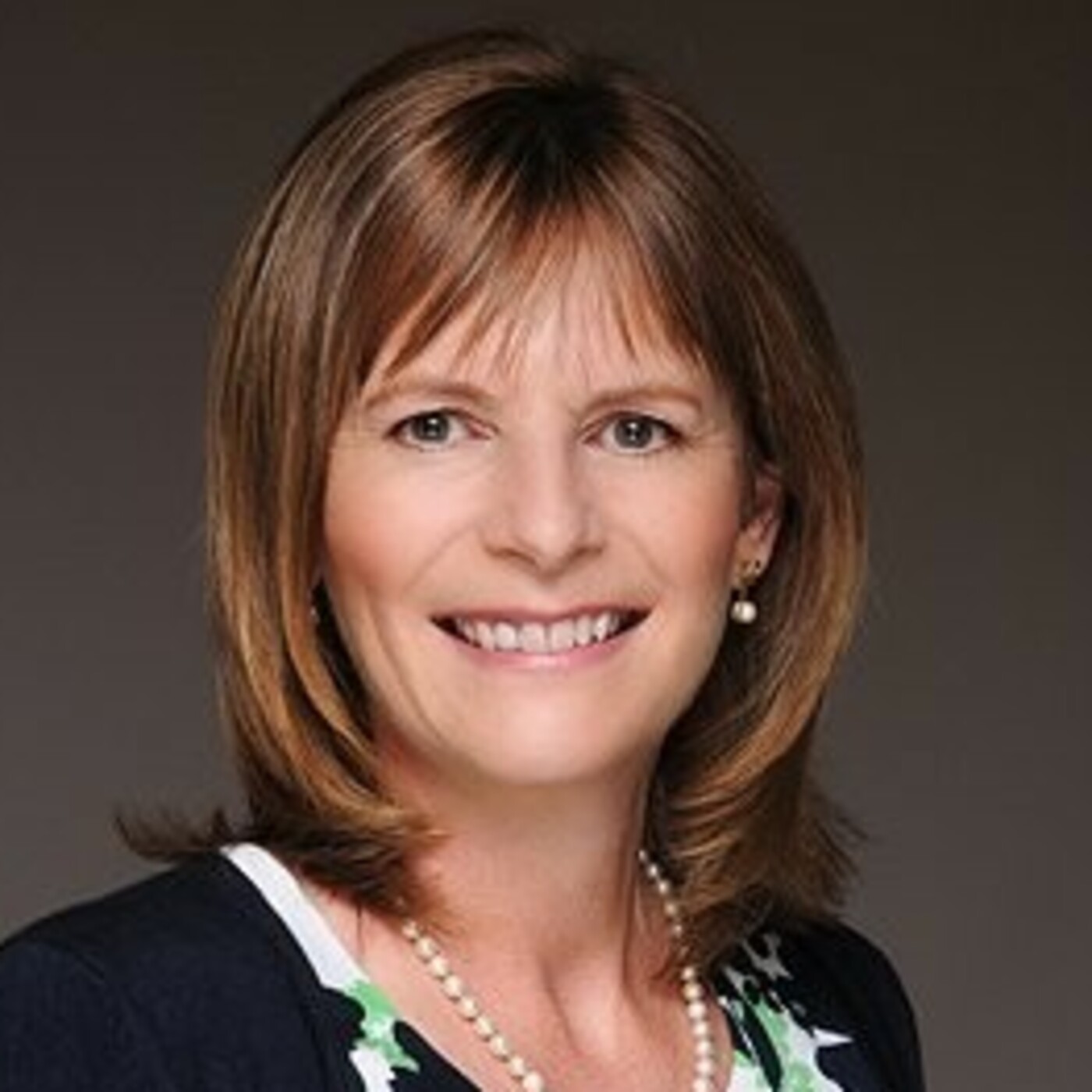
Aoifinn Devitt: Our next guest abandoned the circus-related dreams of her 6-year-old self to pursue a career in investing and develop a passion for impact investing. Let’s hear what impact investing means to her and how she translated that into a collaborative knowledge platform for pension funds. I’m Aoifinn Devitt and welcome to the 50 Faces podcast, a podcast committed to revealing the richness and diversity of the world of investment by focusing on its people and their stories. I’m joined today by Karen Shackleton, who is the founder and head of Pensions for Purpose, a collaborative initiative to promote understanding of impact investment for institutional investors. This is in addition to a portfolio career, which includes roles as investment advisor to 4 local authority pension funds. As well as chair and non-executive director roles. She’s spent most of her career in investment, including time as a fund manager, client relationship manager, and chief executive of an investment advisory firm. She’s a frequent speaker on the institutional investment circuit and a passionate advocate for knowledge and action in impact investment. Welcome, Karen. Thank you for joining me today.
Karen Shackleton: Thank you, Aoifinn. It’s a pleasure to be here.
Aoifinn Devitt: Let’s start with your role in Pensions for Purpose. Can you tell us a little bit about that and also about your portfolio career?
Karen Shackleton: Certainly, Pensions for Purpose was set up in October 2017, so it’s a relatively recent platform. And we set it up to try and raise awareness amongst pension funds of impact investment. At every single conference I’ve spoken at over the past 2 years, when we’ve asked pension funds what’s been the main hurdle stopping them from allocating to impact investment, lack of knowledge has come up as the main reason. So Pensions for Purpose is really trying to address that, and we have influencer members who are fund managers, lawyers, consultants who pay a fixed membership fee to post as much thought leadership as they wish on ESG, sustainable and impact investment. And then pension funds, independent advisors, government representatives, academics sign up as affiliate members, and they receive the content on the platform. So it’s been hugely successful. We’ve grown very, very rapidly over the past 2 years, and we’re now also offering training courses. We do afternoon tea discussions, so we’re really expanding and finding an awful lot of interest in this topic. As well as Pensions for Purpose, I’ve got a couple of non-exec roles. I’m chair of an impact manager called Resonance and Deputy Chair of the Lord Chancellor’s Strategic Investment Board for the Ministry of Justice. And I work as an independent investment advisor for MJ Hudson Allenbridge advising for local authority pension funds.
Aoifinn Devitt: And I’d love to just ask about impact to start with. Is that universally understood or is it the kind of thing to say making an impact can be kind of idiosyncratic according to different investors? I understand it might have a little more currency in Europe, perhaps, the concept, than in the US currently.
Karen Shackleton: I think sentiment is changing. At our last annual conference, we asked UK pension funds where they anticipated sitting in terms of the spectrum of capital, how far they wanted to move towards an impactful investment strategy. And over 70% of them said that in 3 years’ time, they’d like their pension fund to be allocating to impact investment. So I think there’s a real sort of sea change of sentiment going on in the industry at the moment. And that is largely being driven by the environmental agenda around climate action, but also a concern, an increasing concern, and I think perhaps the pandemic has increased focus on the social impact, the social responsibility that we have as institutional investors.
Aoifinn Devitt: And one of the, perhaps a nice problem to have, but maybe you’re experiencing this too, is there has been an absolute avalanche of research and writing coming out recently, whereas there was perhaps nothing 5, 10 years ago. How do you help investors navigate through that kind of deluge of information and curate it for them?
Karen Shackleton: So we do two things. Each month we send our registered affiliate members an update just focusing on 3 articles that we feel represent best practice on the platform. But there are plenty more. I mean, it’s not just that there are only 3 a month, there are lots of good articles coming out, but just to sort of help them say, okay, if you’ve got 5 minutes to spare, just read this one. And we also offer annual content awards to celebrate best practice, and we have 9 different categories. We’ve just opened our submissions for this year, and we’ve introduced this year a COVID-19 category. So we’ve noticed that a number of our influencer members have started writing about how COVID-19 is impacting the industry’s thinking. And so we’re going to try and celebrate best practice by giving an award to the best article on the platform as considered by our judges.
Aoifinn Devitt: That’s really helpful. I do think actually assisting with navigating through this information is a particularly strong amount of value you’re adding. Just backing up a little, looking into your journey into investing, and maybe we can end with how you became interested in impact investing. Where did it start? Start? And did— was it a linear path, or did it take any interesting turns along the way?
Karen Shackleton: Well, I think if you go back to, um, Karen at age 6, I wanted to be a bareback circus horse rider. It’s a little bit different to my goals at that age. And by 14, I wanted to marry a Frenchman and become a translator for the EU, of all things. But I think actually, really, my, my career, um, as it stands today, started when I did a degree in banking and international finance at University Business School, now called Cass. That really led the way into investment management for me because part of that degree course was an internship at a fund manager. So sort of started out in investment management, but I think there have been— well, there was a key moment actually when I was a fund manager. I used to travel into London Bridge and then walk across London Bridge with a zillion other commuters, and it would really have a treadmill feel to it. And there came a point where I started thinking, this is— there must be more than this. And so, um, my sort of point of protest was that I would make a point of stopping in the middle of London Bridge to look at the view. And you can imagine, you know, sort of 5 thick commuters all crossing the bridge at the same time. I was pretty unpopular. But I think that was the point at which I started questioning in my mind whether traditional investment management was going to be where I wanted to sit for the rest of my career. I think if you roll on a few more years and by now I’m developing a non-exec portfolio, it was when I was introduced to Resonance that the light bulb really went on and I thought, yes, this is what I’ve been looking for. I’ve been wanting to try and find a role in investment that could achieve something positive that wasn’t just about the returns. So it’s been a fairly straightforward journey, but there have been a few key moments along the way that have influenced the direction of travel.
Aoifinn Devitt: And in terms of the path you took in education, it seems it was a fairly straightforward preparation for investing if you worked in economics and finance. Were there any particular skills you found useful there, or did you find a lot of your training came essentially on the job?
Karen Shackleton: I think, I mean, my degree course was really good, and funny enough, I mean, the investment course— Desmond Fitzgerald was my professor there. He did an excellent investment course, and I carried on using my lecture notes for about 3 years after I’d left university. And I’m not sure many people ever look at their university notes ever again, but I kept his notes on my desk because they were so valuable. Certainly doing the statistics course, the econometrics course as options on that degree, they were quite valuable, and I’ve done A-level economics as well. So that was all very much good foundation technical experience that I took with me into my career. But I think, you know, some of the, the softer skills that you develop along the way are equally important. And of course, the more senior you become, the more important management roles become. And some of the leadership training courses that I went on including one I can remember at County NatWest, I was sent off on a management course where we was put into teams and we had to build scaffolding structures. And it was all about working as a team. So some of those softer skills that were developed further along in my career were equally important in terms of where I am now.
Aoifinn Devitt: And you work with a number of local government pension funds. What is on their mind in terms of impact, ESG, factors right now?
Karen Shackleton: I think the local authority pension funds have actually been leading the way in terms of impact investment. The corporate pension funds are beginning to think about this now, but I think it’s because the local authority pension fund committee meetings are public meetings. And as a result of that, they have had a number of deputations, presentations from action groups, Extinction Rebellion, and local environmental groups coming to meetings, and the unions as well have made deputations to the committee asking them to divest. So that whole debate around divestment has led local authority pension funds to sort of question their investment strategy. Is there more they can do to tackle climate action? And a lot of the work that I’ve done with local authority funds has been around helping them articulate a set of investment beliefs around ESG. So we do that by looking at the Sustainable Development Goals as a framework and saying which of these goals are likely to have the biggest impact on the investment portfolio from a risk or return perspective. And by doing that, it then helps them develop some key themes that they want to promote in the portfolio. To sort of have either an environmental impact or a social impact over time.
Aoifinn Devitt: Now, I actually love that video and I’ve referred to so many people. I think you get, in terms of their investment beliefs, you try to get them to focus on 3 of the 17 Sustainable Development Goals because obviously it gets back to my point before, sometimes it’s about narrowing down thing a to something tangible and manageable in order to work with that. I think it’s a very useful approach.
Karen Shackleton: Absolutely. And it’s not easy to do. And, you know, I sort of say to them, right, prioritize your top 3 and then So they have to do that as preparatory work before they come to the investment beliefs training session. And so they come into the meeting and we vote and see who’s voted for what. And then they have to, for each of the SDG goals, if anybody has voted for that one, they have to articulate an investment thesis as to why they think it should be prioritized. And then you have the sort of group discussion and then you vote again. And it’s interesting that then you see sentiment shifting. As you’ve had that group discussion, which, you know, is a good example of how working together you get a better outcome than working individually. So you do sort of start to see some commonality, and I’m definitely seeing SDG goals that pop up more frequently than others. So, for example, SDG 13 around climate change, that one is very popular, and the SDG goal around sustainable renewable energy, that one is seen as a return opportunity. You then get most funds focusing on some of the economic-related SDG goals, and then you get the more individually chosen SDG goals, which, you know, might be gender diversity or sustainable cities or health and well-being. I mean, I’ve noticed that health and well-being, not surprisingly, has become more popular since we’ve been experiencing the pandemic.
Aoifinn Devitt: And where in this hierarchy, particularly from the institutional allocator standpoint, which is where you are immersed most of your time, does diversity, gender equality, and some of these other areas that we’ve been focusing on quite recently, I’d suggest, in the world of investment, where do they rank?
Karen Shackleton: I think they come through in terms of thinking about the gender diversity SDG goal. We usually have a discussion around that one. What I tend to do with pension funds is say, well, once you’ve determined your SDG priorities, you then have to go back to the spectrum of capital and say, where will I be most effectively aligned? Now, with something like climate change, chances are you want to embrace the whole of the spectrum of capital. So you want to be an engaged investor, you perhaps want to move your passive funds to low carbon, and you want to allocate to renewable energy in an impactful way. Way. But with something like gender diversity, you might say, actually, I’m going to be most aligned if I stick with the responsible investment part of the spectrum of capital. And so I will be most effective by being a really active and engaged shareholder, pushing the companies in which I invest to think hard about their diversity and what action they are taking to promote genuine diversity within their firms. And I’ve got pension fund clients that are really strong on this, and goodness me, they, you know, sort of let no stone stay unturned, and they’re constantly talking to their managers, not just about diversity in the companies in which they invest, but talking about the fund manager’s diversity as well. And you can see some of the firms sort of shifting somewhat uncomfortably in their seats. And I think that’s really good because we need to be made to feel uncomfortable to really tackle this issue going forward.
Aoifinn Devitt: That’s interesting. And my perception is that this, whereas the diversity issue is a little further along the agenda, perhaps with some US public funds, it is coming up the agenda here in the UK. And equally, they probably have a little more work to do on the environmental side. So hopefully working together, collaborating, sharing knowledge will move everyone forward.
Karen Shackleton: I think so. And I mean, of course, you know, it’s very easy to think, oh, you know, they’ve got so much to do. But actually, compared to certainly when I started out in the city, it was a very different world then. And some of the comments and things that happened to me as a sort of young female worker in a male-dominated industry, people would be horrified at today. So, you know, we’ve made huge steps forward already. In terms of things like gender diversity, but we’ve still got further to go.
Aoifinn Devitt: And let’s just talk about that a little bit. Being someone in a minority, starting out in the investment industry, essentially, I think, from the beginning of your career, were there any key people who mentored you, who guided you, who helped you, or any key pieces of advice that you learned along the way?
Karen Shackleton: This is a really hard one because the answer is yes, there were so many, but I think, I mean, I’d probably pick out a few key people that influenced me and as a result of which, you know, definitely changed my direction that I was going in or had an influence. So David Gamble, he was the head of County NatWest Investment Management in the 1980s, later became involved with the British Airways Pension Fund and has had many roles in the pensions industry. He has to be mentioned for giving me my first job and encouraged me in my early career and in fact has continued to make regular appearances. He always sort of pops up from nowhere and continues to encourage and suggest that I go for particular roles. So he’s definitely somebody that has been fantastic. The second person I think I’d mention is Anne Richards. At the time, she was the Chief Investment Officer of Aberdeen Standard. This was when I was toying with the idea of whether or not to take on the chief executive role of Allenbridge, who I was putting my investment advice through. And she really encouraged me to do that and said to me, even if you only do it for a year, it will be valuable experience and you will have it on your CV, and whatever you do next, that will be helpful. And she was so right, and I don’t think I would have gone for it unless she really pushed me to, to sort of grab the bull by the horns and say, yes, I can do this. And yes, she was right, it was a great learning experience. And incredibly valuable as I went on to develop my non-exec role. But more recently, I think Daniel Brewer, who’s the Chief Executive of Resonance, he’s been the one who’s been most inspirational to me on impact investment. And if you think I’m passionate about impact investment, then you should probably speak to Daniel because he’s amazing. So he gets a mention. And then, you know, in terms of other people who’ve influenced me, well, of course, I think everybody has a partner, don’t they? My husband’s given me constant support and encouragement, and he’s been a fantastic sounding board, and I can always rely on him to be honest about any decisions. And then I’ve got this fab team at Pensions for Purpose as well, and I think in terms of the future direction of where I go from here with the platform, then their openness and enthusiasm and support port will, will definitely determine where we go next. And, and Stephanie, who’s, who founded it with me, she, she definitely deserves a mention because I think very often, you know, you often have people who are sort of the public face of an initiative, but there’s always somebody else supporting them who just gets on with the work without grumbling and without a fuss. And Stephanie is, is that person. So yeah, the answer is, you know, it’s not one person. There’s lots of people who all along the way have have encouraged me to push forward, and I’m very grateful to them all.
Aoifinn Devitt: It sounds like you’re lucky enough to have a board of advisors, many different people that you seem to have nurtured throughout your career so that you didn’t just go to them when you needed advice, that they were there in the background. I’m also hearing you may have been lucky enough to have a sponsor, which is maybe not an official sponsor, but someone who did act and nurture you, which is incredibly lucky. I would say it’s probably rare, but certainly the more people in the industry that have them, perhaps the better. And then just mentioning your team at Pensions for Purpose, there’s a podcast I love which at the end of each one mentions the unsung heroes. And I think there are certainly unsung heroes in all of our lives, and it’s lovely that you’ve mentioned them here. So just looking back at your career, any setbacks, challenges, or maybe investment mistakes? Are there any you can share that you have learned from?
Karen Shackleton: One of the stories I love to talk is when I had to give a presentation for a colleague, he had to drop drop out at the last minute. And so I was presenting his slides to a Japanese audience where the presentation was being translated. This was quite early on in my career, and there was one slide that said, “Computers: mañana or megabucks?” And trans— there, the there was a bit of discussion in Japanese, and the translator said to me, “Karen-san, what does mañana mean?” And I didn’t know, and I sort of thought frantically, what would he have meant? And so in a moment of panic, I said— I knew he was a Buddhist, and I said, “Oh, I think it’s something to do with Buddhist philosophy.” And there was a lot of murmuring around the room in Japanese, and then the translator came, “Karen-san, we do not know which aspect of Buddhist philosophy this is.” So, the message there was, don’t ever, ever pretend to understand something if you don’t. Just come clean and say, “I’m really sorry, I don’t know.” But I think the other setback or challenge, if you like, that was fairly formative was when I stepped down as Managing Director of Allenbridge. This was after we’d merged with a bigger company, so I just switched from being Chief Exec to Managing Director of the advisory side. And when I stepped down from that role, initially I felt really flat, but then, you know, new doors opened. And since those doors opened, I have not looked back, and I’m so much more fulfilled now. But at the time, you know, I just thought, oh, you know, that this this is, is not good. I don’t feel good here. So the, the old proverb, one door closes and another opens, is absolutely true. So you always, always need to bear that in mind when you’re going through tough times.
Aoifinn Devitt: And was there anything in particular you relied upon? Was it just patience? Did you do yoga, go for walks, just talk, network? Was there anything you did, or did you just wait?
Karen Shackleton: Um, no, no, no, no. I’m not one to sort of sit and wait. Um, I think, uh, in terms of helping my emotional state of being, I’m a fitness freak, So I, you know, I run a lot, I play tennis, I play badminton, I love walking. So did a lot of that. And my goodness me, aren’t your friends valuable in these times? But I did spend some time thinking about how could I use the experience that I’d gained, and that led me to think about non-exec roles. I joined Women on Boards. I was very grateful to Fiona Hathorn for the training course that she ran on how to start an NED portfolio. It was absolutely invaluable. Did the training course, developed the techniques that she was recommending, and very quickly managed to start getting interviews for non-exec roles. So, you know, that was the sort of start of a change in direction for me. So you can you can always, always think about how best to move forward, but facing adversity, you have to keep a positive mindset. And that can be hard.
Aoifinn Devitt: Also helpful to, as you said, to have the right people around you. So what is it that you like most about the investment world?
Karen Shackleton: Do you know, when I’ve worked for the pension fund for a few years on their investment strategy and you see it starting to come through in terms of improved risk-adjusted returns or an understanding of climate action and how to implement an investment strategy, and you see smiling faces, nodding heads, and a happy committee, that’s, that’s really, really satisfying. I mean, I always say, I always describe myself as a facilitator. I help others to understand a technical subject and then make decisions off the back of that that will result in a better outcome for them over the long term. So That’s the most enjoyable aspect. Investment is an area where there are endless opportunities. Nothing ever stays the same. So it’s a constantly moving feast to sort of ponder and reflect upon. So yeah, never, ever stand still.
Aoifinn Devitt: No, it doesn’t. And we’ve talked about the people in your life and some advice they’ve given you. Is there any creed or motto that you live by now?
Karen Shackleton: I’ve, for many years now, had the Nolan Principles for Public ‘Public Life’ pinned on my office wall. So these are 7 principles that public employees are expected to behave within: selflessness, integrity, objectivity, accountability, openness, honesty, and leadership. And I sort of began by looking at them because I was trying to sort of align myself with what my clients as local authority pension funds would— how their framework would be. And as I thought more about these principles, I realised how important it was to behave in your business world in a way which reflected these principles. And so, I’m always thinking hard about behaving with integrity, objectivity, not trying to hide things from my clients, as in having that open relationship with them. So it very much forms the way I work.
Aoifinn Devitt: And looking back now at your younger self, perhaps the City University graduate, or before you started getting a little bit numbed from those walks across London Bridge, is there anything that you know now that you wish you had known then? Any advice for your younger self?
Karen Shackleton: Do you know, when I was coming out of university, I was really ambitious. I wanted to be a director by the age of 30, and so I was very, very goal-driven, but that came at a cost personally. So I think the message I’d want to give my younger self was get your work-life balance sorted out. Work hard, yes, but play hard in equal measure, and you will end up being happier and fulfilled in the long term. But I know myself well enough to know that if I were back at the age of 20 coming out of university, I’d do it just the same because I’m a stubborn old soul.
Aoifinn Devitt: And no harm in that, I’d say. Well, thank you, Karen. Thank you for your service, what you do with the local authority investment arena, and thank you for your massive contribution to our own, all of our knowledge on the world of impact investing. It’s been a real pleasure speaking with you and thank you for sharing your insights with us.
Karen Shackleton: Thank you very much, Aoifinn.
Aoifinn Devitt: I’m Aoifinn Devitt. Thank you for listening to the 50 Faces podcast. If you liked what you heard and would like to tune in to hear more inspiring investors and their personal journeys, please subscribe on Apple Podcasts or wherever you get your podcasts. This podcast is for informational purposes only and should not be construed as investment advice, and all views are personal and should not be attributed to the organizations and affiliations of the host or any guest.
Aoifinn Devitt: Our next guest abandoned the circus-related dreams of her 6-year-old self to pursue a career in investing and develop a passion for impact investing. Let’s hear what impact investing means to her and how she translated that into a collaborative knowledge platform for pension funds. I’m Aoifinn Devitt and welcome to the 50 Faces podcast, a podcast committed to revealing the richness and diversity of the world of investment by focusing on its people and their stories. I’m joined today by Karen Shackleton, who is the founder and head of Pensions for Purpose, a collaborative initiative to promote understanding of impact investment for institutional investors. This is in addition to a portfolio career, which includes roles as investment advisor to 4 local authority pension funds. As well as chair and non-executive director roles. She’s spent most of her career in investment, including time as a fund manager, client relationship manager, and chief executive of an investment advisory firm. She’s a frequent speaker on the institutional investment circuit and a passionate advocate for knowledge and action in impact investment. Welcome, Karen. Thank you for joining me today.
Karen Shackleton: Thank you, Aoifinn. It’s a pleasure to be here.
Aoifinn Devitt: Let’s start with your role in Pensions for Purpose. Can you tell us a little bit about that and also about your portfolio career?
Karen Shackleton: Certainly, Pensions for Purpose was set up in October 2017, so it’s a relatively recent platform. And we set it up to try and raise awareness amongst pension funds of impact investment. At every single conference I’ve spoken at over the past 2 years, when we’ve asked pension funds what’s been the main hurdle stopping them from allocating to impact investment, lack of knowledge has come up as the main reason. So Pensions for Purpose is really trying to address that, and we have influencer members who are fund managers, lawyers, consultants who pay a fixed membership fee to post as much thought leadership as they wish on ESG, sustainable and impact investment. And then pension funds, independent advisors, government representatives, academics sign up as affiliate members, and they receive the content on the platform. So it’s been hugely successful. We’ve grown very, very rapidly over the past 2 years, and we’re now also offering training courses. We do afternoon tea discussions, so we’re really expanding and finding an awful lot of interest in this topic. As well as Pensions for Purpose, I’ve got a couple of non-exec roles. I’m chair of an impact manager called Resonance and Deputy Chair of the Lord Chancellor’s Strategic Investment Board for the Ministry of Justice. And I work as an independent investment advisor for MJ Hudson Allenbridge advising for local authority pension funds.
Aoifinn Devitt: And I’d love to just ask about impact to start with. Is that universally understood or is it the kind of thing to say making an impact can be kind of idiosyncratic according to different investors? I understand it might have a little more currency in Europe, perhaps, the concept, than in the US currently.
Karen Shackleton: I think sentiment is changing. At our last annual conference, we asked UK pension funds where they anticipated sitting in terms of the spectrum of capital, how far they wanted to move towards an impactful investment strategy. And over 70% of them said that in 3 years’ time, they’d like their pension fund to be allocating to impact investment. So I think there’s a real sort of sea change of sentiment going on in the industry at the moment. And that is largely being driven by the environmental agenda around climate action, but also a concern, an increasing concern, and I think perhaps the pandemic has increased focus on the social impact, the social responsibility that we have as institutional investors.
Aoifinn Devitt: And one of the, perhaps a nice problem to have, but maybe you’re experiencing this too, is there has been an absolute avalanche of research and writing coming out recently, whereas there was perhaps nothing 5, 10 years ago. How do you help investors navigate through that kind of deluge of information and curate it for them?
Karen Shackleton: So we do two things. Each month we send our registered affiliate members an update just focusing on 3 articles that we feel represent best practice on the platform. But there are plenty more. I mean, it’s not just that there are only 3 a month, there are lots of good articles coming out, but just to sort of help them say, okay, if you’ve got 5 minutes to spare, just read this one. And we also offer annual content awards to celebrate best practice, and we have 9 different categories. We’ve just opened our submissions for this year, and we’ve introduced this year a COVID-19 category. So we’ve noticed that a number of our influencer members have started writing about how COVID-19 is impacting the industry’s thinking. And so we’re going to try and celebrate best practice by giving an award to the best article on the platform as considered by our judges.
Aoifinn Devitt: That’s really helpful. I do think actually assisting with navigating through this information is a particularly strong amount of value you’re adding. Just backing up a little, looking into your journey into investing, and maybe we can end with how you became interested in impact investing. Where did it start? Start? And did— was it a linear path, or did it take any interesting turns along the way?
Karen Shackleton: Well, I think if you go back to, um, Karen at age 6, I wanted to be a bareback circus horse rider. It’s a little bit different to my goals at that age. And by 14, I wanted to marry a Frenchman and become a translator for the EU, of all things. But I think actually, really, my, my career, um, as it stands today, started when I did a degree in banking and international finance at University Business School, now called Cass. That really led the way into investment management for me because part of that degree course was an internship at a fund manager. So sort of started out in investment management, but I think there have been— well, there was a key moment actually when I was a fund manager. I used to travel into London Bridge and then walk across London Bridge with a zillion other commuters, and it would really have a treadmill feel to it. And there came a point where I started thinking, this is— there must be more than this. And so, um, my sort of point of protest was that I would make a point of stopping in the middle of London Bridge to look at the view. And you can imagine, you know, sort of 5 thick commuters all crossing the bridge at the same time. I was pretty unpopular. But I think that was the point at which I started questioning in my mind whether traditional investment management was going to be where I wanted to sit for the rest of my career. I think if you roll on a few more years and by now I’m developing a non-exec portfolio, it was when I was introduced to Resonance that the light bulb really went on and I thought, yes, this is what I’ve been looking for. I’ve been wanting to try and find a role in investment that could achieve something positive that wasn’t just about the returns. So it’s been a fairly straightforward journey, but there have been a few key moments along the way that have influenced the direction of travel.
Aoifinn Devitt: And in terms of the path you took in education, it seems it was a fairly straightforward preparation for investing if you worked in economics and finance. Were there any particular skills you found useful there, or did you find a lot of your training came essentially on the job?
Karen Shackleton: I think, I mean, my degree course was really good, and funny enough, I mean, the investment course— Desmond Fitzgerald was my professor there. He did an excellent investment course, and I carried on using my lecture notes for about 3 years after I’d left university. And I’m not sure many people ever look at their university notes ever again, but I kept his notes on my desk because they were so valuable. Certainly doing the statistics course, the econometrics course as options on that degree, they were quite valuable, and I’ve done A-level economics as well. So that was all very much good foundation technical experience that I took with me into my career. But I think, you know, some of the, the softer skills that you develop along the way are equally important. And of course, the more senior you become, the more important management roles become. And some of the leadership training courses that I went on including one I can remember at County NatWest, I was sent off on a management course where we was put into teams and we had to build scaffolding structures. And it was all about working as a team. So some of those softer skills that were developed further along in my career were equally important in terms of where I am now.
Aoifinn Devitt: And you work with a number of local government pension funds. What is on their mind in terms of impact, ESG, factors right now?
Karen Shackleton: I think the local authority pension funds have actually been leading the way in terms of impact investment. The corporate pension funds are beginning to think about this now, but I think it’s because the local authority pension fund committee meetings are public meetings. And as a result of that, they have had a number of deputations, presentations from action groups, Extinction Rebellion, and local environmental groups coming to meetings, and the unions as well have made deputations to the committee asking them to divest. So that whole debate around divestment has led local authority pension funds to sort of question their investment strategy. Is there more they can do to tackle climate action? And a lot of the work that I’ve done with local authority funds has been around helping them articulate a set of investment beliefs around ESG. So we do that by looking at the Sustainable Development Goals as a framework and saying which of these goals are likely to have the biggest impact on the investment portfolio from a risk or return perspective. And by doing that, it then helps them develop some key themes that they want to promote in the portfolio. To sort of have either an environmental impact or a social impact over time.
Aoifinn Devitt: Now, I actually love that video and I’ve referred to so many people. I think you get, in terms of their investment beliefs, you try to get them to focus on 3 of the 17 Sustainable Development Goals because obviously it gets back to my point before, sometimes it’s about narrowing down thing a to something tangible and manageable in order to work with that. I think it’s a very useful approach.
Karen Shackleton: Absolutely. And it’s not easy to do. And, you know, I sort of say to them, right, prioritize your top 3 and then So they have to do that as preparatory work before they come to the investment beliefs training session. And so they come into the meeting and we vote and see who’s voted for what. And then they have to, for each of the SDG goals, if anybody has voted for that one, they have to articulate an investment thesis as to why they think it should be prioritized. And then you have the sort of group discussion and then you vote again. And it’s interesting that then you see sentiment shifting. As you’ve had that group discussion, which, you know, is a good example of how working together you get a better outcome than working individually. So you do sort of start to see some commonality, and I’m definitely seeing SDG goals that pop up more frequently than others. So, for example, SDG 13 around climate change, that one is very popular, and the SDG goal around sustainable renewable energy, that one is seen as a return opportunity. You then get most funds focusing on some of the economic-related SDG goals, and then you get the more individually chosen SDG goals, which, you know, might be gender diversity or sustainable cities or health and well-being. I mean, I’ve noticed that health and well-being, not surprisingly, has become more popular since we’ve been experiencing the pandemic.
Aoifinn Devitt: And where in this hierarchy, particularly from the institutional allocator standpoint, which is where you are immersed most of your time, does diversity, gender equality, and some of these other areas that we’ve been focusing on quite recently, I’d suggest, in the world of investment, where do they rank?
Karen Shackleton: I think they come through in terms of thinking about the gender diversity SDG goal. We usually have a discussion around that one. What I tend to do with pension funds is say, well, once you’ve determined your SDG priorities, you then have to go back to the spectrum of capital and say, where will I be most effectively aligned? Now, with something like climate change, chances are you want to embrace the whole of the spectrum of capital. So you want to be an engaged investor, you perhaps want to move your passive funds to low carbon, and you want to allocate to renewable energy in an impactful way. Way. But with something like gender diversity, you might say, actually, I’m going to be most aligned if I stick with the responsible investment part of the spectrum of capital. And so I will be most effective by being a really active and engaged shareholder, pushing the companies in which I invest to think hard about their diversity and what action they are taking to promote genuine diversity within their firms. And I’ve got pension fund clients that are really strong on this, and goodness me, they, you know, sort of let no stone stay unturned, and they’re constantly talking to their managers, not just about diversity in the companies in which they invest, but talking about the fund manager’s diversity as well. And you can see some of the firms sort of shifting somewhat uncomfortably in their seats. And I think that’s really good because we need to be made to feel uncomfortable to really tackle this issue going forward.
Aoifinn Devitt: That’s interesting. And my perception is that this, whereas the diversity issue is a little further along the agenda, perhaps with some US public funds, it is coming up the agenda here in the UK. And equally, they probably have a little more work to do on the environmental side. So hopefully working together, collaborating, sharing knowledge will move everyone forward.
Karen Shackleton: I think so. And I mean, of course, you know, it’s very easy to think, oh, you know, they’ve got so much to do. But actually, compared to certainly when I started out in the city, it was a very different world then. And some of the comments and things that happened to me as a sort of young female worker in a male-dominated industry, people would be horrified at today. So, you know, we’ve made huge steps forward already. In terms of things like gender diversity, but we’ve still got further to go.
Aoifinn Devitt: And let’s just talk about that a little bit. Being someone in a minority, starting out in the investment industry, essentially, I think, from the beginning of your career, were there any key people who mentored you, who guided you, who helped you, or any key pieces of advice that you learned along the way?
Karen Shackleton: This is a really hard one because the answer is yes, there were so many, but I think, I mean, I’d probably pick out a few key people that influenced me and as a result of which, you know, definitely changed my direction that I was going in or had an influence. So David Gamble, he was the head of County NatWest Investment Management in the 1980s, later became involved with the British Airways Pension Fund and has had many roles in the pensions industry. He has to be mentioned for giving me my first job and encouraged me in my early career and in fact has continued to make regular appearances. He always sort of pops up from nowhere and continues to encourage and suggest that I go for particular roles. So he’s definitely somebody that has been fantastic. The second person I think I’d mention is Anne Richards. At the time, she was the Chief Investment Officer of Aberdeen Standard. This was when I was toying with the idea of whether or not to take on the chief executive role of Allenbridge, who I was putting my investment advice through. And she really encouraged me to do that and said to me, even if you only do it for a year, it will be valuable experience and you will have it on your CV, and whatever you do next, that will be helpful. And she was so right, and I don’t think I would have gone for it unless she really pushed me to, to sort of grab the bull by the horns and say, yes, I can do this. And yes, she was right, it was a great learning experience. And incredibly valuable as I went on to develop my non-exec role. But more recently, I think Daniel Brewer, who’s the Chief Executive of Resonance, he’s been the one who’s been most inspirational to me on impact investment. And if you think I’m passionate about impact investment, then you should probably speak to Daniel because he’s amazing. So he gets a mention. And then, you know, in terms of other people who’ve influenced me, well, of course, I think everybody has a partner, don’t they? My husband’s given me constant support and encouragement, and he’s been a fantastic sounding board, and I can always rely on him to be honest about any decisions. And then I’ve got this fab team at Pensions for Purpose as well, and I think in terms of the future direction of where I go from here with the platform, then their openness and enthusiasm and support port will, will definitely determine where we go next. And, and Stephanie, who’s, who founded it with me, she, she definitely deserves a mention because I think very often, you know, you often have people who are sort of the public face of an initiative, but there’s always somebody else supporting them who just gets on with the work without grumbling and without a fuss. And Stephanie is, is that person. So yeah, the answer is, you know, it’s not one person. There’s lots of people who all along the way have have encouraged me to push forward, and I’m very grateful to them all.
Aoifinn Devitt: It sounds like you’re lucky enough to have a board of advisors, many different people that you seem to have nurtured throughout your career so that you didn’t just go to them when you needed advice, that they were there in the background. I’m also hearing you may have been lucky enough to have a sponsor, which is maybe not an official sponsor, but someone who did act and nurture you, which is incredibly lucky. I would say it’s probably rare, but certainly the more people in the industry that have them, perhaps the better. And then just mentioning your team at Pensions for Purpose, there’s a podcast I love which at the end of each one mentions the unsung heroes. And I think there are certainly unsung heroes in all of our lives, and it’s lovely that you’ve mentioned them here. So just looking back at your career, any setbacks, challenges, or maybe investment mistakes? Are there any you can share that you have learned from?
Karen Shackleton: One of the stories I love to talk is when I had to give a presentation for a colleague, he had to drop drop out at the last minute. And so I was presenting his slides to a Japanese audience where the presentation was being translated. This was quite early on in my career, and there was one slide that said, “Computers: mañana or megabucks?” And trans— there, the there was a bit of discussion in Japanese, and the translator said to me, “Karen-san, what does mañana mean?” And I didn’t know, and I sort of thought frantically, what would he have meant? And so in a moment of panic, I said— I knew he was a Buddhist, and I said, “Oh, I think it’s something to do with Buddhist philosophy.” And there was a lot of murmuring around the room in Japanese, and then the translator came, “Karen-san, we do not know which aspect of Buddhist philosophy this is.” So, the message there was, don’t ever, ever pretend to understand something if you don’t. Just come clean and say, “I’m really sorry, I don’t know.” But I think the other setback or challenge, if you like, that was fairly formative was when I stepped down as Managing Director of Allenbridge. This was after we’d merged with a bigger company, so I just switched from being Chief Exec to Managing Director of the advisory side. And when I stepped down from that role, initially I felt really flat, but then, you know, new doors opened. And since those doors opened, I have not looked back, and I’m so much more fulfilled now. But at the time, you know, I just thought, oh, you know, that this this is, is not good. I don’t feel good here. So the, the old proverb, one door closes and another opens, is absolutely true. So you always, always need to bear that in mind when you’re going through tough times.
Aoifinn Devitt: And was there anything in particular you relied upon? Was it just patience? Did you do yoga, go for walks, just talk, network? Was there anything you did, or did you just wait?
Karen Shackleton: Um, no, no, no, no. I’m not one to sort of sit and wait. Um, I think, uh, in terms of helping my emotional state of being, I’m a fitness freak, So I, you know, I run a lot, I play tennis, I play badminton, I love walking. So did a lot of that. And my goodness me, aren’t your friends valuable in these times? But I did spend some time thinking about how could I use the experience that I’d gained, and that led me to think about non-exec roles. I joined Women on Boards. I was very grateful to Fiona Hathorn for the training course that she ran on how to start an NED portfolio. It was absolutely invaluable. Did the training course, developed the techniques that she was recommending, and very quickly managed to start getting interviews for non-exec roles. So, you know, that was the sort of start of a change in direction for me. So you can you can always, always think about how best to move forward, but facing adversity, you have to keep a positive mindset. And that can be hard.
Aoifinn Devitt: Also helpful to, as you said, to have the right people around you. So what is it that you like most about the investment world?
Karen Shackleton: Do you know, when I’ve worked for the pension fund for a few years on their investment strategy and you see it starting to come through in terms of improved risk-adjusted returns or an understanding of climate action and how to implement an investment strategy, and you see smiling faces, nodding heads, and a happy committee, that’s, that’s really, really satisfying. I mean, I always say, I always describe myself as a facilitator. I help others to understand a technical subject and then make decisions off the back of that that will result in a better outcome for them over the long term. So That’s the most enjoyable aspect. Investment is an area where there are endless opportunities. Nothing ever stays the same. So it’s a constantly moving feast to sort of ponder and reflect upon. So yeah, never, ever stand still.
Aoifinn Devitt: No, it doesn’t. And we’ve talked about the people in your life and some advice they’ve given you. Is there any creed or motto that you live by now?
Karen Shackleton: I’ve, for many years now, had the Nolan Principles for Public ‘Public Life’ pinned on my office wall. So these are 7 principles that public employees are expected to behave within: selflessness, integrity, objectivity, accountability, openness, honesty, and leadership. And I sort of began by looking at them because I was trying to sort of align myself with what my clients as local authority pension funds would— how their framework would be. And as I thought more about these principles, I realised how important it was to behave in your business world in a way which reflected these principles. And so, I’m always thinking hard about behaving with integrity, objectivity, not trying to hide things from my clients, as in having that open relationship with them. So it very much forms the way I work.
Aoifinn Devitt: And looking back now at your younger self, perhaps the City University graduate, or before you started getting a little bit numbed from those walks across London Bridge, is there anything that you know now that you wish you had known then? Any advice for your younger self?
Karen Shackleton: Do you know, when I was coming out of university, I was really ambitious. I wanted to be a director by the age of 30, and so I was very, very goal-driven, but that came at a cost personally. So I think the message I’d want to give my younger self was get your work-life balance sorted out. Work hard, yes, but play hard in equal measure, and you will end up being happier and fulfilled in the long term. But I know myself well enough to know that if I were back at the age of 20 coming out of university, I’d do it just the same because I’m a stubborn old soul.
Aoifinn Devitt: And no harm in that, I’d say. Well, thank you, Karen. Thank you for your service, what you do with the local authority investment arena, and thank you for your massive contribution to our own, all of our knowledge on the world of impact investing. It’s been a real pleasure speaking with you and thank you for sharing your insights with us.
Karen Shackleton: Thank you very much, Aoifinn.
Aoifinn Devitt: I’m Aoifinn Devitt. Thank you for listening to the 50 Faces podcast. If you liked what you heard and would like to tune in to hear more inspiring investors and their personal journeys, please subscribe on Apple Podcasts or wherever you get your podcasts. This podcast is for informational purposes only and should not be construed as investment advice, and all views are personal and should not be attributed to the organizations and affiliations of the host or any guest.