Aoifinn Devitt: This podcast was made possible by the kind support of Emmanuelle Arbib of IAM Capital, a global alternative investment group based in London, as well as the individuals Lisa Bayer and Avatel Oisgild.
Maya: Before we look at the career, put always yourself at the first of the considerations you make for your career.
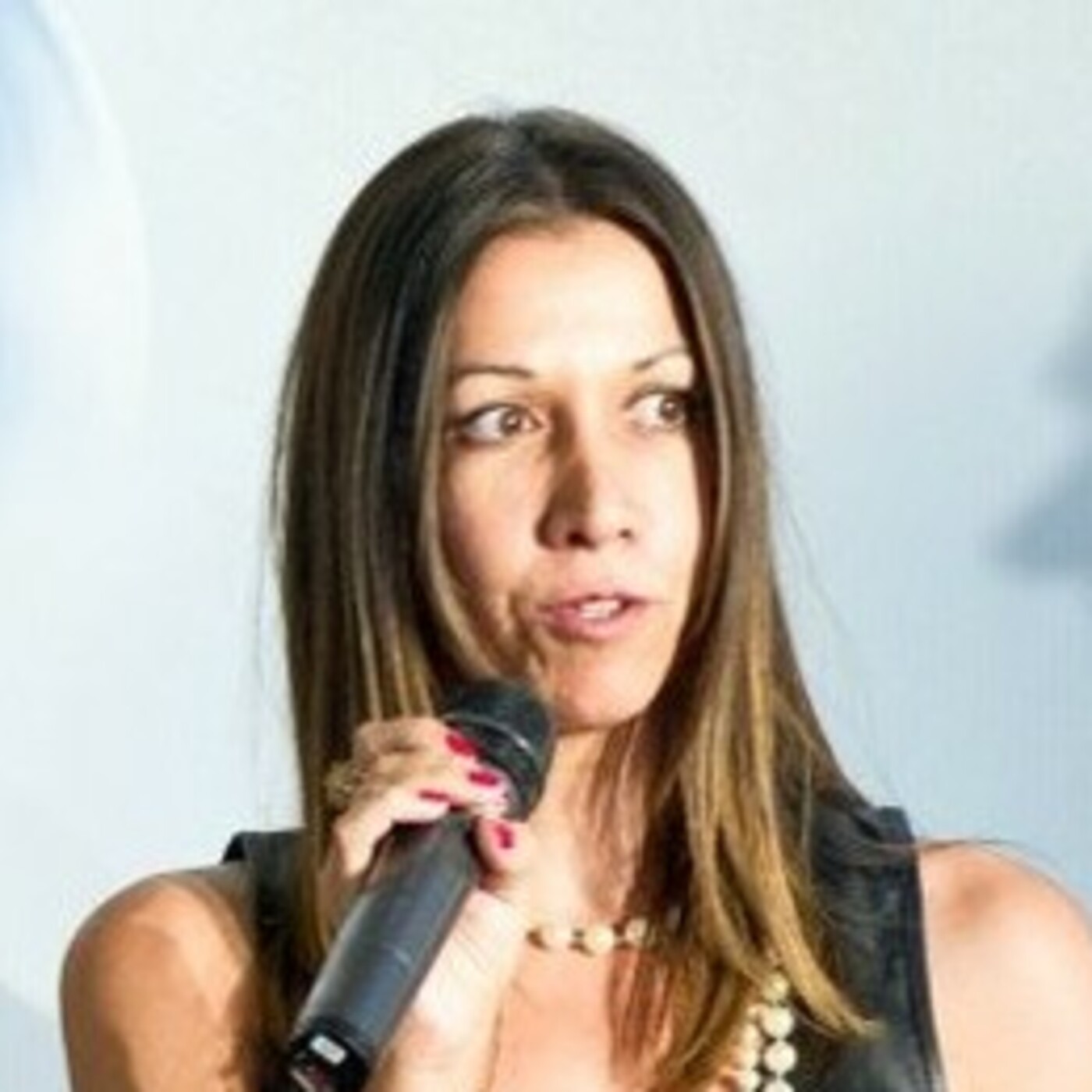
Aoifinn Devitt: For many of us, COVID has forced a time of pause and reflection. Let’s hear our next guest reflect on her successful global marketing career and lessons learned along the way. I’m Aoifinn Devitt, and welcome to this 50 Faces focus series, which showcases inspiring Israeli women in tech and beyond. I’m joined today by Maya Tushyan-Matosovich, who is Global Marketing Director at Dassault Systèmes, a French company. Maya is based in Israel. She’s had a long career in marketing within the software sector, where she has developed business plans and sales strategies on a regional and a global basis. Welcome, Maya. Thanks for joining me today.
Maya: Thank you very much for this opportunity.
Aoifinn Devitt: Let’s start with talking through your career journey. Can you tell us where you started and has it taken any surprising turns along the way from your perspective?
Maya: I think that, you know, when you talk to a young woman about a career journey, you have everything that you’ve been through, you know, in your education career and at home My mother always pushed us to study more and more and, you know, to be successful and work for these international companies. And then you get this point where you want to get married and have family and then you have this clash between, you know, your personal life and your career. I’m not saying that your career journey has to start with, you know, with a convenient career for your family. But looking today at my career with COVID in, you know, in the perspective of COVID I think that it was quite unusual because I started when I was rather young working for an American software company and I was a regional marketing manager. I had to travel quite often and it seemed normal to me. You know, I was traveling at least once a month, to different countries, meeting different kind of people. And I thought it was exciting. That was exactly what I wanted to do in my work. I could not imagine a situation where I’m sitting in the office from 9 to 5. And then, you know, my kids were born and I quit this American company and I joined another one. And then I’ve joined Dassault Systèmes and I kept on traveling as if I was single and I was not the mother in this family. And now with COVID I’m, you know, I’m taking this step back and I’m looking and I’m saying, hold on, you could still pursue your career and you don’t need to sacrifice yourself. And somehow I don’t want to be, you know, a victim here, but I feel that as a woman I had to give quite a lot in order to be in the position where I am right now. What does it mean? It means that sometimes In order for you to be in upper management positions, you need really to demonstrate that you deserve this role. You take steps or you take some elements in your career in order to, to get this right. For the first time in my life, after a very long career, I have the opportunity to look back and to rethink the steps I took, I’ve taken throughout my career. And it was, now when I’m looking back, it was so planned, you know, you do your BA degree, then you do your MBA degree and you do your first step in marketing. And it was always field marketing, meaning working with customers and partners, acquiring new partners, making sure that you have the right strategy and then that you implement the strategy that you have. And, you know, with marketing, you always want to be on top of things. You want to be at the front of technology and marketing tactics and making sure that you are online and offline. And then you are part of this race for success. The company success becomes your success. And now with COVID it was the first time in my life, even after the kids were born, I never took this break to look back. And say, is this the right career? Would I change anything? Would I change anything moving forward? So I think that marketing and business is very exciting. In fact, I have a niece, she’s 21 years old. She’s just graduated the army here in Israel, and she just, you know, she wants to take the steps of her auntie. She wants to do an MBA in business administration she wants to be part of a software company, she wants to travel abroad, she wants to do all these exciting things. So in a way, I think that it still gives you all the world, but in another way, before we look at the career, put always yourself at the first of the consideration you make for your career. So what is a global career and what was it including? So basically, like many young women. I’ve started my career with education, so you want to have the proper education to give you the elements of your career. What are you going to do? I took business administration. I thought that, you know, it was quite important. And remembering that, you know, academia is nice, but the real experience is always coming from what you do in your real job. And when I started my career, it wasn’t that I immediately— I did marketing, I did other things, and I was a marketing specialist, and took the time to learn and become what I am now. The fact that I had the opportunity despite being an Israeli located in Tel Aviv working for global companies, despite the fact that I was a woman, I thought that it was quite inspiring. There were moments in my career that I was the only woman in the directors of the geos, which were all white men, I would say. It has its impact. On one hand, it has its impact because you bring different perspective. Women have some angle in their management style which men don’t, and it’s not just our, you know, it’s our emotional intelligence. It’s also our ability to look at different things in a holistic way. And also women Some women have a tendency to promote other women. And in my team today, I have a team which is only based on women. I see this intelligence going everywhere, and it’s quite strong. And I think that it’s also bringing the way we are working together into our campaigns and into the way we are taking our way forward.
Aoifinn Devitt: Just want to ask you about one, one point you made there, which I think is very interesting. Women in senior positions feel they have to prove they deserve that role. And one thing I’ve, my perspective is I’ve often seen even at the interview stage, and I felt this myself, profoundly grateful to being in a position of, you know, being at the interview stage and even being offered a job. So how do you think that, that feeling you have to prove you deserve a role, do men feel that in the same way? And is that peculiar?
Maya: I don’t think so. I really don’t think so. It was into a point where my son was, you know, my son was sick. I was not even considering staying with him. I was thinking, this is my position, I have to fulfill it. And I took myself and I packed my luggage and I traveled. I always put my career in front of my personal needs because I needed to demonstrate that I deserved it. And remember, I think that, you know, being an Israeli woman in a global company, I have experiences that they never experienced. I went to the army. I was part of a situation where we had bombs, you know, landing over Tel Aviv like a few years ago. I was in a situation where we have a real threat on our life. So in a way, I was much braver than they were. They were never in a situation where they had to hold a gun or command a group of older men than they were, like I was when I was 18. And yet I somehow felt, being a woman on my own in this group of men, that I would need to be grateful for this opportunity. It’s mainly in a global position when you are working in an Israeli company. So when I was working for the Israeli office, I didn’t have this kind of feeling. It was different because we were all equal and the atmosphere is a little bit different. But when you’re working in a global environment, then you need somehow to justify this.
Aoifinn Devitt: It’s really interesting. I think especially in the context we’re all being told to practice gratitude more daily, that it’s good for the soul. I think in this particular aspect, we need to be a little more measured perhaps about our gratitude, or at least direct it in the right direction. I’d love to talk a little bit about your— you talked about COVID disruptions, and I think what we discussed earlier, you mentioned you launched a Business Must Go On campaign. Which seems to have been very energizing and important for your colleagues as well as just for your team. Can you talk a little bit about that and why that was so important to you to stress that?
Maya: Business Must Go On is really a campaign that, or let’s say a business initiative that came as a result of our customers sitting at home during COVID And we’ve seen many of these customers, designers, engineering, companies not able to proceed with their projects, with their designs because of COVID because they didn’t have access to the data. We wanted to let them know that we can help them with the continuation of their business, with business continuity across the pandemic for different industries and for different kind of companies, regardless if you are a large enterprise or really a small startup. And we have a line of solutions which is based on the cloud. It’s a software as a service. While you— if you use it, you can continue working from home. And this campaign basically was built on 8 different stories, which each story was really demonstrating a different perspective in our customer’s life and demonstrating to them how they will be able to proceed with their business throughout COVID. Even working from home, they could still have access to their data and they could still continue designing their, I don’t know, planes or cars, et cetera. Because we are today in the age of an experience where you could design a whole computer, a whole plane on one single cloud platform. And I thought that bringing this awareness to them, bringing this ability to them, would really help them to get their business moving forward. So it’s not just the element of you keeping your design, it’s the element of you looking at your design but understanding what your competitors are doing, having the business intelligence, really managing your projects, looking at everything from an holistic standpoint, managing your teams who are currently at home with more efficient ways. The way that we are looking at ourselves from a business, this is the way we would like to empower our customers to do the same for their business. And this was basically the objective of this campaign.
Aoifinn Devitt: It’s really powerful. And I also think it connects everyone because everybody is in unprecedented territory, obviously. So to show that, that level of positivity I think is very impactful. Do you think that in Israel the compulsory military service does create more of an even playing field?
Maya: I think so, but I think that it’s also, it’s even before. I see my daughter, she’s in Scouts and, you know, she has a like a higher position. So even before she, she goes to the army, she already has this kind of feeling that she can do that. So I think that it’s really, maybe it’s, it is a mental situation coming from the army because imagine that my My mum went to the army, and then probably she, you know, she gave us this kind of feminist empowered woman message that you can do anything you want, you know, the fact that you’re a woman changed nothing. And then I grew up in the same way, and, you know, I have 4 sisters and only 1 brother, full brother, and so you can imagine that my house was a house of girls, you know, with all the the makeup, and it was very girlish, it was very feminine. And then we all went to the army and we all had like commanding positions. And we all went to the academia after that. And, you know, my sister is a lawyer and my other sister is a manager and my other sister is a, you know, is a teacher. And we see this kind of being a powerful woman. And I think that this is what we give to our daughters as well. And I think that in the army today, it’s even more progressed because when I was in the army, we couldn’t fight. Today you have like fighter roles for women. They can be pilots and then they could be in some specific units that I never had access when I was 18. So basically, Israeli women, they could get high-tech jobs as much as men, but then and this is what is interesting, they will obviously be paid less. I’ve seen on Friday a series on you know, on the, the television where Israeli women are getting 30% less than men. So this is interesting. So even if you’re likely to get a high-tech job here, you would find the right path, it doesn’t mean that you would get the right salary.
Aoifinn Devitt: Yes, that’s certainly a global phenomenon. And it’s interesting that you’re mentioning your family kind of makeup and how that maybe affected your mindset and your sense of confidence, because your discussion earlier around the women needing to prove themselves, it does really seem that there is a mindset problem perhaps that we need to work on, perhaps not feeling always the need to prove, not always feeling so grateful, and actually deriving maybe more confidence even as we get more senior, when you would think it naturally comes. Were there any key people who influenced you in your career or in life so far, and in what way?
Maya: So I think that, you know, it’s always a very good question about the key people who basically turn to your careers. And then if you— I always, you know, look at, for example, Steve Jobs, which I thought he was really inspiring with what he did. Looking back at the fact, you know, his history and the fact that he wasn’t the best student ever and he was, you know, in Japan and he was looking at the art and other elements bringing into his career and he was actually in marketing as well, right? And I think that this is extremely an important message because it really brings the fact that you need to believe in your creativity, in other elements in your personality or other things you like to do to bring you into this position that you could contribute to your work and bring other elements into what you’re doing. I always look at some women around me, for example, my, my boss today. We’ve started at the same time, different positions. She was running a global role, I was running a local role, and seeing her today, you know, managing nearly the entire marketing organization in our company, it really makes me proud. On top of her being, you know, a mother, and she also moved from Germany to France, and, you know, she’s really demonstrating the fact that if you’re persistent, you could really reach to the highest level. And so, you know, in a way, it’s really giving to me the power and strength working for a woman like that, because I always understand that, you know, her constraints are the same as mine, and if she could reach so far up, then it means that each and every one of us have the opportunity to do the same.
Aoifinn Devitt: That is indeed very inspiring. Any key pieces of advice that you’ve received over the years, or any creed or motto that you live by?
Maya: I remember that in one time of my life when the kids were quite small and I had to travel all over the place, I said to one of my friends, what kind of a mother am I? You know, I’m not there sometimes when they need me. I’m not even, you know, I’m not even in the country. Maybe I should change my career. Maybe I should look, you know, at the different opportunities. And then she said, looking at you now, I I can’t, can’t imagine you sitting at home cooking and and not doing what you do. If you have this personality which you want to go out and you want to explore the world and you want to meet people and you really want to contribute and feel that you do something which is supporting your personality and your dreams, you need to follow that, even if it’s not very conservative, even if people around you are always raising, you know, an eyebrow and saying, oh, this is what you do. Because when men is traveling all over the place, with a senior high-tech position, people are, yes, it’s normal. But when the mother of the family is doing that, this is where you get loads of question marks, and it’s not very common. And, you know, even from my own inner circle, people would sometimes say, are you serious? Why are you still doing this? The price is not worth it, etc. But in the end of the day, this is who I am. I was traveling when I graduated the army. I was traveling for 2 years. I loved seeing different people, different cultures, and having a role, having a career that is allowing me keeping doing that, traveling, meeting people, meeting different kind of businesses, understanding their strategies, helping them to become bigger and stronger really made my career. And I thought this was really the difference I made.
Aoifinn Devitt: And children do notice and they do absorb it, I believe. And I think they embody then for the next generation the belief that women can be strong And I think that, and I think it is important for passing it on. So, so thanks very much for that. Is there any advice you might give to your younger self, maybe looking back to when you did emerge from the army, anything you know now that you wish you had known then?
Maya: I would definitely take some software courses really to understand the nature of the courses. I was really concentrating on, on the business side, how things are being managed once they’re done. But if I would look back and I thought, you know, if I would still go on a high-tech career, I would take some additional courses and education on the foundation of software engineering elements, getting to know that better. I think that this would help my career as well. And I would say to myself, believe in yourself because you definitely You deserve it. And even when life could be a little bit tougher because you’re a woman and you need to sacrifice more, I mean, there is nothing we can do. A woman should, in the end of the day, is sacrificing more. Trust yourself, you will be able to do it. And I’m very proud that I was able to take this path, you know, a little girl, you know, from Jerusalem, getting to the position where I am today. I’m quite proud of it.
Aoifinn Devitt: Well, thank you so much, Maya. It’s been a real pleasure speaking with you. Thank you for your inspiring words. You also brought us some Israeli birdsong in the background there, which has been totally immersive, which is what I’ve been aiming for. That has been lovely. Thank you for sharing your insights with us.
Maya: Absolutely. Thank you very, very much for this time and for this opportunity.
Aoifinn Devitt: I’m Aoifinn Devitt. Thank you for listening to our 50 Faces Focus Series. If you liked what you heard and would like to tune in to hear more inspiring Israeli women in tech and beyond, please subscribe on Apple Podcasts or wherever you get your podcasts. This podcast is for informational purposes only and should not be construed as investment advice, and all views are personal and should not be attributed to the organizations and affiliations of the host or any guest.
Aoifinn Devitt: This podcast was made possible by the kind support of Emmanuelle Arbib of IAM Capital, a global alternative investment group based in London, as well as the individuals Lisa Bayer and Avatel Oisgild.
Maya: Before we look at the career, put always yourself at the first of the considerations you make for your career.
Aoifinn Devitt: For many of us, COVID has forced a time of pause and reflection. Let’s hear our next guest reflect on her successful global marketing career and lessons learned along the way. I’m Aoifinn Devitt, and welcome to this 50 Faces focus series, which showcases inspiring Israeli women in tech and beyond. I’m joined today by Maya Tushyan-Matosovich, who is Global Marketing Director at Dassault Systèmes, a French company. Maya is based in Israel. She’s had a long career in marketing within the software sector, where she has developed business plans and sales strategies on a regional and a global basis. Welcome, Maya. Thanks for joining me today.
Maya: Thank you very much for this opportunity.
Aoifinn Devitt: Let’s start with talking through your career journey. Can you tell us where you started and has it taken any surprising turns along the way from your perspective?
Maya: I think that, you know, when you talk to a young woman about a career journey, you have everything that you’ve been through, you know, in your education career and at home My mother always pushed us to study more and more and, you know, to be successful and work for these international companies. And then you get this point where you want to get married and have family and then you have this clash between, you know, your personal life and your career. I’m not saying that your career journey has to start with, you know, with a convenient career for your family. But looking today at my career with COVID in, you know, in the perspective of COVID I think that it was quite unusual because I started when I was rather young working for an American software company and I was a regional marketing manager. I had to travel quite often and it seemed normal to me. You know, I was traveling at least once a month, to different countries, meeting different kind of people. And I thought it was exciting. That was exactly what I wanted to do in my work. I could not imagine a situation where I’m sitting in the office from 9 to 5. And then, you know, my kids were born and I quit this American company and I joined another one. And then I’ve joined Dassault Systèmes and I kept on traveling as if I was single and I was not the mother in this family. And now with COVID I’m, you know, I’m taking this step back and I’m looking and I’m saying, hold on, you could still pursue your career and you don’t need to sacrifice yourself. And somehow I don’t want to be, you know, a victim here, but I feel that as a woman I had to give quite a lot in order to be in the position where I am right now. What does it mean? It means that sometimes In order for you to be in upper management positions, you need really to demonstrate that you deserve this role. You take steps or you take some elements in your career in order to, to get this right. For the first time in my life, after a very long career, I have the opportunity to look back and to rethink the steps I took, I’ve taken throughout my career. And it was, now when I’m looking back, it was so planned, you know, you do your BA degree, then you do your MBA degree and you do your first step in marketing. And it was always field marketing, meaning working with customers and partners, acquiring new partners, making sure that you have the right strategy and then that you implement the strategy that you have. And, you know, with marketing, you always want to be on top of things. You want to be at the front of technology and marketing tactics and making sure that you are online and offline. And then you are part of this race for success. The company success becomes your success. And now with COVID it was the first time in my life, even after the kids were born, I never took this break to look back. And say, is this the right career? Would I change anything? Would I change anything moving forward? So I think that marketing and business is very exciting. In fact, I have a niece, she’s 21 years old. She’s just graduated the army here in Israel, and she just, you know, she wants to take the steps of her auntie. She wants to do an MBA in business administration she wants to be part of a software company, she wants to travel abroad, she wants to do all these exciting things. So in a way, I think that it still gives you all the world, but in another way, before we look at the career, put always yourself at the first of the consideration you make for your career. So what is a global career and what was it including? So basically, like many young women. I’ve started my career with education, so you want to have the proper education to give you the elements of your career. What are you going to do? I took business administration. I thought that, you know, it was quite important. And remembering that, you know, academia is nice, but the real experience is always coming from what you do in your real job. And when I started my career, it wasn’t that I immediately— I did marketing, I did other things, and I was a marketing specialist, and took the time to learn and become what I am now. The fact that I had the opportunity despite being an Israeli located in Tel Aviv working for global companies, despite the fact that I was a woman, I thought that it was quite inspiring. There were moments in my career that I was the only woman in the directors of the geos, which were all white men, I would say. It has its impact. On one hand, it has its impact because you bring different perspective. Women have some angle in their management style which men don’t, and it’s not just our, you know, it’s our emotional intelligence. It’s also our ability to look at different things in a holistic way. And also women Some women have a tendency to promote other women. And in my team today, I have a team which is only based on women. I see this intelligence going everywhere, and it’s quite strong. And I think that it’s also bringing the way we are working together into our campaigns and into the way we are taking our way forward.
Aoifinn Devitt: Just want to ask you about one, one point you made there, which I think is very interesting. Women in senior positions feel they have to prove they deserve that role. And one thing I’ve, my perspective is I’ve often seen even at the interview stage, and I felt this myself, profoundly grateful to being in a position of, you know, being at the interview stage and even being offered a job. So how do you think that, that feeling you have to prove you deserve a role, do men feel that in the same way? And is that peculiar?
Maya: I don’t think so. I really don’t think so. It was into a point where my son was, you know, my son was sick. I was not even considering staying with him. I was thinking, this is my position, I have to fulfill it. And I took myself and I packed my luggage and I traveled. I always put my career in front of my personal needs because I needed to demonstrate that I deserved it. And remember, I think that, you know, being an Israeli woman in a global company, I have experiences that they never experienced. I went to the army. I was part of a situation where we had bombs, you know, landing over Tel Aviv like a few years ago. I was in a situation where we have a real threat on our life. So in a way, I was much braver than they were. They were never in a situation where they had to hold a gun or command a group of older men than they were, like I was when I was 18. And yet I somehow felt, being a woman on my own in this group of men, that I would need to be grateful for this opportunity. It’s mainly in a global position when you are working in an Israeli company. So when I was working for the Israeli office, I didn’t have this kind of feeling. It was different because we were all equal and the atmosphere is a little bit different. But when you’re working in a global environment, then you need somehow to justify this.
Aoifinn Devitt: It’s really interesting. I think especially in the context we’re all being told to practice gratitude more daily, that it’s good for the soul. I think in this particular aspect, we need to be a little more measured perhaps about our gratitude, or at least direct it in the right direction. I’d love to talk a little bit about your— you talked about COVID disruptions, and I think what we discussed earlier, you mentioned you launched a Business Must Go On campaign. Which seems to have been very energizing and important for your colleagues as well as just for your team. Can you talk a little bit about that and why that was so important to you to stress that?
Maya: Business Must Go On is really a campaign that, or let’s say a business initiative that came as a result of our customers sitting at home during COVID And we’ve seen many of these customers, designers, engineering, companies not able to proceed with their projects, with their designs because of COVID because they didn’t have access to the data. We wanted to let them know that we can help them with the continuation of their business, with business continuity across the pandemic for different industries and for different kind of companies, regardless if you are a large enterprise or really a small startup. And we have a line of solutions which is based on the cloud. It’s a software as a service. While you— if you use it, you can continue working from home. And this campaign basically was built on 8 different stories, which each story was really demonstrating a different perspective in our customer’s life and demonstrating to them how they will be able to proceed with their business throughout COVID. Even working from home, they could still have access to their data and they could still continue designing their, I don’t know, planes or cars, et cetera. Because we are today in the age of an experience where you could design a whole computer, a whole plane on one single cloud platform. And I thought that bringing this awareness to them, bringing this ability to them, would really help them to get their business moving forward. So it’s not just the element of you keeping your design, it’s the element of you looking at your design but understanding what your competitors are doing, having the business intelligence, really managing your projects, looking at everything from an holistic standpoint, managing your teams who are currently at home with more efficient ways. The way that we are looking at ourselves from a business, this is the way we would like to empower our customers to do the same for their business. And this was basically the objective of this campaign.
Aoifinn Devitt: It’s really powerful. And I also think it connects everyone because everybody is in unprecedented territory, obviously. So to show that, that level of positivity I think is very impactful. Do you think that in Israel the compulsory military service does create more of an even playing field?
Maya: I think so, but I think that it’s also, it’s even before. I see my daughter, she’s in Scouts and, you know, she has a like a higher position. So even before she, she goes to the army, she already has this kind of feeling that she can do that. So I think that it’s really, maybe it’s, it is a mental situation coming from the army because imagine that my My mum went to the army, and then probably she, you know, she gave us this kind of feminist empowered woman message that you can do anything you want, you know, the fact that you’re a woman changed nothing. And then I grew up in the same way, and, you know, I have 4 sisters and only 1 brother, full brother, and so you can imagine that my house was a house of girls, you know, with all the the makeup, and it was very girlish, it was very feminine. And then we all went to the army and we all had like commanding positions. And we all went to the academia after that. And, you know, my sister is a lawyer and my other sister is a manager and my other sister is a, you know, is a teacher. And we see this kind of being a powerful woman. And I think that this is what we give to our daughters as well. And I think that in the army today, it’s even more progressed because when I was in the army, we couldn’t fight. Today you have like fighter roles for women. They can be pilots and then they could be in some specific units that I never had access when I was 18. So basically, Israeli women, they could get high-tech jobs as much as men, but then and this is what is interesting, they will obviously be paid less. I’ve seen on Friday a series on you know, on the, the television where Israeli women are getting 30% less than men. So this is interesting. So even if you’re likely to get a high-tech job here, you would find the right path, it doesn’t mean that you would get the right salary.
Aoifinn Devitt: Yes, that’s certainly a global phenomenon. And it’s interesting that you’re mentioning your family kind of makeup and how that maybe affected your mindset and your sense of confidence, because your discussion earlier around the women needing to prove themselves, it does really seem that there is a mindset problem perhaps that we need to work on, perhaps not feeling always the need to prove, not always feeling so grateful, and actually deriving maybe more confidence even as we get more senior, when you would think it naturally comes. Were there any key people who influenced you in your career or in life so far, and in what way?
Maya: So I think that, you know, it’s always a very good question about the key people who basically turn to your careers. And then if you— I always, you know, look at, for example, Steve Jobs, which I thought he was really inspiring with what he did. Looking back at the fact, you know, his history and the fact that he wasn’t the best student ever and he was, you know, in Japan and he was looking at the art and other elements bringing into his career and he was actually in marketing as well, right? And I think that this is extremely an important message because it really brings the fact that you need to believe in your creativity, in other elements in your personality or other things you like to do to bring you into this position that you could contribute to your work and bring other elements into what you’re doing. I always look at some women around me, for example, my, my boss today. We’ve started at the same time, different positions. She was running a global role, I was running a local role, and seeing her today, you know, managing nearly the entire marketing organization in our company, it really makes me proud. On top of her being, you know, a mother, and she also moved from Germany to France, and, you know, she’s really demonstrating the fact that if you’re persistent, you could really reach to the highest level. And so, you know, in a way, it’s really giving to me the power and strength working for a woman like that, because I always understand that, you know, her constraints are the same as mine, and if she could reach so far up, then it means that each and every one of us have the opportunity to do the same.
Aoifinn Devitt: That is indeed very inspiring. Any key pieces of advice that you’ve received over the years, or any creed or motto that you live by?
Maya: I remember that in one time of my life when the kids were quite small and I had to travel all over the place, I said to one of my friends, what kind of a mother am I? You know, I’m not there sometimes when they need me. I’m not even, you know, I’m not even in the country. Maybe I should change my career. Maybe I should look, you know, at the different opportunities. And then she said, looking at you now, I I can’t, can’t imagine you sitting at home cooking and and not doing what you do. If you have this personality which you want to go out and you want to explore the world and you want to meet people and you really want to contribute and feel that you do something which is supporting your personality and your dreams, you need to follow that, even if it’s not very conservative, even if people around you are always raising, you know, an eyebrow and saying, oh, this is what you do. Because when men is traveling all over the place, with a senior high-tech position, people are, yes, it’s normal. But when the mother of the family is doing that, this is where you get loads of question marks, and it’s not very common. And, you know, even from my own inner circle, people would sometimes say, are you serious? Why are you still doing this? The price is not worth it, etc. But in the end of the day, this is who I am. I was traveling when I graduated the army. I was traveling for 2 years. I loved seeing different people, different cultures, and having a role, having a career that is allowing me keeping doing that, traveling, meeting people, meeting different kind of businesses, understanding their strategies, helping them to become bigger and stronger really made my career. And I thought this was really the difference I made.
Aoifinn Devitt: And children do notice and they do absorb it, I believe. And I think they embody then for the next generation the belief that women can be strong And I think that, and I think it is important for passing it on. So, so thanks very much for that. Is there any advice you might give to your younger self, maybe looking back to when you did emerge from the army, anything you know now that you wish you had known then?
Maya: I would definitely take some software courses really to understand the nature of the courses. I was really concentrating on, on the business side, how things are being managed once they’re done. But if I would look back and I thought, you know, if I would still go on a high-tech career, I would take some additional courses and education on the foundation of software engineering elements, getting to know that better. I think that this would help my career as well. And I would say to myself, believe in yourself because you definitely You deserve it. And even when life could be a little bit tougher because you’re a woman and you need to sacrifice more, I mean, there is nothing we can do. A woman should, in the end of the day, is sacrificing more. Trust yourself, you will be able to do it. And I’m very proud that I was able to take this path, you know, a little girl, you know, from Jerusalem, getting to the position where I am today. I’m quite proud of it.
Aoifinn Devitt: Well, thank you so much, Maya. It’s been a real pleasure speaking with you. Thank you for your inspiring words. You also brought us some Israeli birdsong in the background there, which has been totally immersive, which is what I’ve been aiming for. That has been lovely. Thank you for sharing your insights with us.
Maya: Absolutely. Thank you very, very much for this time and for this opportunity.
Aoifinn Devitt: I’m Aoifinn Devitt. Thank you for listening to our 50 Faces Focus Series. If you liked what you heard and would like to tune in to hear more inspiring Israeli women in tech and beyond, please subscribe on Apple Podcasts or wherever you get your podcasts. This podcast is for informational purposes only and should not be construed as investment advice, and all views are personal and should not be attributed to the organizations and affiliations of the host or any guest.