Blair Smith: But the way that we at the Milken Institute define inclusive capitalism is, first, that it creates long-term value that benefits all stakeholders. So not just businesses and investors, but also employees, customers, governments, and communities. The second aspect of inclusive capitalism is that it produces equitable, measurable, and sustainable growth that empowers others while addressing many of society’s needs. And then finally, that inclusive capitalism enables stakeholders to participate in the capital markets structure to support both the end beneficiary as well as keeping an eye on the bottom line.
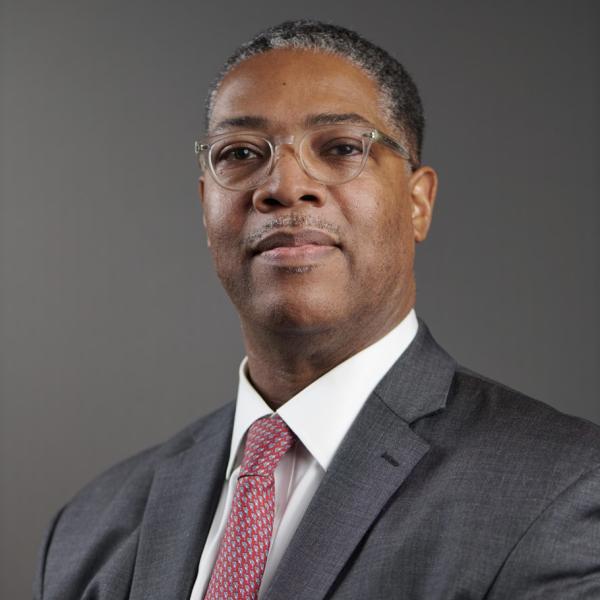
Aoifinn Devitt: I’m Aoifinn Devitt, and welcome to the 50 Faces Podcast. A podcast committed to revealing the richness and diversity of the world of investment by focusing on its people and their stories. I’m joined today by Blair Smith, who is Senior Director of the Center for Financial Markets at the Milken Institute, where he leads the center’s access to capital and strategic innovative financing initiatives to enhance economic and social impact. Prior to joining Milken, he was an adjunct professor at the Columbia Business School. He’s the former Chief Investment Officer for the Upper Manhattan Empowerment Zone Development Corporation, a CDFI, and was a founder and CEO of Promethean AB Strategies LLC, a strategic consultancy focused on helping diverse-led asset management firms achieve their goals. He’s a member of the Real Estate Executive Council and is a 2019 Council of Urban Professionals Finance Catalyst recipient. Welcome, Blair. Thanks for joining me today.
Blair Smith: Thank you for having me. It’s a pleasure.
Aoifinn Devitt: Well, let’s start where we always start, which is with your background. What did you study? Where did you grow up? And how did you come to enter the world of investing and finance?
Blair Smith: Well, I grew up in the Maryland, D.C. Area. My parents split up before I was born, so I had a very interesting childhood. My dad was a business executive who lived in Baltimore, and my mom was the secretary for the mayor of Annapolis, a man named Roger Pitt Moyer, throughout most of my early childhood. So I would spend my weekdays in Annapolis, sort of a sleepy seaside town back in the early ’70s, and then would be spending my weekends in the big city with my dad in Baltimore. So I could say that I didn’t realize it until very recently that I’d received the best of both worlds from that experience.
Aoifinn Devitt: Absolutely. And then moving from there, clearly an early taste of policy and business. How did you decide what to study and where to move to career-wise?
Blair Smith: Well, I took what some of my friends in private equity called the weavy path. It wasn’t just a linear straight line to one career point to the next. I had grown up in a family of journalists. My great-great-grandfather founded one of the first Black newspapers in this country. And I’d always been attracted to journalists. There was a journalist named Brian Gumbel, and I fancied myself— that was sort of my role model for journalism. I wanted to be like Brian Gumbel and grew up watching him on the Today Show and doing interviews. So when I got to my undergraduate choice, which was an HBCU, Morgan State in Baltimore, I decided to study journalism.
Aoifinn Devitt: I’d love to ask also what your time in journalism taught you in terms of maybe translating it into finance later? Because often we learn to write, we learn to communicate, maybe you learn to keep your sources private. Any insights from that?
Blair Smith: Oh, absolutely. I take a lot of the experience that I had working at my family’s newspaper. I did internships at some of the local TV stations, but my biggest takeaway from that experience and how that translated into being an investor is that a journalist should never be afraid of the truth. And so I think that being an investor, going through the allocation and governance process and the diligence process, a good investor is never afraid of the truth.
Aoifinn Devitt: Equally, given you started in journalism and you’ve seen it through the ages, maybe through your family, what’s your thought on how the profession has evolved now in terms of, I suppose, its existential crisis they may have gone through with print journalism changing dramatically and the advent of digital journalism?
Blair Smith: Well, I saw two crises over the last couple of decades. The first, obviously, is the business model changing with the introduction of technology and information being far more accessible more rapidly than the traditional model. People used to digest information on a fairly infrequent basis compared to now. You can open up and read the Wall Street Journal anytime you like versus having to wait for the paperboy to drop the paper on, on your front steps and, and then carving out time during the day to sit and read the newspaper, or waiting a full day until 6 o’clock or 6:30 to watch Walter Cronkite and find out what happened during the day and then waiting another 24 hours to see Walter Cronkite and hear what happened during the day. I’m 55, so I saw the introduction of the 24-hour news channel. And so the first crisis in journalism was the adjustment to technology for the business model. And then the second crisis, I feel, was the bifurcation of journalism versus punditry. And you have journalists who their main objective is to find a story, present the story as it is, here are the facts, and that’s it. And then punditry, sort of the evolution from just what was once just a one-pager in a newspaper, the op-ed, to what we have today. You have individuals, their entire show or the whole channel is devoted to being an op-ed, to punditry. And so there are elements of facts in that. There’s more often than not a higher concentration on opinion. So it’s as if the op-ed part of the newspaper has taken over the newspaper completely. Now, some people would say, well, do you think that that’s a good thing or a bad thing? I think it’s just the evolution of journalism in this country, because that’s the current state of play.
Aoifinn Devitt: It’s so interesting that inability sometimes to distinguish from fact and opinion. We might return to this when we start talking about impact investment, because sometimes impact can be an objective or a subjective thing, and it can be open to interpretation at times as well. So a really interesting conclusion there. So let’s move from journalism then, entering into finance. Impact investing had an early role in your career. Can you talk us through that?
Blair Smith: Well, sure. I came to New York under the arrogant presumption that I’d get into the business school of my choice. And I was very, very lucky in the early 2000s to have the opportunity to do that. So after spending about 15 years in various roles on Wall Street, I moved into the asset management space. Like a lot of people who were in banking, the Volcker Rule and the way that a lot of people who were managing directors on Wall Street were doing business, the environment changed. So many of them migrated to places like Greenwich and they hung up their own shingle and they got into private equity and launching their own hedge funds. So like a lot of bankers, I sort of followed the crowd away from financial services in a more traditional format to the alternative side. And I was fortunate to land a role with the New York State Common Retirement Fund as a senior investment officer overseeing a $5 billion portfolio that was both composed of a long-only bucket, as well as private equity and real estate and hedge and opportunistic strategies bucket. And many of those managers fell into the category of being women-led or diverse-led general partnerships. So I was very lucky to see the early success of some of the bigger names like José Feliciano, Frank Baker, Robert Smith, Damian Dwyane, having a ringside seat in those investment committees of moving on from their second fund to their third fund, or in some cases, their first fund to their second fund. So it gave me a very unique perspective on the ecosystem that exists and the relationship between the asset management industry as a whole and those managers that are still challenged by the allocation and governance process and the bottlenecks that exist that prevent more women and more BIPOC-led funds from getting into the industry successfully. And I know we’ll discuss this later, but one of the challenges that we’re targeting, the Milken Institute within the Center for Financial Markets, is that the asset management industry is an $87 trillion industry domestically, and only 1.4% of that is represented by people that look and sound like you and me. So the challenge is putting a pin in that percentage and how do we increase that number holistically, not with just one-offs of one firm is doing this or one trade association is doing that, but how do we aggregate the efforts so that essentially we’re trying to help all boats rise at the same time?
Aoifinn Devitt: So let’s just jump now to your work at the Milken Institute, because I do want to talk about how you define impact. And you’re doing a tremendous amount of work there in different domains, both in terms of encouraging diversity as well as focusing on impact. Can you talk us through the work you’re doing and what these different initiatives entail?
Blair Smith: After I had the opportunity to lecture in impact investing at my alma mater, Columbia Business School, I received a call from the Milken Institute to have the opportunity to join the Center for Financial Markets, which if you think about the Milken Institute, we are a nonprofit bipartisan think tank, or as our founder Michael Milken likes to say, a think and do tank. So anything that we come up with, any sort of policy or programs or reporting that we do, there needs to be a specific outcome. And I think that that’s what differentiates us from a lot of efforts that are out there. We absolutely believe in the power of convening and bringing the right people to the room, but those convenings generally result in some sort of specific outcome or at least an action step to move forward and then advance the issue forward versus just kind of sitting around in a circle and just kind of talking about the same problems over and over again. But with my role within the Center for Financial Markets, if you think of the Milken Institute as a university, The Center for Financial Markets is like our school of business. So we broadly focus on how to create a more efficient and equitable global capital and financial market structure. So when I joined the Milken Institute, we had a number of different programs that focused on the challenges for MDIs, minority deposit institutions, and CDFIs, and very successfully executed by my predecessor, a gentleman named Aaron Betru, who now is a chief strategy officer for a diverse-led firm called Trident. But Aaron had put together a research paper titled The 14 Strategies for Advancing the Success of CDFIs and Mission-Driven Organization. The Milken Institute The Center for Financial Markets weighed in on the PPP crisis a few years ago, some of the challenges small business to businesses to receive those funds, working very closely with the Treasury Department and other institutions, Vista Equity Strategies and JP Morgan. And so really able to see a specific outcome as a result of those convenings and strategy sessions. And Aaron was able to testify on Capitol Hill, and as a result, capital was allocated so that those minority deposit institutions could not just survive the combination of pandemic, PPP crisis, and the horrific tragedies around George Floyd’s murder, Breonna Taylor, and and others, this group was able to convene and you can point to specific outcomes that were the result of that convening. So fast forward to my joining the Institute, I decided to bundle the challenges of greater diversity, equity, inclusion in the asset management space with the work that we’ve been doing with mission-driven organizations. And I created the Inclusive Capitalism program. And the Inclusive Capitalism program essentially is not based on the goal of taking something away from a group of people and giving it to another group. It’s how do you help a specific group become more successful and more competitive? How do you prepare candidates, for example, that come from an HBCU experience and tee them up so that they can be competitive in top-tier institutions like Ares or Apollo or BlackRock or Carlyle. Because that would be the starting point, that would be the addressing the first pillar that the Inclusive Capitalism program is built on, which is the sourcing of more diverse talent into the industry. And then the second pillar that the Inclusive Capitalism program is built on is the allocation and governance to diverse-led and women-led partnerships. So we have specific goals and objectives, and we’re moving towards what are some innovative outcomes that we can conceive of and then use our power of convening to galvanize the industry and get those action steps executed. And we’re relying on the track record that we have from our work with mission-driven organizations to hopefully effect change in the diversity, equity, and inclusion space in asset management.
Aoifinn Devitt: That’s so interesting. I love, first of all, the idea of the think and do tank. I think I wish a lot more think tanks should be so set up. And also the fact that you integrate, because I’ve done some work with diverse founders and it’s true that there are so many integrated issues, whether it comes to the opportunity to raise capital, say from friends and family, or to get capital. And a lot of that comes from where they’ve been, the network they’ve built, the pipeline that they’ve been part of. So it’s such an interesting area. And then because these are all quite different initiatives, even though they’re all integrated, which ones have you seen to have the most early impact? And I suppose, how do you measure impact in that respect?
Blair Smith: Well, we measure impact through the feedback that we get from our stakeholders as a first step. So we have convened an executive council of 20 of the most influential organizations in the asset management space, but we wanted to be very strategic about it. We didn’t want to create a hall of mirrors. Very often when you have a convening of well-meaning groups, it’s all the same folks. They either all CEOs or they’re all human capital people, or they’re all of the same segment or group. And that’s not going to holistically affect that 1.4% number. So our executive council started with generous support from Carlyle, and then Apollo, Ares, BlackRock joined as well. But we also have nonprofit organizations like Girls Who Invest to provide us guidance around how we can be more intentional in bringing more women into the asset management space. And then we have organizations that are smaller general partnerships like EJF Capital and Brightstar. So they give us perspective from their vantage point on the change that needs to occur in the industry. And we have the president of Howard University on our executive council, uh, Dr. Wayne Frederick, to advise us and answer that annoying question. Well, I can’t seem to find more diverse talent. I’m having trouble locating it. Well, the president of one of the most successful historical Black colleges can certainly advise on where to find the best talent in that space. So again, going back to measuring impact, we have this group of thought leaders to tell us in real time, where they’re seeing specific impacts based on the work that we’re doing.
Aoifinn Devitt: Well, that’s great. And that is the most annoying response of all time. We simply can’t find the talent. I don’t know when we can finally eradicate that. Let’s go now from the Milken Institute to the industry as a whole. You’ve had a ringside seat to the development of the emerging manager universe, diverse owners, diverse fund managers from your time at the New York State Common Retirement Fund. How have you seen the industry landscape evolve in that respect? Is it where you thought it would be? And overall, in terms of diversity, despite the work you’re doing, what do you see as maybe the score you would give our industry in terms of diversity today?
Blair Smith: If I were going to give it a score, I would give it a healthy C overall because— and I like to start with the good news. So the good news, as I said earlier, is that there is a new generation of better trained, better educated, more focused, more intentional group of both women-led and BIPOC-led talent teams. You have GPs, you have a lot of examples of GPs that are women-led and diverse-led that are highly successful. You have a broad range of individuals who are women and BIPOC who have achieved outsized success. So you have all of these examples of them in a small, reasonably sized cohort, and yet on the other side of it, you have this sort of ingrained mindset that, well, it’s still going to be a challenge because of scale. It’s always going to be a challenge because you’ll never be able to get the fee structure right. Our institution, well, we’ve tried this before. We’ve tried to bring in more diverse talent. They all seem to leave in 18 months, and people are scratching their heads, and they can’t figure out why did that happen. Well, because we need to adjust our thinking and our goals and objectives. What are we doing? What exactly are we trying to accomplish? You can’t have the mindset that this is a project that I have to get off my desk. And I think that that is one of the greater challenges for leadership in our industry is like, I just want to get this off my desk. I want it to go away. But it’s not going to go away because the concept of diversity, equity, inclusion has seeped into the asset management industry. It’s stuck, it’s here to stay, it’s not going anywhere. You’re not going to get this off your desk so you can focus on other things. You have to figure out a way to blend this into your thinking, and you have to adjust your thinking so that you’re thinking about diversity, equity, inclusion less as an altruistic endeavor and more as either a potential source of alpha generation or as a way to hedge or mitigate against risk. Because when you start to think about DE&I in the language of asset management, you’re either doing one of the two things. You’re hiring a stronger cohort of talent that’s going to help you with your bottom line because they come from backgrounds where there’s diversity of thought, there’s diversity of, of idea, there’s diversity of concepts, the ability to be competitive because, hey, guess what, your peer organizations are doing this. If you’re not, it may not just be a symptom of the institution that you have being unable to accommodate diversity, but what else are you unable to accommodate? Then you’re starting to look at, well, they have difficulty accommodating technology, they have difficulty being more innovative or more nimble. You have some of the best and brightest on Wall Street saying, hey, you know what, for the last 10 years investors have had a pretty smooth ride. I don’t think I’m speaking out of pocket by saying that. Now we’re really going to find out who’s a good investor because now there’s more volatility in the market and you’ve got all of these headwinds like inflation and supply chain disruption and unpredictability around the war in Ukraine. There are a lot of variables that are being introduced that are really going to test investors in the asset management space over the next couple of years. And if you’re not prepared for that, if you’re not nimble, and by prepared, having a 21st century workforce that sees the tea leaves and can kind of read things based on their experiences so that everybody doesn’t go off a 2008 cliff, then congratulations, guess what? You’ve actually embraced diversity without even thinking about it. Now it’s just a part of your DNA.
Aoifinn Devitt: That’s such an interesting perspective.
Blair Smith: Does that all make sense?
Aoifinn Devitt: Absolutely. It’s an interesting perspective. And I think the other challenge for management, as you mentioned, in terms of wanting to get something off their desk, is this isn’t a KPI that you can sort of tick a box and say, okay, that’s done. It’s always gonna be room for improvement. It’ll always be an issue. And it needs, because people change, there’s a turnover problem, as we know, in our industry. People move on and we have to continue to retain staff and attract. So very interesting perspective. Let’s get back to your personal story now. What would you say have been some of the highs and lows of your career so far?
Blair Smith: The most recent high for me was the opportunity to be on a panel with my friend and mentor from my Citi days, Ray McGuire. He is former Vice Chair, Citi He’s recently joined KKR in an advisory capacity. And sitting next to Ray, like literally sitting next to him on stage, to me, like I could barely envision that as a young first VP many, many years ago. I won’t call this out how many years ago, but just coming from there to someone believing that I could sit on the same stage with Ray, to me, that was a milestone experience for me. I’m not even sure what it means. Just the fact that someone would put a panel together and say, we’re going to put Blair and Ray on the same stage. Like that, to me, it felt good, but it was mind-blowing in the same sense.
Aoifinn Devitt: And given you push against some sometimes lofty goals, have there been disappointments or low points in this journey?
Blair Smith: Oh, absolutely. There are managers that I’d hope to have the opportunity to allocate to during my tenure at New York Common. I’ll say that there just wasn’t enough time, my tenure there, to have the opportunity to do that. There are others. We’ve lost some firms over time, and I think that if those firms were given the same type of runway to adjust and pivot to market cycles cycles and, and other challenges that some mainstream firms get, then perhaps those firms would still be in business today. And I guess the other disappointment is that I haven’t seen enough of a change in the model. There’s still a lot of more of the same as far as the default to what we’re going to do around diversity. And I’ve been discussing in a lot of my conversations, public speaking, panels, whatever, I’ve been discussing what I call the diversity frontier. And the diversity frontier are those areas of diversity that we haven’t even touched yet. Not the same stuff, not let’s have a holiday or a celebration or let’s focus on culture. I mean, like, real change, like capital allocation. Like, how do we get more capital to the people that deserve it? How do we take people who are supremely talented and double down on those folks to ensure their success? To me, that’s the diversity frontier. That’s the part of diversity that we haven’t even scratched the surface on that we need to pursue.
Aoifinn Devitt: And when you look at your own journey, have there been any key people in there? You mentioned appearing on the stage with some of these role models. But have there been anyone maybe who have influenced you in particular ways, set you on a certain path?
Blair Smith: It’s a long list. I think that if I could say one thing, I have been really, really blessed, particularly at certain stages of my career that have been more challenged than just like, okay, almost like waking up in a philosophy seminar. Like, why am I here? What am I doing? But I was fortunate to have folks like Dale Favors, who runs Adapt and Growth Strategies. I was fortunate to have folks like Robert Smith to be able to reach out to, Ray McGuire. I know I’m going to leave somebody out. Michael Milken. And I think just the accessibility to those individuals, my predecessor, Aaron Betru, And if I were going to coach anyone who wants to do coaching, we all have a lot of finite time. And I try to remember this when I’m being a coach or a mentor is being generous with that time can be transformative to someone’s career. If those individuals that I named and others— I apologize if I’ve left you out— but if those individuals were not as generous with their time and did not offer me the type of mentorship or sponsorship or coaching that I needed at a key point in my career, I don’t know if we’d be having this conversation.
Aoifinn Devitt: Well, I always like to add the caveat at the beginning of that question, which I forgot to do this time, that this is not an exhaustive list. So thank you for noting that. Let’s get to words of wisdom or any creed or motto that you live by. Having this kind of mission driving you through your life, I’m sure you need to refer to some touchstone. Or core belief?
Blair Smith: Yeah, you know what, I think that the 2 or 3 things that I think through is not to judge. I was coaching a young person who was entering the asset management space, and he had some highly judgmental rhetoric about some of the folks who were in the space already. And I said, listen, you don’t know the whole story of walking in their shoes and what it takes to get into that space. You don’t have the complete picture as to what they may have done to help folks who are in underserved communities, and you don’t have the complete picture. So when you don’t have the complete picture— and that goes for anyone— try not to judge, because you may find that once you get the complete picture— and I’ve had this experience a number of times— it’s like, oh, well, I didn’t know that he or she were doing that, or I didn’t know this organization’s— and it’s like, yeah, you’re kind of judging without having the total picture.
Aoifinn Devitt: And my last question is, what advice would you have for your younger self, for that young boy shuttling between Annapolis and the big city? Is there anything you know now that you would like that young boy to have known?
Blair Smith: Yeah, I probably would have bought Bitcoin at $5 a share. No, I’m kidding. The advice to my younger self would be to make the best use of time. I think we get into spaces or points in our career where we’re not making the best use of our time or taking advantage of time. Time is a human construct, so you do have the ability to control it and manage it. Make the best use of your time, whatever it is, even in recreation. And then also focus on good judgment. Make sure that in the things that you do, examine the task that’s being presented to you and add judgment to a part of your thinking process when getting things done.
Aoifinn Devitt: Well, that’s a wonderful place to end this. Thank you, Blair, for the work you’re doing and for what you’re doing to help us define the concept of inclusive capital, because you are bringing the heavy hitters that you have brought to the table. I know this will be much more than thinking, it will be thinking and doing, and our industry needs that at this level. And thank you for sharing your insights here with us.
Blair Smith: Well, I just wanted to say thank you, Ethan, for the opportunity to participate on this podcast today and being able to share my journey. There’s a lot of work that needs to be done in the asset management industry, and it will take more than conversation and convening. It’s going to take specific action, but we’ll do everything that we can to make that happen. But it’s been a privilege to speak with you today.
Aoifinn Devitt: Well, it’s our privilege too. I’m Aoifinn Devitt. Thank you for listening to the 50 Faces Podcast. If you liked what you heard and would like to tune in to hear more inspiring investors on their personal journeys, please subscribe on Apple Podcasts or wherever you get your podcasts. This podcast is for informational purposes only and should not be construed as investment advice. And all views are personal and should not be attributed to the organizations and affiliations of the host or any guest.
Blair Smith: But the way that we at the Milken Institute define inclusive capitalism is, first, that it creates long-term value that benefits all stakeholders. So not just businesses and investors, but also employees, customers, governments, and communities. The second aspect of inclusive capitalism is that it produces equitable, measurable, and sustainable growth that empowers others while addressing many of society’s needs. And then finally, that inclusive capitalism enables stakeholders to participate in the capital markets structure to support both the end beneficiary as well as keeping an eye on the bottom line.
Aoifinn Devitt: I’m Aoifinn Devitt, and welcome to the 50 Faces Podcast. A podcast committed to revealing the richness and diversity of the world of investment by focusing on its people and their stories. I’m joined today by Blair Smith, who is Senior Director of the Center for Financial Markets at the Milken Institute, where he leads the center’s access to capital and strategic innovative financing initiatives to enhance economic and social impact. Prior to joining Milken, he was an adjunct professor at the Columbia Business School. He’s the former Chief Investment Officer for the Upper Manhattan Empowerment Zone Development Corporation, a CDFI, and was a founder and CEO of Promethean AB Strategies LLC, a strategic consultancy focused on helping diverse-led asset management firms achieve their goals. He’s a member of the Real Estate Executive Council and is a 2019 Council of Urban Professionals Finance Catalyst recipient. Welcome, Blair. Thanks for joining me today.
Blair Smith: Thank you for having me. It’s a pleasure.
Aoifinn Devitt: Well, let’s start where we always start, which is with your background. What did you study? Where did you grow up? And how did you come to enter the world of investing and finance?
Blair Smith: Well, I grew up in the Maryland, D.C. Area. My parents split up before I was born, so I had a very interesting childhood. My dad was a business executive who lived in Baltimore, and my mom was the secretary for the mayor of Annapolis, a man named Roger Pitt Moyer, throughout most of my early childhood. So I would spend my weekdays in Annapolis, sort of a sleepy seaside town back in the early ’70s, and then would be spending my weekends in the big city with my dad in Baltimore. So I could say that I didn’t realize it until very recently that I’d received the best of both worlds from that experience.
Aoifinn Devitt: Absolutely. And then moving from there, clearly an early taste of policy and business. How did you decide what to study and where to move to career-wise?
Blair Smith: Well, I took what some of my friends in private equity called the weavy path. It wasn’t just a linear straight line to one career point to the next. I had grown up in a family of journalists. My great-great-grandfather founded one of the first Black newspapers in this country. And I’d always been attracted to journalists. There was a journalist named Brian Gumbel, and I fancied myself— that was sort of my role model for journalism. I wanted to be like Brian Gumbel and grew up watching him on the Today Show and doing interviews. So when I got to my undergraduate choice, which was an HBCU, Morgan State in Baltimore, I decided to study journalism.
Aoifinn Devitt: I’d love to ask also what your time in journalism taught you in terms of maybe translating it into finance later? Because often we learn to write, we learn to communicate, maybe you learn to keep your sources private. Any insights from that?
Blair Smith: Oh, absolutely. I take a lot of the experience that I had working at my family’s newspaper. I did internships at some of the local TV stations, but my biggest takeaway from that experience and how that translated into being an investor is that a journalist should never be afraid of the truth. And so I think that being an investor, going through the allocation and governance process and the diligence process, a good investor is never afraid of the truth.
Aoifinn Devitt: Equally, given you started in journalism and you’ve seen it through the ages, maybe through your family, what’s your thought on how the profession has evolved now in terms of, I suppose, its existential crisis they may have gone through with print journalism changing dramatically and the advent of digital journalism?
Blair Smith: Well, I saw two crises over the last couple of decades. The first, obviously, is the business model changing with the introduction of technology and information being far more accessible more rapidly than the traditional model. People used to digest information on a fairly infrequent basis compared to now. You can open up and read the Wall Street Journal anytime you like versus having to wait for the paperboy to drop the paper on, on your front steps and, and then carving out time during the day to sit and read the newspaper, or waiting a full day until 6 o’clock or 6:30 to watch Walter Cronkite and find out what happened during the day and then waiting another 24 hours to see Walter Cronkite and hear what happened during the day. I’m 55, so I saw the introduction of the 24-hour news channel. And so the first crisis in journalism was the adjustment to technology for the business model. And then the second crisis, I feel, was the bifurcation of journalism versus punditry. And you have journalists who their main objective is to find a story, present the story as it is, here are the facts, and that’s it. And then punditry, sort of the evolution from just what was once just a one-pager in a newspaper, the op-ed, to what we have today. You have individuals, their entire show or the whole channel is devoted to being an op-ed, to punditry. And so there are elements of facts in that. There’s more often than not a higher concentration on opinion. So it’s as if the op-ed part of the newspaper has taken over the newspaper completely. Now, some people would say, well, do you think that that’s a good thing or a bad thing? I think it’s just the evolution of journalism in this country, because that’s the current state of play.
Aoifinn Devitt: It’s so interesting that inability sometimes to distinguish from fact and opinion. We might return to this when we start talking about impact investment, because sometimes impact can be an objective or a subjective thing, and it can be open to interpretation at times as well. So a really interesting conclusion there. So let’s move from journalism then, entering into finance. Impact investing had an early role in your career. Can you talk us through that?
Blair Smith: Well, sure. I came to New York under the arrogant presumption that I’d get into the business school of my choice. And I was very, very lucky in the early 2000s to have the opportunity to do that. So after spending about 15 years in various roles on Wall Street, I moved into the asset management space. Like a lot of people who were in banking, the Volcker Rule and the way that a lot of people who were managing directors on Wall Street were doing business, the environment changed. So many of them migrated to places like Greenwich and they hung up their own shingle and they got into private equity and launching their own hedge funds. So like a lot of bankers, I sort of followed the crowd away from financial services in a more traditional format to the alternative side. And I was fortunate to land a role with the New York State Common Retirement Fund as a senior investment officer overseeing a $5 billion portfolio that was both composed of a long-only bucket, as well as private equity and real estate and hedge and opportunistic strategies bucket. And many of those managers fell into the category of being women-led or diverse-led general partnerships. So I was very lucky to see the early success of some of the bigger names like José Feliciano, Frank Baker, Robert Smith, Damian Dwyane, having a ringside seat in those investment committees of moving on from their second fund to their third fund, or in some cases, their first fund to their second fund. So it gave me a very unique perspective on the ecosystem that exists and the relationship between the asset management industry as a whole and those managers that are still challenged by the allocation and governance process and the bottlenecks that exist that prevent more women and more BIPOC-led funds from getting into the industry successfully. And I know we’ll discuss this later, but one of the challenges that we’re targeting, the Milken Institute within the Center for Financial Markets, is that the asset management industry is an $87 trillion industry domestically, and only 1.4% of that is represented by people that look and sound like you and me. So the challenge is putting a pin in that percentage and how do we increase that number holistically, not with just one-offs of one firm is doing this or one trade association is doing that, but how do we aggregate the efforts so that essentially we’re trying to help all boats rise at the same time?
Aoifinn Devitt: So let’s just jump now to your work at the Milken Institute, because I do want to talk about how you define impact. And you’re doing a tremendous amount of work there in different domains, both in terms of encouraging diversity as well as focusing on impact. Can you talk us through the work you’re doing and what these different initiatives entail?
Blair Smith: After I had the opportunity to lecture in impact investing at my alma mater, Columbia Business School, I received a call from the Milken Institute to have the opportunity to join the Center for Financial Markets, which if you think about the Milken Institute, we are a nonprofit bipartisan think tank, or as our founder Michael Milken likes to say, a think and do tank. So anything that we come up with, any sort of policy or programs or reporting that we do, there needs to be a specific outcome. And I think that that’s what differentiates us from a lot of efforts that are out there. We absolutely believe in the power of convening and bringing the right people to the room, but those convenings generally result in some sort of specific outcome or at least an action step to move forward and then advance the issue forward versus just kind of sitting around in a circle and just kind of talking about the same problems over and over again. But with my role within the Center for Financial Markets, if you think of the Milken Institute as a university, The Center for Financial Markets is like our school of business. So we broadly focus on how to create a more efficient and equitable global capital and financial market structure. So when I joined the Milken Institute, we had a number of different programs that focused on the challenges for MDIs, minority deposit institutions, and CDFIs, and very successfully executed by my predecessor, a gentleman named Aaron Betru, who now is a chief strategy officer for a diverse-led firm called Trident. But Aaron had put together a research paper titled The 14 Strategies for Advancing the Success of CDFIs and Mission-Driven Organization. The Milken Institute The Center for Financial Markets weighed in on the PPP crisis a few years ago, some of the challenges small business to businesses to receive those funds, working very closely with the Treasury Department and other institutions, Vista Equity Strategies and JP Morgan. And so really able to see a specific outcome as a result of those convenings and strategy sessions. And Aaron was able to testify on Capitol Hill, and as a result, capital was allocated so that those minority deposit institutions could not just survive the combination of pandemic, PPP crisis, and the horrific tragedies around George Floyd’s murder, Breonna Taylor, and and others, this group was able to convene and you can point to specific outcomes that were the result of that convening. So fast forward to my joining the Institute, I decided to bundle the challenges of greater diversity, equity, inclusion in the asset management space with the work that we’ve been doing with mission-driven organizations. And I created the Inclusive Capitalism program. And the Inclusive Capitalism program essentially is not based on the goal of taking something away from a group of people and giving it to another group. It’s how do you help a specific group become more successful and more competitive? How do you prepare candidates, for example, that come from an HBCU experience and tee them up so that they can be competitive in top-tier institutions like Ares or Apollo or BlackRock or Carlyle. Because that would be the starting point, that would be the addressing the first pillar that the Inclusive Capitalism program is built on, which is the sourcing of more diverse talent into the industry. And then the second pillar that the Inclusive Capitalism program is built on is the allocation and governance to diverse-led and women-led partnerships. So we have specific goals and objectives, and we’re moving towards what are some innovative outcomes that we can conceive of and then use our power of convening to galvanize the industry and get those action steps executed. And we’re relying on the track record that we have from our work with mission-driven organizations to hopefully effect change in the diversity, equity, and inclusion space in asset management.
Aoifinn Devitt: That’s so interesting. I love, first of all, the idea of the think and do tank. I think I wish a lot more think tanks should be so set up. And also the fact that you integrate, because I’ve done some work with diverse founders and it’s true that there are so many integrated issues, whether it comes to the opportunity to raise capital, say from friends and family, or to get capital. And a lot of that comes from where they’ve been, the network they’ve built, the pipeline that they’ve been part of. So it’s such an interesting area. And then because these are all quite different initiatives, even though they’re all integrated, which ones have you seen to have the most early impact? And I suppose, how do you measure impact in that respect?
Blair Smith: Well, we measure impact through the feedback that we get from our stakeholders as a first step. So we have convened an executive council of 20 of the most influential organizations in the asset management space, but we wanted to be very strategic about it. We didn’t want to create a hall of mirrors. Very often when you have a convening of well-meaning groups, it’s all the same folks. They either all CEOs or they’re all human capital people, or they’re all of the same segment or group. And that’s not going to holistically affect that 1.4% number. So our executive council started with generous support from Carlyle, and then Apollo, Ares, BlackRock joined as well. But we also have nonprofit organizations like Girls Who Invest to provide us guidance around how we can be more intentional in bringing more women into the asset management space. And then we have organizations that are smaller general partnerships like EJF Capital and Brightstar. So they give us perspective from their vantage point on the change that needs to occur in the industry. And we have the president of Howard University on our executive council, uh, Dr. Wayne Frederick, to advise us and answer that annoying question. Well, I can’t seem to find more diverse talent. I’m having trouble locating it. Well, the president of one of the most successful historical Black colleges can certainly advise on where to find the best talent in that space. So again, going back to measuring impact, we have this group of thought leaders to tell us in real time, where they’re seeing specific impacts based on the work that we’re doing.
Aoifinn Devitt: Well, that’s great. And that is the most annoying response of all time. We simply can’t find the talent. I don’t know when we can finally eradicate that. Let’s go now from the Milken Institute to the industry as a whole. You’ve had a ringside seat to the development of the emerging manager universe, diverse owners, diverse fund managers from your time at the New York State Common Retirement Fund. How have you seen the industry landscape evolve in that respect? Is it where you thought it would be? And overall, in terms of diversity, despite the work you’re doing, what do you see as maybe the score you would give our industry in terms of diversity today?
Blair Smith: If I were going to give it a score, I would give it a healthy C overall because— and I like to start with the good news. So the good news, as I said earlier, is that there is a new generation of better trained, better educated, more focused, more intentional group of both women-led and BIPOC-led talent teams. You have GPs, you have a lot of examples of GPs that are women-led and diverse-led that are highly successful. You have a broad range of individuals who are women and BIPOC who have achieved outsized success. So you have all of these examples of them in a small, reasonably sized cohort, and yet on the other side of it, you have this sort of ingrained mindset that, well, it’s still going to be a challenge because of scale. It’s always going to be a challenge because you’ll never be able to get the fee structure right. Our institution, well, we’ve tried this before. We’ve tried to bring in more diverse talent. They all seem to leave in 18 months, and people are scratching their heads, and they can’t figure out why did that happen. Well, because we need to adjust our thinking and our goals and objectives. What are we doing? What exactly are we trying to accomplish? You can’t have the mindset that this is a project that I have to get off my desk. And I think that that is one of the greater challenges for leadership in our industry is like, I just want to get this off my desk. I want it to go away. But it’s not going to go away because the concept of diversity, equity, inclusion has seeped into the asset management industry. It’s stuck, it’s here to stay, it’s not going anywhere. You’re not going to get this off your desk so you can focus on other things. You have to figure out a way to blend this into your thinking, and you have to adjust your thinking so that you’re thinking about diversity, equity, inclusion less as an altruistic endeavor and more as either a potential source of alpha generation or as a way to hedge or mitigate against risk. Because when you start to think about DE&I in the language of asset management, you’re either doing one of the two things. You’re hiring a stronger cohort of talent that’s going to help you with your bottom line because they come from backgrounds where there’s diversity of thought, there’s diversity of, of idea, there’s diversity of concepts, the ability to be competitive because, hey, guess what, your peer organizations are doing this. If you’re not, it may not just be a symptom of the institution that you have being unable to accommodate diversity, but what else are you unable to accommodate? Then you’re starting to look at, well, they have difficulty accommodating technology, they have difficulty being more innovative or more nimble. You have some of the best and brightest on Wall Street saying, hey, you know what, for the last 10 years investors have had a pretty smooth ride. I don’t think I’m speaking out of pocket by saying that. Now we’re really going to find out who’s a good investor because now there’s more volatility in the market and you’ve got all of these headwinds like inflation and supply chain disruption and unpredictability around the war in Ukraine. There are a lot of variables that are being introduced that are really going to test investors in the asset management space over the next couple of years. And if you’re not prepared for that, if you’re not nimble, and by prepared, having a 21st century workforce that sees the tea leaves and can kind of read things based on their experiences so that everybody doesn’t go off a 2008 cliff, then congratulations, guess what? You’ve actually embraced diversity without even thinking about it. Now it’s just a part of your DNA.
Aoifinn Devitt: That’s such an interesting perspective.
Blair Smith: Does that all make sense?
Aoifinn Devitt: Absolutely. It’s an interesting perspective. And I think the other challenge for management, as you mentioned, in terms of wanting to get something off their desk, is this isn’t a KPI that you can sort of tick a box and say, okay, that’s done. It’s always gonna be room for improvement. It’ll always be an issue. And it needs, because people change, there’s a turnover problem, as we know, in our industry. People move on and we have to continue to retain staff and attract. So very interesting perspective. Let’s get back to your personal story now. What would you say have been some of the highs and lows of your career so far?
Blair Smith: The most recent high for me was the opportunity to be on a panel with my friend and mentor from my Citi days, Ray McGuire. He is former Vice Chair, Citi He’s recently joined KKR in an advisory capacity. And sitting next to Ray, like literally sitting next to him on stage, to me, like I could barely envision that as a young first VP many, many years ago. I won’t call this out how many years ago, but just coming from there to someone believing that I could sit on the same stage with Ray, to me, that was a milestone experience for me. I’m not even sure what it means. Just the fact that someone would put a panel together and say, we’re going to put Blair and Ray on the same stage. Like that, to me, it felt good, but it was mind-blowing in the same sense.
Aoifinn Devitt: And given you push against some sometimes lofty goals, have there been disappointments or low points in this journey?
Blair Smith: Oh, absolutely. There are managers that I’d hope to have the opportunity to allocate to during my tenure at New York Common. I’ll say that there just wasn’t enough time, my tenure there, to have the opportunity to do that. There are others. We’ve lost some firms over time, and I think that if those firms were given the same type of runway to adjust and pivot to market cycles cycles and, and other challenges that some mainstream firms get, then perhaps those firms would still be in business today. And I guess the other disappointment is that I haven’t seen enough of a change in the model. There’s still a lot of more of the same as far as the default to what we’re going to do around diversity. And I’ve been discussing in a lot of my conversations, public speaking, panels, whatever, I’ve been discussing what I call the diversity frontier. And the diversity frontier are those areas of diversity that we haven’t even touched yet. Not the same stuff, not let’s have a holiday or a celebration or let’s focus on culture. I mean, like, real change, like capital allocation. Like, how do we get more capital to the people that deserve it? How do we take people who are supremely talented and double down on those folks to ensure their success? To me, that’s the diversity frontier. That’s the part of diversity that we haven’t even scratched the surface on that we need to pursue.
Aoifinn Devitt: And when you look at your own journey, have there been any key people in there? You mentioned appearing on the stage with some of these role models. But have there been anyone maybe who have influenced you in particular ways, set you on a certain path?
Blair Smith: It’s a long list. I think that if I could say one thing, I have been really, really blessed, particularly at certain stages of my career that have been more challenged than just like, okay, almost like waking up in a philosophy seminar. Like, why am I here? What am I doing? But I was fortunate to have folks like Dale Favors, who runs Adapt and Growth Strategies. I was fortunate to have folks like Robert Smith to be able to reach out to, Ray McGuire. I know I’m going to leave somebody out. Michael Milken. And I think just the accessibility to those individuals, my predecessor, Aaron Betru, And if I were going to coach anyone who wants to do coaching, we all have a lot of finite time. And I try to remember this when I’m being a coach or a mentor is being generous with that time can be transformative to someone’s career. If those individuals that I named and others— I apologize if I’ve left you out— but if those individuals were not as generous with their time and did not offer me the type of mentorship or sponsorship or coaching that I needed at a key point in my career, I don’t know if we’d be having this conversation.
Aoifinn Devitt: Well, I always like to add the caveat at the beginning of that question, which I forgot to do this time, that this is not an exhaustive list. So thank you for noting that. Let’s get to words of wisdom or any creed or motto that you live by. Having this kind of mission driving you through your life, I’m sure you need to refer to some touchstone. Or core belief?
Blair Smith: Yeah, you know what, I think that the 2 or 3 things that I think through is not to judge. I was coaching a young person who was entering the asset management space, and he had some highly judgmental rhetoric about some of the folks who were in the space already. And I said, listen, you don’t know the whole story of walking in their shoes and what it takes to get into that space. You don’t have the complete picture as to what they may have done to help folks who are in underserved communities, and you don’t have the complete picture. So when you don’t have the complete picture— and that goes for anyone— try not to judge, because you may find that once you get the complete picture— and I’ve had this experience a number of times— it’s like, oh, well, I didn’t know that he or she were doing that, or I didn’t know this organization’s— and it’s like, yeah, you’re kind of judging without having the total picture.
Aoifinn Devitt: And my last question is, what advice would you have for your younger self, for that young boy shuttling between Annapolis and the big city? Is there anything you know now that you would like that young boy to have known?
Blair Smith: Yeah, I probably would have bought Bitcoin at $5 a share. No, I’m kidding. The advice to my younger self would be to make the best use of time. I think we get into spaces or points in our career where we’re not making the best use of our time or taking advantage of time. Time is a human construct, so you do have the ability to control it and manage it. Make the best use of your time, whatever it is, even in recreation. And then also focus on good judgment. Make sure that in the things that you do, examine the task that’s being presented to you and add judgment to a part of your thinking process when getting things done.
Aoifinn Devitt: Well, that’s a wonderful place to end this. Thank you, Blair, for the work you’re doing and for what you’re doing to help us define the concept of inclusive capital, because you are bringing the heavy hitters that you have brought to the table. I know this will be much more than thinking, it will be thinking and doing, and our industry needs that at this level. And thank you for sharing your insights here with us.
Blair Smith: Well, I just wanted to say thank you, Ethan, for the opportunity to participate on this podcast today and being able to share my journey. There’s a lot of work that needs to be done in the asset management industry, and it will take more than conversation and convening. It’s going to take specific action, but we’ll do everything that we can to make that happen. But it’s been a privilege to speak with you today.
Aoifinn Devitt: Well, it’s our privilege too. I’m Aoifinn Devitt. Thank you for listening to the 50 Faces Podcast. If you liked what you heard and would like to tune in to hear more inspiring investors on their personal journeys, please subscribe on Apple Podcasts or wherever you get your podcasts. This podcast is for informational purposes only and should not be construed as investment advice. And all views are personal and should not be attributed to the organizations and affiliations of the host or any guest.