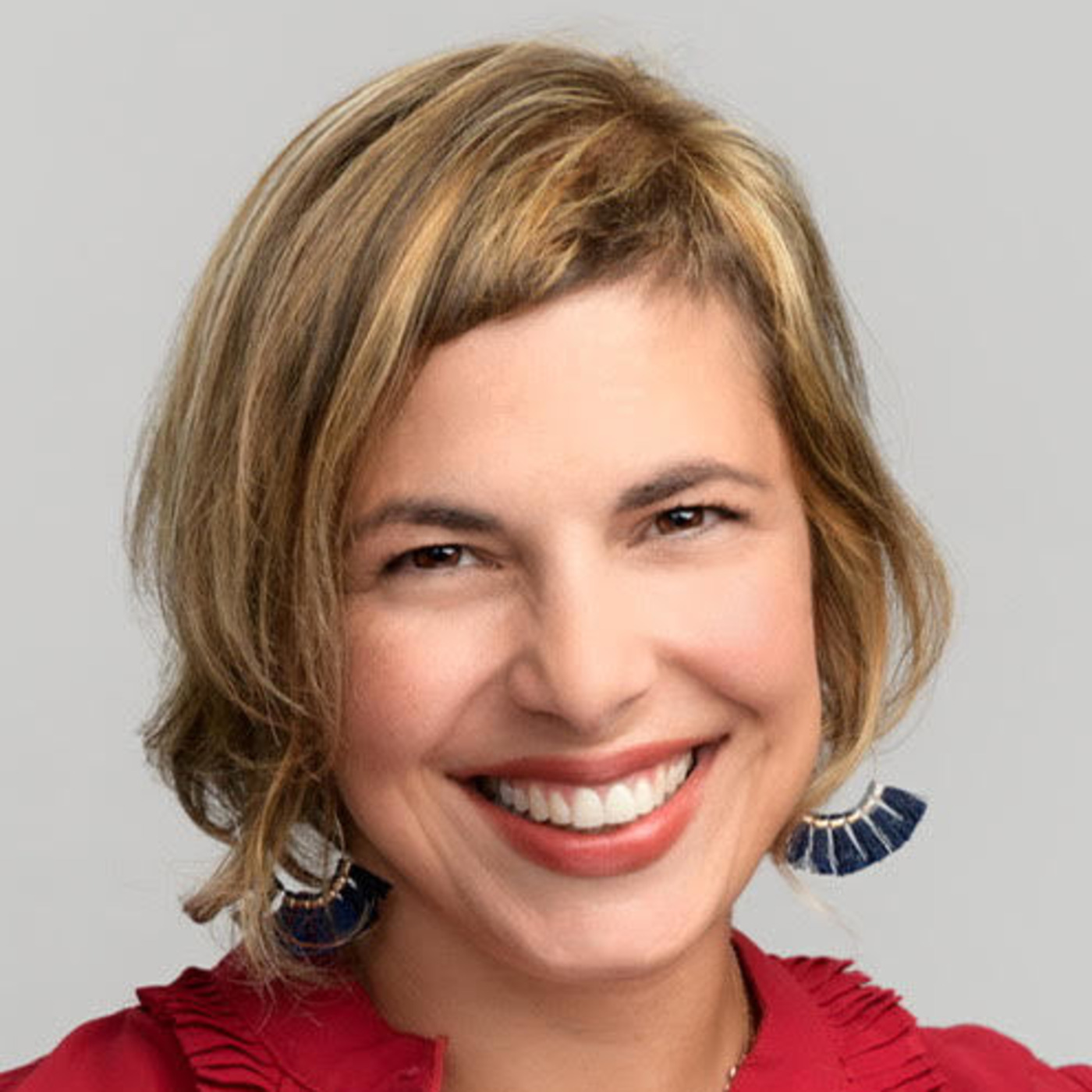
Maeve Mc: Sometimes throwing yourself out there to the unknown and starting fresh and really letting yourself rest for a second and not be in that race and chase of the next thing really calms you down and allows you to center again to what is important for you.
Efrat Fenigson: I’m Maeve McCullen and welcome to this 50 Faces Focus Series, which showcases inspiring Israeli women in tech and beyond. I’m joined today by Efrat Fenigson. Efrat was featured as one of Start Israel’s 2021 most promising marketing leaders who is focused on social impact. Efrat is currently the CMO at Mindspace and is a co-founder of the GCMO Forum. She’s also, among other things, a feminist activist and videocast host. Welcome, Efrat. Thanks so much for joining me today.
Maeve Mc: Thanks for being with me.
Efrat Fenigson: Okay. So you started out as a programmer in Australia. What inspired you to shift to marketing?
Maeve Mc: Yeah. So when I was 23, I started working as a programmer after I graduated from computer science studies in a university in Melbourne. And I worked as a programmer for a couple of years and it was quite clear to me while I was doing that, that that’s not where my passion is. I didn’t know where it was. I just knew that it’s not in writing code. For computer programs. Although the people around me were great and the company was great, it just felt like it’s not for me. And I did have passion for representing Israel around the world. I lived in Australia at the time. I am Israeli. And I knew that I want to somehow represent Israel around the world, but it was just so far-fetched from what I was doing at the time. And I had no idea how I’m going to do that shift and how I’m going to get to another function and find what I want to do. So I kind of just jumped into the cold water, deciding that I’m just going to quit being a programmer, facing my parents who were like very upset that, you know, I invested all this time and they invested all this money. And now I’m like throwing away this education and this profession of being a computer programmer. Without really knowing what I’m going to be when I grow up. Right. But I did know for some reason, like I had this internal knowingness that I need to do something related to business. That’s where I started. It was quite broad. So I decided to open my own business and I opened two shops, business in Melbourne, in Australia for jewelry and accessories. And I had two shops and I started also an online shop. It was back in 2005, quite early on. Yeah. On eBay, I had a shop. And I thought it’s just going to be this small local thing, you know, in Australia. So I could sell online and I could sell in my shops. And I started designing jewelry as well, which I really loved apparently. And before I knew it, the online became really big and I started sending my goods overseas as well. A couple of years down the track, the business was pretty good, but I decided I’m going back to Israel. So I sold that business. And I continued with the online parts. I sold, like, I closed the shops and I sold the business and I went back to Israel after 6 years of being in Australia. And it was quite hard to hold on to a business in Israel. Israel is not easy for small businesses. If you’re not a tech company, like just any kind of small business, there’s a lot of taxes, there’s export-import duties. There’s, there’s a lot of stuff. So it was quite difficult, unlike in Australia. So I decided to put that aside as well. But while I was doing that for those 2 years, I learned so much about business. I learned about procurement. I learned about finance. I learned about hiring employees. I learned about marketing and sales and design, which I liked, like everything there was to know in how you run a business and how you take care of a business unit with expenses, with income, et cetera. And I kind of connected to the sales and marketing world. So I knew that that’s like my next phase of the journey. When I came to Israel, I got this job, the first job back in Israel in the Israeli Export Institute, which is an organization that helps Israeli companies and Israeli startups to do business overseas. So the Israeli Export Institute, which is aimed to help Israeli industry do business overseas, I was, I got this amazing job of being the business development manager for the high-tech industry. So I started creating my connections within the tech industry in Israel and then taking delegations overseas to represent Israel overseas, which is like exactly what I wanted to do when I was in Australia. And I didn’t know how to do it.
Efrat Fenigson: That’s amazing.
Maeve Mc: And it kind of fell into its place. So I kind of having that knowing that that’s where I want to go led me to that place. I guess it wasn’t all planned. It just happened. And it was really cool. And then I was there for 3 years and I worked with a lot of tech startups and tech companies and took delegations overseas, did big exhibitions overseas, brought delegations into Israel and created connections between business communities overseas with Israel. And then I moved on to other startups and other tech startups. But I think that that period of being a computer programmer, doing something that.
Efrat Fenigson: I was pretty good at, I wasn’t.
Maeve Mc: Bad at it, but I had no passion for it, kind of kickstarted that journey for me of knowing that if I’m doing something that I’m not satisfied with, that I don’t feel like that’s like the accurate thing for me, or that’s the right thing for me, then I shouldn’t stay there. I should just move on to the next thing and it will fall into place. And obviously when I was 25 doing that for the first time, it was very scary. It was like, I had no guarantee that what I’m doing is going to work. I didn’t know.
Efrat Fenigson: No, obviously. Yeah.
Maeve Mc: But it just let, just like trusting myself and taking that risk every time and, you know, leaping from one thing to the next, just knowing that what I was doing is not right. I should try something else. Finally, it like worked out. And then while I was in the Israel Export Institute and doing what I was doing there, I discovered my real passion for marketing because I was doing a little bit of everything, like biz dev, sales, marketing. And when I was doing marketing, I felt at home. I felt like that’s my sweet spot. That’s what I’m good at. And that’s what I should continue doing. So I was there for 3 years and then I continued my journey in marketing. Other companies.
Efrat Fenigson: So when you say that that was the sweet spot, what was it about marketing that really clicked for you?
Maeve Mc: I felt that the skill I had to connect people around a mission, a value proposition, a vision, to activate them and call them into action, while I know how to articulate The value for them, the value for me, that’s a skill that is resonating with me and that is working for other people. When I do it, when I exercised it, it worked every time. I could enroll people in like, you know, a huge delegation to Canada with 20, 25 Israeli companies for telecommunications. I could bring 35 tech startups to Berlin for a delegation with publishers here. I could, and like big things. I could really speak to people and explain to them what’s in it for them. What’s in it for us? Why is it good? Why they should trust me, follow me and take my word for it and do what what I, I suggest for them to do. And that, that feeling or that knowingness that I can make a difference for someone else by first of all, having a set of values and a set of, um, even a value proposition for someone else and giving it to them, providing it to them, articulating it to them so that they can then benefit from it is something that a good marketeer is doing all the time. That’s what marketeers do. They find the value. They create a story around it. They deliver that story, that message to the right target audience. And they activate that audience into action. Now, many marketeers use it, I would say for bad things, like, you know, to coerce people, to make them do stuff they may not want to do to like in certain industries, you see, marketing being used sometimes on a negative perspective. Yeah. Advertising is like brainwashing people’s minds, et cetera. You can, you can really use it for the wrong, but when I discovered that I can use this for good, for something that could really make a good difference or a positive difference in the world for companies, for people, whatever I said, this is, this is powerful. Like marketing is very powerful. And I want to be doing that. And I want to make sure that I do that for a positive purpose.
Efrat Fenigson: And actually, so that made me think about the Start Israel’s— you were featured in that article because it talked about social impact. Right. And so is that kind of also what you’re thinking about?
Maeve Mc: In a way, because I feel that, you know, being an activist is something I’ve been doing for years in different spaces. Sometimes it’s with female professionals. With gender equality. Sometimes it’s with either minorities— like in Israel, we have plenty of that— fighting for other minorities. Sometimes it’s political. Like, I take my activism where I feel it’s needed and where I can make a difference. And I think that my expertise in finding values, telling stories, driving people into action is really helping me in my activist work. Now, I wouldn’t be so comfortable doing what I’m doing on the social side if I didn’t have my marketing skills. I think if I would be like shy and, you know, not speaking up and not trusting that my values are important, I would probably not be an activist today. And I think that my marketing background and my expertise and my global expertise as well really helped me carry out a lot of social impactful activities.
Efrat Fenigson: Have you ever done a campaign or been involved in anything where you actually felt conflicted and had to pull out of a campaign you were doing as a marketeer, or have you always sort of been very clear from the get-go what you wanted to do? Like when you were starting out, did you ever find yourself in jobs or doing things where you thought, oh wait, this is actually the opposite of what I wanted to do?
Maeve Mc: You know what, where I was facing this, it wasn’t before specific campaigns. It was before specific jobs. When I was in between positions and I could choose the next place I’d go to work for, or the next company I’d work with, I would face that— those moral questions of, do I want to be part of a company that, for example, like a cyber company that does surveillance? On people’s mobile phones, for example, because you have many of them in Israel. Do I want to be part of an online gambling company? Those were the questions. And then morally, I would have to— because I knew as a marketeer what I’m going to do when I get to that company.
Efrat Fenigson: Yeah.
Maeve Mc: I’m going to drive people to do more of that.
Efrat Fenigson: Yeah.
Maeve Mc: Do I want to give my power and my voice and my expertise to that kind of cause, to that kind of industry? And that’s where I would I would have my very clear checklist of which industries and which type of companies I don’t want to work for. I didn’t necessarily know which ones I do want to work for, but I knew which I didn’t. And then I’d have to say a lot of nos to a lot of opportunities that came my way and choose the ones that I did think that were doing something good.
Efrat Fenigson: That’s super interesting. I feel like there’s there’s a, a theme consistently here, which is that you sort of have a sense of where you want to go. You have a lot of clarity, which I think is very hard to have. A lot of people find it hard to have, and that helps guide you.
Maeve Mc: Yes. And you know what? The clarity is not necessarily knowing what you want, but it may be knowing what you don’t agree to or what you— what doesn’t align with your values, what doesn’t work for you. Because I must say, I don’t always know what I want. I don’t always know what my purpose is, but I do know like my red lines, what I’m not willing to cross. And when I follow that, it kind of leads me to the right place eventually.
Efrat Fenigson: Yeah.
Maeve Mc: Because I know many people are finding it very, very hard to know what to do or what to choose or what they want to be when they grow up or what, what is their purpose. A lot of people are asking themselves, why am I here? What am I supposed to do in this world? Like, what’s my role? What’s my function? And it’s very hard to answer that question. And I think the more we try to answer it, the more we don’t know. So my kind of motto is to try not to fight to answer it, but just to follow our values and our morals in what not to do and where not to go and just trust ourselves that we will go to the right place for us. And it kind of takes us there. At least it takes me to the right places.
Efrat Fenigson: Now, have you ever found that you, that hasn’t worked? Has there ever been a point where you’ve kind of questioned that or if it’s always, you know, has it always kind of functioned?
Maeve Mc: Obviously it didn’t always work. No. I found that for various reasons, I found that when I worked for a specific startup, that was very male, dominant. And I was, I was a member of the management of the company. I was the only woman. It was very difficult for me, although I aligned with the product and what the company is doing. And, you know, it was a good place from that perspective. I didn’t feel at home in terms of the gender equality part and the way decisions were made, which I felt not included and my voice was not heard properly. And so that wasn’t a right place for me to be in. So I walked out and there were other things that didn’t work. So I walked out. And so it’s not always the perfect place, right? It’s, I don’t want to paint that picture of a perfect life because I had many struggles and I do still challenges and struggles. But what’s important is whenever I identify and I feel that it’s not right, I don’t want to be there anymore. And I follow my, you know, my intuition and I walk away and I start something else.
Efrat Fenigson: I think that’s a really good point because I think there’s always, I think a lot of the time people are afraid of failure and they’re afraid of it going wrong, but it’s really not about it going wrong because everything goes wrong sometimes, right? Things go wrong, but it’s about actually realizing that you’re not happy and that.
Maeve Mc: You need to make a change. Absolutely. In terms of career, I think people just have so much fear around leaving something and the unknown that will come later. For example, a very common phenomenon in the business world is that you don’t want to leave a workplace until you have the next one lined up, right? Women and men, both. And I think that, you know, in some cases I can understand if you really have like a financial difficulty and you want to make sure that there’s not even one minute that you don’t have a salary or whatever, but Sometimes throwing yourself out there to the unknown and starting fresh and really letting yourself, um, you know, rest for a second and not be in that race and chase of the next thing, uh, really calms you down and allows you to center again to what is important for you. And that fear of being without a job or a project or a business, for even a moment is something that is really holding a lot of people back. And I think the, when you learn that taking risks and being in a void, in a place where there is uncertainty, when it is hard, where it is challenging, that’s where you really grow. Because when you keep on going safe and, you know, you do more of the same, okay, I have the next thing lined up. Okay. I know what I’m doing. I’m going to do this. Next place and I’m continuing my journey, da da da da. And you don’t allow yourself to really have like breakdowns in the middle or, you know, voids in the middle, then your, your journey continues safely. And in, I’m not saying you’re not going up, but you’re going up pretty steadily rather than breaking down, stopping, really like freezing everything, giving time for yourself, trusting yourself, being with yourself, which is like being with yourself, talking to yourself. Yourself, like, hi, this is me. This is what I want. This is what I’m afraid of. This is what I don’t want. Like really having those, that time for yourself to have these discussions and then moving on. And you know what? There’s nothing wrong with, you know, lining the next thing up for yourself. There’s nothing wrong with continuing in the same path. There’s nothing wrong either way. It’s just a question of how you want to challenge yourself. And how much do you want to learn about yourself and how much do you want to grow? And are you willing to challenge yourself or you don’t this time? It’s not the right thing for you. It’s okay. It’s just really, it’s an opportunity and it’s a possibility. People need to allow that possibility some space in their set of considerations, because I feel like there’s not enough room. There’s not enough space for that possibility. We just shove it out because it’s so scary, like play around with it. See if it works for you. Maybe you’ll find that, you know, it’s appealing to you. You do want to try and take that risk or do something different or— Yeah.
Efrat Fenigson: No, I think that’s great. That’s really good advice. Is that the advice you might give your, your, your younger self?
Maeve Mc: My younger self? Um, yes, but I think I was always a risk taker in a way. I’m, I’m, I have this entrepreneurial spirit within me. So I did take chances. They were just very, very difficult for me to take. When I took them, I remember when I was 20 and I had to, to decide if to go to Australia or stay in Israel, I was struggling. I was suffering within me. I was so afraid of taking that chance. I did take it finally, but the suffering I went through was horrible. And what I would say to my young self back then is just trust yourself. Don’t be so afraid. Like, nothing wrong is going to happen. You’re safe. You’re okay. Like, what’s the worst that could happen? You’ll make a mistake. You’ll be wrong. You know, it wouldn’t work out, so you’ll try again. Like, you’ve got what it takes. No, exactly.
Efrat Fenigson: And what I thought that I would say, that you discovering the programming wasn’t— was not failing, but it actually is the thing that happened, that you went and it wasn’t for you. But that’s not the worst thing.
Maeve Mc: And, and I think that as I was going through my journey in life. I’m divorced, by the way. And when I got divorced, when I was 30, 31, I felt like a failure after I got divorced. I felt like I failed. I failed that thing called relationship, like it’s supposed to be done. And, and that fear of failure was something that was always with me very strongly. And I think what I’ve learned throughout the years, being so old as I am now, 41 years old, I feel like I’ve learned that that fear is always going to be there. And it’s just how I am being in the face of fear. Do I give it the space it wants? Because fear is just, you know, it’s a, it’s something that we are so used to and we are so scared of, but it can also be something I can become friendly with. I fear, okay, it’s fear. It’s another emotion. We have so many emotions. We feel joy. We feel peace. We feel love. We feel fear. We feel hate. We feel many, many things. But the fear we have from fear is so big that we try to avoid it all the time and we pay a price for it. And what I’ve learned is just to allow fear to be just like any other emotion. And if I allow it to be there and I just let it go through me, it will pass and I can continue. And I’m not managed by fear anymore. And I feel way less fear in my life today than than I did when I was younger. I can— that’s why I can do bigger things today.
Efrat Fenigson: That’s amazing, because I do think that is a very good point, which is if you don’t let yourself feel the things, that’s where you get stuck.
Maeve Mc: You resist them.
Efrat Fenigson: You resist them, and it makes everything harder. It makes everything harder. And I think it’s so hard rather.
Maeve Mc: Than just accepting that they’re there. Okay, let them be. Let that fear be, and Just observe it. It’s with you now. Okay. It’s with you for an hour, a day, 3 days, a week, whatever. Just observe it. Don’t let it control you. Don’t let it manage you and let it pass through you. Finally, it will go away.
Efrat Fenigson: Yeah.
Maeve Mc: Just like any other emotion. You don’t— when you feel happy, when you feel joy, you don’t feel joy forever. Right. It goes away as well. Unfortunately. We love it, but you know, just treat it the same way. It’s there. It’s with us. It’s okay. It’s going. It’s emotions.
Efrat Fenigson: Yeah, it’s very true. So are there, would you say along in your journey, would you say there have been any people that have like really influenced you or made a big impact, helped you see things this way, or have you felt it’s been more sort of an individual?
Maeve Mc: No, obviously there have been people like that all throughout my journey. When I was younger, it was my, some of my managers, my bosses that really allowed me to believe in myself. So some of my CEOs or my bosses, men, actually, they were both men, the ones that I really respect and, and loved working with. And then later down the track, it was friends of mine, like certain girlfriends that really held me, showed me who I am, what I’m worth, really like kind of reflected who I am for them. You know, and then by that, I trusted and I believed more that if they see me that way, I must be this, right? And it kind of calls me to grow when I see how people view me. So when you have really good friends that really see who you are, by the way, this is a good exercise. I teach people personal branding and one of the exercises I give them is ask people that you appreciate how they perceive you.
Efrat Fenigson: Interesting.
Maeve Mc: What they see in you, what values, what characteristics, and you’ll be so surprised in what they say because we don’t stop to ask that.
Efrat Fenigson: No, maybe because people are scared. Yeah, exactly.
Maeve Mc: Again, again, we’re scared of what they’re going to say, but it’s super interesting. And when you get that feedback and you see how people view you, you know, you can obviously improve the things that are not good for you, but then the things that are great. You want to understand why they’re saying it. And are they seeing it and you’re not seeing it and you’re not allowing yourself to appreciate yourself that way? And then take it, take it and trust, trust that and grow because of that. And so, so some of my girlfriends, I have really good girlfriends that help me see myself as you know, a wayshower and a spiritual person and someone who can really bring light to many people and inspiration to many people. And also lately I’ve been following in the past year, I’ve been following some spiritual teachers like Lori Ladd, for example, she’s American, she’s amazing. And my partner, my boyfriend for 5 years, he has been an amazing contribution to my life and how I see myself. Because I think that when I realized that he can love me so much and unconditionally and love every part of me, it really helped me with loving myself more. Yeah, I had, I had some issues with how I view my body, for example, like many women do, right? You’re like, you look at yourself and you go, oh, I’m too fat, I’m too ugly, and my hair, my this, my dad, you know, my ass, whatever.
Efrat Fenigson: Oh yeah.
Maeve Mc: And, and when I hear him and see him looking at me, loving every bit of my body, loving me so much. I’m saying, okay, he sees something that I don’t. Why do I not like that like he likes it? You know, and I engage in that conversation with myself, and that really helped me throughout the years to love myself more, just by, just by understanding his love for me.
Efrat Fenigson: Well, and I guess that takes a lot, being very open. I mean, that’s amazing though, very vulnerable, very open.
Maeve Mc: Yeah, yeah.
Efrat Fenigson: I think it goes back to a things that you’re kind of talking about, which is that you need to be open. You have to let yourself feel the things and you have to trust people as well. I mean, there’s a lot of things at play here that you’re talking about.
Maeve Mc: It’s not like I wasn’t hurt. Like that boyfriend that I’m talking about, we, we broke up twice during the 5 years that we were together, but I really trusted him every time. And yes, he broke my heart twice. But again, I gave him my trust because I really love him and he really loves me. And yes, there are breakdowns and there are challenges. But when you love someone so much and you’re willing to be vulnerable, you’re willing to give yourself fully, you just grow together every time. It’s again, it’s not that it’s not difficult. It’s not that it’s not hard, but every time you are in that breakdown, you have another opportunity to grow, to really grow and grow together. If it’s a relationship, then grow together. Yeah. That’s yeah.
Efrat Fenigson: No, I think it touches on Also, what I think what’s going wrong a little bit in society now, which is this belief that everything has to be happy, but actually if there’s no sad, there’s no happy because you don’t know. And so it’s like just this, everyone is sort of trying to go for some sort of bland straight line, but it’s actually in order to feel the things you need to feel, you need to feel everything.
Maeve Mc: You need to feel everything. If you try to just feel certain things, you’re denying your humanity because as human beings, We are designed to feel everything.
Efrat Fenigson: Yeah.
Maeve Mc: Even the stuff we don’t want to feel.
Efrat Fenigson: No, exactly.
Maeve Mc: And unfortunately, the world today is not an easy place to be at. There are so many struggles and challenges for people, for humans. And we just, it’s not right to try and close our eyes to what’s happening around us. It’s just not right for us because we are becoming numb to certain things and we are also denying some people, the help we can provide for them if we’re not feeling them, seeing them, feeling for them, you know, even if we are privileged enough to not be hurt, there are other people that are getting hurt everywhere you look. And you have to be brave enough to just, you know, see it and look at it and feel the sadness and feel anger and feel frustration and feel fear and be there. For other people and be there for yourself, you know, but without feeling, without letting yourself experience emotions, it’s going to be very difficult to navigate this world in this time that we’re in. That’s, that’s what I think.
Efrat Fenigson: Yeah, absolutely. I 100% agree. Well, thank you so much. It’s been really great talking to you and loads of amazing insights. So thank you so much.
Maeve Mc: Thank you. Amazing.
Efrat Fenigson: I’m Maeve Macquillan. Thank you for listening to our 50 Faces focus series. If you like what you heard and would like to tune in to hear more inspiring Israeli women in tech and beyond, please subscribe on Apple Podcasts or wherever you get your podcasts. This podcast is for informational purposes only and should not be construed as investment advice, and all views are personal and should not be attributed to the organizations and affiliations of the host or any guest.
Maeve Mc: Sometimes throwing yourself out there to the unknown and starting fresh and really letting yourself rest for a second and not be in that race and chase of the next thing really calms you down and allows you to center again to what is important for you.
Efrat Fenigson: I’m Maeve McCullen and welcome to this 50 Faces Focus Series, which showcases inspiring Israeli women in tech and beyond. I’m joined today by Efrat Fenigson. Efrat was featured as one of Start Israel’s 2021 most promising marketing leaders who is focused on social impact. Efrat is currently the CMO at Mindspace and is a co-founder of the GCMO Forum. She’s also, among other things, a feminist activist and videocast host. Welcome, Efrat. Thanks so much for joining me today.
Maeve Mc: Thanks for being with me.
Efrat Fenigson: Okay. So you started out as a programmer in Australia. What inspired you to shift to marketing?
Maeve Mc: Yeah. So when I was 23, I started working as a programmer after I graduated from computer science studies in a university in Melbourne. And I worked as a programmer for a couple of years and it was quite clear to me while I was doing that, that that’s not where my passion is. I didn’t know where it was. I just knew that it’s not in writing code. For computer programs. Although the people around me were great and the company was great, it just felt like it’s not for me. And I did have passion for representing Israel around the world. I lived in Australia at the time. I am Israeli. And I knew that I want to somehow represent Israel around the world, but it was just so far-fetched from what I was doing at the time. And I had no idea how I’m going to do that shift and how I’m going to get to another function and find what I want to do. So I kind of just jumped into the cold water, deciding that I’m just going to quit being a programmer, facing my parents who were like very upset that, you know, I invested all this time and they invested all this money. And now I’m like throwing away this education and this profession of being a computer programmer. Without really knowing what I’m going to be when I grow up. Right. But I did know for some reason, like I had this internal knowingness that I need to do something related to business. That’s where I started. It was quite broad. So I decided to open my own business and I opened two shops, business in Melbourne, in Australia for jewelry and accessories. And I had two shops and I started also an online shop. It was back in 2005, quite early on. Yeah. On eBay, I had a shop. And I thought it’s just going to be this small local thing, you know, in Australia. So I could sell online and I could sell in my shops. And I started designing jewelry as well, which I really loved apparently. And before I knew it, the online became really big and I started sending my goods overseas as well. A couple of years down the track, the business was pretty good, but I decided I’m going back to Israel. So I sold that business. And I continued with the online parts. I sold, like, I closed the shops and I sold the business and I went back to Israel after 6 years of being in Australia. And it was quite hard to hold on to a business in Israel. Israel is not easy for small businesses. If you’re not a tech company, like just any kind of small business, there’s a lot of taxes, there’s export-import duties. There’s, there’s a lot of stuff. So it was quite difficult, unlike in Australia. So I decided to put that aside as well. But while I was doing that for those 2 years, I learned so much about business. I learned about procurement. I learned about finance. I learned about hiring employees. I learned about marketing and sales and design, which I liked, like everything there was to know in how you run a business and how you take care of a business unit with expenses, with income, et cetera. And I kind of connected to the sales and marketing world. So I knew that that’s like my next phase of the journey. When I came to Israel, I got this job, the first job back in Israel in the Israeli Export Institute, which is an organization that helps Israeli companies and Israeli startups to do business overseas. So the Israeli Export Institute, which is aimed to help Israeli industry do business overseas, I was, I got this amazing job of being the business development manager for the high-tech industry. So I started creating my connections within the tech industry in Israel and then taking delegations overseas to represent Israel overseas, which is like exactly what I wanted to do when I was in Australia. And I didn’t know how to do it.
Efrat Fenigson: That’s amazing.
Maeve Mc: And it kind of fell into its place. So I kind of having that knowing that that’s where I want to go led me to that place. I guess it wasn’t all planned. It just happened. And it was really cool. And then I was there for 3 years and I worked with a lot of tech startups and tech companies and took delegations overseas, did big exhibitions overseas, brought delegations into Israel and created connections between business communities overseas with Israel. And then I moved on to other startups and other tech startups. But I think that that period of being a computer programmer, doing something that.
Efrat Fenigson: I was pretty good at, I wasn’t.
Maeve Mc: Bad at it, but I had no passion for it, kind of kickstarted that journey for me of knowing that if I’m doing something that I’m not satisfied with, that I don’t feel like that’s like the accurate thing for me, or that’s the right thing for me, then I shouldn’t stay there. I should just move on to the next thing and it will fall into place. And obviously when I was 25 doing that for the first time, it was very scary. It was like, I had no guarantee that what I’m doing is going to work. I didn’t know.
Efrat Fenigson: No, obviously. Yeah.
Maeve Mc: But it just let, just like trusting myself and taking that risk every time and, you know, leaping from one thing to the next, just knowing that what I was doing is not right. I should try something else. Finally, it like worked out. And then while I was in the Israel Export Institute and doing what I was doing there, I discovered my real passion for marketing because I was doing a little bit of everything, like biz dev, sales, marketing. And when I was doing marketing, I felt at home. I felt like that’s my sweet spot. That’s what I’m good at. And that’s what I should continue doing. So I was there for 3 years and then I continued my journey in marketing. Other companies.
Efrat Fenigson: So when you say that that was the sweet spot, what was it about marketing that really clicked for you?
Maeve Mc: I felt that the skill I had to connect people around a mission, a value proposition, a vision, to activate them and call them into action, while I know how to articulate The value for them, the value for me, that’s a skill that is resonating with me and that is working for other people. When I do it, when I exercised it, it worked every time. I could enroll people in like, you know, a huge delegation to Canada with 20, 25 Israeli companies for telecommunications. I could bring 35 tech startups to Berlin for a delegation with publishers here. I could, and like big things. I could really speak to people and explain to them what’s in it for them. What’s in it for us? Why is it good? Why they should trust me, follow me and take my word for it and do what what I, I suggest for them to do. And that, that feeling or that knowingness that I can make a difference for someone else by first of all, having a set of values and a set of, um, even a value proposition for someone else and giving it to them, providing it to them, articulating it to them so that they can then benefit from it is something that a good marketeer is doing all the time. That’s what marketeers do. They find the value. They create a story around it. They deliver that story, that message to the right target audience. And they activate that audience into action. Now, many marketeers use it, I would say for bad things, like, you know, to coerce people, to make them do stuff they may not want to do to like in certain industries, you see, marketing being used sometimes on a negative perspective. Yeah. Advertising is like brainwashing people’s minds, et cetera. You can, you can really use it for the wrong, but when I discovered that I can use this for good, for something that could really make a good difference or a positive difference in the world for companies, for people, whatever I said, this is, this is powerful. Like marketing is very powerful. And I want to be doing that. And I want to make sure that I do that for a positive purpose.
Efrat Fenigson: And actually, so that made me think about the Start Israel’s— you were featured in that article because it talked about social impact. Right. And so is that kind of also what you’re thinking about?
Maeve Mc: In a way, because I feel that, you know, being an activist is something I’ve been doing for years in different spaces. Sometimes it’s with female professionals. With gender equality. Sometimes it’s with either minorities— like in Israel, we have plenty of that— fighting for other minorities. Sometimes it’s political. Like, I take my activism where I feel it’s needed and where I can make a difference. And I think that my expertise in finding values, telling stories, driving people into action is really helping me in my activist work. Now, I wouldn’t be so comfortable doing what I’m doing on the social side if I didn’t have my marketing skills. I think if I would be like shy and, you know, not speaking up and not trusting that my values are important, I would probably not be an activist today. And I think that my marketing background and my expertise and my global expertise as well really helped me carry out a lot of social impactful activities.
Efrat Fenigson: Have you ever done a campaign or been involved in anything where you actually felt conflicted and had to pull out of a campaign you were doing as a marketeer, or have you always sort of been very clear from the get-go what you wanted to do? Like when you were starting out, did you ever find yourself in jobs or doing things where you thought, oh wait, this is actually the opposite of what I wanted to do?
Maeve Mc: You know what, where I was facing this, it wasn’t before specific campaigns. It was before specific jobs. When I was in between positions and I could choose the next place I’d go to work for, or the next company I’d work with, I would face that— those moral questions of, do I want to be part of a company that, for example, like a cyber company that does surveillance? On people’s mobile phones, for example, because you have many of them in Israel. Do I want to be part of an online gambling company? Those were the questions. And then morally, I would have to— because I knew as a marketeer what I’m going to do when I get to that company.
Efrat Fenigson: Yeah.
Maeve Mc: I’m going to drive people to do more of that.
Efrat Fenigson: Yeah.
Maeve Mc: Do I want to give my power and my voice and my expertise to that kind of cause, to that kind of industry? And that’s where I would I would have my very clear checklist of which industries and which type of companies I don’t want to work for. I didn’t necessarily know which ones I do want to work for, but I knew which I didn’t. And then I’d have to say a lot of nos to a lot of opportunities that came my way and choose the ones that I did think that were doing something good.
Efrat Fenigson: That’s super interesting. I feel like there’s there’s a, a theme consistently here, which is that you sort of have a sense of where you want to go. You have a lot of clarity, which I think is very hard to have. A lot of people find it hard to have, and that helps guide you.
Maeve Mc: Yes. And you know what? The clarity is not necessarily knowing what you want, but it may be knowing what you don’t agree to or what you— what doesn’t align with your values, what doesn’t work for you. Because I must say, I don’t always know what I want. I don’t always know what my purpose is, but I do know like my red lines, what I’m not willing to cross. And when I follow that, it kind of leads me to the right place eventually.
Efrat Fenigson: Yeah.
Maeve Mc: Because I know many people are finding it very, very hard to know what to do or what to choose or what they want to be when they grow up or what, what is their purpose. A lot of people are asking themselves, why am I here? What am I supposed to do in this world? Like, what’s my role? What’s my function? And it’s very hard to answer that question. And I think the more we try to answer it, the more we don’t know. So my kind of motto is to try not to fight to answer it, but just to follow our values and our morals in what not to do and where not to go and just trust ourselves that we will go to the right place for us. And it kind of takes us there. At least it takes me to the right places.
Efrat Fenigson: Now, have you ever found that you, that hasn’t worked? Has there ever been a point where you’ve kind of questioned that or if it’s always, you know, has it always kind of functioned?
Maeve Mc: Obviously it didn’t always work. No. I found that for various reasons, I found that when I worked for a specific startup, that was very male, dominant. And I was, I was a member of the management of the company. I was the only woman. It was very difficult for me, although I aligned with the product and what the company is doing. And, you know, it was a good place from that perspective. I didn’t feel at home in terms of the gender equality part and the way decisions were made, which I felt not included and my voice was not heard properly. And so that wasn’t a right place for me to be in. So I walked out and there were other things that didn’t work. So I walked out. And so it’s not always the perfect place, right? It’s, I don’t want to paint that picture of a perfect life because I had many struggles and I do still challenges and struggles. But what’s important is whenever I identify and I feel that it’s not right, I don’t want to be there anymore. And I follow my, you know, my intuition and I walk away and I start something else.
Efrat Fenigson: I think that’s a really good point because I think there’s always, I think a lot of the time people are afraid of failure and they’re afraid of it going wrong, but it’s really not about it going wrong because everything goes wrong sometimes, right? Things go wrong, but it’s about actually realizing that you’re not happy and that.
Maeve Mc: You need to make a change. Absolutely. In terms of career, I think people just have so much fear around leaving something and the unknown that will come later. For example, a very common phenomenon in the business world is that you don’t want to leave a workplace until you have the next one lined up, right? Women and men, both. And I think that, you know, in some cases I can understand if you really have like a financial difficulty and you want to make sure that there’s not even one minute that you don’t have a salary or whatever, but Sometimes throwing yourself out there to the unknown and starting fresh and really letting yourself, um, you know, rest for a second and not be in that race and chase of the next thing, uh, really calms you down and allows you to center again to what is important for you. And that fear of being without a job or a project or a business, for even a moment is something that is really holding a lot of people back. And I think the, when you learn that taking risks and being in a void, in a place where there is uncertainty, when it is hard, where it is challenging, that’s where you really grow. Because when you keep on going safe and, you know, you do more of the same, okay, I have the next thing lined up. Okay. I know what I’m doing. I’m going to do this. Next place and I’m continuing my journey, da da da da. And you don’t allow yourself to really have like breakdowns in the middle or, you know, voids in the middle, then your, your journey continues safely. And in, I’m not saying you’re not going up, but you’re going up pretty steadily rather than breaking down, stopping, really like freezing everything, giving time for yourself, trusting yourself, being with yourself, which is like being with yourself, talking to yourself. Yourself, like, hi, this is me. This is what I want. This is what I’m afraid of. This is what I don’t want. Like really having those, that time for yourself to have these discussions and then moving on. And you know what? There’s nothing wrong with, you know, lining the next thing up for yourself. There’s nothing wrong with continuing in the same path. There’s nothing wrong either way. It’s just a question of how you want to challenge yourself. And how much do you want to learn about yourself and how much do you want to grow? And are you willing to challenge yourself or you don’t this time? It’s not the right thing for you. It’s okay. It’s just really, it’s an opportunity and it’s a possibility. People need to allow that possibility some space in their set of considerations, because I feel like there’s not enough room. There’s not enough space for that possibility. We just shove it out because it’s so scary, like play around with it. See if it works for you. Maybe you’ll find that, you know, it’s appealing to you. You do want to try and take that risk or do something different or— Yeah.
Efrat Fenigson: No, I think that’s great. That’s really good advice. Is that the advice you might give your, your, your younger self?
Maeve Mc: My younger self? Um, yes, but I think I was always a risk taker in a way. I’m, I’m, I have this entrepreneurial spirit within me. So I did take chances. They were just very, very difficult for me to take. When I took them, I remember when I was 20 and I had to, to decide if to go to Australia or stay in Israel, I was struggling. I was suffering within me. I was so afraid of taking that chance. I did take it finally, but the suffering I went through was horrible. And what I would say to my young self back then is just trust yourself. Don’t be so afraid. Like, nothing wrong is going to happen. You’re safe. You’re okay. Like, what’s the worst that could happen? You’ll make a mistake. You’ll be wrong. You know, it wouldn’t work out, so you’ll try again. Like, you’ve got what it takes. No, exactly.
Efrat Fenigson: And what I thought that I would say, that you discovering the programming wasn’t— was not failing, but it actually is the thing that happened, that you went and it wasn’t for you. But that’s not the worst thing.
Maeve Mc: And, and I think that as I was going through my journey in life. I’m divorced, by the way. And when I got divorced, when I was 30, 31, I felt like a failure after I got divorced. I felt like I failed. I failed that thing called relationship, like it’s supposed to be done. And, and that fear of failure was something that was always with me very strongly. And I think what I’ve learned throughout the years, being so old as I am now, 41 years old, I feel like I’ve learned that that fear is always going to be there. And it’s just how I am being in the face of fear. Do I give it the space it wants? Because fear is just, you know, it’s a, it’s something that we are so used to and we are so scared of, but it can also be something I can become friendly with. I fear, okay, it’s fear. It’s another emotion. We have so many emotions. We feel joy. We feel peace. We feel love. We feel fear. We feel hate. We feel many, many things. But the fear we have from fear is so big that we try to avoid it all the time and we pay a price for it. And what I’ve learned is just to allow fear to be just like any other emotion. And if I allow it to be there and I just let it go through me, it will pass and I can continue. And I’m not managed by fear anymore. And I feel way less fear in my life today than than I did when I was younger. I can— that’s why I can do bigger things today.
Efrat Fenigson: That’s amazing, because I do think that is a very good point, which is if you don’t let yourself feel the things, that’s where you get stuck.
Maeve Mc: You resist them.
Efrat Fenigson: You resist them, and it makes everything harder. It makes everything harder. And I think it’s so hard rather.
Maeve Mc: Than just accepting that they’re there. Okay, let them be. Let that fear be, and Just observe it. It’s with you now. Okay. It’s with you for an hour, a day, 3 days, a week, whatever. Just observe it. Don’t let it control you. Don’t let it manage you and let it pass through you. Finally, it will go away.
Efrat Fenigson: Yeah.
Maeve Mc: Just like any other emotion. You don’t— when you feel happy, when you feel joy, you don’t feel joy forever. Right. It goes away as well. Unfortunately. We love it, but you know, just treat it the same way. It’s there. It’s with us. It’s okay. It’s going. It’s emotions.
Efrat Fenigson: Yeah, it’s very true. So are there, would you say along in your journey, would you say there have been any people that have like really influenced you or made a big impact, helped you see things this way, or have you felt it’s been more sort of an individual?
Maeve Mc: No, obviously there have been people like that all throughout my journey. When I was younger, it was my, some of my managers, my bosses that really allowed me to believe in myself. So some of my CEOs or my bosses, men, actually, they were both men, the ones that I really respect and, and loved working with. And then later down the track, it was friends of mine, like certain girlfriends that really held me, showed me who I am, what I’m worth, really like kind of reflected who I am for them. You know, and then by that, I trusted and I believed more that if they see me that way, I must be this, right? And it kind of calls me to grow when I see how people view me. So when you have really good friends that really see who you are, by the way, this is a good exercise. I teach people personal branding and one of the exercises I give them is ask people that you appreciate how they perceive you.
Efrat Fenigson: Interesting.
Maeve Mc: What they see in you, what values, what characteristics, and you’ll be so surprised in what they say because we don’t stop to ask that.
Efrat Fenigson: No, maybe because people are scared. Yeah, exactly.
Maeve Mc: Again, again, we’re scared of what they’re going to say, but it’s super interesting. And when you get that feedback and you see how people view you, you know, you can obviously improve the things that are not good for you, but then the things that are great. You want to understand why they’re saying it. And are they seeing it and you’re not seeing it and you’re not allowing yourself to appreciate yourself that way? And then take it, take it and trust, trust that and grow because of that. And so, so some of my girlfriends, I have really good girlfriends that help me see myself as you know, a wayshower and a spiritual person and someone who can really bring light to many people and inspiration to many people. And also lately I’ve been following in the past year, I’ve been following some spiritual teachers like Lori Ladd, for example, she’s American, she’s amazing. And my partner, my boyfriend for 5 years, he has been an amazing contribution to my life and how I see myself. Because I think that when I realized that he can love me so much and unconditionally and love every part of me, it really helped me with loving myself more. Yeah, I had, I had some issues with how I view my body, for example, like many women do, right? You’re like, you look at yourself and you go, oh, I’m too fat, I’m too ugly, and my hair, my this, my dad, you know, my ass, whatever.
Efrat Fenigson: Oh yeah.
Maeve Mc: And, and when I hear him and see him looking at me, loving every bit of my body, loving me so much. I’m saying, okay, he sees something that I don’t. Why do I not like that like he likes it? You know, and I engage in that conversation with myself, and that really helped me throughout the years to love myself more, just by, just by understanding his love for me.
Efrat Fenigson: Well, and I guess that takes a lot, being very open. I mean, that’s amazing though, very vulnerable, very open.
Maeve Mc: Yeah, yeah.
Efrat Fenigson: I think it goes back to a things that you’re kind of talking about, which is that you need to be open. You have to let yourself feel the things and you have to trust people as well. I mean, there’s a lot of things at play here that you’re talking about.
Maeve Mc: It’s not like I wasn’t hurt. Like that boyfriend that I’m talking about, we, we broke up twice during the 5 years that we were together, but I really trusted him every time. And yes, he broke my heart twice. But again, I gave him my trust because I really love him and he really loves me. And yes, there are breakdowns and there are challenges. But when you love someone so much and you’re willing to be vulnerable, you’re willing to give yourself fully, you just grow together every time. It’s again, it’s not that it’s not difficult. It’s not that it’s not hard, but every time you are in that breakdown, you have another opportunity to grow, to really grow and grow together. If it’s a relationship, then grow together. Yeah. That’s yeah.
Efrat Fenigson: No, I think it touches on Also, what I think what’s going wrong a little bit in society now, which is this belief that everything has to be happy, but actually if there’s no sad, there’s no happy because you don’t know. And so it’s like just this, everyone is sort of trying to go for some sort of bland straight line, but it’s actually in order to feel the things you need to feel, you need to feel everything.
Maeve Mc: You need to feel everything. If you try to just feel certain things, you’re denying your humanity because as human beings, We are designed to feel everything.
Efrat Fenigson: Yeah.
Maeve Mc: Even the stuff we don’t want to feel.
Efrat Fenigson: No, exactly.
Maeve Mc: And unfortunately, the world today is not an easy place to be at. There are so many struggles and challenges for people, for humans. And we just, it’s not right to try and close our eyes to what’s happening around us. It’s just not right for us because we are becoming numb to certain things and we are also denying some people, the help we can provide for them if we’re not feeling them, seeing them, feeling for them, you know, even if we are privileged enough to not be hurt, there are other people that are getting hurt everywhere you look. And you have to be brave enough to just, you know, see it and look at it and feel the sadness and feel anger and feel frustration and feel fear and be there. For other people and be there for yourself, you know, but without feeling, without letting yourself experience emotions, it’s going to be very difficult to navigate this world in this time that we’re in. That’s, that’s what I think.
Efrat Fenigson: Yeah, absolutely. I 100% agree. Well, thank you so much. It’s been really great talking to you and loads of amazing insights. So thank you so much.
Maeve Mc: Thank you. Amazing.
Efrat Fenigson: I’m Maeve Macquillan. Thank you for listening to our 50 Faces focus series. If you like what you heard and would like to tune in to hear more inspiring Israeli women in tech and beyond, please subscribe on Apple Podcasts or wherever you get your podcasts. This podcast is for informational purposes only and should not be construed as investment advice, and all views are personal and should not be attributed to the organizations and affiliations of the host or any guest.