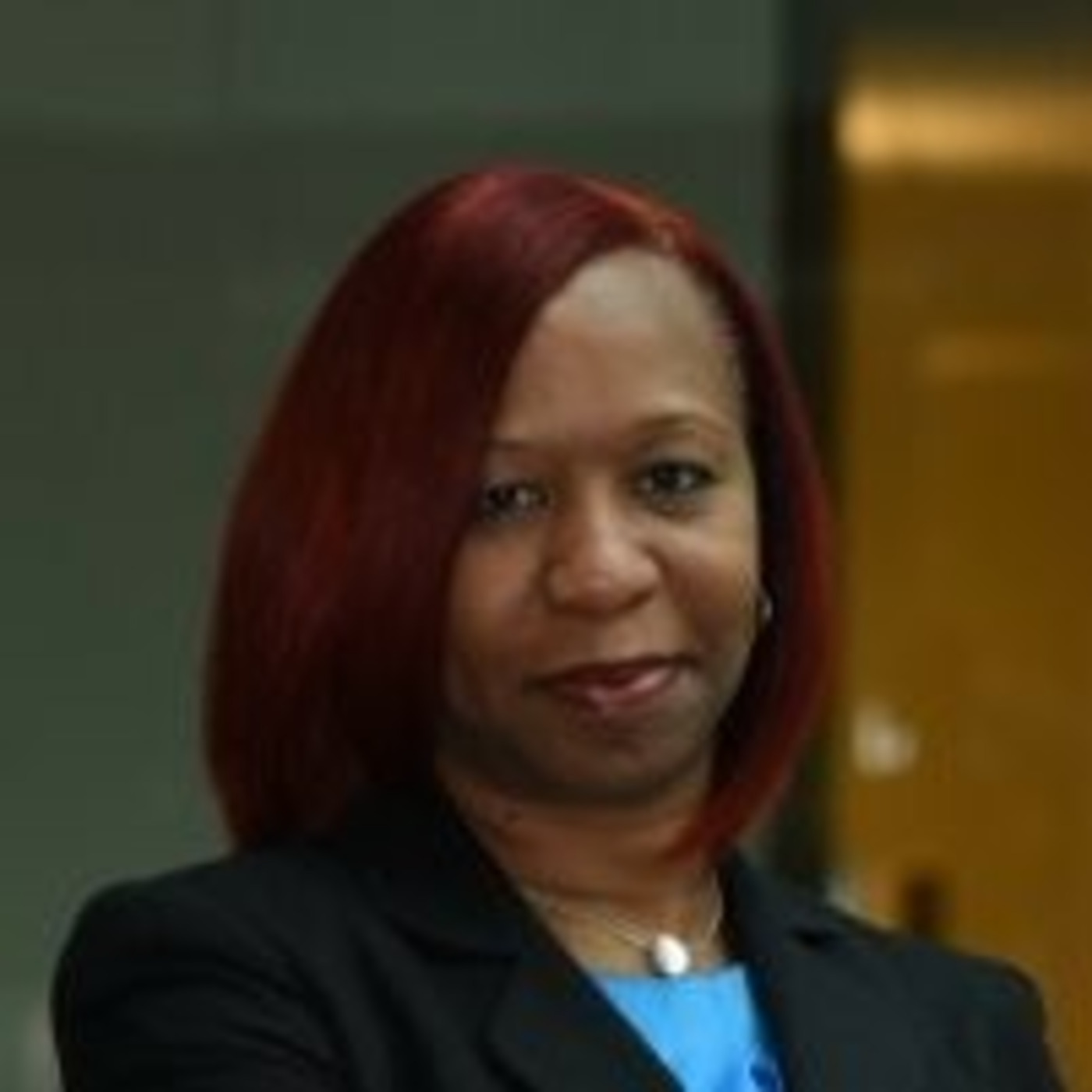
Aoifinn Devitt: Our next guest walks the talk of diversity in investment management every day. And not only does she walk the talk, she’s writing the talk for the rest of us.
Angela Miller-May: My goal is really to make strides in creating a more inclusive industry where there’s opportunity for all and where diversity will no longer be talked about, but really be a reality of the investment industry. And to be really someone that uses her platform, um, to make a difference.
Aoifinn Devitt: I’m Aoifinn Devitt, and welcome to the 50 Faces Podcast., a podcast committed to revealing the richness and diversity of the world of investment by focusing on its people and their stories. I’m joined today by Angela Miller-May, who is CIO of the Chicago Teachers’ Pension Fund, a public defined benefit fund based in Chicago, which has $11 billion in assets under management. The fund is a leader in promoting the G in ESG, that is ensuring that the managers it does business with walk the walk in improving the diversity of their investment teams. The fund has an aspirational goal of investing 20% of its assets with minority-owned firms, and currently it invests 46% with minority-owned firms, and 41% of its trades are done with minority-owned brokers. Angela is a regular figure on the asset management conference circuit and has become a leading voice in promoting diversity and inclusion in the industry. Welcome, Angela. Thank you for joining me today.
Angela Miller-May: Good afternoon, and thank you for having me.
Aoifinn Devitt: Let’s start by talking about your journey into investment. Where did it start and did it take any surprising turns along the way?
Angela Miller-May: Well, my journey was really not a straight line. It has included a lot of twists and turns. It really has been by chance that I ended up at Chicago Teachers’ Pension Fund. I began my career managing banking and cost center operations at Northern Trust. And later FYSERV. My education path was really pointing me toward med school until I volunteered at a hospital over one of my college summer breaks, and I discovered that I was much too emotional and empathetic for a career in pediatrics. The goal was to obtain a degree from Northwestern University. I’m a proud first-generation college graduate And that was the goal drilled into me by my grandmother, who was not allowed to have an education past 6th grade, and my mother, who was moved from the South along with her siblings in the ’60s just to finish high school. Education has always been a value and a priority for my family, and I was really seeing— I was seeing this more as a way to be successful. And to progress. So, it was always about education from the start.
Aoifinn Devitt: Particularly interesting and I suppose appropriate then that you’re working with the Chicago Teachers Pension Fund given your lifelong commitment to education. When you look at the paths your education took, was there any place in particular that you learned the skills that you use most today in your role as CIO?
Angela Miller-May: I think really the whole progress that I kind of went through, if we take a step back, I worked in banking for a while, worked for Northern Trust, as I said. And as I’m working there, we kind of went through the 2008 financial crisis and I was really displaced. And that that was, was hard for me. I really didn’t have a plan or it was the first time I really didn’t have a plan. And I was kind of at a loss for what I was going to do next. And looking back, being forced to restart my career, it was kind of a blessing in disguise. Like, if you’ve ever heard, when a door closes, God really opens a window. And I think the door closing, Northern Trust, and then the window opening for Chicago Teachers was a blessing for me. At the time, I had a BA in economics and an MBA in accounting. And I just didn’t really have a direction to take. I didn’t have any exposure to investments, but my first thought was to go back to school and maybe something would grab my interest. And that something was investments. So I was never really exposed to investment, the investment industry. And at one point, I toyed with the idea of just teaching economics.. But when I was introduced to investments, I kind of knew that I had found a home. So I began searching for a job and that’s kind of where I ended up at Chicago Teachers. Later on that year after 2008 and after I had to actually downsize and let go of a lot of people, and that was really hard for me to do.
Aoifinn Devitt: And you are a passionate advocate for improving diversity in investment management. Can you talk to us about how you do this?
Angela Miller-May: So I work for Chicago Teachers Pension Fund, and one of their core goals and my personal goals is to increase and encourage diversity. We manage the retirement benefits for over 88,000 active members, and those members are diverse, and they want to see their assets managed by diverse managers. So I really have like a little leeway into being able to effect change because of the role that I have and the place that I work. Since the 1990s, Chicago Teachers has been a leader in investing with minorities, women, and persons with disabilities, and we have continued to encourage diversity and equality among our employees, our vendors, and our investment professionals. Our philosophy on diversity and inclusion centers around just a few beliefs that Diversity drives positive outcomes, and as investors, we are in the business of investing money and making sure that we have positive outcomes. Another point is that every stakeholder has a role to play in diversity and inclusion, and we’re all responsible for our behavior, our practices, and our policies. It’s part of— really, it’s part of our fiduciary duty to invest with fund assets to to invest fund assets in a prudent manner, and investing with diverse asset managers that demonstrate outperformance and deliver strong returns is more than prudent. Diverse managers perform the same, if not better, than non-diverse managers, and it brings diverse thoughts, improved decision-making, and solutions that we otherwise would not have. I think in a market like today, it’s crucial that we’re diversified across our portfolio. So I think there’s a place for everyone, and if they’re— they fit into a puzzle, so to speak, and if that piece is missing, you don’t have a complete portfolio, you don’t have a complete picture. So I think there is room for large managers, mainstream managers, but there is also room for minority and women managers who have unique solutions and, and who are small enough to be nimble in markets that are challenging. So I think that the fact that I am a diverse person and I feel like there’s been opposition along the way that we should increase the opportunities for diverse people to have these roles. I feel like if I had been exposed to the industry way before college or way before I was thinking about a career, that I just think about where I could have been or, or what more I could have done. And I think it’s up to people like myself to expose minorities and women to this industry and to help them along, mentor them, to make sure that we have a diverse pipeline of people that are working in the industry and people that can start their own firms.
Aoifinn Devitt: That’s actually part of the point of this podcast, in fact, is to actually provide role models on the basis that you can’t be what you can’t see. But I wanted to ask you also about the pipeline— perceived pipeline problem, I suppose— in that many allocators might say, well, we want to allocate to diverse managers, but we don’t have enough of a pipeline. I know that at Chicago Teachers, you’re quite proactive about seeking out a strong pipeline of managers through your First Friday scheme. Can you talk to us a little bit about that, how you develop that pipeline and how you really encourage managers to apply to you?
Angela Miller-May: Yeah, I think overall the universe of emerging managers is small and diverse managers are a subset of that, but I think if you want to have diversity in your portfolio, you can have it. We have a lot of outreach, we have our First Friday meetings where we invite managers in We are now doing Zoom meetings and it hasn’t stopped, it hasn’t peered back. We’re still meeting as many managers as we were before. We’re still engaged with various organizations, whether it be NASP or NAA or AIM, to meet these managers. And I think it is about that pipeline of diverse candidates in majority-owned firms. It’s about the pipeline of the diverse students getting into the industry. Because I feel like when you’re looking at a diverse manager, they didn’t wake up one morning and say, you know, I want to manage money. They have gotten their experience at a majority-owned firm. They’ve gotten their education. They have experience with deal sourcing and exiting assets and investments. But all of that happens at a larger organization. So without those larger organizations actually opening their doors and hiring more minorities and women, you kind of cut the pipeline off there. I think it’s very important that we tackle this from different aspects, be it hiring more diverse managers, being— engaging with majority-owned managers to increase their hiring of diverse candidates, or be it talking to our students about the opportunities that exist in the investment industry. So I think with all of that together and really just kind of getting the word out there that it’s not that small managers or diverse managers behave or perform any less than any other managers, or it’s not that they’re not qualified. Or the one thing that kind of drives me crazy is when we have majority-owned managers and And they say, we hire the best candidates as if the best cannot be a diverse candidate or, or a woman. So I think it is a fight. It’s been going on for a long time. And I think with efforts like yours to do this podcast and efforts like mine to kind of be on the forefront of talking about these things and engaging with managers, I think that it’s a point in time now when there’s tensions across the US, when people are listening and open to the idea of diversity, I think that we can really make a good change that will be sustainable over some time.
Aoifinn Devitt: Well, thank you. I think on behalf of the industry for what you do to shine a light on that, you are at the forefront every day, and I just wanted to share my thanks. I’d say I would just look at your own organization because it’s a very good example, I think, of a diverse organization. You mentioned your hiring pipeline, your intern program. Can you speak a little bit about Chicago teachers, how diverse it is, and how you ensure promotion opportunities there?
Angela Miller-May: Yeah, so we are governed by a 12-member board elected from the teachers. 60% of those are women. There are 3 Latinos, 3 African Americans. And there’s 12 of them. So from that point and from our members who are very diverse, our staff, our leadership team, CTPF is really like a mosaic of different cultures, different ethnic groups, different ages, different genders, well mostly women, but we’re all very different. And that’s kind of how we’ve put the leadership team together. And from the top down, that’s how I I put my team together. So on the leadership team, which is the Chief Investment Officer, Chief Financial Officer, Chief Technology Officer, there are 10 members and 8 of us are women. And 6 of those 8 women are African American women. So it’s coming from the top down. And my, my staff in general, I set it up so that there is a succession plan kind of embedded within the staff. I have Asian American, well, Asian, African American women that report to portfolio managers, Latino women and Latino men. So we ourselves, the investment group and team, is a diverse team, and it is everyone’s responsibility on the team, ’cause we don’t have an emerging manager program. I’ve made it the goals for every member on the team to look for diversity when they’re looking at any one asset class, to really ingrain diversity into their decision-making. And I think that creates the percentage that we have right now of assets being managed by diverse managers of the 48%. So I think we constantly are hiring. We’ve hired maybe 6 to 7 people while we were sheltered at home. So, which is very challenging for HR, I would assume, but they’re getting it done. We’re looking, our candidates are diverse, and it’s a part of our process, and it’s part of our culture. So, I think it’s just so ingrained, we don’t even think any other way. I don’t know how to really think any other way, but definitely, Chicago teachers, it’s a really great place to work. It’s family-oriented, and we had a town hall earlier this morning, and after the town hall, people just stayed on because they missed each other and they wanted to talk to each other. And it’s that type of environment that we work in, and it’s, it’s full of diversity. Really, the challenge has been for us of managing different generations, and that, that is an area of diversity that we’re still kind of getting used to. But I think we still have a really good team, and we gel. We just learn from each other, and I think that’s the key. You have to get to know people, and you have to you really, know, listen and understand their experiences and, and accept those experiences.
Aoifinn Devitt: Exactly. I think one of the ways to combat them, the need to have diversity by generation, is by having a somewhat flat structure so that when perhaps more experienced people come into so-called junior roles, they still feel their voices can be heard and it’s not strictly hierarchical. Because definitely there’s a wealth of wisdom from every generation. I think it’s so important to share Let’s just shift gears a little bit from the diversity conversation to speak more strictly on the investment side. You’ve had a long career. You, you mentioned it has had some unexpected turns. Um, have there been any setbacks or challenges along the way that you have learned from?
Angela Miller-May: I’ve not been allowed to make many mistakes. I don’t know if that’s internal to how I feel about the job. I feel it’s a mission-based job, and I’m really taking care of the assets of 88,000 members. And so maybe I feel some pressure from the members, but definitely I’m very thoughtful, maybe too thoughtful at some times, but I don’t make rash decisions, and that’s been my saving grace. I respect the input and opinions of my team, and I know this collegiate culture that created has been beneficial for the investment process. So from just the work of completing our asset allocation policy and, and constructing our portfolio and hiring managers, we’ve been very successful in not falling into some of the pitfalls that you can fall into. And I think the rigorous due diligence that we maintain, and even the RFP process, even though it can be tedious and long, it helps us to make better decisions. And I think, again, you know, going back to diversity, the diversity of experience on the team also helps to kind of avoid any mistakes that we would make. I think from a personal perspective, there were opportunities to advance at CTPF, and I did not always take those or take advantage of those. And there was one particular moment when I didn’t take advantage of an opportunity to advance, and maybe out of doubt, maybe out of fear, but I’ve always regretted that, and it’s always stuck with me. And I think the next opportunity that, that came my way was the Director of Investments. And so I mustered up enough courage and I pursued it. And it’s kind of written from that point on, I continue to push myself, but it’s hard to look back and think about something you should have done and didn’t do and really how it’s impacting your life. And a lot of times I think it’s just being uncomfortable. This podcast is a little uncomfortable. This morning on CNBC, I don’t even know if I took a breath through the whole interview and the panels and the things that I do. But I think from that one mistake of not raising my hand and saying, I can do this job, it continues to push me and it reminds me that when I’m qualified or when I know the job, that why shouldn’t I have it, why shouldn’t I go after it. And I think that’s one mistake that has stuck with me and it still benefits me. I still learn from it all the time.
Aoifinn Devitt: And my next question is around some of the key people who’ve influenced you along the way. But what I think is interesting is diversity really is infusing every single aspect of this conversation. Because when you speak about the wonderful working environment you’ve created, and the family, essentially, feel of the workers where they want to be together and to meet in a town hall. I think that’s often— those are our influencers, are the family that we build around ourselves, our professional family. But maybe was there any one or two people that influenced you along the way and in what way along your career?
Angela Miller-May: Gosh, there’s so many. There have been so many role models, mentors, and advisors along the way. Besides my family, who I’m grateful for showing me the value of, of really having a work ethic and being resilient and never giving up, I think every day there’s a chance to be better. And I’m grateful for the executive director at CTPF, Charles Burbage, who really took a chance on me and encouraged me and mentored me and advised me every step along the way. And I think interacting with, in this role, interacting with some of the most talented and intelligent people, and I would have to say that I learned so much and continue to learn from our investment managers, my peers like you, my colleagues in this industry. It’s really just too many to name, and I don’t want to leave anyone out, but the willingness to share their knowledge and help me use this platform that I have to be more inclusive and effective. It’s really just, I’m inspired every day. I think I’ve been fortunate. I have had the opportunity to meet some, some great women that I do admire, like Michelle Obama and Representative Maxine Waters. Those, those two will always stick with me and be like an example of the type of woman I want to be and the type of person that I want to leave like a legacy behind me. So I continue to learn and I continue to be inspired by pretty much every person that I meet. I feel like you can learn something from every person.
Aoifinn Devitt: And I suppose I want to tie two questions together. One is around, is there any one piece of advice that you received, but also maybe any creed or motto that you live by? Is there any one thing you think that sums up your approach to life?
Angela Miller-May: I think, let me see, advice. I would say that with perseverance and hard work, I think anyone can be a leader. Just by enhancing and developing the qualities that God has given you. I think there’s not one person that doesn’t have a talent or a quality or something special about them. And again, it goes back to diversity. I think it’s, it’s important that we listen and we find out what that talent and quality is and appreciate our differences. I think that as far as a motto or creed, there is a poem, and I don’t know where I picked it up from, but I often quote it to myself, and it kind of goes— just the beginning of it, it goes: When things go wrong, as they sometimes will, when the road you’re trudging seems uphill, When the funds are low and the debts are high and you want to smile, but you have to sigh. When health is pressing you down a bit, rest if you must, but don’t quit. And so I just, sometimes I just have to say that to myself because there’s a lot of pressure in the markets. There’s a lot of pressure outside of your home. And even with the pandemic going on, um, the racial tensions, you just don’t know what tomorrow holds. So that’s kind of one of the things that I try to keep myself sane.
Aoifinn Devitt: That’s very powerful. I’m sure particularly in the last few months, it’s something you’ve had to draw upon. It has been a particularly difficult time for many. You’re based in Chicago. That city has had— was particularly badly hit, but also then followed by a lot of unrest as well. And I think you really did have a particularly challenging time. So thank you for those words of wisdom. I think we can all learn from them. And my last question is something I ask all my guests, and it’s really because some of the listeners to this podcast will be younger, coming out of school perhaps, or coming out of college. And I’d love to know, is there any advice that you would give your younger self if you could? What do you know now that you wish you had known then, perhaps coming out with your economics degree?
Angela Miller-May: I am a lifelong worrier, and I think that I would have been so much happier had I not been worrying about everything. So I would tell myself, don’t worry about what’s going to happen tomorrow. Your destiny is, is really in your hands. I would say whatever’s going to happen tomorrow is going to happen whether you’re sick with worry or not, and that if you have faith that God is directing your path and the destiny that he has planned for you is not going to be changed by any one person, not even yourself. I really feel like what was meant to be will be. All of the things that I went through, it really prepared me for the role that I have today. And while I questioned everything and I worried about everything, anything that I learned, whether it was patience and trying to get a new job or whether it was the humility and resilience from losing a job, all of those things really factored into me being the person that I am today and being able to handle the role that I have today. And I think along the way we, we pick up these lessons, we learn from them, and eventually we find ourselves in a place that really we, we feel like we were meant to be in this place. So those are some of the things that I think I would tell myself just to kind of relax. And I know that’s hard because a lot of young people are going through this pandemic and trying to find a job and trying to find their, their, their roles and positions. And I would say you can’t worry about it, keep working on yourself. Keep learning, keep preparing yourself, keep improving on yourself, and at some point in time, it’s going to intersect with that position, with that role, and it’ll make even more sense then.
Aoifinn Devitt: I I know, love that. I love that big picture focus. It reminds me of something I heard in another podcast, which was that it was what you advice, know, to give to some young people who maybe are facing a crisis in their career perhaps early on, and it was like you to look at the bigger picture. The advice was think of your career as a book, and if it is a book, what would this chapter say? It is ultimately only a chapter in the whole, and as you mentioned, many skills and learnings can come away from this phase which can ultimately be quite beneficial later.
Angela Miller-May: Yeah, I think so. I think this, this particular generation, or these students are going to be so much stronger and not moved by the whims of the world, like, because they’re going through it now and they will understand that everything doesn’t work out the way you plan it to work out, but there is a silver lining in everything and you need only find that silver lining and take advantage of those opportunities.
Aoifinn Devitt: Well, thank you, Angela. It’s been a pleasure speaking with you today. You really are showing us how it’s done in terms of diversity, in terms of really admirable leadership. And thank you for sharing your insights with us.
Angela Miller-May: Thank you for having me.
Aoifinn Devitt: I’m Aoifinn Devitt. Thank you for listening to the 50 Faces podcast. If you liked what you heard and would like to tune in to hear more inspiring investors and their personal journeys, please subscribe on Apple Podcasts or wherever you get your podcasts. This podcast is for informational purposes only and should not be construed as investment advice, and all views are personal and should not be attributed to the organizations and affiliations of the host or any guest.
Aoifinn Devitt: Our next guest walks the talk of diversity in investment management every day. And not only does she walk the talk, she’s writing the talk for the rest of us.
Angela Miller-May: My goal is really to make strides in creating a more inclusive industry where there’s opportunity for all and where diversity will no longer be talked about, but really be a reality of the investment industry. And to be really someone that uses her platform, um, to make a difference.
Aoifinn Devitt: I’m Aoifinn Devitt, and welcome to the 50 Faces Podcast., a podcast committed to revealing the richness and diversity of the world of investment by focusing on its people and their stories. I’m joined today by Angela Miller-May, who is CIO of the Chicago Teachers’ Pension Fund, a public defined benefit fund based in Chicago, which has $11 billion in assets under management. The fund is a leader in promoting the G in ESG, that is ensuring that the managers it does business with walk the walk in improving the diversity of their investment teams. The fund has an aspirational goal of investing 20% of its assets with minority-owned firms, and currently it invests 46% with minority-owned firms, and 41% of its trades are done with minority-owned brokers. Angela is a regular figure on the asset management conference circuit and has become a leading voice in promoting diversity and inclusion in the industry. Welcome, Angela. Thank you for joining me today.
Angela Miller-May: Good afternoon, and thank you for having me.
Aoifinn Devitt: Let’s start by talking about your journey into investment. Where did it start and did it take any surprising turns along the way?
Angela Miller-May: Well, my journey was really not a straight line. It has included a lot of twists and turns. It really has been by chance that I ended up at Chicago Teachers’ Pension Fund. I began my career managing banking and cost center operations at Northern Trust. And later FYSERV. My education path was really pointing me toward med school until I volunteered at a hospital over one of my college summer breaks, and I discovered that I was much too emotional and empathetic for a career in pediatrics. The goal was to obtain a degree from Northwestern University. I’m a proud first-generation college graduate And that was the goal drilled into me by my grandmother, who was not allowed to have an education past 6th grade, and my mother, who was moved from the South along with her siblings in the ’60s just to finish high school. Education has always been a value and a priority for my family, and I was really seeing— I was seeing this more as a way to be successful. And to progress. So, it was always about education from the start.
Aoifinn Devitt: Particularly interesting and I suppose appropriate then that you’re working with the Chicago Teachers Pension Fund given your lifelong commitment to education. When you look at the paths your education took, was there any place in particular that you learned the skills that you use most today in your role as CIO?
Angela Miller-May: I think really the whole progress that I kind of went through, if we take a step back, I worked in banking for a while, worked for Northern Trust, as I said. And as I’m working there, we kind of went through the 2008 financial crisis and I was really displaced. And that that was, was hard for me. I really didn’t have a plan or it was the first time I really didn’t have a plan. And I was kind of at a loss for what I was going to do next. And looking back, being forced to restart my career, it was kind of a blessing in disguise. Like, if you’ve ever heard, when a door closes, God really opens a window. And I think the door closing, Northern Trust, and then the window opening for Chicago Teachers was a blessing for me. At the time, I had a BA in economics and an MBA in accounting. And I just didn’t really have a direction to take. I didn’t have any exposure to investments, but my first thought was to go back to school and maybe something would grab my interest. And that something was investments. So I was never really exposed to investment, the investment industry. And at one point, I toyed with the idea of just teaching economics.. But when I was introduced to investments, I kind of knew that I had found a home. So I began searching for a job and that’s kind of where I ended up at Chicago Teachers. Later on that year after 2008 and after I had to actually downsize and let go of a lot of people, and that was really hard for me to do.
Aoifinn Devitt: And you are a passionate advocate for improving diversity in investment management. Can you talk to us about how you do this?
Angela Miller-May: So I work for Chicago Teachers Pension Fund, and one of their core goals and my personal goals is to increase and encourage diversity. We manage the retirement benefits for over 88,000 active members, and those members are diverse, and they want to see their assets managed by diverse managers. So I really have like a little leeway into being able to effect change because of the role that I have and the place that I work. Since the 1990s, Chicago Teachers has been a leader in investing with minorities, women, and persons with disabilities, and we have continued to encourage diversity and equality among our employees, our vendors, and our investment professionals. Our philosophy on diversity and inclusion centers around just a few beliefs that Diversity drives positive outcomes, and as investors, we are in the business of investing money and making sure that we have positive outcomes. Another point is that every stakeholder has a role to play in diversity and inclusion, and we’re all responsible for our behavior, our practices, and our policies. It’s part of— really, it’s part of our fiduciary duty to invest with fund assets to to invest fund assets in a prudent manner, and investing with diverse asset managers that demonstrate outperformance and deliver strong returns is more than prudent. Diverse managers perform the same, if not better, than non-diverse managers, and it brings diverse thoughts, improved decision-making, and solutions that we otherwise would not have. I think in a market like today, it’s crucial that we’re diversified across our portfolio. So I think there’s a place for everyone, and if they’re— they fit into a puzzle, so to speak, and if that piece is missing, you don’t have a complete portfolio, you don’t have a complete picture. So I think there is room for large managers, mainstream managers, but there is also room for minority and women managers who have unique solutions and, and who are small enough to be nimble in markets that are challenging. So I think that the fact that I am a diverse person and I feel like there’s been opposition along the way that we should increase the opportunities for diverse people to have these roles. I feel like if I had been exposed to the industry way before college or way before I was thinking about a career, that I just think about where I could have been or, or what more I could have done. And I think it’s up to people like myself to expose minorities and women to this industry and to help them along, mentor them, to make sure that we have a diverse pipeline of people that are working in the industry and people that can start their own firms.
Aoifinn Devitt: That’s actually part of the point of this podcast, in fact, is to actually provide role models on the basis that you can’t be what you can’t see. But I wanted to ask you also about the pipeline— perceived pipeline problem, I suppose— in that many allocators might say, well, we want to allocate to diverse managers, but we don’t have enough of a pipeline. I know that at Chicago Teachers, you’re quite proactive about seeking out a strong pipeline of managers through your First Friday scheme. Can you talk to us a little bit about that, how you develop that pipeline and how you really encourage managers to apply to you?
Angela Miller-May: Yeah, I think overall the universe of emerging managers is small and diverse managers are a subset of that, but I think if you want to have diversity in your portfolio, you can have it. We have a lot of outreach, we have our First Friday meetings where we invite managers in We are now doing Zoom meetings and it hasn’t stopped, it hasn’t peered back. We’re still meeting as many managers as we were before. We’re still engaged with various organizations, whether it be NASP or NAA or AIM, to meet these managers. And I think it is about that pipeline of diverse candidates in majority-owned firms. It’s about the pipeline of the diverse students getting into the industry. Because I feel like when you’re looking at a diverse manager, they didn’t wake up one morning and say, you know, I want to manage money. They have gotten their experience at a majority-owned firm. They’ve gotten their education. They have experience with deal sourcing and exiting assets and investments. But all of that happens at a larger organization. So without those larger organizations actually opening their doors and hiring more minorities and women, you kind of cut the pipeline off there. I think it’s very important that we tackle this from different aspects, be it hiring more diverse managers, being— engaging with majority-owned managers to increase their hiring of diverse candidates, or be it talking to our students about the opportunities that exist in the investment industry. So I think with all of that together and really just kind of getting the word out there that it’s not that small managers or diverse managers behave or perform any less than any other managers, or it’s not that they’re not qualified. Or the one thing that kind of drives me crazy is when we have majority-owned managers and And they say, we hire the best candidates as if the best cannot be a diverse candidate or, or a woman. So I think it is a fight. It’s been going on for a long time. And I think with efforts like yours to do this podcast and efforts like mine to kind of be on the forefront of talking about these things and engaging with managers, I think that it’s a point in time now when there’s tensions across the US, when people are listening and open to the idea of diversity, I think that we can really make a good change that will be sustainable over some time.
Aoifinn Devitt: Well, thank you. I think on behalf of the industry for what you do to shine a light on that, you are at the forefront every day, and I just wanted to share my thanks. I’d say I would just look at your own organization because it’s a very good example, I think, of a diverse organization. You mentioned your hiring pipeline, your intern program. Can you speak a little bit about Chicago teachers, how diverse it is, and how you ensure promotion opportunities there?
Angela Miller-May: Yeah, so we are governed by a 12-member board elected from the teachers. 60% of those are women. There are 3 Latinos, 3 African Americans. And there’s 12 of them. So from that point and from our members who are very diverse, our staff, our leadership team, CTPF is really like a mosaic of different cultures, different ethnic groups, different ages, different genders, well mostly women, but we’re all very different. And that’s kind of how we’ve put the leadership team together. And from the top down, that’s how I I put my team together. So on the leadership team, which is the Chief Investment Officer, Chief Financial Officer, Chief Technology Officer, there are 10 members and 8 of us are women. And 6 of those 8 women are African American women. So it’s coming from the top down. And my, my staff in general, I set it up so that there is a succession plan kind of embedded within the staff. I have Asian American, well, Asian, African American women that report to portfolio managers, Latino women and Latino men. So we ourselves, the investment group and team, is a diverse team, and it is everyone’s responsibility on the team, ’cause we don’t have an emerging manager program. I’ve made it the goals for every member on the team to look for diversity when they’re looking at any one asset class, to really ingrain diversity into their decision-making. And I think that creates the percentage that we have right now of assets being managed by diverse managers of the 48%. So I think we constantly are hiring. We’ve hired maybe 6 to 7 people while we were sheltered at home. So, which is very challenging for HR, I would assume, but they’re getting it done. We’re looking, our candidates are diverse, and it’s a part of our process, and it’s part of our culture. So, I think it’s just so ingrained, we don’t even think any other way. I don’t know how to really think any other way, but definitely, Chicago teachers, it’s a really great place to work. It’s family-oriented, and we had a town hall earlier this morning, and after the town hall, people just stayed on because they missed each other and they wanted to talk to each other. And it’s that type of environment that we work in, and it’s, it’s full of diversity. Really, the challenge has been for us of managing different generations, and that, that is an area of diversity that we’re still kind of getting used to. But I think we still have a really good team, and we gel. We just learn from each other, and I think that’s the key. You have to get to know people, and you have to you really, know, listen and understand their experiences and, and accept those experiences.
Aoifinn Devitt: Exactly. I think one of the ways to combat them, the need to have diversity by generation, is by having a somewhat flat structure so that when perhaps more experienced people come into so-called junior roles, they still feel their voices can be heard and it’s not strictly hierarchical. Because definitely there’s a wealth of wisdom from every generation. I think it’s so important to share Let’s just shift gears a little bit from the diversity conversation to speak more strictly on the investment side. You’ve had a long career. You, you mentioned it has had some unexpected turns. Um, have there been any setbacks or challenges along the way that you have learned from?
Angela Miller-May: I’ve not been allowed to make many mistakes. I don’t know if that’s internal to how I feel about the job. I feel it’s a mission-based job, and I’m really taking care of the assets of 88,000 members. And so maybe I feel some pressure from the members, but definitely I’m very thoughtful, maybe too thoughtful at some times, but I don’t make rash decisions, and that’s been my saving grace. I respect the input and opinions of my team, and I know this collegiate culture that created has been beneficial for the investment process. So from just the work of completing our asset allocation policy and, and constructing our portfolio and hiring managers, we’ve been very successful in not falling into some of the pitfalls that you can fall into. And I think the rigorous due diligence that we maintain, and even the RFP process, even though it can be tedious and long, it helps us to make better decisions. And I think, again, you know, going back to diversity, the diversity of experience on the team also helps to kind of avoid any mistakes that we would make. I think from a personal perspective, there were opportunities to advance at CTPF, and I did not always take those or take advantage of those. And there was one particular moment when I didn’t take advantage of an opportunity to advance, and maybe out of doubt, maybe out of fear, but I’ve always regretted that, and it’s always stuck with me. And I think the next opportunity that, that came my way was the Director of Investments. And so I mustered up enough courage and I pursued it. And it’s kind of written from that point on, I continue to push myself, but it’s hard to look back and think about something you should have done and didn’t do and really how it’s impacting your life. And a lot of times I think it’s just being uncomfortable. This podcast is a little uncomfortable. This morning on CNBC, I don’t even know if I took a breath through the whole interview and the panels and the things that I do. But I think from that one mistake of not raising my hand and saying, I can do this job, it continues to push me and it reminds me that when I’m qualified or when I know the job, that why shouldn’t I have it, why shouldn’t I go after it. And I think that’s one mistake that has stuck with me and it still benefits me. I still learn from it all the time.
Aoifinn Devitt: And my next question is around some of the key people who’ve influenced you along the way. But what I think is interesting is diversity really is infusing every single aspect of this conversation. Because when you speak about the wonderful working environment you’ve created, and the family, essentially, feel of the workers where they want to be together and to meet in a town hall. I think that’s often— those are our influencers, are the family that we build around ourselves, our professional family. But maybe was there any one or two people that influenced you along the way and in what way along your career?
Angela Miller-May: Gosh, there’s so many. There have been so many role models, mentors, and advisors along the way. Besides my family, who I’m grateful for showing me the value of, of really having a work ethic and being resilient and never giving up, I think every day there’s a chance to be better. And I’m grateful for the executive director at CTPF, Charles Burbage, who really took a chance on me and encouraged me and mentored me and advised me every step along the way. And I think interacting with, in this role, interacting with some of the most talented and intelligent people, and I would have to say that I learned so much and continue to learn from our investment managers, my peers like you, my colleagues in this industry. It’s really just too many to name, and I don’t want to leave anyone out, but the willingness to share their knowledge and help me use this platform that I have to be more inclusive and effective. It’s really just, I’m inspired every day. I think I’ve been fortunate. I have had the opportunity to meet some, some great women that I do admire, like Michelle Obama and Representative Maxine Waters. Those, those two will always stick with me and be like an example of the type of woman I want to be and the type of person that I want to leave like a legacy behind me. So I continue to learn and I continue to be inspired by pretty much every person that I meet. I feel like you can learn something from every person.
Aoifinn Devitt: And I suppose I want to tie two questions together. One is around, is there any one piece of advice that you received, but also maybe any creed or motto that you live by? Is there any one thing you think that sums up your approach to life?
Angela Miller-May: I think, let me see, advice. I would say that with perseverance and hard work, I think anyone can be a leader. Just by enhancing and developing the qualities that God has given you. I think there’s not one person that doesn’t have a talent or a quality or something special about them. And again, it goes back to diversity. I think it’s, it’s important that we listen and we find out what that talent and quality is and appreciate our differences. I think that as far as a motto or creed, there is a poem, and I don’t know where I picked it up from, but I often quote it to myself, and it kind of goes— just the beginning of it, it goes: When things go wrong, as they sometimes will, when the road you’re trudging seems uphill, When the funds are low and the debts are high and you want to smile, but you have to sigh. When health is pressing you down a bit, rest if you must, but don’t quit. And so I just, sometimes I just have to say that to myself because there’s a lot of pressure in the markets. There’s a lot of pressure outside of your home. And even with the pandemic going on, um, the racial tensions, you just don’t know what tomorrow holds. So that’s kind of one of the things that I try to keep myself sane.
Aoifinn Devitt: That’s very powerful. I’m sure particularly in the last few months, it’s something you’ve had to draw upon. It has been a particularly difficult time for many. You’re based in Chicago. That city has had— was particularly badly hit, but also then followed by a lot of unrest as well. And I think you really did have a particularly challenging time. So thank you for those words of wisdom. I think we can all learn from them. And my last question is something I ask all my guests, and it’s really because some of the listeners to this podcast will be younger, coming out of school perhaps, or coming out of college. And I’d love to know, is there any advice that you would give your younger self if you could? What do you know now that you wish you had known then, perhaps coming out with your economics degree?
Angela Miller-May: I am a lifelong worrier, and I think that I would have been so much happier had I not been worrying about everything. So I would tell myself, don’t worry about what’s going to happen tomorrow. Your destiny is, is really in your hands. I would say whatever’s going to happen tomorrow is going to happen whether you’re sick with worry or not, and that if you have faith that God is directing your path and the destiny that he has planned for you is not going to be changed by any one person, not even yourself. I really feel like what was meant to be will be. All of the things that I went through, it really prepared me for the role that I have today. And while I questioned everything and I worried about everything, anything that I learned, whether it was patience and trying to get a new job or whether it was the humility and resilience from losing a job, all of those things really factored into me being the person that I am today and being able to handle the role that I have today. And I think along the way we, we pick up these lessons, we learn from them, and eventually we find ourselves in a place that really we, we feel like we were meant to be in this place. So those are some of the things that I think I would tell myself just to kind of relax. And I know that’s hard because a lot of young people are going through this pandemic and trying to find a job and trying to find their, their, their roles and positions. And I would say you can’t worry about it, keep working on yourself. Keep learning, keep preparing yourself, keep improving on yourself, and at some point in time, it’s going to intersect with that position, with that role, and it’ll make even more sense then.
Aoifinn Devitt: I I know, love that. I love that big picture focus. It reminds me of something I heard in another podcast, which was that it was what you advice, know, to give to some young people who maybe are facing a crisis in their career perhaps early on, and it was like you to look at the bigger picture. The advice was think of your career as a book, and if it is a book, what would this chapter say? It is ultimately only a chapter in the whole, and as you mentioned, many skills and learnings can come away from this phase which can ultimately be quite beneficial later.
Angela Miller-May: Yeah, I think so. I think this, this particular generation, or these students are going to be so much stronger and not moved by the whims of the world, like, because they’re going through it now and they will understand that everything doesn’t work out the way you plan it to work out, but there is a silver lining in everything and you need only find that silver lining and take advantage of those opportunities.
Aoifinn Devitt: Well, thank you, Angela. It’s been a pleasure speaking with you today. You really are showing us how it’s done in terms of diversity, in terms of really admirable leadership. And thank you for sharing your insights with us.
Angela Miller-May: Thank you for having me.
Aoifinn Devitt: I’m Aoifinn Devitt. Thank you for listening to the 50 Faces podcast. If you liked what you heard and would like to tune in to hear more inspiring investors and their personal journeys, please subscribe on Apple Podcasts or wherever you get your podcasts. This podcast is for informational purposes only and should not be construed as investment advice, and all views are personal and should not be attributed to the organizations and affiliations of the host or any guest.