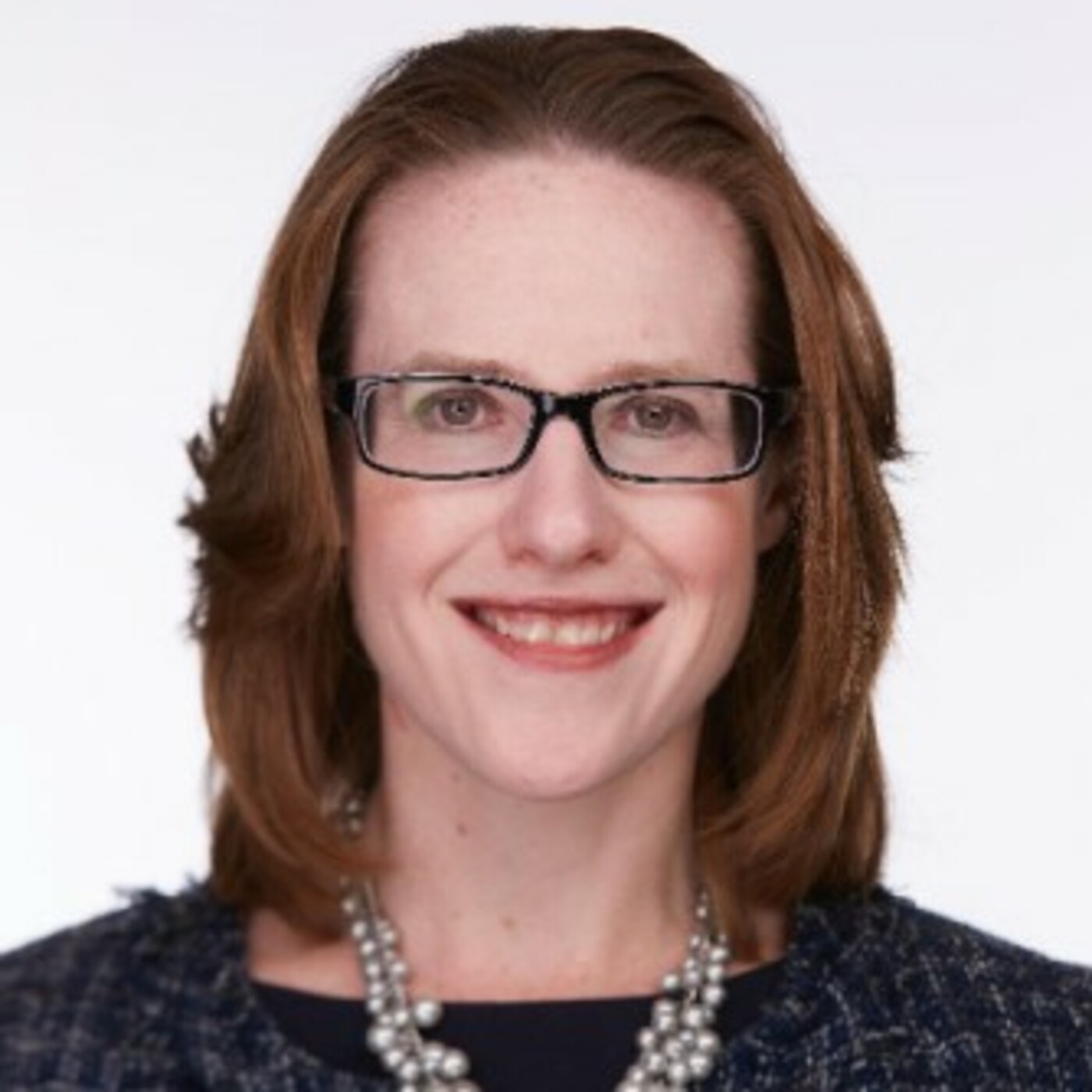
Aoifinn Devitt: Our next guest’s investment journey so far has taken her from a hog farm in Iowa to a CIO role at the 9th largest hospital plan in the US. Let’s hear what she learned along the way, as well as how navigating the investment world as a working mother taught her the kind of workplace that she wanted to call home. I’m Aoifinn Devitt, and welcome to the 50 Faces Podcast, a podcast committed to revealing the richness and diversity of the world of investment by focusing on its people and their stories. I’m joined today by Leslie Lenzo, who is Chief Investment Officer at Advocate Aurora Health, a hospital plan in Illinois with over $10 billion in assets under management. She has worked in asset management at hospital plans for over 16 years and has also spent time in equity research. She’s an advocate for building both a diverse investment team within her own organization, as well as for promoting more diversity within the investment world as a whole. Welcome, Leslie. Thank you for joining me today.
Leslie Lenzo: Thank you.
Aoifinn Devitt: Let’s start with talking a little bit about your current role. Can you tell us what that is?
Leslie Lenzo: So I’m the Chief Investment Officer at Advocate Aurora Health. We are located in the suburbs of Chicago in Illinois. Our organization is the 9th largest healthcare system in the country. Spanning both Illinois and Wisconsin as our service area. So my team manages a variety of different investment portfolios for the organization. Our largest is our corporate balance sheet assets. And then we also manage the organization’s defined benefit funds. We have some captive insurance portfolios, and then we also oversee the options within our defined contribution plan.
Aoifinn Devitt: And just in terms of the balance sheet assets of a hospital plan, would they be assets that might be called upon maybe during a crisis time such as what we’ve been experiencing now, or is that not what they would be used for?
Leslie Lenzo: I really think of those corporate balance sheet assets as being akin to retained earnings, but for a not-for-profit. So, you know, really serves a variety of purposes. You know, those assets backstop our bond rating so that we can borrow cheaply when needed. You know, those assets are there to facilitate the growth of the organization. They’re there to facilitate capital expenditures for the organization and then really serve as, you know, kind of our rainy day fund to cushion the ebbs and flows of our operating cash flow, you know, particularly in times like these where we have a pandemic that has really been problematic for the financial situation of a lot of healthcare systems out there.
Aoifinn Devitt: But can we then go back to your earlier days, how you made it into a role like this, where your journey into investment started?
Leslie Lenzo: I really fell into the investment industry after college. I started my career at Partners Healthcare in Boston, and they really took a chance on me as I was coming out of my undergrad education. And it’s really been a fairly linear path for me. I’ve worked for 3 very large, highly rated healthcare systems in their investment programs. And really my only detour was a couple of years on the sell side where I was doing equity research and followed a handful of the for-profit healthcare companies.
Aoifinn Devitt: And when you look back at the path you took in education, did you study accounting or finance? And what aspect of what you studied have you found most useful in your role today?
Leslie Lenzo: So my undergraduate degree was a dual major in economics and government. And then I went on to get my MBA in finance. But thinking back on it, it was really the liberal arts classes that I took that were really most useful in how I approach things today, because it’s those liberal arts classes that really develop your skills around critical thinking and give you that intellectual curiosity on a broad range of topics. And, you know, those skills are so critical to how we invest. And I was very fortunate to attend a university that required you to take a broad swath of liberal arts courses. So I remember taking courses in theology, philosophy, psychology, art history, languages, you know, and really getting that well-rounded spectrum across all of those different disciplines. Just helps to form the approach that you take in terms of how you think about things and how you analyze things.
Aoifinn Devitt: Moving on to talk about, we’re both working mothers and we’ve talked about this for some time. Can you talk about your experience both as a woman and a working mother in building a career in investing?
Leslie Lenzo: And it’s been really interesting being a female in the investment industry and particularly being a young female in the investment industry because, you know, unfortunately there are so few of us. And there are a couple of different things that I particularly noticed along the way. One memory I have is when my oldest was born, I was attempting to shift my schedule of when I was in the office just by half an hour. I had typically worked from 8:30 until 5:30, and I wanted to shift that from 8 until 5 for childcare purposes. And I remember it being a tremendous struggle just to kind of get approval for that simple ask. But the people that I was asking for that approval from were all men, and I don’t think they completely understood how meaningful that was to me simply to make that very small shift in my schedule. The other story I would tell here, so when I When I was looking at my current role, I actually got the call about this position when I was 8 months pregnant with my third son. And I remember thinking that this is a really interesting career opportunity, but how can I even consider this when I’m 8 months pregnant? But I went ahead with it, had the initial call with them. And I remember the initial call went really well. And they wanted to have me in for my first in-person interview. And so the date they threw out happened to be my due date. And so I said, you know, I’m really sorry, but I just, I can’t come in that day and here’s why. And they were so gracious about it, even saying, oh, well, you know, how much time do you need? Do you need, you know, 6 weeks, 2 months? You know, we’re happy to be flexible here. So I said, you know, give me 3 or 4 weeks and I can be there, no problem. And then, you know, as we were getting to that date and putting together the agenda for the in-person meeting, and I remember being very nervous about making this ask, but I was nursing my infant at that time. And so I very kind of shyly made the ask of, well, can we build some time into the schedule of this all-day meeting where, you know, I can pump during the day. And they were very gracious about it. You know, they scheduled a locked room with snacks and water for me. And, you know, they were just so gracious about the whole thing. And that made me feel that, you know, this, this is the right organization for me to be with because they really understand, you know, what working mothers are going through. And, you know, they’re very willing to accommodate working mothers. And so I knew at that point that it was the right decision for me to make, both in terms of career growth, but also in terms of finding an organization whose family values really matched up with my own.
Aoifinn Devitt: That’s a wonderful story. And we speak a lot about diversity and inclusion, but what you’re— what I’m hearing here is that this was ultimately a very inclusive environment. And I think what I— my experience as well is that no matter how experienced you are, you said this was your third son, the— it’s still incredibly difficult to to either go through the interview process or be new in a job around this phase of your life, either pregnancy or just after having a baby. And it seems that you had the best possible reception, I suppose, for that, and that’s wonderful to hear. I’d be curious to see how you now create an inclusive environment in your own team because obviously you are going to be empathetic with some of the needs that they may have to be with their families. Etc.
Leslie Lenzo: Right. You know, and it’s something that’s obviously very near and dear to my heart. So when we’re actually in the office, I have a quote that’s taped to my office wall and it says, “A true balance between work and life comes with knowing that your life activities are integrated and not separated.” And that, that’s really something that I’ve taken to heart, not only with how I approach work, but also with how I allow my team to approach their work. And I try to be very flexible with, you know, if you need to take some time off in the middle of the morning to go be the secret reader at your child’s school, know, you by all means, go and do that because that’s really important. Or, you know, if you need to take some time in the afternoon to take your elderly parent to a doctor’s appointment, you know, do it, no questions asked. I mean, at the end of the day, what really matters is that we’re getting our work done In my mind, it doesn’t matter really when or where you do that as long as the work ultimately is getting done and our productivity is staying high. And that kind of attitude has now really manifested itself now that we’ve all been working from home for the last 5 months. And I think people kind of really enjoy the flexibility of being at home. But, you know, we had already kind of worked that in. You know, we hadn’t been remote previously, but we had offered flexibility in terms of, you know, taking the time that you need for your family while still getting your work done. So kind of from a mindset perspective, I think it was a fairly easy jump to make to this new work-from-home environment that we’re all in.
Aoifinn Devitt: And in terms of your own team, have you paid attention to create a diverse team within your organization?
Leslie Lenzo: You know, that’s absolutely something that we have strove to do over the course of the time that I’ve been here. So we do have a you team, know, that spans both men and women. We have a couple of people of color on our team. We have a representative of the LGBT community on our team. And it really you brings, know, a very diverse perspective to the team since you have all of these diverse backgrounds. And I’m really proud of the team that we’ve put together, and I think they’re fantastic.
Aoifinn Devitt: And I think what’s really remarkable about you is that you, within a hospital plan, are making real efforts to encourage diversity and ensure diversity within your manager mix. That’s, I’d say, it’s unusual in a hospital plan. It tends to come first in public plans, public pension plans. Can you speak about that and ultimately how you do strive to get diversity within your manager mix?
Leslie Lenzo: Sure. And diversity and inclusion is really something that’s incredibly important to our organization as a whole. I think we have a realization that the patients that we treat come from a wide variety of backgrounds, and you therefore, know, we need to also represent a wide variety of backgrounds so that the face of our organization looks like those who we are serving. You know, there’s also a big focus on health equity You look at the various neighborhoods that we serve, and there’s a vast differential in health outcomes between those more affluent zip codes and those underserved zip codes. And so we’re spending a lot of time as an organization, you know, doing all that we can to try to bring up the life expectancies in those underserved zip codes and, you know, really look to enhance health equity in our society. And so those aspects of diversity and inclusion, you know, it’s also something that permeates our investment program. You look at the stats, you know, whether it be ownership of investment firms by women and minorities, or simply, you know, the percentage of women and minorities who are investment professionals at investment firms. In our country. And the statistics are really egregious. And so, you know, we’ve made a concerted effort to hire diverse firms, you know, both firms that are owned by diverse individuals, but also firms that while they may not be owned by diverse individuals, you know, have really populated their investment ranks with diverse individuals. And we think, you know, not only is that kind of good for society and good for social equity. But, you know, in a self-serving way, we also think it’s good for investment returns because by definition, you know, if you want to generate alpha, you know, you need to be thinking differently than the broad market. You know, otherwise you should just own an index fund. And so we’re really looking for, you know, diversity of background, diversity of perspective, If you look within private equity, diversity of sourcing networks, because we think that can generate a lot of alpha for us over time.
Aoifinn Devitt: And how challenging has it been for you to source a diverse pipeline? How do you go about it? Do you use a consultant to help with that? Do you beat the street actively seeking managers who, who represent the diversity you’re looking for?
Leslie Lenzo: It’s really been just a lot of rolling up our sleeves and pounding the pavement. Over the course of the last couple of you years, know, we have gotten much more involved with organizations really focused on diversity. So organizations like you NAIC, know, Grovner does a lot of work in this area. So we’ve been trying to spend more time with these organizations that, you know, very specifically focus on and target diverse managers. Because we found that that’s been a great way for us to cast a wide net and really get to know more of the diverse managers who are out there because you don’t tend to find them through the normal sourcing channels. So, you know, placement agents and things like that. So it’s definitely just a lot of shoe leather for us.
Aoifinn Devitt: And then just pivoting back to your own career, you’ve worked in hospital plans for some time. I know that some of them have been subject to acquisition, or you have been part of an acquisition. What did you learn from this experience, and are there any more acquisitions on the horizon?
Leslie Lenzo: Our organization definitely has, you know, very broad aspirations to continue to grow. You know, Advocate Aurora Health actually came together in the beginning of 2018 as a merger between Advocate Healthcare, which was my legacy organization, and Aurora Healthcare, Healthcare. But prior to that, I was involved with the potential merger of Advocate Healthcare and North Shore University Health System. That was a deal that we worked on for probably a good 18 months, and it ultimately got thwarted by the FTC. So I think there were definitely some, some broad learnings there around how and where healthcare systems can approach growth when it comes to geographic location. So I think that has been helpful in our thinking about, you know, looking to Wisconsin when we merged with Aurora. And then we currently have a letter of intent with Beaumont Health in Michigan, where, you know, continuing to focus on the Upper Midwest at this point, but definitely branching out to adjacent geographies rather than staying right in our backyard in the Chicago area.
Aoifinn Devitt: And I don’t think I’ve asked you this before, but when it comes to investing hospital plan assets, are there ever any investment beliefs or core values that you need to try to integrate across either when you’re consolidating assets or just even starting to build a portfolio? Are there any particular values that are unique to hospital plans that you want to implement?
Leslie Lenzo: This isn’t done within our core investment program, But we do have two separate portfolios that very much play into this idea. So one of those would be we have a corporate ventures arm and these activities, they’re, they’re really driven by a woman who has a dual reporting relationship both into our strategy group and into my team. And what we’re doing there is looking for strategic healthcare investments where we can invest in healthcare funds that are doing interesting and innovative things that are related to our core business. And we’re not only looking for a financial return there, but we’re also looking for strategic insights that can be helpful to informing our organization about where the industry as a whole is going and how we might fit into that.. And then I think ideally, you know, there may be portfolio companies down the road where we might have an interest in, you know, having a commercial relationship with those portfolio companies, or we may get to a point where we have an interest in potentially acquiring one of those portfolio companies. So that, that’s one category of investment that’s somewhat specific to the healthcare systems. The other is what we call our community investments. And this is an initiative that’s really just gotten going within the last year or so. And here, what we’re looking to do is partner with CDFIs to put out money in underserved areas within our geographic footprint. And the goal here, you know, is not only to earn a financial return. And here, we’re definitely not looking at the same hurdle rates that we would look at for our broad investment portfolio, but we’re looking at making below market rate loans to organizations in these underserved areas, really with the goal of, you know, helping to achieve that health equity that’s so important to our organization as a whole and starting to make strides there from an investment standpoint.
Aoifinn Devitt: It’s certainly an area that is rife with innovation today, and I can see very much why your interests will be so aligned in having a healthy community. I’m also thinking of all of the focus on vaccine development right now, as well as therapeutic treatments, as well as the shift to telemedicine. So it seems that the healthcare sector is at the forefront of much of this innovation. So it must be an exciting time.
Leslie Lenzo: It absolutely is.
Aoifinn Devitt: Again, looking back at your career, have there been key people who’ve influenced you along the way, thinking maybe a mentor or a sponsor or any key pieces of advice that you received that you still look to as you implement it in your work?
Leslie Lenzo: Right. And actually, you know, the key people who initially jumped to my mind, it wasn’t even so much, you know, a mentor or a boss that I had, you know, but I look way back to my childhood, to my grandparents. So I grew up on a hog farm in rural Iowa. And in rural Iowa, you know, there really aren’t people who are working in the investment industry. So, you know, it’s not a place where you see this as a potential job that someone might have. But yet, you know, I’m very thankful to both of my grandparents simply for introducing me to markets and introducing me to the concept of equity ownership. So my grandparents on one side of my family, they had set up a custodial account for me when I was very young. And over time, populated that account with some blue-chip stocks. I remember in particular that they had given me some shares of ExxonMobil that I ultimately sold when I was in my mid-20s to pay for the down payment on my first home. And then my grandparents on the other side, they have just long invested in the equity markets and they’re very interested in just talking about markets. So I really appreciate that exposure that I got from them simply by having this be part of the vocabulary from a very young age in an environment where, you know, I otherwise wouldn’t have had that type of exposure.
Aoifinn Devitt: Is there any creed or motto that you live by, either from something you’ve picked up professionally or from this personal background?
Leslie Lenzo: I wouldn’t necessarily call this a creed or motto, but I do think one piece of advice that I had been given at some point along my career was a supervisor who was talking about investment governance. And the advice they gave was an approach to government Governance in that, you know, it’s important to compromise on the little things so that you can really save the arrows in your quiver for those big things that are really important and impactful to the investment program. So that, that’s something that I’ve always tried to keep in mind. And I’ve always tried to look to data and to compromise based on what data and analysis is telling us and try to be flexible and not dig in my heels on things.
Aoifinn Devitt: I think it’s the way it’s to be nuanced. And that seems to be much of the advice I see in the negotiation side is not make things single issue, is to have multi-issues that you can negotiate on. We’ve met on the conference circuit. We have, I think, been part of quite a flourishing network of CIOs in Chicago. What is it that you like most about the investment world?
Leslie Lenzo: I think it’s the intellectual challenge. Markets and economies are constantly evolving and changing. And so you’re constantly having to reevaluate your positioning within your portfolio relative to those other variables. And then it’s also just that intersection of economics with human psychology in terms of assessing risk-return trade-offs.. And all of that is just absolutely fascinating for me. You know, I’m the type of you person, know, who loves to read, loves to take in information and data in news and synthesize all of that information. And so, you know, if I had a job where I was sitting at a you desk, know, doing the same thing day in, day out, you know, that really sounds miserable to me. So, I love being in this industry that’s always changing and evolving because it keeps me on my toes and I love it.
Aoifinn Devitt: And my last question is, do you— would you have any advice now for your younger self? Anything that you know now that you wish you had known then?
Leslie Lenzo: My advice to my younger self would, you know, be assertive and to understand that it’s okay to be assertive, particularly as a young woman. You know, thinking back to my childhood, you know, I was painfully shy. I was a child who loved to hide under my mom’s skirts whenever we went out. And even through high school and college, I was very reserved. I was one of those kids in college who would never raise my hand in class. And if the teacher were to spontaneously call on me, I would be deathly afraid of answering. And it was really not until I got to the MBA program where I started to have this realization that I needed to open up, needed to be more assertive, and that actually once I started practicing that, it felt okay. And that was really driven by the fact that in the MBA program, such a large portion of your grade is dependent on class participation. And I’m someone who cares very deeply about my grades. So I had to force myself to raise my hand and participate in class. And once I realized that it felt okay to do that, that’s been something that has been subsequently very helpful in my career as I’ve gotten more comfortable, both kind of speaking in front of audiences, speaking in front of governing committees, but also being more assertive simply in conversations with investment managers, in negotiations, et cetera, and just kind of really standing up for our point of view.
Aoifinn Devitt: It’s so interesting because I think we speak a lot about growth mindset now. And what I hate is when somebody will say, and I have young daughters in their teens, will say, well, I’m not good at public speaking. I mean, the idea that it’s a kind of a finite thing, you either are or you aren’t. I think certainly that’s somewhere where growth mindset needs to be applied and that anyone can become good and can become assertive and can have stage presence. It’s just a question of a, a scale. And just because some look like they have it doesn’t mean it came easily or that they’re comfortable without the butterfly in the stomach effect every time. So Leslie, it’s been a real pleasure speaking with you. Now that I’ve heard about both sets of grandparents, I can see where all the investment acumen came from. Clearly it runs generations deep in your case. Um, thank you very much for coming on and for sharing your insights with us.
Leslie Lenzo: Thank you. It’s an absolute pleasure. So I, I appreciate the opportunity.
Aoifinn Devitt: I’m Aoifinn Devitt. Thank you for listening to the 50 Faces Podcast. If you liked what you heard and would like to tune in to hear more inspiring investors and their personal journeys, please subscribe on Apple Podcasts or wherever you get your podcasts. This podcast is for informational purposes only and should not be construed as investment advice, and all views are personal and should not be attributed to the organizations and affiliations of the host or any guest.
Aoifinn Devitt: Our next guest’s investment journey so far has taken her from a hog farm in Iowa to a CIO role at the 9th largest hospital plan in the US. Let’s hear what she learned along the way, as well as how navigating the investment world as a working mother taught her the kind of workplace that she wanted to call home. I’m Aoifinn Devitt, and welcome to the 50 Faces Podcast, a podcast committed to revealing the richness and diversity of the world of investment by focusing on its people and their stories. I’m joined today by Leslie Lenzo, who is Chief Investment Officer at Advocate Aurora Health, a hospital plan in Illinois with over $10 billion in assets under management. She has worked in asset management at hospital plans for over 16 years and has also spent time in equity research. She’s an advocate for building both a diverse investment team within her own organization, as well as for promoting more diversity within the investment world as a whole. Welcome, Leslie. Thank you for joining me today.
Leslie Lenzo: Thank you.
Aoifinn Devitt: Let’s start with talking a little bit about your current role. Can you tell us what that is?
Leslie Lenzo: So I’m the Chief Investment Officer at Advocate Aurora Health. We are located in the suburbs of Chicago in Illinois. Our organization is the 9th largest healthcare system in the country. Spanning both Illinois and Wisconsin as our service area. So my team manages a variety of different investment portfolios for the organization. Our largest is our corporate balance sheet assets. And then we also manage the organization’s defined benefit funds. We have some captive insurance portfolios, and then we also oversee the options within our defined contribution plan.
Aoifinn Devitt: And just in terms of the balance sheet assets of a hospital plan, would they be assets that might be called upon maybe during a crisis time such as what we’ve been experiencing now, or is that not what they would be used for?
Leslie Lenzo: I really think of those corporate balance sheet assets as being akin to retained earnings, but for a not-for-profit. So, you know, really serves a variety of purposes. You know, those assets backstop our bond rating so that we can borrow cheaply when needed. You know, those assets are there to facilitate the growth of the organization. They’re there to facilitate capital expenditures for the organization and then really serve as, you know, kind of our rainy day fund to cushion the ebbs and flows of our operating cash flow, you know, particularly in times like these where we have a pandemic that has really been problematic for the financial situation of a lot of healthcare systems out there.
Aoifinn Devitt: But can we then go back to your earlier days, how you made it into a role like this, where your journey into investment started?
Leslie Lenzo: I really fell into the investment industry after college. I started my career at Partners Healthcare in Boston, and they really took a chance on me as I was coming out of my undergrad education. And it’s really been a fairly linear path for me. I’ve worked for 3 very large, highly rated healthcare systems in their investment programs. And really my only detour was a couple of years on the sell side where I was doing equity research and followed a handful of the for-profit healthcare companies.
Aoifinn Devitt: And when you look back at the path you took in education, did you study accounting or finance? And what aspect of what you studied have you found most useful in your role today?
Leslie Lenzo: So my undergraduate degree was a dual major in economics and government. And then I went on to get my MBA in finance. But thinking back on it, it was really the liberal arts classes that I took that were really most useful in how I approach things today, because it’s those liberal arts classes that really develop your skills around critical thinking and give you that intellectual curiosity on a broad range of topics. And, you know, those skills are so critical to how we invest. And I was very fortunate to attend a university that required you to take a broad swath of liberal arts courses. So I remember taking courses in theology, philosophy, psychology, art history, languages, you know, and really getting that well-rounded spectrum across all of those different disciplines. Just helps to form the approach that you take in terms of how you think about things and how you analyze things.
Aoifinn Devitt: Moving on to talk about, we’re both working mothers and we’ve talked about this for some time. Can you talk about your experience both as a woman and a working mother in building a career in investing?
Leslie Lenzo: And it’s been really interesting being a female in the investment industry and particularly being a young female in the investment industry because, you know, unfortunately there are so few of us. And there are a couple of different things that I particularly noticed along the way. One memory I have is when my oldest was born, I was attempting to shift my schedule of when I was in the office just by half an hour. I had typically worked from 8:30 until 5:30, and I wanted to shift that from 8 until 5 for childcare purposes. And I remember it being a tremendous struggle just to kind of get approval for that simple ask. But the people that I was asking for that approval from were all men, and I don’t think they completely understood how meaningful that was to me simply to make that very small shift in my schedule. The other story I would tell here, so when I When I was looking at my current role, I actually got the call about this position when I was 8 months pregnant with my third son. And I remember thinking that this is a really interesting career opportunity, but how can I even consider this when I’m 8 months pregnant? But I went ahead with it, had the initial call with them. And I remember the initial call went really well. And they wanted to have me in for my first in-person interview. And so the date they threw out happened to be my due date. And so I said, you know, I’m really sorry, but I just, I can’t come in that day and here’s why. And they were so gracious about it, even saying, oh, well, you know, how much time do you need? Do you need, you know, 6 weeks, 2 months? You know, we’re happy to be flexible here. So I said, you know, give me 3 or 4 weeks and I can be there, no problem. And then, you know, as we were getting to that date and putting together the agenda for the in-person meeting, and I remember being very nervous about making this ask, but I was nursing my infant at that time. And so I very kind of shyly made the ask of, well, can we build some time into the schedule of this all-day meeting where, you know, I can pump during the day. And they were very gracious about it. You know, they scheduled a locked room with snacks and water for me. And, you know, they were just so gracious about the whole thing. And that made me feel that, you know, this, this is the right organization for me to be with because they really understand, you know, what working mothers are going through. And, you know, they’re very willing to accommodate working mothers. And so I knew at that point that it was the right decision for me to make, both in terms of career growth, but also in terms of finding an organization whose family values really matched up with my own.
Aoifinn Devitt: That’s a wonderful story. And we speak a lot about diversity and inclusion, but what you’re— what I’m hearing here is that this was ultimately a very inclusive environment. And I think what I— my experience as well is that no matter how experienced you are, you said this was your third son, the— it’s still incredibly difficult to to either go through the interview process or be new in a job around this phase of your life, either pregnancy or just after having a baby. And it seems that you had the best possible reception, I suppose, for that, and that’s wonderful to hear. I’d be curious to see how you now create an inclusive environment in your own team because obviously you are going to be empathetic with some of the needs that they may have to be with their families. Etc.
Leslie Lenzo: Right. You know, and it’s something that’s obviously very near and dear to my heart. So when we’re actually in the office, I have a quote that’s taped to my office wall and it says, “A true balance between work and life comes with knowing that your life activities are integrated and not separated.” And that, that’s really something that I’ve taken to heart, not only with how I approach work, but also with how I allow my team to approach their work. And I try to be very flexible with, you know, if you need to take some time off in the middle of the morning to go be the secret reader at your child’s school, know, you by all means, go and do that because that’s really important. Or, you know, if you need to take some time in the afternoon to take your elderly parent to a doctor’s appointment, you know, do it, no questions asked. I mean, at the end of the day, what really matters is that we’re getting our work done In my mind, it doesn’t matter really when or where you do that as long as the work ultimately is getting done and our productivity is staying high. And that kind of attitude has now really manifested itself now that we’ve all been working from home for the last 5 months. And I think people kind of really enjoy the flexibility of being at home. But, you know, we had already kind of worked that in. You know, we hadn’t been remote previously, but we had offered flexibility in terms of, you know, taking the time that you need for your family while still getting your work done. So kind of from a mindset perspective, I think it was a fairly easy jump to make to this new work-from-home environment that we’re all in.
Aoifinn Devitt: And in terms of your own team, have you paid attention to create a diverse team within your organization?
Leslie Lenzo: You know, that’s absolutely something that we have strove to do over the course of the time that I’ve been here. So we do have a you team, know, that spans both men and women. We have a couple of people of color on our team. We have a representative of the LGBT community on our team. And it really you brings, know, a very diverse perspective to the team since you have all of these diverse backgrounds. And I’m really proud of the team that we’ve put together, and I think they’re fantastic.
Aoifinn Devitt: And I think what’s really remarkable about you is that you, within a hospital plan, are making real efforts to encourage diversity and ensure diversity within your manager mix. That’s, I’d say, it’s unusual in a hospital plan. It tends to come first in public plans, public pension plans. Can you speak about that and ultimately how you do strive to get diversity within your manager mix?
Leslie Lenzo: Sure. And diversity and inclusion is really something that’s incredibly important to our organization as a whole. I think we have a realization that the patients that we treat come from a wide variety of backgrounds, and you therefore, know, we need to also represent a wide variety of backgrounds so that the face of our organization looks like those who we are serving. You know, there’s also a big focus on health equity You look at the various neighborhoods that we serve, and there’s a vast differential in health outcomes between those more affluent zip codes and those underserved zip codes. And so we’re spending a lot of time as an organization, you know, doing all that we can to try to bring up the life expectancies in those underserved zip codes and, you know, really look to enhance health equity in our society. And so those aspects of diversity and inclusion, you know, it’s also something that permeates our investment program. You look at the stats, you know, whether it be ownership of investment firms by women and minorities, or simply, you know, the percentage of women and minorities who are investment professionals at investment firms. In our country. And the statistics are really egregious. And so, you know, we’ve made a concerted effort to hire diverse firms, you know, both firms that are owned by diverse individuals, but also firms that while they may not be owned by diverse individuals, you know, have really populated their investment ranks with diverse individuals. And we think, you know, not only is that kind of good for society and good for social equity. But, you know, in a self-serving way, we also think it’s good for investment returns because by definition, you know, if you want to generate alpha, you know, you need to be thinking differently than the broad market. You know, otherwise you should just own an index fund. And so we’re really looking for, you know, diversity of background, diversity of perspective, If you look within private equity, diversity of sourcing networks, because we think that can generate a lot of alpha for us over time.
Aoifinn Devitt: And how challenging has it been for you to source a diverse pipeline? How do you go about it? Do you use a consultant to help with that? Do you beat the street actively seeking managers who, who represent the diversity you’re looking for?
Leslie Lenzo: It’s really been just a lot of rolling up our sleeves and pounding the pavement. Over the course of the last couple of you years, know, we have gotten much more involved with organizations really focused on diversity. So organizations like you NAIC, know, Grovner does a lot of work in this area. So we’ve been trying to spend more time with these organizations that, you know, very specifically focus on and target diverse managers. Because we found that that’s been a great way for us to cast a wide net and really get to know more of the diverse managers who are out there because you don’t tend to find them through the normal sourcing channels. So, you know, placement agents and things like that. So it’s definitely just a lot of shoe leather for us.
Aoifinn Devitt: And then just pivoting back to your own career, you’ve worked in hospital plans for some time. I know that some of them have been subject to acquisition, or you have been part of an acquisition. What did you learn from this experience, and are there any more acquisitions on the horizon?
Leslie Lenzo: Our organization definitely has, you know, very broad aspirations to continue to grow. You know, Advocate Aurora Health actually came together in the beginning of 2018 as a merger between Advocate Healthcare, which was my legacy organization, and Aurora Healthcare, Healthcare. But prior to that, I was involved with the potential merger of Advocate Healthcare and North Shore University Health System. That was a deal that we worked on for probably a good 18 months, and it ultimately got thwarted by the FTC. So I think there were definitely some, some broad learnings there around how and where healthcare systems can approach growth when it comes to geographic location. So I think that has been helpful in our thinking about, you know, looking to Wisconsin when we merged with Aurora. And then we currently have a letter of intent with Beaumont Health in Michigan, where, you know, continuing to focus on the Upper Midwest at this point, but definitely branching out to adjacent geographies rather than staying right in our backyard in the Chicago area.
Aoifinn Devitt: And I don’t think I’ve asked you this before, but when it comes to investing hospital plan assets, are there ever any investment beliefs or core values that you need to try to integrate across either when you’re consolidating assets or just even starting to build a portfolio? Are there any particular values that are unique to hospital plans that you want to implement?
Leslie Lenzo: This isn’t done within our core investment program, But we do have two separate portfolios that very much play into this idea. So one of those would be we have a corporate ventures arm and these activities, they’re, they’re really driven by a woman who has a dual reporting relationship both into our strategy group and into my team. And what we’re doing there is looking for strategic healthcare investments where we can invest in healthcare funds that are doing interesting and innovative things that are related to our core business. And we’re not only looking for a financial return there, but we’re also looking for strategic insights that can be helpful to informing our organization about where the industry as a whole is going and how we might fit into that.. And then I think ideally, you know, there may be portfolio companies down the road where we might have an interest in, you know, having a commercial relationship with those portfolio companies, or we may get to a point where we have an interest in potentially acquiring one of those portfolio companies. So that, that’s one category of investment that’s somewhat specific to the healthcare systems. The other is what we call our community investments. And this is an initiative that’s really just gotten going within the last year or so. And here, what we’re looking to do is partner with CDFIs to put out money in underserved areas within our geographic footprint. And the goal here, you know, is not only to earn a financial return. And here, we’re definitely not looking at the same hurdle rates that we would look at for our broad investment portfolio, but we’re looking at making below market rate loans to organizations in these underserved areas, really with the goal of, you know, helping to achieve that health equity that’s so important to our organization as a whole and starting to make strides there from an investment standpoint.
Aoifinn Devitt: It’s certainly an area that is rife with innovation today, and I can see very much why your interests will be so aligned in having a healthy community. I’m also thinking of all of the focus on vaccine development right now, as well as therapeutic treatments, as well as the shift to telemedicine. So it seems that the healthcare sector is at the forefront of much of this innovation. So it must be an exciting time.
Leslie Lenzo: It absolutely is.
Aoifinn Devitt: Again, looking back at your career, have there been key people who’ve influenced you along the way, thinking maybe a mentor or a sponsor or any key pieces of advice that you received that you still look to as you implement it in your work?
Leslie Lenzo: Right. And actually, you know, the key people who initially jumped to my mind, it wasn’t even so much, you know, a mentor or a boss that I had, you know, but I look way back to my childhood, to my grandparents. So I grew up on a hog farm in rural Iowa. And in rural Iowa, you know, there really aren’t people who are working in the investment industry. So, you know, it’s not a place where you see this as a potential job that someone might have. But yet, you know, I’m very thankful to both of my grandparents simply for introducing me to markets and introducing me to the concept of equity ownership. So my grandparents on one side of my family, they had set up a custodial account for me when I was very young. And over time, populated that account with some blue-chip stocks. I remember in particular that they had given me some shares of ExxonMobil that I ultimately sold when I was in my mid-20s to pay for the down payment on my first home. And then my grandparents on the other side, they have just long invested in the equity markets and they’re very interested in just talking about markets. So I really appreciate that exposure that I got from them simply by having this be part of the vocabulary from a very young age in an environment where, you know, I otherwise wouldn’t have had that type of exposure.
Aoifinn Devitt: Is there any creed or motto that you live by, either from something you’ve picked up professionally or from this personal background?
Leslie Lenzo: I wouldn’t necessarily call this a creed or motto, but I do think one piece of advice that I had been given at some point along my career was a supervisor who was talking about investment governance. And the advice they gave was an approach to government Governance in that, you know, it’s important to compromise on the little things so that you can really save the arrows in your quiver for those big things that are really important and impactful to the investment program. So that, that’s something that I’ve always tried to keep in mind. And I’ve always tried to look to data and to compromise based on what data and analysis is telling us and try to be flexible and not dig in my heels on things.
Aoifinn Devitt: I think it’s the way it’s to be nuanced. And that seems to be much of the advice I see in the negotiation side is not make things single issue, is to have multi-issues that you can negotiate on. We’ve met on the conference circuit. We have, I think, been part of quite a flourishing network of CIOs in Chicago. What is it that you like most about the investment world?
Leslie Lenzo: I think it’s the intellectual challenge. Markets and economies are constantly evolving and changing. And so you’re constantly having to reevaluate your positioning within your portfolio relative to those other variables. And then it’s also just that intersection of economics with human psychology in terms of assessing risk-return trade-offs.. And all of that is just absolutely fascinating for me. You know, I’m the type of you person, know, who loves to read, loves to take in information and data in news and synthesize all of that information. And so, you know, if I had a job where I was sitting at a you desk, know, doing the same thing day in, day out, you know, that really sounds miserable to me. So, I love being in this industry that’s always changing and evolving because it keeps me on my toes and I love it.
Aoifinn Devitt: And my last question is, do you— would you have any advice now for your younger self? Anything that you know now that you wish you had known then?
Leslie Lenzo: My advice to my younger self would, you know, be assertive and to understand that it’s okay to be assertive, particularly as a young woman. You know, thinking back to my childhood, you know, I was painfully shy. I was a child who loved to hide under my mom’s skirts whenever we went out. And even through high school and college, I was very reserved. I was one of those kids in college who would never raise my hand in class. And if the teacher were to spontaneously call on me, I would be deathly afraid of answering. And it was really not until I got to the MBA program where I started to have this realization that I needed to open up, needed to be more assertive, and that actually once I started practicing that, it felt okay. And that was really driven by the fact that in the MBA program, such a large portion of your grade is dependent on class participation. And I’m someone who cares very deeply about my grades. So I had to force myself to raise my hand and participate in class. And once I realized that it felt okay to do that, that’s been something that has been subsequently very helpful in my career as I’ve gotten more comfortable, both kind of speaking in front of audiences, speaking in front of governing committees, but also being more assertive simply in conversations with investment managers, in negotiations, et cetera, and just kind of really standing up for our point of view.
Aoifinn Devitt: It’s so interesting because I think we speak a lot about growth mindset now. And what I hate is when somebody will say, and I have young daughters in their teens, will say, well, I’m not good at public speaking. I mean, the idea that it’s a kind of a finite thing, you either are or you aren’t. I think certainly that’s somewhere where growth mindset needs to be applied and that anyone can become good and can become assertive and can have stage presence. It’s just a question of a, a scale. And just because some look like they have it doesn’t mean it came easily or that they’re comfortable without the butterfly in the stomach effect every time. So Leslie, it’s been a real pleasure speaking with you. Now that I’ve heard about both sets of grandparents, I can see where all the investment acumen came from. Clearly it runs generations deep in your case. Um, thank you very much for coming on and for sharing your insights with us.
Leslie Lenzo: Thank you. It’s an absolute pleasure. So I, I appreciate the opportunity.
Aoifinn Devitt: I’m Aoifinn Devitt. Thank you for listening to the 50 Faces Podcast. If you liked what you heard and would like to tune in to hear more inspiring investors and their personal journeys, please subscribe on Apple Podcasts or wherever you get your podcasts. This podcast is for informational purposes only and should not be construed as investment advice, and all views are personal and should not be attributed to the organizations and affiliations of the host or any guest.