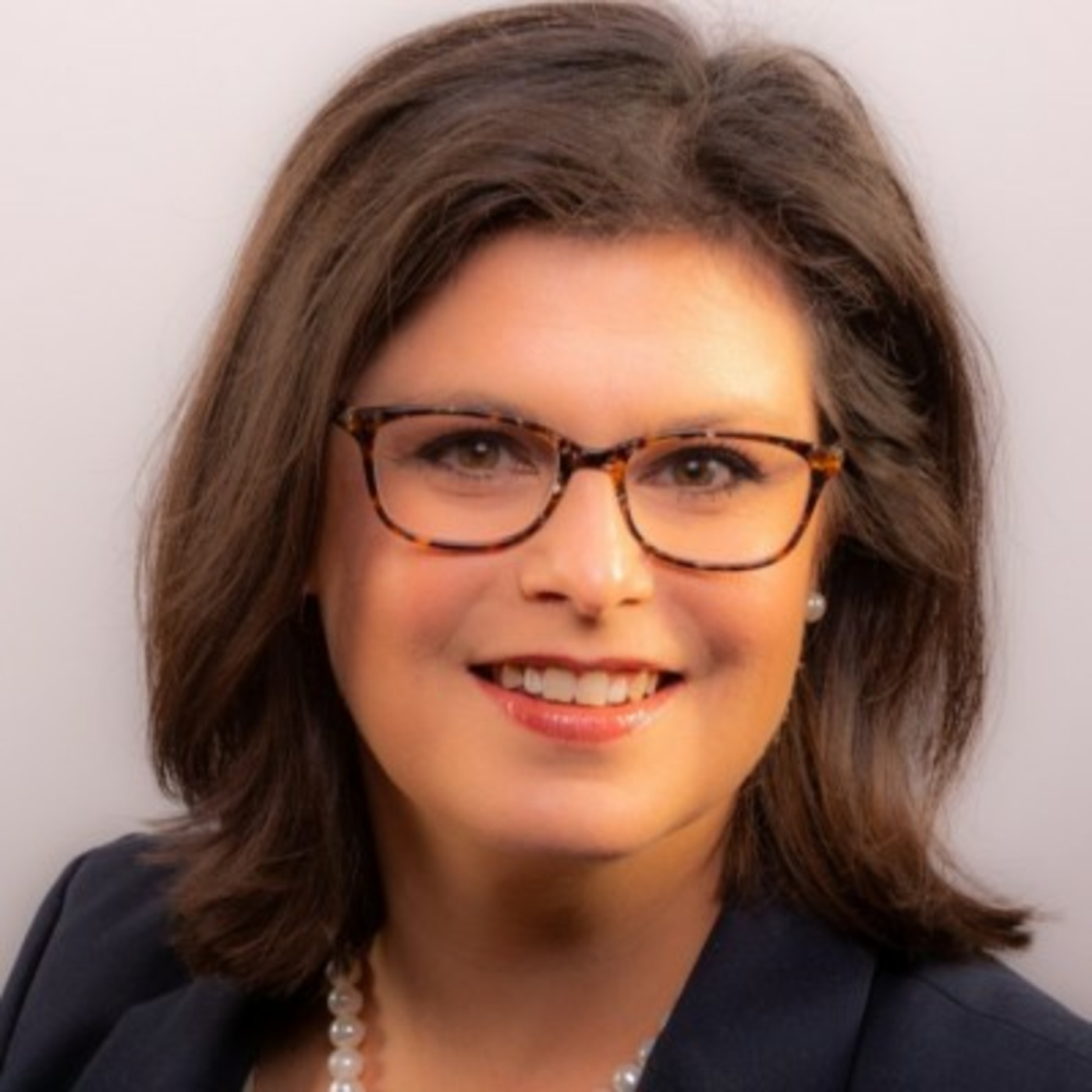
Aoifinn Devitt: How can you live your mission every day? And how can the mission of an institution be put into action through its investing style? Let’s find out next. I’m Aoifinn Devitt, and welcome to the 50 Faces podcast, a podcast committed to revealing the richness and diversity of the world of investment by focusing on its people and their stories. I’m joined today by Katie Wyatt, who is CIO of the endowment of Loyola University, a role she has held for close to 2 years. She was previously director of investments at the pharmaceutical company Abbott, where she spent over 11 years, and prior to that held a range of roles in equity research. She recently became a member of the board of directors of the CFA Society of Chicago. Welcome, Katie. Thank you for joining me today.
Katie Wyatt: Thank you, Aoifinn.
Aoifinn Devitt: Let’s talk about your current role. Can you tell us what you’re doing there at Loyola University and then talk about your journey into that role?
Katie Wyatt: Sure. Well, I joined Loyola about 2 years ago, and my role there was to build out an investment effort for the university. So we’ve always had a CIO, but previously the CIO role and the treasurer role were one and the same. And the university decided prior to my arrival to separate those roles. So it’s a very, it was a very exciting opportunity. It’s very entrepreneurial and a chance to build an investment office from the ground up. And then, you know, as far as my journey into investment and where it started, you know, my interest in investments really started back when I was a kid. When I was growing up, my dad owned a business. It was a manufacturing company. Ultimately, he sold it, but I grew up in a family that ran a business and I’ve always been interested in how businesses work. After he sold the company, he retired and started investing on his own and was on the advisory board of other private businesses. So maybe I think that’s one of the reasons I’ve always liked private equity so much. Know, You my parents have two daughters, and especially as a woman, I’m very fortunate that my dad intentionally exposed me to investing. And made an effort to cultivate that interest in me and encourage that as a career. As a kid, my dad took me with him sometimes when he met with his investment advisor. And actually, his investment advisor also was a woman. So that was really great for me to see a woman investment professional at such an early and formational age. When I was in high school, he gave me a small amount of money to start a Schwab account, and I started investing in mutual funds. All the way back in high school. And then coming out of college, I got a degree in finance, investment, and banking. But even though I wanted to be an investor, I followed some advice to cut my teeth working for a big firm. And so, I got an offer from a large consulting firm. The advice actually was really to go to New York and work for a big firm like a bank. But I’m sort of a Midwest girl and I didn’t really want to go to New York. So, I took the big company advice and started in consulting at Accenture in Chicago. It was the same year that Accenture spun off from Andersen Consulting, but my job was basically being a controller at the engagement level to make sure the engagements were on budget and profitable. I didn’t like it at all, and I lasted about a whole year. Then I went back to grad school at the University of Wisconsin to be a part of their Applied Security Analysis program. And that program, the Applied Security Analysis program, was formational for my investing career. It’s really a fantastic program designed for grooming up equity and fixed income security analysts. The program had at the time, I think, about a $50 million endowment specifically dedicated to the student program. So we were managing money in real time. And the timing, I got kind of lucky because it was, I was in the program in 2003 and 2004 coming out of the prior market crash and recession. So we really had a rising market at our back. So I trained as a security analyst, did industry research, produced buy reports on stocks. And bought them and traded them for the portfolio. So together with my classmates, we managed a fund. Um, while I was in school, I interned in equity research at an asset management company in Milwaukee. Um, they ran a mutual fund and a hedge fund focused on small to mid-cap US equities. And then where I think my career takes a little bit of a turn is that coming out of the Applied Security Analysis program, I realized my interests really were more about being a broader investor and single security selection was really not for me. I was more interested in being a multi-asset class investor and using the skills I developed to evaluate other portfolios. So while all of my classmates went to the sell side on Wall Street or the buy side working for fund managers, I joined a family office in Chicago and started covering hedge funds, private private equity, oil and gas, timber partnerships. It was 2004 and hedge funds and alternative investments were really the place to be at that time. So it was a great place to cut my teeth. So my investing career, while I trained as a stock picker and security analyst, my career really took shape as an allocator. And then after the family office, I moved to the institutional side where I joined Abbott Laboratories and have been managing institutional pools of capital ever since. So I think one of the most interesting things about my career as an allocator, as I look back, is that I’ve had experience with almost every type of institutional pool of capital. I’ve managed money in private wealth, defined benefit, defined contribution, foundation, and now endowment. I haven’t done anything in insurance, but I’ve had pretty broad experience along the way, and I’ve had the opportunity to invest into pretty much every asset class.
Aoifinn Devitt: That is absolutely extraordinary experience to actually get your hands on a portfolio while still studying. Real money as opposed to paper portfolio. And it seems that it’s quite rare. I actually have never heard of a program like that. So that’s, that seems like fantastic experience. Equally, you’ve mentioned that the length of time that you’ve been investing and managed your way through many crashes and market crashes, which we’ve all been experiencing in our career, sadly. And I think also the experience of that is certainly a humbling one as well. So it’s really interesting. Now that you’re a CIO and you essentially have, you know, looking across all asset classes, you’re also in a particular kind of CIO role given you’re in a university endowment. What is at the forefront of your mind as a CIO of a university endowment today? And what investment beliefs are you bringing to bear in that role?
Katie Wyatt: Sure. You know, a mentor of mine always said that every pool of capital exists for a reason. So as a chief investment officer, my first job is to understand the purpose of that pool of capital, the needs of the institution or the individual it serves, and to define the objectives from there. So right now at Loyola, I serve one institution now as CIO, but I actually have three distinct pools of capital. I run an endowment, a defined benefit plan, and a pool of short-term operating reserves. So we manage each pool of capital to its own risk tolerance and liquidity needs. So, you know, the biggest thing on my mind today as a CIO, and you know, this relates to each portfolio, the biggest thing on my mind today is how to earn a rate of return that will achieve our objectives. So, you know, you mentioned the market cycles that we’ve been through, the ups and the downs. And I think as we all know, the environment we’re in now with zero rates and elevated asset prices sets us up for a challenging future expected return environment going forward. But, you know, we have some pretty aggressive objectives across our portfolio. The objective of the endowment is for growth of capital. So it’s very equity-oriented. We aim to earn a return in excess of inflation and spend. So, you know, kind of the typical CPI plus 5. But if you look at forward expected returns on equity, even an equity expected return is probably lower than that CPI plus 5, you know, much less a diversified portfolio. So, you know, we’re lucky at our endowment that our spending rate is low. But as institutions, now we need to take on more risk, maybe to make that desired return. That needs to be balanced with bearing risk intelligently and designing resilient portfolios to provide a stability of spending and avoid permanent loss of capital. You know, so the pension also needs to grow its way out of funding deficit, as many pensions do. You know, ultra-low interest rates have made that objective much harder. You know, and the operating reserves that we run are being invested in ultra-short fixed income for capital preservation, and there’s little to no return for that pool of capital either. So finding ways to earn an acceptable return in alignment with the risk each portfolio can properly assume is kind of the first thing on my mind today.
Aoifinn Devitt: And with the exception of the short-term reserves, can you generally have a fairly long-term time horizon for the other two pools of capital, the endowment and the pension fund?
Katie Wyatt: Yes to both, but in different ways. So the you know, endowment, by just by definition has an indefinite time horizon, it’s perpetual. So we really can take a long-term view on allocating capital, which is great because it allows us to ride out all of the bumps that we have been experiencing. It allows us to assume more illiquidity in exchange for higher returning investments. So even though we— it is challenging to meet our objectives, I’m very confident that over you time, know, we will still be able to do that because we have a lot of flexibility due to the long-term time horizon that that pool of capital has. The pension has a long time horizon. You know, if you look at the tail of the liability, it extends, you know, really far into the future, but it does have more immediate cash flow needs. And, you know, we can’t really afford to take a lot of illiquid and long-term lockup investments in that pool of capital. So that one I think is a little bit more challenging because, you know, with the liability side, you’re also marked to market and funding requirements that the university is required to make can be dependent on a on very, a return at a point in time.
Aoifinn Devitt: And I want to talk a little bit about mission investing, because the other aspect of an endowment besides the long-term horizon and the spending needs is, you know, you’re within a Catholic university at Loyola University. Its own mission, according to its website, is freedom of inquiry, pursuit of truth, and care of others. And I know that you’ve adopted a mission-driven approach to how you invest throughout your career. And how do you put that into effect at Loyola? And what does investing with a mission mean to you?
Katie Wyatt: Well, thank you for asking that. Know, You I, I do think about my career so far as kind of an evolution and mission. And the mission focus of Loyola was one of the things that got me really excited about the job. You know, as far as my career goes and my, my mission focus, you know, I started a family office managing money for very high net worth families. That have been entrepreneurs a lot. You And, know, the mission was to be a good steward of the fruits of their labor and help them invest it to take care of their children and grandchildren. But when I moved to Abbott, know, you I started managing money for defined benefit and defined contribution plans. And I came to work every day knowing that what I did helped provide a safe and secure retirement for tens of thousands of employees and retirees. So there was a lot of satisfaction and sense of mission. Knowing my work was so important to people’s livelihoods post-retirement. When I came to Loyola, the mission evolved further and became personal. Loyola is a Jesuit Catholic university, and our mission is to educate students in this rich Ignatian tradition of seeking God in all things, intellectual exercise, honoring each human person, teaching students— actually all of us— to become people for others. So as a practicing Catholic myself, I really identify with this mission and I’m a big supporter of Catholic education. So I’m honored that I am able to use my career pursuits to advance what I see as a personal mission, but also something that I think is really needed in the world right now, that students go forth to light the world on fire, as Loyola says, and become ethical leaders of the future. So what’s very exciting now is that we are in the middle of working with our investment committee on integrating our institutional mission principles principles into how we approach investment policy. So one of our recent meetings, the Investment Policy Committee— well, in fact, the entire trustee board was asked to reflect on a planning document the Midwest Jesuits put out that centers on the Jesuit Universal Apostolic Preferences and how to integrate them throughout all of their apostolates, including universities. So the committees were asked to reflect on this and then to discern on how to integrate this mission into what they are charged with, in our case, which is investment policy. So what are the 4 universal apostolic preferences? They are: 1, showing the way to God; 2, walking with the excluded; 3, journeying with youth; and 4, care for our common home. So how do you put that into an investment portfolio? You know, we’re working at looking— we’re looking at ways to integrate these themes and you incorporate, know, these apostolic preferences and Catholic social teaching broadly into our investment policy, all the while operating within our fiduciary responsibilities, because we are stewards of gifted and endowed money. So I’m trying to weave in these themes across the portfolio. And you can see them showing up in a couple of ways. You know, I’ll point out, you know, the first one showing the way to God is evolving into developing a sustainable investment policy. And integrating ESG so that we’re proactively investing into companies with sound and ethical business practices. You know, the second one, journeying with youth, we can see this theme develop as we’re working closely with student government. And we’re working on including a student representative on our investment policy committee. It’s a non-voting position, of course, but there is experience to gain and a lot to learn for that student so that they can get exposure to what we’re doing and how we’re thinking about about the intersection of mission and investing. For the Apostolic Preference on Care for Our Common Home, of course, it’s very common right now at universities that there is a lot of advocacy for fossil fuel divestment and the like. So we’re discussing practical portfolio implications of that topic. But I think more importantly, as an institution, Loyola is really a leader in environmental sustainability.. And we now have a full school dedicated to this practice area. So I’m working with them in the School for Environmental Sustainability and with Academic Affairs as they’re seeking to incorporate some of the UN Sustainable Development Goals into their strategic planning. And so I’m looking for ways our investment portfolio can lean into the good with making proactive investments into these spaces.. And it’s showing up in themes in places we’re targeting, like healthcare accessibility and environmental or climate change technology, et cetera. So I’ve been sourcing a lot of really interesting investment opportunities in areas where we can make an impact and integrate our mission. But importantly, which we do expect to earn a compelling rate of return for the endowment.
Aoifinn Devitt: That is so interesting and so unusual, actually, that you’re being already so intentional and so creative about that, about weaving these aspects of your mission into your investment policy. I say it’s rare simply because I think many institutions perhaps have not got to that stage. They perhaps are not— they’re looking at certain, perhaps certain goals, certain beliefs, but not being holistic around their entire investment policy. So that’s really exciting to hear. And thank you. For the strides you’re making in that. What have you learned from some of the setbacks and challenges that you faced in your career?
Katie Wyatt: Sure. Yeah, I mean, I started my career in grad school in 2003, so I had the wind at my back. And certainly that remained true in my first job out of school. I joined Abbott in June of 2007, so right on the brink of the global financial crisis. And then managed through that and then joined Loyola in December of 2018, right in the middle of a bear market. And then since then, now in 2020, we’ve had another bear market and stunning rally. So I’ve seen a lot of ups and downs in my career. When I think about some of the setbacks and challenges, so there’s setbacks and challenges, there’s investment maybe mistakes along the way that I think we all make. You know, from setbacks, I’ve learned quite a bit. Maybe not from setbacks, but from tough personal times that I’ve been through. So when you go through a hardship, a personal struggle in your life, I think it makes you more aware that that struggle is part of the human experience. And, you know, when you’re dealing with some, you know, some sort of heavy personal issues in your home life, you know, we all drag that human experience into the workplace with us. So while I’ve learned, I have learned to develop personal fortitude, you know, be able to experience, to separate work from personal and manage through tough times, I am very cognizant that people around me, you never know what they’re going through and you never know what they’re bringing to work with them. And so one of the quotes I’ve collected through the years that I’ve really come to appreciate is, I think, from Plato, and it says, “Be kind, for everyone you meet is fighting a hard battle.” You know, in terms of investment mistakes, I just, I’d say the biggest thing that I’ve learned is making sure there is alignment of interests between you and your investment managers, particularly true for illiquid investments. You know, I like to say it’s called a partnership for a reason, or at least it should be. The investments I’ve made that maybe I’m not all that enthusiastic about are not actually funds that perform poorly. Yeah, I guess I’m thinking of a specific fund. It’s actually a decent investment, thankfully. So I won’t call it a mistake, but, you know, we went into it because it was a great fund and a great manager, but we kind of got treated like it’s our privilege to invest with them and pay them fees. So I’ve learned you really need to align yourself with partners who are going to treat you as partners because you are committed for a very long time.
Aoifinn Devitt: I think that I would just say word to that one. Absolutely. Were there any key people who influenced you in your career and in what way?
Katie Wyatt: I’ve had the privilege of working for a lot of amazing people. You know, as I look across all of the people that I worked for since I’d just say since I got out of grad school and was in this investing business, most all of them have been excellent people and I’ve learned different things from different people. You know, there was one experience that was maybe not as positive, but I learned a lot from that too. And, you know, one of the best pieces of advice that I got, you know, when I became a CIO and I would be a manager of people, was that I got a piece of advice to observe the management styles of all the people that I had worked for and observe, you know, what made them successful, what I would do differently, and how, you know, what motivated me and what didn’t, and to bring that kind of collective experience into my new role to form what kind of a manager I would be. And then, you know, when I think about some of the key people who influenced me You know, they weren’t actually investors, but managers I used to work for, you know, manager, not in the sense of investment manager, but manager in the sense of my boss. There were two in particular, both of them women, actually, two different treasurers that I worked for while I was at Abbott. I learned a lot about leadership from them. Both of them encouraged me. They were very enthusiastic about women in leadership roles.. And I think they, you know, they took a personal interest in me and developed me for growing into a leadership role. And now that I’m in one, I hope to be as positive of a leader as those people that I have worked for. But I think the best thing that they taught me is they just taught me a lot about growth. Both of these women took on a big job. It was a corporate treasurer. It was a corporate officer job, but they never had any experience working in treasury, and so many different departments reported into them from just, you know, Treasury operations, risk management, pension, real estate. You know, Treasury is just a really wide collection of stuff that somebody has to manage. And they had been leaders in other areas, but no prior experience in Treasury whatsoever. So I learned from that, that leaders aren’t necessarily people who have developed a highly specialized skill set in a certain area with a linear path. Sometimes they are. But a good leader can step into a role they’ve never done before, something that is completely different, surround themselves with subject matter experts, smart people, trust their judgment, and become highly successful in an area where they’ve had no prior experience. And one of them once said to me, you know, every time you move up and you take a new role, you’ve never done that role. So you don’t know everything about it. And that, it sounds very obvious, But it was very influential to me. And I reflected on that a lot as I moved up into the CIO role at Loyola. You know, coming from a director of investments position, it’s, I mean, it’s definitely a similar skill set. No doubt you’re investing assets, but the job is very different. And, you know, I will admit I can be sort of a control freak sometimes, and I can get stuck in a fixed mindset where I get a little anxious if I find I don’t know everything about a particular area. And these two women, these treasures that I worked for, really introduced me into the concept of a growth mindset. And I actually read the book by Carol Dweck, I think, which they recommended to me. But, you know, this growth mindset, instead of getting devastated by mistakes or setbacks or, you know, the fear of not knowing something, You know, that’s a fixed You mindset. Know, a growth mindset instead believes that knowledge, intelligence, or ability can be developed through continued learning and embracing new challenges. And watching those two influential women gave me the confidence to step into a big new role that I’ve never done before.
Aoifinn Devitt: That’s so powerful. And something else I hear in in that, their advice, and it’s— you’re particularly lucky, I think, to have had them as as mentors or examples is the vulnerability that comes from admitting you don’t know it all. And I think often we’re afraid to show that vulnerability. And it seems that when you have a support like maybe they were, or at least encouragement to be vulnerable because, look, they were vulnerable too and they showed it, that’s very encouraging because it’s definitely not something that’s easy to do. And I’d say particularly not in the world of finance where it’s very rare. So, no, that’s very helpful. You’ve already spoken about quite a bit of advice advice they’ve given you, were there any other gems of wisdom that came to you over the course of your career that you can share?
Katie Wyatt: You know, I think you, you know, when you mentioned vulnerability, you know, that’s so key. I think, you know, furthering that line of growth mindset, you know, their advice to me was really that you don’t grow if you’re comfortable. And so there’s, you know, understanding that You know, if you want you growth, know, in your life, in your career, there is no growth if you’re not going to move out of your comfort zone. And, you know, as you mentioned vulnerability, I think a lot of people wonder if they’re up to the job when they take on a new challenge. I don’t think I’m alone in that. But, you know, by definition, you don’t know how to do that job that you’re going to because you’ve never done it before. And there are going to be things that you don’t know how to do and situations you don’t know how to manage. You need to accept that there’s a lot that you don’t know going into this new role. If all you do is remain doing what you’re already an expert at or remain doing something that you’re already comfortable at, there’s no growth there. I keep reminding myself all the time when I have a new challenge or situation, thinking about their advice, I keep reminding myself just I need to get comfortable with being uncomfortable. And, you know, if I could offer a second brief piece of advice that has made an impact on me, you know, it’s very similar. You know, that advice has been to understand what is in your control and what is not. You know, you can work to produce the best outcome or situation for what you can control, but you can’t worry and lose sleep about what you cannot control. And my husband actually hammers this into my head constantly. You know, he knows I can be a control freak, the poor guy. He introduced me to the concept or philosophy of stoicism, which I think has helped me be more resilient because it trains you to understand that you can’t control external events or circumstance, but what you can control is your behavior and your response to it. So, you know, these two pieces of advice I try to you keep, know, perspective on, and it’s really had an impact on how I approach my life personally, socially, professionally.
Aoifinn Devitt: Those are some very poignant pieces of advice, particularly the last one today in this environment where ultimately we are in the middle of a pandemic that none of us can control. The restrictions on our life we can control, and I think you’re right, this— the illusion of control, I’ve often said, is maybe an illusion because we never really had control over much of our life anyway, but we at least had an illusion, and that illusion has been shattered now, which is unsettling to many of us. And then just, I wanted to segue to my question about diversity because this is a word that comes up over and over again is getting comfortable being uncomfortable. It’s often said, and I’ve had it said on this podcast a few times about diversity, but I just want to quickly circle back to your context because I agree with you. We do need to get comfortable with being uncomfortable. I think if we find people who have are comfortable with being uncomfortable, we should latch on to those people and learn from them because I think it is a skill to sit with that level of discomfort. It comes in providing feedback, it comes in, in conflict-laden situations, not all of which are bad, and I think probably far too many people want to get out of an uncomfortable situation and just move on. So thinking of being uncomfortable, I wanted to ask you about your thoughts on the diversity in the investment profession? As we talked a little bit about your mission and how you seek to infuse that through all of what you do, but what is it that you think is right or wrong about the levels of diversity in the investment world and what can we do about it?
Katie Wyatt: Yeah, well, I mean, I’d like to focus on the good news. I mean, I think the diversity seems to have grown from where it used to be, or maybe because we’re all talking about it, I’m noticing much more than I used to, you know, back to the getting comfortable with being uncomfortable, you know, from a diversity sense. I remember, you know, really early on in my career, I was uncomfortable a lot. You know, I’d go to a conference, you know, there was always the cocktail hour where people, you know, mingle and talk. And I was always looking around and noticing that I seemed to always be one of the only women. I was young and I was in a room full of, you know, a lot of men. And so trying to, you know, network and connect when I’m quite a bit younger and one of the only women was a little uncomfortable. And especially since I don’t know a thing about sports, I don’t even have that as a topic or icebreaker or small talk. You know, so what I did is I’ve joined several women’s investor networks. I’ve really appreciated the community I find there. You know, I think that’s one of the reasons this podcast is so brilliant, just to highlight the diversity of people and backgrounds that does exist. But, you know, I think the more that we seek out these networks, you know, there’s that illusion that we’re alone or somehow different really gets dispelled. And the more people that we meet, you know, whether, you know, they’re men or women or people of diverse backgrounds, We find so much in common with everyone. And I think that’s one of the beauties of, you know, a growing— the growing diversity in our field.
Aoifinn Devitt: And what is it that you like most about the investment world?
Katie Wyatt: You know, I mean, it’s just, it’s a really interesting field. I you think, know, investing is you just, know, participating and learning about how economies function, markets function, studying relationships. It’s it’s really intellectually fascinating. And, you know, if you’re an intellectually curious person, it’s just, you know, so fast-paced, it’s just a phenomenal thing to be an observer for. I think one of my favorite parts, though, is meeting extremely interesting people. There is so much opportunity and innovation. You know, I’ve been talking recently to a lot of venture capital firms. You know, I get to learn about a lot of things from interacting with some incredibly smart people who know much more than I do about a lot of things. So every time I meet with someone, I learn a lot or I gain a very interesting perspective. And, you know, just growing and, you know, seeing your education just evolve with meeting these very talented people, it’s really a privilege to be able to get to know so many interesting people in this field.
Aoifinn Devitt: And one question I really want to ask you in particular, because you’re at a Jesuit institution. My brother attended a Jesuit school. I know the Jesuits really live their mottos and their creed. And is there any creed or motto that you live by?
Katie Wyatt: Yeah, you know, I don’t just have one creed or motto. You know, there’s a couple. You know, you mentioned, you know, the Jesuit creed and motto. You know, I mentioned before, one of the reasons I feel so connected to Loyola is that it’s very very personally tied to my own mission as a Catholic. And I guess the phrase ad majorem Dei gloriam has always been very meaningful to me. I came across this Latin phrase, which means for the greater glory of God. And I think even if you’re not a religious person, you can relate to the concept of doing things and living your life for a greater purpose than simply yourself. And then, as you mentioned, the Jesuits, perhaps perhaps serendipity plays a role here, but it turns out that that motto is actually the motto of the Jesuits and Loyola University itself. So when I took the job at Loyola, it was very meaningful for me to adopt that motto across both my personal and professional lives. And it really reinforced for me the way I was trying to align my career with my personal mission. You know, there’s a lot of— I’m a collector of quotes, actually, Aoifinn. I have this Word document in my personal file where I have collected quotes and sayings and phrases that have influenced me or made me think or given me perspective. And I started this document about 13 years ago when I was working at Abbott and got a Bloomberg terminal for the first time. You know, if you’re a Bloomberg user, you’ll know that after you log in, the startup screen has a daily quote on it. And so many of them are really thought-provoking or just wise observations on life. So I have a 14-year rolling collection of Bloomberg Daily Quotes that spans observations on life from a wide range of people. And I’ve added my own quotes that come along the way. But the reason I’ve saved them all is that they’ve taught me something about life or people or circumstance. And, you know, there’s a poem that I’ve always liked. You know, I started off talking about my father and his influence on shaping my investment career. You know, there’s a poem that hangs in his office in our basement in the house I grew up in. It’s called “Desiderata.” I think the author is Max You Ehrmann. Know, it was written in the early 1900s, just way too long to share with you on a podcast, but I’d highly encourage anyone listening to look it up and read it. It’s a poem or general reflections on life about being practical and balanced in life, business, and relationships. But all the while being aware and cognizant of the beauty and virtue that really surrounds us.
Aoifinn Devitt: That is a beautiful poem. And I also had it on my grandmother’s wall in the bedroom. I used to spend many evenings there. And it’s funny, I went to bed at night looking at it and reading it. And even at a very young age, it can have quite a profound effect on you. You made me smile about the Bloomberg quotes because you may not know this, but there’s a London Tube underground station where the staff there have quite a sense of humor. A treasure trove of quotes they put on the whiteboard every day. And I’m not sure if anyone’s ever collected a book of those, but I’m sure they would be a similarly inspiring book as those Bloomberg quotes.
Katie Wyatt: Yeah, I’ve got 20 pages of them.
Aoifinn Devitt: You should publish a book. Just my final question is, what advice would you have now for your younger self?
Katie Wyatt: Oh boy. You know, my advice would be if I were gonna say, you know, how should you think about, you know, your career as you’re coming out of college? I guess my advice would be to take a job with a great training program where you’re going to learn a You lot. Know, get to know your industry and who the players are early on. But I think most importantly, make connections and grow your network and be very thoughtful and intentional about career management. You know, life is a journey, enjoy it, learn all you can. And then, you know, even in your personal life, both trials and good things will pass. So just be at peace.
Aoifinn Devitt: Well, thank you so much, Katie. It has been such a pleasure speaking with you and thank you for sharing so much of that wisdom. And I in particular love what you said from Plato, his exhortation to be kind, for everyone you meet is fighting a hard battle. I think I will pin that over my desk because especially now it is important, I think, to modulate our, perhaps our behaviors, our interactions, just with that in mind. So thank you for that very salutary reminder. It’s been a pleasure speaking with you today.
Katie Wyatt: Well, thank you.
Aoifinn Devitt: I’m Infn Devitt. Thank you for listening to the 50 Faces Podcast. If you liked what you heard and would like to tune in to hear more inspiring investors on their personal journeys, please subscribe on Apple Podcasts or wherever you get your podcasts. This podcast is for informational purposes only and should not be construed as investment advice, and all views are personal and should not be attributed to the organizations and affiliations of the host or any guest.
Aoifinn Devitt: How can you live your mission every day? And how can the mission of an institution be put into action through its investing style? Let’s find out next. I’m Aoifinn Devitt, and welcome to the 50 Faces podcast, a podcast committed to revealing the richness and diversity of the world of investment by focusing on its people and their stories. I’m joined today by Katie Wyatt, who is CIO of the endowment of Loyola University, a role she has held for close to 2 years. She was previously director of investments at the pharmaceutical company Abbott, where she spent over 11 years, and prior to that held a range of roles in equity research. She recently became a member of the board of directors of the CFA Society of Chicago. Welcome, Katie. Thank you for joining me today.
Katie Wyatt: Thank you, Aoifinn.
Aoifinn Devitt: Let’s talk about your current role. Can you tell us what you’re doing there at Loyola University and then talk about your journey into that role?
Katie Wyatt: Sure. Well, I joined Loyola about 2 years ago, and my role there was to build out an investment effort for the university. So we’ve always had a CIO, but previously the CIO role and the treasurer role were one and the same. And the university decided prior to my arrival to separate those roles. So it’s a very, it was a very exciting opportunity. It’s very entrepreneurial and a chance to build an investment office from the ground up. And then, you know, as far as my journey into investment and where it started, you know, my interest in investments really started back when I was a kid. When I was growing up, my dad owned a business. It was a manufacturing company. Ultimately, he sold it, but I grew up in a family that ran a business and I’ve always been interested in how businesses work. After he sold the company, he retired and started investing on his own and was on the advisory board of other private businesses. So maybe I think that’s one of the reasons I’ve always liked private equity so much. Know, You my parents have two daughters, and especially as a woman, I’m very fortunate that my dad intentionally exposed me to investing. And made an effort to cultivate that interest in me and encourage that as a career. As a kid, my dad took me with him sometimes when he met with his investment advisor. And actually, his investment advisor also was a woman. So that was really great for me to see a woman investment professional at such an early and formational age. When I was in high school, he gave me a small amount of money to start a Schwab account, and I started investing in mutual funds. All the way back in high school. And then coming out of college, I got a degree in finance, investment, and banking. But even though I wanted to be an investor, I followed some advice to cut my teeth working for a big firm. And so, I got an offer from a large consulting firm. The advice actually was really to go to New York and work for a big firm like a bank. But I’m sort of a Midwest girl and I didn’t really want to go to New York. So, I took the big company advice and started in consulting at Accenture in Chicago. It was the same year that Accenture spun off from Andersen Consulting, but my job was basically being a controller at the engagement level to make sure the engagements were on budget and profitable. I didn’t like it at all, and I lasted about a whole year. Then I went back to grad school at the University of Wisconsin to be a part of their Applied Security Analysis program. And that program, the Applied Security Analysis program, was formational for my investing career. It’s really a fantastic program designed for grooming up equity and fixed income security analysts. The program had at the time, I think, about a $50 million endowment specifically dedicated to the student program. So we were managing money in real time. And the timing, I got kind of lucky because it was, I was in the program in 2003 and 2004 coming out of the prior market crash and recession. So we really had a rising market at our back. So I trained as a security analyst, did industry research, produced buy reports on stocks. And bought them and traded them for the portfolio. So together with my classmates, we managed a fund. Um, while I was in school, I interned in equity research at an asset management company in Milwaukee. Um, they ran a mutual fund and a hedge fund focused on small to mid-cap US equities. And then where I think my career takes a little bit of a turn is that coming out of the Applied Security Analysis program, I realized my interests really were more about being a broader investor and single security selection was really not for me. I was more interested in being a multi-asset class investor and using the skills I developed to evaluate other portfolios. So while all of my classmates went to the sell side on Wall Street or the buy side working for fund managers, I joined a family office in Chicago and started covering hedge funds, private private equity, oil and gas, timber partnerships. It was 2004 and hedge funds and alternative investments were really the place to be at that time. So it was a great place to cut my teeth. So my investing career, while I trained as a stock picker and security analyst, my career really took shape as an allocator. And then after the family office, I moved to the institutional side where I joined Abbott Laboratories and have been managing institutional pools of capital ever since. So I think one of the most interesting things about my career as an allocator, as I look back, is that I’ve had experience with almost every type of institutional pool of capital. I’ve managed money in private wealth, defined benefit, defined contribution, foundation, and now endowment. I haven’t done anything in insurance, but I’ve had pretty broad experience along the way, and I’ve had the opportunity to invest into pretty much every asset class.
Aoifinn Devitt: That is absolutely extraordinary experience to actually get your hands on a portfolio while still studying. Real money as opposed to paper portfolio. And it seems that it’s quite rare. I actually have never heard of a program like that. So that’s, that seems like fantastic experience. Equally, you’ve mentioned that the length of time that you’ve been investing and managed your way through many crashes and market crashes, which we’ve all been experiencing in our career, sadly. And I think also the experience of that is certainly a humbling one as well. So it’s really interesting. Now that you’re a CIO and you essentially have, you know, looking across all asset classes, you’re also in a particular kind of CIO role given you’re in a university endowment. What is at the forefront of your mind as a CIO of a university endowment today? And what investment beliefs are you bringing to bear in that role?
Katie Wyatt: Sure. You know, a mentor of mine always said that every pool of capital exists for a reason. So as a chief investment officer, my first job is to understand the purpose of that pool of capital, the needs of the institution or the individual it serves, and to define the objectives from there. So right now at Loyola, I serve one institution now as CIO, but I actually have three distinct pools of capital. I run an endowment, a defined benefit plan, and a pool of short-term operating reserves. So we manage each pool of capital to its own risk tolerance and liquidity needs. So, you know, the biggest thing on my mind today as a CIO, and you know, this relates to each portfolio, the biggest thing on my mind today is how to earn a rate of return that will achieve our objectives. So, you know, you mentioned the market cycles that we’ve been through, the ups and the downs. And I think as we all know, the environment we’re in now with zero rates and elevated asset prices sets us up for a challenging future expected return environment going forward. But, you know, we have some pretty aggressive objectives across our portfolio. The objective of the endowment is for growth of capital. So it’s very equity-oriented. We aim to earn a return in excess of inflation and spend. So, you know, kind of the typical CPI plus 5. But if you look at forward expected returns on equity, even an equity expected return is probably lower than that CPI plus 5, you know, much less a diversified portfolio. So, you know, we’re lucky at our endowment that our spending rate is low. But as institutions, now we need to take on more risk, maybe to make that desired return. That needs to be balanced with bearing risk intelligently and designing resilient portfolios to provide a stability of spending and avoid permanent loss of capital. You know, so the pension also needs to grow its way out of funding deficit, as many pensions do. You know, ultra-low interest rates have made that objective much harder. You know, and the operating reserves that we run are being invested in ultra-short fixed income for capital preservation, and there’s little to no return for that pool of capital either. So finding ways to earn an acceptable return in alignment with the risk each portfolio can properly assume is kind of the first thing on my mind today.
Aoifinn Devitt: And with the exception of the short-term reserves, can you generally have a fairly long-term time horizon for the other two pools of capital, the endowment and the pension fund?
Katie Wyatt: Yes to both, but in different ways. So the you know, endowment, by just by definition has an indefinite time horizon, it’s perpetual. So we really can take a long-term view on allocating capital, which is great because it allows us to ride out all of the bumps that we have been experiencing. It allows us to assume more illiquidity in exchange for higher returning investments. So even though we— it is challenging to meet our objectives, I’m very confident that over you time, know, we will still be able to do that because we have a lot of flexibility due to the long-term time horizon that that pool of capital has. The pension has a long time horizon. You know, if you look at the tail of the liability, it extends, you know, really far into the future, but it does have more immediate cash flow needs. And, you know, we can’t really afford to take a lot of illiquid and long-term lockup investments in that pool of capital. So that one I think is a little bit more challenging because, you know, with the liability side, you’re also marked to market and funding requirements that the university is required to make can be dependent on a on very, a return at a point in time.
Aoifinn Devitt: And I want to talk a little bit about mission investing, because the other aspect of an endowment besides the long-term horizon and the spending needs is, you know, you’re within a Catholic university at Loyola University. Its own mission, according to its website, is freedom of inquiry, pursuit of truth, and care of others. And I know that you’ve adopted a mission-driven approach to how you invest throughout your career. And how do you put that into effect at Loyola? And what does investing with a mission mean to you?
Katie Wyatt: Well, thank you for asking that. Know, You I, I do think about my career so far as kind of an evolution and mission. And the mission focus of Loyola was one of the things that got me really excited about the job. You know, as far as my career goes and my, my mission focus, you know, I started a family office managing money for very high net worth families. That have been entrepreneurs a lot. You And, know, the mission was to be a good steward of the fruits of their labor and help them invest it to take care of their children and grandchildren. But when I moved to Abbott, know, you I started managing money for defined benefit and defined contribution plans. And I came to work every day knowing that what I did helped provide a safe and secure retirement for tens of thousands of employees and retirees. So there was a lot of satisfaction and sense of mission. Knowing my work was so important to people’s livelihoods post-retirement. When I came to Loyola, the mission evolved further and became personal. Loyola is a Jesuit Catholic university, and our mission is to educate students in this rich Ignatian tradition of seeking God in all things, intellectual exercise, honoring each human person, teaching students— actually all of us— to become people for others. So as a practicing Catholic myself, I really identify with this mission and I’m a big supporter of Catholic education. So I’m honored that I am able to use my career pursuits to advance what I see as a personal mission, but also something that I think is really needed in the world right now, that students go forth to light the world on fire, as Loyola says, and become ethical leaders of the future. So what’s very exciting now is that we are in the middle of working with our investment committee on integrating our institutional mission principles principles into how we approach investment policy. So one of our recent meetings, the Investment Policy Committee— well, in fact, the entire trustee board was asked to reflect on a planning document the Midwest Jesuits put out that centers on the Jesuit Universal Apostolic Preferences and how to integrate them throughout all of their apostolates, including universities. So the committees were asked to reflect on this and then to discern on how to integrate this mission into what they are charged with, in our case, which is investment policy. So what are the 4 universal apostolic preferences? They are: 1, showing the way to God; 2, walking with the excluded; 3, journeying with youth; and 4, care for our common home. So how do you put that into an investment portfolio? You know, we’re working at looking— we’re looking at ways to integrate these themes and you incorporate, know, these apostolic preferences and Catholic social teaching broadly into our investment policy, all the while operating within our fiduciary responsibilities, because we are stewards of gifted and endowed money. So I’m trying to weave in these themes across the portfolio. And you can see them showing up in a couple of ways. You know, I’ll point out, you know, the first one showing the way to God is evolving into developing a sustainable investment policy. And integrating ESG so that we’re proactively investing into companies with sound and ethical business practices. You know, the second one, journeying with youth, we can see this theme develop as we’re working closely with student government. And we’re working on including a student representative on our investment policy committee. It’s a non-voting position, of course, but there is experience to gain and a lot to learn for that student so that they can get exposure to what we’re doing and how we’re thinking about about the intersection of mission and investing. For the Apostolic Preference on Care for Our Common Home, of course, it’s very common right now at universities that there is a lot of advocacy for fossil fuel divestment and the like. So we’re discussing practical portfolio implications of that topic. But I think more importantly, as an institution, Loyola is really a leader in environmental sustainability.. And we now have a full school dedicated to this practice area. So I’m working with them in the School for Environmental Sustainability and with Academic Affairs as they’re seeking to incorporate some of the UN Sustainable Development Goals into their strategic planning. And so I’m looking for ways our investment portfolio can lean into the good with making proactive investments into these spaces.. And it’s showing up in themes in places we’re targeting, like healthcare accessibility and environmental or climate change technology, et cetera. So I’ve been sourcing a lot of really interesting investment opportunities in areas where we can make an impact and integrate our mission. But importantly, which we do expect to earn a compelling rate of return for the endowment.
Aoifinn Devitt: That is so interesting and so unusual, actually, that you’re being already so intentional and so creative about that, about weaving these aspects of your mission into your investment policy. I say it’s rare simply because I think many institutions perhaps have not got to that stage. They perhaps are not— they’re looking at certain, perhaps certain goals, certain beliefs, but not being holistic around their entire investment policy. So that’s really exciting to hear. And thank you. For the strides you’re making in that. What have you learned from some of the setbacks and challenges that you faced in your career?
Katie Wyatt: Sure. Yeah, I mean, I started my career in grad school in 2003, so I had the wind at my back. And certainly that remained true in my first job out of school. I joined Abbott in June of 2007, so right on the brink of the global financial crisis. And then managed through that and then joined Loyola in December of 2018, right in the middle of a bear market. And then since then, now in 2020, we’ve had another bear market and stunning rally. So I’ve seen a lot of ups and downs in my career. When I think about some of the setbacks and challenges, so there’s setbacks and challenges, there’s investment maybe mistakes along the way that I think we all make. You know, from setbacks, I’ve learned quite a bit. Maybe not from setbacks, but from tough personal times that I’ve been through. So when you go through a hardship, a personal struggle in your life, I think it makes you more aware that that struggle is part of the human experience. And, you know, when you’re dealing with some, you know, some sort of heavy personal issues in your home life, you know, we all drag that human experience into the workplace with us. So while I’ve learned, I have learned to develop personal fortitude, you know, be able to experience, to separate work from personal and manage through tough times, I am very cognizant that people around me, you never know what they’re going through and you never know what they’re bringing to work with them. And so one of the quotes I’ve collected through the years that I’ve really come to appreciate is, I think, from Plato, and it says, “Be kind, for everyone you meet is fighting a hard battle.” You know, in terms of investment mistakes, I just, I’d say the biggest thing that I’ve learned is making sure there is alignment of interests between you and your investment managers, particularly true for illiquid investments. You know, I like to say it’s called a partnership for a reason, or at least it should be. The investments I’ve made that maybe I’m not all that enthusiastic about are not actually funds that perform poorly. Yeah, I guess I’m thinking of a specific fund. It’s actually a decent investment, thankfully. So I won’t call it a mistake, but, you know, we went into it because it was a great fund and a great manager, but we kind of got treated like it’s our privilege to invest with them and pay them fees. So I’ve learned you really need to align yourself with partners who are going to treat you as partners because you are committed for a very long time.
Aoifinn Devitt: I think that I would just say word to that one. Absolutely. Were there any key people who influenced you in your career and in what way?
Katie Wyatt: I’ve had the privilege of working for a lot of amazing people. You know, as I look across all of the people that I worked for since I’d just say since I got out of grad school and was in this investing business, most all of them have been excellent people and I’ve learned different things from different people. You know, there was one experience that was maybe not as positive, but I learned a lot from that too. And, you know, one of the best pieces of advice that I got, you know, when I became a CIO and I would be a manager of people, was that I got a piece of advice to observe the management styles of all the people that I had worked for and observe, you know, what made them successful, what I would do differently, and how, you know, what motivated me and what didn’t, and to bring that kind of collective experience into my new role to form what kind of a manager I would be. And then, you know, when I think about some of the key people who influenced me You know, they weren’t actually investors, but managers I used to work for, you know, manager, not in the sense of investment manager, but manager in the sense of my boss. There were two in particular, both of them women, actually, two different treasurers that I worked for while I was at Abbott. I learned a lot about leadership from them. Both of them encouraged me. They were very enthusiastic about women in leadership roles.. And I think they, you know, they took a personal interest in me and developed me for growing into a leadership role. And now that I’m in one, I hope to be as positive of a leader as those people that I have worked for. But I think the best thing that they taught me is they just taught me a lot about growth. Both of these women took on a big job. It was a corporate treasurer. It was a corporate officer job, but they never had any experience working in treasury, and so many different departments reported into them from just, you know, Treasury operations, risk management, pension, real estate. You know, Treasury is just a really wide collection of stuff that somebody has to manage. And they had been leaders in other areas, but no prior experience in Treasury whatsoever. So I learned from that, that leaders aren’t necessarily people who have developed a highly specialized skill set in a certain area with a linear path. Sometimes they are. But a good leader can step into a role they’ve never done before, something that is completely different, surround themselves with subject matter experts, smart people, trust their judgment, and become highly successful in an area where they’ve had no prior experience. And one of them once said to me, you know, every time you move up and you take a new role, you’ve never done that role. So you don’t know everything about it. And that, it sounds very obvious, But it was very influential to me. And I reflected on that a lot as I moved up into the CIO role at Loyola. You know, coming from a director of investments position, it’s, I mean, it’s definitely a similar skill set. No doubt you’re investing assets, but the job is very different. And, you know, I will admit I can be sort of a control freak sometimes, and I can get stuck in a fixed mindset where I get a little anxious if I find I don’t know everything about a particular area. And these two women, these treasures that I worked for, really introduced me into the concept of a growth mindset. And I actually read the book by Carol Dweck, I think, which they recommended to me. But, you know, this growth mindset, instead of getting devastated by mistakes or setbacks or, you know, the fear of not knowing something, You know, that’s a fixed You mindset. Know, a growth mindset instead believes that knowledge, intelligence, or ability can be developed through continued learning and embracing new challenges. And watching those two influential women gave me the confidence to step into a big new role that I’ve never done before.
Aoifinn Devitt: That’s so powerful. And something else I hear in in that, their advice, and it’s— you’re particularly lucky, I think, to have had them as as mentors or examples is the vulnerability that comes from admitting you don’t know it all. And I think often we’re afraid to show that vulnerability. And it seems that when you have a support like maybe they were, or at least encouragement to be vulnerable because, look, they were vulnerable too and they showed it, that’s very encouraging because it’s definitely not something that’s easy to do. And I’d say particularly not in the world of finance where it’s very rare. So, no, that’s very helpful. You’ve already spoken about quite a bit of advice advice they’ve given you, were there any other gems of wisdom that came to you over the course of your career that you can share?
Katie Wyatt: You know, I think you, you know, when you mentioned vulnerability, you know, that’s so key. I think, you know, furthering that line of growth mindset, you know, their advice to me was really that you don’t grow if you’re comfortable. And so there’s, you know, understanding that You know, if you want you growth, know, in your life, in your career, there is no growth if you’re not going to move out of your comfort zone. And, you know, as you mentioned vulnerability, I think a lot of people wonder if they’re up to the job when they take on a new challenge. I don’t think I’m alone in that. But, you know, by definition, you don’t know how to do that job that you’re going to because you’ve never done it before. And there are going to be things that you don’t know how to do and situations you don’t know how to manage. You need to accept that there’s a lot that you don’t know going into this new role. If all you do is remain doing what you’re already an expert at or remain doing something that you’re already comfortable at, there’s no growth there. I keep reminding myself all the time when I have a new challenge or situation, thinking about their advice, I keep reminding myself just I need to get comfortable with being uncomfortable. And, you know, if I could offer a second brief piece of advice that has made an impact on me, you know, it’s very similar. You know, that advice has been to understand what is in your control and what is not. You know, you can work to produce the best outcome or situation for what you can control, but you can’t worry and lose sleep about what you cannot control. And my husband actually hammers this into my head constantly. You know, he knows I can be a control freak, the poor guy. He introduced me to the concept or philosophy of stoicism, which I think has helped me be more resilient because it trains you to understand that you can’t control external events or circumstance, but what you can control is your behavior and your response to it. So, you know, these two pieces of advice I try to you keep, know, perspective on, and it’s really had an impact on how I approach my life personally, socially, professionally.
Aoifinn Devitt: Those are some very poignant pieces of advice, particularly the last one today in this environment where ultimately we are in the middle of a pandemic that none of us can control. The restrictions on our life we can control, and I think you’re right, this— the illusion of control, I’ve often said, is maybe an illusion because we never really had control over much of our life anyway, but we at least had an illusion, and that illusion has been shattered now, which is unsettling to many of us. And then just, I wanted to segue to my question about diversity because this is a word that comes up over and over again is getting comfortable being uncomfortable. It’s often said, and I’ve had it said on this podcast a few times about diversity, but I just want to quickly circle back to your context because I agree with you. We do need to get comfortable with being uncomfortable. I think if we find people who have are comfortable with being uncomfortable, we should latch on to those people and learn from them because I think it is a skill to sit with that level of discomfort. It comes in providing feedback, it comes in, in conflict-laden situations, not all of which are bad, and I think probably far too many people want to get out of an uncomfortable situation and just move on. So thinking of being uncomfortable, I wanted to ask you about your thoughts on the diversity in the investment profession? As we talked a little bit about your mission and how you seek to infuse that through all of what you do, but what is it that you think is right or wrong about the levels of diversity in the investment world and what can we do about it?
Katie Wyatt: Yeah, well, I mean, I’d like to focus on the good news. I mean, I think the diversity seems to have grown from where it used to be, or maybe because we’re all talking about it, I’m noticing much more than I used to, you know, back to the getting comfortable with being uncomfortable, you know, from a diversity sense. I remember, you know, really early on in my career, I was uncomfortable a lot. You know, I’d go to a conference, you know, there was always the cocktail hour where people, you know, mingle and talk. And I was always looking around and noticing that I seemed to always be one of the only women. I was young and I was in a room full of, you know, a lot of men. And so trying to, you know, network and connect when I’m quite a bit younger and one of the only women was a little uncomfortable. And especially since I don’t know a thing about sports, I don’t even have that as a topic or icebreaker or small talk. You know, so what I did is I’ve joined several women’s investor networks. I’ve really appreciated the community I find there. You know, I think that’s one of the reasons this podcast is so brilliant, just to highlight the diversity of people and backgrounds that does exist. But, you know, I think the more that we seek out these networks, you know, there’s that illusion that we’re alone or somehow different really gets dispelled. And the more people that we meet, you know, whether, you know, they’re men or women or people of diverse backgrounds, We find so much in common with everyone. And I think that’s one of the beauties of, you know, a growing— the growing diversity in our field.
Aoifinn Devitt: And what is it that you like most about the investment world?
Katie Wyatt: You know, I mean, it’s just, it’s a really interesting field. I you think, know, investing is you just, know, participating and learning about how economies function, markets function, studying relationships. It’s it’s really intellectually fascinating. And, you know, if you’re an intellectually curious person, it’s just, you know, so fast-paced, it’s just a phenomenal thing to be an observer for. I think one of my favorite parts, though, is meeting extremely interesting people. There is so much opportunity and innovation. You know, I’ve been talking recently to a lot of venture capital firms. You know, I get to learn about a lot of things from interacting with some incredibly smart people who know much more than I do about a lot of things. So every time I meet with someone, I learn a lot or I gain a very interesting perspective. And, you know, just growing and, you know, seeing your education just evolve with meeting these very talented people, it’s really a privilege to be able to get to know so many interesting people in this field.
Aoifinn Devitt: And one question I really want to ask you in particular, because you’re at a Jesuit institution. My brother attended a Jesuit school. I know the Jesuits really live their mottos and their creed. And is there any creed or motto that you live by?
Katie Wyatt: Yeah, you know, I don’t just have one creed or motto. You know, there’s a couple. You know, you mentioned, you know, the Jesuit creed and motto. You know, I mentioned before, one of the reasons I feel so connected to Loyola is that it’s very very personally tied to my own mission as a Catholic. And I guess the phrase ad majorem Dei gloriam has always been very meaningful to me. I came across this Latin phrase, which means for the greater glory of God. And I think even if you’re not a religious person, you can relate to the concept of doing things and living your life for a greater purpose than simply yourself. And then, as you mentioned, the Jesuits, perhaps perhaps serendipity plays a role here, but it turns out that that motto is actually the motto of the Jesuits and Loyola University itself. So when I took the job at Loyola, it was very meaningful for me to adopt that motto across both my personal and professional lives. And it really reinforced for me the way I was trying to align my career with my personal mission. You know, there’s a lot of— I’m a collector of quotes, actually, Aoifinn. I have this Word document in my personal file where I have collected quotes and sayings and phrases that have influenced me or made me think or given me perspective. And I started this document about 13 years ago when I was working at Abbott and got a Bloomberg terminal for the first time. You know, if you’re a Bloomberg user, you’ll know that after you log in, the startup screen has a daily quote on it. And so many of them are really thought-provoking or just wise observations on life. So I have a 14-year rolling collection of Bloomberg Daily Quotes that spans observations on life from a wide range of people. And I’ve added my own quotes that come along the way. But the reason I’ve saved them all is that they’ve taught me something about life or people or circumstance. And, you know, there’s a poem that I’ve always liked. You know, I started off talking about my father and his influence on shaping my investment career. You know, there’s a poem that hangs in his office in our basement in the house I grew up in. It’s called “Desiderata.” I think the author is Max You Ehrmann. Know, it was written in the early 1900s, just way too long to share with you on a podcast, but I’d highly encourage anyone listening to look it up and read it. It’s a poem or general reflections on life about being practical and balanced in life, business, and relationships. But all the while being aware and cognizant of the beauty and virtue that really surrounds us.
Aoifinn Devitt: That is a beautiful poem. And I also had it on my grandmother’s wall in the bedroom. I used to spend many evenings there. And it’s funny, I went to bed at night looking at it and reading it. And even at a very young age, it can have quite a profound effect on you. You made me smile about the Bloomberg quotes because you may not know this, but there’s a London Tube underground station where the staff there have quite a sense of humor. A treasure trove of quotes they put on the whiteboard every day. And I’m not sure if anyone’s ever collected a book of those, but I’m sure they would be a similarly inspiring book as those Bloomberg quotes.
Katie Wyatt: Yeah, I’ve got 20 pages of them.
Aoifinn Devitt: You should publish a book. Just my final question is, what advice would you have now for your younger self?
Katie Wyatt: Oh boy. You know, my advice would be if I were gonna say, you know, how should you think about, you know, your career as you’re coming out of college? I guess my advice would be to take a job with a great training program where you’re going to learn a You lot. Know, get to know your industry and who the players are early on. But I think most importantly, make connections and grow your network and be very thoughtful and intentional about career management. You know, life is a journey, enjoy it, learn all you can. And then, you know, even in your personal life, both trials and good things will pass. So just be at peace.
Aoifinn Devitt: Well, thank you so much, Katie. It has been such a pleasure speaking with you and thank you for sharing so much of that wisdom. And I in particular love what you said from Plato, his exhortation to be kind, for everyone you meet is fighting a hard battle. I think I will pin that over my desk because especially now it is important, I think, to modulate our, perhaps our behaviors, our interactions, just with that in mind. So thank you for that very salutary reminder. It’s been a pleasure speaking with you today.
Katie Wyatt: Well, thank you.
Aoifinn Devitt: I’m Infn Devitt. Thank you for listening to the 50 Faces Podcast. If you liked what you heard and would like to tune in to hear more inspiring investors on their personal journeys, please subscribe on Apple Podcasts or wherever you get your podcasts. This podcast is for informational purposes only and should not be construed as investment advice, and all views are personal and should not be attributed to the organizations and affiliations of the host or any guest.