Aoifinn Devitt: This Pride Series in 2025 is kindly supported by Latimer Partners LLC.
Meghan Stabler: It’s about leaning into your heart and your mind when I give a keynote to really get you to emphasize or be empathetic at least with what I’m saying and what may be impacting others so that you go, “Oh my, I’m also impacted by that.” And from a business perspective, I need to have that software solution or from an equity or equality perspective, Oh, I know somebody in the same boat. Now I feel that I could go change and do something, become an activist or take some action on something, or it impacts me. I either feel better about it or I know that I can go do something. So storytelling’s all around everything I do.
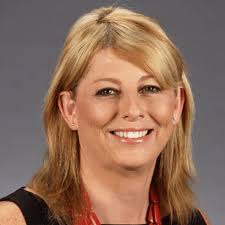
Aoifinn Devitt: I’m Aoifinn Devitt, and welcome to this 50 Faces Focus Series in which we are celebrating LGBTQ+ professionals in a special series for Pride Month 2025. I’m joined today by Megan Stabler, who until recently was a fractional CMO at Thrivecart and a member of the board of directors of Grindr since May 2022. She’s had a series of marketing and strategy roles over the course of her career and is a keynote speaker on a range of topics. Welcome, Megan. Thanks for joining me today.
Meghan Stabler: Thank you, Eithne. How are you?
Aoifinn Devitt: Very well. It’s great to have you here. Can we start by talking a bit about your background? Where did you grow up and what were your early interests?
Meghan Stabler: Oh boy, I’m old. So I grew up, believe it or not, and I think people will hear from my accent that it’s a very weird one. I grew up in Yorkshire. So I was born in the north of England in Yorkshire, moved just north of London when I was in my teens, and then left for America when I was in my mid to late 20s. So I sort of have a very weird accent. I’ve also spent a lot of time in different countries, so you’ll find an Australian twang probably come out occasionally, as well as me using Texanism. I’m not even sure if that’s the word, but Texanism is like y’all, because I live in Texas.
Aoifinn Devitt: Yes, I would have gone with Australia first off with that, but definitely Yorkshire is very, very faint in there. So just in terms of, you clearly had a gift for marketing and made a career there. What was it about maybe your early education or childhood? Did you always have the gift of the gab or the ability to communicate?
Meghan Stabler: No, how it started was not in marketing. I was actually a product coder, a developer. So if I go way, way, way, way back when computers involved punch tape and a lot of lights that were flashing and stuff, somebody had to program them. And I was programming these IBM big old mainframe, as they called them back then. And I enjoyed it. I then did a little bit of programming and support for a software company that led me into being able to go speak about it because what matters to me is how you translate this technical buffoonery jargon into what’s in it for me, what’s the value, what’s the outcome I can drive, how is it going to change my business and do something better than I could have done myself? So what is the outcome? So I found myself being able to talk about the software products that I had written, which were in the security space. And that led me into sort of a sales-like role where I would be brought into accounts to talk about the value of the software that we were selling. And eventually, when I was in and around sales, there’s a lot of frameworks when it comes to sales. The thing is like SPIN Selling, Sandler, ACCLIVUS, solution selling. And I realized that marketing didn’t really have the equivalent. So sales were getting trained in how to do discovery calls, how to figure out everyone, what’s going on with you? And because you can’t solve it, what’s the impact on you? And what’s the impact on somebody else? And how much is that costing your business? And what if you had a way to go solve it? Would that be worthwhile to you, right? Sales were trained on that. Marketing were trained on this is our product, this is what we do, this is the feature, the button is green, do you want it? And I realized that I could move now into marketing and start enlivening the story of marketing, which does one cool thing, which is to bring prospects into the pipeline and hopefully quality pipeline that sales can convert to sales. So that moved me into marketing and I love marketing because if you don’t get what’s most important, the customer, the prospect, what they’re asking for, what they’re needing, then they’re not going to buy. So it’s just as simple as you said it. It was— it’s storytelling. No, but that drifted into it and the ability to connect to people. And from keynotes I’ve done, especially on LGBT issues and even technology as well, it’s about leaning into your heart and your mind when I give a keynote to to really get you to emphasize or be empathetic at least with what I’m saying and what may be impacting others so that you go, oh my, I’m also impacted by that. And from a business perspective, I need to have that software solution or from an equity or equality perspective, oh, I know somebody in the same boat. Now I feel that I could go change and do something, become an activist or take some action on something or it impacts me. I either feel better about it or I know that I can go do something. So storytelling’s all around everything I do.
Aoifinn Devitt: I love that. We’ve kind of gone into the values part of marketing, and it reminds me of just the classic disruptors, I think, paradigm. What was it around? What is the problem this product is designed to solve? And focusing it from that angle as opposed to pushing a product per se.
Meghan Stabler: 100%.
Aoifinn Devitt: We’ve had a number of— on this podcast subseries, we’ve had a number of marketers actually. Maggie Lauer, who of course introduced us, I asked her about some things that people overestimate maybe, or overlook, underestimate when it comes to marketing? She mentioned not to do kind of random acts of marketing. I think that would maybe accord with your kind of very intentional focus. Any other kind of, I suppose, mantras that you adopt or you think that people often miss when it comes to marketing or any other values that drive you?
Meghan Stabler: Oh my gosh, how long have we got on this podcast? I could write—
Aoifinn Devitt: Oh, we have a little time.
Meghan Stabler: I’m interested. I could write pure classes. So the centricity that I bring is around product marketing. Right, because I came from product and I moved into marketing. Doesn’t mean I’m a solid product marketer because of those two things, but understanding the narrative and the story. But if, as a product marketer, and that is my root at 20 years of product marketing and leadership, it is a matter about understanding your ICP. As Maggie sort of gave you those words, I’d say that different sizes, meaning different scales of companies, where they are in their journey, if they’re a seed round, a Series A or a Series B, or maybe they’re a D or an E, then moving maybe towards IPO, there’s different levels of marketing activity that needs to happen. So very early seed round, you’re sort of a, I think the phrase nowadays is zero to one, right? Which is, as you said, you know, you gotta focus. And for them, it’s about focusing on maybe your top 40 customers that you want to bring into your pipeline and wholeheartedly go after each and every one of them just as if they’re your aging mother or your aging father and you love them to death. You’re not going to go over the top with them, but you want to win them over in terms of brand, right? You want to focus on the top 40, especially from brand recognition. So my statement that I make to people is always think about things as an aperture, just like a lens of a camera, right? So the earlier you are on your investment round, Series A, Seed round B or C, your aperture should be relatively tiny so that you’re just focused. And try not to shift after the shiny objects. Oh, oh, there’s something over there. Let’s all move focus and go do this. Focus, focus, focus, especially in those early stages. Now, as you start to grow, as you’re bringing in these prospects, converting them to merchants, you’re bringing in those focused brand names where because they bought your software, there are followers of them that go, wow, if that company bought it, then I should be looking at this too. So you open up the aperture a little bit. Now you’re doing a lot more case studies and stories and thought leadership. You’re probably beginning to blend in your analyst relations team to go talk to the analysts about why you are better than the competition. Maybe you’re doing similar to the competition or same as but better than. You’re beginning to open up that aperture both into the ICPs that you can go after, new market segments, new profiles. That’s the aperture bit. Just realize and recognize where you are in the journey of your business. Don’t be too aspirational. Certainly have a guiding North Star, but don’t be too aspirational. Keep relentless pursuit of revenue— is another word I use— on the aperture that you have at that moment in time. And obviously investors, especially PE firms, VCs, want you to go fast and drive as much revenue as you can do. But sometimes in early stage, you’ve really got to focus on getting not beyond the product market fit into it’s really customer market fit. If you have a product market fit, great, got all the features, bells and whistles. But if you don’t have the right customer market fit, the messaging and everything else that surrounds it, you’re not gonna be there. So it is that relentless pursuit of revenue based off of ICP. And at that point, then you can expand the personas and the messaging and building out core messaging frameworks and other things.
Aoifinn Devitt: Fascinating. And just to define ICP, I may have missed it earlier in the conversation. Could you just tell us what—
Meghan Stabler: Yeah, ICP is ideal customer profile.
Aoifinn Devitt: Thank you. But not all of us are, are marketing professionals, so that, that’s very helpful. And then just the last question on this before we move more into the LGBT inclusion question, digital marketing, the digital transformation, it doesn’t sound like that would necessarily change much of what you’re saying, that maybe it’s just the execution. Has changed, but has digital marketing changed?
Meghan Stabler: Well, your digital marketing strategy has to match both the size and scale of your company, what you’re actually trying to sell, as well as— remember, this is all about the people you’re trying to sell to. Where are they at? You have to meet the economic buyer. That’s the person with the budget that’s willing to sign the contract or willing to approve whatever it is that’s out there. And then you have the influencers that are trying to say, please buy this because it’s going to solve our problems, but they’re the budget owner. You have to make sure that you are focused on them as much as you can. So digital marketing has a very broad term. If you’re doing PPC, pay-per-click ads, and you’re using Bing or Google, you know, you’re probably buying keywords, search terms. You’re buying the things there from— you would say, I’m looking on Google, just to use the Google example, of shovel, whatever it is. If you want to come up first in the search, you’re buying placement essentially, and it’s costly. Now, in enterprise software where I come from, B2B, B2C as well, but B2B enterprise software, the likelihood of somebody searching online for your software is still there, but the cost is going to be high because you’ve probably got competition. You’re all competing to buy those keywords to rank top of place. So Digital for me is really watch what your spend is, really understand who your customers or prospects are and where they go for information, and build content, relevant subject matter, thought leadership content that is relevant to them that’s going to rank and pull them in before you go into a full digital strategy. So that’s just the digital bit pulling them in. But digital transformation as a whole, right, it’s happening all the time. I think there’s been a little bit of a downturn post-COVID, Obviously with the economic issues nowadays, but everybody wants to find a way that you specifically will come to their site or use their mobile app and then buy and then convert and use a payment term that you like, Apple Pay, Google Pay, whatever it may be, or Adyen or Affirm or Klarna or whatever it is. And that you have a wonderful experience when you’re getting those goods shipped to you, if you’re buying consumer sector goods and you’re unpacking them and you’re delighted and you want to share it on social. Or you’re pissed off and upset, it doesn’t fit and you need to return it. And the return process is easy as well. So digital is a huge term. And obviously I dove quickly into PPC because as a marketing executive, I’m always air quote iffy on how effective PPC is. You gotta measure it. And obviously as marketers, we have ways to measure top of funnel, mid funnel, and bottom of funnel, but the cost can be extremely high using digital.
Aoifinn Devitt: That’s a fascinating deep dive and tons of wisdom shared there. Thank you. And now I’ll take the aperture back. We talked about narrowing it. Let’s take it back a bit to the LGBT question because this is a Pride series and obviously Grindr is a huge presence in the LGBT community. And we’ll talk about your board role there in a second. But this, the purpose of the podcast is the career journeys of LGBT+ professionals. And just starting with your own journey, can you talk about your own experience of coming out in the professional world?
Meghan Stabler: Sure.
Aoifinn Devitt: What stage that was at, how it went down, so to speak?
Meghan Stabler: Yeah, so let me open it up with the prefix of I wish I’d come out early. I wish I’d had the opportunity to be who I knew I was earlier on, right? For those that are listening, I am a transsexual. I transitioned in 2004. I had known about who I was but couldn’t put words to it when I was typically 5 or 6. This was before the internet per se. So trying to figure out the right words that defined who I was, I just felt different. I didn’t know what it was. And for me, it wasn’t until there was a newspaper article about a lady tennis player called Renee Richards who had transitioned, and this was in the mid-’70s, maybe early ’70s, that I read a newspaper here in the UK. Yeah, this is before the internet, and it just said, ‘Sex change tennis player Renee Richards.’ And it was like a light bulb going off. But now I’m sort of trying to go into school and look in the library in the old Rolodexes, trying to find things. There’s no books, there’s no nothing, right? Sex change wasn’t a term, I think, even in the Oxford Dictionary, and certainly wasn’t in the Encyclopedia Britannica. So I really didn’t know what to do. I knew my parents loved me. I figured it would break their heart to try and explain that there was something wrong with me. So I sucked it up and moved forward. I went through puberty. I hated it. I did fall in love with a woman. I was 16, she was coming on 18. We eventually got married, moved to the States, and then I was living in New York at the time, and I was caught up in 9/11, and I lost people that I knew, and I went through the experience in Lower Manhattan myself, and I really asked myself, you’re seen as a very successful software executive. I was a senior vice president in a multi-billion-dollar software company, but every day I was waking up, putting on my French cuff shirts and ties and cufflinks and suits and traveling around the world. Occasionally I’d be flying on a G4 jet or a helicopter, and life was great. I could be in Singapore one day, get a phone call that I needed to be in London the next day, and flights were being arranged. We’d go do business deals or meetings, but I was dying inside. 9/11 happened, and I was standing on the train platform after 9/11, having gone to loads of memorial services, knowing some people, as I mentioned, that we’d lost. And it really was her, me raising a hand, going again and saying, I’m still here. I moved to Texas, got involved in another tech company, did a turnaround on it, sold it, to another software company. So my way of coping with not coming out at that point in time was to work as hard as I ever could so nobody could ever see it. And if we talk about that aperture idea, if you take your thumb and your finger and you close it, but just leave a little bit of gap and then hold your hand as far away from your face as you can do, you can see light and you can see color. You probably can’t see much else, but if you bring your, that little speck of hole back to your eye, you can start seeing, right? You’re busy nodding. I can see you on the— and you just blinked right now. So I can see. So my role was to keep all my friends as far away from me as they could so they’d never see me because I didn’t want to out myself. And then I felt again, look, I’ve sold the company. You need to be true to who you are. And I got into therapy. I was diagnosed as transsexual. I knew there was a pivot I could make. I could either stay as him, suck it up, be miserable, but everybody would believe that I was happy and enjoying life. Or I could become me and potentially risk and lose everything from my job, my income, my career, the job respect, my family, my wife, my daughter, my home. No insurance covered anything back then, but I felt that somebody who had a voice— I was used to speaking in the tech circuit. If I was facing this, I could be a voice and I could stand up and I could speak out. Parallel to all of this, and I’ll tell you that in the late ’80s, early ’90s, I was also helping gay men that had HIV/AIDS. And I knew plenty, and I was friends. I’ve lost friends. I had somebody that even worked for me when I moved to Ohio that I cared about deeply, Tony Mullins, God rest his soul. He and his husband— his husband died first. Tony lasted a lot longer. I last saw him in 2000, I think it was. But just being a friend and an ally, even though I was closeted trans, was core to me. Finding equity, making sure that women in the workplace were seen as well as heard and had a voice at the boardroom table was core to my identity. And I’ll loop those things back together that when I did come out in 2004 and ’05 and begin my transition, several women who worked for me at the software company in Houston said, “Thank gosh. We thought there was something odd about you because you would notice various things or you would speak up for us in a meeting. We would say something and then one of the guys in the room would echo what we had just said and then amplify it. And other people would go, good job, Steve. Yes, we agree with you. And you were the one that sat there and said, hold on a second, it was Tracy’s idea at first. Tracy, do you have anything else to add? And it’s just trying to bring people into that room and then go through my own transition and navigate a world that didn’t have process, had no experience in people like me doing this within a multibillion-dollar software company in Houston, Texas, where the CEO was a Southern Baptist, right? So take it on, try and change the world. And as I started to work with HR and other folks, it wasn’t about establishing policies, procedures for me. It was making sure that the people that came behind me, I was pulling forward in their journeys and stuff. And so, I became a very outspoken, visible transsexual woman who spoke on the Hill and Capitol in favor of bills that was, you know, going to Connecticut to advocate for non-discrimination bills, or the state of Texas where I live in. That’s really what got me into it. I did lose things. I lost my wife, and I loved her. I lost my daughter for a significant period of time because we got divorced in the state of Texas. The judge said, what you’re doing is cruel an unusual behavior. So I’m awarding your wife everything, including pretty much everything out of the house. You’re going to have to pay alimony, you’re going to have to pay child support, even though there’s no alimony in the state of Texas. She has the right to move back to the UK, she has the right to take your daughter, you’re going to pay for your daughter’s education over there. And I didn’t see my daughter for a number of years despite trying. My daughter was confused, rightly so. She was 9 at the time, and it was tough on her. And I humbly, continuously beg for forgiveness to this day, where things that trigger me, I’ll still say to my daughter, who’s now 32, I’m sorry. I’m sorry that I put you through that. But I didn’t have any option. I did. I actually did. My other option was to pull the trigger of a gun, and I came close to it. My daughter, by the way, is Now back living in Austin, Texas, in 2014, 2015, she volunteered with a human rights campaign out in Washington, D.C., and was one of the folks behind marriage equality and focusing on things to the point that she was on the Supreme Court steps when marriage equality came through. And the BBC and other news outlets took photographs and pictures of her hugging another friend of ours on the steps. And she was crying. And I was glad because my kid had moved from being— she was never hateful, but I wouldn’t say not accepting. I just say that she didn’t know what she should do or could do because she still had her mom with her, into an advocate, into somebody who walks through life today as a marketer, by the way, with grace for other people, for marginalized communities, and an advocate. So I’m blessed to have her, and I’m blessed to still be here.
Aoifinn Devitt: Well, thank you for sharing that extremely personal and candid story. I appreciate that. And it’s funny, the activism you mentioned in your daughter, it’s often— it’s not from the air they get it. So that chain of activism— when I spoke with Mark Segal on last year’s series, his grandmother had been a suffragette, and he had learned— became active in the Stonewall movement. And that was all laid down, I think, by being dragged out to suffragette style, at least, civil rights activism. In his youth. So it’s wonderful that that persisted. And your own advocacy allyship clearly started early and well before your own transition. In your post-transition career, did you experience life differently as a woman? Did you have more— I mean, you already clearly had empathy for how women were treated in the workplace. How did that change or become maybe sharper once you were now presenting as a woman and, and but essentially with the same level of professional expertise.
Meghan Stabler: Let me just take a sidestep if I can do and explain, because there’s a lot of consternance going on both in America and in the UK where I am this week over trans issues, mainly focused on trans women. If we go back to basics, sex is who you go to bed with, gender is how you identify. So having this brain that I had who said you’re different, right? Those early years. Then a brain that went light bulb moment, sex change tennis player, was a man, became a woman, was there. My two best friends at school, Jane Brown and Amanda Pearson, if they ever listen to that, they know that they are because we did reconnect post-transition. I was jealous. I was so jealous about them going through puberty. I didn’t know at the time why my body wasn’t going through the same thing. So my brain was saying, you should be. And my body was saying, uh-uh, you’re not going to go do that. And Keith Vipond and Julian Pence, the guys that I hung out with, they would know I was always with Jane and Amanda doing things. So, it’s hard to answer that question directly, did things change? I know from me being a leader in multiple companies that I do my best, and I fail sometimes, to stand up And again, I’ll use the word I used before, see everybody, male identified, female identified, non-binary, whomever, and make them individually feel like they’re the only person in the room that I’m speaking to. So if my activism, the word that you used, comes through, it’s because I want each individual to be successful in a way that they want to be successful. I will champion them. I will find things that can help them. And pull them through. As a woman of trans experience, and I’m trying to choose my words carefully now, I’ve had to navigate it too in terms of how am I seen, how am I accepted, how am I included? And in the technology space, which is still predominantly and traditionally male-dominated, we just had an event in Chicago where I moderated a panel with 4 magnificent female tech executives. And we were all talking about DEI or how to be inclusive and see things. And one of the things I said in my opening remarks was, we’ve been here for 2 days. We still see the cliques of the men getting together. We’re going to go to a baseball game, right? Very male-orientated types of things that the guys— let’s just go for a beer, right?— types of things that they want to do. And while not intentional, they are leaving others out of this space. So it’s what I see, again, for the individuals, but also what I see around me of that exclusion. I get excluded as well. I think people sometimes may fear having a trans woman around them. You don’t— you’re not going to catch it, trust me. So having to navigate that, but also just making sure that as I walk as gracefully as I can do, and I’m not always graceful through the world, that I present in a way that is authentic to me. I’m not going to conform to stereotypes of womanhood. I realize that I could never carry a child. I realize I don’t have a uterus, but I’m doing my best to comport my way through life, both in a personal setting as well as in a professional setting, right, with other executives. And, you know, I am actually job hunting right now. I left Thrivecart in January, February of this year. So I’ve been job hunting for a while for either another Chief Marketing Officer role or an SVP of Product Marketing role. And it’s tough because I come onto these Zoom calls and maybe they have an expectation, but I am authentically me. Whenever they meet me, and if they enjoy that, they get a great conversation and know that I’m experienced and knowledgeable, I bring cultural leadership, I want to champion everybody, then that’s okay. So I don’t know what defines a woman. I’m not talking about DNA, XXXY, and all the multitudes of that. I’m not talking about what’s inside of your body. I think it’s how we show up every day and how we champion each other.
Aoifinn Devitt: That’s a great distinction. And I think that focus on encouraging everybody to be their most successful, productive selves in whatever way that they present, I think is a great way to think about inclusion. And I suppose if you look at the workplaces you’ve been in over decades, how would you say the climate of inclusion is today? Because I think many Young people of transgender experience, I suppose we call it that, do experience higher unemployment rates, and they do experience— it’s absolutely statistically proven. So it’s— I know a lot of their parents, for example, if they’re very, very, you know, teens or early 20s, and their parents are rightly concerned not only about the transition and its effect on the child’s happiness, and there is actually about the employment side, the productivity. How does this affect my child’s ability to be productive citizen. So I suppose, how do you think the workplace has improved and what makes a difference?
Meghan Stabler: I wish it had. I thought it was improving. I think those of us that are visible and out, as you know, we started off talking about age, or at least being older and being around the workplace for a long time. I had a young trans person at a rally at Texas Capitol about a month and a half ago go from the stage, I have, you know, I’ve been out for 2 years, I’ve never met anybody that is trans over the age of 30. And he said that, he said that from the rally stage. I went up to him afterwards, I was like, I transitioned 20 years ago. And he goes, oh my gosh, you’re an elder. And I was like, oh, that’s not the word I want to listen to. Look, I had to navigate the workplace back in 2004, ’05, ’06, ’07 as I was coming out. There was nobody in the company, and we were several thousand employees that had done this before, nor was there again any policies or procedures in place or processes. So I had to do things in a way that I could get it done. There were only 4 surgeons in the US that would perform surgery at that point, and there was no insurance coverage, so I had to pay out of pocket. I was flying every 6 to 8 weeks to Phoenix, Arizona to get electrolysis. My good friend Karen Biondi would fly with me because she knew that I’d be spending 6 to 8 hours every 6 to 8 weeks to get hair removed from my chin, my face, and everything else. And it just took a lot out. So for a trans person to go through and navigate this world right now, or back then, it was tough, but we navigated it and there was no point— not, not a lot of pushback. It was questioning. I don’t quite understand it. Tell me more. Share more. I think nowadays the narrative is being unfortunately written against us by people who are trying to other us and demean us, and it comes from fear and an unwillingness to listen and see us. Go back to that word I’ve been using for a while. I think it’s also driven by cliques. It’s also driven by people who want to build an audience and be seen as a champion for justice because of sports or restrooms, bathrooms, changing rooms, right? So we live in a very hyper clipped world where we didn’t used to back in the, in the noughties, so to speak. So I think it is harder from a workplace perspective. I do believe that companies have tried their best to enact more common policies, and I certainly worked on that with the Human Rights Campaign. I was a member of their business council for 13+ years where we’re putting in the corporate equality index in businesses and ensuring that they included gender transition care all the way from therapy to hormones surgery. We’re going through an inflection point right now because there are so many, many of us coming out, right, or being visible and seen. And it’s not because there’s something in the water, right? So RF Kennedy, there’s nothing in the water that’s causing this. It’s because we can now put the words to the stories, or to the personal stories of how we feel different, right? And I connect that to my beginning story about how I didn’t know what the words are. Now we’re beginning to find those words and the kids are beginning to use it. Companies are beginning to understand. But I still think there’s, and this is my word, I still think there’s an iffiness that a lot of people that don’t understand our lived lives have, or an irkiness about us and being around us. Look, I pushed myself to go through full transition. It wasn’t a choice. It was something I had to do for myself. Otherwise, I would not be here. On this planet. I had a very successful life. I had a very successful income, job, and family. Why the heck would I get rid of that if I didn’t know to the deepest bone cell inside of my body that my brain, what I saw every day, was different to the body that I had? And that if I could live my authentic, true self, no matter what the pain was, no matter what I was going to lose, no matter how I was going to be judged, it’s something that I needed to do. It’s something that I wanted to do. I think that companies have done their best that they can. I think there’s a bit of wariness right now about how much further forward can they go through. They’re worried about the administration in the US. They’re worried about what’s going on in the UK with the EHCR stuff. But it’s like a rubber band. We stretch the rubber band to try and get acceptance. It snapped back a bit. We’re going to stretch it again. And I do hope and believe that the world will become a more accepting, equitable place and understanding that trans people are not here to do any harm. We’re literally here just to live the lives that we want to and believe we should be leading.
Aoifinn Devitt: Well, again, beautiful words that I think will be very much panacea and also very comforting for many listening to this. I think it’s important that we speak about words, and this is the point of this podcast series, is to draw out stories, draw out individual experiences which are not part of those cliques, part of those soundbites, part of the individual stories when they see, in your case and in many cases, the tremendous sacrifice involved in these decisions and in the ongoing challenges that come with it. Just to have a very few quick round of reflection questions at the end, I’m going to throw in one about Grindr and your board role. What do you seek to bring to the board there? Just a short answer, doesn’t need to go into all the detail.
Meghan Stabler: I’m bringing my technical and business experience to the board. I sit on the audit committee and I sit on the privacy and trust committee. And occasionally when we need to do investigations or other things, a special projects committee. So I bring my 3 decades worth of business experience to the board in technology and mobile app development, in lifestyle, in engagement and in marketing to every conversation that we have as board members. I’m certainly not directing where the company needs to take the product. They’re coming to us with the ideas, and we’re certainly either engaging and blessing, or we’re pushing and challenging, right? Just to understand, my responsibility for Grindr, because it is a New York Stock Exchange publicly listed company, is to the shareholders. So I want to maximize shareholder value as often as I can and wherever I can, hence, again, being on the audit committee and privacy and trust. So it is experience. I’ve done that as well for some privately held companies, and I also do it for a number of nonprofits as well.
Aoifinn Devitt: Fantastic. And now just on the reflection questions, you’ve mentioned some of these individuals who’ve been from the childhood days and school to accompanying you on trips during your transition. Can you mention— and this is not an exhaustive list— any key people who are mentors to you meant to you throughout your career or, or your personal life?
Meghan Stabler: My mom. It’s gonna have to be my mom, you know, coming out to my mom and my dad. Sadly, we lost our mom a year and a half ago. It was— it would have been her 89th birthday yesterday on May 14th. Just knowing that she didn’t understand at first, but she was willing to learn. She accepted, but she was willing to learn. So I’d say that as far as mentors I’d say that there isn’t a name of a person that comes to mind, but there’s been goodness in many, many people that I’ve seen along the way and how they treat others, what they do, how they go out of the way to be a good human, which is a word that I use all the time. So it’s not so much a person I’d call out. Obviously, I just called out my mom, but I’d say it’s just the range of people that I’ve had the experience to and great opportunity to both work with, to convene with, to drive equality with. Other trans people like Diego Sanchez, who’s in DC, trans man who’s been around, worked on the Hill for the longest time. Donna Rose and a few of the other elders that we get called that have also pushed and changed for this narrative. So it’s a lot of people, but it’s more along the lines, to be honest with you, Efrain, that it’s just treat others as you want to be treated, right? Go live a life of good. Right.
Aoifinn Devitt: You’ve almost taken my last question, which was your kind of tag— if you’re going to use the marketing terminology, your tagline, your punchline, your creed or motto that you can leave us with, or maybe advice to your younger self.
Meghan Stabler: I think the only thing that I’ve ever been using consistently is be yourself because everybody else has already taken it.
Aoifinn Devitt: Well, as an Irish woman, I’m always happy for an Oscar Wilde quote. So thank you so much, Megan. Maggie knows a good story, clearly, as a marketing guru herself. She directed me to you and your Your story has been, from start to finish, uplifting and really heartwarming. Thank you for sharing it with us in such an honest way. Thank you for the work you’re continuing to do to ensure that everyone feels heard, feels seen, and listened to. And that’s the first step in keeping us all on this journey, allies and members of the community alike. So thank you for sharing your insights with us.
Meghan Stabler: It’s been an absolute pleasure. Thank you for the opportunity.
Aoifinn Devitt: I’m Aoifinn Devitt. Thank you for listening to our 50 Faces Focus Series. If you liked what you heard and would like to tune in to hear from more inspiring professionals and their stories, please subscribe on Apple Podcasts or wherever you got your podcasts. This podcast is for informational purposes only and should not be construed as investment advice, and all views are personal and should not be attributed to the organizations and affiliations of the host or any guest.
Aoifinn Devitt: This Pride Series in 2025 is kindly supported by Latimer Partners LLC.
Meghan Stabler: It’s about leaning into your heart and your mind when I give a keynote to really get you to emphasize or be empathetic at least with what I’m saying and what may be impacting others so that you go, “Oh my, I’m also impacted by that.” And from a business perspective, I need to have that software solution or from an equity or equality perspective, Oh, I know somebody in the same boat. Now I feel that I could go change and do something, become an activist or take some action on something, or it impacts me. I either feel better about it or I know that I can go do something. So storytelling’s all around everything I do.
Aoifinn Devitt: I’m Aoifinn Devitt, and welcome to this 50 Faces Focus Series in which we are celebrating LGBTQ+ professionals in a special series for Pride Month 2025. I’m joined today by Megan Stabler, who until recently was a fractional CMO at Thrivecart and a member of the board of directors of Grindr since May 2022. She’s had a series of marketing and strategy roles over the course of her career and is a keynote speaker on a range of topics. Welcome, Megan. Thanks for joining me today.
Meghan Stabler: Thank you, Eithne. How are you?
Aoifinn Devitt: Very well. It’s great to have you here. Can we start by talking a bit about your background? Where did you grow up and what were your early interests?
Meghan Stabler: Oh boy, I’m old. So I grew up, believe it or not, and I think people will hear from my accent that it’s a very weird one. I grew up in Yorkshire. So I was born in the north of England in Yorkshire, moved just north of London when I was in my teens, and then left for America when I was in my mid to late 20s. So I sort of have a very weird accent. I’ve also spent a lot of time in different countries, so you’ll find an Australian twang probably come out occasionally, as well as me using Texanism. I’m not even sure if that’s the word, but Texanism is like y’all, because I live in Texas.
Aoifinn Devitt: Yes, I would have gone with Australia first off with that, but definitely Yorkshire is very, very faint in there. So just in terms of, you clearly had a gift for marketing and made a career there. What was it about maybe your early education or childhood? Did you always have the gift of the gab or the ability to communicate?
Meghan Stabler: No, how it started was not in marketing. I was actually a product coder, a developer. So if I go way, way, way, way back when computers involved punch tape and a lot of lights that were flashing and stuff, somebody had to program them. And I was programming these IBM big old mainframe, as they called them back then. And I enjoyed it. I then did a little bit of programming and support for a software company that led me into being able to go speak about it because what matters to me is how you translate this technical buffoonery jargon into what’s in it for me, what’s the value, what’s the outcome I can drive, how is it going to change my business and do something better than I could have done myself? So what is the outcome? So I found myself being able to talk about the software products that I had written, which were in the security space. And that led me into sort of a sales-like role where I would be brought into accounts to talk about the value of the software that we were selling. And eventually, when I was in and around sales, there’s a lot of frameworks when it comes to sales. The thing is like SPIN Selling, Sandler, ACCLIVUS, solution selling. And I realized that marketing didn’t really have the equivalent. So sales were getting trained in how to do discovery calls, how to figure out everyone, what’s going on with you? And because you can’t solve it, what’s the impact on you? And what’s the impact on somebody else? And how much is that costing your business? And what if you had a way to go solve it? Would that be worthwhile to you, right? Sales were trained on that. Marketing were trained on this is our product, this is what we do, this is the feature, the button is green, do you want it? And I realized that I could move now into marketing and start enlivening the story of marketing, which does one cool thing, which is to bring prospects into the pipeline and hopefully quality pipeline that sales can convert to sales. So that moved me into marketing and I love marketing because if you don’t get what’s most important, the customer, the prospect, what they’re asking for, what they’re needing, then they’re not going to buy. So it’s just as simple as you said it. It was— it’s storytelling. No, but that drifted into it and the ability to connect to people. And from keynotes I’ve done, especially on LGBT issues and even technology as well, it’s about leaning into your heart and your mind when I give a keynote to to really get you to emphasize or be empathetic at least with what I’m saying and what may be impacting others so that you go, oh my, I’m also impacted by that. And from a business perspective, I need to have that software solution or from an equity or equality perspective, oh, I know somebody in the same boat. Now I feel that I could go change and do something, become an activist or take some action on something or it impacts me. I either feel better about it or I know that I can go do something. So storytelling’s all around everything I do.
Aoifinn Devitt: I love that. We’ve kind of gone into the values part of marketing, and it reminds me of just the classic disruptors, I think, paradigm. What was it around? What is the problem this product is designed to solve? And focusing it from that angle as opposed to pushing a product per se.
Meghan Stabler: 100%.
Aoifinn Devitt: We’ve had a number of— on this podcast subseries, we’ve had a number of marketers actually. Maggie Lauer, who of course introduced us, I asked her about some things that people overestimate maybe, or overlook, underestimate when it comes to marketing? She mentioned not to do kind of random acts of marketing. I think that would maybe accord with your kind of very intentional focus. Any other kind of, I suppose, mantras that you adopt or you think that people often miss when it comes to marketing or any other values that drive you?
Meghan Stabler: Oh my gosh, how long have we got on this podcast? I could write—
Aoifinn Devitt: Oh, we have a little time.
Meghan Stabler: I’m interested. I could write pure classes. So the centricity that I bring is around product marketing. Right, because I came from product and I moved into marketing. Doesn’t mean I’m a solid product marketer because of those two things, but understanding the narrative and the story. But if, as a product marketer, and that is my root at 20 years of product marketing and leadership, it is a matter about understanding your ICP. As Maggie sort of gave you those words, I’d say that different sizes, meaning different scales of companies, where they are in their journey, if they’re a seed round, a Series A or a Series B, or maybe they’re a D or an E, then moving maybe towards IPO, there’s different levels of marketing activity that needs to happen. So very early seed round, you’re sort of a, I think the phrase nowadays is zero to one, right? Which is, as you said, you know, you gotta focus. And for them, it’s about focusing on maybe your top 40 customers that you want to bring into your pipeline and wholeheartedly go after each and every one of them just as if they’re your aging mother or your aging father and you love them to death. You’re not going to go over the top with them, but you want to win them over in terms of brand, right? You want to focus on the top 40, especially from brand recognition. So my statement that I make to people is always think about things as an aperture, just like a lens of a camera, right? So the earlier you are on your investment round, Series A, Seed round B or C, your aperture should be relatively tiny so that you’re just focused. And try not to shift after the shiny objects. Oh, oh, there’s something over there. Let’s all move focus and go do this. Focus, focus, focus, especially in those early stages. Now, as you start to grow, as you’re bringing in these prospects, converting them to merchants, you’re bringing in those focused brand names where because they bought your software, there are followers of them that go, wow, if that company bought it, then I should be looking at this too. So you open up the aperture a little bit. Now you’re doing a lot more case studies and stories and thought leadership. You’re probably beginning to blend in your analyst relations team to go talk to the analysts about why you are better than the competition. Maybe you’re doing similar to the competition or same as but better than. You’re beginning to open up that aperture both into the ICPs that you can go after, new market segments, new profiles. That’s the aperture bit. Just realize and recognize where you are in the journey of your business. Don’t be too aspirational. Certainly have a guiding North Star, but don’t be too aspirational. Keep relentless pursuit of revenue— is another word I use— on the aperture that you have at that moment in time. And obviously investors, especially PE firms, VCs, want you to go fast and drive as much revenue as you can do. But sometimes in early stage, you’ve really got to focus on getting not beyond the product market fit into it’s really customer market fit. If you have a product market fit, great, got all the features, bells and whistles. But if you don’t have the right customer market fit, the messaging and everything else that surrounds it, you’re not gonna be there. So it is that relentless pursuit of revenue based off of ICP. And at that point, then you can expand the personas and the messaging and building out core messaging frameworks and other things.
Aoifinn Devitt: Fascinating. And just to define ICP, I may have missed it earlier in the conversation. Could you just tell us what—
Meghan Stabler: Yeah, ICP is ideal customer profile.
Aoifinn Devitt: Thank you. But not all of us are, are marketing professionals, so that, that’s very helpful. And then just the last question on this before we move more into the LGBT inclusion question, digital marketing, the digital transformation, it doesn’t sound like that would necessarily change much of what you’re saying, that maybe it’s just the execution. Has changed, but has digital marketing changed?
Meghan Stabler: Well, your digital marketing strategy has to match both the size and scale of your company, what you’re actually trying to sell, as well as— remember, this is all about the people you’re trying to sell to. Where are they at? You have to meet the economic buyer. That’s the person with the budget that’s willing to sign the contract or willing to approve whatever it is that’s out there. And then you have the influencers that are trying to say, please buy this because it’s going to solve our problems, but they’re the budget owner. You have to make sure that you are focused on them as much as you can. So digital marketing has a very broad term. If you’re doing PPC, pay-per-click ads, and you’re using Bing or Google, you know, you’re probably buying keywords, search terms. You’re buying the things there from— you would say, I’m looking on Google, just to use the Google example, of shovel, whatever it is. If you want to come up first in the search, you’re buying placement essentially, and it’s costly. Now, in enterprise software where I come from, B2B, B2C as well, but B2B enterprise software, the likelihood of somebody searching online for your software is still there, but the cost is going to be high because you’ve probably got competition. You’re all competing to buy those keywords to rank top of place. So Digital for me is really watch what your spend is, really understand who your customers or prospects are and where they go for information, and build content, relevant subject matter, thought leadership content that is relevant to them that’s going to rank and pull them in before you go into a full digital strategy. So that’s just the digital bit pulling them in. But digital transformation as a whole, right, it’s happening all the time. I think there’s been a little bit of a downturn post-COVID, Obviously with the economic issues nowadays, but everybody wants to find a way that you specifically will come to their site or use their mobile app and then buy and then convert and use a payment term that you like, Apple Pay, Google Pay, whatever it may be, or Adyen or Affirm or Klarna or whatever it is. And that you have a wonderful experience when you’re getting those goods shipped to you, if you’re buying consumer sector goods and you’re unpacking them and you’re delighted and you want to share it on social. Or you’re pissed off and upset, it doesn’t fit and you need to return it. And the return process is easy as well. So digital is a huge term. And obviously I dove quickly into PPC because as a marketing executive, I’m always air quote iffy on how effective PPC is. You gotta measure it. And obviously as marketers, we have ways to measure top of funnel, mid funnel, and bottom of funnel, but the cost can be extremely high using digital.
Aoifinn Devitt: That’s a fascinating deep dive and tons of wisdom shared there. Thank you. And now I’ll take the aperture back. We talked about narrowing it. Let’s take it back a bit to the LGBT question because this is a Pride series and obviously Grindr is a huge presence in the LGBT community. And we’ll talk about your board role there in a second. But this, the purpose of the podcast is the career journeys of LGBT+ professionals. And just starting with your own journey, can you talk about your own experience of coming out in the professional world?
Meghan Stabler: Sure.
Aoifinn Devitt: What stage that was at, how it went down, so to speak?
Meghan Stabler: Yeah, so let me open it up with the prefix of I wish I’d come out early. I wish I’d had the opportunity to be who I knew I was earlier on, right? For those that are listening, I am a transsexual. I transitioned in 2004. I had known about who I was but couldn’t put words to it when I was typically 5 or 6. This was before the internet per se. So trying to figure out the right words that defined who I was, I just felt different. I didn’t know what it was. And for me, it wasn’t until there was a newspaper article about a lady tennis player called Renee Richards who had transitioned, and this was in the mid-’70s, maybe early ’70s, that I read a newspaper here in the UK. Yeah, this is before the internet, and it just said, ‘Sex change tennis player Renee Richards.’ And it was like a light bulb going off. But now I’m sort of trying to go into school and look in the library in the old Rolodexes, trying to find things. There’s no books, there’s no nothing, right? Sex change wasn’t a term, I think, even in the Oxford Dictionary, and certainly wasn’t in the Encyclopedia Britannica. So I really didn’t know what to do. I knew my parents loved me. I figured it would break their heart to try and explain that there was something wrong with me. So I sucked it up and moved forward. I went through puberty. I hated it. I did fall in love with a woman. I was 16, she was coming on 18. We eventually got married, moved to the States, and then I was living in New York at the time, and I was caught up in 9/11, and I lost people that I knew, and I went through the experience in Lower Manhattan myself, and I really asked myself, you’re seen as a very successful software executive. I was a senior vice president in a multi-billion-dollar software company, but every day I was waking up, putting on my French cuff shirts and ties and cufflinks and suits and traveling around the world. Occasionally I’d be flying on a G4 jet or a helicopter, and life was great. I could be in Singapore one day, get a phone call that I needed to be in London the next day, and flights were being arranged. We’d go do business deals or meetings, but I was dying inside. 9/11 happened, and I was standing on the train platform after 9/11, having gone to loads of memorial services, knowing some people, as I mentioned, that we’d lost. And it really was her, me raising a hand, going again and saying, I’m still here. I moved to Texas, got involved in another tech company, did a turnaround on it, sold it, to another software company. So my way of coping with not coming out at that point in time was to work as hard as I ever could so nobody could ever see it. And if we talk about that aperture idea, if you take your thumb and your finger and you close it, but just leave a little bit of gap and then hold your hand as far away from your face as you can do, you can see light and you can see color. You probably can’t see much else, but if you bring your, that little speck of hole back to your eye, you can start seeing, right? You’re busy nodding. I can see you on the— and you just blinked right now. So I can see. So my role was to keep all my friends as far away from me as they could so they’d never see me because I didn’t want to out myself. And then I felt again, look, I’ve sold the company. You need to be true to who you are. And I got into therapy. I was diagnosed as transsexual. I knew there was a pivot I could make. I could either stay as him, suck it up, be miserable, but everybody would believe that I was happy and enjoying life. Or I could become me and potentially risk and lose everything from my job, my income, my career, the job respect, my family, my wife, my daughter, my home. No insurance covered anything back then, but I felt that somebody who had a voice— I was used to speaking in the tech circuit. If I was facing this, I could be a voice and I could stand up and I could speak out. Parallel to all of this, and I’ll tell you that in the late ’80s, early ’90s, I was also helping gay men that had HIV/AIDS. And I knew plenty, and I was friends. I’ve lost friends. I had somebody that even worked for me when I moved to Ohio that I cared about deeply, Tony Mullins, God rest his soul. He and his husband— his husband died first. Tony lasted a lot longer. I last saw him in 2000, I think it was. But just being a friend and an ally, even though I was closeted trans, was core to me. Finding equity, making sure that women in the workplace were seen as well as heard and had a voice at the boardroom table was core to my identity. And I’ll loop those things back together that when I did come out in 2004 and ’05 and begin my transition, several women who worked for me at the software company in Houston said, “Thank gosh. We thought there was something odd about you because you would notice various things or you would speak up for us in a meeting. We would say something and then one of the guys in the room would echo what we had just said and then amplify it. And other people would go, good job, Steve. Yes, we agree with you. And you were the one that sat there and said, hold on a second, it was Tracy’s idea at first. Tracy, do you have anything else to add? And it’s just trying to bring people into that room and then go through my own transition and navigate a world that didn’t have process, had no experience in people like me doing this within a multibillion-dollar software company in Houston, Texas, where the CEO was a Southern Baptist, right? So take it on, try and change the world. And as I started to work with HR and other folks, it wasn’t about establishing policies, procedures for me. It was making sure that the people that came behind me, I was pulling forward in their journeys and stuff. And so, I became a very outspoken, visible transsexual woman who spoke on the Hill and Capitol in favor of bills that was, you know, going to Connecticut to advocate for non-discrimination bills, or the state of Texas where I live in. That’s really what got me into it. I did lose things. I lost my wife, and I loved her. I lost my daughter for a significant period of time because we got divorced in the state of Texas. The judge said, what you’re doing is cruel an unusual behavior. So I’m awarding your wife everything, including pretty much everything out of the house. You’re going to have to pay alimony, you’re going to have to pay child support, even though there’s no alimony in the state of Texas. She has the right to move back to the UK, she has the right to take your daughter, you’re going to pay for your daughter’s education over there. And I didn’t see my daughter for a number of years despite trying. My daughter was confused, rightly so. She was 9 at the time, and it was tough on her. And I humbly, continuously beg for forgiveness to this day, where things that trigger me, I’ll still say to my daughter, who’s now 32, I’m sorry. I’m sorry that I put you through that. But I didn’t have any option. I did. I actually did. My other option was to pull the trigger of a gun, and I came close to it. My daughter, by the way, is Now back living in Austin, Texas, in 2014, 2015, she volunteered with a human rights campaign out in Washington, D.C., and was one of the folks behind marriage equality and focusing on things to the point that she was on the Supreme Court steps when marriage equality came through. And the BBC and other news outlets took photographs and pictures of her hugging another friend of ours on the steps. And she was crying. And I was glad because my kid had moved from being— she was never hateful, but I wouldn’t say not accepting. I just say that she didn’t know what she should do or could do because she still had her mom with her, into an advocate, into somebody who walks through life today as a marketer, by the way, with grace for other people, for marginalized communities, and an advocate. So I’m blessed to have her, and I’m blessed to still be here.
Aoifinn Devitt: Well, thank you for sharing that extremely personal and candid story. I appreciate that. And it’s funny, the activism you mentioned in your daughter, it’s often— it’s not from the air they get it. So that chain of activism— when I spoke with Mark Segal on last year’s series, his grandmother had been a suffragette, and he had learned— became active in the Stonewall movement. And that was all laid down, I think, by being dragged out to suffragette style, at least, civil rights activism. In his youth. So it’s wonderful that that persisted. And your own advocacy allyship clearly started early and well before your own transition. In your post-transition career, did you experience life differently as a woman? Did you have more— I mean, you already clearly had empathy for how women were treated in the workplace. How did that change or become maybe sharper once you were now presenting as a woman and, and but essentially with the same level of professional expertise.
Meghan Stabler: Let me just take a sidestep if I can do and explain, because there’s a lot of consternance going on both in America and in the UK where I am this week over trans issues, mainly focused on trans women. If we go back to basics, sex is who you go to bed with, gender is how you identify. So having this brain that I had who said you’re different, right? Those early years. Then a brain that went light bulb moment, sex change tennis player, was a man, became a woman, was there. My two best friends at school, Jane Brown and Amanda Pearson, if they ever listen to that, they know that they are because we did reconnect post-transition. I was jealous. I was so jealous about them going through puberty. I didn’t know at the time why my body wasn’t going through the same thing. So my brain was saying, you should be. And my body was saying, uh-uh, you’re not going to go do that. And Keith Vipond and Julian Pence, the guys that I hung out with, they would know I was always with Jane and Amanda doing things. So, it’s hard to answer that question directly, did things change? I know from me being a leader in multiple companies that I do my best, and I fail sometimes, to stand up And again, I’ll use the word I used before, see everybody, male identified, female identified, non-binary, whomever, and make them individually feel like they’re the only person in the room that I’m speaking to. So if my activism, the word that you used, comes through, it’s because I want each individual to be successful in a way that they want to be successful. I will champion them. I will find things that can help them. And pull them through. As a woman of trans experience, and I’m trying to choose my words carefully now, I’ve had to navigate it too in terms of how am I seen, how am I accepted, how am I included? And in the technology space, which is still predominantly and traditionally male-dominated, we just had an event in Chicago where I moderated a panel with 4 magnificent female tech executives. And we were all talking about DEI or how to be inclusive and see things. And one of the things I said in my opening remarks was, we’ve been here for 2 days. We still see the cliques of the men getting together. We’re going to go to a baseball game, right? Very male-orientated types of things that the guys— let’s just go for a beer, right?— types of things that they want to do. And while not intentional, they are leaving others out of this space. So it’s what I see, again, for the individuals, but also what I see around me of that exclusion. I get excluded as well. I think people sometimes may fear having a trans woman around them. You don’t— you’re not going to catch it, trust me. So having to navigate that, but also just making sure that as I walk as gracefully as I can do, and I’m not always graceful through the world, that I present in a way that is authentic to me. I’m not going to conform to stereotypes of womanhood. I realize that I could never carry a child. I realize I don’t have a uterus, but I’m doing my best to comport my way through life, both in a personal setting as well as in a professional setting, right, with other executives. And, you know, I am actually job hunting right now. I left Thrivecart in January, February of this year. So I’ve been job hunting for a while for either another Chief Marketing Officer role or an SVP of Product Marketing role. And it’s tough because I come onto these Zoom calls and maybe they have an expectation, but I am authentically me. Whenever they meet me, and if they enjoy that, they get a great conversation and know that I’m experienced and knowledgeable, I bring cultural leadership, I want to champion everybody, then that’s okay. So I don’t know what defines a woman. I’m not talking about DNA, XXXY, and all the multitudes of that. I’m not talking about what’s inside of your body. I think it’s how we show up every day and how we champion each other.
Aoifinn Devitt: That’s a great distinction. And I think that focus on encouraging everybody to be their most successful, productive selves in whatever way that they present, I think is a great way to think about inclusion. And I suppose if you look at the workplaces you’ve been in over decades, how would you say the climate of inclusion is today? Because I think many Young people of transgender experience, I suppose we call it that, do experience higher unemployment rates, and they do experience— it’s absolutely statistically proven. So it’s— I know a lot of their parents, for example, if they’re very, very, you know, teens or early 20s, and their parents are rightly concerned not only about the transition and its effect on the child’s happiness, and there is actually about the employment side, the productivity. How does this affect my child’s ability to be productive citizen. So I suppose, how do you think the workplace has improved and what makes a difference?
Meghan Stabler: I wish it had. I thought it was improving. I think those of us that are visible and out, as you know, we started off talking about age, or at least being older and being around the workplace for a long time. I had a young trans person at a rally at Texas Capitol about a month and a half ago go from the stage, I have, you know, I’ve been out for 2 years, I’ve never met anybody that is trans over the age of 30. And he said that, he said that from the rally stage. I went up to him afterwards, I was like, I transitioned 20 years ago. And he goes, oh my gosh, you’re an elder. And I was like, oh, that’s not the word I want to listen to. Look, I had to navigate the workplace back in 2004, ’05, ’06, ’07 as I was coming out. There was nobody in the company, and we were several thousand employees that had done this before, nor was there again any policies or procedures in place or processes. So I had to do things in a way that I could get it done. There were only 4 surgeons in the US that would perform surgery at that point, and there was no insurance coverage, so I had to pay out of pocket. I was flying every 6 to 8 weeks to Phoenix, Arizona to get electrolysis. My good friend Karen Biondi would fly with me because she knew that I’d be spending 6 to 8 hours every 6 to 8 weeks to get hair removed from my chin, my face, and everything else. And it just took a lot out. So for a trans person to go through and navigate this world right now, or back then, it was tough, but we navigated it and there was no point— not, not a lot of pushback. It was questioning. I don’t quite understand it. Tell me more. Share more. I think nowadays the narrative is being unfortunately written against us by people who are trying to other us and demean us, and it comes from fear and an unwillingness to listen and see us. Go back to that word I’ve been using for a while. I think it’s also driven by cliques. It’s also driven by people who want to build an audience and be seen as a champion for justice because of sports or restrooms, bathrooms, changing rooms, right? So we live in a very hyper clipped world where we didn’t used to back in the, in the noughties, so to speak. So I think it is harder from a workplace perspective. I do believe that companies have tried their best to enact more common policies, and I certainly worked on that with the Human Rights Campaign. I was a member of their business council for 13+ years where we’re putting in the corporate equality index in businesses and ensuring that they included gender transition care all the way from therapy to hormones surgery. We’re going through an inflection point right now because there are so many, many of us coming out, right, or being visible and seen. And it’s not because there’s something in the water, right? So RF Kennedy, there’s nothing in the water that’s causing this. It’s because we can now put the words to the stories, or to the personal stories of how we feel different, right? And I connect that to my beginning story about how I didn’t know what the words are. Now we’re beginning to find those words and the kids are beginning to use it. Companies are beginning to understand. But I still think there’s, and this is my word, I still think there’s an iffiness that a lot of people that don’t understand our lived lives have, or an irkiness about us and being around us. Look, I pushed myself to go through full transition. It wasn’t a choice. It was something I had to do for myself. Otherwise, I would not be here. On this planet. I had a very successful life. I had a very successful income, job, and family. Why the heck would I get rid of that if I didn’t know to the deepest bone cell inside of my body that my brain, what I saw every day, was different to the body that I had? And that if I could live my authentic, true self, no matter what the pain was, no matter what I was going to lose, no matter how I was going to be judged, it’s something that I needed to do. It’s something that I wanted to do. I think that companies have done their best that they can. I think there’s a bit of wariness right now about how much further forward can they go through. They’re worried about the administration in the US. They’re worried about what’s going on in the UK with the EHCR stuff. But it’s like a rubber band. We stretch the rubber band to try and get acceptance. It snapped back a bit. We’re going to stretch it again. And I do hope and believe that the world will become a more accepting, equitable place and understanding that trans people are not here to do any harm. We’re literally here just to live the lives that we want to and believe we should be leading.
Aoifinn Devitt: Well, again, beautiful words that I think will be very much panacea and also very comforting for many listening to this. I think it’s important that we speak about words, and this is the point of this podcast series, is to draw out stories, draw out individual experiences which are not part of those cliques, part of those soundbites, part of the individual stories when they see, in your case and in many cases, the tremendous sacrifice involved in these decisions and in the ongoing challenges that come with it. Just to have a very few quick round of reflection questions at the end, I’m going to throw in one about Grindr and your board role. What do you seek to bring to the board there? Just a short answer, doesn’t need to go into all the detail.
Meghan Stabler: I’m bringing my technical and business experience to the board. I sit on the audit committee and I sit on the privacy and trust committee. And occasionally when we need to do investigations or other things, a special projects committee. So I bring my 3 decades worth of business experience to the board in technology and mobile app development, in lifestyle, in engagement and in marketing to every conversation that we have as board members. I’m certainly not directing where the company needs to take the product. They’re coming to us with the ideas, and we’re certainly either engaging and blessing, or we’re pushing and challenging, right? Just to understand, my responsibility for Grindr, because it is a New York Stock Exchange publicly listed company, is to the shareholders. So I want to maximize shareholder value as often as I can and wherever I can, hence, again, being on the audit committee and privacy and trust. So it is experience. I’ve done that as well for some privately held companies, and I also do it for a number of nonprofits as well.
Aoifinn Devitt: Fantastic. And now just on the reflection questions, you’ve mentioned some of these individuals who’ve been from the childhood days and school to accompanying you on trips during your transition. Can you mention— and this is not an exhaustive list— any key people who are mentors to you meant to you throughout your career or, or your personal life?
Meghan Stabler: My mom. It’s gonna have to be my mom, you know, coming out to my mom and my dad. Sadly, we lost our mom a year and a half ago. It was— it would have been her 89th birthday yesterday on May 14th. Just knowing that she didn’t understand at first, but she was willing to learn. She accepted, but she was willing to learn. So I’d say that as far as mentors I’d say that there isn’t a name of a person that comes to mind, but there’s been goodness in many, many people that I’ve seen along the way and how they treat others, what they do, how they go out of the way to be a good human, which is a word that I use all the time. So it’s not so much a person I’d call out. Obviously, I just called out my mom, but I’d say it’s just the range of people that I’ve had the experience to and great opportunity to both work with, to convene with, to drive equality with. Other trans people like Diego Sanchez, who’s in DC, trans man who’s been around, worked on the Hill for the longest time. Donna Rose and a few of the other elders that we get called that have also pushed and changed for this narrative. So it’s a lot of people, but it’s more along the lines, to be honest with you, Efrain, that it’s just treat others as you want to be treated, right? Go live a life of good. Right.
Aoifinn Devitt: You’ve almost taken my last question, which was your kind of tag— if you’re going to use the marketing terminology, your tagline, your punchline, your creed or motto that you can leave us with, or maybe advice to your younger self.
Meghan Stabler: I think the only thing that I’ve ever been using consistently is be yourself because everybody else has already taken it.
Aoifinn Devitt: Well, as an Irish woman, I’m always happy for an Oscar Wilde quote. So thank you so much, Megan. Maggie knows a good story, clearly, as a marketing guru herself. She directed me to you and your Your story has been, from start to finish, uplifting and really heartwarming. Thank you for sharing it with us in such an honest way. Thank you for the work you’re continuing to do to ensure that everyone feels heard, feels seen, and listened to. And that’s the first step in keeping us all on this journey, allies and members of the community alike. So thank you for sharing your insights with us.
Meghan Stabler: It’s been an absolute pleasure. Thank you for the opportunity.
Aoifinn Devitt: I’m Aoifinn Devitt. Thank you for listening to our 50 Faces Focus Series. If you liked what you heard and would like to tune in to hear from more inspiring professionals and their stories, please subscribe on Apple Podcasts or wherever you got your podcasts. This podcast is for informational purposes only and should not be construed as investment advice, and all views are personal and should not be attributed to the organizations and affiliations of the host or any guest.