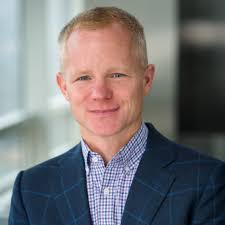
Aoifinn Devitt: This Pride series in 2025 is kindly supported by Latimer Partners LLC. In this podcast, Nathan Richardson is speaking on his own behalf and not as a corporate spokesperson for Grindr, on whose board he sits.
Nathan Richardson: Find the good in everything that’s happening and treat people with respect and give them grace because you just don’t know what people are going through. And you’re in charge of your own professional career. Make it what you can, but do it with ethics and with values and find something you love and stick with it.
Aoifinn Devitt: I’m Aoifinn Devitt, and welcome to the 50 Faces Focus Series, in which we’re interviewing LGBTQ+ professionals for Pride Month 2025. I’m joined today by Nathan Richardson, who’s been a member of the board of directors of Grindr since November 2022. He’s a partner at Joffrey Capital, a private equity firm, and the co-founder of Trading Ticket Inc., a financial technology company, and he served as its chief executive officer, prior to which he held a series of roles in the financial services industry. He’s now based in London. Welcome, Nathan. Thanks for joining me today.
Nathan Richardson: Thanks for having me. It’s great that you’re doing this series, Ethan.
Aoifinn Devitt: Well, let’s start by talking— go back to the very beginning and talk about your background, where you grew up, and what your early interests were.
Nathan Richardson: So I was born and raised in a working-class town outside of Boston called Beverly, Massachusetts, and I went to to an all-boys Catholic school, which was very competitive, very focused on sports, and I think very formative in terms of having a lot of grit and getting things done and always having to have an edge in what you do. After going to Babson College, I ended up in the Peace Corps in West Africa where I was in a small business program, and I had two big projects there that were really formative for me. One was helping on a project that distributed condoms in West Africa. If you don’t know, Senegal is a polygamous Muslim country, and we were able to get the Muslim priests to agree to let us distribute it. And we used a media platform— television went on at 8:00 every night— and we were able to put a message on before the TV came on and let people know to wear condoms. The reason I bring that up is that it was very formative in the sense that Senegal has one of the lowest HIV infection rates in all of Africa, and that’s despite the fact that it’s polygamous and despite the fact that all the countries around it have really, really dramatically higher HIV rates. It’s formidable because media was so powerful in getting the message out and bringing people together to do something good for health outcomes. And I’m really proud of having been involved with that. Think that the lessons have been part of my narrative for the rest of my career. Just quickly, I left Peace Corps after graduate school. I ended up in a really fancy jet-set training program with Citibank at the time that had just become Citigroup. And I lived in London, Turkey, Warsaw, Riyadh, Jeddah, and finally in Johannesburg. So I had this amazing jet-set life for a kid that had never really flown first class or, and still had massive amounts of student debt. It was a real eye-opening way to see the world and experience things and get a lot of training at the expense of a corporate parent. They don’t have training programs like that anymore, but I feel fortunate to have been through that and also meet some incredible people in all those countries who I stay in touch with today. But to the point of this series, I came out when I was 27, and I was living in Warsaw, and the apartment I was given was above the only gay bar in Warsaw at the time. So at 27, I sort of stumbled into coming out. All the signs were lined up. When you get housing above the only gay bar, that now is the time. So interestingly, that’s ’54, so it was 27 years ago that I came out there, and I realized soon that the job and the role and the position I had was really not the way to live a really full life as a gay man because the systems in the environment was not really welcoming for me. So I left my job that was a dream job and moved to San Francisco. It seems like a cliché to say that. And I interviewed with 3 payment companies. I interviewed with PayPal, X.com, and a company called Doc Bank. I took the job that paid me $10,000 more a year and the rest is really my history. So living in San Francisco, Doc Bank was bought by Yahoo about 2 months later at the beginning of 2000. And so I was really experiencing the first dot-com boom and also experienced the first dot-com bust in an epic way. So That was my entry into fintech from being a banker.
Aoifinn Devitt: What a fascinating set of experiences, many of which I’d love to pull some of those threads on. I’ll start with the Peace Corps, certainly very formative time, I’m sure. I’d love to ask what you took from that, but particularly given this program, it seems to be precisely the kind of program that may well be now no more. It seems to have come under the axe, perhaps with the current wave of thinking around USAID, et cetera. So anyone I know who’s been in the Peace Corps, it has usually made an impression on them for life. How have you, do you think, changed because of that?
Nathan Richardson: So I learned a lot in the Peace Corps, and I still consider my Peace Corps friends some of my closest friends. I talk to them daily as well. I lived with a Senegalese family that had— the mother had 10 children, and she WhatsApps me every morning to this day. So we were talking 35 years later, we still have a really close relationship. I learned to dance. Appreciate music. I was pushed to the extremes of doing everything from eating a fish head that was put in front of me to having to figure out how to be entrepreneurial and get things done in a place where you just didn’t have anything. And Peace Corps people have to be entrepreneurial in order to survive. You’re also given very little to survive on. So you’re given— I think at the time we were given $120 a month. That was for our food, that was for our entertainment, that was for everything. And so you’re living like a local and taking public transport like a local, and it really does bring you down to basics. There’s stuff that I don’t want to repeat from that experience, but there’s a whole lot that made me appreciate everything that I have and form bonds and relationships with both Senegalese and my fellow Peace Corps volunteers that have been Amazing.
Aoifinn Devitt: And I guess very much being in the right place at the right time when it came to your posting to Warsaw. In many ways, the stars aligned, I suppose, for you personally. Some of the places you were in, I’d say, were less receptive, maybe still are. When we talk about inclusion, maybe we can even go to that now in terms of the inclusion of LGBT professionals at that stage of your career. What was your impression throughout your career of the inclusion factor, even places like Citibank.
Nathan Richardson: Citibank is really a pioneer at welcoming LGBTQ people. And I didn’t hang around long enough in New York or in one of the major city centers to know how that worked, but it was challenging in the places that I was living and certainly put me at risk and exposed me to things that maybe weren’t the best situations to be in. I had an amazing mentor in Poland. And he is still one of my great friends who lives here in London. I did have some pretty bad homophobic experiences in Johannesburg, and I definitely was very careful about what was happening in Riyadh and Jeddah at the time. There’s a very strong underground gay scene there that I never really wanted to risk being part of for fear of what could happen.
Aoifinn Devitt: That’s fascinating to me. I would not have thought there was an underground gay scene there, but I suppose you learn something new every day in terms of Riyadh and maybe other Middle Eastern cities too.
Nathan Richardson: Riyadh, I think it’s welcome at certain stratus of the society. And then there’s also sort of the whisper stuff that happens that you go to the hotel lobby when the Lufthansa flight’s landing on Thursday and you can meet the flight crew because it’s all male. It’s all very sort of kabuki-like, and people do things, and adversity breeds a whole new way of getting things done and being entrepreneurial, even with your dating and your social life. South Africa was much more challenging, and it’s interesting because South Africa today has some of the most progressive HIV programs but also was one of the first African countries to legalize gay marriage. But at the time, the corporate culture wasn’t really tolerant or welcoming, and that was challenging for me. And I had quite an unfortunate incident with someone at the company, and I, to this day, I’m very cautious with certain people, and my gut has trained me around who I can trust and who I don’t trust.
Aoifinn Devitt: Very interesting. Yes, I suppose that’s a survival technique as well that, that you develop, like any survival technique for other aspects You mentioned then, going back to the career story, the boom and bust and, you know, finding, I suppose, more connectivity with people in San Francisco and in the new fintech world versus the old corporate world. Can you talk us through then how you became a founder and that experience and now how you segued into board roles?
Nathan Richardson: Sure. So, I was very fortunate that I was, the internet was early and DotBank got assumed and became Yahoo PayDirect, which is a peer-to-peer payment company, very You know, today if it were out there, it would be a contemporary of Remitly or even PayPal, but we shut it down at some point. But at the time, Yahoo put me in the role of being part of Yahoo Finance, which is today one of the largest financial media businesses in the globe. And I went on to become the general manager for that business. And we went from $10 million to $100 million in a very short period. We launched some of the products that are still breakthrough products in the internet in terms of finance and media and how things are done. And we were very fortunate with that product. So I was exposed and immersed in working with all the startups in the space and with everyone that was, that was happening and seeing all the different ways that the VC community works. So I had a sense for what it took to become a founder, but I also had some really good experiences working with as a CEO or a partner with the founder. So I worked with a guy named Rafid Ali who had founded ContentNext. Greycroft, a venture capital firm, was one of his first companies. I was brought in as the CEO and we sold it to the Guardian Media Group. Really good experience of learning how to navigate building, growing, and selling a company with it. It’s VC-backed. I then went to found and run a couple of businesses for Gilt Group, which is a very high-profile e-commerce company that Kevin Ryan had set up. And so working with Kevin Ryan and Susan Lyon, I saw all the ways that you work with big venture firms, whether it’s General Atlantic or others, to build and grow at scale. And so running the Gilt Men business and then the Gilt City business I saw the boom and I saw the rise and knew I wanted to do my own thing. So all those experiences led me to founding a couple of different companies, and TradeIt was a product that I, I founded with two other guys that really was the first time I’d done a B2B technology where we gathered APIs from financial institutions that we integrated into one turnkey SDK. And distributed to other platforms, including ARK Investments. I know you talked to Cathie Woods, and it was a great way to be out there and meeting with all the incumbent financial institutions, but also working with all the modern fintechs. And we sold the company to TradingView, which you may know is probably one of the largest and fastest-growing financial platforms out there. They started with charting, and now they have the ability to trade within the chart. And the core of that technology was what we had built with TradeIt.
Aoifinn Devitt: And I suppose the, it sounds like your founder experience was a positive one, given these sequential acquisitions and founding again, this kind of what they call serial entrepreneurial behavior. What do you think you learned throughout that experience in terms of perseverance, partnerships, the importance of, of partners? Would you say that, how has it shaped you?
Nathan Richardson: Well, let’s be clear that not all these entrepreneurial experiences have been successful, and not all of them have had happy endings with the relationships. So I think that in each of them, I’ve learned a lot about myself and choosing partners and communication. And I think all of these experiences— there’s so much that goes into the team dynamic and the founder relationships, communication goal alignment, making sure that you’re regularly checking in on who’s doing what, making sure your egos are all aligned and you have some sort of board mechanism to govern things. I think those are pretty important and sometimes I haven’t gotten it right and sometimes I have. And I think being a founder is incredibly challenging. It’s incredibly taxing in terms of having the weight of this entire business on your back, whether you have employees or no employees, investors or clients. And figuring out how to make it all work. And when it’s working, it’s amazing. When it’s not, you’re sleepless, you’re emotional, you’re edgy, you create friction with your co-founders. So all of it has a lot of lessons along the way, and you learn certain behaviors. And sometimes you come out stronger, sometimes you come out probably a little bit lacking in confidence, but In all of them, I hope that I’ve represented myself well with values and ethics that are something I can be proud of and look back and not regret.
Aoifinn Devitt: Yeah, thank you for your candor, I think, in admitting that confidence is something that ebbs and flows throughout a career, because I think there’s some notion that it’s— we grow ever more confident. And I think that these professional setbacks can definitely take a toll, and it’s a question of how you bounce back and how resilient you are from that. But I think that’s very candid of you to mention that. And then your board roles now, what do you think it is about your experience that makes you an effective board director? And what do you seek to bring to a board like Grindr?
Nathan Richardson: So one, I think that having been a CEO, I’m very sympathetic to the CEO in understanding how to listen to what’s going on for them and understanding the challenges that they might be facing. But also, I’ve always been a team player. I’ve done team sports my entire life. I’ve worked with great teams professionally. So how do you help them build a team and how do you make sure the board is a really strong team? And I think alchemy is really important with boards. I’m going to go to a board that is probably the board that you would least expect to be welcoming to a gay guy. But I was on the board of one of the largest tobacco merchants, a public company. And had a lot of old tobacco executives and some other folks, and they were the most open and receptive. I think they embodied the concept of, you know, God gave you two ears and one mouth and listen and learn from other people. Speak when you have something really valuable to say and, you know, be kind to your other teammates. That board taught me a lot. I remember thinking, oh, I’m going to this basketball game with the board, and I got seated with the person that I thought I would be least likely to bond with. And by the end of the game, I was helping him, you know, walk down a set of stairs, and we were laughing, and we went for a nightcap. And it just showed me to be open to everyone and listen and learn and grow, because, you know, I’m not I’m not perfect and I don’t know everything and I can share experiences and expertise where relevant, but I shouldn’t posit that I’m expert at everything.
Aoifinn Devitt: What a great story about not judging a book by its cover as well, being surprised on the upside. And then since I wanted to finish the thought on LGBT inclusion in the professional workplace, looking at where we are today and to the future, can you tell a little bit about Grindr and its mission? And how it’s contributing to promoting more acceptance, just to generally to amplifying the LGBTQ+ community.
Nathan Richardson: So Grindr is the, effectively, the largest gay media and business out there. We reach over 14 million people a month. That’s globally. We have over a million paying customers, and we bring people together. We make connections for people. We are the place where you can feel safe to meet other gay men or women or trans within the LGBTQ community and do that on your terms, on your turf, without feeling that you’re exposed in a bar or an unsafe community. We also have some stats that are really impressive around delivering HIV test kits to people that may never have had an HIV test kit. So we had a program with the CDC to distribute test kits. I think the number was that 40% of the people getting them had never had an HIV test, which is shocking to me. When monkeypox or mpox was a big issue for the, the gay community, Grindr stepped up to alert people of where they can get vaccinated. So Grindr has the potential to, to really be a platform for good for the, the gay community. At a time when our rights and our representation is being undermined in ways that we couldn’t have imagined 10 years ago.
Aoifinn Devitt: Fascinating what a little mirror image that is— well, not little, but a mirror image that is of your experience in Senegal at the beginning of your career, the power of media to be a communication vessel.
Nathan Richardson: You got to my point. So the point is that every business I’ve been at, the power that I learned about the AIDS campaign in Senegal has— I’ve been reminded of it. So Grindr is the platform that can do the most to get HIV awareness and information out there, more so than any gay magazine or website, in a way that is really impactful. It’s, it’s in context at the right moment with the right community. And, and I’ve seen that repeatedly with, with the products that I’ve been working on and in fintech. So if you think about TradeIt, we were actually helping financial— you know, I can share a little story with you, but I was presenting to the president of the consumer division of the largest US bank, and I was presenting to his team, and I said, you know, I want to ask you if I can take your phone and give a demonstration of why APIs and why media and technology have changed and banks have not necessarily evolved. And he’s like, I’m like, listen, I will not show anything that’s naughty on your phone. I just want to look at one thing. And in front of his group, and he was daring enough to let me take his phone, I pulled up his battery usage and I said, you know, I see Facebook, I see LinkedIn, I see the Wall Street Journal, I see your corporate mail account, but nowhere in here do I see your banking application? You know, this is 2017. So what I’m telling you now is you need to meet your customers where they are. So if they’re on LinkedIn or they’re at Yahoo Finance or they’re in, you know, Gmail, figure out how to put your products in the right place or, you know, you’re going to be disrupted. And I think that there are a number of financial institutions that are doing that really well. And the one that comes to mind is Revolut, and the other is Uber. I mean, they create these super apps that allow you to build your life around their product and distribute their product where you’re going to be.
Aoifinn Devitt: That’s really fascinating. Then in terms of the— sorry to have stolen your thunder as well. I’m not bad at drawing the link, but it was just an aha moment that clicked in for me there. Looking to the future of LGBT community in the workplace, sort of surprising that I even have to ask this question, but it really ties to some of this ebbing ebbing and flowing that I mentioned before in connection with personal confidence. I would say that it’s fair to say the acceptance, I thought it would just be going one way, but maybe is it ebbing and flowing too because of some headwinds that come with certain administrations or certain political groups? You’re in London, you know, we both spend a lot of time in the US. Do you think that there is a challenge there in terms of the LGBT community in the workplace? Do you feel it’s improved since, say, when you started your career? And do you think it’s on the right trajectory?
Nathan Richardson: I mean, you’re flowing. I think it’s a tsunami nightmare right now for the gay community, and we need allies more than ever, and we need people to stand up to do the right thing. And I’m not talking about cutting DEI. Put cutting DEI aside. Talk about do the right thing. Treat people with respect, show some compassion for others. You don’t know what battle they’re going through. And instead, what we’re seeing is a very hostile environment where people are retaliating against people in the community. They’re using what they think is, you know, the retaliation of DEI preference against them. The number of people, the number of gay people on boards is dropping. The number of people even willing to put it in their corporate statements because they don’t want to stand, they don’t want to get Trump lashed. It’s disappointing, but more than disappointing, it’s dangerous. So I’m going to tell you that, like, cutting funding of suicide prevention lines, cutting funding for trans care and compassion, cutting the requirement that PrEP, a drug that prevents HIV, from being required for insurance companies, This has real consequences for gay people. Most gay people I know are taking serious stock of legal documents they have around their marriages because they— there are 22 states that are trying to undo gay marriage. People with children are having a belts and suspenders approach to figure out how to make sure that they don’t lose their children and have what is happening in Italy where same-sex parents can’t be on the birth certificate. It’s not an ebb and flow. This is a tidal wave. It’s retaliatory, it’s hostile, it’s mean. And really, it’s on corporate leaders to stand up and say, you know, I will treat you the right way. Not— I’m not giving you a preference. I’m just going to treat you like you deserve to be treated as a valued human and member of the society. But instead, you’re seeing this massive tidal wave of hateful and dangerous acts that are hostile against the gay community.
Aoifinn Devitt: And I think the dramatic part is that this has all been a very short period in which this has happened. We are about to come into the month of June, Pride Month. This is traditionally when you would see corporate outpourings of support statements, rainbows on their corporate insignia. And it seems that this time last year that was fairly healthy, that level of that.
Nathan Richardson: I mean, now you’re seeing World Pride, which is happening in DC. The Kennedy Center dropped all Pride activities. They’ve found alternative venues. It’s shocking. It’s hostile. It’s really just— there’s no rationale that you can give me to retaliate against the gay community and just allow for these actions send a signal to that entire community that it’s okay to be hostile and attack the gay community. It’s not safe. It’s just not going to be safe. And it’s unfortunate, but it’s dangerous. We’re talking about the gay community in the US with HIV. To tell insurers they don’t have to give you PrEP. I mean, in the UK, they’re not going to have HIV infections in another 5 years because they’ve taken a very aggressive stance to make PrEP free for all. And that is amazing. Imagine they will have no new cases. In the US, they’re going the exact opposite way. In Africa, Trump canceled PEPFAR, probably the most important programs to prevent women and babies from getting AIDS. And that’s what it is. It’s hostile. There’s all this stuff that these people are Christian. That’s not Christian. That’s the opposite. There’s no love in that. That’s pure mean hatred.
Aoifinn Devitt: Well, thank you for laying it out as barely as that. I think it is important to know, I suppose, the extent of that, and I appreciate that. Just like to move to some reflections, and we’ve mentioned some people that have been, and I’m looking for hope always. Clearly there are the good guys in some of this. There are allies you mentioned being more important than ever. Throughout your career, were there key people who influenced you that you can mention here? And this is not an exhaustive list.
Nathan Richardson: There’s a lot of people that I think have just been incredible to me. And I’m a special sauce. I’m not, you know, I don’t look and quack like a guy in a suit that worked in banking. I wear my colors and I, you know, don’t hide the fact that I’m a gay man. And there have been a few people that have just been so important to me in terms of encouraging me and letting me fly. And one is a woman named Susan Lyne, who’s well known for being the president of Disney and greenlighting Desperate Housewives and Lost. We met on a panel at the Gay and Lesbian Center in New York on media. And it, you know, I joke it was like love at first sight, but we have— she has really embraced me. She allowed me to be just, you know, full of life and do some really risky, fun things that built businesses. And she’s always been supportive. And what I learned most from Susan is how she treated people with respect. You know, there was never a time when she was hostile to people, even when they were doing things that were just wrong. I think she had compassion and she, she showed grace. Another person I just want to highlight because he— people don’t give him the praise that he probably deserves, but really the godfather of the early stage, almost too early stage investing community, this guy named Howard Morgan. And I encourage everyone to look him up. I met him in ’99 when he was doing investing with Idealab. He went on to First Round and I was at B Capital. Howard could have retired probably when I met him in 2000 because he’d been at Renaissance Technologies. But he answers emails, replies with consistency, always has a person to connect you to, and is always learning about the latest and greatest things. And he’s someone that I think everyone should just model themselves after because everyone’s sort of become a VC and thinks they’re, you know, the best VC because of this or that. But he’s the OG. And he’s still connecting people and doesn’t forget people and knows that not everything is going to go up into the right and is there for you when it’s not.
Aoifinn Devitt: That’s a great shout out. Well, I haven’t heard of him, but I will definitely look him up. So I’m going to put him in the show notes. Thank you for that. And my last question is around any piece of advice, any creed or motto that you live by or advice for your younger self, anything you can leave us with.
Nathan Richardson: I have one that I have adopted a little bit later, but it’s from a guy named Dag Hammarskjöld, who was the second Secretary General of the United Nations, who was killed in a plane crash. But he had a book that won a Nobel. And, you know, he’s like, you’re in your own world, make it beautiful and bright, fill it with love and good deeds. So I think that how I would translate it into what I do is like, find the good in everything that’s happening and treat people with respect and give them grace because you just don’t know what people are going through. And you’re in charge of your own professional career. Make it what you can, but do it with ethics and with values and find something you love and stick with it.
Aoifinn Devitt: Well, I think that’s a very appropriate way to end this because you have, I think, have— do see the good, but yet you’re not going to not call out the unvarnished reality when it stares us in the face. And I think that is the essence of true communication, is authenticity and, you know, not spin, when spin will be dangerous. So thank you so much, Nathan, for coming here, for sharing your story, sharing some of the work that Grindr is doing, and for letting us know, I think, the extent of what this feels like in the LGBTQ+ community at this time, but equally calling out some of the cheerleaders who hopefully will get us to the other side. Thank you for coming here and sharing your insights with us.
Nathan Richardson: Thank you, Ethan. Thank you for doing this, this series. Again, we need allies like you now more than ever.
Aoifinn Devitt: I’m Aoifinn Devitt. Thank you for listening to our 50 Faces Focus Series. If you liked what you heard and would like to tune in to hear more inspiring professionals and their stories, please subscribe on Apple Podcasts or wherever you get your podcasts. This podcast is for informational purposes only and should not be construed as investment advice, and all views are personal and should not be attributed to the organizations and affiliations of the host or any guest.
Aoifinn Devitt: This Pride series in 2025 is kindly supported by Latimer Partners LLC. In this podcast, Nathan Richardson is speaking on his own behalf and not as a corporate spokesperson for Grindr, on whose board he sits.
Nathan Richardson: Find the good in everything that’s happening and treat people with respect and give them grace because you just don’t know what people are going through. And you’re in charge of your own professional career. Make it what you can, but do it with ethics and with values and find something you love and stick with it.
Aoifinn Devitt: I’m Aoifinn Devitt, and welcome to the 50 Faces Focus Series, in which we’re interviewing LGBTQ+ professionals for Pride Month 2025. I’m joined today by Nathan Richardson, who’s been a member of the board of directors of Grindr since November 2022. He’s a partner at Joffrey Capital, a private equity firm, and the co-founder of Trading Ticket Inc., a financial technology company, and he served as its chief executive officer, prior to which he held a series of roles in the financial services industry. He’s now based in London. Welcome, Nathan. Thanks for joining me today.
Nathan Richardson: Thanks for having me. It’s great that you’re doing this series, Ethan.
Aoifinn Devitt: Well, let’s start by talking— go back to the very beginning and talk about your background, where you grew up, and what your early interests were.
Nathan Richardson: So I was born and raised in a working-class town outside of Boston called Beverly, Massachusetts, and I went to to an all-boys Catholic school, which was very competitive, very focused on sports, and I think very formative in terms of having a lot of grit and getting things done and always having to have an edge in what you do. After going to Babson College, I ended up in the Peace Corps in West Africa where I was in a small business program, and I had two big projects there that were really formative for me. One was helping on a project that distributed condoms in West Africa. If you don’t know, Senegal is a polygamous Muslim country, and we were able to get the Muslim priests to agree to let us distribute it. And we used a media platform— television went on at 8:00 every night— and we were able to put a message on before the TV came on and let people know to wear condoms. The reason I bring that up is that it was very formative in the sense that Senegal has one of the lowest HIV infection rates in all of Africa, and that’s despite the fact that it’s polygamous and despite the fact that all the countries around it have really, really dramatically higher HIV rates. It’s formidable because media was so powerful in getting the message out and bringing people together to do something good for health outcomes. And I’m really proud of having been involved with that. Think that the lessons have been part of my narrative for the rest of my career. Just quickly, I left Peace Corps after graduate school. I ended up in a really fancy jet-set training program with Citibank at the time that had just become Citigroup. And I lived in London, Turkey, Warsaw, Riyadh, Jeddah, and finally in Johannesburg. So I had this amazing jet-set life for a kid that had never really flown first class or, and still had massive amounts of student debt. It was a real eye-opening way to see the world and experience things and get a lot of training at the expense of a corporate parent. They don’t have training programs like that anymore, but I feel fortunate to have been through that and also meet some incredible people in all those countries who I stay in touch with today. But to the point of this series, I came out when I was 27, and I was living in Warsaw, and the apartment I was given was above the only gay bar in Warsaw at the time. So at 27, I sort of stumbled into coming out. All the signs were lined up. When you get housing above the only gay bar, that now is the time. So interestingly, that’s ’54, so it was 27 years ago that I came out there, and I realized soon that the job and the role and the position I had was really not the way to live a really full life as a gay man because the systems in the environment was not really welcoming for me. So I left my job that was a dream job and moved to San Francisco. It seems like a cliché to say that. And I interviewed with 3 payment companies. I interviewed with PayPal, X.com, and a company called Doc Bank. I took the job that paid me $10,000 more a year and the rest is really my history. So living in San Francisco, Doc Bank was bought by Yahoo about 2 months later at the beginning of 2000. And so I was really experiencing the first dot-com boom and also experienced the first dot-com bust in an epic way. So That was my entry into fintech from being a banker.
Aoifinn Devitt: What a fascinating set of experiences, many of which I’d love to pull some of those threads on. I’ll start with the Peace Corps, certainly very formative time, I’m sure. I’d love to ask what you took from that, but particularly given this program, it seems to be precisely the kind of program that may well be now no more. It seems to have come under the axe, perhaps with the current wave of thinking around USAID, et cetera. So anyone I know who’s been in the Peace Corps, it has usually made an impression on them for life. How have you, do you think, changed because of that?
Nathan Richardson: So I learned a lot in the Peace Corps, and I still consider my Peace Corps friends some of my closest friends. I talk to them daily as well. I lived with a Senegalese family that had— the mother had 10 children, and she WhatsApps me every morning to this day. So we were talking 35 years later, we still have a really close relationship. I learned to dance. Appreciate music. I was pushed to the extremes of doing everything from eating a fish head that was put in front of me to having to figure out how to be entrepreneurial and get things done in a place where you just didn’t have anything. And Peace Corps people have to be entrepreneurial in order to survive. You’re also given very little to survive on. So you’re given— I think at the time we were given $120 a month. That was for our food, that was for our entertainment, that was for everything. And so you’re living like a local and taking public transport like a local, and it really does bring you down to basics. There’s stuff that I don’t want to repeat from that experience, but there’s a whole lot that made me appreciate everything that I have and form bonds and relationships with both Senegalese and my fellow Peace Corps volunteers that have been Amazing.
Aoifinn Devitt: And I guess very much being in the right place at the right time when it came to your posting to Warsaw. In many ways, the stars aligned, I suppose, for you personally. Some of the places you were in, I’d say, were less receptive, maybe still are. When we talk about inclusion, maybe we can even go to that now in terms of the inclusion of LGBT professionals at that stage of your career. What was your impression throughout your career of the inclusion factor, even places like Citibank.
Nathan Richardson: Citibank is really a pioneer at welcoming LGBTQ people. And I didn’t hang around long enough in New York or in one of the major city centers to know how that worked, but it was challenging in the places that I was living and certainly put me at risk and exposed me to things that maybe weren’t the best situations to be in. I had an amazing mentor in Poland. And he is still one of my great friends who lives here in London. I did have some pretty bad homophobic experiences in Johannesburg, and I definitely was very careful about what was happening in Riyadh and Jeddah at the time. There’s a very strong underground gay scene there that I never really wanted to risk being part of for fear of what could happen.
Aoifinn Devitt: That’s fascinating to me. I would not have thought there was an underground gay scene there, but I suppose you learn something new every day in terms of Riyadh and maybe other Middle Eastern cities too.
Nathan Richardson: Riyadh, I think it’s welcome at certain stratus of the society. And then there’s also sort of the whisper stuff that happens that you go to the hotel lobby when the Lufthansa flight’s landing on Thursday and you can meet the flight crew because it’s all male. It’s all very sort of kabuki-like, and people do things, and adversity breeds a whole new way of getting things done and being entrepreneurial, even with your dating and your social life. South Africa was much more challenging, and it’s interesting because South Africa today has some of the most progressive HIV programs but also was one of the first African countries to legalize gay marriage. But at the time, the corporate culture wasn’t really tolerant or welcoming, and that was challenging for me. And I had quite an unfortunate incident with someone at the company, and I, to this day, I’m very cautious with certain people, and my gut has trained me around who I can trust and who I don’t trust.
Aoifinn Devitt: Very interesting. Yes, I suppose that’s a survival technique as well that, that you develop, like any survival technique for other aspects You mentioned then, going back to the career story, the boom and bust and, you know, finding, I suppose, more connectivity with people in San Francisco and in the new fintech world versus the old corporate world. Can you talk us through then how you became a founder and that experience and now how you segued into board roles?
Nathan Richardson: Sure. So, I was very fortunate that I was, the internet was early and DotBank got assumed and became Yahoo PayDirect, which is a peer-to-peer payment company, very You know, today if it were out there, it would be a contemporary of Remitly or even PayPal, but we shut it down at some point. But at the time, Yahoo put me in the role of being part of Yahoo Finance, which is today one of the largest financial media businesses in the globe. And I went on to become the general manager for that business. And we went from $10 million to $100 million in a very short period. We launched some of the products that are still breakthrough products in the internet in terms of finance and media and how things are done. And we were very fortunate with that product. So I was exposed and immersed in working with all the startups in the space and with everyone that was, that was happening and seeing all the different ways that the VC community works. So I had a sense for what it took to become a founder, but I also had some really good experiences working with as a CEO or a partner with the founder. So I worked with a guy named Rafid Ali who had founded ContentNext. Greycroft, a venture capital firm, was one of his first companies. I was brought in as the CEO and we sold it to the Guardian Media Group. Really good experience of learning how to navigate building, growing, and selling a company with it. It’s VC-backed. I then went to found and run a couple of businesses for Gilt Group, which is a very high-profile e-commerce company that Kevin Ryan had set up. And so working with Kevin Ryan and Susan Lyon, I saw all the ways that you work with big venture firms, whether it’s General Atlantic or others, to build and grow at scale. And so running the Gilt Men business and then the Gilt City business I saw the boom and I saw the rise and knew I wanted to do my own thing. So all those experiences led me to founding a couple of different companies, and TradeIt was a product that I, I founded with two other guys that really was the first time I’d done a B2B technology where we gathered APIs from financial institutions that we integrated into one turnkey SDK. And distributed to other platforms, including ARK Investments. I know you talked to Cathie Woods, and it was a great way to be out there and meeting with all the incumbent financial institutions, but also working with all the modern fintechs. And we sold the company to TradingView, which you may know is probably one of the largest and fastest-growing financial platforms out there. They started with charting, and now they have the ability to trade within the chart. And the core of that technology was what we had built with TradeIt.
Aoifinn Devitt: And I suppose the, it sounds like your founder experience was a positive one, given these sequential acquisitions and founding again, this kind of what they call serial entrepreneurial behavior. What do you think you learned throughout that experience in terms of perseverance, partnerships, the importance of, of partners? Would you say that, how has it shaped you?
Nathan Richardson: Well, let’s be clear that not all these entrepreneurial experiences have been successful, and not all of them have had happy endings with the relationships. So I think that in each of them, I’ve learned a lot about myself and choosing partners and communication. And I think all of these experiences— there’s so much that goes into the team dynamic and the founder relationships, communication goal alignment, making sure that you’re regularly checking in on who’s doing what, making sure your egos are all aligned and you have some sort of board mechanism to govern things. I think those are pretty important and sometimes I haven’t gotten it right and sometimes I have. And I think being a founder is incredibly challenging. It’s incredibly taxing in terms of having the weight of this entire business on your back, whether you have employees or no employees, investors or clients. And figuring out how to make it all work. And when it’s working, it’s amazing. When it’s not, you’re sleepless, you’re emotional, you’re edgy, you create friction with your co-founders. So all of it has a lot of lessons along the way, and you learn certain behaviors. And sometimes you come out stronger, sometimes you come out probably a little bit lacking in confidence, but In all of them, I hope that I’ve represented myself well with values and ethics that are something I can be proud of and look back and not regret.
Aoifinn Devitt: Yeah, thank you for your candor, I think, in admitting that confidence is something that ebbs and flows throughout a career, because I think there’s some notion that it’s— we grow ever more confident. And I think that these professional setbacks can definitely take a toll, and it’s a question of how you bounce back and how resilient you are from that. But I think that’s very candid of you to mention that. And then your board roles now, what do you think it is about your experience that makes you an effective board director? And what do you seek to bring to a board like Grindr?
Nathan Richardson: So one, I think that having been a CEO, I’m very sympathetic to the CEO in understanding how to listen to what’s going on for them and understanding the challenges that they might be facing. But also, I’ve always been a team player. I’ve done team sports my entire life. I’ve worked with great teams professionally. So how do you help them build a team and how do you make sure the board is a really strong team? And I think alchemy is really important with boards. I’m going to go to a board that is probably the board that you would least expect to be welcoming to a gay guy. But I was on the board of one of the largest tobacco merchants, a public company. And had a lot of old tobacco executives and some other folks, and they were the most open and receptive. I think they embodied the concept of, you know, God gave you two ears and one mouth and listen and learn from other people. Speak when you have something really valuable to say and, you know, be kind to your other teammates. That board taught me a lot. I remember thinking, oh, I’m going to this basketball game with the board, and I got seated with the person that I thought I would be least likely to bond with. And by the end of the game, I was helping him, you know, walk down a set of stairs, and we were laughing, and we went for a nightcap. And it just showed me to be open to everyone and listen and learn and grow, because, you know, I’m not I’m not perfect and I don’t know everything and I can share experiences and expertise where relevant, but I shouldn’t posit that I’m expert at everything.
Aoifinn Devitt: What a great story about not judging a book by its cover as well, being surprised on the upside. And then since I wanted to finish the thought on LGBT inclusion in the professional workplace, looking at where we are today and to the future, can you tell a little bit about Grindr and its mission? And how it’s contributing to promoting more acceptance, just to generally to amplifying the LGBTQ+ community.
Nathan Richardson: So Grindr is the, effectively, the largest gay media and business out there. We reach over 14 million people a month. That’s globally. We have over a million paying customers, and we bring people together. We make connections for people. We are the place where you can feel safe to meet other gay men or women or trans within the LGBTQ community and do that on your terms, on your turf, without feeling that you’re exposed in a bar or an unsafe community. We also have some stats that are really impressive around delivering HIV test kits to people that may never have had an HIV test kit. So we had a program with the CDC to distribute test kits. I think the number was that 40% of the people getting them had never had an HIV test, which is shocking to me. When monkeypox or mpox was a big issue for the, the gay community, Grindr stepped up to alert people of where they can get vaccinated. So Grindr has the potential to, to really be a platform for good for the, the gay community. At a time when our rights and our representation is being undermined in ways that we couldn’t have imagined 10 years ago.
Aoifinn Devitt: Fascinating what a little mirror image that is— well, not little, but a mirror image that is of your experience in Senegal at the beginning of your career, the power of media to be a communication vessel.
Nathan Richardson: You got to my point. So the point is that every business I’ve been at, the power that I learned about the AIDS campaign in Senegal has— I’ve been reminded of it. So Grindr is the platform that can do the most to get HIV awareness and information out there, more so than any gay magazine or website, in a way that is really impactful. It’s, it’s in context at the right moment with the right community. And, and I’ve seen that repeatedly with, with the products that I’ve been working on and in fintech. So if you think about TradeIt, we were actually helping financial— you know, I can share a little story with you, but I was presenting to the president of the consumer division of the largest US bank, and I was presenting to his team, and I said, you know, I want to ask you if I can take your phone and give a demonstration of why APIs and why media and technology have changed and banks have not necessarily evolved. And he’s like, I’m like, listen, I will not show anything that’s naughty on your phone. I just want to look at one thing. And in front of his group, and he was daring enough to let me take his phone, I pulled up his battery usage and I said, you know, I see Facebook, I see LinkedIn, I see the Wall Street Journal, I see your corporate mail account, but nowhere in here do I see your banking application? You know, this is 2017. So what I’m telling you now is you need to meet your customers where they are. So if they’re on LinkedIn or they’re at Yahoo Finance or they’re in, you know, Gmail, figure out how to put your products in the right place or, you know, you’re going to be disrupted. And I think that there are a number of financial institutions that are doing that really well. And the one that comes to mind is Revolut, and the other is Uber. I mean, they create these super apps that allow you to build your life around their product and distribute their product where you’re going to be.
Aoifinn Devitt: That’s really fascinating. Then in terms of the— sorry to have stolen your thunder as well. I’m not bad at drawing the link, but it was just an aha moment that clicked in for me there. Looking to the future of LGBT community in the workplace, sort of surprising that I even have to ask this question, but it really ties to some of this ebbing ebbing and flowing that I mentioned before in connection with personal confidence. I would say that it’s fair to say the acceptance, I thought it would just be going one way, but maybe is it ebbing and flowing too because of some headwinds that come with certain administrations or certain political groups? You’re in London, you know, we both spend a lot of time in the US. Do you think that there is a challenge there in terms of the LGBT community in the workplace? Do you feel it’s improved since, say, when you started your career? And do you think it’s on the right trajectory?
Nathan Richardson: I mean, you’re flowing. I think it’s a tsunami nightmare right now for the gay community, and we need allies more than ever, and we need people to stand up to do the right thing. And I’m not talking about cutting DEI. Put cutting DEI aside. Talk about do the right thing. Treat people with respect, show some compassion for others. You don’t know what battle they’re going through. And instead, what we’re seeing is a very hostile environment where people are retaliating against people in the community. They’re using what they think is, you know, the retaliation of DEI preference against them. The number of people, the number of gay people on boards is dropping. The number of people even willing to put it in their corporate statements because they don’t want to stand, they don’t want to get Trump lashed. It’s disappointing, but more than disappointing, it’s dangerous. So I’m going to tell you that, like, cutting funding of suicide prevention lines, cutting funding for trans care and compassion, cutting the requirement that PrEP, a drug that prevents HIV, from being required for insurance companies, This has real consequences for gay people. Most gay people I know are taking serious stock of legal documents they have around their marriages because they— there are 22 states that are trying to undo gay marriage. People with children are having a belts and suspenders approach to figure out how to make sure that they don’t lose their children and have what is happening in Italy where same-sex parents can’t be on the birth certificate. It’s not an ebb and flow. This is a tidal wave. It’s retaliatory, it’s hostile, it’s mean. And really, it’s on corporate leaders to stand up and say, you know, I will treat you the right way. Not— I’m not giving you a preference. I’m just going to treat you like you deserve to be treated as a valued human and member of the society. But instead, you’re seeing this massive tidal wave of hateful and dangerous acts that are hostile against the gay community.
Aoifinn Devitt: And I think the dramatic part is that this has all been a very short period in which this has happened. We are about to come into the month of June, Pride Month. This is traditionally when you would see corporate outpourings of support statements, rainbows on their corporate insignia. And it seems that this time last year that was fairly healthy, that level of that.
Nathan Richardson: I mean, now you’re seeing World Pride, which is happening in DC. The Kennedy Center dropped all Pride activities. They’ve found alternative venues. It’s shocking. It’s hostile. It’s really just— there’s no rationale that you can give me to retaliate against the gay community and just allow for these actions send a signal to that entire community that it’s okay to be hostile and attack the gay community. It’s not safe. It’s just not going to be safe. And it’s unfortunate, but it’s dangerous. We’re talking about the gay community in the US with HIV. To tell insurers they don’t have to give you PrEP. I mean, in the UK, they’re not going to have HIV infections in another 5 years because they’ve taken a very aggressive stance to make PrEP free for all. And that is amazing. Imagine they will have no new cases. In the US, they’re going the exact opposite way. In Africa, Trump canceled PEPFAR, probably the most important programs to prevent women and babies from getting AIDS. And that’s what it is. It’s hostile. There’s all this stuff that these people are Christian. That’s not Christian. That’s the opposite. There’s no love in that. That’s pure mean hatred.
Aoifinn Devitt: Well, thank you for laying it out as barely as that. I think it is important to know, I suppose, the extent of that, and I appreciate that. Just like to move to some reflections, and we’ve mentioned some people that have been, and I’m looking for hope always. Clearly there are the good guys in some of this. There are allies you mentioned being more important than ever. Throughout your career, were there key people who influenced you that you can mention here? And this is not an exhaustive list.
Nathan Richardson: There’s a lot of people that I think have just been incredible to me. And I’m a special sauce. I’m not, you know, I don’t look and quack like a guy in a suit that worked in banking. I wear my colors and I, you know, don’t hide the fact that I’m a gay man. And there have been a few people that have just been so important to me in terms of encouraging me and letting me fly. And one is a woman named Susan Lyne, who’s well known for being the president of Disney and greenlighting Desperate Housewives and Lost. We met on a panel at the Gay and Lesbian Center in New York on media. And it, you know, I joke it was like love at first sight, but we have— she has really embraced me. She allowed me to be just, you know, full of life and do some really risky, fun things that built businesses. And she’s always been supportive. And what I learned most from Susan is how she treated people with respect. You know, there was never a time when she was hostile to people, even when they were doing things that were just wrong. I think she had compassion and she, she showed grace. Another person I just want to highlight because he— people don’t give him the praise that he probably deserves, but really the godfather of the early stage, almost too early stage investing community, this guy named Howard Morgan. And I encourage everyone to look him up. I met him in ’99 when he was doing investing with Idealab. He went on to First Round and I was at B Capital. Howard could have retired probably when I met him in 2000 because he’d been at Renaissance Technologies. But he answers emails, replies with consistency, always has a person to connect you to, and is always learning about the latest and greatest things. And he’s someone that I think everyone should just model themselves after because everyone’s sort of become a VC and thinks they’re, you know, the best VC because of this or that. But he’s the OG. And he’s still connecting people and doesn’t forget people and knows that not everything is going to go up into the right and is there for you when it’s not.
Aoifinn Devitt: That’s a great shout out. Well, I haven’t heard of him, but I will definitely look him up. So I’m going to put him in the show notes. Thank you for that. And my last question is around any piece of advice, any creed or motto that you live by or advice for your younger self, anything you can leave us with.
Nathan Richardson: I have one that I have adopted a little bit later, but it’s from a guy named Dag Hammarskjöld, who was the second Secretary General of the United Nations, who was killed in a plane crash. But he had a book that won a Nobel. And, you know, he’s like, you’re in your own world, make it beautiful and bright, fill it with love and good deeds. So I think that how I would translate it into what I do is like, find the good in everything that’s happening and treat people with respect and give them grace because you just don’t know what people are going through. And you’re in charge of your own professional career. Make it what you can, but do it with ethics and with values and find something you love and stick with it.
Aoifinn Devitt: Well, I think that’s a very appropriate way to end this because you have, I think, have— do see the good, but yet you’re not going to not call out the unvarnished reality when it stares us in the face. And I think that is the essence of true communication, is authenticity and, you know, not spin, when spin will be dangerous. So thank you so much, Nathan, for coming here, for sharing your story, sharing some of the work that Grindr is doing, and for letting us know, I think, the extent of what this feels like in the LGBTQ+ community at this time, but equally calling out some of the cheerleaders who hopefully will get us to the other side. Thank you for coming here and sharing your insights with us.
Nathan Richardson: Thank you, Ethan. Thank you for doing this, this series. Again, we need allies like you now more than ever.
Aoifinn Devitt: I’m Aoifinn Devitt. Thank you for listening to our 50 Faces Focus Series. If you liked what you heard and would like to tune in to hear more inspiring professionals and their stories, please subscribe on Apple Podcasts or wherever you get your podcasts. This podcast is for informational purposes only and should not be construed as investment advice, and all views are personal and should not be attributed to the organizations and affiliations of the host or any guest.