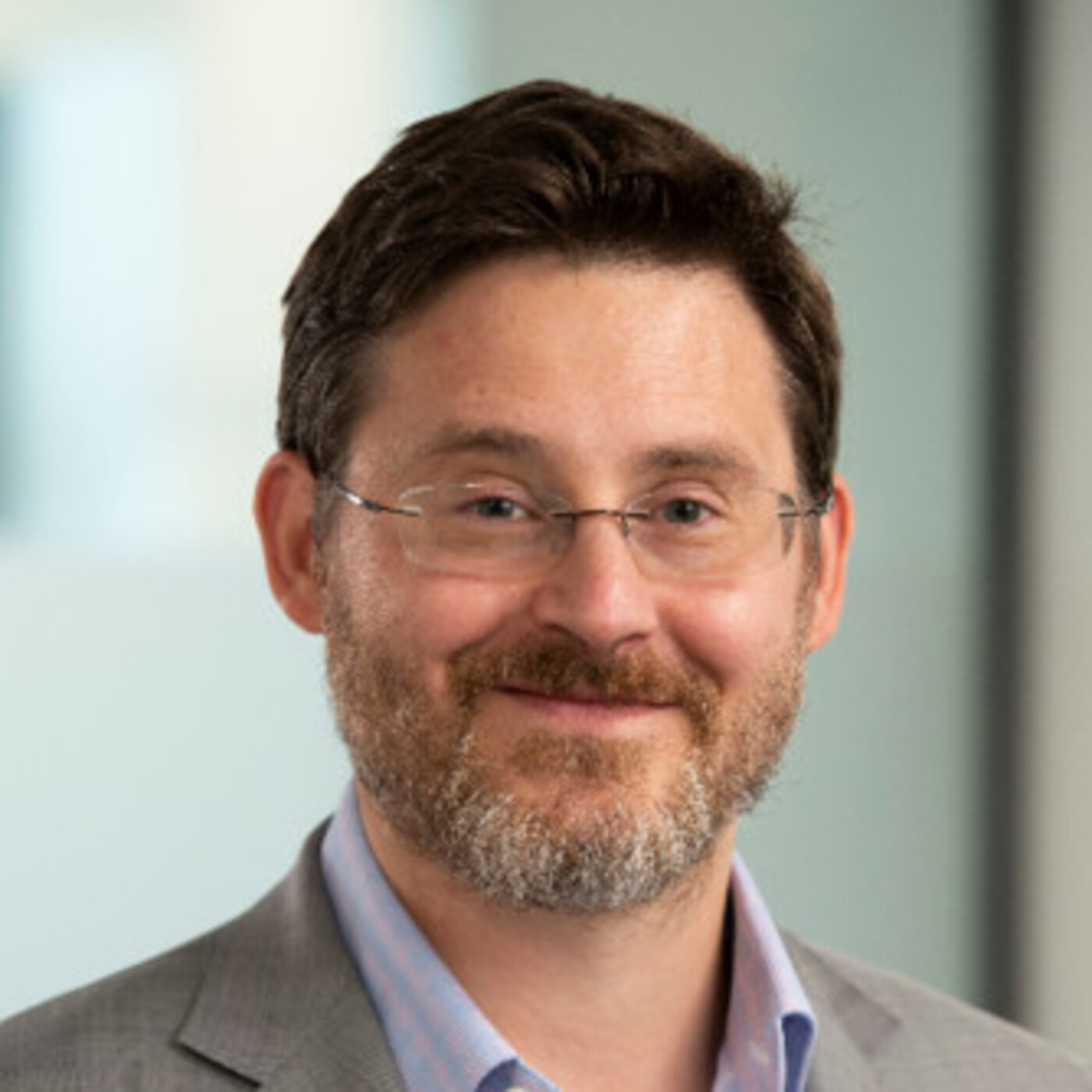
Aoifinn Devitt: Why is cooperation more important than competition? And what role does trusting others play, and particularly today? Why is it so important not to ask why, but why not? Let’s find out next. I’m Aoifinn Devitt, and welcome to the 50 Faces podcast, a podcast committed to revealing the richness and diversity of the world of investment by focusing on its people and their stories. I’m joined today by Daniel Booth, who is Chief Investment Officer at the Borders to Coast Pensions Partnership, which manages assets on behalf of 11 partner funds within the local government pension scheme. He has extensive experience as a Chief Investment Officer and he has had a particular emphasis on alternative investments throughout his career, where he has spent time in Saudi Arabia, Frankfurt, as well as the UK. Welcome, Daniel. Thank you for joining me today.
Daniel Booth: And thank you for inviting me.
Aoifinn Devitt: Let’s start with your current role. Can you describe what you’re currently doing at Borders2Coast?
Daniel Booth: So I’m the CIO at Borders2Coast, which is the largest of the 8 pools that was set up to pool local government pension obligations. We effectively act as a centralised asset manager to provide investment implementation options on behalf of our underlying partner funds. I’m managing broad teams with both internal and external management across fixed income, equities, alternatives, as well as support services in our risk and research departments. So offering our clients investment options and trying to generate the best risk-adjusted return that we can for underlying partner funds.
Aoifinn Devitt: And can you talk us through your investment journey and maybe what you studied at university, where you grew up, how you ended up in a role like this in investing?
Daniel Booth: Sure, very happy to. So I’ll start right at the beginning, but I’ll be brief. So I was born at the Mayday Hospital in Croydon when we lived in Thornton Heath. And I found a couple of years ago that the hospital actually changed its name because people had nicknamed it the May Die Hospital. My father was a self-made man, so for the first half of my education, I spent in the state sector comprehensives, and the second half of my education, I spent time in the private sector, which gave me a very interesting view across different lifestyles and different ways of approaching things. It’s given me a very good perspective on a wide range of people. Generally at school, I was a strong all-rounder, and when I started studying economics at A-level, that was a subject that I was quite passionate about. Economics is effectively the study of people’s collective behaviour once given a set of incentives, which is a lot easier to predict than individual behaviour. And so I studied that for degree onwards and then went into investments thereafter. My first role was in corporate treasury. I found that a particularly boring role, so I wanted to do something a lot more exciting, a little bit more on the front line. So I resigned from that role without having another role to go to, but just with the belief that I wanted a career doing things that I enjoy. So my first role that I got was a trading role, which I did for the first 5 years of my career, which gave me a real appreciation of markets and I was trading across the dot-com crash, the 9/11 crisis, the Enron scandal in 2002. So really a lot of volatility compact into a short space of time. But I wanted to do something a little bit more fulfilling, so I moved into sort of longer-term investment roles, eventually moving to Germany where I had an opportunity to contribute to the development of the alternative industry in Germany. I had studied German at school for a year, but that was one of the few subjects I didn’t actually pay attention in because I thought that German would never be useful in my life. And then I ended up living in the country for 5 years. So you never really know what’s going to happen in life, and it’s full of surprises. After spending time in Germany for about 5 years, where I set up some alternative businesses, both the consultancies and for institutional asset managers, I came back to London briefly. Before moving to Saudi Arabia in 2009-10 after the global financial crisis to build out the investment capabilities for Saudi Aramco, the oil company. For me, that was that was a, a great opportunity to work for a real money account with a growing investment pool, with a very flexible investment mandate, with a focus on endowment style heavy asset allocation. Return-focused portfolio. But that’s probably an opportunity that I wouldn’t have considered in a normal market, but I didn’t want to take a step backwards in 2009 when I left my prior employer. So that led me to be a bit more open to look at the things that I was considering. And for me, that was a career-defining role to spend 8 years working for Saudi Aramco with some of the very senior people in the company and in the government, and also to build an investment industry in Saudi Arabia which didn’t really exist before that. So a lot of the asset management firms now established in Saudi Arabia with people that I either worked with or trained at Saudi Aramco, managing the local government pension assets and various endowments and so forth. And the interesting thing there was Saudi Aramco is an oil company, so as an investment person,, we got pretty much left alone to develop our own business with a lot of autonomy and a lot of support from the senior management there. So the combination of hiring some experienced expats and combining them with some really high-quality local Saudi graduates from top US universities meant that I could build a really strong investment team. And that investment team in Saudi Arabia outperformed all the outsourced endowments that we had with big US asset managers. So I think that just goes to show that anything is possible given the right positioning and the right direction from a group of people. So the fact is that we had a large proportion of the people without any practical work experience, with just a couple of experienced expatriates, and we created something which was effectively performing in line with world-leading investment managers. That was really satisfying, and at a fraction of the cost that the endowments run in, in the US. So really, really fulfilling, really interesting investment options and opportunities that we did there, and culturally a really really rich, rich experience working both with a lot of Middle Eastern, very talented Middle Eastern, Saudi, and graduates, but also with expatriates from throughout the world, including quite a few Americans. So, that was really an eye-opener for me, both on the work front, but also on the cultural and living front. So, we often don’t understand how lucky and fortunate we are in the West, but living in an emerging market for a long period of time really gave me that appreciation. Then I’ve been back in the UK for the last 2 years with Borders to Coast.
Aoifinn Devitt: And just before going back to the Borders to Coast experience, I’d love to dig into some of those aspects of your experience there. And first, your somewhat visceral experience with trading through periods of sharp volatility in a compressed period of time. I’d love to know how that influenced your approach to risk. And similarly, working in different cultures, whether it be in Germany, and I think particularly in Saudi Arabia, which not many people are going to be familiar with the culture of work in the Middle East. How did that influence your approach to risk or your investment beliefs more generally?
Daniel Booth: Yeah, so good question. So to take the first one, trading through a period of extreme market volatility really gives you an appreciation for what could happen. So I was actually on a trading desk the day the planes flew into the buildings on 9/11. And I actually had a friend who used to work at Taleb’s and was in communication with people at Taleb’s in New York on that day. So that was a really, really stressful and powerful day in markets, and it just goes to show you just the range of things that can happen. And often those, those are things that are outside of your minds. You don’t really get caught by the things that you’re aware of, for the risk that you’re aware of. You get caught by the risks that you haven’t even considered or factored into. So just an appreciation of the range of things that can happen. I think I’ve always been a risk-averse individual. I’ve generally learned to take more risk over my career. It’s usually the other way around— people are too risk-seeking and then end up losing money in markets and then become risk-averse over time. For me, it’s interesting because it happened the other way around. Just being on a trading desk, I really dislike the really disliked the feeling of actually going to work and losing money, so I made sure that most days I actually made money, but that meant I was a little bit too risk-averse and maybe didn’t take enough risks early on in my career. I’ve learned to be a little bit more symmetrical with risk appreciation over time. And then from a cultural perspective, working in the Middle East, working in Saudi Arabia, a very different cultural perspective. So I’ve worked in Germany, in the UK and in Saudi Arabia for long periods of time. Each of those experiences are different. Obviously, the Saudi experience was probably a little bit more culturally different than anything else. What I would say is that people are people, and they tend to be pretty similar across the world with the same sort of concerns, considerations, aspirations, and just from a different perspective or framing because of the cultural differences and background differences. But generally, people are very similar across the world. I think if you’re open and honest and direct and straightforward with people, generally it’s quite easy to build good relationships with them, providing that you build that trust with people. In the Middle East, it is a very relationship— the old economies around the Mediterranean are very old-style, relationship-based relationships where trust is a very important thing. I think that’s helped me as I’ve transitioned back to the UK and have a big role in terms of building trust and managing sort of complex change and stakeholder management issues.
Aoifinn Devitt: And as you were seeking to break into that market there and develop some of these relationships, obviously that is something that can take years, and you did have a number of years there, but did you have any guidance or any tips as to how to go about that?
Daniel Booth: Well, I think the ones I’ve taught myself, which is one, actively listen to other people. So people seem seem to, to want to speak more and listen less nowadays, and I think the role of active listening is, is drastically underplayed. So just being able to listen to people and really understand what their concerns are, what their issues are. And then number two, to treat people with respect. So everybody, no matter What relationship to you? What culture to you? Just to make sure that you’re respectful and polite to other people. I think for me it’s very important. So manners have always been an important thing for me that was drilled into me from a young age. I was late developing on my speech, so I had speech therapy when I was very young. My speech therapist was a very old-fashioned English lady who taught me the importance of manners, and that’s been throughout my life, and that’s a very important thing with building relationships with other people. So I’d say actively listening, being respectful of other people’s opinions, and trying to come up with solutions together, and sharing your opinions with other people in an honest and open manner, and making sure that they understand your points of view and that you’re incorporating their points of view and you’re coming back to them being solution-orientated, trying to identify objectives that basically satisfy all the criteria for all parties involved.
Aoifinn Devitt: There’s some pretty sound advice there, certainly in terms of talking less and listening more, which is, I think, should be core for many of us. When you look back at your career, it all seems like it’s gone in a very somewhat linear way, but given it’s been the length it has been, I’m sure there have been some setbacks and challenges in there. Can you talk about any of those challenges or even any investment mistakes that you faced and what you learned from them?
Daniel Booth: Sure, I would say a career— my career certainly wasn’t linear. There’s lots of ups and downs. So from an early part of my career when I got a job in corporate treasury and I went to work every day and was horrendously bored because it wasn’t intellectually challenging for me, for me to give up a job without having another job an early part of my career stage was quite a stressful, stressful period. After trading and then wanting to move into investment management, again, that was a difficult transition. I ended up going to Germany rather than staying in the UK because people in the UK would generally consider that I’d been a high-flying trader earning a lot of money, so anything on the investment side would be a step down for me. So they were reluctant to give me opportunities and chances to transition across. So I had to move countries from that. When I left Germany in 2009, I was a junior partner in a firm. That firm ran into some liquidity problems for underlying clients. I was meant to be transitioning back to London with the firm. That didn’t work out. I wanted to come back to London anyway. So that’s why I left the firm and sold my stake in the partnership and moved on. And then looking for a job in 2009, I had the opportunity of taking a step backwards in role or actually being a bit more flexible in my search and things that I would consider, which is how I ended up in Saudi Arabia, which I probably wouldn’t have done in a typical market. But for me, that was a career-defining role and having to spend 8 years working in the Middle East and managing $40 billion portfolios in my late 30s was probably not an opportunity I would have got in the UK. So for me, that was a really interesting opportunity, but it only came about in a period of stress when jobs and things were difficult to find. But sometimes those things can actually be useful for you because they force you to actually think and consider things differently from what you would usually. So my advice there would be sometimes we think things are actually bad for us, but they actually end up being good for us in the longer term. So you don’t actually know until you’ve got the benefit of hindsight to look back on things, how actually things work out.
Aoifinn Devitt: And was your experience in Germany perhaps a good preparation for that move to the Middle East? So I often think that if you have done a lot of travel in your youth, it really opens your mind to new possibilities. And to the ability to adjust to a new culture. Had you done a lot of travel, or were these two moves somewhat new for you?
Daniel Booth: So, to me, I love travelling, I love meeting people, I love talking with people from different countries and cultures. To have the experience of living in different countries is a very rich experience, and I think something that people from the UK should fully take advantage of. I also love being back in the UK. I’m very proud of being British in my country. But just living overseas really opens up your mind and gives you a different perspective on things. Germany was certainly a different culture to the UK, and certainly that was probably a stepping stone and did make things easier. And again, Germany, the way the Germans and the British, there are lots of similarities, but there are also lots of differences as well. So yes, I would say that that was a useful move. But I think any country that you live in and any experience of people from different cultures is actually a rich part of your experience.
Aoifinn Devitt: And when you look at your career and key people who influenced you along the way, or any key pieces of advice that you received, is there anything that you can share?
Daniel Booth: Sure, I would look back and I would say probably the two things from a career perspective that have helped me more than anything are basically one being inquisitive. So I have a quest and a natural affinity for wanting to understand how things work and to build knowledge over time. I’ve had that since, since I was a little child, and I have that today. If I don’t understand how something works, that triggers curiosity in me across anything and everything that I do, and I want to actually explore that and learn from that. And I think throughout your career, it’s important that people start and continue to learn especially as we have careers which are going to be more varied than the past. So it means continuous learning, which I think is going to be more important across our career. I think the second thing I would say would be just to be determined. I’ve had people throughout my career telling me that I can’t do things or I couldn’t achieve things, and I haven’t listened to other people. I’ve always had belief in and myself courage in my own convictions. And there have been some difficult times I’ve had to work through and some really points in my career where I’ve doubted my abilities and doubted myself. But you have to have the courage and convictions to work through those things and get to the other side. And I’d say, on a career perspective, the lows are never really that bad and the highs maybe are never really that good. So just try and be steady and plough through that, develop your knowledge, develop yourself over time, have belief in yourself. Continually strive to improve for your own benefit. If you do that, then you’ll be a more attractive proposition to potential employers. Then the second part of your question, for people, for me, I think all people are mixtures of good and bad, and that changes and fluctuates over time. Our role is to try and minimise the amount of things that we do wrong or bad, and maximize the things that we do good. So that’s a daily thing where we have to have a period of self-reflection and look at ourselves and just try and be good people. And for me, the two people that I would really highlight who have really helped me have been my father and my grandmother. So my grandmother, from a working-class background, as a single mother in post-World War II, raised three boys by herself. And did a very good job and was a pillar of strength. And then my father had aspirations to be a professional footballer, got a serious injury when he was very young, so had to change his career and start again and retrain himself at night school and take up a new profession and completely change the direction of his career. But ended up doing so very successfully and making his own fortune and putting 4 kids through private schools and had a very successful career, although not the one that he would have wanted. So I think those 2 people have been pillars in my life and have been really good role models for me.
Aoifinn Devitt: Thank you, Daniel. I can certainly see from those 2 vignettes of your grandmother and your father where your determination and resilience comes from. Thank you very much for sharing those with us. And what is it that you like most about the investment world?
Daniel Booth: Yeah, I think the investment world is a very a very wide, wide area where we can speak with leading investors, leading industry specialists, leading academics, and it’s constantly changing and constantly evolving. So it’s an industry where you have to constantly learn and constantly challenge yourself. In order to stay up to date with what’s going on. Um, so I think the ability to constantly learn— I think one, it’s a very broad and deep industry, so there’s always things that you can learn, and the things are always constantly evolving and changing. So you have to be adaptive with your thought. And just the amount of smart people in this, from the academic world across the investing world, There’s always people that you can work with and learn from. So I think just the opportunity to continually develop yourself, continually challenge yourself, is very present and real.
Aoifinn Devitt: And when you look at the current levels of diversity in the investment world, and you’re obviously, you’re building a business yourself, and you’re, I would imagine, seeking to get adequate levels of diversity cognitively as well as representationally there. What are your thoughts on the current state of affairs and what do you think can be done to improve things?
Daniel Booth: Yeah, I think the investment industry as a whole is probably not as diverse as it could and should be. I think that that will change over time as the younger generations have probably a fairer chance of entering the profession. I think diversity is important in terms of diversity of thought.— which is across a number of different spectrums. So age, gender, culture, socio-economic background, etc. And each of those are pretty important. So if I take one, age, I love working with young people. They’re full of ideas. They’re full of alternative ways of doing things. Again, I like working with really old experienced people because you can trust them to get the job done. And there’s a sense that experience is a bit undervalued in today’s world. And then mid-level people who have still the flexibility in mindset, but the experience of working are really important to get things done. So when you’re building teams, it’s really important to have young people, to have mid-level people, and to have experienced people, and to have them working together. And that gives a much risk— richer team environment, but also culture, gender. These are things that the investment industry isn’t particularly good at and I think is improving over time. So at Border2Coast, we’re very cognizant of that, giving opportunities to our hires across the board. It’s a little bit more difficult for us to identify experienced hires which are a little bit more diverse, but certainly at the younger at younger scales when we’re hiring people, we want to make sure that we have a very diverse workforce.
Aoifinn Devitt: Finally, if looking back at your younger self, not quite as far as the Mayday hospital, but maybe to the college graduate, is there any advice you would give that young man, anything you know now that you wish you had known then?
Daniel Booth: Yeah, I’d say cooperation is a lot more effective than competition. And so when I was younger, I played a lot of sports. Sports do instill a sense of competitive behaviour. I think it is important to be competitive to succeed in the investment world, but I think it’s actually even more important to be cooperative. And I think the thing that I’ve learned over time is not just cooperative with your internal teams, but also cooperative across the industry with external people can be really powerful to help each other. And when you adapt that philosophy, you’ll see that people are very open, open to you. Also, trust more people. Most people are reasonable and will help you. And just be aware that sometimes you will be let down, but don’t dwell on failures. Learn from them, adjust and move forward and move on, and focus on the future, not on the failures of the past. But it probably took me more time as a younger self to trust people and A presentation that I saw from ultra-successful people basically showed that ultra-successful people actually get let down more by other people, but just they ask more people for help. So it’s effectively playing the probabilities that people are generally reasonable and will help you. So if you ask more people for help, that’s going to propel you forward in your career, as opposed to waiting to build trust with people over a long period of time and then only giving them the opportunity to help you once that trust is built. To trust people earlier and don’t dwell on failures and cooperate more with other people.
Aoifinn Devitt: There are some really profound lessons there, and I just wanted to hearken back to one you said, which is a reminder to be reflective about us continuing to do good and not, not just do bad, but to do good in our lives. And I think especially today when we are surrounded by noise, with what, with our remote working and the COVID pandemic, we are pretty much running to stand still. And to be reminded to be reflective, I think, is so important. And then I also think it’s very poignant that we’re ending on that reminder you gave us to trust people, because I think now more than ever, when a lot of us are consumed by fear, and I think mistrust of our fellow citizens seems to be percolating through the media, I think, you know, with that reminder to trust people in all areas of our life perhaps is a very poignant and solid one.
Daniel Booth: Yeah, thanks. I’d also add, I’m generally an optimistic person, so I think sometimes we go the wrong way to find the right direction.. And I think there is quite a few wrong directions that we’re going in at the minute, but I’m quite optimistic that we’ll find our way through that.
Aoifinn Devitt: Yes, I would share that. I definitely am an optimist. It can be hard sometimes, especially in a year like this year. But I think if if you, you just remember, can dig deep and remember who you are, I think is, that that’s what you need to keep your resolve.
Daniel Booth: Yeah, I’d just add one other thing, just from my experiences and reflections of living in Saudi Arabia. So that really has crystallized for me how lucky we are in the West. So in Saudi Arabia, you have men and women who are on work contracts, working for minimal wages in low-level service jobs, who commit for working for 2 years at a time without seeing their children, doing low-paid, low-skilled jobs, and then just going back to their home countries every 2 years. So the sacrifice that those people make so their children in their home countries can have a reasonable standard of living is just humongous. And we don’t really appreciate there are a lot of people in the world who go through those sacrifices. And there’s just one last comment that I’d like to leave you on, which is one from George Bernard Shaw, which is my favorite quote and is something that stuck with me throughout my career. And this is, I think, quoted by John F. Kennedy at one stage as well, or variation of this. So he said, some people see things the way they are and ask why. I see things that never were and ask why not. That’s just about us being open with our minds to the possibilities of what can happen. And I really do think that your thoughts today are your reality tomorrow. So make sure that you fill your mind full of positive stuff and you make sure that you’re open to the possibilities of what can happen in your life, both for your career and your broader perspective.
Aoifinn Devitt: Absolutely. And that, I think, asking why not, it seems like your inquisitive streak has only gotten stronger through your life, which is a great discipline. And the point you made about Saudi Arabia and different living conditions and different expectations, this is why, getting back to the point we made earlier, travel and broadening and opening your mind from the earliest possible opportunity and never stopping doing that, I think it makes us more empathetic individuals and ultimately happier, but more content and less inclined to complain. So thank you very much for sharing that.
Daniel Booth: Yeah, my pleasure. And thanks very much for inviting me today and hope that this is useful for the listeners.
Aoifinn Devitt: I’m Aoifinn Devitt. Thank you for listening to the 50 Faces Podcast. If you liked what you heard and would like to tune in to hear more inspiring investors on their personal journeys, please subscribe on Apple Podcasts or wherever you get your podcasts. This podcast is for informational purposes only and should not be construed as investment advice. And all views are personal and should not be attributed to the organizations and affiliations of the host or any guest.
Aoifinn Devitt: Why is cooperation more important than competition? And what role does trusting others play, and particularly today? Why is it so important not to ask why, but why not? Let’s find out next. I’m Aoifinn Devitt, and welcome to the 50 Faces podcast, a podcast committed to revealing the richness and diversity of the world of investment by focusing on its people and their stories. I’m joined today by Daniel Booth, who is Chief Investment Officer at the Borders to Coast Pensions Partnership, which manages assets on behalf of 11 partner funds within the local government pension scheme. He has extensive experience as a Chief Investment Officer and he has had a particular emphasis on alternative investments throughout his career, where he has spent time in Saudi Arabia, Frankfurt, as well as the UK. Welcome, Daniel. Thank you for joining me today.
Daniel Booth: And thank you for inviting me.
Aoifinn Devitt: Let’s start with your current role. Can you describe what you’re currently doing at Borders2Coast?
Daniel Booth: So I’m the CIO at Borders2Coast, which is the largest of the 8 pools that was set up to pool local government pension obligations. We effectively act as a centralised asset manager to provide investment implementation options on behalf of our underlying partner funds. I’m managing broad teams with both internal and external management across fixed income, equities, alternatives, as well as support services in our risk and research departments. So offering our clients investment options and trying to generate the best risk-adjusted return that we can for underlying partner funds.
Aoifinn Devitt: And can you talk us through your investment journey and maybe what you studied at university, where you grew up, how you ended up in a role like this in investing?
Daniel Booth: Sure, very happy to. So I’ll start right at the beginning, but I’ll be brief. So I was born at the Mayday Hospital in Croydon when we lived in Thornton Heath. And I found a couple of years ago that the hospital actually changed its name because people had nicknamed it the May Die Hospital. My father was a self-made man, so for the first half of my education, I spent in the state sector comprehensives, and the second half of my education, I spent time in the private sector, which gave me a very interesting view across different lifestyles and different ways of approaching things. It’s given me a very good perspective on a wide range of people. Generally at school, I was a strong all-rounder, and when I started studying economics at A-level, that was a subject that I was quite passionate about. Economics is effectively the study of people’s collective behaviour once given a set of incentives, which is a lot easier to predict than individual behaviour. And so I studied that for degree onwards and then went into investments thereafter. My first role was in corporate treasury. I found that a particularly boring role, so I wanted to do something a lot more exciting, a little bit more on the front line. So I resigned from that role without having another role to go to, but just with the belief that I wanted a career doing things that I enjoy. So my first role that I got was a trading role, which I did for the first 5 years of my career, which gave me a real appreciation of markets and I was trading across the dot-com crash, the 9/11 crisis, the Enron scandal in 2002. So really a lot of volatility compact into a short space of time. But I wanted to do something a little bit more fulfilling, so I moved into sort of longer-term investment roles, eventually moving to Germany where I had an opportunity to contribute to the development of the alternative industry in Germany. I had studied German at school for a year, but that was one of the few subjects I didn’t actually pay attention in because I thought that German would never be useful in my life. And then I ended up living in the country for 5 years. So you never really know what’s going to happen in life, and it’s full of surprises. After spending time in Germany for about 5 years, where I set up some alternative businesses, both the consultancies and for institutional asset managers, I came back to London briefly. Before moving to Saudi Arabia in 2009-10 after the global financial crisis to build out the investment capabilities for Saudi Aramco, the oil company. For me, that was that was a, a great opportunity to work for a real money account with a growing investment pool, with a very flexible investment mandate, with a focus on endowment style heavy asset allocation. Return-focused portfolio. But that’s probably an opportunity that I wouldn’t have considered in a normal market, but I didn’t want to take a step backwards in 2009 when I left my prior employer. So that led me to be a bit more open to look at the things that I was considering. And for me, that was a career-defining role to spend 8 years working for Saudi Aramco with some of the very senior people in the company and in the government, and also to build an investment industry in Saudi Arabia which didn’t really exist before that. So a lot of the asset management firms now established in Saudi Arabia with people that I either worked with or trained at Saudi Aramco, managing the local government pension assets and various endowments and so forth. And the interesting thing there was Saudi Aramco is an oil company, so as an investment person,, we got pretty much left alone to develop our own business with a lot of autonomy and a lot of support from the senior management there. So the combination of hiring some experienced expats and combining them with some really high-quality local Saudi graduates from top US universities meant that I could build a really strong investment team. And that investment team in Saudi Arabia outperformed all the outsourced endowments that we had with big US asset managers. So I think that just goes to show that anything is possible given the right positioning and the right direction from a group of people. So the fact is that we had a large proportion of the people without any practical work experience, with just a couple of experienced expatriates, and we created something which was effectively performing in line with world-leading investment managers. That was really satisfying, and at a fraction of the cost that the endowments run in, in the US. So really, really fulfilling, really interesting investment options and opportunities that we did there, and culturally a really really rich, rich experience working both with a lot of Middle Eastern, very talented Middle Eastern, Saudi, and graduates, but also with expatriates from throughout the world, including quite a few Americans. So, that was really an eye-opener for me, both on the work front, but also on the cultural and living front. So, we often don’t understand how lucky and fortunate we are in the West, but living in an emerging market for a long period of time really gave me that appreciation. Then I’ve been back in the UK for the last 2 years with Borders to Coast.
Aoifinn Devitt: And just before going back to the Borders to Coast experience, I’d love to dig into some of those aspects of your experience there. And first, your somewhat visceral experience with trading through periods of sharp volatility in a compressed period of time. I’d love to know how that influenced your approach to risk. And similarly, working in different cultures, whether it be in Germany, and I think particularly in Saudi Arabia, which not many people are going to be familiar with the culture of work in the Middle East. How did that influence your approach to risk or your investment beliefs more generally?
Daniel Booth: Yeah, so good question. So to take the first one, trading through a period of extreme market volatility really gives you an appreciation for what could happen. So I was actually on a trading desk the day the planes flew into the buildings on 9/11. And I actually had a friend who used to work at Taleb’s and was in communication with people at Taleb’s in New York on that day. So that was a really, really stressful and powerful day in markets, and it just goes to show you just the range of things that can happen. And often those, those are things that are outside of your minds. You don’t really get caught by the things that you’re aware of, for the risk that you’re aware of. You get caught by the risks that you haven’t even considered or factored into. So just an appreciation of the range of things that can happen. I think I’ve always been a risk-averse individual. I’ve generally learned to take more risk over my career. It’s usually the other way around— people are too risk-seeking and then end up losing money in markets and then become risk-averse over time. For me, it’s interesting because it happened the other way around. Just being on a trading desk, I really dislike the really disliked the feeling of actually going to work and losing money, so I made sure that most days I actually made money, but that meant I was a little bit too risk-averse and maybe didn’t take enough risks early on in my career. I’ve learned to be a little bit more symmetrical with risk appreciation over time. And then from a cultural perspective, working in the Middle East, working in Saudi Arabia, a very different cultural perspective. So I’ve worked in Germany, in the UK and in Saudi Arabia for long periods of time. Each of those experiences are different. Obviously, the Saudi experience was probably a little bit more culturally different than anything else. What I would say is that people are people, and they tend to be pretty similar across the world with the same sort of concerns, considerations, aspirations, and just from a different perspective or framing because of the cultural differences and background differences. But generally, people are very similar across the world. I think if you’re open and honest and direct and straightforward with people, generally it’s quite easy to build good relationships with them, providing that you build that trust with people. In the Middle East, it is a very relationship— the old economies around the Mediterranean are very old-style, relationship-based relationships where trust is a very important thing. I think that’s helped me as I’ve transitioned back to the UK and have a big role in terms of building trust and managing sort of complex change and stakeholder management issues.
Aoifinn Devitt: And as you were seeking to break into that market there and develop some of these relationships, obviously that is something that can take years, and you did have a number of years there, but did you have any guidance or any tips as to how to go about that?
Daniel Booth: Well, I think the ones I’ve taught myself, which is one, actively listen to other people. So people seem seem to, to want to speak more and listen less nowadays, and I think the role of active listening is, is drastically underplayed. So just being able to listen to people and really understand what their concerns are, what their issues are. And then number two, to treat people with respect. So everybody, no matter What relationship to you? What culture to you? Just to make sure that you’re respectful and polite to other people. I think for me it’s very important. So manners have always been an important thing for me that was drilled into me from a young age. I was late developing on my speech, so I had speech therapy when I was very young. My speech therapist was a very old-fashioned English lady who taught me the importance of manners, and that’s been throughout my life, and that’s a very important thing with building relationships with other people. So I’d say actively listening, being respectful of other people’s opinions, and trying to come up with solutions together, and sharing your opinions with other people in an honest and open manner, and making sure that they understand your points of view and that you’re incorporating their points of view and you’re coming back to them being solution-orientated, trying to identify objectives that basically satisfy all the criteria for all parties involved.
Aoifinn Devitt: There’s some pretty sound advice there, certainly in terms of talking less and listening more, which is, I think, should be core for many of us. When you look back at your career, it all seems like it’s gone in a very somewhat linear way, but given it’s been the length it has been, I’m sure there have been some setbacks and challenges in there. Can you talk about any of those challenges or even any investment mistakes that you faced and what you learned from them?
Daniel Booth: Sure, I would say a career— my career certainly wasn’t linear. There’s lots of ups and downs. So from an early part of my career when I got a job in corporate treasury and I went to work every day and was horrendously bored because it wasn’t intellectually challenging for me, for me to give up a job without having another job an early part of my career stage was quite a stressful, stressful period. After trading and then wanting to move into investment management, again, that was a difficult transition. I ended up going to Germany rather than staying in the UK because people in the UK would generally consider that I’d been a high-flying trader earning a lot of money, so anything on the investment side would be a step down for me. So they were reluctant to give me opportunities and chances to transition across. So I had to move countries from that. When I left Germany in 2009, I was a junior partner in a firm. That firm ran into some liquidity problems for underlying clients. I was meant to be transitioning back to London with the firm. That didn’t work out. I wanted to come back to London anyway. So that’s why I left the firm and sold my stake in the partnership and moved on. And then looking for a job in 2009, I had the opportunity of taking a step backwards in role or actually being a bit more flexible in my search and things that I would consider, which is how I ended up in Saudi Arabia, which I probably wouldn’t have done in a typical market. But for me, that was a career-defining role and having to spend 8 years working in the Middle East and managing $40 billion portfolios in my late 30s was probably not an opportunity I would have got in the UK. So for me, that was a really interesting opportunity, but it only came about in a period of stress when jobs and things were difficult to find. But sometimes those things can actually be useful for you because they force you to actually think and consider things differently from what you would usually. So my advice there would be sometimes we think things are actually bad for us, but they actually end up being good for us in the longer term. So you don’t actually know until you’ve got the benefit of hindsight to look back on things, how actually things work out.
Aoifinn Devitt: And was your experience in Germany perhaps a good preparation for that move to the Middle East? So I often think that if you have done a lot of travel in your youth, it really opens your mind to new possibilities. And to the ability to adjust to a new culture. Had you done a lot of travel, or were these two moves somewhat new for you?
Daniel Booth: So, to me, I love travelling, I love meeting people, I love talking with people from different countries and cultures. To have the experience of living in different countries is a very rich experience, and I think something that people from the UK should fully take advantage of. I also love being back in the UK. I’m very proud of being British in my country. But just living overseas really opens up your mind and gives you a different perspective on things. Germany was certainly a different culture to the UK, and certainly that was probably a stepping stone and did make things easier. And again, Germany, the way the Germans and the British, there are lots of similarities, but there are also lots of differences as well. So yes, I would say that that was a useful move. But I think any country that you live in and any experience of people from different cultures is actually a rich part of your experience.
Aoifinn Devitt: And when you look at your career and key people who influenced you along the way, or any key pieces of advice that you received, is there anything that you can share?
Daniel Booth: Sure, I would look back and I would say probably the two things from a career perspective that have helped me more than anything are basically one being inquisitive. So I have a quest and a natural affinity for wanting to understand how things work and to build knowledge over time. I’ve had that since, since I was a little child, and I have that today. If I don’t understand how something works, that triggers curiosity in me across anything and everything that I do, and I want to actually explore that and learn from that. And I think throughout your career, it’s important that people start and continue to learn especially as we have careers which are going to be more varied than the past. So it means continuous learning, which I think is going to be more important across our career. I think the second thing I would say would be just to be determined. I’ve had people throughout my career telling me that I can’t do things or I couldn’t achieve things, and I haven’t listened to other people. I’ve always had belief in and myself courage in my own convictions. And there have been some difficult times I’ve had to work through and some really points in my career where I’ve doubted my abilities and doubted myself. But you have to have the courage and convictions to work through those things and get to the other side. And I’d say, on a career perspective, the lows are never really that bad and the highs maybe are never really that good. So just try and be steady and plough through that, develop your knowledge, develop yourself over time, have belief in yourself. Continually strive to improve for your own benefit. If you do that, then you’ll be a more attractive proposition to potential employers. Then the second part of your question, for people, for me, I think all people are mixtures of good and bad, and that changes and fluctuates over time. Our role is to try and minimise the amount of things that we do wrong or bad, and maximize the things that we do good. So that’s a daily thing where we have to have a period of self-reflection and look at ourselves and just try and be good people. And for me, the two people that I would really highlight who have really helped me have been my father and my grandmother. So my grandmother, from a working-class background, as a single mother in post-World War II, raised three boys by herself. And did a very good job and was a pillar of strength. And then my father had aspirations to be a professional footballer, got a serious injury when he was very young, so had to change his career and start again and retrain himself at night school and take up a new profession and completely change the direction of his career. But ended up doing so very successfully and making his own fortune and putting 4 kids through private schools and had a very successful career, although not the one that he would have wanted. So I think those 2 people have been pillars in my life and have been really good role models for me.
Aoifinn Devitt: Thank you, Daniel. I can certainly see from those 2 vignettes of your grandmother and your father where your determination and resilience comes from. Thank you very much for sharing those with us. And what is it that you like most about the investment world?
Daniel Booth: Yeah, I think the investment world is a very a very wide, wide area where we can speak with leading investors, leading industry specialists, leading academics, and it’s constantly changing and constantly evolving. So it’s an industry where you have to constantly learn and constantly challenge yourself. In order to stay up to date with what’s going on. Um, so I think the ability to constantly learn— I think one, it’s a very broad and deep industry, so there’s always things that you can learn, and the things are always constantly evolving and changing. So you have to be adaptive with your thought. And just the amount of smart people in this, from the academic world across the investing world, There’s always people that you can work with and learn from. So I think just the opportunity to continually develop yourself, continually challenge yourself, is very present and real.
Aoifinn Devitt: And when you look at the current levels of diversity in the investment world, and you’re obviously, you’re building a business yourself, and you’re, I would imagine, seeking to get adequate levels of diversity cognitively as well as representationally there. What are your thoughts on the current state of affairs and what do you think can be done to improve things?
Daniel Booth: Yeah, I think the investment industry as a whole is probably not as diverse as it could and should be. I think that that will change over time as the younger generations have probably a fairer chance of entering the profession. I think diversity is important in terms of diversity of thought.— which is across a number of different spectrums. So age, gender, culture, socio-economic background, etc. And each of those are pretty important. So if I take one, age, I love working with young people. They’re full of ideas. They’re full of alternative ways of doing things. Again, I like working with really old experienced people because you can trust them to get the job done. And there’s a sense that experience is a bit undervalued in today’s world. And then mid-level people who have still the flexibility in mindset, but the experience of working are really important to get things done. So when you’re building teams, it’s really important to have young people, to have mid-level people, and to have experienced people, and to have them working together. And that gives a much risk— richer team environment, but also culture, gender. These are things that the investment industry isn’t particularly good at and I think is improving over time. So at Border2Coast, we’re very cognizant of that, giving opportunities to our hires across the board. It’s a little bit more difficult for us to identify experienced hires which are a little bit more diverse, but certainly at the younger at younger scales when we’re hiring people, we want to make sure that we have a very diverse workforce.
Aoifinn Devitt: Finally, if looking back at your younger self, not quite as far as the Mayday hospital, but maybe to the college graduate, is there any advice you would give that young man, anything you know now that you wish you had known then?
Daniel Booth: Yeah, I’d say cooperation is a lot more effective than competition. And so when I was younger, I played a lot of sports. Sports do instill a sense of competitive behaviour. I think it is important to be competitive to succeed in the investment world, but I think it’s actually even more important to be cooperative. And I think the thing that I’ve learned over time is not just cooperative with your internal teams, but also cooperative across the industry with external people can be really powerful to help each other. And when you adapt that philosophy, you’ll see that people are very open, open to you. Also, trust more people. Most people are reasonable and will help you. And just be aware that sometimes you will be let down, but don’t dwell on failures. Learn from them, adjust and move forward and move on, and focus on the future, not on the failures of the past. But it probably took me more time as a younger self to trust people and A presentation that I saw from ultra-successful people basically showed that ultra-successful people actually get let down more by other people, but just they ask more people for help. So it’s effectively playing the probabilities that people are generally reasonable and will help you. So if you ask more people for help, that’s going to propel you forward in your career, as opposed to waiting to build trust with people over a long period of time and then only giving them the opportunity to help you once that trust is built. To trust people earlier and don’t dwell on failures and cooperate more with other people.
Aoifinn Devitt: There are some really profound lessons there, and I just wanted to hearken back to one you said, which is a reminder to be reflective about us continuing to do good and not, not just do bad, but to do good in our lives. And I think especially today when we are surrounded by noise, with what, with our remote working and the COVID pandemic, we are pretty much running to stand still. And to be reminded to be reflective, I think, is so important. And then I also think it’s very poignant that we’re ending on that reminder you gave us to trust people, because I think now more than ever, when a lot of us are consumed by fear, and I think mistrust of our fellow citizens seems to be percolating through the media, I think, you know, with that reminder to trust people in all areas of our life perhaps is a very poignant and solid one.
Daniel Booth: Yeah, thanks. I’d also add, I’m generally an optimistic person, so I think sometimes we go the wrong way to find the right direction.. And I think there is quite a few wrong directions that we’re going in at the minute, but I’m quite optimistic that we’ll find our way through that.
Aoifinn Devitt: Yes, I would share that. I definitely am an optimist. It can be hard sometimes, especially in a year like this year. But I think if if you, you just remember, can dig deep and remember who you are, I think is, that that’s what you need to keep your resolve.
Daniel Booth: Yeah, I’d just add one other thing, just from my experiences and reflections of living in Saudi Arabia. So that really has crystallized for me how lucky we are in the West. So in Saudi Arabia, you have men and women who are on work contracts, working for minimal wages in low-level service jobs, who commit for working for 2 years at a time without seeing their children, doing low-paid, low-skilled jobs, and then just going back to their home countries every 2 years. So the sacrifice that those people make so their children in their home countries can have a reasonable standard of living is just humongous. And we don’t really appreciate there are a lot of people in the world who go through those sacrifices. And there’s just one last comment that I’d like to leave you on, which is one from George Bernard Shaw, which is my favorite quote and is something that stuck with me throughout my career. And this is, I think, quoted by John F. Kennedy at one stage as well, or variation of this. So he said, some people see things the way they are and ask why. I see things that never were and ask why not. That’s just about us being open with our minds to the possibilities of what can happen. And I really do think that your thoughts today are your reality tomorrow. So make sure that you fill your mind full of positive stuff and you make sure that you’re open to the possibilities of what can happen in your life, both for your career and your broader perspective.
Aoifinn Devitt: Absolutely. And that, I think, asking why not, it seems like your inquisitive streak has only gotten stronger through your life, which is a great discipline. And the point you made about Saudi Arabia and different living conditions and different expectations, this is why, getting back to the point we made earlier, travel and broadening and opening your mind from the earliest possible opportunity and never stopping doing that, I think it makes us more empathetic individuals and ultimately happier, but more content and less inclined to complain. So thank you very much for sharing that.
Daniel Booth: Yeah, my pleasure. And thanks very much for inviting me today and hope that this is useful for the listeners.
Aoifinn Devitt: I’m Aoifinn Devitt. Thank you for listening to the 50 Faces Podcast. If you liked what you heard and would like to tune in to hear more inspiring investors on their personal journeys, please subscribe on Apple Podcasts or wherever you get your podcasts. This podcast is for informational purposes only and should not be construed as investment advice. And all views are personal and should not be attributed to the organizations and affiliations of the host or any guest.