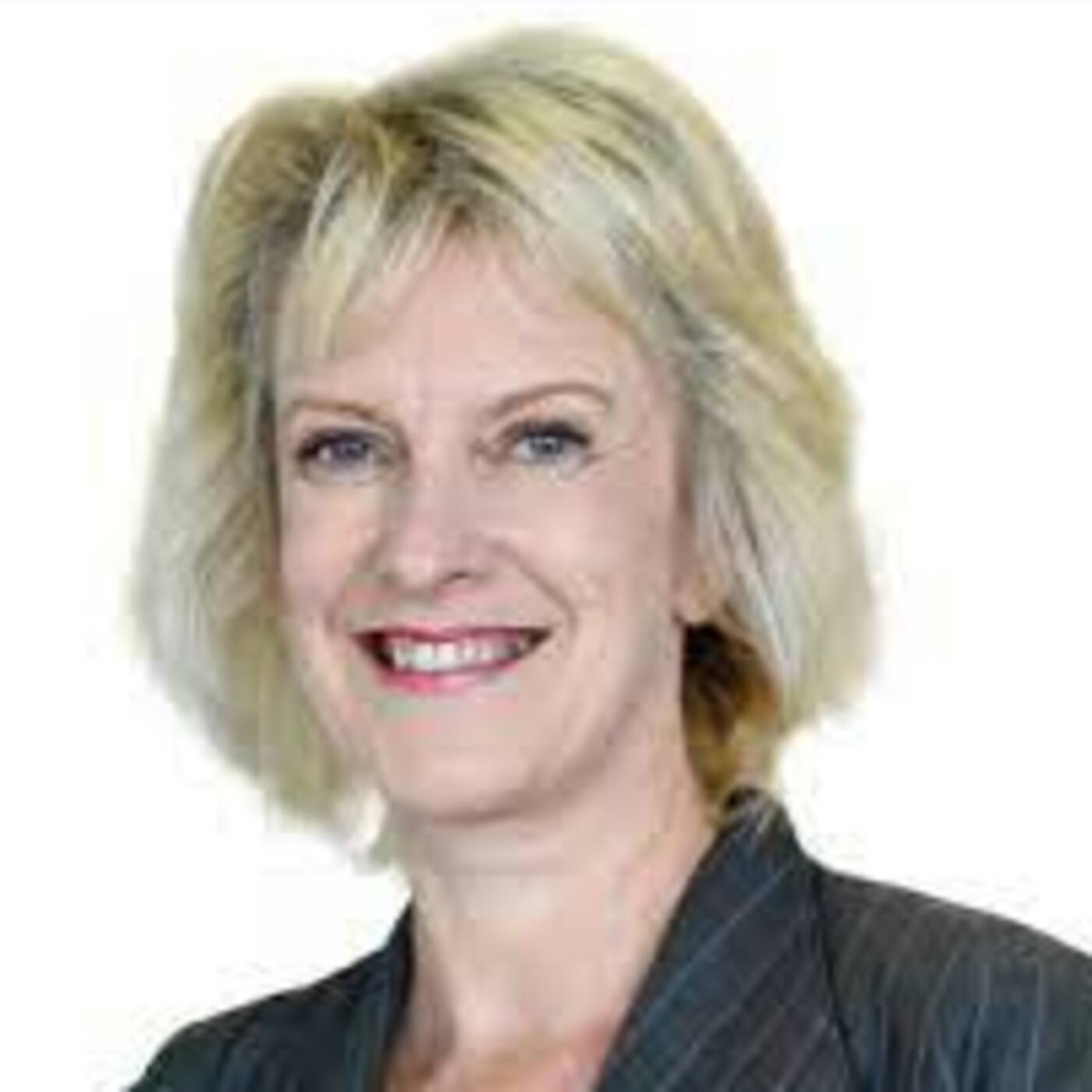
Aoifinn Devitt: Our next guest combines a successful legal career with a passion for the arts and for London, her hometown. Let’s hear how theatre that breaks the mould can also open minds and how open minds can lead to open opportunities. I’m Aoifinn Devitt, and welcome to this 50 Faces focus series, which showcases the richness and diversity of inspiring people in the law. I’m joined today by Carolyn Saunders, who is a partner and head of pensions at Pinsent Masons, one of the largest specialist pensions law teams in the UK. She focuses not just on traditional areas of pensions law, but on issues at the cutting edge of current discourse, particularly around areas such as sustainable investing, climate risk governance, and trustee fiduciary duties in this respect. She’s an active participant in affinity groups such as the Fawcett Society, and has a passionate interest in theatre and the arts. Welcome, Carolyn, thank you for joining me today.
Carolyn Saunders: Thank you, Aoifinn.
Aoifinn Devitt: Let’s start with talking about your background, your career journey, and what first interested you in going into law.
Carolyn Saunders: Okay, well, in terms of my background, born and bred Londoner, so have always lived in and around London. I went to a single-sex school, which I think was quite influential in terms of where I ended up in my career. In terms of my career, quite boring really in some ways because it’s always been private practice lawyer, always been in London, and actually ever since I qualified, I’ve always been a pensions lawyer. I became a partner I think around 1997 and since then, in addition to doing pensions work, I’ve done quite a lot of management roles which I found I’ve really enjoyed, so ranging from at the start heading up graduate recruitment through to sitting on the management board of the remuneration committee, and currently I’m the head of the pensions team and head of the London office. My interest in law— nobody in the family was a lawyer. In fact, nobody in the family had been to university. So my interest came purely from watching TV dramas. So it was those courtroom dramas where obviously I imagined myself being in the courtroom. And also it was a program when I was a teenager, there was a program on called The Paper Chase. And I think there was a film called The Paper Chase, but this was a TV series. Why it inspired me, I don’t know, because actually it was quite scary. It was about an American law school and this really fierce British professor there who used to put them all on the spot. But that was my total experience of law. As I say, there was nobody in the family who did law. And so when I went to university, I suppose I had imagined I would leave university and I would be, you know, one of those courtroom lawyers, and that that was the glamorous thing to do. And I was quickly disabused of that, that no, that’s not what you do, you do commercial law. But, uh, yeah, so it’s the TV that inspired me.
Aoifinn Devitt: And why was that commercial law? Was that because you decided to go the solicitor route and not to become a barrister? Was that how you figured that was a good route for you?
Carolyn Saunders: Yeah, I think that’s right, and all the focus when you’re studying is really on commercial law as very much being where the more interesting careers are, although I’m not sure that’s necessarily the case. Also, at the time, I just felt being a barrister wasn’t for me, that actually I’d be happier being, as I thought, slightly lower profile as a solicitor and not doing all that sort of standing up in court. But it’s funny how your views on things change and how I’ve become so much more used to sort of doing public speaking and that sort of thing, which I didn’t think I would like.
Aoifinn Devitt: And in terms of the juggling of the management responsibilities, is that something you take on full-time or you let take a percentage of your time but still stay with your clients on the legal side?
Carolyn Saunders: No, management isn’t full-time, so I would still very much be involved with the clients, which is really what you have to do in a technical area like pensions. Clients expect quite senior-level support, and to be honest, you can’t lead a team either unless you’re also at the cutting edge doing the client work. So you have to maintain that. You can’t manage effectively and with any credibility. You can’t manage a team, I think, unless you’re also doing the work. So I juggle all of it, but actually I enjoy that. I think one thing I’ve realised about myself is that I get bored quite quickly. I’m not sure if that’s a good thing, but it doesn’t sound very good, does it? I obviously have a short attention span and I just like to have lots of different things to do and that’s what energises me.
Aoifinn Devitt: Well, there’s certainly lots new coming across your transom, I’m sure, on the pension fund governance side, given the renewed and I think vigorous interest in climate change climate change governance, how this intersects with fiduciary duty. What’s at the forefront of your minds today as you work with pension fund trustees?
Carolyn Saunders: Yeah, do you know, I think just how hard it is to be a trustee, and it’s getting harder and harder. And it’s interesting to see how there is more of a market for professional trustees developing, which doesn’t surprise me because I think it’s becoming more of a full-time role. So from the trustees’ point of view, I think it is all about being very clear about their governance to manage their risk as best they can. It’s difficult. In the last month, for example, we’ve got the new Pension Schemes Act. That covers some chunky subjects. You’ve got climate change in there, which you’ve mentioned. You’ve got a new funding regime for defined benefit schemes. You’ve got the regulator increasing its powers and criminal sanctions. So there’s lots of stuff for trustees to get their heads around. As an adviser, more than ever it’s incumbent on us to hold trustees’ hands and try and guide them through all of this.
Aoifinn Devitt: And how about the area of fiduciary duty and, I suppose, climate goals, or some maybe addressing pressure that may be coming from other stakeholders in the case of a pension fund? What is the balance there and how do trustees get the balance right between their fiduciary duty and seeing that climate change risks are mitigated?
Carolyn Saunders: In terms of fiduciary duty, there’s quite a lot of interesting thinking in the industry at the moment and thought leadership around whether there is a case for expanding the duty, and that may or may not come to something. But leaving that aside, trustees have long wrestled with issues such as ESG and climate change, and for a long time I think they have felt that that’s almost like an optional extra that is inconsistent with doing what you need to do for your beneficiaries, which is getting a financial return. I think think I the thinking is now, and certainly in the last year or so, has shifted quite quickly, and trustees are getting better at understanding that long-term and thinking long-term, and therefore factoring in issues such as climate change, can very definitely be in beneficiaries’ interests and therefore consistent with their fiduciary duties. But I think it was a slow burn for that shift to start to happen. I’m seeing it happen that much more quickly, but there certainly is a long history there of trustees feeling that those kind of considerations, not for them. And it’s taken a while to sort of shift that mindset.
Aoifinn Devitt: There’s certainly been a dramatic uptick in, I think, the level of discourse around those topics. I’m just moving to another issue, a little bit related to ESG, the topic of diversity. We actually met at an event for women— I’m not sure if it was in the law, but certainly for women and advancement in their careers. And I know that this has been a passionate area of interest for you for some time, and through some of your involvement in outside societies. What are your thoughts on how the legal profession is doing in terms of encouraging both entry-level diversity and sustaining it through the ranks?
Carolyn Saunders: I think in terms of gender diversity, the profession is doing reasonably well. I mean, there’s always, always room for improvement, and there’s still much to be done, but I would say the early years of my career, nothing really happened. But probably in the last 10 years, gender diversity in the legal profession has got much better. But in terms of other forms of diversity, so ethnic diversity, social mobility, I don’t think we’re really even off the starting blocks, and partly that’s because those issues are less— there’s less control there for the law firms. In most law firms, I think it’s fair to say that at least 50% of the intake at graduate level would be female, and so they’re at least getting people coming in at that junior end. But in other respects, the graduate intake is not so diverse. So in terms of getting greater diversity in other respects, it’s not just for the law firms to do. There’s a job to be done at a much earlier stage, you know, in terms of raising aspirations and people thinking that it’s a career and a place for them. And that’s really hard, I think.
Aoifinn Devitt: Yeah, I think it comes down to role models and just more visibility of people succeeding and progressing through the ranks, not simply entering that level. And it’s funny because I started my podcast series focused on the investment profession, and yeah, that’s an area where we are definitely lagging on both of those metrics with gender and ethnic diversity and other diversity. And I think we like to look to the law sometimes as maybe being about a decade ahead of us, given that there is that parity at entry level, at least from a gender standpoint. What do you think works well in terms of encouraging retention of talent, you nurturing, know, just a culture of success? Do you find it’s mentorship circles, just mentoring in general, some kind of women’s networks?
Carolyn Saunders: Mentoring and networks are all very valuable and have a really important part to play. In terms of actually improving statistics and sort of where we are on the diversity scale, what I have seen work really well is leadership from the top, which certainly in my own firm has been tremendous, I’d say, in that respect. Just making it very clear right from the outset that this was a strategic priority to have a better gender balance in the firm and in senior positions, and then to make sure that everything is consistent with that, that it’s a topic that is discussed very openly, that the business case for it being a need is, is made very clear, and that all the processes that flow through the firm support that. So for example, recruitment processes, so the agencies with which we work are told that that is what the firm is trying to achieve. That various stages of promotion, there’s a comply or explain you approach, know, so for example you have X percent of females who are potential promotion candidates, why are you not putting forward that percentage at this stage? So I think all those things are really, really important actually, so it’s not just about the words, it’s embedding it in the processes that the firm uses.
Aoifinn Devitt: And does that comply and explain procedure or policy, is that going to be on a firm-by-firm basis or is it across the industry that you see that?
Carolyn Saunders: No, I mean, that’s very much firm-by-firm, but I think there are quite a lot of firms that will be doing that now.
Aoifinn Devitt: That’s great. I just want to move to some of the other areas I know that are passionate interests for you, and one is London itself. You said you’re born and bred in London, you’re a member of CBI’s London Council, you’re a Freeman of the City of London. What is it that you love about London?
Carolyn Saunders: It just energizes me. It’s been interesting actually during lockdown, because I live in central London, and so the area in which I walk is around London. And I love walking, I’ve always loved walking, and I love walking in the countryside as well, but I am just as happy having a walk around London, and it really energizes me. And I remember actually going on a holiday some years ago, I think it was either to New Zealand or Australia, which was beautiful, absolutely loved it, and coming back to London, and we were there for about 3 or 4 weeks, as you need to be, and coming back to London and driving through to central London from the airport, and going past the Houses of Parliament and thinking, wow, I hadn’t realized how much I’d missed this architecture. I’d loved the great outdoors and the countryside, but just seeing the architecture, I just get something from that. Yeah, it just gives me a real energy, and I get as much energy and as much of a buzz walking around London as I do, you know, walking on a beautiful coastal walk somewhere.
Aoifinn Devitt: I completely agree. I get a lot of energy, funnily enough, from architecture, and that’s why I’ve been quite troubled by, you know, people working from home and the idea that we will We will work at our homes and we will no longer work in these trophy office buildings. Because I started my career in New York City. I went to Midtown Manhattan. I went into one of those trophy office buildings every day. And that gave me a great sense of pride, a great sense of my own sort of self-respect and belonging and just real prestige that I belonged to this institution. And I don’t think that should be underrated, actually. I think London itself, as you said, it just throws off energy, but just by virtue of its people, its buildings. The last few months when the city has been emptied of much of its activity must have been challenging for you to witness.
Carolyn Saunders: Yeah, very challenging. Although also, as I say, I’ve been walking around the city and whilst it’s— and its emptiness has a real beauty to it as well, if you forget the reason for it. Yes, but very challenging and very hard to think what the city might become now. I don’t know. I mean, I’m very much a glass half full person, so I’m very optimistic that the city will reinvent itself. And will be just as brilliant, because certainly there is definitely a need. I think people are feeling the need to get back together, even those who at the very beginning said, “Oh, I’m never going to work, never going to come into the office again, I’m always going to work from home.” I think we’re just collaborative beings and we need to be with people, so there will always be a place for the office. And the cities will also be important, but it’s no doubt that it will be different going forward. And I think actually that’s quite exciting. It will reinvent itself, and it’d be interesting to see how the city does reinvent itself.
Aoifinn Devitt: Well, certainly one of the areas we’ve enjoyed together that I know is a big part of your life would be the arts, and of course that is particularly blighted at the moment. But you are a singer in the London Philharmonic Choir— I take it probably remotely in some form at the moment— a trustee of a theatre company, and have probably the most packed theatre card that I’ve ever seen during normal times. Can you talk about how that passion started?
Carolyn Saunders: I remember the very first thing I went to, the very first theatre thing I went to, was a pantomime when I was at about 6, so that’s not real theatre, but it was in the West End. It was at the Palladium in central London, and then I guess it was just by, you know, going to Shakespeare plays, as we would all do when they were on the syllabus at school. And again, I suppose I just found out how much I loved it, and it’s about getting energy from it again and about having experiences that you can’t recreate in any other way. And it has been interesting during lockdown. I haven’t really engaged with the theatre productions that have been on television because it just doesn’t give me what I get from the live theatre. There are still some that I will never forget because of the way they made me feel. Just amazing. I mean, I remember, I think it’s a Warren Mitchell Death of a Salesman at the National Theatre, which is the first time I had ever seen that play as well, and that would have been in my early 20s. Just being completely blown away by it, by his performance and by the play, and those experiences just stay with you. So yeah, I find the theatre is just amazing and I just love it.
Aoifinn Devitt: Well, you have been a fantastic source of recommendations, so if anybody needs to know where to go in London, come to me, I’ll ask Carolyn, I’ll pass it on. Um, let’s just come back to your personal story. You mentioned the effect that theatre’s had on your life. Are there any other key people whose maybe advice, wisdom, guidance has helped you throughout your career or life in general?
Carolyn Saunders: My parents. I think my parents are very influential. I think particularly, and they never said this, but it’s just You observe things, don’t you? And just the way they always treated everybody decently and always treated everybody in the same way, and I think that’s just such a great, great life lesson to be respectful of everybody. And then my first boss actually at Baker McKenzie, who was Robert West, so he was my first boss when I qualified as a pensions lawyer, very influential. I didn’t quite realise it at the time, but what was so great about Robert, in addition to being obviously a very good lawyer, was the way in which he made what are very technical legal concepts in pensions very easy and very translatable for clients. I think that was a really valuable lesson early on because with a topic like law, you’ve just come out of university and law school and you’re very excited by all the technicalities. Actually, it’s not about the technicalities. Law is just a tool, it’s just a maze you work your way through. Ultimately, it’s all about where you get to at the end of that, and that’s what the client’s interested in. To understand that at an early stage, I think, was really valuable and I think helped me develop into a better lawyer. It made me appreciate that so much of what we do is just about communication, written communication and spoken communication. That’s a really, really important skill. Yeah, you can work your way through the technicalities of the law, but that’s just part of the story. So, yes, he had a very, very important influence on me.
Aoifinn Devitt: It’s so true. I was a corporate lawyer for 4 years, and when I look back at my time there, it’s not the deals I remember, it’s the people. It’s the time I spent, you know, on-site in Indonesia with the telecoms company that, you know, whose hopes had been dashed, or it’s with the private equity firm that’s building their fund from the ground up. These are the people that stay with you. It’s not so much the technical legalese that you’ve crafted for them. That’s some very good advice. When you look maybe at some of these people, did they give you any key pieces of advice that you use maybe as a creed or a motto to live by now?
Carolyn Saunders: Again, going back to my parents, seeing the example of just being respectful to everybody. In terms of something that I think I live by, which is very important to me, and I don’t know whether this came from anybody else. It’s about being open-minded, being very open to experiences, not prejudging things. And I know that’s, that’s difficult because we all prejudge, but not, for example, allowing your prejudgment about whether you can do something, whether you will enjoy doing something, not allowing that to prevent you from doing something. Because I just think it’s really important just to do all these things and experience all these things It’s only through that that you really develop and you can surprise yourself. You can find that you can do things you never thought you could do. Yeah, I just think it’s so, so important to be open-minded. When I think of the things I’ve done in my career, a lot of them are things that I would, maybe some months before I did them, never have imagined myself doing. You do them, you think, “Yeah, I can do that,” and that was great and I enjoyed it.
Aoifinn Devitt: That’s wonderful. I also think theatre and the arts also forces a certain open-mindedness because if you think about it, you’re going to see new interpretations of the same play. Or into Shakespeare play, you’ve probably seen multiple versions of each one. And I think new interpretations, new ways of looking at new perspectives, a new lens through which to see something, I think forces you to get outside your comfort zone. And I know that some of the, some theater in London can definitely be quite experimental. So there can be really, I’ve certainly been quite forced outside my comfort zone at that time. So that’s another way to really bring that to bear. Have you had a mentor throughout your career?
Carolyn Saunders: I haven’t had a formal mentor throughout my career, no. I mean, I would certainly say that my first boss, who I mentioned, was an unofficial mentor, and even after I’d left the firm where I originally worked with him, yeah, continued as a mentor. But I have certainly done mentoring myself, yes, both to men and women, and really enjoy that and find it very rewarding.
Aoifinn Devitt: The reason I ask is because I think, actually, interestingly, when I started my career, I’m not even sure that the words mentor were actually formally used. We didn’t really even have the language around that. I think that’s definitely changed now in the last in the last decade, for sure. It can be slightly artificial, therefore, to think— because people think, “Well, I need a mentor. If I don’t have a mentor, I won’t be on a path for success.” Whereas, actually, in the past, we never thought about having a mentor or needing to find a mentor. There was a natural gravitation towards people who inspired, but it wasn’t as structured, perhaps, as some of the mentor relationships today. But we still managed to get something out of it. So I think it’s interesting. I just was curious as to what your experience had been. Looking back now to your younger self, if you could give that young student some advice, is there anything that you, you know now that you wish you had known then?
Carolyn Saunders: Well, certainly what I’d say to my younger self is about believing in yourself. This is a bit of a cliché, but I think women are particularly bad at self-belief. They’re always, and I know I did this, always beating themselves up for not being good enough. And I still do that, you know, it’s that sort of imposter syndrome. It’s still thinking, hmm, after I did something, actually ‘Did I do that well enough? Should I have been there?’ And you can waste so much energy on that. So yeah, I think that’s something I would try to change if I could. I’m not sure whether I could.
Aoifinn Devitt: Or whether you would have listened anyway. Exactly. I think, certainly with my own teenage daughters, I don’t think there’s any listening going on. Well, thank you so much, Carolyn. It’s been a real pleasure speaking with you today. Thank you for the energy that you bring to the industry, how you have opened my mind with some of your wonderful theatre recommendations, and also for reminding us of what joys there are in the city of London. Thank you for sharing your insights with us.
Carolyn Saunders: Thank you, Aoifinn, it’s a pleasure.
Aoifinn Devitt: I’m Aoifinn Devitt. Thank you for listening to the 50 Faces Focus Series. If you liked what you heard and would like to tune in to hear more inspiring lawyers and their stories, please subscribe on Apple Podcasts or wherever you get your podcasts. This podcast is for information only and should not be construed as investment or legal advice. All views are personal and should not be attributed to the organizations of the host or any guest.
Aoifinn Devitt: Our next guest combines a successful legal career with a passion for the arts and for London, her hometown. Let’s hear how theatre that breaks the mould can also open minds and how open minds can lead to open opportunities. I’m Aoifinn Devitt, and welcome to this 50 Faces focus series, which showcases the richness and diversity of inspiring people in the law. I’m joined today by Carolyn Saunders, who is a partner and head of pensions at Pinsent Masons, one of the largest specialist pensions law teams in the UK. She focuses not just on traditional areas of pensions law, but on issues at the cutting edge of current discourse, particularly around areas such as sustainable investing, climate risk governance, and trustee fiduciary duties in this respect. She’s an active participant in affinity groups such as the Fawcett Society, and has a passionate interest in theatre and the arts. Welcome, Carolyn, thank you for joining me today.
Carolyn Saunders: Thank you, Aoifinn.
Aoifinn Devitt: Let’s start with talking about your background, your career journey, and what first interested you in going into law.
Carolyn Saunders: Okay, well, in terms of my background, born and bred Londoner, so have always lived in and around London. I went to a single-sex school, which I think was quite influential in terms of where I ended up in my career. In terms of my career, quite boring really in some ways because it’s always been private practice lawyer, always been in London, and actually ever since I qualified, I’ve always been a pensions lawyer. I became a partner I think around 1997 and since then, in addition to doing pensions work, I’ve done quite a lot of management roles which I found I’ve really enjoyed, so ranging from at the start heading up graduate recruitment through to sitting on the management board of the remuneration committee, and currently I’m the head of the pensions team and head of the London office. My interest in law— nobody in the family was a lawyer. In fact, nobody in the family had been to university. So my interest came purely from watching TV dramas. So it was those courtroom dramas where obviously I imagined myself being in the courtroom. And also it was a program when I was a teenager, there was a program on called The Paper Chase. And I think there was a film called The Paper Chase, but this was a TV series. Why it inspired me, I don’t know, because actually it was quite scary. It was about an American law school and this really fierce British professor there who used to put them all on the spot. But that was my total experience of law. As I say, there was nobody in the family who did law. And so when I went to university, I suppose I had imagined I would leave university and I would be, you know, one of those courtroom lawyers, and that that was the glamorous thing to do. And I was quickly disabused of that, that no, that’s not what you do, you do commercial law. But, uh, yeah, so it’s the TV that inspired me.
Aoifinn Devitt: And why was that commercial law? Was that because you decided to go the solicitor route and not to become a barrister? Was that how you figured that was a good route for you?
Carolyn Saunders: Yeah, I think that’s right, and all the focus when you’re studying is really on commercial law as very much being where the more interesting careers are, although I’m not sure that’s necessarily the case. Also, at the time, I just felt being a barrister wasn’t for me, that actually I’d be happier being, as I thought, slightly lower profile as a solicitor and not doing all that sort of standing up in court. But it’s funny how your views on things change and how I’ve become so much more used to sort of doing public speaking and that sort of thing, which I didn’t think I would like.
Aoifinn Devitt: And in terms of the juggling of the management responsibilities, is that something you take on full-time or you let take a percentage of your time but still stay with your clients on the legal side?
Carolyn Saunders: No, management isn’t full-time, so I would still very much be involved with the clients, which is really what you have to do in a technical area like pensions. Clients expect quite senior-level support, and to be honest, you can’t lead a team either unless you’re also at the cutting edge doing the client work. So you have to maintain that. You can’t manage effectively and with any credibility. You can’t manage a team, I think, unless you’re also doing the work. So I juggle all of it, but actually I enjoy that. I think one thing I’ve realised about myself is that I get bored quite quickly. I’m not sure if that’s a good thing, but it doesn’t sound very good, does it? I obviously have a short attention span and I just like to have lots of different things to do and that’s what energises me.
Aoifinn Devitt: Well, there’s certainly lots new coming across your transom, I’m sure, on the pension fund governance side, given the renewed and I think vigorous interest in climate change climate change governance, how this intersects with fiduciary duty. What’s at the forefront of your minds today as you work with pension fund trustees?
Carolyn Saunders: Yeah, do you know, I think just how hard it is to be a trustee, and it’s getting harder and harder. And it’s interesting to see how there is more of a market for professional trustees developing, which doesn’t surprise me because I think it’s becoming more of a full-time role. So from the trustees’ point of view, I think it is all about being very clear about their governance to manage their risk as best they can. It’s difficult. In the last month, for example, we’ve got the new Pension Schemes Act. That covers some chunky subjects. You’ve got climate change in there, which you’ve mentioned. You’ve got a new funding regime for defined benefit schemes. You’ve got the regulator increasing its powers and criminal sanctions. So there’s lots of stuff for trustees to get their heads around. As an adviser, more than ever it’s incumbent on us to hold trustees’ hands and try and guide them through all of this.
Aoifinn Devitt: And how about the area of fiduciary duty and, I suppose, climate goals, or some maybe addressing pressure that may be coming from other stakeholders in the case of a pension fund? What is the balance there and how do trustees get the balance right between their fiduciary duty and seeing that climate change risks are mitigated?
Carolyn Saunders: In terms of fiduciary duty, there’s quite a lot of interesting thinking in the industry at the moment and thought leadership around whether there is a case for expanding the duty, and that may or may not come to something. But leaving that aside, trustees have long wrestled with issues such as ESG and climate change, and for a long time I think they have felt that that’s almost like an optional extra that is inconsistent with doing what you need to do for your beneficiaries, which is getting a financial return. I think think I the thinking is now, and certainly in the last year or so, has shifted quite quickly, and trustees are getting better at understanding that long-term and thinking long-term, and therefore factoring in issues such as climate change, can very definitely be in beneficiaries’ interests and therefore consistent with their fiduciary duties. But I think it was a slow burn for that shift to start to happen. I’m seeing it happen that much more quickly, but there certainly is a long history there of trustees feeling that those kind of considerations, not for them. And it’s taken a while to sort of shift that mindset.
Aoifinn Devitt: There’s certainly been a dramatic uptick in, I think, the level of discourse around those topics. I’m just moving to another issue, a little bit related to ESG, the topic of diversity. We actually met at an event for women— I’m not sure if it was in the law, but certainly for women and advancement in their careers. And I know that this has been a passionate area of interest for you for some time, and through some of your involvement in outside societies. What are your thoughts on how the legal profession is doing in terms of encouraging both entry-level diversity and sustaining it through the ranks?
Carolyn Saunders: I think in terms of gender diversity, the profession is doing reasonably well. I mean, there’s always, always room for improvement, and there’s still much to be done, but I would say the early years of my career, nothing really happened. But probably in the last 10 years, gender diversity in the legal profession has got much better. But in terms of other forms of diversity, so ethnic diversity, social mobility, I don’t think we’re really even off the starting blocks, and partly that’s because those issues are less— there’s less control there for the law firms. In most law firms, I think it’s fair to say that at least 50% of the intake at graduate level would be female, and so they’re at least getting people coming in at that junior end. But in other respects, the graduate intake is not so diverse. So in terms of getting greater diversity in other respects, it’s not just for the law firms to do. There’s a job to be done at a much earlier stage, you know, in terms of raising aspirations and people thinking that it’s a career and a place for them. And that’s really hard, I think.
Aoifinn Devitt: Yeah, I think it comes down to role models and just more visibility of people succeeding and progressing through the ranks, not simply entering that level. And it’s funny because I started my podcast series focused on the investment profession, and yeah, that’s an area where we are definitely lagging on both of those metrics with gender and ethnic diversity and other diversity. And I think we like to look to the law sometimes as maybe being about a decade ahead of us, given that there is that parity at entry level, at least from a gender standpoint. What do you think works well in terms of encouraging retention of talent, you nurturing, know, just a culture of success? Do you find it’s mentorship circles, just mentoring in general, some kind of women’s networks?
Carolyn Saunders: Mentoring and networks are all very valuable and have a really important part to play. In terms of actually improving statistics and sort of where we are on the diversity scale, what I have seen work really well is leadership from the top, which certainly in my own firm has been tremendous, I’d say, in that respect. Just making it very clear right from the outset that this was a strategic priority to have a better gender balance in the firm and in senior positions, and then to make sure that everything is consistent with that, that it’s a topic that is discussed very openly, that the business case for it being a need is, is made very clear, and that all the processes that flow through the firm support that. So for example, recruitment processes, so the agencies with which we work are told that that is what the firm is trying to achieve. That various stages of promotion, there’s a comply or explain you approach, know, so for example you have X percent of females who are potential promotion candidates, why are you not putting forward that percentage at this stage? So I think all those things are really, really important actually, so it’s not just about the words, it’s embedding it in the processes that the firm uses.
Aoifinn Devitt: And does that comply and explain procedure or policy, is that going to be on a firm-by-firm basis or is it across the industry that you see that?
Carolyn Saunders: No, I mean, that’s very much firm-by-firm, but I think there are quite a lot of firms that will be doing that now.
Aoifinn Devitt: That’s great. I just want to move to some of the other areas I know that are passionate interests for you, and one is London itself. You said you’re born and bred in London, you’re a member of CBI’s London Council, you’re a Freeman of the City of London. What is it that you love about London?
Carolyn Saunders: It just energizes me. It’s been interesting actually during lockdown, because I live in central London, and so the area in which I walk is around London. And I love walking, I’ve always loved walking, and I love walking in the countryside as well, but I am just as happy having a walk around London, and it really energizes me. And I remember actually going on a holiday some years ago, I think it was either to New Zealand or Australia, which was beautiful, absolutely loved it, and coming back to London, and we were there for about 3 or 4 weeks, as you need to be, and coming back to London and driving through to central London from the airport, and going past the Houses of Parliament and thinking, wow, I hadn’t realized how much I’d missed this architecture. I’d loved the great outdoors and the countryside, but just seeing the architecture, I just get something from that. Yeah, it just gives me a real energy, and I get as much energy and as much of a buzz walking around London as I do, you know, walking on a beautiful coastal walk somewhere.
Aoifinn Devitt: I completely agree. I get a lot of energy, funnily enough, from architecture, and that’s why I’ve been quite troubled by, you know, people working from home and the idea that we will We will work at our homes and we will no longer work in these trophy office buildings. Because I started my career in New York City. I went to Midtown Manhattan. I went into one of those trophy office buildings every day. And that gave me a great sense of pride, a great sense of my own sort of self-respect and belonging and just real prestige that I belonged to this institution. And I don’t think that should be underrated, actually. I think London itself, as you said, it just throws off energy, but just by virtue of its people, its buildings. The last few months when the city has been emptied of much of its activity must have been challenging for you to witness.
Carolyn Saunders: Yeah, very challenging. Although also, as I say, I’ve been walking around the city and whilst it’s— and its emptiness has a real beauty to it as well, if you forget the reason for it. Yes, but very challenging and very hard to think what the city might become now. I don’t know. I mean, I’m very much a glass half full person, so I’m very optimistic that the city will reinvent itself. And will be just as brilliant, because certainly there is definitely a need. I think people are feeling the need to get back together, even those who at the very beginning said, “Oh, I’m never going to work, never going to come into the office again, I’m always going to work from home.” I think we’re just collaborative beings and we need to be with people, so there will always be a place for the office. And the cities will also be important, but it’s no doubt that it will be different going forward. And I think actually that’s quite exciting. It will reinvent itself, and it’d be interesting to see how the city does reinvent itself.
Aoifinn Devitt: Well, certainly one of the areas we’ve enjoyed together that I know is a big part of your life would be the arts, and of course that is particularly blighted at the moment. But you are a singer in the London Philharmonic Choir— I take it probably remotely in some form at the moment— a trustee of a theatre company, and have probably the most packed theatre card that I’ve ever seen during normal times. Can you talk about how that passion started?
Carolyn Saunders: I remember the very first thing I went to, the very first theatre thing I went to, was a pantomime when I was at about 6, so that’s not real theatre, but it was in the West End. It was at the Palladium in central London, and then I guess it was just by, you know, going to Shakespeare plays, as we would all do when they were on the syllabus at school. And again, I suppose I just found out how much I loved it, and it’s about getting energy from it again and about having experiences that you can’t recreate in any other way. And it has been interesting during lockdown. I haven’t really engaged with the theatre productions that have been on television because it just doesn’t give me what I get from the live theatre. There are still some that I will never forget because of the way they made me feel. Just amazing. I mean, I remember, I think it’s a Warren Mitchell Death of a Salesman at the National Theatre, which is the first time I had ever seen that play as well, and that would have been in my early 20s. Just being completely blown away by it, by his performance and by the play, and those experiences just stay with you. So yeah, I find the theatre is just amazing and I just love it.
Aoifinn Devitt: Well, you have been a fantastic source of recommendations, so if anybody needs to know where to go in London, come to me, I’ll ask Carolyn, I’ll pass it on. Um, let’s just come back to your personal story. You mentioned the effect that theatre’s had on your life. Are there any other key people whose maybe advice, wisdom, guidance has helped you throughout your career or life in general?
Carolyn Saunders: My parents. I think my parents are very influential. I think particularly, and they never said this, but it’s just You observe things, don’t you? And just the way they always treated everybody decently and always treated everybody in the same way, and I think that’s just such a great, great life lesson to be respectful of everybody. And then my first boss actually at Baker McKenzie, who was Robert West, so he was my first boss when I qualified as a pensions lawyer, very influential. I didn’t quite realise it at the time, but what was so great about Robert, in addition to being obviously a very good lawyer, was the way in which he made what are very technical legal concepts in pensions very easy and very translatable for clients. I think that was a really valuable lesson early on because with a topic like law, you’ve just come out of university and law school and you’re very excited by all the technicalities. Actually, it’s not about the technicalities. Law is just a tool, it’s just a maze you work your way through. Ultimately, it’s all about where you get to at the end of that, and that’s what the client’s interested in. To understand that at an early stage, I think, was really valuable and I think helped me develop into a better lawyer. It made me appreciate that so much of what we do is just about communication, written communication and spoken communication. That’s a really, really important skill. Yeah, you can work your way through the technicalities of the law, but that’s just part of the story. So, yes, he had a very, very important influence on me.
Aoifinn Devitt: It’s so true. I was a corporate lawyer for 4 years, and when I look back at my time there, it’s not the deals I remember, it’s the people. It’s the time I spent, you know, on-site in Indonesia with the telecoms company that, you know, whose hopes had been dashed, or it’s with the private equity firm that’s building their fund from the ground up. These are the people that stay with you. It’s not so much the technical legalese that you’ve crafted for them. That’s some very good advice. When you look maybe at some of these people, did they give you any key pieces of advice that you use maybe as a creed or a motto to live by now?
Carolyn Saunders: Again, going back to my parents, seeing the example of just being respectful to everybody. In terms of something that I think I live by, which is very important to me, and I don’t know whether this came from anybody else. It’s about being open-minded, being very open to experiences, not prejudging things. And I know that’s, that’s difficult because we all prejudge, but not, for example, allowing your prejudgment about whether you can do something, whether you will enjoy doing something, not allowing that to prevent you from doing something. Because I just think it’s really important just to do all these things and experience all these things It’s only through that that you really develop and you can surprise yourself. You can find that you can do things you never thought you could do. Yeah, I just think it’s so, so important to be open-minded. When I think of the things I’ve done in my career, a lot of them are things that I would, maybe some months before I did them, never have imagined myself doing. You do them, you think, “Yeah, I can do that,” and that was great and I enjoyed it.
Aoifinn Devitt: That’s wonderful. I also think theatre and the arts also forces a certain open-mindedness because if you think about it, you’re going to see new interpretations of the same play. Or into Shakespeare play, you’ve probably seen multiple versions of each one. And I think new interpretations, new ways of looking at new perspectives, a new lens through which to see something, I think forces you to get outside your comfort zone. And I know that some of the, some theater in London can definitely be quite experimental. So there can be really, I’ve certainly been quite forced outside my comfort zone at that time. So that’s another way to really bring that to bear. Have you had a mentor throughout your career?
Carolyn Saunders: I haven’t had a formal mentor throughout my career, no. I mean, I would certainly say that my first boss, who I mentioned, was an unofficial mentor, and even after I’d left the firm where I originally worked with him, yeah, continued as a mentor. But I have certainly done mentoring myself, yes, both to men and women, and really enjoy that and find it very rewarding.
Aoifinn Devitt: The reason I ask is because I think, actually, interestingly, when I started my career, I’m not even sure that the words mentor were actually formally used. We didn’t really even have the language around that. I think that’s definitely changed now in the last in the last decade, for sure. It can be slightly artificial, therefore, to think— because people think, “Well, I need a mentor. If I don’t have a mentor, I won’t be on a path for success.” Whereas, actually, in the past, we never thought about having a mentor or needing to find a mentor. There was a natural gravitation towards people who inspired, but it wasn’t as structured, perhaps, as some of the mentor relationships today. But we still managed to get something out of it. So I think it’s interesting. I just was curious as to what your experience had been. Looking back now to your younger self, if you could give that young student some advice, is there anything that you, you know now that you wish you had known then?
Carolyn Saunders: Well, certainly what I’d say to my younger self is about believing in yourself. This is a bit of a cliché, but I think women are particularly bad at self-belief. They’re always, and I know I did this, always beating themselves up for not being good enough. And I still do that, you know, it’s that sort of imposter syndrome. It’s still thinking, hmm, after I did something, actually ‘Did I do that well enough? Should I have been there?’ And you can waste so much energy on that. So yeah, I think that’s something I would try to change if I could. I’m not sure whether I could.
Aoifinn Devitt: Or whether you would have listened anyway. Exactly. I think, certainly with my own teenage daughters, I don’t think there’s any listening going on. Well, thank you so much, Carolyn. It’s been a real pleasure speaking with you today. Thank you for the energy that you bring to the industry, how you have opened my mind with some of your wonderful theatre recommendations, and also for reminding us of what joys there are in the city of London. Thank you for sharing your insights with us.
Carolyn Saunders: Thank you, Aoifinn, it’s a pleasure.
Aoifinn Devitt: I’m Aoifinn Devitt. Thank you for listening to the 50 Faces Focus Series. If you liked what you heard and would like to tune in to hear more inspiring lawyers and their stories, please subscribe on Apple Podcasts or wherever you get your podcasts. This podcast is for information only and should not be construed as investment or legal advice. All views are personal and should not be attributed to the organizations of the host or any guest.