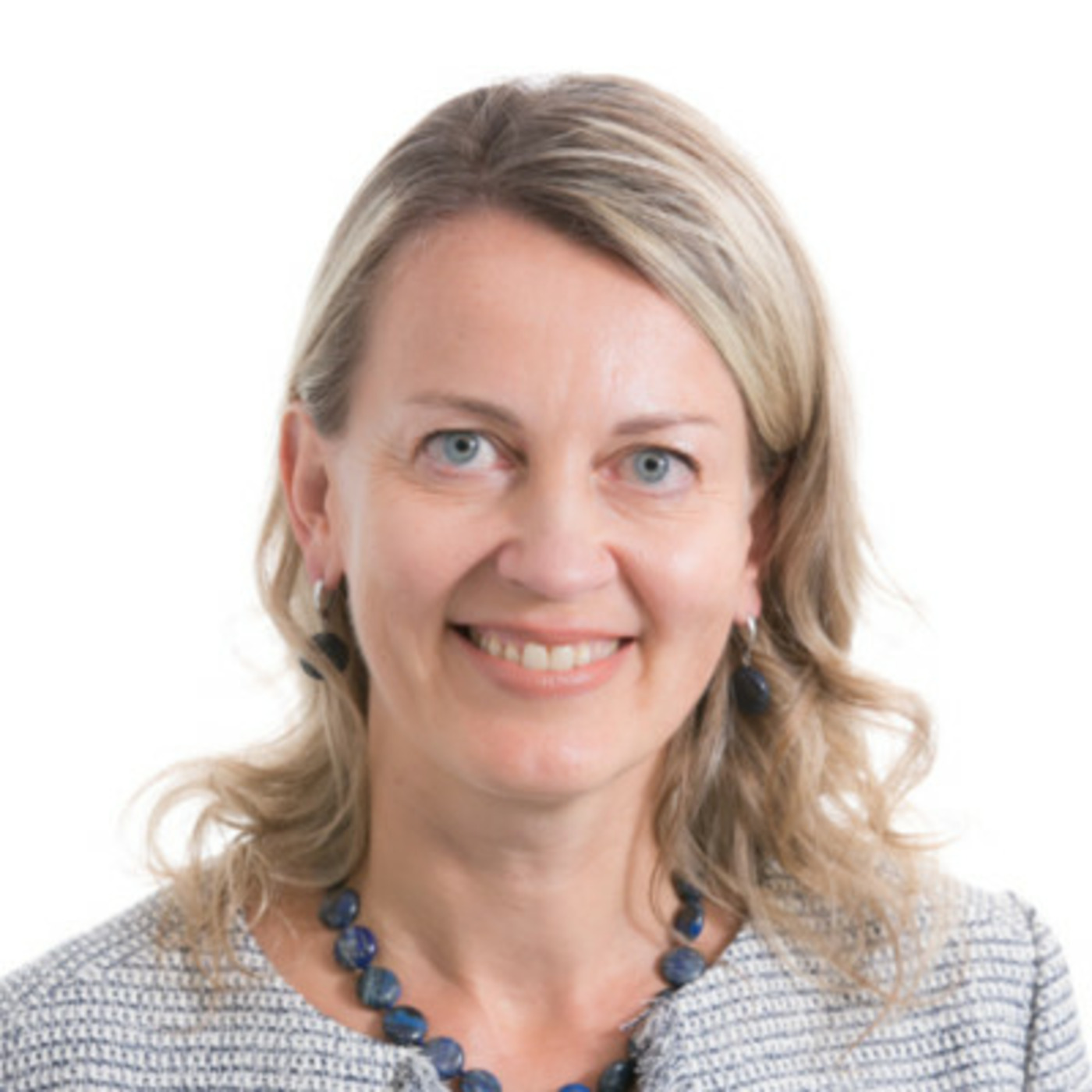
Aoifinn Devitt: This podcast was made possible by the kind support of Alvine Capital Management, a London-based specialist investment advisor and placement boutique, and the Guild of Investment Managers, which was founded in 2015 by a group of investment managers to combine the benefits of a modern, diverse, and dynamic network organization with the traditions of the livery world. Life is complex, and so are the problems we face in the investment industry and as a planet. Let’s hear how an indirect approach can sometimes be the route to results, even for the most pressing challenges. I’m Aoifinn Devitt, and welcome to the 50 Faces Podcast. A podcast committed to revealing the richness and diversity of the world of investment by focusing on its people and their stories. I’m joined today by Luba Nikolina, who is Global Head of Research at Willis Towers Watson based in London, where she oversees the quality of research and investment decisions, new investment solutions, as well as technology and strategy in research. She’s a non-executive director at The Investor Forum, which focuses on positioning stewardship at the heart of investment decision-making. She has a strong interest in ESG and innovation and investment strategy. Welcome, Luba, thank you for joining me today.
Luba: Thank you for having me here today, Yvonne.
Aoifinn Devitt: Let’s start with your journey into the investment world. I know it may not have started here in London. Can you talk us through it and whether there were any surprising turns along the way?
Luba: Yeah, absolutely. By now it’s been a very long journey and definitely quite a few surprises on my way. As you say, it didn’t start here. It started— I grew up in the Soviet Union and I started my professional career just at the time when the Soviet Union collapsed. So the whole central planned economy approach was no longer in existence and people were figuring out how the markets work. So this was the time when I was looking for my first job and I genuinely was fascinated by the role of finance and how it can make people’s lives better or sometimes worse. So my first job after the graduation was in a bank, and this is where I essentially stumbled on investments. So we were investing capital in businesses that actually had very strong fundamentals, but were struggling to adjust to the new market approach. We were helping them to become better. And it was incredibly satisfying at the time to help some of those businesses recover, although we were not always successful. But this is where I come to love investments. And for me, when I think about investments, it still means using financial capital to build better businesses.
Aoifinn Devitt: And we’re going to move to talk a little bit about stewardship, which I know is a current strong interest of yours, because it sounds like what you were doing in those early days was very like stewardship in a way. But before that, there was a few more steps along that journey. I know you spent some time as an entrepreneur as well. Can you talk us through that?
Luba: Yeah, absolutely. My little timber business in the north of Russia. Yeah, I did try my hand at building a business myself. So it was in the timber industry. I used the experience that I had with the bank on a relatively big project in the timber industry. And thought that I could probably do something myself. I was adventurous and there was an opportunity. So I built a small sawmill in the north of Russia and we were buying logs from around Russia and then we were sawing them into some goods, furniture components, and exporting them to various Scandinavian countries. So this was really interesting experience building the team. Learning how to work as a team and be a leader, and also learning about this satisfaction that you get from creating jobs. I distinctly remember this feeling when someone told me first time, “Thank you, thank you for giving me this job,” and I thought, “Yes, I know now why I have done that. That’s great, that’s working.” So this was my experience with entrepreneurship.
Aoifinn Devitt: And I’m sure in some of those parts of northern Russia, jobs were not plentiful. But was that the case at the time?
Luba: Yeah, no, absolutely. It was late ’90s, early 2000s. So it was exactly the time where after the financial crisis in Russia, people were figuring out what and how to do. And export industries at the time were flourishing because of the exchange rate. And this is why creating additional jobs in those areas where you actually can add value and pay people was an opportunity.
Aoifinn Devitt: And how did your journey take you from Russia then to now London?
Luba: Yeah, so it was just at the time when I built my own business and did quite a few transactions for the bank. And at the time, as I mentioned, the market economy was a relatively recent concept in Russia. So everyone was trying to figure out what it means. And sometimes I felt that we were reinventing the wheel, that we were just trying different things and some of them didn’t work, some worked. And I thought, huh, they had been doing it for so many years in the West. So I just need to go and learn the theory and then I would come back and be able to just build businesses without mistakes. So I enrolled into the MBA program at London Business School. And I realized that actually everyone around the world is still trying to figure out how to create a better world. And yeah, so after 2 years doing an MBA, I stayed here in the UK.
Aoifinn Devitt: It seems that that stewardship passion has tracked throughout your career. I now know it’s something that you’re very focused on. And in fact, a recent report has been written with a group you’re involved in specifically focusing on stewardship and its future. Can you tell us what drove your interest in the area and how do you see stewardship continuing to grow in importance?
Luba: Yeah, so you were correct in your observation that my initial experience had all the components of what we call stewardship, helping businesses using financial capital to build better businesses. But then when I started exploring the financial industry in, well, much broader and across different asset classes, across what different asset owners and asset managers do. There is a lot there that is very much focused on trading rather than necessarily creating this long-term value through building businesses. And it was an interesting experience for me to just see how the value could be created through trading stocks. And there was obviously an element of creating the value through this way of investing for pension funds. But in reality, when you trade, then there is always a winner and loser in the trade. So if you think about it from a big picture, what is the value created for society? It’s actually a net zero-sum game. So this is where I essentially connected the dots and thought it actually is a great opportunity for the asset management industry because what this world needs is really active, engaged owners, shareholders who engage with the executive teams of the businesses that they invest into, and they engage not to discuss their quarterly returns or cash flow projections for next year to adjust their financial models, but they engage with these businesses to discuss their purpose for existence, their culture, their strategy, and they just use all that experience and expertise to help these businesses become better. And this is stewardship. And I do think that for the asset management industry, it’s actually a great opportunity to reinvent the purpose of the industry in the society.
Aoifinn Devitt: One of the issues with stewardship sometimes can be how difficult it is to measure an impact. And there may be some perhaps agitation on behalf of stakeholders to see that the investors are actually making a difference. How do you think the metrics are improving maybe to measure the impact of this stewardship?
Luba: It’s a very astute observation, Aoifinn. It is indeed difficult to measure. But it is quite often the case that what’s difficult to measure is important, and as a result, we need to be figuring out better ways to measure it if we want to really make a difference. So the UK stewardship code that came out last year, and the first reports have already been submitted in draft, and then the first signatories are going to be submitting their reports by the end of the first quarter. It’s the right step forward because the stewardship code guides the reporting so much towards outcomes versus examples of what was done great at the expense of the overall activity and the process that leads to certain outcomes. So I think this is really— this stewardship code is, at the moment I’m not aware of any code that would be better around the world. Then there is another, well, let’s call it project that I’m involved in. We created the industry group for investment consultants, the Sustainability Working Group, where 17 investment consulting firms that work in the UK market came together to try and help improve the standards of what we do, but also help us streamline the reporting requirements and make them a bit easier for asset managers to fulfill, but for asset owners to understand. And one of the first projects that we are working on at the moment is to create this engagement reporting template. It’s already at the final stages, so we are hoping to release it in the next couple of weeks, but trying to address this question, like, how do we make stewardship reporting, engagement reporting more consistent, more focused on outcomes, and better understood by asset owners without creating an incredible reporting burden for asset managers. So we’re moving in the right direction, but it’s not an easy journey. You are absolutely correct to pick up on this challenge.
Aoifinn Devitt: And one of the recurring themes of this podcast series is around diversity and inclusion. And I know that they are often themes on which investors may engage with companies to improve diversity of their workforce, improves inclusivity. What are your thoughts on the current levels of diversity, say within the investment profession, and what do you think we can do about it?
Luba: That’s a very important topic because our industry continues to be very homogeneous. It is homogeneous not only by the gender makeup, which usually comes as the first thought, but also by ethnicity, education, socioeconomic background, the industry is very, very homogeneous. And it’s not good. It’s not good for investment decision-making. So it’s not only right from a social perspective to try and make the industry more diverse and more inclusive, but we’re genuinely discussing this topic with asset managers and with asset owners in the attempt to make those asset managers that we work with more resilient, more robust, and better organizations for the future. Because at the moment, investment decisions, they do require a variety of perspectives that not only exist and are offered in the discussion, but also properly taken into account. And this is where there is a difference between diversity and inclusion. Inclusion is just so much more important. It’s just, you cannot get away with just having diversity without inclusion. Now, you asked what we could do about it. Unfortunately, there is no silver bullet solution. As I mentioned, we are engaging with both asset managers and asset owners to try and move the dial there. We have created a so-called diversity score where we get the information from asset managers that we work with. And share it with asset owners who use them and monitor it year on year in the attempt to improve this score. And it includes gender and ethnicity and education, and we are trying to figure out a way to include socioeconomic background. And I would like to just say we’ve been running this index for 2 years and I already see a difference. So having this transparency and disclosure and a metric to monitor, even in the absence of targets, but just engagement to improve a certain metric, already results in action. And that’s good to see. But then what is this action? And you literally, as an asset management firm, you have to be pulling all levers that you can to be able to change the way you make decisions. And become a diverse and inclusive firm. So definitely recruitment is one It’s way. Relatively easy, has become relatively easy at a junior level, but at a senior level, one has to be really open-minded about the prior experience and the future potential to be able to bring the diverse talent in. We recently participated ourselves in the returner program here in the UK that the Diversity project organized, and I was so pleasantly surprised with the quality of talent that we were able to get through this program where people just took career breaks, extended leaves, whether to raise their children or do something else, and returning to the industry, there is so much enthusiasm and freshness of perspective. It’s just amazing. So yeah, well, I mentioned recruitment, but then you also have the way you’re performance reviews, compensation structures, various internal policies around flexible working, training, support, extended leaves. So it’s hard work. You cannot just become a diverse and inclusive firm overnight. You really need to have senior leadership commitment, and it’s hard work.
Aoifinn Devitt: That’s certainly a very hopeful sign that the metrics are already indicating An improvement though. I think what that gets to is kind of my next question around investment research, because I would imagine that there’s much more data now available to all of us. And data can— we can track inclusion or diversity metrics. We can also track many, many other things. When it comes to investment research and areas that excite you now, whether it’s related to the burgeoning supply of data or not, are there any areas that you’re quite excited about right now in your area of investment research?
Luba: You know, Aoifinn, I’m probably not going to step far away from the sustainability theme here because that’s the area that excites me most, and this is where I can see the biggest opportunity of our time for innovation. And it is just so multifaceted. For example, you mentioned data, and obviously there is a lot of financial data around But then this non-financial data, especially the non-financial data related to ESG sustainability, carbon footprint, it’s becoming increasingly important for investment decision-making. And it’s the area where it’s complex. And some of this data is challenging to process. We were just discussing how difficult it is to make sound decisions on stewardship. Similarly, for shareholders of businesses to better understand some of this non-quantifiable metrics is really hard, but it gives an opportunity for those who can figure out a good way to introduce it. And technology will play a role in this, that’s for sure. And I can see that many large asset managers invest significant amounts of their budgets into technology and data. It’s going to be increasingly important going forward. But then just pursuing further this theme of sustainability and how multifaceted it is, there is an element there that when we think in a more sustainable way, we actually think with a much longer time horizon. And I think there is both a need and an opportunity in this area. If you think about the investment guidelines, standard investment guidelines, or the way investment mandates and vehicles are structured in our industry, many of them in public markets in particular would still have a significant element of the focus on short-term. And this is where it’s just so ripe for change and innovation and disruption. I could carry on, like climate solutions, for example, there is just so much need in investing in this area that can help asset owners reduce the carbon intensity of their portfolios. And a very good way to do it is actually investing in products that have pure positive impact on the environment. Again, an opportunity. So I can carry on, but we could probably use the whole podcast just on this topic.
Aoifinn Devitt: Well, let’s go back to another form of long-term thinking and go back to your own personal career. It’s already been quite a long one. Have you any particular setbacks that you learned from during that career or any challenges that you encountered during the course of the career that, that you learned lessons from that you can share?
Luba: Yeah, well, it’s very usual, I assume, to continuously encounter challenges. At the moment, my job is pretty pretty much as a leader, focus on the existing and potential challenges. I think probably what I would like to highlight, and that the lesson that came to me with time as I pursued my career, is actually the importance of learning from these challenges, but more importantly, from mistakes that you make. If you think about when I was an investor and now as a leader, neither of these subjects is an exact science. So you just apply your judgment, your experience and intuition to make a certain decision. And very often you are not right. And the importance there is just not to continue with the same mistakes. But to be able to do this is the importance of having this process of keeping track of the decision-making process and what outcome it leads you to, just to be able to learn. So that’s definitely something that I didn’t start with, but I came to this practice as I was evolving my career and realized that I can only become better if I don’t continue making the same mistakes and learn from every single one of them.
Aoifinn Devitt: And that’s interesting in terms of keeping track of the process. Is there any kind of organized way that you do that? I know that some people keep journals, for example. Is there any way that you do that?
Luba: Yeah, that’s pretty much it. I keep a journal, especially significant decisions. I would track my thoughts at the time when I make the decisions. Usually it’s pros and cons, you weigh them in, and then it’s incredibly insightful to be coming back to those decisions when you know the outcome. And in investments or in people, it may take a couple of years to actually know the outcome.
Aoifinn Devitt: That’s very interesting. I think a very good discipline perhaps to have that kind of actual discipline of writing things down. Looking back at any key people maybe that influenced you or that really made an impression on you throughout your career, were there anyone that you can mention?
Luba: Oh, there are so many of them. Well, I guess it’s been a very long time ago, but Clearly my parents had the biggest influence in my life. I grew up in a military family, so we always moved around. I changed 10 schools in 10 years, but my parents were always so caring and supporting or inspiring that I just ended up becoming more confident, more adventurous as a result of this experience, also not afraid to take some risks. So I was very fortunate with my childhood and the way they shaped me. But also I have been similarly fortunate in my adulthood with the people who have surrounded me in my professional and personal life. So too many of them to mention, but they continue to influence me every day of my life, and I continue improving myself to to become a better person.
Aoifinn Devitt: 10 schools in 10 years. Was there any modus operandi that you had to, to settle in, or was every school a different kind of a dynamic?
Luba: They were quite different. So it was the Soviet Union at the time. So that was not even different schools. They were quite different cultures. And I learned quite a bit about adjustments and I learned how to enter the new environment. The importance of listening rather than imposing yourself, but also adapting to different environments. Arguably, one can say that I continue moving around even after my parents no longer influence this, but there is a certain element of being re-energized by a new place, new opportunity, new culture, learning about new people. I’m definitely grateful for my parents for this experience that they exposed me to in my early childhood.
Aoifinn Devitt: No, it’s so interesting. I agree with you. I think we all need to listen more, but also that’s so interesting that in a new environment, how that can ease the transition just through a much more open-ear approach, I suppose. And I think that could be also quite, quite useful elsewhere in life. In terms of any maybe pieces of advice, gems of wisdom, any creed or motto that you live or any Russian proverb that you use to guide you? Is there anything there?
Luba: Russian proverb? Interesting. I probably spent— it’s actually now more time I spent here than purely in Russia. So the advice that I— like advice, I get so much advice and I actively seek advice. Every day to ensure this whole, like, learning from different perspectives, continue improving myself and what I do. So that’s probably an ongoing process. I was thinking about the credo, motto, and it’s actually not a Russian proverb, but I have one saying from Mark Twain. Someone told it to me a few years ago, and I thought like, it is really, really cool. So I do remember it often, especially in the time as we experienced since March last year. So the saying from Mark Twain is, life is short, break the rules, forgive quickly, kiss slowly, love truly, laugh uncontrollably, and never regret anything that makes you smile. So I just have it in my journal. The top of the COVID page, and I often look at it. I also added a personal ending there that leaves the world a better place. So just when thinking about how do I prioritise what I do, having this impact is quite important. So I guess this is my motto.
Aoifinn Devitt: That’s a wonderful motto to remember everything that is best in life. In terms of— our last question is looking back now to your younger self, given these years of experience that you’ve had. It seems like you’re already quite experienced graduating from school, but if you were to look back now to yourself and give advice to your younger self, what would you say?
Luba: Yeah, well, there are a few things that I wish I knew when I was in my twenties, especially running my own business at the time, but wisdom can only come with age and experience. And when I think about how I have changed over the years, Probably one competency that I wish I had acquired earlier is better ability to compromise. So when I think about my younger self, I was rather black and white, inflexible. So there was certain benefit in being like direct and uncompromising in achieving my goals, especially when you are in the emerging market trying to build your business or turn around a company that is at the edge of bankruptcy or is already bankrupt. But then as I have become older, I realized that many goals are actually best achieved indirectly. And there is this wonderful book that was actually the eye-opener for me when I realized that not only intuitively, but also consciously. So the book by Professor John Cale called Obliquity. And it just explains in a lot of detail why these oblique, indirect approaches are the most successful, especially if your goals are complex. And at the moment, we live in such a complex world that most of our goals and objectives are complex, and actually compromise and more indirect approach is a better way to achieve your goals. So this would be something that I would definitely advise my younger self, but I’m not sure if I would have listened.
Aoifinn Devitt: No, it’s wonderful insight, but I also think that we only really appreciate the complexity and nuanced nature of much of life the older we get. So I’m not sure that we could even have maybe fully appreciated just how complex and not black and white some situations are, but particularly in the case of stewardship, I’m sure you see that, how multifaceted so many issues are. But thank you so much, Luba. It’s been a real pleasure speaking with you today, and thank you for your deep commitment to making the world a better place and to furthering our insight as a profession. I think we all note that. Thank you for sharing your insights here with us.
Luba: Thank you so much, Aoifinn, for your questions. I really enjoyed sharing this quote with you.
Aoifinn Devitt: I’m Aoifinn Devitt. Thank you for listening to the 50 Faces Podcast. If you liked what you heard and would like to tune in to hear more inspiring investors and their personal journeys, Please subscribe on Apple Podcasts or wherever you get your podcasts. This podcast is for informational purposes only and should not be construed as investment advice, and all views are personal and should not be attributed to the organizations and affiliations of the host or any guest.
Aoifinn Devitt: This podcast was made possible by the kind support of Alvine Capital Management, a London-based specialist investment advisor and placement boutique, and the Guild of Investment Managers, which was founded in 2015 by a group of investment managers to combine the benefits of a modern, diverse, and dynamic network organization with the traditions of the livery world. Life is complex, and so are the problems we face in the investment industry and as a planet. Let’s hear how an indirect approach can sometimes be the route to results, even for the most pressing challenges. I’m Aoifinn Devitt, and welcome to the 50 Faces Podcast. A podcast committed to revealing the richness and diversity of the world of investment by focusing on its people and their stories. I’m joined today by Luba Nikolina, who is Global Head of Research at Willis Towers Watson based in London, where she oversees the quality of research and investment decisions, new investment solutions, as well as technology and strategy in research. She’s a non-executive director at The Investor Forum, which focuses on positioning stewardship at the heart of investment decision-making. She has a strong interest in ESG and innovation and investment strategy. Welcome, Luba, thank you for joining me today.
Luba: Thank you for having me here today, Yvonne.
Aoifinn Devitt: Let’s start with your journey into the investment world. I know it may not have started here in London. Can you talk us through it and whether there were any surprising turns along the way?
Luba: Yeah, absolutely. By now it’s been a very long journey and definitely quite a few surprises on my way. As you say, it didn’t start here. It started— I grew up in the Soviet Union and I started my professional career just at the time when the Soviet Union collapsed. So the whole central planned economy approach was no longer in existence and people were figuring out how the markets work. So this was the time when I was looking for my first job and I genuinely was fascinated by the role of finance and how it can make people’s lives better or sometimes worse. So my first job after the graduation was in a bank, and this is where I essentially stumbled on investments. So we were investing capital in businesses that actually had very strong fundamentals, but were struggling to adjust to the new market approach. We were helping them to become better. And it was incredibly satisfying at the time to help some of those businesses recover, although we were not always successful. But this is where I come to love investments. And for me, when I think about investments, it still means using financial capital to build better businesses.
Aoifinn Devitt: And we’re going to move to talk a little bit about stewardship, which I know is a current strong interest of yours, because it sounds like what you were doing in those early days was very like stewardship in a way. But before that, there was a few more steps along that journey. I know you spent some time as an entrepreneur as well. Can you talk us through that?
Luba: Yeah, absolutely. My little timber business in the north of Russia. Yeah, I did try my hand at building a business myself. So it was in the timber industry. I used the experience that I had with the bank on a relatively big project in the timber industry. And thought that I could probably do something myself. I was adventurous and there was an opportunity. So I built a small sawmill in the north of Russia and we were buying logs from around Russia and then we were sawing them into some goods, furniture components, and exporting them to various Scandinavian countries. So this was really interesting experience building the team. Learning how to work as a team and be a leader, and also learning about this satisfaction that you get from creating jobs. I distinctly remember this feeling when someone told me first time, “Thank you, thank you for giving me this job,” and I thought, “Yes, I know now why I have done that. That’s great, that’s working.” So this was my experience with entrepreneurship.
Aoifinn Devitt: And I’m sure in some of those parts of northern Russia, jobs were not plentiful. But was that the case at the time?
Luba: Yeah, no, absolutely. It was late ’90s, early 2000s. So it was exactly the time where after the financial crisis in Russia, people were figuring out what and how to do. And export industries at the time were flourishing because of the exchange rate. And this is why creating additional jobs in those areas where you actually can add value and pay people was an opportunity.
Aoifinn Devitt: And how did your journey take you from Russia then to now London?
Luba: Yeah, so it was just at the time when I built my own business and did quite a few transactions for the bank. And at the time, as I mentioned, the market economy was a relatively recent concept in Russia. So everyone was trying to figure out what it means. And sometimes I felt that we were reinventing the wheel, that we were just trying different things and some of them didn’t work, some worked. And I thought, huh, they had been doing it for so many years in the West. So I just need to go and learn the theory and then I would come back and be able to just build businesses without mistakes. So I enrolled into the MBA program at London Business School. And I realized that actually everyone around the world is still trying to figure out how to create a better world. And yeah, so after 2 years doing an MBA, I stayed here in the UK.
Aoifinn Devitt: It seems that that stewardship passion has tracked throughout your career. I now know it’s something that you’re very focused on. And in fact, a recent report has been written with a group you’re involved in specifically focusing on stewardship and its future. Can you tell us what drove your interest in the area and how do you see stewardship continuing to grow in importance?
Luba: Yeah, so you were correct in your observation that my initial experience had all the components of what we call stewardship, helping businesses using financial capital to build better businesses. But then when I started exploring the financial industry in, well, much broader and across different asset classes, across what different asset owners and asset managers do. There is a lot there that is very much focused on trading rather than necessarily creating this long-term value through building businesses. And it was an interesting experience for me to just see how the value could be created through trading stocks. And there was obviously an element of creating the value through this way of investing for pension funds. But in reality, when you trade, then there is always a winner and loser in the trade. So if you think about it from a big picture, what is the value created for society? It’s actually a net zero-sum game. So this is where I essentially connected the dots and thought it actually is a great opportunity for the asset management industry because what this world needs is really active, engaged owners, shareholders who engage with the executive teams of the businesses that they invest into, and they engage not to discuss their quarterly returns or cash flow projections for next year to adjust their financial models, but they engage with these businesses to discuss their purpose for existence, their culture, their strategy, and they just use all that experience and expertise to help these businesses become better. And this is stewardship. And I do think that for the asset management industry, it’s actually a great opportunity to reinvent the purpose of the industry in the society.
Aoifinn Devitt: One of the issues with stewardship sometimes can be how difficult it is to measure an impact. And there may be some perhaps agitation on behalf of stakeholders to see that the investors are actually making a difference. How do you think the metrics are improving maybe to measure the impact of this stewardship?
Luba: It’s a very astute observation, Aoifinn. It is indeed difficult to measure. But it is quite often the case that what’s difficult to measure is important, and as a result, we need to be figuring out better ways to measure it if we want to really make a difference. So the UK stewardship code that came out last year, and the first reports have already been submitted in draft, and then the first signatories are going to be submitting their reports by the end of the first quarter. It’s the right step forward because the stewardship code guides the reporting so much towards outcomes versus examples of what was done great at the expense of the overall activity and the process that leads to certain outcomes. So I think this is really— this stewardship code is, at the moment I’m not aware of any code that would be better around the world. Then there is another, well, let’s call it project that I’m involved in. We created the industry group for investment consultants, the Sustainability Working Group, where 17 investment consulting firms that work in the UK market came together to try and help improve the standards of what we do, but also help us streamline the reporting requirements and make them a bit easier for asset managers to fulfill, but for asset owners to understand. And one of the first projects that we are working on at the moment is to create this engagement reporting template. It’s already at the final stages, so we are hoping to release it in the next couple of weeks, but trying to address this question, like, how do we make stewardship reporting, engagement reporting more consistent, more focused on outcomes, and better understood by asset owners without creating an incredible reporting burden for asset managers. So we’re moving in the right direction, but it’s not an easy journey. You are absolutely correct to pick up on this challenge.
Aoifinn Devitt: And one of the recurring themes of this podcast series is around diversity and inclusion. And I know that they are often themes on which investors may engage with companies to improve diversity of their workforce, improves inclusivity. What are your thoughts on the current levels of diversity, say within the investment profession, and what do you think we can do about it?
Luba: That’s a very important topic because our industry continues to be very homogeneous. It is homogeneous not only by the gender makeup, which usually comes as the first thought, but also by ethnicity, education, socioeconomic background, the industry is very, very homogeneous. And it’s not good. It’s not good for investment decision-making. So it’s not only right from a social perspective to try and make the industry more diverse and more inclusive, but we’re genuinely discussing this topic with asset managers and with asset owners in the attempt to make those asset managers that we work with more resilient, more robust, and better organizations for the future. Because at the moment, investment decisions, they do require a variety of perspectives that not only exist and are offered in the discussion, but also properly taken into account. And this is where there is a difference between diversity and inclusion. Inclusion is just so much more important. It’s just, you cannot get away with just having diversity without inclusion. Now, you asked what we could do about it. Unfortunately, there is no silver bullet solution. As I mentioned, we are engaging with both asset managers and asset owners to try and move the dial there. We have created a so-called diversity score where we get the information from asset managers that we work with. And share it with asset owners who use them and monitor it year on year in the attempt to improve this score. And it includes gender and ethnicity and education, and we are trying to figure out a way to include socioeconomic background. And I would like to just say we’ve been running this index for 2 years and I already see a difference. So having this transparency and disclosure and a metric to monitor, even in the absence of targets, but just engagement to improve a certain metric, already results in action. And that’s good to see. But then what is this action? And you literally, as an asset management firm, you have to be pulling all levers that you can to be able to change the way you make decisions. And become a diverse and inclusive firm. So definitely recruitment is one It’s way. Relatively easy, has become relatively easy at a junior level, but at a senior level, one has to be really open-minded about the prior experience and the future potential to be able to bring the diverse talent in. We recently participated ourselves in the returner program here in the UK that the Diversity project organized, and I was so pleasantly surprised with the quality of talent that we were able to get through this program where people just took career breaks, extended leaves, whether to raise their children or do something else, and returning to the industry, there is so much enthusiasm and freshness of perspective. It’s just amazing. So yeah, well, I mentioned recruitment, but then you also have the way you’re performance reviews, compensation structures, various internal policies around flexible working, training, support, extended leaves. So it’s hard work. You cannot just become a diverse and inclusive firm overnight. You really need to have senior leadership commitment, and it’s hard work.
Aoifinn Devitt: That’s certainly a very hopeful sign that the metrics are already indicating An improvement though. I think what that gets to is kind of my next question around investment research, because I would imagine that there’s much more data now available to all of us. And data can— we can track inclusion or diversity metrics. We can also track many, many other things. When it comes to investment research and areas that excite you now, whether it’s related to the burgeoning supply of data or not, are there any areas that you’re quite excited about right now in your area of investment research?
Luba: You know, Aoifinn, I’m probably not going to step far away from the sustainability theme here because that’s the area that excites me most, and this is where I can see the biggest opportunity of our time for innovation. And it is just so multifaceted. For example, you mentioned data, and obviously there is a lot of financial data around But then this non-financial data, especially the non-financial data related to ESG sustainability, carbon footprint, it’s becoming increasingly important for investment decision-making. And it’s the area where it’s complex. And some of this data is challenging to process. We were just discussing how difficult it is to make sound decisions on stewardship. Similarly, for shareholders of businesses to better understand some of this non-quantifiable metrics is really hard, but it gives an opportunity for those who can figure out a good way to introduce it. And technology will play a role in this, that’s for sure. And I can see that many large asset managers invest significant amounts of their budgets into technology and data. It’s going to be increasingly important going forward. But then just pursuing further this theme of sustainability and how multifaceted it is, there is an element there that when we think in a more sustainable way, we actually think with a much longer time horizon. And I think there is both a need and an opportunity in this area. If you think about the investment guidelines, standard investment guidelines, or the way investment mandates and vehicles are structured in our industry, many of them in public markets in particular would still have a significant element of the focus on short-term. And this is where it’s just so ripe for change and innovation and disruption. I could carry on, like climate solutions, for example, there is just so much need in investing in this area that can help asset owners reduce the carbon intensity of their portfolios. And a very good way to do it is actually investing in products that have pure positive impact on the environment. Again, an opportunity. So I can carry on, but we could probably use the whole podcast just on this topic.
Aoifinn Devitt: Well, let’s go back to another form of long-term thinking and go back to your own personal career. It’s already been quite a long one. Have you any particular setbacks that you learned from during that career or any challenges that you encountered during the course of the career that, that you learned lessons from that you can share?
Luba: Yeah, well, it’s very usual, I assume, to continuously encounter challenges. At the moment, my job is pretty pretty much as a leader, focus on the existing and potential challenges. I think probably what I would like to highlight, and that the lesson that came to me with time as I pursued my career, is actually the importance of learning from these challenges, but more importantly, from mistakes that you make. If you think about when I was an investor and now as a leader, neither of these subjects is an exact science. So you just apply your judgment, your experience and intuition to make a certain decision. And very often you are not right. And the importance there is just not to continue with the same mistakes. But to be able to do this is the importance of having this process of keeping track of the decision-making process and what outcome it leads you to, just to be able to learn. So that’s definitely something that I didn’t start with, but I came to this practice as I was evolving my career and realized that I can only become better if I don’t continue making the same mistakes and learn from every single one of them.
Aoifinn Devitt: And that’s interesting in terms of keeping track of the process. Is there any kind of organized way that you do that? I know that some people keep journals, for example. Is there any way that you do that?
Luba: Yeah, that’s pretty much it. I keep a journal, especially significant decisions. I would track my thoughts at the time when I make the decisions. Usually it’s pros and cons, you weigh them in, and then it’s incredibly insightful to be coming back to those decisions when you know the outcome. And in investments or in people, it may take a couple of years to actually know the outcome.
Aoifinn Devitt: That’s very interesting. I think a very good discipline perhaps to have that kind of actual discipline of writing things down. Looking back at any key people maybe that influenced you or that really made an impression on you throughout your career, were there anyone that you can mention?
Luba: Oh, there are so many of them. Well, I guess it’s been a very long time ago, but Clearly my parents had the biggest influence in my life. I grew up in a military family, so we always moved around. I changed 10 schools in 10 years, but my parents were always so caring and supporting or inspiring that I just ended up becoming more confident, more adventurous as a result of this experience, also not afraid to take some risks. So I was very fortunate with my childhood and the way they shaped me. But also I have been similarly fortunate in my adulthood with the people who have surrounded me in my professional and personal life. So too many of them to mention, but they continue to influence me every day of my life, and I continue improving myself to to become a better person.
Aoifinn Devitt: 10 schools in 10 years. Was there any modus operandi that you had to, to settle in, or was every school a different kind of a dynamic?
Luba: They were quite different. So it was the Soviet Union at the time. So that was not even different schools. They were quite different cultures. And I learned quite a bit about adjustments and I learned how to enter the new environment. The importance of listening rather than imposing yourself, but also adapting to different environments. Arguably, one can say that I continue moving around even after my parents no longer influence this, but there is a certain element of being re-energized by a new place, new opportunity, new culture, learning about new people. I’m definitely grateful for my parents for this experience that they exposed me to in my early childhood.
Aoifinn Devitt: No, it’s so interesting. I agree with you. I think we all need to listen more, but also that’s so interesting that in a new environment, how that can ease the transition just through a much more open-ear approach, I suppose. And I think that could be also quite, quite useful elsewhere in life. In terms of any maybe pieces of advice, gems of wisdom, any creed or motto that you live or any Russian proverb that you use to guide you? Is there anything there?
Luba: Russian proverb? Interesting. I probably spent— it’s actually now more time I spent here than purely in Russia. So the advice that I— like advice, I get so much advice and I actively seek advice. Every day to ensure this whole, like, learning from different perspectives, continue improving myself and what I do. So that’s probably an ongoing process. I was thinking about the credo, motto, and it’s actually not a Russian proverb, but I have one saying from Mark Twain. Someone told it to me a few years ago, and I thought like, it is really, really cool. So I do remember it often, especially in the time as we experienced since March last year. So the saying from Mark Twain is, life is short, break the rules, forgive quickly, kiss slowly, love truly, laugh uncontrollably, and never regret anything that makes you smile. So I just have it in my journal. The top of the COVID page, and I often look at it. I also added a personal ending there that leaves the world a better place. So just when thinking about how do I prioritise what I do, having this impact is quite important. So I guess this is my motto.
Aoifinn Devitt: That’s a wonderful motto to remember everything that is best in life. In terms of— our last question is looking back now to your younger self, given these years of experience that you’ve had. It seems like you’re already quite experienced graduating from school, but if you were to look back now to yourself and give advice to your younger self, what would you say?
Luba: Yeah, well, there are a few things that I wish I knew when I was in my twenties, especially running my own business at the time, but wisdom can only come with age and experience. And when I think about how I have changed over the years, Probably one competency that I wish I had acquired earlier is better ability to compromise. So when I think about my younger self, I was rather black and white, inflexible. So there was certain benefit in being like direct and uncompromising in achieving my goals, especially when you are in the emerging market trying to build your business or turn around a company that is at the edge of bankruptcy or is already bankrupt. But then as I have become older, I realized that many goals are actually best achieved indirectly. And there is this wonderful book that was actually the eye-opener for me when I realized that not only intuitively, but also consciously. So the book by Professor John Cale called Obliquity. And it just explains in a lot of detail why these oblique, indirect approaches are the most successful, especially if your goals are complex. And at the moment, we live in such a complex world that most of our goals and objectives are complex, and actually compromise and more indirect approach is a better way to achieve your goals. So this would be something that I would definitely advise my younger self, but I’m not sure if I would have listened.
Aoifinn Devitt: No, it’s wonderful insight, but I also think that we only really appreciate the complexity and nuanced nature of much of life the older we get. So I’m not sure that we could even have maybe fully appreciated just how complex and not black and white some situations are, but particularly in the case of stewardship, I’m sure you see that, how multifaceted so many issues are. But thank you so much, Luba. It’s been a real pleasure speaking with you today, and thank you for your deep commitment to making the world a better place and to furthering our insight as a profession. I think we all note that. Thank you for sharing your insights here with us.
Luba: Thank you so much, Aoifinn, for your questions. I really enjoyed sharing this quote with you.
Aoifinn Devitt: I’m Aoifinn Devitt. Thank you for listening to the 50 Faces Podcast. If you liked what you heard and would like to tune in to hear more inspiring investors and their personal journeys, Please subscribe on Apple Podcasts or wherever you get your podcasts. This podcast is for informational purposes only and should not be construed as investment advice, and all views are personal and should not be attributed to the organizations and affiliations of the host or any guest.