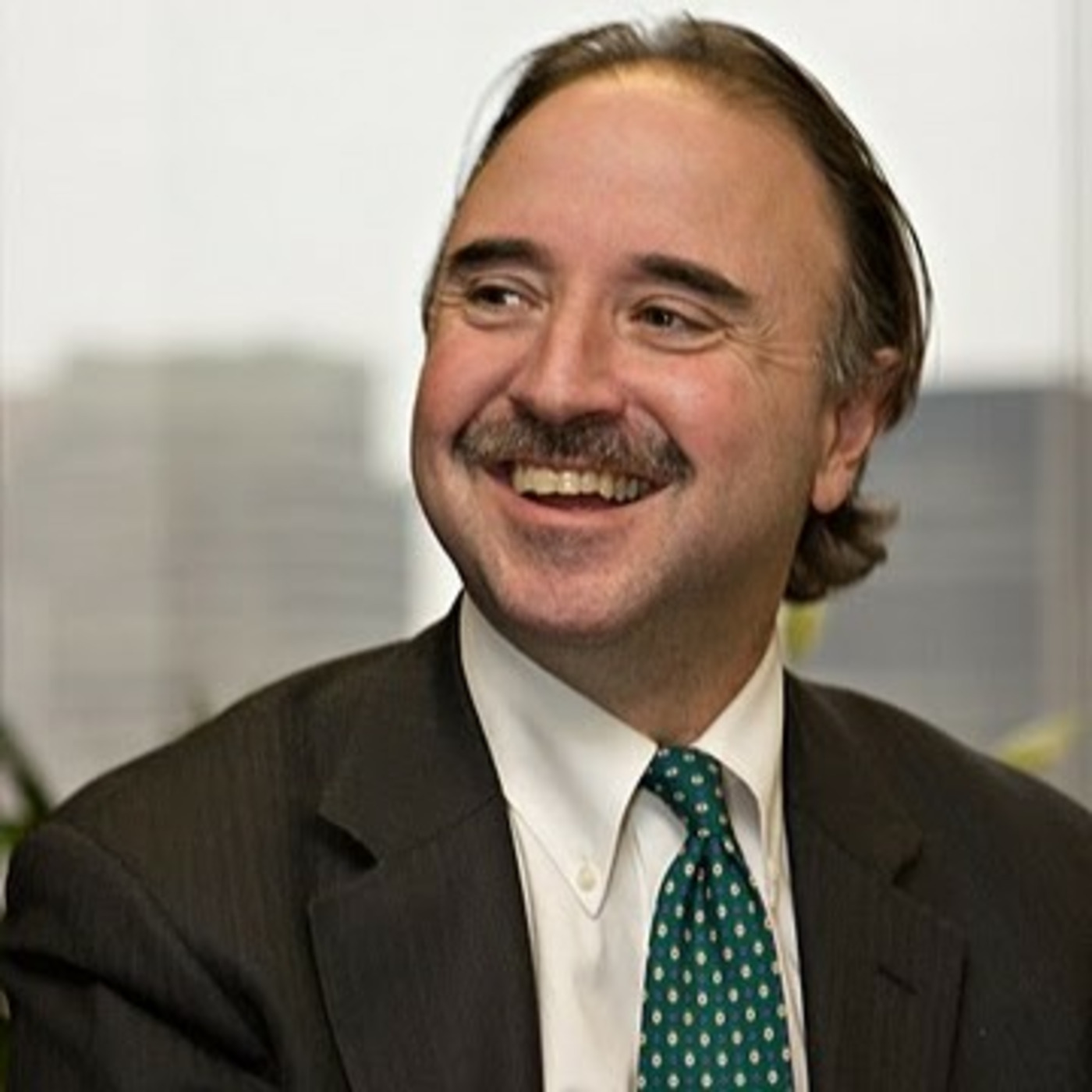
Aoifinn Devitt: This podcast was made possible by the kind support of Alvine Capital Management, a London-based specialist investment advisor and placement boutique. How do certain champions shape the course of a career, even when you’re on your fifth career? And how does the same champion-based approach work for some of the planet’s most pressing issues? Let’s find out next. I’m Aoifinn Devitt, and welcome to the 50 Faces Podcast, a podcast committed to revealing the richness and diversity of the world of investment by focusing on its people and their stories. I’m joined today by Cary Krosinski, who is a lecturer at Yale University, where he teaches and advises on sustainable finance, energy studies, and climate and investing. He also holds posts at Brown University, Columbia University, and Xian Jiaotong University. He is a published author, most recently of Modern China: Financial Cooperation for Solving Sustainability Challenges, as well as other publications in the area of sustainable innovation and impact. He is co-founder of the Sustainable Finance Institute, as well as the Carbon Tracker Initiative, among other initiatives, and has worked closely with institutional investors to develop sustainable investment strategies and goals. Welcome, Cary. Thank you for joining me today.
Cary: Great to be with you. Thanks for having me.
Aoifinn Devitt: Can you talk us through your journey into academia and into this thought leadership role in sustainability?
Cary: Sure. Hi everyone. I’m like most people in the field of sustainable finance. I have a little bit of an unorthodox background. I’m in something of my fifth career. I thought it was third career, but I was preparing my notes for this podcast, realized it’s my fifth career actually. And my teaching started in 2009 after careers in computer programming, what’s now called big data, and actually adding value to big data, and then kind of entering this field as part of TrueCost and now being something of a thought leader on sustainable finance, teaching, writing, and advising. So I’m actually in my fifth career. Robert Fripp of King Crimson talks about 7-year cycles. I think There’s some truth to that. So I guess I’m about to enter my next cycle. And the academia side, a lot of it has had to do with finding champions. So, and this is true really with sustainability more generally. If you’re a large corporation or investment institution or even a government, it takes having the right leader at the top in order to facilitate the right action. And that’s been true in my academic career. My teaching started at Columbia. Thanks to Nancy Degnan, a wonderful person who I continue to work with. When I was with TrueCost, I was just making the rounds of academic institutions, seeing if there was interest in what we did in the field of ecological economics. And she suggested that maybe I could teach a class. And I never thought it was something I would do, but I went ahead and took that opportunity and taught one of the first classes ever on the subject as part of Columbia University’s Earth Institute, had continuing involvements at Columbia. Students at Maryland brought me in to teach my first MBA class there in 2011. Students brought me into Yale actually in 2014, and they introduced me to Brown where a student brought me in there. So a lot of my academic career has been this evolving set of, I would say, champions within each institution who saw the need for more education on sustainable finance.
Aoifinn Devitt: I find that really interesting that you say that students brought you in to some of these places. Do you think that sustainability tends to be led by the younger generations, or is that the way it was originally? Has it now matured as an area of interest and importance?
Cary: Very much. It’s what you hear. It’s a driving factor in the field more generally. There’s a perception that’s changing into reality that The younger folks will inherit trillions of dollars. And as they inherit that money, they’re going to want to see it invested very differently. Large firms like Bank of America have talked about only 3% of inherited wealth stays where it is managed. So there’s a serious market share risk or opportunity in front of the financial services sector. And so that’s sort of one driving factor, I think. The second would be the work that I’m really diving into in Asia, which I’m sure we’ll talk more about. There you’re seeing the rise of the new middle class demanding the lifestyles that we’ve long had, including quality of air, quality of food, quality of water. And so that’s another driver is when you experience these problems directly, you want to change them. And then the third would be, I think, this idea of champions. So I think that’s what the first wave of sustainable finance largely was enabled by individuals who rose up on their own volition, as I did, wanting to make the world a better place, seeing what was coming on issues like climate change and other social issues, and wanting to make a difference. So I think those are the three dimensions, I think, that answer that question.
Aoifinn Devitt: What was it for you personally that led to your early interest in the area? Was this something from since your youth you’ve always felt passionate about, or what was the trigger for you?
Cary: It’s interesting. I’ve given some thought to that over time. Sometimes I’m not completely sure, but I do recall back— I was born in 1960, and I have a sort of a vague memory of— here in the U.S., there’s something called G.I. Joe. It’s sort of a set of toys that young boys tend to play with. I was never interested in that. I was never interested in sort of having a toy gun or playing war as a lot of other young boys are. So, you know, kind of growing up in the ’60s, ’70s, I think my ethos was always slightly different. And I did start working in the ’80s and ’90s in more practical ways, coming from something of a middle-class background. My father is an architect, my mother is a teacher. But when exactly I wanted to start to enter this field of sustainable finance is a bit vaguer, but kind of 20 years ago, I started noticing in the field that I was in, understanding institutional investment, that there were investors trying to solve these problems that I was concerned about— climate change, other ESG issues. And I was just sort of watching these, starting to watch these portfolios to see how they would financially perform. Lo and behold, they were performing quite well. So that, that kind of is the best I can come up with as a trigger for what got me wanting to play a role in this field.
Aoifinn Devitt: And then what led you to want to cooperate with, work with China and pursue this with China as a partner?
Cary: It’s interesting. In late 2017, I went back to my alma mater, Hofstra University in New York, in the New York City area, gave a talk about sustainable finance and its imperative for solving the challenges we face. And someone who was managing the relationship between Hofstra and a Chinese university came up to me after and introduced herself and We hit it off and she connected me with, with some other folks who were kind of trying to bridge US-China relations in their own way. Over time, it became clear with the trade war starting at that time that our mutual thinking that we’re not going to solve climate change without Asia being successful in its transition, and that things like the trade war and isolationist policies would likely only get in the way, that I became motivated to try to bring the Western developed world thinking on sustainable finance to countries like China, where there’s very little to this day education on the subject, understanding of what’s happening, what’s possible. And so that’s what started me down that path. We hosted an event about 2 years ago in Shenzhen, China, as the Sustainable Finance Institute Also in late ’17, we had hosted an event at Yale that was successful, suggesting that we had the ESG conversation kind of backwards, meaning we need better outcomes, such as the Sustainable Development Goals suggest, and we need to figure out how to make those happen, specifically using case studies of investment at work, for example, that can be scaled for purpose. We hosted an event around that theme. In September 2017 and then brought that to China in 2019 at our event, Peking University’s HSBC Business School. And that also helped inform our book last year. So it’s been kind of a developing, ongoing scenario. We had Dr. Ma Jun, the head of green finance in China, on a panel at Brown in 2018, getting to know him a bit. He gave us an introduction to our recent book, and you can see that China’s trying super hard. They have committed to carbon neutrality goals that are actually quite significant and significantly important, and all of the ministries are trying to build specific plans to meet their next 14th 5-year plan to show what they’re each going to do. It’s a big opportunity. It’s becoming a competitiveness issue, and I just don’t see how we’d solve climate change without Asia and without China leading the way. So for me, that’s a big opportunity for countries like the United Kingdom to connect and help build bridges and enable the things that we all need to see happen.
Aoifinn Devitt: And is there any extent to which some of these emerging economies perhaps can leapfrog other steps of the chain that maybe some developed economies went through in order for these sustainability goals to reach the level they’re at today, in that there certainly have been leapfrogging, say, of technology, perhaps skipping certain steps because things are just moving so quickly.
Cary: Absolutely, and that’s an imperative. There are something like 200 countries in the world, give or take, and they’re all in different situations, each and every one. The US is very different from Canada. Some might argue the UK— England is different from Scotland, but that’s another subject. We were fortunate to have Secretary Kerry in our Yale class a little over a year ago, who’s now fortunately about to be in charge of Building Back Better on a global basis, re-establishing the US as a leader. One of the things he said in our class was, and we have this in the book, you that, know, he was extremely upset that the US-China relationship had been allowed to deteriorate. He’s the one who built the bilateral agreement with China leading up to the Paris Accord, and He was very upset in general, but but he, he cited specifically cases across the developing world that he felt the U.S. And China could invest in together to leapfrog those countries on their renewable energy transitions. It’ll be especially difficult in some countries for that transition to occur. Indonesia, for example, where coal is cheapest. India is going through some transition, but obviously that needs to happen more radically, and India is starting to think hard about the ESG issues more generally. So it’s a great opportunity. My focus tends to be on the education side. You can see the opportunities emerging in many different categories. So the most important thing is getting a consensus for the action and the outcomes that we seek. It’s great that we’re about to enter a new age with people like Kerry empowered to do the things such as you just asked specifically to help make those happen.
Aoifinn Devitt: And you talk about opportunity, but what about lost opportunities? And I’m thinking about some of the setbacks that have occurred to some of these goals, in some cases quite significant setbacks due to the COVID pandemic. To what extent do you think we are maybe not back to square one, but certainly slowed down significantly in achieving these goals given the developments of the last year?
Cary: Yeah, it’s interesting, isn’t it? Ironically, The longer the pandemic lasts, the lower carbon emissions will be. I’m not certainly rooting for the coronavirus. One wonders how long this period will last. It’s hard to make a judgment as to how we’ll come out of it until it’s clear that that’s on the horizon. Certainly, we’re not entering the 2020s. We’re in the early part of the 2020s. And from a standpoint of what the science tells us, and this includes science on such diseases, that we actually need to start to make sure we’re preserving and restoring nature, I’m confident there’ll be increasing efforts on that. We need to re-establish the basic conditions that allow us to thrive as a species and as a planet. There have been setbacks, and the pandemic has been extremely challenging and difficult for everyone. So I think the opportunity there is to envision a scenario where we minimize future pandemics through not invading nature as we have. A lot of Research has shown that viruses proliferate. The further we go into nature, the more we’re invading the space of these viruses and causing them to get all stirred up. So to what degree can we stop deforestation? And there’s some complex challenges in there. So I’m an advisor to a deep sea mining company. One of the concerns is that if we’re going to need to build a billion electric vehicles, over the not-too-distant future— and you’re certainly seeing that in the stock prices of companies like Tesla, that that is what the market expects— we’re going to need all sorts of rare earths. And we need to think very carefully about how this transition will occur without further spoiling nature. Going into rainforests further in countries like Indonesia, again, to, uh, to harvest rare earths for the sake of building electric cars is not going to solve all of our problems. So be very thoughtful, very systemic, Holistic, and try to envision these outcomes that we seek that will minimize pandemics, minimize temperature increases, and the need for billions of climate refugees to find a place to live, to have enough fresh water. We have a lot of work to do. The good news with all of these challenges are significant opportunities that investors are starting to dive into and seeing benefit from financially.
Aoifinn Devitt: And you use the term holistic, and of course the Sustainable Development Goals are interconnected by their very nature. How do you think institutional investors will have to approach their sustainable investment policy? Will it have to be a holistic approach that looks at the entire portfolio? Will they need entirely new, newly trained staff to essentially ensure that their portfolio is climate change resilient?
Cary: Yeah, absolutely. These things are extremely complicated the more you dive in. It’s our fifth book, Sustainable Innovation and Impact, that you referenced earlier. Was an attempt to describe a system of solutions that needs to emerge to solve for climate change and other social issues. So in that book, and we probably are going to do another book like it, we argue that we kind of need to push on all levers at the same time to get to where we need to be. So those would be corporate levers, investment levers, policy levers, including regional action, and also technological advances. So if we can kind of push on all of those at the same time and not leave great parts of the world behind to do that as a cohesive collaborative whole, we have a chance of success because the challenges are severe and time has run out. So we really need to move on all dimensions. So from an investment standpoint, the opportunity is to participate in the upside. Last year alone, the portfolios we build in our classes significantly outperformed benchmarks. And that’s what we’ve been doing for years successfully, finding companies that are well positioned to encourage and benefit from the ongoing transition while also being financially viable. It’s the approach of fund managers like Generation, Stewart Investors, and the growing body of other successful investors. So that’s really the opportunity. I think the opportunity now is in front of the larger institutions to see the sustainability financial dual dynamic that’s playing out and kind of latch onto that and show that that’s what they’re all about completely. So that’s the opportunity I see with these trillions of dollars being inherited, the large institutions, to show that they really want to lead on that. So there’s an opportunity side to that. And on the risk side, there’s a significant risk at this point of just being left behind as many sectors have struggle with the modern era as technology has absorbed numerous sectors. The music industry has transformed. Publishing is transforming as we speak. And I think this is very much a risk for investors, is to miss these transitions. You’re seeing a transition in the energy space just starting to play out. You’re seeing regional transitions where the Chinese economy did reasonably well last year while the rest of the world did not. So, you know, diversifying appropriately and not being left with a bunch of old industries that are going to fade away as technology and other aspects continue to evolve into the 2020s. So it’s really important for investors not to sort of assume we’re going back to quote unquote normal. I’m not sure if that’s even possible.
Aoifinn Devitt: What is of the ways, one some of the ways that investors can keep abreast of what’s really happening, say, in this energy transition? Should they rely on their advisors and their advisors maybe who engage with companies? Should they be reading something else? Should they be listening in to annual meetings? How can they really get what’s really going on?
Cary: Yeah, it’s an interesting challenge. The media and the state of media more generally has really transformed in recent times. People are able to self-select into their own bubbles, largely caused some of the challenges we face here as we move to a new administration. So in general, I think this is— you’re actually touching on a really important thing, just where do you get objective news from more generally, putting politics completely to the side, which when it comes to issues like climate change, they really shouldn’t be political, and issues like inequality, those are faced by people of all political persuasions. So it would be great for— in an age where there’s a proliferation of news media and sources, and arguably we need more, I’m not sure we have an obvious go-to. For the issues such as sustainable finance. I think Bloomberg Green does a decent job. There’s a publication called Responsible Investor that we like, but I would argue that there’s not enough. Like, what’s happening in China on renewable energy? That’s hard to figure out, right? There isn’t an obvious go-to source. I helped start a newsletter last year called Cleantech VC with a couple of friends of mine. It has over 5,000 subscribers now and is a weekly update on what’s happening just as venture capital transforms towards being more solutions-oriented with something like $14 billion last year alone. And so part of the challenge of staying up on what’s happening is you kind of have again the same system dimension that we talked about. You have corporate actions which are taking place on a company-by-company basis. Every investment institution is taking a different approach because of the complexities of ESG. The data is not complete. There was a great EU report on that out just last week. The policy trends are shifting radically. Countries like China are developing as aggressive policies as we see anywhere. The US is about to announce a whole bunch of things on Wednesday of this week. So it’s kind of hard to stay on top of it all because things are moving so rapidly. I use LinkedIn myself as a place to just watch every couple of hours if there’s any major reports on these subjects. And if, depending on what your interest is, biodiversity, nature. There’s tons of new coalitions, papers, thinking on the idea of natural capital, thinking on the ideas of sustainable finance. We did a synthesis report late last year trying to just kind of simplify and capture what was happening in the categories that you can get your head around. September of 2020 alone, there was a barrage of new papers and coalitions. We tried to make sense of it all. So we’ll probably continue to do that as well.
Aoifinn Devitt: There’s certainly enough to fill many podcasts, I think, there, even some of the subjects you’re touching on. I want to move back to your own personal journey. And you spoke about some of the challenges inherent in these areas that you’re focused on. Have there been any challenges personal to you that you’ve encountered over your career, any twists or turns, and what lessons did you learn from some of those experiences?
Cary: Yeah, it’s interesting. I think there’s challenges for the field and there’s challenges that I’ve kind of faced at times. So for the field, the main challenge I think is that sustainable finance is actually not a profession. Unlike if you’re a pilot or an architect or a doctor, you have to go back for regular training and kind of show that you have some credentials. We don’t really have that yet. We actually created one called the Certified Sustainable Financial Analyst that we just did our most recent global cohort, but that’s still a work in progress trying to turn this field into being a profession. So, and to your earlier question about what should individuals do to stay up on what’s happening, I think every organization needs someone who’s watching this very closely, whether they’re a business or a fund manager or an asset owner. It’s moving so fast and everyone needs an expert. From my own standpoint, in my kind of the mid-part of my career, the field I was in, big data, building the world’s first global institutional investment database, who owned what companies, what was their behavior. That was a field that actually consolidated quite a bit. That information commoditized over time, so I moved to adding value to that data, which brought me into this space subsequently. So I guess the, the challenges I faced have been being kind of collateral damage of M&A, which a lot of people are in different ways at different times. But when I look back, all of those situations where the company I was in was being acquired or my job was put at risk, or so it seemed possible. Those were all good things. I’m sure it’s not true for everyone, but in my case, every time there was a setback, it turned into an opportunity to shift and evolve further the career that I was pursuing or the opportunities that I was thinking about. So, so for me, very much any obstacle I faced has turned into an opportunity. I think that’s the way to think about these things. It’s an opportunity to adjust. It’s an opportunity to to opportunity not do one thing your whole life. It’s an opportunity to make sure you’re heading in the right direction. So I look back at all of those setbacks and they actually turned out to be good things.
Aoifinn Devitt: And I suppose the benefit of a field that is moving so quickly and evolving as quickly as this one is that you, if you are looking to reskill, you’re not starting from very far behind, I suppose, because, uh, in a sense, anything that may have been learned early on may soon become extinct.
Cary: Yeah. This is a field that will only expand. Regions like Asia, arguably half of the global economy is just getting started. There’s a need for people to become expert all over the world depending on everyone’s interest area, whether it’s inequality, that’s a major challenge in a country like the UK. There are so many opportunities that will continue to emerge. For me, that’s the good side of this field is that while the issues are severe and critical, it also creates opportunities along the way, opportunities for good work. I think that will be a driving force for the Biden administration, explaining to people how they and their families benefit from the extra jobs being created. I think that’s an essential part of how any country can respond in the modern age and also move things in a better direction.
Aoifinn Devitt: And when you look back at your career, were there any key people that really influenced some of those turns in the road, or that just shaped how you approach life in general?
Cary: Absolutely. And it takes a champion is always the thing I come back to, it’s always kind of not only the people, James Uffelman at Technometrics who helped me transition from my first career to my second, or Nancy Degnan who brought me into teaching, or the students I’ve run— been fortunate to connect with, the amazing students, but also the people in China I’m working with now. It takes people who have the light bulb switched on, who want to make a difference, who want to find that niche to make that difference,. And those are my theories of change. We need young people embedded, young women in particular, rising up to become leaders across all businesses, agitating for positive sustainable, uh, finance, agitating for positive sustainable transitions that are only going to be beneficial for their regions and societies and communities. My other major theory of change is helping Asia with its transition, because a lot of these conversations have been Western and we need a global answer to what is a global challenge. But it’s always individuals who rise up and are in effect the enablers, the guardian angels who help you along your way that are most important.
Aoifinn Devitt: No, I agree. And I think it also takes a realization that perhaps these issues are far, far bigger than any one individual. So it’s both recognizing that, rising to the challenge and recognizing the critical importance of teamwork and collaboration as you mentioned, cross-cultural, cross-regional, because otherwise there’s not even a hope of attacking some of these problems. But I really like that reference to taking a champion. Besides that, has there been any kind of pieces of advice or creed or motto that you have let guide you through your life?
Cary: Yeah, I think it’s really not losing sight of your own North Star and making sure that you’re trying to enjoy your career and have it be meaningful and impactful. Whether it’s helping people or trying to make the world a better place or developing some new cutting-edge technology or innovation or contributing to the healthcare crisis we face. There’s a lot of work to be done, and there’s no reason there shouldn’t be space for everyone interested in making a difference. So it’s really recognizing the need and, and being flexible and also building the right relationships and making sure that you don’t give up.
Aoifinn Devitt: And one of the areas I’m interested in, a lot of time in our careers we talk about feedback and getting feedback and using that and processing it. It strikes me that some of the issues you’re working with are so large and so, I suppose, perhaps we will never know in our lifetimes whether we’ve managed to solve them. How do you cope with perhaps the lack of immediate feedback, or do you find that you get feedback through some of these collaborations and just moving the conversation forward? In the ways that you do?
Cary: Yeah, it’s a great question. For me, what’s become most important is staying flexible. Systems thinking actually teaches us this as well. It’s really important to not oversimplify this field. Many try to do that, and I think that that’s one of the dangers is that we just try to press an easy button and assume all the problems will go away. The more you dive into data, the more you dive into specific attempts to solve these challenges, the more you realize that it’s multidimensional, interconnected, as you mentioned earlier. And so for me, the most important thing has been to stay, stay flexible, allow for my career to kind of breathe and to kind of evolve over time. So to stay fresh on what’s happening, remain connected, and be critical. Don’t just take the latest acronym as meaningful until it shows a result. I think this field needs good critical thinking, but also the answers will continue to evolve. We don’t have them today, by and large. We have directions that we need to travel in. As with life more generally, sometimes the journey is as important as the destination.
Aoifinn Devitt: And I usually end these conversations with asking my guests what advice they might have for their younger self of what they know now that they wish they had known, perhaps coming out of college or a young graduate. I think you’ve already touched on some of that in terms of the wonderful advice to let your career breathe and to be flexible. Is there anything else that you know now that you wish you had known perhaps at that age?
Cary: Maybe one more thing would just maybe be a bit bolder, but in a positive way, as early as possible. I’m pretty comfortable with where I’ve been and what I’ve done, but, you know, for anyone else listening, have the courage of your convictions as early as you have them because you’ll likely look back and realize you were right.
Aoifinn Devitt: Well, thank you, Carey. It’s been a real pleasure speaking with you today about these issues. Thank you for champ— your you being a champion of these issues and for helping us in such a clear-cut way to take the conversation forward. Thank you for sharing your insights with us.
Cary: Great to be with you. Thanks again for having me.
Aoifinn Devitt: I’m Aoifinn Devitt. Thank you for listening to the 50 Faces podcast. If you liked what you heard and would like to tune in to hear more inspiring investors on their personal journeys, Please subscribe on Apple Podcasts or wherever you get your podcasts. This podcast is for informational purposes only and should not be construed as investment advice, and all views are personal and should not be attributed to the organizations and affiliations of the host or any guest.
Aoifinn Devitt: This podcast was made possible by the kind support of Alvine Capital Management, a London-based specialist investment advisor and placement boutique. How do certain champions shape the course of a career, even when you’re on your fifth career? And how does the same champion-based approach work for some of the planet’s most pressing issues? Let’s find out next. I’m Aoifinn Devitt, and welcome to the 50 Faces Podcast, a podcast committed to revealing the richness and diversity of the world of investment by focusing on its people and their stories. I’m joined today by Cary Krosinski, who is a lecturer at Yale University, where he teaches and advises on sustainable finance, energy studies, and climate and investing. He also holds posts at Brown University, Columbia University, and Xian Jiaotong University. He is a published author, most recently of Modern China: Financial Cooperation for Solving Sustainability Challenges, as well as other publications in the area of sustainable innovation and impact. He is co-founder of the Sustainable Finance Institute, as well as the Carbon Tracker Initiative, among other initiatives, and has worked closely with institutional investors to develop sustainable investment strategies and goals. Welcome, Cary. Thank you for joining me today.
Cary: Great to be with you. Thanks for having me.
Aoifinn Devitt: Can you talk us through your journey into academia and into this thought leadership role in sustainability?
Cary: Sure. Hi everyone. I’m like most people in the field of sustainable finance. I have a little bit of an unorthodox background. I’m in something of my fifth career. I thought it was third career, but I was preparing my notes for this podcast, realized it’s my fifth career actually. And my teaching started in 2009 after careers in computer programming, what’s now called big data, and actually adding value to big data, and then kind of entering this field as part of TrueCost and now being something of a thought leader on sustainable finance, teaching, writing, and advising. So I’m actually in my fifth career. Robert Fripp of King Crimson talks about 7-year cycles. I think There’s some truth to that. So I guess I’m about to enter my next cycle. And the academia side, a lot of it has had to do with finding champions. So, and this is true really with sustainability more generally. If you’re a large corporation or investment institution or even a government, it takes having the right leader at the top in order to facilitate the right action. And that’s been true in my academic career. My teaching started at Columbia. Thanks to Nancy Degnan, a wonderful person who I continue to work with. When I was with TrueCost, I was just making the rounds of academic institutions, seeing if there was interest in what we did in the field of ecological economics. And she suggested that maybe I could teach a class. And I never thought it was something I would do, but I went ahead and took that opportunity and taught one of the first classes ever on the subject as part of Columbia University’s Earth Institute, had continuing involvements at Columbia. Students at Maryland brought me in to teach my first MBA class there in 2011. Students brought me into Yale actually in 2014, and they introduced me to Brown where a student brought me in there. So a lot of my academic career has been this evolving set of, I would say, champions within each institution who saw the need for more education on sustainable finance.
Aoifinn Devitt: I find that really interesting that you say that students brought you in to some of these places. Do you think that sustainability tends to be led by the younger generations, or is that the way it was originally? Has it now matured as an area of interest and importance?
Cary: Very much. It’s what you hear. It’s a driving factor in the field more generally. There’s a perception that’s changing into reality that The younger folks will inherit trillions of dollars. And as they inherit that money, they’re going to want to see it invested very differently. Large firms like Bank of America have talked about only 3% of inherited wealth stays where it is managed. So there’s a serious market share risk or opportunity in front of the financial services sector. And so that’s sort of one driving factor, I think. The second would be the work that I’m really diving into in Asia, which I’m sure we’ll talk more about. There you’re seeing the rise of the new middle class demanding the lifestyles that we’ve long had, including quality of air, quality of food, quality of water. And so that’s another driver is when you experience these problems directly, you want to change them. And then the third would be, I think, this idea of champions. So I think that’s what the first wave of sustainable finance largely was enabled by individuals who rose up on their own volition, as I did, wanting to make the world a better place, seeing what was coming on issues like climate change and other social issues, and wanting to make a difference. So I think those are the three dimensions, I think, that answer that question.
Aoifinn Devitt: What was it for you personally that led to your early interest in the area? Was this something from since your youth you’ve always felt passionate about, or what was the trigger for you?
Cary: It’s interesting. I’ve given some thought to that over time. Sometimes I’m not completely sure, but I do recall back— I was born in 1960, and I have a sort of a vague memory of— here in the U.S., there’s something called G.I. Joe. It’s sort of a set of toys that young boys tend to play with. I was never interested in that. I was never interested in sort of having a toy gun or playing war as a lot of other young boys are. So, you know, kind of growing up in the ’60s, ’70s, I think my ethos was always slightly different. And I did start working in the ’80s and ’90s in more practical ways, coming from something of a middle-class background. My father is an architect, my mother is a teacher. But when exactly I wanted to start to enter this field of sustainable finance is a bit vaguer, but kind of 20 years ago, I started noticing in the field that I was in, understanding institutional investment, that there were investors trying to solve these problems that I was concerned about— climate change, other ESG issues. And I was just sort of watching these, starting to watch these portfolios to see how they would financially perform. Lo and behold, they were performing quite well. So that, that kind of is the best I can come up with as a trigger for what got me wanting to play a role in this field.
Aoifinn Devitt: And then what led you to want to cooperate with, work with China and pursue this with China as a partner?
Cary: It’s interesting. In late 2017, I went back to my alma mater, Hofstra University in New York, in the New York City area, gave a talk about sustainable finance and its imperative for solving the challenges we face. And someone who was managing the relationship between Hofstra and a Chinese university came up to me after and introduced herself and We hit it off and she connected me with, with some other folks who were kind of trying to bridge US-China relations in their own way. Over time, it became clear with the trade war starting at that time that our mutual thinking that we’re not going to solve climate change without Asia being successful in its transition, and that things like the trade war and isolationist policies would likely only get in the way, that I became motivated to try to bring the Western developed world thinking on sustainable finance to countries like China, where there’s very little to this day education on the subject, understanding of what’s happening, what’s possible. And so that’s what started me down that path. We hosted an event about 2 years ago in Shenzhen, China, as the Sustainable Finance Institute Also in late ’17, we had hosted an event at Yale that was successful, suggesting that we had the ESG conversation kind of backwards, meaning we need better outcomes, such as the Sustainable Development Goals suggest, and we need to figure out how to make those happen, specifically using case studies of investment at work, for example, that can be scaled for purpose. We hosted an event around that theme. In September 2017 and then brought that to China in 2019 at our event, Peking University’s HSBC Business School. And that also helped inform our book last year. So it’s been kind of a developing, ongoing scenario. We had Dr. Ma Jun, the head of green finance in China, on a panel at Brown in 2018, getting to know him a bit. He gave us an introduction to our recent book, and you can see that China’s trying super hard. They have committed to carbon neutrality goals that are actually quite significant and significantly important, and all of the ministries are trying to build specific plans to meet their next 14th 5-year plan to show what they’re each going to do. It’s a big opportunity. It’s becoming a competitiveness issue, and I just don’t see how we’d solve climate change without Asia and without China leading the way. So for me, that’s a big opportunity for countries like the United Kingdom to connect and help build bridges and enable the things that we all need to see happen.
Aoifinn Devitt: And is there any extent to which some of these emerging economies perhaps can leapfrog other steps of the chain that maybe some developed economies went through in order for these sustainability goals to reach the level they’re at today, in that there certainly have been leapfrogging, say, of technology, perhaps skipping certain steps because things are just moving so quickly.
Cary: Absolutely, and that’s an imperative. There are something like 200 countries in the world, give or take, and they’re all in different situations, each and every one. The US is very different from Canada. Some might argue the UK— England is different from Scotland, but that’s another subject. We were fortunate to have Secretary Kerry in our Yale class a little over a year ago, who’s now fortunately about to be in charge of Building Back Better on a global basis, re-establishing the US as a leader. One of the things he said in our class was, and we have this in the book, you that, know, he was extremely upset that the US-China relationship had been allowed to deteriorate. He’s the one who built the bilateral agreement with China leading up to the Paris Accord, and He was very upset in general, but but he, he cited specifically cases across the developing world that he felt the U.S. And China could invest in together to leapfrog those countries on their renewable energy transitions. It’ll be especially difficult in some countries for that transition to occur. Indonesia, for example, where coal is cheapest. India is going through some transition, but obviously that needs to happen more radically, and India is starting to think hard about the ESG issues more generally. So it’s a great opportunity. My focus tends to be on the education side. You can see the opportunities emerging in many different categories. So the most important thing is getting a consensus for the action and the outcomes that we seek. It’s great that we’re about to enter a new age with people like Kerry empowered to do the things such as you just asked specifically to help make those happen.
Aoifinn Devitt: And you talk about opportunity, but what about lost opportunities? And I’m thinking about some of the setbacks that have occurred to some of these goals, in some cases quite significant setbacks due to the COVID pandemic. To what extent do you think we are maybe not back to square one, but certainly slowed down significantly in achieving these goals given the developments of the last year?
Cary: Yeah, it’s interesting, isn’t it? Ironically, The longer the pandemic lasts, the lower carbon emissions will be. I’m not certainly rooting for the coronavirus. One wonders how long this period will last. It’s hard to make a judgment as to how we’ll come out of it until it’s clear that that’s on the horizon. Certainly, we’re not entering the 2020s. We’re in the early part of the 2020s. And from a standpoint of what the science tells us, and this includes science on such diseases, that we actually need to start to make sure we’re preserving and restoring nature, I’m confident there’ll be increasing efforts on that. We need to re-establish the basic conditions that allow us to thrive as a species and as a planet. There have been setbacks, and the pandemic has been extremely challenging and difficult for everyone. So I think the opportunity there is to envision a scenario where we minimize future pandemics through not invading nature as we have. A lot of Research has shown that viruses proliferate. The further we go into nature, the more we’re invading the space of these viruses and causing them to get all stirred up. So to what degree can we stop deforestation? And there’s some complex challenges in there. So I’m an advisor to a deep sea mining company. One of the concerns is that if we’re going to need to build a billion electric vehicles, over the not-too-distant future— and you’re certainly seeing that in the stock prices of companies like Tesla, that that is what the market expects— we’re going to need all sorts of rare earths. And we need to think very carefully about how this transition will occur without further spoiling nature. Going into rainforests further in countries like Indonesia, again, to, uh, to harvest rare earths for the sake of building electric cars is not going to solve all of our problems. So be very thoughtful, very systemic, Holistic, and try to envision these outcomes that we seek that will minimize pandemics, minimize temperature increases, and the need for billions of climate refugees to find a place to live, to have enough fresh water. We have a lot of work to do. The good news with all of these challenges are significant opportunities that investors are starting to dive into and seeing benefit from financially.
Aoifinn Devitt: And you use the term holistic, and of course the Sustainable Development Goals are interconnected by their very nature. How do you think institutional investors will have to approach their sustainable investment policy? Will it have to be a holistic approach that looks at the entire portfolio? Will they need entirely new, newly trained staff to essentially ensure that their portfolio is climate change resilient?
Cary: Yeah, absolutely. These things are extremely complicated the more you dive in. It’s our fifth book, Sustainable Innovation and Impact, that you referenced earlier. Was an attempt to describe a system of solutions that needs to emerge to solve for climate change and other social issues. So in that book, and we probably are going to do another book like it, we argue that we kind of need to push on all levers at the same time to get to where we need to be. So those would be corporate levers, investment levers, policy levers, including regional action, and also technological advances. So if we can kind of push on all of those at the same time and not leave great parts of the world behind to do that as a cohesive collaborative whole, we have a chance of success because the challenges are severe and time has run out. So we really need to move on all dimensions. So from an investment standpoint, the opportunity is to participate in the upside. Last year alone, the portfolios we build in our classes significantly outperformed benchmarks. And that’s what we’ve been doing for years successfully, finding companies that are well positioned to encourage and benefit from the ongoing transition while also being financially viable. It’s the approach of fund managers like Generation, Stewart Investors, and the growing body of other successful investors. So that’s really the opportunity. I think the opportunity now is in front of the larger institutions to see the sustainability financial dual dynamic that’s playing out and kind of latch onto that and show that that’s what they’re all about completely. So that’s the opportunity I see with these trillions of dollars being inherited, the large institutions, to show that they really want to lead on that. So there’s an opportunity side to that. And on the risk side, there’s a significant risk at this point of just being left behind as many sectors have struggle with the modern era as technology has absorbed numerous sectors. The music industry has transformed. Publishing is transforming as we speak. And I think this is very much a risk for investors, is to miss these transitions. You’re seeing a transition in the energy space just starting to play out. You’re seeing regional transitions where the Chinese economy did reasonably well last year while the rest of the world did not. So, you know, diversifying appropriately and not being left with a bunch of old industries that are going to fade away as technology and other aspects continue to evolve into the 2020s. So it’s really important for investors not to sort of assume we’re going back to quote unquote normal. I’m not sure if that’s even possible.
Aoifinn Devitt: What is of the ways, one some of the ways that investors can keep abreast of what’s really happening, say, in this energy transition? Should they rely on their advisors and their advisors maybe who engage with companies? Should they be reading something else? Should they be listening in to annual meetings? How can they really get what’s really going on?
Cary: Yeah, it’s an interesting challenge. The media and the state of media more generally has really transformed in recent times. People are able to self-select into their own bubbles, largely caused some of the challenges we face here as we move to a new administration. So in general, I think this is— you’re actually touching on a really important thing, just where do you get objective news from more generally, putting politics completely to the side, which when it comes to issues like climate change, they really shouldn’t be political, and issues like inequality, those are faced by people of all political persuasions. So it would be great for— in an age where there’s a proliferation of news media and sources, and arguably we need more, I’m not sure we have an obvious go-to. For the issues such as sustainable finance. I think Bloomberg Green does a decent job. There’s a publication called Responsible Investor that we like, but I would argue that there’s not enough. Like, what’s happening in China on renewable energy? That’s hard to figure out, right? There isn’t an obvious go-to source. I helped start a newsletter last year called Cleantech VC with a couple of friends of mine. It has over 5,000 subscribers now and is a weekly update on what’s happening just as venture capital transforms towards being more solutions-oriented with something like $14 billion last year alone. And so part of the challenge of staying up on what’s happening is you kind of have again the same system dimension that we talked about. You have corporate actions which are taking place on a company-by-company basis. Every investment institution is taking a different approach because of the complexities of ESG. The data is not complete. There was a great EU report on that out just last week. The policy trends are shifting radically. Countries like China are developing as aggressive policies as we see anywhere. The US is about to announce a whole bunch of things on Wednesday of this week. So it’s kind of hard to stay on top of it all because things are moving so rapidly. I use LinkedIn myself as a place to just watch every couple of hours if there’s any major reports on these subjects. And if, depending on what your interest is, biodiversity, nature. There’s tons of new coalitions, papers, thinking on the idea of natural capital, thinking on the ideas of sustainable finance. We did a synthesis report late last year trying to just kind of simplify and capture what was happening in the categories that you can get your head around. September of 2020 alone, there was a barrage of new papers and coalitions. We tried to make sense of it all. So we’ll probably continue to do that as well.
Aoifinn Devitt: There’s certainly enough to fill many podcasts, I think, there, even some of the subjects you’re touching on. I want to move back to your own personal journey. And you spoke about some of the challenges inherent in these areas that you’re focused on. Have there been any challenges personal to you that you’ve encountered over your career, any twists or turns, and what lessons did you learn from some of those experiences?
Cary: Yeah, it’s interesting. I think there’s challenges for the field and there’s challenges that I’ve kind of faced at times. So for the field, the main challenge I think is that sustainable finance is actually not a profession. Unlike if you’re a pilot or an architect or a doctor, you have to go back for regular training and kind of show that you have some credentials. We don’t really have that yet. We actually created one called the Certified Sustainable Financial Analyst that we just did our most recent global cohort, but that’s still a work in progress trying to turn this field into being a profession. So, and to your earlier question about what should individuals do to stay up on what’s happening, I think every organization needs someone who’s watching this very closely, whether they’re a business or a fund manager or an asset owner. It’s moving so fast and everyone needs an expert. From my own standpoint, in my kind of the mid-part of my career, the field I was in, big data, building the world’s first global institutional investment database, who owned what companies, what was their behavior. That was a field that actually consolidated quite a bit. That information commoditized over time, so I moved to adding value to that data, which brought me into this space subsequently. So I guess the, the challenges I faced have been being kind of collateral damage of M&A, which a lot of people are in different ways at different times. But when I look back, all of those situations where the company I was in was being acquired or my job was put at risk, or so it seemed possible. Those were all good things. I’m sure it’s not true for everyone, but in my case, every time there was a setback, it turned into an opportunity to shift and evolve further the career that I was pursuing or the opportunities that I was thinking about. So, so for me, very much any obstacle I faced has turned into an opportunity. I think that’s the way to think about these things. It’s an opportunity to adjust. It’s an opportunity to to opportunity not do one thing your whole life. It’s an opportunity to make sure you’re heading in the right direction. So I look back at all of those setbacks and they actually turned out to be good things.
Aoifinn Devitt: And I suppose the benefit of a field that is moving so quickly and evolving as quickly as this one is that you, if you are looking to reskill, you’re not starting from very far behind, I suppose, because, uh, in a sense, anything that may have been learned early on may soon become extinct.
Cary: Yeah. This is a field that will only expand. Regions like Asia, arguably half of the global economy is just getting started. There’s a need for people to become expert all over the world depending on everyone’s interest area, whether it’s inequality, that’s a major challenge in a country like the UK. There are so many opportunities that will continue to emerge. For me, that’s the good side of this field is that while the issues are severe and critical, it also creates opportunities along the way, opportunities for good work. I think that will be a driving force for the Biden administration, explaining to people how they and their families benefit from the extra jobs being created. I think that’s an essential part of how any country can respond in the modern age and also move things in a better direction.
Aoifinn Devitt: And when you look back at your career, were there any key people that really influenced some of those turns in the road, or that just shaped how you approach life in general?
Cary: Absolutely. And it takes a champion is always the thing I come back to, it’s always kind of not only the people, James Uffelman at Technometrics who helped me transition from my first career to my second, or Nancy Degnan who brought me into teaching, or the students I’ve run— been fortunate to connect with, the amazing students, but also the people in China I’m working with now. It takes people who have the light bulb switched on, who want to make a difference, who want to find that niche to make that difference,. And those are my theories of change. We need young people embedded, young women in particular, rising up to become leaders across all businesses, agitating for positive sustainable, uh, finance, agitating for positive sustainable transitions that are only going to be beneficial for their regions and societies and communities. My other major theory of change is helping Asia with its transition, because a lot of these conversations have been Western and we need a global answer to what is a global challenge. But it’s always individuals who rise up and are in effect the enablers, the guardian angels who help you along your way that are most important.
Aoifinn Devitt: No, I agree. And I think it also takes a realization that perhaps these issues are far, far bigger than any one individual. So it’s both recognizing that, rising to the challenge and recognizing the critical importance of teamwork and collaboration as you mentioned, cross-cultural, cross-regional, because otherwise there’s not even a hope of attacking some of these problems. But I really like that reference to taking a champion. Besides that, has there been any kind of pieces of advice or creed or motto that you have let guide you through your life?
Cary: Yeah, I think it’s really not losing sight of your own North Star and making sure that you’re trying to enjoy your career and have it be meaningful and impactful. Whether it’s helping people or trying to make the world a better place or developing some new cutting-edge technology or innovation or contributing to the healthcare crisis we face. There’s a lot of work to be done, and there’s no reason there shouldn’t be space for everyone interested in making a difference. So it’s really recognizing the need and, and being flexible and also building the right relationships and making sure that you don’t give up.
Aoifinn Devitt: And one of the areas I’m interested in, a lot of time in our careers we talk about feedback and getting feedback and using that and processing it. It strikes me that some of the issues you’re working with are so large and so, I suppose, perhaps we will never know in our lifetimes whether we’ve managed to solve them. How do you cope with perhaps the lack of immediate feedback, or do you find that you get feedback through some of these collaborations and just moving the conversation forward? In the ways that you do?
Cary: Yeah, it’s a great question. For me, what’s become most important is staying flexible. Systems thinking actually teaches us this as well. It’s really important to not oversimplify this field. Many try to do that, and I think that that’s one of the dangers is that we just try to press an easy button and assume all the problems will go away. The more you dive into data, the more you dive into specific attempts to solve these challenges, the more you realize that it’s multidimensional, interconnected, as you mentioned earlier. And so for me, the most important thing has been to stay, stay flexible, allow for my career to kind of breathe and to kind of evolve over time. So to stay fresh on what’s happening, remain connected, and be critical. Don’t just take the latest acronym as meaningful until it shows a result. I think this field needs good critical thinking, but also the answers will continue to evolve. We don’t have them today, by and large. We have directions that we need to travel in. As with life more generally, sometimes the journey is as important as the destination.
Aoifinn Devitt: And I usually end these conversations with asking my guests what advice they might have for their younger self of what they know now that they wish they had known, perhaps coming out of college or a young graduate. I think you’ve already touched on some of that in terms of the wonderful advice to let your career breathe and to be flexible. Is there anything else that you know now that you wish you had known perhaps at that age?
Cary: Maybe one more thing would just maybe be a bit bolder, but in a positive way, as early as possible. I’m pretty comfortable with where I’ve been and what I’ve done, but, you know, for anyone else listening, have the courage of your convictions as early as you have them because you’ll likely look back and realize you were right.
Aoifinn Devitt: Well, thank you, Carey. It’s been a real pleasure speaking with you today about these issues. Thank you for champ— your you being a champion of these issues and for helping us in such a clear-cut way to take the conversation forward. Thank you for sharing your insights with us.
Cary: Great to be with you. Thanks again for having me.
Aoifinn Devitt: I’m Aoifinn Devitt. Thank you for listening to the 50 Faces podcast. If you liked what you heard and would like to tune in to hear more inspiring investors on their personal journeys, Please subscribe on Apple Podcasts or wherever you get your podcasts. This podcast is for informational purposes only and should not be construed as investment advice, and all views are personal and should not be attributed to the organizations and affiliations of the host or any guest.