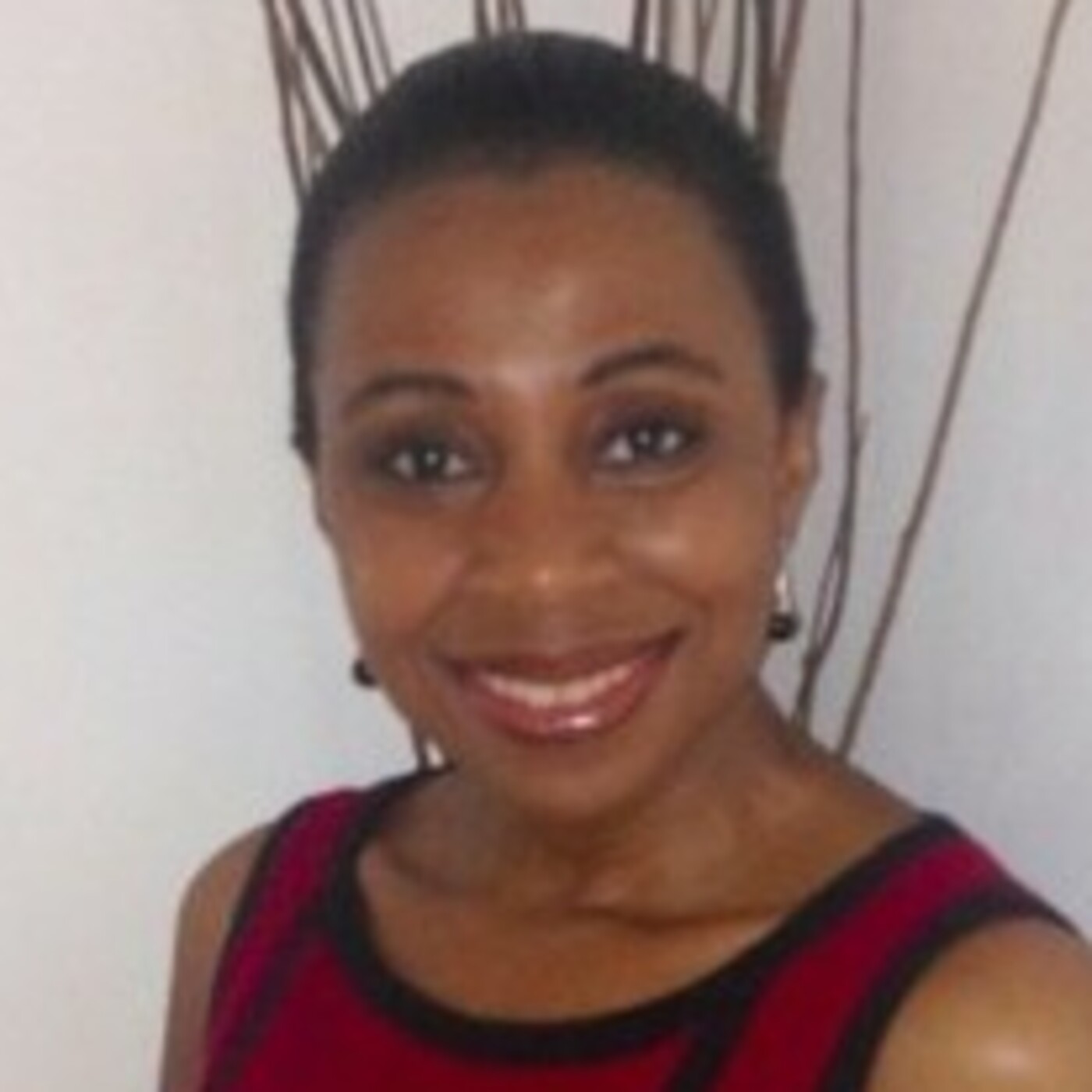
Aoifinn Devitt: This podcast was made possible by the kind support of Alvine Capital Management, a London-based specialist investment advisor and placement boutique. Our next guest was born in Nigeria, attended school in England, and found her career taking a surprising turn towards numbers. Let’s hear how her growing family obligations spurred her to aim higher and reach for challenge. I’m Aoifinn Devitt, and welcome to the 50 Faces podcast, a podcast committed to revealing the richness and diversity of the world of investment by focusing on its people and their stories. I’m joined today by Bridget Ukoo, who is Group Manager Treasury and Investments at a UK local authority. She’s a frequent participant on the local government conference circuit, which is where we met. Welcome, Bridget. Thank you for joining me today.
Bridget: Hello, thank you for inviting me to be one of the 50 Faces on your podcast.
Aoifinn Devitt: We’re delighted. Let’s start by telling us a little bit about your current role and the work that you do at the local authority.
Bridget: Okay, so my current role is actually very varied. I’m actually the head of treasury and investments, so it’s all investments, but it’s just two strands of investment. One is very much looking after cash, which is the cash investments of the authority. So we’ve got maybe £250 million of investments in cash. We’ve got a portfolio of borrowing, which is, say, about £600 million of borrowing. So it’s managing the day-to-day cash flows of the authority, making sure there’s sufficient cash to meet payments as they fall due, managing the funding of a very complex and innovative capital program As you know, lots of local authorities are having to look at very sort of clever way of delivering their capital programme. So it’s looking at funding that, looking at the different sources of borrowing. It’s a very, very regulated area. So it’s doing the cash on the one hand, again, managing risk and just working with the local authority’s risk appetite and just making sure we invest within the confines of that. Then the other side of my role is very much looking after the pension fund investments, and that’s so much more the investment side as opposed to the benefits side, and it’s everything investments. It’s right the way through from hiring and firing investment managers, determining the investment strategy of the local authority, looking after the valuation of the fund, right the way through to even providing the statutory accounts for the authority on both the cash side and the pension fund side. So local authority is very interesting in that we do front office and back office. It’s a very varied role. So the pension fund is currently valued at about £1.4 billion, so I’ve been there a long time. I’ve seen it grow basically by a billion, so it was about £400 million when I joined and it’s, you know, we’ve got an extra billion since then, so interesting.
Aoifinn Devitt: Yes, and I’d love to know what’s at the forefront of your mind now, having stewardship over those funds. What are your— some of your investment beliefs and on your mind vis-à-vis, say, responsible investing?
Bridget: Okay, so I’ve seen investment evolve over the years that I’ve been managing investments, certainly in the public sector. So, you know, initially it was very much, if it’s legal, we’ll invest in it. But I’ve seen that change over time, and very much environmental, social governance issues are at the forefront. So we’re very much into sustainable investments. So it would’ve started initially with socially responsible investments. So we used to get letters around tobacco, what are your policies around, you know, the stocks you’re investing in and their policies around sort of social, child employment, very much ethical, you know, But we’re seeing a lot of focus now on the climate change, and local authorities initially started off being very much what you want to do, but we’re seeing regulation is very much honing us into what are you doing. So my board, which were sort of ESG agnostic initially, I can see that evolution to very much conscious about making sure that we’re investing in a socially responsible way and making sure it’s sustainable. Looking at our carbon footprint, and we’re also going to have a roadmap now to where we want to be in 30 years’ time. We’re probably not going to shoot for net zero because we don’t think we can achieve that, but we’re very much looking into a roadmap for how we want to take the portfolio to become more sustainable.
Aoifinn Devitt: That’s so interesting how much that has now become really the dominant theme in many of these meetings, and certainly advisors have had to quickly come up the curve, I believe, to follow the lead that often is coming from the local authorities themselves and their stakeholders.
Bridget: Very much so, very much so. You know, there’s a difference in what we’re investing in. We’re very much at the start of my investment life, it was very much a balanced mandate where you have one manager do everything, or two at that. Well, now, you know, we’ve kind of moved into a lot more managers, so we’re diversifying with managers, but also the investment classes that we’re going into. So we’re very much now reducing our exposure to listed markets, equities, and going into more private markets and looking for investments like infrastructure, private debt, you know, looking at investments where you have more contractual cash flows, especially as the fund matures. So yes, I’ve seen very much a change, and asset managers are responding in the type of solutions that they’re providing for us, you know. So it’s interesting.
Aoifinn Devitt: If we were to go back a little bit into your own journey into this role, where did it start? And you can go right back to where you grew up and where you went to school.
Bridget: So I suppose I spent the very first of the first 12 years of my life growing up in Africa, in Nigeria. And my parents were, I would say, sort of middle class, fairly well off, not extremely rich, but for them, education was a really, really important factor. And they decided that they were going to send us all to boarding school in England, which is what you do, try and get the best education for your children, which in hindsight now, that was probably the best gift that they could have given to us because it has slightly made me who I am today. So at 12 years old, young by any standard, was shipped off to boarding school in England. And I went to school called Ancaster House School, which no longer exists in East Sussex. And that was where I started my life in England effectively and did my GCSEs there and then A-levels and started a law degree, would you believe? And someone’s told me that law degrees, or studying law, is for bright kids who can’t do maths. That was very much me at the time. One of the things you did at the time, certainly with African parents who really, really put a lot of emphasis on education, is what career would you go into? And I wasn’t thinking, I want to be an investment manager, or I want to be a doctor, I want to be a lawyer. It was basically, I need a profession and I need a profession that would impress my parents, quite frankly. And I thought, well, I can’t do maths, I can’t do medicine, I can’t do architecture, I can’t do, you know, all of these other things that my older sisters have done. So my first sister is an ophthalmologist, and the second sister is an architect, the third one is a lawyer. And so it was sort of like, yeah, I can do law. And I did very well for my law A-levels. I actually got an A, which was quite an achievement in those days. And so I went on to study law. She’s still not taking me into investment. So I studied law because that’s what I could do. And then I finished university and I still didn’t know what I wanted to do. The plan was I would go back to my home country and work, but I thought, well, I finished now and maybe be good to just get some work experience for some time. So I started a job as an accountancy assistant. I was terrible at adding up. I just wasn’t very good with numbers at all. So that was the first job I did. And then eventually I got another job working in a local authority in the department that recovers rates. At the time it was rate recovery. So we kind of just took people to court if they couldn’t pay their rents and send the bailiffs out to collect the money or collect goods. So that was me, I still hadn’t got into investments and then eventually there was an internal role that became available as an accountancy assistant and I applied for it, I got that role and I started to work as an accountant again, you know, struggling with the numbers, still not great and it was in the capital department doing capital accounting. Tell me about doing journals and debits and credits and, you know, getting it all mixed up. So that was the first role, and then I applied, and that was in— where was I? Haringey. Then I met my husband, who’s French and living here, and so we got married, and that kind of stopped any thought of going back to Nigeria. So I got married, got pregnant, and then it suddenly dawned on me that I was expecting a baby, and I just suddenly thought, I am responsible for this being that’s going to be coming along, what am I going to do? I need a better job. So I applied for another job whilst I was pregnant, and then I got that role. And then I continued my— I went on to maternity leave. They did say, we did notice you were pregnant. This is a theme in my life. I sort of got new jobs every time I was pregnant. We didn’t notice you were pregnant. When will you be able to start? So I actually had to rush through my maternity leave to start this role. So, it was a more senior role in accounting. I still don’t have any accounting qualifications. I still don’t have any professional qualifications. And I started that role. And this is where I met my first mentor, who one day said to me— and his name is Peter Stakniewski, I have to acknowledge him here— he said to me, Bridget, you’re a bright girl. I think you should do the professional exams, accountancy exams. I thought, do I really want to? He did everything to convince me to do it, even putting me on a program, which meant I had more time off. So I started that. At this stage, I had one child, a baby, and I started studying with that child. And then I fell pregnant again, having done the graduate conversion exams, which you do to convert you from a sort of numbers background into a sort of capable of doing numbers. That was tough, but I got through that just as I fell pregnant and I had terrible pregnancies with morning sickness. So at the end of that, I had to stop. Then I had my second baby and came back, worked really, really hard because at this point I have two children. My parents, who again are very influential in my life and certainly the people who drove me, kept sending me notes saying, remember, you’re not a lawyer and you’re not an accountant, so you really need to think about which path you’re going to go because, and again, I had two children and I’m thinking I need more money. I can’t go to the next level unless I get qualified. So that really helped to focus the mind. And I did my exams in the three years that I needed to do them. One, two, three, passed first time. And then I became a professional accountant. Now, once you get the accounting qualification in a local authority, that’s the only way you can progress. Within the career path that you choose, and investments just happens to be something that falls within finance. And so the next role I applied for was managing a pension fund and treasury management, so I moved from there to Hackney, and that was my first introduction to investments. Had I not qualified as an accountant, I wouldn’t have been able to get that role, so very much my parents my mentor kind of drove me into that career path. It wasn’t a deliberate plan, if you like.
Aoifinn Devitt: What a great story. And what I love about it is the emphasis behind the scenes on growth mindset, because you said that it wasn’t— you weren’t naturally strong at maths, but you obviously have become strong there because look at your responsibilities now. So I think that’s an important message that, you know, anything can be learned with the right attitude, really.
Bridget: That’s true. That’s true. I think maths is one of those things. You can miss a very important stage in the sort of early learning with maths., and when you do, you can get quite frightened or scared or assume you can’t do it, but you can, and it doesn’t matter what age you start, you can learn. I think the graduate conversion course was a very, very important milestone in my path towards the finance. You know, I had to do statistics, I had to do all sorts of things. I really was learning. I probably had to work 3 times as hard as anybody else because I just didn’t have that maths background. As I say, one of the ways I overcame my learning was sometimes in the class. They were going literally too fast for me. And sometimes I just have to record some of my classes, especially the statistics classes, to just go back and listen to it over again. And don’t forget, at that time we didn’t have the nice technology you have now. We had the little cassettes. So you had this little cassette thing, you just put it in and then, you know, you record your class and you go and listen to it over and over again. So, you know, I’ve had to overcome any obstacles in my way by just sheer determination and hard work.
Aoifinn Devitt: That is very clear. It clearly comes out. Well, the other interesting point I think that comes out from your story is it sometimes goes against the popular narrative that when children are born, that then a woman might decide to shift down in her career or take a backseat. I think the sentiment you expressed is very much that, well, these children were kind of a catalyst for you to have to essentially advance because you had the responsibility. And I don’t think that narrative is well discussed, that often, you know, women are needing to provide for a family and, you know, in a way it almost increases the need for an understanding employer.
Bridget: I mean, yeah, for me, having my children was what drove me in my career rather than the opposite way. I think basically I look back at what my parents gave me education-wise and everything, and I realized that the only way I can do it for my children is if my husband and I were both working, and they just drove me. Don’t get me wrong, there were times when I felt guilty. But as I grew up, as my children got older, I asked the question, mommy can stay home with you and do all of these things, but you might not have this, that, and the other. And they were like, no, no, no, mom, go to work. I also remember one incident when I was standing in the nursery school where my little boy went to school and I was on the queue and there was moms talking about their children not being very good. They were talking to each other and one of them was saying, oh yeah, these children who don’t eat very well, it’s because their mothers work. And they’re not there to sort of make the effort to make them get used to lots of different foods. And I had a son who was very terrible at eating. I did feel very guilty. And I thought, is that because I’m a working mom?
Aoifinn Devitt: It’s wonderful how you talked about your parents as well, because I think parents often do keep it real. I mean, it seemed like your parents were still a pretty steady source of advice there, but also kind of encouraging you to keep on course.
Bridget: Oh yes. I think my parents, I would have to say they’ve been the most influential people in my life. Obviously they’ve always been closest to me. Just the family support was great. Mean, I my parents taught me, but still very strong work ethic. My mom, even though she was born in the ’30s, she was a high-flying career woman. She had 8 children and she worked, you know, the whole time. We had nannies, but she was there when we needed her. And we’re very grounded, we’re all grounded, you know, all 8 of us, but It was very much— she was a role model, and the expectation was never that I wouldn’t work.
Aoifinn Devitt: What did she do? What was her own role?
Bridget: So my mom— actually, it’s really interesting because my mom wrote a book when she was— after 25 years of marriage, 33 years ago, which I’m now editing and I’m going to publish. But she started off coming here to study to be a nurse, and she said it just wasn’t for her, so she packed that up after about 8 months. And she eventually did a course in community development and she rose to become a permanent secretary back home in Nigeria, which is a very rare thing. She was probably one of the first. There were 3 women at the same time who got that role. She was one of the first. So she was very much in the sort of public domain and managing whole departments. And my father was an architect, so, you know, we’d drive around buildings, banks, and so on that he had designed. So. You know, from a very early age we had these role models who we just looked up to. So I would say I was advantaged in that way.
Aoifinn Devitt: Definitely. And now looking at the investment world, and we’ve spoken a bit earlier about ESG considerations, and now I just want to turn to the question of diversity in the investment world. What do you think of the current levels of diversity in the investment industry, and what should be done about it?
Bridget: There’s definitely not enough diversity. Firstly, not enough women. You just have to go to industry events and you look around, there’s not enough women. And then certainly not enough Black and minority ethnic people in the investment sector, probably worse in the private sector than in the public sector. I would say the public sector is probably more balanced. In public sector, within investments, probably has more Black and minority ethnic people in investments, probably because it’s a technical area, it’s quite challenging, not enough competition within the public sector, so we get the roles because we’re prepared to actually learn, do it, and I think so in the public sector I would say it’s not so bad, but in the private sector I would say there’s not enough. What can be done about it? I think it’s mentoring, I think it’s from the very young age, it’s encouraging people, it’s having people to see role models, and knowing that they can do it. So I would say the example now is I’ve got two sons who are going into investments, not because of me, but I think maybe just seeing me there was a sort of encouragement. But, you know, they’ve both studied economics. One of them has got his IMC and CFA, the second one now has just done his IMC. So I would say role models is probably important, And I think they’re doing a lot more. There’s sort of 100 Black Interns that they’re doing now, which is fund managers, you know, willing to take 100 Black interns. So I think that’s quite good. And I think for women, it’s about flexible working, because one thing I noticed in the industry was you saw a lot of women coming in, and then suddenly they’d gone and they didn’t come back to work. But I think that’s one thing that COVID will probably change. Is that the whole flexible working has probably just sort of taken off 100-fold. And I think they will be able to retain more women now, which is something good to come out of the current situation.
Aoifinn Devitt: Absolutely, it is. And it’s very good to hear that you think that the role model approach works, because that’s part of the point of this podcast, is to present role models like yourself to show the young, those entry-level employees that, you know, this is— you can do this, you can see yourself in this role. I think a lot of it’s about just visualizing yourself doing the role.
Bridget: Yes, yes, definitely. I think also being brought up in Nigeria for the first 12 years of my life, everybody was Black. So the doctor was Black, the manager was Black, everybody you saw. So there was a role model left, right, and center. Probably not so much in the UK. So if you were in the UK and, you know, probably 20 years ago and everybody you saw in a very senior position was not like you, then you can’t imagine yourself in that position. But I think Now, you know, there’s a lot more Black doctors, there’s a lot more Black investment managers, there’s a lot more people going into the schools to talk to young children. This is what I’ve done, this is the career path that I followed, this is how you can do it. And that’s helpful, especially for children who don’t have the same advantages, as in a stable home or parents who can do that for them.
Aoifinn Devitt: So We’ve talked about some of the people who’ve been very influential in your life. Was there any key piece of advice that you received from any of them, or any creed or motto that you live by now?
Bridget: My mantra is never put off till tomorrow what you can do today. That’s something that’s followed me through my life, whether it’s about education, whether it’s about a holiday, whether it’s about learning a language, whether it’s about investments, whatever, take the opportunity that comes today and don’t put it off till tomorrow. So I think that’s one mantra that has followed me through my life, and I look back and I think, I’m so glad I did that when I did that. So I think that’s one thing. And for the young people, for everything you do, every job you do, treat every day like an interview, because every day when you’re showcasing what you can do it’s probably something that will take you further tomorrow. And also, no learning is wasted. So one thing I do now, even as an investment manager, is every morning I go for a walk. I used to run, I don’t run anymore, the old body can’t take it anymore. But every morning when I go for a walk, I would listen to Bloomberg, and that way I just catch up on the market. And information I’ve gleaned from there has helped me in my career in being able to challenge managers or being able to have constructive dialogue. So no knowledge is wasted and no time is dead time. So I’m very much into Audible. So even if I’m in the kitchen, I’d be listening to something. It might not be educational. No time is wasted, you know, even if it’s just relaxation music. But yeah, every day is important. And also work around your most energetic time of your day. So if you’re a morning person, try and do those things in the morning and don’t put it off till the evening, because if you’re a morning person, then if you don’t do it in the morning, you’re not likely to do it in the evening because you’re tired. So it’s about don’t put things off, always do them when you can.
Aoifinn Devitt: Well, Bridget, I think that on that very energizing note, we will bring the conversation to a close. It’s been a real pleasure speaking with you today. Thank you for being the force that you are in our industry and for being such a compelling role model. I really appreciate you sharing your insights with us.
Bridget: And thank you very much for having me, Aoifinn.
Aoifinn Devitt: I’m Aoifinn and David, thank you for listening to the 50 Faces podcast. If you liked what you heard and would like to tune in to hear more inspiring investors and their personal journeys, please subscribe on Apple Podcasts or wherever you get your podcasts. This podcast is for informational purposes only and should not be construed as investment advice. And all views are personal and should not be attributed to the organizations and affiliations of the host or any guest.
Aoifinn Devitt: This podcast was made possible by the kind support of Alvine Capital Management, a London-based specialist investment advisor and placement boutique. Our next guest was born in Nigeria, attended school in England, and found her career taking a surprising turn towards numbers. Let’s hear how her growing family obligations spurred her to aim higher and reach for challenge. I’m Aoifinn Devitt, and welcome to the 50 Faces podcast, a podcast committed to revealing the richness and diversity of the world of investment by focusing on its people and their stories. I’m joined today by Bridget Ukoo, who is Group Manager Treasury and Investments at a UK local authority. She’s a frequent participant on the local government conference circuit, which is where we met. Welcome, Bridget. Thank you for joining me today.
Bridget: Hello, thank you for inviting me to be one of the 50 Faces on your podcast.
Aoifinn Devitt: We’re delighted. Let’s start by telling us a little bit about your current role and the work that you do at the local authority.
Bridget: Okay, so my current role is actually very varied. I’m actually the head of treasury and investments, so it’s all investments, but it’s just two strands of investment. One is very much looking after cash, which is the cash investments of the authority. So we’ve got maybe £250 million of investments in cash. We’ve got a portfolio of borrowing, which is, say, about £600 million of borrowing. So it’s managing the day-to-day cash flows of the authority, making sure there’s sufficient cash to meet payments as they fall due, managing the funding of a very complex and innovative capital program As you know, lots of local authorities are having to look at very sort of clever way of delivering their capital programme. So it’s looking at funding that, looking at the different sources of borrowing. It’s a very, very regulated area. So it’s doing the cash on the one hand, again, managing risk and just working with the local authority’s risk appetite and just making sure we invest within the confines of that. Then the other side of my role is very much looking after the pension fund investments, and that’s so much more the investment side as opposed to the benefits side, and it’s everything investments. It’s right the way through from hiring and firing investment managers, determining the investment strategy of the local authority, looking after the valuation of the fund, right the way through to even providing the statutory accounts for the authority on both the cash side and the pension fund side. So local authority is very interesting in that we do front office and back office. It’s a very varied role. So the pension fund is currently valued at about £1.4 billion, so I’ve been there a long time. I’ve seen it grow basically by a billion, so it was about £400 million when I joined and it’s, you know, we’ve got an extra billion since then, so interesting.
Aoifinn Devitt: Yes, and I’d love to know what’s at the forefront of your mind now, having stewardship over those funds. What are your— some of your investment beliefs and on your mind vis-à-vis, say, responsible investing?
Bridget: Okay, so I’ve seen investment evolve over the years that I’ve been managing investments, certainly in the public sector. So, you know, initially it was very much, if it’s legal, we’ll invest in it. But I’ve seen that change over time, and very much environmental, social governance issues are at the forefront. So we’re very much into sustainable investments. So it would’ve started initially with socially responsible investments. So we used to get letters around tobacco, what are your policies around, you know, the stocks you’re investing in and their policies around sort of social, child employment, very much ethical, you know, But we’re seeing a lot of focus now on the climate change, and local authorities initially started off being very much what you want to do, but we’re seeing regulation is very much honing us into what are you doing. So my board, which were sort of ESG agnostic initially, I can see that evolution to very much conscious about making sure that we’re investing in a socially responsible way and making sure it’s sustainable. Looking at our carbon footprint, and we’re also going to have a roadmap now to where we want to be in 30 years’ time. We’re probably not going to shoot for net zero because we don’t think we can achieve that, but we’re very much looking into a roadmap for how we want to take the portfolio to become more sustainable.
Aoifinn Devitt: That’s so interesting how much that has now become really the dominant theme in many of these meetings, and certainly advisors have had to quickly come up the curve, I believe, to follow the lead that often is coming from the local authorities themselves and their stakeholders.
Bridget: Very much so, very much so. You know, there’s a difference in what we’re investing in. We’re very much at the start of my investment life, it was very much a balanced mandate where you have one manager do everything, or two at that. Well, now, you know, we’ve kind of moved into a lot more managers, so we’re diversifying with managers, but also the investment classes that we’re going into. So we’re very much now reducing our exposure to listed markets, equities, and going into more private markets and looking for investments like infrastructure, private debt, you know, looking at investments where you have more contractual cash flows, especially as the fund matures. So yes, I’ve seen very much a change, and asset managers are responding in the type of solutions that they’re providing for us, you know. So it’s interesting.
Aoifinn Devitt: If we were to go back a little bit into your own journey into this role, where did it start? And you can go right back to where you grew up and where you went to school.
Bridget: So I suppose I spent the very first of the first 12 years of my life growing up in Africa, in Nigeria. And my parents were, I would say, sort of middle class, fairly well off, not extremely rich, but for them, education was a really, really important factor. And they decided that they were going to send us all to boarding school in England, which is what you do, try and get the best education for your children, which in hindsight now, that was probably the best gift that they could have given to us because it has slightly made me who I am today. So at 12 years old, young by any standard, was shipped off to boarding school in England. And I went to school called Ancaster House School, which no longer exists in East Sussex. And that was where I started my life in England effectively and did my GCSEs there and then A-levels and started a law degree, would you believe? And someone’s told me that law degrees, or studying law, is for bright kids who can’t do maths. That was very much me at the time. One of the things you did at the time, certainly with African parents who really, really put a lot of emphasis on education, is what career would you go into? And I wasn’t thinking, I want to be an investment manager, or I want to be a doctor, I want to be a lawyer. It was basically, I need a profession and I need a profession that would impress my parents, quite frankly. And I thought, well, I can’t do maths, I can’t do medicine, I can’t do architecture, I can’t do, you know, all of these other things that my older sisters have done. So my first sister is an ophthalmologist, and the second sister is an architect, the third one is a lawyer. And so it was sort of like, yeah, I can do law. And I did very well for my law A-levels. I actually got an A, which was quite an achievement in those days. And so I went on to study law. She’s still not taking me into investment. So I studied law because that’s what I could do. And then I finished university and I still didn’t know what I wanted to do. The plan was I would go back to my home country and work, but I thought, well, I finished now and maybe be good to just get some work experience for some time. So I started a job as an accountancy assistant. I was terrible at adding up. I just wasn’t very good with numbers at all. So that was the first job I did. And then eventually I got another job working in a local authority in the department that recovers rates. At the time it was rate recovery. So we kind of just took people to court if they couldn’t pay their rents and send the bailiffs out to collect the money or collect goods. So that was me, I still hadn’t got into investments and then eventually there was an internal role that became available as an accountancy assistant and I applied for it, I got that role and I started to work as an accountant again, you know, struggling with the numbers, still not great and it was in the capital department doing capital accounting. Tell me about doing journals and debits and credits and, you know, getting it all mixed up. So that was the first role, and then I applied, and that was in— where was I? Haringey. Then I met my husband, who’s French and living here, and so we got married, and that kind of stopped any thought of going back to Nigeria. So I got married, got pregnant, and then it suddenly dawned on me that I was expecting a baby, and I just suddenly thought, I am responsible for this being that’s going to be coming along, what am I going to do? I need a better job. So I applied for another job whilst I was pregnant, and then I got that role. And then I continued my— I went on to maternity leave. They did say, we did notice you were pregnant. This is a theme in my life. I sort of got new jobs every time I was pregnant. We didn’t notice you were pregnant. When will you be able to start? So I actually had to rush through my maternity leave to start this role. So, it was a more senior role in accounting. I still don’t have any accounting qualifications. I still don’t have any professional qualifications. And I started that role. And this is where I met my first mentor, who one day said to me— and his name is Peter Stakniewski, I have to acknowledge him here— he said to me, Bridget, you’re a bright girl. I think you should do the professional exams, accountancy exams. I thought, do I really want to? He did everything to convince me to do it, even putting me on a program, which meant I had more time off. So I started that. At this stage, I had one child, a baby, and I started studying with that child. And then I fell pregnant again, having done the graduate conversion exams, which you do to convert you from a sort of numbers background into a sort of capable of doing numbers. That was tough, but I got through that just as I fell pregnant and I had terrible pregnancies with morning sickness. So at the end of that, I had to stop. Then I had my second baby and came back, worked really, really hard because at this point I have two children. My parents, who again are very influential in my life and certainly the people who drove me, kept sending me notes saying, remember, you’re not a lawyer and you’re not an accountant, so you really need to think about which path you’re going to go because, and again, I had two children and I’m thinking I need more money. I can’t go to the next level unless I get qualified. So that really helped to focus the mind. And I did my exams in the three years that I needed to do them. One, two, three, passed first time. And then I became a professional accountant. Now, once you get the accounting qualification in a local authority, that’s the only way you can progress. Within the career path that you choose, and investments just happens to be something that falls within finance. And so the next role I applied for was managing a pension fund and treasury management, so I moved from there to Hackney, and that was my first introduction to investments. Had I not qualified as an accountant, I wouldn’t have been able to get that role, so very much my parents my mentor kind of drove me into that career path. It wasn’t a deliberate plan, if you like.
Aoifinn Devitt: What a great story. And what I love about it is the emphasis behind the scenes on growth mindset, because you said that it wasn’t— you weren’t naturally strong at maths, but you obviously have become strong there because look at your responsibilities now. So I think that’s an important message that, you know, anything can be learned with the right attitude, really.
Bridget: That’s true. That’s true. I think maths is one of those things. You can miss a very important stage in the sort of early learning with maths., and when you do, you can get quite frightened or scared or assume you can’t do it, but you can, and it doesn’t matter what age you start, you can learn. I think the graduate conversion course was a very, very important milestone in my path towards the finance. You know, I had to do statistics, I had to do all sorts of things. I really was learning. I probably had to work 3 times as hard as anybody else because I just didn’t have that maths background. As I say, one of the ways I overcame my learning was sometimes in the class. They were going literally too fast for me. And sometimes I just have to record some of my classes, especially the statistics classes, to just go back and listen to it over again. And don’t forget, at that time we didn’t have the nice technology you have now. We had the little cassettes. So you had this little cassette thing, you just put it in and then, you know, you record your class and you go and listen to it over and over again. So, you know, I’ve had to overcome any obstacles in my way by just sheer determination and hard work.
Aoifinn Devitt: That is very clear. It clearly comes out. Well, the other interesting point I think that comes out from your story is it sometimes goes against the popular narrative that when children are born, that then a woman might decide to shift down in her career or take a backseat. I think the sentiment you expressed is very much that, well, these children were kind of a catalyst for you to have to essentially advance because you had the responsibility. And I don’t think that narrative is well discussed, that often, you know, women are needing to provide for a family and, you know, in a way it almost increases the need for an understanding employer.
Bridget: I mean, yeah, for me, having my children was what drove me in my career rather than the opposite way. I think basically I look back at what my parents gave me education-wise and everything, and I realized that the only way I can do it for my children is if my husband and I were both working, and they just drove me. Don’t get me wrong, there were times when I felt guilty. But as I grew up, as my children got older, I asked the question, mommy can stay home with you and do all of these things, but you might not have this, that, and the other. And they were like, no, no, no, mom, go to work. I also remember one incident when I was standing in the nursery school where my little boy went to school and I was on the queue and there was moms talking about their children not being very good. They were talking to each other and one of them was saying, oh yeah, these children who don’t eat very well, it’s because their mothers work. And they’re not there to sort of make the effort to make them get used to lots of different foods. And I had a son who was very terrible at eating. I did feel very guilty. And I thought, is that because I’m a working mom?
Aoifinn Devitt: It’s wonderful how you talked about your parents as well, because I think parents often do keep it real. I mean, it seemed like your parents were still a pretty steady source of advice there, but also kind of encouraging you to keep on course.
Bridget: Oh yes. I think my parents, I would have to say they’ve been the most influential people in my life. Obviously they’ve always been closest to me. Just the family support was great. Mean, I my parents taught me, but still very strong work ethic. My mom, even though she was born in the ’30s, she was a high-flying career woman. She had 8 children and she worked, you know, the whole time. We had nannies, but she was there when we needed her. And we’re very grounded, we’re all grounded, you know, all 8 of us, but It was very much— she was a role model, and the expectation was never that I wouldn’t work.
Aoifinn Devitt: What did she do? What was her own role?
Bridget: So my mom— actually, it’s really interesting because my mom wrote a book when she was— after 25 years of marriage, 33 years ago, which I’m now editing and I’m going to publish. But she started off coming here to study to be a nurse, and she said it just wasn’t for her, so she packed that up after about 8 months. And she eventually did a course in community development and she rose to become a permanent secretary back home in Nigeria, which is a very rare thing. She was probably one of the first. There were 3 women at the same time who got that role. She was one of the first. So she was very much in the sort of public domain and managing whole departments. And my father was an architect, so, you know, we’d drive around buildings, banks, and so on that he had designed. So. You know, from a very early age we had these role models who we just looked up to. So I would say I was advantaged in that way.
Aoifinn Devitt: Definitely. And now looking at the investment world, and we’ve spoken a bit earlier about ESG considerations, and now I just want to turn to the question of diversity in the investment world. What do you think of the current levels of diversity in the investment industry, and what should be done about it?
Bridget: There’s definitely not enough diversity. Firstly, not enough women. You just have to go to industry events and you look around, there’s not enough women. And then certainly not enough Black and minority ethnic people in the investment sector, probably worse in the private sector than in the public sector. I would say the public sector is probably more balanced. In public sector, within investments, probably has more Black and minority ethnic people in investments, probably because it’s a technical area, it’s quite challenging, not enough competition within the public sector, so we get the roles because we’re prepared to actually learn, do it, and I think so in the public sector I would say it’s not so bad, but in the private sector I would say there’s not enough. What can be done about it? I think it’s mentoring, I think it’s from the very young age, it’s encouraging people, it’s having people to see role models, and knowing that they can do it. So I would say the example now is I’ve got two sons who are going into investments, not because of me, but I think maybe just seeing me there was a sort of encouragement. But, you know, they’ve both studied economics. One of them has got his IMC and CFA, the second one now has just done his IMC. So I would say role models is probably important, And I think they’re doing a lot more. There’s sort of 100 Black Interns that they’re doing now, which is fund managers, you know, willing to take 100 Black interns. So I think that’s quite good. And I think for women, it’s about flexible working, because one thing I noticed in the industry was you saw a lot of women coming in, and then suddenly they’d gone and they didn’t come back to work. But I think that’s one thing that COVID will probably change. Is that the whole flexible working has probably just sort of taken off 100-fold. And I think they will be able to retain more women now, which is something good to come out of the current situation.
Aoifinn Devitt: Absolutely, it is. And it’s very good to hear that you think that the role model approach works, because that’s part of the point of this podcast, is to present role models like yourself to show the young, those entry-level employees that, you know, this is— you can do this, you can see yourself in this role. I think a lot of it’s about just visualizing yourself doing the role.
Bridget: Yes, yes, definitely. I think also being brought up in Nigeria for the first 12 years of my life, everybody was Black. So the doctor was Black, the manager was Black, everybody you saw. So there was a role model left, right, and center. Probably not so much in the UK. So if you were in the UK and, you know, probably 20 years ago and everybody you saw in a very senior position was not like you, then you can’t imagine yourself in that position. But I think Now, you know, there’s a lot more Black doctors, there’s a lot more Black investment managers, there’s a lot more people going into the schools to talk to young children. This is what I’ve done, this is the career path that I followed, this is how you can do it. And that’s helpful, especially for children who don’t have the same advantages, as in a stable home or parents who can do that for them.
Aoifinn Devitt: So We’ve talked about some of the people who’ve been very influential in your life. Was there any key piece of advice that you received from any of them, or any creed or motto that you live by now?
Bridget: My mantra is never put off till tomorrow what you can do today. That’s something that’s followed me through my life, whether it’s about education, whether it’s about a holiday, whether it’s about learning a language, whether it’s about investments, whatever, take the opportunity that comes today and don’t put it off till tomorrow. So I think that’s one mantra that has followed me through my life, and I look back and I think, I’m so glad I did that when I did that. So I think that’s one thing. And for the young people, for everything you do, every job you do, treat every day like an interview, because every day when you’re showcasing what you can do it’s probably something that will take you further tomorrow. And also, no learning is wasted. So one thing I do now, even as an investment manager, is every morning I go for a walk. I used to run, I don’t run anymore, the old body can’t take it anymore. But every morning when I go for a walk, I would listen to Bloomberg, and that way I just catch up on the market. And information I’ve gleaned from there has helped me in my career in being able to challenge managers or being able to have constructive dialogue. So no knowledge is wasted and no time is dead time. So I’m very much into Audible. So even if I’m in the kitchen, I’d be listening to something. It might not be educational. No time is wasted, you know, even if it’s just relaxation music. But yeah, every day is important. And also work around your most energetic time of your day. So if you’re a morning person, try and do those things in the morning and don’t put it off till the evening, because if you’re a morning person, then if you don’t do it in the morning, you’re not likely to do it in the evening because you’re tired. So it’s about don’t put things off, always do them when you can.
Aoifinn Devitt: Well, Bridget, I think that on that very energizing note, we will bring the conversation to a close. It’s been a real pleasure speaking with you today. Thank you for being the force that you are in our industry and for being such a compelling role model. I really appreciate you sharing your insights with us.
Bridget: And thank you very much for having me, Aoifinn.
Aoifinn Devitt: I’m Aoifinn and David, thank you for listening to the 50 Faces podcast. If you liked what you heard and would like to tune in to hear more inspiring investors and their personal journeys, please subscribe on Apple Podcasts or wherever you get your podcasts. This podcast is for informational purposes only and should not be construed as investment advice. And all views are personal and should not be attributed to the organizations and affiliations of the host or any guest.