Ifran Devitt: This podcast was made possible by the kind support of Guylaine Charles and Charles Law PLLC, a law firm representing clients in the negotiation of a wide range of financial trading agreements based in New York City.
Dennis Archer: I pull myself up the ladder or whatever with my left hand. That’s my weakest hand. I use my right hand or right arm to reach behind me and to pull and slingshot ahead of me everybody that I can to cause them to have a better life than me.
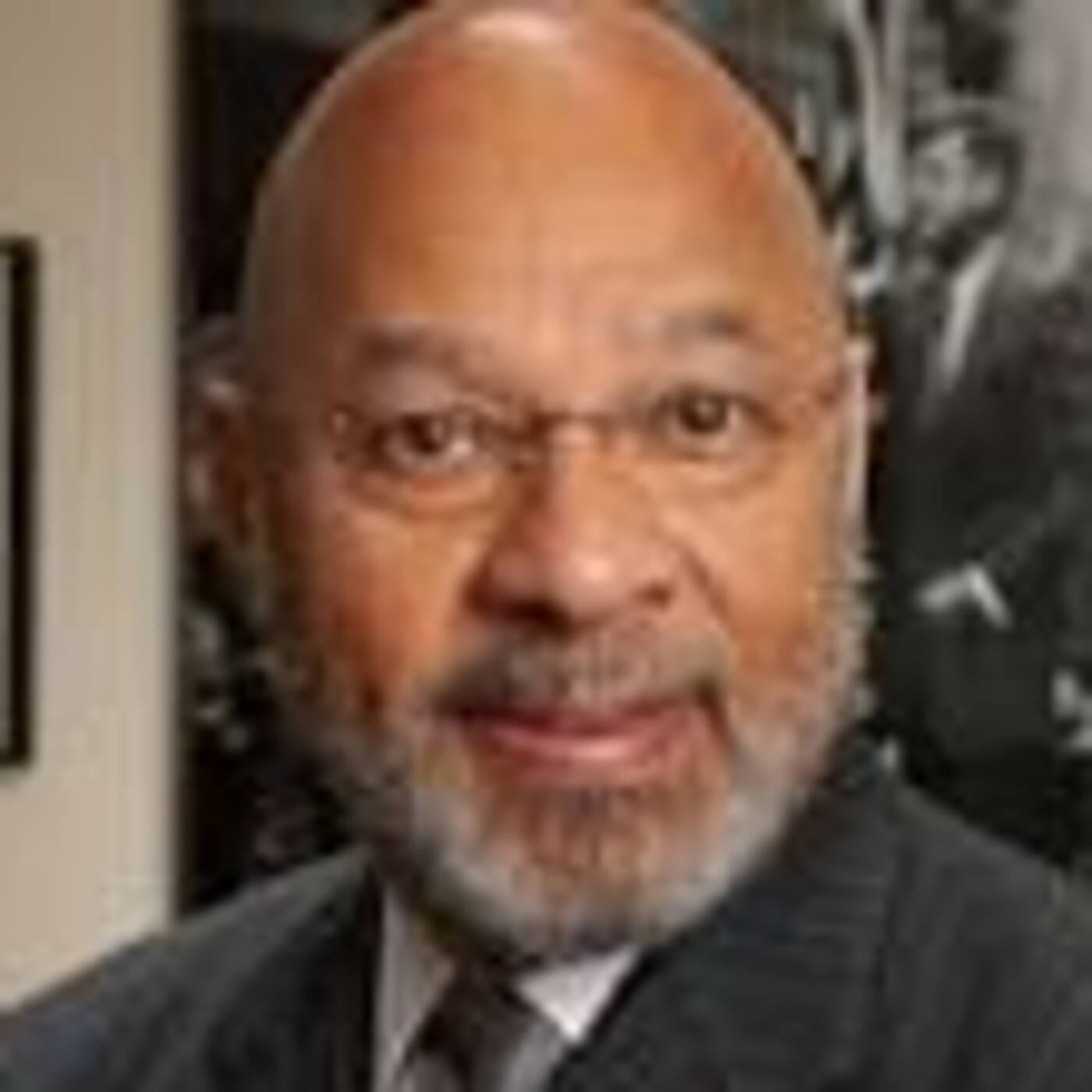
Ifran Devitt: I’m Ifran Devitt, and welcome to this 50 Faces focus series, which showcases the richness and diversity of inspiring people in the law. Dennis Archer has had a legendary career, first as a lawyer, then as a judge on the Michigan Supreme Court, and as mayor of Detroit from 1994 to 2001. And he was the first Black head of the ABA. He is currently chairman emeritus at Dickinson Wright, a Detroit law firm, in addition to multiple committee and board roles. I sat down with him to discuss his early upbringing, his journey into law, his time on the Michigan Supreme Court, and why he ran for mayor of Detroit. Here are some excerpts from that discussion of an extraordinary career and purpose. We started with his early days.
Dennis Archer: We were not a family of wealth. That did not take away from the focus on education and having other wonderful things in my life. I was conceived in a small town in Michigan called Cassopolis. I was born in 1942, January 1st. There was still a lot of racial tensions in Michigan. In any event, after I was born, I lived in Detroit for 5 years, and then we moved— my mother and I moved back to Cassopolis, or for her, back to Cassopolis, for me going there for the first time to join my father. My father worked for a gentleman who owned a tool and die shop in South Bend, Indiana. My dad made $75 every 2 weeks for 6 months of the year and $37.50 every 2 weeks the other 6 months. My dad, before I was born, was involved in an accident wherein he had his arm, as he was driving, leaning out the driver’s side of the window. And I would remind you that back in 1942, cars did not have air conditioning. And as a result, when the car sideswiped my dad’s car, he wound up having lost his arm just above his left elbow as it was amputated. And as you heard me describe his income, it meant that we were living out of low poverty. But my dad, who had a third-grade education, mother had a high school diploma, worked every day, took care of his home. I started working at the age of 8. My first job was a caddie on a golf course.
Ifran Devitt: Dennis’s journey into law then took a few interesting twists and turns. After high school, he went to Wayne State University, then transferred to University of Western Michigan at Kalamazoo. He found his first passion as a special ed teacher, where his careful attention to students both during and after school hours was noted. He was encouraged to study for a master’s in education with a view to becoming a principal, but when he found himself reading the same books as he had during his undergrad, he took the good advice to consider law school. His civil rights awakening had come a little earlier though, thanks to a secondhand black and white TV.
Dennis Archer: And would see how police would use dogs or fire hoses or billy clubs and beat Blacks who wanted to register to vote or wanted an equal opportunity. And I read about them being beaten, saw it on television. Heard reports about people being lynched. And I heard in church, because my mother used to take me to church a lot, and I heard in church how this lawyer by the name of Thurgood Marshall, working with others, had won this case called Brown v. The Board of Education. And how in church they said that was going to make a difference. In the lives of those of us who wanted to go to college. That was when I heard about the law, never knew anything about it, never met a lawyer. The only two Black professionals I ever met while I was living in Kansas City was Mr. Charles Smith, who owned and built Smith Hoyster Manufacturing Company, and Clarence Lusby, who taught math. And it wasn’t until I went to the Detroit College of Law in Detroit, Michigan, downtown Detroit, Michigan, that I found out what lawyers could really do and the power of the law and fell in love with the law and learned about what lawyers could do. So I did the smartest thing I ever did before, and I did that before I graduated law school. I married the teacher who suggested that I go to law school. In June of this year, we’ll have been married for 54 years.
Ifran Devitt: Dennis and I talked about the high and low points of such a long career in law.
Dennis Archer: The high points was representing people who were charged with criminal offenses, who said that they were innocent, Representing people who were told, if you come back and complain at this Board of Education meeting, we’re going to arrest you. I went with them to that board, the next board meeting that they had at the Detroit Public Schools. They knew I was a lawyer. They didn’t arrest them and didn’t bother. Representing people who could not afford to hire a lawyer and represent them and be able to let them know that they had rights and to see if we could not cause them to win their concern, the complaints that they had. And even if they didn’t, they felt good and felt proud that someone, in this case a lawyer, in this case me, cared enough about them that despite the outcome, and I won most of them for them, that they were very happy that someone listened to them because they generally did not have a job, were not able to afford a lawyer. And it was that during the time, even in Detroit, Michigan, and other places in Michigan, where people— where they didn’t see a Black judge or a Black lawyer. I didn’t see anybody who worked in the courtroom who was Black. After I graduated law school and passed the bar, before I graduated, I worked for Judge— worked for a lawyer by the name of Damon J. Keith who headed up a law firm of outstanding Black lawyers. I think they’re about 5 or 6. And I worked for him the summer that the Detroit— city of Detroit experienced— a rebellion, some say riot. It was not a race riot, although one did take place in 1943. I’d just been born, I didn’t know anything about it. But they had a riot at that point, 43 people killed. And it was a race riot because it started that rumors that were wrong spread that an African American had either raped or assaulted a white woman. In the city of Detroit. And that rumor spread, and they were yanking people off of streetcars and buses and beating them. 43 people died in that race riot. In the rebellion, it was a manner in which Blacks were not being treated with respect. We had very few Black police officers, and they were disrespected. Many of them, most, by the white officers who did not want them to be on the police department, did not want them to ride in the police car together. And how people were— if you— we learned about George Floyd, Breonna Taylor, and others last year and the like, and it’s been happening for a long time before that, but it was people being mistreated, how they were stopped, sometimes beaten, etc., and how they were treated in some of the stores they went into. In some of the department stores, they had elevator operators that operated the elevators taking people up and down, but they didn’t have anybody waiting on them in any of the departments who happened to, who happened to be Black. Didn’t matter the department. Just weren’t hired. That gave rise to the ’67 rebellion, which caused, again, about 43, 44 people being killed during that time. The mayor was outstanding, Jerome Cavanaugh. He had, unlike his predecessors, he had hired African Americans to be part of his administration. It was certainly a surprise to him what occurred. The anger was there. He was not completely aware of how Blacks were being just mistreated. That summer, when I worked for Damon Teas Law Firm, it gave me an opportunity to see how valuable lawyers really were. Now, this is before I graduated from law school. I worked for him that summer. The next summer, I worked for Ford Motor Company, the Office of General Counsel. Let it be known. And they contacted law schools, and one of the law professors at the Detroit College of Law suggested I ought to go work for Ford Motor Company that summer. Now, what I didn’t— forgot to share with you is that I taught school during the day, and I went to law school at night. So as opposed to going to law school, graduating in 3 years, I worked as a teacher, and I graduated in 4 years. When I got ready to graduate, I sent a letter out to a large law firm, and they invited me in for an interview. When I came in for the interview, I asked them— or they asked me where I went to school. They knew. Well, they said, I see you went to Detroit College of Law. Yes. Well, we don’t hire people from law grads from Detroit College of Law. We hire people from University of Michigan, Harvard, Yale, Stanford, et cetera. So I thanked him and I left the office after that interview. And I smiled because I had read up about the person that was gonna give me my interview and found that he had graduated from the Detroit College of Law. And it just dawned on me, and I don’t know why I didn’t think about it, was that large law firms at that time, nowhere in Michigan, had hired any Black lawyer as an associate or had any Black lawyer as a partner. And so it dawned on me, one of the reasons why I didn’t really have an interview or they didn’t look at me is because I was Black. And so I worked for this When I graduated from law school, I went to work for a law firm, Gregg Gardner, Black law firm, 2 partners, 3 associates. I made it 4th associate. I love practicing law. I won my first criminal case as a felony trial, and I won my— before a jury, and I won my first civil case before a jury. That’s what started me off. I loved the profession, and when I became a member of the Michigan Supreme Court, one of the responsibilities that you have— there’s 7 of us who served on the Michigan Supreme Court— is that if the majority, or there would be somebody who would be assigned after oral arguments to write the majority opinion, we’d take a preliminary vote. You’d vote to affirm or deny. And so when we took a vote after the 3 days of listening to arguments, you would write an opinion if you signed, or you wait to see what someone else wrote preliminarily about that case. And if you disagreed with it, you were obligated to share with the public and with the lawyers who read the case why you disagree, and you’d write a dissent. I enjoyed that opportunity. I loved being on the Michigan Supreme Court, but I kept being drawn by people who thought because what I was doing and how I carried myself that I ought to become a judge. I said I went to see Damon Keith. By that time, Damon Keith, that that very summer that I worked for his firm, was nominated by United States Senator Philip Hart. He nominated him to become a judge on the Eastern District of Michigan, that trial court bench. And so I went to see him, and by that time I had also been involved helping people running for office in politics, love politics. I’ve helped people to become judges, mayors, but judges and the like. They kept asking, “Will you run?” Damon said, “No, keep practicing law, give back your time to the community, and earn a living so that you can be able to take care of your family. There will come a time when you can run.” or should not. I had become president of the first African American, the first person of color to be president of the State Bar of Michigan. Before that occurred, I’d been president of the National Bar Association, which is the largest African American bar association in the world. It was created and formed in 1924 and incorporated in 1925 in Rhode Island because The American Bar Association would not allow Black lawyers to join the American Bar. You couldn’t even be a member, let alone be an officer or a committee chair. I just got involved in the Bar Association, and it turns out that one of my best friends suggested— and he happened to be white and a partner in a large law firm— he said, Dennis, why don’t you join the Detroit Bar Association? Young lawyers, why don’t you join the Michigan State Bar in the Young Lawyers Section and why don’t you get active in the American Bar Association? Because the new chairman of the American Bar Association Young Lawyers Section wanted to make very clear that the Young Lawyers Section was open to all to participate. So I followed his suggestion and joined all the local bars, State Bar of Michigan, and went to my first American Bar Association meeting in 1972. Along the way, became president.
Ifran Devitt: I asked him then about his move to the Supreme Court and ultimately what led him to resign from there and run for mayor of Detroit.
Dennis Archer: I got appointed to the Michigan Supreme Court by Governor James Blanchard. He was a Democrat. He appointed me to the Michigan Supreme Court. I ran for statewide election and there were two vacancies, myself and the former United States Senator who had retired from the Senate, Robert Griffin. He and I won the two statewide seats. I kept my seat on the Michigan Supreme Court and he got elected I enjoyed representing or being on the Michigan Supreme Court and being able to help set the policy for our state in the legal profession. And our Chief Justice of the Supreme Court at the time I joined was G. Menon Williams, who was the former governor of the state of Michigan. And before I joined, he had convinced the court to start taking a look at issues that were of concern to people who use the court system. On one hand, there was a concern by business people and the like, why does it take so long between the time that a case is filed and you get a result, and why does it cost so much money? And on the other hand, there was concern because there was a lack of seeing people of color who worked for the courts or were in fact judges. I got in at the right time to be involved in all of that. But there was another calling. For some of us, the practice of law is a calling. For me, the first calling was to join the Michigan Supreme Court because it had been 20 years since the last person of color. The first person of color who was a member of the Michigan Supreme Court was Otis Smith, and he lost an election for reelection, and 20 years later, I got appointed. And so it was important, and I enjoyed serving, but there were things happening in the city of Detroit that caused people to want to see a change. The mayor at the time was Coleman Alexander Young. He was the first person of color, an African American, that was mayor of the city of Detroit. He was elected in 1973. I ran somebody else’s campaign in 1973. He lost the primary, and State Senator Coleman Young ran against his opponent, the two of them that survived the primary, who was the chief of police at the time. And Mayor Coleman Young won. And so 4 years later, when he got to run, got ready to run for reelection, that was in 1977, his campaign director called and asked if I would be Coleman Young’s campaign manager. And I said yes because had I admired and respected Coleman Young. I just got more involved in politics. And then finally, while I was on the Supreme Court, people kept saying, we’ve got some serious problems in the of city Detroit. We think you could be a fine mayor if you would run and win the office of mayor. So I ultimately went to Governor James Blanchard and said, I’m thinking about running for mayor, but in order for me to run, I’ve gotta satisfy myself I can find solutions to the problems that our city is facing. In order to run, I’d have to resign from the Michigan Supreme Court because there was a state statute that said if you served on the court, you could run anytime for any court office you want to, but if you ran for any office outside the judiciary, you had to resign 1 year before the primary. And I said to Governor Blanchard, it took 20 years before we had somebody to replace the first person of color, Black, to serve on our Michigan Supreme Court. I’d like to be able to resign so I can look to see if I can run for mayor, but I’m only going to do it if you will tell me that you will appoint another African American to take my place if I resign. He said, I understand what you’re saying. ‘You’ve done a fine job. I happen to think if you ran, you’d win as mayor, and we need you to run. So I’m going to make sure that the person I appoint to take your place will be a person of color.’ And he did. And I ran for mayor, and I won.
Ifran Devitt: His achievements as mayor were many, and I asked him which were those of which he was most proud.
Dennis Archer: I was the first mayor in a long time that had a balanced budget, and that balanced budget also had a modest, very modest surplus and a very modest rainy day fund. So we had a balanced budget. We were viewed as a comeback city. When I announced my retirement, I did not support any candidate who ran to take my place. I figured that the people of the city of Detroit deserve the right to pick their own person without me trying to suggest who ought to be the next mayor. There was a senior vice president of Comerica Bank, her name was Brenda Snyder, who kept track of every investment that was announced, every investment that was announced and completed, and every new investment. And I announced that I was not going to run towards the end of my second term. And she documented in June of 2001, that’s 7.5 years after I took office, that we had attracted $20.2 billion in investments. It listed every business that invested in the city of Detroit. We attracted over half a billion dollars in grants from foundations, both inside the state of Michigan, inside the city of Detroit, and nationally, because they were impressed with what we were trying to do. We had 15 other cities in the 2000 census that had a higher poverty rate than did the city of Detroit. All the newspapers Baltimore Sun, Wall Street Journal, Washington Post, LA Times, New York Times, Chicago Tribune, the big cities were writing about the comeback of the city of Detroit and how people were working again, how the city was safe, and how people were investing. We attracted 3 casinos that was approved by the state of Michigan. Well, they improved the concept of having 3 casinos. We had made an announcement of what they were doing, and they were in the process of building that out, the temporaries. We had 2 new stadiums. One housed the Detroit Tigers, which was called Comerica Park. Then we had the new football stadium, which was the Ford family, Bill Ford Sr., who was the owner. That team was playing in Pontiac, Michigan. They called and said, “How’d you like to have us come back to the city of Detroit?” I just simply said, “Yes!”.
Ifran Devitt: And.
Dennis Archer: We got them back. And there was new housing, new businesses coming to the city of Detroit. And then because I had a desire to open up more doors for people of color, because there was a lot of businesses who were now doing businesses in the city of Detroit, I created a race-neutral plan of action that caused Black businesses to do a lot of business for the city of Detroit. And I work with our business community to encourage our business community to do business with our businesses of color and women firms in the city of Detroit. And they did. They did that when they built out the two stadiums. They did it when they built out the temporary and the permanent casinos and other businesses.
Ifran Devitt: Now that decades have passed, including the recession of 2008,, which did take a toll on numbers in the profession from diverse backgrounds, I asked him what his thoughts were on the progress the legal profession had made to increase its diversity. Dennis first looked back to his own time practicing law.
Dennis Archer: The only time you would see a judicial law clerk of color would be if that judicial law clerk of color was working for a federal judge of color or a judge, say, on a state Supreme Court like I was, of color, because that’s where you would see judicial law clerks of color. And of course, there were very few judges of color back in 1982, ’83, and very few when I was— when I became a lawyer in 1970. I went to my first ABA meeting, that the only time you would see, as a general rule, a tenure-track law professor of color is if you went to a historically Black college. There was a survey that was requested by the Commission 360 that was done, and that survey confirmed that our legal profession today is overwhelmingly white and overwhelmingly male. And so that’s what we see today. And despite the fact that you see in many law schools, if women are not the majority, they’re close to being the majority of those who are in law school. And what makes me optimistic about the future is what I have observed as I watched the Business Roundtable. The Business Roundtable is today led by Doug McMillon, who is the CEO of Walmart, who had a natural interest in becoming more pro-diversity, inclusion, and equality. And the Business Roundtable led by him met and shared with the public in a press conference and press release that going forward, that the Business Roundtable, of which there are, as I understand, about 250 corporations, were going to look very closely as to how they can, in their corporations and with the law firms and lawyers that they use, enhance diversity and inclusion and equality.
Ifran Devitt: Finally, we talked about his legacy and his personal creed of passing on his gifts to the next generation.
Dennis Archer: Yes, I’ve spent my professional life trying to open up doors for people around me. I am ambitious, otherwise I would not have been a successful lawyer, would not have been been elected to positions of presidents of bar associations, of chairman of a major and outstanding chamber of commerce, elected to board of directors, publicly traded companies in Hawaii, unless I had something to offer. But I didn’t want me to be the only one because what we are seeing those of us who have been privileged to serve on corporate boards, is that it’s like one and done. And for women, maybe one and done, but let me just put it this way. When you take a look at women on corporate boards, there have been a number of studies that have confirmed that women who had— that corporate boards who had women as a board member, those corporate boards return better shareholder value than those corporate boards with no women at all, which means that when you have women and when you have people of color on corporate boards, the corporate boards gets the benefit of the thinking and the knowledge base and things that make a difference in the lives that makes it better for a corporation to compete with other corporations around the world or in the United States. And so I think that there’s a recognition that that is occurring, and that you lose when you don’t have the contributions and the ability that women have demonstrated In leadership, I am looking for a brighter future for our United States. And my thing is, personally, remember I said I’m sort of ambitious? I pull myself up the ladder or whatever with my left hand. That’s my weakest hand. I use my right hand or right arm to reach behind me and to pull and slingshot ahead of me everybody that I can to cause them to have a better life than me, et cetera. When I was getting ready to leave the office of mayor, I did what Mayor Coleman Young did. Mayor Coleman Young started a foundation to help provide money to students who are going to go to college. I did the same thing. I I started— created a foundation in 2001. I left Detroit. Since that time, my foundation has given out about $1.6, $1.7 million in scholarship grants for kids who have graduated from Detroit high schools and are going to Western Michigan or to Wayne State. Wayne State, where I started, Wayne State, Western, where I graduated from in Cassopolis, Michigan. Where I graduated from high school, and to see if I can be of help to them. And I have other foundations that I use to provide money to help, whether it’s a pocket park or some other— something that will be of help in the city of Detroit. I give back because it’s important to do so. And I try to encourage people that I’ve helped If you appreciate what I’ve done that allowed you to graduate, and most all of my students have that received grants, I ask them to consider giving back as they grow older and as they are able to do so.
Ifran Devitt: Well, I think that is the most remarkable legacy, and as a woman, I am just so cheered by some of the, the comments you’ve made here about being such an ally for women in business and for people of color across the board. There’s so much more we could talk about, but just to draw the conversation to an end, I think it’s— I feel it’s only the beginning, but it really has been a pleasure speaking with you, Dennis. Thank you for sharing your insights with us. Thank you for your ongoing tireless work and for being such an inspiration on some of the topics we discussed here.
Dennis Archer: Well, I thank you. I thank you for thinking that I was worthy to be interviewed, and I thank you for your questions, and I thank you for what you’re doing.
Ifran Devitt: I’m Aoifinn Devitt. Thank you for listening to the 50 Faces Focus Series. If you liked what you heard and would like to tune in to hear more inspiring lawyers and their stories, please subscribe on Apple Podcasts or wherever you get your podcasts. This podcast is for informational purposes only and should not be construed is investment advice, and all views are personal and should not be attributed to the organizations and affiliations of the host or any guest.
Ifran Devitt: This podcast was made possible by the kind support of Guylaine Charles and Charles Law PLLC, a law firm representing clients in the negotiation of a wide range of financial trading agreements based in New York City.
Dennis Archer: I pull myself up the ladder or whatever with my left hand. That’s my weakest hand. I use my right hand or right arm to reach behind me and to pull and slingshot ahead of me everybody that I can to cause them to have a better life than me.
Ifran Devitt: I’m Ifran Devitt, and welcome to this 50 Faces focus series, which showcases the richness and diversity of inspiring people in the law. Dennis Archer has had a legendary career, first as a lawyer, then as a judge on the Michigan Supreme Court, and as mayor of Detroit from 1994 to 2001. And he was the first Black head of the ABA. He is currently chairman emeritus at Dickinson Wright, a Detroit law firm, in addition to multiple committee and board roles. I sat down with him to discuss his early upbringing, his journey into law, his time on the Michigan Supreme Court, and why he ran for mayor of Detroit. Here are some excerpts from that discussion of an extraordinary career and purpose. We started with his early days.
Dennis Archer: We were not a family of wealth. That did not take away from the focus on education and having other wonderful things in my life. I was conceived in a small town in Michigan called Cassopolis. I was born in 1942, January 1st. There was still a lot of racial tensions in Michigan. In any event, after I was born, I lived in Detroit for 5 years, and then we moved— my mother and I moved back to Cassopolis, or for her, back to Cassopolis, for me going there for the first time to join my father. My father worked for a gentleman who owned a tool and die shop in South Bend, Indiana. My dad made $75 every 2 weeks for 6 months of the year and $37.50 every 2 weeks the other 6 months. My dad, before I was born, was involved in an accident wherein he had his arm, as he was driving, leaning out the driver’s side of the window. And I would remind you that back in 1942, cars did not have air conditioning. And as a result, when the car sideswiped my dad’s car, he wound up having lost his arm just above his left elbow as it was amputated. And as you heard me describe his income, it meant that we were living out of low poverty. But my dad, who had a third-grade education, mother had a high school diploma, worked every day, took care of his home. I started working at the age of 8. My first job was a caddie on a golf course.
Ifran Devitt: Dennis’s journey into law then took a few interesting twists and turns. After high school, he went to Wayne State University, then transferred to University of Western Michigan at Kalamazoo. He found his first passion as a special ed teacher, where his careful attention to students both during and after school hours was noted. He was encouraged to study for a master’s in education with a view to becoming a principal, but when he found himself reading the same books as he had during his undergrad, he took the good advice to consider law school. His civil rights awakening had come a little earlier though, thanks to a secondhand black and white TV.
Dennis Archer: And would see how police would use dogs or fire hoses or billy clubs and beat Blacks who wanted to register to vote or wanted an equal opportunity. And I read about them being beaten, saw it on television. Heard reports about people being lynched. And I heard in church, because my mother used to take me to church a lot, and I heard in church how this lawyer by the name of Thurgood Marshall, working with others, had won this case called Brown v. The Board of Education. And how in church they said that was going to make a difference. In the lives of those of us who wanted to go to college. That was when I heard about the law, never knew anything about it, never met a lawyer. The only two Black professionals I ever met while I was living in Kansas City was Mr. Charles Smith, who owned and built Smith Hoyster Manufacturing Company, and Clarence Lusby, who taught math. And it wasn’t until I went to the Detroit College of Law in Detroit, Michigan, downtown Detroit, Michigan, that I found out what lawyers could really do and the power of the law and fell in love with the law and learned about what lawyers could do. So I did the smartest thing I ever did before, and I did that before I graduated law school. I married the teacher who suggested that I go to law school. In June of this year, we’ll have been married for 54 years.
Ifran Devitt: Dennis and I talked about the high and low points of such a long career in law.
Dennis Archer: The high points was representing people who were charged with criminal offenses, who said that they were innocent, Representing people who were told, if you come back and complain at this Board of Education meeting, we’re going to arrest you. I went with them to that board, the next board meeting that they had at the Detroit Public Schools. They knew I was a lawyer. They didn’t arrest them and didn’t bother. Representing people who could not afford to hire a lawyer and represent them and be able to let them know that they had rights and to see if we could not cause them to win their concern, the complaints that they had. And even if they didn’t, they felt good and felt proud that someone, in this case a lawyer, in this case me, cared enough about them that despite the outcome, and I won most of them for them, that they were very happy that someone listened to them because they generally did not have a job, were not able to afford a lawyer. And it was that during the time, even in Detroit, Michigan, and other places in Michigan, where people— where they didn’t see a Black judge or a Black lawyer. I didn’t see anybody who worked in the courtroom who was Black. After I graduated law school and passed the bar, before I graduated, I worked for Judge— worked for a lawyer by the name of Damon J. Keith who headed up a law firm of outstanding Black lawyers. I think they’re about 5 or 6. And I worked for him the summer that the Detroit— city of Detroit experienced— a rebellion, some say riot. It was not a race riot, although one did take place in 1943. I’d just been born, I didn’t know anything about it. But they had a riot at that point, 43 people killed. And it was a race riot because it started that rumors that were wrong spread that an African American had either raped or assaulted a white woman. In the city of Detroit. And that rumor spread, and they were yanking people off of streetcars and buses and beating them. 43 people died in that race riot. In the rebellion, it was a manner in which Blacks were not being treated with respect. We had very few Black police officers, and they were disrespected. Many of them, most, by the white officers who did not want them to be on the police department, did not want them to ride in the police car together. And how people were— if you— we learned about George Floyd, Breonna Taylor, and others last year and the like, and it’s been happening for a long time before that, but it was people being mistreated, how they were stopped, sometimes beaten, etc., and how they were treated in some of the stores they went into. In some of the department stores, they had elevator operators that operated the elevators taking people up and down, but they didn’t have anybody waiting on them in any of the departments who happened to, who happened to be Black. Didn’t matter the department. Just weren’t hired. That gave rise to the ’67 rebellion, which caused, again, about 43, 44 people being killed during that time. The mayor was outstanding, Jerome Cavanaugh. He had, unlike his predecessors, he had hired African Americans to be part of his administration. It was certainly a surprise to him what occurred. The anger was there. He was not completely aware of how Blacks were being just mistreated. That summer, when I worked for Damon Teas Law Firm, it gave me an opportunity to see how valuable lawyers really were. Now, this is before I graduated from law school. I worked for him that summer. The next summer, I worked for Ford Motor Company, the Office of General Counsel. Let it be known. And they contacted law schools, and one of the law professors at the Detroit College of Law suggested I ought to go work for Ford Motor Company that summer. Now, what I didn’t— forgot to share with you is that I taught school during the day, and I went to law school at night. So as opposed to going to law school, graduating in 3 years, I worked as a teacher, and I graduated in 4 years. When I got ready to graduate, I sent a letter out to a large law firm, and they invited me in for an interview. When I came in for the interview, I asked them— or they asked me where I went to school. They knew. Well, they said, I see you went to Detroit College of Law. Yes. Well, we don’t hire people from law grads from Detroit College of Law. We hire people from University of Michigan, Harvard, Yale, Stanford, et cetera. So I thanked him and I left the office after that interview. And I smiled because I had read up about the person that was gonna give me my interview and found that he had graduated from the Detroit College of Law. And it just dawned on me, and I don’t know why I didn’t think about it, was that large law firms at that time, nowhere in Michigan, had hired any Black lawyer as an associate or had any Black lawyer as a partner. And so it dawned on me, one of the reasons why I didn’t really have an interview or they didn’t look at me is because I was Black. And so I worked for this When I graduated from law school, I went to work for a law firm, Gregg Gardner, Black law firm, 2 partners, 3 associates. I made it 4th associate. I love practicing law. I won my first criminal case as a felony trial, and I won my— before a jury, and I won my first civil case before a jury. That’s what started me off. I loved the profession, and when I became a member of the Michigan Supreme Court, one of the responsibilities that you have— there’s 7 of us who served on the Michigan Supreme Court— is that if the majority, or there would be somebody who would be assigned after oral arguments to write the majority opinion, we’d take a preliminary vote. You’d vote to affirm or deny. And so when we took a vote after the 3 days of listening to arguments, you would write an opinion if you signed, or you wait to see what someone else wrote preliminarily about that case. And if you disagreed with it, you were obligated to share with the public and with the lawyers who read the case why you disagree, and you’d write a dissent. I enjoyed that opportunity. I loved being on the Michigan Supreme Court, but I kept being drawn by people who thought because what I was doing and how I carried myself that I ought to become a judge. I said I went to see Damon Keith. By that time, Damon Keith, that that very summer that I worked for his firm, was nominated by United States Senator Philip Hart. He nominated him to become a judge on the Eastern District of Michigan, that trial court bench. And so I went to see him, and by that time I had also been involved helping people running for office in politics, love politics. I’ve helped people to become judges, mayors, but judges and the like. They kept asking, “Will you run?” Damon said, “No, keep practicing law, give back your time to the community, and earn a living so that you can be able to take care of your family. There will come a time when you can run.” or should not. I had become president of the first African American, the first person of color to be president of the State Bar of Michigan. Before that occurred, I’d been president of the National Bar Association, which is the largest African American bar association in the world. It was created and formed in 1924 and incorporated in 1925 in Rhode Island because The American Bar Association would not allow Black lawyers to join the American Bar. You couldn’t even be a member, let alone be an officer or a committee chair. I just got involved in the Bar Association, and it turns out that one of my best friends suggested— and he happened to be white and a partner in a large law firm— he said, Dennis, why don’t you join the Detroit Bar Association? Young lawyers, why don’t you join the Michigan State Bar in the Young Lawyers Section and why don’t you get active in the American Bar Association? Because the new chairman of the American Bar Association Young Lawyers Section wanted to make very clear that the Young Lawyers Section was open to all to participate. So I followed his suggestion and joined all the local bars, State Bar of Michigan, and went to my first American Bar Association meeting in 1972. Along the way, became president.
Ifran Devitt: I asked him then about his move to the Supreme Court and ultimately what led him to resign from there and run for mayor of Detroit.
Dennis Archer: I got appointed to the Michigan Supreme Court by Governor James Blanchard. He was a Democrat. He appointed me to the Michigan Supreme Court. I ran for statewide election and there were two vacancies, myself and the former United States Senator who had retired from the Senate, Robert Griffin. He and I won the two statewide seats. I kept my seat on the Michigan Supreme Court and he got elected I enjoyed representing or being on the Michigan Supreme Court and being able to help set the policy for our state in the legal profession. And our Chief Justice of the Supreme Court at the time I joined was G. Menon Williams, who was the former governor of the state of Michigan. And before I joined, he had convinced the court to start taking a look at issues that were of concern to people who use the court system. On one hand, there was a concern by business people and the like, why does it take so long between the time that a case is filed and you get a result, and why does it cost so much money? And on the other hand, there was concern because there was a lack of seeing people of color who worked for the courts or were in fact judges. I got in at the right time to be involved in all of that. But there was another calling. For some of us, the practice of law is a calling. For me, the first calling was to join the Michigan Supreme Court because it had been 20 years since the last person of color. The first person of color who was a member of the Michigan Supreme Court was Otis Smith, and he lost an election for reelection, and 20 years later, I got appointed. And so it was important, and I enjoyed serving, but there were things happening in the city of Detroit that caused people to want to see a change. The mayor at the time was Coleman Alexander Young. He was the first person of color, an African American, that was mayor of the city of Detroit. He was elected in 1973. I ran somebody else’s campaign in 1973. He lost the primary, and State Senator Coleman Young ran against his opponent, the two of them that survived the primary, who was the chief of police at the time. And Mayor Coleman Young won. And so 4 years later, when he got to run, got ready to run for reelection, that was in 1977, his campaign director called and asked if I would be Coleman Young’s campaign manager. And I said yes because had I admired and respected Coleman Young. I just got more involved in politics. And then finally, while I was on the Supreme Court, people kept saying, we’ve got some serious problems in the of city Detroit. We think you could be a fine mayor if you would run and win the office of mayor. So I ultimately went to Governor James Blanchard and said, I’m thinking about running for mayor, but in order for me to run, I’ve gotta satisfy myself I can find solutions to the problems that our city is facing. In order to run, I’d have to resign from the Michigan Supreme Court because there was a state statute that said if you served on the court, you could run anytime for any court office you want to, but if you ran for any office outside the judiciary, you had to resign 1 year before the primary. And I said to Governor Blanchard, it took 20 years before we had somebody to replace the first person of color, Black, to serve on our Michigan Supreme Court. I’d like to be able to resign so I can look to see if I can run for mayor, but I’m only going to do it if you will tell me that you will appoint another African American to take my place if I resign. He said, I understand what you’re saying. ‘You’ve done a fine job. I happen to think if you ran, you’d win as mayor, and we need you to run. So I’m going to make sure that the person I appoint to take your place will be a person of color.’ And he did. And I ran for mayor, and I won.
Ifran Devitt: His achievements as mayor were many, and I asked him which were those of which he was most proud.
Dennis Archer: I was the first mayor in a long time that had a balanced budget, and that balanced budget also had a modest, very modest surplus and a very modest rainy day fund. So we had a balanced budget. We were viewed as a comeback city. When I announced my retirement, I did not support any candidate who ran to take my place. I figured that the people of the city of Detroit deserve the right to pick their own person without me trying to suggest who ought to be the next mayor. There was a senior vice president of Comerica Bank, her name was Brenda Snyder, who kept track of every investment that was announced, every investment that was announced and completed, and every new investment. And I announced that I was not going to run towards the end of my second term. And she documented in June of 2001, that’s 7.5 years after I took office, that we had attracted $20.2 billion in investments. It listed every business that invested in the city of Detroit. We attracted over half a billion dollars in grants from foundations, both inside the state of Michigan, inside the city of Detroit, and nationally, because they were impressed with what we were trying to do. We had 15 other cities in the 2000 census that had a higher poverty rate than did the city of Detroit. All the newspapers Baltimore Sun, Wall Street Journal, Washington Post, LA Times, New York Times, Chicago Tribune, the big cities were writing about the comeback of the city of Detroit and how people were working again, how the city was safe, and how people were investing. We attracted 3 casinos that was approved by the state of Michigan. Well, they improved the concept of having 3 casinos. We had made an announcement of what they were doing, and they were in the process of building that out, the temporaries. We had 2 new stadiums. One housed the Detroit Tigers, which was called Comerica Park. Then we had the new football stadium, which was the Ford family, Bill Ford Sr., who was the owner. That team was playing in Pontiac, Michigan. They called and said, “How’d you like to have us come back to the city of Detroit?” I just simply said, “Yes!”.
Ifran Devitt: And.
Dennis Archer: We got them back. And there was new housing, new businesses coming to the city of Detroit. And then because I had a desire to open up more doors for people of color, because there was a lot of businesses who were now doing businesses in the city of Detroit, I created a race-neutral plan of action that caused Black businesses to do a lot of business for the city of Detroit. And I work with our business community to encourage our business community to do business with our businesses of color and women firms in the city of Detroit. And they did. They did that when they built out the two stadiums. They did it when they built out the temporary and the permanent casinos and other businesses.
Ifran Devitt: Now that decades have passed, including the recession of 2008,, which did take a toll on numbers in the profession from diverse backgrounds, I asked him what his thoughts were on the progress the legal profession had made to increase its diversity. Dennis first looked back to his own time practicing law.
Dennis Archer: The only time you would see a judicial law clerk of color would be if that judicial law clerk of color was working for a federal judge of color or a judge, say, on a state Supreme Court like I was, of color, because that’s where you would see judicial law clerks of color. And of course, there were very few judges of color back in 1982, ’83, and very few when I was— when I became a lawyer in 1970. I went to my first ABA meeting, that the only time you would see, as a general rule, a tenure-track law professor of color is if you went to a historically Black college. There was a survey that was requested by the Commission 360 that was done, and that survey confirmed that our legal profession today is overwhelmingly white and overwhelmingly male. And so that’s what we see today. And despite the fact that you see in many law schools, if women are not the majority, they’re close to being the majority of those who are in law school. And what makes me optimistic about the future is what I have observed as I watched the Business Roundtable. The Business Roundtable is today led by Doug McMillon, who is the CEO of Walmart, who had a natural interest in becoming more pro-diversity, inclusion, and equality. And the Business Roundtable led by him met and shared with the public in a press conference and press release that going forward, that the Business Roundtable, of which there are, as I understand, about 250 corporations, were going to look very closely as to how they can, in their corporations and with the law firms and lawyers that they use, enhance diversity and inclusion and equality.
Ifran Devitt: Finally, we talked about his legacy and his personal creed of passing on his gifts to the next generation.
Dennis Archer: Yes, I’ve spent my professional life trying to open up doors for people around me. I am ambitious, otherwise I would not have been a successful lawyer, would not have been been elected to positions of presidents of bar associations, of chairman of a major and outstanding chamber of commerce, elected to board of directors, publicly traded companies in Hawaii, unless I had something to offer. But I didn’t want me to be the only one because what we are seeing those of us who have been privileged to serve on corporate boards, is that it’s like one and done. And for women, maybe one and done, but let me just put it this way. When you take a look at women on corporate boards, there have been a number of studies that have confirmed that women who had— that corporate boards who had women as a board member, those corporate boards return better shareholder value than those corporate boards with no women at all, which means that when you have women and when you have people of color on corporate boards, the corporate boards gets the benefit of the thinking and the knowledge base and things that make a difference in the lives that makes it better for a corporation to compete with other corporations around the world or in the United States. And so I think that there’s a recognition that that is occurring, and that you lose when you don’t have the contributions and the ability that women have demonstrated In leadership, I am looking for a brighter future for our United States. And my thing is, personally, remember I said I’m sort of ambitious? I pull myself up the ladder or whatever with my left hand. That’s my weakest hand. I use my right hand or right arm to reach behind me and to pull and slingshot ahead of me everybody that I can to cause them to have a better life than me, et cetera. When I was getting ready to leave the office of mayor, I did what Mayor Coleman Young did. Mayor Coleman Young started a foundation to help provide money to students who are going to go to college. I did the same thing. I I started— created a foundation in 2001. I left Detroit. Since that time, my foundation has given out about $1.6, $1.7 million in scholarship grants for kids who have graduated from Detroit high schools and are going to Western Michigan or to Wayne State. Wayne State, where I started, Wayne State, Western, where I graduated from in Cassopolis, Michigan. Where I graduated from high school, and to see if I can be of help to them. And I have other foundations that I use to provide money to help, whether it’s a pocket park or some other— something that will be of help in the city of Detroit. I give back because it’s important to do so. And I try to encourage people that I’ve helped If you appreciate what I’ve done that allowed you to graduate, and most all of my students have that received grants, I ask them to consider giving back as they grow older and as they are able to do so.
Ifran Devitt: Well, I think that is the most remarkable legacy, and as a woman, I am just so cheered by some of the, the comments you’ve made here about being such an ally for women in business and for people of color across the board. There’s so much more we could talk about, but just to draw the conversation to an end, I think it’s— I feel it’s only the beginning, but it really has been a pleasure speaking with you, Dennis. Thank you for sharing your insights with us. Thank you for your ongoing tireless work and for being such an inspiration on some of the topics we discussed here.
Dennis Archer: Well, I thank you. I thank you for thinking that I was worthy to be interviewed, and I thank you for your questions, and I thank you for what you’re doing.
Ifran Devitt: I’m Aoifinn Devitt. Thank you for listening to the 50 Faces Focus Series. If you liked what you heard and would like to tune in to hear more inspiring lawyers and their stories, please subscribe on Apple Podcasts or wherever you get your podcasts. This podcast is for informational purposes only and should not be construed is investment advice, and all views are personal and should not be attributed to the organizations and affiliations of the host or any guest.