Aoifinn Devitt: This podcast was made possible by the kind support of Speaking with Images, a firm focused on motivational speaking, increasing resilience, improving communication, and building better workplace cultures.
Shruti Van Dyke Gandhi: But the good thing about women is we’ve struggled for centuries. Things have just never been handed to women, and we just know we have to fight for things. And so the thing that women are really good at is being resilient and just going for it. And so actually, I know so many women now that are so good at Just saying, I know you rejected me, but that’s okay. I’m gonna go keep marching on and I’m gonna make it work.
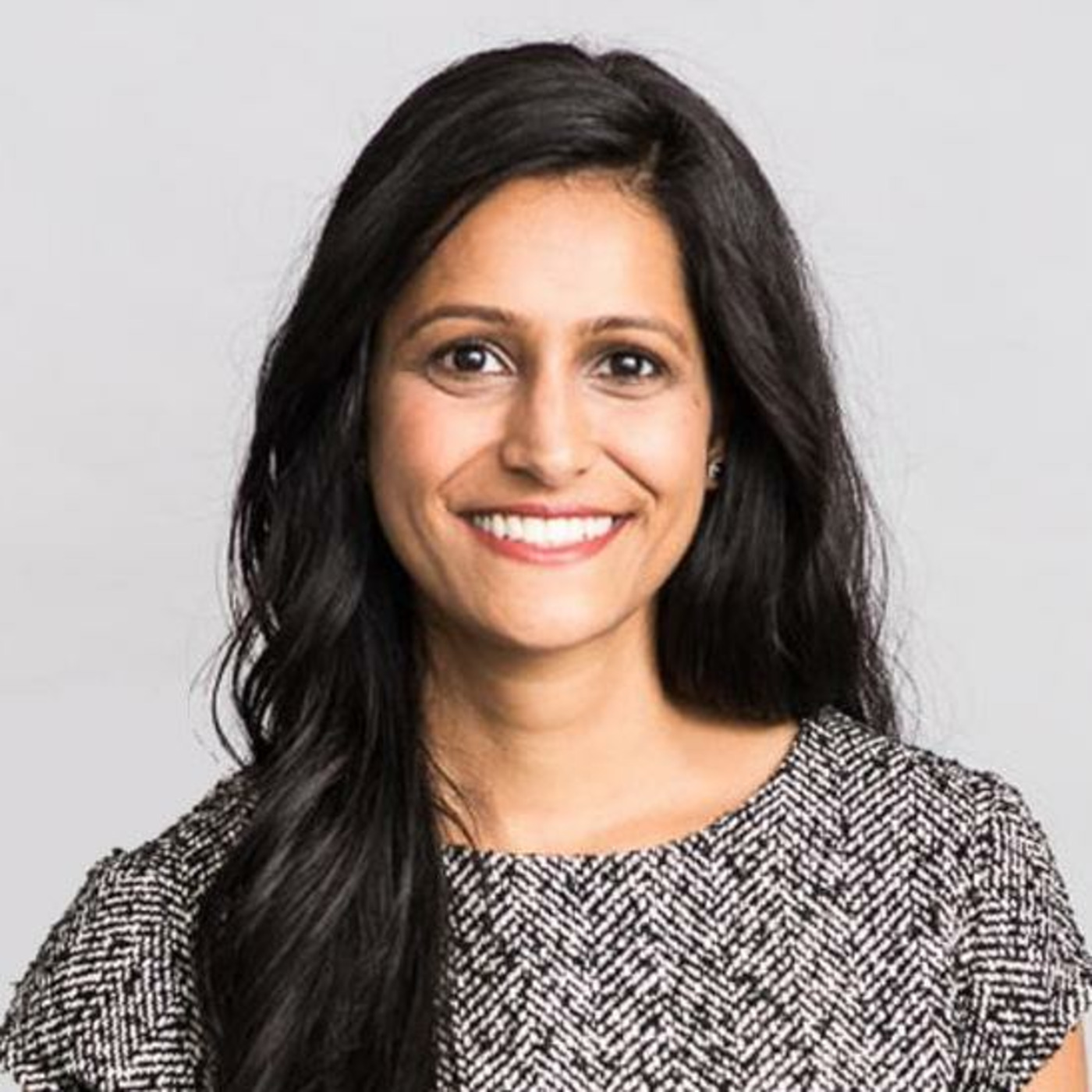
Aoifinn Devitt: I’m Aoifinn Devitt and welcome to the 50 Faces Podcast. A podcast committed to revealing the richness and diversity of the world of investment by focusing on its people and their stories. I’m joined today by Shruti Van Dyke Gandhi, who is general partner and founding engineer at Array Ventures, which invests in enterprise deep tech early-stage companies. Shruti is also a professor in the computer science department at Columbia University. She spent her early career as a developer on mainframe security, collaboration tools, and data analytics. After engineering, she was investing in early-stage companies at True Ventures and Samsung’s Venture Fund. She’s also the recipient of the Chicago Booth 2021 Distinguished Alumni Award at Chicago. Welcome, Shruti. Thanks for joining me today.
Shruti Van Dyke Gandhi: Thank you so much for having me. I’m really excited to be here and answer all the questions in the venture world as a GP.
Aoifinn Devitt: Great. Well, let’s kick off by asking you about your current role. Can you tell us a little bit about what you do at Array Ventures?
Shruti Van Dyke Gandhi: I describe my role as a kingmaker in many ways. I raise capital and then I find amazing founders and founding team whose ideas I believe in, and I believe are ideas that are needed in the market in the B2B world. And then hopefully we work towards building a company that’s going to go public in a few years. So that’s my role. I’m the first investor in B2B enterprise companies. And I started a fund, Array Ventures, to focus exactly on that, to invest in first check in B2B enterprise companies.
Aoifinn Devitt: And can we talk a little bit about your journey into that role? Um, maybe going right back to what you studied and how you ended up in venture.
Shruti Van Dyke Gandhi: I studied computer science and my journey was, I was an engineer for a decade and always wanted to start a company. But when I went to start a company, I realized that Starting a company that is venture-backed, high growth, is different than just starting a company. So, I wanted to learn all about how you build a high growth company, and I decided to kind of spend a few years in venture to reverse engineer that learning. When I decided to get into venture, I realized that there are not many operators who also have venture experience and are also deep tech, which is my background, which is data analytics. AI machine learning. And so I actually decided to stay in venture and start a company, which is a venture fund where I invest in amazing founders solving big problems in different industries using data, AI, machine learning. But that’s been the journey, which is, I would say it’s like 3 different career paths, engineering, founder, and then venture capital. But I would say that the common thread between all of them is it’s all in the tech world.
Aoifinn Devitt: And when you say you’re focused on building high-growth companies, what have you seen to be some of the maybe unifying characteristics of the companies that can successfully enter high-growth phases?
Shruti Van Dyke Gandhi: I would say high growth is oftentimes a mindset and an understanding of the market. Sometimes people come and say, I grew 2x every year, and that’s still impressive. It’s just not as impressive as another company. That is growing 10x a year, which is important. So I think our big focus and learning there was that markets are creating this opportunity for companies to grow very fast. And in order for a company to grow that fast, you have to have a good team. You have to have different experts. You have to hire for those over time. You have to still stay scrappy. And do all that. So, it’s a mindset to be able to make all that happen and to just go drive towards that goal. And so, it’s not something you can just sit and learn in a case study, but it’s something you actually kind of do and just strive for better. And in some ways, compare yourself to the other folks that are winning in the industry to say that this is possible.
Aoifinn Devitt: And in a venture role, you’re obviously choosing groups to back. Have you found that there are any kind of characteristics of those founders that you look for, or equally any characteristics that would raise a flag for you that you would wish to avoid backing?
Shruti Van Dyke Gandhi: Yeah, in my world, there’s like a very straightforward way of how I look for founding teams. One is technical background. Two is them having worked in that area that they want to solve a problem in. And three is a sales mindset. I believe a founder needs to sell to three entities, which is investors, customers, and new hires. And without the sales mindset, you’re not able to convince anyone to close. So, we look for these high-level things. And then on the softer side, we look for, I would say, like general hustler, people who have just a curiosity and hunger to go solve different big problems, but also know how to define problems and take them one step at a time. I think that’s generally the kind of personality of teams we look for as we go back these companies.
Aoifinn Devitt: And how about the kind of personality traits that you think make a good venture investor? And maybe we can go back to your paths and education. Was any particular skills that you have found have been particularly useful?
Shruti Van Dyke Gandhi: Now, it’s funny, I had a professor reach out to me to talk to his class from my business school days at UChicago. And the one skill, and I wrote to him that this morning as well, like the one skill I do use even to this day, 10 years out, is decision-making. I think many people don’t know how to make decisions fast, which is what a venture industry is all about. I think knowing how to make decisions fast based on the data you have and how do you synthesize all this information to kind of come to a quick decision is a real art. And an art that you can learn. And I spent a big portion of my business school time taking a lot of organizational behavior classes, especially from this one professor, George Wu, at UChicago. So I would say that decision-making is very, very important in this business. And then the other traits are negotiation skills that most people understand. I think that decision-making is, I think a lot of people can say, I need more information. It’s hard to make decisions at this stage because I need more data. And I think that’s a set of group of people that are well suited to work at an environment where the jobs are well defined, but not in an environment where you have to create your problem statement and then figure out what you’re trying to decide.
Aoifinn Devitt: It’s interesting because the topics, the subjects you’ve mentioned there are ones that will be studied in a traditional MBA course. And I think we’re still in a bit of an era where there is a bit of a a rebellion against traditional courses, you know, whether it’s certain scholarships from Peter Thiel for people who drop out of undergraduate courses. There’s certainly a track record of that in Silicon Valley. But it seems that some of these things really do need to be learned in a classroom.
Shruti Van Dyke Gandhi: You could say that, or you could read a good book on it. I don’t know. I think it’s the kind of founders who recognize that they need to do this. And I think the ones that I love working with are the ones that have real good clarity on what their strengths are and what their weaknesses are and what they’re going to focus on. I don’t think everyone needs to be good at everything, but I just think good people surround themselves with people that fill the gaps that they’re not good at. So I think fundamentally say that I actually wrote a big Twitter thread on this, as you know, that I recently won the Young Distinguished Alumni Award at UChicago. So I was reflecting on that, like, was this valuable for me or not? And I honestly think it depends on your background, understanding what you need to grow and not grow and figuring out exactly how you grow. And some people like me decided that I wanted to grow at an institution. And some people say that you don’t have to be at an institution. So I think it depends, but you can just read books or learn from champions or mentors or surround yourself in a high-growth environment and then learn on the job, which I think I support all of those.
Aoifinn Devitt: And now just looking at your role as a female venture investor, there is a perception that females are not well represented, whether in the tech community or in the venture capital arena. What would you say about the level of representation that you’re seeing in those sectors?
Shruti Van Dyke Gandhi: You are an LP and you know that the numbers are bad in the GP representation for women. At one point there were like less than 1% women in venture, especially in the GP roles. And even then they were counting all the non, you know, investing partners at firms. Things are looking a little bit better. Many women are saying, no, you don’t need to give me a job. I can just go start my fund. But unfortunately, LPs are not able to recognize that yet as a trend they should be backing, because they’re still looking for that track record and they’re still looking for that spin-out firms that are coming from top-tier firms. And unfortunately, because the top-tier firms have done such horrible job at cultivating people that are not typical folks like white male, there is not many spin-out funds. And so women are still struggling and trying to raise money. But the good thing about women is we’ve struggled for centuries. Things have just never been handed to women and we just know we have to fight for things. And so the thing that women are really good at is being resilient and just going for it. And so actually, I know so many women now that are so good at just saying, I know you rejected me, but that’s okay. I’m going to go keep marching on and I’m going to make it work. So I see the next few years in the venture industry to be really good. Now, what I do think that LPs need to do is catch onto that and find these amazing women and just generally people of color to go back because that resilience that they have is gonna make them win and not the traditional other folks that are in the market out there that they’re used to backing.
Aoifinn Devitt: It’s a very interesting point because I also agree that there is not only a resilience in the women who are at this level, but also a hunger for for success and for stretch goals and everything, because they’ve essentially had to pursue a certain goal with a lot of discipline and ambition before. So, I think there is a need perhaps at established firms to manage the careers of women who are already in the mid-level there, as well as to recognize that when they do strike out, I suppose that they’re worthy of support. So, you say you’re hopeful at this juncture that the industry is becoming more representative, or do you think that other deliberate schemes such as perhaps diverse manager programs are needed in order to really move the needle?
Shruti Van Dyke Gandhi: Oh, I think you need diverse manager programs. I mean, after a while you get tired. There is not enough pools of capital out there still that are backing one emerging managers, two people of color, three women, and organized capital needs to be available. I mean, this is probably not fully relevant, but I learned this years ago. From a very successful billionaire. Their mindset was, I don’t want to give a dollar to someone asking for a dollar. I want to give them $100. And why? Because $100 can take you far. $1 can buy you a drink or something like that. I think that similar mindset has always stuck for me. I think women are going out there and saying, hey, invest $50K, $100K, and look what I can do. But what I actually think is important in the industry that’s needed is Set up organized capital that is going to give women a fair chance at creating a great portfolio and demonstrating that they can succeed. Take that bet. And that bet, because we are in the industry where we’re supposed to take risks, but I think LPs often don’t get paid for taking those risks. But I would say if there was that appetite for risk and their ability to say, I’m going to organize capital around this alpha that this group of people are creating. Let’s take that bet and see what happens and be in there for a little bit longer. ‘Cause right, like you have to be around for 3 or so funds to see if this really works. So it’s really effort some LPs have to put together. And I think that most people are not doing that yet. There are some minor programs that are being created, but it’s not enough capital out there to really see if these women are gonna succeed or not.
Aoifinn Devitt: And what do you think of the notion that women approach risk differently? And the reason I bring it up is my own thinking has actually evolved quite a bit on that over the last year because now I’m increasingly seeing far more nuanced ways of taking risk. And in fact, saying women have as much of diversity in how they take risk as how men take risk. But there is a perception that women take risk differently. What are your thoughts on that?
Shruti Van Dyke Gandhi: I think women take more calculated risks. I think, again, back to history, we’re never just handed opportunities, and it’s proven we have to do 10x more things before someone can believe us. And I think end of the day, that requires you to dot your i’s and cross your t’s, be more structured and methodical. Because there, I always say there is no room to fail for me. The minute I fail, I’m written off. Like, oh, of course it’s not going to work out. Look how, you know, this is not a traditional background. She doesn’t have this. And there’s enough things to point at to say this was not going to be a success to begin with. So I have to do my job 10x better.. And because of that, we’re more thorough. So I think when women take risks, we are more calculated. And I actually think, which is why the most— if you go back to recent IPOs that have happened with Stitch Fix and Bumble and other IPOs, that’s going to happen more. I think women have figured out and they’re beginning to crack that success and that playbook is being written right now. So if you want to be part of that playbook today, you want to fund these founders and these GPs. We just have more examples to follow and more people are saying that you don’t need to believe in me, I’m just gonna make it happen right now. So I think back to the risk question, we do take risks, but we take it in a much more calculated way.
Aoifinn Devitt: Very interesting. The other aspect of venture capital is, I suppose, the hit ratio that we focus on and that there can be many losses, but one or two big wins that can really dominate the portfolio and make up for the losses. What have you learned from some maybe investment mistakes or setbacks or challenges throughout your career or just your time being a venture investor?
Shruti Van Dyke Gandhi: I think the power law mindset has literally, I would say like is a very much of a just take it as it is information because this has worked for previous investors. I’m going to just use that playbook. And I actually believe that what I’m seeing is there is room for outsized returns, but most of the companies are going to fail mindset is actually false. And data is proving that today, that that doesn’t necessarily have to be true. You can still do a 3 to 5x by having a lot of companies do 3 to 5x instead of going after 100, 200x kind of, you know, win. And I think that’s where women are going to win. They’re going to return more consistently funds that are going to be 3, 5, 10x consistently through all their portfolio companies because they’re doing the calculated work and taking appropriate risks over funds that are a gamble, I would say, because they’re just going out and believing in power law and just going after that one win. So it’s either you want to back that consistent calculated risk fund, which is what I think LPs look for. Or you wanna back the gamble. And I think the appealing answer right now is a gamble because it looks glamorous when one thing succeeds and then you wanna back their next fund and there’s no formula around it. Or you just say, this is a manager that is methodical, has a process, and they’re gonna be consistent for the next 3, 5, how many ever funds. So it’s a good question.
Aoifinn Devitt: Very interesting. Was there any one piece of advice that you’ve received over the years and maybe from a mentor or a family member or, or anybody you’ve encountered? That made an impression on how you see the world that you can share?
Shruti Van Dyke Gandhi: Yeah, I actually try to get a lot of advice in my life from a lot of folks, either by asking or by observing. And then every year I try to incorporate one thing. But honestly, the biggest life-changing one was for me, believing in yourself versus getting permission from someone to believe in yourself. And I think most of us, including me, still to this day, wait for some permission from someone. Either because they’re more successful or you respect them more, or you give that person the power that is higher than the power you’ve given yourself. So I think the advice is to believe in yourself and not look for that validation from others. And that has really, really been helpful for me, which has made me the independent thinker I am today. In venture, that is really important to have that kind of a mindset of people say it’s a contrarian thinker or whatever it is, but it’s what I call the non-momentum thinker. Just because everyone’s piling money into this particular deal doesn’t mean you have to as well, even if it’s like a top fund investing in it. And so I would say that believing in yourself and your fundamentals is important to me, and it is why I’ve been able to succeed so far today.
Aoifinn Devitt: And just because a part of being a venture investor is having to raise money for your fund, and I suppose getting a lot of nos, or maybe more nos than you would get yeses at the fundraising stage, How do you retain that belief? How do you develop that thick skin when you are at the fundraising stage?
Shruti Van Dyke Gandhi: Not to take it personally. It’s still hard. Every fundraise I have to gear up and get a mindset of, so what to really do, what the process is going to look like, how you’re going to enter a raise with what the outcome you’re going to go look for and what kind of people you’re going to go for. But I think one advice on the fundraising side is to not take no personally and then just go open more doors and not waste time on the nos. By trying to convert them to yeses. You know, I think nos converting to yes is lower probability than just going and finding more people and trying to get them more excited about your business. I think that as a piece that kind of is a reminder every time. It’s not about thick skin or whatever. It’s just not the right opportunity. And I think that is very important for me to remember every day. And that makes me want to put more work into trying to find new intros versus going and calling the same investor I’ve been trying to call 3 years, 4 years, and them never wanting to come into my fund, which is very demoralizing. And again, it’s validation seeking, right? Because it’s like saying, no, no, believe in me now. I’m better now, right? If you believe it, that’s when you’re going to come in versus saying, oh, I believe in myself and I’m not— this person doesn’t believe it. That’s fine. That’s their problem. I’m going to go show them otherwise by trying to find someone else. And then they’ll maybe come in anyway because most people are followers and not leaders. So that’s the mindset that actually makes you kind of want to succeed more and in a different path than the path that we’re used to, which is just go fight and knock on doors and convert someone.
Aoifinn Devitt: That’s very, very good advice. My last question is around what advice you might have for your younger self. Knowing what you do now, after many years in the industry, is there anything you perhaps wish you had known earlier?
Shruti Van Dyke Gandhi: Lots of advice, but I think the confidence was the one that really changed the game for me. The other thing was I was, I think, always looking for a next step of let’s get this before we do that kind of a mindset. And even though I look young in my venture age, I would say like starting a fund at my age is pretty unheard of, especially when I started. I would still say that I could have gotten there sooner by just believing in myself sooner and taking that leap. Of faith sooner. So I would have shrunk down some of my engineering days or something like that, which again, they were all valuable and every journey is super valuable into what I’ve done and what I’m doing today. But I just think that there is an opportunity for maybe taking a little bit more risks early on, maybe doing more engineering-focused role in like Silicon Valley instead of the East Coast. I think those kinds of risks would have been valuable early on in my life. So that’s what I would tell myself to not stop. Go, just go do it. ‘Cause the thoughts did cross my mind. I just never acted on them.
Aoifinn Devitt: Well, thank you so much, Shruti. It’s been a real pleasure speaking with you today. Your energy is really palpable and your persistence, and I really think it’s fantastic to see. It has been very interesting and inspiring to speak with you here. So thanks for sharing your insights with us.
Shruti Van Dyke Gandhi: Yeah, thank you so much. Thank you for having me.
Aoifinn Devitt: I’m Aoifinn Devitt. Thank you for listening to the 50 Faces Podcast. If you liked what you heard and would like to tune in to hear more inspiring investors on their personal journeys, Please subscribe on Apple Podcasts or wherever you get your podcasts. This podcast is for informational purposes only and should not be construed as investment advice, and all views are personal and should not be attributed to the organizations and affiliations of the host or any guest.
Aoifinn Devitt: This podcast was made possible by the kind support of Speaking with Images, a firm focused on motivational speaking, increasing resilience, improving communication, and building better workplace cultures.
Shruti Van Dyke Gandhi: But the good thing about women is we’ve struggled for centuries. Things have just never been handed to women, and we just know we have to fight for things. And so the thing that women are really good at is being resilient and just going for it. And so actually, I know so many women now that are so good at Just saying, I know you rejected me, but that’s okay. I’m gonna go keep marching on and I’m gonna make it work.
Aoifinn Devitt: I’m Aoifinn Devitt and welcome to the 50 Faces Podcast. A podcast committed to revealing the richness and diversity of the world of investment by focusing on its people and their stories. I’m joined today by Shruti Van Dyke Gandhi, who is general partner and founding engineer at Array Ventures, which invests in enterprise deep tech early-stage companies. Shruti is also a professor in the computer science department at Columbia University. She spent her early career as a developer on mainframe security, collaboration tools, and data analytics. After engineering, she was investing in early-stage companies at True Ventures and Samsung’s Venture Fund. She’s also the recipient of the Chicago Booth 2021 Distinguished Alumni Award at Chicago. Welcome, Shruti. Thanks for joining me today.
Shruti Van Dyke Gandhi: Thank you so much for having me. I’m really excited to be here and answer all the questions in the venture world as a GP.
Aoifinn Devitt: Great. Well, let’s kick off by asking you about your current role. Can you tell us a little bit about what you do at Array Ventures?
Shruti Van Dyke Gandhi: I describe my role as a kingmaker in many ways. I raise capital and then I find amazing founders and founding team whose ideas I believe in, and I believe are ideas that are needed in the market in the B2B world. And then hopefully we work towards building a company that’s going to go public in a few years. So that’s my role. I’m the first investor in B2B enterprise companies. And I started a fund, Array Ventures, to focus exactly on that, to invest in first check in B2B enterprise companies.
Aoifinn Devitt: And can we talk a little bit about your journey into that role? Um, maybe going right back to what you studied and how you ended up in venture.
Shruti Van Dyke Gandhi: I studied computer science and my journey was, I was an engineer for a decade and always wanted to start a company. But when I went to start a company, I realized that Starting a company that is venture-backed, high growth, is different than just starting a company. So, I wanted to learn all about how you build a high growth company, and I decided to kind of spend a few years in venture to reverse engineer that learning. When I decided to get into venture, I realized that there are not many operators who also have venture experience and are also deep tech, which is my background, which is data analytics. AI machine learning. And so I actually decided to stay in venture and start a company, which is a venture fund where I invest in amazing founders solving big problems in different industries using data, AI, machine learning. But that’s been the journey, which is, I would say it’s like 3 different career paths, engineering, founder, and then venture capital. But I would say that the common thread between all of them is it’s all in the tech world.
Aoifinn Devitt: And when you say you’re focused on building high-growth companies, what have you seen to be some of the maybe unifying characteristics of the companies that can successfully enter high-growth phases?
Shruti Van Dyke Gandhi: I would say high growth is oftentimes a mindset and an understanding of the market. Sometimes people come and say, I grew 2x every year, and that’s still impressive. It’s just not as impressive as another company. That is growing 10x a year, which is important. So I think our big focus and learning there was that markets are creating this opportunity for companies to grow very fast. And in order for a company to grow that fast, you have to have a good team. You have to have different experts. You have to hire for those over time. You have to still stay scrappy. And do all that. So, it’s a mindset to be able to make all that happen and to just go drive towards that goal. And so, it’s not something you can just sit and learn in a case study, but it’s something you actually kind of do and just strive for better. And in some ways, compare yourself to the other folks that are winning in the industry to say that this is possible.
Aoifinn Devitt: And in a venture role, you’re obviously choosing groups to back. Have you found that there are any kind of characteristics of those founders that you look for, or equally any characteristics that would raise a flag for you that you would wish to avoid backing?
Shruti Van Dyke Gandhi: Yeah, in my world, there’s like a very straightforward way of how I look for founding teams. One is technical background. Two is them having worked in that area that they want to solve a problem in. And three is a sales mindset. I believe a founder needs to sell to three entities, which is investors, customers, and new hires. And without the sales mindset, you’re not able to convince anyone to close. So, we look for these high-level things. And then on the softer side, we look for, I would say, like general hustler, people who have just a curiosity and hunger to go solve different big problems, but also know how to define problems and take them one step at a time. I think that’s generally the kind of personality of teams we look for as we go back these companies.
Aoifinn Devitt: And how about the kind of personality traits that you think make a good venture investor? And maybe we can go back to your paths and education. Was any particular skills that you have found have been particularly useful?
Shruti Van Dyke Gandhi: Now, it’s funny, I had a professor reach out to me to talk to his class from my business school days at UChicago. And the one skill, and I wrote to him that this morning as well, like the one skill I do use even to this day, 10 years out, is decision-making. I think many people don’t know how to make decisions fast, which is what a venture industry is all about. I think knowing how to make decisions fast based on the data you have and how do you synthesize all this information to kind of come to a quick decision is a real art. And an art that you can learn. And I spent a big portion of my business school time taking a lot of organizational behavior classes, especially from this one professor, George Wu, at UChicago. So I would say that decision-making is very, very important in this business. And then the other traits are negotiation skills that most people understand. I think that decision-making is, I think a lot of people can say, I need more information. It’s hard to make decisions at this stage because I need more data. And I think that’s a set of group of people that are well suited to work at an environment where the jobs are well defined, but not in an environment where you have to create your problem statement and then figure out what you’re trying to decide.
Aoifinn Devitt: It’s interesting because the topics, the subjects you’ve mentioned there are ones that will be studied in a traditional MBA course. And I think we’re still in a bit of an era where there is a bit of a a rebellion against traditional courses, you know, whether it’s certain scholarships from Peter Thiel for people who drop out of undergraduate courses. There’s certainly a track record of that in Silicon Valley. But it seems that some of these things really do need to be learned in a classroom.
Shruti Van Dyke Gandhi: You could say that, or you could read a good book on it. I don’t know. I think it’s the kind of founders who recognize that they need to do this. And I think the ones that I love working with are the ones that have real good clarity on what their strengths are and what their weaknesses are and what they’re going to focus on. I don’t think everyone needs to be good at everything, but I just think good people surround themselves with people that fill the gaps that they’re not good at. So I think fundamentally say that I actually wrote a big Twitter thread on this, as you know, that I recently won the Young Distinguished Alumni Award at UChicago. So I was reflecting on that, like, was this valuable for me or not? And I honestly think it depends on your background, understanding what you need to grow and not grow and figuring out exactly how you grow. And some people like me decided that I wanted to grow at an institution. And some people say that you don’t have to be at an institution. So I think it depends, but you can just read books or learn from champions or mentors or surround yourself in a high-growth environment and then learn on the job, which I think I support all of those.
Aoifinn Devitt: And now just looking at your role as a female venture investor, there is a perception that females are not well represented, whether in the tech community or in the venture capital arena. What would you say about the level of representation that you’re seeing in those sectors?
Shruti Van Dyke Gandhi: You are an LP and you know that the numbers are bad in the GP representation for women. At one point there were like less than 1% women in venture, especially in the GP roles. And even then they were counting all the non, you know, investing partners at firms. Things are looking a little bit better. Many women are saying, no, you don’t need to give me a job. I can just go start my fund. But unfortunately, LPs are not able to recognize that yet as a trend they should be backing, because they’re still looking for that track record and they’re still looking for that spin-out firms that are coming from top-tier firms. And unfortunately, because the top-tier firms have done such horrible job at cultivating people that are not typical folks like white male, there is not many spin-out funds. And so women are still struggling and trying to raise money. But the good thing about women is we’ve struggled for centuries. Things have just never been handed to women and we just know we have to fight for things. And so the thing that women are really good at is being resilient and just going for it. And so actually, I know so many women now that are so good at just saying, I know you rejected me, but that’s okay. I’m going to go keep marching on and I’m going to make it work. So I see the next few years in the venture industry to be really good. Now, what I do think that LPs need to do is catch onto that and find these amazing women and just generally people of color to go back because that resilience that they have is gonna make them win and not the traditional other folks that are in the market out there that they’re used to backing.
Aoifinn Devitt: It’s a very interesting point because I also agree that there is not only a resilience in the women who are at this level, but also a hunger for for success and for stretch goals and everything, because they’ve essentially had to pursue a certain goal with a lot of discipline and ambition before. So, I think there is a need perhaps at established firms to manage the careers of women who are already in the mid-level there, as well as to recognize that when they do strike out, I suppose that they’re worthy of support. So, you say you’re hopeful at this juncture that the industry is becoming more representative, or do you think that other deliberate schemes such as perhaps diverse manager programs are needed in order to really move the needle?
Shruti Van Dyke Gandhi: Oh, I think you need diverse manager programs. I mean, after a while you get tired. There is not enough pools of capital out there still that are backing one emerging managers, two people of color, three women, and organized capital needs to be available. I mean, this is probably not fully relevant, but I learned this years ago. From a very successful billionaire. Their mindset was, I don’t want to give a dollar to someone asking for a dollar. I want to give them $100. And why? Because $100 can take you far. $1 can buy you a drink or something like that. I think that similar mindset has always stuck for me. I think women are going out there and saying, hey, invest $50K, $100K, and look what I can do. But what I actually think is important in the industry that’s needed is Set up organized capital that is going to give women a fair chance at creating a great portfolio and demonstrating that they can succeed. Take that bet. And that bet, because we are in the industry where we’re supposed to take risks, but I think LPs often don’t get paid for taking those risks. But I would say if there was that appetite for risk and their ability to say, I’m going to organize capital around this alpha that this group of people are creating. Let’s take that bet and see what happens and be in there for a little bit longer. ‘Cause right, like you have to be around for 3 or so funds to see if this really works. So it’s really effort some LPs have to put together. And I think that most people are not doing that yet. There are some minor programs that are being created, but it’s not enough capital out there to really see if these women are gonna succeed or not.
Aoifinn Devitt: And what do you think of the notion that women approach risk differently? And the reason I bring it up is my own thinking has actually evolved quite a bit on that over the last year because now I’m increasingly seeing far more nuanced ways of taking risk. And in fact, saying women have as much of diversity in how they take risk as how men take risk. But there is a perception that women take risk differently. What are your thoughts on that?
Shruti Van Dyke Gandhi: I think women take more calculated risks. I think, again, back to history, we’re never just handed opportunities, and it’s proven we have to do 10x more things before someone can believe us. And I think end of the day, that requires you to dot your i’s and cross your t’s, be more structured and methodical. Because there, I always say there is no room to fail for me. The minute I fail, I’m written off. Like, oh, of course it’s not going to work out. Look how, you know, this is not a traditional background. She doesn’t have this. And there’s enough things to point at to say this was not going to be a success to begin with. So I have to do my job 10x better.. And because of that, we’re more thorough. So I think when women take risks, we are more calculated. And I actually think, which is why the most— if you go back to recent IPOs that have happened with Stitch Fix and Bumble and other IPOs, that’s going to happen more. I think women have figured out and they’re beginning to crack that success and that playbook is being written right now. So if you want to be part of that playbook today, you want to fund these founders and these GPs. We just have more examples to follow and more people are saying that you don’t need to believe in me, I’m just gonna make it happen right now. So I think back to the risk question, we do take risks, but we take it in a much more calculated way.
Aoifinn Devitt: Very interesting. The other aspect of venture capital is, I suppose, the hit ratio that we focus on and that there can be many losses, but one or two big wins that can really dominate the portfolio and make up for the losses. What have you learned from some maybe investment mistakes or setbacks or challenges throughout your career or just your time being a venture investor?
Shruti Van Dyke Gandhi: I think the power law mindset has literally, I would say like is a very much of a just take it as it is information because this has worked for previous investors. I’m going to just use that playbook. And I actually believe that what I’m seeing is there is room for outsized returns, but most of the companies are going to fail mindset is actually false. And data is proving that today, that that doesn’t necessarily have to be true. You can still do a 3 to 5x by having a lot of companies do 3 to 5x instead of going after 100, 200x kind of, you know, win. And I think that’s where women are going to win. They’re going to return more consistently funds that are going to be 3, 5, 10x consistently through all their portfolio companies because they’re doing the calculated work and taking appropriate risks over funds that are a gamble, I would say, because they’re just going out and believing in power law and just going after that one win. So it’s either you want to back that consistent calculated risk fund, which is what I think LPs look for. Or you wanna back the gamble. And I think the appealing answer right now is a gamble because it looks glamorous when one thing succeeds and then you wanna back their next fund and there’s no formula around it. Or you just say, this is a manager that is methodical, has a process, and they’re gonna be consistent for the next 3, 5, how many ever funds. So it’s a good question.
Aoifinn Devitt: Very interesting. Was there any one piece of advice that you’ve received over the years and maybe from a mentor or a family member or, or anybody you’ve encountered? That made an impression on how you see the world that you can share?
Shruti Van Dyke Gandhi: Yeah, I actually try to get a lot of advice in my life from a lot of folks, either by asking or by observing. And then every year I try to incorporate one thing. But honestly, the biggest life-changing one was for me, believing in yourself versus getting permission from someone to believe in yourself. And I think most of us, including me, still to this day, wait for some permission from someone. Either because they’re more successful or you respect them more, or you give that person the power that is higher than the power you’ve given yourself. So I think the advice is to believe in yourself and not look for that validation from others. And that has really, really been helpful for me, which has made me the independent thinker I am today. In venture, that is really important to have that kind of a mindset of people say it’s a contrarian thinker or whatever it is, but it’s what I call the non-momentum thinker. Just because everyone’s piling money into this particular deal doesn’t mean you have to as well, even if it’s like a top fund investing in it. And so I would say that believing in yourself and your fundamentals is important to me, and it is why I’ve been able to succeed so far today.
Aoifinn Devitt: And just because a part of being a venture investor is having to raise money for your fund, and I suppose getting a lot of nos, or maybe more nos than you would get yeses at the fundraising stage, How do you retain that belief? How do you develop that thick skin when you are at the fundraising stage?
Shruti Van Dyke Gandhi: Not to take it personally. It’s still hard. Every fundraise I have to gear up and get a mindset of, so what to really do, what the process is going to look like, how you’re going to enter a raise with what the outcome you’re going to go look for and what kind of people you’re going to go for. But I think one advice on the fundraising side is to not take no personally and then just go open more doors and not waste time on the nos. By trying to convert them to yeses. You know, I think nos converting to yes is lower probability than just going and finding more people and trying to get them more excited about your business. I think that as a piece that kind of is a reminder every time. It’s not about thick skin or whatever. It’s just not the right opportunity. And I think that is very important for me to remember every day. And that makes me want to put more work into trying to find new intros versus going and calling the same investor I’ve been trying to call 3 years, 4 years, and them never wanting to come into my fund, which is very demoralizing. And again, it’s validation seeking, right? Because it’s like saying, no, no, believe in me now. I’m better now, right? If you believe it, that’s when you’re going to come in versus saying, oh, I believe in myself and I’m not— this person doesn’t believe it. That’s fine. That’s their problem. I’m going to go show them otherwise by trying to find someone else. And then they’ll maybe come in anyway because most people are followers and not leaders. So that’s the mindset that actually makes you kind of want to succeed more and in a different path than the path that we’re used to, which is just go fight and knock on doors and convert someone.
Aoifinn Devitt: That’s very, very good advice. My last question is around what advice you might have for your younger self. Knowing what you do now, after many years in the industry, is there anything you perhaps wish you had known earlier?
Shruti Van Dyke Gandhi: Lots of advice, but I think the confidence was the one that really changed the game for me. The other thing was I was, I think, always looking for a next step of let’s get this before we do that kind of a mindset. And even though I look young in my venture age, I would say like starting a fund at my age is pretty unheard of, especially when I started. I would still say that I could have gotten there sooner by just believing in myself sooner and taking that leap. Of faith sooner. So I would have shrunk down some of my engineering days or something like that, which again, they were all valuable and every journey is super valuable into what I’ve done and what I’m doing today. But I just think that there is an opportunity for maybe taking a little bit more risks early on, maybe doing more engineering-focused role in like Silicon Valley instead of the East Coast. I think those kinds of risks would have been valuable early on in my life. So that’s what I would tell myself to not stop. Go, just go do it. ‘Cause the thoughts did cross my mind. I just never acted on them.
Aoifinn Devitt: Well, thank you so much, Shruti. It’s been a real pleasure speaking with you today. Your energy is really palpable and your persistence, and I really think it’s fantastic to see. It has been very interesting and inspiring to speak with you here. So thanks for sharing your insights with us.
Shruti Van Dyke Gandhi: Yeah, thank you so much. Thank you for having me.
Aoifinn Devitt: I’m Aoifinn Devitt. Thank you for listening to the 50 Faces Podcast. If you liked what you heard and would like to tune in to hear more inspiring investors on their personal journeys, Please subscribe on Apple Podcasts or wherever you get your podcasts. This podcast is for informational purposes only and should not be construed as investment advice, and all views are personal and should not be attributed to the organizations and affiliations of the host or any guest.