Aoifinn Devitt: What a small firm gives you is constraints, and constraints always foster creativity, right? We have to be very thoughtful about what we want to focus on, why we want to focus on it, and be ruthless about cutting out the noise and moving on when something’s not interesting.
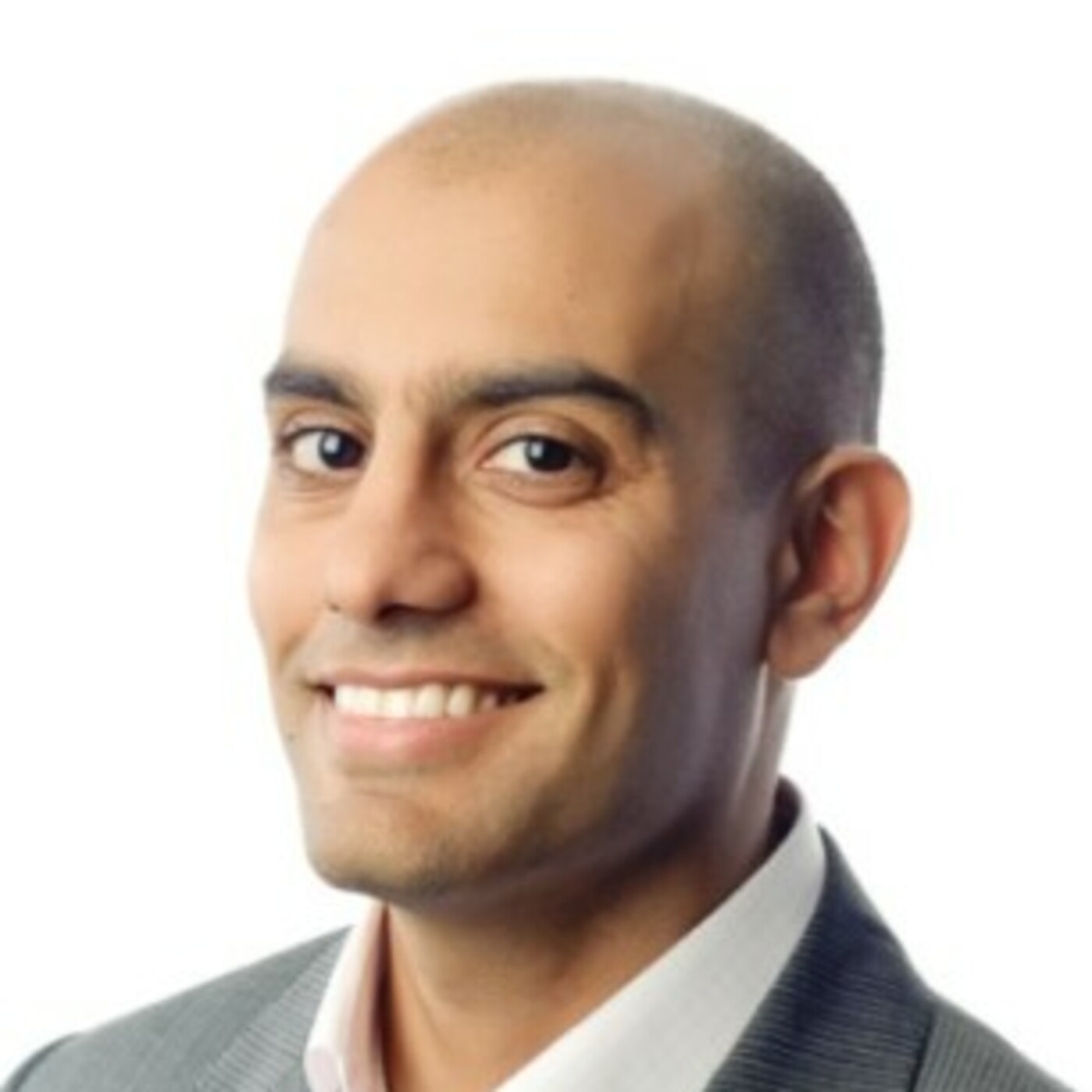
Aman Kapadia: Let’s hear how our next guest embraces orthogonal thinking through learning to listen. I’m Aoifinn Devitt and welcome to the 50 Faces Podcast, a podcast committed to revealing the richness and diversity of the world of investment by focusing on its people and their stories. I’m joined today by Aman Kapadia, who is managing partner at Ikaris Global, a hedge fund firm based in New York City. He previously worked at another fund, Fir Tree Partners, and before that was an investment analyst focusing on an event-driven style of investing. Welcome, Aman. Thank you for joining me today.
Aoifinn Devitt: I’m happy to be here. Thank you for having me.
Aman Kapadia: Let’s start with just you describing your current role, please.
Aoifinn Devitt: Sure. I run an investment firm named Ikaris Global. At Ikaris, we run a concentrated portfolio of what we call structural winners. These are resilient growing businesses with attractive reinvestment opportunities that are led by top-tier operating teams. We underwrite to own these companies over a 3 to 5 year period. And every so often when the opportunity presents itself, we also have the flexibility to invest in credit when it provides equity-like returns. I started at Korus a year and a half ago after a 15-year career in the investment business, most of which I spent at a large multi-strategy firm called Fir Tree Partners. At Fir Tree, I had the opportunity to invest in just about every asset class in the world across several economic and market cycles. And I learned a lot of lessons from that, some from successes and many of them from failures. And I observed what worked and what hasn’t worked over time and also observed how markets and opportunities changed over time. And over that 15-year period, developed my own style and my own heuristics on investing. It’s really an art, not a science, and there are many ways to be successful. And so the only logical outcome of that for me was to run my own portfolio and my own firm so that I could fully put my imprint on a portfolio, own the successes, own the failures.
Aman Kapadia: Maybe just going back a little further, where did you— what did you study? Where were you born and how did you end up going into a role in investing?
Aoifinn Devitt: Sure. So I’ve lived all over the world. I was born in Belgium. I spent some time in Nigeria, in India, and then the bulk of my life I grew up in the Philippines where, you know, where I spent basically elementary school, middle school, and high school before coming to the US for college. My dad was a diplomat, my mom was an economist, so that’s, that’s why we moved around the world so much. And spent a lot of time every evening at the dinner table sort of getting lectures about the world. And so when I came to college, I decided— I came here to Princeton and studied public policy with a focus on environmental policy. So after undergrad, I spent a few years at McKinsey, which is a great training ground for understanding how businesses work from the inside and really getting to know the key drivers of success. After McKinsey, I went to do a joint MBA and JD at Harvard, which was a real mental flex. You know, on the one hand, the MBA is about thinking big picture, 80/20 rule. It’s learning about how people and organizations make decisions. And the JD was really the opposite. It’s really the last 5% that blows you up in the law. You have to have an extreme attention to detail, think extremely logically and systematically, and develop a lot of mental stamina going through boring detail material. And the way I got into the investment business was really because I had 3 summers during this program. And so one of the summers I worked at a fund of funds and the trade-off was pretty straightforward. The gentleman who ran the fund of funds said, look, I can’t afford to pay you a lot and some of the work will be boring, but in exchange I’ll let you go visit any hedge fund manager to interview them, you know, on behalf of our fund of funds, you know, so that we can decide whether we want to invest in them. And so after that summer, I decided I really wanted to be in the investment business and the rest is history.
Aman Kapadia: That is actually something I completely agree with. Hedge fund to funds is a great vantage point to really see a huge selection of strategies and really amazing thinkers in the hedge fund arena. I’m actually interested in your international background growing up as well, because you said that you’re a sponge and that law school stretched your brain. I also think that travel and exposure to different cultures can do that too. Do you think that that informed your approach to investing at all?
Aoifinn Devitt: Yeah, for sure. I mean, you know, I think that I was lucky to grow up in the Philippines in the ’80s and ’90s, It was really sort of, at that point in time, really far away from anywhere. And I went to an international school where I had kids from all over the world attending. And now, all those people that I met there are friends, and they all live all over the world. And so we developed a really global perspective from the beginning and really understood that there’s no one way to think about the world. There’s no one right answer. And so it’s important to get out there and, you know, really just investigate, talk to people, talk to people with different opinions, you know, different stakeholders, not just management, but board members, customers, suppliers, regulators, and to understand the fullness of a company because, you know, every company exists in an ecosystem with many different stakeholders with many different interests. And I think that sort of understanding that is really important to being successful as an investor. And I got that sort of background very, very early because I grew up in an environment with so many different cultures, so many different ways of thinking, so many different perspectives on the world. And we bring that sort of diversity of thought to our work here every day.
Aman Kapadia: It’s also arguably an emerging market, I suppose, where you grew up, which often does kind of throw out the rulebook in terms of how corporate norms develop. As far as your heuristics, you mentioned developing your own set of heuristics, which you felt you wanted to try in your own firm environment. Can you talk about what some of those heuristics are without letting the genie out of the bottle here?
Aoifinn Devitt: Yeah, I mean, I think there’s a lot of different things that you focus on investing. And the other thing that I learned, I spent time in many different firms, was how organizational design and organizational structure can heavily influence investment outcomes. And so, sort of putting together the experience I had investing and the experience I had inside many, many, several different firms and one firm over a long period and over its life cycle helped me to think about what it is that I wanted to do here. And for us and for me, what I try to do is create an environment that’s characterized by simplicity, humility, and originality. Right? And so for simplicity, it’s just a simple organization with as few people as possible, a simple portfolio with only our best ideas, a focus on industries and themes that we know really well, and a pretty simple heuristic for what makes a good business. And we try very hard when we talk about businesses and we talk about investment opportunities to really just simplify them to their essence, right? If you can’t explain it to your 8-year-old daughter, where you can’t explain it to your grandmother, then you probably don’t understand it. And so we really strive to, to sort of like remove the noise and try to simplify things. The second one is, you know, humility. This is a very competitive, very difficult business. You’re going to be wrong very often. And so it’s important to be humble and accept that you’re always learning. So really try to, trying to create a culture here where we’re always seeking out new perspectives and we’re always sort of reflecting on our decisions, our successes, on our failures and seeing what we can learn from them. Then the last one is to be original. It’s really hard to outperform if you’re doing what everyone else is doing. So we don’t really build a portfolio that looks different just for the sake of it, but because we’re trying to look in places where others aren’t and to imagine futures that look very different than the present. So the core of our investment philosophy, as I mentioned at the beginning, is to look for high-quality businesses that are resilient, that have great reinvestment opportunities, that are run by good people, But the important part of that is really the process and the environment that you create that allows you to look for those businesses and those investments.
Aman Kapadia: And in starting your own firm, I’m sure there have been some trade-offs. Could you talk about what some of those are, maybe in terms of greater infrastructure, greater reach perhaps?
Aoifinn Devitt: So the reason I left my old firm to start my new firm was, you know, really developing an organization that was single-minded in the pursuit of an investment approach that I developed over a long career. But it was also about starting a new challenge. I was doing really well sitting at the top of a large, successful, long-tenured hedge fund, but it started to feel stale. And I’ve always thought there’s no point in doing something if you aren’t learning, if you aren’t being challenged, and if you don’t feel passionate about going in every day. And so I wanted to challenge myself in a different way. I was already running a portfolio, but could I also build an organization and a business? And now that I’ve done it, I have a better appreciation for the trade-offs. The first one is lifestyle. When you’re building a business, every detail is your problem. Not because I don’t have amazing partners that work with me, but because I care about getting every single thing right. And so I just want to— I focus on every detail. And the other trade-off with a small group is that time is scarce, resources are scarce. We just have to be incredibly focused. We can’t afford to waste a single moment of our time.
Aman Kapadia: Can you paint a picture for what some of your collaborative process looks like now in your team, in your firm? Originate ideas, how do you debate those ideas?
Aoifinn Devitt: I’m lucky to work with a group of people that I’ve known for a really long time. And because judgment and trust is so important in this business, it was important to me when I started the firm to work with folks that I’d known for a while, people that I knew really well so that I could trust their judgment. One thing that I really love about everyone is how passionate they are about understanding the world. They each bring their unique perspectives to the table. And we try to keep pushing that learning by reading a lot, especially reading about stuff outside the investment space. We share articles all the time on our internal Slack channel. Every 6 months, I give everyone on the team an interesting book to read. And then pre-COVID, when we were all in the office, we used to eat lunch together around the kitchen table every single day and always chat about interesting topics outside our portfolio. ‘Cause the more you understand about different facets of the world, the more connections you can draw, the more imaginative you can be about the future, and the more risks that you can mitigate by understanding all the different forces that come into play for a company. The investment world has changed a lot since I started in the early 2000s. It’s a lot more competitive. Everyone around me— around us is a lot more sophisticated. And most importantly, information is widely available and democratized. So I think the biggest edge that we have left is judgment and imagination. Right? And the only way to develop that judgment and develop that imagination is through reps and experience. So doing— investing a lot and making a lot of mistakes and having a lot of successes and understanding kind of and distilling learnings from there, but also to read and learn and talk as broadly as possible outside the investment world so that you can make those connections, create that judgment, and more importantly, I think today, build that imagination.
Aman Kapadia: And what I might add to that, and maybe you consider this as part of judgment, is critical thinking. Because I do think that accepting conventional wisdom perhaps is not the path to original ideas, et cetera. And one thing I also say from my experience of studying law is that, I think maybe you would share this, is a lot of law is reasoning by analogy. There isn’t always a direct precedent for a certain case, but cases are reasoned by analogy. And I think it’s those kind of analogies across sectors that maybe help one to think differently?
Aoifinn Devitt: Yeah, and one of the things we always try to do is take what I call the outside view. So, you know, when you’re researching a company, there’s a tendency to sort of really go deep, read the filings, read the presentations, talk to the management team, learn about what their plan is, and then underwrite that plan. And sometimes it’s really important to step back from that and take what I call the outside view, which is, hey, This company has outlined, for example, a cost-cutting plan that, you know, will push margins up from X to Y over the next 5 years. And the management team has articulated very eloquently and very believably. But can we find other examples where anyone’s done something like that? Are there other firms in the industry that have been successful doing this? If not, why not? When was the last time someone tried to do this in a similar industry or a similar geography, and what lessons did What can we learn from that experience? Were they able to do it or were they not able to do it? Why or why not? And so, you know, I think it’s really important always to also kind of take the outside view rather than just the inside view.
Aman Kapadia: And I’ve had many founders on this podcast series, and we speak about some of the challenges in launching one’s own firm and whether those barriers to entry are growing over time as regulation increases and maybe the kind of what constitutes critical mass of assets increases. What is your experience in terms of these barriers to entry and the experience of smaller boutique managers?
Aoifinn Devitt: Yeah, I think that’s right. You know, investors want to see how you manage capital over a multi-year period. Obviously, if you come out with a targeted niche strategy, you know, then it’s sort of easily explainable to people. But if you’re not that, if you are what we are, which is a generalist investment firm, then the challenge really is to establish a relationship of trust with a group of investors. So when I go out and start speaking with potential investors, on the one hand I’m marketing, but in reality I’m explaining myself, our approach, our team, our performance, and I do it again and again and again until people see that consistency so they can add it all up and internalize it for themselves. You know, there’s an adage in creative writing which is, you know, show, don’t tell.. And people become convinced when they reach their own conclusions. So for a smaller boutique manager or a new manager, I think the challenge is to walk the walk so people become believers. And you have to sort of do that over and over again because in an open-ended fund structure, there’s no rush for LPs to invest. There’s no reward for taking startup risk. So it’s really just sensible for them to wait and see how you do before investing. That’s kind of been our challenge, which is that you know, we’re trying to develop new relationships of trust with a whole new group of people. And, you know, trust develops over time. And so we have to put in the time and the energy to build those relationships, to make people understand, help people understand what we’re doing, and until they get comfortable with what we’re doing.
Aman Kapadia: That’s a very interesting assessment of some of the barriers to entry, because of course, all of this, what you mentioned, takes time, and I suppose runway, and not all startups will have necessarily that runway or that time to be patient for those investors to build the trust. And that then gets to some of the diversity in the industry that we don’t see the diversity perhaps that the industry needs because of some of these barriers to entry in setting up firms and really staying the course.
Aoifinn Devitt: It’s expensive to run a firm from a regulatory perspective, from a research perspective, from a staffing perspective. And so there’s a lot of pressure to be successful quickly. And so you don’t have the luxury of time. And so what I’m really trying to create here with my partners is, you know, we sat down at the beginning and decided to give ourselves a long runway to invest in ourselves and invest invest in the future and to take a hit in the present in order to create that future. And so that has given us the sort of mental space to make good investment decisions rather than thinking about the short term. It’s given us the space to create relationships with allocators and most importantly, to focus on allocators that we think will be great partners with us for 10, 15, 20 years. If it takes them 3 years to figure out who we are and for us to get to know each other, that’s okay because the reward will that relationship will last a decade or more on the backside of it.
Aman Kapadia: You speak about having a small team yourselves, and obviously that has to be a very carefully handpicked team given it cannot be so large. What do you think about in terms of creating cognitive diversity or diversity of skills within your own team?
Aoifinn Devitt: Yeah, I think, you know, advancing diversity in organizations is complex and there are a lot of inputs. One of the key inputs is finding diversity of thought. And a lot of that comes from a person’s background. Where did they grow up? What was their family-like life? What struggles did they go through to get where they are? But often that diversity is also innate in people, right? People who look just like each other can think very differently. And it’s important in an organization to have those orthogonal views expressed because they can make you appreciate a risk or an opportunity that you never saw before. The other thing to create diversity is to bring different voices into the research process. So those voices may not be at our firm, but we can strive to reach out and spend time talking to people outside the finance industry—consumers, operators, regulators, journalists, competitors, board members. You won’t typically find us talking to other buy-side or sell-side analysts very often. And we try to really mine that ecosystem that the company exists in. And understanding what all these different stakeholders want is very important to our research process. So for example, we work with this wonderful journalist in Switzerland who’s just exceptional at finding off-the-run folks to talk to about industries or companies. She does reference calls on all our management teams, so we really get to know them and understand them as people. But she’ll often find a blogger in Japan who’s deeply researched a particular space and can really educate us about it. And because she’s a part of developing the initial investment thesis from an investment perspective, you know, she can research issues that can undermine the thesis without having any bias. So I always stress to everyone at the firm to reach out to as many different people from as many different walks of life as possible on every investment. So you can understand it from different perspectives. And to me, the most humbling experience of all has been discussing investments with my wife, no background in investing or finance at all. And sometimes I look and if I just listened to her, our returns would probably have been a lot better than they are.
Aman Kapadia: That will be a good segue to my key person question. But just before moving to that, must have— You you’ve had a long career and I’m sure lots of investment mistakes along with some of the successes. Are there any key mistakes that you learned from or any other setbacks or challenges that led to you to have some lessons learned?
Aoifinn Devitt: You know, it’s hard to have been in the investment business for 17 years and not made a lot of mistakes. The key is to make sure that when they happen, they don’t put you out of business. And that’s the difference between a batting average and a slugging percentage. You know, the best investors will be right 50 or 60% of the time. “And the key is to make a lot when you’re right and lose a little when you’re wrong.” And I’m proud to say my slugging percentage is good. I’ve only had one down year in my career. And I constantly strive to kind of learn lessons from every mistake. You have to be careful not to overfit lessons. But the most important one of all is really learning about yourself and learning how to stomach losses and mistakes, figuring out who you really are when you make a big mistake and lose a lot of money. Learning the right lessons and then moving forward. Because investing is— there’s a really fine line investing between humility, realizing when the crowd is right and you’re wrong, and arrogance, right? Having the conviction that you’re right despite what the rest of the world is telling you. And when things are going well, it’s easy to develop confidence and think that your process, etc., is really good. But it’s when you lose a lot of money that you can really test yourself. Do I have conviction in this position? Why or why not? What’s the market telling me? Why are they wrong? What will change their minds? What research can I do to prove or disprove my convictions? Who should I speak to to hear the other side? And so the big meta-learning for me in all this is the importance of process over outcome. If you can create a solid repeatable process that codifies your mental heuristics, then when things go against you, it’s easier to make decisions. You want to make sure that when things go against you and you’re under the most sort of financial and mental pressure, that you have prepared yourself to make a decision with a clear mind. Here’s my thesis. Here’s how I built conviction. Did anything change? No? Well, then let’s stick with it and buy more. If yes, then let’s figure out what that means and decide. And so we spent a lot of time upfront clearly defining what makes up a good investment for us. And then, you know, we’ve created a business quality checklist, a diligence checklist, a management checklist that we go through. And that’s not to be bureaucratic, but to make sure that every single time we look at something, we’re thinking through everything and incorporating the lessons and experience of the past. And then the last thing I think is really important, and this is a big lesson, again, codifying it into process, is always writing down what you think. I mean, I think that writing is a really— it really helps to force clear thinking. It helps you to flesh out an argument and to back up every claim that you make with evidence. It’s really hard to fool people when you have to write it down versus talking about something. And so it really crispens and simplifies the investment thesis. And then the other thing write-ups do is they memorialize the thesis so that later if things go against you, you don’t have thesis drift. It keeps us honest. The last big lesson for me is just to take action. Look, it’s good to incorporate a lot of views. And when you’ve done that and had the opportunity to reflect and take stock, then just decide and do. Dwelling between action and decision, between decision and action in this world can kill you.
Aman Kapadia: Now that’s absolutely fascinating. And that’s, I’m sure, another reason how you’re, well, another way to use your JD is that certainly it does teach good writing skills. As an ex-lawyer myself, I will attest to that. You mentioned some key people in your life so far. Were there any particular people that had an influence on you and in what way?
Aoifinn Devitt: Yeah, I’d say the most important influence on my life, especially my life as an investor, was a gentleman named Andrew Fredman, who was a portfolio manager at Fir Tree for the first 8 years of my career there until he retired. I I mean, spent hours and hours every day talking to him, and he taught me nearly everything I knew about investing. I actually believe Andrew was one of the best under-the-radar investors of our generation. He had an energy, enormous bandwidth, and the ability to just distill complicated investment theses into one or two sentences. It was incredible. Most of all, he was just really passionate and driven about investing. What was really great about Andrew in our conversations was how wide-ranging his interests and abilities were. So from an investment perspective, you know, in the space of one 2-hour conversation in the morning, we’d go through a growth equity technology investment. We’d talk about a distressed capital structure ARB investment, a Japanese interest rate investment, and a real estate deal. But even more fun than that was how well-read and informed he was on just about any topic that you could imagine. So he’d call me to talk about an investment that we had, and we’d end up having a 3-hour conversation about criminal justice reform or environmental policy, issues that he was really passionate about. And so what I really learned from him was several things. One was how to evaluate different kinds of investments in different instruments in different parts of the world, different asset classes, and really compare them to each other. Because at the end of the day, returns don’t care where you get them, and you should be able to compare investments as widely as possible to find the best one. Ones. And more importantly, his passion and drive to be curious about everything basically taught me to do that and to develop my own views by researching everything deeply rather than just taking what some expert told me as gospel. And then finally, he taught me to be contrarian. He was a very orthogonal thinker. Every time you talk to him, he would come up with a very different perspective on how to look at things. And our most successful investments together were those where one of us hated the investment at the beginning, And as we butted heads to try to convince each other of the merits of investment, we developed a deeper and more nuanced understanding of the situation. So I really owe a lot to him because for 8 years when I worked for him at Fir Tree, I spent 3 to 4 hours a day just talking to him about really anything and everything. And he had a really deep impact on my life.
Aman Kapadia: Does sound very inspiring. Well, you’ve mentioned a number of mottos here just in this conversation, whether it be constraints foster creativity. Or process over outcome. Are there any other key pieces of advice or a creed or motto that you live by?
Aoifinn Devitt: You know, it’s hard to point to any one thing. I’ve been doing this for a really long time and had the privilege of working with a lot of really interesting people and learning from a lot of interesting people. And so, you know, to me, the most important thing is to strive to be open-minded and learn constantly from as many different people as you can. I think learning to listen is probably the most important thing I’ve learned because I found that everyone has something to teach you about something. If you just listen to them and try to understand what they’re saying, you can take a lot out of a conversation or relationship with just about anyone.
Aman Kapadia: And if you were to look back now to that, maybe to that JD/MBA student, is there any advice that you would want to give your younger self given the years of experience you’ve had in between?
Aoifinn Devitt: Yeah, I’d say just do it. If you want to build something or create something, don’t wait. Get out there and just do it. You’ll never be more prepared. And the lessons that you learn actually trying to do something will be so much more invaluable than the lessons you think you’re learning from a secondhand perspective. I’ve been in the investment business, again, like I said, for 17 years now. And I’ve seen so many different market cycles, so many different economic cycles, so many different investments. And I’ve learned a lot from each and every one of them. But, you know, starting my own firm has been just an incredibly unique and different challenge, and it’s opened up my mind in many different ways. And I’ve had an enormous amount of fun doing it, and I just wish I’d done it earlier.
Aman Kapadia: It is certainly a humbling experience, I have to say, having done it myself. Eman, it’s been a real pleasure speaking with you today. You have really packed in a lot of topics here and given us a lot of nuggets to take away and chew on. So thank you very much for sharing your insights with us.
Aoifinn Devitt: Thank you. It was really nice to be on.
Aman Kapadia: I’m Aoifinn Devitt. Thank you for listening to the 50 Faces Podcast. If you liked what you heard and would like to tune in to hear more inspiring investors and their personal journeys, please subscribe on Apple Podcasts or wherever you get your podcasts. This podcast is for informational purposes only and should not be construed as investment advice, and all views are personal and and should not be attributed to the organizations and affiliations of the host or any guest.
Aoifinn Devitt: What a small firm gives you is constraints, and constraints always foster creativity, right? We have to be very thoughtful about what we want to focus on, why we want to focus on it, and be ruthless about cutting out the noise and moving on when something’s not interesting.
Aman Kapadia: Let’s hear how our next guest embraces orthogonal thinking through learning to listen. I’m Aoifinn Devitt and welcome to the 50 Faces Podcast, a podcast committed to revealing the richness and diversity of the world of investment by focusing on its people and their stories. I’m joined today by Aman Kapadia, who is managing partner at Ikaris Global, a hedge fund firm based in New York City. He previously worked at another fund, Fir Tree Partners, and before that was an investment analyst focusing on an event-driven style of investing. Welcome, Aman. Thank you for joining me today.
Aoifinn Devitt: I’m happy to be here. Thank you for having me.
Aman Kapadia: Let’s start with just you describing your current role, please.
Aoifinn Devitt: Sure. I run an investment firm named Ikaris Global. At Ikaris, we run a concentrated portfolio of what we call structural winners. These are resilient growing businesses with attractive reinvestment opportunities that are led by top-tier operating teams. We underwrite to own these companies over a 3 to 5 year period. And every so often when the opportunity presents itself, we also have the flexibility to invest in credit when it provides equity-like returns. I started at Korus a year and a half ago after a 15-year career in the investment business, most of which I spent at a large multi-strategy firm called Fir Tree Partners. At Fir Tree, I had the opportunity to invest in just about every asset class in the world across several economic and market cycles. And I learned a lot of lessons from that, some from successes and many of them from failures. And I observed what worked and what hasn’t worked over time and also observed how markets and opportunities changed over time. And over that 15-year period, developed my own style and my own heuristics on investing. It’s really an art, not a science, and there are many ways to be successful. And so the only logical outcome of that for me was to run my own portfolio and my own firm so that I could fully put my imprint on a portfolio, own the successes, own the failures.
Aman Kapadia: Maybe just going back a little further, where did you— what did you study? Where were you born and how did you end up going into a role in investing?
Aoifinn Devitt: Sure. So I’ve lived all over the world. I was born in Belgium. I spent some time in Nigeria, in India, and then the bulk of my life I grew up in the Philippines where, you know, where I spent basically elementary school, middle school, and high school before coming to the US for college. My dad was a diplomat, my mom was an economist, so that’s, that’s why we moved around the world so much. And spent a lot of time every evening at the dinner table sort of getting lectures about the world. And so when I came to college, I decided— I came here to Princeton and studied public policy with a focus on environmental policy. So after undergrad, I spent a few years at McKinsey, which is a great training ground for understanding how businesses work from the inside and really getting to know the key drivers of success. After McKinsey, I went to do a joint MBA and JD at Harvard, which was a real mental flex. You know, on the one hand, the MBA is about thinking big picture, 80/20 rule. It’s learning about how people and organizations make decisions. And the JD was really the opposite. It’s really the last 5% that blows you up in the law. You have to have an extreme attention to detail, think extremely logically and systematically, and develop a lot of mental stamina going through boring detail material. And the way I got into the investment business was really because I had 3 summers during this program. And so one of the summers I worked at a fund of funds and the trade-off was pretty straightforward. The gentleman who ran the fund of funds said, look, I can’t afford to pay you a lot and some of the work will be boring, but in exchange I’ll let you go visit any hedge fund manager to interview them, you know, on behalf of our fund of funds, you know, so that we can decide whether we want to invest in them. And so after that summer, I decided I really wanted to be in the investment business and the rest is history.
Aman Kapadia: That is actually something I completely agree with. Hedge fund to funds is a great vantage point to really see a huge selection of strategies and really amazing thinkers in the hedge fund arena. I’m actually interested in your international background growing up as well, because you said that you’re a sponge and that law school stretched your brain. I also think that travel and exposure to different cultures can do that too. Do you think that that informed your approach to investing at all?
Aoifinn Devitt: Yeah, for sure. I mean, you know, I think that I was lucky to grow up in the Philippines in the ’80s and ’90s, It was really sort of, at that point in time, really far away from anywhere. And I went to an international school where I had kids from all over the world attending. And now, all those people that I met there are friends, and they all live all over the world. And so we developed a really global perspective from the beginning and really understood that there’s no one way to think about the world. There’s no one right answer. And so it’s important to get out there and, you know, really just investigate, talk to people, talk to people with different opinions, you know, different stakeholders, not just management, but board members, customers, suppliers, regulators, and to understand the fullness of a company because, you know, every company exists in an ecosystem with many different stakeholders with many different interests. And I think that sort of understanding that is really important to being successful as an investor. And I got that sort of background very, very early because I grew up in an environment with so many different cultures, so many different ways of thinking, so many different perspectives on the world. And we bring that sort of diversity of thought to our work here every day.
Aman Kapadia: It’s also arguably an emerging market, I suppose, where you grew up, which often does kind of throw out the rulebook in terms of how corporate norms develop. As far as your heuristics, you mentioned developing your own set of heuristics, which you felt you wanted to try in your own firm environment. Can you talk about what some of those heuristics are without letting the genie out of the bottle here?
Aoifinn Devitt: Yeah, I mean, I think there’s a lot of different things that you focus on investing. And the other thing that I learned, I spent time in many different firms, was how organizational design and organizational structure can heavily influence investment outcomes. And so, sort of putting together the experience I had investing and the experience I had inside many, many, several different firms and one firm over a long period and over its life cycle helped me to think about what it is that I wanted to do here. And for us and for me, what I try to do is create an environment that’s characterized by simplicity, humility, and originality. Right? And so for simplicity, it’s just a simple organization with as few people as possible, a simple portfolio with only our best ideas, a focus on industries and themes that we know really well, and a pretty simple heuristic for what makes a good business. And we try very hard when we talk about businesses and we talk about investment opportunities to really just simplify them to their essence, right? If you can’t explain it to your 8-year-old daughter, where you can’t explain it to your grandmother, then you probably don’t understand it. And so we really strive to, to sort of like remove the noise and try to simplify things. The second one is, you know, humility. This is a very competitive, very difficult business. You’re going to be wrong very often. And so it’s important to be humble and accept that you’re always learning. So really try to, trying to create a culture here where we’re always seeking out new perspectives and we’re always sort of reflecting on our decisions, our successes, on our failures and seeing what we can learn from them. Then the last one is to be original. It’s really hard to outperform if you’re doing what everyone else is doing. So we don’t really build a portfolio that looks different just for the sake of it, but because we’re trying to look in places where others aren’t and to imagine futures that look very different than the present. So the core of our investment philosophy, as I mentioned at the beginning, is to look for high-quality businesses that are resilient, that have great reinvestment opportunities, that are run by good people, But the important part of that is really the process and the environment that you create that allows you to look for those businesses and those investments.
Aman Kapadia: And in starting your own firm, I’m sure there have been some trade-offs. Could you talk about what some of those are, maybe in terms of greater infrastructure, greater reach perhaps?
Aoifinn Devitt: So the reason I left my old firm to start my new firm was, you know, really developing an organization that was single-minded in the pursuit of an investment approach that I developed over a long career. But it was also about starting a new challenge. I was doing really well sitting at the top of a large, successful, long-tenured hedge fund, but it started to feel stale. And I’ve always thought there’s no point in doing something if you aren’t learning, if you aren’t being challenged, and if you don’t feel passionate about going in every day. And so I wanted to challenge myself in a different way. I was already running a portfolio, but could I also build an organization and a business? And now that I’ve done it, I have a better appreciation for the trade-offs. The first one is lifestyle. When you’re building a business, every detail is your problem. Not because I don’t have amazing partners that work with me, but because I care about getting every single thing right. And so I just want to— I focus on every detail. And the other trade-off with a small group is that time is scarce, resources are scarce. We just have to be incredibly focused. We can’t afford to waste a single moment of our time.
Aman Kapadia: Can you paint a picture for what some of your collaborative process looks like now in your team, in your firm? Originate ideas, how do you debate those ideas?
Aoifinn Devitt: I’m lucky to work with a group of people that I’ve known for a really long time. And because judgment and trust is so important in this business, it was important to me when I started the firm to work with folks that I’d known for a while, people that I knew really well so that I could trust their judgment. One thing that I really love about everyone is how passionate they are about understanding the world. They each bring their unique perspectives to the table. And we try to keep pushing that learning by reading a lot, especially reading about stuff outside the investment space. We share articles all the time on our internal Slack channel. Every 6 months, I give everyone on the team an interesting book to read. And then pre-COVID, when we were all in the office, we used to eat lunch together around the kitchen table every single day and always chat about interesting topics outside our portfolio. ‘Cause the more you understand about different facets of the world, the more connections you can draw, the more imaginative you can be about the future, and the more risks that you can mitigate by understanding all the different forces that come into play for a company. The investment world has changed a lot since I started in the early 2000s. It’s a lot more competitive. Everyone around me— around us is a lot more sophisticated. And most importantly, information is widely available and democratized. So I think the biggest edge that we have left is judgment and imagination. Right? And the only way to develop that judgment and develop that imagination is through reps and experience. So doing— investing a lot and making a lot of mistakes and having a lot of successes and understanding kind of and distilling learnings from there, but also to read and learn and talk as broadly as possible outside the investment world so that you can make those connections, create that judgment, and more importantly, I think today, build that imagination.
Aman Kapadia: And what I might add to that, and maybe you consider this as part of judgment, is critical thinking. Because I do think that accepting conventional wisdom perhaps is not the path to original ideas, et cetera. And one thing I also say from my experience of studying law is that, I think maybe you would share this, is a lot of law is reasoning by analogy. There isn’t always a direct precedent for a certain case, but cases are reasoned by analogy. And I think it’s those kind of analogies across sectors that maybe help one to think differently?
Aoifinn Devitt: Yeah, and one of the things we always try to do is take what I call the outside view. So, you know, when you’re researching a company, there’s a tendency to sort of really go deep, read the filings, read the presentations, talk to the management team, learn about what their plan is, and then underwrite that plan. And sometimes it’s really important to step back from that and take what I call the outside view, which is, hey, This company has outlined, for example, a cost-cutting plan that, you know, will push margins up from X to Y over the next 5 years. And the management team has articulated very eloquently and very believably. But can we find other examples where anyone’s done something like that? Are there other firms in the industry that have been successful doing this? If not, why not? When was the last time someone tried to do this in a similar industry or a similar geography, and what lessons did What can we learn from that experience? Were they able to do it or were they not able to do it? Why or why not? And so, you know, I think it’s really important always to also kind of take the outside view rather than just the inside view.
Aman Kapadia: And I’ve had many founders on this podcast series, and we speak about some of the challenges in launching one’s own firm and whether those barriers to entry are growing over time as regulation increases and maybe the kind of what constitutes critical mass of assets increases. What is your experience in terms of these barriers to entry and the experience of smaller boutique managers?
Aoifinn Devitt: Yeah, I think that’s right. You know, investors want to see how you manage capital over a multi-year period. Obviously, if you come out with a targeted niche strategy, you know, then it’s sort of easily explainable to people. But if you’re not that, if you are what we are, which is a generalist investment firm, then the challenge really is to establish a relationship of trust with a group of investors. So when I go out and start speaking with potential investors, on the one hand I’m marketing, but in reality I’m explaining myself, our approach, our team, our performance, and I do it again and again and again until people see that consistency so they can add it all up and internalize it for themselves. You know, there’s an adage in creative writing which is, you know, show, don’t tell.. And people become convinced when they reach their own conclusions. So for a smaller boutique manager or a new manager, I think the challenge is to walk the walk so people become believers. And you have to sort of do that over and over again because in an open-ended fund structure, there’s no rush for LPs to invest. There’s no reward for taking startup risk. So it’s really just sensible for them to wait and see how you do before investing. That’s kind of been our challenge, which is that you know, we’re trying to develop new relationships of trust with a whole new group of people. And, you know, trust develops over time. And so we have to put in the time and the energy to build those relationships, to make people understand, help people understand what we’re doing, and until they get comfortable with what we’re doing.
Aman Kapadia: That’s a very interesting assessment of some of the barriers to entry, because of course, all of this, what you mentioned, takes time, and I suppose runway, and not all startups will have necessarily that runway or that time to be patient for those investors to build the trust. And that then gets to some of the diversity in the industry that we don’t see the diversity perhaps that the industry needs because of some of these barriers to entry in setting up firms and really staying the course.
Aoifinn Devitt: It’s expensive to run a firm from a regulatory perspective, from a research perspective, from a staffing perspective. And so there’s a lot of pressure to be successful quickly. And so you don’t have the luxury of time. And so what I’m really trying to create here with my partners is, you know, we sat down at the beginning and decided to give ourselves a long runway to invest in ourselves and invest invest in the future and to take a hit in the present in order to create that future. And so that has given us the sort of mental space to make good investment decisions rather than thinking about the short term. It’s given us the space to create relationships with allocators and most importantly, to focus on allocators that we think will be great partners with us for 10, 15, 20 years. If it takes them 3 years to figure out who we are and for us to get to know each other, that’s okay because the reward will that relationship will last a decade or more on the backside of it.
Aman Kapadia: You speak about having a small team yourselves, and obviously that has to be a very carefully handpicked team given it cannot be so large. What do you think about in terms of creating cognitive diversity or diversity of skills within your own team?
Aoifinn Devitt: Yeah, I think, you know, advancing diversity in organizations is complex and there are a lot of inputs. One of the key inputs is finding diversity of thought. And a lot of that comes from a person’s background. Where did they grow up? What was their family-like life? What struggles did they go through to get where they are? But often that diversity is also innate in people, right? People who look just like each other can think very differently. And it’s important in an organization to have those orthogonal views expressed because they can make you appreciate a risk or an opportunity that you never saw before. The other thing to create diversity is to bring different voices into the research process. So those voices may not be at our firm, but we can strive to reach out and spend time talking to people outside the finance industry—consumers, operators, regulators, journalists, competitors, board members. You won’t typically find us talking to other buy-side or sell-side analysts very often. And we try to really mine that ecosystem that the company exists in. And understanding what all these different stakeholders want is very important to our research process. So for example, we work with this wonderful journalist in Switzerland who’s just exceptional at finding off-the-run folks to talk to about industries or companies. She does reference calls on all our management teams, so we really get to know them and understand them as people. But she’ll often find a blogger in Japan who’s deeply researched a particular space and can really educate us about it. And because she’s a part of developing the initial investment thesis from an investment perspective, you know, she can research issues that can undermine the thesis without having any bias. So I always stress to everyone at the firm to reach out to as many different people from as many different walks of life as possible on every investment. So you can understand it from different perspectives. And to me, the most humbling experience of all has been discussing investments with my wife, no background in investing or finance at all. And sometimes I look and if I just listened to her, our returns would probably have been a lot better than they are.
Aman Kapadia: That will be a good segue to my key person question. But just before moving to that, must have— You you’ve had a long career and I’m sure lots of investment mistakes along with some of the successes. Are there any key mistakes that you learned from or any other setbacks or challenges that led to you to have some lessons learned?
Aoifinn Devitt: You know, it’s hard to have been in the investment business for 17 years and not made a lot of mistakes. The key is to make sure that when they happen, they don’t put you out of business. And that’s the difference between a batting average and a slugging percentage. You know, the best investors will be right 50 or 60% of the time. “And the key is to make a lot when you’re right and lose a little when you’re wrong.” And I’m proud to say my slugging percentage is good. I’ve only had one down year in my career. And I constantly strive to kind of learn lessons from every mistake. You have to be careful not to overfit lessons. But the most important one of all is really learning about yourself and learning how to stomach losses and mistakes, figuring out who you really are when you make a big mistake and lose a lot of money. Learning the right lessons and then moving forward. Because investing is— there’s a really fine line investing between humility, realizing when the crowd is right and you’re wrong, and arrogance, right? Having the conviction that you’re right despite what the rest of the world is telling you. And when things are going well, it’s easy to develop confidence and think that your process, etc., is really good. But it’s when you lose a lot of money that you can really test yourself. Do I have conviction in this position? Why or why not? What’s the market telling me? Why are they wrong? What will change their minds? What research can I do to prove or disprove my convictions? Who should I speak to to hear the other side? And so the big meta-learning for me in all this is the importance of process over outcome. If you can create a solid repeatable process that codifies your mental heuristics, then when things go against you, it’s easier to make decisions. You want to make sure that when things go against you and you’re under the most sort of financial and mental pressure, that you have prepared yourself to make a decision with a clear mind. Here’s my thesis. Here’s how I built conviction. Did anything change? No? Well, then let’s stick with it and buy more. If yes, then let’s figure out what that means and decide. And so we spent a lot of time upfront clearly defining what makes up a good investment for us. And then, you know, we’ve created a business quality checklist, a diligence checklist, a management checklist that we go through. And that’s not to be bureaucratic, but to make sure that every single time we look at something, we’re thinking through everything and incorporating the lessons and experience of the past. And then the last thing I think is really important, and this is a big lesson, again, codifying it into process, is always writing down what you think. I mean, I think that writing is a really— it really helps to force clear thinking. It helps you to flesh out an argument and to back up every claim that you make with evidence. It’s really hard to fool people when you have to write it down versus talking about something. And so it really crispens and simplifies the investment thesis. And then the other thing write-ups do is they memorialize the thesis so that later if things go against you, you don’t have thesis drift. It keeps us honest. The last big lesson for me is just to take action. Look, it’s good to incorporate a lot of views. And when you’ve done that and had the opportunity to reflect and take stock, then just decide and do. Dwelling between action and decision, between decision and action in this world can kill you.
Aman Kapadia: Now that’s absolutely fascinating. And that’s, I’m sure, another reason how you’re, well, another way to use your JD is that certainly it does teach good writing skills. As an ex-lawyer myself, I will attest to that. You mentioned some key people in your life so far. Were there any particular people that had an influence on you and in what way?
Aoifinn Devitt: Yeah, I’d say the most important influence on my life, especially my life as an investor, was a gentleman named Andrew Fredman, who was a portfolio manager at Fir Tree for the first 8 years of my career there until he retired. I I mean, spent hours and hours every day talking to him, and he taught me nearly everything I knew about investing. I actually believe Andrew was one of the best under-the-radar investors of our generation. He had an energy, enormous bandwidth, and the ability to just distill complicated investment theses into one or two sentences. It was incredible. Most of all, he was just really passionate and driven about investing. What was really great about Andrew in our conversations was how wide-ranging his interests and abilities were. So from an investment perspective, you know, in the space of one 2-hour conversation in the morning, we’d go through a growth equity technology investment. We’d talk about a distressed capital structure ARB investment, a Japanese interest rate investment, and a real estate deal. But even more fun than that was how well-read and informed he was on just about any topic that you could imagine. So he’d call me to talk about an investment that we had, and we’d end up having a 3-hour conversation about criminal justice reform or environmental policy, issues that he was really passionate about. And so what I really learned from him was several things. One was how to evaluate different kinds of investments in different instruments in different parts of the world, different asset classes, and really compare them to each other. Because at the end of the day, returns don’t care where you get them, and you should be able to compare investments as widely as possible to find the best one. Ones. And more importantly, his passion and drive to be curious about everything basically taught me to do that and to develop my own views by researching everything deeply rather than just taking what some expert told me as gospel. And then finally, he taught me to be contrarian. He was a very orthogonal thinker. Every time you talk to him, he would come up with a very different perspective on how to look at things. And our most successful investments together were those where one of us hated the investment at the beginning, And as we butted heads to try to convince each other of the merits of investment, we developed a deeper and more nuanced understanding of the situation. So I really owe a lot to him because for 8 years when I worked for him at Fir Tree, I spent 3 to 4 hours a day just talking to him about really anything and everything. And he had a really deep impact on my life.
Aman Kapadia: Does sound very inspiring. Well, you’ve mentioned a number of mottos here just in this conversation, whether it be constraints foster creativity. Or process over outcome. Are there any other key pieces of advice or a creed or motto that you live by?
Aoifinn Devitt: You know, it’s hard to point to any one thing. I’ve been doing this for a really long time and had the privilege of working with a lot of really interesting people and learning from a lot of interesting people. And so, you know, to me, the most important thing is to strive to be open-minded and learn constantly from as many different people as you can. I think learning to listen is probably the most important thing I’ve learned because I found that everyone has something to teach you about something. If you just listen to them and try to understand what they’re saying, you can take a lot out of a conversation or relationship with just about anyone.
Aman Kapadia: And if you were to look back now to that, maybe to that JD/MBA student, is there any advice that you would want to give your younger self given the years of experience you’ve had in between?
Aoifinn Devitt: Yeah, I’d say just do it. If you want to build something or create something, don’t wait. Get out there and just do it. You’ll never be more prepared. And the lessons that you learn actually trying to do something will be so much more invaluable than the lessons you think you’re learning from a secondhand perspective. I’ve been in the investment business, again, like I said, for 17 years now. And I’ve seen so many different market cycles, so many different economic cycles, so many different investments. And I’ve learned a lot from each and every one of them. But, you know, starting my own firm has been just an incredibly unique and different challenge, and it’s opened up my mind in many different ways. And I’ve had an enormous amount of fun doing it, and I just wish I’d done it earlier.
Aman Kapadia: It is certainly a humbling experience, I have to say, having done it myself. Eman, it’s been a real pleasure speaking with you today. You have really packed in a lot of topics here and given us a lot of nuggets to take away and chew on. So thank you very much for sharing your insights with us.
Aoifinn Devitt: Thank you. It was really nice to be on.
Aman Kapadia: I’m Aoifinn Devitt. Thank you for listening to the 50 Faces Podcast. If you liked what you heard and would like to tune in to hear more inspiring investors and their personal journeys, please subscribe on Apple Podcasts or wherever you get your podcasts. This podcast is for informational purposes only and should not be construed as investment advice, and all views are personal and and should not be attributed to the organizations and affiliations of the host or any guest.