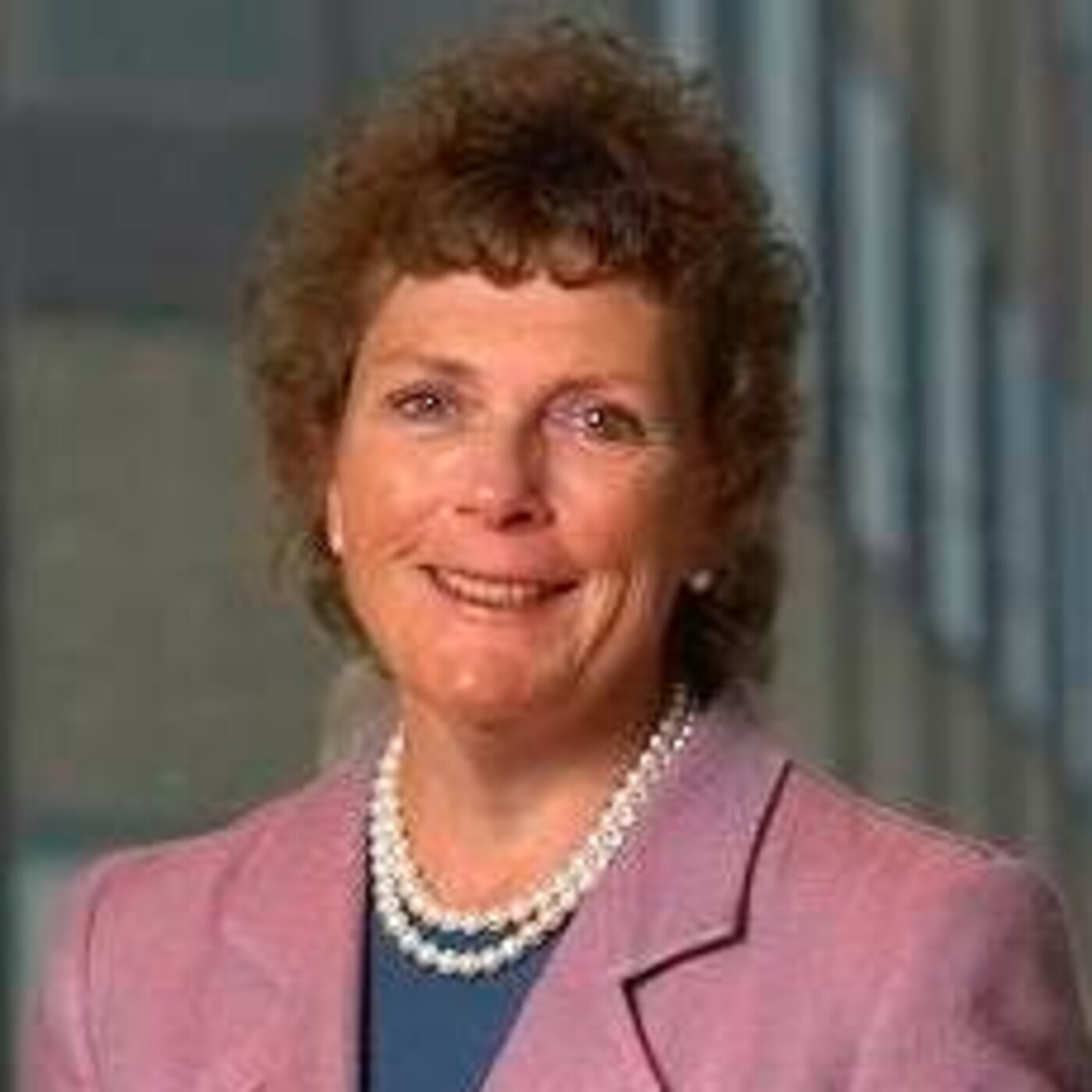
Aoifinn Devitt: This series was made possible by the kind support of Main Street Partners, a London-based independent and dedicated sustainable investment advisor that provides ESG multi-asset and multi-manager portfolios and a range of holistic portfolio analytics tools, including sustainability ratings and bespoke sustainability intelligence. It was also supported by Carbonado Partners, an industry expert in capital raising for all asset classes that endeavors to provide thoughtful solutions that address emerging managers’ perspectives and challenges. Our next guest was one of the first role models in my career, and her story of raising her daughter while rising through the ranks stayed with me and made a profound impression. Now, after close to 20 years, she is still breaking paths with grace, curiosity, and passion. I’m Aoifinn Devitt, and welcome to the 50 Faces podcast, a podcast committed to revealing the richness and diversity of the world of investment by focusing on its people and their stories. I’m joined today by Sandy Ury, who is Chairman Emeritus at Cambridge Associates, a role she’s held since 2016, when she retired as Chairman and CEO, having held the CEO role since 2001 and capping an over 30-year career at the firm. Her current focuses include sustainability and impact investing. She holds board roles at Stanford Management Company, Social Finance US, Crane Institute for Sustainability, and Plymouth Rock Insurance Company. Welcome, Sandy. Thank you for joining me today.
Sandy: Thank you for having me.
Aoifinn Devitt: Well, first of all, congratulations on an extraordinary career in investment consulting and at Cambridge Associates in particular. I’m sure over that time you’ve seen tremendous change in the industry.
Sandy: Indeed, I have. I joined Cambridge Associates in 1985, and when I was thinking about the 35+ years that I’ve been in the industry, a lot has changed. And I think back to 1985 when in the US, investing outside of the US was considered an alternative investment. And I think today, no one would think of investing globally as alternative. So it was the number of strategies, the number of asset classes, the ways in the evolution of governance, so much has changed in these 35 years. That I’ve been at this task.
Aoifinn Devitt: Well, we’ll get into some of the other changes a little bit later on, but can we just first start with talking about your background? Where did you grow up and how did you come ultimately to enter the world of investing?
Sandy: Well, I grew up in a suburb outside Boston, so I’m originally from Massachusetts, which is where I live now. I was one of four girls in my family, no brothers. I was the second of four daughters, and I grew up in the 1950s, very different time in the world. I’m part of the boomer generation. My parents were ahead of their time, I think, I think having 4 girls, I described them as the first feminists that I ever knew. And they were very supportive of us, particularly when it came to education and really set a very high bar for us in terms of expectations. And they always said that the only limiting factor we would find would be the ones we set for ourselves and that we should never let others set the limits for us. We should always ignore those limits set by others and aim high and do the, things we wanted to do and follow our passion and work hard at it. I would say they didn’t push us, but they were very supportive of the paths that we chose to follow. And that created a good deal of independence among— for me, as well as for my sisters.
Aoifinn Devitt: And you started out by studying Russian and pursuing initially a career in academia. Is that right?
Sandy: That is absolutely right. I became passionate about Russian literature as a high school student and decided I wanted to learn the language so that I could read the literature in the original. Having taken French and having learned enough French to read French literature in the original, I learned that translations often leave much to be desired. And so I thought, well, I’ll just go ahead and learn Russian, and then I can read some of my favorite authors in their original language. And it took me a long time to get to that point. It was my major in college, and I loved it. Very passionate about the language, about the history, about the culture, and wanted to be a teacher. That was my aim in college, was to become a Russian teacher, Russian cultural studies, Russian language teacher. And I accomplished that. That was my first job out of college, was a Russian language teacher.
Aoifinn Devitt: It’s funny, that’s also the reason I learned Russian was also to read Chekhov and the like in the original. I still think it’s one of the most beautiful languages there is. What then prompted your move into to do an MBA and to pursue a business career?
Sandy: Well, my first job was at a school called Phillips Academy in Andover. And I was hired there to be a Russian language teacher, but also to be an admissions officer. It’s a private boarding school in the United States. So I had a dual assignment, both in the administration as well as in the classroom. And the more I got involved on the administrative side of the school, eventually joining the fundraising staff and eventually being the liaison to the board of trustees for strategic planning, the more I realized that I, well, I studied Russian and felt very confident in the classroom teaching. I had to fill in an awful lot of gaps about management, nonprofit management, budgeting, endowments, investments. Things like that, that I was— and I was learning on the job, which is always a good way to learn. And there were some gaps and I thought, well, I will see if I can fill those gaps in by getting a basic education in business concepts and business ideas. And, uh, and I chose Yale because Yale had a program that focused on nonprofit, public, and private sector management. And it was an integrated program as opposed to a more traditional business school.
Aoifinn Devitt: And just looking back to your career as a teacher and then moving into investing, were there any lessons that you took from being a teacher into now some of the investing work that you do with clients?
Sandy: Absolutely, absolutely. Teaching is about communication. It’s about communicating difficult concepts, whether it’s a language or math or history. And you often are facing a group of students of varying levels of knowledge or interest in the topic. And I thought in some ways that was a lot like dealing with an investment committee. You had to communicate difficult concepts, difficult ideas, and you might have some experts in the room and you might have some people who weren’t as knowledgeable about, say, the capital markets or investments, but ultimately it was about communicating. It was about understanding the audience and understanding how to get the message through to the audience. So I found quite a few similarities actually between teaching and the work I started doing when I joined Cambridge Associates.
Aoifinn Devitt: And then just, we talked already about a 35-year career and some of the changes you’ve seen, such as maybe the concept of what an alternative investment is what are some of the other changes just broadly, because we can’t obviously go into too much detail, in terms of the world of institutional investing over the course of your career? And do you think it’s always changed for the better, or do you think there’s been some changes that not so much for the better?
Sandy: Let’s start with the changes, and then maybe we can talk about whether they’re for the better or for the worse. I think one major area of change has been governance in institutional management. When I joined Cambridge Associates, there were many investment committees that were really driving and implementing the process. So they didn’t necessarily have professional staff working at the institution. And even in some cases, the committees were picking stocks and bonds to that level of detail. And over time, we’ve seen the investment committees move towards governance at the policy and oversight level, with professional staff moving into more of an implementation role. Where you’ve had people doing what they do best. In other words, fiduciaries should define policy and provide oversight, and then practitioners need to be involved day-to-day to actually manage the funds. And here is where professional staff, and maybe with the assistance of outside advisors, should get involved. And I think that’s been a change for the better. I think the world of investing institutional funds is very complex. It always was complex. And I think the realization that it is a— daily job, not a quarter— meet every quarter or meet every month kind of job— has been a good realization, and it means that the people who are doing the work are doing what they do best, and those who are providing oversight can do that well. Those who are providing the day-to-day implementation, that’s their role, and the outside advisors have a very clearly defined role to support and enhance what the committee and the staff are doing. So I think the governance, the evolution in governance And people understanding what their roles are and kind of sticking to that has been a very positive development in institutional investment management. When there’s a lack of clarity, there can be muddled thinking and muddled outcomes, and you don’t get the best from the people or from the process.
Aoifinn Devitt: And just tied to that, on the topic of governance, so you must have worked with countless investment committees over the years and now have been a member of them yourself. What features do you think the most efficient investment committees that you know have?
Sandy: I think about investment committees as having to direct a process. It’s about people and process, let’s put it that way. And so people need to understand that they are working for an institution and they kind of have to park their personal investment hat at the door and put their institutional one, the fiduciary hat on as a steward of the assets. I think you do have to act like it is your own money and take responsibility and be committed to it, to good outcomes, but I think you can’t let your personal preferences drive the decision-making in the committee setting. I think committees ideally are 6 to maybe as high as 10 people. I think 6 to 8 is a good number. I think a committee member should come in not necessarily as an experienced pro in the field, but someone who is open-minded, inquisitive, willing to listen, willing to engage in debate over issues. It’s why you’re at the table, and so you need to be willing to admit what you don’t know. And if there’s a good chair, a good chair will bring that out in the committee members around the table. The chair has to be committed, dedicated, strong, supportive, not dominant though. The chair’s job is to get everybody’s opinion and to move the group, not necessarily to his or her point of view, but to the right outcome for the institution.
Aoifinn Devitt: And you conveyed to me when we first met, when I joined Cambridge Associates, what you loved about investing. And I think it was very infectious, in fact, your love for investing. Can you just express here what it is that you love about the world of investing?
Sandy: I love that it is multidisciplinary. I love that you have to know a lot about a lot. I love that it is not just sitting in front of a screen looking at spreadsheets, but it requires understanding what’s going on geopolitically, understanding what’s going on at a micro level as well as a macro micro level. And I love that you don’t always know the answer. There are many ways to approach an investment challenge, and there are a range of right answers for getting to the point that makes sense for an institution. But mostly I love that it’s very conducive to lifelong learning and to feeding intellectual curiosity.
Aoifinn Devitt: And are there any core investment beliefs that you hold and how have they evolved over the course of your career?
Sandy: Well, my entire career has been spent at Cambridge Associates, my entire investment career. And so my views have really been shaped by the beliefs that I’ve developed there. And even— I’m going to call you out on something here. You said you can take the girl out of Cambridge, but you can’t take Cambridge out of the girl. Well, I haven’t left Cambridge yet, but you can’t take Cambridge out of the girl. I believe believe I that governance matters. I believe that having a long time horizon matters, that you can really take advantage of opportunities in the markets if you have a long view. I believe that valuation matters and that paying attention to when things are overvalued or undervalued, recognizing they can stay that way for a long period of time, but understanding what valuation means. And I also have learned at Cambridge that a willingness to be an early adopter, whether it’s of new strategies or new managers, contributes to long-term success with proper due diligence and proper kind of scaffolding around the research, that if you’re willing to invest in venture in the ’70s, invest in hedge funds in the early ’80s, and understand that those are new strategies are worth taking a look at and are worth investing in, you’re likely to see some long-term success.
Aoifinn Devitt: It’s funny because, yeah, I mentioned that because some of the deep beliefs, some of the very broad ones, such as rebalancing, I suppose diversification, having an open mind, those are ingrained in me. And I suppose those are core to.
Sandy: The way I today. Invest.
Aoifinn Devitt: Day, but I absolutely appreciate that point. Now you’re focused mostly on impact investing and sustainability. Those are hugely important areas today and really developing broadly. What are the aspects of those that you’re most excited about? And how do you think they will continue to grow over the next decade?
Sandy: It’s been interesting to watch the evolution more in recent years on sustainability and impact investing. I believe Cambridge has always paid attention to these areas. And it may largely be due to the types of investors with whom we work, mission-driven individuals, mission-driven institutions, pension funds. There’s always been an eye to mission alignment. And I would say in the, in early days, it was more exclusionary screens. And what I love is the move towards a more positive approach, the more the impact approach. How can we invest in things that will really make change and really improve whether it be climate, society, diversity, equity, and inclusion. So I think we’ve been at this for a long time and we’ve seen it evolve from divestment to ESG to shareholder activism to impact. And I’m quite excited about the impact space and the evolution of this field and also the growing number of investment opportunities that are emerging in this space. I think it will continue to grow. And I think that mobilizing capital to address some of these challenges will create good investment opportunities with good market rates of return. The innovation and the discovery necessary to solve some of our big problems, I think, will naturally lead to some good investment opportunities.
Aoifinn Devitt: It’s certainly a burgeoning area where we’re spending more and more of our time and where investment committees are spending more and more of their time. So it’s very interesting to hear where you think we will start to move. Just getting back to your personal story now, You’ve had a very long career in markets, which are by definition volatile. Have there been any highs and lows that you can speak about of that career?
Sandy: Well, it certainly hasn’t been a smooth run because the markets are volatile. And so when you work in the markets, you’re experiencing highs and lows in a cyclical fashion. I would say the lows have often been those time periods when there were really serious market disruptions. And whether it’s the tech bust in the early 2000s, certainly the global financial crisis, was challenging in so many ways for the investors we serve, as well as for people personally. The current pandemic has been a real challenge as we look at how the stress and strain it’s put on the budgets of the institutions that we serve. And the markets, of course, have been just roaring during this time. So investment portfolios have performed, but the institutions themselves have faced some real economic challenges in terms of whether it’s a performing arts organization or, you know, a museum in terms of their revenues. And so figuring out how to help them and help think about weathering this pandemic or weathering the global financial crisis. I would say low points is the wrong word. I would say it’s just more real challenges that the world or the markets have brought to the table. And we want our institutions and all institutions to thrive and we want them to manage successfully through these much more difficult periods. So I’d say those would be some of the challenges. I think managing an organization through that time period can also be very challenging. I was CEO during the global financial crisis at Cambridge Associates, and we didn’t have the kind of technology we have today to stay connected. Zoom didn’t exist. We were communicating via telephones, conference calls, and so that sense of connection was harder to establish. Today, some of the technology platforms we have make it easier for us to feel connected. I found that particularly hard, both managing an organization as well as making sure we were taking good care of our clients during the global financial crisis. Very challenging. Challenging time.
Aoifinn Devitt: Yes, it’s kind of funny now that you mention it. I actually think while those lows in markets are, are very challenging for clients, and I know anyone, when you have long relationships with clients as you have, you kind of viscerally feel their pain and their anxiety. But it’s also the time when, as a consultant, I think you can perhaps add the most value because you can provide that kind of steady hand. And whereas when markets are high, no one needs your help, everything’s, everything’s great. So it’s, it’s a nice— I always have enjoyed the role as kind of counselor like I think that for people.
Sandy: Who’Ve been at it a long time, and many people sitting on investment committees have been at it a long time, they understand that when markets are high, and I think particularly coming out of the late ’90s when markets, when the tech boom was raging and the valuation just there, you wasn’t just, there weren’t companies with no earnings that had these incredible valuations. I think when people experience something like that, they understand that when markets are high, you need advice. When markets are low, you need advice. That there is a— having a thoughtful, trusted partner with you through the highs and the lows is a good thing to have. And living through those periods brings some wisdom and some reasonableness about the highs and lows and also reminds people about the long term. These institutions have existed for a very long time and will work together to make sure they do well beyond when we’re all still sitting at our desks and no longer sitting at our desks.
Aoifinn Devitt: That’s so true. Well, when we met at Cambridge Associates, and this is back in 2002, I think I said you really inspired me with your story of your love of markets. But the other story you told was of raising your daughter essentially as a single mother while you were rising through the ranks of the firm. And I was a young mother at that time, and it left a profound impression on me, and I still remember it today. Just looking back at that experience, what did that teach you about balancing work and family, and ultimately managing people who have the same concerns.
Sandy: When I joined Cambridge Associates in 1985, I was a single mom. My daughter was 3 at the time, and when I joined Cambridge, I believed that it was a place where I could manage what I call the paid and unpaid part of my life. And I believed that going in, and I knew time would tell whether or not that was doable, but in the course of interviewing at Cambridge, I met senior women. So you’ve said to me before, you can’t be what you can’t see. But when I interviewed at Cambridge Associates, what I saw were senior women, women who were managing directors of the firm, even in a small firm of 40 people. So I thought, well, there’s an opportunity here, and perhaps this will work. And deeply committed to being a mother, love being a mother, love now being a grandmother, often have said to people that children don’t ask to be born. We make that decision for them. And once we’ve made that decision, we need to be all in on that part of our lives. And so that has been a kind of a theme or a value for me throughout. And I feel good about working at Cambridge because it gave me the opportunity to have the balance. It’s never always balanced. It’s never 50/50. It fluctuates. But over time, that 3-year-old is now a 38-year-old. And I think what she learned in watching me go, you know, be a professional woman has contributed a lot to her being a professional woman. But also, I love watching her be a mom. Mother. And I often say to her, you’re a better mother than I. I love her devotion to her child. And she always says to me, Mom, I learned from the best. And we joke about it now, but we, we care about each other in that way. And, you know, you do what you have to do. You find yourself in a circumstance. I didn’t intend to be a single mom, but that’s where I found myself. And so you figure out how to make the best of it. And I think it is a measure of resilience, commitment. I had beloved family members around me who helped, my parents, my sisters. I deliberately came back to the Boston area to be close to them, knowing that they were part of an extended family, a modern day, I call it a modern day extended family. We didn’t all live in the same house, but we certainly cared for each other. And when I traveled, I always knew my daughter was in good hands. She was either with my parents or one of my sisters, with people who loved her. And as a result, she developed very close relationships with members of the family. Deep, deep, close and independent relationships, independent from me, that have been valuable all her life.
Aoifinn Devitt: It is indeed a village, but that part, the travel, having somebody you can utterly trust to look after your child when you travel, I think that is the magic ingredient because the day job can be done, but it’s the overnights and the travel where you really need that person of high quality with them. You’ve mentioned a number of key people in your life who’ve been influential already. Is there any one or two that you can mention, single out perhaps, that have influenced you and in what way?
Sandy: I often look to the people, people who are mentors, who had faith in me and kind of pushed me to do more than I thought I could do myself. When I was at Andover and I moved into the fundraising part of the school, there was a man there, Fred Stott is his name, and he’s now deceased, but at a very young age, 24, 25, he kind of asked me to be his number 2 on a capital campaign to raise $50 million. This would have been in the mid-’70s. And I knew nothing about fundraising. I took the job, and this is something I often say to you people, know, when people offer you something and it’s not necessarily on the path you thought you were on, take a close look because you never know where it will lead. So I did. I joined them on this journey to raise what at that time was the largest amount of money ever raised for an independent school in the United States, and we, we did it successfully. I traveled all over the country. I met so many members of the alumni group across the country and learned so much. And I don’t know what Fred saw in me at the age of 24 that caused him to make me that offer. But I am forever grateful that I took it. And then working side by side with him, I learned so much. So Fred is a person that had significant influence on the path and on me. And then there was a professor at Yale, an economics professor, a woman named Sharon Oster, who— I’d never taken an economics class in college. So I was quite nervous about business school, you can imagine. I hadn’t had a math class since I was in 10th grade, so I was apprehensive. And hers was the first classroom I walked into at Yale, and I was inspired. She was brilliant— is brilliant. She’s now retired. She made economics make sense to me, made it come alive. I eventually TA’d for her in my second year, and she became a close friend friend. She became a counselor as I was thinking about job opportunities coming out of Yale. I had several offers, and she was very helpful in helping me understand the pros and cons of the choices. Quite a mentor, quite a friend. Both Fred and Sharon became very good friends over the years. So those are just a couple of people, but I could name Anne Spence, the first person I worked with at Cambridge Associates. She also was a tremendous mentor to me, and partnering with her watching how she worked, learning from her, developing my own ways of working with clients, but really observing how she worked. And again, the tasks that she assigned to me, the things that I thought, wow, how am I going to do this? She had confidence. So I think when I think about the people who had influence, they’re people who, who just had confidence in me, maybe when I didn’t have as much confidence in myself. And that inspired me.
Aoifinn Devitt: Those role models are so important. And when you look at any piece of advice or think about any key pieces of advice or any creed or motto that you live by? Is there anything that you can share?
Sandy: Yeah, my daughter and I have a motto that we’ve had for a long time, and it’s a funny one because neither of us are runners, but it is, when you’re in the marathon, just keep running. And I know you’re a runner, so you will appreciate this. Be in it for the long time. I always used to say we were marathoners, we’re not sprinters. And being committed, dedicated, working hard and doing it over time. Recognizing that you’re going to bump up against some challenges, but you have to keep running. You have to keep going. She and I will joke about that. You know, when she’s— something is, you know, she’s reached a bumpy part in her career, I’ll say, well, you know, you’re in that marathon. Just keep right on running. And she’ll sometimes relay the same back to me if I’m at a challenge point or a low point. She’ll echo those same words back at me.
Aoifinn Devitt: Well, somehow it’s not surprising that if you’re from Boston that the marathon would be in your narrative, whether you’re a or runner not. I can certainly identify with that. And you have a hell of a wall there in that marathon too. So definitely requiring stamina and resilience. Is there any key piece of advice that you would like to give your younger self if you could, going back maybe to that second daughter of four? Anything you know now you wish you had known then?
Sandy: That second daughter of four, at a younger time, I was quite shy, timid, you know, buried myself in academics. And I sometimes wish I had been a little more out there, but that happened when I made the decision to go across the country for college. In the early ’70s, this was an unusual move. Most people didn’t leave the East Coast, even though it was Stanford, to go to Stanford. And I remember my father as I got in the car, because I drove cross-country to, you know, first of all, putting your, your two oldest children in a car to drive 3,000 miles without cell phones or any way of staying in touch. I I thought, thought that was pretty bold on their part, but he said to me at the time, “I wish I was as brave as you are.” And he said, “I’m really proud of you for making this choice and for doing this.” And I don’t think he was happy I was going 3,000 miles away, but that was a moment for me where I felt like I was making a brave and bold decision. And it helped me change the way I looked at things and to be willing to be bolder and to take a risk. It certainly was a risk. It proved to be a really good thing to but, do, you know, at the time, I think I viewed it as, wow, this is really stepping out there far from home. And it wasn’t like today where you could fly home and— or you could call your you family, know, every day on a cell phone. We didn’t have that so-called umbilical cord of the cell phone in those days. So I think I would tell people to be willing to be bold. And I sometimes wish I had learned that a little bit earlier, even though I you was, know, 20 years old when I learned it, and that seems quite young. I think I I would have been even happy, even not happier, but just I would have perhaps been a little bit more adventurous. I also, as I said earlier, Aoifinn, this issue of not putting yourself on too narrow a path, but there’s a lot of serendipity in life. There are a lot of things you don’t expect. I didn’t expect to be divorced before my daughter was born, but it happens. So you, then you have to deal with it. I didn’t plan to go to Stanford. I didn’t plan to stay at Andover for 9 years. As a faculty member, but opportunities kept being presented to me and they were good opportunities. So, so you kind of pivot, and I know that word is very commonly used now, but it is pivoting to something and being willing to say, well, I can delay graduate school a bit because I— this is a really good opportunity. I may get some very good experience from this. And so, so I think that the advice I would have for my younger self, or even for younger colleagues, is don’t get too set in your ways. Be willing to embrace the serendipity. That comes your way.
Aoifinn Devitt: Exactly, and the flexibility that you need to adapt and embrace it. Thank you so much, Sandy. Those little experiments they do on children where they say, well, when you say the word engineer, what comes to mind? Well, when someone says the word role model, you immediately come to mind. And it’s not just because of your grace and your success and the wonderful example that you set. It’s because you have persisted in a role for over 2 decades at that leadership point. And there are many fleeting role models that come and go, but you’ve been there for so long that you have really sustained that. And I can’t thank you enough for that. So thank you for coming here and for sharing your insights with us.
Sandy: Well, thank you, Aoifinn. This has been fun to reflect on career and on life. And I really, really appreciate this series that you’re doing. I think it’s a wonderful contribution you’re making to all of us, particularly during this time of the pandemic. So thank you.
Aoifinn Devitt: I’m Aoifinn Devitt. Thank you for listening to the 50 Faces podcast. If you liked what you heard and would like to tune in to hear more inspiring investors and their personal journeys, please subscribe on Apple Podcasts or wherever you get your podcasts. This podcast is for informational purposes only and should not be construed as investment advice, and all views are personal and should not be attributed to the organizations and affiliations of the host or any guest.
Aoifinn Devitt: This series was made possible by the kind support of Main Street Partners, a London-based independent and dedicated sustainable investment advisor that provides ESG multi-asset and multi-manager portfolios and a range of holistic portfolio analytics tools, including sustainability ratings and bespoke sustainability intelligence. It was also supported by Carbonado Partners, an industry expert in capital raising for all asset classes that endeavors to provide thoughtful solutions that address emerging managers’ perspectives and challenges. Our next guest was one of the first role models in my career, and her story of raising her daughter while rising through the ranks stayed with me and made a profound impression. Now, after close to 20 years, she is still breaking paths with grace, curiosity, and passion. I’m Aoifinn Devitt, and welcome to the 50 Faces podcast, a podcast committed to revealing the richness and diversity of the world of investment by focusing on its people and their stories. I’m joined today by Sandy Ury, who is Chairman Emeritus at Cambridge Associates, a role she’s held since 2016, when she retired as Chairman and CEO, having held the CEO role since 2001 and capping an over 30-year career at the firm. Her current focuses include sustainability and impact investing. She holds board roles at Stanford Management Company, Social Finance US, Crane Institute for Sustainability, and Plymouth Rock Insurance Company. Welcome, Sandy. Thank you for joining me today.
Sandy: Thank you for having me.
Aoifinn Devitt: Well, first of all, congratulations on an extraordinary career in investment consulting and at Cambridge Associates in particular. I’m sure over that time you’ve seen tremendous change in the industry.
Sandy: Indeed, I have. I joined Cambridge Associates in 1985, and when I was thinking about the 35+ years that I’ve been in the industry, a lot has changed. And I think back to 1985 when in the US, investing outside of the US was considered an alternative investment. And I think today, no one would think of investing globally as alternative. So it was the number of strategies, the number of asset classes, the ways in the evolution of governance, so much has changed in these 35 years. That I’ve been at this task.
Aoifinn Devitt: Well, we’ll get into some of the other changes a little bit later on, but can we just first start with talking about your background? Where did you grow up and how did you come ultimately to enter the world of investing?
Sandy: Well, I grew up in a suburb outside Boston, so I’m originally from Massachusetts, which is where I live now. I was one of four girls in my family, no brothers. I was the second of four daughters, and I grew up in the 1950s, very different time in the world. I’m part of the boomer generation. My parents were ahead of their time, I think, I think having 4 girls, I described them as the first feminists that I ever knew. And they were very supportive of us, particularly when it came to education and really set a very high bar for us in terms of expectations. And they always said that the only limiting factor we would find would be the ones we set for ourselves and that we should never let others set the limits for us. We should always ignore those limits set by others and aim high and do the, things we wanted to do and follow our passion and work hard at it. I would say they didn’t push us, but they were very supportive of the paths that we chose to follow. And that created a good deal of independence among— for me, as well as for my sisters.
Aoifinn Devitt: And you started out by studying Russian and pursuing initially a career in academia. Is that right?
Sandy: That is absolutely right. I became passionate about Russian literature as a high school student and decided I wanted to learn the language so that I could read the literature in the original. Having taken French and having learned enough French to read French literature in the original, I learned that translations often leave much to be desired. And so I thought, well, I’ll just go ahead and learn Russian, and then I can read some of my favorite authors in their original language. And it took me a long time to get to that point. It was my major in college, and I loved it. Very passionate about the language, about the history, about the culture, and wanted to be a teacher. That was my aim in college, was to become a Russian teacher, Russian cultural studies, Russian language teacher. And I accomplished that. That was my first job out of college, was a Russian language teacher.
Aoifinn Devitt: It’s funny, that’s also the reason I learned Russian was also to read Chekhov and the like in the original. I still think it’s one of the most beautiful languages there is. What then prompted your move into to do an MBA and to pursue a business career?
Sandy: Well, my first job was at a school called Phillips Academy in Andover. And I was hired there to be a Russian language teacher, but also to be an admissions officer. It’s a private boarding school in the United States. So I had a dual assignment, both in the administration as well as in the classroom. And the more I got involved on the administrative side of the school, eventually joining the fundraising staff and eventually being the liaison to the board of trustees for strategic planning, the more I realized that I, well, I studied Russian and felt very confident in the classroom teaching. I had to fill in an awful lot of gaps about management, nonprofit management, budgeting, endowments, investments. Things like that, that I was— and I was learning on the job, which is always a good way to learn. And there were some gaps and I thought, well, I will see if I can fill those gaps in by getting a basic education in business concepts and business ideas. And, uh, and I chose Yale because Yale had a program that focused on nonprofit, public, and private sector management. And it was an integrated program as opposed to a more traditional business school.
Aoifinn Devitt: And just looking back to your career as a teacher and then moving into investing, were there any lessons that you took from being a teacher into now some of the investing work that you do with clients?
Sandy: Absolutely, absolutely. Teaching is about communication. It’s about communicating difficult concepts, whether it’s a language or math or history. And you often are facing a group of students of varying levels of knowledge or interest in the topic. And I thought in some ways that was a lot like dealing with an investment committee. You had to communicate difficult concepts, difficult ideas, and you might have some experts in the room and you might have some people who weren’t as knowledgeable about, say, the capital markets or investments, but ultimately it was about communicating. It was about understanding the audience and understanding how to get the message through to the audience. So I found quite a few similarities actually between teaching and the work I started doing when I joined Cambridge Associates.
Aoifinn Devitt: And then just, we talked already about a 35-year career and some of the changes you’ve seen, such as maybe the concept of what an alternative investment is what are some of the other changes just broadly, because we can’t obviously go into too much detail, in terms of the world of institutional investing over the course of your career? And do you think it’s always changed for the better, or do you think there’s been some changes that not so much for the better?
Sandy: Let’s start with the changes, and then maybe we can talk about whether they’re for the better or for the worse. I think one major area of change has been governance in institutional management. When I joined Cambridge Associates, there were many investment committees that were really driving and implementing the process. So they didn’t necessarily have professional staff working at the institution. And even in some cases, the committees were picking stocks and bonds to that level of detail. And over time, we’ve seen the investment committees move towards governance at the policy and oversight level, with professional staff moving into more of an implementation role. Where you’ve had people doing what they do best. In other words, fiduciaries should define policy and provide oversight, and then practitioners need to be involved day-to-day to actually manage the funds. And here is where professional staff, and maybe with the assistance of outside advisors, should get involved. And I think that’s been a change for the better. I think the world of investing institutional funds is very complex. It always was complex. And I think the realization that it is a— daily job, not a quarter— meet every quarter or meet every month kind of job— has been a good realization, and it means that the people who are doing the work are doing what they do best, and those who are providing oversight can do that well. Those who are providing the day-to-day implementation, that’s their role, and the outside advisors have a very clearly defined role to support and enhance what the committee and the staff are doing. So I think the governance, the evolution in governance And people understanding what their roles are and kind of sticking to that has been a very positive development in institutional investment management. When there’s a lack of clarity, there can be muddled thinking and muddled outcomes, and you don’t get the best from the people or from the process.
Aoifinn Devitt: And just tied to that, on the topic of governance, so you must have worked with countless investment committees over the years and now have been a member of them yourself. What features do you think the most efficient investment committees that you know have?
Sandy: I think about investment committees as having to direct a process. It’s about people and process, let’s put it that way. And so people need to understand that they are working for an institution and they kind of have to park their personal investment hat at the door and put their institutional one, the fiduciary hat on as a steward of the assets. I think you do have to act like it is your own money and take responsibility and be committed to it, to good outcomes, but I think you can’t let your personal preferences drive the decision-making in the committee setting. I think committees ideally are 6 to maybe as high as 10 people. I think 6 to 8 is a good number. I think a committee member should come in not necessarily as an experienced pro in the field, but someone who is open-minded, inquisitive, willing to listen, willing to engage in debate over issues. It’s why you’re at the table, and so you need to be willing to admit what you don’t know. And if there’s a good chair, a good chair will bring that out in the committee members around the table. The chair has to be committed, dedicated, strong, supportive, not dominant though. The chair’s job is to get everybody’s opinion and to move the group, not necessarily to his or her point of view, but to the right outcome for the institution.
Aoifinn Devitt: And you conveyed to me when we first met, when I joined Cambridge Associates, what you loved about investing. And I think it was very infectious, in fact, your love for investing. Can you just express here what it is that you love about the world of investing?
Sandy: I love that it is multidisciplinary. I love that you have to know a lot about a lot. I love that it is not just sitting in front of a screen looking at spreadsheets, but it requires understanding what’s going on geopolitically, understanding what’s going on at a micro level as well as a macro micro level. And I love that you don’t always know the answer. There are many ways to approach an investment challenge, and there are a range of right answers for getting to the point that makes sense for an institution. But mostly I love that it’s very conducive to lifelong learning and to feeding intellectual curiosity.
Aoifinn Devitt: And are there any core investment beliefs that you hold and how have they evolved over the course of your career?
Sandy: Well, my entire career has been spent at Cambridge Associates, my entire investment career. And so my views have really been shaped by the beliefs that I’ve developed there. And even— I’m going to call you out on something here. You said you can take the girl out of Cambridge, but you can’t take Cambridge out of the girl. Well, I haven’t left Cambridge yet, but you can’t take Cambridge out of the girl. I believe believe I that governance matters. I believe that having a long time horizon matters, that you can really take advantage of opportunities in the markets if you have a long view. I believe that valuation matters and that paying attention to when things are overvalued or undervalued, recognizing they can stay that way for a long period of time, but understanding what valuation means. And I also have learned at Cambridge that a willingness to be an early adopter, whether it’s of new strategies or new managers, contributes to long-term success with proper due diligence and proper kind of scaffolding around the research, that if you’re willing to invest in venture in the ’70s, invest in hedge funds in the early ’80s, and understand that those are new strategies are worth taking a look at and are worth investing in, you’re likely to see some long-term success.
Aoifinn Devitt: It’s funny because, yeah, I mentioned that because some of the deep beliefs, some of the very broad ones, such as rebalancing, I suppose diversification, having an open mind, those are ingrained in me. And I suppose those are core to.
Sandy: The way I today. Invest.
Aoifinn Devitt: Day, but I absolutely appreciate that point. Now you’re focused mostly on impact investing and sustainability. Those are hugely important areas today and really developing broadly. What are the aspects of those that you’re most excited about? And how do you think they will continue to grow over the next decade?
Sandy: It’s been interesting to watch the evolution more in recent years on sustainability and impact investing. I believe Cambridge has always paid attention to these areas. And it may largely be due to the types of investors with whom we work, mission-driven individuals, mission-driven institutions, pension funds. There’s always been an eye to mission alignment. And I would say in the, in early days, it was more exclusionary screens. And what I love is the move towards a more positive approach, the more the impact approach. How can we invest in things that will really make change and really improve whether it be climate, society, diversity, equity, and inclusion. So I think we’ve been at this for a long time and we’ve seen it evolve from divestment to ESG to shareholder activism to impact. And I’m quite excited about the impact space and the evolution of this field and also the growing number of investment opportunities that are emerging in this space. I think it will continue to grow. And I think that mobilizing capital to address some of these challenges will create good investment opportunities with good market rates of return. The innovation and the discovery necessary to solve some of our big problems, I think, will naturally lead to some good investment opportunities.
Aoifinn Devitt: It’s certainly a burgeoning area where we’re spending more and more of our time and where investment committees are spending more and more of their time. So it’s very interesting to hear where you think we will start to move. Just getting back to your personal story now, You’ve had a very long career in markets, which are by definition volatile. Have there been any highs and lows that you can speak about of that career?
Sandy: Well, it certainly hasn’t been a smooth run because the markets are volatile. And so when you work in the markets, you’re experiencing highs and lows in a cyclical fashion. I would say the lows have often been those time periods when there were really serious market disruptions. And whether it’s the tech bust in the early 2000s, certainly the global financial crisis, was challenging in so many ways for the investors we serve, as well as for people personally. The current pandemic has been a real challenge as we look at how the stress and strain it’s put on the budgets of the institutions that we serve. And the markets, of course, have been just roaring during this time. So investment portfolios have performed, but the institutions themselves have faced some real economic challenges in terms of whether it’s a performing arts organization or, you know, a museum in terms of their revenues. And so figuring out how to help them and help think about weathering this pandemic or weathering the global financial crisis. I would say low points is the wrong word. I would say it’s just more real challenges that the world or the markets have brought to the table. And we want our institutions and all institutions to thrive and we want them to manage successfully through these much more difficult periods. So I’d say those would be some of the challenges. I think managing an organization through that time period can also be very challenging. I was CEO during the global financial crisis at Cambridge Associates, and we didn’t have the kind of technology we have today to stay connected. Zoom didn’t exist. We were communicating via telephones, conference calls, and so that sense of connection was harder to establish. Today, some of the technology platforms we have make it easier for us to feel connected. I found that particularly hard, both managing an organization as well as making sure we were taking good care of our clients during the global financial crisis. Very challenging. Challenging time.
Aoifinn Devitt: Yes, it’s kind of funny now that you mention it. I actually think while those lows in markets are, are very challenging for clients, and I know anyone, when you have long relationships with clients as you have, you kind of viscerally feel their pain and their anxiety. But it’s also the time when, as a consultant, I think you can perhaps add the most value because you can provide that kind of steady hand. And whereas when markets are high, no one needs your help, everything’s, everything’s great. So it’s, it’s a nice— I always have enjoyed the role as kind of counselor like I think that for people.
Sandy: Who’Ve been at it a long time, and many people sitting on investment committees have been at it a long time, they understand that when markets are high, and I think particularly coming out of the late ’90s when markets, when the tech boom was raging and the valuation just there, you wasn’t just, there weren’t companies with no earnings that had these incredible valuations. I think when people experience something like that, they understand that when markets are high, you need advice. When markets are low, you need advice. That there is a— having a thoughtful, trusted partner with you through the highs and the lows is a good thing to have. And living through those periods brings some wisdom and some reasonableness about the highs and lows and also reminds people about the long term. These institutions have existed for a very long time and will work together to make sure they do well beyond when we’re all still sitting at our desks and no longer sitting at our desks.
Aoifinn Devitt: That’s so true. Well, when we met at Cambridge Associates, and this is back in 2002, I think I said you really inspired me with your story of your love of markets. But the other story you told was of raising your daughter essentially as a single mother while you were rising through the ranks of the firm. And I was a young mother at that time, and it left a profound impression on me, and I still remember it today. Just looking back at that experience, what did that teach you about balancing work and family, and ultimately managing people who have the same concerns.
Sandy: When I joined Cambridge Associates in 1985, I was a single mom. My daughter was 3 at the time, and when I joined Cambridge, I believed that it was a place where I could manage what I call the paid and unpaid part of my life. And I believed that going in, and I knew time would tell whether or not that was doable, but in the course of interviewing at Cambridge, I met senior women. So you’ve said to me before, you can’t be what you can’t see. But when I interviewed at Cambridge Associates, what I saw were senior women, women who were managing directors of the firm, even in a small firm of 40 people. So I thought, well, there’s an opportunity here, and perhaps this will work. And deeply committed to being a mother, love being a mother, love now being a grandmother, often have said to people that children don’t ask to be born. We make that decision for them. And once we’ve made that decision, we need to be all in on that part of our lives. And so that has been a kind of a theme or a value for me throughout. And I feel good about working at Cambridge because it gave me the opportunity to have the balance. It’s never always balanced. It’s never 50/50. It fluctuates. But over time, that 3-year-old is now a 38-year-old. And I think what she learned in watching me go, you know, be a professional woman has contributed a lot to her being a professional woman. But also, I love watching her be a mom. Mother. And I often say to her, you’re a better mother than I. I love her devotion to her child. And she always says to me, Mom, I learned from the best. And we joke about it now, but we, we care about each other in that way. And, you know, you do what you have to do. You find yourself in a circumstance. I didn’t intend to be a single mom, but that’s where I found myself. And so you figure out how to make the best of it. And I think it is a measure of resilience, commitment. I had beloved family members around me who helped, my parents, my sisters. I deliberately came back to the Boston area to be close to them, knowing that they were part of an extended family, a modern day, I call it a modern day extended family. We didn’t all live in the same house, but we certainly cared for each other. And when I traveled, I always knew my daughter was in good hands. She was either with my parents or one of my sisters, with people who loved her. And as a result, she developed very close relationships with members of the family. Deep, deep, close and independent relationships, independent from me, that have been valuable all her life.
Aoifinn Devitt: It is indeed a village, but that part, the travel, having somebody you can utterly trust to look after your child when you travel, I think that is the magic ingredient because the day job can be done, but it’s the overnights and the travel where you really need that person of high quality with them. You’ve mentioned a number of key people in your life who’ve been influential already. Is there any one or two that you can mention, single out perhaps, that have influenced you and in what way?
Sandy: I often look to the people, people who are mentors, who had faith in me and kind of pushed me to do more than I thought I could do myself. When I was at Andover and I moved into the fundraising part of the school, there was a man there, Fred Stott is his name, and he’s now deceased, but at a very young age, 24, 25, he kind of asked me to be his number 2 on a capital campaign to raise $50 million. This would have been in the mid-’70s. And I knew nothing about fundraising. I took the job, and this is something I often say to you people, know, when people offer you something and it’s not necessarily on the path you thought you were on, take a close look because you never know where it will lead. So I did. I joined them on this journey to raise what at that time was the largest amount of money ever raised for an independent school in the United States, and we, we did it successfully. I traveled all over the country. I met so many members of the alumni group across the country and learned so much. And I don’t know what Fred saw in me at the age of 24 that caused him to make me that offer. But I am forever grateful that I took it. And then working side by side with him, I learned so much. So Fred is a person that had significant influence on the path and on me. And then there was a professor at Yale, an economics professor, a woman named Sharon Oster, who— I’d never taken an economics class in college. So I was quite nervous about business school, you can imagine. I hadn’t had a math class since I was in 10th grade, so I was apprehensive. And hers was the first classroom I walked into at Yale, and I was inspired. She was brilliant— is brilliant. She’s now retired. She made economics make sense to me, made it come alive. I eventually TA’d for her in my second year, and she became a close friend friend. She became a counselor as I was thinking about job opportunities coming out of Yale. I had several offers, and she was very helpful in helping me understand the pros and cons of the choices. Quite a mentor, quite a friend. Both Fred and Sharon became very good friends over the years. So those are just a couple of people, but I could name Anne Spence, the first person I worked with at Cambridge Associates. She also was a tremendous mentor to me, and partnering with her watching how she worked, learning from her, developing my own ways of working with clients, but really observing how she worked. And again, the tasks that she assigned to me, the things that I thought, wow, how am I going to do this? She had confidence. So I think when I think about the people who had influence, they’re people who, who just had confidence in me, maybe when I didn’t have as much confidence in myself. And that inspired me.
Aoifinn Devitt: Those role models are so important. And when you look at any piece of advice or think about any key pieces of advice or any creed or motto that you live by? Is there anything that you can share?
Sandy: Yeah, my daughter and I have a motto that we’ve had for a long time, and it’s a funny one because neither of us are runners, but it is, when you’re in the marathon, just keep running. And I know you’re a runner, so you will appreciate this. Be in it for the long time. I always used to say we were marathoners, we’re not sprinters. And being committed, dedicated, working hard and doing it over time. Recognizing that you’re going to bump up against some challenges, but you have to keep running. You have to keep going. She and I will joke about that. You know, when she’s— something is, you know, she’s reached a bumpy part in her career, I’ll say, well, you know, you’re in that marathon. Just keep right on running. And she’ll sometimes relay the same back to me if I’m at a challenge point or a low point. She’ll echo those same words back at me.
Aoifinn Devitt: Well, somehow it’s not surprising that if you’re from Boston that the marathon would be in your narrative, whether you’re a or runner not. I can certainly identify with that. And you have a hell of a wall there in that marathon too. So definitely requiring stamina and resilience. Is there any key piece of advice that you would like to give your younger self if you could, going back maybe to that second daughter of four? Anything you know now you wish you had known then?
Sandy: That second daughter of four, at a younger time, I was quite shy, timid, you know, buried myself in academics. And I sometimes wish I had been a little more out there, but that happened when I made the decision to go across the country for college. In the early ’70s, this was an unusual move. Most people didn’t leave the East Coast, even though it was Stanford, to go to Stanford. And I remember my father as I got in the car, because I drove cross-country to, you know, first of all, putting your, your two oldest children in a car to drive 3,000 miles without cell phones or any way of staying in touch. I I thought, thought that was pretty bold on their part, but he said to me at the time, “I wish I was as brave as you are.” And he said, “I’m really proud of you for making this choice and for doing this.” And I don’t think he was happy I was going 3,000 miles away, but that was a moment for me where I felt like I was making a brave and bold decision. And it helped me change the way I looked at things and to be willing to be bolder and to take a risk. It certainly was a risk. It proved to be a really good thing to but, do, you know, at the time, I think I viewed it as, wow, this is really stepping out there far from home. And it wasn’t like today where you could fly home and— or you could call your you family, know, every day on a cell phone. We didn’t have that so-called umbilical cord of the cell phone in those days. So I think I would tell people to be willing to be bold. And I sometimes wish I had learned that a little bit earlier, even though I you was, know, 20 years old when I learned it, and that seems quite young. I think I I would have been even happy, even not happier, but just I would have perhaps been a little bit more adventurous. I also, as I said earlier, Aoifinn, this issue of not putting yourself on too narrow a path, but there’s a lot of serendipity in life. There are a lot of things you don’t expect. I didn’t expect to be divorced before my daughter was born, but it happens. So you, then you have to deal with it. I didn’t plan to go to Stanford. I didn’t plan to stay at Andover for 9 years. As a faculty member, but opportunities kept being presented to me and they were good opportunities. So, so you kind of pivot, and I know that word is very commonly used now, but it is pivoting to something and being willing to say, well, I can delay graduate school a bit because I— this is a really good opportunity. I may get some very good experience from this. And so, so I think that the advice I would have for my younger self, or even for younger colleagues, is don’t get too set in your ways. Be willing to embrace the serendipity. That comes your way.
Aoifinn Devitt: Exactly, and the flexibility that you need to adapt and embrace it. Thank you so much, Sandy. Those little experiments they do on children where they say, well, when you say the word engineer, what comes to mind? Well, when someone says the word role model, you immediately come to mind. And it’s not just because of your grace and your success and the wonderful example that you set. It’s because you have persisted in a role for over 2 decades at that leadership point. And there are many fleeting role models that come and go, but you’ve been there for so long that you have really sustained that. And I can’t thank you enough for that. So thank you for coming here and for sharing your insights with us.
Sandy: Well, thank you, Aoifinn. This has been fun to reflect on career and on life. And I really, really appreciate this series that you’re doing. I think it’s a wonderful contribution you’re making to all of us, particularly during this time of the pandemic. So thank you.
Aoifinn Devitt: I’m Aoifinn Devitt. Thank you for listening to the 50 Faces podcast. If you liked what you heard and would like to tune in to hear more inspiring investors and their personal journeys, please subscribe on Apple Podcasts or wherever you get your podcasts. This podcast is for informational purposes only and should not be construed as investment advice, and all views are personal and should not be attributed to the organizations and affiliations of the host or any guest.