Aoifinn Devitt: I think there’s more to the story than simply having a role model within an organization. The most important thing is to have a sponsor and not necessarily a role model or a mentor, which is always very helpful, but not from a career point of view. If you’re moving through a complex, and every organization is complex. So the change in relationship between professional men and professional women is in some ways more important than the role model for the woman, woman to woman, at least from my point of view.
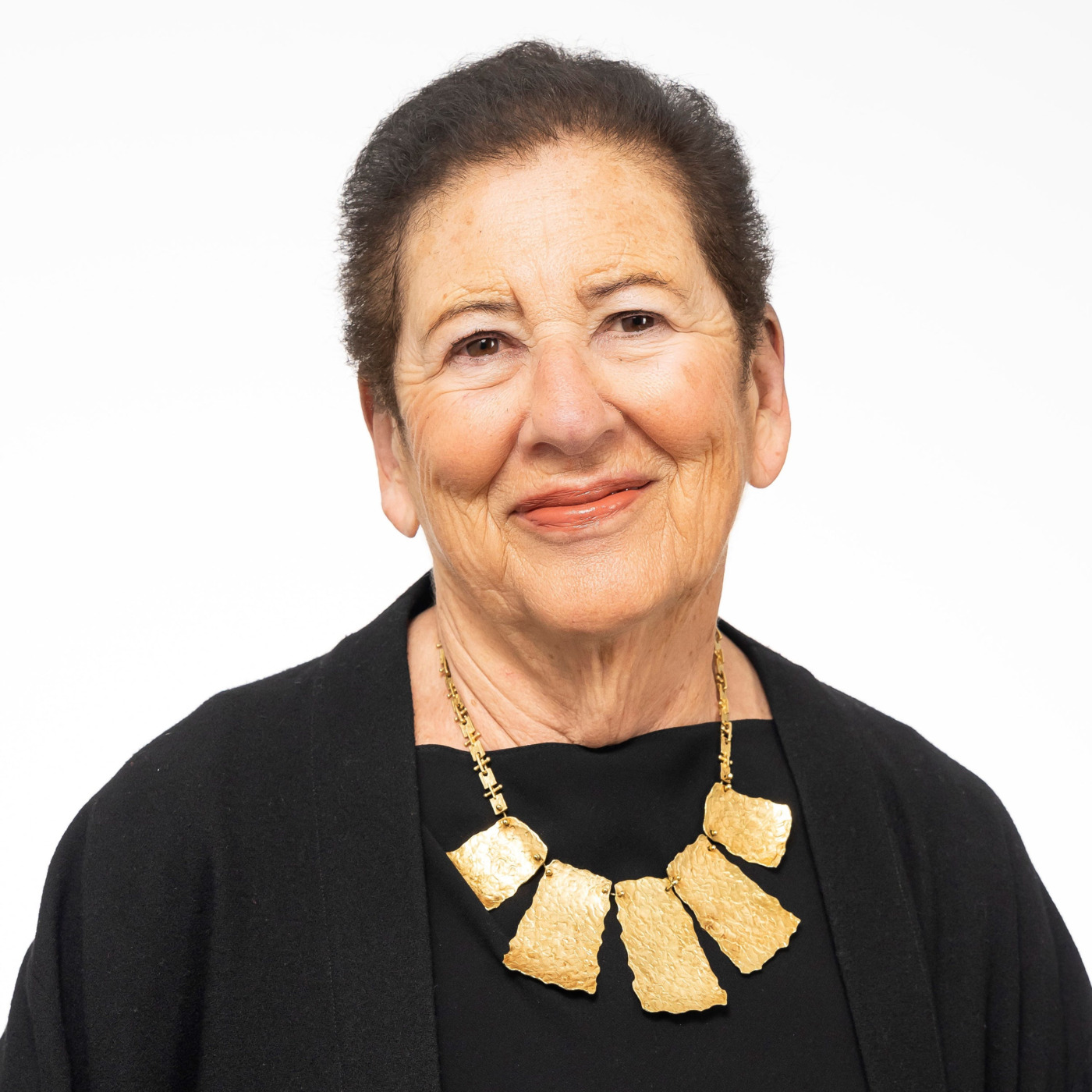
Betsy Cohen: I’m Aoifinn Devitt, and welcome to the 50 Faces podcast., a podcast committed to revealing the richness and diversity of the world of investment by focusing on its people and their stories. I’m joined today by Betsy Cohen, who’s built financial businesses for her whole career. She’s the co-founder and chairman of Cohen Circle, a growth stage investment firm focused on the fintech and impact spaces. She was previously CEO at the Bancorp Bank, which she founded in 2000, and previously worked at Jefferson Bank for 26 years. She sits on numerous boards and has received several awards, being named a Forbes 2022 Most Powerful Self-Made Woman, 25 Outstanding Women Bankers, and many more. Betsy is executive committee member and secretary of Asia Society, founding member of the Asia Society Policy Institute, trustee of the Brookings Institute, honorary trustee of the Metropolitan Museum of Art, and treasurer, managing director, and finance committee member of the Metropolitan Opera. Welcome, Betsy. Thanks for joining me today.
Aoifinn Devitt: Thank you, Aoifinn. It’s a pleasure to join you.
Betsy Cohen: Well, let’s start with your background and career journey. You have quite an extensive resume with many chapters of business building, academic work, and a broad selection of board roles. Can you briefly walk us through this path?
Aoifinn Devitt: I think that it’s really a set of opportunities and one opportunity built on the knowledge that I gained in the previous one. And it’s not only my journey, but it’s the journey of the world around me and where I see that there is what I call negative space, something that’s not being done. And then I get the itch and I just got to do it. So it may look like I’ve moved from thing to thing, but there’s really a theme of understanding First in the legal sense, when I taught law school, insurance and banking, and as I came out, was in an advisory role building on that knowledge and helping clients and recognizing that I would be a much better client than a lawyer. So moving on from there, because I saw that there were so many things that could be done in finance that were not being touched at the moment. So in the ’70s, as women were for the first time identified as bank starters, I decided to start a bank, but not make it solely a women’s bank. That the message really was that I was the CEO, I was knowledgeable, I would lead the direction of the institution, but that’s because I was a well-grounded professional as well as being a woman. And that brought with it some interesting events. So I recognized early on that not all clients or customers of the bank would be ready to talk finance with a woman. So there was a man who was the COO and there was a woman who became the CFO. The CEO thought after a while he could go out and start his own bank. He tried, but it didn’t work. The CFO thought she was really much more qualified to do my job than I was. And so as she pushed back, the board suggested that I fire her for insubordination. Not my mode of operation. So I said to the board, which happened to be all men, I said, just wait 6 months. I will withdraw positive reinforcement, and she will be gone. And indeed it was, and it was a lesson for them as well as an effective way to bring a different management style to the table. During the time that I was building this local bank, there were a lot of adjacent opportunities. That could not be done within the banking structure. And whether that was wraparound mortgages or the conversion of historic properties to more modern uses and the benefits, financial benefits, and putting them into a public fund. Oh, there were many opportunities, each of which, or some of which I explored. And took those companies to the public market by the end of the 1900s. So moving into the 2000s, I was really enraptured by the role that technology could play because I had had the opportunity to be for a number of years at the head of an institution that was very traditional bricks and mortar institution. And really understood that maybe 10 years out, maybe 5 years out, it was hard to predict people would be accessing their financial information as well as their money in a very different way. And that gave rise to the development together with my partner and son Daniel of The Bancorp, which was the first online institution to provide a bank wrapper for non-bank fintech companies and stayed as the CEO of that company for 15 years, building the platform, but also having the opportunity to see the emerging non-bank fintech industry. And so as The years went on, I understood what were the markers of success and maybe what were the markers of failure in what was a widely diverse group of customers, almost 1,000 of them. And then by maybe 2010, 12, recognized that some of those companies had reached a level of maturity both product-wise, distribution-wise, revenue, but also from the corporate point of view and leadership point of view to become public companies. And there was a need for those growth companies to access capital through the public markets. And that gave rise again, together with my long-term partner, whom I’ve known quite a long time, Daniel, to develop the SPAC practice. And for us, it was the hunt for good companies that had all those markers of potential success, not only as good companies, but as good public companies, ’cause we knew that route very well. I guess in about 2020, when we were all isolating and thinking to ourselves, I began to realize that there was an overflow of public companies that were coming through the keyhole, so to speak, and not always of the quality that I liked, but that gave rise to many of the earlier stage companies having need of help. And that’s really how we began to go up and down the capital stack in Cohen Circle. And continue that today.
Betsy Cohen: Well, I’ll just stop you there just for a second because we have a lot to digest in what you’ve just said, and I’d love to move into a whole section discussing some of these opportunities as well as the bones of fintech. But just before this, it’s quite extraordinary to have had such vision, I suppose, such a nose for opportunity, the wherewithal to do something about it, and actually to, to build these practices. Just if you just go back slightly before you ended up in law school, it was anything about your upbringing, your maybe the, the influence on you growing up that gave you this entrepreneurial vision that made you, I suppose, have the ability to act without precedent? As you mentioned, there’s empty space, so you’re kind of forging the strategy. Anything about your early years that you think led to that tendency?
Aoifinn Devitt: Absolutely nothing. I mean, I was always that member of the family who never thought like everyone else. So maybe it was inherent in me. I had a great aunt who So that’s going back some, who was very entrepreneurial and left what was our base location in Philadelphia, went as far as Louisville and opened a department store. But it wasn’t really an influence. I mean, the greatest influence for me was the lack of role models. And so you had to make it up.
Betsy Cohen: Right. So interestingly, then we can talk about that. But is, that that’s what I’ve heard about many women say of your generation who just had no role models. Do you think role models are important though, now that there are some?
Aoifinn Devitt: I think it makes it easier to imagine. It’s been said that if you can’t see it, you can’t be it. There’s a lot to that. So it sparks the imagination. But I think there’s more to the story than simply having a role model within an organization. The most important thing is to have a sponsor. And not necessarily a role model or a mentor, which is always very helpful, but not from a career point of view if you’re moving through a complex, and every organization is complex. So the change in relationship between professional men and professional women is in some ways more important than the role model for the woman, woman to woman, at least from my point of view.
Betsy Cohen: Well, I want to return to this point a little bit later because I do have a little bit to ask you about in terms of the evolution of diversity in the industry. But let’s just stay on fintech for the moment. So you briefly mentioned that there were fintech— there were markers of success and markers of failure. And this was in the first, say, 10 years of the bank corp. How would you say now, now, perhaps if you’re looking back, those companies that have been successful, what were some of the markers of success and failure in the, the fintech, the non-bank technology companies that you allowed to grow?
Aoifinn Devitt: Often there was a confusion in people’s minds between someone who could be a founder, so had the vision to see a new way to do things, and a person who could carry forward as the CEO. And so in our own, because we’ve invested over the last couple of years, maybe in 15 separate private B and C round companies, we are very focused on making sure that the CEO we go in with is the CEO who can scale the company and make it valuable. That’s not always the case, and unless you’re there, you don’t get an opportunity to make that shift. We’re known as founders as well as operators, and not only as investors. So often the board and the CEO will listen to us. And so we have brought forward the merger of companies. Into larger companies where that role can be properly defined. Well, we don’t have it, or there’s a product that can benefit from greater exposure across an adjacent customer base and make it more valuable. That too, we’ve engineered such mergers as well. So we’re always looking for how do you extract appropriate value. And the two instances that I described are instances where you could say that a standalone company might have a marker of failure, but not that the— either the concept or the entity itself as it stands would fail, but it’s in helping to move that forward. Is that helpful?
Betsy Cohen: Absolutely. And we’ll talk a little bit about the venture opportunity as we move on. But before that, obviously you are highly experienced in banks and you know the regional bank arena very well. We’re just recording this in second quarter of 2023, coming off the back of a very high-profile failure. Given we’re speaking of failures, any insights from you into the state of health of the regional banking And, universe you know, what went wrong? Was it an isolated thing? What are your impressions as someone with so much expertise here?
Aoifinn Devitt: I could speak to banking as having very basic principles, and they haven’t changed since the time of, I don’t know, 2,000, 5,000 years ago. They continue to be the same, that a banker should not have only a deep concentration in a single field.. And one should match by duration because things change externally and not only internally, the assets and liabilities. Those were two failures in the Silicon Valley situation. They were banking, in my opinion, and this is not to say that Silicon Valley did not do much good. I mean, it did good. It absolutely did. But they took their eye off those basic principles and maybe weren’t thinking about themselves as running a bank, but as really running a venture fund or running something cognate to a bank, but not within those strictures. And that’s, I think, is a death knell. So is that true of regional banks by and large? Was it true, for example, of Signature? I don’t think so. I don’t think to the same extent. Signature had a very basic loan portfolio, well-attended, well-performing, all the rest of it. The bank was very well run. The excursions into crypto tipped a balance for them in that more of their deposits were attributable to that segment of their business than would have been over the prior 10 or 15 years. True. And so I think they were caught midstream. Could they have rectified it? I had great admiration for the executive team there. I would like to think that they could have. But it all happened so quickly and there was a certain sense of contagion. And I think among the regulators, a panic. And they, to some extent, but not entirely, but to some extent shared clients, didn’t share in the sense of having a partnership, but had the same clients or profiles of clients that Silicon Valley did. And when on that Friday, $42 billion of deposits were withdrawn, $10 billion was withdrawn from Signature, and it looked like a cascading situation. So that’s why on Sunday the regulators took the position that they did. I think there’ll be pain in many of the regional banks, but the pain is not coming from the business model as much as it is coming from the fact that we’re in the interstices of the upward payment of return on deposits and therefore the squeeze on margins. And that is the deposits are short-term and many of the loans are much longer term. So there will be a squeeze. Is that a death knell? I don’t think so, but I think you can see in the economy a slowing of the economy, in part because depositors panicked. Not only were they concerned about stability in the banking or the bank with whom they had deposits, but there was a particularly— I’ll call it grotesque spread between what they were receiving at the banks and what the Treasury bills were paying. So you had a variety of elements that created this waterspout. And I think that will be with us until there’s a righting of that situation over the course of the next maybe 6 to 12 months.
Betsy Cohen: And it’s interesting, I think there’s some discussion around how the way we bank differing, expediting perhaps the idea of a run. And a lot of this is due to some of those kind of fintech innovations. So I just want to use this as a segue into your Rolicon Circle Can you talk a little bit about your vision for that? And if you you’re, know, looking at the landscape today of venture capital and investing, what sectors and opportunities excite you?
Aoifinn Devitt: I think that Cohen Circle is really dedicated to providing investors in a fiduciary way with the best opportunity from the market as it is today and as it can be seen going forward over a period of time, whether that is the opportunity in a more stable public market to support companies that are ready and, and have a need to be public companies in the SPAC format, or whether, as we now see the opportunity more fulsome in the B and C space, in embedded finance, in embedded platforms, the movement forward of technology both in health and finance, The ability to transport those benefits to emerging markets or globally taking the roots of a domestic company. There are many places along that continuum where we think that the experience that we’ve had, and we have it in a couple of different ways, partners ourselves in a long history, and my history is in finance, but I also sat for 20 years on the board of Aetna Health Insurance. So I have a look into the emergence of the health industry or the partners we bring in to fill those knowledge gaps, whether they be folks who have had global experience government experience, understanding of distribution, all of the elements that those entail. We think that both in what I’ll call embedded experiences, because that covers both health and finance. I mean, health and finance are just commodities that you’re distributing. One can find a number of companies where the Organizers of the company recognize that moment of opportunity to get a valuation that just can’t be sustained may not be here just now. And therefore, both for the investor who will take the ride with the company in an area where we can not only provide capital, but we can provide insight As to how to either scale or distribute the product that has been developed. So we’re looking both to the aggregation of our own experience as an element of investment in the companies that we choose.
Betsy Cohen: We are now going to take a short break to speak with the sponsor of this series about what it is that makes them unique.. I sat down with Tom Raver of Alvine Capital. So Alvine Capital has a unique business model that you call reverse inquiry. Can you tell us what reverse inquiry means?
Speaker C: When we were marketing or softly marketing funds, we realized that some institutional investors felt that they were being pushed and every call was the same as the one they just had. And we felt that we had to have another approach to institutional investors. And so we tried to really go behind the scenes and ask them, what exactly are you looking for? If you had a dream scenario and you had an opening in your fund, what would you like to have and how would that fund look? And when we got investors to open up and explain to us what they wanted, we then took down all the information we needed and we went out into the market. It’s a pull sale rather than a push sale. You’re actually helping the investor finding something that’s better than they thought they were looking for in the first place.
Betsy Cohen: In terms of your client base, so you work with a lot of Scandinavian and Northern European institutions. Is there anything on their mind today?
Speaker C: We opened an office in Stockholm last year. We have Nordic roots. We have obviously Nordic-speaking people in London as well. We’ve covered the region for many years. Yes, we know it very well. What are they looking for? What’s happening up in that part of the world is that they’re a leader in anything that’s ESG and impact. Some very large institutions have decided not to do anything at all unless it’s completely impact, completely green. Everyone is looking for good, well-performing private equity and private credit funds. And we’re fortunate that we’re working with both them of in both categories. At the moment, we have a very good selection there.
Betsy Cohen: And now back to the show. This gets to the diversity discussion. There’s a lot of discussion around female venture investors being few and far between, and furthermore, that female founders are not getting the same level of funding at the right stage. What’s your impression on that situation, on the capital raising situation as well for female venture capital? And maybe we can also discuss the industry level of diversity as a whole.
Aoifinn Devitt: Sure. I think in order to invest, one has to have a couple of levels of confidence. And one of the levels is that the people with whom you’re entering into this investment partnership have the experience to do what they say that they might do. And if women are not entering at the highest level from their prior jobs and experience and careers, there’s a disconnect there, or at least it’s not a disconnect, a concern. If you add to that what continues to be, I would say, a keyhole way to look at how women will perform over the long term. It’s not a perfect world. Everybody brings to the table their own baggage. So that makes it hard. The lack of a personal track record, plus the feeling that women might not be able to perform over the long term because they don’t have a lot of examples. So all of this slows it down. Do I think it’s getting better? I do. I really do. Is it perfect? No. Will it ever be perfect? I don’t have any idea. But certainly it’s moving on the women’s side. I think it’s a very personal journey as to how much risk women are willing to take, and it may not be at the same level at this time as that which we find in the general male population. Will that improve as the women themselves gain confidence in their skill sets and experience? Probably, but not tomorrow.
Betsy Cohen: It’s interesting to tie risk appetite to confidence, but it’s a totally natural correlation there, I’m sure. How would you assess your own risk appetite given that you have been a, I say, a sequential founder? And would you say it’s the same today as it was 20, 30 years ago? And obviously risk appetite changes with age as well. How would you say you assess your own?
Aoifinn Devitt: I mean, I think I took baby steps. I did small projects. I did some larger projects. The Bancorp is a significant project. What we did in the SPAC industry, of which we’re actually very proud, all of our companies are trading well. The zeros grew as maybe I gained confidence that I could execute, and I don’t execute alone. Know, You I have a great team., and I couldn’t do it without them, but I can bring a perspective to it and an understanding of both the financial and the social aspects of the business, how to evaluate the capacity of someone to carry a company forward. I’ve seen a lot of these guys and gals, these folks, and so some of it is on an instinctive a learned instinctive basis. And that takes time.
Betsy Cohen: It’s interesting that always comes down to the personalities. I’d love to move a little bit to your board roles just to touch on, A, I’d love to ask, is there a particular connection with Asia that you have given the Asia Society work? And also, what do you seek to bring to those board roles and what makes a good director or chair in your view?
Aoifinn Devitt: My connection to Asia is one of interest. As well as the artistic aspects of Asia. I think I have been working with the Asia Society, you know, as a board member over a period of time during which the relationship between the East and the West has changed enormously. It’s of continuing interest. We’re now at another crisis point, but it took a lot to get to this crisis point. As a board member, I am not your go-to person in terms of organizing a gala, but I am very clear on budget and organization, and I’m not shy about saying it and to ask good questions and continue to push because often, and often on the boards in which I sit, the pleasure of being in the company of people who share your passions overtakes you. We used to say you leave your brains at the door in the not-for-profit board role, but I try to take my brains through the door and be helpful there.
Betsy Cohen: I like that continuing to push image because I had a previous guest who her whole philosophy is push in life, and for her it means persevere until something happens. And that she’s made incredible her steps in her career. But I think you agree, getting a kind of pat answer and not being afraid, and that takes confidence as well and experience to keep digging where you think there’s something there and you wanted to kind of get the information. And I think often board meetings are pushed for time and people are rushed and they want to get onto the next item. It does take a real skill to get that item discussed well. Just want to move to some personal reflections now. So clearly a career like yours doesn’t come without some setbacks. Perhaps investment mistakes, challenges, were there any in particular that you learned core lessons from?
Aoifinn Devitt: I think you learn at every stage, and that may not sound like an answer to give an example, but you always have to be vigilant because yesterday’s mistakes are not going to be tomorrow’s mistakes. So if you’re interested in extrapolating from history, Maybe this isn’t the business for you, but we all make mistakes. We misjudge people, we misjudge the market for— we misjudge consumer appetite, we misjudge— there are a thousand things that you can misjudge, and you just have to do your best to take them, as many of them into account as humanly possible and have a Plan B or.
Betsy Cohen: C or D. It’s interesting because there’s that balance between learning from mistakes but not ruminating over them to the point that you can’t adapt and take new risks. To just, I think, be open to rethinking how something goes. But it is, it is an exercise in humility, certainly being in markets, and I presume in banks, an ongoing exercise. Earlier we touched on the importance of sponsors, more so even than mentors. Were there any key sponsors that you had, or did you have any influence you mentioned your great aunt, but maybe that was a distant time and great influence on your career.
Aoifinn Devitt: No, because I never had a career. I really just had a set of opportunities that I made for myself. And remember, I graduated from law school in 1966, so I entered the work world at a time when sponsors were not available. But what I did tell when I would speak to young women who were beginning their careers by going to get a Master’s of Business, an MBA, that if they were going to ask if they were going to try to get a job in a large or mid-sized corporation, that they look for one in which the CEO had only daughters, not had daughters, but had only daughters. Because the emotional connection that, that brings where a CEO wants to see not the instantiation of himself, but his children move forward and has a day-to-day understanding of the frustrations cannot be replaced.
Betsy Cohen: Very interesting. Not so sure how many of those there are, but I’m sure there’s enough to make it. But it’s really interesting ’cause it’s about that lived experience, I suppose, as much that is projected.
Aoifinn Devitt: And even if you don’t hit it right exactly, being aware that this is an element of decision-making, that decision-making is not all by the ledger, is important. I mean, women have succeeded in segments of finance, for example, where the results are measurable, portfolio performance, we could go on. So those are markers that have squeezed out the emotional element. Will this person succeed as a You manager? Know, that kind of thing. So that’s been the first entry point of success.
Betsy Cohen: Really interesting. And I wonder, would a female CEO have the same lived experience as a male CEO with only daughters? Because just as you said, he would want to see himself reflected perhaps in a successful woman. A woman may want herself to be, you know, get see to a successful woman.
Aoifinn Devitt: I don’t think we have enough of them to really know.
Betsy Cohen: That’s very interesting. My last question is around any advice you would give to your younger self or any creed or motto that you live by now. As you approach that, what is it, the set of opportunities that you’re living?
Aoifinn Devitt: I think if you don’t know the answer, just make it up and go forward. And if you’re wrong, you’re wrong, but work your way through the issue. There are no absolute nos.
Betsy Cohen: Well, Betsy, this has been a remarkably energizing discussion. Your framing of your career as a set of opportunities, and not a career, simply your life experience as a set of opportunities, is extremely refreshing. I can say you really are one of a kind. The way you describe your approach to opportunities, to empty space, is at once slightly terrifying, but also extremely motivating and empowering. So thank you so much for coming here and sharing your insights with us.
Aoifinn Devitt: Well, thank you for asking me, Aoifinn. It’s been my pleasure.
Betsy Cohen: I’m Aoifinn Devitt. Thank you for listening to the 50 Faces Podcast. If you liked what you heard and would like to tune in to hear more inspiring investors and their personal journeys, please subscribe on Apple Podcasts or wherever you get your podcasts. This podcast is for informational purposes only and should not be construed as investment advice, and all views are personal and should not be attributed to the organizations and affiliations of the host or any guest.
Aoifinn Devitt: I think there’s more to the story than simply having a role model within an organization. The most important thing is to have a sponsor and not necessarily a role model or a mentor, which is always very helpful, but not from a career point of view. If you’re moving through a complex, and every organization is complex. So the change in relationship between professional men and professional women is in some ways more important than the role model for the woman, woman to woman, at least from my point of view.
Betsy Cohen: I’m Aoifinn Devitt, and welcome to the 50 Faces podcast., a podcast committed to revealing the richness and diversity of the world of investment by focusing on its people and their stories. I’m joined today by Betsy Cohen, who’s built financial businesses for her whole career. She’s the co-founder and chairman of Cohen Circle, a growth stage investment firm focused on the fintech and impact spaces. She was previously CEO at the Bancorp Bank, which she founded in 2000, and previously worked at Jefferson Bank for 26 years. She sits on numerous boards and has received several awards, being named a Forbes 2022 Most Powerful Self-Made Woman, 25 Outstanding Women Bankers, and many more. Betsy is executive committee member and secretary of Asia Society, founding member of the Asia Society Policy Institute, trustee of the Brookings Institute, honorary trustee of the Metropolitan Museum of Art, and treasurer, managing director, and finance committee member of the Metropolitan Opera. Welcome, Betsy. Thanks for joining me today.
Aoifinn Devitt: Thank you, Aoifinn. It’s a pleasure to join you.
Betsy Cohen: Well, let’s start with your background and career journey. You have quite an extensive resume with many chapters of business building, academic work, and a broad selection of board roles. Can you briefly walk us through this path?
Aoifinn Devitt: I think that it’s really a set of opportunities and one opportunity built on the knowledge that I gained in the previous one. And it’s not only my journey, but it’s the journey of the world around me and where I see that there is what I call negative space, something that’s not being done. And then I get the itch and I just got to do it. So it may look like I’ve moved from thing to thing, but there’s really a theme of understanding First in the legal sense, when I taught law school, insurance and banking, and as I came out, was in an advisory role building on that knowledge and helping clients and recognizing that I would be a much better client than a lawyer. So moving on from there, because I saw that there were so many things that could be done in finance that were not being touched at the moment. So in the ’70s, as women were for the first time identified as bank starters, I decided to start a bank, but not make it solely a women’s bank. That the message really was that I was the CEO, I was knowledgeable, I would lead the direction of the institution, but that’s because I was a well-grounded professional as well as being a woman. And that brought with it some interesting events. So I recognized early on that not all clients or customers of the bank would be ready to talk finance with a woman. So there was a man who was the COO and there was a woman who became the CFO. The CEO thought after a while he could go out and start his own bank. He tried, but it didn’t work. The CFO thought she was really much more qualified to do my job than I was. And so as she pushed back, the board suggested that I fire her for insubordination. Not my mode of operation. So I said to the board, which happened to be all men, I said, just wait 6 months. I will withdraw positive reinforcement, and she will be gone. And indeed it was, and it was a lesson for them as well as an effective way to bring a different management style to the table. During the time that I was building this local bank, there were a lot of adjacent opportunities. That could not be done within the banking structure. And whether that was wraparound mortgages or the conversion of historic properties to more modern uses and the benefits, financial benefits, and putting them into a public fund. Oh, there were many opportunities, each of which, or some of which I explored. And took those companies to the public market by the end of the 1900s. So moving into the 2000s, I was really enraptured by the role that technology could play because I had had the opportunity to be for a number of years at the head of an institution that was very traditional bricks and mortar institution. And really understood that maybe 10 years out, maybe 5 years out, it was hard to predict people would be accessing their financial information as well as their money in a very different way. And that gave rise to the development together with my partner and son Daniel of The Bancorp, which was the first online institution to provide a bank wrapper for non-bank fintech companies and stayed as the CEO of that company for 15 years, building the platform, but also having the opportunity to see the emerging non-bank fintech industry. And so as The years went on, I understood what were the markers of success and maybe what were the markers of failure in what was a widely diverse group of customers, almost 1,000 of them. And then by maybe 2010, 12, recognized that some of those companies had reached a level of maturity both product-wise, distribution-wise, revenue, but also from the corporate point of view and leadership point of view to become public companies. And there was a need for those growth companies to access capital through the public markets. And that gave rise again, together with my long-term partner, whom I’ve known quite a long time, Daniel, to develop the SPAC practice. And for us, it was the hunt for good companies that had all those markers of potential success, not only as good companies, but as good public companies, ’cause we knew that route very well. I guess in about 2020, when we were all isolating and thinking to ourselves, I began to realize that there was an overflow of public companies that were coming through the keyhole, so to speak, and not always of the quality that I liked, but that gave rise to many of the earlier stage companies having need of help. And that’s really how we began to go up and down the capital stack in Cohen Circle. And continue that today.
Betsy Cohen: Well, I’ll just stop you there just for a second because we have a lot to digest in what you’ve just said, and I’d love to move into a whole section discussing some of these opportunities as well as the bones of fintech. But just before this, it’s quite extraordinary to have had such vision, I suppose, such a nose for opportunity, the wherewithal to do something about it, and actually to, to build these practices. Just if you just go back slightly before you ended up in law school, it was anything about your upbringing, your maybe the, the influence on you growing up that gave you this entrepreneurial vision that made you, I suppose, have the ability to act without precedent? As you mentioned, there’s empty space, so you’re kind of forging the strategy. Anything about your early years that you think led to that tendency?
Aoifinn Devitt: Absolutely nothing. I mean, I was always that member of the family who never thought like everyone else. So maybe it was inherent in me. I had a great aunt who So that’s going back some, who was very entrepreneurial and left what was our base location in Philadelphia, went as far as Louisville and opened a department store. But it wasn’t really an influence. I mean, the greatest influence for me was the lack of role models. And so you had to make it up.
Betsy Cohen: Right. So interestingly, then we can talk about that. But is, that that’s what I’ve heard about many women say of your generation who just had no role models. Do you think role models are important though, now that there are some?
Aoifinn Devitt: I think it makes it easier to imagine. It’s been said that if you can’t see it, you can’t be it. There’s a lot to that. So it sparks the imagination. But I think there’s more to the story than simply having a role model within an organization. The most important thing is to have a sponsor. And not necessarily a role model or a mentor, which is always very helpful, but not from a career point of view if you’re moving through a complex, and every organization is complex. So the change in relationship between professional men and professional women is in some ways more important than the role model for the woman, woman to woman, at least from my point of view.
Betsy Cohen: Well, I want to return to this point a little bit later because I do have a little bit to ask you about in terms of the evolution of diversity in the industry. But let’s just stay on fintech for the moment. So you briefly mentioned that there were fintech— there were markers of success and markers of failure. And this was in the first, say, 10 years of the bank corp. How would you say now, now, perhaps if you’re looking back, those companies that have been successful, what were some of the markers of success and failure in the, the fintech, the non-bank technology companies that you allowed to grow?
Aoifinn Devitt: Often there was a confusion in people’s minds between someone who could be a founder, so had the vision to see a new way to do things, and a person who could carry forward as the CEO. And so in our own, because we’ve invested over the last couple of years, maybe in 15 separate private B and C round companies, we are very focused on making sure that the CEO we go in with is the CEO who can scale the company and make it valuable. That’s not always the case, and unless you’re there, you don’t get an opportunity to make that shift. We’re known as founders as well as operators, and not only as investors. So often the board and the CEO will listen to us. And so we have brought forward the merger of companies. Into larger companies where that role can be properly defined. Well, we don’t have it, or there’s a product that can benefit from greater exposure across an adjacent customer base and make it more valuable. That too, we’ve engineered such mergers as well. So we’re always looking for how do you extract appropriate value. And the two instances that I described are instances where you could say that a standalone company might have a marker of failure, but not that the— either the concept or the entity itself as it stands would fail, but it’s in helping to move that forward. Is that helpful?
Betsy Cohen: Absolutely. And we’ll talk a little bit about the venture opportunity as we move on. But before that, obviously you are highly experienced in banks and you know the regional bank arena very well. We’re just recording this in second quarter of 2023, coming off the back of a very high-profile failure. Given we’re speaking of failures, any insights from you into the state of health of the regional banking And, universe you know, what went wrong? Was it an isolated thing? What are your impressions as someone with so much expertise here?
Aoifinn Devitt: I could speak to banking as having very basic principles, and they haven’t changed since the time of, I don’t know, 2,000, 5,000 years ago. They continue to be the same, that a banker should not have only a deep concentration in a single field.. And one should match by duration because things change externally and not only internally, the assets and liabilities. Those were two failures in the Silicon Valley situation. They were banking, in my opinion, and this is not to say that Silicon Valley did not do much good. I mean, it did good. It absolutely did. But they took their eye off those basic principles and maybe weren’t thinking about themselves as running a bank, but as really running a venture fund or running something cognate to a bank, but not within those strictures. And that’s, I think, is a death knell. So is that true of regional banks by and large? Was it true, for example, of Signature? I don’t think so. I don’t think to the same extent. Signature had a very basic loan portfolio, well-attended, well-performing, all the rest of it. The bank was very well run. The excursions into crypto tipped a balance for them in that more of their deposits were attributable to that segment of their business than would have been over the prior 10 or 15 years. True. And so I think they were caught midstream. Could they have rectified it? I had great admiration for the executive team there. I would like to think that they could have. But it all happened so quickly and there was a certain sense of contagion. And I think among the regulators, a panic. And they, to some extent, but not entirely, but to some extent shared clients, didn’t share in the sense of having a partnership, but had the same clients or profiles of clients that Silicon Valley did. And when on that Friday, $42 billion of deposits were withdrawn, $10 billion was withdrawn from Signature, and it looked like a cascading situation. So that’s why on Sunday the regulators took the position that they did. I think there’ll be pain in many of the regional banks, but the pain is not coming from the business model as much as it is coming from the fact that we’re in the interstices of the upward payment of return on deposits and therefore the squeeze on margins. And that is the deposits are short-term and many of the loans are much longer term. So there will be a squeeze. Is that a death knell? I don’t think so, but I think you can see in the economy a slowing of the economy, in part because depositors panicked. Not only were they concerned about stability in the banking or the bank with whom they had deposits, but there was a particularly— I’ll call it grotesque spread between what they were receiving at the banks and what the Treasury bills were paying. So you had a variety of elements that created this waterspout. And I think that will be with us until there’s a righting of that situation over the course of the next maybe 6 to 12 months.
Betsy Cohen: And it’s interesting, I think there’s some discussion around how the way we bank differing, expediting perhaps the idea of a run. And a lot of this is due to some of those kind of fintech innovations. So I just want to use this as a segue into your Rolicon Circle Can you talk a little bit about your vision for that? And if you you’re, know, looking at the landscape today of venture capital and investing, what sectors and opportunities excite you?
Aoifinn Devitt: I think that Cohen Circle is really dedicated to providing investors in a fiduciary way with the best opportunity from the market as it is today and as it can be seen going forward over a period of time, whether that is the opportunity in a more stable public market to support companies that are ready and, and have a need to be public companies in the SPAC format, or whether, as we now see the opportunity more fulsome in the B and C space, in embedded finance, in embedded platforms, the movement forward of technology both in health and finance, The ability to transport those benefits to emerging markets or globally taking the roots of a domestic company. There are many places along that continuum where we think that the experience that we’ve had, and we have it in a couple of different ways, partners ourselves in a long history, and my history is in finance, but I also sat for 20 years on the board of Aetna Health Insurance. So I have a look into the emergence of the health industry or the partners we bring in to fill those knowledge gaps, whether they be folks who have had global experience government experience, understanding of distribution, all of the elements that those entail. We think that both in what I’ll call embedded experiences, because that covers both health and finance. I mean, health and finance are just commodities that you’re distributing. One can find a number of companies where the Organizers of the company recognize that moment of opportunity to get a valuation that just can’t be sustained may not be here just now. And therefore, both for the investor who will take the ride with the company in an area where we can not only provide capital, but we can provide insight As to how to either scale or distribute the product that has been developed. So we’re looking both to the aggregation of our own experience as an element of investment in the companies that we choose.
Betsy Cohen: We are now going to take a short break to speak with the sponsor of this series about what it is that makes them unique.. I sat down with Tom Raver of Alvine Capital. So Alvine Capital has a unique business model that you call reverse inquiry. Can you tell us what reverse inquiry means?
Speaker C: When we were marketing or softly marketing funds, we realized that some institutional investors felt that they were being pushed and every call was the same as the one they just had. And we felt that we had to have another approach to institutional investors. And so we tried to really go behind the scenes and ask them, what exactly are you looking for? If you had a dream scenario and you had an opening in your fund, what would you like to have and how would that fund look? And when we got investors to open up and explain to us what they wanted, we then took down all the information we needed and we went out into the market. It’s a pull sale rather than a push sale. You’re actually helping the investor finding something that’s better than they thought they were looking for in the first place.
Betsy Cohen: In terms of your client base, so you work with a lot of Scandinavian and Northern European institutions. Is there anything on their mind today?
Speaker C: We opened an office in Stockholm last year. We have Nordic roots. We have obviously Nordic-speaking people in London as well. We’ve covered the region for many years. Yes, we know it very well. What are they looking for? What’s happening up in that part of the world is that they’re a leader in anything that’s ESG and impact. Some very large institutions have decided not to do anything at all unless it’s completely impact, completely green. Everyone is looking for good, well-performing private equity and private credit funds. And we’re fortunate that we’re working with both them of in both categories. At the moment, we have a very good selection there.
Betsy Cohen: And now back to the show. This gets to the diversity discussion. There’s a lot of discussion around female venture investors being few and far between, and furthermore, that female founders are not getting the same level of funding at the right stage. What’s your impression on that situation, on the capital raising situation as well for female venture capital? And maybe we can also discuss the industry level of diversity as a whole.
Aoifinn Devitt: Sure. I think in order to invest, one has to have a couple of levels of confidence. And one of the levels is that the people with whom you’re entering into this investment partnership have the experience to do what they say that they might do. And if women are not entering at the highest level from their prior jobs and experience and careers, there’s a disconnect there, or at least it’s not a disconnect, a concern. If you add to that what continues to be, I would say, a keyhole way to look at how women will perform over the long term. It’s not a perfect world. Everybody brings to the table their own baggage. So that makes it hard. The lack of a personal track record, plus the feeling that women might not be able to perform over the long term because they don’t have a lot of examples. So all of this slows it down. Do I think it’s getting better? I do. I really do. Is it perfect? No. Will it ever be perfect? I don’t have any idea. But certainly it’s moving on the women’s side. I think it’s a very personal journey as to how much risk women are willing to take, and it may not be at the same level at this time as that which we find in the general male population. Will that improve as the women themselves gain confidence in their skill sets and experience? Probably, but not tomorrow.
Betsy Cohen: It’s interesting to tie risk appetite to confidence, but it’s a totally natural correlation there, I’m sure. How would you assess your own risk appetite given that you have been a, I say, a sequential founder? And would you say it’s the same today as it was 20, 30 years ago? And obviously risk appetite changes with age as well. How would you say you assess your own?
Aoifinn Devitt: I mean, I think I took baby steps. I did small projects. I did some larger projects. The Bancorp is a significant project. What we did in the SPAC industry, of which we’re actually very proud, all of our companies are trading well. The zeros grew as maybe I gained confidence that I could execute, and I don’t execute alone. Know, You I have a great team., and I couldn’t do it without them, but I can bring a perspective to it and an understanding of both the financial and the social aspects of the business, how to evaluate the capacity of someone to carry a company forward. I’ve seen a lot of these guys and gals, these folks, and so some of it is on an instinctive a learned instinctive basis. And that takes time.
Betsy Cohen: It’s interesting that always comes down to the personalities. I’d love to move a little bit to your board roles just to touch on, A, I’d love to ask, is there a particular connection with Asia that you have given the Asia Society work? And also, what do you seek to bring to those board roles and what makes a good director or chair in your view?
Aoifinn Devitt: My connection to Asia is one of interest. As well as the artistic aspects of Asia. I think I have been working with the Asia Society, you know, as a board member over a period of time during which the relationship between the East and the West has changed enormously. It’s of continuing interest. We’re now at another crisis point, but it took a lot to get to this crisis point. As a board member, I am not your go-to person in terms of organizing a gala, but I am very clear on budget and organization, and I’m not shy about saying it and to ask good questions and continue to push because often, and often on the boards in which I sit, the pleasure of being in the company of people who share your passions overtakes you. We used to say you leave your brains at the door in the not-for-profit board role, but I try to take my brains through the door and be helpful there.
Betsy Cohen: I like that continuing to push image because I had a previous guest who her whole philosophy is push in life, and for her it means persevere until something happens. And that she’s made incredible her steps in her career. But I think you agree, getting a kind of pat answer and not being afraid, and that takes confidence as well and experience to keep digging where you think there’s something there and you wanted to kind of get the information. And I think often board meetings are pushed for time and people are rushed and they want to get onto the next item. It does take a real skill to get that item discussed well. Just want to move to some personal reflections now. So clearly a career like yours doesn’t come without some setbacks. Perhaps investment mistakes, challenges, were there any in particular that you learned core lessons from?
Aoifinn Devitt: I think you learn at every stage, and that may not sound like an answer to give an example, but you always have to be vigilant because yesterday’s mistakes are not going to be tomorrow’s mistakes. So if you’re interested in extrapolating from history, Maybe this isn’t the business for you, but we all make mistakes. We misjudge people, we misjudge the market for— we misjudge consumer appetite, we misjudge— there are a thousand things that you can misjudge, and you just have to do your best to take them, as many of them into account as humanly possible and have a Plan B or.
Betsy Cohen: C or D. It’s interesting because there’s that balance between learning from mistakes but not ruminating over them to the point that you can’t adapt and take new risks. To just, I think, be open to rethinking how something goes. But it is, it is an exercise in humility, certainly being in markets, and I presume in banks, an ongoing exercise. Earlier we touched on the importance of sponsors, more so even than mentors. Were there any key sponsors that you had, or did you have any influence you mentioned your great aunt, but maybe that was a distant time and great influence on your career.
Aoifinn Devitt: No, because I never had a career. I really just had a set of opportunities that I made for myself. And remember, I graduated from law school in 1966, so I entered the work world at a time when sponsors were not available. But what I did tell when I would speak to young women who were beginning their careers by going to get a Master’s of Business, an MBA, that if they were going to ask if they were going to try to get a job in a large or mid-sized corporation, that they look for one in which the CEO had only daughters, not had daughters, but had only daughters. Because the emotional connection that, that brings where a CEO wants to see not the instantiation of himself, but his children move forward and has a day-to-day understanding of the frustrations cannot be replaced.
Betsy Cohen: Very interesting. Not so sure how many of those there are, but I’m sure there’s enough to make it. But it’s really interesting ’cause it’s about that lived experience, I suppose, as much that is projected.
Aoifinn Devitt: And even if you don’t hit it right exactly, being aware that this is an element of decision-making, that decision-making is not all by the ledger, is important. I mean, women have succeeded in segments of finance, for example, where the results are measurable, portfolio performance, we could go on. So those are markers that have squeezed out the emotional element. Will this person succeed as a You manager? Know, that kind of thing. So that’s been the first entry point of success.
Betsy Cohen: Really interesting. And I wonder, would a female CEO have the same lived experience as a male CEO with only daughters? Because just as you said, he would want to see himself reflected perhaps in a successful woman. A woman may want herself to be, you know, get see to a successful woman.
Aoifinn Devitt: I don’t think we have enough of them to really know.
Betsy Cohen: That’s very interesting. My last question is around any advice you would give to your younger self or any creed or motto that you live by now. As you approach that, what is it, the set of opportunities that you’re living?
Aoifinn Devitt: I think if you don’t know the answer, just make it up and go forward. And if you’re wrong, you’re wrong, but work your way through the issue. There are no absolute nos.
Betsy Cohen: Well, Betsy, this has been a remarkably energizing discussion. Your framing of your career as a set of opportunities, and not a career, simply your life experience as a set of opportunities, is extremely refreshing. I can say you really are one of a kind. The way you describe your approach to opportunities, to empty space, is at once slightly terrifying, but also extremely motivating and empowering. So thank you so much for coming here and sharing your insights with us.
Aoifinn Devitt: Well, thank you for asking me, Aoifinn. It’s been my pleasure.
Betsy Cohen: I’m Aoifinn Devitt. Thank you for listening to the 50 Faces Podcast. If you liked what you heard and would like to tune in to hear more inspiring investors and their personal journeys, please subscribe on Apple Podcasts or wherever you get your podcasts. This podcast is for informational purposes only and should not be construed as investment advice, and all views are personal and should not be attributed to the organizations and affiliations of the host or any guest.