Aoifinn Devitt: This podcast is brought to you with the kind support of Plutus Capital, a female-run investment management firm based in Evanston, Illinois, which works with clients on a wide variety of mandates such as custom diversity solutions, manager due diligence, diversified hedge fund-to-fund allocations, and advisory services.
Bob Snigaroff: It’s kind of interesting, I think, that they are overlooked Native Americans. There are so few Native Americans, it tends to be the case that noteworthy accomplishments by them are not noticed.
Aoifinn Devitt: Our next guest grew up in a fishing community in Alaska and is of Native American heritage. He ended up on Wall Street and is now running his own investment management firm. Let’s hear why he enjoys classical literature and thinks it offers guides for life that we can all learn.
Bob Snigaroff: From.
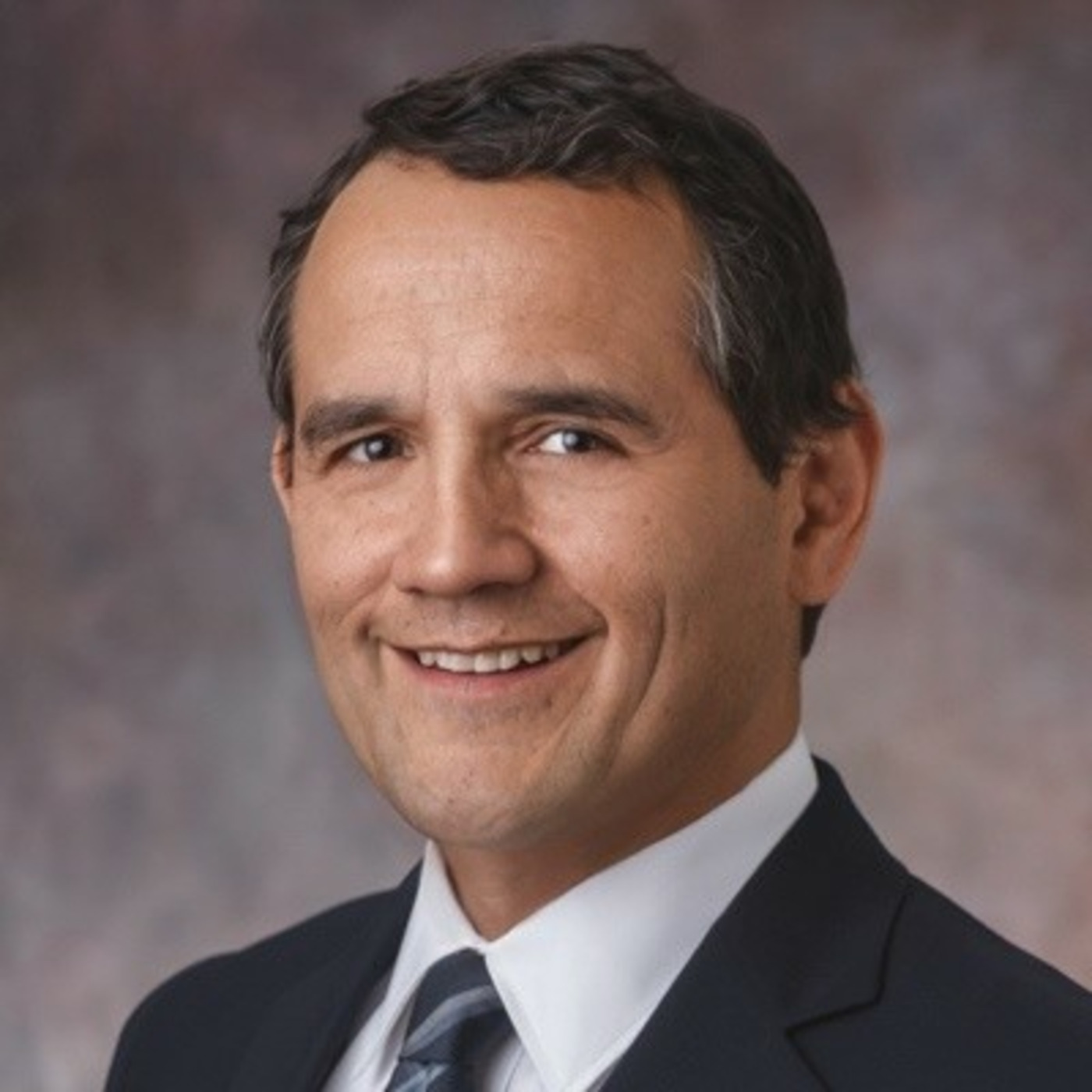
Aoifinn Devitt: I’m Aoifinn Devitt, and welcome to the 50 Faces Podcast, a podcast committed to revealing the richness and diversity of the world of investment by focusing on its people and their stories. I’m joined today by Bob Snigaroff, who is President and CIO at Denali Advisors based in San Diego. The firm is named after Mount Denali, the highest peak in the USA, which is located in Bob’s native Alaska, and the firm is classified as a minority-run firm due to Bob’s Native American heritage. He has a PhD in economic sociology. Welcome, Bob. Thanks for joining me today.
Bob Snigaroff: Thank you, Aoifinn.
Aoifinn Devitt: Let’s start with talking about where you grew up. We know it was Alaska, but, um, what did you study and how did you come to enter the world of investing?
Bob Snigaroff: So I grew up in a small town called Kenai, Alaska. It was a fishing And then as I got a little older, they discovered oil nearby, but I worked in the fishing industry mainly. Kind of an interesting industry for young people. You have very, very long hours in the summer because that’s the way they do it. And then I went off to college and then went off to get an MBA with a scholarship. Very thankfully for the scholarship that I received. I went to USC and I graduated in a time when it was a little more difficult to obtain work. I and some of my classmates actually did not. I had trouble getting work. I ended up doing an after-MBA internship at Wall Street for an asset management company. And then I was able to get a job at the Alaska Permanent Fund, which is the big state endowment. In Alaska. And I remember when I interviewed at the investment management company, I asked them what they did and the interviewee said, “Asset management.” And I was, I think, smart enough to not ask what that was. And I got that internship and then got into the industry as a result of that. So it was a really neat experience from Kenai. To go to Wall Street, the skyscrapers and the environment was really pretty spectacular. And then working in Juneau, Alaska, which is very different from Kenai where I grew up, that was also a really neat experience. And I fell in— I immediately, I knew nothing about the industry. It’s a boutique industry, investment management, but I fell in love with it immediately.
Aoifinn Devitt: And I’m always interested in people’s educational backgrounds and how it informs their approach to investing. Can you talk about PhD in economic sociology, and how did that inform your approach to investing?
Bob Snigaroff: So I got that later in life, and so it was not a big influence on my investment work. It was actually very helpful because I studied in time series econometrics and some things that I didn’t do in my day-to-day life— mathematical economics and even microeconomics, calculus-based— and that’s not the sort of thing that was covered in CFA or was covered in our industry work, but it was a really neat set of training to help me read formal arguments and make formal arguments a little better. I mainly learned my outlook on investing on the equity side. At the Alaska Permanent Fund, I was working in fixed income, and I came to realize that when I was investing in short-term fixed income, the importance of liquidity. And that was actually really, I think, interesting training for somebody who’s on the equity side doing equity asset management.
Aoifinn Devitt: And how would you describe your investment philosophy now, maybe based on what you learned at the Alaska Permanent, how it’s evolved over the years?
Bob Snigaroff: Yeah. So we focus on companies that have high-quality earning streams. And we have a strong focus on liquidity by virtue of an argument. And we actually got published in the Financial Analyst Journal, an argument that really outlines our investment philosophy, which I think is sort of a neat coup. And in that, we describe what we define as a stock’s network value, a type of liquidity argument, really a type of argument concerning the moneyness of stocks. And we think that is very important. Liquidity is an important way that investors think about stock values. And it turns out to be very powerful when you’re trying to describe the cross-section using earnings and liquidity. And we actually just got another paper published in the Quarterly Review of Economics and Finance using earnings and liquidity. Similar to the Fama-French approach, where we describe the cross-section very powerfully.
Aoifinn Devitt: And what led you then to strike out on your own and start your own firm?
Bob Snigaroff: For some reason, as soon as I started work at the Alaska Permanent Fund, I had an entrepreneurial bent. I really wanted to form a business from the very get-go, and I’m not really sure why that was the case. Just sort of in my makeup, I guess. I have a friend who started and sold a successful software company, and he said that entrepreneurs live by their wits. And I was just listening to a lecture about creativity, and they mentioned that entrepreneurs tend to be very creative, and creative people are attracted to being entrepreneurs. I was very much motivated by an ability to be creative, to bring my own ideas into the way we do things, and that was perhaps the big motive driver for me starting a firm.
Aoifinn Devitt: Looking at kind of barriers to entry to starting a firm, certainly they are high and probably rising. Is that your experience? Certainly, because I know you’ve been classified as an emerging firm, or a diverse firm in the past. Is the experience any different for that group?
Bob Snigaroff: Yes, actually. And we’ve actually even published several articles about how difficult it is to grow a small firm. And if you look at the way the industry has evolved in the past 25, 30 years— 30 years ago, if you take the industry and you divide it into two halves And the top half of the industry are the larger firms in terms of AUM. And you look at their market share 30 years ago, it was about 90%. So it’s a pretty concentrated industry. That’s actually similar to other industries. But if you look at that concentration today, sort of the bottom half managed about 10%. Today, the bottom half manages less than 2%. Over the past 30 years, you’ve had an extreme increase, an 8x really increase in concentration to the detriment of smaller firms. Not only is it difficult to launch a small firm, it is very difficult to grow a small firm. At the time we wrote one of our articles, there were several arguments that pertained to the size concentration growing bigger, One of the common arguments you hear is passive investing. The same thing is true if you take out the effective passive. Industry concentration has grown really markedly, and it is really driven by the buying behavior of the pension funds and institutions themselves. They like to favor larger firms and they have rules like, “We do not want to be more than 10%.” of the assets of a manager. And so that makes it extremely difficult for a smaller firm to grow today.
Aoifinn Devitt: And let’s now go to the investment industry more generally. You mentioned being captivated, I suppose, by the world of investment and where that started. What do you like most about that as an industry to work in?
Bob Snigaroff: I love the ability to work with ideas. And ideas that have impact on portfolios and the way capital gets allocated, the way businesses are financed. We make decisions about really the way the world works and who receives capital. But the ability to work in an industry where ideas have very powerful implications and impact on what you’re doing is just extremely attractive.
Aoifinn Devitt: And now look, let’s look at the industry as a whole and the level of diversity in it. What are your thoughts on the current levels of diversity, and is that improving in your view?
Bob Snigaroff: I do keep my nose to the grindstone, and so I haven’t been looking at the industry even though I was on your side of the table at one time. And so I paid more attention to the industry dynamics then. And now today I pay more attention to stock prices and asset pricing research. It seems in some respects, anecdotally, it seems like diversity is improving. Larger firms and institutions are paying more attention to that. That is a decision factor. Both in hiring of individuals and firms in many cases. If you look at the industry of asset managers though, it doesn’t seem to be changing dramatically. And I haven’t looked at this in the past half dozen years, but 5 or 6 years ago, it was certainly the case that diverse-owned firms owned a very small manage a very small share of overall market assets. So there’s some improvement, but at the firm level, it seems not to be— we don’t see a lot of improvement.
Aoifinn Devitt: I’d love to ask you about your own somewhat unique perspective as a— due to your Native American heritage. Recently, a colleague of mine in the industry drew my attention to Deb Haaland becoming the first Native American to serve as cabinet secretary. Which I knew about, but what he drew my attention to is that that appointment attracted virtually no excitement on Twitter, elsewhere on social media, that there was little attention drawn to the fact that this was a historic first for, as a Native American. Is diversity, is this a group that’s somewhat overlooked by the current diversity initiatives? Do Native Americans have a seat at the table in your view, whether in the industry or in society at large?
Bob Snigaroff: Well, that’s an interesting observation. There was a vice president who was half Native American whose name was Charles Curtis, and nobody— that was actually in the Hoover administration— nobody knows that. In sports, that’s not true. People know the accomplishments of Jim Thorpe, but in business and in politics, that seems to be true. Yes. It’s the case there are very few Native Americans in the population today as a share of the population, just depending on how you classify, 2% or less. And the educational and professional attainment is somewhat lower with Native Americans. And then there’s a lot of attention paid to Native Americans because of the one industry that they’ve had a lot of success. They have used their status as a reservation to set up gaming business operations, and those are well known. But people often get the misperception that Indian tribes are rich, and there are a few very wealthy Indian tribes where the individual members of the tribe are wealthy, but it’s an extreme minority of the tribal population, Native American population. And in fact, it’s still a case that the Native American population has very low income, lower than any minority, and quite low representation in business and, uh, in finance as well.
Aoifinn Devitt: I think one only has to drive through New Mexico or through some of the reservations to see, I think, that the abject poverty that is in place in many of these areas. And I would suppose more representation, like in any minority, is key to shining a light and increasing visibility for that segment. Have you, in your status as a minority manager, has that ever been an issue in terms of have any investors signaled a desire to include you in the groups of minorities that they’re seeking to, to endorse and support?
Bob Snigaroff: Honestly, we get some attention and have won some business by virtue of us being a diverse supplier. That’s really meat and It doesn’t seem to be the case that, uh, I’ve not heard of any clients going out of their way to hire us because we’re Native American. That is the case for a few Indian tribes. They have hired us because we are a Native American-owned firm, and we’re very thankful for that. They tend to be shy and don’t like us to say who they are, but I can say that Sealaska, an Alaska Native company, has been a long-time client of ours.
Aoifinn Devitt: Well, let’s just moving maybe back to your own personal story. And first of all, I’m very glad to hear that, that they are supporting you for that reason and proud of it, as they should be. And then just going back to your own personal story, were there any setbacks or challenges or even investment mistakes that you have had over the course of your career that you’ve learned from?
Bob Snigaroff: Wow, that’s a compound question, Mary. And personal mistakes, yes, I’ve made plenty of personal mistakes. Professional, uh, investing mistakes. We as a business, because we’re a smaller firm, we can’t control our inflow as much as we’d like. That’s somewhat of a disadvantage, I think, for smaller firms. We have to take the assets as we can get them and we can’t say no to new investors when a strategy has grown very fast and we have to try to keep them or add them even though we were a little bit nervous about their coming in peak performance.
Aoifinn Devitt: And I have to apologize, I am the queen of the compound questions, so I perhaps I should have warned you about that, but you got through that one very well. So I’ll try to keep this to a simple question. Were there any key people who influenced you in your career or in life so far?
Bob Snigaroff: Yes, I learned a lot from the people that I worked with. I remember there was a person I worked with at the Alaska Permanent Fund named Terry Brown. He— I remember I kind of almost made an excuse that it was my boss, I can’t really do this. I was loaning— I ran a securities lending desk, and I kind of passed it off, my inability to deliver a security on policy of our firm. And Terry said, why are you doing that? You know, the buck stops with you.. And I learned from him that, yeah, that’s right. You don’t make excuses for what you’re doing. Never try to offload it on your institution or someone else, your boss or someone else. And that gives you a lot more credibility. I learned that from Terry Brown. I I learned— worked with a person for 20 years, over 20 years, named Mike Munson. And I remember when I was on your side of the business, Aoifinn, we went to a firm And the firm had beautiful office and furnishings and looked really good on the outside. And we listened to the presentation given by the investment team and we left. And Mike immediately pointed out how really superficial and shallow the investment strategy was. And I was really impressed and I felt similarly, but it took me a long time to see past the gloss and the shininess at a firm or, you know, in a person even, and get at the moral, the true capabilities of a person or an institution can be very different from what shows on the outside. And Mike is also very perceptive in looking at valuation.
Aoifinn Devitt: Yeah, those kind of mentors are so key when you have those to watch, to observe, and learn from. It’s really quite a privilege. Was there any one piece of advice that you’ve received or any creed or motto that you live by and let God guide you?
Bob Snigaroff: So I have a Christian faith that’s really important, and there’s a kind of whole set of mottos. And today that can be controversial because many people make it politicized or use their faith to, I think, peddle things that are— even personal wealth is peddled. Christianity is used to try to make arguments for being self-successful. But the overall set of ethical beliefs, believing in truth and having values where you respect other people and you actually listen and have empathy for other people, people that you are working with professionally, it’s really important to do that, I believe.
Aoifinn Devitt: And then my last question is around any advice you might have for your younger self. I’m kind of visualizing this young man on the fishing industry in— is it Kenai, Alaska? Anything that you know now after your years in a different kind of a world that you maybe wish you could tell that young man?
Bob Snigaroff: Yes, actually, that’s a good question. So I learned from my parents, my dad, work ethic, and my mother. They both died pretty young. My dad died of cancer, and And my mother’s common malady of all, it was arthritis. She died of rheumatoid arthritis at a young age. My mother used to read classic literature and she read Dickens and all the well-known classic literature. And I didn’t. And I also didn’t study very hard. I wasn’t very disciplined. I just didn’t appreciate the, really the beauty of, and then the discipline and the ideas around like mathematics, and I would tell my young self to appreciate the discipline and the beauty of study, how it’s a really nice way to live.
Aoifinn Devitt: It is. I think that there’s certainly an incredible reward that comes from deep study and reflection, and, and I think that that’s a lovely way to end our conversation. You said that you’ve wanted to live by your wits, and I’ll say that as an as an allocator in the industry, you’ve always really seemed cut from a different cloth within some of the other fund managers. Your thoughtfulness and your approach and your sense of calm has always been very refreshing. So thank you very much for coming here to share your insights with us.
Bob Snigaroff: Thanks, Aoifinn.
Aoifinn Devitt: I’m Aoifinn Devitt. Thank you for listening to the 50 Faces Podcast. If you liked what you heard and would like to tune in to hear more inspiring investors on their personal journeys, Please subscribe on Apple Podcasts or wherever you get your podcasts. This podcast is for informational purposes only and should not be construed as investment advice, and all views are personal and should not be attributed to the organizations and affiliations of the host or any guest.
Aoifinn Devitt: This podcast is brought to you with the kind support of Plutus Capital, a female-run investment management firm based in Evanston, Illinois, which works with clients on a wide variety of mandates such as custom diversity solutions, manager due diligence, diversified hedge fund-to-fund allocations, and advisory services.
Bob Snigaroff: It’s kind of interesting, I think, that they are overlooked Native Americans. There are so few Native Americans, it tends to be the case that noteworthy accomplishments by them are not noticed.
Aoifinn Devitt: Our next guest grew up in a fishing community in Alaska and is of Native American heritage. He ended up on Wall Street and is now running his own investment management firm. Let’s hear why he enjoys classical literature and thinks it offers guides for life that we can all learn.
Bob Snigaroff: From.
Aoifinn Devitt: I’m Aoifinn Devitt, and welcome to the 50 Faces Podcast, a podcast committed to revealing the richness and diversity of the world of investment by focusing on its people and their stories. I’m joined today by Bob Snigaroff, who is President and CIO at Denali Advisors based in San Diego. The firm is named after Mount Denali, the highest peak in the USA, which is located in Bob’s native Alaska, and the firm is classified as a minority-run firm due to Bob’s Native American heritage. He has a PhD in economic sociology. Welcome, Bob. Thanks for joining me today.
Bob Snigaroff: Thank you, Aoifinn.
Aoifinn Devitt: Let’s start with talking about where you grew up. We know it was Alaska, but, um, what did you study and how did you come to enter the world of investing?
Bob Snigaroff: So I grew up in a small town called Kenai, Alaska. It was a fishing And then as I got a little older, they discovered oil nearby, but I worked in the fishing industry mainly. Kind of an interesting industry for young people. You have very, very long hours in the summer because that’s the way they do it. And then I went off to college and then went off to get an MBA with a scholarship. Very thankfully for the scholarship that I received. I went to USC and I graduated in a time when it was a little more difficult to obtain work. I and some of my classmates actually did not. I had trouble getting work. I ended up doing an after-MBA internship at Wall Street for an asset management company. And then I was able to get a job at the Alaska Permanent Fund, which is the big state endowment. In Alaska. And I remember when I interviewed at the investment management company, I asked them what they did and the interviewee said, “Asset management.” And I was, I think, smart enough to not ask what that was. And I got that internship and then got into the industry as a result of that. So it was a really neat experience from Kenai. To go to Wall Street, the skyscrapers and the environment was really pretty spectacular. And then working in Juneau, Alaska, which is very different from Kenai where I grew up, that was also a really neat experience. And I fell in— I immediately, I knew nothing about the industry. It’s a boutique industry, investment management, but I fell in love with it immediately.
Aoifinn Devitt: And I’m always interested in people’s educational backgrounds and how it informs their approach to investing. Can you talk about PhD in economic sociology, and how did that inform your approach to investing?
Bob Snigaroff: So I got that later in life, and so it was not a big influence on my investment work. It was actually very helpful because I studied in time series econometrics and some things that I didn’t do in my day-to-day life— mathematical economics and even microeconomics, calculus-based— and that’s not the sort of thing that was covered in CFA or was covered in our industry work, but it was a really neat set of training to help me read formal arguments and make formal arguments a little better. I mainly learned my outlook on investing on the equity side. At the Alaska Permanent Fund, I was working in fixed income, and I came to realize that when I was investing in short-term fixed income, the importance of liquidity. And that was actually really, I think, interesting training for somebody who’s on the equity side doing equity asset management.
Aoifinn Devitt: And how would you describe your investment philosophy now, maybe based on what you learned at the Alaska Permanent, how it’s evolved over the years?
Bob Snigaroff: Yeah. So we focus on companies that have high-quality earning streams. And we have a strong focus on liquidity by virtue of an argument. And we actually got published in the Financial Analyst Journal, an argument that really outlines our investment philosophy, which I think is sort of a neat coup. And in that, we describe what we define as a stock’s network value, a type of liquidity argument, really a type of argument concerning the moneyness of stocks. And we think that is very important. Liquidity is an important way that investors think about stock values. And it turns out to be very powerful when you’re trying to describe the cross-section using earnings and liquidity. And we actually just got another paper published in the Quarterly Review of Economics and Finance using earnings and liquidity. Similar to the Fama-French approach, where we describe the cross-section very powerfully.
Aoifinn Devitt: And what led you then to strike out on your own and start your own firm?
Bob Snigaroff: For some reason, as soon as I started work at the Alaska Permanent Fund, I had an entrepreneurial bent. I really wanted to form a business from the very get-go, and I’m not really sure why that was the case. Just sort of in my makeup, I guess. I have a friend who started and sold a successful software company, and he said that entrepreneurs live by their wits. And I was just listening to a lecture about creativity, and they mentioned that entrepreneurs tend to be very creative, and creative people are attracted to being entrepreneurs. I was very much motivated by an ability to be creative, to bring my own ideas into the way we do things, and that was perhaps the big motive driver for me starting a firm.
Aoifinn Devitt: Looking at kind of barriers to entry to starting a firm, certainly they are high and probably rising. Is that your experience? Certainly, because I know you’ve been classified as an emerging firm, or a diverse firm in the past. Is the experience any different for that group?
Bob Snigaroff: Yes, actually. And we’ve actually even published several articles about how difficult it is to grow a small firm. And if you look at the way the industry has evolved in the past 25, 30 years— 30 years ago, if you take the industry and you divide it into two halves And the top half of the industry are the larger firms in terms of AUM. And you look at their market share 30 years ago, it was about 90%. So it’s a pretty concentrated industry. That’s actually similar to other industries. But if you look at that concentration today, sort of the bottom half managed about 10%. Today, the bottom half manages less than 2%. Over the past 30 years, you’ve had an extreme increase, an 8x really increase in concentration to the detriment of smaller firms. Not only is it difficult to launch a small firm, it is very difficult to grow a small firm. At the time we wrote one of our articles, there were several arguments that pertained to the size concentration growing bigger, One of the common arguments you hear is passive investing. The same thing is true if you take out the effective passive. Industry concentration has grown really markedly, and it is really driven by the buying behavior of the pension funds and institutions themselves. They like to favor larger firms and they have rules like, “We do not want to be more than 10%.” of the assets of a manager. And so that makes it extremely difficult for a smaller firm to grow today.
Aoifinn Devitt: And let’s now go to the investment industry more generally. You mentioned being captivated, I suppose, by the world of investment and where that started. What do you like most about that as an industry to work in?
Bob Snigaroff: I love the ability to work with ideas. And ideas that have impact on portfolios and the way capital gets allocated, the way businesses are financed. We make decisions about really the way the world works and who receives capital. But the ability to work in an industry where ideas have very powerful implications and impact on what you’re doing is just extremely attractive.
Aoifinn Devitt: And now look, let’s look at the industry as a whole and the level of diversity in it. What are your thoughts on the current levels of diversity, and is that improving in your view?
Bob Snigaroff: I do keep my nose to the grindstone, and so I haven’t been looking at the industry even though I was on your side of the table at one time. And so I paid more attention to the industry dynamics then. And now today I pay more attention to stock prices and asset pricing research. It seems in some respects, anecdotally, it seems like diversity is improving. Larger firms and institutions are paying more attention to that. That is a decision factor. Both in hiring of individuals and firms in many cases. If you look at the industry of asset managers though, it doesn’t seem to be changing dramatically. And I haven’t looked at this in the past half dozen years, but 5 or 6 years ago, it was certainly the case that diverse-owned firms owned a very small manage a very small share of overall market assets. So there’s some improvement, but at the firm level, it seems not to be— we don’t see a lot of improvement.
Aoifinn Devitt: I’d love to ask you about your own somewhat unique perspective as a— due to your Native American heritage. Recently, a colleague of mine in the industry drew my attention to Deb Haaland becoming the first Native American to serve as cabinet secretary. Which I knew about, but what he drew my attention to is that that appointment attracted virtually no excitement on Twitter, elsewhere on social media, that there was little attention drawn to the fact that this was a historic first for, as a Native American. Is diversity, is this a group that’s somewhat overlooked by the current diversity initiatives? Do Native Americans have a seat at the table in your view, whether in the industry or in society at large?
Bob Snigaroff: Well, that’s an interesting observation. There was a vice president who was half Native American whose name was Charles Curtis, and nobody— that was actually in the Hoover administration— nobody knows that. In sports, that’s not true. People know the accomplishments of Jim Thorpe, but in business and in politics, that seems to be true. Yes. It’s the case there are very few Native Americans in the population today as a share of the population, just depending on how you classify, 2% or less. And the educational and professional attainment is somewhat lower with Native Americans. And then there’s a lot of attention paid to Native Americans because of the one industry that they’ve had a lot of success. They have used their status as a reservation to set up gaming business operations, and those are well known. But people often get the misperception that Indian tribes are rich, and there are a few very wealthy Indian tribes where the individual members of the tribe are wealthy, but it’s an extreme minority of the tribal population, Native American population. And in fact, it’s still a case that the Native American population has very low income, lower than any minority, and quite low representation in business and, uh, in finance as well.
Aoifinn Devitt: I think one only has to drive through New Mexico or through some of the reservations to see, I think, that the abject poverty that is in place in many of these areas. And I would suppose more representation, like in any minority, is key to shining a light and increasing visibility for that segment. Have you, in your status as a minority manager, has that ever been an issue in terms of have any investors signaled a desire to include you in the groups of minorities that they’re seeking to, to endorse and support?
Bob Snigaroff: Honestly, we get some attention and have won some business by virtue of us being a diverse supplier. That’s really meat and It doesn’t seem to be the case that, uh, I’ve not heard of any clients going out of their way to hire us because we’re Native American. That is the case for a few Indian tribes. They have hired us because we are a Native American-owned firm, and we’re very thankful for that. They tend to be shy and don’t like us to say who they are, but I can say that Sealaska, an Alaska Native company, has been a long-time client of ours.
Aoifinn Devitt: Well, let’s just moving maybe back to your own personal story. And first of all, I’m very glad to hear that, that they are supporting you for that reason and proud of it, as they should be. And then just going back to your own personal story, were there any setbacks or challenges or even investment mistakes that you have had over the course of your career that you’ve learned from?
Bob Snigaroff: Wow, that’s a compound question, Mary. And personal mistakes, yes, I’ve made plenty of personal mistakes. Professional, uh, investing mistakes. We as a business, because we’re a smaller firm, we can’t control our inflow as much as we’d like. That’s somewhat of a disadvantage, I think, for smaller firms. We have to take the assets as we can get them and we can’t say no to new investors when a strategy has grown very fast and we have to try to keep them or add them even though we were a little bit nervous about their coming in peak performance.
Aoifinn Devitt: And I have to apologize, I am the queen of the compound questions, so I perhaps I should have warned you about that, but you got through that one very well. So I’ll try to keep this to a simple question. Were there any key people who influenced you in your career or in life so far?
Bob Snigaroff: Yes, I learned a lot from the people that I worked with. I remember there was a person I worked with at the Alaska Permanent Fund named Terry Brown. He— I remember I kind of almost made an excuse that it was my boss, I can’t really do this. I was loaning— I ran a securities lending desk, and I kind of passed it off, my inability to deliver a security on policy of our firm. And Terry said, why are you doing that? You know, the buck stops with you.. And I learned from him that, yeah, that’s right. You don’t make excuses for what you’re doing. Never try to offload it on your institution or someone else, your boss or someone else. And that gives you a lot more credibility. I learned that from Terry Brown. I I learned— worked with a person for 20 years, over 20 years, named Mike Munson. And I remember when I was on your side of the business, Aoifinn, we went to a firm And the firm had beautiful office and furnishings and looked really good on the outside. And we listened to the presentation given by the investment team and we left. And Mike immediately pointed out how really superficial and shallow the investment strategy was. And I was really impressed and I felt similarly, but it took me a long time to see past the gloss and the shininess at a firm or, you know, in a person even, and get at the moral, the true capabilities of a person or an institution can be very different from what shows on the outside. And Mike is also very perceptive in looking at valuation.
Aoifinn Devitt: Yeah, those kind of mentors are so key when you have those to watch, to observe, and learn from. It’s really quite a privilege. Was there any one piece of advice that you’ve received or any creed or motto that you live by and let God guide you?
Bob Snigaroff: So I have a Christian faith that’s really important, and there’s a kind of whole set of mottos. And today that can be controversial because many people make it politicized or use their faith to, I think, peddle things that are— even personal wealth is peddled. Christianity is used to try to make arguments for being self-successful. But the overall set of ethical beliefs, believing in truth and having values where you respect other people and you actually listen and have empathy for other people, people that you are working with professionally, it’s really important to do that, I believe.
Aoifinn Devitt: And then my last question is around any advice you might have for your younger self. I’m kind of visualizing this young man on the fishing industry in— is it Kenai, Alaska? Anything that you know now after your years in a different kind of a world that you maybe wish you could tell that young man?
Bob Snigaroff: Yes, actually, that’s a good question. So I learned from my parents, my dad, work ethic, and my mother. They both died pretty young. My dad died of cancer, and And my mother’s common malady of all, it was arthritis. She died of rheumatoid arthritis at a young age. My mother used to read classic literature and she read Dickens and all the well-known classic literature. And I didn’t. And I also didn’t study very hard. I wasn’t very disciplined. I just didn’t appreciate the, really the beauty of, and then the discipline and the ideas around like mathematics, and I would tell my young self to appreciate the discipline and the beauty of study, how it’s a really nice way to live.
Aoifinn Devitt: It is. I think that there’s certainly an incredible reward that comes from deep study and reflection, and, and I think that that’s a lovely way to end our conversation. You said that you’ve wanted to live by your wits, and I’ll say that as an as an allocator in the industry, you’ve always really seemed cut from a different cloth within some of the other fund managers. Your thoughtfulness and your approach and your sense of calm has always been very refreshing. So thank you very much for coming here to share your insights with us.
Bob Snigaroff: Thanks, Aoifinn.
Aoifinn Devitt: I’m Aoifinn Devitt. Thank you for listening to the 50 Faces Podcast. If you liked what you heard and would like to tune in to hear more inspiring investors on their personal journeys, Please subscribe on Apple Podcasts or wherever you get your podcasts. This podcast is for informational purposes only and should not be construed as investment advice, and all views are personal and should not be attributed to the organizations and affiliations of the host or any guest.