Aoifinn Dr. Brian Devitt: What’s one of the things that I often tell medical students is you can get into medicine with IQ, but you get on in medicine with EQ. And I think that was always emphasized, the importance of a good bedside manner, respect. I think you need to do is respect the individual, and that waiting outside the operating room when you’re seeing how the outcome of surgery is pretty frightening. And I think one of the things that I like to do is communicate. And we’ve all been at airports where our plane has been delayed and we get frustrated because people don’t communicate well. I think that happens a lot in healthcare. And I think one of the little things that takes 30 seconds of your day is picking up the phone after an operation and ringing a patient. It makes a huge deal, puts their mind at rest. And for me, that type of communication or that motto to treat people like you would like to be treated is really how I would live my life and my professional life.
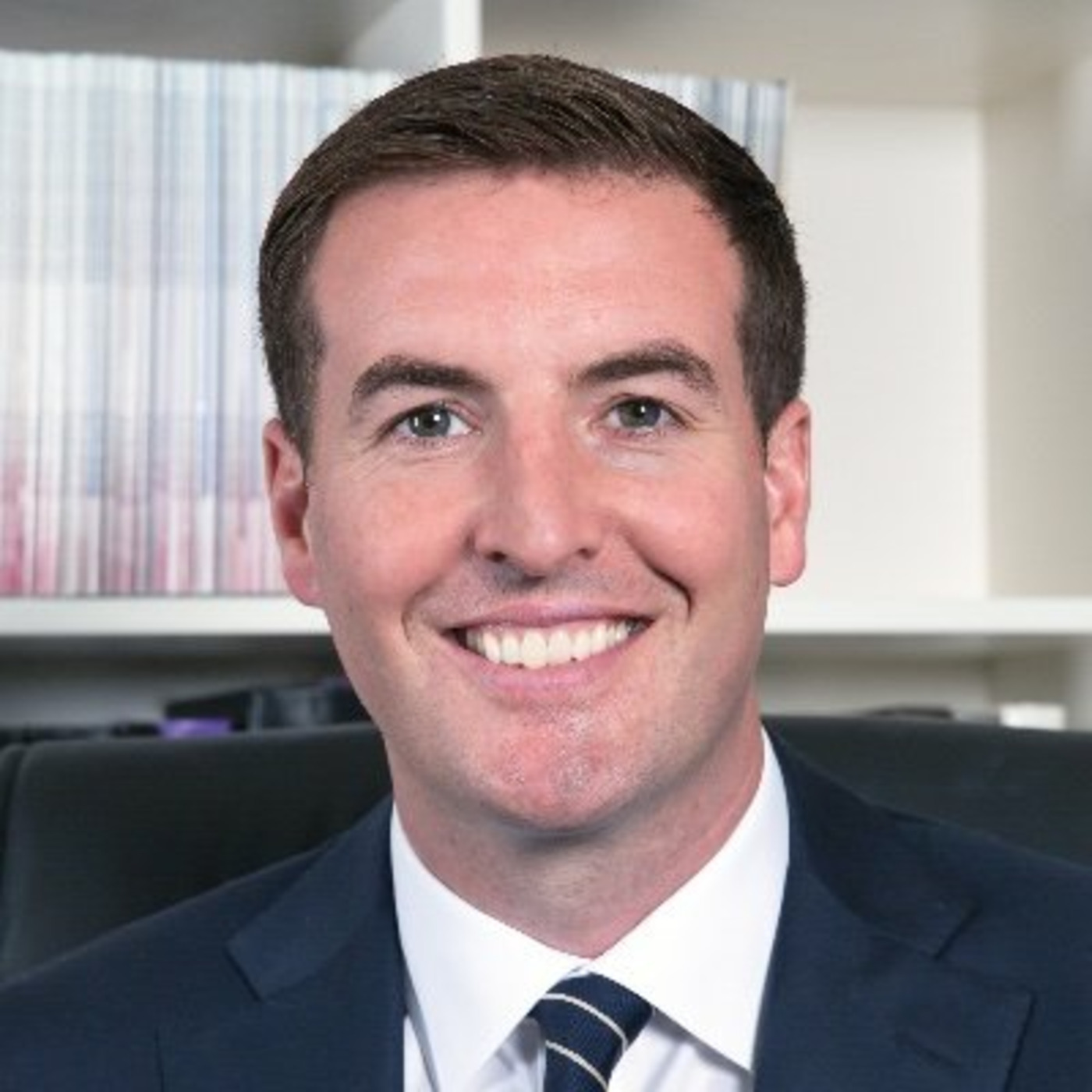
Dr. Brian Devitt: I’m Devitt, and welcome to the 50 Faces Focus Podcast, a podcast committed to revealing the richness and diversity of people in medicine and science. I’m joined today by Professor Brian Devitt, who’s a consultant orthopedic surgeon, professor of orthopedics and surgical biomechanics at Dublin City University. He studied medicine at University College Dublin and is a specialist in orthopedic surgery with a specialism in knees. He’s also my brother, and given that he has spent the last 8 years in Melbourne, Australia, and we’ve only seen each other a handful of times over this period, I’m excited to sit down with him and touch base on his medical career and outlook. Welcome, Brian. Thanks for joining me today on the podcast.
Aoifinn Dr. Brian Devitt: Thanks, Aoifinn.
Dr. Brian Devitt: Obviously, I know all about where you grew up and what you studied, but for the benefit of our listeners, can you talk us through that journey, how you came to studying medicine and orthopaedics in particular?
Aoifinn Dr. Brian Devitt: Well, I suppose just to give the listeners a bit of background, our father is a doctor. So I grew up going to his surgery on weekends and just being around medicine. And there was a bit of a competition between medicine and law, as my two sisters, you being the elder, went into law, as our parents had dabbled in law at that stage. But I really felt more of a calling towards medicine. I liked the idea of speaking to people, I liked the idea of helping people, and it really— I was very fascinated by what was in my dad’s bag as a GP. And really, that was the early interest in medicine. As I went through school, then medicine was certainly, I felt, was an attainable goal and something I really felt passionate about in terms of my later teenage years and in terms of pursuing. So that’s really my background and interest in it.
Dr. Brian Devitt: And of course, it’s fair to say it probably was a truly integrated experience we had with general practice, given that often the surgery was actually in the house in which we lived. So one had to keep the piano practice down and the family antics down when surgery was in process.
Aoifinn Dr. Brian Devitt: Yeah, we certainly felt it all the time. And also in the fact that I realized the job involved a lot of commitment because I remember nights when our father had to go on call. I remember being taken on call one night and missing Halloween, which I was really crestfallen about. But we certainly realized that it was a calling, it was a vocation, and something which I really enjoyed the interest that my father had in this and that I wanted to pursue it myself.
Dr. Brian Devitt: And speaking of other callings and vocations, so you’ve always been passionate about sports. You certainly excelled in that from a young age. How much of the direction you took in medicine into orthopaedics do you think is related to your passion for rugby and sport?
Aoifinn Dr. Brian Devitt: Yeah, it’s— I certainly love rugby and I still do. I think a huge part. I think medicine is such a varied career. There’s so many opportunities one can pursue in medicine. And really for me, I really gravitated towards anything that involves sport. And really orthopaedics is probably the best specialty. We look after musculoskeletal injuries and sport is a very high-risk pursuit. So therefore a lot of musculoskeletal injuries I also recognized that a lot of my colleagues— I played rugby throughout my university years and a lot of my colleagues were orthopaedic surgeons who played rugby as well. So you kind of gravitate towards a career that you’ve— people that you respect and that you liked. And therefore orthopaedics as a specialty really interested me and sports medicine in particular, that facet of orthopaedics really interested me at an early stage.
Dr. Brian Devitt: And just before we dive in a little bit more to modern orthopaedics, Over the course of your career, did it take any surprising turns? Did you study abroad besides Australia? What was your course like?
Aoifinn Dr. Brian Devitt: I didn’t really have any surprising turns. I suppose I had a fairly routine practice in Ireland. The surgical training program is quite lengthy, so you do basic surgical training, so you got a taste of other specialties. So I would have done general surgery, vascular surgery, orthopaedic surgery, and cardiothoracic surgery at an early stage. And I was really fascinated by cardiothoracic surgery because one of the first specialties we I actually got to do hands-on surgery. And it was really a toss-up at that stage between the two. And I spoke to my consultant cardiothoracic surgeon who I was working with, and he recommended that I do orthopaedics. I was wondering, was it the fact that I wasn’t performing well with him? But he said that cardiothoracic was going to be taken over by endovascular surgery. So he thought that orthopaedics, it was a very nascent discipline, and he thought that I’d be well suited towards it. So that was really gave me the confidence to pursue it with vigour. And really that was probably the first crossroads I had to take in my career. After that, it was just a case of perseverance really, because it’s a long progress. You have to stay the course. I didn’t really do a huge amount of training abroad as part of my specialist training in Ireland, but I’ve since made up for that having finished my formal training in 2012.
Dr. Brian Devitt: And let’s talk about modern orthopaedics now, because often when people have, say, a hip or a knee replacement, and I’m getting to an age where more and more of my peers are looking at that type of surgery, They say they feel like a new man or a woman, that it transforms their lives. How does this make you feel as a surgeon?
Aoifinn Dr. Brian Devitt: Well, I think it’s a fantastic operation. I think let’s just take the hip replacement. I think some people might argue in different specialties, but for me it’s probably one of the best innovations in surgery over the last 100 years. And you talk about people, there’s a phrase where someone has a resting B-face where they’re not very happy and they’re a bit disgruntled and they’re not nice to be around, a bit of a mood hoover. And I often talk about the equivalent in a resting hip face because you’ve got this wizened look, the person is frowning, they’re constantly in pain. And when you do the hip replacement, it’s literally instantaneous. You go to them that night after surgery and they have a look that I don’t have that gnawing pain again. And really hip arthritis affects a huge number of people in our society and more so as we get older. So it really gives them a new lease on life, it allows them to mobilise and first and foremost, it gets rid of that pain at night. And you know well, if you don’t get a good night’s sleep, the rest of the day is very difficult. So getting a good night’s sleep is so important in having a good outlook, having a good mental health as well. So really you see people come back and the amount of times they embrace you at your first consultation visit, pre-COVID obviously, that you really feel like you’ve done a nice job. So it makes you feel great about the specialty you’ve chosen.
Dr. Brian Devitt: And then you specialized in knees, are a specialist in knees. Why that area? And I suppose more broadly, what excites you about the field right now, orthopaedics in general?
Aoifinn Dr. Brian Devitt: Well, I think knees, I suppose we all just, a lot of people pick the joint that they find most interesting. And certainly the knee, formerly I kind of thought it was pretty simple as like a hinge joint, but it’s not. It’s so much more complexity to the knee. And I think that really the advent of ACL reconstruction within the last 50 years has really transformed how we practice. That used to be a sporting career-ending injury. Now we can get people back to performing at pretty much the same level with reconstruction. But it’s really fascinating, there’s so many different techniques we can use to do the surgery. And I think what I mentioned earlier on is a nascent discipline really, when you consider the length of time we’ve been studying medicine for thousands of years, but really with orthopaedic sports medicine, it’s probably really only in the last 50 years. And we’re making huge progress. If you take for instance in the 1980s, they did the great technology of MRI. So first of all, we’re able to diagnose injuries better. And then also at the same time we had arthroscopy, which is essentially looking into a joint, and particularly the knee is how it’s used most, with the camera. So it allows us to do things minimally invasively. So we’re constantly refining the techniques of doing ligament reconstruction, fixing meniscus, the shock absorber in your knee, fixing the cartilage, and doing procedures and re-looking at procedures they used in the past for reconstruction and trying to reuse them now with modern techniques. And that was what my PhD was about to a large extent. So it’s a fascinating nascent discipline that’s really advancing year on year.
Dr. Brian Devitt: And in terms of, of course, people living longer, mobility being a key ingredient of quality of life, how do you think this is going to contribute to better quality of life in our later years?
Aoifinn Dr. Brian Devitt: Well, I think the consequence of people living longer is they’re going to be living with frailties and living with musculoskeletal failure. And a lot of times the musculoskeletal failure is arthritis. And that presents itself as pain and poor mobility. So really, I think being able to replace the joint and give that person the relief of pain, but also improve the mobility, is going to help them later on in life. And it makes them less dependent. And I think you really see that in elderly people, that they feel trapped in their own house because they can’t go for a walk, they can’t get to the end of a garden, pick up their mail, and they can’t get in and out of a car. So I think giving them the ability to do those things allows them a greater quality of life as they age.
Dr. Brian Devitt: And in terms of the evolution, the ongoing evolution of orthopaedics and medicine in general, it seems that there’s definitely a more holistic approach being taken, perhaps more integration with nutrition or with physiotherapy or with maybe other aspects, maybe strength training. How do you see your practice evolving in that way?
Aoifinn Dr. Brian Devitt: Well, I think that’s really huge. I think that you realize that it is much more than just doing a joint replacement. There’s the psychological aspect, Figuring out if patients are ready for surgery, what to expect. The great phrase, forewarned is forearmed. The people go into surgery, you have to let them know it’s a pretty big day out and it involves a lot of rehabilitation afterwards. And we need to be speaking to our other colleagues, physiotherapists, physical therapists, rehabilitation coaches, just so everyone’s speaking the same language. And I think then the other aspects of wellness in terms of nutrition is hugely important. I think we’re now recognizing the benefit of perioperative nutrition that if you consider, I know you’re a marathon runner and you you would prepare for a marathon by eating properly and then hydrating properly. It’s the same for surgery. We subject people to a massive insult in terms of physiological insult. So it’s really important that we’re aware how to replenish the losses with blood loss, but also nutritional losses around the time of surgery. So this is really important, and it’s become much more integral part of our practice that we would have a multidisciplinary approach and not just be the biological carpenters that we’re often called.
Dr. Brian Devitt: Well, I have a lot of areas to cycle through, so if you apologize, I’m going to be a little bit whistle-stop on some of No problem. These. So let’s talk about the integration of sports and medicine because we’re seeing a lot of that overlap. We’re hearing a lot about psychology, say, and sports, and even sports psychology techniques bleeding into other aspects of our life, say, in our careers and our kind of corporate lives. What do you see in terms of the intersection of medicine and sport and maybe advances in that that you’re going to see over the next 5 or 10 years?
Aoifinn Dr. Brian Devitt: Well, I think drawing on the psychology aspect of sports, and I’m just going to go on a little bit of tangent, I think one of the things I always recognized was as a sportsman back in my day, and not a very good one, you flattered me a lot, but you have to prepare for sport and you often use the techniques like visualization and getting ready for sport. I think the same attitude applies to surgery as well, that we’re going into a fairly stressful environment as part of surgery, and if you’re not prepared mentally, you’re going to fail. So one of the things that I often do, and it’s something as as just scrubbing your hands for surgery is you visualize. So you visualize the operation you go to do and you visualize the potential complications that you might encounter, and then you’re much better equipped to deal with them if they do occur. I think the other aspect of sport which I think is important is that I used to have the impression that it was a solo sport like golf or like tennis, but doing surgery is a team sport and it’s a huge team sport. I think if you watch the best surgeons operate, it’s the team around them that make them look good. And it’s really when you see it, how well choreographed it is. I’ve often described one of my mentors, watching him operate is like watching Riverdance, that it’s so choreographed and it’s, it’s a wonder to see. And that’s how it’s efficient and that’s why it’s good in terms of even lesser time operating, lesser risks of complications. So I think those aspects of sport and surgery are very alike. I think then you could draw in the other aspects of sport and surgery and more from the patient’s perspective and the psychological readiness to return to sport. I think that we need to appreciate that People have fears, and a lot of fears are borne out when you’ve had surgery because you feel very vulnerable. So it’s fears of reinjury, and I think that these things we need to engage with psychologists and saying it’s okay to feel afraid of doing things. And just because one person’s back playing sports at 12 months doesn’t mean you feel ready to play sport. And one of my colleagues, Professor Kate Webster, who I work closely with in Melbourne, has done a psychology scale in terms of the readiness to return to sport. After ACL reconstruction. And she’s found that there is a direct link between the score you get on your readiness and reinjury. So we have to appreciate if you’re not ready to return to sport, you probably shouldn’t. But there are methods that you can make yourself a bit more ready. And it’s a case of building confidence and trying to reduce those fears that you have.
Dr. Brian Devitt: Absolutely fascinating. It reminds me of some of those criteria or scores we had to fill out postpartum in terms of assessing your postpartum kind of mental state. Really interesting how much the mental state is affecting, I suppose, even your physical outcome. Another area of overlap is academics and medicine, and you’re now a professor, and congratulations. And since we last caught up in person, I think properly, you’d completed your PhD. What do you like about academic medicine, and how now as a surgeon does it make sense to fuse those two careers?
Aoifinn Dr. Brian Devitt: Yeah, I kind of fell into academics to a large extent. I think as part of our training program in Ireland, it was very competitive, so you had to do a higher degree just to be chosen amongst the 8 per year that we had on the training program. But when I did it, I really enjoyed it. I liked the writing, I liked the scientific element of it, and it reminded me of going back at school and science experiments, etc. But the academia, for me, it offers just a slight diversity from what we do in this stressful environment of surgery, and it gives you the opportunity to read up on the latest techniques. And it— I think it offers a longevity to your career that if you just did surgery all the time, you’d probably burn out. So that aspect of things really interests me. And the writing— I love writing, and I get a kick out of it, and which surprised me, but I really get such a buzz out of writing a paper. I think the other aspect of things is that we have to be aware we need to be at cutting edge, particularly with a nascent discipline, that you need to have evidence-based medicine. There is a great phrase that nothing ruins results quite like follow-up. So really, we have to be able to follow our patients and not just say they do well, we have to prove they do well. And I believe this is going to be integral in terms of how health funds are going to give money to certain hospitals or certain surgeons based on the results. And I think that’s going to be integrated into our healthcare very soon, actually. So I’d like to be at the forefront of that rather than scrabbling to catch up later on.
Dr. Brian Devitt: This is a fascinating segue now to the question of training, because obviously you were trained as a doctor in Ireland. What would you say were some of the highs and lows of that, and maybe of your career so far, and places you’ve studied, places you’ve worked? And are there any lessons there that you learned that you would maybe pass on to a new medical student or graduate?
Aoifinn Dr. Brian Devitt: So I did all my medical training in Ireland, and I’m very proud of the training we get. I think going on the lows, I think sometimes the pressures that when you train, you train in the public health service, so there’s a huge amount of pressure in the public health service and often relates to lack of manpower. So you’re often asked to work ridiculous hours and over 100 hours per week, and it’s not right for people to be working that hard or that long, and particularly when you’re making very critical decisions. So I felt potentially some of the issues which I feel sad about or feel that we could have done better were the fact that you were exposed a lot as a young doctor and it put you under a huge amount of stress. Now having said that, the responsibility one got as a young doctor probably made us better doctors in that you were able to take responsibility better and I think that made you being decisive. I think making decisions is critically important in medicine. So I think if I were to talk to a younger me, I’d say seek out help, seek out mentors early and ask for help. And then when you’ve got that help, once you’ve been given the responsibility, seize it and really take that responsibility because that makes you a better doctor ultimately.
Dr. Brian Devitt: And having practiced in 4 jurisdictions in the US, Canada, Australia, and Ireland, if you were to say pick the best aspects of those different venues to practice medicine, What would you say that each region does well?
Aoifinn Dr. Brian Devitt: Well, I did my first fellowship in the US in Vail, Colorado, and it was a research fellowship there. So I suppose for the first time I was able to see firsthand how you can integrate academia and private medicine at the same time and with excellent results. And one of the really impressive things I’ve found by working with the surgeons there is they were able to do the surgical procedures on cadavers or do it simulated before they actually did a complex procedure on patients. And that was amazing because you figured out all the anatomy, the little snags, and then you went in and did surgery and it seemed seamless after that. So that was really impressive how they were able to use the facilities they had to better their practice. I then went to Toronto. Toronto was more socialized medicine there, but I was really impressed by how they integrated the education with not just the fellows, but with the medical students and with the residents, that they had a really good educational program and really empowered the residents to become excellent decision makers. So that was very impressive. Australia is the time I probably spent most in practice as a doctor, as a consultant. So I was very impressed with the Australian system when I arrived. And it was probably the culture, but also how well-respected doctors were in Australia. And I think that they were able to practice not just in the private sector or the public sector, but they’re able to integrate them together because I think surgeons want to work. We are made of a certain makeup that we really want to get the most out of our day and try to work as hard as we can. Unfortunately, in some public sectors, you’re stopped working because it costs money and because there’s other issues. But in Australia, they tend to maximize your potential to work in the private sector, but then also allow you to give back to your profession within the public sector. So that was very impressive to me. And I’m only returned to— I’ve only returned 2 months, but I’ve been incredibly impressed in Ireland. Now I’m in private practice in Ireland. Ireland has taken all of those things and we’re really top of the box in terms of how well medicine is practiced. And I’ve been really impressed with the sports surgery hospital that I work in currently, how up to date it is, but how efficient it is and how they’re able to get through so many cases with such good outcomes. So that’s been extremely impressive so far.
Dr. Brian Devitt: I suppose related to that, clearly efficiency is important. If you all want to work, you want to get the most out of each day, but how important is restraint as well? Restraint when it comes to whether surgery is even even needed, how can that lead sometimes to the profession losing credibility if too much is done? Is sometimes less more in this domain?
Aoifinn Dr. Brian Devitt: I think you’re absolutely right. I think restraint is critical. And I think that we all often make the comment that no decision should be made in the operating room, they should be made in the clinic. So choosing to put someone on an operating table is a huge decision to make. And I often tell my patients, particularly when it comes to arthritis, because you get people presenting at a young age with arthritis, and I often tell them that surgery is not the right option for you. And that’s where you engage the other multidisciplinary colleagues like the nutritionist, like the physiotherapist, and like the strength and conditioning coach to try to postpone what may be inevitable in terms of a joint replacement. But you certainly don’t want to be doing it in a young patient. So I think as a doctor, I tell my patients, your objective is to avoid people like me in terms of surgery. You don’t want to have surgery at a young age. You want to postpone it for as long as possible. And they used to— one of my senior mentor used to talk about it, and he used to say that you have to get down on your knees to beg me to do surgery on your knee, and the only way you can’t do that is because you can’t get back up. So really, for me, that’s always been the teaching, is that I’m not a knife-happy surgeon. I love operating though, but I want to choose the operation that’s going to make the patient well and do it at the right time.
Dr. Brian Devitt: Well, let’s just move to the topic of diversity in the profession. Whereas medicine doesn’t on its face seem to that much of an issue with, say, male-female representation. The area of surgery, maybe, and orthopaedic surgery in particular, might be perceived as a male-dominated profession, maybe in part due to some of the physical strength needed for some of the operations. How do you assess the level of diverse representation in your field and in medicine in general?
Aoifinn Dr. Brian Devitt: Well, I think we’re really far behind, to be honest with you. I think that I remember trying to organise a meeting for a knee meeting in Australia, or certainly being part of a panel and they really struggled to find female surgeons with that specialty interest. And it really highlights to me that we’re quite far behind. And you’re right, I think medicine, if you look at the classes going into medicine, there’s a majority women in those classes. Yes, if you look in surgery, there’s a significant minority of women, but I think we’re better off having a more diverse group. I think that there’s a lot of machoism which exists, and I think when women come into the field, they kind of break that down. When you say, no, I can’t stay on because I have to go home and do something, if you’re a mother, I think that I think that I fully support more women in surgery, and I don’t think the strength issue comes into it a huge amount. I think maybe it’s a choice some people make, but I think it’s probably more the fact that it’s more regarded as a male-dominated specialty. I think as we see that our generation of doctors who have been exposed to more women in their medical classes and have seen how there are fantastic colleagues, as we become more of the leaders in our profession, hopefully that’s going to change because I certainly would welcome it.
Dr. Brian Devitt: Well, let’s just get back to some personal reflections now. You’ve already mentioned some of the colleagues that you’ve worked with, you’ve quoted from some of the professors that taught you. Who were some of the key people who influenced you, and not necessarily only in your career but in life in general?
Aoifinn Dr. Brian Devitt: Well, I suppose we have to first go back to our parents. I was hugely influenced by both our parents in terms of going into medicine and getting on in medicine as well. I think that what’s one of the things that I often tell medical students is you can get into medicine with IQ, but you get on in medicine with EQ. And I think that was always emphasized. They importance of a good bedside manner, respect. So I think first and foremost, the bedrock of my influence has certainly been our parents. I think when it comes to mentors, then you see people that you want to aspire to be like. And one of my professors, Professor John O’Byrne, who’s become quite a good friend, I liked his attitude. I liked the fact that surgery was important, orthopaedic surgery was his passion, but also his children were hugely important to him as well, and watching them grow up. And I didn’t want to be one of these surgeons that spent the whole time in the operating room that you have to have a life outside it to be a good doctor. So I think that he certainly influenced me hugely. And I think then my mentor of mine who’s now passed away called John Fagan when I was in Vail, Colorado, and he was such an impressive man. He was considered one of the forefathers of orthopedic sports surgery. So he was hugely influential with me and really helped me understand the history of sports medicine and surgery. And he really started off when they didn’t have the likes of MRI or arthroscopy, but had really welcomed in people people from abroad to see his surgical techniques. And then he introduced what we call the traveling fellowship, where we go around the world and we visit different centers and we share our expertise. And he recognized that this was the only way we’re going to move forward as a young specialty. So he was certainly very influential for me.
Dr. Brian Devitt: And you’ve already shared some of the wisdom that these mentors have passed on to you, but is there any one or two pieces of advice that you’ve received that really made an impact on you, or any creed or motto that.
Aoifinn Dr. Brian Devitt: You Well, I suppose treat people like you’d like to be treated yourself, and I think that all goes back to the Bible. I think it really, from my perspective, I’m lucky enough not having been a patient, but I’ve seen our mother as a patient, and I think that one of the things which I think you need to do is respect the individual. And that waiting outside the operating room when you’re seeing how the outcome of surgery is pretty frightening, and I think one of the things that I I really like to do is communicate. And we’ve all been at airports where our plane has been delayed and we get frustrated because people don’t communicate well. I think that happens a lot in healthcare. And I think one of the little things that takes 30 seconds of your day is picking up the phone after an operation and ringing a patient. It makes a huge deal, puts their mind at rest. And for me, that type of communication or that motto to treat people like you would like to be treated is really how I would live my life and my professional life.
Dr. Brian Devitt: It. It’s interesting, executives in the business world are now referred to as not chief executive officer, but that they should be seen as a chief communications officer, because essentially communication is everything from team building to winning respect and to success ultimately. My last question is around any advice you would have for your younger self, whether it’s that young boy graduating from Belvedere or the young medical student making his way and deciding on what aspect of the profession should be his. Is there anything you know now that you wish you had known?
Aoifinn Dr. Brian Devitt: I suppose I would have probably got into research earlier had I known it, and maybe that would have taken me away from the rugby fields a little bit more. And I certainly enjoyed my college life, I don’t regret anything about it. I probably didn’t excel as much during medical school as I maybe have done afterwards in terms of once I got passionate about it, I really invested myself in it. But getting into research at an early stage for a medical student is very advantageous. It puts you on a different bar to others. And that’s what I’ve recommended to our brother who’s in medicine, is that get a few papers under your belt and people just respect you a little bit more in terms of academia. So that’s probably what I’d recommend to my younger self. But the other great motto or creed which I have in life in general is don’t let orthopaedics ruin the holiday. So we had that for our fellowship, and life is more than your profession. And I think if you’re happy and you enjoy your job, you don’t go to work any day. So I think Confucius said that too. So a few added mottos in there.
Dr. Brian Devitt: Well, of course, it could ruin a ski holiday or two if there’s a mishap, but I totally get that point. Well, thank you so much, Brian. I’ve always been incredibly proud to say that my brother is an orthopedic surgeon. Now I think, based on your creed, it’s now an evidence-based claim. So I hope I keep people like you at bay for at least a decade or two. Given my running habits, I’m probably flirting with the theatre, but it’s been a pleasure to speak with you and to hear your Bye, Grace.
Aoifinn Dr. Brian Devitt: Thank you, Aoifinn.
Dr. Brian Devitt: I’m Aoifinn Devitt. Thank you for listening to the 50 Faces Focus Podcast. If you liked what you heard and would like to tune in to hear more inspiring people on their personal journeys, please subscribe on Apple Podcasts or wherever you get your podcasts. This podcast is for informational purposes only and should not be construed as investment advice, and all views are personal and should not be attributed to the hosts. To the organizations and affiliations of the host or any guest.
Aoifinn Dr. Brian Devitt: What’s one of the things that I often tell medical students is you can get into medicine with IQ, but you get on in medicine with EQ. And I think that was always emphasized, the importance of a good bedside manner, respect. I think you need to do is respect the individual, and that waiting outside the operating room when you’re seeing how the outcome of surgery is pretty frightening. And I think one of the things that I like to do is communicate. And we’ve all been at airports where our plane has been delayed and we get frustrated because people don’t communicate well. I think that happens a lot in healthcare. And I think one of the little things that takes 30 seconds of your day is picking up the phone after an operation and ringing a patient. It makes a huge deal, puts their mind at rest. And for me, that type of communication or that motto to treat people like you would like to be treated is really how I would live my life and my professional life.
Dr. Brian Devitt: I’m Devitt, and welcome to the 50 Faces Focus Podcast, a podcast committed to revealing the richness and diversity of people in medicine and science. I’m joined today by Professor Brian Devitt, who’s a consultant orthopedic surgeon, professor of orthopedics and surgical biomechanics at Dublin City University. He studied medicine at University College Dublin and is a specialist in orthopedic surgery with a specialism in knees. He’s also my brother, and given that he has spent the last 8 years in Melbourne, Australia, and we’ve only seen each other a handful of times over this period, I’m excited to sit down with him and touch base on his medical career and outlook. Welcome, Brian. Thanks for joining me today on the podcast.
Aoifinn Dr. Brian Devitt: Thanks, Aoifinn.
Dr. Brian Devitt: Obviously, I know all about where you grew up and what you studied, but for the benefit of our listeners, can you talk us through that journey, how you came to studying medicine and orthopaedics in particular?
Aoifinn Dr. Brian Devitt: Well, I suppose just to give the listeners a bit of background, our father is a doctor. So I grew up going to his surgery on weekends and just being around medicine. And there was a bit of a competition between medicine and law, as my two sisters, you being the elder, went into law, as our parents had dabbled in law at that stage. But I really felt more of a calling towards medicine. I liked the idea of speaking to people, I liked the idea of helping people, and it really— I was very fascinated by what was in my dad’s bag as a GP. And really, that was the early interest in medicine. As I went through school, then medicine was certainly, I felt, was an attainable goal and something I really felt passionate about in terms of my later teenage years and in terms of pursuing. So that’s really my background and interest in it.
Dr. Brian Devitt: And of course, it’s fair to say it probably was a truly integrated experience we had with general practice, given that often the surgery was actually in the house in which we lived. So one had to keep the piano practice down and the family antics down when surgery was in process.
Aoifinn Dr. Brian Devitt: Yeah, we certainly felt it all the time. And also in the fact that I realized the job involved a lot of commitment because I remember nights when our father had to go on call. I remember being taken on call one night and missing Halloween, which I was really crestfallen about. But we certainly realized that it was a calling, it was a vocation, and something which I really enjoyed the interest that my father had in this and that I wanted to pursue it myself.
Dr. Brian Devitt: And speaking of other callings and vocations, so you’ve always been passionate about sports. You certainly excelled in that from a young age. How much of the direction you took in medicine into orthopaedics do you think is related to your passion for rugby and sport?
Aoifinn Dr. Brian Devitt: Yeah, it’s— I certainly love rugby and I still do. I think a huge part. I think medicine is such a varied career. There’s so many opportunities one can pursue in medicine. And really for me, I really gravitated towards anything that involves sport. And really orthopaedics is probably the best specialty. We look after musculoskeletal injuries and sport is a very high-risk pursuit. So therefore a lot of musculoskeletal injuries I also recognized that a lot of my colleagues— I played rugby throughout my university years and a lot of my colleagues were orthopaedic surgeons who played rugby as well. So you kind of gravitate towards a career that you’ve— people that you respect and that you liked. And therefore orthopaedics as a specialty really interested me and sports medicine in particular, that facet of orthopaedics really interested me at an early stage.
Dr. Brian Devitt: And just before we dive in a little bit more to modern orthopaedics, Over the course of your career, did it take any surprising turns? Did you study abroad besides Australia? What was your course like?
Aoifinn Dr. Brian Devitt: I didn’t really have any surprising turns. I suppose I had a fairly routine practice in Ireland. The surgical training program is quite lengthy, so you do basic surgical training, so you got a taste of other specialties. So I would have done general surgery, vascular surgery, orthopaedic surgery, and cardiothoracic surgery at an early stage. And I was really fascinated by cardiothoracic surgery because one of the first specialties we I actually got to do hands-on surgery. And it was really a toss-up at that stage between the two. And I spoke to my consultant cardiothoracic surgeon who I was working with, and he recommended that I do orthopaedics. I was wondering, was it the fact that I wasn’t performing well with him? But he said that cardiothoracic was going to be taken over by endovascular surgery. So he thought that orthopaedics, it was a very nascent discipline, and he thought that I’d be well suited towards it. So that was really gave me the confidence to pursue it with vigour. And really that was probably the first crossroads I had to take in my career. After that, it was just a case of perseverance really, because it’s a long progress. You have to stay the course. I didn’t really do a huge amount of training abroad as part of my specialist training in Ireland, but I’ve since made up for that having finished my formal training in 2012.
Dr. Brian Devitt: And let’s talk about modern orthopaedics now, because often when people have, say, a hip or a knee replacement, and I’m getting to an age where more and more of my peers are looking at that type of surgery, They say they feel like a new man or a woman, that it transforms their lives. How does this make you feel as a surgeon?
Aoifinn Dr. Brian Devitt: Well, I think it’s a fantastic operation. I think let’s just take the hip replacement. I think some people might argue in different specialties, but for me it’s probably one of the best innovations in surgery over the last 100 years. And you talk about people, there’s a phrase where someone has a resting B-face where they’re not very happy and they’re a bit disgruntled and they’re not nice to be around, a bit of a mood hoover. And I often talk about the equivalent in a resting hip face because you’ve got this wizened look, the person is frowning, they’re constantly in pain. And when you do the hip replacement, it’s literally instantaneous. You go to them that night after surgery and they have a look that I don’t have that gnawing pain again. And really hip arthritis affects a huge number of people in our society and more so as we get older. So it really gives them a new lease on life, it allows them to mobilise and first and foremost, it gets rid of that pain at night. And you know well, if you don’t get a good night’s sleep, the rest of the day is very difficult. So getting a good night’s sleep is so important in having a good outlook, having a good mental health as well. So really you see people come back and the amount of times they embrace you at your first consultation visit, pre-COVID obviously, that you really feel like you’ve done a nice job. So it makes you feel great about the specialty you’ve chosen.
Dr. Brian Devitt: And then you specialized in knees, are a specialist in knees. Why that area? And I suppose more broadly, what excites you about the field right now, orthopaedics in general?
Aoifinn Dr. Brian Devitt: Well, I think knees, I suppose we all just, a lot of people pick the joint that they find most interesting. And certainly the knee, formerly I kind of thought it was pretty simple as like a hinge joint, but it’s not. It’s so much more complexity to the knee. And I think that really the advent of ACL reconstruction within the last 50 years has really transformed how we practice. That used to be a sporting career-ending injury. Now we can get people back to performing at pretty much the same level with reconstruction. But it’s really fascinating, there’s so many different techniques we can use to do the surgery. And I think what I mentioned earlier on is a nascent discipline really, when you consider the length of time we’ve been studying medicine for thousands of years, but really with orthopaedic sports medicine, it’s probably really only in the last 50 years. And we’re making huge progress. If you take for instance in the 1980s, they did the great technology of MRI. So first of all, we’re able to diagnose injuries better. And then also at the same time we had arthroscopy, which is essentially looking into a joint, and particularly the knee is how it’s used most, with the camera. So it allows us to do things minimally invasively. So we’re constantly refining the techniques of doing ligament reconstruction, fixing meniscus, the shock absorber in your knee, fixing the cartilage, and doing procedures and re-looking at procedures they used in the past for reconstruction and trying to reuse them now with modern techniques. And that was what my PhD was about to a large extent. So it’s a fascinating nascent discipline that’s really advancing year on year.
Dr. Brian Devitt: And in terms of, of course, people living longer, mobility being a key ingredient of quality of life, how do you think this is going to contribute to better quality of life in our later years?
Aoifinn Dr. Brian Devitt: Well, I think the consequence of people living longer is they’re going to be living with frailties and living with musculoskeletal failure. And a lot of times the musculoskeletal failure is arthritis. And that presents itself as pain and poor mobility. So really, I think being able to replace the joint and give that person the relief of pain, but also improve the mobility, is going to help them later on in life. And it makes them less dependent. And I think you really see that in elderly people, that they feel trapped in their own house because they can’t go for a walk, they can’t get to the end of a garden, pick up their mail, and they can’t get in and out of a car. So I think giving them the ability to do those things allows them a greater quality of life as they age.
Dr. Brian Devitt: And in terms of the evolution, the ongoing evolution of orthopaedics and medicine in general, it seems that there’s definitely a more holistic approach being taken, perhaps more integration with nutrition or with physiotherapy or with maybe other aspects, maybe strength training. How do you see your practice evolving in that way?
Aoifinn Dr. Brian Devitt: Well, I think that’s really huge. I think that you realize that it is much more than just doing a joint replacement. There’s the psychological aspect, Figuring out if patients are ready for surgery, what to expect. The great phrase, forewarned is forearmed. The people go into surgery, you have to let them know it’s a pretty big day out and it involves a lot of rehabilitation afterwards. And we need to be speaking to our other colleagues, physiotherapists, physical therapists, rehabilitation coaches, just so everyone’s speaking the same language. And I think then the other aspects of wellness in terms of nutrition is hugely important. I think we’re now recognizing the benefit of perioperative nutrition that if you consider, I know you’re a marathon runner and you you would prepare for a marathon by eating properly and then hydrating properly. It’s the same for surgery. We subject people to a massive insult in terms of physiological insult. So it’s really important that we’re aware how to replenish the losses with blood loss, but also nutritional losses around the time of surgery. So this is really important, and it’s become much more integral part of our practice that we would have a multidisciplinary approach and not just be the biological carpenters that we’re often called.
Dr. Brian Devitt: Well, I have a lot of areas to cycle through, so if you apologize, I’m going to be a little bit whistle-stop on some of No problem. These. So let’s talk about the integration of sports and medicine because we’re seeing a lot of that overlap. We’re hearing a lot about psychology, say, and sports, and even sports psychology techniques bleeding into other aspects of our life, say, in our careers and our kind of corporate lives. What do you see in terms of the intersection of medicine and sport and maybe advances in that that you’re going to see over the next 5 or 10 years?
Aoifinn Dr. Brian Devitt: Well, I think drawing on the psychology aspect of sports, and I’m just going to go on a little bit of tangent, I think one of the things I always recognized was as a sportsman back in my day, and not a very good one, you flattered me a lot, but you have to prepare for sport and you often use the techniques like visualization and getting ready for sport. I think the same attitude applies to surgery as well, that we’re going into a fairly stressful environment as part of surgery, and if you’re not prepared mentally, you’re going to fail. So one of the things that I often do, and it’s something as as just scrubbing your hands for surgery is you visualize. So you visualize the operation you go to do and you visualize the potential complications that you might encounter, and then you’re much better equipped to deal with them if they do occur. I think the other aspect of sport which I think is important is that I used to have the impression that it was a solo sport like golf or like tennis, but doing surgery is a team sport and it’s a huge team sport. I think if you watch the best surgeons operate, it’s the team around them that make them look good. And it’s really when you see it, how well choreographed it is. I’ve often described one of my mentors, watching him operate is like watching Riverdance, that it’s so choreographed and it’s, it’s a wonder to see. And that’s how it’s efficient and that’s why it’s good in terms of even lesser time operating, lesser risks of complications. So I think those aspects of sport and surgery are very alike. I think then you could draw in the other aspects of sport and surgery and more from the patient’s perspective and the psychological readiness to return to sport. I think that we need to appreciate that People have fears, and a lot of fears are borne out when you’ve had surgery because you feel very vulnerable. So it’s fears of reinjury, and I think that these things we need to engage with psychologists and saying it’s okay to feel afraid of doing things. And just because one person’s back playing sports at 12 months doesn’t mean you feel ready to play sport. And one of my colleagues, Professor Kate Webster, who I work closely with in Melbourne, has done a psychology scale in terms of the readiness to return to sport. After ACL reconstruction. And she’s found that there is a direct link between the score you get on your readiness and reinjury. So we have to appreciate if you’re not ready to return to sport, you probably shouldn’t. But there are methods that you can make yourself a bit more ready. And it’s a case of building confidence and trying to reduce those fears that you have.
Dr. Brian Devitt: Absolutely fascinating. It reminds me of some of those criteria or scores we had to fill out postpartum in terms of assessing your postpartum kind of mental state. Really interesting how much the mental state is affecting, I suppose, even your physical outcome. Another area of overlap is academics and medicine, and you’re now a professor, and congratulations. And since we last caught up in person, I think properly, you’d completed your PhD. What do you like about academic medicine, and how now as a surgeon does it make sense to fuse those two careers?
Aoifinn Dr. Brian Devitt: Yeah, I kind of fell into academics to a large extent. I think as part of our training program in Ireland, it was very competitive, so you had to do a higher degree just to be chosen amongst the 8 per year that we had on the training program. But when I did it, I really enjoyed it. I liked the writing, I liked the scientific element of it, and it reminded me of going back at school and science experiments, etc. But the academia, for me, it offers just a slight diversity from what we do in this stressful environment of surgery, and it gives you the opportunity to read up on the latest techniques. And it— I think it offers a longevity to your career that if you just did surgery all the time, you’d probably burn out. So that aspect of things really interests me. And the writing— I love writing, and I get a kick out of it, and which surprised me, but I really get such a buzz out of writing a paper. I think the other aspect of things is that we have to be aware we need to be at cutting edge, particularly with a nascent discipline, that you need to have evidence-based medicine. There is a great phrase that nothing ruins results quite like follow-up. So really, we have to be able to follow our patients and not just say they do well, we have to prove they do well. And I believe this is going to be integral in terms of how health funds are going to give money to certain hospitals or certain surgeons based on the results. And I think that’s going to be integrated into our healthcare very soon, actually. So I’d like to be at the forefront of that rather than scrabbling to catch up later on.
Dr. Brian Devitt: This is a fascinating segue now to the question of training, because obviously you were trained as a doctor in Ireland. What would you say were some of the highs and lows of that, and maybe of your career so far, and places you’ve studied, places you’ve worked? And are there any lessons there that you learned that you would maybe pass on to a new medical student or graduate?
Aoifinn Dr. Brian Devitt: So I did all my medical training in Ireland, and I’m very proud of the training we get. I think going on the lows, I think sometimes the pressures that when you train, you train in the public health service, so there’s a huge amount of pressure in the public health service and often relates to lack of manpower. So you’re often asked to work ridiculous hours and over 100 hours per week, and it’s not right for people to be working that hard or that long, and particularly when you’re making very critical decisions. So I felt potentially some of the issues which I feel sad about or feel that we could have done better were the fact that you were exposed a lot as a young doctor and it put you under a huge amount of stress. Now having said that, the responsibility one got as a young doctor probably made us better doctors in that you were able to take responsibility better and I think that made you being decisive. I think making decisions is critically important in medicine. So I think if I were to talk to a younger me, I’d say seek out help, seek out mentors early and ask for help. And then when you’ve got that help, once you’ve been given the responsibility, seize it and really take that responsibility because that makes you a better doctor ultimately.
Dr. Brian Devitt: And having practiced in 4 jurisdictions in the US, Canada, Australia, and Ireland, if you were to say pick the best aspects of those different venues to practice medicine, What would you say that each region does well?
Aoifinn Dr. Brian Devitt: Well, I did my first fellowship in the US in Vail, Colorado, and it was a research fellowship there. So I suppose for the first time I was able to see firsthand how you can integrate academia and private medicine at the same time and with excellent results. And one of the really impressive things I’ve found by working with the surgeons there is they were able to do the surgical procedures on cadavers or do it simulated before they actually did a complex procedure on patients. And that was amazing because you figured out all the anatomy, the little snags, and then you went in and did surgery and it seemed seamless after that. So that was really impressive how they were able to use the facilities they had to better their practice. I then went to Toronto. Toronto was more socialized medicine there, but I was really impressed by how they integrated the education with not just the fellows, but with the medical students and with the residents, that they had a really good educational program and really empowered the residents to become excellent decision makers. So that was very impressive. Australia is the time I probably spent most in practice as a doctor, as a consultant. So I was very impressed with the Australian system when I arrived. And it was probably the culture, but also how well-respected doctors were in Australia. And I think that they were able to practice not just in the private sector or the public sector, but they’re able to integrate them together because I think surgeons want to work. We are made of a certain makeup that we really want to get the most out of our day and try to work as hard as we can. Unfortunately, in some public sectors, you’re stopped working because it costs money and because there’s other issues. But in Australia, they tend to maximize your potential to work in the private sector, but then also allow you to give back to your profession within the public sector. So that was very impressive to me. And I’m only returned to— I’ve only returned 2 months, but I’ve been incredibly impressed in Ireland. Now I’m in private practice in Ireland. Ireland has taken all of those things and we’re really top of the box in terms of how well medicine is practiced. And I’ve been really impressed with the sports surgery hospital that I work in currently, how up to date it is, but how efficient it is and how they’re able to get through so many cases with such good outcomes. So that’s been extremely impressive so far.
Dr. Brian Devitt: I suppose related to that, clearly efficiency is important. If you all want to work, you want to get the most out of each day, but how important is restraint as well? Restraint when it comes to whether surgery is even even needed, how can that lead sometimes to the profession losing credibility if too much is done? Is sometimes less more in this domain?
Aoifinn Dr. Brian Devitt: I think you’re absolutely right. I think restraint is critical. And I think that we all often make the comment that no decision should be made in the operating room, they should be made in the clinic. So choosing to put someone on an operating table is a huge decision to make. And I often tell my patients, particularly when it comes to arthritis, because you get people presenting at a young age with arthritis, and I often tell them that surgery is not the right option for you. And that’s where you engage the other multidisciplinary colleagues like the nutritionist, like the physiotherapist, and like the strength and conditioning coach to try to postpone what may be inevitable in terms of a joint replacement. But you certainly don’t want to be doing it in a young patient. So I think as a doctor, I tell my patients, your objective is to avoid people like me in terms of surgery. You don’t want to have surgery at a young age. You want to postpone it for as long as possible. And they used to— one of my senior mentor used to talk about it, and he used to say that you have to get down on your knees to beg me to do surgery on your knee, and the only way you can’t do that is because you can’t get back up. So really, for me, that’s always been the teaching, is that I’m not a knife-happy surgeon. I love operating though, but I want to choose the operation that’s going to make the patient well and do it at the right time.
Dr. Brian Devitt: Well, let’s just move to the topic of diversity in the profession. Whereas medicine doesn’t on its face seem to that much of an issue with, say, male-female representation. The area of surgery, maybe, and orthopaedic surgery in particular, might be perceived as a male-dominated profession, maybe in part due to some of the physical strength needed for some of the operations. How do you assess the level of diverse representation in your field and in medicine in general?
Aoifinn Dr. Brian Devitt: Well, I think we’re really far behind, to be honest with you. I think that I remember trying to organise a meeting for a knee meeting in Australia, or certainly being part of a panel and they really struggled to find female surgeons with that specialty interest. And it really highlights to me that we’re quite far behind. And you’re right, I think medicine, if you look at the classes going into medicine, there’s a majority women in those classes. Yes, if you look in surgery, there’s a significant minority of women, but I think we’re better off having a more diverse group. I think that there’s a lot of machoism which exists, and I think when women come into the field, they kind of break that down. When you say, no, I can’t stay on because I have to go home and do something, if you’re a mother, I think that I think that I fully support more women in surgery, and I don’t think the strength issue comes into it a huge amount. I think maybe it’s a choice some people make, but I think it’s probably more the fact that it’s more regarded as a male-dominated specialty. I think as we see that our generation of doctors who have been exposed to more women in their medical classes and have seen how there are fantastic colleagues, as we become more of the leaders in our profession, hopefully that’s going to change because I certainly would welcome it.
Dr. Brian Devitt: Well, let’s just get back to some personal reflections now. You’ve already mentioned some of the colleagues that you’ve worked with, you’ve quoted from some of the professors that taught you. Who were some of the key people who influenced you, and not necessarily only in your career but in life in general?
Aoifinn Dr. Brian Devitt: Well, I suppose we have to first go back to our parents. I was hugely influenced by both our parents in terms of going into medicine and getting on in medicine as well. I think that what’s one of the things that I often tell medical students is you can get into medicine with IQ, but you get on in medicine with EQ. And I think that was always emphasized. They importance of a good bedside manner, respect. So I think first and foremost, the bedrock of my influence has certainly been our parents. I think when it comes to mentors, then you see people that you want to aspire to be like. And one of my professors, Professor John O’Byrne, who’s become quite a good friend, I liked his attitude. I liked the fact that surgery was important, orthopaedic surgery was his passion, but also his children were hugely important to him as well, and watching them grow up. And I didn’t want to be one of these surgeons that spent the whole time in the operating room that you have to have a life outside it to be a good doctor. So I think that he certainly influenced me hugely. And I think then my mentor of mine who’s now passed away called John Fagan when I was in Vail, Colorado, and he was such an impressive man. He was considered one of the forefathers of orthopedic sports surgery. So he was hugely influential with me and really helped me understand the history of sports medicine and surgery. And he really started off when they didn’t have the likes of MRI or arthroscopy, but had really welcomed in people people from abroad to see his surgical techniques. And then he introduced what we call the traveling fellowship, where we go around the world and we visit different centers and we share our expertise. And he recognized that this was the only way we’re going to move forward as a young specialty. So he was certainly very influential for me.
Dr. Brian Devitt: And you’ve already shared some of the wisdom that these mentors have passed on to you, but is there any one or two pieces of advice that you’ve received that really made an impact on you, or any creed or motto that.
Aoifinn Dr. Brian Devitt: You Well, I suppose treat people like you’d like to be treated yourself, and I think that all goes back to the Bible. I think it really, from my perspective, I’m lucky enough not having been a patient, but I’ve seen our mother as a patient, and I think that one of the things which I think you need to do is respect the individual. And that waiting outside the operating room when you’re seeing how the outcome of surgery is pretty frightening, and I think one of the things that I I really like to do is communicate. And we’ve all been at airports where our plane has been delayed and we get frustrated because people don’t communicate well. I think that happens a lot in healthcare. And I think one of the little things that takes 30 seconds of your day is picking up the phone after an operation and ringing a patient. It makes a huge deal, puts their mind at rest. And for me, that type of communication or that motto to treat people like you would like to be treated is really how I would live my life and my professional life.
Dr. Brian Devitt: It. It’s interesting, executives in the business world are now referred to as not chief executive officer, but that they should be seen as a chief communications officer, because essentially communication is everything from team building to winning respect and to success ultimately. My last question is around any advice you would have for your younger self, whether it’s that young boy graduating from Belvedere or the young medical student making his way and deciding on what aspect of the profession should be his. Is there anything you know now that you wish you had known?
Aoifinn Dr. Brian Devitt: I suppose I would have probably got into research earlier had I known it, and maybe that would have taken me away from the rugby fields a little bit more. And I certainly enjoyed my college life, I don’t regret anything about it. I probably didn’t excel as much during medical school as I maybe have done afterwards in terms of once I got passionate about it, I really invested myself in it. But getting into research at an early stage for a medical student is very advantageous. It puts you on a different bar to others. And that’s what I’ve recommended to our brother who’s in medicine, is that get a few papers under your belt and people just respect you a little bit more in terms of academia. So that’s probably what I’d recommend to my younger self. But the other great motto or creed which I have in life in general is don’t let orthopaedics ruin the holiday. So we had that for our fellowship, and life is more than your profession. And I think if you’re happy and you enjoy your job, you don’t go to work any day. So I think Confucius said that too. So a few added mottos in there.
Dr. Brian Devitt: Well, of course, it could ruin a ski holiday or two if there’s a mishap, but I totally get that point. Well, thank you so much, Brian. I’ve always been incredibly proud to say that my brother is an orthopedic surgeon. Now I think, based on your creed, it’s now an evidence-based claim. So I hope I keep people like you at bay for at least a decade or two. Given my running habits, I’m probably flirting with the theatre, but it’s been a pleasure to speak with you and to hear your Bye, Grace.
Aoifinn Dr. Brian Devitt: Thank you, Aoifinn.
Dr. Brian Devitt: I’m Aoifinn Devitt. Thank you for listening to the 50 Faces Focus Podcast. If you liked what you heard and would like to tune in to hear more inspiring people on their personal journeys, please subscribe on Apple Podcasts or wherever you get your podcasts. This podcast is for informational purposes only and should not be construed as investment advice, and all views are personal and should not be attributed to the hosts. To the organizations and affiliations of the host or any guest.