Matias Guajardo: One of the most important parts is that the underlying fundamental of agriculture for me is the simplest thing that could be, that people need to eat. And that’s a demand driver that will never disappear because people eat and will always eat. So if there are any problems with trade, with tariffs, you can find new routes, you can find new ways of sending the food or the produce everywhere, but the structural demand for food will stay and it’s exceptionally resilient. In our view.
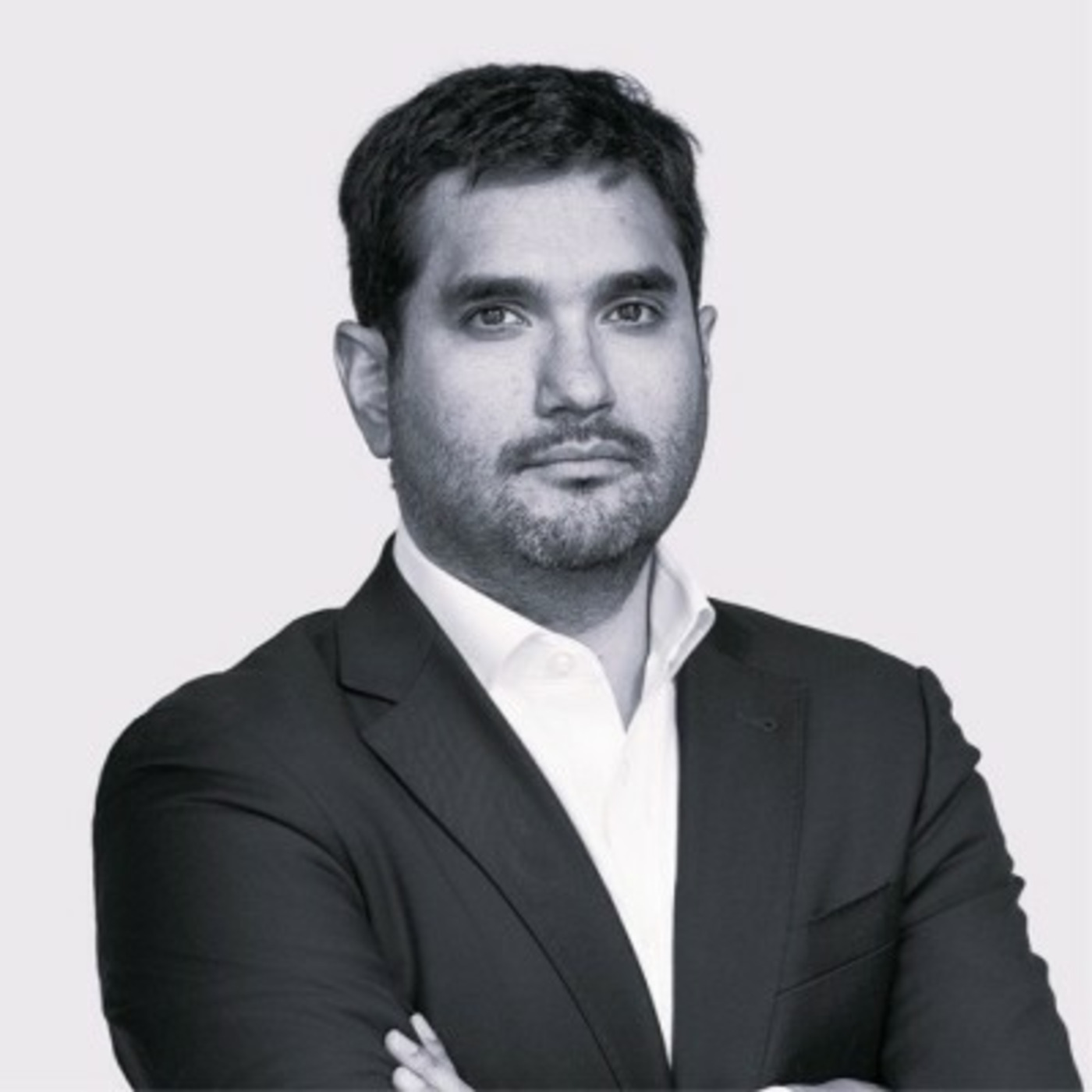
Aoifinn Devitt: I’m Aoifinn Devitt, and welcome to the 50 Faces Podcast, a podcast which showcases inspiring professionals in the world of investment and beyond by focusing on people and their stories. I’m joined today by Matías Guajardo Marchant, who is a portfolio manager, farmland, at Toesca Asset Management in Santiago, in Chile. He’s an agronomist with a career fully dedicated to agriculture, firmly believing that this sector is one of the fundamental pillars of both the Chilean and global economy. He works in Startup Chile and has held a series of financial roles throughout his career. Welcome, Matías. Thanks for joining me today.
Matias Guajardo: Thank you, Ifen. Thank you very much for the invitation.
Aoifinn Devitt: Well, I’m sorry we never had a chance to connect in person when I was recently in Chile, but having been recently down there myself, I’m fascinated in hearing about this aspect of the Chilean economy, the agricultural aspect of it. And before we get into that, I’d love to hear about your career journey, starting with where you studied and where you grew up. Can you start there and tell us how you got into agricultural finance?
Matias Guajardo: Yes, I studied in a French school in Santiago. It’s an international French school Lycée de called l’Alliance Française. And I thought about it and I think that that experience shaped me more than I realized at the time, because it gave me a very, very analytical, almost magic way of thinking. And on top of that, this thing that becomes really valuable later in life, especially if you have the chance to interact with people from different cultures or different languages, that is thinking in a different language instead of translating yourself. So that was very impactful for me. And then I studied agronomy in the Catholic University of Chile. And actually, agriculture or agronomy in Chile is different than in a lot of places in the world. It’s a 5-year professional degree. Actually, you graduate as an agricultural engineer, which is very similar to the model in France. And at the time, I decided that my specialty, enology and winemaking. So it’s very different from what I’m doing now. And I would say that in the career path, something that influenced me a lot, or somebody to be more precise, is my mother. My mother actually is an agronomist as well. And in that time, she was very close to a couple of professors of agriculture that I admire quite a bit, and they gave me some advice that I tried to follow. But they gave me some advice saying, take the courses that will be actually helpful to you. Don’t try to take things that it just to reach your time. And when you’re 18, you’re not necessarily thinking strategically about maximizing every year you have in university, but I ended up gravitating towards more specialized courses like accounting, finance, on top of my degree in agriculture and agronomy. And actually, I started to work before I ended university. I started full-time work with full-time studying. And I started as an assistant to a very reputed viticulture or winemaking consultant at the time in the early 2000s. And I stayed with him for about 3 years. And I always say that it was like my military service. So it was very long days, very, very early mornings, but I learned a lot of things and I absorbed everything that I could. But after some time, I realized that if I wanted the type of role that I was aiming for, especially as an enologist somewhere, either the current enologist would have to retire or disappear. So then when I was about 23, 24 years old, I decided to become independent. And I stayed independent for about 10 years. And in that time, I started to notice a gap between what I call traditional farming or traditional agriculture, and also what more sophisticated companies were doing. And I became a little bit obsessed on understanding those companies, the difference between very successful and fast-growing and innovating companies that were professionalizing very quickly. And in a way, especially in the early 2000s, were transforming Chilean agriculture. And during that period, I completed a finance diploma in the same university. And then I really focused my work on becoming a bridge between agricultural projects and the financial side of those projects with the owners or personal investors in those type of assets. And normally I work with people that were business owners or executives in other companies with no relationship to agriculture, but they did own a farm. So I was the translator between the two worlds. So at the end, I think that my career took a very interesting path because I started very academically, very specialized, but actually my professional career really, really took off once I took a more general role. And that was not necessarily thinking about that. That was not a deliberate decision, but I eventually realized that probably I was never going to stand out as a very technical agronomist. To be honest, that part of the work started to bore me a little, a little bit. But in the financial side of agriculture, the combination of the technical side and a broader strategy and financial perspective allowed me to differentiate myself and to add value to the companies that I work with.
Aoifinn Devitt: Wow, there’s a lot there. And really interesting about that specialist generalist transition you saw, because I think I think that’s often— people are suggested they become the go-to person, and it is good at some stage of your career to be a specialist, but then equally to have that breadth. And I also like the mentorship you mentioned, and I know we’ll talk later about your mentor role in Startup Chile, but the mentorship you got, which I think is a really distinguished thing that you got that distinctive, because many do not get that kind of mentorship around how to navigate university courses with a view to them being practical. Did you have any particular tie to agriculture from your upbringing besides your mother being an economist? Did you spend time on farms?
Matias Guajardo: You know, not really, not a very direct tie, but I thought it as a way to do things that I like. I’m very active, so I, I get bored if I stay at the same thing at the same time too much of my time. So my mother was one of my mentors at the time, and then people during university and friends during my independent years. And I think it was a very good decision because it helped me to do different things. At the same time towards a specific career.
Aoifinn Devitt: Wonderful. Well, I’d love to now move to Toesca and speak a little bit about if you could maybe paint a picture for the state of agriculture in Chile and maybe Latin America more broadly, and talk us through the activities of the firm and the opportunity set.
Matias Guajardo: Yeah, of course. Well, Toesca, I think, is quite a special firm in Chile because it’s a Chilean asset manager. In Chile, it’s called a general fund administrator. And it started its operation late 2016, I think. Actually, if I’m not mistaken, last week was our 9-year anniversary. And what’s interesting is that despite being a young company, the founding partners have worked together for over 20 years and the senior partners even more than that. It’s a company more on the news and a very institutional culture behind it. And we manage 5 investment verticals. Those are infrastructure, real estate, private credit, TILAN equities, and the newest one is farmland, the team that I joined 3 years ago. And the firm was created on a view that the founders saw that at the time TILAN didn’t really have a specialized real asset manager, an alternative asset manager that could meet the needs for institutional investors that they work for with other products. And in TILAN actually, institutional capital is, and especially from the pension funds, it’s extremely deep relative to the size of the economy. The capital markets in Chile are quite deep and pension funds and insurance companies support the Toesca from the beginning. And actually today, most of our AUM comes from those places, from pension funds, insurance companies, and the largest family offices. And in Farmland, actually our purpose is to build portfolios of high-value and sustainable agriculture. Sustainability is very important for us, but aimed to institutional investors, not with a very long-term view.
Aoifinn Devitt: And I was just going to pick up on that, the fact that the institutional investors really grasp the value proposition of what you do. And I just was going to ask, what are they seeking to achieve with this agriculture? The obvious reasons are diversification, income inflation protection, Are they looking to gain exposure to some of the underlying commodities? How have the characteristics of your offering— what do they deliver?
Matias Guajardo: Yeah, actually, I think that they saw in agriculture what we’ve been doing and what we, as a country and as an industry for the past year, because agriculture has changed dramatically over the last, I would say, 30 years. And actually, I’ve been living with this conviction, and our team now in Toysca has the same conviction that farmland and agriculture is one of the most relevant asset classes that can offer genuinely value creation to investors and also capital preservation. And in my personal view, I would say that Chilean agriculture in particular has gone through two major transformations. I always say that agriculture has three big parts: stock and cattle, annual crops, and fruit production or permanent crops. And in permanent crops, I think that there’s been two major revolutions. That shaped agriculture today and how it is today. And the first one happened in the early ’90s when agriculture went through, I would say, a professionalization process. So best practices were brought from the States, from Europe in crops like table grapes and kiwi fruit. And the other part is technology. And when we talk about technology advances in agriculture to people, they usually think that we’re thinking about drones or telemetry or artificial intelligence now. I would say that the biggest technological breakthrough in agriculture since the invention of fertilizers, of chemical fertilizers, are the plants themselves, the trees. And modern plant genetics, the quality of new nurseries transform production. Now you can get higher yields in a shorter time. You can start production faster than you used to do it, and you have much better quality of fruit. So Since the early 2000s, the incorporation of this new genetics changed completely the overview and the backdrop of Chilean agriculture. And actually, what you were saying at the beginning, from a financial point of view, farmland in the States has been more of an institutionalized class for a long time. And there are indexes like NCRIF Farmland or one called the US 32 Ag Index, and they’ve shown consistently the same behavior, a very high correlation to inflation. So it’s a natural hedge to inflation, an extremely low correlation to equities and to commodities. So it provides a very, very strong diversification for portfolios. But I would say that one of the most important parts is that the underlying fundamental of agriculture for me is the simplest thing that could be, that people need to eat. And that’s a demand driver that will never disappear because people eat and will always eat. So if there are any problems with trade, with tariffs, you can find new routes, you can find new ways of sending the food or the produce everywhere, but the structural demand for food will stay, and it’s exceptionally resilient in our view.
Aoifinn Devitt: It’s really interesting insights there. And as was interesting that you mentioned some of the advances, how much has climate tech made an impact on Chilean agriculture, how much of technology has been integrated and what impact has that had?
Matias Guajardo: Actually, I think that AI and agtech has had a very good run over the past few years, especially with AI now, and this type of tools have become extremely efficient. But I would say that for risk mitigation and for efficiencies in terms of operation and management, a tree will never produce more fruit because you apply AI to it or because you apply anything to it. But what does allow us is to have a much deeper understanding on the climatic profiles of the farms, for instance. We can analyze better the data, we can build better projections, we can use much more data and insights to build more effective mitigation measures like frost controls, or in my view, the most important mitigation measure that you can do is actually the way that you design the farms. And these tools will always help you to improve monitoring from pests or disease. And also, one thing that is very, very important is irrigation control and how you can manage precision irrigation with technology that will support a more sustainable production. So for me, it’s a very important part of the agriculture that it’s being built now in terms of decision-making and the possibility to anticipate risk earlier.
Aoifinn Devitt: And you’ve used the word sustainable a lot, and now there’s a lot of focus among investors on renewable agriculture sustainability. They maybe are also looking for other impact measures that they can point to besides return. In the case of, say, forestry investing, there might be carbon credits that can be in addition to the return they seek to achieve. How is that translating into the agricultural space? What can you show to investors in terms of impact, in terms of the renewable characteristics? Or are there any edits there?
Matias Guajardo: That’s very interesting because now you used to talk about agriculture or farmland, and I would say that over the last couple of years, the bucket or the micro bucket that it’s consolidating the asset class is now called natural capital. Before that, it was always some guy in the infrastructure team or in the real estate team, but now natural capital teams are being built. And within the natural capital bucket, you can see more that carbon markets are more developed in some subsectors than others. And I think that one of the, the sectors that is the most developed one is in timber or forestry. But in agriculture, I think we’re still behind. And there’s also a very important part of it when you compare carbon markets in timber with agriculture is that depending on the type of crop that you choose for your farm, the leaves will drop in winter. So the carbon capture is seasonal. It’s not year-long like in other places. So I think that there’s still a lot of work to be done, I would say, especially in terms of defining frameworks and defining exactly what can and cannot be done. But in that regard, there’s been progress. I always follow the SBTI, this organization that is driving the most advanced frameworks. And last year, I think it was last year that they published a specific framework for agriculture called FLAG, and that was a very important step forward. But it’s very important for me to recognize that agriculture cannot be treated as a single category. When you produce livestock or when you do annual crops, it’s very different from each other when you do permanent crop production or fruit production. But that’s actually a thing that I’m very involved with in the strategy. Our team has a sustainability committee. We meet regularly And one of the principles that we think in this regard is that sustainability cannot be treated as one silo independent from another, especially if you’re thinking about decarbonization or sustainability overall. Everything is actually connected. And I think that the best way to do it is to incorporate regenerative practices. And there’s a big problem there because regen is not defined. So everybody says that they do something and at the end they end up doing nothing. But if you implement practices that improve soil health and adopt demanding standards in precision irrigation, everything has an action that interacts with the other parts. So the impact is not cumulative, so it’s compounding if you manage things in an integrated way. And we have to remember that also we’re investing in assets that have to produce far beyond the investment horizon. So These are assets that have to be productive and sustainable and produce food in perpetuity. So there’s a lot of things that we’re doing, there’s a lot of advances, but in terms of sustainability and the carbon market in natural capital, I think it still needs to be properly defined for these sub-asset classes.
Aoifinn Devitt: Oh, I think that’s very candid of you to say that. I think that that’s a good thing. There probably are some of your peers that maybe get ahead of themselves in terms of the readiness to speak to these markets. Clients have rightly pointed out they’re not as mature as they would like to see. And I’d like to just take the segue now into discussing a bit about Chile’s own political and economic backdrop, as was not, not necessarily a great deal as it pertains to the investment opportunity, because also you’re a mentor at Startup Chile. Could you just give us a bit of insight into the startup environment in Chile as well as the economic environment? It is still an emerging market technically,, but how you think that that maybe adds to the risk or whether maybe it’s irrelevant to the risk of the strategy.
Matias Guajardo: I would say that in terms of farmland and permanent crops and food production, I would think it as broadly or not thinking that much about emerging markets or developed markets because actually there are places that you can produce and there are places that you cannot produce. And I think that Chile especially has a very interesting condition for agricultural production because you still have the best practices. So you are at the top of the line in terms of agricultural production, in technology and implementation, but you still have emerging market prices. So you do have a structural advantage when it comes to Chile because of that. So there’s a very big opportunity. And actually, in that regard, people are already investing and it’s way, way more than it used to be. Now we’ve tracked for billions of dollars being invested in Chile from very large institutional investors like Canadian pension funds, sovereign wealth funds from Abu Dhabi. So this is a party in terms of agriculture in Chile and the economical backdrop that already started and people are already in the room. So I think that what it shows is that in a view of global capital market dynamics, it’s not about thinking in frontier farming or in farming innovation, it’s about frontier capital. Because institutional investors are not newcomers in discovering agriculture, but they’ve recognized that there are places that you can do it and you cannot do it. And that’s what excites us, is that we can create portfolios that add value with these structural components of advantages in an environment that is very friendly to investments. And that’s why I’ve been a mentor in Startup Chile for a long time, for over 5 years now. And it’s a way to promote people to start their own companies, to accompany them along the way, to show experiences after being independent for such a long time. And there’s a lot of room in Chile for new investments, for development, for creating opportunities. I think that Chile stands out as one of the best places, especially for foreign capital to be deployed.
Aoifinn Devitt: And would that apply to the startup ecosystem too? Are you optimistic about the right incentives being in place, the right kind of ecosystem for startups today based on your through Startup Chile?
Matias Guajardo: I think there is a good ecosystem and the good incentives. I think that people have realized now that it’s not just about the exit, that if you’re a startup, you do still need to have operational margins and you have to be aware of the details, not about explosive growth. So these instances like Startup Chile help you go in that regard, in that way, that you need to be efficient, you need to have a business case. It’s not just about a couple of few ideas and hitting a home run every 10 investments. You need to be there and do the work.
Aoifinn Devitt: Fantastic. Well, I’d love to move to some personal reflections now. So looking back at your career so far, and clearly this career started early, still at university, and were there any particular highs or lows there that you can talk to?
Matias Guajardo: Most of my career I’ve been independent until I joined the Tuesca team, so I could spend hours talking about the lows and the highs and the stress. But also the excitement and the momentum you get when you’re building a project. But I would say that looking back, the importance of being a generalist that I mentioned earlier, it’s a thing that many people can interpret as not being specialized enough or not being knowledgeable enough in something. But if you find a way that you can take advantage of that, you can actually become a bridge between different areas and add value with motivation in a very exciting place. And also allows you to bring different interests and different skills to one place. And that’s been very valuable in my career. And I would say that also a very important part that I learned in this time is that I used to have a client a few years ago, a lot of years ago, that he used to say always that big money takes care of itself, that our job is to take care about small money. And that mindset stayed with me ever since because it shapes the way that you run projects and it shapes the way that you think about about the discipline in the project development. And if you take that into Chile’s back economical and political backdrop, that played a transformational role in my career because when Chile started to open itself as one of the most open economies and become a hub of exports, Chile now has over 30 trade agreements with most of the world’s GDP. So that allowed an expansion process over the past 20 years that allowed me to be a part of through my clients and through the projects that I’ve been involved with. And now with the fund that we’re raising with TUESCA and the strategy that we’re investing.
Aoifinn Devitt: That’s so interesting. I’ve just been pondering that, what you said, and I think it’s true. It’s, it is focusing on because that’s where the discipline comes in about cost overruns, for example, about the little things. It’s costs are accumulation of little things. And I think that’s really key not to lose sight of that, particularly in an area which we all need to be cost conscious. And you mentioned your mother as a key influence for you entering the whole domain of economics. Now, were there other key people along the course of your career, even though you’re independent, that had a role in influencing?
Matias Guajardo: Yes, absolutely. I’ve had a lot of mentors during my career, during my life, a lot of good friends. But I would say that without a question, the most influential person in my life has been my wife. We’ve been married for over 10 years now. We have 3 wonderful children. And that part of my life is the most meaningful and the most exciting one. My mother in my career has had a huge impact on me because she’s very accomplished in her area. She specializes in sports turf or the grass for sports, but she’s kept a very low profile along the way. And she worked in a fairly male-dominated industry with a lot of perseverance. So watching her succeed in that shaped a lot of my work values. And of course, now I’ve been very impressed with teams that I work with here at Doesca. I would say that Augusto Rodriguez, he’s one of the founding partners of the company, and he’s also the co-portfolio manager and the head of the farmland strategy, has been very influential to me. We make a very, very strong team. We sit beside each other. And I think that there’s a lot of value when you have complementary roles and different experience because you bring to the table different points of view. And this is a company that has a lot of trust in each of the expertise that everybody brings. And that environment has been very important in shaping the things that we’re doing now, especially in farmland, because we spoke about the revolutions of the professionalization and then the exporting part of the agriculture in Chile and how that increased or multiplied the industry fivefold in the past 20 years. And now I think that we’re living the third one, the third revolution, that is institutional agriculture and a completely different way of seeing agriculture, not just as one of multiple industries, but as an asset class.
Aoifinn Devitt: That’s so interesting. I think just depict that evolution. And my last question is around any piece of advice you would have. I think you’ve already given us a couple of nuggets there with the big money, the small money, and the importance of being a generalist. Any kind of creed or motto that you live by, maybe advice for your younger self, anything you can leave us with?
Matias Guajardo: I think that that piece of advice of my former client really stuck to me because it’s a message that is very powerful, that success in business comes from paying attention to details, not only to big strategic decisions, but about the process, the discipline, and the costs. That mindset is very important. And I’m not sure if it’s actually a motto or a quote, but if you think about agriculture, And if you do the same things and you expect different results, that’s a very wrong view of putting yourself with. And I think it was Einstein who said that, but in agriculture, you hear this all the time. Next year will be better. Next year will be better. Or we do this like this because we’ve done it always like this. And the truth is that you have to question yourself. You have to challenge the assumptions. You have to evolve. And that mindset of evolving and challenging yourself in agriculture, I think is one of the most important ones. And as an advice to give to myself, I would say have patience and then have patience and then have patience and then have a little bit more patience. Because in this line of work, it requires some long-term thinking. Things take time to mature, takes time to grow and to materialize. So I think that if I would have understood that earlier on, it would save me for a lot of stress. Back then.
Aoifinn Devitt: That sounds like something a farmer might say in terms of patience and certainly an awareness of the power of nature and respect for that. So, well, thank you so much, Matthias. This has been laced with wisdom, large and small, just like in terms of those details we need to focus on. And I’m still thinking back to what you said at the beginning about learning in a different language and how that makes you identify and think differently. And I think you have translated here for us the language of agriculture, the language of agronomics, in a way that is so relatable that I think we have some great takeaways about the role that Chile and this sector in particular has to play. So thank you so much for sharing your insights with us.
Matias Guajardo: No, thank you for having me. It was very, very nice.
Aoifinn Devitt: I’m Ifan David. Thank you for listening to the 50 Faces podcast. In this case, our special focus on Latin American voices. If you liked what you heard and would like to tune in to hear more inspiring professionals and their stories, please subscribe on Apple Podcasts, or wherever you get your podcasts. This podcast is for informational purposes only and should not be construed as investment advice, and all views are personal and should not be attributed to the organizations and affiliations of the host or any guest.
Matias Guajardo: One of the most important parts is that the underlying fundamental of agriculture for me is the simplest thing that could be, that people need to eat. And that’s a demand driver that will never disappear because people eat and will always eat. So if there are any problems with trade, with tariffs, you can find new routes, you can find new ways of sending the food or the produce everywhere, but the structural demand for food will stay and it’s exceptionally resilient. In our view.
Aoifinn Devitt: I’m Aoifinn Devitt, and welcome to the 50 Faces Podcast, a podcast which showcases inspiring professionals in the world of investment and beyond by focusing on people and their stories. I’m joined today by Matías Guajardo Marchant, who is a portfolio manager, farmland, at Toesca Asset Management in Santiago, in Chile. He’s an agronomist with a career fully dedicated to agriculture, firmly believing that this sector is one of the fundamental pillars of both the Chilean and global economy. He works in Startup Chile and has held a series of financial roles throughout his career. Welcome, Matías. Thanks for joining me today.
Matias Guajardo: Thank you, Ifen. Thank you very much for the invitation.
Aoifinn Devitt: Well, I’m sorry we never had a chance to connect in person when I was recently in Chile, but having been recently down there myself, I’m fascinated in hearing about this aspect of the Chilean economy, the agricultural aspect of it. And before we get into that, I’d love to hear about your career journey, starting with where you studied and where you grew up. Can you start there and tell us how you got into agricultural finance?
Matias Guajardo: Yes, I studied in a French school in Santiago. It’s an international French school Lycée de called l’Alliance Française. And I thought about it and I think that that experience shaped me more than I realized at the time, because it gave me a very, very analytical, almost magic way of thinking. And on top of that, this thing that becomes really valuable later in life, especially if you have the chance to interact with people from different cultures or different languages, that is thinking in a different language instead of translating yourself. So that was very impactful for me. And then I studied agronomy in the Catholic University of Chile. And actually, agriculture or agronomy in Chile is different than in a lot of places in the world. It’s a 5-year professional degree. Actually, you graduate as an agricultural engineer, which is very similar to the model in France. And at the time, I decided that my specialty, enology and winemaking. So it’s very different from what I’m doing now. And I would say that in the career path, something that influenced me a lot, or somebody to be more precise, is my mother. My mother actually is an agronomist as well. And in that time, she was very close to a couple of professors of agriculture that I admire quite a bit, and they gave me some advice that I tried to follow. But they gave me some advice saying, take the courses that will be actually helpful to you. Don’t try to take things that it just to reach your time. And when you’re 18, you’re not necessarily thinking strategically about maximizing every year you have in university, but I ended up gravitating towards more specialized courses like accounting, finance, on top of my degree in agriculture and agronomy. And actually, I started to work before I ended university. I started full-time work with full-time studying. And I started as an assistant to a very reputed viticulture or winemaking consultant at the time in the early 2000s. And I stayed with him for about 3 years. And I always say that it was like my military service. So it was very long days, very, very early mornings, but I learned a lot of things and I absorbed everything that I could. But after some time, I realized that if I wanted the type of role that I was aiming for, especially as an enologist somewhere, either the current enologist would have to retire or disappear. So then when I was about 23, 24 years old, I decided to become independent. And I stayed independent for about 10 years. And in that time, I started to notice a gap between what I call traditional farming or traditional agriculture, and also what more sophisticated companies were doing. And I became a little bit obsessed on understanding those companies, the difference between very successful and fast-growing and innovating companies that were professionalizing very quickly. And in a way, especially in the early 2000s, were transforming Chilean agriculture. And during that period, I completed a finance diploma in the same university. And then I really focused my work on becoming a bridge between agricultural projects and the financial side of those projects with the owners or personal investors in those type of assets. And normally I work with people that were business owners or executives in other companies with no relationship to agriculture, but they did own a farm. So I was the translator between the two worlds. So at the end, I think that my career took a very interesting path because I started very academically, very specialized, but actually my professional career really, really took off once I took a more general role. And that was not necessarily thinking about that. That was not a deliberate decision, but I eventually realized that probably I was never going to stand out as a very technical agronomist. To be honest, that part of the work started to bore me a little, a little bit. But in the financial side of agriculture, the combination of the technical side and a broader strategy and financial perspective allowed me to differentiate myself and to add value to the companies that I work with.
Aoifinn Devitt: Wow, there’s a lot there. And really interesting about that specialist generalist transition you saw, because I think I think that’s often— people are suggested they become the go-to person, and it is good at some stage of your career to be a specialist, but then equally to have that breadth. And I also like the mentorship you mentioned, and I know we’ll talk later about your mentor role in Startup Chile, but the mentorship you got, which I think is a really distinguished thing that you got that distinctive, because many do not get that kind of mentorship around how to navigate university courses with a view to them being practical. Did you have any particular tie to agriculture from your upbringing besides your mother being an economist? Did you spend time on farms?
Matias Guajardo: You know, not really, not a very direct tie, but I thought it as a way to do things that I like. I’m very active, so I, I get bored if I stay at the same thing at the same time too much of my time. So my mother was one of my mentors at the time, and then people during university and friends during my independent years. And I think it was a very good decision because it helped me to do different things. At the same time towards a specific career.
Aoifinn Devitt: Wonderful. Well, I’d love to now move to Toesca and speak a little bit about if you could maybe paint a picture for the state of agriculture in Chile and maybe Latin America more broadly, and talk us through the activities of the firm and the opportunity set.
Matias Guajardo: Yeah, of course. Well, Toesca, I think, is quite a special firm in Chile because it’s a Chilean asset manager. In Chile, it’s called a general fund administrator. And it started its operation late 2016, I think. Actually, if I’m not mistaken, last week was our 9-year anniversary. And what’s interesting is that despite being a young company, the founding partners have worked together for over 20 years and the senior partners even more than that. It’s a company more on the news and a very institutional culture behind it. And we manage 5 investment verticals. Those are infrastructure, real estate, private credit, TILAN equities, and the newest one is farmland, the team that I joined 3 years ago. And the firm was created on a view that the founders saw that at the time TILAN didn’t really have a specialized real asset manager, an alternative asset manager that could meet the needs for institutional investors that they work for with other products. And in TILAN actually, institutional capital is, and especially from the pension funds, it’s extremely deep relative to the size of the economy. The capital markets in Chile are quite deep and pension funds and insurance companies support the Toesca from the beginning. And actually today, most of our AUM comes from those places, from pension funds, insurance companies, and the largest family offices. And in Farmland, actually our purpose is to build portfolios of high-value and sustainable agriculture. Sustainability is very important for us, but aimed to institutional investors, not with a very long-term view.
Aoifinn Devitt: And I was just going to pick up on that, the fact that the institutional investors really grasp the value proposition of what you do. And I just was going to ask, what are they seeking to achieve with this agriculture? The obvious reasons are diversification, income inflation protection, Are they looking to gain exposure to some of the underlying commodities? How have the characteristics of your offering— what do they deliver?
Matias Guajardo: Yeah, actually, I think that they saw in agriculture what we’ve been doing and what we, as a country and as an industry for the past year, because agriculture has changed dramatically over the last, I would say, 30 years. And actually, I’ve been living with this conviction, and our team now in Toysca has the same conviction that farmland and agriculture is one of the most relevant asset classes that can offer genuinely value creation to investors and also capital preservation. And in my personal view, I would say that Chilean agriculture in particular has gone through two major transformations. I always say that agriculture has three big parts: stock and cattle, annual crops, and fruit production or permanent crops. And in permanent crops, I think that there’s been two major revolutions. That shaped agriculture today and how it is today. And the first one happened in the early ’90s when agriculture went through, I would say, a professionalization process. So best practices were brought from the States, from Europe in crops like table grapes and kiwi fruit. And the other part is technology. And when we talk about technology advances in agriculture to people, they usually think that we’re thinking about drones or telemetry or artificial intelligence now. I would say that the biggest technological breakthrough in agriculture since the invention of fertilizers, of chemical fertilizers, are the plants themselves, the trees. And modern plant genetics, the quality of new nurseries transform production. Now you can get higher yields in a shorter time. You can start production faster than you used to do it, and you have much better quality of fruit. So Since the early 2000s, the incorporation of this new genetics changed completely the overview and the backdrop of Chilean agriculture. And actually, what you were saying at the beginning, from a financial point of view, farmland in the States has been more of an institutionalized class for a long time. And there are indexes like NCRIF Farmland or one called the US 32 Ag Index, and they’ve shown consistently the same behavior, a very high correlation to inflation. So it’s a natural hedge to inflation, an extremely low correlation to equities and to commodities. So it provides a very, very strong diversification for portfolios. But I would say that one of the most important parts is that the underlying fundamental of agriculture for me is the simplest thing that could be, that people need to eat. And that’s a demand driver that will never disappear because people eat and will always eat. So if there are any problems with trade, with tariffs, you can find new routes, you can find new ways of sending the food or the produce everywhere, but the structural demand for food will stay, and it’s exceptionally resilient in our view.
Aoifinn Devitt: It’s really interesting insights there. And as was interesting that you mentioned some of the advances, how much has climate tech made an impact on Chilean agriculture, how much of technology has been integrated and what impact has that had?
Matias Guajardo: Actually, I think that AI and agtech has had a very good run over the past few years, especially with AI now, and this type of tools have become extremely efficient. But I would say that for risk mitigation and for efficiencies in terms of operation and management, a tree will never produce more fruit because you apply AI to it or because you apply anything to it. But what does allow us is to have a much deeper understanding on the climatic profiles of the farms, for instance. We can analyze better the data, we can build better projections, we can use much more data and insights to build more effective mitigation measures like frost controls, or in my view, the most important mitigation measure that you can do is actually the way that you design the farms. And these tools will always help you to improve monitoring from pests or disease. And also, one thing that is very, very important is irrigation control and how you can manage precision irrigation with technology that will support a more sustainable production. So for me, it’s a very important part of the agriculture that it’s being built now in terms of decision-making and the possibility to anticipate risk earlier.
Aoifinn Devitt: And you’ve used the word sustainable a lot, and now there’s a lot of focus among investors on renewable agriculture sustainability. They maybe are also looking for other impact measures that they can point to besides return. In the case of, say, forestry investing, there might be carbon credits that can be in addition to the return they seek to achieve. How is that translating into the agricultural space? What can you show to investors in terms of impact, in terms of the renewable characteristics? Or are there any edits there?
Matias Guajardo: That’s very interesting because now you used to talk about agriculture or farmland, and I would say that over the last couple of years, the bucket or the micro bucket that it’s consolidating the asset class is now called natural capital. Before that, it was always some guy in the infrastructure team or in the real estate team, but now natural capital teams are being built. And within the natural capital bucket, you can see more that carbon markets are more developed in some subsectors than others. And I think that one of the, the sectors that is the most developed one is in timber or forestry. But in agriculture, I think we’re still behind. And there’s also a very important part of it when you compare carbon markets in timber with agriculture is that depending on the type of crop that you choose for your farm, the leaves will drop in winter. So the carbon capture is seasonal. It’s not year-long like in other places. So I think that there’s still a lot of work to be done, I would say, especially in terms of defining frameworks and defining exactly what can and cannot be done. But in that regard, there’s been progress. I always follow the SBTI, this organization that is driving the most advanced frameworks. And last year, I think it was last year that they published a specific framework for agriculture called FLAG, and that was a very important step forward. But it’s very important for me to recognize that agriculture cannot be treated as a single category. When you produce livestock or when you do annual crops, it’s very different from each other when you do permanent crop production or fruit production. But that’s actually a thing that I’m very involved with in the strategy. Our team has a sustainability committee. We meet regularly And one of the principles that we think in this regard is that sustainability cannot be treated as one silo independent from another, especially if you’re thinking about decarbonization or sustainability overall. Everything is actually connected. And I think that the best way to do it is to incorporate regenerative practices. And there’s a big problem there because regen is not defined. So everybody says that they do something and at the end they end up doing nothing. But if you implement practices that improve soil health and adopt demanding standards in precision irrigation, everything has an action that interacts with the other parts. So the impact is not cumulative, so it’s compounding if you manage things in an integrated way. And we have to remember that also we’re investing in assets that have to produce far beyond the investment horizon. So These are assets that have to be productive and sustainable and produce food in perpetuity. So there’s a lot of things that we’re doing, there’s a lot of advances, but in terms of sustainability and the carbon market in natural capital, I think it still needs to be properly defined for these sub-asset classes.
Aoifinn Devitt: Oh, I think that’s very candid of you to say that. I think that that’s a good thing. There probably are some of your peers that maybe get ahead of themselves in terms of the readiness to speak to these markets. Clients have rightly pointed out they’re not as mature as they would like to see. And I’d like to just take the segue now into discussing a bit about Chile’s own political and economic backdrop, as was not, not necessarily a great deal as it pertains to the investment opportunity, because also you’re a mentor at Startup Chile. Could you just give us a bit of insight into the startup environment in Chile as well as the economic environment? It is still an emerging market technically,, but how you think that that maybe adds to the risk or whether maybe it’s irrelevant to the risk of the strategy.
Matias Guajardo: I would say that in terms of farmland and permanent crops and food production, I would think it as broadly or not thinking that much about emerging markets or developed markets because actually there are places that you can produce and there are places that you cannot produce. And I think that Chile especially has a very interesting condition for agricultural production because you still have the best practices. So you are at the top of the line in terms of agricultural production, in technology and implementation, but you still have emerging market prices. So you do have a structural advantage when it comes to Chile because of that. So there’s a very big opportunity. And actually, in that regard, people are already investing and it’s way, way more than it used to be. Now we’ve tracked for billions of dollars being invested in Chile from very large institutional investors like Canadian pension funds, sovereign wealth funds from Abu Dhabi. So this is a party in terms of agriculture in Chile and the economical backdrop that already started and people are already in the room. So I think that what it shows is that in a view of global capital market dynamics, it’s not about thinking in frontier farming or in farming innovation, it’s about frontier capital. Because institutional investors are not newcomers in discovering agriculture, but they’ve recognized that there are places that you can do it and you cannot do it. And that’s what excites us, is that we can create portfolios that add value with these structural components of advantages in an environment that is very friendly to investments. And that’s why I’ve been a mentor in Startup Chile for a long time, for over 5 years now. And it’s a way to promote people to start their own companies, to accompany them along the way, to show experiences after being independent for such a long time. And there’s a lot of room in Chile for new investments, for development, for creating opportunities. I think that Chile stands out as one of the best places, especially for foreign capital to be deployed.
Aoifinn Devitt: And would that apply to the startup ecosystem too? Are you optimistic about the right incentives being in place, the right kind of ecosystem for startups today based on your through Startup Chile?
Matias Guajardo: I think there is a good ecosystem and the good incentives. I think that people have realized now that it’s not just about the exit, that if you’re a startup, you do still need to have operational margins and you have to be aware of the details, not about explosive growth. So these instances like Startup Chile help you go in that regard, in that way, that you need to be efficient, you need to have a business case. It’s not just about a couple of few ideas and hitting a home run every 10 investments. You need to be there and do the work.
Aoifinn Devitt: Fantastic. Well, I’d love to move to some personal reflections now. So looking back at your career so far, and clearly this career started early, still at university, and were there any particular highs or lows there that you can talk to?
Matias Guajardo: Most of my career I’ve been independent until I joined the Tuesca team, so I could spend hours talking about the lows and the highs and the stress. But also the excitement and the momentum you get when you’re building a project. But I would say that looking back, the importance of being a generalist that I mentioned earlier, it’s a thing that many people can interpret as not being specialized enough or not being knowledgeable enough in something. But if you find a way that you can take advantage of that, you can actually become a bridge between different areas and add value with motivation in a very exciting place. And also allows you to bring different interests and different skills to one place. And that’s been very valuable in my career. And I would say that also a very important part that I learned in this time is that I used to have a client a few years ago, a lot of years ago, that he used to say always that big money takes care of itself, that our job is to take care about small money. And that mindset stayed with me ever since because it shapes the way that you run projects and it shapes the way that you think about about the discipline in the project development. And if you take that into Chile’s back economical and political backdrop, that played a transformational role in my career because when Chile started to open itself as one of the most open economies and become a hub of exports, Chile now has over 30 trade agreements with most of the world’s GDP. So that allowed an expansion process over the past 20 years that allowed me to be a part of through my clients and through the projects that I’ve been involved with. And now with the fund that we’re raising with TUESCA and the strategy that we’re investing.
Aoifinn Devitt: That’s so interesting. I’ve just been pondering that, what you said, and I think it’s true. It’s, it is focusing on because that’s where the discipline comes in about cost overruns, for example, about the little things. It’s costs are accumulation of little things. And I think that’s really key not to lose sight of that, particularly in an area which we all need to be cost conscious. And you mentioned your mother as a key influence for you entering the whole domain of economics. Now, were there other key people along the course of your career, even though you’re independent, that had a role in influencing?
Matias Guajardo: Yes, absolutely. I’ve had a lot of mentors during my career, during my life, a lot of good friends. But I would say that without a question, the most influential person in my life has been my wife. We’ve been married for over 10 years now. We have 3 wonderful children. And that part of my life is the most meaningful and the most exciting one. My mother in my career has had a huge impact on me because she’s very accomplished in her area. She specializes in sports turf or the grass for sports, but she’s kept a very low profile along the way. And she worked in a fairly male-dominated industry with a lot of perseverance. So watching her succeed in that shaped a lot of my work values. And of course, now I’ve been very impressed with teams that I work with here at Doesca. I would say that Augusto Rodriguez, he’s one of the founding partners of the company, and he’s also the co-portfolio manager and the head of the farmland strategy, has been very influential to me. We make a very, very strong team. We sit beside each other. And I think that there’s a lot of value when you have complementary roles and different experience because you bring to the table different points of view. And this is a company that has a lot of trust in each of the expertise that everybody brings. And that environment has been very important in shaping the things that we’re doing now, especially in farmland, because we spoke about the revolutions of the professionalization and then the exporting part of the agriculture in Chile and how that increased or multiplied the industry fivefold in the past 20 years. And now I think that we’re living the third one, the third revolution, that is institutional agriculture and a completely different way of seeing agriculture, not just as one of multiple industries, but as an asset class.
Aoifinn Devitt: That’s so interesting. I think just depict that evolution. And my last question is around any piece of advice you would have. I think you’ve already given us a couple of nuggets there with the big money, the small money, and the importance of being a generalist. Any kind of creed or motto that you live by, maybe advice for your younger self, anything you can leave us with?
Matias Guajardo: I think that that piece of advice of my former client really stuck to me because it’s a message that is very powerful, that success in business comes from paying attention to details, not only to big strategic decisions, but about the process, the discipline, and the costs. That mindset is very important. And I’m not sure if it’s actually a motto or a quote, but if you think about agriculture, And if you do the same things and you expect different results, that’s a very wrong view of putting yourself with. And I think it was Einstein who said that, but in agriculture, you hear this all the time. Next year will be better. Next year will be better. Or we do this like this because we’ve done it always like this. And the truth is that you have to question yourself. You have to challenge the assumptions. You have to evolve. And that mindset of evolving and challenging yourself in agriculture, I think is one of the most important ones. And as an advice to give to myself, I would say have patience and then have patience and then have patience and then have a little bit more patience. Because in this line of work, it requires some long-term thinking. Things take time to mature, takes time to grow and to materialize. So I think that if I would have understood that earlier on, it would save me for a lot of stress. Back then.
Aoifinn Devitt: That sounds like something a farmer might say in terms of patience and certainly an awareness of the power of nature and respect for that. So, well, thank you so much, Matthias. This has been laced with wisdom, large and small, just like in terms of those details we need to focus on. And I’m still thinking back to what you said at the beginning about learning in a different language and how that makes you identify and think differently. And I think you have translated here for us the language of agriculture, the language of agronomics, in a way that is so relatable that I think we have some great takeaways about the role that Chile and this sector in particular has to play. So thank you so much for sharing your insights with us.
Matias Guajardo: No, thank you for having me. It was very, very nice.
Aoifinn Devitt: I’m Ifan David. Thank you for listening to the 50 Faces podcast. In this case, our special focus on Latin American voices. If you liked what you heard and would like to tune in to hear more inspiring professionals and their stories, please subscribe on Apple Podcasts, or wherever you get your podcasts. This podcast is for informational purposes only and should not be construed as investment advice, and all views are personal and should not be attributed to the organizations and affiliations of the host or any guest.