Aoifinn Devitt: When I was young, I lived through 8 years of war. It was a very difficult childhood. I’ve seen a lot of suffering. And if something I could tell myself when I was young is that the future is bright, there’s goodness in people, not everybody’s trying to kill you with Scott missiles and airstrikes. And I I would, would hold my hand into a future that ultimately was much better than I thought when I was 7 and 8 and 9 years old.
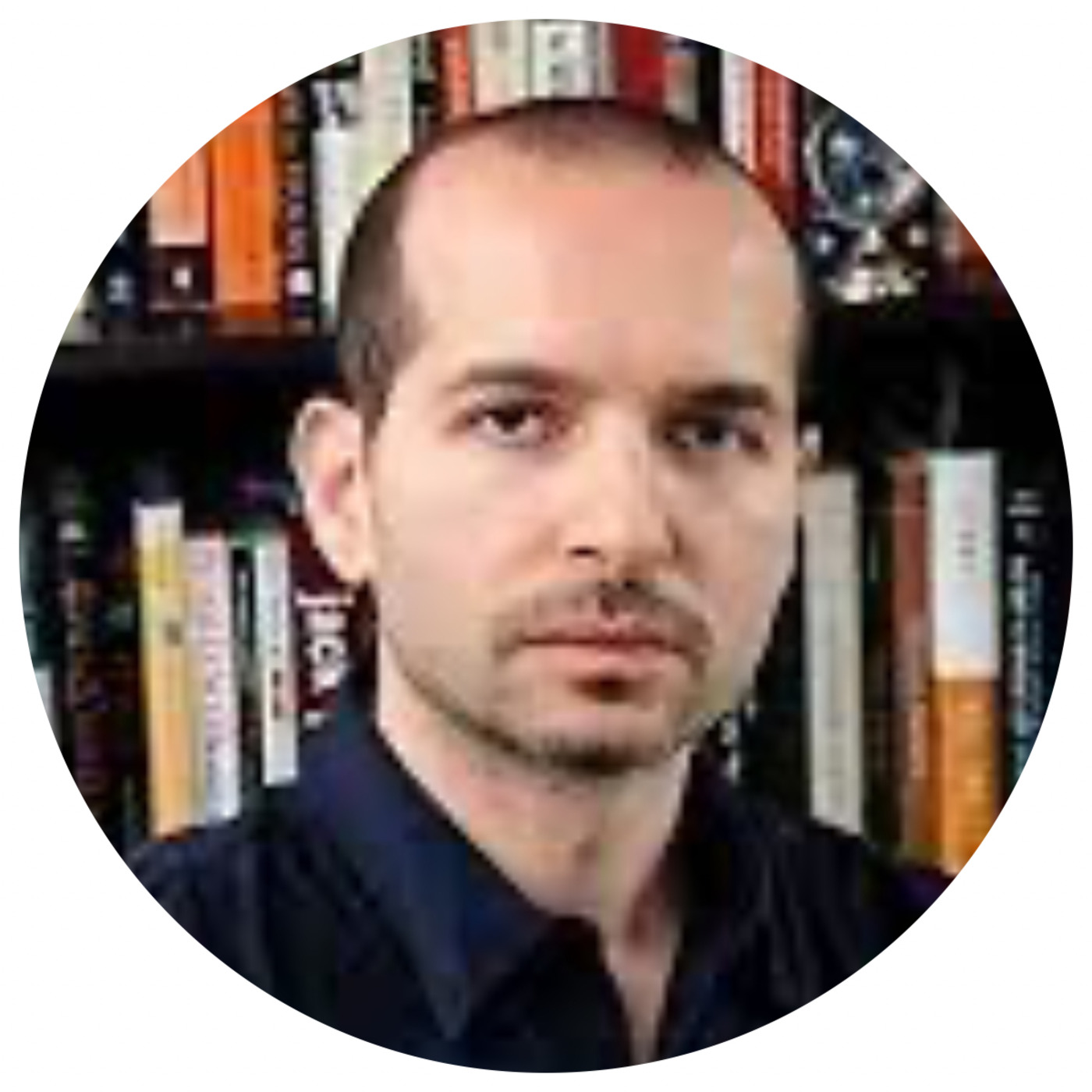
Nawar: I’m Aoifinn Devitt, and welcome to the 50 Faces Podcast, a podcast committed to revealing the richness and diversity of the world of investment by focusing on its people and their stories. I’m joined today by Nawar Al Sadi, who is a Senior Portfolio Manager in ESG Investing at Canada Post and previously worked as a long-only portfolio manager. He has led product development for ESG product research and spent time as a private ESG investor. All of the views expressed in this podcast are his personal views and not that of Canada Post or any other organization. Welcome, Nawar. Thanks for joining me today.
Aoifinn Devitt: Yes. Hello. Thank you for having me, Aoifinn.
Nawar: We got to know each other through the wonderful forum of LinkedIn and some of your absolutely fascinating and intriguing posts that you’ve put up there. Around ESG and thinking in that domain. But I do want to go back before we dive into that and to talk about your background and how the investment world and all of this became something you wanted to pursue. Can you start us there?
Aoifinn Devitt: Yeah, absolutely. I mean, we can go way back, but I’ve been asked this question before. And funny enough, I usually use this line from Al You Capone. Know, when they ask Al Capone why he attacks banks or steals from banks, he says, well, this is where the money is. So the reason I wanted to go into investing when I was in my teens, that was I bought my first stock when I was 17. It was really about the money. I mean, I wanted to be wealthy, I want to be successful, and I felt a trading or investment career would be appropriate for that. And I started, I would say, my kind of day trading or active investing in the late ’90s. And if you recall, that was the dot-com mania, the technology mania. Which was a period where you could make a lot of money very quickly thinking you’re some kind of genius because, you know, you bought Yahoo or Amazon or what have you. So I actually did very well during that period of time and made a lot of money very quickly and then lost it very quickly during the crash. And I actually published an article about that in Forbes in 2000. I called it My Failure. They changed the name. I talked about my experience. I was 22 years old at the time. And that really, that experience was foundational to my understanding of markets. And it put me on a journey to learn from others because it’s important to learn from your own experience, but as well from, from the experience of others who’ve gone through it. So I’ve, I’ve read a lot of books and I went back into the markets in the 2000s and I still made a lot of money and there were situations where I did lose a lot of money. That’s the nature of investing. And ultimately that journey. Led me to activist investing, which evolved into engagement, which ultimately led me into the ESG space and to this podcast.
Nawar: And I think we should go from there into some of the great ideas that you’ve put out into the public forum about ESG and how we should think about it. And one of the first I want to talk about is what you call the Russian doll schematic that we might use when thinking about how to get to net zero. And I suppose the context of all of that is I do a lot of work with some UK-based pension schemes, many of whom have set their own net zero targets, some 2030, some 2050. And certainly every institution and organization seems to be doing that now. What can you tell us a little bit about your thoughts on net zero and the Russian doll schematic in particular?
Aoifinn Devitt: I think the net zero concept is really critical, and it’s really great to see many institutions making that commitment. But the problem is there’s a huge disconnect between commitment and between execution. I could make breaking news right now in this podcast. I’m making a net-zero commitment for my own life for 2050, but I’m not doing anything. I’m not disclosing anything. I have no plan and I have no decarbonization plan, and I, I don’t have a process to be— to hold myself accountable. But I am net-zero committed. So the reason I put this schematic for the doll, the Russian nesting doll, because I wanted to capture the concept of net-zero. So net-zero is both a whole and a multitude of things at the same time. And there is a certain order to it. I mean, if you look at a nesting doll, you go from the largest, the envelope, and all the way to the smallest doll at the center, the core, which to me would be the climate change policy and governance at the board of directors. And from there you go into the management and from there to CapEx and from CapEx to your disclosure. And from disclosure, you start to influence your emissions at scope 1 and 2 and 3. So you can see that radius expanding. So I just felt that analogy was a perfect example of how companies need to think about net zero is that they do need to think about it as a whole, but they need to make sure that every step is well thought out. And to have that commitment become real, they need to have the whole set put in place.
Nawar: And let’s just maybe think about some of those steps. So some of the clear first steps are the reduction, say, of the carbon footprint of, say, a public equity portfolio. And that’s something that maybe can be measured, maybe it’s less, less reliable than we would hope. And then the other part might be a portfolio of offsets, say, or carbon capture technologies or solutions. How do you think about those different buckets?
Aoifinn Devitt: So from a financial institution point of view, you could be looking at your emissions, at your finance emissions, which would be in the case of financial institutions, Scope 3 emissions. And you could manage those within the confines of the portfolio. You you can, can switch, you can shuffle within sectors, you can go for lower emitting companies, or you can engage with companies. But ultimately, if your focus is about managing the emissions within your portfolio, you’re not necessarily managing emissions in the real world. And why managing emissions in the real world matters, because the risk to your portfolio— and now we go back to financial institutions— if you are a universal asset owner, if you’re a large financial institution, if you remove or constrain emissions in your public equities portfolio just at the portfolio level, you do not eliminate risk to the rest of the portfolio, whether it’s private equity or infrastructure or bonds, because it’s a systematic risk that you’re trying to manage through different channels, whether it’s public equities, whether it’s fixed income, whether it’s private assets. So that’s the way I think it’s not always well understood to be, you know, asset managers or asset owners, they operate in their own buckets. So the equity team is managing, the fixed income team is managing, but the nature of climate change is universal. I call it lateral climate risk, because it goes from one asset to another asset. So the way I think about it is you have to really manage this holistically. It cannot be just one asset class.
Nawar: And let’s move then to your thoughts on education and shaping thinking. And clearly, I would imagine that’s why you put so much LinkedIn as you want to make a contribution to shaping that thinking. And how important is that? And what role do metrics play in all of that?
Aoifinn Devitt: Yeah, I am a very big believer in education. Maybe I was brought up as well this way. My parents kind of ingrained that idea of that education is key. You know, there’s an African proverb that talks about education and education of women in particular. It says, if you educate a woman, you educate a nation. If you educate a man, you educate an individual. Individual. But it just kind of— taking this idea of education, I shared it in LinkedIn from a sustainability perspective and why education is important from a sustainability perspective. And I’m talking really not just education outside of the workplace, really within the workplace, because sustainability is not a top-down order. You can’t have the board and senior management demanding that everything has to be sustainable. Yes, of course, it is within their power to do it, and they could put frameworks, but they need to explain why it matters. And if they do explain and educate why it matters, ultimately sustainability within an organization becomes a driver for innovation across teams from the lower echelon to the highest echelon because that’s the way sustainability operates. It’s not a, first, many sustainability concepts are not well-defined and they’re not mature in our thinking around them. We still require a lot of innovation, not just around climate change. Obviously there’s biodiversity, there’s social, sustainability, there’s governance sustainability. All these areas require a full understanding of why sustainability creates value at multiple levels. And once this concept is absorbed, then you let that organization in its entirety to move forward in, in adding value, and you need to surface that thinking from the bottom to the top and vice versa. That’s why I think education is the key to moving us forward into a sustainable economy, because we need everybody to understand why sustainability matters and how they could apply it, and they could apply their own skill set to advance our sustainability objectives as a society.
Nawar: And clearly, we’re getting that now in in the, the industry, we’re seeing sustainability teams, we’re seeing ESG risk being looked at across entire investment processes. And one area I think it’s a little bit lacking, but it’s so essential is at the board level, the idea of a climate-confident board. And a board that feels, board members that feel well-versed in some of the jargon and in some of the concepts. And I think also recognizing, as you mentioned, that it is continuously evolving. So there’s no definitive textbook on the subject. It’s going to be about constantly learning. How do you suggest we can address that with, say, board members? You work at a large allocator. How can you bring in those external board members to the table so they could make a contribution?
Aoifinn Devitt: Well, I mean, that’s a great question. And increasingly, we’re having more and more tools. I mean, just give you an idea, I’m doing my Level 4 climate change investing certification with the CFA UK, just launched this year. Well, any board member can go sign in and do it. So now they have credible organizations talking about climate change and sustainability in an investment business setting. So I think that we have tools that are available. Obviously, everybody needs to, to capitalize on that, especially if they are in a decision-making position. I would say the boards also, considering their fiduciary responsibility, and considering the nature of climate risk and sustainability risks, there’s total alignment between their focus on climate change and its impact, and especially in in the, the context of stakeholder capitalism, where these issues are impacting multiple stakeholders. Then obviously they need to familiarize themselves with the precepts of sustainability. And shareholders here have a role to play because we are ultimately responsible to hold the board members accountable for delivering on what they need to deliver. So shareholders need to be engaging the boards to make sure that the boards are climate aware. We understand that there are human limitations, that there are certain— there’s a knowledge base that needs to grow. We can’t just turn a board into a climate a bunch of climate experts overnight, but we need to have that commitment. It’s similar to what we talked about in terms of net zero. Okay, you made the commitment to make the board climate aware. What are you doing about that? Are you bringing new board members that have that expertise? Are you training existing board members? You know, are you engaging with other stakeholders to understand what you need to do? So for me, it’s all about the will, and then you can find a way. And I think boards need to think about it in this way and demonstrate their commitment to having that, to developing that skill set.
Nawar: And I want to move now to talking about managing equities, because clearly this engagement versus divestment debate has been raging for at least a decade among shareholders and institutional investors. We’ve seen with the recent developments in Russia and Ukraine that there is an ability to divest pretty quickly on whether they call them ESG grounds, but certainly on policy grounds. Okay, talk to us about your position on engagement versus divestment. And in particular, I’d like to dig into a really interesting concept you have around regret, say, having invested once in companies that you may now shun.
Aoifinn Devitt: You know, let me start with regret, because I can build on that perhaps. So when I started my investment career, I did not care whatsoever about environmental factors, or governance, or I mean, social, I mean, I had notions about these things. It’s not that I, you know, I would make money at any price, but these things did not really register very highly in my thinking. And as I, I would say that something that comes with success in a financial setting is you start to have more resources and you start to take larger positions, and then you can start engaging with companies from a different level, different perspective. So I reached that point in around 2010 where I was in a position where I could get 3, 4, 5% position in companies and engage with them. And when I look back at the engagements I’ve led and the activist battles I’ve led, I put a lot of emphasis on corporate strategy, a lot of emphasis on governance alignment with the interests of shareholders. I did touch, I would say, on social issues in the context of working conditions and making sure that the companies I was involved with did not penalize their employees through restructure, for example. But I did not touch on environmental factors. And a lot of these were energy companies where I felt I was in position to get them to be more proactive on climate, on environment, and I did not do so. So I do regret the fact that I was in a position to drive change earlier than I did in my career. But, you know, you can’t change the past, you learn from it and you apply it today. And so here’s the issue with engagement and that debate between engagement and investment. It is often the case, but not always, that engagement is used as a cop-out from actually doing what you have to do. Because engagement is, is not a well-defined concept in the mind of many. I could go and pick up the phone tomorrow, talk to the CEO of Company X, and I say, you know, I am concerned about your climate policy. And the individual says, yeah, we hear you, and we’re thinking about it. Then I come and I report, well, you know, I’m engaging with Company X, I I talked to the CEO and they are thinking about it. And what did I accomplish? Not much, because I mean, I’m probably not the only person that have informed that executive of that issue. So engagement, in my opinion, is being an overused concept because a lot of people don’t want to, you know, pursue divestment as strategy, worrying about the impact on returns. Now, of course, a lot of these institutions have fiduciary responsibilities. They need to generate return. These are not charitable institutions. So I understand the reluctance to pursue divestment, and divestment may not be the best policy. I mean, if you look at the research, the empirical research, you can’t really deprive companies from capital to a point where they will change their behavior. It’s just, it’s not there. So what happens, it becomes mostly a publicity stunt or could be driven by conviction. But so divestment may not be the best approach from that perspective. So that takes us back to engagement. But for me, engagement is a risk management tool. You are basically managing risk as part of your fiduciary responsibility. The complexity of engagement, it goes out of the two-dimensional world of a spreadsheet where you’re looking at different factors and you’re saying, I’m going to shift out of this company, get into that company, change the mix, change the strategic asset allocation. And you actually have to reach into the real world. And change company strategies. But to do that, you require a very different mindset and set of resources, both human and logistics, for you actually to get companies to change strategies. It’s a very complex piece of work, and you cannot do it with thousands of companies. A company has a dedicated board for strategy. And what do you have on the other hand on on this, the institutional side? You have an analyst who looked at it for 1 hour because they have to look for another 100 companies, and they’re going to tell that board of directors, this is the strategy you have to pursue today. I think that’s a tall order. So I think that’s one of the complexities when it comes to engagement. It’s the right approach, but we don’t have the right structures or the mindset for it.
Nawar: Maybe the next follow-up question is, how do we get there? I mean, clearly, we’ve seen this through Engine Number One, putting board members in place who can then influence strategy and accelerate maybe a transition that was not happening quickly enough. How would you suggest we can have moved towards more effective engagement?
Aoifinn Devitt: So well, if you actually today talking about LinkedIn, I put a post about the fact that CA100 published their assessment of the state of the companies they are engaging with. And the assessment I don’t think was very promising. It’s less than 1 out of 5 companies actually have an effective decarbonization strategy. None of them have CapEx that is allocated with their plans for decarbonization. And ultimately, it’s where you put the money, which is where the CapEx goes. So that’s a very important metric. So I do believe what Engine Number One did was important and critical. And actually, a few months— and I’m not taking credit for what Engine Number One did, but a few months before that, I published an article called It’s Time for Sustainable Activism, where I argued for exactly what Engine Number One did, where I said that we do need to approach companies with a mindset that we are ready to change the composition of the board to force a sustainable strategy. And that’s what we need to think about at a larger scale. Engine Number One has tackled the issue with one company. They are talking to other companies. We need to do this with thousands of companies. And institutions need to be comfortable with the idea that they will have to be more assertive. So one of the discussions that I’ve noticed have taken place since the CA100 report was published is that there’s a discussion around having more clarity around escalation strategies for CA100 participants. And I think the key is escalation. Escalation means you have to submit shareholder resolutions. It means you have to maybe publicly, you know, shame companies and issue press releases. And it also means that you may have to be involved in proxy battles. How many institutions are ready to do that? Not many, but that’s what they need to do if they want to manage this risk effectively. It’s not just, it’s not to be disruptive. It’s about managing risk. If that’s what your commitment is, then you have to have put in place the tools and most importantly, the mindset that this is a new way to manage risk and it requires a new way of thinking.
Nawar: It is all just about having teeth, isn’t it? It’s not just about the theory. It’s about converting it into practice in a kind of a meaningful way. I think that that’s very helpful how you’ve summarized that. I knew we’d have lots to talk about, so I’m delighted we’ve got through so many topics. The last topic within the ESG umbrella I’d like to address is diversity. And I’d love to hear— you’re based in Canada, has maybe a bit of a reputation for being a little bit better when it comes to some of the diversity themes than other areas, but certainly in terms of leave and other policies. What are your thoughts on diversity in the investment profession as you’ve seen it?
Aoifinn Devitt: Well, I mean, I stem from a minority background, and I very much appreciate the opportunity that I was given to work in an institutional setting. And I do see that there is a changing mindset around diversity. I talked to a lot of asset managers in my position, and I do track their diversity statistics and their thinking about diversity. And there is a commitment across the line around having a bigger role for women and minorities and other disadvantaged groups to be part of of the, that edifice, that financial world that we operate in. I would say the danger when it comes to diversity, I mean, we see more, the percentages are rising, there are more women on boards, there are increasingly more minorities working, it’s still more to be done. But what worries me is that diversity is not just about social equity and equal opportunity. It’s also about a diversity of thought. If you bring these individuals in and you shut yourself to their thinking, well, you’re not actually benefiting from one of the potentially greatest empirical benefits of diversity, is that companies that have diverse thought do perform better and do have better return on capital and do have higher share prices over the long term. What I noticed, me personally, as somebody who has a very different background from many of my colleagues, often when I work in large institutions, It’s basically, you have to buy into our thinking process. It’s, they’re not open to diversity of thought. So I think the next step we need to do, and we need to measure, and we don’t have metrics around that because a lot of this actually ties to culture and we struggle to measure culture in organizations. We have to measure the, how this diversity is changing the thought process within these institutions around all the issues that their businesses entail, whether it’s social, environmental, or financial. So I think the challenge there is, okay, you have these people inside these institutions. Do they have a voice and are you changing because of that voice?
Nawar: Again, it’s about having teeth, right? The policy is not just existing, but also the inclusion factor being so key. Well, that’s been a wonderful discussion. I’d like to just end with some returning to some personal reflections. So we spoke a bit about your career. Have there been any particular setbacks or challenges in there that you’ve learned lessons from?
Aoifinn Devitt: Plenty. I actually wrote a whole book in 2014 called The Bull of Heaven that talked about my personal experience in financial markets. I would say one of the biggest lessons I learned is that I have no monopoly over the truth, that the financial markets are bigger than me or a single individual. You may have a streak of luck. Ultimately, your luck runs out. You have to be very respectful and thoughtful about the way others see the world and incorporate that into your thinking. So I would say the biggest lesson is you need to keep an open mind. And within that open mind, one, something on a personal level that I resisted for a while, and despite what we’ve been talking about, is change. I was somebody who was looking to reach a certain level and stay there, which is in a way, it’s a sort of death. If you paraphrase the writer Annie Isenin. So for me, change is something that is critical in our industry. You have to embrace change. It doesn’t mean you have to accept every change and make it your own as soon as you come across it. But ultimately there are trends such as the sustainability revolution we’re going through where if you fight it, you’ll be tilting against windmills. So you have to accept and understand that change. And I think that’s one of the lessons I’ve learned is I need to capitalize and actually, instead of looking at these things as a headwind, look at them as a tailwind.
Nawar: Well, we’ve spoken a lot about some of the authors. You cited some quotes and you clearly are a prolific reader. Have there been any key people or mentors or just people you’ve looked up to along your career that you can mention?
Aoifinn Devitt: I would say actually a person that inspired me who’s an artist and also a poet is my mother. My mother has instilled in me the idea that nothing is impossible. And I quickly can tell you the story of when my father was arrested by the Saddam regime when I was 7 years old. And he was sentenced to 25 years in prison because he was critical of Saddam Hussein regime. Everybody gave hope. I mean, everybody lost hope. I mean, they took our home. We were destitute. We were in a difficult situation. And my mother never lost hope. And she said, I’m going to get your father out of prison. And that was in the 1980s. Saddam at the heights of his power. And she managed to meet with Saddam Hussein. She’s a painter. She made that amazing painting. She gifted it to him on his birthday. And she asked for a meeting with him. He met with her. And as she cried, he told her, I mean, she was very emotional. He told her, what can I do to repay you for this gift? And she said, I want the father of my children to be released. And my father was released because of her request. So she showed me that if you have determination, creativity, and you have this hope that you can change things and you will reach the highest level to get to what you want, you can get it done. And that has driven me throughout my career.
Nawar: That’s an extraordinary story. Thank you for sharing that. What an amazing woman. And were there any key pieces of advice perhaps that you’ve heard over the years or any creed or motto that you live by?
Aoifinn Devitt: I would say watch but don’t judge. We quickly jump to conclusions about people. I can assure you people have already taken an opinion on me by now. They’ve judged what I said either in a positive or the negative. I urge them not to judge what I said, just to listen to what I said and to reflect about it without the weight of their history and their personal experience. Go back to Annie Isnett. She said, we see things as we are, not as they are. That’s very important on a personal level, but also very important as well from an investment perspective. If you’re an investment professional and you’re looking at investment from your lens, you’re not seeing the reality of it. So I would say the lesson would— I that I try to pursue all the time, that I advise people to pursue, is to just watch without that lens of your background and your thinking. Ultimately, at some point, you may develop some kind of position on things. It doesn’t mean you may see an atrocity and you say, well, I have to take down— I mean, look at the Russian Russian invasion of Ukraine, I think you can have a position on that pretty quickly. But in most cases, people rush to judgment, I think, before they have sufficient information. So just observe and don’t judge.
Nawar: Reminds me of a wonderful expression I heard recently on another podcast, which was, be curious, not judgmental. I’ve tried to remember that because I think it’s a very similar principle. And finally, do you have any advice for your younger self? Is there anything you know now that you wish you had known as you embarked upon your investment career?
Aoifinn Devitt: Well, I would tell my younger self to listen to this podcast. Because it actually encapsulates a lot of my thinking today, I would have avoided myself a lot of pain if I would have understood these lessons at a younger age, whether it is observing without judging, whether it is being open to change and accepting that the world is changing, and I have to embrace it. When I was young, I lived through 8 years of war. It was a very difficult childhood. I’ve seen a lot of suffering. And if something I could tell myself when I was young is that the future is bright, there’s goodness in people, not everybody’s trying to kill you with Scott missiles and airstrikes. And I I would, would hold my hand into a future that ultimately was much better than I thought when I was 7 and 8 and 9 years old.
Nawar: Well, thank you so much, Noor. This podcast has been a reminder for me that patience is a virtue. I was patient I knew that you would have a wonderful set of thoughts for us, and I was absolutely right. And you do live with ideas, I think, that are a lot bigger than all of us. And I think what you show and have consistently shown is your humility around those ideas, but also your curiosity and a certain energy to give back and contribute to them. And thank you so much for what you do and post on LinkedIn on a frequent basis and for coming here and sharing these ideas with us.
Aoifinn Devitt: Thank you so much. It was an absolute privilege. I am humbled by your words. And it was a great conversation. I would love to, to keep listening to all the great guests you’ve been having on your podcast. I’m learning from them, as hopefully I can give back as well through this contribution. So thank you so much, Aoifinn.
Nawar: I’m Aoifinn Devitt. Thank you for listening to the 50 Faces Podcast. If you’d liked what you heard and would like to tune in to hear more inspiring investors and their personal journeys, please subscribe on Apple Podcasts or wherever you get your podcasts. You can find all of our content on the 50 Faces Hub, where you’ll find a library of role models, resources, and other solutions to enhance your career. This podcast is for informational purposes only and should not be construed as investment advice, and all views are personal and should not be attributed to the organizations and affiliations of the host or any guest.
Aoifinn Devitt: When I was young, I lived through 8 years of war. It was a very difficult childhood. I’ve seen a lot of suffering. And if something I could tell myself when I was young is that the future is bright, there’s goodness in people, not everybody’s trying to kill you with Scott missiles and airstrikes. And I I would, would hold my hand into a future that ultimately was much better than I thought when I was 7 and 8 and 9 years old.
Nawar: I’m Aoifinn Devitt, and welcome to the 50 Faces Podcast, a podcast committed to revealing the richness and diversity of the world of investment by focusing on its people and their stories. I’m joined today by Nawar Al Sadi, who is a Senior Portfolio Manager in ESG Investing at Canada Post and previously worked as a long-only portfolio manager. He has led product development for ESG product research and spent time as a private ESG investor. All of the views expressed in this podcast are his personal views and not that of Canada Post or any other organization. Welcome, Nawar. Thanks for joining me today.
Aoifinn Devitt: Yes. Hello. Thank you for having me, Aoifinn.
Nawar: We got to know each other through the wonderful forum of LinkedIn and some of your absolutely fascinating and intriguing posts that you’ve put up there. Around ESG and thinking in that domain. But I do want to go back before we dive into that and to talk about your background and how the investment world and all of this became something you wanted to pursue. Can you start us there?
Aoifinn Devitt: Yeah, absolutely. I mean, we can go way back, but I’ve been asked this question before. And funny enough, I usually use this line from Al You Capone. Know, when they ask Al Capone why he attacks banks or steals from banks, he says, well, this is where the money is. So the reason I wanted to go into investing when I was in my teens, that was I bought my first stock when I was 17. It was really about the money. I mean, I wanted to be wealthy, I want to be successful, and I felt a trading or investment career would be appropriate for that. And I started, I would say, my kind of day trading or active investing in the late ’90s. And if you recall, that was the dot-com mania, the technology mania. Which was a period where you could make a lot of money very quickly thinking you’re some kind of genius because, you know, you bought Yahoo or Amazon or what have you. So I actually did very well during that period of time and made a lot of money very quickly and then lost it very quickly during the crash. And I actually published an article about that in Forbes in 2000. I called it My Failure. They changed the name. I talked about my experience. I was 22 years old at the time. And that really, that experience was foundational to my understanding of markets. And it put me on a journey to learn from others because it’s important to learn from your own experience, but as well from, from the experience of others who’ve gone through it. So I’ve, I’ve read a lot of books and I went back into the markets in the 2000s and I still made a lot of money and there were situations where I did lose a lot of money. That’s the nature of investing. And ultimately that journey. Led me to activist investing, which evolved into engagement, which ultimately led me into the ESG space and to this podcast.
Nawar: And I think we should go from there into some of the great ideas that you’ve put out into the public forum about ESG and how we should think about it. And one of the first I want to talk about is what you call the Russian doll schematic that we might use when thinking about how to get to net zero. And I suppose the context of all of that is I do a lot of work with some UK-based pension schemes, many of whom have set their own net zero targets, some 2030, some 2050. And certainly every institution and organization seems to be doing that now. What can you tell us a little bit about your thoughts on net zero and the Russian doll schematic in particular?
Aoifinn Devitt: I think the net zero concept is really critical, and it’s really great to see many institutions making that commitment. But the problem is there’s a huge disconnect between commitment and between execution. I could make breaking news right now in this podcast. I’m making a net-zero commitment for my own life for 2050, but I’m not doing anything. I’m not disclosing anything. I have no plan and I have no decarbonization plan, and I, I don’t have a process to be— to hold myself accountable. But I am net-zero committed. So the reason I put this schematic for the doll, the Russian nesting doll, because I wanted to capture the concept of net-zero. So net-zero is both a whole and a multitude of things at the same time. And there is a certain order to it. I mean, if you look at a nesting doll, you go from the largest, the envelope, and all the way to the smallest doll at the center, the core, which to me would be the climate change policy and governance at the board of directors. And from there you go into the management and from there to CapEx and from CapEx to your disclosure. And from disclosure, you start to influence your emissions at scope 1 and 2 and 3. So you can see that radius expanding. So I just felt that analogy was a perfect example of how companies need to think about net zero is that they do need to think about it as a whole, but they need to make sure that every step is well thought out. And to have that commitment become real, they need to have the whole set put in place.
Nawar: And let’s just maybe think about some of those steps. So some of the clear first steps are the reduction, say, of the carbon footprint of, say, a public equity portfolio. And that’s something that maybe can be measured, maybe it’s less, less reliable than we would hope. And then the other part might be a portfolio of offsets, say, or carbon capture technologies or solutions. How do you think about those different buckets?
Aoifinn Devitt: So from a financial institution point of view, you could be looking at your emissions, at your finance emissions, which would be in the case of financial institutions, Scope 3 emissions. And you could manage those within the confines of the portfolio. You you can, can switch, you can shuffle within sectors, you can go for lower emitting companies, or you can engage with companies. But ultimately, if your focus is about managing the emissions within your portfolio, you’re not necessarily managing emissions in the real world. And why managing emissions in the real world matters, because the risk to your portfolio— and now we go back to financial institutions— if you are a universal asset owner, if you’re a large financial institution, if you remove or constrain emissions in your public equities portfolio just at the portfolio level, you do not eliminate risk to the rest of the portfolio, whether it’s private equity or infrastructure or bonds, because it’s a systematic risk that you’re trying to manage through different channels, whether it’s public equities, whether it’s fixed income, whether it’s private assets. So that’s the way I think it’s not always well understood to be, you know, asset managers or asset owners, they operate in their own buckets. So the equity team is managing, the fixed income team is managing, but the nature of climate change is universal. I call it lateral climate risk, because it goes from one asset to another asset. So the way I think about it is you have to really manage this holistically. It cannot be just one asset class.
Nawar: And let’s move then to your thoughts on education and shaping thinking. And clearly, I would imagine that’s why you put so much LinkedIn as you want to make a contribution to shaping that thinking. And how important is that? And what role do metrics play in all of that?
Aoifinn Devitt: Yeah, I am a very big believer in education. Maybe I was brought up as well this way. My parents kind of ingrained that idea of that education is key. You know, there’s an African proverb that talks about education and education of women in particular. It says, if you educate a woman, you educate a nation. If you educate a man, you educate an individual. Individual. But it just kind of— taking this idea of education, I shared it in LinkedIn from a sustainability perspective and why education is important from a sustainability perspective. And I’m talking really not just education outside of the workplace, really within the workplace, because sustainability is not a top-down order. You can’t have the board and senior management demanding that everything has to be sustainable. Yes, of course, it is within their power to do it, and they could put frameworks, but they need to explain why it matters. And if they do explain and educate why it matters, ultimately sustainability within an organization becomes a driver for innovation across teams from the lower echelon to the highest echelon because that’s the way sustainability operates. It’s not a, first, many sustainability concepts are not well-defined and they’re not mature in our thinking around them. We still require a lot of innovation, not just around climate change. Obviously there’s biodiversity, there’s social, sustainability, there’s governance sustainability. All these areas require a full understanding of why sustainability creates value at multiple levels. And once this concept is absorbed, then you let that organization in its entirety to move forward in, in adding value, and you need to surface that thinking from the bottom to the top and vice versa. That’s why I think education is the key to moving us forward into a sustainable economy, because we need everybody to understand why sustainability matters and how they could apply it, and they could apply their own skill set to advance our sustainability objectives as a society.
Nawar: And clearly, we’re getting that now in in the, the industry, we’re seeing sustainability teams, we’re seeing ESG risk being looked at across entire investment processes. And one area I think it’s a little bit lacking, but it’s so essential is at the board level, the idea of a climate-confident board. And a board that feels, board members that feel well-versed in some of the jargon and in some of the concepts. And I think also recognizing, as you mentioned, that it is continuously evolving. So there’s no definitive textbook on the subject. It’s going to be about constantly learning. How do you suggest we can address that with, say, board members? You work at a large allocator. How can you bring in those external board members to the table so they could make a contribution?
Aoifinn Devitt: Well, I mean, that’s a great question. And increasingly, we’re having more and more tools. I mean, just give you an idea, I’m doing my Level 4 climate change investing certification with the CFA UK, just launched this year. Well, any board member can go sign in and do it. So now they have credible organizations talking about climate change and sustainability in an investment business setting. So I think that we have tools that are available. Obviously, everybody needs to, to capitalize on that, especially if they are in a decision-making position. I would say the boards also, considering their fiduciary responsibility, and considering the nature of climate risk and sustainability risks, there’s total alignment between their focus on climate change and its impact, and especially in in the, the context of stakeholder capitalism, where these issues are impacting multiple stakeholders. Then obviously they need to familiarize themselves with the precepts of sustainability. And shareholders here have a role to play because we are ultimately responsible to hold the board members accountable for delivering on what they need to deliver. So shareholders need to be engaging the boards to make sure that the boards are climate aware. We understand that there are human limitations, that there are certain— there’s a knowledge base that needs to grow. We can’t just turn a board into a climate a bunch of climate experts overnight, but we need to have that commitment. It’s similar to what we talked about in terms of net zero. Okay, you made the commitment to make the board climate aware. What are you doing about that? Are you bringing new board members that have that expertise? Are you training existing board members? You know, are you engaging with other stakeholders to understand what you need to do? So for me, it’s all about the will, and then you can find a way. And I think boards need to think about it in this way and demonstrate their commitment to having that, to developing that skill set.
Nawar: And I want to move now to talking about managing equities, because clearly this engagement versus divestment debate has been raging for at least a decade among shareholders and institutional investors. We’ve seen with the recent developments in Russia and Ukraine that there is an ability to divest pretty quickly on whether they call them ESG grounds, but certainly on policy grounds. Okay, talk to us about your position on engagement versus divestment. And in particular, I’d like to dig into a really interesting concept you have around regret, say, having invested once in companies that you may now shun.
Aoifinn Devitt: You know, let me start with regret, because I can build on that perhaps. So when I started my investment career, I did not care whatsoever about environmental factors, or governance, or I mean, social, I mean, I had notions about these things. It’s not that I, you know, I would make money at any price, but these things did not really register very highly in my thinking. And as I, I would say that something that comes with success in a financial setting is you start to have more resources and you start to take larger positions, and then you can start engaging with companies from a different level, different perspective. So I reached that point in around 2010 where I was in a position where I could get 3, 4, 5% position in companies and engage with them. And when I look back at the engagements I’ve led and the activist battles I’ve led, I put a lot of emphasis on corporate strategy, a lot of emphasis on governance alignment with the interests of shareholders. I did touch, I would say, on social issues in the context of working conditions and making sure that the companies I was involved with did not penalize their employees through restructure, for example. But I did not touch on environmental factors. And a lot of these were energy companies where I felt I was in position to get them to be more proactive on climate, on environment, and I did not do so. So I do regret the fact that I was in a position to drive change earlier than I did in my career. But, you know, you can’t change the past, you learn from it and you apply it today. And so here’s the issue with engagement and that debate between engagement and investment. It is often the case, but not always, that engagement is used as a cop-out from actually doing what you have to do. Because engagement is, is not a well-defined concept in the mind of many. I could go and pick up the phone tomorrow, talk to the CEO of Company X, and I say, you know, I am concerned about your climate policy. And the individual says, yeah, we hear you, and we’re thinking about it. Then I come and I report, well, you know, I’m engaging with Company X, I I talked to the CEO and they are thinking about it. And what did I accomplish? Not much, because I mean, I’m probably not the only person that have informed that executive of that issue. So engagement, in my opinion, is being an overused concept because a lot of people don’t want to, you know, pursue divestment as strategy, worrying about the impact on returns. Now, of course, a lot of these institutions have fiduciary responsibilities. They need to generate return. These are not charitable institutions. So I understand the reluctance to pursue divestment, and divestment may not be the best policy. I mean, if you look at the research, the empirical research, you can’t really deprive companies from capital to a point where they will change their behavior. It’s just, it’s not there. So what happens, it becomes mostly a publicity stunt or could be driven by conviction. But so divestment may not be the best approach from that perspective. So that takes us back to engagement. But for me, engagement is a risk management tool. You are basically managing risk as part of your fiduciary responsibility. The complexity of engagement, it goes out of the two-dimensional world of a spreadsheet where you’re looking at different factors and you’re saying, I’m going to shift out of this company, get into that company, change the mix, change the strategic asset allocation. And you actually have to reach into the real world. And change company strategies. But to do that, you require a very different mindset and set of resources, both human and logistics, for you actually to get companies to change strategies. It’s a very complex piece of work, and you cannot do it with thousands of companies. A company has a dedicated board for strategy. And what do you have on the other hand on on this, the institutional side? You have an analyst who looked at it for 1 hour because they have to look for another 100 companies, and they’re going to tell that board of directors, this is the strategy you have to pursue today. I think that’s a tall order. So I think that’s one of the complexities when it comes to engagement. It’s the right approach, but we don’t have the right structures or the mindset for it.
Nawar: Maybe the next follow-up question is, how do we get there? I mean, clearly, we’ve seen this through Engine Number One, putting board members in place who can then influence strategy and accelerate maybe a transition that was not happening quickly enough. How would you suggest we can have moved towards more effective engagement?
Aoifinn Devitt: So well, if you actually today talking about LinkedIn, I put a post about the fact that CA100 published their assessment of the state of the companies they are engaging with. And the assessment I don’t think was very promising. It’s less than 1 out of 5 companies actually have an effective decarbonization strategy. None of them have CapEx that is allocated with their plans for decarbonization. And ultimately, it’s where you put the money, which is where the CapEx goes. So that’s a very important metric. So I do believe what Engine Number One did was important and critical. And actually, a few months— and I’m not taking credit for what Engine Number One did, but a few months before that, I published an article called It’s Time for Sustainable Activism, where I argued for exactly what Engine Number One did, where I said that we do need to approach companies with a mindset that we are ready to change the composition of the board to force a sustainable strategy. And that’s what we need to think about at a larger scale. Engine Number One has tackled the issue with one company. They are talking to other companies. We need to do this with thousands of companies. And institutions need to be comfortable with the idea that they will have to be more assertive. So one of the discussions that I’ve noticed have taken place since the CA100 report was published is that there’s a discussion around having more clarity around escalation strategies for CA100 participants. And I think the key is escalation. Escalation means you have to submit shareholder resolutions. It means you have to maybe publicly, you know, shame companies and issue press releases. And it also means that you may have to be involved in proxy battles. How many institutions are ready to do that? Not many, but that’s what they need to do if they want to manage this risk effectively. It’s not just, it’s not to be disruptive. It’s about managing risk. If that’s what your commitment is, then you have to have put in place the tools and most importantly, the mindset that this is a new way to manage risk and it requires a new way of thinking.
Nawar: It is all just about having teeth, isn’t it? It’s not just about the theory. It’s about converting it into practice in a kind of a meaningful way. I think that that’s very helpful how you’ve summarized that. I knew we’d have lots to talk about, so I’m delighted we’ve got through so many topics. The last topic within the ESG umbrella I’d like to address is diversity. And I’d love to hear— you’re based in Canada, has maybe a bit of a reputation for being a little bit better when it comes to some of the diversity themes than other areas, but certainly in terms of leave and other policies. What are your thoughts on diversity in the investment profession as you’ve seen it?
Aoifinn Devitt: Well, I mean, I stem from a minority background, and I very much appreciate the opportunity that I was given to work in an institutional setting. And I do see that there is a changing mindset around diversity. I talked to a lot of asset managers in my position, and I do track their diversity statistics and their thinking about diversity. And there is a commitment across the line around having a bigger role for women and minorities and other disadvantaged groups to be part of of the, that edifice, that financial world that we operate in. I would say the danger when it comes to diversity, I mean, we see more, the percentages are rising, there are more women on boards, there are increasingly more minorities working, it’s still more to be done. But what worries me is that diversity is not just about social equity and equal opportunity. It’s also about a diversity of thought. If you bring these individuals in and you shut yourself to their thinking, well, you’re not actually benefiting from one of the potentially greatest empirical benefits of diversity, is that companies that have diverse thought do perform better and do have better return on capital and do have higher share prices over the long term. What I noticed, me personally, as somebody who has a very different background from many of my colleagues, often when I work in large institutions, It’s basically, you have to buy into our thinking process. It’s, they’re not open to diversity of thought. So I think the next step we need to do, and we need to measure, and we don’t have metrics around that because a lot of this actually ties to culture and we struggle to measure culture in organizations. We have to measure the, how this diversity is changing the thought process within these institutions around all the issues that their businesses entail, whether it’s social, environmental, or financial. So I think the challenge there is, okay, you have these people inside these institutions. Do they have a voice and are you changing because of that voice?
Nawar: Again, it’s about having teeth, right? The policy is not just existing, but also the inclusion factor being so key. Well, that’s been a wonderful discussion. I’d like to just end with some returning to some personal reflections. So we spoke a bit about your career. Have there been any particular setbacks or challenges in there that you’ve learned lessons from?
Aoifinn Devitt: Plenty. I actually wrote a whole book in 2014 called The Bull of Heaven that talked about my personal experience in financial markets. I would say one of the biggest lessons I learned is that I have no monopoly over the truth, that the financial markets are bigger than me or a single individual. You may have a streak of luck. Ultimately, your luck runs out. You have to be very respectful and thoughtful about the way others see the world and incorporate that into your thinking. So I would say the biggest lesson is you need to keep an open mind. And within that open mind, one, something on a personal level that I resisted for a while, and despite what we’ve been talking about, is change. I was somebody who was looking to reach a certain level and stay there, which is in a way, it’s a sort of death. If you paraphrase the writer Annie Isenin. So for me, change is something that is critical in our industry. You have to embrace change. It doesn’t mean you have to accept every change and make it your own as soon as you come across it. But ultimately there are trends such as the sustainability revolution we’re going through where if you fight it, you’ll be tilting against windmills. So you have to accept and understand that change. And I think that’s one of the lessons I’ve learned is I need to capitalize and actually, instead of looking at these things as a headwind, look at them as a tailwind.
Nawar: Well, we’ve spoken a lot about some of the authors. You cited some quotes and you clearly are a prolific reader. Have there been any key people or mentors or just people you’ve looked up to along your career that you can mention?
Aoifinn Devitt: I would say actually a person that inspired me who’s an artist and also a poet is my mother. My mother has instilled in me the idea that nothing is impossible. And I quickly can tell you the story of when my father was arrested by the Saddam regime when I was 7 years old. And he was sentenced to 25 years in prison because he was critical of Saddam Hussein regime. Everybody gave hope. I mean, everybody lost hope. I mean, they took our home. We were destitute. We were in a difficult situation. And my mother never lost hope. And she said, I’m going to get your father out of prison. And that was in the 1980s. Saddam at the heights of his power. And she managed to meet with Saddam Hussein. She’s a painter. She made that amazing painting. She gifted it to him on his birthday. And she asked for a meeting with him. He met with her. And as she cried, he told her, I mean, she was very emotional. He told her, what can I do to repay you for this gift? And she said, I want the father of my children to be released. And my father was released because of her request. So she showed me that if you have determination, creativity, and you have this hope that you can change things and you will reach the highest level to get to what you want, you can get it done. And that has driven me throughout my career.
Nawar: That’s an extraordinary story. Thank you for sharing that. What an amazing woman. And were there any key pieces of advice perhaps that you’ve heard over the years or any creed or motto that you live by?
Aoifinn Devitt: I would say watch but don’t judge. We quickly jump to conclusions about people. I can assure you people have already taken an opinion on me by now. They’ve judged what I said either in a positive or the negative. I urge them not to judge what I said, just to listen to what I said and to reflect about it without the weight of their history and their personal experience. Go back to Annie Isnett. She said, we see things as we are, not as they are. That’s very important on a personal level, but also very important as well from an investment perspective. If you’re an investment professional and you’re looking at investment from your lens, you’re not seeing the reality of it. So I would say the lesson would— I that I try to pursue all the time, that I advise people to pursue, is to just watch without that lens of your background and your thinking. Ultimately, at some point, you may develop some kind of position on things. It doesn’t mean you may see an atrocity and you say, well, I have to take down— I mean, look at the Russian Russian invasion of Ukraine, I think you can have a position on that pretty quickly. But in most cases, people rush to judgment, I think, before they have sufficient information. So just observe and don’t judge.
Nawar: Reminds me of a wonderful expression I heard recently on another podcast, which was, be curious, not judgmental. I’ve tried to remember that because I think it’s a very similar principle. And finally, do you have any advice for your younger self? Is there anything you know now that you wish you had known as you embarked upon your investment career?
Aoifinn Devitt: Well, I would tell my younger self to listen to this podcast. Because it actually encapsulates a lot of my thinking today, I would have avoided myself a lot of pain if I would have understood these lessons at a younger age, whether it is observing without judging, whether it is being open to change and accepting that the world is changing, and I have to embrace it. When I was young, I lived through 8 years of war. It was a very difficult childhood. I’ve seen a lot of suffering. And if something I could tell myself when I was young is that the future is bright, there’s goodness in people, not everybody’s trying to kill you with Scott missiles and airstrikes. And I I would, would hold my hand into a future that ultimately was much better than I thought when I was 7 and 8 and 9 years old.
Nawar: Well, thank you so much, Noor. This podcast has been a reminder for me that patience is a virtue. I was patient I knew that you would have a wonderful set of thoughts for us, and I was absolutely right. And you do live with ideas, I think, that are a lot bigger than all of us. And I think what you show and have consistently shown is your humility around those ideas, but also your curiosity and a certain energy to give back and contribute to them. And thank you so much for what you do and post on LinkedIn on a frequent basis and for coming here and sharing these ideas with us.
Aoifinn Devitt: Thank you so much. It was an absolute privilege. I am humbled by your words. And it was a great conversation. I would love to, to keep listening to all the great guests you’ve been having on your podcast. I’m learning from them, as hopefully I can give back as well through this contribution. So thank you so much, Aoifinn.
Nawar: I’m Aoifinn Devitt. Thank you for listening to the 50 Faces Podcast. If you’d liked what you heard and would like to tune in to hear more inspiring investors and their personal journeys, please subscribe on Apple Podcasts or wherever you get your podcasts. You can find all of our content on the 50 Faces Hub, where you’ll find a library of role models, resources, and other solutions to enhance your career. This podcast is for informational purposes only and should not be construed as investment advice, and all views are personal and should not be attributed to the organizations and affiliations of the host or any guest.