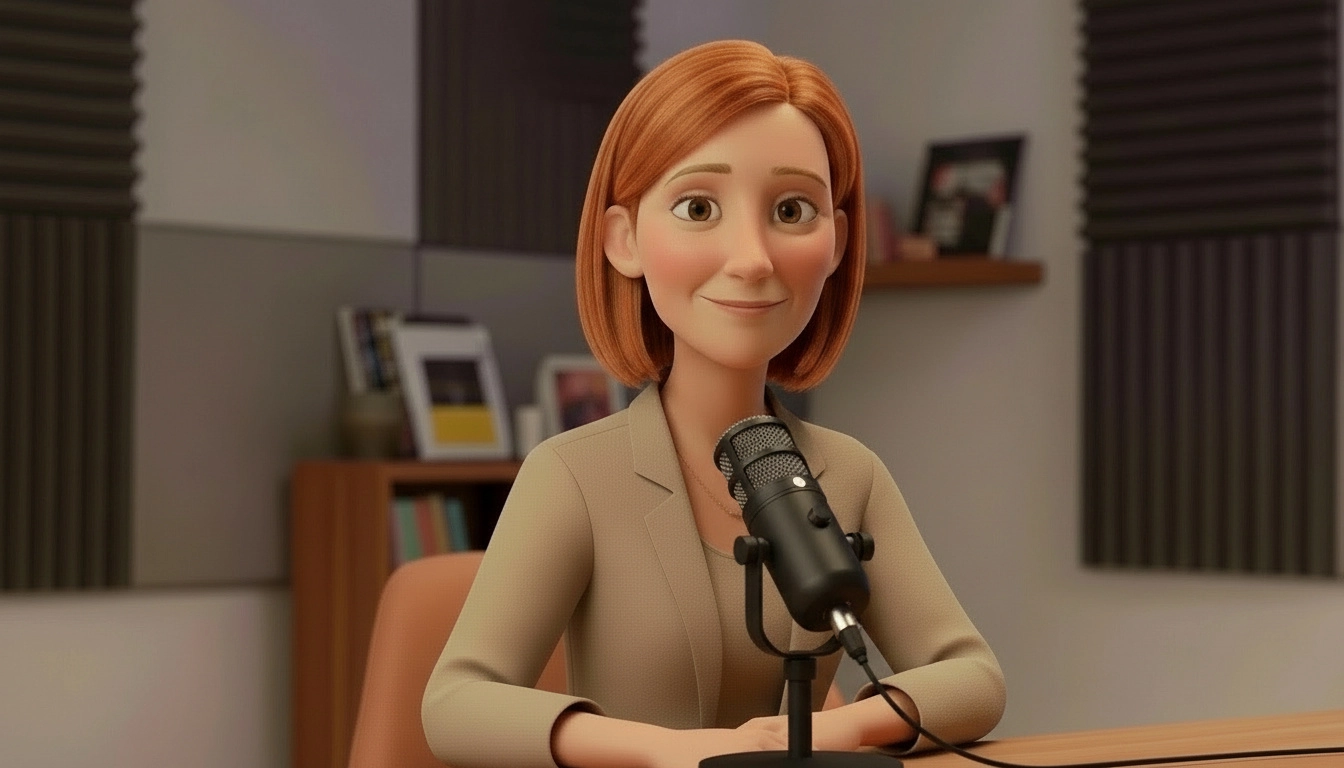
Aoifinn Devitt: Series 4 of the 50 Faces podcast is sponsored by Baillie Gifford. Baillie Gifford is a long-term investment manager dedicated to discovering the innovations and changemakers that deliver exceptional growth opportunities for its clients.
Candice Richards: My mother is my biggest mentor. She got married when she was 19. She didn’t have a career, and she would always whisper in my ear, kind of, buy your own baubles, you know, create a life for yourself, work hard. And to me, that was such a guiding force.
Aoifinn Devitt: I’m Aoifinn Devitt, and welcome to the 50 Faces podcast, which showcases inspiring professionals in the world of investment and beyond by focusing on people and their stories. I’m joined today by Candice Richards, who is founder and CEO of Moxie Platforms. Moxie builds custom women’s platforms, initiatives, and events for firms in the financial services industry. She previously worked as Managing Director, Head of BSG, and Compliance Officer at MidOcean Partners. Welcome, Candice. Thanks for joining me today.
Candice Richards: Thank you so much for having me. I’m so excited to be here.
Aoifinn Devitt: Well, we are one of those strange couples, friends who met on LinkedIn through a mutual friend, Jeannie Caesar-Fabian, fantastic Jeannie Caesar-Fabian. And I’ve since become intrigued by the work that you do at Moxie. And you’ve got such wonderful LinkedIn content and such a great mission. But before we get into that, I’d love to talk a bit about your career journey, going right back to what you studied and some of the surprising turns or simple turns that it took along the way.
Candice Richards: Well, my story is a very interesting story, but it’s a lot more common than I would have thought. And I have found that in so many of the stories and the perspectives that I’m learning from so many of the women that I’ve been meeting across the industry, that there’s so many similarities kind of in the backgrounds that we have. And I’m the daughter of immigrants. I had no access or exposure to the industry. My parents didn’t even want to let me go to college. But once I finally convinced them, it was lawyer, doctor, accountant. I didn’t like blood, I didn’t like numbers, so I ended up becoming a lawyer. And it was not until I got to law school that I actually realized that I was so intrigued and inspired by business organizations and securities regulations. And I decided that that was something I really wanted to pursue. But at that point, it was too late. I didn’t have the roadmap. I didn’t have the financial services internships. I didn’t really lay lay the groundwork for landing that dream job coming out of college, right? So I really had to do things my own way. And using kind of the gift of gab, I remember I went to every single continuing legal education session that the big law firms were putting out. And ambitious 23-year-old me, I went up to every panelist and asked them to kind of learn about their story and meet them for coffee. And I want to say that 99% of the time they were willing to meet with me. And that’s how I started to develop my network, and that’s how I found my entree into the industry. But Over the last almost 20 years, it’s been a very storied career, jumped around working on Wall Street, then working on compliance, working in commodities. And for the last 12 years was at MidOcean Partners, which was really just the most incredible job, which gave me such a tremendous runway to not only work on compliance and legal, but to develop an ESG platform across their credit and private equity strategies, and to develop their women’s platform and the women’s awareness initiative, which brought me to starting Moxie.
Aoifinn Devitt: And we will get into that in a second, but I just wanted to go back to some of that moxie that you yourself displayed. If we look at one of the meanings of the definitions of moxie, you mentioned being from an immigrant background. What country or what area did your parents come from?
Candice Richards: My parents are from Israel and my grandparents are from Russia. So I almost have like this double immigrant mentality. We have a really great work ethic. I almost wish they would have given me the gift of generational wealth and not this crazy work ethic, but we are tough workers. We put our heart into everything we do. And that’s why I think at MidOcean Partners, I really was the culture carrier. And I was a person who was just very optimistic and very gets into the weeds and just willing to do everything. And it was just a tremendous learning experience. And they reciprocated by giving me this amazing runway to build initiatives that I knew could use our position of influence to make a tremendous amount of impact across the industry.
Aoifinn Devitt: And on that communication style, that gift of the gab you mentioned, you’ve written about that on LinkedIn just quite recently. About having maybe a really memorable piece of clothing or something that can be an icebreaker. And I’d love to just ask you about that, because is that something you were just naturally born with, the ability to walk up to somebody after a panel and ask them to have coffee? Or is it something you had to kind of build up the skills to do or the courage to do? And for people for whom it does not come naturally, is there any kind of advice you’d give them in order to— clearly is important, but in order to build that skill?
Candice Richards: Sure, that was definitely not something that I was comfortable with right out the gate. I think it takes a tremendous amount of courage to go up to anyone, no matter what stage you are in your career. But that’s something that I knew would be the secret sauce, developing my network early. And that’s some piece of advice that I give to the high school and college women that we work with when we go across to different college campuses and we do these workshops with asset managers. Really start building your network early, and to the extent that you can find the courage to ask a question or to go up to someone and ask them for feedback or to have a coffee, that’s something that I think pays a tremendous amount of dividends across the entire length of your career, right? Some of these relationships that I made stemmed from 20 years ago, right, when I was just starting out. And so to the extent that you could find that piece within you that is your own secret sauce— and for me, that was style. And look, I didn’t spend a fortune on my clothing. I would go to Forever 21 and kind of these stores, and I could wear a $5 blazer, but I could just find a way to make it kind of a statement piece. And I mentioned on one of my LinkedIn posts recently, that’s not only kind of your own secret sauce, but that’s the biggest gift that you could give to someone else because you give them that opening to say, wow, I love your shoes, I want to learn about you. And then you develop a relationship there. So whatever it is that you could find that’s kind of your nugget to open the door to opportunity, I think it’s your obligation to really use that to your advantage.
Aoifinn Devitt: And one more follow-on question. I think developing the network is one thing, but nurturing and maintaining that network over— in your case, you mentioned 20 years— that seems to be something that a lot of people either forget or miss or cannot do well. How would you say to do that? Because that’s a different skill, I think.
Candice Richards: Again, I’m so glad that you mentioned this because I think that is the number one thing that so many women specifically forget to do. I think we’re really, really great at building relationships. We’re not really great at nurturing them, doing check-ins, To the extent that something happens in world events that could impact, you know, where someone lives, like reach out and ask, right? I think people really value knowing that you care about them, that you’re thinking about them. I think one other piece of advice that I give to so many women that I speak with is to the extent you can make an introduction, a benign introduction between one person and the other, having nothing in it for you, that’s something that also nurtures a relationship without really putting that much effort into it. Okay, Sarah loves golf and, you know, Tom loves golf, so let me connect them, right? And one day what they think about you. And that’s a natural way to develop and nurture a relationship. So I think there are a lot of low-hanging fruits that we can grab onto that really help us throughout our career.
Aoifinn Devitt: So interesting and great advice. Let’s move now on to Moxie Platforms. What problem would you say it was designed to solve for? What gap did you see in the market?
Candice Richards: So to me, when I built the Women’s Awareness Initiative while on MidOcean’s platform, which today is almost a $5 trillion platform, 32 different asset managers, white-shoe law firms, investment banks, consultants, endowments, and foundations all focus on using our frameworks to increase attraction to the industry among high school and college women and to help build those relationships across the industry. I recognized how well that resonated among the industry, but to me, the real issue was the retention piece. I kept seeing so many of my friends, managing directors, chief compliance officers, chief operating officers, just really like C-suite executives, not only leaving their firms but leaving the industry more broadly. And that was something that I really, really struggled with. And so to me, one piece of why I really did this was to address that challenge, right? You’re seeing so many strides being made as it relates to entry-level positions. 48% of positions are filled by women at the entry associate analyst level. But as you go up that ladder, you see the drop-off. And to me, I said to myself, okay, if I built the Women’s Awareness Initiative and it did so well, what is it that I could do to leverage the relationships and the access, the connectivity that I’ve built in this initiative with some of the largest institutional investors to really address the retention issue and change the conversation. And to me, if we don’t do something different, how can we actually expect different results? So what I come in to do with Moxie is I sit down with leadership teams. I sit down and listen to actually what it is, is their budgets, their resources, their level of commitment, their sensitivities. And then I sit down for one-on-one conversations with each woman in scope of the engagement, whether it’s the associate class, whether it’s 5 principals that they’re seeking to promote to managing director. Whether it’s 5-star performers, to really sit down and understand what was your entrée into the space? What are underleveraged assets that you have? What are you great at? How could we bring value to our firms by really excavating that and helping you develop that? Are there any gaps that we may have found that we could address via soft skills or hard skills training or mentorships? Do you need a clear career roadmap to understand the value that you bring to the firm and where you’re headed within 3 to 5 years? Things that really activate and bring mojo is what MOXIE is really seeking to achieve. And What has really, really landed recently has been our events, just doing events in collab with consumer-facing brands, right? Doing, you know, a firm, which I won’t mention, with aloe yoga, or like doing things that are just really outside the box, I think is something that is really going to energize our women and make them feel that, okay, yes, we’re bringing home the bacon, but we’re also doing things that we want to write home about, that we’re excited about, and make us want to stay in our firms.
Aoifinn Devitt: And has anything kind of surprised you in terms of the impact of events like this? Because it’s so unique what you’re describing. I think a lot of what you’re describing in some cases is very, very fringe. At other events, it’s kind of an afterthought. It’s not getting to the essence of bringing energy and, as you mentioned, energizing, revitalizing, really activating someone’s full potential. I think this is quite unusual what you’re doing and quite, quite forward-thinking. Has anything really surprised you in terms of its impact?
Candice Richards: It surprised me in a way that’s not surprising in the sense that I know that I’m a person who’s a culture carrier. I know that I have a magic to energize people and to make them feel activated and excited. But with every conversation that I have, with every one-on-one that I have, I learn so much about these women. I learn so much about what they’re seeking, correcting these misperceptions. But I love seeing kind of these activations in real time. You really see after our events and after our one-on-one sessions with women, you see their eyes light up. You see in real time this like mojo and activation and this desire to just be something greater. And that to me has been the most pleasant surprise. And pleasant’s a real understatement, right? What we’re seeking to do is not to talk about systemic barriers and what’s holding us back, but to really figure out how to blow through them. And to the extent that we could correct that by just effectively communicating either the value that this woman brings to the firm, the potential that the firm sees in her, where the firm wants her to go, or via events that just really excite and energize and make people feel like, wow, I am so happy to be working at this firm, I think that we’re winning on so many levels.
Aoifinn Devitt: Thank you to Bailey Gifford for sponsoring Series 4 of the 2025 50 Faces Podcast. I sat down with Matthew Coyle, Client Relationship Director at Bailey Gifford, and asked him to tell us a little bit more about the firm’s mission statement, which is to discover the innovations and changemakers that deliver exceptional growth opportunities for its clients.
Speaker C: It’s all about having a wide funnel of inputs. The starting point is our people. We hire smart, dynamic individuals who are curious about the world. We actively recruit graduates from a vast array of different academic and cultural backgrounds, And after all, to generate attractive long-term returns for our clients, we have to think differently from the market. We can teach people how to do a discounted cash flow, but we can’t teach a natural curiosity and inquisitiveness. That has to come from within. We also foster relationships with academic institutions across the globe. This helps us to think about the world in the future, how it’s evolving, and how we might be able to benefit and pick up investment opportunities through that perspective.
Aoifinn Devitt: And now back to the show. And how about the response from your audience, from the firms? Clearly you’re the culture carrier bringing this energy into the room. How have you found, maybe through feedback sessions or just follow-up, that this— again, we talked about following up on network creation. It’s not a one-stop shop. It’s not a one-player game or a once-off game. It has to be revisited and nurtured. These programs you have, the workshops, how does that continue once your workshop is over?
Candice Richards: You know, it’s very interesting because with every engagement, it fosters a new engagement. So I was working with a very large wealth manager and they loved what I was doing. They loved the reporting and the collateral that we generated. It was bold, it was honest, right? It gave recommended action items. So not just addressing the problem, but actually providing several different solutions and ways to think about things. But they also said to me, okay, we want to send you to the University of Texas. We want to send you to the University of Virginia and Charleston College. We want to kind of build this out. And so to me, it’s not only the women that are the winners, but it’s the actual firms. And they’re excited about what we’re working on because they recognize the negative economic impacts of losing not only women, but talent broadly. Right. It costs a tremendous amount of money when you think about kind of the caliber of the talent that we’re working with to replace them and time and effort. So That’s been the most welcome surprise, just the level of responsiveness and excitement toward what we’re doing because nobody has done what we’re doing.
Aoifinn Devitt: Let’s pull the lens back a bit. So you focus on the financial industry and clearly you saw this need and have seen for some time. Would you say the industry is changing for the better in terms of its recognition of the importance of events like this? Do you see kind of treading water or staying the same? I think we have seen COVID took a toll on some of these inclusion initiatives because of just some of the financial impact of COVID Any observations across the trajectory from your standpoint?
Candice Richards: I’m seeing marginal improvements as we go up the ladder. I am seeing the industry really take tremendous strides in terms of how they’re attracting talent. But I think just the broad themes that I’ve collected in my work is that on the retention piece, there’s still a struggle and a challenge, and firms aren’t really sure how to navigate this. And I think that’s why they’ve been so eager to work with us. I also will mention kind of the industry headwinds that we have not faced because our company has never been a DEI company, right? It’s all about talent and just making sure we have an activated and energized workforce. But it’s definitely something that is brought up in every diligence meeting in advance of us being engaged. Like, how are you addressing these industry headwinds? The way that I address that is I’ve been on the inside. I’ve been on the inside at the GP level. I see the level of DDQs, right? The frequency, the questions that are coming from some of the largest LPs just as it relates to employee composition by gender. And it’s not something that’s going away. It’s something that when I’ve spoken to some of the largest institutional investors, they’re really double and triple downing on, right? So to me, it’s just a matter of really educating GP leadership teams to understand kind of the inside scoop and what we’re seeing as we peel back the onion.
Aoifinn Devitt: And what does the future look like in an ideal world for you and for these kind of platforms, these kind of initiatives? To look at maybe 5 years, what can you see in terms of just how normalized maybe some of this will be? And where do you think Moxie platforms will be?
Candice Richards: Oh my God, I see so much. I see definitely this college presence. I think specifically as it relates to the wealth management industry with the great wealth transfer, with the transfer of wealth. Over the next 5 years and plus coming to women. I see the industry completely changing. And to me, this is really a business imperative, whereas today it might be seen as something that’s maybe cute to have or maybe not a must-have yet. I see that changing significantly. I think that you will need to really create a custom platform that addresses your business needs and is practical, but also has the right tools to really attract top talent. And to keep top talent.
Aoifinn Devitt: And it’s interesting that you mentioned the college level because, again, back to your point you made earlier about people underestimating how early they need to start that networking piece. There’s a lot going on in college right now between the concern about getting a job when you come out, the concern about AI and how to use it within the educational setting, maybe the backdrop culturally in some universities. Do you find that students are getting the time to think about this aspect, some of the networking, the actual the authenticity of their personalities and letting it flow through into the workplace?
Candice Richards: There’s a tremendous, tremendous push, and I’ll give you this kind of little nugget of wisdom that I’ve gleaned from the conversations that I’ve had with the colleges and universities that are engaging us. They’re building curriculum around women and wealth. And from my conversations, it is clear that we do not have enough financial advisors, men and women, to service the explosive growth that we’re going to see over the next 5 years plus. So colleges and universities are very keen to create not only curriculum, but events and workshops and programming that will actually widen the talent pipeline as it relates to who is going into these industries. So this is something that we’re very, very focused on. We’re very focused on getting it right. And it’s just been a very, very energizing experience, just giving college students really the lay of the land and creating that exposure and those educational opportunities to understand what a career in not only wealth management, but in asset management could actually look like. What are the firms that you should be thinking about? What are the economics, right? Is this all math or is this mostly Excel, right? Can I do this, right? Correcting those misperceptions around what a successful career in this industry can look You like. Know, the different areas, whether it’s on the advisory side or the infrastructure side, right? What we’re seeking to achieve with these college workshops is to really provide those educational opportunities and give students a chance. I didn’t have that chance. So to me, this is almost correcting those wrongs.
Aoifinn Devitt: And speaking of energy and promoting this message, I know we have in common a mutual friend, Carrie Carbonaro, who is just an absolute rocket of energy within our industry. And I’ve done a podcast with her. Her star continues to rise, and I think her energy just jumps off the page. So I will put a link to her podcast as well. In these show notes because she’s a great example of just how we can lift each other up and all benefit.
Candice Richards: Yes, I love that. And I love your energy of celebrating other women. Just you’ve mentioned a few of the key players that are mutual acquaintances between us, but they really are rock stars. And there’s so many rock stars in our industry across so many different areas. And so I love that you’re celebrating those women.
Aoifinn Devitt: Well, one of the things I think is we are all under time pressure. We’re all slammed. The pressures are mounting. I think it’s medically proven that stress levels are higher. So I think there’s the kind of the perfect way to navigate networks and nurture them. And then there’s the good enough. And most of us are in the kind of good or the good enough. And then I think it’s through lifting others up that we can sort of bridge that gap. We can make each other’s networking efforts that bit more impactful by recognizing the mutual importance. And I think equally by recognizing that the pie is not being divided, but it is growing.
Candice Richards: Yes. And I think there’s so much capital to go around. There’s so much opportunity to go around. I think that it is vital that we help each other. And I also think to the extent that we could create these disruptive moments and experiences, test driving a Ferrari out in the desert, that’s something that I would want to do for a women’s event, right? And that brings us together. And the ROI on that is just tremendous. Just having these experiences that help us bond and help us have conversation starters and pieces and swagger, right? That’s what’s going to help us rise within the industry and make just tremendous, tremendous friendships.
Aoifinn Devitt: And I’m going to bring out another amazing woman in our industry, Stacy Havener. Who focuses on helping firms grow their asset base and tell their story. And I’ve been very inspired by her LinkedIn content and it’s celebrating authenticity and importantly, regularity and commitment. I think that commitment that you mentioned as well around networking and just sustaining those networks, it is about commitment, but if we commit to each other, I think that enables us to fulfill that commitment.
Candice Richards: Yes. And the entrepreneur that I am, I think we should do a campaign of 50 Faces you should know in the industry and maybe we’ll roll out once a week. I love it. Start with Jeannie.
Aoifinn Devitt: Well, let’s go to some reflections because this has been a great and very energizing conversation that we’re holding on a Friday afternoon, so particularly needed. Um, if you were to look back at your career so far, what were some of the highs and lows that you’ve experienced?
Candice Richards: Some of the highs that I’ve experienced and the lows— I don’t know that I could say that I experienced lows. Maybe the lows was earlier in my industry, just not having that job and having to really hunt for myself. One of the low highs that I could mention was one of my first weeks at MidOcean. I started sitting in an operational diligence circuit, right? And having these meetings with investors for 3 hours. And I was shadowing my COO, who’s just an incredible woman, Debbie Hodges, who’s just created so many amazing opportunities for me. So I do have to shout her out. But I remember about a year in, she looked at me, she’s like, kid, you’re going in on your own. And I said, no, I’m not. And she said, yes, you are. You can do it. And she looked at me dead in the eye and she’s like, I believe in you. You can do it. I see it. Go for it. And that experience just completely transformed my entire life. Was it hard? Yes. Were the first two a flop? Probably. But it helped me to really develop my storytelling skill set. It helped me to navigate tough questions. It helped me to learn how to sit in a room for 3 hours and not be fidgety, you know, and figure out a way to really tell a really, really great story and figure out what it was that our LP were really interested in and where I could bring some real value to the firm and create initiatives around that. So to me, the lesson there is sometimes the lows can turn out to be the greatest highs. So give yourself a chance.
Aoifinn Devitt: Well, certainly they are often the most memorable. They may not always be the best moments, but they often are memorable, unforgettable, and therefore something we can learn from. You mentioned some of the people that inspire you. Was there any mentor besides this lady you mentioned at MidOcean who were particularly influential across your career or life so far?
Candice Richards: You might say this is very, very cheesy, but my mother is my biggest mentor. She got married when she was 19. She didn’t have a career. And she would always whisper in my ear, kind of, “Buy your own baubles, you know, create a life for yourself, work hard.” And to me, that was such a guiding force just in everything that I did, right? I wanted to be strong. I wanted to be brave. And I worked from the day that I got married, you know, until today. It’s just, it’s been such a huge part of my identity. But without that strong, you know, mother figure in my life, just really guiding me and helping me navigate some of the toughest times, I don’t think I could be where I am today.
Aoifinn Devitt: Last question. I love that, buy your own baubles. Is there any other creed or motto that you, you live by, or maybe any advice you would have for your younger self?
Candice Richards: Advice or creed? I, I just don’t stop. I don’t know if I have like a specific mantra, but I just, I feel like what I tell my kids all the time is if you don’t ask, you don’t get. So be bold, you know, beat to your own drum, just do things differently. You know, I’ll never forget, I’ll give you this last story that I had to present at, you know, the annual meeting for MidOcean, and I, I showed up in hot pink blazer with boa feathers at the sleeves. And that was so provocative. But again, that was just me, right? And I just believed in me and in who I was, right? And I, I owned it. And it turned out to be, you know, the greatest conversation starter. People are talking to me. So I feel like if you don’t ask, you don’t get. And also be yourself and don’t try to be something that you’re not, but always challenge yourself. Challenge yourself to be greater. There’s always more that you can do and more that you can grow.
Aoifinn Devitt: Well, Candice, thank you for being the force that you are in our industry, and thank you for your LinkedIn content, even if some of it is provocative. And it’s always motivating because I think even if some of us aren’t quite ready for the hot pink feather boa sleeves just at this stage, I think seeing you push the envelope like that is a little bit of inspiration for that outfit to be a little bit more daring perhaps the next time. And I think that is what it’s all about, is encouraging us to push outside our comfort zone to reach for what we really want. And thank you for the work that you’re doing both individually and through Moxie Platforms to enable so many more women in the industry do that.
Candice Richards: Thank you so much. This was so terrific.
Aoifinn Devitt: I’m Aoifinn Devitt. Thank you for listening to our 50 Faces podcast. If you liked what you heard and would like to tune in to hear from more inspiring professionals and their stories, please subscribe on Apple Podcasts or wherever you get your podcasts. This podcast is for informational purposes only and should not be construed as investment advice, and all views are personal and should not be attributed to the organizations and affiliations of the host or any guest.
Aoifinn Devitt: Series 4 of the 50 Faces podcast is sponsored by Baillie Gifford. Baillie Gifford is a long-term investment manager dedicated to discovering the innovations and changemakers that deliver exceptional growth opportunities for its clients.
Candice Richards: My mother is my biggest mentor. She got married when she was 19. She didn’t have a career, and she would always whisper in my ear, kind of, buy your own baubles, you know, create a life for yourself, work hard. And to me, that was such a guiding force.
Aoifinn Devitt: I’m Aoifinn Devitt, and welcome to the 50 Faces podcast, which showcases inspiring professionals in the world of investment and beyond by focusing on people and their stories. I’m joined today by Candice Richards, who is founder and CEO of Moxie Platforms. Moxie builds custom women’s platforms, initiatives, and events for firms in the financial services industry. She previously worked as Managing Director, Head of BSG, and Compliance Officer at MidOcean Partners. Welcome, Candice. Thanks for joining me today.
Candice Richards: Thank you so much for having me. I’m so excited to be here.
Aoifinn Devitt: Well, we are one of those strange couples, friends who met on LinkedIn through a mutual friend, Jeannie Caesar-Fabian, fantastic Jeannie Caesar-Fabian. And I’ve since become intrigued by the work that you do at Moxie. And you’ve got such wonderful LinkedIn content and such a great mission. But before we get into that, I’d love to talk a bit about your career journey, going right back to what you studied and some of the surprising turns or simple turns that it took along the way.
Candice Richards: Well, my story is a very interesting story, but it’s a lot more common than I would have thought. And I have found that in so many of the stories and the perspectives that I’m learning from so many of the women that I’ve been meeting across the industry, that there’s so many similarities kind of in the backgrounds that we have. And I’m the daughter of immigrants. I had no access or exposure to the industry. My parents didn’t even want to let me go to college. But once I finally convinced them, it was lawyer, doctor, accountant. I didn’t like blood, I didn’t like numbers, so I ended up becoming a lawyer. And it was not until I got to law school that I actually realized that I was so intrigued and inspired by business organizations and securities regulations. And I decided that that was something I really wanted to pursue. But at that point, it was too late. I didn’t have the roadmap. I didn’t have the financial services internships. I didn’t really lay lay the groundwork for landing that dream job coming out of college, right? So I really had to do things my own way. And using kind of the gift of gab, I remember I went to every single continuing legal education session that the big law firms were putting out. And ambitious 23-year-old me, I went up to every panelist and asked them to kind of learn about their story and meet them for coffee. And I want to say that 99% of the time they were willing to meet with me. And that’s how I started to develop my network, and that’s how I found my entree into the industry. But Over the last almost 20 years, it’s been a very storied career, jumped around working on Wall Street, then working on compliance, working in commodities. And for the last 12 years was at MidOcean Partners, which was really just the most incredible job, which gave me such a tremendous runway to not only work on compliance and legal, but to develop an ESG platform across their credit and private equity strategies, and to develop their women’s platform and the women’s awareness initiative, which brought me to starting Moxie.
Aoifinn Devitt: And we will get into that in a second, but I just wanted to go back to some of that moxie that you yourself displayed. If we look at one of the meanings of the definitions of moxie, you mentioned being from an immigrant background. What country or what area did your parents come from?
Candice Richards: My parents are from Israel and my grandparents are from Russia. So I almost have like this double immigrant mentality. We have a really great work ethic. I almost wish they would have given me the gift of generational wealth and not this crazy work ethic, but we are tough workers. We put our heart into everything we do. And that’s why I think at MidOcean Partners, I really was the culture carrier. And I was a person who was just very optimistic and very gets into the weeds and just willing to do everything. And it was just a tremendous learning experience. And they reciprocated by giving me this amazing runway to build initiatives that I knew could use our position of influence to make a tremendous amount of impact across the industry.
Aoifinn Devitt: And on that communication style, that gift of the gab you mentioned, you’ve written about that on LinkedIn just quite recently. About having maybe a really memorable piece of clothing or something that can be an icebreaker. And I’d love to just ask you about that, because is that something you were just naturally born with, the ability to walk up to somebody after a panel and ask them to have coffee? Or is it something you had to kind of build up the skills to do or the courage to do? And for people for whom it does not come naturally, is there any kind of advice you’d give them in order to— clearly is important, but in order to build that skill?
Candice Richards: Sure, that was definitely not something that I was comfortable with right out the gate. I think it takes a tremendous amount of courage to go up to anyone, no matter what stage you are in your career. But that’s something that I knew would be the secret sauce, developing my network early. And that’s some piece of advice that I give to the high school and college women that we work with when we go across to different college campuses and we do these workshops with asset managers. Really start building your network early, and to the extent that you can find the courage to ask a question or to go up to someone and ask them for feedback or to have a coffee, that’s something that I think pays a tremendous amount of dividends across the entire length of your career, right? Some of these relationships that I made stemmed from 20 years ago, right, when I was just starting out. And so to the extent that you could find that piece within you that is your own secret sauce— and for me, that was style. And look, I didn’t spend a fortune on my clothing. I would go to Forever 21 and kind of these stores, and I could wear a $5 blazer, but I could just find a way to make it kind of a statement piece. And I mentioned on one of my LinkedIn posts recently, that’s not only kind of your own secret sauce, but that’s the biggest gift that you could give to someone else because you give them that opening to say, wow, I love your shoes, I want to learn about you. And then you develop a relationship there. So whatever it is that you could find that’s kind of your nugget to open the door to opportunity, I think it’s your obligation to really use that to your advantage.
Aoifinn Devitt: And one more follow-on question. I think developing the network is one thing, but nurturing and maintaining that network over— in your case, you mentioned 20 years— that seems to be something that a lot of people either forget or miss or cannot do well. How would you say to do that? Because that’s a different skill, I think.
Candice Richards: Again, I’m so glad that you mentioned this because I think that is the number one thing that so many women specifically forget to do. I think we’re really, really great at building relationships. We’re not really great at nurturing them, doing check-ins, To the extent that something happens in world events that could impact, you know, where someone lives, like reach out and ask, right? I think people really value knowing that you care about them, that you’re thinking about them. I think one other piece of advice that I give to so many women that I speak with is to the extent you can make an introduction, a benign introduction between one person and the other, having nothing in it for you, that’s something that also nurtures a relationship without really putting that much effort into it. Okay, Sarah loves golf and, you know, Tom loves golf, so let me connect them, right? And one day what they think about you. And that’s a natural way to develop and nurture a relationship. So I think there are a lot of low-hanging fruits that we can grab onto that really help us throughout our career.
Aoifinn Devitt: So interesting and great advice. Let’s move now on to Moxie Platforms. What problem would you say it was designed to solve for? What gap did you see in the market?
Candice Richards: So to me, when I built the Women’s Awareness Initiative while on MidOcean’s platform, which today is almost a $5 trillion platform, 32 different asset managers, white-shoe law firms, investment banks, consultants, endowments, and foundations all focus on using our frameworks to increase attraction to the industry among high school and college women and to help build those relationships across the industry. I recognized how well that resonated among the industry, but to me, the real issue was the retention piece. I kept seeing so many of my friends, managing directors, chief compliance officers, chief operating officers, just really like C-suite executives, not only leaving their firms but leaving the industry more broadly. And that was something that I really, really struggled with. And so to me, one piece of why I really did this was to address that challenge, right? You’re seeing so many strides being made as it relates to entry-level positions. 48% of positions are filled by women at the entry associate analyst level. But as you go up that ladder, you see the drop-off. And to me, I said to myself, okay, if I built the Women’s Awareness Initiative and it did so well, what is it that I could do to leverage the relationships and the access, the connectivity that I’ve built in this initiative with some of the largest institutional investors to really address the retention issue and change the conversation. And to me, if we don’t do something different, how can we actually expect different results? So what I come in to do with Moxie is I sit down with leadership teams. I sit down and listen to actually what it is, is their budgets, their resources, their level of commitment, their sensitivities. And then I sit down for one-on-one conversations with each woman in scope of the engagement, whether it’s the associate class, whether it’s 5 principals that they’re seeking to promote to managing director. Whether it’s 5-star performers, to really sit down and understand what was your entrée into the space? What are underleveraged assets that you have? What are you great at? How could we bring value to our firms by really excavating that and helping you develop that? Are there any gaps that we may have found that we could address via soft skills or hard skills training or mentorships? Do you need a clear career roadmap to understand the value that you bring to the firm and where you’re headed within 3 to 5 years? Things that really activate and bring mojo is what MOXIE is really seeking to achieve. And What has really, really landed recently has been our events, just doing events in collab with consumer-facing brands, right? Doing, you know, a firm, which I won’t mention, with aloe yoga, or like doing things that are just really outside the box, I think is something that is really going to energize our women and make them feel that, okay, yes, we’re bringing home the bacon, but we’re also doing things that we want to write home about, that we’re excited about, and make us want to stay in our firms.
Aoifinn Devitt: And has anything kind of surprised you in terms of the impact of events like this? Because it’s so unique what you’re describing. I think a lot of what you’re describing in some cases is very, very fringe. At other events, it’s kind of an afterthought. It’s not getting to the essence of bringing energy and, as you mentioned, energizing, revitalizing, really activating someone’s full potential. I think this is quite unusual what you’re doing and quite, quite forward-thinking. Has anything really surprised you in terms of its impact?
Candice Richards: It surprised me in a way that’s not surprising in the sense that I know that I’m a person who’s a culture carrier. I know that I have a magic to energize people and to make them feel activated and excited. But with every conversation that I have, with every one-on-one that I have, I learn so much about these women. I learn so much about what they’re seeking, correcting these misperceptions. But I love seeing kind of these activations in real time. You really see after our events and after our one-on-one sessions with women, you see their eyes light up. You see in real time this like mojo and activation and this desire to just be something greater. And that to me has been the most pleasant surprise. And pleasant’s a real understatement, right? What we’re seeking to do is not to talk about systemic barriers and what’s holding us back, but to really figure out how to blow through them. And to the extent that we could correct that by just effectively communicating either the value that this woman brings to the firm, the potential that the firm sees in her, where the firm wants her to go, or via events that just really excite and energize and make people feel like, wow, I am so happy to be working at this firm, I think that we’re winning on so many levels.
Aoifinn Devitt: Thank you to Bailey Gifford for sponsoring Series 4 of the 2025 50 Faces Podcast. I sat down with Matthew Coyle, Client Relationship Director at Bailey Gifford, and asked him to tell us a little bit more about the firm’s mission statement, which is to discover the innovations and changemakers that deliver exceptional growth opportunities for its clients.
Speaker C: It’s all about having a wide funnel of inputs. The starting point is our people. We hire smart, dynamic individuals who are curious about the world. We actively recruit graduates from a vast array of different academic and cultural backgrounds, And after all, to generate attractive long-term returns for our clients, we have to think differently from the market. We can teach people how to do a discounted cash flow, but we can’t teach a natural curiosity and inquisitiveness. That has to come from within. We also foster relationships with academic institutions across the globe. This helps us to think about the world in the future, how it’s evolving, and how we might be able to benefit and pick up investment opportunities through that perspective.
Aoifinn Devitt: And now back to the show. And how about the response from your audience, from the firms? Clearly you’re the culture carrier bringing this energy into the room. How have you found, maybe through feedback sessions or just follow-up, that this— again, we talked about following up on network creation. It’s not a one-stop shop. It’s not a one-player game or a once-off game. It has to be revisited and nurtured. These programs you have, the workshops, how does that continue once your workshop is over?
Candice Richards: You know, it’s very interesting because with every engagement, it fosters a new engagement. So I was working with a very large wealth manager and they loved what I was doing. They loved the reporting and the collateral that we generated. It was bold, it was honest, right? It gave recommended action items. So not just addressing the problem, but actually providing several different solutions and ways to think about things. But they also said to me, okay, we want to send you to the University of Texas. We want to send you to the University of Virginia and Charleston College. We want to kind of build this out. And so to me, it’s not only the women that are the winners, but it’s the actual firms. And they’re excited about what we’re working on because they recognize the negative economic impacts of losing not only women, but talent broadly. Right. It costs a tremendous amount of money when you think about kind of the caliber of the talent that we’re working with to replace them and time and effort. So That’s been the most welcome surprise, just the level of responsiveness and excitement toward what we’re doing because nobody has done what we’re doing.
Aoifinn Devitt: Let’s pull the lens back a bit. So you focus on the financial industry and clearly you saw this need and have seen for some time. Would you say the industry is changing for the better in terms of its recognition of the importance of events like this? Do you see kind of treading water or staying the same? I think we have seen COVID took a toll on some of these inclusion initiatives because of just some of the financial impact of COVID Any observations across the trajectory from your standpoint?
Candice Richards: I’m seeing marginal improvements as we go up the ladder. I am seeing the industry really take tremendous strides in terms of how they’re attracting talent. But I think just the broad themes that I’ve collected in my work is that on the retention piece, there’s still a struggle and a challenge, and firms aren’t really sure how to navigate this. And I think that’s why they’ve been so eager to work with us. I also will mention kind of the industry headwinds that we have not faced because our company has never been a DEI company, right? It’s all about talent and just making sure we have an activated and energized workforce. But it’s definitely something that is brought up in every diligence meeting in advance of us being engaged. Like, how are you addressing these industry headwinds? The way that I address that is I’ve been on the inside. I’ve been on the inside at the GP level. I see the level of DDQs, right? The frequency, the questions that are coming from some of the largest LPs just as it relates to employee composition by gender. And it’s not something that’s going away. It’s something that when I’ve spoken to some of the largest institutional investors, they’re really double and triple downing on, right? So to me, it’s just a matter of really educating GP leadership teams to understand kind of the inside scoop and what we’re seeing as we peel back the onion.
Aoifinn Devitt: And what does the future look like in an ideal world for you and for these kind of platforms, these kind of initiatives? To look at maybe 5 years, what can you see in terms of just how normalized maybe some of this will be? And where do you think Moxie platforms will be?
Candice Richards: Oh my God, I see so much. I see definitely this college presence. I think specifically as it relates to the wealth management industry with the great wealth transfer, with the transfer of wealth. Over the next 5 years and plus coming to women. I see the industry completely changing. And to me, this is really a business imperative, whereas today it might be seen as something that’s maybe cute to have or maybe not a must-have yet. I see that changing significantly. I think that you will need to really create a custom platform that addresses your business needs and is practical, but also has the right tools to really attract top talent. And to keep top talent.
Aoifinn Devitt: And it’s interesting that you mentioned the college level because, again, back to your point you made earlier about people underestimating how early they need to start that networking piece. There’s a lot going on in college right now between the concern about getting a job when you come out, the concern about AI and how to use it within the educational setting, maybe the backdrop culturally in some universities. Do you find that students are getting the time to think about this aspect, some of the networking, the actual the authenticity of their personalities and letting it flow through into the workplace?
Candice Richards: There’s a tremendous, tremendous push, and I’ll give you this kind of little nugget of wisdom that I’ve gleaned from the conversations that I’ve had with the colleges and universities that are engaging us. They’re building curriculum around women and wealth. And from my conversations, it is clear that we do not have enough financial advisors, men and women, to service the explosive growth that we’re going to see over the next 5 years plus. So colleges and universities are very keen to create not only curriculum, but events and workshops and programming that will actually widen the talent pipeline as it relates to who is going into these industries. So this is something that we’re very, very focused on. We’re very focused on getting it right. And it’s just been a very, very energizing experience, just giving college students really the lay of the land and creating that exposure and those educational opportunities to understand what a career in not only wealth management, but in asset management could actually look like. What are the firms that you should be thinking about? What are the economics, right? Is this all math or is this mostly Excel, right? Can I do this, right? Correcting those misperceptions around what a successful career in this industry can look You like. Know, the different areas, whether it’s on the advisory side or the infrastructure side, right? What we’re seeking to achieve with these college workshops is to really provide those educational opportunities and give students a chance. I didn’t have that chance. So to me, this is almost correcting those wrongs.
Aoifinn Devitt: And speaking of energy and promoting this message, I know we have in common a mutual friend, Carrie Carbonaro, who is just an absolute rocket of energy within our industry. And I’ve done a podcast with her. Her star continues to rise, and I think her energy just jumps off the page. So I will put a link to her podcast as well. In these show notes because she’s a great example of just how we can lift each other up and all benefit.
Candice Richards: Yes, I love that. And I love your energy of celebrating other women. Just you’ve mentioned a few of the key players that are mutual acquaintances between us, but they really are rock stars. And there’s so many rock stars in our industry across so many different areas. And so I love that you’re celebrating those women.
Aoifinn Devitt: Well, one of the things I think is we are all under time pressure. We’re all slammed. The pressures are mounting. I think it’s medically proven that stress levels are higher. So I think there’s the kind of the perfect way to navigate networks and nurture them. And then there’s the good enough. And most of us are in the kind of good or the good enough. And then I think it’s through lifting others up that we can sort of bridge that gap. We can make each other’s networking efforts that bit more impactful by recognizing the mutual importance. And I think equally by recognizing that the pie is not being divided, but it is growing.
Candice Richards: Yes. And I think there’s so much capital to go around. There’s so much opportunity to go around. I think that it is vital that we help each other. And I also think to the extent that we could create these disruptive moments and experiences, test driving a Ferrari out in the desert, that’s something that I would want to do for a women’s event, right? And that brings us together. And the ROI on that is just tremendous. Just having these experiences that help us bond and help us have conversation starters and pieces and swagger, right? That’s what’s going to help us rise within the industry and make just tremendous, tremendous friendships.
Aoifinn Devitt: And I’m going to bring out another amazing woman in our industry, Stacy Havener. Who focuses on helping firms grow their asset base and tell their story. And I’ve been very inspired by her LinkedIn content and it’s celebrating authenticity and importantly, regularity and commitment. I think that commitment that you mentioned as well around networking and just sustaining those networks, it is about commitment, but if we commit to each other, I think that enables us to fulfill that commitment.
Candice Richards: Yes. And the entrepreneur that I am, I think we should do a campaign of 50 Faces you should know in the industry and maybe we’ll roll out once a week. I love it. Start with Jeannie.
Aoifinn Devitt: Well, let’s go to some reflections because this has been a great and very energizing conversation that we’re holding on a Friday afternoon, so particularly needed. Um, if you were to look back at your career so far, what were some of the highs and lows that you’ve experienced?
Candice Richards: Some of the highs that I’ve experienced and the lows— I don’t know that I could say that I experienced lows. Maybe the lows was earlier in my industry, just not having that job and having to really hunt for myself. One of the low highs that I could mention was one of my first weeks at MidOcean. I started sitting in an operational diligence circuit, right? And having these meetings with investors for 3 hours. And I was shadowing my COO, who’s just an incredible woman, Debbie Hodges, who’s just created so many amazing opportunities for me. So I do have to shout her out. But I remember about a year in, she looked at me, she’s like, kid, you’re going in on your own. And I said, no, I’m not. And she said, yes, you are. You can do it. And she looked at me dead in the eye and she’s like, I believe in you. You can do it. I see it. Go for it. And that experience just completely transformed my entire life. Was it hard? Yes. Were the first two a flop? Probably. But it helped me to really develop my storytelling skill set. It helped me to navigate tough questions. It helped me to learn how to sit in a room for 3 hours and not be fidgety, you know, and figure out a way to really tell a really, really great story and figure out what it was that our LP were really interested in and where I could bring some real value to the firm and create initiatives around that. So to me, the lesson there is sometimes the lows can turn out to be the greatest highs. So give yourself a chance.
Aoifinn Devitt: Well, certainly they are often the most memorable. They may not always be the best moments, but they often are memorable, unforgettable, and therefore something we can learn from. You mentioned some of the people that inspire you. Was there any mentor besides this lady you mentioned at MidOcean who were particularly influential across your career or life so far?
Candice Richards: You might say this is very, very cheesy, but my mother is my biggest mentor. She got married when she was 19. She didn’t have a career. And she would always whisper in my ear, kind of, “Buy your own baubles, you know, create a life for yourself, work hard.” And to me, that was such a guiding force just in everything that I did, right? I wanted to be strong. I wanted to be brave. And I worked from the day that I got married, you know, until today. It’s just, it’s been such a huge part of my identity. But without that strong, you know, mother figure in my life, just really guiding me and helping me navigate some of the toughest times, I don’t think I could be where I am today.
Aoifinn Devitt: Last question. I love that, buy your own baubles. Is there any other creed or motto that you, you live by, or maybe any advice you would have for your younger self?
Candice Richards: Advice or creed? I, I just don’t stop. I don’t know if I have like a specific mantra, but I just, I feel like what I tell my kids all the time is if you don’t ask, you don’t get. So be bold, you know, beat to your own drum, just do things differently. You know, I’ll never forget, I’ll give you this last story that I had to present at, you know, the annual meeting for MidOcean, and I, I showed up in hot pink blazer with boa feathers at the sleeves. And that was so provocative. But again, that was just me, right? And I just believed in me and in who I was, right? And I, I owned it. And it turned out to be, you know, the greatest conversation starter. People are talking to me. So I feel like if you don’t ask, you don’t get. And also be yourself and don’t try to be something that you’re not, but always challenge yourself. Challenge yourself to be greater. There’s always more that you can do and more that you can grow.
Aoifinn Devitt: Well, Candice, thank you for being the force that you are in our industry, and thank you for your LinkedIn content, even if some of it is provocative. And it’s always motivating because I think even if some of us aren’t quite ready for the hot pink feather boa sleeves just at this stage, I think seeing you push the envelope like that is a little bit of inspiration for that outfit to be a little bit more daring perhaps the next time. And I think that is what it’s all about, is encouraging us to push outside our comfort zone to reach for what we really want. And thank you for the work that you’re doing both individually and through Moxie Platforms to enable so many more women in the industry do that.
Candice Richards: Thank you so much. This was so terrific.
Aoifinn Devitt: I’m Aoifinn Devitt. Thank you for listening to our 50 Faces podcast. If you liked what you heard and would like to tune in to hear from more inspiring professionals and their stories, please subscribe on Apple Podcasts or wherever you get your podcasts. This podcast is for informational purposes only and should not be construed as investment advice, and all views are personal and should not be attributed to the organizations and affiliations of the host or any guest.