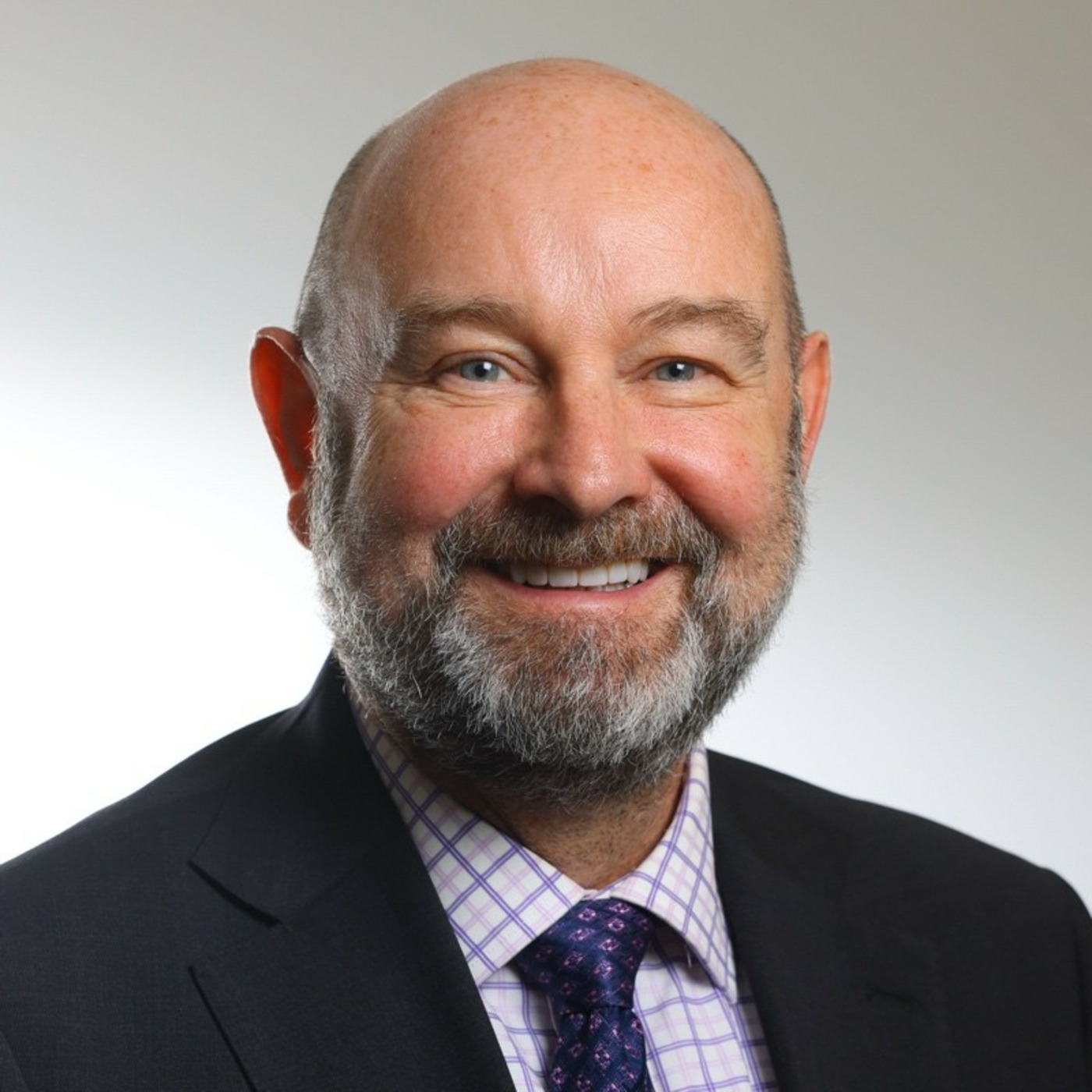
Aoifinn Devitt: Good morning. We have a little treat for you this Friday morning, and every Friday morning for the next 4 weeks, we’re going to be bringing you a collaboration that we worked on with Always a Pensions Angle podcast, Tom Parker, and his team at DG Publishing. The first is a fascinating discussion with a lead member of one of the LGPS pools, where he talks about the challenges that come with growth, but also the massive opportunity to forge a new kind of client relationship. Enjoy.
Trevor: Good morning, afternoon, or frankly, whatever time you find yourself listening to this podcast, and welcome to the first of a 5-part special, Always a Pensions Angle series, which we’re running in partnership with the 50 Faces podcast. I’m of course Thomas Parker, and I’m joined by my partner in crime, Mr. Nick Reeve.
Speaker C: Hello, hello, Tom. How are you doing?
Trevor: I’m very well. Are you looking forward to this series?
Speaker C: I am indeed, yes. So in this series, we’re going to be hearing from 5 leading figures from across the LGPS ahead of what’s going to be a radical shift for the sector. And indeed, it’s a shift that’s kind of already underway. Our quintessential quintet is going to give fabulous insights on the changes underway in various pools. And the first person is someone who’s very familiar to a lot of LGBT+ listeners and a stalwart of DG Publishing events for many a year. So, Tom, unveil the first person.
Trevor: Of course, it’s Mr. Trevor Casseldine, who has recently taken on the role of Chief Client and Advisory Officer at LGBT Central. So he sat down and indeed all of our quintessential quintet sat down with the wonderful Aoifinn Devitt, who is host of the 50 Faces podcast, um, at the recent Lapsif February event. And she first asked him whether it was always the plan for him to move into the Chief Client and Advisory Officer role.
Speaker D: So it wasn’t the role that I was given when I was hired, right? I mean, the, um, the role I was given was to improve our relationships with our partner funds to help them have a stronger voice within the organization to shape our product set so that they would want to pull more. I mean, ultimately, pulling until recently was sort of quasi-voluntary, I would say. Things were moving at a certain pace, but the idea was to try and strengthen those relationships. Now, I had part of my strategy to do that was to seek to move into a sort of a more advisory relationship role. But that was gonna be something that was gonna take a long time, I think, to get people to trust us and to choose to use us when they didn’t have to.
Aoifinn Devitt: And now, of course, you and all the other pools are building similar functions. This has come from the regulatory impetus. What are the steps you’re taking and what’s at the forefront of your mind when you think about what this advisory role has to look like?
Speaker D: Yeah, so I mean, I think the first thing that we did, I mean, we were quite lucky to have already on staff a number of people who had been consultants, investment consultants. I mean, I had, but not in the traditional sense, ’cause B Finance, where I had worked before, was more of a manager search and selection. But Cara, our head of products, sorry, our head of client relationships, is an actuary, former Mercer consultant. Jane, who’s joined us as a CIO, is a former consultant as well. So, I mean, I think we were, and Louis Paul Hill, who joined us from Aon. So I think we had a view that if we were going to do something that clients really wanted to use rather than something that was enforced upon them, we would need to build something that was like a replacement for the advice that they’ve currently gotten. So we sort of broke down what are the components of that? Obviously there’s the the technical expertise and the access to the tools that you need to give good strategic asset allocation advice. But then there’s also a closeness of relationship and trust that needs to be built. And you can’t just say, okay, you’ve got to take advice from us, therefore you must trust us. We recognize that that’s a long journey. And so having decided that that was what our goal was, I think we then worked backwards to figure out how we needed to resource that. What the appropriate ratio of consultants to clients was, how much time they would need, how much coverage they would need, what the relationship would need to look like. And once we’d figured that out, we went about hiring people because ultimately relationship building takes time. And the one thing we didn’t have the, you know, the great gift of was time. And so I think we thought that the best thing to do was to get the people in who were going to lead this on a client -facing basis so they could start building those relationships straight away, even before that advice needed to be taken, needed to be given, because ultimately there’s a long journey to sort of bring the assets on board. There’s a lot of client relationship management that needs to be done. And I think we saw that as an ideal opportunity, an ideal timeframe in which we could build those relationships and that trust. So I think hire good people and let them have at it.
Aoifinn Devitt: Do you have a rule of thumb in terms of the number of clients? My understanding is you’ll have 15 and separate partner funds, the number of clients per advisory function?
Speaker D: Well, we thought 4:1 was the right ratio. Obviously, 15 doesn’t divide by 4, but we thought 4:1 was the right ratio. And so we’re seeking to build a team that’s got 4 prime directors, so that’s sort of the lead client manager from an advisory perspective. So that was, That was what we thought. If that turns out that we’re under-resourced or over-resourced, we’ll have to make adjustments. We’re working with 3 at the moment. It’s quite an intensive period of time. So each client director’s got 5. I think that is stretching for them. We’re running at a slightly different pace to, like, BAU. But when will BAU happen? Maybe 2 or 3 years’ time.
Aoifinn Devitt: And my understanding of the advisory function is that it is really, to an extent, thinking like an owner. So you’re putting yourself in those administering authority’s shoes, thinking like them in terms of their, perhaps their mission, their purpose, their responsible investment policy, their cash flow needs, their maturity as a fund. How do you instill that across the different members of your team?
Speaker D: Yes. I mean, that’s absolutely right. And I mean, I think that how I’ve set out the vision for our team, and indeed how we’ve set ourselves up organizationally, and I’ve said this since day one, so even before we had to become the advisory team, is that my team needs to be the voice of the client internally. Um, now organizationally, we’re set up that the advisory team is down through a different reporting line than the investment team. So, uh, I mean, that was in part to address concerns about conflict of interest, which I don’t necessarily think the risk of conflict of interest is as big as some people were trying to throw around. But at the same time, I agree that it’s not zero. So our job is to be the voice of the client internally with our investment team. And that includes a process that we’re going through at the moment, which is the future state product design. We know that we’ve got to have investment offerings for each of those 9 asset classes. We know that those investment offerings are going to be made of subcomponents, and then not all partner funds will want every subcomponent. But we need to make sure that our partner funds’ voices are heard in terms of designing those components. Very strong feelings, you know, in some cases about whether or not to have a UK, you know, an ability to invest, to be overweight in the UK in equities. You know, some do, some don’t, but there are enough who do. It might not be part of our model portfolio to have an overweight to the UK, but if enough people want to be overweight, we need to make that voice heard and we need to make sure we offer that component. Similarly, with responsible investment, I think we have great integration of responsible investment into, you know, as a baseline across everything we do. But some of our partner funds want more than that, and we need to speak, and we’re in the process of figuring out what the more than that looks like, because we can’t just say, no, we’ve got our baseline, you can’t have anything more. But at the same time, we can’t say to 8 different partner funds with 8 different sets of requirements, yes, you can all have your individual one, because that reintroduces or risks reintroducing the fragmentation that has led the government to come along and hit people with a stick, right? So we need to, we need to We need to tread a fine line and bring people on the journey to, okay, well, what’s the, maybe it doesn’t need to be a compromise in the end, but what is the solution that meets 90% of everybody’s needs and gets us to this RI+ answer as well as our baseline, I think. So those are just two examples.
Aoifinn Devitt: I’d love to pull on some of those threads regarding purported conflicts perhaps, or suggested conflicts that do exist or may not exist. How do you sort of see that in terms of you are advising the clients, but ultimately you’re also the one pulling the trigger for them when it comes to each individual asset pool or class. And then equally, these are all now products within LGPS Central. There’s not a great deal of potential to go outside that structure, any potential to go outside that structure. So do you think there’s a conflict in being both the voice of the client, I mean, essentially the only entity that can deliver into that client’s needs?
Speaker D: I don’t think there is. I mean, I think there are subtle, maybe some subtle psychological— or risks of psychological conflict of interest. And I think that probably does— there is a risk of that if you have the people responsible for allocating the funds also responsible for investing the funds, which is why we’ve got that separation between the advisory team. So underneath my auspices is the client relationship team, the client advisory team, and the portfolio management team. So the people who will do the rebalancing and who will be doing the allocation to the underlying components. And then separately we have the investment team who’s responsible for implementing those underlying components. And then there’s a joint enterprise between the investment team and the advisory team to design what those components should look like. And we should both be, you know, at the moment we’re working with, you know, that’s what we’ve inherited and, you know, the government’s imposed set of asset classes. But with time we will have to work to make sure that innovation comes, that we keep our product suite fresh, that we remove things that are withering on the vine that aren’t needed anymore. And that if there are new things to be developed, that those new things are pursued and developed if there’s enough appetite or if the market is moving on. So I think, you know, the risk of a, what I would call a psychological— because we’re not for profit, right? We’re clearly not for profit. We’re for purpose as an organization. We only exist because we’re owned by LGPS partner funds. That’s who we’re here to support. And the people working for the organization really feel that very, very keenly, I think, that the way, the purpose of what we’re here for. So it’s not about making profit or, you know, this fund’s more profitable than this fund, let’s move money into this fund. That, you know, that’s just not a relevant consideration for us. But you can see if, you know, someone’s got a very strong belief, you know, in a particular asset class, you know, in the investment team, they might make, rattle a lot of savers, make a lot of noise. Well, we need to put money into this. We should be immune to that, right? As a separate organisational division, it doesn’t really matter if someone’s rattling the cage and saying, we need to have this asset class, or I’ve got my class and people withdrawing from it. Oh well, that’s tough, right? You need to make the case that it is something that works for our clients. If it works for our clients, for our partner funds, then we’ll put money into it. If it doesn’t, then it’s going to have to go, right? And that’s the bit of tension. But to be honest, we’re not seeing that at the moment. So it’s really, it’s a hypothetical consideration about a risk that might crystallize in the future rather than something that’s currently happening. Because I think the biggest tension that we have at the moment will be, and will continue to be for a little while, I think, will be things that we are inheriting from our partner funds specific strategies or specific managers that they feel very attached to, that they would want us to preserve. And you know, if we can find a way to preserve them, which has a legitimate investment case, then we will. But again, that tension’s the other way because the investment team’s going, well, we didn’t pick that. It’s not part of our solution, so why should we keep it on? And that’s the, if you like, if there’s a battle to be had at the moment, and I think all pools will be seeking this, seeing this, it’s between strongly held beliefs that we are inheriting of our partner funds. And the strongly held belief of our investment team. And our job in the middle of all of that is to sort of intercede and try to find the compromise.
Aoifinn Devitt: And clearly one of your jobs is also to build trust. Yeah. Not only to continue to earn the trust of your existing partner funds, but to win the trust of your new partner funds who have already taken an early step and should trust you. And some of that trust, I would suggest, will come from taking the same medicine internally as you will be applying to some of the new external funds that you’re inheriting. You mentioned having the, so subjectivity, to say if something’s dying on the vine, that that needs to be maybe replaced, enhanced, improved. How are you going to ensure that that rigor is applied internally when in the past that might have come from external advisors, such as consultants, many of whom are essentially being written out of the current equation? Do you see a role for external advisors going forward, and how do you ensure that you apply the rigor they would apply to you to yourselves?
Speaker D: So, well, let’s unpack that because there are a lot of questions, a lot of complexity there. I think, like We need to be consistent, right? Firstly, there needs to be one rule for us and one rule for them, and it’s the same rule, right? So we need to apply that consistently. We need to communicate really, really rigorously. I mean, at the moment we’re having a weekly one-to-one with every partner fund. So my team is having 15 one-to-ones with partner funds. We’re making sure we communicate. We’re also having group one-to-ones. So we’re communicating things to people as a group, answering their questions individually. Trying to make individual plans for them in terms of transition, in terms of product. Really listening and demonstrating that we’re listening is important. I think the, how do we hold ourselves to account? I mean, this has been a big question, right? And it’s a bigger question that people have said, right, we can’t sack you, so how do we hold you to account? And I think that that question underestimates firstly how much we care. We care personally because otherwise we wouldn’t be working in in LGPS because, you know, it gives us great opportunities and it’s got a real purpose to it. So we actually, we all care. There’s much more alignment than people perhaps think. I think we’re a regulated body. We have fiduciary responsibilities to our partner funds. They might be subtly different fiduciary responsibilities, but we all care. We all care about the members. So, but that’s not to say, so it’s not for me to say, so don’t bother with holding us to account. We’ve always said since the very start that we would welcome and we hope that we get to have interactions with a sort of a third-party fiduciary oversight consultant. There’s been some flip-flopping from government on guidance on this. We’re still waiting for that to be finalised. But I think we really, firstly, we recognise the value of, to our partner funds, of having that third-party interaction. I think we value the best practice that such a, you know, such a consultant would bring in terms of challenging us, in terms of what we are doing, in terms of learning from the broader market, the commercial market, as well as the the local pension markets, and the best global managers, because we want to be the best for our partner funds. So I think we welcome that challenge. We have internal audit, we have all sorts of internal reports already done, and that’ll be an extra layer. I don’t think we want 15 separate private equity fund managers coming in, but if our partner funds can get together to appoint one, or if the rules say they can’t, if we can appoint one on their behalf, I think we’d really welcome that. We’ve always said that. Then the other thing is, and I think people underestimate. Like, just tell us you’re unhappy. We’ve got an internal corporate scorecard on client satisfaction, client perception of our advisory function, client perception of the, you know, the quality of our advice are all going to be on that. Just tell us you’re unhappy because you can tell us we’re unhappy and we’re not going to ignore it. At the end of the day, and if you tell me that you’re unhappy and you don’t think I’m listening to you, tell the boss. And if you tell the boss that you’re unhappy and he seems like he’s ignoring it, tell the chair and she’ll do something about it, right? We’ve got ways of escalating, but really we care. So like, it just about having a dialogue. And actually, if it works in practice, if both parties come to it with the sense that we want to make this work, then I think it will.
Aoifinn Devitt: Well, thank you very much, Trevor. Clearly exciting and busy times ahead. I think it’s great to see how thoughtfully and how openly you’re approaching this new chapter of LGPS Central’s future, whether it be as a larger 15-partner fund entity or with this new advisory function as a critical part of the journey, not only of your journey, but also the individual partner funds. So thank you for sharing your insights here with us.
Speaker D: Yeah, thank you, Aoife. And can I just say just one further thing? I’m really excited that the partner funds that are coming in and joining us and the influx of different approaches, different thoughts, you know, different mindsets from Access, from Brunel, and joining the central fund, it really has invigorated our partner fund group as, you know, as well as the company. So it’s a massive You know, it’s a period of change that’s unsettling for people. Not everyone likes change. Not everyone knows what the future’s going to hold. But the engagement with partner firms so far is really excellent. And everyone’s loving it. You know, everyone on our side of it is loving it and really looking forward to delivering against the high standards that they, you know, quite rightly are holding us to.
Aoifinn Devitt: Well, we certainly feel that energy from the public face of Centrall. I think we see the new hires coming on board. We feel the excitement that they share about joining your mission, your purpose. And I think you’re right, the melting pot philosophy will ultimately be rewarding for all members of the fund. And I think what you said is really critical, is this openness to challenge and to grow and to improve and a commitment to continuous improvement, which is what I think everybody is looking for in the LGPS. Thank you.
Speaker D: Thank you.
Trevor: Thank you, Ethan, and thank you, Trevor. That was absolutely fantastic. Don’t you agree, Nick?
Speaker C: Uh, really, really good insight. Um, and, uh, you know, I very much enjoyed, uh, some of the, uh, what he was talking about building this, uh, team, which I think is going to be a real, uh, interesting challenge for a lot of the LGPS, uh, pools. Yeah, where is that talent going to come from? And the kind of people that they’re looking for, um, you know, that kind of balance of, um, you know, uh, understanding what the pool has to offer, but also understanding the needs of the partner funds. I think that’s a really interesting bit.
Trevor: For sure.
Speaker C: For sure.
Trevor: Well, thank you very much, Nick, for joining me.
Speaker C: Thank you, Tom.
Speaker D: See you next time.
Aoifinn Devitt: Bye.
Trevor: The Always a Pensionist Angle LGPS interview special was hosted in collaboration with the 50 Faces podcast. Interviews conducted by Aoifinn Devitt, with the music being Drive Me Now By Mood Mode from Storybox.com.
Aoifinn Devitt: Good morning. We have a little treat for you this Friday morning, and every Friday morning for the next 4 weeks, we’re going to be bringing you a collaboration that we worked on with Always a Pensions Angle podcast, Tom Parker, and his team at DG Publishing. The first is a fascinating discussion with a lead member of one of the LGPS pools, where he talks about the challenges that come with growth, but also the massive opportunity to forge a new kind of client relationship. Enjoy.
Trevor: Good morning, afternoon, or frankly, whatever time you find yourself listening to this podcast, and welcome to the first of a 5-part special, Always a Pensions Angle series, which we’re running in partnership with the 50 Faces podcast. I’m of course Thomas Parker, and I’m joined by my partner in crime, Mr. Nick Reeve.
Speaker C: Hello, hello, Tom. How are you doing?
Trevor: I’m very well. Are you looking forward to this series?
Speaker C: I am indeed, yes. So in this series, we’re going to be hearing from 5 leading figures from across the LGPS ahead of what’s going to be a radical shift for the sector. And indeed, it’s a shift that’s kind of already underway. Our quintessential quintet is going to give fabulous insights on the changes underway in various pools. And the first person is someone who’s very familiar to a lot of LGBT+ listeners and a stalwart of DG Publishing events for many a year. So, Tom, unveil the first person.
Trevor: Of course, it’s Mr. Trevor Casseldine, who has recently taken on the role of Chief Client and Advisory Officer at LGBT Central. So he sat down and indeed all of our quintessential quintet sat down with the wonderful Aoifinn Devitt, who is host of the 50 Faces podcast, um, at the recent Lapsif February event. And she first asked him whether it was always the plan for him to move into the Chief Client and Advisory Officer role.
Speaker D: So it wasn’t the role that I was given when I was hired, right? I mean, the, um, the role I was given was to improve our relationships with our partner funds to help them have a stronger voice within the organization to shape our product set so that they would want to pull more. I mean, ultimately, pulling until recently was sort of quasi-voluntary, I would say. Things were moving at a certain pace, but the idea was to try and strengthen those relationships. Now, I had part of my strategy to do that was to seek to move into a sort of a more advisory relationship role. But that was gonna be something that was gonna take a long time, I think, to get people to trust us and to choose to use us when they didn’t have to.
Aoifinn Devitt: And now, of course, you and all the other pools are building similar functions. This has come from the regulatory impetus. What are the steps you’re taking and what’s at the forefront of your mind when you think about what this advisory role has to look like?
Speaker D: Yeah, so I mean, I think the first thing that we did, I mean, we were quite lucky to have already on staff a number of people who had been consultants, investment consultants. I mean, I had, but not in the traditional sense, ’cause B Finance, where I had worked before, was more of a manager search and selection. But Cara, our head of products, sorry, our head of client relationships, is an actuary, former Mercer consultant. Jane, who’s joined us as a CIO, is a former consultant as well. So, I mean, I think we were, and Louis Paul Hill, who joined us from Aon. So I think we had a view that if we were going to do something that clients really wanted to use rather than something that was enforced upon them, we would need to build something that was like a replacement for the advice that they’ve currently gotten. So we sort of broke down what are the components of that? Obviously there’s the the technical expertise and the access to the tools that you need to give good strategic asset allocation advice. But then there’s also a closeness of relationship and trust that needs to be built. And you can’t just say, okay, you’ve got to take advice from us, therefore you must trust us. We recognize that that’s a long journey. And so having decided that that was what our goal was, I think we then worked backwards to figure out how we needed to resource that. What the appropriate ratio of consultants to clients was, how much time they would need, how much coverage they would need, what the relationship would need to look like. And once we’d figured that out, we went about hiring people because ultimately relationship building takes time. And the one thing we didn’t have the, you know, the great gift of was time. And so I think we thought that the best thing to do was to get the people in who were going to lead this on a client -facing basis so they could start building those relationships straight away, even before that advice needed to be taken, needed to be given, because ultimately there’s a long journey to sort of bring the assets on board. There’s a lot of client relationship management that needs to be done. And I think we saw that as an ideal opportunity, an ideal timeframe in which we could build those relationships and that trust. So I think hire good people and let them have at it.
Aoifinn Devitt: Do you have a rule of thumb in terms of the number of clients? My understanding is you’ll have 15 and separate partner funds, the number of clients per advisory function?
Speaker D: Well, we thought 4:1 was the right ratio. Obviously, 15 doesn’t divide by 4, but we thought 4:1 was the right ratio. And so we’re seeking to build a team that’s got 4 prime directors, so that’s sort of the lead client manager from an advisory perspective. So that was, That was what we thought. If that turns out that we’re under-resourced or over-resourced, we’ll have to make adjustments. We’re working with 3 at the moment. It’s quite an intensive period of time. So each client director’s got 5. I think that is stretching for them. We’re running at a slightly different pace to, like, BAU. But when will BAU happen? Maybe 2 or 3 years’ time.
Aoifinn Devitt: And my understanding of the advisory function is that it is really, to an extent, thinking like an owner. So you’re putting yourself in those administering authority’s shoes, thinking like them in terms of their, perhaps their mission, their purpose, their responsible investment policy, their cash flow needs, their maturity as a fund. How do you instill that across the different members of your team?
Speaker D: Yes. I mean, that’s absolutely right. And I mean, I think that how I’ve set out the vision for our team, and indeed how we’ve set ourselves up organizationally, and I’ve said this since day one, so even before we had to become the advisory team, is that my team needs to be the voice of the client internally. Um, now organizationally, we’re set up that the advisory team is down through a different reporting line than the investment team. So, uh, I mean, that was in part to address concerns about conflict of interest, which I don’t necessarily think the risk of conflict of interest is as big as some people were trying to throw around. But at the same time, I agree that it’s not zero. So our job is to be the voice of the client internally with our investment team. And that includes a process that we’re going through at the moment, which is the future state product design. We know that we’ve got to have investment offerings for each of those 9 asset classes. We know that those investment offerings are going to be made of subcomponents, and then not all partner funds will want every subcomponent. But we need to make sure that our partner funds’ voices are heard in terms of designing those components. Very strong feelings, you know, in some cases about whether or not to have a UK, you know, an ability to invest, to be overweight in the UK in equities. You know, some do, some don’t, but there are enough who do. It might not be part of our model portfolio to have an overweight to the UK, but if enough people want to be overweight, we need to make that voice heard and we need to make sure we offer that component. Similarly, with responsible investment, I think we have great integration of responsible investment into, you know, as a baseline across everything we do. But some of our partner funds want more than that, and we need to speak, and we’re in the process of figuring out what the more than that looks like, because we can’t just say, no, we’ve got our baseline, you can’t have anything more. But at the same time, we can’t say to 8 different partner funds with 8 different sets of requirements, yes, you can all have your individual one, because that reintroduces or risks reintroducing the fragmentation that has led the government to come along and hit people with a stick, right? So we need to, we need to We need to tread a fine line and bring people on the journey to, okay, well, what’s the, maybe it doesn’t need to be a compromise in the end, but what is the solution that meets 90% of everybody’s needs and gets us to this RI+ answer as well as our baseline, I think. So those are just two examples.
Aoifinn Devitt: I’d love to pull on some of those threads regarding purported conflicts perhaps, or suggested conflicts that do exist or may not exist. How do you sort of see that in terms of you are advising the clients, but ultimately you’re also the one pulling the trigger for them when it comes to each individual asset pool or class. And then equally, these are all now products within LGPS Central. There’s not a great deal of potential to go outside that structure, any potential to go outside that structure. So do you think there’s a conflict in being both the voice of the client, I mean, essentially the only entity that can deliver into that client’s needs?
Speaker D: I don’t think there is. I mean, I think there are subtle, maybe some subtle psychological— or risks of psychological conflict of interest. And I think that probably does— there is a risk of that if you have the people responsible for allocating the funds also responsible for investing the funds, which is why we’ve got that separation between the advisory team. So underneath my auspices is the client relationship team, the client advisory team, and the portfolio management team. So the people who will do the rebalancing and who will be doing the allocation to the underlying components. And then separately we have the investment team who’s responsible for implementing those underlying components. And then there’s a joint enterprise between the investment team and the advisory team to design what those components should look like. And we should both be, you know, at the moment we’re working with, you know, that’s what we’ve inherited and, you know, the government’s imposed set of asset classes. But with time we will have to work to make sure that innovation comes, that we keep our product suite fresh, that we remove things that are withering on the vine that aren’t needed anymore. And that if there are new things to be developed, that those new things are pursued and developed if there’s enough appetite or if the market is moving on. So I think, you know, the risk of a, what I would call a psychological— because we’re not for profit, right? We’re clearly not for profit. We’re for purpose as an organization. We only exist because we’re owned by LGPS partner funds. That’s who we’re here to support. And the people working for the organization really feel that very, very keenly, I think, that the way, the purpose of what we’re here for. So it’s not about making profit or, you know, this fund’s more profitable than this fund, let’s move money into this fund. That, you know, that’s just not a relevant consideration for us. But you can see if, you know, someone’s got a very strong belief, you know, in a particular asset class, you know, in the investment team, they might make, rattle a lot of savers, make a lot of noise. Well, we need to put money into this. We should be immune to that, right? As a separate organisational division, it doesn’t really matter if someone’s rattling the cage and saying, we need to have this asset class, or I’ve got my class and people withdrawing from it. Oh well, that’s tough, right? You need to make the case that it is something that works for our clients. If it works for our clients, for our partner funds, then we’ll put money into it. If it doesn’t, then it’s going to have to go, right? And that’s the bit of tension. But to be honest, we’re not seeing that at the moment. So it’s really, it’s a hypothetical consideration about a risk that might crystallize in the future rather than something that’s currently happening. Because I think the biggest tension that we have at the moment will be, and will continue to be for a little while, I think, will be things that we are inheriting from our partner funds specific strategies or specific managers that they feel very attached to, that they would want us to preserve. And you know, if we can find a way to preserve them, which has a legitimate investment case, then we will. But again, that tension’s the other way because the investment team’s going, well, we didn’t pick that. It’s not part of our solution, so why should we keep it on? And that’s the, if you like, if there’s a battle to be had at the moment, and I think all pools will be seeking this, seeing this, it’s between strongly held beliefs that we are inheriting of our partner funds. And the strongly held belief of our investment team. And our job in the middle of all of that is to sort of intercede and try to find the compromise.
Aoifinn Devitt: And clearly one of your jobs is also to build trust. Yeah. Not only to continue to earn the trust of your existing partner funds, but to win the trust of your new partner funds who have already taken an early step and should trust you. And some of that trust, I would suggest, will come from taking the same medicine internally as you will be applying to some of the new external funds that you’re inheriting. You mentioned having the, so subjectivity, to say if something’s dying on the vine, that that needs to be maybe replaced, enhanced, improved. How are you going to ensure that that rigor is applied internally when in the past that might have come from external advisors, such as consultants, many of whom are essentially being written out of the current equation? Do you see a role for external advisors going forward, and how do you ensure that you apply the rigor they would apply to you to yourselves?
Speaker D: So, well, let’s unpack that because there are a lot of questions, a lot of complexity there. I think, like We need to be consistent, right? Firstly, there needs to be one rule for us and one rule for them, and it’s the same rule, right? So we need to apply that consistently. We need to communicate really, really rigorously. I mean, at the moment we’re having a weekly one-to-one with every partner fund. So my team is having 15 one-to-ones with partner funds. We’re making sure we communicate. We’re also having group one-to-ones. So we’re communicating things to people as a group, answering their questions individually. Trying to make individual plans for them in terms of transition, in terms of product. Really listening and demonstrating that we’re listening is important. I think the, how do we hold ourselves to account? I mean, this has been a big question, right? And it’s a bigger question that people have said, right, we can’t sack you, so how do we hold you to account? And I think that that question underestimates firstly how much we care. We care personally because otherwise we wouldn’t be working in in LGPS because, you know, it gives us great opportunities and it’s got a real purpose to it. So we actually, we all care. There’s much more alignment than people perhaps think. I think we’re a regulated body. We have fiduciary responsibilities to our partner funds. They might be subtly different fiduciary responsibilities, but we all care. We all care about the members. So, but that’s not to say, so it’s not for me to say, so don’t bother with holding us to account. We’ve always said since the very start that we would welcome and we hope that we get to have interactions with a sort of a third-party fiduciary oversight consultant. There’s been some flip-flopping from government on guidance on this. We’re still waiting for that to be finalised. But I think we really, firstly, we recognise the value of, to our partner funds, of having that third-party interaction. I think we value the best practice that such a, you know, such a consultant would bring in terms of challenging us, in terms of what we are doing, in terms of learning from the broader market, the commercial market, as well as the the local pension markets, and the best global managers, because we want to be the best for our partner funds. So I think we welcome that challenge. We have internal audit, we have all sorts of internal reports already done, and that’ll be an extra layer. I don’t think we want 15 separate private equity fund managers coming in, but if our partner funds can get together to appoint one, or if the rules say they can’t, if we can appoint one on their behalf, I think we’d really welcome that. We’ve always said that. Then the other thing is, and I think people underestimate. Like, just tell us you’re unhappy. We’ve got an internal corporate scorecard on client satisfaction, client perception of our advisory function, client perception of the, you know, the quality of our advice are all going to be on that. Just tell us you’re unhappy because you can tell us we’re unhappy and we’re not going to ignore it. At the end of the day, and if you tell me that you’re unhappy and you don’t think I’m listening to you, tell the boss. And if you tell the boss that you’re unhappy and he seems like he’s ignoring it, tell the chair and she’ll do something about it, right? We’ve got ways of escalating, but really we care. So like, it just about having a dialogue. And actually, if it works in practice, if both parties come to it with the sense that we want to make this work, then I think it will.
Aoifinn Devitt: Well, thank you very much, Trevor. Clearly exciting and busy times ahead. I think it’s great to see how thoughtfully and how openly you’re approaching this new chapter of LGPS Central’s future, whether it be as a larger 15-partner fund entity or with this new advisory function as a critical part of the journey, not only of your journey, but also the individual partner funds. So thank you for sharing your insights here with us.
Speaker D: Yeah, thank you, Aoife. And can I just say just one further thing? I’m really excited that the partner funds that are coming in and joining us and the influx of different approaches, different thoughts, you know, different mindsets from Access, from Brunel, and joining the central fund, it really has invigorated our partner fund group as, you know, as well as the company. So it’s a massive You know, it’s a period of change that’s unsettling for people. Not everyone likes change. Not everyone knows what the future’s going to hold. But the engagement with partner firms so far is really excellent. And everyone’s loving it. You know, everyone on our side of it is loving it and really looking forward to delivering against the high standards that they, you know, quite rightly are holding us to.
Aoifinn Devitt: Well, we certainly feel that energy from the public face of Centrall. I think we see the new hires coming on board. We feel the excitement that they share about joining your mission, your purpose. And I think you’re right, the melting pot philosophy will ultimately be rewarding for all members of the fund. And I think what you said is really critical, is this openness to challenge and to grow and to improve and a commitment to continuous improvement, which is what I think everybody is looking for in the LGPS. Thank you.
Speaker D: Thank you.
Trevor: Thank you, Ethan, and thank you, Trevor. That was absolutely fantastic. Don’t you agree, Nick?
Speaker C: Uh, really, really good insight. Um, and, uh, you know, I very much enjoyed, uh, some of the, uh, what he was talking about building this, uh, team, which I think is going to be a real, uh, interesting challenge for a lot of the LGPS, uh, pools. Yeah, where is that talent going to come from? And the kind of people that they’re looking for, um, you know, that kind of balance of, um, you know, uh, understanding what the pool has to offer, but also understanding the needs of the partner funds. I think that’s a really interesting bit.
Trevor: For sure.
Speaker C: For sure.
Trevor: Well, thank you very much, Nick, for joining me.
Speaker C: Thank you, Tom.
Speaker D: See you next time.
Aoifinn Devitt: Bye.
Trevor: The Always a Pensionist Angle LGPS interview special was hosted in collaboration with the 50 Faces podcast. Interviews conducted by Aoifinn Devitt, with the music being Drive Me Now By Mood Mode from Storybox.com.