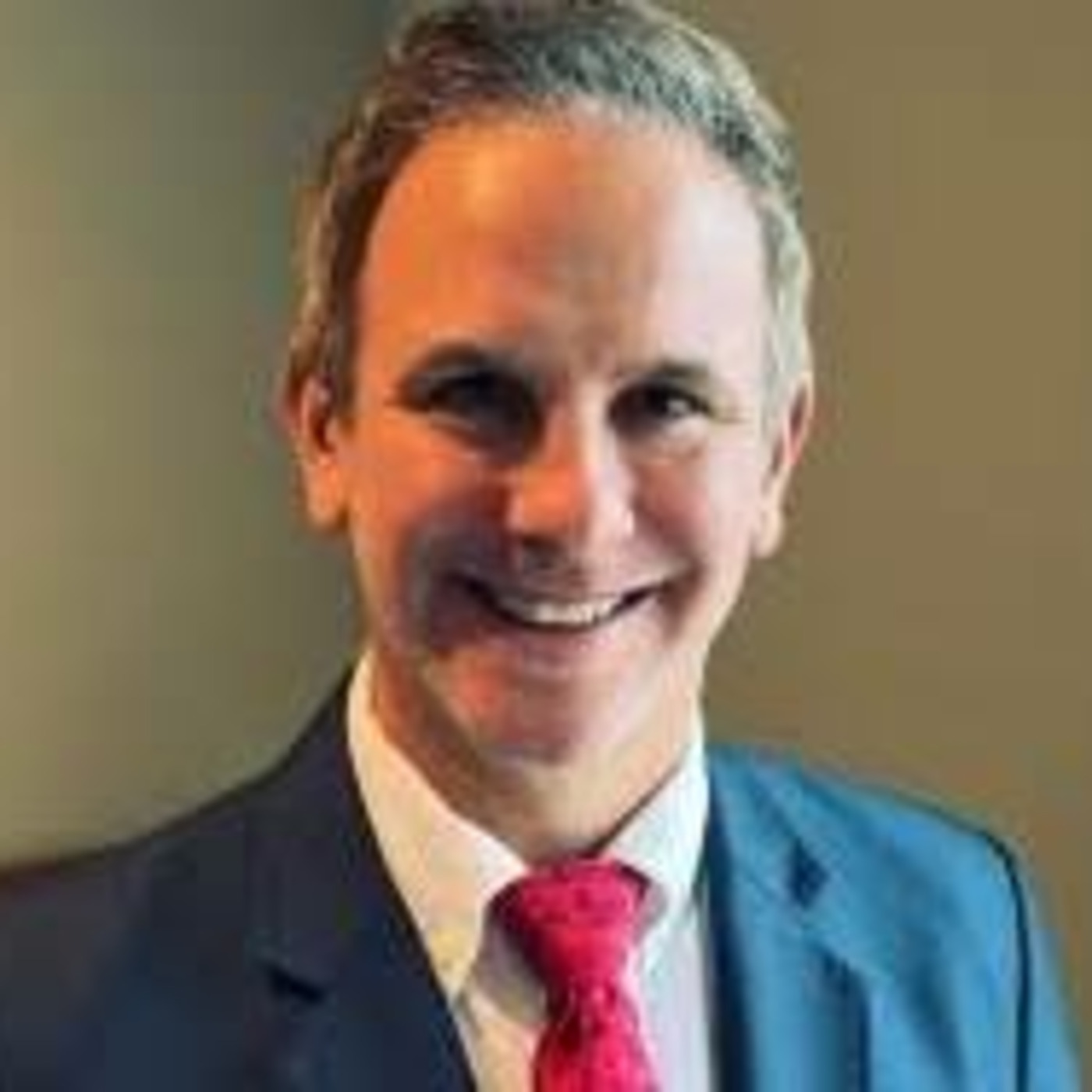
This podcast series is kindly sponsored by Evanston capital. For over 20 years Evanston Capital has had a key focus in identifying early stage investment managers it believes are capable of generating long term value added returns in complex innovative strategy areas. This series is also sponsored by Alvine Capital. Alvine Capital is a specialist investment manager and placement boutique with a particular focus on alternative assets, a significant presence in London and Stockholm. So I just think that you’re going to see stablecoins enable commerce to speed up and as you increase money velocity you can actually bring more prosperity to more people around the world, which is what our mission actually is. Foreign. I’m Aoifinn Devitt and welcome to the 50 Faces podcast, a podcast committed to revealing the richness and diversity of the world of investment by focusing on its people and their stories. I’m joined today by Corey Penn, who is Vice President and Deputy General Counsel, Global Policy at Circle, a global financial technology company. He previously held a series of in house legal roles and spent a period in the White House as an Economics and Department of justice leading. He’s also an adjunct professor at the Washington University School of Law. Welcome Corey. Thanks for joining me today. Thanks for having me, Ethan. I’m glad to be here. Well, we of course worked together at Vanetta briefly. We had some overlap there a few years ago and I always was fascinated by your background, particularly the fact that you’d spent a period in the White House. So before we launch into your current very exciting role in digital finance, can you talk us through your background and entry into finance here? Yeah, sure. Appreciate the question. So I got to finance in a little bit of a winding way, I guess. I started my career litigating what we called bet the company cases at a white shoe Washington law firm called Williams and Conley. And the first case I was ever put on was defending the former CEO of Freddie Mac in a case alleging that he hadn’t run Freddie in a safe and sound way against the government. And it was a fascinating case that put me right in the middle of a massive publicly traded company that had deep Washington roots and a couple of different masters, both shareholders and politicians. And I was in trial my first year. Warren Buffett was a witness in the case and I actually got paid to read old Berkshire shareholder letters because he was testifying against us and and we actually had to figure out a way to cross examine him. And I remember reading these and thinking, wow, this guy is an absolute genius the way he thinks about the world. So I got very interested in finance from that and I was at the Law firm for six years. I was in the Obama administration for his second term for four years. And then once the Obama administration ended, you essentially tender your resignation in advance and if your party wins, you could continue on. If they don’t, you obviously leave as a political appointee. So at that point, my wife and I moved back from D.C. To St. Louis, which is her hometown. So that takes me up to me sort of going in house as an attorney. And I ended up leaving to go to Circle to a crypto company. When I looked at Circle, where I am today, I didn’t really see crypto. What I saw was using the technology of cryptography and blockchains to move money around the world much faster and cheaper and in a programmable way that just doesn’t exist with current forms of money. So with Circle, I basically saw a company that was transforming the dollar from something that moved on paper or in Oracle databases in ones and zeros to something that moves at Internet scale on blockchains. So anyway, that brings me up to the present day before we move on to Circle. And I think there’s lots to talk about there. Very topical, certainly, and it is ironic, but that’s where you ended up. I kind of hadn’t joined those two together. What do you think you took away from your time at the White House? Because I think all of these times in public service probably make an impression on us and give us an imprint as to how we approach the private sector later. Was there any kind of key takeaway there or takeaways? Yeah, I mean, I think from the White House. I had gone from a high stakes institution like at Williams and Conley, where your clients, potential freedom, some of them could go to jail, white collar type of stuff. And certainly their businesses were at stake. So I was used to working in a high stakes environment. But I would say just walking in the gates every day was just special. Like it was never lost on me. I grew up in a small town in Iowa and all of a sudden I was working in the White House for a person who was a very popular president and was doing big things. So first of all, I think I already had this ethos, but if you’re going to do something, you better do it well. At the White House, literally everything you do is magnified. The public is watching and so you can’t take days off. Right. So I think there’s that. I think I have a lot of empathy for people, doesn’t matter what party you’re in, who are in there trying their best to make a positive change in the world and contribute to the United States as sort of being a flourishing place. So again, it doesn’t matter which party but like it’s really hard. It is very, very difficult to essentially conceive of what are the right ideas and then execute them under a sort of magnifying glass. So I took that away and really just a great respect for the country and the history that we have here. It’s actually really incredible. And then last thing I would add to that is just the absolute scale. Like Obama used to say, this is the biggest organization in the entire world and you’re sitting at the top of it, right? So we need to do something good with it. The US government is massive. And I was in the White House for three and a quarter years, something like that. And then the last nine months I went out and I was deputy general counsel at the Department of Agriculture and the Department of Agriculture. I actually oversaw forest service stuff. And then the financial portfolio from the legal perspective. And USDA has a financial portfolio that would put it in the top 10 banks in the country if that’s how it were organized. So it has crop guarantee programs, insurance programs, lending programs, venture capital programs in a lot of parts of rural America literally rely on USDA loans to have their utilities running. Right. So it’s massive, it’s $150 billion annual budget organization and that’s just one of the cabinet agencies. So when you understand the scale that you’re dealing with and how it like seeps down into society and actually affects people’s lives, it definitely makes you bring your best self to work every day. That is quite humbling I think to say that. And I think it’s interesting given the role that stablecoin could likely play in the bigger picture in this ecosystem. It’s particularly apt that this is where you’ve ended up and just to talk about the white paper because I think this was interesting. I found it on LinkedIn, have to admit I had to do some digging. But the thesis of this white paper was that you said that well regulated dollar stablecoins issued by American companies could make finance faster, efficient, more accessible and enhance the strength of the dollar. So very much kind of, I suppose all enabling ongoing. It’s a. We hear a lot in Mineta say about the concern about dollar debasement or de dollarization and it seems that this would be maybe an offset to that. So can you talk a little bit about white paper and maybe then how this relates to what stablecoins are and what you do at Focus. Sure. That paper lays out a sort of unbiased view of the upside of stablecoins, potential downsides and just what they are and what they’re doing to try to like demystify. Right. But basically. So Circle we’ve been around since 2013, our stablecoin USDC is backed entirely by dollars that are either in cash at global banks, reverse repurchase agreements, which are essentially overnight loans to banks that are over collateralized by treasuries and 3 month T bills. So if you come to us and you have what we call a Circle mint account with the company, and we’re a wholesaler, we don’t sell retail. But if an institution comes to us and says I want to buy $1,000 worth of USDC, they give us $1,000. We put that in these ultra safe, high quality liquid assets that are as an equivalent to a dollar as you can possibly get. They have very little to no interest rate risk, credit risk, duration risk. They can be converted very quickly. And then we give you 1000 USDC and then you can go out on blockchains and transact with them. And why would you want to transact on blockchains rather than through the traditional financial system today? Well, the traditional financial system has all sorts of inefficiencies that have just been reliant on the tech. Right. So in the United States we have decent retail peer to peer money with like a Venmo. Right. But what we don’t have is anything other than blockchains that can settle instantaneously. So if you’re a merchant getting paid through a Visa swipe, your transaction that comes over from an originating bank doesn’t settle for a couple of days. Blockchains will settle instantaneously. If you’re trying to send money overseas, you might be working through the correspondent banking network. So I’m with pnc, I want to send money to Liechtenstein. There are no PNC banks there. So PNC has correspondence in Europe. Right. But that transaction might have to go through three or four banks today and it might take a week and a hefty charge for me to send a wire to whatever country. Right. Blockchains can settle and send and settle instantaneously. And then with blockchains you can actually program if then statements, what we call smart contracts, into the actual transaction itself. So you can start wringing out a lot of middlemen in the economy that cost money. Think about for instance an escrow agent when you’re buying a home. Right. Escrow exists because it’s one of Those trustless scenarios where I’m not sure, Ethan, if you’re going to deliver title to me or you’re not sure if I’m going to actually close on the day and bring funds to the closing. So we have an escrow of a certain earnest money, right? On blockchains, you can essentially say, hey, if X, Y and Z conditions are met by January 1, the money that I can see that you have on the blockchain will move on that day when title to the home moves. Right. And so it’s an if then statement. And now you’ve basically limited what can be done only to the creativity of developers who can come in and write on blockchains. So that’s kind of what we’re doing with stablecoins. So Circle USDC has about 78 billion in circulation. We also have a euro based stablecoin called EURC that has, I don’t know, maybe 700 million. So it’s much, much smaller, although it’s growing pretty quickly. So with that $78 billion over the history of USDC, which was launched about seven years ago, more than $50 trillion of transactions have been settled. So this is like real scale. When I started three and a half years ago at Circle, four and a half trillion in transactions had settled. So that seemed like a lot at the time. Now we’re doing almost 4 trillion a month in transaction settling. So you’re seeing hockey stick like growth. Why is that? Well, USDC is being used in 185 different countries right now, possibly a little bit more. So it’s a true American export product first of all. Secondly, even though I noted that we have decent peer to peer money here in the United States. And by the way, most people get USDC at a retail level off of an exchange like Coinbase or Kraken or something. But in many countries now people are just sending it from one wallet to another that essentially, you know, these wallets live on people’s phones. Right? But people are using this as a store of value. So if you’re in a country like Argentina or Venezuela where your money is literally being inflated away, I think Argentina might have had like 90% inflation last year. Maybe Venezuela was like 50. When your money is being inflated away, the best possible thing you could do is get a dollar denominated instrument. So a lot of people want to hold USDC for that reason. Secondly, just the velocity of real world payments, especially in a cross border context is picking up quite a bit. So think about business paying suppliers, business paying employees who are abroad A lot of them favor getting a stablecoin because of its speed. Right? USDC is being used in humanitarian aid. So we have a partnership with the United Nations High Commission for Refugees where they essentially send USDC to pre vetted people. So they give them a wallet, they make sure that they’re legit people. And then these are folks who have been displaced by the war and they can get USDC wherever they might be in the Ukraine or even if they leave, and then they can either spend it on chain, which a lot of people are doing. I mean they’re like paying for haircuts and what have you, or they can cash out at like a MoneyGram International so they could take the USDC and turn it into the Ukrainian currency or the euro or really whatever that they want to have. So we’re seeing hockey stick like growth. It’s a network effects business. And now the network effects have really started settling in in the last couple of years. We’re going to take a quick break to hear from Evanston Capital Management, one of the sponsors of this podcast series. I sat down with Kristen Mingelder, who is partner and co CIO at Evanston Capital Management, and I asked her why hedge funds were in favor today. I think hedge funds are very much back in the conversation today. I think it’s because, you know, the last several years we’ve just been in a very different environment and diversification and downside protection have become, you know, even more of a priority for investors. I contrast that to the decade following the global financial crisis where things looked a lot different. You had interest rates globally pinned near zero. You had markets generally going up and to the right. You had volatility fairly low and correlations relatively stable. And I think that environment, as you rightly point out, favored stuff that maybe wasn’t hedge funds that favored passive long only strategies. I think it also favored longer duration strategies like private equity and venture capital. But I think the environment today is so much different. You have a meaningful cost of capital. There is a lot of uncertainty in terms of the macroeconomic backdrop. You have much higher market volatility and you have less stable cross asset correlations. So I think that’s a backdrop that very much favors active management and the flexibility of the hedge fund mandate in particular. And I think it also likely favors alpha over beta. And now back to the show then, in terms of how Circle makes money from this, my understanding is it is investing it in the return on those instruments that you mentioned earlier, the kind of cash substitutes, is that correct? That’s where the yield for say a Circle or another similar entity would be. Yes. So that’s sort of your opportunity cost is if you hold USDC and you don’t have it sitting in a bank earning whatever. I mean I think we all know today banks pay like 0.2% or whatever, but you could be doing something else with that money. What we earn is the net interest income, so we keep whatever those T bills and reverse repurchase agreements return we keep. Now we’re also building a platform business. So we’ve recently launched our own blockchain called Ark. And ARK is a very unique blockchain. It’s built for institutional grade companies. What’s interesting about it is today when money moves on a blockchain there has to be paid what’s called a gas fee. Right. And that’s essentially like micropayments of whatever the cryptocurrency that is native to a particular blockchain is. Right. So let’s just say like on the Ethereum blockchain, its native token is eth. And the people who are out there validating blocks and looking at transactions essentially like scribes and saying yes, that actually happened in writing a new block to the blockchain itself, they have to get paid in some way because this is like decentralized compute. It takes time and effort and energy to actually do that. Right. So they get paid in that native token on Ark, people are going to get paid, validators are going to get paid in usdc. Why is that important? Well, because USDC holds a stable value whereas ETH and Bitcoin and all these other tokens that you’ve heard of do not. They fluctuate because they weren’t built as a stablecoin. Right. And people trade them oftentimes with speculative purposes. So now we have our stablecoins, we have our blockchain and then finally we have what’s called the Circle payments network. So this is essentially a pre vetted group of participants who all want to interact with each other, send payments to one another. So we at Circle vet them and then we essentially set up the network where they can send payment. It’s blockchain agnostic, it’s stablecoin agnostic. But they can code things in compliance with the travel rule, which is an important money transmission rule. They can pre code in an agreed upon exchange rate. So you’re sending dollars and they’re going to be transferred into a Brazilian Ray I we can agree in advance what that exchange rate is going to be and then that can happen instantaneously when the money’s sent. Right. So anyway, that’s kind of how we’re building the company. We have other revenue streams outside of net interest income, but that is the primary source as of today. When you look to the next, say five years, what excites you? You mentioned this network effect and just the hockey stick growth trajectory. And how can you see more companies clearly there’s been a lot of traction already, but how do you see the next five years will look? Thanks for asking that question because I am excited. I think one thing that you’re going to see is crypto fade to the background. The technology will fade to the background, at least with stablecoins, and they’ll just be incorporated in all sorts of things that you’re doing. And you may not even know about it. Right. So on one hand you might be paying people peer to peer and maybe you have a Coinbase wallet or a Metamask wallet or something on your phone. And that’s another thing that’s really cool is there’s no walled garden problem, right? So if you have Venmo, you can’t pay somebody into their PayPal account, even though Venmo is a subsidiary that’s called a walled garden. So stablecoins don’t have that. I think you’re going to see an explosion of use in sort of like big capital markets cases. Right. So securities are becoming tokenized. That allows them to trade 24, 7, 365. Among the other advantages that I mentioned, like programmability and divisibility. And that’s actually going to open up all sorts of new investors to markets that they can’t get access to today. Think about like a small, I don’t know, somebody who’s rolling up nursing homes or commercial housing in the United States or something like that today. That’s probably pretty difficult for an investor in Japan to participate in, but tokenization is going to aid that. Right? So I think USDC will be the money layer that people are paying when tokenized transactions happening. And then another big capital markets use case that we’re already inching towards and getting pretty close is being used as collateral in derivatives transactions. So today it’s $700 trillion of derivatives transactions notionally in the world, right? And every day hundreds of billions of collateral move around, but those have to go through clearing houses and they have to like take a couple of days to settle with stablecoins that will happen instantaneously. So I just think that you’re going to see stablecoins enable commerce to Speed up and as you increase money velocity you can actually bring more prosperity to more people around the world, which is what our mission actually is. What about you are an ex attorney and I think attorneys are known to always look in the round at perhaps risks and threats. So what would you say keeps you up at night in terms of say a regulatory outlook, maybe hurdles that may be in place that might get in the way of this vision? Yeah, I think, you know, it’s interesting because for many years I was one of the primary advocates for stablecoin law that was passed in July of 2025 called the genius Act. And I had worked on trying to get stablecoin legislation for the entire time that I’ve been at Circle and we came close many times and finally it got over the line this summer. And that bill really is a consumer protection bill because hundreds of millions of people around the world were using stablecoins but there was very little regulation around it outside of we have licenses with state money transmission licenses and then through the New York Department of Financial Services we have a bit license which was like the first crypto license that was granted we got. Right. So we were heavily regulated, but a lot of other providers didn’t bother to go do the registrations and, and they weren’t necessarily following those high quality liquid assets and the fulsome disclosures that we do and the illicit finance prevention that we do. So Genius is bringing structure to this, I think. Now I have been on a worldwide tour, I think since Genius passed, I’d probably spoken to at least 30 different central banks around the world trying to make sure that everybody standardizes and harmonizes to the same sort of set of principles. So I don’t think globally we’re all going to have equivalent laws, but what we want are comparable laws that allow this international innovation to meet its full potential. If you end up with balkanized regulatory structures around the world, you could end up with stablecoins stopping at borders and that would be a huge disservice to consumers around the world. And so I think that’s the number one thing that I think about is, you know, how do we make sure that we have a global system that works for consumers? Ultimately your trajectory since Veneta has been quite a stellar one in terms of a world that’s probably at the forefront for many of change and quite an exciting time certainly to be in it. But I would also like you to reflect on any highs and lows throughout the career. Is this the high or have there been any highs and lows that maybe you’ve learned lessons from throughout your career. Yeah, I mean, obviously there’s different periods of your career and there’s highs and lows in all of them. I mean, I, I loved working at Williams and Conley, this sort of like storied Washington institution. We had some great cases, some great wins. There were highs there. Then, of course, working at the White House was just an amazing thing. That lightning doesn’t strike twice. But I will say this year has been probably the highest part of my career. Highlights, if you will, because we took Circle public in June and then in July we got this law passed. And so the things that I had been working towards very hard for three and a half years all sort of came to fruition at the same time. Also along the way there were definitely some lows. I mean, we had some difficult moments at Circle along the way and you know, there were times where there were some white knuckle moments. Right. But I think having the grit and persistence to get through it, not only me, but like my entire team, the entire company, makes it all the sweeter when you succeed. And the last thing I’ll add there is when I joined Circle, I like being at mission oriented institutions. And I always thought of this as a technology that was really important for the United States to maintain dollar dominance, to just make sure that the dollar is ubiquitous around the world. I’m a great student of world history and world economies and obviously China has made massive inroads around the world. There’s these new currency blocks that are forming between China and Russia and some of our quote unquote adversaries where they’re trying to displace the dollar. And the fact that the dollar is the world’s reserve currency redounds to the US’s benefit. I think one famous economist called it the US’s exorbitant privilege. Right. So it’s been really gratifying to see the Treasury Department and the White House lean into that and say we want to push forward dollar denominated stablecoins because we think that this is great for commerce around the world. It also, if you think about it, could end up helping us lower borrowing costs in the United States. Because if we have trillions of dollars of dollar denominated stablecoins that are backed by treasuries that now has added a massive and dispersed rather than concentrated buyer of treasuries, which makes the system all the stronger to have that sort of dispersion. So it’s been just gratifying to be back doing Public policy oriented work. So it’s been great. Yeah, no, it’s been wonderful to watch from the outside as well. And my last question is about people or wisdom? And it can be either one or both, because I think the world you’re in is certainly filled with personalities, with characters, with visionaries, and as you said, it’s not without its setbacks. So perhaps they have been resilient as well. Is there any person or mentor that you’ve met in there that you can meet or maybe any kind of takeaway in the form of wisdom that you’ve learned maybe since you’ve been in this world? Yeah, sure. So, first of all, our CEO, Jeremy Allaire, who started this company, he really is a visionary. Originally he was attracted, I think, by the promise of bitcoin. And he saw this and he was an Internet entrepreneur. He had already taken one of the first Internet video companies that like used to compete with YouTube. He had taken that public. It was called Bright Cove. And he sort of came up on the Internet seeing like the power that had to get people information behind the iron curtain. He was like very early to Internet stuff. So he saw this with putting money on the Internet and the positive effects that could have around the world. And you talk about grit, he went through it all. And so that’s inspiring to see. I think for me, my biggest lessons came from my parents. They worked their butt off in rural Iowa, didn’t make a lot of money. You realize, yeah, I’m working hard and a lot of other finance professionals are working hard, lawyers are working hard. But like, I saw my dad working physically hard every day, coming home exhausted. My mom worked in a factory. And so they were blue collar people. So I think all of my attitude towards life and biggest lessons that I’ve learned come from them. And it really, they’re pretty simple. They’re the things that you’ve always heard of. But it’s like showing up for other people, putting out as much energy towards other people as you want to receive from them and just sticking with it and keeping a positive attitude and just working as hard as you can possibly so that you can take advantage of the opportunities that do come your way. And I think if you do all those things, things will fall into place. And then I would consider Warren Buffett’s annual letters. I’ve read all of them. Back through the Buffett partnerships in the late 50s or early 60s was probably my best business education. I took a semester’s worth of business classes down at Duke, and those were great. But reading the Buffett annual reports, by far the best business education that I’ve gotten. And then, I guess the last thing if you want a pithy saying, a lawyer at my old law firm told me once, here’s the keys to a good life. Be good to your friends and family and have a short commute. So I’ve always done that. I’ve never had a long commute, unless you consider the St. Louis Washington D.C. Corridor to be a long one. But I guess, thankfully we can do some of that remotely now. That’s fair. I spend a lot of time in Washington, but I consider those the flights an hour and a half long and nobody can get me. So those are my best reading hours that I get. So that’s a good commute. Well, thank you so much, Corey. This was a very grounded discussion. It was, I think, starting with your roots and returning to those roots as we reflect, but equally taking us into this dramatic ascent of a brave new world around stablecoin and digital assets. I think you’ve made it very relatable and we at Mineta have certainly watched your success from the sidelines, and it’s been great to catch up here and check in and learn a little bit more about this world. Thank you so much for coming here and sharing your insights with us. Yeah, thanks for the opportunity, Ethan, and always glad to be back with you and with Mineta. It’s a great institution, so I really appreciate it. I’m Aoifinn Devitt. Thank you for listening to the 50 Faces podcast. If you liked what you heard and would like to tune in to hear more inspiring investors and their personal journeys, please subscribe on Apple Podcasts or wherever you get your podcasts. This podcast is for informational purposes only and should not be construed as investment advice and all views are personal and should not be attributed to the organizations and affiliations of the host or any guest.
This podcast series is kindly sponsored by Evanston capital. For over 20 years Evanston Capital has had a key focus in identifying early stage investment managers it believes are capable of generating long term value added returns in complex innovative strategy areas. This series is also sponsored by Alvine Capital. Alvine Capital is a specialist investment manager and placement boutique with a particular focus on alternative assets, a significant presence in London and Stockholm. So I just think that you’re going to see stablecoins enable commerce to speed up and as you increase money velocity you can actually bring more prosperity to more people around the world, which is what our mission actually is. Foreign. I’m Aoifinn Devitt and welcome to the 50 Faces podcast, a podcast committed to revealing the richness and diversity of the world of investment by focusing on its people and their stories. I’m joined today by Corey Penn, who is Vice President and Deputy General Counsel, Global Policy at Circle, a global financial technology company. He previously held a series of in house legal roles and spent a period in the White House as an Economics and Department of justice leading. He’s also an adjunct professor at the Washington University School of Law. Welcome Corey. Thanks for joining me today. Thanks for having me, Ethan. I’m glad to be here. Well, we of course worked together at Vanetta briefly. We had some overlap there a few years ago and I always was fascinated by your background, particularly the fact that you’d spent a period in the White House. So before we launch into your current very exciting role in digital finance, can you talk us through your background and entry into finance here? Yeah, sure. Appreciate the question. So I got to finance in a little bit of a winding way, I guess. I started my career litigating what we called bet the company cases at a white shoe Washington law firm called Williams and Conley. And the first case I was ever put on was defending the former CEO of Freddie Mac in a case alleging that he hadn’t run Freddie in a safe and sound way against the government. And it was a fascinating case that put me right in the middle of a massive publicly traded company that had deep Washington roots and a couple of different masters, both shareholders and politicians. And I was in trial my first year. Warren Buffett was a witness in the case and I actually got paid to read old Berkshire shareholder letters because he was testifying against us and and we actually had to figure out a way to cross examine him. And I remember reading these and thinking, wow, this guy is an absolute genius the way he thinks about the world. So I got very interested in finance from that and I was at the Law firm for six years. I was in the Obama administration for his second term for four years. And then once the Obama administration ended, you essentially tender your resignation in advance and if your party wins, you could continue on. If they don’t, you obviously leave as a political appointee. So at that point, my wife and I moved back from D.C. To St. Louis, which is her hometown. So that takes me up to me sort of going in house as an attorney. And I ended up leaving to go to Circle to a crypto company. When I looked at Circle, where I am today, I didn’t really see crypto. What I saw was using the technology of cryptography and blockchains to move money around the world much faster and cheaper and in a programmable way that just doesn’t exist with current forms of money. So with Circle, I basically saw a company that was transforming the dollar from something that moved on paper or in Oracle databases in ones and zeros to something that moves at Internet scale on blockchains. So anyway, that brings me up to the present day before we move on to Circle. And I think there’s lots to talk about there. Very topical, certainly, and it is ironic, but that’s where you ended up. I kind of hadn’t joined those two together. What do you think you took away from your time at the White House? Because I think all of these times in public service probably make an impression on us and give us an imprint as to how we approach the private sector later. Was there any kind of key takeaway there or takeaways? Yeah, I mean, I think from the White House. I had gone from a high stakes institution like at Williams and Conley, where your clients, potential freedom, some of them could go to jail, white collar type of stuff. And certainly their businesses were at stake. So I was used to working in a high stakes environment. But I would say just walking in the gates every day was just special. Like it was never lost on me. I grew up in a small town in Iowa and all of a sudden I was working in the White House for a person who was a very popular president and was doing big things. So first of all, I think I already had this ethos, but if you’re going to do something, you better do it well. At the White House, literally everything you do is magnified. The public is watching and so you can’t take days off. Right. So I think there’s that. I think I have a lot of empathy for people, doesn’t matter what party you’re in, who are in there trying their best to make a positive change in the world and contribute to the United States as sort of being a flourishing place. So again, it doesn’t matter which party but like it’s really hard. It is very, very difficult to essentially conceive of what are the right ideas and then execute them under a sort of magnifying glass. So I took that away and really just a great respect for the country and the history that we have here. It’s actually really incredible. And then last thing I would add to that is just the absolute scale. Like Obama used to say, this is the biggest organization in the entire world and you’re sitting at the top of it, right? So we need to do something good with it. The US government is massive. And I was in the White House for three and a quarter years, something like that. And then the last nine months I went out and I was deputy general counsel at the Department of Agriculture and the Department of Agriculture. I actually oversaw forest service stuff. And then the financial portfolio from the legal perspective. And USDA has a financial portfolio that would put it in the top 10 banks in the country if that’s how it were organized. So it has crop guarantee programs, insurance programs, lending programs, venture capital programs in a lot of parts of rural America literally rely on USDA loans to have their utilities running. Right. So it’s massive, it’s $150 billion annual budget organization and that’s just one of the cabinet agencies. So when you understand the scale that you’re dealing with and how it like seeps down into society and actually affects people’s lives, it definitely makes you bring your best self to work every day. That is quite humbling I think to say that. And I think it’s interesting given the role that stablecoin could likely play in the bigger picture in this ecosystem. It’s particularly apt that this is where you’ve ended up and just to talk about the white paper because I think this was interesting. I found it on LinkedIn, have to admit I had to do some digging. But the thesis of this white paper was that you said that well regulated dollar stablecoins issued by American companies could make finance faster, efficient, more accessible and enhance the strength of the dollar. So very much kind of, I suppose all enabling ongoing. It’s a. We hear a lot in Mineta say about the concern about dollar debasement or de dollarization and it seems that this would be maybe an offset to that. So can you talk a little bit about white paper and maybe then how this relates to what stablecoins are and what you do at Focus. Sure. That paper lays out a sort of unbiased view of the upside of stablecoins, potential downsides and just what they are and what they’re doing to try to like demystify. Right. But basically. So Circle we’ve been around since 2013, our stablecoin USDC is backed entirely by dollars that are either in cash at global banks, reverse repurchase agreements, which are essentially overnight loans to banks that are over collateralized by treasuries and 3 month T bills. So if you come to us and you have what we call a Circle mint account with the company, and we’re a wholesaler, we don’t sell retail. But if an institution comes to us and says I want to buy $1,000 worth of USDC, they give us $1,000. We put that in these ultra safe, high quality liquid assets that are as an equivalent to a dollar as you can possibly get. They have very little to no interest rate risk, credit risk, duration risk. They can be converted very quickly. And then we give you 1000 USDC and then you can go out on blockchains and transact with them. And why would you want to transact on blockchains rather than through the traditional financial system today? Well, the traditional financial system has all sorts of inefficiencies that have just been reliant on the tech. Right. So in the United States we have decent retail peer to peer money with like a Venmo. Right. But what we don’t have is anything other than blockchains that can settle instantaneously. So if you’re a merchant getting paid through a Visa swipe, your transaction that comes over from an originating bank doesn’t settle for a couple of days. Blockchains will settle instantaneously. If you’re trying to send money overseas, you might be working through the correspondent banking network. So I’m with pnc, I want to send money to Liechtenstein. There are no PNC banks there. So PNC has correspondence in Europe. Right. But that transaction might have to go through three or four banks today and it might take a week and a hefty charge for me to send a wire to whatever country. Right. Blockchains can settle and send and settle instantaneously. And then with blockchains you can actually program if then statements, what we call smart contracts, into the actual transaction itself. So you can start wringing out a lot of middlemen in the economy that cost money. Think about for instance an escrow agent when you’re buying a home. Right. Escrow exists because it’s one of Those trustless scenarios where I’m not sure, Ethan, if you’re going to deliver title to me or you’re not sure if I’m going to actually close on the day and bring funds to the closing. So we have an escrow of a certain earnest money, right? On blockchains, you can essentially say, hey, if X, Y and Z conditions are met by January 1, the money that I can see that you have on the blockchain will move on that day when title to the home moves. Right. And so it’s an if then statement. And now you’ve basically limited what can be done only to the creativity of developers who can come in and write on blockchains. So that’s kind of what we’re doing with stablecoins. So Circle USDC has about 78 billion in circulation. We also have a euro based stablecoin called EURC that has, I don’t know, maybe 700 million. So it’s much, much smaller, although it’s growing pretty quickly. So with that $78 billion over the history of USDC, which was launched about seven years ago, more than $50 trillion of transactions have been settled. So this is like real scale. When I started three and a half years ago at Circle, four and a half trillion in transactions had settled. So that seemed like a lot at the time. Now we’re doing almost 4 trillion a month in transaction settling. So you’re seeing hockey stick like growth. Why is that? Well, USDC is being used in 185 different countries right now, possibly a little bit more. So it’s a true American export product first of all. Secondly, even though I noted that we have decent peer to peer money here in the United States. And by the way, most people get USDC at a retail level off of an exchange like Coinbase or Kraken or something. But in many countries now people are just sending it from one wallet to another that essentially, you know, these wallets live on people’s phones. Right? But people are using this as a store of value. So if you’re in a country like Argentina or Venezuela where your money is literally being inflated away, I think Argentina might have had like 90% inflation last year. Maybe Venezuela was like 50. When your money is being inflated away, the best possible thing you could do is get a dollar denominated instrument. So a lot of people want to hold USDC for that reason. Secondly, just the velocity of real world payments, especially in a cross border context is picking up quite a bit. So think about business paying suppliers, business paying employees who are abroad A lot of them favor getting a stablecoin because of its speed. Right? USDC is being used in humanitarian aid. So we have a partnership with the United Nations High Commission for Refugees where they essentially send USDC to pre vetted people. So they give them a wallet, they make sure that they’re legit people. And then these are folks who have been displaced by the war and they can get USDC wherever they might be in the Ukraine or even if they leave, and then they can either spend it on chain, which a lot of people are doing. I mean they’re like paying for haircuts and what have you, or they can cash out at like a MoneyGram International so they could take the USDC and turn it into the Ukrainian currency or the euro or really whatever that they want to have. So we’re seeing hockey stick like growth. It’s a network effects business. And now the network effects have really started settling in in the last couple of years. We’re going to take a quick break to hear from Evanston Capital Management, one of the sponsors of this podcast series. I sat down with Kristen Mingelder, who is partner and co CIO at Evanston Capital Management, and I asked her why hedge funds were in favor today. I think hedge funds are very much back in the conversation today. I think it’s because, you know, the last several years we’ve just been in a very different environment and diversification and downside protection have become, you know, even more of a priority for investors. I contrast that to the decade following the global financial crisis where things looked a lot different. You had interest rates globally pinned near zero. You had markets generally going up and to the right. You had volatility fairly low and correlations relatively stable. And I think that environment, as you rightly point out, favored stuff that maybe wasn’t hedge funds that favored passive long only strategies. I think it also favored longer duration strategies like private equity and venture capital. But I think the environment today is so much different. You have a meaningful cost of capital. There is a lot of uncertainty in terms of the macroeconomic backdrop. You have much higher market volatility and you have less stable cross asset correlations. So I think that’s a backdrop that very much favors active management and the flexibility of the hedge fund mandate in particular. And I think it also likely favors alpha over beta. And now back to the show then, in terms of how Circle makes money from this, my understanding is it is investing it in the return on those instruments that you mentioned earlier, the kind of cash substitutes, is that correct? That’s where the yield for say a Circle or another similar entity would be. Yes. So that’s sort of your opportunity cost is if you hold USDC and you don’t have it sitting in a bank earning whatever. I mean I think we all know today banks pay like 0.2% or whatever, but you could be doing something else with that money. What we earn is the net interest income, so we keep whatever those T bills and reverse repurchase agreements return we keep. Now we’re also building a platform business. So we’ve recently launched our own blockchain called Ark. And ARK is a very unique blockchain. It’s built for institutional grade companies. What’s interesting about it is today when money moves on a blockchain there has to be paid what’s called a gas fee. Right. And that’s essentially like micropayments of whatever the cryptocurrency that is native to a particular blockchain is. Right. So let’s just say like on the Ethereum blockchain, its native token is eth. And the people who are out there validating blocks and looking at transactions essentially like scribes and saying yes, that actually happened in writing a new block to the blockchain itself, they have to get paid in some way because this is like decentralized compute. It takes time and effort and energy to actually do that. Right. So they get paid in that native token on Ark, people are going to get paid, validators are going to get paid in usdc. Why is that important? Well, because USDC holds a stable value whereas ETH and Bitcoin and all these other tokens that you’ve heard of do not. They fluctuate because they weren’t built as a stablecoin. Right. And people trade them oftentimes with speculative purposes. So now we have our stablecoins, we have our blockchain and then finally we have what’s called the Circle payments network. So this is essentially a pre vetted group of participants who all want to interact with each other, send payments to one another. So we at Circle vet them and then we essentially set up the network where they can send payment. It’s blockchain agnostic, it’s stablecoin agnostic. But they can code things in compliance with the travel rule, which is an important money transmission rule. They can pre code in an agreed upon exchange rate. So you’re sending dollars and they’re going to be transferred into a Brazilian Ray I we can agree in advance what that exchange rate is going to be and then that can happen instantaneously when the money’s sent. Right. So anyway, that’s kind of how we’re building the company. We have other revenue streams outside of net interest income, but that is the primary source as of today. When you look to the next, say five years, what excites you? You mentioned this network effect and just the hockey stick growth trajectory. And how can you see more companies clearly there’s been a lot of traction already, but how do you see the next five years will look? Thanks for asking that question because I am excited. I think one thing that you’re going to see is crypto fade to the background. The technology will fade to the background, at least with stablecoins, and they’ll just be incorporated in all sorts of things that you’re doing. And you may not even know about it. Right. So on one hand you might be paying people peer to peer and maybe you have a Coinbase wallet or a Metamask wallet or something on your phone. And that’s another thing that’s really cool is there’s no walled garden problem, right? So if you have Venmo, you can’t pay somebody into their PayPal account, even though Venmo is a subsidiary that’s called a walled garden. So stablecoins don’t have that. I think you’re going to see an explosion of use in sort of like big capital markets cases. Right. So securities are becoming tokenized. That allows them to trade 24, 7, 365. Among the other advantages that I mentioned, like programmability and divisibility. And that’s actually going to open up all sorts of new investors to markets that they can’t get access to today. Think about like a small, I don’t know, somebody who’s rolling up nursing homes or commercial housing in the United States or something like that today. That’s probably pretty difficult for an investor in Japan to participate in, but tokenization is going to aid that. Right? So I think USDC will be the money layer that people are paying when tokenized transactions happening. And then another big capital markets use case that we’re already inching towards and getting pretty close is being used as collateral in derivatives transactions. So today it’s $700 trillion of derivatives transactions notionally in the world, right? And every day hundreds of billions of collateral move around, but those have to go through clearing houses and they have to like take a couple of days to settle with stablecoins that will happen instantaneously. So I just think that you’re going to see stablecoins enable commerce to Speed up and as you increase money velocity you can actually bring more prosperity to more people around the world, which is what our mission actually is. What about you are an ex attorney and I think attorneys are known to always look in the round at perhaps risks and threats. So what would you say keeps you up at night in terms of say a regulatory outlook, maybe hurdles that may be in place that might get in the way of this vision? Yeah, I think, you know, it’s interesting because for many years I was one of the primary advocates for stablecoin law that was passed in July of 2025 called the genius Act. And I had worked on trying to get stablecoin legislation for the entire time that I’ve been at Circle and we came close many times and finally it got over the line this summer. And that bill really is a consumer protection bill because hundreds of millions of people around the world were using stablecoins but there was very little regulation around it outside of we have licenses with state money transmission licenses and then through the New York Department of Financial Services we have a bit license which was like the first crypto license that was granted we got. Right. So we were heavily regulated, but a lot of other providers didn’t bother to go do the registrations and, and they weren’t necessarily following those high quality liquid assets and the fulsome disclosures that we do and the illicit finance prevention that we do. So Genius is bringing structure to this, I think. Now I have been on a worldwide tour, I think since Genius passed, I’d probably spoken to at least 30 different central banks around the world trying to make sure that everybody standardizes and harmonizes to the same sort of set of principles. So I don’t think globally we’re all going to have equivalent laws, but what we want are comparable laws that allow this international innovation to meet its full potential. If you end up with balkanized regulatory structures around the world, you could end up with stablecoins stopping at borders and that would be a huge disservice to consumers around the world. And so I think that’s the number one thing that I think about is, you know, how do we make sure that we have a global system that works for consumers? Ultimately your trajectory since Veneta has been quite a stellar one in terms of a world that’s probably at the forefront for many of change and quite an exciting time certainly to be in it. But I would also like you to reflect on any highs and lows throughout the career. Is this the high or have there been any highs and lows that maybe you’ve learned lessons from throughout your career. Yeah, I mean, obviously there’s different periods of your career and there’s highs and lows in all of them. I mean, I, I loved working at Williams and Conley, this sort of like storied Washington institution. We had some great cases, some great wins. There were highs there. Then, of course, working at the White House was just an amazing thing. That lightning doesn’t strike twice. But I will say this year has been probably the highest part of my career. Highlights, if you will, because we took Circle public in June and then in July we got this law passed. And so the things that I had been working towards very hard for three and a half years all sort of came to fruition at the same time. Also along the way there were definitely some lows. I mean, we had some difficult moments at Circle along the way and you know, there were times where there were some white knuckle moments. Right. But I think having the grit and persistence to get through it, not only me, but like my entire team, the entire company, makes it all the sweeter when you succeed. And the last thing I’ll add there is when I joined Circle, I like being at mission oriented institutions. And I always thought of this as a technology that was really important for the United States to maintain dollar dominance, to just make sure that the dollar is ubiquitous around the world. I’m a great student of world history and world economies and obviously China has made massive inroads around the world. There’s these new currency blocks that are forming between China and Russia and some of our quote unquote adversaries where they’re trying to displace the dollar. And the fact that the dollar is the world’s reserve currency redounds to the US’s benefit. I think one famous economist called it the US’s exorbitant privilege. Right. So it’s been really gratifying to see the Treasury Department and the White House lean into that and say we want to push forward dollar denominated stablecoins because we think that this is great for commerce around the world. It also, if you think about it, could end up helping us lower borrowing costs in the United States. Because if we have trillions of dollars of dollar denominated stablecoins that are backed by treasuries that now has added a massive and dispersed rather than concentrated buyer of treasuries, which makes the system all the stronger to have that sort of dispersion. So it’s been just gratifying to be back doing Public policy oriented work. So it’s been great. Yeah, no, it’s been wonderful to watch from the outside as well. And my last question is about people or wisdom? And it can be either one or both, because I think the world you’re in is certainly filled with personalities, with characters, with visionaries, and as you said, it’s not without its setbacks. So perhaps they have been resilient as well. Is there any person or mentor that you’ve met in there that you can meet or maybe any kind of takeaway in the form of wisdom that you’ve learned maybe since you’ve been in this world? Yeah, sure. So, first of all, our CEO, Jeremy Allaire, who started this company, he really is a visionary. Originally he was attracted, I think, by the promise of bitcoin. And he saw this and he was an Internet entrepreneur. He had already taken one of the first Internet video companies that like used to compete with YouTube. He had taken that public. It was called Bright Cove. And he sort of came up on the Internet seeing like the power that had to get people information behind the iron curtain. He was like very early to Internet stuff. So he saw this with putting money on the Internet and the positive effects that could have around the world. And you talk about grit, he went through it all. And so that’s inspiring to see. I think for me, my biggest lessons came from my parents. They worked their butt off in rural Iowa, didn’t make a lot of money. You realize, yeah, I’m working hard and a lot of other finance professionals are working hard, lawyers are working hard. But like, I saw my dad working physically hard every day, coming home exhausted. My mom worked in a factory. And so they were blue collar people. So I think all of my attitude towards life and biggest lessons that I’ve learned come from them. And it really, they’re pretty simple. They’re the things that you’ve always heard of. But it’s like showing up for other people, putting out as much energy towards other people as you want to receive from them and just sticking with it and keeping a positive attitude and just working as hard as you can possibly so that you can take advantage of the opportunities that do come your way. And I think if you do all those things, things will fall into place. And then I would consider Warren Buffett’s annual letters. I’ve read all of them. Back through the Buffett partnerships in the late 50s or early 60s was probably my best business education. I took a semester’s worth of business classes down at Duke, and those were great. But reading the Buffett annual reports, by far the best business education that I’ve gotten. And then, I guess the last thing if you want a pithy saying, a lawyer at my old law firm told me once, here’s the keys to a good life. Be good to your friends and family and have a short commute. So I’ve always done that. I’ve never had a long commute, unless you consider the St. Louis Washington D.C. Corridor to be a long one. But I guess, thankfully we can do some of that remotely now. That’s fair. I spend a lot of time in Washington, but I consider those the flights an hour and a half long and nobody can get me. So those are my best reading hours that I get. So that’s a good commute. Well, thank you so much, Corey. This was a very grounded discussion. It was, I think, starting with your roots and returning to those roots as we reflect, but equally taking us into this dramatic ascent of a brave new world around stablecoin and digital assets. I think you’ve made it very relatable and we at Mineta have certainly watched your success from the sidelines, and it’s been great to catch up here and check in and learn a little bit more about this world. Thank you so much for coming here and sharing your insights with us. Yeah, thanks for the opportunity, Ethan, and always glad to be back with you and with Mineta. It’s a great institution, so I really appreciate it. I’m Aoifinn Devitt. Thank you for listening to the 50 Faces podcast. If you liked what you heard and would like to tune in to hear more inspiring investors and their personal journeys, please subscribe on Apple Podcasts or wherever you get your podcasts. This podcast is for informational purposes only and should not be construed as investment advice and all views are personal and should not be attributed to the organizations and affiliations of the host or any guest.