Aoifinn Devitt: This podcast is brought to you by the kind support of the Active Share Podcast. What does a two-time world-winning coach and MLB baseball team owner, top chef, and luxury fashion designer have in common? They’ve all been featured on the Active Share Podcast. If you’re seeking the less obvious and are curious about the ever-changing world and how it affects investing, the Active Share Podcast is for you. Hear thought-provoking conversations with thought leaders, company executives, and William Blair Investment Management’s own analysts and portfolio managers as they share unique perspectives on investing in a world that’s always evolving. Download the Active Share podcast on iTunes, Spotify, Google, Stitcher, and TuneIn.
Cynthia: You need to tell yourself that you’re better than you think because we all tend to be very hard on ourselves, but that’s hard to do. I mean, we have high standards for ourselves. I know high achievers tend to think they’re failing, but if you could tell your younger self you’re doing better than you think, and it’s always very, very important to take care of yourself physically and mentally.
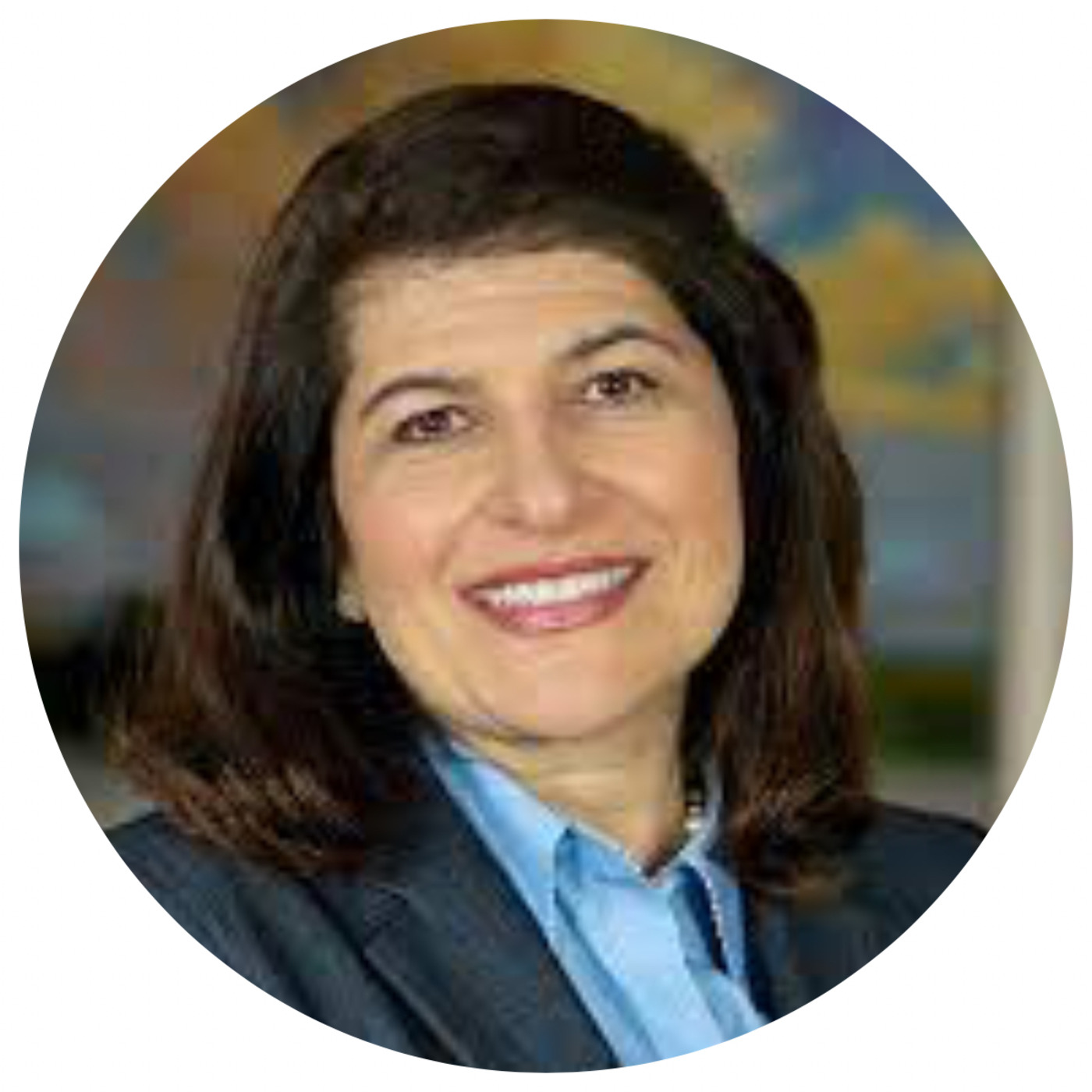
Speaker C: I’m Aoifinn Devitt, and welcome to the 50 Faces Podcast, a podcast committed to revealing the richness and diversity of the world of investment by focusing on its people. And their stories. I’m joined today by Cynthia Toussaint, who is CEO and Chairman of Strategic Global Advisors, a fundamentally inspired and quantitatively driven investment manager focused on global equities, a role she has held for over 16 years. She previously was a portfolio manager at Wells Capital Management and is based in the Newport Beach area in California. Welcome, Cynthia. Thanks for joining me today.
Cynthia: Thank you for having me, Aoifinn. It’s an absolute pleasure to be here.
Aoifinn Devitt: Great.
Speaker C: Well, let’s start with where you grew up, what you studied, and how you came to enter the world of investing.
Cynthia: Okay. Yeah, I’d love to take a little walk down memory lane with you. I have been living in California for the past 30-plus years, but I did grow up primarily in Maryland on the East Coast, and I had the great fortune and opportunity to attend Bryn Mawr College in Pennsylvania and really enjoyed being part of a women’s college that really focused on developing strong women leaders, academics, etc. So that really had a big impact on my psyche going forward.
Speaker C: That is so interesting. I haven’t had any other women who’ve been to all-women’s colleges on the podcast, but you’re just making me think just how empowering that must be to have so many female role models surrounding you. I presume they have male faculty too, but you must be surrounded by a lot of thought leaders there.
Cynthia: Yeah, I think one of the key advantages of a women’s college is that from a student’s perspective, all the organizations and clubs, etc., are led by women. So there’s many, many more leadership opportunities at a women’s college. But we did interact quite a bit with Haverford College, which is now a co-ed institution, but at the time I attended, it was all male. So there was a lot of friendships and collaboration with the Haverford College. So I think it was the best of both worlds, really. And then of course, my parents were the ones who encouraged me to attend there. And so they were definitely sending me a message that they were wanting me to really focus on academic growth because Bryn Mawr was known for its academics. Strength and also just being very supportive and acknowledging that it’s going to be a tough road ahead for women. My mother had two master’s degrees, yet she was a stay-at-home mom. So I always got the message from her not to follow in her footsteps. So that was something, a message I always took to heart.
Speaker C: And how did you move then from Bryn Mawr into the world of investing? What were the steps?
Cynthia: Yeah, so it’s interesting. Growing up, I remember a lot of fights around the dinner table. My mother, one of her master’s degrees was in fine arts, and then my father was an economist, had his PhD from UCLA. And so they would fight a lot about what career I should take. Know, You it’s almost like I wasn’t there. They were debating between themselves. And what’s interesting to me is I ended up really following a very entrepreneurial course. Even while I worked at companies like Wells Fargo, I was always experimenting with new ideas, and that’s part of the reason why Wells Fargo was such a great fit for me. It was a very entrepreneurial kind of culture. So entrepreneurship to me combines both art and business, and in my case, I focused on finance. I ended up being an econ major taking a lot of art classes. So, so I was always walking the line between finance and art, and it And it really came to be a huge asset to me when I launched my company because you have to be a jack of all trades. You have to come up with your logo, you have to do marketing materials, design your website, besides managing portfolios and plugging in the coffee pot and doing all of that. So having that dual background, I think, really gave me a great advantage. In the entrepreneurial space.
Speaker C: That’s so interesting. I’ve never heard that juxtaposition before of finance and art. And in terms of the creativity perhaps that art assumes, do you think you have to be creative in setting up your own asset manager as well?
Cynthia: Oh yeah, I mean, I think asset management takes a tremendous amount of creativity and coming up with new factors and new ways of looking at the markets and it’s not just about what you backtest, but you have to be forward-thinking, right, and thinking out of the box all the time and not just about what has worked in the past. So I think, yeah, having a creative mindset. And I do acknowledge that our team, whether they’re programmers or analysts, they’re valuable in that they have that creative mindset. And I think I probably appreciate that creativity more than most bosses would, right? So yeah, I really value creative thinking, thinking out of the box, and that’s all about alpha, right? That uniqueness and how can you differentiate yourself from other asset managers.
Speaker C: What is it that you like most about the world of investing and being an allocator in particular, being a fund manager?
Cynthia: So what’s most appealing to me about being an asset manager is The fact that it is a career of continuous learning. Granted, it’s extremely challenging. There’s a lot to know. Even if you’re just analyzing one company, it seems like it’s almost an infinite amount of information that you need to know. So then expand that to an entire portfolio and then an economy and then multiple economies. So the amount of knowledge that you have to be on top of can be overwhelming, but at the same time it’s exciting and you feel that you’re in a career where your job is to develop yourself. So I think that’s one of the attractive aspects of asset management.
Speaker C: And that’s a perfect segue to my question about education, because obviously you do have a passion for continuous learning. You also have a passion for education and educating others. How did that come about?
Cynthia: Well, I mean, I think that education is something that you do for yourself, just like this career. You almost feel selfish being in this career because again, it’s your job to learn. And when you get a higher degree or even your undergraduate degree, that’s something that is for yourself that you can take with you wherever you go. And it’s something that helps you build your financial future. So education is something that is, I don’t know, one could almost call it a selfish act. People who, you know, they’re in a marriage and they get their MBA. I mean, it’s a real privilege to be in a relationship where your significant other allows you to do that. Obviously you hope that it benefits the whole family, but at the same time, it’s exclusively yours. So that’s something I’ve really understood about education. And I think my parents, have always pushed me to get an education because that’s the best way you can ensure that your child gets to keep what you’ve given them. So I have that same perspective with my own children, for example. My first priority for them is to get an education because that’s really my only guarantee about their future. I mean, even leaving them whatever wealth you’ve accumulated doesn’t guarantee they’ll be able to keep that wealth, but they will be able to keep the education. That you’ve left them. So as a working mom, I’ve kept a close eye on how are my kids progressing, are they on track with their education, and I’ve been acutely aware of the fact that if you are a working mom, your kids are in after-school programs which frankly are below par. And I think the people that run the programs are fantastic, their heart is in the right place, But I don’t think that as a society we invest enough into those programs. And I look at that and I say, why is that? Because dual working families certainly can afford to pay for it. But I just don’t think that anybody sees it as a financial opportunity. And a lot of it has been relegated to the nonprofit space where I think there’s a lot of profit potential in that space. So I think there’s a lot to be done in that area. So for me, education is critically important. It happens in school, it happens outside of school. And for kids, it’s in their afterschool programs. And for adults, it’s in those additional degrees that we accumulate to help ourselves succeed in the future.
Speaker C: It’s so interesting that you speak about afterschool programs because obviously they are key to freeing up, so it’s a workday for parents. I’d like to just move now to something that attracted my attention on your LinkedIn profile, which was your response to an article in Institutional Investor, which questioned the ability of women to manage money and their children at the same time. So you responded to that. Can you tell us what you said and what the outcome was?
Cynthia: Well, I was responding to a post that Amanda Pullinger had from 100 Women in Finance had posted, and her post was really just in passing. Oh, I can’t believe this article. And the title of the article essentially was hedge fund managers who are mothers saw weaker performance during pandemic-related school closures. And I mean, the title alone gets your blood boiling because it’s said in a way that you would expect to read the article and learn that it’s a foregone conclusion that women managers underperform. During the pandemic. And that’s just— anybody with any amount of common sense knows that that can’t be anything more than anecdotal. I almost had the attitude, I don’t care what the article is going to quote or say or what research is being done. I’m absolutely confident I’m going to look at that research and find it highly flawed, which of course it was. So I just couldn’t let it go. I mean, it was a post from Amanda, but I just Immediately got on the phone and started calling people and I said, “We cannot let our leading publication in our space put out an article like this. It’s really outrageous.” And you know, it turned out, Aoifinn, that there was a lot of turmoil happening at Institutional Investor. They had turnover in the upper ranks and there wasn’t the usual scrutiny of articles that were making it to press. So it did turn out that they were sorry about it. They agreed it was a poorly written article, that the title was inexcusable, but we didn’t let it go there. We said, no, we need a public retraction. We need a statement from the publication. We need it to go on record. And so that took a little bit more time. I’m really grateful to Nadine Turman with Solstein Capital. She’s a real powerhouse, and I had picked up the phone, called her, and I was calling everybody I knew in the industry because I was just not going to let this go. And so we were able to get through to the institutional investor people and finally get that retraction. And frankly, it’s a good thing they did it because we were not going to let it go.
Speaker C: I think that’s so important, not letting things go. I mean, obviously some things can be let go, but I think something— there are certainly— there’s a threshold whereby sloppy writing and soundbites and even just headline writing, sometimes it’s just the headline that can form the narrative that become accepted then as the truth. And I do think that it’s important to push back on some of these sort of lazy stereotypical narratives. And I thank you for doing that, for leading the charge on that, because that was incredibly important. And I think the response to your response was almost louder and much more supportive than the response to the original article. But I do think it was important to call out that. So very well done in that respect.
Cynthia: Yeah, no, I wish I could do more of that. I’m sure there’s a thousand more articles like that out there. And I do appreciate Amanda posting it, and I’ll make the commitment if I— if somebody brings it to my attention, I will do something. And that’s, I think, as a network of women, it’s important that we don’t let these things go unaddressed.
Speaker C: One of the other areas that often gets parsed, perhaps sometimes inaccurately, sometimes in a biased way, is the experience of women founders, female founders. Can you speak a little bit about your experience of founding your firm whether you found there were barriers to entry in place, whether you think the environment was welcoming just for any startup investment manager, and whether you think that that’s improving.
Cynthia: Yeah, it’s an interesting question. It’s hard to say without talking to somebody who, let’s say, founded other companies like LSV or Acadian, or really understanding what their challenges were to compare it. What I would say the big difference is we’re just so much later to the table. And so when women have begun really entering the market, and when I came in 15 years ago, there weren’t many of us, and I’m not sure if there are many more today. Honestly, I don’t know the numbers today, so it may have actually declined. I just don’t know. But I think where the difference between us and sort of the more well-established players is when we came in. We just came in so much later, and you know, as in any business, that there’s that first mover advantage, and we just don’t have that first mover advantage. So we have to come into a well-established marketplace and try to take market share. Now, alongside me, there were other startup managers of variety of backgrounds, and so I think it was as difficult for me as it was for them, just as coming new into the space. The problem is literally every single woman is new to the space. I mean, we do have our pioneers like Joan Payden. She’s been a terrific role model. I mean, when I came into the space, I didn’t know her. I just knew of her name. And it’s good to know that there were people ahead of us that succeeded and made it big. I also found a lot of support from some key individuals. I remember John McKeerans from Northern Trust was tremendously helpful. Thurman White from Progress was such a great mentor. I mean, I give him a lot of credit for mentoring so many of the managers in the space. They used to have these conferences where they would bring all the CEOs of startup companies together and we could exchange ideas and challenges and whatnot. That was so powerful. I’m so grateful for all their investment in that area. And frankly, they didn’t have to do it. So really grateful to that. Tony Lee with SIRS was incredibly supportive of the whole emerging manager space, really took the time to be a first mover. So he was very brave. Eric Shea, Laura Nichols. It’s the individuals that really stand out to me. And I do think that emerging manager space does remain strong. I mean, of course we miss progress, but there’s still Vivium, Addix, Leading Edge, Exponent. I mean, I do think they play a critical role in the space. We are in the $5 billion range right now with our firm. So by a lot of measures, we’re out of the emerging manager space, but for those entering the space, I believe that the emerging manager space is critically important to getting a foothold because really these firms, these manager of managers are sort of the venture capital funds of the space. They really get to know a company and understand it pre-performance. Like in venture capital, it’s like pre-product, post-product, pre-money, post-money, all of that pre-revenue, post-revenue. So these emerging managers are really like pre-performance in our field is the way I would, because you don’t have that 3-year track record yet. You don’t have the assets. So they’re really trying to evaluate you as a talent in the space as well as a business owner and manager, and can you successfully run a business and stay despite the obstacles that are there.
Speaker C: That’s really interesting comparing it to the venture capital industry. Just going back to the emerging manager of managers, the likes of Addux, and actually Les from Addux will be a guest a little bit later in the series. You said that they provide the mentorship. How do they add value in terms of— you mentioned some of the coaching, the conference calls. Can you just give a little bit of insight into that?
Cynthia: Yeah, I mean, I think that— and it’s not just Attics, they all do this— they take the time to call you after a presentation and give you really, really honest feedback. Here’s where you went wrong, here’s what you did right. And so they are extremely open with you, whereas I think there’s no obligation when you’re in a finals presentation in the mainstream space. They don’t really call you and give you the honest hard truth, right? They give you the general reasons why you maybe weren’t selected. So in the emerging manager space, they tend to be more open, give you more detailed feedback, and give you an opportunity to improve the next time. So then, and I think the great news with the emergency manager space is there is always a next time if you’re persistent and patient. And that’s what you really need to do is be persistent and patient and really understand from their perspective. At the end of the day, it is the client making the final decision, and they’re just trying to help you put your best foot forward.
Speaker C: But that feedback is a gift, of course, as you know, and frank, honest feedback is really the only kind that works, at least to me anyway. I’m not interested in the platitudes. So just now moving to what’s at the forefront of your mind as an investment manager in today’s landscape. You mentioned you’ve had that nice success that has got you out of the emerging manager bucket and you’ve been in business for some time. What’s on your mind now at the helm of an investment manager?
Cynthia: Well, I think first and foremost, just really being in tune with the team and making sure that our firm is a place where they can see themselves long term. So that’s a big goal for me as sort of leader of the firm. And then also to just keep that level of creativity, collaboration up, making sure that we’re staying ahead of the curve in terms of developing alpha factors and really being in tune with the markets. What from a business perspective should we be offering our clients? You can’t just say, here’s what we offer, take it or leave it. You have to really understand what is the client looking for? What do they they need, and then how can you bring your talents to that need? So an example of that is the whole ESG space. We began preparing for that space almost 10 years ago. I tasked the team with learning more about it, and it’s clear that it’s here to stay. And we’ve been working hard in the past year and a half to really know as much about the space as we can and design product that we are getting ready to launch. This year. So we may not be the first one coming to market with an ESG product, but when we do come to market with a product, it’s one that we will be committed to for the long term. So that’s something that we work hard on. The interesting thing about investing in general is some of the best ideas can’t be backtested because maybe you’re using data that didn’t exist. Let’s say prior to last year or even prior to 3 years ago. And when you want to test ideas, usually you need 8 to 10 years of data. And if you just don’t have that data, and then on top of it, just because something didn’t work in the past doesn’t mean it won’t work in the future, right? And the unfortunate thing about ESG is it doesn’t backtest well. And it’s probably because historically people haven’t cared that much about ESG and it didn’t really factor much and people didn’t appreciate it either and understand the real impact of governance and sustainability, et cetera. So going forward, it has more of an impact. So what do you do when you can’t backtest something? How do you design the factor? And this is one of the reasons why as a firm, I’ve made sure that we have both the fundamental the quantitative team working in collaboration, working closely together, recognizing that you can’t model every alpha opportunity. And so the fundamental team takes on a lot of the heavy lifting of the ESG work while the quantitative team is working hard to figure out how to model, what does that look like in a future forward-looking model. So it’s definitely been a challenging space, and I think managers who are maybe 100% fundamental could jump in much quicker, but we really like to have a systematic approach. So we don’t like to launch a product until we feel like, okay, we’ve got a solid process behind this approach. So these are the challenges that I see as leader of the firm, just retention of talent, Developing product that meets market demand, and then just making sure that you stay creative and never really lose that entrepreneurial spirit of the company.
Speaker C: So really interesting, I think, not to have the straitjacket of a backtest, or perhaps the false security of a backtest, and how that maybe forces you to be more flexible and also appreciative of nuance, which is essentially ESG is a constantly evolving dynamic space. I’d love to just pick up on something you said there about your team and retention of talent, because obviously that’s on everyone’s mind right now with the great resignation and just a challenge across the board. Every industry is struggling to retain talent. You mentioned investment being kind of a blend of art and science, or at least the creative firm being a blend of art and science. In terms of talent retention, do you see that as being a blend of presenting challenge as well as perhaps the science of market standard compensation and the other metrics?
Cynthia: Yeah, I mean, it’s clear the research shows that retention is not just about compensation. I mean, I think compensation is a given, that you have to provide market competitive compensation, but employees are looking for more than that. I think that they’re looking for growth opportunities, just like we said earlier, the advantage of our space, and it does take a little bit of pressure off us, is that their job is to learn. So that’s where being in asset management in and of itself helps the retention equation. But I think making sure that you’re getting the feedback from employees— we you did, know, an employee survey, talking about brutal feedback. Once they really believe that your survey is anonymous, which of course is what we do, they will come back with real honest feedback. But, you know, you really appreciate ways to improve the firm You’d be surprised. They might just say they want more training, they want to learn more about coding, they want to learn more about basics. So supporting your employees in seeking certifications, that kind of thing, and then just having them have a say in the culture of the firm. What kind of culture do you want to have at this firm? What are the values that are most important to you? So letting them drive that, and then we all accept and live by it, right? So often I think you set the values from top down, and it really needs to be set from bottom up. So those are some of the things that we try to do as a firm to engage with the team. And then also, we try to be inclusive. Like, when we do our research off-sites with our academic advisory board, we include every member of the firm, whether they’re from compliance or operations or research it’s not just the research team. I think a lot of firms, what I’ve seen is you carve out the investment people and you do a lot of these cool conferences, but what you don’t realize is other members of the team are interested in that too. So we try to just be very inclusive in all of our activities.
Speaker C: Really excellent point. And that actually ties to my question now about diversity in the investment industry as a whole. Because obviously inclusion is another side of that coin. How would you score the investment industry as you see it now? Obviously it’s not 50/50 male and female, and what do you think is improving or not about it?
Cynthia: Well, I do hear a lot more talk about it, so that’s step one, but there’s so much more work to be done. I mean, I think there’s a whole pipeline that needs to be filled, and we all need to play a role in that. So we’re definitely making more of an effort to fill our own pipeline, whether it’s through internship programs or supporting diverse programs through donations. That’s one thing. And then when I first started the firm, frankly, most of my employees were just Berkeley graduates. I mean, I just, I had a good relationship with the Berkeley Financial Engineering School, and almost all my hiring was exclusively from there. And it was really just because I was just one person and I was stretched for time and all that. But now we’re much more intentional about it. We’re working hard to try to broaden where we recruit from and develop relationships at more schools and more programs. And then again, building out our internship. And we’ve launched an associate’s program where we bring in full-time people, but really with their not knowing that it’s only meant to be a year or two year before they’re either going to move on or maybe get hired, really depending on our needs at the time that their term in the Associates Program expires. So, these are the efforts we’re making to fill our own pipeline, and hopefully it helps fill the pipeline of the asset management industry. And we do bring in speakers. I just had a speaker from the Milken Institute. They’re doing a lot of work in diversity, so I have them come and talk to the firm about what they’re doing, and we talk about ways to collaborate. They pointed out to me there’s a program called Girls Who Invest. They said, hey, you should look into that. So these are things that we’re enjoying doing. I mean, it’s a fun effort and we feel good about it. And I think overall our philosophy at the firm has changed. As we look for new members of the team, we used to always talk about fit. Is this person a good fit? Are they going to fit with us? Are they going to grow with us? Now we say, is this person an add? Do they bring a different perspective? And getting the whole firm to think differently in that way. And what I love is our whole team has really embraced that new thinking.
Speaker C: I love that idea of an add, but it is important to be a fit on values in terms of the work ethic, etc. But I to like love that idea. So I know that in your investment company you have a number of outside investors. Can you talk a little bit about that, how that came about? And how they contribute?
Cynthia: Yeah, absolutely. We’re very fortunate to have two extremely supportive and knowledgeable outside investors. One is the Nile Group, and then the other is the Hovnanian family. So they’re both currently on our board of directors, and I so much appreciate having their input in areas, especially during this past year. We’ve had to renegotiate our lease. The Hovnanians are real estate experts. They were just so incredibly helpful in that area. And then Nile, their knowledge and expertise in the asset management space is really incredible. They’re very supportive of the team. They operate as a sounding board for our marketing team, and on occasion they’ve actually gone out on a meeting with us. So just having them there as a source of sound advice, and also I think their reputation in the marketplace is very strong. So I think people see it as a positive. I actually have known Mel Lindsey for many years. We were at Wells Fargo together. We joined there as senior portfolio managers, and then he went more in the direction, or he was promoted fairly rapidly to head up marketing, and I went on in the investments area heading up the international asset management funds there. So I ran the international mutual funds at Wealth Capital. So we’ve known each other a long time. And then when he launched NILE, I saw it as an opportunity to tap him into our team and access their knowledge and expertise. And the Hovnanian family, they were our first clients and They have been really great partners, letting us do our thing. And when we were raising capital, they stepped up and offered to be a capital provider. And then when I needed to expand our team during the height of the crisis, they stepped up again at that time where literally there was nobody else on earth willing to do that. So they are terrific partners to have during good and bad times. We’re fortunate to have an advisory board that is populated by leading figures in the investment space. We had Michael Brennan for many years, who’s probably one of the top 10 people in finance. Because he was on our advisory board, we were able to attract top names like Rich Frankel and Richard Sloan. Michael Brennan has since sort of retired from our advisory board, but Richard Frankel and Richard Sloan remain. On our advisory board. They’re very actively engaged with our research team. And Richard Sloan, in fact, just moved down from Berkeley to USC, and he loves the fact that our team does fundamental as well as quantitative work. I mean, he’s very experienced in the quantitative area, having headed up— he was director of research at Barclays Global for a period. So he really believes in our approach to investing, which is to integrate fundamental with quantitative, recognizing that models don’t see everything, and it’s important to have that feedback loop and that continual examination of models and what they may be missing. Allison Davis is also a member of our advisory board. She leads a company called Fifth Era, and they’re one of the world’s experts on Bitcoin and blockchain. And they’ve actually written a number of books on sort of the new economy, what’s important going forward. And having their perspective in the markets has been very interesting to us. And she’s been a great mentor for me. I really admire what she’s done. She was CFO of Barclays Global. She serves on so many different public company boards, and she’s been a great source of advice and an encouragement not just for me but for every member of our firm.
Speaker C: So just moving now back to your personal reflections, you’ve mentioned already many of these mentors in the workplace that have assisted you as you emerged as a firm. Was there any key piece of wisdom or learning that you’ve taken from some of these key people in your career, or any creed or motto that you live by?
Cynthia: I feel like my motto changes every year. There’s so many great mottos to live by, and I think different mottos work for different points in your life. And for me, I feel like right now the motto is to reconsider what you’re thinking. Like, if you’re thinking something, consider it could be the opposite. And I don’t know who came up with that thought, but it is really— I said mind-expanding. You have a conversation, walk away with one conclusion, or you heard something, and then you think, wait a minute, Maybe I’m completely wrong. Maybe it’s the opposite of how I’m interpreting that. And the great thing about it is it applies to whether it’s a personal relationship or business relationship, or even if it’s about the economy. Well, I think inflation is going to do this, but wait a minute, what if it’s the opposite? And it’s just good to make sure you’re considering that you could be completely wrong. And I just think in life, it’s a good way to think and it helps you to be prepared for anything.
Speaker C: I do the same. I call them thought experiments. And it’s funny because not everybody can tolerate a thought experiment. You have to find your people in that respect, at least when you want to go down that particular route of thinking perhaps the opposite, or just at least trying it on for size. So I love that. Connected with that, based on the fact that you do change your view and you do take into account perhaps a mistake in the need to change direction. Have there been any particular setbacks or challenges or even investment mistakes that you’ve learned from?
Cynthia: I don’t think there’s an investment mistake if you learn from it, right? Because that’s what makes us experienced investors and always looking back at what worked and what didn’t work, and then seeing if you need to tweak your process to take that into account. I remember in ’07, ’08, We were hit hard by our exposure to China and the material sector. And part of that was specifically metals and mining. And we realized, well, look, if you look at materials and you split out chemicals from metals and mining, they’re not the same thing. So we immediately started drilling down to the industry level in terms of risk control. So It also meant that we were locking in our losses, trimming back on metals and mining. May have been the wrong time to do that, but you have to just bite the bullet and say, okay, you know what? I made this mistake. I’m not going to double down on it. I’m just going to correct it and then move forward. So, these are tough decisions to make because once, let’s say you own a stock and it drops and you think, well, should I hold onto it and hope that it comes back or should I double down on it because it’s down now? Well, If your exposure to it was too large in the first place, the best thing to do is just cut back your position and move forward. And that’s very, very hard to do in the investment space. So, this is the sort of discipline that I’ve learned over the years that works. And I’ve been hit hard by the great financial crisis, COVID, but what do they say? If you live it, you’re stronger, that kind of thing. So, No, I’ve learned to really deal with these extreme situations and to the point where I think I’m pretty expert at it. I gather in my vendors, I figure out how to control costs and make sure that— the most important thing is to make sure your firm is in a good financial condition to survive these downturns. And then stick to your discipline on how you’re investing, incorporate any adjustments that you need to make. That maybe these extreme events are the ultimate stress test of your portfolios. So, you will find out where the weaknesses in your risk model are, and those are opportunities to improve your process. So, there are great ways to improve your process, but at the same time, financially, you need to make sure that you come out strong. So, really, an eye to the bottom line and cost control et cetera, is what I recommend doing during these periods of extreme crisis.
Speaker C: Yeah, I think the expression is what doesn’t kill you makes you stronger. But certainly I would say certainly every market downturn has left its mark on me, and that’s what makes us more experienced professionals. My last question is around any advice you would have for your younger self. Looking back to that young woman, perhaps a Pranam, is there anything that you know now that you wish you had known then?
Cynthia: Well, I think that you need to tell yourself that you’re better than you think because we all tend to be very hard on ourselves, but that’s hard to do. I mean, we have high standards for ourselves. I know high achievers tend to think they’re failing, but if you could tell your younger self you’re doing better than you think, and it’s always very, very important to take care of yourself physically and mentally. I remember in ’09, we just didn’t know, right? I mean, people would say, oh, the markets aren’t working. We didn’t know if there would even be a stock market. I mean, the markets were down in some cases 60%. So it was an extreme environment. And I just remember starting to go to the gym every day. I mean, I think it’s really important to just make sure you’re taking care of yourself and you’re using a healthy outlet for that stress and not to beat yourself up during those periods.
Speaker C: Well, thank you so much, Cynthia. It’s been wonderful to have you open our eyes to the intersection of art and finance. And also, thank you for taking the initial step in setting the record straight for some of the tropes that get put out there regarding working mothers. We owe you for that one. So thank you so much. And thank you for coming here and sharing your insights with us.
Cynthia: Well, thank you. It’s been a pleasure, Aoifinn, and I appreciate the opportunity to chat with you.
Speaker C: I’m Aoifinn Devitt. Thank you for listening to the 50 Faces Podcast. If you liked what you heard and would like to tune in to hear more inspiring investors and their personal journeys, please subscribe on Apple Podcasts or wherever you get your podcasts.
Aoifinn Devitt: This podcast is for informational purposes only.
Speaker C: And should not be construed as investment.
Aoifinn Devitt: Advice, and all views are personal and.
Speaker C: Should not be attributed to the organizations and affiliations of the host or any guest.
Aoifinn Devitt: This podcast is brought to you by the kind support of the Active Share Podcast. What does a two-time world-winning coach and MLB baseball team owner, top chef, and luxury fashion designer have in common? They’ve all been featured on the Active Share Podcast. If you’re seeking the less obvious and are curious about the ever-changing world and how it affects investing, the Active Share Podcast is for you. Hear thought-provoking conversations with thought leaders, company executives, and William Blair Investment Management’s own analysts and portfolio managers as they share unique perspectives on investing in a world that’s always evolving. Download the Active Share podcast on iTunes, Spotify, Google, Stitcher, and TuneIn.
Cynthia: You need to tell yourself that you’re better than you think because we all tend to be very hard on ourselves, but that’s hard to do. I mean, we have high standards for ourselves. I know high achievers tend to think they’re failing, but if you could tell your younger self you’re doing better than you think, and it’s always very, very important to take care of yourself physically and mentally.
Speaker C: I’m Aoifinn Devitt, and welcome to the 50 Faces Podcast, a podcast committed to revealing the richness and diversity of the world of investment by focusing on its people. And their stories. I’m joined today by Cynthia Toussaint, who is CEO and Chairman of Strategic Global Advisors, a fundamentally inspired and quantitatively driven investment manager focused on global equities, a role she has held for over 16 years. She previously was a portfolio manager at Wells Capital Management and is based in the Newport Beach area in California. Welcome, Cynthia. Thanks for joining me today.
Cynthia: Thank you for having me, Aoifinn. It’s an absolute pleasure to be here.
Aoifinn Devitt: Great.
Speaker C: Well, let’s start with where you grew up, what you studied, and how you came to enter the world of investing.
Cynthia: Okay. Yeah, I’d love to take a little walk down memory lane with you. I have been living in California for the past 30-plus years, but I did grow up primarily in Maryland on the East Coast, and I had the great fortune and opportunity to attend Bryn Mawr College in Pennsylvania and really enjoyed being part of a women’s college that really focused on developing strong women leaders, academics, etc. So that really had a big impact on my psyche going forward.
Speaker C: That is so interesting. I haven’t had any other women who’ve been to all-women’s colleges on the podcast, but you’re just making me think just how empowering that must be to have so many female role models surrounding you. I presume they have male faculty too, but you must be surrounded by a lot of thought leaders there.
Cynthia: Yeah, I think one of the key advantages of a women’s college is that from a student’s perspective, all the organizations and clubs, etc., are led by women. So there’s many, many more leadership opportunities at a women’s college. But we did interact quite a bit with Haverford College, which is now a co-ed institution, but at the time I attended, it was all male. So there was a lot of friendships and collaboration with the Haverford College. So I think it was the best of both worlds, really. And then of course, my parents were the ones who encouraged me to attend there. And so they were definitely sending me a message that they were wanting me to really focus on academic growth because Bryn Mawr was known for its academics. Strength and also just being very supportive and acknowledging that it’s going to be a tough road ahead for women. My mother had two master’s degrees, yet she was a stay-at-home mom. So I always got the message from her not to follow in her footsteps. So that was something, a message I always took to heart.
Speaker C: And how did you move then from Bryn Mawr into the world of investing? What were the steps?
Cynthia: Yeah, so it’s interesting. Growing up, I remember a lot of fights around the dinner table. My mother, one of her master’s degrees was in fine arts, and then my father was an economist, had his PhD from UCLA. And so they would fight a lot about what career I should take. Know, You it’s almost like I wasn’t there. They were debating between themselves. And what’s interesting to me is I ended up really following a very entrepreneurial course. Even while I worked at companies like Wells Fargo, I was always experimenting with new ideas, and that’s part of the reason why Wells Fargo was such a great fit for me. It was a very entrepreneurial kind of culture. So entrepreneurship to me combines both art and business, and in my case, I focused on finance. I ended up being an econ major taking a lot of art classes. So, so I was always walking the line between finance and art, and it And it really came to be a huge asset to me when I launched my company because you have to be a jack of all trades. You have to come up with your logo, you have to do marketing materials, design your website, besides managing portfolios and plugging in the coffee pot and doing all of that. So having that dual background, I think, really gave me a great advantage. In the entrepreneurial space.
Speaker C: That’s so interesting. I’ve never heard that juxtaposition before of finance and art. And in terms of the creativity perhaps that art assumes, do you think you have to be creative in setting up your own asset manager as well?
Cynthia: Oh yeah, I mean, I think asset management takes a tremendous amount of creativity and coming up with new factors and new ways of looking at the markets and it’s not just about what you backtest, but you have to be forward-thinking, right, and thinking out of the box all the time and not just about what has worked in the past. So I think, yeah, having a creative mindset. And I do acknowledge that our team, whether they’re programmers or analysts, they’re valuable in that they have that creative mindset. And I think I probably appreciate that creativity more than most bosses would, right? So yeah, I really value creative thinking, thinking out of the box, and that’s all about alpha, right? That uniqueness and how can you differentiate yourself from other asset managers.
Speaker C: What is it that you like most about the world of investing and being an allocator in particular, being a fund manager?
Cynthia: So what’s most appealing to me about being an asset manager is The fact that it is a career of continuous learning. Granted, it’s extremely challenging. There’s a lot to know. Even if you’re just analyzing one company, it seems like it’s almost an infinite amount of information that you need to know. So then expand that to an entire portfolio and then an economy and then multiple economies. So the amount of knowledge that you have to be on top of can be overwhelming, but at the same time it’s exciting and you feel that you’re in a career where your job is to develop yourself. So I think that’s one of the attractive aspects of asset management.
Speaker C: And that’s a perfect segue to my question about education, because obviously you do have a passion for continuous learning. You also have a passion for education and educating others. How did that come about?
Cynthia: Well, I mean, I think that education is something that you do for yourself, just like this career. You almost feel selfish being in this career because again, it’s your job to learn. And when you get a higher degree or even your undergraduate degree, that’s something that is for yourself that you can take with you wherever you go. And it’s something that helps you build your financial future. So education is something that is, I don’t know, one could almost call it a selfish act. People who, you know, they’re in a marriage and they get their MBA. I mean, it’s a real privilege to be in a relationship where your significant other allows you to do that. Obviously you hope that it benefits the whole family, but at the same time, it’s exclusively yours. So that’s something I’ve really understood about education. And I think my parents, have always pushed me to get an education because that’s the best way you can ensure that your child gets to keep what you’ve given them. So I have that same perspective with my own children, for example. My first priority for them is to get an education because that’s really my only guarantee about their future. I mean, even leaving them whatever wealth you’ve accumulated doesn’t guarantee they’ll be able to keep that wealth, but they will be able to keep the education. That you’ve left them. So as a working mom, I’ve kept a close eye on how are my kids progressing, are they on track with their education, and I’ve been acutely aware of the fact that if you are a working mom, your kids are in after-school programs which frankly are below par. And I think the people that run the programs are fantastic, their heart is in the right place, But I don’t think that as a society we invest enough into those programs. And I look at that and I say, why is that? Because dual working families certainly can afford to pay for it. But I just don’t think that anybody sees it as a financial opportunity. And a lot of it has been relegated to the nonprofit space where I think there’s a lot of profit potential in that space. So I think there’s a lot to be done in that area. So for me, education is critically important. It happens in school, it happens outside of school. And for kids, it’s in their afterschool programs. And for adults, it’s in those additional degrees that we accumulate to help ourselves succeed in the future.
Speaker C: It’s so interesting that you speak about afterschool programs because obviously they are key to freeing up, so it’s a workday for parents. I’d like to just move now to something that attracted my attention on your LinkedIn profile, which was your response to an article in Institutional Investor, which questioned the ability of women to manage money and their children at the same time. So you responded to that. Can you tell us what you said and what the outcome was?
Cynthia: Well, I was responding to a post that Amanda Pullinger had from 100 Women in Finance had posted, and her post was really just in passing. Oh, I can’t believe this article. And the title of the article essentially was hedge fund managers who are mothers saw weaker performance during pandemic-related school closures. And I mean, the title alone gets your blood boiling because it’s said in a way that you would expect to read the article and learn that it’s a foregone conclusion that women managers underperform. During the pandemic. And that’s just— anybody with any amount of common sense knows that that can’t be anything more than anecdotal. I almost had the attitude, I don’t care what the article is going to quote or say or what research is being done. I’m absolutely confident I’m going to look at that research and find it highly flawed, which of course it was. So I just couldn’t let it go. I mean, it was a post from Amanda, but I just Immediately got on the phone and started calling people and I said, “We cannot let our leading publication in our space put out an article like this. It’s really outrageous.” And you know, it turned out, Aoifinn, that there was a lot of turmoil happening at Institutional Investor. They had turnover in the upper ranks and there wasn’t the usual scrutiny of articles that were making it to press. So it did turn out that they were sorry about it. They agreed it was a poorly written article, that the title was inexcusable, but we didn’t let it go there. We said, no, we need a public retraction. We need a statement from the publication. We need it to go on record. And so that took a little bit more time. I’m really grateful to Nadine Turman with Solstein Capital. She’s a real powerhouse, and I had picked up the phone, called her, and I was calling everybody I knew in the industry because I was just not going to let this go. And so we were able to get through to the institutional investor people and finally get that retraction. And frankly, it’s a good thing they did it because we were not going to let it go.
Speaker C: I think that’s so important, not letting things go. I mean, obviously some things can be let go, but I think something— there are certainly— there’s a threshold whereby sloppy writing and soundbites and even just headline writing, sometimes it’s just the headline that can form the narrative that become accepted then as the truth. And I do think that it’s important to push back on some of these sort of lazy stereotypical narratives. And I thank you for doing that, for leading the charge on that, because that was incredibly important. And I think the response to your response was almost louder and much more supportive than the response to the original article. But I do think it was important to call out that. So very well done in that respect.
Cynthia: Yeah, no, I wish I could do more of that. I’m sure there’s a thousand more articles like that out there. And I do appreciate Amanda posting it, and I’ll make the commitment if I— if somebody brings it to my attention, I will do something. And that’s, I think, as a network of women, it’s important that we don’t let these things go unaddressed.
Speaker C: One of the other areas that often gets parsed, perhaps sometimes inaccurately, sometimes in a biased way, is the experience of women founders, female founders. Can you speak a little bit about your experience of founding your firm whether you found there were barriers to entry in place, whether you think the environment was welcoming just for any startup investment manager, and whether you think that that’s improving.
Cynthia: Yeah, it’s an interesting question. It’s hard to say without talking to somebody who, let’s say, founded other companies like LSV or Acadian, or really understanding what their challenges were to compare it. What I would say the big difference is we’re just so much later to the table. And so when women have begun really entering the market, and when I came in 15 years ago, there weren’t many of us, and I’m not sure if there are many more today. Honestly, I don’t know the numbers today, so it may have actually declined. I just don’t know. But I think where the difference between us and sort of the more well-established players is when we came in. We just came in so much later, and you know, as in any business, that there’s that first mover advantage, and we just don’t have that first mover advantage. So we have to come into a well-established marketplace and try to take market share. Now, alongside me, there were other startup managers of variety of backgrounds, and so I think it was as difficult for me as it was for them, just as coming new into the space. The problem is literally every single woman is new to the space. I mean, we do have our pioneers like Joan Payden. She’s been a terrific role model. I mean, when I came into the space, I didn’t know her. I just knew of her name. And it’s good to know that there were people ahead of us that succeeded and made it big. I also found a lot of support from some key individuals. I remember John McKeerans from Northern Trust was tremendously helpful. Thurman White from Progress was such a great mentor. I mean, I give him a lot of credit for mentoring so many of the managers in the space. They used to have these conferences where they would bring all the CEOs of startup companies together and we could exchange ideas and challenges and whatnot. That was so powerful. I’m so grateful for all their investment in that area. And frankly, they didn’t have to do it. So really grateful to that. Tony Lee with SIRS was incredibly supportive of the whole emerging manager space, really took the time to be a first mover. So he was very brave. Eric Shea, Laura Nichols. It’s the individuals that really stand out to me. And I do think that emerging manager space does remain strong. I mean, of course we miss progress, but there’s still Vivium, Addix, Leading Edge, Exponent. I mean, I do think they play a critical role in the space. We are in the $5 billion range right now with our firm. So by a lot of measures, we’re out of the emerging manager space, but for those entering the space, I believe that the emerging manager space is critically important to getting a foothold because really these firms, these manager of managers are sort of the venture capital funds of the space. They really get to know a company and understand it pre-performance. Like in venture capital, it’s like pre-product, post-product, pre-money, post-money, all of that pre-revenue, post-revenue. So these emerging managers are really like pre-performance in our field is the way I would, because you don’t have that 3-year track record yet. You don’t have the assets. So they’re really trying to evaluate you as a talent in the space as well as a business owner and manager, and can you successfully run a business and stay despite the obstacles that are there.
Speaker C: That’s really interesting comparing it to the venture capital industry. Just going back to the emerging manager of managers, the likes of Addux, and actually Les from Addux will be a guest a little bit later in the series. You said that they provide the mentorship. How do they add value in terms of— you mentioned some of the coaching, the conference calls. Can you just give a little bit of insight into that?
Cynthia: Yeah, I mean, I think that— and it’s not just Attics, they all do this— they take the time to call you after a presentation and give you really, really honest feedback. Here’s where you went wrong, here’s what you did right. And so they are extremely open with you, whereas I think there’s no obligation when you’re in a finals presentation in the mainstream space. They don’t really call you and give you the honest hard truth, right? They give you the general reasons why you maybe weren’t selected. So in the emerging manager space, they tend to be more open, give you more detailed feedback, and give you an opportunity to improve the next time. So then, and I think the great news with the emergency manager space is there is always a next time if you’re persistent and patient. And that’s what you really need to do is be persistent and patient and really understand from their perspective. At the end of the day, it is the client making the final decision, and they’re just trying to help you put your best foot forward.
Speaker C: But that feedback is a gift, of course, as you know, and frank, honest feedback is really the only kind that works, at least to me anyway. I’m not interested in the platitudes. So just now moving to what’s at the forefront of your mind as an investment manager in today’s landscape. You mentioned you’ve had that nice success that has got you out of the emerging manager bucket and you’ve been in business for some time. What’s on your mind now at the helm of an investment manager?
Cynthia: Well, I think first and foremost, just really being in tune with the team and making sure that our firm is a place where they can see themselves long term. So that’s a big goal for me as sort of leader of the firm. And then also to just keep that level of creativity, collaboration up, making sure that we’re staying ahead of the curve in terms of developing alpha factors and really being in tune with the markets. What from a business perspective should we be offering our clients? You can’t just say, here’s what we offer, take it or leave it. You have to really understand what is the client looking for? What do they they need, and then how can you bring your talents to that need? So an example of that is the whole ESG space. We began preparing for that space almost 10 years ago. I tasked the team with learning more about it, and it’s clear that it’s here to stay. And we’ve been working hard in the past year and a half to really know as much about the space as we can and design product that we are getting ready to launch. This year. So we may not be the first one coming to market with an ESG product, but when we do come to market with a product, it’s one that we will be committed to for the long term. So that’s something that we work hard on. The interesting thing about investing in general is some of the best ideas can’t be backtested because maybe you’re using data that didn’t exist. Let’s say prior to last year or even prior to 3 years ago. And when you want to test ideas, usually you need 8 to 10 years of data. And if you just don’t have that data, and then on top of it, just because something didn’t work in the past doesn’t mean it won’t work in the future, right? And the unfortunate thing about ESG is it doesn’t backtest well. And it’s probably because historically people haven’t cared that much about ESG and it didn’t really factor much and people didn’t appreciate it either and understand the real impact of governance and sustainability, et cetera. So going forward, it has more of an impact. So what do you do when you can’t backtest something? How do you design the factor? And this is one of the reasons why as a firm, I’ve made sure that we have both the fundamental the quantitative team working in collaboration, working closely together, recognizing that you can’t model every alpha opportunity. And so the fundamental team takes on a lot of the heavy lifting of the ESG work while the quantitative team is working hard to figure out how to model, what does that look like in a future forward-looking model. So it’s definitely been a challenging space, and I think managers who are maybe 100% fundamental could jump in much quicker, but we really like to have a systematic approach. So we don’t like to launch a product until we feel like, okay, we’ve got a solid process behind this approach. So these are the challenges that I see as leader of the firm, just retention of talent, Developing product that meets market demand, and then just making sure that you stay creative and never really lose that entrepreneurial spirit of the company.
Speaker C: So really interesting, I think, not to have the straitjacket of a backtest, or perhaps the false security of a backtest, and how that maybe forces you to be more flexible and also appreciative of nuance, which is essentially ESG is a constantly evolving dynamic space. I’d love to just pick up on something you said there about your team and retention of talent, because obviously that’s on everyone’s mind right now with the great resignation and just a challenge across the board. Every industry is struggling to retain talent. You mentioned investment being kind of a blend of art and science, or at least the creative firm being a blend of art and science. In terms of talent retention, do you see that as being a blend of presenting challenge as well as perhaps the science of market standard compensation and the other metrics?
Cynthia: Yeah, I mean, it’s clear the research shows that retention is not just about compensation. I mean, I think compensation is a given, that you have to provide market competitive compensation, but employees are looking for more than that. I think that they’re looking for growth opportunities, just like we said earlier, the advantage of our space, and it does take a little bit of pressure off us, is that their job is to learn. So that’s where being in asset management in and of itself helps the retention equation. But I think making sure that you’re getting the feedback from employees— we you did, know, an employee survey, talking about brutal feedback. Once they really believe that your survey is anonymous, which of course is what we do, they will come back with real honest feedback. But, you know, you really appreciate ways to improve the firm You’d be surprised. They might just say they want more training, they want to learn more about coding, they want to learn more about basics. So supporting your employees in seeking certifications, that kind of thing, and then just having them have a say in the culture of the firm. What kind of culture do you want to have at this firm? What are the values that are most important to you? So letting them drive that, and then we all accept and live by it, right? So often I think you set the values from top down, and it really needs to be set from bottom up. So those are some of the things that we try to do as a firm to engage with the team. And then also, we try to be inclusive. Like, when we do our research off-sites with our academic advisory board, we include every member of the firm, whether they’re from compliance or operations or research it’s not just the research team. I think a lot of firms, what I’ve seen is you carve out the investment people and you do a lot of these cool conferences, but what you don’t realize is other members of the team are interested in that too. So we try to just be very inclusive in all of our activities.
Speaker C: Really excellent point. And that actually ties to my question now about diversity in the investment industry as a whole. Because obviously inclusion is another side of that coin. How would you score the investment industry as you see it now? Obviously it’s not 50/50 male and female, and what do you think is improving or not about it?
Cynthia: Well, I do hear a lot more talk about it, so that’s step one, but there’s so much more work to be done. I mean, I think there’s a whole pipeline that needs to be filled, and we all need to play a role in that. So we’re definitely making more of an effort to fill our own pipeline, whether it’s through internship programs or supporting diverse programs through donations. That’s one thing. And then when I first started the firm, frankly, most of my employees were just Berkeley graduates. I mean, I just, I had a good relationship with the Berkeley Financial Engineering School, and almost all my hiring was exclusively from there. And it was really just because I was just one person and I was stretched for time and all that. But now we’re much more intentional about it. We’re working hard to try to broaden where we recruit from and develop relationships at more schools and more programs. And then again, building out our internship. And we’ve launched an associate’s program where we bring in full-time people, but really with their not knowing that it’s only meant to be a year or two year before they’re either going to move on or maybe get hired, really depending on our needs at the time that their term in the Associates Program expires. So, these are the efforts we’re making to fill our own pipeline, and hopefully it helps fill the pipeline of the asset management industry. And we do bring in speakers. I just had a speaker from the Milken Institute. They’re doing a lot of work in diversity, so I have them come and talk to the firm about what they’re doing, and we talk about ways to collaborate. They pointed out to me there’s a program called Girls Who Invest. They said, hey, you should look into that. So these are things that we’re enjoying doing. I mean, it’s a fun effort and we feel good about it. And I think overall our philosophy at the firm has changed. As we look for new members of the team, we used to always talk about fit. Is this person a good fit? Are they going to fit with us? Are they going to grow with us? Now we say, is this person an add? Do they bring a different perspective? And getting the whole firm to think differently in that way. And what I love is our whole team has really embraced that new thinking.
Speaker C: I love that idea of an add, but it is important to be a fit on values in terms of the work ethic, etc. But I to like love that idea. So I know that in your investment company you have a number of outside investors. Can you talk a little bit about that, how that came about? And how they contribute?
Cynthia: Yeah, absolutely. We’re very fortunate to have two extremely supportive and knowledgeable outside investors. One is the Nile Group, and then the other is the Hovnanian family. So they’re both currently on our board of directors, and I so much appreciate having their input in areas, especially during this past year. We’ve had to renegotiate our lease. The Hovnanians are real estate experts. They were just so incredibly helpful in that area. And then Nile, their knowledge and expertise in the asset management space is really incredible. They’re very supportive of the team. They operate as a sounding board for our marketing team, and on occasion they’ve actually gone out on a meeting with us. So just having them there as a source of sound advice, and also I think their reputation in the marketplace is very strong. So I think people see it as a positive. I actually have known Mel Lindsey for many years. We were at Wells Fargo together. We joined there as senior portfolio managers, and then he went more in the direction, or he was promoted fairly rapidly to head up marketing, and I went on in the investments area heading up the international asset management funds there. So I ran the international mutual funds at Wealth Capital. So we’ve known each other a long time. And then when he launched NILE, I saw it as an opportunity to tap him into our team and access their knowledge and expertise. And the Hovnanian family, they were our first clients and They have been really great partners, letting us do our thing. And when we were raising capital, they stepped up and offered to be a capital provider. And then when I needed to expand our team during the height of the crisis, they stepped up again at that time where literally there was nobody else on earth willing to do that. So they are terrific partners to have during good and bad times. We’re fortunate to have an advisory board that is populated by leading figures in the investment space. We had Michael Brennan for many years, who’s probably one of the top 10 people in finance. Because he was on our advisory board, we were able to attract top names like Rich Frankel and Richard Sloan. Michael Brennan has since sort of retired from our advisory board, but Richard Frankel and Richard Sloan remain. On our advisory board. They’re very actively engaged with our research team. And Richard Sloan, in fact, just moved down from Berkeley to USC, and he loves the fact that our team does fundamental as well as quantitative work. I mean, he’s very experienced in the quantitative area, having headed up— he was director of research at Barclays Global for a period. So he really believes in our approach to investing, which is to integrate fundamental with quantitative, recognizing that models don’t see everything, and it’s important to have that feedback loop and that continual examination of models and what they may be missing. Allison Davis is also a member of our advisory board. She leads a company called Fifth Era, and they’re one of the world’s experts on Bitcoin and blockchain. And they’ve actually written a number of books on sort of the new economy, what’s important going forward. And having their perspective in the markets has been very interesting to us. And she’s been a great mentor for me. I really admire what she’s done. She was CFO of Barclays Global. She serves on so many different public company boards, and she’s been a great source of advice and an encouragement not just for me but for every member of our firm.
Speaker C: So just moving now back to your personal reflections, you’ve mentioned already many of these mentors in the workplace that have assisted you as you emerged as a firm. Was there any key piece of wisdom or learning that you’ve taken from some of these key people in your career, or any creed or motto that you live by?
Cynthia: I feel like my motto changes every year. There’s so many great mottos to live by, and I think different mottos work for different points in your life. And for me, I feel like right now the motto is to reconsider what you’re thinking. Like, if you’re thinking something, consider it could be the opposite. And I don’t know who came up with that thought, but it is really— I said mind-expanding. You have a conversation, walk away with one conclusion, or you heard something, and then you think, wait a minute, Maybe I’m completely wrong. Maybe it’s the opposite of how I’m interpreting that. And the great thing about it is it applies to whether it’s a personal relationship or business relationship, or even if it’s about the economy. Well, I think inflation is going to do this, but wait a minute, what if it’s the opposite? And it’s just good to make sure you’re considering that you could be completely wrong. And I just think in life, it’s a good way to think and it helps you to be prepared for anything.
Speaker C: I do the same. I call them thought experiments. And it’s funny because not everybody can tolerate a thought experiment. You have to find your people in that respect, at least when you want to go down that particular route of thinking perhaps the opposite, or just at least trying it on for size. So I love that. Connected with that, based on the fact that you do change your view and you do take into account perhaps a mistake in the need to change direction. Have there been any particular setbacks or challenges or even investment mistakes that you’ve learned from?
Cynthia: I don’t think there’s an investment mistake if you learn from it, right? Because that’s what makes us experienced investors and always looking back at what worked and what didn’t work, and then seeing if you need to tweak your process to take that into account. I remember in ’07, ’08, We were hit hard by our exposure to China and the material sector. And part of that was specifically metals and mining. And we realized, well, look, if you look at materials and you split out chemicals from metals and mining, they’re not the same thing. So we immediately started drilling down to the industry level in terms of risk control. So It also meant that we were locking in our losses, trimming back on metals and mining. May have been the wrong time to do that, but you have to just bite the bullet and say, okay, you know what? I made this mistake. I’m not going to double down on it. I’m just going to correct it and then move forward. So, these are tough decisions to make because once, let’s say you own a stock and it drops and you think, well, should I hold onto it and hope that it comes back or should I double down on it because it’s down now? Well, If your exposure to it was too large in the first place, the best thing to do is just cut back your position and move forward. And that’s very, very hard to do in the investment space. So, this is the sort of discipline that I’ve learned over the years that works. And I’ve been hit hard by the great financial crisis, COVID, but what do they say? If you live it, you’re stronger, that kind of thing. So, No, I’ve learned to really deal with these extreme situations and to the point where I think I’m pretty expert at it. I gather in my vendors, I figure out how to control costs and make sure that— the most important thing is to make sure your firm is in a good financial condition to survive these downturns. And then stick to your discipline on how you’re investing, incorporate any adjustments that you need to make. That maybe these extreme events are the ultimate stress test of your portfolios. So, you will find out where the weaknesses in your risk model are, and those are opportunities to improve your process. So, there are great ways to improve your process, but at the same time, financially, you need to make sure that you come out strong. So, really, an eye to the bottom line and cost control et cetera, is what I recommend doing during these periods of extreme crisis.
Speaker C: Yeah, I think the expression is what doesn’t kill you makes you stronger. But certainly I would say certainly every market downturn has left its mark on me, and that’s what makes us more experienced professionals. My last question is around any advice you would have for your younger self. Looking back to that young woman, perhaps a Pranam, is there anything that you know now that you wish you had known then?
Cynthia: Well, I think that you need to tell yourself that you’re better than you think because we all tend to be very hard on ourselves, but that’s hard to do. I mean, we have high standards for ourselves. I know high achievers tend to think they’re failing, but if you could tell your younger self you’re doing better than you think, and it’s always very, very important to take care of yourself physically and mentally. I remember in ’09, we just didn’t know, right? I mean, people would say, oh, the markets aren’t working. We didn’t know if there would even be a stock market. I mean, the markets were down in some cases 60%. So it was an extreme environment. And I just remember starting to go to the gym every day. I mean, I think it’s really important to just make sure you’re taking care of yourself and you’re using a healthy outlet for that stress and not to beat yourself up during those periods.
Speaker C: Well, thank you so much, Cynthia. It’s been wonderful to have you open our eyes to the intersection of art and finance. And also, thank you for taking the initial step in setting the record straight for some of the tropes that get put out there regarding working mothers. We owe you for that one. So thank you so much. And thank you for coming here and sharing your insights with us.
Cynthia: Well, thank you. It’s been a pleasure, Aoifinn, and I appreciate the opportunity to chat with you.
Speaker C: I’m Aoifinn Devitt. Thank you for listening to the 50 Faces Podcast. If you liked what you heard and would like to tune in to hear more inspiring investors and their personal journeys, please subscribe on Apple Podcasts or wherever you get your podcasts.
Aoifinn Devitt: This podcast is for informational purposes only.
Speaker C: And should not be construed as investment.
Aoifinn Devitt: Advice, and all views are personal and.
Speaker C: Should not be attributed to the organizations and affiliations of the host or any guest.