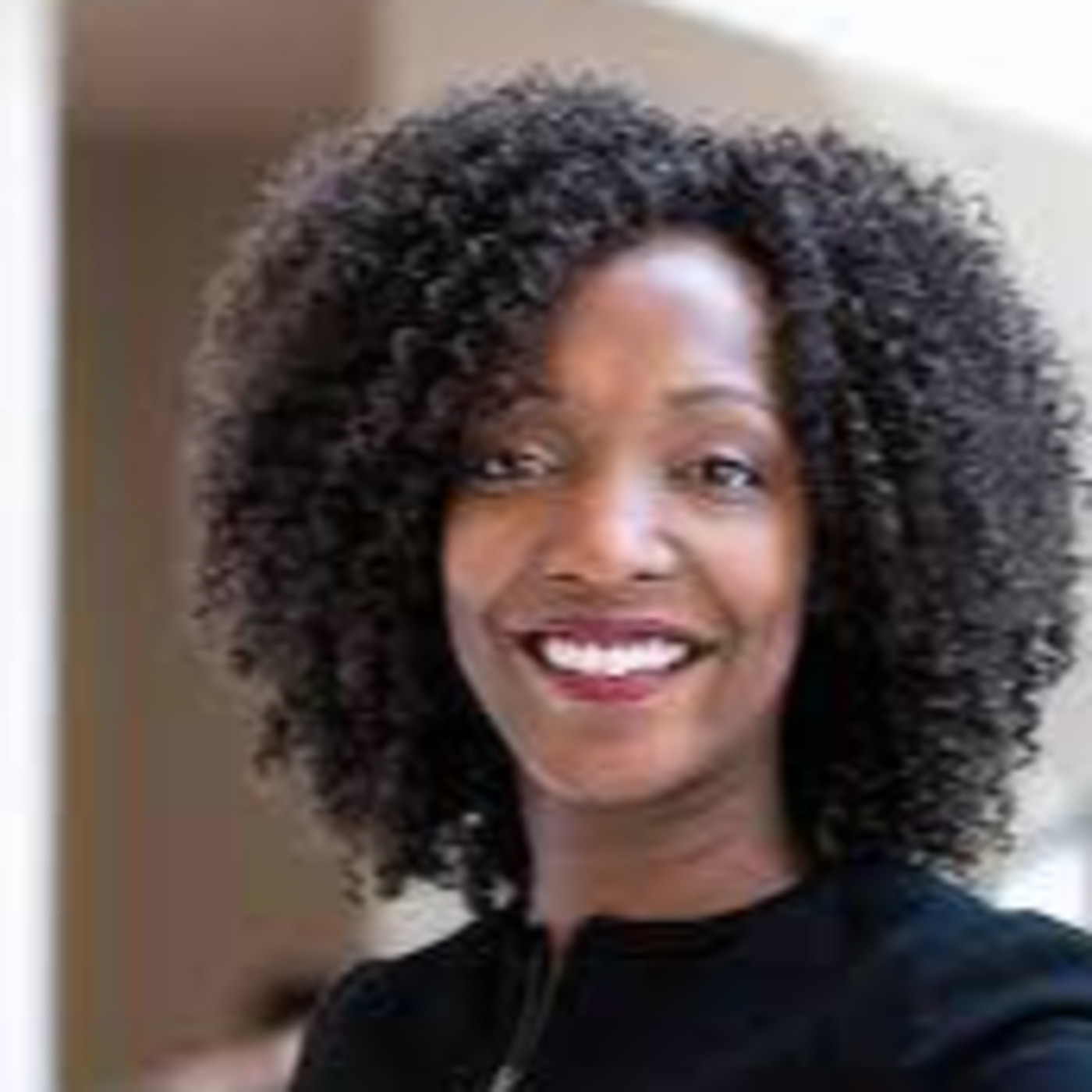
Aoifinn Devitt: The first series of 2022 is brought to you with the kind support of Herd Capital, a Chicago-based asset manager that invests in public equities in the technology, media, telecommunications, financial, and industrial sectors. The firm was founded in 2011 and manages assets via a long-short fund and a long-only fund. When you were born in Kenya, what can you learn from a master’s in African studies? And how can that create the context for a dynamic global career in investing? Find out next. I’m Aoifinn Devitt, and welcome to the 50 Faces Podcast, a podcast committed to revealing the richness and diversity of the world of investment. By focusing on its people and their stories. I’m joined today by Diana Amoha, who is a Chief Investment Officer of Kirkoswald, a US-based hedge fund, and she formerly spent over a decade in financial services in a range of roles, including fixed income and rates trading, and with a focus on emerging markets. She’s a board member of the Global Nomads Group, among other roles. Welcome, Diana. Thanks for joining me today.
Diana: Thanks for having me on.
Aoifinn Devitt: Well, before we delve into your background, can you tell us a little bit about your current role there?
Diana: I am the CIO for long bias strategies at Carcos World Asset Management. This is a global macro hedge fund with a focus on emerging markets. And my role is really to build a new line of business. For the most part, it will be focused on long bias strategies. But we’ll also be looking across the spectrum of ESG investment opportunities in the macro space. So looking to launch products within the sphere that incorporates both the best of what we do in terms of fundamental macroeconomic research and tying that in with the principles of sustainable investing.
Aoifinn Devitt: Wonderful. And let’s now go back to trace your journey into some of that. Can you tell us where you were born, where you grew up, and what you studied originally?
Diana: So I’m actually originally from Nairobi, Kenya. It’s where I was born and spent the early part of my life and did my primary and secondary education in Kenya. I moved to the UK to go to university, so I left Nairobi and moved to Reading where I attended the University of Reading for my undergrad. I did a course in finance and banking. Back then it was at the institute called the ISMA Center, which is affiliated with the ISMA Center regulatory body. I think today it’s part of the Henley Business School. Upon completing my undergrad degree, I got a job at JP Morgan Asset Management in London, working initially in the FX space. So as a junior PM in the currency team, and then I later moved on to the global macro team. Where I worked as a portfolio manager on global macro strategies. I did this for a few years before getting offered a Rhodes Scholarship to study at Oxford University. I took the chance actually to go back to academia, and actually, given that I’d done finance and economics as an undergrad, I thought it made sense to branch out beyond finance and econ and do something a little bit more different. So I did two masters. The first was a Master of Sciences in African Studies, and then I followed that on with an MBA. Upon completing both of these degrees, it was just after Lehman Brothers, or during the time Lehman had happened. So the job market, particularly in London at the time, was pretty much nonexistent for financial services. But I had made connections with the team at Standard Chartered that were focused on doing business in Africa, and they were very keen on exploring the chance of me going to work for Standard Chartered onshore. So at that you point, know, I connected with the team and they offered me a position to go and work at Standard Chartered Nairobi on the trading side of things. So I moved away from a portfolio management role to actually a sell-side trading position. But what was really interesting with this role was it was a chance to not only do the trading, but actually to build the business. So they were trying to ramp up their onshore trading capacity in derivatives. I moved to Kenya to do that for Standard Chartered. It was a fantastic experience, both in terms of having a chance to trade the instruments, but also working and partnering with my counterparties in building this nascent market. After Standard Chartered, I got headhunted by Société Générale in London to do something similar, but on the offshore side of things. So to build their Africa trading capacity out of London. Again, it was a mirror image of what I’d done in Kenya, but doing it from a London point of view, making connections with counterparties throughout the continent and building up the bank’s balance sheet and ability to provide investment solutions or access to markets to the corporate clients. So I did that for a few years, and as that business grew, I got more markets added onto my slate. And with the bigger emerging markets, so with markets like South Africa and Turkey, Israel being put as part of my mandate, I branched out into the broader emerging markets space. So I did the trading at Société Générale, starting initially with the Africa market, but doing more and more EM, broad EM. For a few years, and then I got headhunted by UBS a few years down the line. Again, the mandate was fairly similar where UBS had been in the process of restructuring their fixed income business and they were looking to rebuild their emerging market rates trading side of things. And so they brought me on board as the senior trader on this piece with a very similar mandate. You can see the trend here. The The mandate was just basically to build the platform and trade on the bank’s balance sheet. I moved to UBS. I did this for a couple of years, but by this point I was thinking about my career trajectory and having done investing both on the buy side and sell side, I was starting to get more of an interest in moving back to trade on the buy side predominantly because, well, I missed investing as a fiduciary. Whilst investing on the bank’s balance sheet was interesting, I think I was missing the longer-term nature of making investment decisions for clients, that you can have a positive impact on your clients’ portfolios and helping them meet their objectives. So when the job at JPMorgan, my, my last job at JPMorgan, came up, and that was a job to do emerging market portfolio management within the fixed income team, when that role opened up, the The team at JP reached out to me and I went in, met the team, and moved back to work at JP Morgan. So JP Morgan was where I was up until earlier this year when I moved to Kirkos World. I was in the global fixed income team managing different strategies, but still very much predominantly focused on emerging markets and bringing in investment opportunities in the EM space.
Aoifinn Devitt: Well, quite a lot to unpack there, and I’m going to go through some items one by one that really piqued my interest. So let’s start with African Studies. That seems intriguing to me, studying African Studies in Oxford, and you yourself having come from Africa. What did you learn there? What were your kind of key takeaways from that degree?
Diana: Yeah, you know, you’re certainly not the first person to say that on the surface looks like an odd choice for someone who grew up in Africa. But I you think, know, most people appreciate Africa is a large, large continent, 54 countries, 1.2 billion population, over 2,000 languages spoken. So just the huge amount of diversity in the continent, both culturally, economically, politically, was something that I’ve always been very curious in delving more into. That was the initial pull factor, was just a chance to go deep and to understand. We all know the economic arguments of why emerging markets, frontier markets such as Africa, are going to be big significant growth drivers in the decades to come, whether it’s from a demographic point of view or a resource point of view. So there was also that recognition that this is going to be a future growth driver for the global engine, and actually understanding the different moving parts was something that would stand me in good stead in my career. But also moving away from a finance and banking academic trajectory, which is what I’d been on up until that point. So having done an undergrad in finance and econ and then going on to do the CFA, I felt fairly well anchored in that space. One of the things that I’ve noticed over the years with some of the greatest investors out there, they have multiple tools and frameworks that they use in their investment-making process. So it’s not always just economics and finance and mathematics, but looking at history and politics. And I think when you’re investing in emerging markets, having that context, understanding really the political context in which you’re operating in is extremely important. We’ve seen how, you know, a change in governance can really set a country for acceleration in growth, or conversely, it can also derail growth momentum. Very rapidly, and more so in the EM context where institutions are not always as robust in some of these markets. So it was just a chance to go deep into things like politics, understanding the political context, the historical context. So when you get headlines, you have a framework from which you can use to interpret them in the right way for a specific country’s context. So the African Studies for me was quite key in that respect. But additionally, the tools that you learn in going into these sorts of courses and the frameworks that you get are transferable to an extent to different countries in terms of how you analyze the political and economic discourse of a country. So it was a non-obvious choice, but it’s been hugely beneficial for my career.
Aoifinn Devitt: That’s so interesting in terms of it giving you a framework, because we’re all looking, I think, with a bit of a, I suppose, quite a scrutiny at emerging markets today, given the poor performance over the last decade. And we always hear, well, all emerging markets are not alike, but it’s interesting that it gave you a framework, a broad, maybe abstract framework with which to analyze other markets. In particular, I’d love to ask also about what you said about moving to the buy side and how you enjoyed that aspect of being a fiduciary. What does that mean to you, being a fiduciary in that context?
Diana: So in the context of investing on the buy side, it means working for your client’s best interest. That’s the bottom line. And I think when you delve deeper, when you try and understand who your end clients are, if you’re looking at a public pension fund, it’s the people who are putting their money into that pension fund, right? Right? It’s the teachers, it’s the doctors, it’s the different employees of corporations who are doing their job and trusting you as an investment professional, and in this context, as an investment professional in a fiduciary role, to help them meet their longer-term objectives financially. So for me, that fiduciary responsibility comes with a lot of responsibility But when you do right by your clients, it also does give you an extra level of satisfaction in a job well done, but also in helping people meet their objectives. So it was just a chance to use the skill set that I have had to have a broader positive impact beyond simply influencing the bank’s balance sheet.
Aoifinn Devitt: Very interesting. And now just going to how Africa as an entity and an investment opportunity across the continent, or specifically within Kenya, how do you think it’s understood outside Africa? And why do you think there is that gap?
Diana: I think it’s generally not— the people who know the continent well know it reasonably well, but that tends to be a very small percentage of the investment population, I’d say, and even the broader population for that matter. I think, one, it’s a very large continent with a lot of countries and different moving parts. And to really get a sense of the headlines is very difficult if you’re not comfortable or familiar with the different moving pieces. That’s one. And then how it’s portrayed by the media. I mean, there’s been a lot written about this, but media tends to grab the headlines. And in a continent with 54 countries, you will get negative headlines every so often. And for someone not familiar with Africa, it’s easy to extrapolate that to the whole continent. So again, I think the richness of the continent, the richness of what’s available on the continent, whether it’s from an investment perspective, but even just from a cultural perspective, is very hard to grasp from the outside. And so people hang on to what they can see and what’s visible, which unfortunately tends to be fairly negative headlines.
Aoifinn Devitt: Hence the benefit of having a nuanced perspective like you do. Moving now to your experience in the industry, you mentioned the pattern being that you’ve often been brought in to build platforms and build businesses, and you’ve been extremely successful in doing so, moving from one institution to another. Is there any, say, lessons learned that you maybe have from building businesses that you would say are— is your template now, your kind of secret to success going forward? What kind of skills have you brought to that enterprise?
Diana: I’d say the thing that I’ve picked up going through this process a number of times in different organizations is, one, you need to have a plan on how you’re going to execute. But you also need to be flexible enough to adapt to situations as they come up, whether it’s, you know, going to Africa to do derivatives trading and realizing that I have to actually train up some of my counterparties in order to be able to trade. It’s not necessarily something you’d see in a playbook because technically that’s your competition that you’re training up. But at the end of the day, you’re building a market, and if you want to do it successfully, you need a market that has depth. So it’s the willingness to iterate, to think outside the box, to consider options that you may not have factored in or you may not have considered in a different context, I think is extremely important. I’d say the second thing is one that people use a lot, but actually in the context of building a business is very much a trait that you need, is the ability to work within teams and to work across teams. So when you’re simply just investing, your day-to-day interactions might be limited to your team, your immediate team, whether it’s your investment analysts or your risk management, et cetera. When you’re looking to build a business, your interactions are much broader than that. So your definition of a team varies. Your team expands to incorporate your service providers, all the other roles that build the infrastructure in place. So your ability to work well within a team and across teams, I think, is something that you need to be very good at. And it’s something that I’ve tended to take with me to the different roles that I’ve subsequently moved to over the years.
Aoifinn Devitt: And looking at your experience, one of the themes of this podcast series is diversity within the investment industry. What kind of experience have you had of the diversified nature, I suppose, of the diversity in the industry of women in particular and African women then as a subset of that?
Diana: Oh, that’s an interesting one. So I’ll take a step back by saying the emerging markets space is fairly interesting. EM teams, in my experience, tend to be generally fairly diverse, particularly from a nationality perspective. So in all the teams I’ve worked, the number of languages spoken is always quite astounding, and it’s always the highest concentration of languages in a business. So that’s one thing. My current team, we have, I think, over 20 languages spoken by the team here. So everyone is from somewhere. And again, it’s just the nature of EM, maybe it’s because people tend to gravitate to where they have an edge. And if you’re from a country, you may have an investment edge in making decisions there. And as a result, you get more of that. The other observation for me from a diversity perspective is on the gender side, that you do actually tend to find a lot more diversity, not necessarily gender diversity, not necessarily in the Western context, but within the emerging markets themselves. So when I was working in Nairobi, it’s something I observed that the split on the floor was almost 50-50 from a gender perspective. I had the chance to travel to trading floors in various emerging markets in my different roles, and without fail, female representation was always much, much higher than what I’d come to expect in your traditional Western context. That is an observation that I’ve made. And in trying to understand why this was the case, I think a couple of things came to mind. One was that, I guess, the ease with which you can get childcare in EM because labor costs typically tend to be much lower. I think that’s, that’s something that makes it easier for women to stay in the workplace. But additionally, the familial setups in, in some of these economies are quite supportive of working families, whether it’s the idea that as parents get older, they move in with their children and they take up the role of childcare support. I’ve seen this both in the African context but also in the Asian context as something that works in supporting working moms and working dads as they push through their careers. So there’s a setup in ENs that seems to help with women being able to manage their work-life balances quite well. I’d say one other thing which, which we also have to bear in mind, that in most of these economies, particularly in the African context, unemployment rates are quite high. So if a woman has a job that is actually very additive economically to the family, their family tends to rally because they know jobs in the space are very few and far in between. So the marginal value assigned to financial roles and the willingness to support women keep their careers and progress in them, I’d say, is in some instances a touch higher.
Aoifinn Devitt: That is such a fascinating insight, especially around the childcare, because I myself lived in Asia but that was before I had children. It’s true that the availability, the accessibility of really what I call kind of end-to-end childcare and affordability of that is quite meaningful and is why I think a lot of families actually remain there, expat families. And I often think that’s missing from the conversation when we speak about how to retain women in the Western world, because we speak a lot about the pipeline and about promotions and making them feel included in work. But if childcare is a burden and is prohibitively expensive, I think we will continue to have this barrier.
Diana: Yep, 100%.
Aoifinn Devitt: Such an interesting insight. Just say we’re looking at the outside emerging markets, let’s say financial markets in London and New York, etc., where the industry is less than fully representative of women and minorities. Are you hopeful at this juncture that the industry will become more representative? Do you see changes that are being made that are making a difference?
Diana: 100%, I’d say, especially over the last couple of years. You know, having been doing this for almost 20 years, it’s been interesting to see the ebbs and flows on conversations around diversity in financial services. But over the last couple of years, I think where it does feel different this time is there’s a sense of urgency around the conversation. And the right people are at the table, so people who can make genuine decisions that can move the needle. So that for me is a positive sign because prior to this, the conversations around, you know, representation in the industry were happening amongst the people who are seeking representation in the industry. I think now it’s a more inclusive conversation, and there’s clear action points being brought in. There’s a push by stakeholders as well. So I think the momentum towards ESG investing, towards ESG as a whole, is going to also help as stakeholders demand of the businesses that they engage with to actually have accountable policies and to show how they are making changes to increase representation. So I’m extremely hopeful because it feels like the intentionality is there, the willingness is there and the intentionality, but then also that there are incentives and costs to not doing so that are becoming apparent with time.
Aoifinn Devitt: Very interesting. Let’s go back to your personal story now and some reflections. So you’ve moved through a lot of different continents, businesses, built businesses, built teams. Have there been any setbacks or challenges in particular that you’ve experienced that you’ve learned lessons from that you can share?
Diana: Yeah, I think as most investors, we all go through periods where performance is maybe not where you want it to be. That’s probably the the most, most obvious one from my current job and the type of businesses I’ve engaged in. It’s always a tough experience when you go through a dip, but again, I think over the years I’ve learned a lot from those experiences. One, I’ve learned to take a step back when things aren’t going as you’ve planned, or when things aren’t working out as your thesis would suggest. The best thing you can do is just step back and figure out what exactly is the missing part. At the end of the day, investing demands a certain degree of humility because the space we evolve in is constantly changing. So you have regime change, you have headlines that come out, there’s things that are always moving, and you can account for most things, but there’s always something that might cut you off. And so the ability to quickly figure out when you need to step back and course correct is something that for me is instrumental in being able to do the job that I do as an investor. I’d say from a professional perspective, graduating from my MBA just as Lehman happened was probably an interesting moment, challenging moment. But then again, I look at how things played out because I had plans within London and opportunities that I’d had my eyes set on that at that time were not— no longer available. I’d say one thing that did help me navigate that was the network I’d built, the connections I’d made, the fact that, you know, as I went through the courses and over the years of my career, I always tried to make connections with people just to learn what they were doing and to explain to them who I was, what I did. And that for me is what allowed me to move on to a different sort of opportunity. And I’d say finally, actually, it’s just having that flexibility. Understand that even the best laid plans sometimes can go awry, and, and an opportunity might come by that might not look like what you had planned, but yet might lead you to a better place than where you initially thought you were heading to.
Aoifinn Devitt: It’s so interesting how that resilience can really be cultivated through adversity. And I do think, as I said, I spent some time in emerging markets myself, not as long as you have, but spending time in emerging markets with the uncertainty, the volatility of them, I think it does build a certain thick skin and an ability to see through chaos to find opportunity. It kind of is in the nature of the environment there. So that’s very interesting. When you speak about these connections, have there been any key people throughout your career or life in general that have really made an impression on you and how you think and see the world?
Diana: There are so many of them who have. I hesitate to use the word mentoring because quite a number of them were mentors, but never really quite realized that I saw them in that capacity. But there were a number of people over my career who gave me the opportunity to step into a position, took a risk on giving me roles with the full faith that I could deliver what they asked. Also always open to listen and to give advice, and who I could go and get advice from. There are also people who I learned a lot just by watching how they operated, because I thought they operated in a way that portrayed excellence. And sometimes just by observing and listening to what people do and how they do it, you can actually learn a lot. So there has been a number of people throughout my career who’ve been instrumental in both very large ways, whether it’s given me a role or giving me a stretch opportunity that has helped me grow as an investor and as a professional, but also those who’ve given me advice on how to cope with you know, challenges and how to build resilience as you grow as an investor.
Aoifinn Devitt: And when you look at any maybe actual pieces of advice or words of wisdom or any creed or motto that you live by, is there anything that you can share there?
Diana: There’s a few things. I’d say the first thing is just remaining intellectually curious for the professional role, just staying intellectually curious. Because what we do is fast-moving and things change quite quickly. So to stay competitive and to actually maintain your edge in the investment universe, you need to just keep up with the world. And that means talking to people who might do things that are tangential to what you do, but who you can learn from. I’d say the second thing is just surrounding myself with people who I can learn from. And maybe this goes to the point of seeking out excellence, but just surrounding myself with people who I can learn from, I’d say, is one of the things that I think is truly important. And it’s something that I strive to live by. The last one is one where, as a working mom, has really helped me navigate my career transition to being a parent, et cetera. It’s just always trying to find the balance because at the end of the day, what we do is intense and demanding. And because of that, having that balance is absolutely essential.
Aoifinn Devitt: I love that surrounding yourself with people you can learn from. That’s one of the benefits of doing this podcast is I get to learn from people like you and meet a whole new host of people. So it is definitely something that’s so valuable. My last question is, if you were to look back now to the young student in Kenya about to embark on a university career, in the UK. Is there any advice that you would want to give that young woman now?
Diana: I would tell her, I guess, something I’ve already mentioned on the podcast, but I’d tell her to take the road less traveled. Don’t be scared of taking the road less traveled. It’ll lead you to some very interesting places where you will learn and you will grow, and you’ll meet very interesting people along the journey. I’d also tell her, don’t be scared of speaking out. Your experience brings something different to the table. Your perception also brings a different view to the conversation, because I get the sense that a lot of times, especially when you’re younger, at least my recollection was, you know, when you get to the table, you assume everyone else has all the answers and you’re just there to learn. But just the mere fact that you are at the table means that you’re encouraged to speak out if you have something to add to the conversation. So I’d say those, probably those two pieces: take the road less traveled, and when you get a chance to speak out, let your voice be heard.
Aoifinn Devitt: Well, Diana, it’s been a pleasure speaking with you. From hearing about your master’s in African studies and the context that they gave you for a successful career in investing, I think it just reminds us of the importance of context perspective, as you mentioned, the people you learn from. So thank you so much for coming here and for sharing your insights with us.
Diana: Thank you for having me on the podcast. It’s been absolutely lovely talking to you.
Aoifinn Devitt: I’m Aoifinn Devitt. Thank you for listening to the 50 Faces podcast. If you’d liked what you heard and would like to tune in to hear more inspiring investors on their personal journeys, please subscribe on Apple Podcasts or wherever you get your podcasts. This podcast is for informational purposes only and should not be construed as investment advice. And all views are personal and should not be attributed to the organizations and affiliations of the host or any guest.
Aoifinn Devitt: The first series of 2022 is brought to you with the kind support of Herd Capital, a Chicago-based asset manager that invests in public equities in the technology, media, telecommunications, financial, and industrial sectors. The firm was founded in 2011 and manages assets via a long-short fund and a long-only fund. When you were born in Kenya, what can you learn from a master’s in African studies? And how can that create the context for a dynamic global career in investing? Find out next. I’m Aoifinn Devitt, and welcome to the 50 Faces Podcast, a podcast committed to revealing the richness and diversity of the world of investment. By focusing on its people and their stories. I’m joined today by Diana Amoha, who is a Chief Investment Officer of Kirkoswald, a US-based hedge fund, and she formerly spent over a decade in financial services in a range of roles, including fixed income and rates trading, and with a focus on emerging markets. She’s a board member of the Global Nomads Group, among other roles. Welcome, Diana. Thanks for joining me today.
Diana: Thanks for having me on.
Aoifinn Devitt: Well, before we delve into your background, can you tell us a little bit about your current role there?
Diana: I am the CIO for long bias strategies at Carcos World Asset Management. This is a global macro hedge fund with a focus on emerging markets. And my role is really to build a new line of business. For the most part, it will be focused on long bias strategies. But we’ll also be looking across the spectrum of ESG investment opportunities in the macro space. So looking to launch products within the sphere that incorporates both the best of what we do in terms of fundamental macroeconomic research and tying that in with the principles of sustainable investing.
Aoifinn Devitt: Wonderful. And let’s now go back to trace your journey into some of that. Can you tell us where you were born, where you grew up, and what you studied originally?
Diana: So I’m actually originally from Nairobi, Kenya. It’s where I was born and spent the early part of my life and did my primary and secondary education in Kenya. I moved to the UK to go to university, so I left Nairobi and moved to Reading where I attended the University of Reading for my undergrad. I did a course in finance and banking. Back then it was at the institute called the ISMA Center, which is affiliated with the ISMA Center regulatory body. I think today it’s part of the Henley Business School. Upon completing my undergrad degree, I got a job at JP Morgan Asset Management in London, working initially in the FX space. So as a junior PM in the currency team, and then I later moved on to the global macro team. Where I worked as a portfolio manager on global macro strategies. I did this for a few years before getting offered a Rhodes Scholarship to study at Oxford University. I took the chance actually to go back to academia, and actually, given that I’d done finance and economics as an undergrad, I thought it made sense to branch out beyond finance and econ and do something a little bit more different. So I did two masters. The first was a Master of Sciences in African Studies, and then I followed that on with an MBA. Upon completing both of these degrees, it was just after Lehman Brothers, or during the time Lehman had happened. So the job market, particularly in London at the time, was pretty much nonexistent for financial services. But I had made connections with the team at Standard Chartered that were focused on doing business in Africa, and they were very keen on exploring the chance of me going to work for Standard Chartered onshore. So at that you point, know, I connected with the team and they offered me a position to go and work at Standard Chartered Nairobi on the trading side of things. So I moved away from a portfolio management role to actually a sell-side trading position. But what was really interesting with this role was it was a chance to not only do the trading, but actually to build the business. So they were trying to ramp up their onshore trading capacity in derivatives. I moved to Kenya to do that for Standard Chartered. It was a fantastic experience, both in terms of having a chance to trade the instruments, but also working and partnering with my counterparties in building this nascent market. After Standard Chartered, I got headhunted by Société Générale in London to do something similar, but on the offshore side of things. So to build their Africa trading capacity out of London. Again, it was a mirror image of what I’d done in Kenya, but doing it from a London point of view, making connections with counterparties throughout the continent and building up the bank’s balance sheet and ability to provide investment solutions or access to markets to the corporate clients. So I did that for a few years, and as that business grew, I got more markets added onto my slate. And with the bigger emerging markets, so with markets like South Africa and Turkey, Israel being put as part of my mandate, I branched out into the broader emerging markets space. So I did the trading at Société Générale, starting initially with the Africa market, but doing more and more EM, broad EM. For a few years, and then I got headhunted by UBS a few years down the line. Again, the mandate was fairly similar where UBS had been in the process of restructuring their fixed income business and they were looking to rebuild their emerging market rates trading side of things. And so they brought me on board as the senior trader on this piece with a very similar mandate. You can see the trend here. The The mandate was just basically to build the platform and trade on the bank’s balance sheet. I moved to UBS. I did this for a couple of years, but by this point I was thinking about my career trajectory and having done investing both on the buy side and sell side, I was starting to get more of an interest in moving back to trade on the buy side predominantly because, well, I missed investing as a fiduciary. Whilst investing on the bank’s balance sheet was interesting, I think I was missing the longer-term nature of making investment decisions for clients, that you can have a positive impact on your clients’ portfolios and helping them meet their objectives. So when the job at JPMorgan, my, my last job at JPMorgan, came up, and that was a job to do emerging market portfolio management within the fixed income team, when that role opened up, the The team at JP reached out to me and I went in, met the team, and moved back to work at JP Morgan. So JP Morgan was where I was up until earlier this year when I moved to Kirkos World. I was in the global fixed income team managing different strategies, but still very much predominantly focused on emerging markets and bringing in investment opportunities in the EM space.
Aoifinn Devitt: Well, quite a lot to unpack there, and I’m going to go through some items one by one that really piqued my interest. So let’s start with African Studies. That seems intriguing to me, studying African Studies in Oxford, and you yourself having come from Africa. What did you learn there? What were your kind of key takeaways from that degree?
Diana: Yeah, you know, you’re certainly not the first person to say that on the surface looks like an odd choice for someone who grew up in Africa. But I you think, know, most people appreciate Africa is a large, large continent, 54 countries, 1.2 billion population, over 2,000 languages spoken. So just the huge amount of diversity in the continent, both culturally, economically, politically, was something that I’ve always been very curious in delving more into. That was the initial pull factor, was just a chance to go deep and to understand. We all know the economic arguments of why emerging markets, frontier markets such as Africa, are going to be big significant growth drivers in the decades to come, whether it’s from a demographic point of view or a resource point of view. So there was also that recognition that this is going to be a future growth driver for the global engine, and actually understanding the different moving parts was something that would stand me in good stead in my career. But also moving away from a finance and banking academic trajectory, which is what I’d been on up until that point. So having done an undergrad in finance and econ and then going on to do the CFA, I felt fairly well anchored in that space. One of the things that I’ve noticed over the years with some of the greatest investors out there, they have multiple tools and frameworks that they use in their investment-making process. So it’s not always just economics and finance and mathematics, but looking at history and politics. And I think when you’re investing in emerging markets, having that context, understanding really the political context in which you’re operating in is extremely important. We’ve seen how, you know, a change in governance can really set a country for acceleration in growth, or conversely, it can also derail growth momentum. Very rapidly, and more so in the EM context where institutions are not always as robust in some of these markets. So it was just a chance to go deep into things like politics, understanding the political context, the historical context. So when you get headlines, you have a framework from which you can use to interpret them in the right way for a specific country’s context. So the African Studies for me was quite key in that respect. But additionally, the tools that you learn in going into these sorts of courses and the frameworks that you get are transferable to an extent to different countries in terms of how you analyze the political and economic discourse of a country. So it was a non-obvious choice, but it’s been hugely beneficial for my career.
Aoifinn Devitt: That’s so interesting in terms of it giving you a framework, because we’re all looking, I think, with a bit of a, I suppose, quite a scrutiny at emerging markets today, given the poor performance over the last decade. And we always hear, well, all emerging markets are not alike, but it’s interesting that it gave you a framework, a broad, maybe abstract framework with which to analyze other markets. In particular, I’d love to ask also about what you said about moving to the buy side and how you enjoyed that aspect of being a fiduciary. What does that mean to you, being a fiduciary in that context?
Diana: So in the context of investing on the buy side, it means working for your client’s best interest. That’s the bottom line. And I think when you delve deeper, when you try and understand who your end clients are, if you’re looking at a public pension fund, it’s the people who are putting their money into that pension fund, right? Right? It’s the teachers, it’s the doctors, it’s the different employees of corporations who are doing their job and trusting you as an investment professional, and in this context, as an investment professional in a fiduciary role, to help them meet their longer-term objectives financially. So for me, that fiduciary responsibility comes with a lot of responsibility But when you do right by your clients, it also does give you an extra level of satisfaction in a job well done, but also in helping people meet their objectives. So it was just a chance to use the skill set that I have had to have a broader positive impact beyond simply influencing the bank’s balance sheet.
Aoifinn Devitt: Very interesting. And now just going to how Africa as an entity and an investment opportunity across the continent, or specifically within Kenya, how do you think it’s understood outside Africa? And why do you think there is that gap?
Diana: I think it’s generally not— the people who know the continent well know it reasonably well, but that tends to be a very small percentage of the investment population, I’d say, and even the broader population for that matter. I think, one, it’s a very large continent with a lot of countries and different moving parts. And to really get a sense of the headlines is very difficult if you’re not comfortable or familiar with the different moving pieces. That’s one. And then how it’s portrayed by the media. I mean, there’s been a lot written about this, but media tends to grab the headlines. And in a continent with 54 countries, you will get negative headlines every so often. And for someone not familiar with Africa, it’s easy to extrapolate that to the whole continent. So again, I think the richness of the continent, the richness of what’s available on the continent, whether it’s from an investment perspective, but even just from a cultural perspective, is very hard to grasp from the outside. And so people hang on to what they can see and what’s visible, which unfortunately tends to be fairly negative headlines.
Aoifinn Devitt: Hence the benefit of having a nuanced perspective like you do. Moving now to your experience in the industry, you mentioned the pattern being that you’ve often been brought in to build platforms and build businesses, and you’ve been extremely successful in doing so, moving from one institution to another. Is there any, say, lessons learned that you maybe have from building businesses that you would say are— is your template now, your kind of secret to success going forward? What kind of skills have you brought to that enterprise?
Diana: I’d say the thing that I’ve picked up going through this process a number of times in different organizations is, one, you need to have a plan on how you’re going to execute. But you also need to be flexible enough to adapt to situations as they come up, whether it’s, you know, going to Africa to do derivatives trading and realizing that I have to actually train up some of my counterparties in order to be able to trade. It’s not necessarily something you’d see in a playbook because technically that’s your competition that you’re training up. But at the end of the day, you’re building a market, and if you want to do it successfully, you need a market that has depth. So it’s the willingness to iterate, to think outside the box, to consider options that you may not have factored in or you may not have considered in a different context, I think is extremely important. I’d say the second thing is one that people use a lot, but actually in the context of building a business is very much a trait that you need, is the ability to work within teams and to work across teams. So when you’re simply just investing, your day-to-day interactions might be limited to your team, your immediate team, whether it’s your investment analysts or your risk management, et cetera. When you’re looking to build a business, your interactions are much broader than that. So your definition of a team varies. Your team expands to incorporate your service providers, all the other roles that build the infrastructure in place. So your ability to work well within a team and across teams, I think, is something that you need to be very good at. And it’s something that I’ve tended to take with me to the different roles that I’ve subsequently moved to over the years.
Aoifinn Devitt: And looking at your experience, one of the themes of this podcast series is diversity within the investment industry. What kind of experience have you had of the diversified nature, I suppose, of the diversity in the industry of women in particular and African women then as a subset of that?
Diana: Oh, that’s an interesting one. So I’ll take a step back by saying the emerging markets space is fairly interesting. EM teams, in my experience, tend to be generally fairly diverse, particularly from a nationality perspective. So in all the teams I’ve worked, the number of languages spoken is always quite astounding, and it’s always the highest concentration of languages in a business. So that’s one thing. My current team, we have, I think, over 20 languages spoken by the team here. So everyone is from somewhere. And again, it’s just the nature of EM, maybe it’s because people tend to gravitate to where they have an edge. And if you’re from a country, you may have an investment edge in making decisions there. And as a result, you get more of that. The other observation for me from a diversity perspective is on the gender side, that you do actually tend to find a lot more diversity, not necessarily gender diversity, not necessarily in the Western context, but within the emerging markets themselves. So when I was working in Nairobi, it’s something I observed that the split on the floor was almost 50-50 from a gender perspective. I had the chance to travel to trading floors in various emerging markets in my different roles, and without fail, female representation was always much, much higher than what I’d come to expect in your traditional Western context. That is an observation that I’ve made. And in trying to understand why this was the case, I think a couple of things came to mind. One was that, I guess, the ease with which you can get childcare in EM because labor costs typically tend to be much lower. I think that’s, that’s something that makes it easier for women to stay in the workplace. But additionally, the familial setups in, in some of these economies are quite supportive of working families, whether it’s the idea that as parents get older, they move in with their children and they take up the role of childcare support. I’ve seen this both in the African context but also in the Asian context as something that works in supporting working moms and working dads as they push through their careers. So there’s a setup in ENs that seems to help with women being able to manage their work-life balances quite well. I’d say one other thing which, which we also have to bear in mind, that in most of these economies, particularly in the African context, unemployment rates are quite high. So if a woman has a job that is actually very additive economically to the family, their family tends to rally because they know jobs in the space are very few and far in between. So the marginal value assigned to financial roles and the willingness to support women keep their careers and progress in them, I’d say, is in some instances a touch higher.
Aoifinn Devitt: That is such a fascinating insight, especially around the childcare, because I myself lived in Asia but that was before I had children. It’s true that the availability, the accessibility of really what I call kind of end-to-end childcare and affordability of that is quite meaningful and is why I think a lot of families actually remain there, expat families. And I often think that’s missing from the conversation when we speak about how to retain women in the Western world, because we speak a lot about the pipeline and about promotions and making them feel included in work. But if childcare is a burden and is prohibitively expensive, I think we will continue to have this barrier.
Diana: Yep, 100%.
Aoifinn Devitt: Such an interesting insight. Just say we’re looking at the outside emerging markets, let’s say financial markets in London and New York, etc., where the industry is less than fully representative of women and minorities. Are you hopeful at this juncture that the industry will become more representative? Do you see changes that are being made that are making a difference?
Diana: 100%, I’d say, especially over the last couple of years. You know, having been doing this for almost 20 years, it’s been interesting to see the ebbs and flows on conversations around diversity in financial services. But over the last couple of years, I think where it does feel different this time is there’s a sense of urgency around the conversation. And the right people are at the table, so people who can make genuine decisions that can move the needle. So that for me is a positive sign because prior to this, the conversations around, you know, representation in the industry were happening amongst the people who are seeking representation in the industry. I think now it’s a more inclusive conversation, and there’s clear action points being brought in. There’s a push by stakeholders as well. So I think the momentum towards ESG investing, towards ESG as a whole, is going to also help as stakeholders demand of the businesses that they engage with to actually have accountable policies and to show how they are making changes to increase representation. So I’m extremely hopeful because it feels like the intentionality is there, the willingness is there and the intentionality, but then also that there are incentives and costs to not doing so that are becoming apparent with time.
Aoifinn Devitt: Very interesting. Let’s go back to your personal story now and some reflections. So you’ve moved through a lot of different continents, businesses, built businesses, built teams. Have there been any setbacks or challenges in particular that you’ve experienced that you’ve learned lessons from that you can share?
Diana: Yeah, I think as most investors, we all go through periods where performance is maybe not where you want it to be. That’s probably the the most, most obvious one from my current job and the type of businesses I’ve engaged in. It’s always a tough experience when you go through a dip, but again, I think over the years I’ve learned a lot from those experiences. One, I’ve learned to take a step back when things aren’t going as you’ve planned, or when things aren’t working out as your thesis would suggest. The best thing you can do is just step back and figure out what exactly is the missing part. At the end of the day, investing demands a certain degree of humility because the space we evolve in is constantly changing. So you have regime change, you have headlines that come out, there’s things that are always moving, and you can account for most things, but there’s always something that might cut you off. And so the ability to quickly figure out when you need to step back and course correct is something that for me is instrumental in being able to do the job that I do as an investor. I’d say from a professional perspective, graduating from my MBA just as Lehman happened was probably an interesting moment, challenging moment. But then again, I look at how things played out because I had plans within London and opportunities that I’d had my eyes set on that at that time were not— no longer available. I’d say one thing that did help me navigate that was the network I’d built, the connections I’d made, the fact that, you know, as I went through the courses and over the years of my career, I always tried to make connections with people just to learn what they were doing and to explain to them who I was, what I did. And that for me is what allowed me to move on to a different sort of opportunity. And I’d say finally, actually, it’s just having that flexibility. Understand that even the best laid plans sometimes can go awry, and, and an opportunity might come by that might not look like what you had planned, but yet might lead you to a better place than where you initially thought you were heading to.
Aoifinn Devitt: It’s so interesting how that resilience can really be cultivated through adversity. And I do think, as I said, I spent some time in emerging markets myself, not as long as you have, but spending time in emerging markets with the uncertainty, the volatility of them, I think it does build a certain thick skin and an ability to see through chaos to find opportunity. It kind of is in the nature of the environment there. So that’s very interesting. When you speak about these connections, have there been any key people throughout your career or life in general that have really made an impression on you and how you think and see the world?
Diana: There are so many of them who have. I hesitate to use the word mentoring because quite a number of them were mentors, but never really quite realized that I saw them in that capacity. But there were a number of people over my career who gave me the opportunity to step into a position, took a risk on giving me roles with the full faith that I could deliver what they asked. Also always open to listen and to give advice, and who I could go and get advice from. There are also people who I learned a lot just by watching how they operated, because I thought they operated in a way that portrayed excellence. And sometimes just by observing and listening to what people do and how they do it, you can actually learn a lot. So there has been a number of people throughout my career who’ve been instrumental in both very large ways, whether it’s given me a role or giving me a stretch opportunity that has helped me grow as an investor and as a professional, but also those who’ve given me advice on how to cope with you know, challenges and how to build resilience as you grow as an investor.
Aoifinn Devitt: And when you look at any maybe actual pieces of advice or words of wisdom or any creed or motto that you live by, is there anything that you can share there?
Diana: There’s a few things. I’d say the first thing is just remaining intellectually curious for the professional role, just staying intellectually curious. Because what we do is fast-moving and things change quite quickly. So to stay competitive and to actually maintain your edge in the investment universe, you need to just keep up with the world. And that means talking to people who might do things that are tangential to what you do, but who you can learn from. I’d say the second thing is just surrounding myself with people who I can learn from. And maybe this goes to the point of seeking out excellence, but just surrounding myself with people who I can learn from, I’d say, is one of the things that I think is truly important. And it’s something that I strive to live by. The last one is one where, as a working mom, has really helped me navigate my career transition to being a parent, et cetera. It’s just always trying to find the balance because at the end of the day, what we do is intense and demanding. And because of that, having that balance is absolutely essential.
Aoifinn Devitt: I love that surrounding yourself with people you can learn from. That’s one of the benefits of doing this podcast is I get to learn from people like you and meet a whole new host of people. So it is definitely something that’s so valuable. My last question is, if you were to look back now to the young student in Kenya about to embark on a university career, in the UK. Is there any advice that you would want to give that young woman now?
Diana: I would tell her, I guess, something I’ve already mentioned on the podcast, but I’d tell her to take the road less traveled. Don’t be scared of taking the road less traveled. It’ll lead you to some very interesting places where you will learn and you will grow, and you’ll meet very interesting people along the journey. I’d also tell her, don’t be scared of speaking out. Your experience brings something different to the table. Your perception also brings a different view to the conversation, because I get the sense that a lot of times, especially when you’re younger, at least my recollection was, you know, when you get to the table, you assume everyone else has all the answers and you’re just there to learn. But just the mere fact that you are at the table means that you’re encouraged to speak out if you have something to add to the conversation. So I’d say those, probably those two pieces: take the road less traveled, and when you get a chance to speak out, let your voice be heard.
Aoifinn Devitt: Well, Diana, it’s been a pleasure speaking with you. From hearing about your master’s in African studies and the context that they gave you for a successful career in investing, I think it just reminds us of the importance of context perspective, as you mentioned, the people you learn from. So thank you so much for coming here and for sharing your insights with us.
Diana: Thank you for having me on the podcast. It’s been absolutely lovely talking to you.
Aoifinn Devitt: I’m Aoifinn Devitt. Thank you for listening to the 50 Faces podcast. If you’d liked what you heard and would like to tune in to hear more inspiring investors on their personal journeys, please subscribe on Apple Podcasts or wherever you get your podcasts. This podcast is for informational purposes only and should not be construed as investment advice. And all views are personal and should not be attributed to the organizations and affiliations of the host or any guest.