Aoifinn Devitt: Series 3 is kindly supported by Eagle Point Credit Management. Eagle Point Credit Management is a specialist investment manager principally focused on income-oriented credit investments in niche and inefficient markets. Founded by Thomas Majewski in partnership with Stone Point Capital in 2012, Eagle Point currently manages over $7.8 billion in AUM. Investment strategies pursued by the firm include collateralized loan obligations, CLOs, portfolio debt securities, and other opportunities across the credit universe. Currently, Eagle Point is the largest investor in CLO equity in the world and one of the largest non-bank lenders focused on providing financing solutions to credit funds. You can learn more about Eagle Point at eaglepointcredit.com.
Cathy: I think that the hardest part that I had basically as a woman was when I started, and my very first boss— I worked so hard, I was a young MBA, I did everything. I showed up early. I stayed late. When it came time for the annual review, I was in his office. He said, well, look, you did a great job and you definitely are an asset here, but my salary pool is limited and there are men in this department that have families and they need the money more than you do. And that was so depressing at that moment in time. And I went back and I talked to my dad and I said, I don’t know what to do with this. And he said, look, this is somebody’s mind you’re not going to change. Find another job.
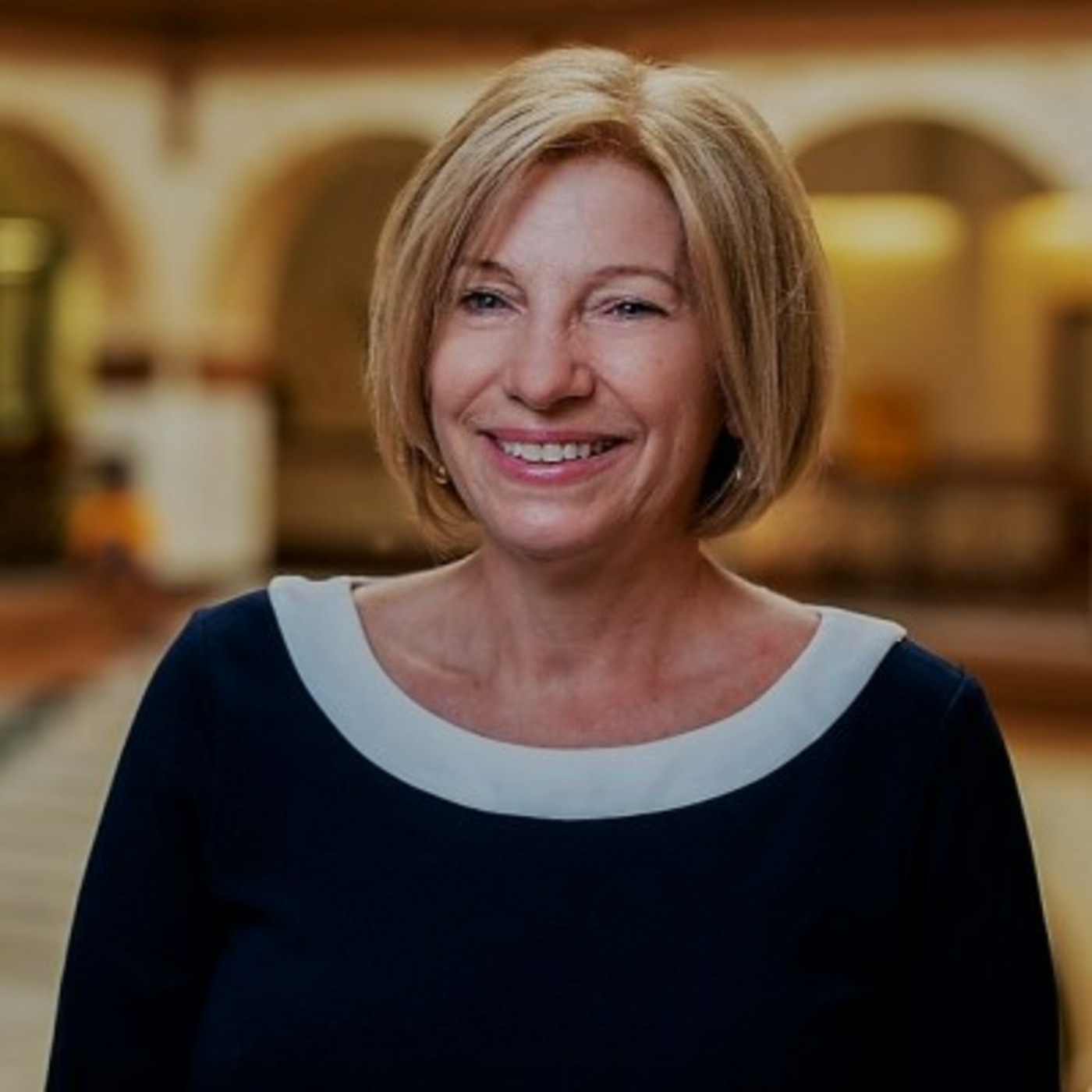
Aoifinn Devitt: I’m Aoifinn Devitt, and welcome to the 50 Faces Podcast, a podcast committed to revealing the richness and diversity of the world of investment by focusing on its people and their stories. I’m joined today by Cathy Youlosis, who is Chief Investment Officer at Drexel University, where she has just celebrated her 13th anniversary as CIO. She’s had a long career in asset management, including stints as a bond trader and portfolio manager. Welcome, Cathy. Thanks for joining me today.
Cathy: Thank you for having me.
Aoifinn Devitt: Well, let’s start with your career journey. Can you start with where you grew up and what you studied?
Cathy: Sure. I grew up in Cheshire, Connecticut, which is right in the middle of Connecticut, north of New Haven and south of Hartford. I went to a small university in New Jersey, Drew University, and I got my MBA at George Washington University.
Aoifinn Devitt: And at what point did you start to work in the world of finance? So was this always something you saw the cards for you? What did you actually study when you were at university?
Cathy: Well, I was a political science and economics major, and I did put myself through graduate school by working on Capitol Hill. But when I graduated, I actually went back to Connecticut, and I started in the Hartford Insurance Companies, which I will say was phenomenal training ground. So I started in a banking services area, and I moved over to corporate finance, and then ultimately went to the bond group and as an analyst and then as a trader. And I spent my formative years at Aetna, and it was a phenomenal experience. And I still have colleagues that I stay in touch with from that time. And it was a wonderful training ground because I think, as we talk later, my approach is always a risk-based approach. In investing, and that’s where I truly learned how to analyze risk.
Aoifinn Devitt: I know we’re going to talk a little later about diversity, but can you just paint a picture for what it was like to be a trader in those days? Were you one of many women on the trading floor? Did this even occur to you as being an issue?
Cathy: No, I was the only woman at the time. There had been a woman before me in the trading room, and then she was promoted out, and I came into the trading room, and I liken that experience to having 7 others. So there were days they were very tough on me, and there were days that they were in my corner. And I have a story about a bond salesman at Salomon Brothers who was really trying to beat up on me. And my move was from an analyst position on financial institutions to the mortgage desk, and I didn’t know much about mortgage-backed securities. I knew little about mortgages other than I had one. And so it was a really huge change. And I will tell you, the trading room wasn’t really thrilled about me getting that job. And frankly, I didn’t apply for it. My boss walked in and said, you’re a mortgage-backed trader and you’re going to be working for Kevin. And he was a phenomenal guy and I learned so much. But there were those who wanted that seat and it was a bit difficult, but they all came around and they did treat me like a sister. So yeah, they would beat up on me from time to time, but when the Solomon Bond salesman was giving me a very difficult time. And those were the days of where you had the phones and the direct lines and everybody could click on. My boss was not there that day and I kind of started waving my hand and they all jumped on. And they finally said to the guy, “Stop calling her name and she’s right.” And that was the end of it. So I will say that there were times where it was tough. But I think that the hardest part that I had basically as a woman was when I started and my very first boss— I worked so hard, I was a young MBA, I did everything, I showed up early, I stayed late. When it came time for the annual review, I was in his office. He said, well, look, you did a great job and you definitely are an asset here, but my salary pool is limited and there are men in this department that have families and they need the money more than you do. And that was so depressing at that moment in time. And I went back and I talked to my dad and I said, I don’t know what to do with this. And he said, look, this is somebody’s mind you’re not going to change. Find another job. And I was lucky. I found another job. I moved to a different department and I went to the corporate finance department at Aetna, and it was on the same floor. And this gentleman didn’t speak to me again. I had left him. I wasn’t loyal. And he was very, very angry. So it was those moments that were so difficult to deal with in the beginning. Ultimately, you learn to shake a lot of this off, and more and more people are actually good to you and nice to you and support you than those that were like this gentleman who was in his own biased world.
Aoifinn Devitt: So interesting. You describe that as a biased world, but he probably was saying the quiet part out loud. And what concerns me is whether that’s still a quiet part that is part of the decision-making when it comes to promotions, when it comes to salary setting, that there’s a presumption that maybe a male employee is the breadwinner and therefore perhaps needs the salary more. I would hope that bias is shrinking, but that’s really interesting. And equally that he expected you to be loyal notwithstanding it.
Cathy: Yes. Yeah, yeah. A strange part, it was a different century. So I will say that I think a lot of that has stopped. And I will say that all but one of my promotions that I have received in my career were by men. And as we talk a little bit more, the changes that have happened to me, some of them were huge surprises, but all because a male saw in me something that was worthy of a change and of a promotion. So over time, I think this has changed. It certainly has for me, and I’m hoping for everyone else as well that just the biases in general are dropped.
Aoifinn Devitt: Well, let’s continue on that surprise theme a little bit because you mentioned some surprising turns. When we chatted before this, you mentioned one stint you had more building a platform or growing a platform that actually, again, someone had kind of handpicked you for that turned out to be a tremendous learning experience. Can you talk about that?
Cathy: I think we’re referring to the time at ING Direct when I went to the process improvement side. So I was senior portfolio manager on our treasury desk. We had $63 billion worth of securities and the great financial crisis was sort of in swing at that moment in time. And I walked in the door one morning and the CEO was in the lobby and he said, hey, Kathy, come over here for a second. And I said, sure. He goes, I got something I want you to do for me. And you know the answer when the CEO asks you is, sure, anything you want, Arkadiy. And he said, I want you to run the process improvement team. Or actually, I think he said the black belt team. And I had no idea what he was talking about. He said, you know, that process improvement stuff, that Six Sigma stuff. And yeah, we got to do this for the home office. Well, we were not doing much activity on the treasury desk right then. We weren’t really trading anything and kind of shut down a lot. And I said, okay. I really thought this was like a project. I didn’t really realize it was a full job. And by the end of the day, my— actually, my boss came up to me, said, what did you do? I said, what do you mean, what do I do? He said, what did you tell Arkadiy? I said, well, I do that process improvement. He goes, you have a new job. And just like that, I went from $63 billion of mortgage-backed securities that we were managing to 11 Six Sigma black belts in 3 locations across 3 time zones. Working on these process improvement projects for the bank. I learned more about banking, about process improvement, about interaction with people, and it was one of the most formative 2 years I’ve spent in learning different skills and broadening my knowledge, which I then left there and went to Draxel. And I think that experience helped me so much to help rebuild an investment office at Drexel and to integrate into the university because I just wasn’t in one lane. I learned a lot about working cross-departmental at ING Direct and working for the good of the bank. And ultimately, all of our projects were very successful. We saved in less than 2 years $18 million for the bank, which was a big deal at the time. Only one person lost their job in those efforts, and that was because we stumbled on fraud. There was a person that kind of got caught up in that, and that was the end of that. We literally stumbled on it, but we didn’t downsize. We weren’t downsizers. We were process improvers.
Aoifinn Devitt: So interesting. It sounds like something out of an MBA case study as you’re describing these terms. I haven’t heard them since my own MBA. I know. When you go now into Drexel and we talk about your role as a CIO, Were there any particular takeaways, any kind of cardinal laws of how things should be done that have stayed with you since that time?
Cathy: Well, I think all of this comes back to mission and what your, you know, you have corporate goals, you have corporate mission, and at Drexel, we have our institutional mission. And I think the most important thing about how we invest and how we think about risk and how we execute is for the mission of the university long-term. And I think that is the most important thing. It’s not about how well you do in a Nikobu survey or what your return is. If your return doesn’t match the appropriate risk, it’s not worth it. You need to know that what you’re doing is for the long-term of your institution and the mission that that institution has.
Aoifinn Devitt: Does that mean exactly when you speak about your mission and how that infuses your investment process? I’m thinking there’s a lot of discussion of impact investing. Maybe do you invest with a view to creating impact within the university, within its population, or how do you translate that into your CIO role?
Cathy: Well, again, I think that obviously the mission of Drexel is about educating students, and Anthony Drexel put Drexel where it is in the middle of then the manufacturing district in Philadelphia to educate workers. So what we start with that, is what’s most important. And for us now, we are very concerned as a university, and we do stay about our role within the community, our community involvement. So yes, that is also part of our mission and part of what we bring into the process in our thought process. We need to sometimes always balance how we approach things, but overall we are focused on the overall mission and our goals at Drexel. I have one example where that came into play, and, and that is where the hospitals that Drexel medical students trained at, our physician services were at, were actually owned by, at that time, a private equity firm. And the way that it was set up was that one private equity firm owned the buildings and the ground, and the other owned the operations. Both of these hospitals, Hahnemann Hospital and St. Chris Children’s Hospital, serve the underserved in Philadelphia. And St. Chris is a wonderful children’s hospital. The other one in Philadelphia is far better known. That would be Children’s Hospital of Philadelphia at the University of Pennsylvania. Phenomenal, phenomenal place. St. A Chris, bit different, serving the underserved, but also an extraordinarily special place. These two hospitals have always had a lot of financial strain, and ultimately they went bankrupt. We could see this coming, but Drexel did a lot to try to keep them in business and worked very closely there, but they went into bankruptcy. And this was a real problem for Drexel. This is where our medical school is, and this is very, very important to our mission. So ultimately, Drexel did buy St. Chris out of bankruptcy with Tower Health. The way in which that was funded actually came from the endowment. And we did it as an investment and we provided a $40 million line of credit to get it back up and running. This is not something that happens every day. This is not an expected transaction. And it took a lot of work with the finance team to get this done so that the money didn’t have to leave the endowment permanently. We were ultimately paid back with a bond issuance that Drexel did several months later. And in, in the covenants of that bond deal, it says we’ll pay back the endowment. So it was a phenomenal transaction. St. Chris is up and running today. Our students are able to train there as well as many other residents. The importance of that hospital to our mission was, is extremely important. We have one of the largest private medical schools in the country. So many doctors have passed through Drexel in one way or another as part of their training. So keeping the medical school in place, not losing its accreditation, was extremely important. So that’s an example of staying with mission.
Aoifinn Devitt: That’s a great example, and I think one that many other universities can certainly learn from, just staying on mission on your own, I suppose, investment mission and investment beliefs. Can you talk us through any that you hold and maybe how you translate that into what’s on your mind today as CIO?
Cathy: Well, I think, again, when we talk about that, the guiding principle that I have is I took this job because of what Drexel is and what Drexel is trying to achieve in its academics and its presence in the community. So, yes, again, I’m led by the mission here, and that’s how we focus on how we’re going to accomplish that mission. We’re part of accomplishing the mission and having it continue. That’s the overall guiding principle and how we basically set up our portfolio is really based on a risk approach. And we, we are looking to say what is the level of risk that we are willing to take and what kind of return do we want to achieve. And balancing those is how we set up our investment strategies. And we do that for the long term.
Aoifinn Devitt: And how much do you think being a trader taught you how to take risk, maybe how to tolerate loss, how to maybe stop that loss, and generally think about an overall portfolio construction?
Cathy: Sure. Well, as I said, I came out of the insurance and banking industry, so risk is first in the analysis. So I’ve always been, I’ll say, risk biased in an approach to investing. So when you think in those terms first, it does set a floor for you, and it does set the parameters for how you want to achieve your return. And I think that is really important. Trading teaches you how to get the return risk profile that you want, and you are in a constant negotiation when you are trying to fund your liabilities. And you know what guardrails you have in doing that. So what you learn basically from an insurance background is an asset is really just a funded liability at the end of the day. So when you think in those terms, you tend to maybe be a little more conservative, but you understand that when— if you take on excess risk, it very well may not achieve the goal you want.
Aoifinn Devitt: And certainly in an endowment, and many of your endowment brethren, they do have the luxury of being long-term investors and maybe being able to take that illiquidity premium to enjoy it. What do you do in terms of diversification, say, beyond what the insurance company might have done into, say, alternative assets, private assets?
Cathy: Sure. Well, we actually have, because we are long-term investors here and because we were able to set up our risk budgeting in such a way, what we found when actually we changed from sort of that traditional asset bucket method and putting a certain amount in each bucket and coming up with your risk-return, we actually turned it around and created more of a risk target. And when we actually turned it around and did that, we actually came up with lower risk and higher return. So for us, over time, we are moving more into illiquid assets, but we are managing our liquidity to our needs. So we are very much cognizant of how we do that and the time that it takes to do that. But we’re managing both in terms of making sure that we always have the liquidity that we need in the portfolio and maybe even a little excess at it because markets are volatile. And we are moving more towards illiquid because we are long-term investors and that is our goal.
Aoifinn Devitt: I’d like to talk now about some of the director and board positions that you hold because I often think many people at a certain stage of their career want to go into these roles, but there’s no playbook for what makes a good director or chair. What do you seek to bring to those roles, and what are your thoughts on that question of what makes a good director or chair?
Cathy: Sure. So I, I’m very blessed to have had 3 very good chairs at the investment committee at Drexel, and all 3 of them have the same quality in that They participate, they’re available, and they know a lot about both the university and the endowment. They stay very engaged. They’ve been very engaged for me. And they challenge, and they ask questions, and they make me and my team much better for the perspectives and questions that they bring to the table. And I think that interactive behavior as an investment committee chair or any chair of any committee at a not-for-profit in particular is really important to have that. And that said, they’re very supportive of staff, and that is also very, very important. I think as a member of a committee, the best thing you can do is be prepared. Too many people are not prepared when they walk in, and the best thing that you can do as a board member is be prepared, read the materials, and basically show up and participate. And I know I find myself too, if I’m on one of those Zoom calls, you want to check your email and you can be easily distracted, but it’s so important to stay engaged and that’s how you can be the best board member.
Aoifinn Devitt: And I want to go back to the diversity point because you spoke a little bit about your experience of diversity and inclusion, I suppose, at the beginning of your career. Now that you’ve progressed into a senior role, How have you seen that evolve? And maybe when you look at the industry today, what grade would you give it in terms of its level of diversity?
Cathy: Overall, I think in investments, maybe a B-minus, not there yet. Certainly has improved along the way. I think that it is so important to have diversity of opinion. I was thinking earlier today about our conversation that was upcoming, and I was thinking about, you know how people always want to go on those experiential trips. They want to try something different and they want to try something new. Well, you got to bring that to work too. You got to bring that into your life every day. People have different experiences, and if they share them with you, you learn something. You then have more knowledge. And sometimes it’s not always positive, not always negative, but listening to people and their experiences and listening to their perspectives can be so instructive and it can be so helpful that it’s a shame that that doesn’t happen more often, that we try to fit into particular sleeves or pedigree. I was recently at a conference where it was about diversity and women, and there was one guy from a private equity firm who said, Well, know, you we look for pedigree. I thought, what do you mean by pedigree? Wharton? Harvard? That’s not going to get you diverse opinions. And so I really took up a point with that and saying that’s not the way to achieve the best results. And I think we’ve proven that over and over again, that diversity of opinion does make our decisioning better and stronger. So I think we’re not there yet, certainly in the investment world. I have seen more inclusion, I have seen better results, and I hope that continues.
Aoifinn Devitt: Well, I don’t think I was at that conference, but I can totally see you asking that question, challenging the orthodoxy and being unafraid to just put it out there. And I’m sure it probably shocked Speaker, but I hope that we actually got a little more thoughtful response. So thank you for always challenging the corporate speak. Let’s get back to some personal reflections now, and really let’s kind of bring up this authenticity theme that you’ve already raised. When you think about people who’ve inspired you, or any mentors, or any wisdom that you’ve received from people that you’ve worked with, any kind of number of things you can share there?
Cathy: Sure. I think that one of the people that actually I found to have the most impact on me was a woman at JPMorgan. She has passed away. Her name was Eunice Reich Berman. She was amazing and head of the research department at JPMorgan and on the bond side. She was extraordinarily well respected. And when I was out of the workforce having babies she brought me back in as a consultant to her research group, and that really brought me back into the workforce. And for that, I will always be very thankful. But she was the kind of person that did so much for people, and you never knew it until her funeral, where there was probably 400 people, and there were male bond traders in tears because she was so beloved and she was a brilliant investor and analyst, but she was also such a good person, but she didn’t talk about it. She didn’t talk about the things that she did, but she was just such a good role model and for so many people, not just for women, but for men as well.
Aoifinn Devitt: That’s wonderful. Well, they say that character is what happens when no one’s looking. It’s what you do when no one’s looking, or something to that effect. So that, that does sound like an extraordinary person to have in your life. When you think about any creed or motto, is there anything that you carry with you now?
Cathy: I do, and I, I came to this later in life, and someone once said to me, and I’ve really taken this to heart, don’t assume malice when stupidity suffices. And I know that sounds like an odd thing to say, but when you think someone is doing something against you and if you take away sort of the malicious thought, you are far more empowered. And sometimes when you say they just don’t know what they’re talking about, and I don’t really want to focus on the word stupidity here, but they don’t really know what they’re talking about. Your job then is not defense, but persuasion. And when you take away that view that you’re on the defensive, but that you’re persuading, it changes you. It lightens you, and it allows you to better put forth your ideas and your opinions, your needs, whatever it is. And I think that if we take away the first impression that it may be malintended and we just assume they really don’t know, it works a lot better.
Aoifinn Devitt: That’s great advice. And actually something similar to how my mother approaches the world. She is a politician and I think it’s probably been the source of her surviving in what can be a brutal career choice. And I think funnily enough, it’s interesting. I think that’s something that certainly young people need to be reminded of because we seem to instinctively jump to the assumption of malice and bad intention when perhaps it would be much, as you said, lighter and easier to just assume otherwise. Well, Cathy, thank you so much. You, I think, are someone in the industry who holds us all to account individually, as a group. You call out some of our jargon and corporate speak and force us to examine it for sense and essentially to help eliminate some of that stupidity, which can creep in everywhere. So thank you for being such a beacon of authenticity in the industry and for sharing your insights here with us.
Cathy: Well, thank you so much. I’ve really enjoyed the opportunity to speak with you and talk about some of my past experiences.
Aoifinn Devitt: I’m Yifat David. Thank you for listening to the 50 Faces Podcast. If you liked what you heard and would like to tune in to hear more inspiring personal journeys, please subscribe on Apple Podcasts or wherever you get your podcasts. This podcast is for informational purposes only and should not be construed as investment advice, and all views are personal and should not be attributed to the organizations and affiliations of the host or any guest.
Aoifinn Devitt: Series 3 is kindly supported by Eagle Point Credit Management. Eagle Point Credit Management is a specialist investment manager principally focused on income-oriented credit investments in niche and inefficient markets. Founded by Thomas Majewski in partnership with Stone Point Capital in 2012, Eagle Point currently manages over $7.8 billion in AUM. Investment strategies pursued by the firm include collateralized loan obligations, CLOs, portfolio debt securities, and other opportunities across the credit universe. Currently, Eagle Point is the largest investor in CLO equity in the world and one of the largest non-bank lenders focused on providing financing solutions to credit funds. You can learn more about Eagle Point at eaglepointcredit.com.
Cathy: I think that the hardest part that I had basically as a woman was when I started, and my very first boss— I worked so hard, I was a young MBA, I did everything. I showed up early. I stayed late. When it came time for the annual review, I was in his office. He said, well, look, you did a great job and you definitely are an asset here, but my salary pool is limited and there are men in this department that have families and they need the money more than you do. And that was so depressing at that moment in time. And I went back and I talked to my dad and I said, I don’t know what to do with this. And he said, look, this is somebody’s mind you’re not going to change. Find another job.
Aoifinn Devitt: I’m Aoifinn Devitt, and welcome to the 50 Faces Podcast, a podcast committed to revealing the richness and diversity of the world of investment by focusing on its people and their stories. I’m joined today by Cathy Youlosis, who is Chief Investment Officer at Drexel University, where she has just celebrated her 13th anniversary as CIO. She’s had a long career in asset management, including stints as a bond trader and portfolio manager. Welcome, Cathy. Thanks for joining me today.
Cathy: Thank you for having me.
Aoifinn Devitt: Well, let’s start with your career journey. Can you start with where you grew up and what you studied?
Cathy: Sure. I grew up in Cheshire, Connecticut, which is right in the middle of Connecticut, north of New Haven and south of Hartford. I went to a small university in New Jersey, Drew University, and I got my MBA at George Washington University.
Aoifinn Devitt: And at what point did you start to work in the world of finance? So was this always something you saw the cards for you? What did you actually study when you were at university?
Cathy: Well, I was a political science and economics major, and I did put myself through graduate school by working on Capitol Hill. But when I graduated, I actually went back to Connecticut, and I started in the Hartford Insurance Companies, which I will say was phenomenal training ground. So I started in a banking services area, and I moved over to corporate finance, and then ultimately went to the bond group and as an analyst and then as a trader. And I spent my formative years at Aetna, and it was a phenomenal experience. And I still have colleagues that I stay in touch with from that time. And it was a wonderful training ground because I think, as we talk later, my approach is always a risk-based approach. In investing, and that’s where I truly learned how to analyze risk.
Aoifinn Devitt: I know we’re going to talk a little later about diversity, but can you just paint a picture for what it was like to be a trader in those days? Were you one of many women on the trading floor? Did this even occur to you as being an issue?
Cathy: No, I was the only woman at the time. There had been a woman before me in the trading room, and then she was promoted out, and I came into the trading room, and I liken that experience to having 7 others. So there were days they were very tough on me, and there were days that they were in my corner. And I have a story about a bond salesman at Salomon Brothers who was really trying to beat up on me. And my move was from an analyst position on financial institutions to the mortgage desk, and I didn’t know much about mortgage-backed securities. I knew little about mortgages other than I had one. And so it was a really huge change. And I will tell you, the trading room wasn’t really thrilled about me getting that job. And frankly, I didn’t apply for it. My boss walked in and said, you’re a mortgage-backed trader and you’re going to be working for Kevin. And he was a phenomenal guy and I learned so much. But there were those who wanted that seat and it was a bit difficult, but they all came around and they did treat me like a sister. So yeah, they would beat up on me from time to time, but when the Solomon Bond salesman was giving me a very difficult time. And those were the days of where you had the phones and the direct lines and everybody could click on. My boss was not there that day and I kind of started waving my hand and they all jumped on. And they finally said to the guy, “Stop calling her name and she’s right.” And that was the end of it. So I will say that there were times where it was tough. But I think that the hardest part that I had basically as a woman was when I started and my very first boss— I worked so hard, I was a young MBA, I did everything, I showed up early, I stayed late. When it came time for the annual review, I was in his office. He said, well, look, you did a great job and you definitely are an asset here, but my salary pool is limited and there are men in this department that have families and they need the money more than you do. And that was so depressing at that moment in time. And I went back and I talked to my dad and I said, I don’t know what to do with this. And he said, look, this is somebody’s mind you’re not going to change. Find another job. And I was lucky. I found another job. I moved to a different department and I went to the corporate finance department at Aetna, and it was on the same floor. And this gentleman didn’t speak to me again. I had left him. I wasn’t loyal. And he was very, very angry. So it was those moments that were so difficult to deal with in the beginning. Ultimately, you learn to shake a lot of this off, and more and more people are actually good to you and nice to you and support you than those that were like this gentleman who was in his own biased world.
Aoifinn Devitt: So interesting. You describe that as a biased world, but he probably was saying the quiet part out loud. And what concerns me is whether that’s still a quiet part that is part of the decision-making when it comes to promotions, when it comes to salary setting, that there’s a presumption that maybe a male employee is the breadwinner and therefore perhaps needs the salary more. I would hope that bias is shrinking, but that’s really interesting. And equally that he expected you to be loyal notwithstanding it.
Cathy: Yes. Yeah, yeah. A strange part, it was a different century. So I will say that I think a lot of that has stopped. And I will say that all but one of my promotions that I have received in my career were by men. And as we talk a little bit more, the changes that have happened to me, some of them were huge surprises, but all because a male saw in me something that was worthy of a change and of a promotion. So over time, I think this has changed. It certainly has for me, and I’m hoping for everyone else as well that just the biases in general are dropped.
Aoifinn Devitt: Well, let’s continue on that surprise theme a little bit because you mentioned some surprising turns. When we chatted before this, you mentioned one stint you had more building a platform or growing a platform that actually, again, someone had kind of handpicked you for that turned out to be a tremendous learning experience. Can you talk about that?
Cathy: I think we’re referring to the time at ING Direct when I went to the process improvement side. So I was senior portfolio manager on our treasury desk. We had $63 billion worth of securities and the great financial crisis was sort of in swing at that moment in time. And I walked in the door one morning and the CEO was in the lobby and he said, hey, Kathy, come over here for a second. And I said, sure. He goes, I got something I want you to do for me. And you know the answer when the CEO asks you is, sure, anything you want, Arkadiy. And he said, I want you to run the process improvement team. Or actually, I think he said the black belt team. And I had no idea what he was talking about. He said, you know, that process improvement stuff, that Six Sigma stuff. And yeah, we got to do this for the home office. Well, we were not doing much activity on the treasury desk right then. We weren’t really trading anything and kind of shut down a lot. And I said, okay. I really thought this was like a project. I didn’t really realize it was a full job. And by the end of the day, my— actually, my boss came up to me, said, what did you do? I said, what do you mean, what do I do? He said, what did you tell Arkadiy? I said, well, I do that process improvement. He goes, you have a new job. And just like that, I went from $63 billion of mortgage-backed securities that we were managing to 11 Six Sigma black belts in 3 locations across 3 time zones. Working on these process improvement projects for the bank. I learned more about banking, about process improvement, about interaction with people, and it was one of the most formative 2 years I’ve spent in learning different skills and broadening my knowledge, which I then left there and went to Draxel. And I think that experience helped me so much to help rebuild an investment office at Drexel and to integrate into the university because I just wasn’t in one lane. I learned a lot about working cross-departmental at ING Direct and working for the good of the bank. And ultimately, all of our projects were very successful. We saved in less than 2 years $18 million for the bank, which was a big deal at the time. Only one person lost their job in those efforts, and that was because we stumbled on fraud. There was a person that kind of got caught up in that, and that was the end of that. We literally stumbled on it, but we didn’t downsize. We weren’t downsizers. We were process improvers.
Aoifinn Devitt: So interesting. It sounds like something out of an MBA case study as you’re describing these terms. I haven’t heard them since my own MBA. I know. When you go now into Drexel and we talk about your role as a CIO, Were there any particular takeaways, any kind of cardinal laws of how things should be done that have stayed with you since that time?
Cathy: Well, I think all of this comes back to mission and what your, you know, you have corporate goals, you have corporate mission, and at Drexel, we have our institutional mission. And I think the most important thing about how we invest and how we think about risk and how we execute is for the mission of the university long-term. And I think that is the most important thing. It’s not about how well you do in a Nikobu survey or what your return is. If your return doesn’t match the appropriate risk, it’s not worth it. You need to know that what you’re doing is for the long-term of your institution and the mission that that institution has.
Aoifinn Devitt: Does that mean exactly when you speak about your mission and how that infuses your investment process? I’m thinking there’s a lot of discussion of impact investing. Maybe do you invest with a view to creating impact within the university, within its population, or how do you translate that into your CIO role?
Cathy: Well, again, I think that obviously the mission of Drexel is about educating students, and Anthony Drexel put Drexel where it is in the middle of then the manufacturing district in Philadelphia to educate workers. So what we start with that, is what’s most important. And for us now, we are very concerned as a university, and we do stay about our role within the community, our community involvement. So yes, that is also part of our mission and part of what we bring into the process in our thought process. We need to sometimes always balance how we approach things, but overall we are focused on the overall mission and our goals at Drexel. I have one example where that came into play, and, and that is where the hospitals that Drexel medical students trained at, our physician services were at, were actually owned by, at that time, a private equity firm. And the way that it was set up was that one private equity firm owned the buildings and the ground, and the other owned the operations. Both of these hospitals, Hahnemann Hospital and St. Chris Children’s Hospital, serve the underserved in Philadelphia. And St. Chris is a wonderful children’s hospital. The other one in Philadelphia is far better known. That would be Children’s Hospital of Philadelphia at the University of Pennsylvania. Phenomenal, phenomenal place. St. A Chris, bit different, serving the underserved, but also an extraordinarily special place. These two hospitals have always had a lot of financial strain, and ultimately they went bankrupt. We could see this coming, but Drexel did a lot to try to keep them in business and worked very closely there, but they went into bankruptcy. And this was a real problem for Drexel. This is where our medical school is, and this is very, very important to our mission. So ultimately, Drexel did buy St. Chris out of bankruptcy with Tower Health. The way in which that was funded actually came from the endowment. And we did it as an investment and we provided a $40 million line of credit to get it back up and running. This is not something that happens every day. This is not an expected transaction. And it took a lot of work with the finance team to get this done so that the money didn’t have to leave the endowment permanently. We were ultimately paid back with a bond issuance that Drexel did several months later. And in, in the covenants of that bond deal, it says we’ll pay back the endowment. So it was a phenomenal transaction. St. Chris is up and running today. Our students are able to train there as well as many other residents. The importance of that hospital to our mission was, is extremely important. We have one of the largest private medical schools in the country. So many doctors have passed through Drexel in one way or another as part of their training. So keeping the medical school in place, not losing its accreditation, was extremely important. So that’s an example of staying with mission.
Aoifinn Devitt: That’s a great example, and I think one that many other universities can certainly learn from, just staying on mission on your own, I suppose, investment mission and investment beliefs. Can you talk us through any that you hold and maybe how you translate that into what’s on your mind today as CIO?
Cathy: Well, I think, again, when we talk about that, the guiding principle that I have is I took this job because of what Drexel is and what Drexel is trying to achieve in its academics and its presence in the community. So, yes, again, I’m led by the mission here, and that’s how we focus on how we’re going to accomplish that mission. We’re part of accomplishing the mission and having it continue. That’s the overall guiding principle and how we basically set up our portfolio is really based on a risk approach. And we, we are looking to say what is the level of risk that we are willing to take and what kind of return do we want to achieve. And balancing those is how we set up our investment strategies. And we do that for the long term.
Aoifinn Devitt: And how much do you think being a trader taught you how to take risk, maybe how to tolerate loss, how to maybe stop that loss, and generally think about an overall portfolio construction?
Cathy: Sure. Well, as I said, I came out of the insurance and banking industry, so risk is first in the analysis. So I’ve always been, I’ll say, risk biased in an approach to investing. So when you think in those terms first, it does set a floor for you, and it does set the parameters for how you want to achieve your return. And I think that is really important. Trading teaches you how to get the return risk profile that you want, and you are in a constant negotiation when you are trying to fund your liabilities. And you know what guardrails you have in doing that. So what you learn basically from an insurance background is an asset is really just a funded liability at the end of the day. So when you think in those terms, you tend to maybe be a little more conservative, but you understand that when— if you take on excess risk, it very well may not achieve the goal you want.
Aoifinn Devitt: And certainly in an endowment, and many of your endowment brethren, they do have the luxury of being long-term investors and maybe being able to take that illiquidity premium to enjoy it. What do you do in terms of diversification, say, beyond what the insurance company might have done into, say, alternative assets, private assets?
Cathy: Sure. Well, we actually have, because we are long-term investors here and because we were able to set up our risk budgeting in such a way, what we found when actually we changed from sort of that traditional asset bucket method and putting a certain amount in each bucket and coming up with your risk-return, we actually turned it around and created more of a risk target. And when we actually turned it around and did that, we actually came up with lower risk and higher return. So for us, over time, we are moving more into illiquid assets, but we are managing our liquidity to our needs. So we are very much cognizant of how we do that and the time that it takes to do that. But we’re managing both in terms of making sure that we always have the liquidity that we need in the portfolio and maybe even a little excess at it because markets are volatile. And we are moving more towards illiquid because we are long-term investors and that is our goal.
Aoifinn Devitt: I’d like to talk now about some of the director and board positions that you hold because I often think many people at a certain stage of their career want to go into these roles, but there’s no playbook for what makes a good director or chair. What do you seek to bring to those roles, and what are your thoughts on that question of what makes a good director or chair?
Cathy: Sure. So I, I’m very blessed to have had 3 very good chairs at the investment committee at Drexel, and all 3 of them have the same quality in that They participate, they’re available, and they know a lot about both the university and the endowment. They stay very engaged. They’ve been very engaged for me. And they challenge, and they ask questions, and they make me and my team much better for the perspectives and questions that they bring to the table. And I think that interactive behavior as an investment committee chair or any chair of any committee at a not-for-profit in particular is really important to have that. And that said, they’re very supportive of staff, and that is also very, very important. I think as a member of a committee, the best thing you can do is be prepared. Too many people are not prepared when they walk in, and the best thing that you can do as a board member is be prepared, read the materials, and basically show up and participate. And I know I find myself too, if I’m on one of those Zoom calls, you want to check your email and you can be easily distracted, but it’s so important to stay engaged and that’s how you can be the best board member.
Aoifinn Devitt: And I want to go back to the diversity point because you spoke a little bit about your experience of diversity and inclusion, I suppose, at the beginning of your career. Now that you’ve progressed into a senior role, How have you seen that evolve? And maybe when you look at the industry today, what grade would you give it in terms of its level of diversity?
Cathy: Overall, I think in investments, maybe a B-minus, not there yet. Certainly has improved along the way. I think that it is so important to have diversity of opinion. I was thinking earlier today about our conversation that was upcoming, and I was thinking about, you know how people always want to go on those experiential trips. They want to try something different and they want to try something new. Well, you got to bring that to work too. You got to bring that into your life every day. People have different experiences, and if they share them with you, you learn something. You then have more knowledge. And sometimes it’s not always positive, not always negative, but listening to people and their experiences and listening to their perspectives can be so instructive and it can be so helpful that it’s a shame that that doesn’t happen more often, that we try to fit into particular sleeves or pedigree. I was recently at a conference where it was about diversity and women, and there was one guy from a private equity firm who said, Well, know, you we look for pedigree. I thought, what do you mean by pedigree? Wharton? Harvard? That’s not going to get you diverse opinions. And so I really took up a point with that and saying that’s not the way to achieve the best results. And I think we’ve proven that over and over again, that diversity of opinion does make our decisioning better and stronger. So I think we’re not there yet, certainly in the investment world. I have seen more inclusion, I have seen better results, and I hope that continues.
Aoifinn Devitt: Well, I don’t think I was at that conference, but I can totally see you asking that question, challenging the orthodoxy and being unafraid to just put it out there. And I’m sure it probably shocked Speaker, but I hope that we actually got a little more thoughtful response. So thank you for always challenging the corporate speak. Let’s get back to some personal reflections now, and really let’s kind of bring up this authenticity theme that you’ve already raised. When you think about people who’ve inspired you, or any mentors, or any wisdom that you’ve received from people that you’ve worked with, any kind of number of things you can share there?
Cathy: Sure. I think that one of the people that actually I found to have the most impact on me was a woman at JPMorgan. She has passed away. Her name was Eunice Reich Berman. She was amazing and head of the research department at JPMorgan and on the bond side. She was extraordinarily well respected. And when I was out of the workforce having babies she brought me back in as a consultant to her research group, and that really brought me back into the workforce. And for that, I will always be very thankful. But she was the kind of person that did so much for people, and you never knew it until her funeral, where there was probably 400 people, and there were male bond traders in tears because she was so beloved and she was a brilliant investor and analyst, but she was also such a good person, but she didn’t talk about it. She didn’t talk about the things that she did, but she was just such a good role model and for so many people, not just for women, but for men as well.
Aoifinn Devitt: That’s wonderful. Well, they say that character is what happens when no one’s looking. It’s what you do when no one’s looking, or something to that effect. So that, that does sound like an extraordinary person to have in your life. When you think about any creed or motto, is there anything that you carry with you now?
Cathy: I do, and I, I came to this later in life, and someone once said to me, and I’ve really taken this to heart, don’t assume malice when stupidity suffices. And I know that sounds like an odd thing to say, but when you think someone is doing something against you and if you take away sort of the malicious thought, you are far more empowered. And sometimes when you say they just don’t know what they’re talking about, and I don’t really want to focus on the word stupidity here, but they don’t really know what they’re talking about. Your job then is not defense, but persuasion. And when you take away that view that you’re on the defensive, but that you’re persuading, it changes you. It lightens you, and it allows you to better put forth your ideas and your opinions, your needs, whatever it is. And I think that if we take away the first impression that it may be malintended and we just assume they really don’t know, it works a lot better.
Aoifinn Devitt: That’s great advice. And actually something similar to how my mother approaches the world. She is a politician and I think it’s probably been the source of her surviving in what can be a brutal career choice. And I think funnily enough, it’s interesting. I think that’s something that certainly young people need to be reminded of because we seem to instinctively jump to the assumption of malice and bad intention when perhaps it would be much, as you said, lighter and easier to just assume otherwise. Well, Cathy, thank you so much. You, I think, are someone in the industry who holds us all to account individually, as a group. You call out some of our jargon and corporate speak and force us to examine it for sense and essentially to help eliminate some of that stupidity, which can creep in everywhere. So thank you for being such a beacon of authenticity in the industry and for sharing your insights here with us.
Cathy: Well, thank you so much. I’ve really enjoyed the opportunity to speak with you and talk about some of my past experiences.
Aoifinn Devitt: I’m Yifat David. Thank you for listening to the 50 Faces Podcast. If you liked what you heard and would like to tune in to hear more inspiring personal journeys, please subscribe on Apple Podcasts or wherever you get your podcasts. This podcast is for informational purposes only and should not be construed as investment advice, and all views are personal and should not be attributed to the organizations and affiliations of the host or any guest.