Aoifinn Devitt: I did a shadow visit to a trading floor before I applied, and just being there and feeling the energy, I, I knew that that was the right place for me. It’s a place where I knew I could be basically a professional competitor and working in a, an environment where, you know, you can’t settle and you have to always continue learning.
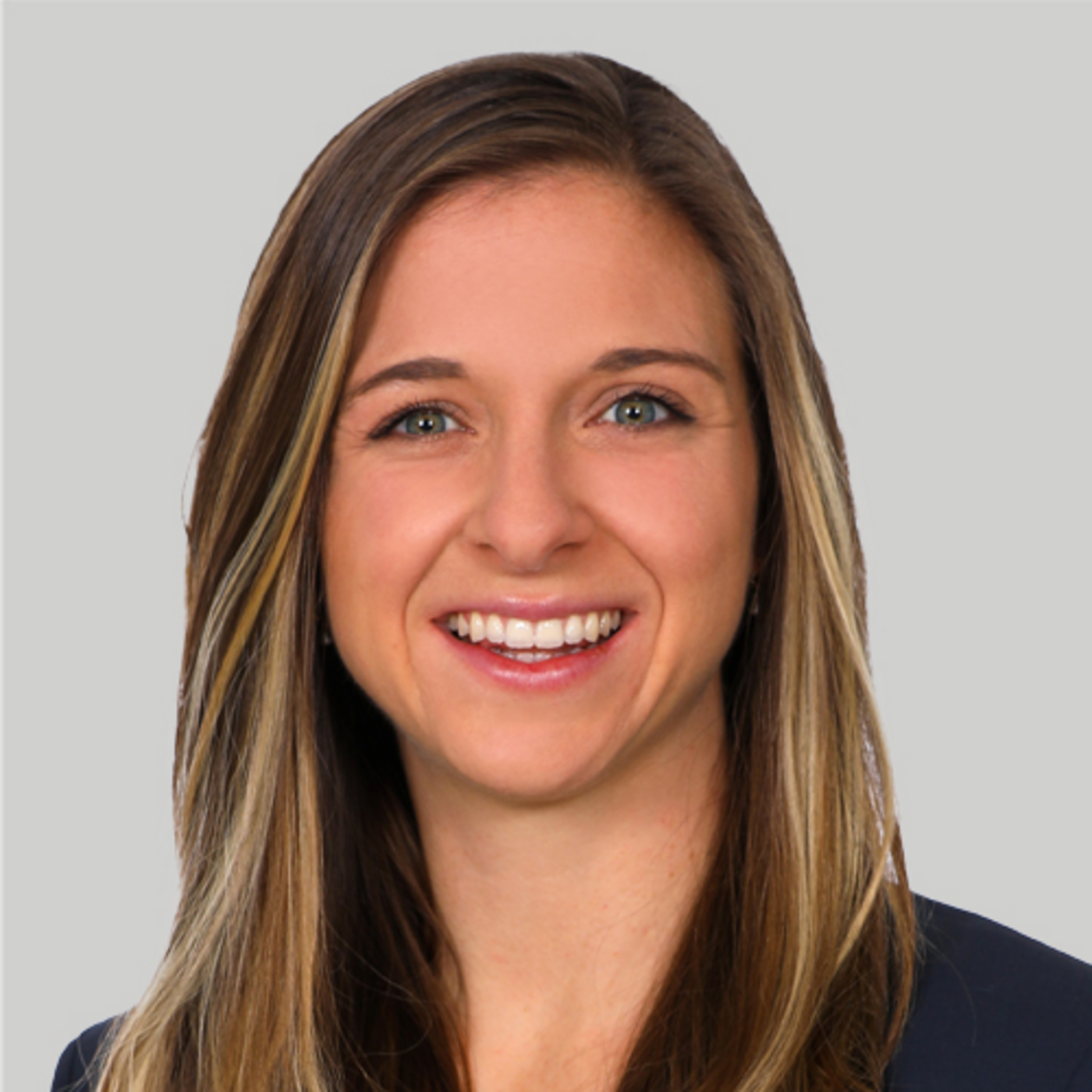
Christine: I’m Aoifinn Devitt, and welcome to the 50 Faces Podcast, a podcast committed to revealing the richness and diversity of the world of investment by focusing on its people and their stories. I’m joined today by Christine Reid, who’s an analyst on the fixed income team at 91 covering Latin American sovereign and currency markets. Based in New York, Christine is responsible for all Latin American coverage and supports the alpha decision-making process across investment capabilities. She previously worked at Goldman Sachs Asset Management and Citigroup. Welcome, Christine. Thanks for joining me today.
Aoifinn Devitt: Hi, Aoifinn. Thank you so much for having me on. I’m so excited to be here with you and your listeners today.
Christine: Well, let’s start with your background and career trajectory. Can you talk about where you grew up, what you studied, and how you came to enter the world of investing?
Aoifinn Devitt: Sure, yeah, I grew up in a small town called Los Gatos, which is in the South Bay Area of California. And while I’m just so grateful for my upbringing, I was such an active kid and my, my mom was always driving me around from activity to activity. And in fact, sports were the catalyst for me ultimately leaving California when I was recruited to run track as an undergrad at Harvard. And when I left California to go to college, I was honestly pretty clueless about the world. When I got on that plane, I really only had a vague idea of where Cambridge, Massachusetts sat on a map. And fast forward a month or two, I’m at my first Harvard-Yale football game. It was 18 degrees. That’s -7 Celsius, snowing out, and I had just a sweatshirt on. So needless to say, I had a lot to figure out about the world and where I was. But I figured it out and I started out my academic career career there, uh, pursuing a degree in engineering, following the footsteps of both my parents. And after a few semesters of picking classes more based off of my interests, I found myself gearing more towards economics. And ultimately I graduated with a degree in economics and a secondary concentration in global health and health policy. So, how did I find myself in the world of finance? I guess just knowing my own personality, loving sports, loving competition, loving dynamic environments. I started to filter through all the different career options that were available. I considered going back to the West Coast and doing corporate finance. I thought about consulting. I thought about investment banking. And in the end, my roommate’s dad, John Carlson, he’s a senior PM at Fidelity. He sat me down with my roommate and over a spaghetti dinner, he taught me what a bond was and he encouraged me to pursue a role in trading. And I did, and I did a shadow visit to a trading floor before I applied. And just being there and feeling the energy, I, I knew that that was the right place for me. It’s a place where I knew I could be basically a professional competitor And working in an environment where, you know, you can’t settle and you have to always continue learning.
Christine: This is great because it takes me right back to one of my follow-up questions, which is— it was not scripted, but I always have to ask when I hear about somebody performing at a high level, in your case track at college level, what you learned from that experience, what it— how formative it was. And it’s really interesting how you link it to trading as well.
Aoifinn Devitt: Yeah. Track is such an amazing sport because it’s so objective. The work that you put in before you arrive to the track directly translates to a number, how fast you can run on that track, how far you can throw that shot put, how high you can jump. So it’s, you don’t have any space for excuses. You can’t blame another teammate. You, it’s, it has nothing to do with the weather. It’s entirely the work that you put in. For preparing for that event. And I think like you really just, you spend 95% of the time when you’re a track athlete training and preparing for your, you know, 12-second event. And I think that’s actually pretty similar to being an investor because it’s really the preparation that you put into your investment thesis and your knowledge and understanding of your product that you’re investing in and the countries that you’re investing in, determines how likely you are to succeed in the trade that you’re doing.
Christine: And in terms of some of the resilience, I suppose, to volatility, you probably practiced in some volatile conditions. Did you find it formed a sense of sort of strength there?
Aoifinn Devitt: Yeah, I mean, I guess most of the time, you know, you’re losing in track. Like, there’s a reason why I didn’t end up at the Olympics, right? It’s a very even playing field with like very open access to it as a sport. So you definitely learn how to fail. And I think that does make you extremely resilient And definitely, this is still something that helps me today.
Christine: So you spoke about learning about bonds over a plate of spaghetti. How did you move from there then? And you clearly like trading. What drew you to emerging markets?
Aoifinn Devitt: So as a part of your economics degree at Harvard, you have to take an advanced course called a sophomore tutorial where you get to choose a specific area of interest within economics and you work more directly in a small group with a professor one-on-one. I chose a course on developmental economics. I ended up writing a paper on usage of contraception and family planning in Thailand in the 1960s and how that subsequent decline in fertility rates ended up having really great outcomes on childhood health and education. Just in general, that class inspired me so much. And I guess going back to the fact that when I showed up at school, I really, I knew I still had a lot to learn outside of that privileged California town that that I, I came from. So it really motivated me to keep exploring the world and to see firsthand what life was like outside of the US. And so that following summer, I signed up for an organization called WorldTeach, and I moved to a small town near Cape Town called Komiki. It’s a beautiful town right by the beach. I was a volunteer teacher there at a local township called Masipumalele. And there I learned a lot and I learned, I think maybe most importantly that this was something that I wanted to keep learning about, that I, that I wanted to continue learning about the developing world. And I guess I, at that point, I had no idea that 12 years later I would end up working at a South African-founded asset management firm called 91, which is where, where I’m working today. And 91 was founded in South Africa in 1991, hence the name, around the time that apartheid was ending. At that time, we were a part of Investec, and in 2020, the asset management division split from Investec and we became 91. But going back to how I got into EM in the first place, there’s, I think, one other important thing to add, which is when I started my career at Citibank in sales and trading, I had no idea anything about finance. Yeah, I did have that spaghetti dinner bond trading. I had read the front page of the Wall Street Journal a few times, but otherwise I was really clueless. And when you’re Choosing what desk to be on in sales and trading, you are kind of choosing between like a bunch of different, very niche roles. If you become a US Treasury or US swap trader, you’re given one node of the curve to become an expert in. So you become an expert in understanding what drives the 2-year node of the US interest rate swap curve. Whereas the EM desk, it’s just a less developed market, which means the scope of products that, you’re trading and learning about is so much bigger because EM is really just a microcosm of the entire financial market. So by joining the EM desk, I knew I could learn about bonds, swaps, FX, credit, options, and not just in one country, but dozens or more countries. So for me, it was a no-brainer. EM was fun. It’s, it’s a volatile asset class. It’s rooted in real-world economics, and I was able to learn just about a really broad set of asset types.
Christine: It’s interesting, I had a very similar experience practicing law in emerging markets. There was definitely more scope for creativity because perhaps it was less mapped out. As you mentioned, there was more kind of scope for needing to not necessarily rely on precedent, but to actually create your own, which is great. And you made the transition also from the trading floor to the buy side. Was that a different mindset required for that?
Aoifinn Devitt: Yeah, absolutely. On the trading floor, I think that the most important thing I learned was how to take risk. I remember I was 2 weeks onto the job, and I’ve said this a couple times at this point, I had no idea what I was doing. I was really just figuring out, you know, what was important and how to not lose money. And 2 weeks onto the job, my new boss asked me what my favorite trade was, what risk I had on. And I told him I didn’t have anything on. I, I didn’t know what I was doing. And he scolded me and he told me that, Next time he asked that question, I can never answer it that way. That over the next 2 years, I can move any position that I had that was losing money into his risk book, and that he expected me to lose him $2 million over the next year, but to make him $40 million over the next 4 years. That’s just an incredible environment for learning how to take risk in a really comfortable setting. I just feel really lucky to have had that in my first year of my career. I think it’s very hard to replicate that type of environment. You’re completely right. You learn an entirely different skillset on the buy side than on the sell side. And for me, switching from the sell side to the buy side was motivated by a desire to take on a longer-term investment horizon on the assets that I was trading and to learn more about how those assets related to the underlying economics on the ground in these countries. So I was really grateful after working at Citi, I joined our client GSAM, and there I, I sat next to some really seasoned emerging market economists, and I basically spent all day just picking their brains every day about how these economies worked.
Christine: And let’s dive in a little bit now to some of the, the kind of the information on the ground there, I suppose. Can you paint a picture of how the central banks in those regions have handled inflation? Because we are obsessed with that here, but there seems to be a narrative that, well, because emerging markets have always had to battle with inflation, they may be somewhat better placed to do that today.
Aoifinn Devitt: Yeah, thanks for asking that. I think it’s such an interesting question. I think it paints such a compelling picture for why emerging market countries may actually be in a far better position than developed market countries like the US might even be at managing high inflation. So taking a step back, I guess what happened to emerging markets during COVID I guess first of all, you know, you have a massive shutdown of your economies, huge slowdown, and policymakers responded to that. Then they responded to that with pretty substantial fiscal support. So on average in 2020, the fiscal support was a 3.5% of GDP package. In Brazil, for example, that number was over 6% of GDP. I mean, this is very large. Debt to GDP increased by over 10% for EM ex-China, which is the largest increase ever. And central banks joined in too on providing support. So they slashed rates, and at one point EM credit to GDP increased to levels as high as what we see in, in developed markets, like 100% of GDP, which is very high. So, but unlike developed markets and some of our, our low-yielding, like higher-quality emerging markets, High-yielding emerging market countries have a legacy of really high debt, and they know that they have to deal straight on with a trade-off between fiscal and monetary support and financial stability. So what did those countries do to ensure financial stability? Well, I guess first, countries pulled back on their fiscal stimulus. So as economies reopened in 2021, the fiscal packages that were delivered in 2020 started to be unwound. So I gave an ex— the example of Brazil earlier coming to that, Brazil tightened their fiscal by over 8% of GDP in 2021, reversing the entire prior year stimulus, which is really impressive. And then the next thing that they did was emerging market central banks started aggressively hiking. So as a group, the emerging market policy central banks increased their policy rate from a trough of around 2% at the end of 2020 to 7% by the end of 2022. That’s 100 basis points more tightening than the developed markets. Developed markets only started tightening a year after emerging markets started tightening. So it was early and it was really aggressive. And that worked. It worked really well in 2020 and 2021. We saw emerging market current accounts improve a lot. You had slower growth. Causing a contraction of imports, but also the high rates did a very good job of keeping capital in the country. And you saw private sector savings increase a lot, and that creates a really strong buffer for these economies to weather the storm. And you saw that through 2022 that private sector savings were a buffer for individuals in emerging markets to continue consuming despite having very high rates for lending. Why did emerging markets do this better than developed markets? I think there’s two main reasons. First, you mentioned this earlier, emerging markets have a lot of experience with hike cycles. So going back to Brazil as our example, since 2000, how many hike cycles do you think they’ve done? 7 hike cycles. And the magnitude of those hike cycles is huge in each one of them. In Chile, how many hike cycles have they had since 2006 versus the US? 3. So really since 2000, the US has a very, very limited experience with what a central bank tightening monetary policy looks like. While emerging market central banks have been doing this on repeat for decades. I think the other thing the central banks in emerging markets kind of had a leg up on was managing supply-side-driven inflation. This was really important last year because when the war between Russia and Ukraine broke out, you had a huge shock to supply chains, which drove up oil prices. It drove up food prices. That’s something that developed market economies— that’s a shock that developed market economies really haven’t experienced before. Whereas in emerging markets, you have that type of disruption more frequently than we would want. And the inflation baskets in emerging markets can sometimes be as high as 30% or even 50% food and commodities. So central banks in emerging markets have a lot of experience with knowing how to deal with supply-side inflation. They know that monetary policy needs to respond to supply-side inflation very similarly to how you have to respond to demand-side inflation.
Christine: It’s interesting because I guess then you could say inflation is kind of one of those known unknowns out there, or known— whether it’s known known or known unknown. But there are infinite amounts of unknown unknowns, I suppose, in emerging markets. The additional complexity, the challenge in not being on the ground and feeling that you’re an outsider because perhaps you’re not on the ground and not intimately involved in some of the decision-making or the policy. How do you ensure that you get that level of granular detail? Do you spend a lot of time on the ground in the countries? Do you have local representatives speaking the language, how do you do the due diligence you need to do?
Aoifinn Devitt: Yeah, thanks. So I guess first off, like, what are emerging markets or what is our investable universe within emerging markets fixed income? So we have 30 different local bond markets that we can invest in. Within that, you can invest in either bonds or swaps. We have 40 currency markets that we can invest in. We’ve got 70 hard currency sovereign issuers. And if you look at the corporate side, there’s over 800 bond issuers in our index. So it is a huge asset class. So the, the scope, the breadth of the asset class is overwhelming almost. And how do we tackle that? You really have to have quantitative tools on your side. This is so critical to keeping up with data as it’s coming in. It’s also critical because the investment community in emerging markets has become quite sophisticated. So if you’re not using the quantitative tools that are available to you, you’re going to be missing out on information that you need to have edge on the market. And an example of that is that, you know, maybe 10 years ago we might have just looked at an inflation print as it printed, said, oh, headline inflation and core inflation are going lower. Here are the components. I have sort of an opinion on them and moved on. Oh, you know, inflation’s going lower, therefore I should receive rates. Today, if you wait until you realize inflation to put a trade on, you’re late to the trade. So we built our nowcasts that scrape live data, real-time prices from the internet using sources that we pay for, using commodity prices, using known persistence in different inflation components. And we have kind of a short-term model for helping predict inflation using our quantitative tools. If we didn’t have that, basically the, the market would eat your lunch. So I think quantitative tools is really the answer to being able to cover such an extraordinarily large investment universe. That said, you really do need to marry that quantitative toolkit with a layer of judgment, which requires really in-depth qualitative analysis. Here’s where visiting the countries in person is extremely important. And I think that that’s where you can’t visit a country enough times in a year to have that be your sole source of information for making an investment decision. But it can be a time where you do a really deep dive analysis of the country and understand what the different structural changes are that are occurring in a country. And this is especially important now that we’re spending so much time understanding the different social and environmental conditions on the ground in our countries. It’s a lot easier to assess those vulnerabilities when you’re there in person than it is through our traditional toolkit.
Christine: And that’s a great segue to the issue of sustainability criteria, because of course that is now, I’d say, starting to dominate perhaps the investment landscape in Europe, at least around equity investing and increasingly moving into the fixed income arena. How much is that, you think, is there an awareness of that and is that being integrated across the board in the emerging markets that you cover?
Aoifinn Devitt: I think it’s become so important. It’s always played a role in our investment process. Traditionally, governance was the key factor that we focused on. It’s always been a crucial part of investing in emerging markets. You have to really understand the quality of the policymakers who are in office. You have to understand their ability to provide economic stability. Their willingness to incentivize long-term stable investment for their country to help it grow.
Speaker C: Likewise, social factors have always been really important for us. We’ve seen multiple times since COVID how disruptive social protests can be for a thriving economy. And just as importantly, countries with greater access to healthcare, more equal gender representation in the labor market, more formality in the labor market, have better economic outcomes in general, and can weather through shocks to their economy much more easily. COVID was such a big stress test for these types of vulnerabilities and a great snapshot of how important understanding governance and social factors can be. How more recently environmental factors have become more and more important. We know that planet Earth needs to move towards net zero, and most of the growth in, in emissions is coming from emerging markets. So if you want to have an impact on environmental outcomes, if you want to influence decreasing emissions in the world, you have to engage with emerging markets. There’s no way around that. And while historically environmental factors haven’t had that large of an impact on returns, we’re convinced that understanding environmental vulnerabilities and also understanding the immense opportunities that come with transitioning to cleaner energy will provide us with substantial alpha-generating opportunities. So give a couple examples. Uruguay is a great example. Uruguay has has transitioned their energy sources to be 90% renewable energy sources. They used to be an oil importer. This means that years like last year where you had a huge spike in oil prices, which hurt any oil importer, it punished current account deficits, which in turn punishes your currency. It didn’t impact Uruguay. They were in a much, much more resilient starting point. Another aspect to 91’s take on energy transition that I think might be unique relative to our peers is that we tend not to hyperfocus on decreasing our portfolio’s net emissions. And what do I mean by that? We think that it’s way too easy to bring a portfolio’s emissions to zero. You can just switch entirely to service sector companies and just entirely divest from any commodity miner. That’s way too easy, and you’re not really improving the world. What we like to see is a concerted effort of our countries and our companies to committing to an energy transition. This is important because that means that we’re still comfortable with investing in countries or companies who might still be heavy emitters. They’re The truth is that there are some sectors of the, of the economy that are hard to abate emissions. An example of that is Chile. Chile is a really big producer of copper and now lithium. Both of those metals are critically important for the world and its energy transition. It’s important for electrifying our grids, important for creating batteries. If we were to say that we wanted to have our portfolio have zero net emissions, we would be selling Chile’s commodity exporters. That would be creating harm for the world and decreasing investment in the exact companies that need to be producing goods for the world that will help us in our transition.
Christine: Really positive and encouraging, some facts you pointed out there. We are now going to take a short break to speak with the sponsor of this series about what it is that makes them unique. I sat down with Tom Raber of Alvine Capital. So Alvine Capital has a unique business model that you call reverse inquiry. Can you tell us what reverse inquiry means?
Speaker D: When we were marketing or softly marketing funds, we realized that some institutional investors felt that they were being pushed and every call was the same as the one they just had. And we felt that we had to have another approach to institutional investors. And so we tried to really go behind the scenes and ask them, what exactly are you looking for? If you had a dream scenario and you had an opening in your fund, what would you like to have and how would that fund look? And when we got investors to open up and explain to us what they wanted, we then took down all the information we needed and we went out into the market. It’s a pull sale rather than a push sale. You’re actually helping the investor finding something that’s better than they thought they were looking for in the first place.
Christine: In terms of your client base, so you work with a lot of Scandinavian and Northern European institutions. Is there anything on their mind today?
Speaker D: We opened an office in Stockholm last year. We have Nordic roots. We have obviously Nordic-speaking people in London as well. We’ve covered the region for many years. Yes, we know it very well. What are they looking for? What’s happening up in that part of the world is that they’re a leader in anything that’s ESG and impact. Some very large institutions have decided not to do anything at all unless it’s completely intact, completely green. Everyone is looking for good, well-performing private equity and private credit funds. And we’re fortunate that we’re working with both of them in both categories at the moment. We have a very good selection there.
Christine: And now back to the show. One of the areas we haven’t really touched on is geopolitical risk. And I suppose what we have, it’s kind of been filtered through all of the risk-reward assessment. But how do you kind of rate that now? Mentioning we’ve already talked about some of the stability of the institutions relative to their history. Is that always going to be a factor, an unknown in emerging markets?
Speaker C: Yeah, I think globally it’s always going to be an important factor in any investment decision that you make. I mean, like we just talked about, the social aspects of our world are extremely important for investment outcomes. And right now, cyclically, the point that we’re at in the economic cycle is we’ve just come off of a bout of extremely high inflation followed by substantial rate hikes, what we’re going to see is a slowdown in growth. We’re already starting to see a pickup in, in unemployment. Companies are starting to do layoffs. You will cyclically see the economy slow down in response to tighter monetary policy and in some countries tighter fiscal policy. That does create an environment that increases geopolitical risks to some degree because you have increased social risks. I know you just visited Peru, so we’ll use that as an example. But in the past quarter, Peru has undergone a lot of violent protests which erupted after ex-President Castillo’s impeachment and his imprisonment. It was followed by trucker strikes, road blockages, and protesters are now calling for the removal of President Boluarte, who was ex-President Castillo’s vice president. All of the increased prospects of early elections and the protests were economically important. For example, the Las Bambas copper mine had to suspend its operations. They’re extremely important to Peru’s economy. Moody’s has now revised its outlook to negative because of the increased political risks which have a big impact on the outlook for growth in Peru. Luckily, in Peru, we’re pretty convinced that the country is moving past the worst of this tumultuous period. The protests have receded, as, as you saw, and it appears unlikely to pick up again in the short term, which pushes back the prospects of elections, early elections, until 2024 or even after 2025. So we see the political risk moderating there, at least in the short to medium term, which should help growth bounce back.
Christine: And just building on the question about sustainability, ESG, a big part of that is diversity. What have you seen in your career in terms of starting out on the trading floor, being in an area, maybe emerging market debt may not be particularly diverse. What has your experience of diversity in the industry been and how have you seen it evolve throughout the course of your career?
Speaker C: Yeah, I mean, first of all, I’ll say that I have had a ton of support in my career. I think actually at this point, being a female investor gives you a leg up. I’m given a lot of opportunities because people want to see female representation. So I’m encouraged by that. But I do think sadly, this is still a really big problem and it’s hard to put your finger on exactly why it’s still a problem. I know for sure there’s still a pipeline problem. At the big banks, I think that you have 50/50 representation for incoming analysts, but I don’t think that that’s necessarily true for the broader financial market. And within a couple of years, big banks often see a lot of their best women get recruited away after, after they’re trained and, you know, they join smaller firms that might not have the same diverse pipeline coming in. So you really need more, better than a 50/50 representation in your pipeline if in 5 years you want to maintain 50/50 representation. And then I think there’s a more complicated dynamic just in labor market structure, which is just that it’s very difficult to scale our jobs back to— say you wanted to scale your job from 100% of the hours you’re currently working to 75% of the hours that you’re working because you’ve had a kid. It’s very difficult to find a job, at least a high-paying job, that you can do that and you can linearly decrease your pay by 75%. Most people, you take more than a 75% cut to your pay. So what this means is that when you have two partners who want to have a kid, it almost always makes more sense for one person to continue operating at 100%, the other person going to zero, because the sum of two people working at 50% is a much lower total comp. I’m not sure how to respond to that. I do think that the structure of the labor market has improved. Flexibility has increased. Working from home is more option. And in general, face time is less of an important thing for employers. So that increased flexibility, I think, could possibly help this dynamic. Interestingly though, and going back to Latin America, when I was an analyst at Citibank and traveling to the local countries and visiting our local branches there, I was always so impressed by the number of country heads that were women. The country head of a local branch is a plays a really important role. I mean, this is senior leadership. I’m not certain what’s the case. For all I know, there are a couple of individuals that we have to thank at Citibank for that. But my hypothesis is that the cost of childcare plays a really important role in determining the economics of when women drop out of the workforce or not. And I think that the cost of childcare is lower in developing economies. So it is a little bit easier. It eats away less of your paycheck to have full-time childcare in some of these countries relative to the US.
Christine: Not the first time we’ve discussed that actually. It is a really interesting dynamic because I actually, my experience of emerging markets, say the finance industry, is that it is a little bit better represented, at least by gender diversity. So really interesting that you’ve also noted the same thing. Just going back to some personal reflections now. So one has to have a fairly strong stomach for investing at emerging markets, I’m sure there have been some highs and some lows. Any particular investment mistakes or setbacks that you learned lessons from?
Speaker C: Yeah, I think understanding what you know and what you don’t know is critically important. And when I look back at some of the mistakes I’ve made, it goes both ways. It’s one, you know, not leaning in when I have conviction, you know, having confidence in what I know. And then on the other side, not understanding when what I know actually only represents a small percent of what’s actually driving the market. I think it’s really important when you can sit back and say, I do not understand what is moving this market right now, and so I do not have to participate in this. It can save you a lot of drawdown.
Christine: Did you have any mentor or sponsor throughout your career that you mentioned having had lots of help or assistance or legs up along the way?
Speaker C: Yeah, I think this is an apprenticeship business. So when I think back on my career so far, I can think of dozens of people who have helped me in really big ways, big ways and small ways. You know, you don’t go from not knowing what a bond is to, you know, a year later making markets in illiquid risky securities without having a leg up from quite a few people. And some of that help is technical, understanding how a bond works and how to trade, but some of it’s also cultural and just helping fit into an environment where you don’t look quite like all the people around you. More recently in my career, I had a mentor who was a senior female partner at Goldman Sachs, and she was amazing because she just had my best interest in mind. She was somebody who, if I had a complicated conversation that I had to have with my manager, it was so helpful to do a dry run with her. She gave me, gave me great feedback and believe me, the second or third time that I said that conversation out loud in real life to my manager, it came out a lot better than the first time I was doing a dry run to her. I think what really amazed me about my relationship with her is just you that, know, she had my best interest in heart up until past the moment of me leaving Goldman Sachs and joining 91, which we both agreed was a great decision for me. He helped me fine-tune how I communicated my departure, and she helped me not burn bridges on my way out. I’m really grateful for that.
Christine: And in terms of any words of wisdom or any motto or creed you’ve picked up, whether from your emerging market travels or otherwise, is there anything you can share there?
Speaker C: I think it’s really important to always feel a little bit uncomfortable, and I’ve noticed the that some of the least happy people in my work environment are the ones who have been in the same role repeating the same task day after day, year after year. Where on the other hand, when I think about the woman or anybody who has had the most successful careers in their lives, they’ve made a lot of jumps. They’ve made a lot of jumps into the unknowns where they were constantly being challenged and frankly constantly feeling uncomfortable. So, I always just try to push myself. If I don’t understand something, lean into it. If it’s, if it’s something that I haven’t done before, you know, say do a podcast, lean into it. It’s gonna be okay. It’s gonna make you a stronger, better person.
Christine: And would that be your advice to your younger self, to that young track star entering the finance world? Is there anything you know now you wish you had known then?
Speaker C: Yeah, I think have confidence in yourself and be yourself. Actually being different than the majority of people in your workplace is an edge, opens up a different frame of mind than the other people surrounding you. And, you know, when conforming isn’t an option because you just are different than the other people, you actually have an advantage to others who are, you know, looking around them for people to emulate. I don’t think you need to do that. I think that it’s an advantage to think about what your core skill set is and lean into that. So be confident in yourself and be okay with being unique.
Christine: Well, thank you so much, Christine. You have what I’ve always thought would be my dream job. I am captivated by emerging markets. I’ve always loved them and their promise. But I will say that it’s a role that is not for everyone. It demands a strong stomach and a resilience and a belief, I think, a core belief belief in what you’re doing when, when many, many market participants would have turned away or thrown in the towel. So thank you so much for opening the door into some of the, the opportunities in the region, to sharing some of the sustainability initiatives we might not have known about, and for sharing your journey with us.
Speaker C: Thank you so much for having me. It was such an honor.
Christine: I’m Aoifinn Devitt. Thank you for listening to the 50 Faces podcast. If you liked what you heard and would like to tune in to hear from more inspiring investors and their stories, series. Please tune in on Apple Podcasts or wherever you get your podcasts. This podcast is for informational purposes only and should not be construed as investment advice, and all views are personal and should not be attributed to the organizations and affiliations of the host or any guest.
Aoifinn Devitt: I did a shadow visit to a trading floor before I applied, and just being there and feeling the energy, I, I knew that that was the right place for me. It’s a place where I knew I could be basically a professional competitor and working in a, an environment where, you know, you can’t settle and you have to always continue learning.
Christine: I’m Aoifinn Devitt, and welcome to the 50 Faces Podcast, a podcast committed to revealing the richness and diversity of the world of investment by focusing on its people and their stories. I’m joined today by Christine Reid, who’s an analyst on the fixed income team at 91 covering Latin American sovereign and currency markets. Based in New York, Christine is responsible for all Latin American coverage and supports the alpha decision-making process across investment capabilities. She previously worked at Goldman Sachs Asset Management and Citigroup. Welcome, Christine. Thanks for joining me today.
Aoifinn Devitt: Hi, Aoifinn. Thank you so much for having me on. I’m so excited to be here with you and your listeners today.
Christine: Well, let’s start with your background and career trajectory. Can you talk about where you grew up, what you studied, and how you came to enter the world of investing?
Aoifinn Devitt: Sure, yeah, I grew up in a small town called Los Gatos, which is in the South Bay Area of California. And while I’m just so grateful for my upbringing, I was such an active kid and my, my mom was always driving me around from activity to activity. And in fact, sports were the catalyst for me ultimately leaving California when I was recruited to run track as an undergrad at Harvard. And when I left California to go to college, I was honestly pretty clueless about the world. When I got on that plane, I really only had a vague idea of where Cambridge, Massachusetts sat on a map. And fast forward a month or two, I’m at my first Harvard-Yale football game. It was 18 degrees. That’s -7 Celsius, snowing out, and I had just a sweatshirt on. So needless to say, I had a lot to figure out about the world and where I was. But I figured it out and I started out my academic career career there, uh, pursuing a degree in engineering, following the footsteps of both my parents. And after a few semesters of picking classes more based off of my interests, I found myself gearing more towards economics. And ultimately I graduated with a degree in economics and a secondary concentration in global health and health policy. So, how did I find myself in the world of finance? I guess just knowing my own personality, loving sports, loving competition, loving dynamic environments. I started to filter through all the different career options that were available. I considered going back to the West Coast and doing corporate finance. I thought about consulting. I thought about investment banking. And in the end, my roommate’s dad, John Carlson, he’s a senior PM at Fidelity. He sat me down with my roommate and over a spaghetti dinner, he taught me what a bond was and he encouraged me to pursue a role in trading. And I did, and I did a shadow visit to a trading floor before I applied. And just being there and feeling the energy, I, I knew that that was the right place for me. It’s a place where I knew I could be basically a professional competitor And working in an environment where, you know, you can’t settle and you have to always continue learning.
Christine: This is great because it takes me right back to one of my follow-up questions, which is— it was not scripted, but I always have to ask when I hear about somebody performing at a high level, in your case track at college level, what you learned from that experience, what it— how formative it was. And it’s really interesting how you link it to trading as well.
Aoifinn Devitt: Yeah. Track is such an amazing sport because it’s so objective. The work that you put in before you arrive to the track directly translates to a number, how fast you can run on that track, how far you can throw that shot put, how high you can jump. So it’s, you don’t have any space for excuses. You can’t blame another teammate. You, it’s, it has nothing to do with the weather. It’s entirely the work that you put in. For preparing for that event. And I think like you really just, you spend 95% of the time when you’re a track athlete training and preparing for your, you know, 12-second event. And I think that’s actually pretty similar to being an investor because it’s really the preparation that you put into your investment thesis and your knowledge and understanding of your product that you’re investing in and the countries that you’re investing in, determines how likely you are to succeed in the trade that you’re doing.
Christine: And in terms of some of the resilience, I suppose, to volatility, you probably practiced in some volatile conditions. Did you find it formed a sense of sort of strength there?
Aoifinn Devitt: Yeah, I mean, I guess most of the time, you know, you’re losing in track. Like, there’s a reason why I didn’t end up at the Olympics, right? It’s a very even playing field with like very open access to it as a sport. So you definitely learn how to fail. And I think that does make you extremely resilient And definitely, this is still something that helps me today.
Christine: So you spoke about learning about bonds over a plate of spaghetti. How did you move from there then? And you clearly like trading. What drew you to emerging markets?
Aoifinn Devitt: So as a part of your economics degree at Harvard, you have to take an advanced course called a sophomore tutorial where you get to choose a specific area of interest within economics and you work more directly in a small group with a professor one-on-one. I chose a course on developmental economics. I ended up writing a paper on usage of contraception and family planning in Thailand in the 1960s and how that subsequent decline in fertility rates ended up having really great outcomes on childhood health and education. Just in general, that class inspired me so much. And I guess going back to the fact that when I showed up at school, I really, I knew I still had a lot to learn outside of that privileged California town that that I, I came from. So it really motivated me to keep exploring the world and to see firsthand what life was like outside of the US. And so that following summer, I signed up for an organization called WorldTeach, and I moved to a small town near Cape Town called Komiki. It’s a beautiful town right by the beach. I was a volunteer teacher there at a local township called Masipumalele. And there I learned a lot and I learned, I think maybe most importantly that this was something that I wanted to keep learning about, that I, that I wanted to continue learning about the developing world. And I guess I, at that point, I had no idea that 12 years later I would end up working at a South African-founded asset management firm called 91, which is where, where I’m working today. And 91 was founded in South Africa in 1991, hence the name, around the time that apartheid was ending. At that time, we were a part of Investec, and in 2020, the asset management division split from Investec and we became 91. But going back to how I got into EM in the first place, there’s, I think, one other important thing to add, which is when I started my career at Citibank in sales and trading, I had no idea anything about finance. Yeah, I did have that spaghetti dinner bond trading. I had read the front page of the Wall Street Journal a few times, but otherwise I was really clueless. And when you’re Choosing what desk to be on in sales and trading, you are kind of choosing between like a bunch of different, very niche roles. If you become a US Treasury or US swap trader, you’re given one node of the curve to become an expert in. So you become an expert in understanding what drives the 2-year node of the US interest rate swap curve. Whereas the EM desk, it’s just a less developed market, which means the scope of products that, you’re trading and learning about is so much bigger because EM is really just a microcosm of the entire financial market. So by joining the EM desk, I knew I could learn about bonds, swaps, FX, credit, options, and not just in one country, but dozens or more countries. So for me, it was a no-brainer. EM was fun. It’s, it’s a volatile asset class. It’s rooted in real-world economics, and I was able to learn just about a really broad set of asset types.
Christine: It’s interesting, I had a very similar experience practicing law in emerging markets. There was definitely more scope for creativity because perhaps it was less mapped out. As you mentioned, there was more kind of scope for needing to not necessarily rely on precedent, but to actually create your own, which is great. And you made the transition also from the trading floor to the buy side. Was that a different mindset required for that?
Aoifinn Devitt: Yeah, absolutely. On the trading floor, I think that the most important thing I learned was how to take risk. I remember I was 2 weeks onto the job, and I’ve said this a couple times at this point, I had no idea what I was doing. I was really just figuring out, you know, what was important and how to not lose money. And 2 weeks onto the job, my new boss asked me what my favorite trade was, what risk I had on. And I told him I didn’t have anything on. I, I didn’t know what I was doing. And he scolded me and he told me that, Next time he asked that question, I can never answer it that way. That over the next 2 years, I can move any position that I had that was losing money into his risk book, and that he expected me to lose him $2 million over the next year, but to make him $40 million over the next 4 years. That’s just an incredible environment for learning how to take risk in a really comfortable setting. I just feel really lucky to have had that in my first year of my career. I think it’s very hard to replicate that type of environment. You’re completely right. You learn an entirely different skillset on the buy side than on the sell side. And for me, switching from the sell side to the buy side was motivated by a desire to take on a longer-term investment horizon on the assets that I was trading and to learn more about how those assets related to the underlying economics on the ground in these countries. So I was really grateful after working at Citi, I joined our client GSAM, and there I, I sat next to some really seasoned emerging market economists, and I basically spent all day just picking their brains every day about how these economies worked.
Christine: And let’s dive in a little bit now to some of the, the kind of the information on the ground there, I suppose. Can you paint a picture of how the central banks in those regions have handled inflation? Because we are obsessed with that here, but there seems to be a narrative that, well, because emerging markets have always had to battle with inflation, they may be somewhat better placed to do that today.
Aoifinn Devitt: Yeah, thanks for asking that. I think it’s such an interesting question. I think it paints such a compelling picture for why emerging market countries may actually be in a far better position than developed market countries like the US might even be at managing high inflation. So taking a step back, I guess what happened to emerging markets during COVID I guess first of all, you know, you have a massive shutdown of your economies, huge slowdown, and policymakers responded to that. Then they responded to that with pretty substantial fiscal support. So on average in 2020, the fiscal support was a 3.5% of GDP package. In Brazil, for example, that number was over 6% of GDP. I mean, this is very large. Debt to GDP increased by over 10% for EM ex-China, which is the largest increase ever. And central banks joined in too on providing support. So they slashed rates, and at one point EM credit to GDP increased to levels as high as what we see in, in developed markets, like 100% of GDP, which is very high. So, but unlike developed markets and some of our, our low-yielding, like higher-quality emerging markets, High-yielding emerging market countries have a legacy of really high debt, and they know that they have to deal straight on with a trade-off between fiscal and monetary support and financial stability. So what did those countries do to ensure financial stability? Well, I guess first, countries pulled back on their fiscal stimulus. So as economies reopened in 2021, the fiscal packages that were delivered in 2020 started to be unwound. So I gave an ex— the example of Brazil earlier coming to that, Brazil tightened their fiscal by over 8% of GDP in 2021, reversing the entire prior year stimulus, which is really impressive. And then the next thing that they did was emerging market central banks started aggressively hiking. So as a group, the emerging market policy central banks increased their policy rate from a trough of around 2% at the end of 2020 to 7% by the end of 2022. That’s 100 basis points more tightening than the developed markets. Developed markets only started tightening a year after emerging markets started tightening. So it was early and it was really aggressive. And that worked. It worked really well in 2020 and 2021. We saw emerging market current accounts improve a lot. You had slower growth. Causing a contraction of imports, but also the high rates did a very good job of keeping capital in the country. And you saw private sector savings increase a lot, and that creates a really strong buffer for these economies to weather the storm. And you saw that through 2022 that private sector savings were a buffer for individuals in emerging markets to continue consuming despite having very high rates for lending. Why did emerging markets do this better than developed markets? I think there’s two main reasons. First, you mentioned this earlier, emerging markets have a lot of experience with hike cycles. So going back to Brazil as our example, since 2000, how many hike cycles do you think they’ve done? 7 hike cycles. And the magnitude of those hike cycles is huge in each one of them. In Chile, how many hike cycles have they had since 2006 versus the US? 3. So really since 2000, the US has a very, very limited experience with what a central bank tightening monetary policy looks like. While emerging market central banks have been doing this on repeat for decades. I think the other thing the central banks in emerging markets kind of had a leg up on was managing supply-side-driven inflation. This was really important last year because when the war between Russia and Ukraine broke out, you had a huge shock to supply chains, which drove up oil prices. It drove up food prices. That’s something that developed market economies— that’s a shock that developed market economies really haven’t experienced before. Whereas in emerging markets, you have that type of disruption more frequently than we would want. And the inflation baskets in emerging markets can sometimes be as high as 30% or even 50% food and commodities. So central banks in emerging markets have a lot of experience with knowing how to deal with supply-side inflation. They know that monetary policy needs to respond to supply-side inflation very similarly to how you have to respond to demand-side inflation.
Christine: It’s interesting because I guess then you could say inflation is kind of one of those known unknowns out there, or known— whether it’s known known or known unknown. But there are infinite amounts of unknown unknowns, I suppose, in emerging markets. The additional complexity, the challenge in not being on the ground and feeling that you’re an outsider because perhaps you’re not on the ground and not intimately involved in some of the decision-making or the policy. How do you ensure that you get that level of granular detail? Do you spend a lot of time on the ground in the countries? Do you have local representatives speaking the language, how do you do the due diligence you need to do?
Aoifinn Devitt: Yeah, thanks. So I guess first off, like, what are emerging markets or what is our investable universe within emerging markets fixed income? So we have 30 different local bond markets that we can invest in. Within that, you can invest in either bonds or swaps. We have 40 currency markets that we can invest in. We’ve got 70 hard currency sovereign issuers. And if you look at the corporate side, there’s over 800 bond issuers in our index. So it is a huge asset class. So the, the scope, the breadth of the asset class is overwhelming almost. And how do we tackle that? You really have to have quantitative tools on your side. This is so critical to keeping up with data as it’s coming in. It’s also critical because the investment community in emerging markets has become quite sophisticated. So if you’re not using the quantitative tools that are available to you, you’re going to be missing out on information that you need to have edge on the market. And an example of that is that, you know, maybe 10 years ago we might have just looked at an inflation print as it printed, said, oh, headline inflation and core inflation are going lower. Here are the components. I have sort of an opinion on them and moved on. Oh, you know, inflation’s going lower, therefore I should receive rates. Today, if you wait until you realize inflation to put a trade on, you’re late to the trade. So we built our nowcasts that scrape live data, real-time prices from the internet using sources that we pay for, using commodity prices, using known persistence in different inflation components. And we have kind of a short-term model for helping predict inflation using our quantitative tools. If we didn’t have that, basically the, the market would eat your lunch. So I think quantitative tools is really the answer to being able to cover such an extraordinarily large investment universe. That said, you really do need to marry that quantitative toolkit with a layer of judgment, which requires really in-depth qualitative analysis. Here’s where visiting the countries in person is extremely important. And I think that that’s where you can’t visit a country enough times in a year to have that be your sole source of information for making an investment decision. But it can be a time where you do a really deep dive analysis of the country and understand what the different structural changes are that are occurring in a country. And this is especially important now that we’re spending so much time understanding the different social and environmental conditions on the ground in our countries. It’s a lot easier to assess those vulnerabilities when you’re there in person than it is through our traditional toolkit.
Christine: And that’s a great segue to the issue of sustainability criteria, because of course that is now, I’d say, starting to dominate perhaps the investment landscape in Europe, at least around equity investing and increasingly moving into the fixed income arena. How much is that, you think, is there an awareness of that and is that being integrated across the board in the emerging markets that you cover?
Aoifinn Devitt: I think it’s become so important. It’s always played a role in our investment process. Traditionally, governance was the key factor that we focused on. It’s always been a crucial part of investing in emerging markets. You have to really understand the quality of the policymakers who are in office. You have to understand their ability to provide economic stability. Their willingness to incentivize long-term stable investment for their country to help it grow.
Speaker C: Likewise, social factors have always been really important for us. We’ve seen multiple times since COVID how disruptive social protests can be for a thriving economy. And just as importantly, countries with greater access to healthcare, more equal gender representation in the labor market, more formality in the labor market, have better economic outcomes in general, and can weather through shocks to their economy much more easily. COVID was such a big stress test for these types of vulnerabilities and a great snapshot of how important understanding governance and social factors can be. How more recently environmental factors have become more and more important. We know that planet Earth needs to move towards net zero, and most of the growth in, in emissions is coming from emerging markets. So if you want to have an impact on environmental outcomes, if you want to influence decreasing emissions in the world, you have to engage with emerging markets. There’s no way around that. And while historically environmental factors haven’t had that large of an impact on returns, we’re convinced that understanding environmental vulnerabilities and also understanding the immense opportunities that come with transitioning to cleaner energy will provide us with substantial alpha-generating opportunities. So give a couple examples. Uruguay is a great example. Uruguay has has transitioned their energy sources to be 90% renewable energy sources. They used to be an oil importer. This means that years like last year where you had a huge spike in oil prices, which hurt any oil importer, it punished current account deficits, which in turn punishes your currency. It didn’t impact Uruguay. They were in a much, much more resilient starting point. Another aspect to 91’s take on energy transition that I think might be unique relative to our peers is that we tend not to hyperfocus on decreasing our portfolio’s net emissions. And what do I mean by that? We think that it’s way too easy to bring a portfolio’s emissions to zero. You can just switch entirely to service sector companies and just entirely divest from any commodity miner. That’s way too easy, and you’re not really improving the world. What we like to see is a concerted effort of our countries and our companies to committing to an energy transition. This is important because that means that we’re still comfortable with investing in countries or companies who might still be heavy emitters. They’re The truth is that there are some sectors of the, of the economy that are hard to abate emissions. An example of that is Chile. Chile is a really big producer of copper and now lithium. Both of those metals are critically important for the world and its energy transition. It’s important for electrifying our grids, important for creating batteries. If we were to say that we wanted to have our portfolio have zero net emissions, we would be selling Chile’s commodity exporters. That would be creating harm for the world and decreasing investment in the exact companies that need to be producing goods for the world that will help us in our transition.
Christine: Really positive and encouraging, some facts you pointed out there. We are now going to take a short break to speak with the sponsor of this series about what it is that makes them unique. I sat down with Tom Raber of Alvine Capital. So Alvine Capital has a unique business model that you call reverse inquiry. Can you tell us what reverse inquiry means?
Speaker D: When we were marketing or softly marketing funds, we realized that some institutional investors felt that they were being pushed and every call was the same as the one they just had. And we felt that we had to have another approach to institutional investors. And so we tried to really go behind the scenes and ask them, what exactly are you looking for? If you had a dream scenario and you had an opening in your fund, what would you like to have and how would that fund look? And when we got investors to open up and explain to us what they wanted, we then took down all the information we needed and we went out into the market. It’s a pull sale rather than a push sale. You’re actually helping the investor finding something that’s better than they thought they were looking for in the first place.
Christine: In terms of your client base, so you work with a lot of Scandinavian and Northern European institutions. Is there anything on their mind today?
Speaker D: We opened an office in Stockholm last year. We have Nordic roots. We have obviously Nordic-speaking people in London as well. We’ve covered the region for many years. Yes, we know it very well. What are they looking for? What’s happening up in that part of the world is that they’re a leader in anything that’s ESG and impact. Some very large institutions have decided not to do anything at all unless it’s completely intact, completely green. Everyone is looking for good, well-performing private equity and private credit funds. And we’re fortunate that we’re working with both of them in both categories at the moment. We have a very good selection there.
Christine: And now back to the show. One of the areas we haven’t really touched on is geopolitical risk. And I suppose what we have, it’s kind of been filtered through all of the risk-reward assessment. But how do you kind of rate that now? Mentioning we’ve already talked about some of the stability of the institutions relative to their history. Is that always going to be a factor, an unknown in emerging markets?
Speaker C: Yeah, I think globally it’s always going to be an important factor in any investment decision that you make. I mean, like we just talked about, the social aspects of our world are extremely important for investment outcomes. And right now, cyclically, the point that we’re at in the economic cycle is we’ve just come off of a bout of extremely high inflation followed by substantial rate hikes, what we’re going to see is a slowdown in growth. We’re already starting to see a pickup in, in unemployment. Companies are starting to do layoffs. You will cyclically see the economy slow down in response to tighter monetary policy and in some countries tighter fiscal policy. That does create an environment that increases geopolitical risks to some degree because you have increased social risks. I know you just visited Peru, so we’ll use that as an example. But in the past quarter, Peru has undergone a lot of violent protests which erupted after ex-President Castillo’s impeachment and his imprisonment. It was followed by trucker strikes, road blockages, and protesters are now calling for the removal of President Boluarte, who was ex-President Castillo’s vice president. All of the increased prospects of early elections and the protests were economically important. For example, the Las Bambas copper mine had to suspend its operations. They’re extremely important to Peru’s economy. Moody’s has now revised its outlook to negative because of the increased political risks which have a big impact on the outlook for growth in Peru. Luckily, in Peru, we’re pretty convinced that the country is moving past the worst of this tumultuous period. The protests have receded, as, as you saw, and it appears unlikely to pick up again in the short term, which pushes back the prospects of elections, early elections, until 2024 or even after 2025. So we see the political risk moderating there, at least in the short to medium term, which should help growth bounce back.
Christine: And just building on the question about sustainability, ESG, a big part of that is diversity. What have you seen in your career in terms of starting out on the trading floor, being in an area, maybe emerging market debt may not be particularly diverse. What has your experience of diversity in the industry been and how have you seen it evolve throughout the course of your career?
Speaker C: Yeah, I mean, first of all, I’ll say that I have had a ton of support in my career. I think actually at this point, being a female investor gives you a leg up. I’m given a lot of opportunities because people want to see female representation. So I’m encouraged by that. But I do think sadly, this is still a really big problem and it’s hard to put your finger on exactly why it’s still a problem. I know for sure there’s still a pipeline problem. At the big banks, I think that you have 50/50 representation for incoming analysts, but I don’t think that that’s necessarily true for the broader financial market. And within a couple of years, big banks often see a lot of their best women get recruited away after, after they’re trained and, you know, they join smaller firms that might not have the same diverse pipeline coming in. So you really need more, better than a 50/50 representation in your pipeline if in 5 years you want to maintain 50/50 representation. And then I think there’s a more complicated dynamic just in labor market structure, which is just that it’s very difficult to scale our jobs back to— say you wanted to scale your job from 100% of the hours you’re currently working to 75% of the hours that you’re working because you’ve had a kid. It’s very difficult to find a job, at least a high-paying job, that you can do that and you can linearly decrease your pay by 75%. Most people, you take more than a 75% cut to your pay. So what this means is that when you have two partners who want to have a kid, it almost always makes more sense for one person to continue operating at 100%, the other person going to zero, because the sum of two people working at 50% is a much lower total comp. I’m not sure how to respond to that. I do think that the structure of the labor market has improved. Flexibility has increased. Working from home is more option. And in general, face time is less of an important thing for employers. So that increased flexibility, I think, could possibly help this dynamic. Interestingly though, and going back to Latin America, when I was an analyst at Citibank and traveling to the local countries and visiting our local branches there, I was always so impressed by the number of country heads that were women. The country head of a local branch is a plays a really important role. I mean, this is senior leadership. I’m not certain what’s the case. For all I know, there are a couple of individuals that we have to thank at Citibank for that. But my hypothesis is that the cost of childcare plays a really important role in determining the economics of when women drop out of the workforce or not. And I think that the cost of childcare is lower in developing economies. So it is a little bit easier. It eats away less of your paycheck to have full-time childcare in some of these countries relative to the US.
Christine: Not the first time we’ve discussed that actually. It is a really interesting dynamic because I actually, my experience of emerging markets, say the finance industry, is that it is a little bit better represented, at least by gender diversity. So really interesting that you’ve also noted the same thing. Just going back to some personal reflections now. So one has to have a fairly strong stomach for investing at emerging markets, I’m sure there have been some highs and some lows. Any particular investment mistakes or setbacks that you learned lessons from?
Speaker C: Yeah, I think understanding what you know and what you don’t know is critically important. And when I look back at some of the mistakes I’ve made, it goes both ways. It’s one, you know, not leaning in when I have conviction, you know, having confidence in what I know. And then on the other side, not understanding when what I know actually only represents a small percent of what’s actually driving the market. I think it’s really important when you can sit back and say, I do not understand what is moving this market right now, and so I do not have to participate in this. It can save you a lot of drawdown.
Christine: Did you have any mentor or sponsor throughout your career that you mentioned having had lots of help or assistance or legs up along the way?
Speaker C: Yeah, I think this is an apprenticeship business. So when I think back on my career so far, I can think of dozens of people who have helped me in really big ways, big ways and small ways. You know, you don’t go from not knowing what a bond is to, you know, a year later making markets in illiquid risky securities without having a leg up from quite a few people. And some of that help is technical, understanding how a bond works and how to trade, but some of it’s also cultural and just helping fit into an environment where you don’t look quite like all the people around you. More recently in my career, I had a mentor who was a senior female partner at Goldman Sachs, and she was amazing because she just had my best interest in mind. She was somebody who, if I had a complicated conversation that I had to have with my manager, it was so helpful to do a dry run with her. She gave me, gave me great feedback and believe me, the second or third time that I said that conversation out loud in real life to my manager, it came out a lot better than the first time I was doing a dry run to her. I think what really amazed me about my relationship with her is just you that, know, she had my best interest in heart up until past the moment of me leaving Goldman Sachs and joining 91, which we both agreed was a great decision for me. He helped me fine-tune how I communicated my departure, and she helped me not burn bridges on my way out. I’m really grateful for that.
Christine: And in terms of any words of wisdom or any motto or creed you’ve picked up, whether from your emerging market travels or otherwise, is there anything you can share there?
Speaker C: I think it’s really important to always feel a little bit uncomfortable, and I’ve noticed the that some of the least happy people in my work environment are the ones who have been in the same role repeating the same task day after day, year after year. Where on the other hand, when I think about the woman or anybody who has had the most successful careers in their lives, they’ve made a lot of jumps. They’ve made a lot of jumps into the unknowns where they were constantly being challenged and frankly constantly feeling uncomfortable. So, I always just try to push myself. If I don’t understand something, lean into it. If it’s, if it’s something that I haven’t done before, you know, say do a podcast, lean into it. It’s gonna be okay. It’s gonna make you a stronger, better person.
Christine: And would that be your advice to your younger self, to that young track star entering the finance world? Is there anything you know now you wish you had known then?
Speaker C: Yeah, I think have confidence in yourself and be yourself. Actually being different than the majority of people in your workplace is an edge, opens up a different frame of mind than the other people surrounding you. And, you know, when conforming isn’t an option because you just are different than the other people, you actually have an advantage to others who are, you know, looking around them for people to emulate. I don’t think you need to do that. I think that it’s an advantage to think about what your core skill set is and lean into that. So be confident in yourself and be okay with being unique.
Christine: Well, thank you so much, Christine. You have what I’ve always thought would be my dream job. I am captivated by emerging markets. I’ve always loved them and their promise. But I will say that it’s a role that is not for everyone. It demands a strong stomach and a resilience and a belief, I think, a core belief belief in what you’re doing when, when many, many market participants would have turned away or thrown in the towel. So thank you so much for opening the door into some of the, the opportunities in the region, to sharing some of the sustainability initiatives we might not have known about, and for sharing your journey with us.
Speaker C: Thank you so much for having me. It was such an honor.
Christine: I’m Aoifinn Devitt. Thank you for listening to the 50 Faces podcast. If you liked what you heard and would like to tune in to hear from more inspiring investors and their stories, series. Please tune in on Apple Podcasts or wherever you get your podcasts. This podcast is for informational purposes only and should not be construed as investment advice, and all views are personal and should not be attributed to the organizations and affiliations of the host or any guest.