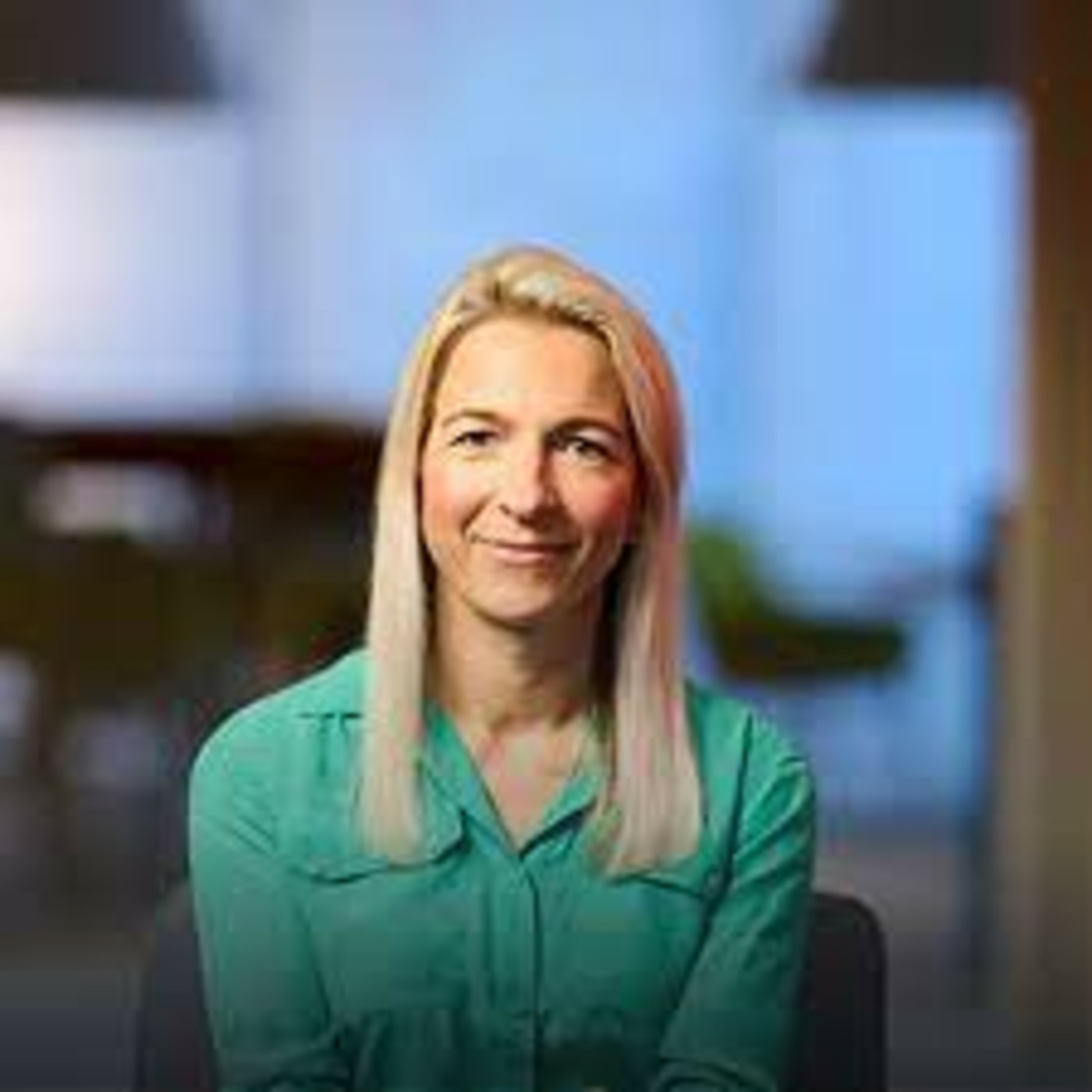
Aoifinn Devitt: This bonus series is kindly supported by Soundmark Partners. Soundmark Partners LLC is a women-owned and led private credit firm focused on commercial real estate. In this podcast, we are exploring what kind of impact we can achieve from a listed equity fund and what it means to focus on funds that create positive change. We dig in a little to what positive change can be, whether the development of vaccines or the development of recycling technology. Let’s hear from Kate Fox of Baillie Gifford. I’m Eefan Devitt, and welcome to the 50 Faces podcast, a podcast committed to revealing the richness and diversity of the world of investment. By focusing on its people and their stories. I’m joined today by Kate Fox, who is a partner and investment manager at Beta Gifford based in Edinburgh, where she has worked for over 20 years since joining the firm’s graduate training program in 2002. Throughout her career, she has analyzed a variety of growth companies, fostering her natural enthusiasm for businesses that address unmet needs or challenge the status quo. Recognizing the potential for positive impact alongside attractive returns, she spearheads Beta Gifford’s positive change strategy, centered on identifying and investing in a concentrated global portfolio of exceptional growth companies driving meaningful change in the world. Kate’s commitment and expertise resulted in her becoming a partner in 2020. Alongside her professional achievements, Kate’s a mother to 3 children and believes the financial community plays a crucial role in creating a more sustainable world for future generations. Welcome, Kate. Thanks for joining me today.
Kate Fox: Hello, Eben. Thanks for having me. It’s great to be here.
Aoifinn Devitt: Well, we know from the bio that you joined the Graduate Trainee Programme in 2002, but can you give us a little bit more of your background? Where did you grow up? What did you study, and how did Batey Giffords appeal to you in the first place?
Kate Fox: Sure. Well, I grew up in a small village in the northeast of Scotland near the city of Aberdeen. I started off attending the village school, which just had 40 pupils before I moved into a school in the city. There I discovered my love of maths and physics. So I went on to the University of Edinburgh, so just venturing 2 hours south of Aberdeen, to study economics and maths. And in studying that, I thought I probably had 2 career pathways to follow, either in teaching or in finance. And I wasn’t convinced that teaching was for me, so I set about trying to fathom out the world of finance because it’s such a broad area. And I really didn’t know the difference between accountancy versus actuarial studies, or the difference between an investment bank or an investment manager. So in trying to set about finding out about the different opportunities, I attended a number of the milk rounds where I enjoyed the free drinks and the free wine, but I thought that the best way to understand it was to get out there and get some real-world experience. So that’s probably where the approach was quite deliberate, but thereafter it was really down to serendipity that I found investment management and Baillie Gifford. And it was through a conversation with a friend from the village at home one evening who had actually temped at Baillie Gifford and said, I think this looks like a nice company to work for, you might want to drop them a line, that really led me to where I am today. So I wrote them a letter to ask if they would offer me some summer work. That led to some conversations, a summer internship, and at the end of the summer internship, them offering me a job on the graduate trainee program. I think through that internship, it helped me understand a little bit more about what the world of investment management entails, and also, helped me learn about a company, and I, I loved the people that I met, and I, I loved the culture and the vibe.
Aoifinn Devitt: Ah, those days of the wine and the milk round. I remember them well myself. I hope they still exist for the current graduates because there was nothing really like them. But just the, the sheer exhilaration that I think came from being exposed to the real world— there was such excitement about joining it. And I do think those trainee programs, as you mentioned, are, are fantastic because of the all-round education they give So moving now to your work in impact investing, how did that first develop for you, the interest in that, and how do you think about impact? What does it mean to you?
Kate Fox: Yeah, so I think that actually my desire to sort of have a real-world impact has always been there, but I wasn’t quite sure how to deploy that, how to execute on it. So in the world of investment management, we are trying to grow savings on behalf of individuals, charities, foundations, and endowments. So we are driving a real-world impact in, in that way. But you often are quite far removed from the end beneficiaries. And I often thought, could I be doing more? Know, You I’d speak to my friends who were nurses or teachers or surgeons, and I thought, should I be having a broader impact on society beyond growing capital? I think at that point I was a little bit naive because I was really missing the point that it’s not just about growing savings for people and, and charities and foundations. But you can actually have an impact through where you deploy that capital. So that’s when the idea of positive change strategy that I now work on came about. It really was a light bulb moment for me because now I could really appreciate how I could both deliver the attractive returns for clients but also contribute towards a more sustainable, more inclusive world. So it was both a light bulb moment and actually a huge sense of relief that I didn’t then have to retrain as a doctor or an engineer to fulfill that desire have a real-world impact. And you asked about what impact means to me. I think it’s really about driving change for the better and improving the status quo. And you can have that impact in a small way or in a large way. So perhaps one way that I could have an impact in a smaller, more local way is by helping people work through a challenge, whether that’s colleagues, friends, or my children even. And then the ability to drive impact at scale is through deploying capital to companies whose products and services are all about providing solutions to global challenges.
Aoifinn Devitt: And before we discuss the product in itself, because I think it’s interesting how you measure impact and how you actually express that through investments, do you think your upbringing in some way informed this desire to, to have an impact, to make a difference in society coming from that smaller village with the smaller school?
Kate Fox: I’m not sure if it goes back to that or if it’s really about that sort of— I’m a problem solver by nature, hence being drawn towards maths. I was possibly influenced by my father, who was an engineer and entrepreneur, so always looking for, for problems that could be solved. My mother probably influenced me a little bit by giving me that sense of responsibility and empowerment, really, in that if I could see an opportunity for change, that the encouragement to just get out there and do something about it. And then I think that desire to have a broader impact on society, I’m not sure that’s something that’s unique to me. I think that’s something that all of us have.
Aoifinn Devitt: Well, let’s talk about then how investment can be an instrument for change. Maybe can you speak about the positive change strategy, as it is called, and how it’s client-driven? I suppose what the response from clients has been and how you expect the area to evolve?
Kate Fox: Yes, so the Positive Change Strategy is a strategy that’s got not just one objective, but two objectives. So we’re looking to deliver attractive financial returns for our clients over meaningful periods of time, and also to help them contribute towards a more sustainable and inclusive world for current and future generations. And we’re doing that by deploying capital towards companies whose products and services are providing a solution to globally recognized challenges. So this is more than avoiding companies doing harm. It is more than investing in companies that act very responsibly. It’s about trying to find those companies that are challenging the status quo. So the likes of a Tesla that is trying to contribute towards the electrification of the automotive sector, or Moderna that’s trying to develop a new paradigm of medicine. And it’s a strategy that’s investing in, in listed businesses. It’s a concentrated strategy. So we’re investing in 30 to 35 companies and it’s a growth strategy because we believe that these companies who are providing solutions to global challenges, that they’re likely to thrive in the long run, that they’ll be growth businesses, there’ll be increasing demand for their products and services, and that they’ll be able to carve out a strong competitive advantage. In terms of the client response, I think the heritage of the strategy is important here in that This was developed by investors because they thought that this was an important way to deploy capital and that we might stand a good chance of, of doing a good job given our heritage as long-term growth investors at Baillie Gifford. We felt it was the right thing to do. It wasn’t so much a reaction, it certainly wasn’t a reaction to growing demand for such a thing. In fact, when we developed this, we didn’t even know what an impact strategy was. We started out with a blank sheet of paper and thought this is the best way to invest. But we’ve been really encouraged by the response of clients who we thought there might have been a little bit more hesitancy around whether you can do both, and that some people might think that you have to relinquish returns in that bid to drive positive change. But actually we’ve had a very positive response, which has been encouraging. And in terms of how this space might evolve, I’m really hopeful that we get more clients deploying capital towards these types of strategies, to the positive change strategy and broader impact strategies, because I think it’s the right thing to do for savers, because it provides that great opportunity to grow capital, and because I believe it’s the right thing for people and planet to deploy capital positively and purposefully. But I think to do that well, we need to make sure that all participants are acting with very high degrees of integrity and doing an exceptional job at it.
Aoifinn Devitt: I love that positive and purposeful focus. When it comes to the positive change, and clearly those companies you mentioned are creating positive change, but how do they measure that explicitly? I mean, yes, take up of EVs, and yes, drug dissemination and vaccine development are all positive change. But do you find that there is a desire to show in a concrete way impact when it comes to investing in an impact strategy?
Kate Fox: Yeah, so when we started out doing this, we established a process that put equal emphasis on both of our objectives throughout. So starting with the idea generation, the analysis, the portfolio construction, and you then, know, once something makes it into the portfolio in terms of the engagement and the reporting. Now reporting on financial returns is well established, but we really wanted to make sure that we reported on the second objective that objective to deliver positive change as well, because we feel that that’s really important because it holds us accountable to that second objective, because clients who are deploying capital this way will want to know what impact their capital is having. And this comes down to the credibility point that I mentioned earlier, is that to do this well and so that more assets are deployed in this way, we need to make sure the industry does a very good job at reporting on the impact that the companies and the portfolios are having. So we think it’s really important, but it’s really difficult. It’s difficult because with the positive change strategy, we have got 4 different themes that we are looking to address, which span environment and resource needs, healthcare and quality of life, social inclusion and education, and the base of the pyramid where we’re looking to meet the unmet and aspirational needs of those poorer people in society. So we’re investing in a range of companies that are delivering, you know, driving change and delivering impact in different ways. So there’s no single metric that we can use, no common metric. Secondly, impact isn’t always easily measured. And then even if it is easily measured, it’s not always disclosed in a consistent fashion. So it’s hard to do, but we think it’s really important. So our approach has been to take a bottom-up approach. So for each and every company, We identify metrics and information that can help us track the progress that they’re making in delivering positive change. And we display that under what is called the Positive Chain, which is based on the theory of change. And we make the linkages between the products and services towards the Sustainable Development Goals and the targets which underpin them. So to summarize, it’s hard, but it’s really important.
Aoifinn Devitt: We’re going to take a quick break to hear from our sponsor of this series, Sandmark Partners. I sat down with Jenna Gerstenlauer to talk about their private credit strategy. We talked about the sensitivity of debt to rising rates.
Speaker C: So real estate debt can be fixed or floating. Real estate equity is highly sensitive to interest rate movements. Our area of focus, real estate debt, is naturally sensitive to interest rate movements as well. Property equity values are highly dependent on the ability of a property owner to finance the acquisition. When interest rates are high, the amount of debt a property owner can obtain and support is low due to the cost to pay the debt service on a monthly basis. Debt service is paid out of property loan cash flows, and while a good owner-operator can run a property with efficiency, cash flow growth has its limits. So simply put, when rates are high, equity values are low, and when an owner of a property buys an asset in a low interest rate environment and finances that property at acquisition, when that debt matures and interest rates have risen, that owner is in a position where their property is worth less and they have a problem potentially.
Aoifinn Devitt: And now back to the show. And it certainly seems you’re covering many bases there in terms of reference back to the SDGs as well as other metrics and values that the people may look to. So just one of the aspects where we’d like to see positive change certainly is around diversifying industries and having a more representative body of investors and professionals in the industry. Any thoughts on that, given you have been in this industry for most of your, your entire career? It seems you’ve probably seen some changes, hopefully positive change, in terms of the integration of more women and just more underrepresented groups. Any thoughts on that?
Kate Fox: Yeah, sure. So yeah, over the 20 or so years that I’ve been involved, I really have observed change and positive change. So I think the industry is better now at attracting women. I think there’s still more work to be done on the retaining women throughout their career. What I’m really encouraged by as well is that the conversation is expanding beyond gender diversity and also incorporating diversity in multiple dimensions, whether it’s socioeconomic or ethnic diversity, neurodiversity, all in a bid to make sure that we end up with cognitive diversity, which really is important And I think it’s important because it’s the right thing to do by society, and also because it just makes sense. We’ve got a global and diverse set of clients. We are investing globally. So it’s really important that we have diverse lenses considering the opportunity set, whether that’s by age, gender, ethnicity, background. So for example, some of the younger investors here will see things that I don’t see. So there has been positive change and improvements, but I don’t think we’re We’re there yet, there’s still more to be done, and there are different ways of going about it as well. I think, I think something that I’ve noticed over the 20 years that I’ve been involved in the industry is that there’s now more appreciation of the benefits of diversity and diversity in its broader sense, and more awareness of biases that might exist, both conscious and unconscious.
Aoifinn Devitt: And I think an important part of diversity is allowing it to thrive, not just kind of having it on the entry level at the that graduate trainee program, maybe you mentioned that we’re seeing more interest there. In your case in particular, were there any people or processes maybe that helped you navigate gaining seniority in your career, sticking at it? It’s a challenging career. You mentioned having 3 children, growing as a professional. Do you think with our mentorship circles or other supports?
Kate Fox: Yeah, so there’s been quite a lot that’s been going on to try and address the challenge. And I think that once you’re in, what helps in terms of the retention— there have been a few sort of levers that I think have helped along the way. I think one would be the approach towards flexibility, which is relevant not just for parents but for carers as well, whether it’s people looking after elderly parents or the fact that we’ve now got people that we attract from around the world whose family will be in different places, and they’ll need to have some sort of flexibility to be able to still stay in touch with family. So flexibility has been an important piece, and that really has evolved quite considerably, I’d say, in the last 15 years. Mentoring, as you say, has been important. There’s probably nobody that would have been my official mentor, but I have benefited from having a number of people support and sponsor me along the way in an unofficial capacity, whether that’s helping people— people who helped me when I came back from my third maternity leave, helped me regain my confidence and my sense of direction, people who helped me match my skill set to different opportunities, and then people who really inspired me to execute on those opportunities. Because yes, there’s one thing having the opportunities, but it’s what you do with them that really makes a difference. And there’s mentorship now internally. There are more external mentorship programs, whether that’s the likes of the 30% Club, So there have been various, I think, structures and mindsets and policies and processes that have all helped improve that retention piece.
Aoifinn Devitt: And it’s interesting that you mentioned the confidence deficit upon returning from maternity leave, because I think many workers returning from any form of leave, whether it’s sickness leave or maybe a parental leave, might feel the same thing. And there are even consulting firms who will come in and help with that transition back to work. What did you find was particularly helpful in restoring that confidence, and did any of it come from not completely plugging out during that leave period?
Kate Fox: In terms of restoring the confidence, I think for me it was just— it was speaking to other people and using my own network. But since then, there’s been the development of a carers network here, which has been down to the great work of my colleagues. I didn’t need that, but somebody else spotted this opportunity, and one of our networks now is the carers network, which helps stay in touch with people whilst they’re going through maternity leave and then help some of that transition back. So I think that’s been a terrific development.
Aoifinn Devitt: And just want to ask you in particular about female portfolio managers, because you’ve taken on this role for some years now. That does seem to be somewhere— we’re still in deficit when it comes to people actually running money, and often founders too. Founders of firms are quite underrepresented when it comes to women looking at female founders. Any thoughts on why that portfolio management ascending to that level seems to be a challenge?
Kate Fox: Yeah, I think it’s probably down to two things that we’ve touched on already. So it’s that retention piece because often it requires a bit more, you know, your more experienced levels where people will be setting up funds or thinking about founding businesses. And that experience often coincides with quite life-changing events, whether that’s having children or your parents becoming more dependent upon you. So I think it’s that retention piece, which is also related to flexibility. And because that experience will often coincide with these life events, having that flexibility means that you don’t then need to make a choice between things, and you can actually carry on pursuing those external life events and that career. And that was one of the things that I was really keen to articulate, winding the clock back 10 years ago or you so, know, when requesting flexibility, is that this doesn’t mean I’m less ambitious. I still want to pursue a progressive and motivating career. This isn’t about stepping back, it’s just about doing things slightly differently.
Aoifinn Devitt: And when we look back at your career, when you look back, were there any highs and lows in there so far?
Kate Fox: Oh yes. So I think highs can come in multiple forms. You know, obviously when things are working and you’re delighting clients, that is so rewarding. I think highs can also come through some of the fantastic opportunities that you get as an investment manager, what my friend and colleague would call pinch-me moments, whether that’s the opportunity to present to fantastic audiences in cool locations in New York or speaking to really fascinating people. I mean, one of the pinch-me moments for me that I can recall amongst many of them, but would be speaking to Stéphane Bancel, the CEO of Moderna, in the midst of the pandemic. So I was working from home, we had a Zoom call with him to discuss the longer-term opportunities for Moderna, as well as the progress that they were making in developing the vaccine to address the pandemic. But that was amazing to be able to speak to the leader of a business that was addressing a very immediate and global challenge. So it’s those opportunities that it provides you. And then another area which I think provides highs, certainly for me, is when you can feel that you’re making a difference to colleagues. So when you’re mentoring them and helping them work through their challenges and them— help helping them find their solutions. So there are loads of highs. In terms of the lows, I mean, the obvious ones are where an investment thesis doesn’t quite work out or performance is tougher and you’re not delivering on behalf of your clients. That’s challenging. But I would say that by and large, know, you the highs absolutely outweigh the lows. And I think this role really is a privileged role to have.
Aoifinn Devitt: I’d love to just dig in a little bit to that in terms of what it feels like when performance is not where you think it should be. Because in, especially in the growth area, there’s going to be more volatility, there are going to be moments when that’s out of favor. How do you and how did you, I suppose, kind of build the fortitude to be able to tolerate those more volatile times?
Kate Fox: Yeah, I think there are two things that help in those more volatile times. First of all, it’s having a growth mindset. So when things don’t work out, accepting that and seeing it really as an opportunity for growth and development. So, so what have I learned from that experience? So it’s not about the number of mistakes that you make or the depth of those mistakes, it’s what you do you do with those mistakes, what you learn from them. So first of all, the importance of having that, that growth mindset. And the second thing that I think is important is having a philosophy and a process that you really believe in, because that helps you steer the course.
Aoifinn Devitt: Very well said. Wanted to ask you about some of those setbacks and whether there was any mistakes in particular that you learned lessons from. You mentioned how they can lead you to have more resilience perhaps, or to ultimately each setback certainly steels you for the next one. Were there any lessons learned in particular?
Kate Fox: I think the lessons learned vary by company. One good reminder for me recently has been around the importance of the management team. I think over the course of my career, I’ve appreciated more and more how important management culture and intent are. To the success of a business, but it’s making sure that you have more than the intent and the vision of a management team, but making sure that they are equipped to be able to execute on the opportunity.
Aoifinn Devitt: And you’ve already spoken about not having a particular mentor. So usually I ask the question around mentors or key people, but maybe we can segue that into around any words of wisdom that some of the people you worked with shared with you, any words of advice that really sat with you and you developed as your own creed?
Kate Fox: Yeah, there’s one individual who stands out. You’ll know who he is, but it was, it was around really that importance of the growth mindset. And by that I’m not referring to being a growth investor, but that learning mindset, that mindset that mistakes are opportunities to improve and also the importance of having ambition. I said that individuals along the way have helped inspire me to really grasp the opportunities that are presented. And I remember it was when somebody said to me, go and be the best impact investors you can be, be the best in the world. And that really has stayed with me in terms of that sense of ambition to really reach for the stars.
Aoifinn Devitt: I love that owning of ambition because I think it’s something that we don’t own enough, particularly as women. I had a wonderful conversation with another CIO who grew up in Orlando, Florida. And I made some comments about, well, that must have been a lovely place to grow up. And she said, well, it was a wonderful place to grow up. It was a terrible place to have ambition. And I was just wanted to segue that into asking you, I think it’s wonderful to have ambition. Do you think there are some places that ambition works better than others that you have to find the place where ambition can flourish?
Kate Fox: Yeah, I suppose there will be areas where it can be harder for it to flourish. And if it is hard for it to flourish, I suppose my approach there would be, well, what can I do to try and change the environment? So that ambition can flourish. So I would link that back to the work on flexibility that sort of really sort of took off about 10, 10, 15 years ago in that how can I change the environment so that people have a greater understanding of the benefits of flexibility and how that can help people realize their ambition? So yes, I think to your question, I think there are some areas where it will be harder for ambition to flourish, but my response would be to that, know, you if if you, you can can you change that?
Aoifinn Devitt: I love that. Always a force for positive change, Kate. So thank you very much for sharing that. And it’s interesting. I mean, we spoke initially about, about parents and parenting, and I do think there’s that always that tension between preparing the road for the child or preparing the child for the road. And I think what you’ve conveyed is that we have to do both. We have to not only be resilient in ourselves, nurture that ambition and ensure that we are ready to face setbacks and really steer through them, but equally that we have the power to ensure that some of the obstacles are removed for the next generation and to prepare the road a little, not to the point that nobody has to make effort, but equally to prepare that road. So thank you so much for the change that you’re making and you’re continuing to make, the impact that you’re making, even if it’s hard to measure, and for sharing your insights here with us.
Speaker C: Great.
Kate Fox: Thank you for having me.
Aoifinn Devitt: I’m Aoifinn Devitt. Thank you for listening to the 50 Faces podcast. If you liked what you heard and would like to tune in to hear more inspiring investors on their personal journeys, Please subscribe on Apple Podcasts or wherever you get your podcasts. This podcast is for informational purposes only and should not be construed as investment advice, and all views are personal and should not be attributed to the organizations and affiliations of the host or any guest.
Aoifinn Devitt: This bonus series is kindly supported by Soundmark Partners. Soundmark Partners LLC is a women-owned and led private credit firm focused on commercial real estate. In this podcast, we are exploring what kind of impact we can achieve from a listed equity fund and what it means to focus on funds that create positive change. We dig in a little to what positive change can be, whether the development of vaccines or the development of recycling technology. Let’s hear from Kate Fox of Baillie Gifford. I’m Eefan Devitt, and welcome to the 50 Faces podcast, a podcast committed to revealing the richness and diversity of the world of investment. By focusing on its people and their stories. I’m joined today by Kate Fox, who is a partner and investment manager at Beta Gifford based in Edinburgh, where she has worked for over 20 years since joining the firm’s graduate training program in 2002. Throughout her career, she has analyzed a variety of growth companies, fostering her natural enthusiasm for businesses that address unmet needs or challenge the status quo. Recognizing the potential for positive impact alongside attractive returns, she spearheads Beta Gifford’s positive change strategy, centered on identifying and investing in a concentrated global portfolio of exceptional growth companies driving meaningful change in the world. Kate’s commitment and expertise resulted in her becoming a partner in 2020. Alongside her professional achievements, Kate’s a mother to 3 children and believes the financial community plays a crucial role in creating a more sustainable world for future generations. Welcome, Kate. Thanks for joining me today.
Kate Fox: Hello, Eben. Thanks for having me. It’s great to be here.
Aoifinn Devitt: Well, we know from the bio that you joined the Graduate Trainee Programme in 2002, but can you give us a little bit more of your background? Where did you grow up? What did you study, and how did Batey Giffords appeal to you in the first place?
Kate Fox: Sure. Well, I grew up in a small village in the northeast of Scotland near the city of Aberdeen. I started off attending the village school, which just had 40 pupils before I moved into a school in the city. There I discovered my love of maths and physics. So I went on to the University of Edinburgh, so just venturing 2 hours south of Aberdeen, to study economics and maths. And in studying that, I thought I probably had 2 career pathways to follow, either in teaching or in finance. And I wasn’t convinced that teaching was for me, so I set about trying to fathom out the world of finance because it’s such a broad area. And I really didn’t know the difference between accountancy versus actuarial studies, or the difference between an investment bank or an investment manager. So in trying to set about finding out about the different opportunities, I attended a number of the milk rounds where I enjoyed the free drinks and the free wine, but I thought that the best way to understand it was to get out there and get some real-world experience. So that’s probably where the approach was quite deliberate, but thereafter it was really down to serendipity that I found investment management and Baillie Gifford. And it was through a conversation with a friend from the village at home one evening who had actually temped at Baillie Gifford and said, I think this looks like a nice company to work for, you might want to drop them a line, that really led me to where I am today. So I wrote them a letter to ask if they would offer me some summer work. That led to some conversations, a summer internship, and at the end of the summer internship, them offering me a job on the graduate trainee program. I think through that internship, it helped me understand a little bit more about what the world of investment management entails, and also, helped me learn about a company, and I, I loved the people that I met, and I, I loved the culture and the vibe.
Aoifinn Devitt: Ah, those days of the wine and the milk round. I remember them well myself. I hope they still exist for the current graduates because there was nothing really like them. But just the, the sheer exhilaration that I think came from being exposed to the real world— there was such excitement about joining it. And I do think those trainee programs, as you mentioned, are, are fantastic because of the all-round education they give So moving now to your work in impact investing, how did that first develop for you, the interest in that, and how do you think about impact? What does it mean to you?
Kate Fox: Yeah, so I think that actually my desire to sort of have a real-world impact has always been there, but I wasn’t quite sure how to deploy that, how to execute on it. So in the world of investment management, we are trying to grow savings on behalf of individuals, charities, foundations, and endowments. So we are driving a real-world impact in, in that way. But you often are quite far removed from the end beneficiaries. And I often thought, could I be doing more? Know, You I’d speak to my friends who were nurses or teachers or surgeons, and I thought, should I be having a broader impact on society beyond growing capital? I think at that point I was a little bit naive because I was really missing the point that it’s not just about growing savings for people and, and charities and foundations. But you can actually have an impact through where you deploy that capital. So that’s when the idea of positive change strategy that I now work on came about. It really was a light bulb moment for me because now I could really appreciate how I could both deliver the attractive returns for clients but also contribute towards a more sustainable, more inclusive world. So it was both a light bulb moment and actually a huge sense of relief that I didn’t then have to retrain as a doctor or an engineer to fulfill that desire have a real-world impact. And you asked about what impact means to me. I think it’s really about driving change for the better and improving the status quo. And you can have that impact in a small way or in a large way. So perhaps one way that I could have an impact in a smaller, more local way is by helping people work through a challenge, whether that’s colleagues, friends, or my children even. And then the ability to drive impact at scale is through deploying capital to companies whose products and services are all about providing solutions to global challenges.
Aoifinn Devitt: And before we discuss the product in itself, because I think it’s interesting how you measure impact and how you actually express that through investments, do you think your upbringing in some way informed this desire to, to have an impact, to make a difference in society coming from that smaller village with the smaller school?
Kate Fox: I’m not sure if it goes back to that or if it’s really about that sort of— I’m a problem solver by nature, hence being drawn towards maths. I was possibly influenced by my father, who was an engineer and entrepreneur, so always looking for, for problems that could be solved. My mother probably influenced me a little bit by giving me that sense of responsibility and empowerment, really, in that if I could see an opportunity for change, that the encouragement to just get out there and do something about it. And then I think that desire to have a broader impact on society, I’m not sure that’s something that’s unique to me. I think that’s something that all of us have.
Aoifinn Devitt: Well, let’s talk about then how investment can be an instrument for change. Maybe can you speak about the positive change strategy, as it is called, and how it’s client-driven? I suppose what the response from clients has been and how you expect the area to evolve?
Kate Fox: Yes, so the Positive Change Strategy is a strategy that’s got not just one objective, but two objectives. So we’re looking to deliver attractive financial returns for our clients over meaningful periods of time, and also to help them contribute towards a more sustainable and inclusive world for current and future generations. And we’re doing that by deploying capital towards companies whose products and services are providing a solution to globally recognized challenges. So this is more than avoiding companies doing harm. It is more than investing in companies that act very responsibly. It’s about trying to find those companies that are challenging the status quo. So the likes of a Tesla that is trying to contribute towards the electrification of the automotive sector, or Moderna that’s trying to develop a new paradigm of medicine. And it’s a strategy that’s investing in, in listed businesses. It’s a concentrated strategy. So we’re investing in 30 to 35 companies and it’s a growth strategy because we believe that these companies who are providing solutions to global challenges, that they’re likely to thrive in the long run, that they’ll be growth businesses, there’ll be increasing demand for their products and services, and that they’ll be able to carve out a strong competitive advantage. In terms of the client response, I think the heritage of the strategy is important here in that This was developed by investors because they thought that this was an important way to deploy capital and that we might stand a good chance of, of doing a good job given our heritage as long-term growth investors at Baillie Gifford. We felt it was the right thing to do. It wasn’t so much a reaction, it certainly wasn’t a reaction to growing demand for such a thing. In fact, when we developed this, we didn’t even know what an impact strategy was. We started out with a blank sheet of paper and thought this is the best way to invest. But we’ve been really encouraged by the response of clients who we thought there might have been a little bit more hesitancy around whether you can do both, and that some people might think that you have to relinquish returns in that bid to drive positive change. But actually we’ve had a very positive response, which has been encouraging. And in terms of how this space might evolve, I’m really hopeful that we get more clients deploying capital towards these types of strategies, to the positive change strategy and broader impact strategies, because I think it’s the right thing to do for savers, because it provides that great opportunity to grow capital, and because I believe it’s the right thing for people and planet to deploy capital positively and purposefully. But I think to do that well, we need to make sure that all participants are acting with very high degrees of integrity and doing an exceptional job at it.
Aoifinn Devitt: I love that positive and purposeful focus. When it comes to the positive change, and clearly those companies you mentioned are creating positive change, but how do they measure that explicitly? I mean, yes, take up of EVs, and yes, drug dissemination and vaccine development are all positive change. But do you find that there is a desire to show in a concrete way impact when it comes to investing in an impact strategy?
Kate Fox: Yeah, so when we started out doing this, we established a process that put equal emphasis on both of our objectives throughout. So starting with the idea generation, the analysis, the portfolio construction, and you then, know, once something makes it into the portfolio in terms of the engagement and the reporting. Now reporting on financial returns is well established, but we really wanted to make sure that we reported on the second objective that objective to deliver positive change as well, because we feel that that’s really important because it holds us accountable to that second objective, because clients who are deploying capital this way will want to know what impact their capital is having. And this comes down to the credibility point that I mentioned earlier, is that to do this well and so that more assets are deployed in this way, we need to make sure the industry does a very good job at reporting on the impact that the companies and the portfolios are having. So we think it’s really important, but it’s really difficult. It’s difficult because with the positive change strategy, we have got 4 different themes that we are looking to address, which span environment and resource needs, healthcare and quality of life, social inclusion and education, and the base of the pyramid where we’re looking to meet the unmet and aspirational needs of those poorer people in society. So we’re investing in a range of companies that are delivering, you know, driving change and delivering impact in different ways. So there’s no single metric that we can use, no common metric. Secondly, impact isn’t always easily measured. And then even if it is easily measured, it’s not always disclosed in a consistent fashion. So it’s hard to do, but we think it’s really important. So our approach has been to take a bottom-up approach. So for each and every company, We identify metrics and information that can help us track the progress that they’re making in delivering positive change. And we display that under what is called the Positive Chain, which is based on the theory of change. And we make the linkages between the products and services towards the Sustainable Development Goals and the targets which underpin them. So to summarize, it’s hard, but it’s really important.
Aoifinn Devitt: We’re going to take a quick break to hear from our sponsor of this series, Sandmark Partners. I sat down with Jenna Gerstenlauer to talk about their private credit strategy. We talked about the sensitivity of debt to rising rates.
Speaker C: So real estate debt can be fixed or floating. Real estate equity is highly sensitive to interest rate movements. Our area of focus, real estate debt, is naturally sensitive to interest rate movements as well. Property equity values are highly dependent on the ability of a property owner to finance the acquisition. When interest rates are high, the amount of debt a property owner can obtain and support is low due to the cost to pay the debt service on a monthly basis. Debt service is paid out of property loan cash flows, and while a good owner-operator can run a property with efficiency, cash flow growth has its limits. So simply put, when rates are high, equity values are low, and when an owner of a property buys an asset in a low interest rate environment and finances that property at acquisition, when that debt matures and interest rates have risen, that owner is in a position where their property is worth less and they have a problem potentially.
Aoifinn Devitt: And now back to the show. And it certainly seems you’re covering many bases there in terms of reference back to the SDGs as well as other metrics and values that the people may look to. So just one of the aspects where we’d like to see positive change certainly is around diversifying industries and having a more representative body of investors and professionals in the industry. Any thoughts on that, given you have been in this industry for most of your, your entire career? It seems you’ve probably seen some changes, hopefully positive change, in terms of the integration of more women and just more underrepresented groups. Any thoughts on that?
Kate Fox: Yeah, sure. So yeah, over the 20 or so years that I’ve been involved, I really have observed change and positive change. So I think the industry is better now at attracting women. I think there’s still more work to be done on the retaining women throughout their career. What I’m really encouraged by as well is that the conversation is expanding beyond gender diversity and also incorporating diversity in multiple dimensions, whether it’s socioeconomic or ethnic diversity, neurodiversity, all in a bid to make sure that we end up with cognitive diversity, which really is important And I think it’s important because it’s the right thing to do by society, and also because it just makes sense. We’ve got a global and diverse set of clients. We are investing globally. So it’s really important that we have diverse lenses considering the opportunity set, whether that’s by age, gender, ethnicity, background. So for example, some of the younger investors here will see things that I don’t see. So there has been positive change and improvements, but I don’t think we’re We’re there yet, there’s still more to be done, and there are different ways of going about it as well. I think, I think something that I’ve noticed over the 20 years that I’ve been involved in the industry is that there’s now more appreciation of the benefits of diversity and diversity in its broader sense, and more awareness of biases that might exist, both conscious and unconscious.
Aoifinn Devitt: And I think an important part of diversity is allowing it to thrive, not just kind of having it on the entry level at the that graduate trainee program, maybe you mentioned that we’re seeing more interest there. In your case in particular, were there any people or processes maybe that helped you navigate gaining seniority in your career, sticking at it? It’s a challenging career. You mentioned having 3 children, growing as a professional. Do you think with our mentorship circles or other supports?
Kate Fox: Yeah, so there’s been quite a lot that’s been going on to try and address the challenge. And I think that once you’re in, what helps in terms of the retention— there have been a few sort of levers that I think have helped along the way. I think one would be the approach towards flexibility, which is relevant not just for parents but for carers as well, whether it’s people looking after elderly parents or the fact that we’ve now got people that we attract from around the world whose family will be in different places, and they’ll need to have some sort of flexibility to be able to still stay in touch with family. So flexibility has been an important piece, and that really has evolved quite considerably, I’d say, in the last 15 years. Mentoring, as you say, has been important. There’s probably nobody that would have been my official mentor, but I have benefited from having a number of people support and sponsor me along the way in an unofficial capacity, whether that’s helping people— people who helped me when I came back from my third maternity leave, helped me regain my confidence and my sense of direction, people who helped me match my skill set to different opportunities, and then people who really inspired me to execute on those opportunities. Because yes, there’s one thing having the opportunities, but it’s what you do with them that really makes a difference. And there’s mentorship now internally. There are more external mentorship programs, whether that’s the likes of the 30% Club, So there have been various, I think, structures and mindsets and policies and processes that have all helped improve that retention piece.
Aoifinn Devitt: And it’s interesting that you mentioned the confidence deficit upon returning from maternity leave, because I think many workers returning from any form of leave, whether it’s sickness leave or maybe a parental leave, might feel the same thing. And there are even consulting firms who will come in and help with that transition back to work. What did you find was particularly helpful in restoring that confidence, and did any of it come from not completely plugging out during that leave period?
Kate Fox: In terms of restoring the confidence, I think for me it was just— it was speaking to other people and using my own network. But since then, there’s been the development of a carers network here, which has been down to the great work of my colleagues. I didn’t need that, but somebody else spotted this opportunity, and one of our networks now is the carers network, which helps stay in touch with people whilst they’re going through maternity leave and then help some of that transition back. So I think that’s been a terrific development.
Aoifinn Devitt: And just want to ask you in particular about female portfolio managers, because you’ve taken on this role for some years now. That does seem to be somewhere— we’re still in deficit when it comes to people actually running money, and often founders too. Founders of firms are quite underrepresented when it comes to women looking at female founders. Any thoughts on why that portfolio management ascending to that level seems to be a challenge?
Kate Fox: Yeah, I think it’s probably down to two things that we’ve touched on already. So it’s that retention piece because often it requires a bit more, you know, your more experienced levels where people will be setting up funds or thinking about founding businesses. And that experience often coincides with quite life-changing events, whether that’s having children or your parents becoming more dependent upon you. So I think it’s that retention piece, which is also related to flexibility. And because that experience will often coincide with these life events, having that flexibility means that you don’t then need to make a choice between things, and you can actually carry on pursuing those external life events and that career. And that was one of the things that I was really keen to articulate, winding the clock back 10 years ago or you so, know, when requesting flexibility, is that this doesn’t mean I’m less ambitious. I still want to pursue a progressive and motivating career. This isn’t about stepping back, it’s just about doing things slightly differently.
Aoifinn Devitt: And when we look back at your career, when you look back, were there any highs and lows in there so far?
Kate Fox: Oh yes. So I think highs can come in multiple forms. You know, obviously when things are working and you’re delighting clients, that is so rewarding. I think highs can also come through some of the fantastic opportunities that you get as an investment manager, what my friend and colleague would call pinch-me moments, whether that’s the opportunity to present to fantastic audiences in cool locations in New York or speaking to really fascinating people. I mean, one of the pinch-me moments for me that I can recall amongst many of them, but would be speaking to Stéphane Bancel, the CEO of Moderna, in the midst of the pandemic. So I was working from home, we had a Zoom call with him to discuss the longer-term opportunities for Moderna, as well as the progress that they were making in developing the vaccine to address the pandemic. But that was amazing to be able to speak to the leader of a business that was addressing a very immediate and global challenge. So it’s those opportunities that it provides you. And then another area which I think provides highs, certainly for me, is when you can feel that you’re making a difference to colleagues. So when you’re mentoring them and helping them work through their challenges and them— help helping them find their solutions. So there are loads of highs. In terms of the lows, I mean, the obvious ones are where an investment thesis doesn’t quite work out or performance is tougher and you’re not delivering on behalf of your clients. That’s challenging. But I would say that by and large, know, you the highs absolutely outweigh the lows. And I think this role really is a privileged role to have.
Aoifinn Devitt: I’d love to just dig in a little bit to that in terms of what it feels like when performance is not where you think it should be. Because in, especially in the growth area, there’s going to be more volatility, there are going to be moments when that’s out of favor. How do you and how did you, I suppose, kind of build the fortitude to be able to tolerate those more volatile times?
Kate Fox: Yeah, I think there are two things that help in those more volatile times. First of all, it’s having a growth mindset. So when things don’t work out, accepting that and seeing it really as an opportunity for growth and development. So, so what have I learned from that experience? So it’s not about the number of mistakes that you make or the depth of those mistakes, it’s what you do you do with those mistakes, what you learn from them. So first of all, the importance of having that, that growth mindset. And the second thing that I think is important is having a philosophy and a process that you really believe in, because that helps you steer the course.
Aoifinn Devitt: Very well said. Wanted to ask you about some of those setbacks and whether there was any mistakes in particular that you learned lessons from. You mentioned how they can lead you to have more resilience perhaps, or to ultimately each setback certainly steels you for the next one. Were there any lessons learned in particular?
Kate Fox: I think the lessons learned vary by company. One good reminder for me recently has been around the importance of the management team. I think over the course of my career, I’ve appreciated more and more how important management culture and intent are. To the success of a business, but it’s making sure that you have more than the intent and the vision of a management team, but making sure that they are equipped to be able to execute on the opportunity.
Aoifinn Devitt: And you’ve already spoken about not having a particular mentor. So usually I ask the question around mentors or key people, but maybe we can segue that into around any words of wisdom that some of the people you worked with shared with you, any words of advice that really sat with you and you developed as your own creed?
Kate Fox: Yeah, there’s one individual who stands out. You’ll know who he is, but it was, it was around really that importance of the growth mindset. And by that I’m not referring to being a growth investor, but that learning mindset, that mindset that mistakes are opportunities to improve and also the importance of having ambition. I said that individuals along the way have helped inspire me to really grasp the opportunities that are presented. And I remember it was when somebody said to me, go and be the best impact investors you can be, be the best in the world. And that really has stayed with me in terms of that sense of ambition to really reach for the stars.
Aoifinn Devitt: I love that owning of ambition because I think it’s something that we don’t own enough, particularly as women. I had a wonderful conversation with another CIO who grew up in Orlando, Florida. And I made some comments about, well, that must have been a lovely place to grow up. And she said, well, it was a wonderful place to grow up. It was a terrible place to have ambition. And I was just wanted to segue that into asking you, I think it’s wonderful to have ambition. Do you think there are some places that ambition works better than others that you have to find the place where ambition can flourish?
Kate Fox: Yeah, I suppose there will be areas where it can be harder for it to flourish. And if it is hard for it to flourish, I suppose my approach there would be, well, what can I do to try and change the environment? So that ambition can flourish. So I would link that back to the work on flexibility that sort of really sort of took off about 10, 10, 15 years ago in that how can I change the environment so that people have a greater understanding of the benefits of flexibility and how that can help people realize their ambition? So yes, I think to your question, I think there are some areas where it will be harder for ambition to flourish, but my response would be to that, know, you if if you, you can can you change that?
Aoifinn Devitt: I love that. Always a force for positive change, Kate. So thank you very much for sharing that. And it’s interesting. I mean, we spoke initially about, about parents and parenting, and I do think there’s that always that tension between preparing the road for the child or preparing the child for the road. And I think what you’ve conveyed is that we have to do both. We have to not only be resilient in ourselves, nurture that ambition and ensure that we are ready to face setbacks and really steer through them, but equally that we have the power to ensure that some of the obstacles are removed for the next generation and to prepare the road a little, not to the point that nobody has to make effort, but equally to prepare that road. So thank you so much for the change that you’re making and you’re continuing to make, the impact that you’re making, even if it’s hard to measure, and for sharing your insights here with us.
Speaker C: Great.
Kate Fox: Thank you for having me.
Aoifinn Devitt: I’m Aoifinn Devitt. Thank you for listening to the 50 Faces podcast. If you liked what you heard and would like to tune in to hear more inspiring investors on their personal journeys, Please subscribe on Apple Podcasts or wherever you get your podcasts. This podcast is for informational purposes only and should not be construed as investment advice, and all views are personal and should not be attributed to the organizations and affiliations of the host or any guest.