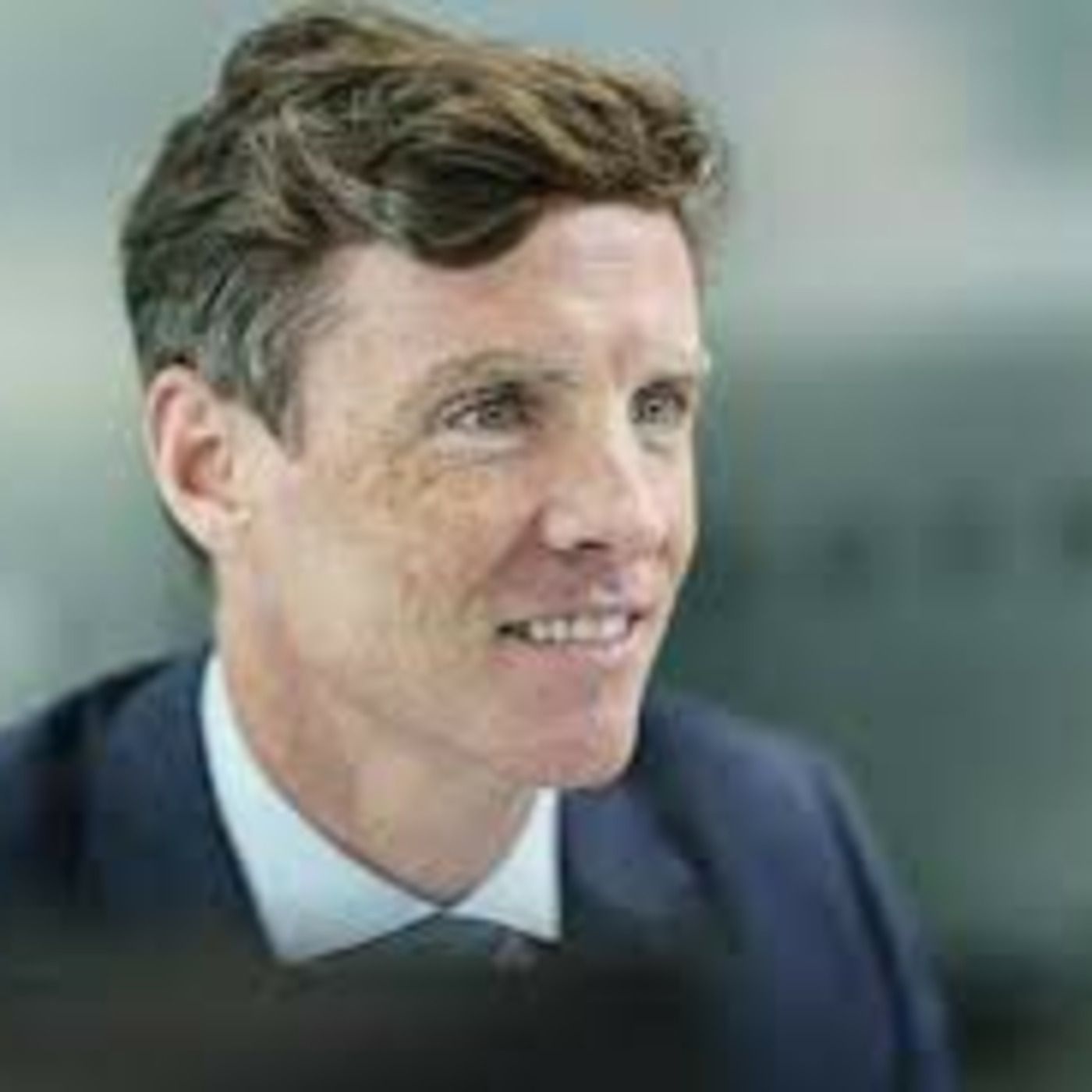
Aoifinn Devitt: This bonus series is kindly supported by Soundmark Partners. Soundmark Partners LLC is a women-owned and led private credit firm focused on commercial real estate. Our next guest speaks about what a climate engagement fund actually means. We look at the demand pattern and what clients really want, as well as the evolution of engagement and how it must now have a commercial tilt. We also look at the policy backdrop behind net zero and other initiatives. And how individual investors and organizations have the potential to shape it. I’m Aoifinn Devitt, and welcome to the 50 Faces Podcast, a podcast committed to revealing the richness and diversity of the world of investment by focusing on its people and their stories. I’m joined today by John Thien, who is a portfolio manager at Redwheel, which is focused on value-oriented UK and global equity funds, where he leads on engagement and responsible investing. Welcome, John. Thanks for joining me today.
John Teahan: Thank you, Edine.
Aoifinn Devitt: Let’s start with your journey into investment. Where did you grow up? Where did you go to school? And how did investment find you as a career choice?
John Teahan: Well, like many careers, it was quite random. Perhaps looking back, it wasn’t very predictable. When I went to university, I was very much interested in politics, and maybe later when we get to sustainability, you can see how that has a useful link. But when I go back to the very start, know, you I grew up on a small farm in the southwest of Ireland, one of 6 children. My parents both finished school by the age of 14, but I was very fortunate in that my parents, and particularly my mother, was very focused on education and wanting to have all her children very well educated, and we all ended up going to university. And I guess I also benefited from the fact that we have free third-level education in Ireland, and that gave me both sides— both supportive parents and the ability to go on and to go to university. And it was from there that I ended up first working in Dublin with Bank of Ireland Asset Management, and that was a part of a graduate program, and What really attracted me to that was there was an international element, so there was 9 months abroad as part of the program. And growing up in a small farm, I really wanted to go from there and explore the world. And Bank of Ireland at that point, the asset management side, had offices in Santa Monica, in Tokyo, in Sydney, and I dreamt of going to these places. But instead, I ended up going to London. The MD in the London office was a very impressive man, a man named David Ball, and he convinced me to go there. And over 20 years later, I’m still in London. So That really was the beginning of my career, and how I ended up going to finance at the end of university was rather random. It was a case of the milk round of, I guess, my peers in, in university. A lot of them were focused on finance, and from that I figured out that’s probably where, you know, something I should, should look at doing.
Aoifinn Devitt: And I love to ask people who’ve grown up on farms what that teaches you in terms of the professional approach, because I’m thinking of so many things in terms of risk-taking, hard work, diversification. All of these principles sort of really have their roots in something a lot longer dated than our finance industry.
John Teahan: For me, it was very clear it was the work ethic. We have a joke where if we were caught with our hands in our pockets by my dad or my mom, that was the greatest sin you could commit. It was just hard work. When you think of harvest season, it was 24 hours a day. And then where we grew up, it was very difficult land to farm. If it wasn’t for European Union subsidies, it just wouldn’t have been commercial at all. But my parents with 6 children to, to feed and to send to school, they opened a guest house. So it was that entrepreneurialism along with that work ethic that I really brought from them. And again, on the sustainability side, when I think back to the way they lived, and, and I think this is common for a lot of farmers, is that you have to be very sustainable in the way you farm. And that’s not just the type of farming you do, but it’s your approach to being frugal with things, recycling. Often things that I found very embarrassing as a teenager, you know, when my parents would buy things in the secondary market, they would go to local auctions and as a teenager I found that often quite difficult. But of course that was the right way to do it. They were watching the margins that they were making, they were recycling things. There was no such thing as waste, you know, something could always be used for something else. So I think that when I think through my career, it was that hard work they gave me. That was the kind of basic value, if you like, in a way, work hard.. And then as I got onto sustainability, I started thinking, oh, well, this makes sense. And this is what my parents lived, a really genuine life in terms of being sustainable. And when I look for an anchor today, or when I look for guidance, I can often just look back at what they did. And it’s a very credible path.
Aoifinn Devitt: Let’s move on to now your work at Redwheel. So could you talk about how you came to Redwheel, some of the work that you do there broadly, and in particular the new launch of the UK Climate Engagement Fund.
John Teahan: I said earlier, career is often very unpredictable. So I went from Bank of Ireland to Schroders, and in Schroders I was working on a derivative desk and I found derivatives extremely interesting. The math of derivatives was just so engaging. And what I missed, I guess, at the time was not so much how— well, I got how impressive the derivative world was in structured products, but what we missed was what value add to society. And then we come to the global financial crisis and we see that a lot of the derivative constructs that financial world put out there just didn’t work. They didn’t work for the people that were designed for. They worked for the financial community but not for those people. So at that point I decided I wanted to break from finance. You know, as I said earlier, I thought by getting an international graduate program I was going to go to far-flung places, and it got me as far as London. So I decided to give finance a break, and between Schroders and joining Redwheel, I joined a small media company, and this company was focused on writing what were editorial reports in frontier markets mostly, and emerging markets. And that took me first of all to Ethiopia, so I spent 2 months there, and then I traveled for 1 to 2 months to Ghana, South Africa, Kenya. I visited Uganda and Tanzania, and I spent 5 months in Turkey. And that for me was incredibly educational. At the time I was thinking maybe I should go and do an MBA, but I just couldn’t face the GMAT and all of that. So I thought, well, instead of taking more exams and going to university, why I could watch into the real world. And that was just an incredible period of educating myself and understanding maybe the greater context of what we do in investing and finance and the impact it can have. And when I came back from that time working with that company, I decided I wanted to go into the investment side. So rather than doing structured products, financial engineering, I wanted to go and invest. And as it happened, two of my colleagues in Schroders had left Schroders and joined what was then called RWBC Partners and now is Redwheel, to set up value and income team predominantly focused on UK equities but with global exposure as well. So I joined them, and my idea was that they would teach me how to become a value investor. And I’ve spent now 13 years with Nick Parvis and Neil Lance learning how to invest in the value style. And it couldn’t have been worse timing, because when I joined in 2010, value had just had a number of years of outperformance. And since that point has underperformed up until the last 2 years or so. So it’s been an incredible tough time. But I think when you’re learning the ropes about something like investing, when you go through the hardest of times, you learn the most because every principle you have is being challenged. You know, there’s nothing you can take for granted. So we’ve gone through this incredibly tough decade, constantly questioning ourselves. I think broader macro was a headwind that we just can’t get around and you’ve got to stick to the style that you’ve adopted. But it has been an incredible decade to learn value investing, and that’s where, you know, we come on to today, where I started focusing on sustainability. And particularly when you think of value investing, the types of companies we invest in are typically more older economy companies and therefore on balance have more sustainability issues, be it environmental or social, and obviously climate being one of the main ones.
Aoifinn Devitt: And we’ll definitely talk a little bit more about that UK fund just in a minute. But again, when you bring up something like living in countries like Ethiopia, Ghana, Turkey, what would you say you learned, you took away from those experiences? Because clearly they did make a large impression on you. I’m kind of thinking as well in the sustainability vein, we often maybe have a different frame when we think about sustainability in emerging markets, whether it’s actually possible or whether it’s going to be a luxury that we get to later. Once we resolve some of the economic disparities.
John Teahan: There is so much to unpack there. We could spend several podcasts talking about emerging and frontier markets. But from my experience, what did I learn? Well, I learned that democracy and the rule of law is something that we’re very lucky to have, that it is much more— well, it’s less widespread than I grew up believing. When you sit in Ethiopia, and at the point I was there in 2010, it was very stable. But you look across the continent and Sudan next door, we’re very to fortunate, put it another way, we’re very fortunate in the developed world and in Western Europe to have the rule of law and democracy. But we also take so much else for granted. You know, from when you wake up in the morning, you take utilities for granted, you take it for granted that when you turn the switch on, the light’s going to come on, that you’re going to have hot water. That cannot be taken for granted when you live in a lot of countries where electricity, for example, is not stable. There’s also our behavior in the developed markets and the impact it has on the developing world. Think of, for example, policy and agricultural policy jumps to mind. The way we protect our farmers in the US or in Europe or in Japan, and that’s often at the cost of development in these countries. For me, that was a huge experience, as I said. And one other example I’ll give you is that when we think back in 1985, when Bob Geldof launched Live Aid, and that was capturing the world’s attention, the population of Ethiopia was 40 million. When I was there in 2010, it was estimated at 89 million, and today it’s estimated at 127 million. So if you think about that population growth, if you think about the pressure and resources, when we think about the wars that are happening in Ethiopia and in Sudan at the moment, famine that’s going across large parts of Africa, these are real-life issues that we have to come to grips with, and often we just fail to recognize these things happening or see them, see Africa as one continent where there’s so many regional issues and so many regional problems. Another example maybe is Ghana, an incredible democracy. They have continued to turn power from one party to the next since 1992 when elections came out that with those results. They’re a country that is striving hard to keep that democracy in place and to evolve and develop, but they will be most hit with climate change. Again, know, you when you think about global warming, it’s going to impact around the equator more so than northern Europe. And these countries are calling out for more sustainable financing. We often don’t listen to them in some sort of patronizing way. We think we can in the developed world make these decisions. I think we’ve got to listen more to what their problems are on the ground, what they’re facing.
Aoifinn Devitt: Yeah, fascinating insights. And I just referred to some of the Nigerian Voices podcasts. I have a separate capsule which actually speak a lot about some of the opportunity in these regions, sometimes because of the lack of incumbent infrastructure, etc., the ability to leapfrog and the focus can actually be on these areas from the outset. So it kind of goes against conventional wisdom. We’re going to take a quick break to hear from our sponsor of this series, Sandmark Partners. I sat down with Jenna Gerstenlauer to talk about their private credit strategy. In particular, we spoke about housing. Affordability continues to be an issue for Americans, and we are focused on growth areas, including those in innovation districts, which provide for a more affordable lifestyle where a manageable portion of a household’s income is going towards housing. Typically, 30% or less is the target. And housing continues to be an attractive asset class in the US given the well-documented and researched shortage of affordable housing in this country. We are pursuing mixed-use, industrial, student housing, and self-storage opportunities as well. And now back to the show. Let’s jump into the UK Climate Engagement Fund. What does a fund like that look like from a, in terms of a portfolio construction standpoint and underlying holdings?
John Teahan: Firstly, just to step back and think why we launched a climate engagement fund, and it was the recognition that in the traditional mandate you have got boundaries. We have very clearly in a standard mandate set out that the investment objectives are around return and risk. And sometimes within sustainability, people forget that, that we’re managing other people’s money in a very clearly defined legal framework. And so we often get people asking, what are we going to do about a certain company if they don’t change their sustainability credentials, if they don’t improve along their transition path? Well, if these companies are aligned with what is the most likely outcome as depressing as it is, well, then their returns probably still is attractive and perhaps even more attractive if they change their plans to 1.5-degree alignment, which is not supported by policy. And therefore, you can go so far within those type of mandates in terms of escalation and ultimately where you might divest. But obviously, client preferences have come on and regulation is evolving. So the Climate Engagement Fund that we launched is very much a recognition of that. It’s a recognition that, for example, under SDR, there’s going to be an improvers category. It’s also recognition that many clients say, yes, I do want my return, but I’m also very concerned about climate. And if I call these companies, I want to know that they’re being held responsibly and being held to account. And therefore, within that mandate, we can look at progress as these companies make towards 1.5-degree alignment. And if we think that they’re not genuinely making the progress we think they can and should make, then there is the basis to, for example, sell those companies out of the portfolio. So it’s a very clear expansion of what is the traditional mandate. And I think it also helps us then to convey clearly to clients that there’s a choice here. The choice is you can retain the traditional mandate, which we have obviously within our core offerings, or if you want to express your concern for the climate in a slightly different way or a slightly stronger way, then there is this UK Climate Engagement Fund. And then to answer your question about portfolio construction and what we’re trying to do with the fund, it is, as I said, we are focusing on the carbon-intensive sectors as we define them. So it’s you quite, know, if you think about definitions of carbon intensity, that in itself is a conversation because companies across sectors have carbon exposure, but we’re looking at the more intensive ones and we’re saying, well, we will be the responsible holders here of companies that we believe have both the ability and the willingness to change.. And those companies we feel should be supported. And that’s what we populate the portfolio with, those companies. And then we make an assessment of their plans. We look for weaknesses in those plans, and then we will engage with them and communicate to them where we see weaknesses and why they should improve those plans and evolve them over time. And we will monitor that.
Aoifinn Devitt: And how do you see the pattern of demand for these type of products? We have been reading about actually a slowdown inflows into sustainability funds, some of that perhaps due to maybe just a slowdown in overall equity flows. But what would you say is your take on the ripeness of a product like this given client demand?
John Teahan: What would make the difference between the climate engagement fund that we have structured and have launched, it’s not a sustainable fund when you think of definitions under SFDR. Because a sustainable fund under SFDR, you’re investing in already sustainable companies. Certain amount of revenue has to be sustainable. And I think where those strategies have struggled over the last— well, they’ve done very well to begin with, and then they’ve struggled more recently— is because there was an alignment between growth style of investing that was doing very well and those ESG strategies, sustainable strategies. And therefore, when growth started to struggle post-2021, the performance of these funds also started to struggle. And perhaps they were sold previously that you could do good and do well at the same time, and that there was no trade-off, and that there was never going to be a hiccup along the way. Well, actually, I would argue that you then forget about things like valuation. You forget that actually some sectors and styles go in and out of favor over time. And that’s really what has been the biggest challenge to sustainability funds is their performance over the last 12, 18 months. And that’s also, I think, why the conversation has matured and people have started to think, okay, it’s not as simple as investing in an already sustainable fund. I need to think more broadly about exposure and risk within a portfolio and remaining diversified. And that’s why people have become much more open to investing in a climate engagement fund. You might term it an improvers fund under SDR, where actually you’re investing in companies that need to make progress, that are brown, that are going green, that we have to hold to support to get a more sustainable and less carbon-intensive future. So that for us has been helpful actually, that people have started to think outside the very pure sustainability product offerings that have been offered in the last few years and thought, okay, engagement is a way where I can continue to hold, or I can hold, for example, mining companies, but in a responsible way.
Aoifinn Devitt: Brings me to my engagement question, which is actually what I’d like to know, since you traced engagement and its evolution and often on the client side, we feel under pressure to show the efficacy of that engagement, that we can’t just say engagement has happened if there’s no obvious result from that. It’s not very powerful as an argument in terms of versus divestment, as an example. So how do you see that engagement is getting more effective? What do you think needs to change maybe to, for it to continue to improve?
John Teahan: Again, there’s a lot to cover there because let’s think about engagement first. What are the impediments to even more progress within engagement? I would say policy, because the policy framework is ultimately the boundary within which we have to operate. So often we find that people say, well, your company’s not making enough progress and therefore are you divesting? The world is much more nuanced than that. What we are facing is companies want to move, but if the policy framework isn’t supportive, then to push them into, say, alignment with 1.5 degrees could very well undermine their business if they take that voluntary action. You can’t have a sector where one company says, I will be aligned at 1.5 degrees, ignoring what my competitors are doing, ignoring what the policy framework is. And therefore, what we communicate to our underlying investors is we are pushing our companies as far as they can go, and maybe even a little bit further within that context. And then we don’t stop there. We go— then we try and figure out how together, us, the companies, a wider financial industry, or within their sector, can we unlock the policy barriers that we face? And I think that’s what’s really important. And we have heard voices in the industry within the sustainability community talking about facing demand rather than supply in our engagements. And I think that’s very important. So it’s not just about supply, it’s about demand. But I would go further. I would say both of those things, supply and demand, are very much impacted by policy. And that’s where we’ve got to start thinking about focusing on. So that’s, I guess, the challenge we have. I think where engagement can be a real success is that when we as investors and acting on behalf of our shareholders really educate ourselves and genuinely constructively engage with companies, not just turning up and telling them what they’re doing wrong, because we need to listen to them. We need to listen to the circumstances in which they’re operating and then make a judgment and try and work with them in a very cooperative way to inform them about what we see, what our views are, and see if we can make progress, if we can unlock that. And that’s much more powerful if it’s more constructive engagement rather than going in with a very set agenda. Because these are very complicated issues. With engagement, it is one, being respectful of the company, looking for a real engagement, two, informing ourselves. We’re generalists. For example, if we go and meet a company in the energy sector or mining or chemical sector, we must remember that this is their day-in, day-out business. We’re turning up as journalists. We need to be a little bit humble there and think, okay, let’s learn from them to begin with before we start setting demands. And I think the industry is really doing that. I see a lot of investors and a lot of asset managers are investing in improving the knowledge within the asset managers, and we’re certainly doing that in Redfield with the creation of Greenwheel to better inform portfolio managers or those engaging so that when we meet companies, we understand the context much better, and then we can, we can move on engagement. And eventually you may need escalation, you may even need divestment, but that is a much longer-term part of the path.
Aoifinn Devitt: What are your thoughts on the BlackRock recent retrenchment from some engagements, given that some of it had become too prescriptive and not perhaps sufficiently commercially acceptable?
John Teahan: Without commenting on the individual case, I think what we need to understand is these things are very complicated. It’s a struggle for large companies as well. Large asset managers are covering so many companies. I’m fortunate I get to look at 25 to 35 companies, and I’ve got a research team that helps me to engage with those. So I would say it’s very hard. I would shy away from generalizations. In some companies, you can be a bit more prescriptive, you can work closely with the management, but that does take a very in-depth engagement. But I would go back to my earlier point, understanding the company, really getting to know various levels of management from the sustainability team, maybe the head of environment, onto the management team and the board. That informs you in a much better way to understand the challenges they’re facing. What may come out of that is that what you prescribe for the company to do based on what we might see as a credible pathway to net zero just has too many barriers or blocks. It’s just not credible in the real world for that to happen. And therefore, we need to be able to take that feedback and see, well, how can we unlock that problem? How can we— we don’t have to stick to the things we asked at the outset of the engagement. We have to be flexible ourselves as investors to change our mind, to understand that actually what we originally requested the company isn’t feasible, isn’t realistic, and then change tack and go, well, what can work? The other thing I would say on engagement is, and what we try to do, is show the company that we’re aligned with them. At the end of the day, we are shareholders, so their success should be aligned with our success and the success of our underlying investors. And what we try and do at the beginning of our engagements is set out to those companies what our position is and what the capital markets are doing and how the capital markets are changing. We talked about sustainability products, how demand is increasing for sustainability products even if it has ebbed over the last year or so, the direction of travel is clear, showing them that if they want to make their shares more attractive, if they work with us, that will help them, that we are aligned in that way, that we are looking to create shareholder value. All of this is driven by capital markets that are changing, regulations changing, client preferences changing. Communicating that to those companies, I think it’s often underestimated, or the importance of that is often underestimated because they’re focused on their day jobs. We live and breathe these things about regulation change, client preferences. It’s not necessarily clear to those companies. So conveying that change to them is a very powerful way to set the context of how we can work together.
Aoifinn Devitt: And just a question I was going to ask earlier, but I think it fits here, is you around, know, maybe any comments you have on other kind of maybe disconnects. We’re obviously in a very dynamic time right now in terms of sustainability goals, net zero targets, the engagement piece, as we already spoke about. Would you say, looking around the world globally, where are people getting it? Where is there a gap? Where do you think that the conversation is veering in the wrong direction, maybe, and needs to be brought back to fundamentals?
John Teahan: Well, one thing that concerns me is how it’s become dragged into the culture wars, and therefore the discussion is often at an ideological level, and that is divisive, and it inhibits action, in my view. And it often inhibits the action that we can make in an imperfect way, the progress we can make in an imperfect way. So I think it’s very important that we as investors and within the financial community keep going back to a couple of basics. One, we’re managing other people’s capital, so we’ve got to reflect what they want, their objectives, rather than potentially our own values, even if we feel very strongly about these issues. That’s really important. Secondly, we’ve got to look at the context in which these companies are operating in, what is feasible and what is not. And maybe we can make some progress, but not as much as we would like. And therefore that might just be acceptable, at least for now. But take it to the science, to the evidence. I think that’s where we should have the discussions. And again, it comes back to companies are operating in a very difficult environment. I was looking at Climate Action Tracker and it estimates that we’re on course for a 2.7-degree world. With current policies and actions. That’s depressing, but it also means that’s the context in which our companies are operating. So we’ve got to put pressure on governments where we can to go further and faster there, which will support our companies to also go further and faster. I think these are the conversations we need to have. They’re difficult, they’re tricky, and we’re operating within this environment where people are really thinking in ideological terms, and that just creates division. It doesn’t allow for collaboration. Cooperation and progress, even as I said, if imperfect.
Aoifinn Devitt: Can you give us an example of some of the kind of collaboration that you’re starting on policy?
John Teahan: Yes, to give you an example, and it’s early days in developing our collaboration with other investors and focusing on government, but in June we co-signed a letter that was written to the UK government about including a net zero mandate for Ofgem in the new energy bill. So that was important because that is the policy framework that our companies in the UK are operating within. If the regulator doesn’t have a net zero mandate, it’s very hard then for them to have policy in place that helps companies to get there. More recently, we have also signed a letter to the Prime Minister about diluting down green plans, such as the banning of combustible vehicle engines by 2030, because that again just creates uncertainty and instability in the UK market. It gives the wrong signals. And interestingly, we were talking to one director, a chairman of an energy company, who you would think might be a little bit happy about those, that change in direction. But they expressed disappointment because again, if you’re a large energy company and you’re building out EV charging stations and you’re changing that part of your business, you want clear ambition, you want clear signals sent to consumers so their behavior changes in some sort of a predictable manner. But when you’ve got changes in policy like that, it’s very unhelpful for the business. So whatever businesses we’re talking across the sustainability spectrum, what they’re looking for is ambition from government and consistency and stability so they can make their investment plans.
Aoifinn Devitt: An area of progress that’s quite close to our heart is around diversity, particularly in the financial services industry. And I just wanted to get your thoughts on that, having looked around the world into emerging markets, maybe not necessarily a finance angle, but certainly seen diversity there. What are your thoughts on the profession that we’re in, whether it has got to the diversity it needs to get to?
John Teahan: Simple answer to the last part is no, but I would maybe take a step back and I would wrap diversity up with social mobility. I think social mobility is very important in that people from different backgrounds into finance. On social mobility, when I think about both my parents finishing formal education at 14, as I said earlier, the opportunity I got was much different than what they got or their generation got. I was able to go to university and get a degree and then get on a graduate program. When I think about that graduate program in Bank of Ireland, you know, if I remember correctly, it was more females than males on that program. But then you could see through the different management levels as it got more senior, there was attrition with females. There’s greater female attrition than male attrition. So that is an obvious challenge that we have. In the teams that I worked with in Schroders and Red Wheel, I’ve worked in very much male-dominated teams and it’s a challenge to change that. We can’t hide from that. For example, in the Red Wheel team, we’ve had very low turnover. Myself and my two partners have been working together since obviously since Schroders, but then 2010 when we started in Red Wheel, we hired early and therefore it gives you very little ability to change the shape of the team and to bring in more diversity. What we’ve tried to do to offset that to a degree, it’s far from perfect, is we’ve been supporting different initiative. So both Redwheel and us as a team, and we have supported the 100 Black Interns and we’ve also supported Fairfield. Maybe you’re familiar with Fairfield, but its mission is to bring more people from state schools into finance, and that’s using coaching and internships. And Laurie in Fairfield is doing an amazing job to do that. That’s super important. We also, in 2019, we ourselves set up an internship for secondary school students to come and sit with us as an investment team. And indeed, they would then spend some of their time with other teams within Redwheel. But since that started in 2019, we’ve had 17 students participate with 70% of them being girls from ethnic backgrounds. So it’s very little if you think of those things in the context of trying to change the team. It reflects the challenges that we are having in diversifying our team. And my wife works in finance as well, so I understand the challenges. I understand the challenges particularly for women and particularly when you take maternity leave. And that’s why paternity leave is so important. It levels the playing field. When somebody goes on extended leave like that, there’s obviously a fear for your job, whether it will be there when you come back, whether somebody else would take your clients, or whether you would be missed, and then suddenly the company would see that your role is no longer required. These are fears that we as men have never had to think about. We’ve just purely focused on our careers. Well, that is changing because now fathers are going out and taking paternity leave, and I think that’s extremely important. And it also means that when hiring happens, the employer isn’t thinking about a difference between male and female, whether they’re going to go on maternity leave. So I think that’s very important. And Redwheel as a company has been working hard to improve these different parts of the business.
Aoifinn Devitt: That’s a really thoughtful answer. Thank you. And I suppose another, another podcast we can discuss, I suppose, maybe that perhaps sufficient attention doesn’t get given to the job insecurity that we all feel. In finance at all times, and men or women, maternity leave or not, because I do think that that is an underlying source of stress. But I think very well said on the paternity-maternity leave disparity. Let’s go back to some personal reflections now. So we’ve spoken a little bit about your origins and your parents and how they instilled in you that focus on education. When you look back at other people in your life, were there any other key people who had an impression on you and how?
John Teahan: I’ve been incredibly lucky to work with some incredibly smart people that they gave me opportunities. And back to Bank of Ireland giving me the graduate program, that was a phenomenal opportunity. A guy called David Ball who was running the UK office, the London office for Bank of Ireland, he was extremely supportive and gave me the space, independence to really develop. He trusted me to do things and that allowed me to evolve from the start. Then when I moved to Schroders, again Schroders was a great employer in terms of the training they gave me and the opportunity they gave me. I remember them putting me on communication courses and I was going out selling the Maximizer range. That’s very important when you’re trying to sell a communication course, but that was extremely beneficial. And people like Richard Lloyd who gave me opportunities like that. And then coming to Red Wheel and working with Nick Purvis and Ian Lance, being able to see how value investors, how their mind works, that’s extremely valuable. You know, it really teaches you when you’re sitting at a desk with guys like that for a decade. You really begin to understand what makes value investors tick, what they look for, and how then I can develop my own style of investing and apply that for the funds for now and, and for future. So I’ve been extremely fortunate in those people that I’ve worked with, and I think London’s an amazing place when you think of that, the opportunities it gives us all in our careers to meet people from the UK and from beyond and to learn from them.
Aoifinn Devitt: Then when you look at those mentors and any advice or words of wisdom that they shared with you? Anything that you can leave us with there?
John Teahan: Well, I think what I would have benefited from was maybe mentors outside of work. That was something that, looking back, would have been something I’d said that would have been useful, maybe to learn from other people’s advice and experience or other people’s mistakes rather than experiencing those mistakes myself. I think that would have been useful. I had some mentors outside, but I hadn’t anybody consistent through time that I think would have maybe helped me to understand career and direction, and helped me navigate some of the big decisions I’ve made. The advice I’d give to people would go back to the advice my father gave me and my mother gave me, is take your hands out of your pockets and work hard. It’s very simple in a way, but what people want is hard workers that are willing to really get into the detail of things. And when you’re in investment, when you’re in research, it’s about being curious, and that is hard work, curiosity, following things up. Asking the next question, looking for the answer, and then looking for the next question. I think that’s really important. If you think about the investment world, obviously those two things— you need to find curiosity to do it, and you need to work hard.
Aoifinn Devitt: Really interesting point about not having had maybe the benefit of other people’s mistakes, because I think that’s part of the whole purpose of this podcast, is to have people share in an authentic way some of the lessons they learned, to give the rest of us shortcuts to maybe avoid going through the painful process of making those ourselves. Question whether one is open enough to learn from others, and whether one is humble enough to admit making them. But hopefully we’re on a journey and getting there. Well, thank you so much, John. It has been refreshing to hear from you just how you give a fresh lens to the sustainability and investment arena, to some of the concerns and challenges that we’re all facing, the tensions between the need to make progress and also to actually see that that progress is meaningful and has broad-based consensus. So thank you for coming here, for sharing your work at Redwheel and your other insights with us.
John Teahan: Thank you, Aoifinn. I really enjoyed the conversation.
Aoifinn Devitt: I’m Aoifinn Devitt. Thank you for listening to the 50 Faces podcast. If you liked what you heard and would like to tune in to hear more inspiring personal journeys, please subscribe on Apple Podcasts or wherever you get your podcasts. This podcast is for informational purposes only and should not be construed as investment advice, and all views are personal and should not be attributed to the organization and affiliations of the host or any guest.
Aoifinn Devitt: This bonus series is kindly supported by Soundmark Partners. Soundmark Partners LLC is a women-owned and led private credit firm focused on commercial real estate. Our next guest speaks about what a climate engagement fund actually means. We look at the demand pattern and what clients really want, as well as the evolution of engagement and how it must now have a commercial tilt. We also look at the policy backdrop behind net zero and other initiatives. And how individual investors and organizations have the potential to shape it. I’m Aoifinn Devitt, and welcome to the 50 Faces Podcast, a podcast committed to revealing the richness and diversity of the world of investment by focusing on its people and their stories. I’m joined today by John Thien, who is a portfolio manager at Redwheel, which is focused on value-oriented UK and global equity funds, where he leads on engagement and responsible investing. Welcome, John. Thanks for joining me today.
John Teahan: Thank you, Edine.
Aoifinn Devitt: Let’s start with your journey into investment. Where did you grow up? Where did you go to school? And how did investment find you as a career choice?
John Teahan: Well, like many careers, it was quite random. Perhaps looking back, it wasn’t very predictable. When I went to university, I was very much interested in politics, and maybe later when we get to sustainability, you can see how that has a useful link. But when I go back to the very start, know, you I grew up on a small farm in the southwest of Ireland, one of 6 children. My parents both finished school by the age of 14, but I was very fortunate in that my parents, and particularly my mother, was very focused on education and wanting to have all her children very well educated, and we all ended up going to university. And I guess I also benefited from the fact that we have free third-level education in Ireland, and that gave me both sides— both supportive parents and the ability to go on and to go to university. And it was from there that I ended up first working in Dublin with Bank of Ireland Asset Management, and that was a part of a graduate program, and What really attracted me to that was there was an international element, so there was 9 months abroad as part of the program. And growing up in a small farm, I really wanted to go from there and explore the world. And Bank of Ireland at that point, the asset management side, had offices in Santa Monica, in Tokyo, in Sydney, and I dreamt of going to these places. But instead, I ended up going to London. The MD in the London office was a very impressive man, a man named David Ball, and he convinced me to go there. And over 20 years later, I’m still in London. So That really was the beginning of my career, and how I ended up going to finance at the end of university was rather random. It was a case of the milk round of, I guess, my peers in, in university. A lot of them were focused on finance, and from that I figured out that’s probably where, you know, something I should, should look at doing.
Aoifinn Devitt: And I love to ask people who’ve grown up on farms what that teaches you in terms of the professional approach, because I’m thinking of so many things in terms of risk-taking, hard work, diversification. All of these principles sort of really have their roots in something a lot longer dated than our finance industry.
John Teahan: For me, it was very clear it was the work ethic. We have a joke where if we were caught with our hands in our pockets by my dad or my mom, that was the greatest sin you could commit. It was just hard work. When you think of harvest season, it was 24 hours a day. And then where we grew up, it was very difficult land to farm. If it wasn’t for European Union subsidies, it just wouldn’t have been commercial at all. But my parents with 6 children to, to feed and to send to school, they opened a guest house. So it was that entrepreneurialism along with that work ethic that I really brought from them. And again, on the sustainability side, when I think back to the way they lived, and, and I think this is common for a lot of farmers, is that you have to be very sustainable in the way you farm. And that’s not just the type of farming you do, but it’s your approach to being frugal with things, recycling. Often things that I found very embarrassing as a teenager, you know, when my parents would buy things in the secondary market, they would go to local auctions and as a teenager I found that often quite difficult. But of course that was the right way to do it. They were watching the margins that they were making, they were recycling things. There was no such thing as waste, you know, something could always be used for something else. So I think that when I think through my career, it was that hard work they gave me. That was the kind of basic value, if you like, in a way, work hard.. And then as I got onto sustainability, I started thinking, oh, well, this makes sense. And this is what my parents lived, a really genuine life in terms of being sustainable. And when I look for an anchor today, or when I look for guidance, I can often just look back at what they did. And it’s a very credible path.
Aoifinn Devitt: Let’s move on to now your work at Redwheel. So could you talk about how you came to Redwheel, some of the work that you do there broadly, and in particular the new launch of the UK Climate Engagement Fund.
John Teahan: I said earlier, career is often very unpredictable. So I went from Bank of Ireland to Schroders, and in Schroders I was working on a derivative desk and I found derivatives extremely interesting. The math of derivatives was just so engaging. And what I missed, I guess, at the time was not so much how— well, I got how impressive the derivative world was in structured products, but what we missed was what value add to society. And then we come to the global financial crisis and we see that a lot of the derivative constructs that financial world put out there just didn’t work. They didn’t work for the people that were designed for. They worked for the financial community but not for those people. So at that point I decided I wanted to break from finance. You know, as I said earlier, I thought by getting an international graduate program I was going to go to far-flung places, and it got me as far as London. So I decided to give finance a break, and between Schroders and joining Redwheel, I joined a small media company, and this company was focused on writing what were editorial reports in frontier markets mostly, and emerging markets. And that took me first of all to Ethiopia, so I spent 2 months there, and then I traveled for 1 to 2 months to Ghana, South Africa, Kenya. I visited Uganda and Tanzania, and I spent 5 months in Turkey. And that for me was incredibly educational. At the time I was thinking maybe I should go and do an MBA, but I just couldn’t face the GMAT and all of that. So I thought, well, instead of taking more exams and going to university, why I could watch into the real world. And that was just an incredible period of educating myself and understanding maybe the greater context of what we do in investing and finance and the impact it can have. And when I came back from that time working with that company, I decided I wanted to go into the investment side. So rather than doing structured products, financial engineering, I wanted to go and invest. And as it happened, two of my colleagues in Schroders had left Schroders and joined what was then called RWBC Partners and now is Redwheel, to set up value and income team predominantly focused on UK equities but with global exposure as well. So I joined them, and my idea was that they would teach me how to become a value investor. And I’ve spent now 13 years with Nick Parvis and Neil Lance learning how to invest in the value style. And it couldn’t have been worse timing, because when I joined in 2010, value had just had a number of years of outperformance. And since that point has underperformed up until the last 2 years or so. So it’s been an incredible tough time. But I think when you’re learning the ropes about something like investing, when you go through the hardest of times, you learn the most because every principle you have is being challenged. You know, there’s nothing you can take for granted. So we’ve gone through this incredibly tough decade, constantly questioning ourselves. I think broader macro was a headwind that we just can’t get around and you’ve got to stick to the style that you’ve adopted. But it has been an incredible decade to learn value investing, and that’s where, you know, we come on to today, where I started focusing on sustainability. And particularly when you think of value investing, the types of companies we invest in are typically more older economy companies and therefore on balance have more sustainability issues, be it environmental or social, and obviously climate being one of the main ones.
Aoifinn Devitt: And we’ll definitely talk a little bit more about that UK fund just in a minute. But again, when you bring up something like living in countries like Ethiopia, Ghana, Turkey, what would you say you learned, you took away from those experiences? Because clearly they did make a large impression on you. I’m kind of thinking as well in the sustainability vein, we often maybe have a different frame when we think about sustainability in emerging markets, whether it’s actually possible or whether it’s going to be a luxury that we get to later. Once we resolve some of the economic disparities.
John Teahan: There is so much to unpack there. We could spend several podcasts talking about emerging and frontier markets. But from my experience, what did I learn? Well, I learned that democracy and the rule of law is something that we’re very lucky to have, that it is much more— well, it’s less widespread than I grew up believing. When you sit in Ethiopia, and at the point I was there in 2010, it was very stable. But you look across the continent and Sudan next door, we’re very to fortunate, put it another way, we’re very fortunate in the developed world and in Western Europe to have the rule of law and democracy. But we also take so much else for granted. You know, from when you wake up in the morning, you take utilities for granted, you take it for granted that when you turn the switch on, the light’s going to come on, that you’re going to have hot water. That cannot be taken for granted when you live in a lot of countries where electricity, for example, is not stable. There’s also our behavior in the developed markets and the impact it has on the developing world. Think of, for example, policy and agricultural policy jumps to mind. The way we protect our farmers in the US or in Europe or in Japan, and that’s often at the cost of development in these countries. For me, that was a huge experience, as I said. And one other example I’ll give you is that when we think back in 1985, when Bob Geldof launched Live Aid, and that was capturing the world’s attention, the population of Ethiopia was 40 million. When I was there in 2010, it was estimated at 89 million, and today it’s estimated at 127 million. So if you think about that population growth, if you think about the pressure and resources, when we think about the wars that are happening in Ethiopia and in Sudan at the moment, famine that’s going across large parts of Africa, these are real-life issues that we have to come to grips with, and often we just fail to recognize these things happening or see them, see Africa as one continent where there’s so many regional issues and so many regional problems. Another example maybe is Ghana, an incredible democracy. They have continued to turn power from one party to the next since 1992 when elections came out that with those results. They’re a country that is striving hard to keep that democracy in place and to evolve and develop, but they will be most hit with climate change. Again, know, you when you think about global warming, it’s going to impact around the equator more so than northern Europe. And these countries are calling out for more sustainable financing. We often don’t listen to them in some sort of patronizing way. We think we can in the developed world make these decisions. I think we’ve got to listen more to what their problems are on the ground, what they’re facing.
Aoifinn Devitt: Yeah, fascinating insights. And I just referred to some of the Nigerian Voices podcasts. I have a separate capsule which actually speak a lot about some of the opportunity in these regions, sometimes because of the lack of incumbent infrastructure, etc., the ability to leapfrog and the focus can actually be on these areas from the outset. So it kind of goes against conventional wisdom. We’re going to take a quick break to hear from our sponsor of this series, Sandmark Partners. I sat down with Jenna Gerstenlauer to talk about their private credit strategy. In particular, we spoke about housing. Affordability continues to be an issue for Americans, and we are focused on growth areas, including those in innovation districts, which provide for a more affordable lifestyle where a manageable portion of a household’s income is going towards housing. Typically, 30% or less is the target. And housing continues to be an attractive asset class in the US given the well-documented and researched shortage of affordable housing in this country. We are pursuing mixed-use, industrial, student housing, and self-storage opportunities as well. And now back to the show. Let’s jump into the UK Climate Engagement Fund. What does a fund like that look like from a, in terms of a portfolio construction standpoint and underlying holdings?
John Teahan: Firstly, just to step back and think why we launched a climate engagement fund, and it was the recognition that in the traditional mandate you have got boundaries. We have very clearly in a standard mandate set out that the investment objectives are around return and risk. And sometimes within sustainability, people forget that, that we’re managing other people’s money in a very clearly defined legal framework. And so we often get people asking, what are we going to do about a certain company if they don’t change their sustainability credentials, if they don’t improve along their transition path? Well, if these companies are aligned with what is the most likely outcome as depressing as it is, well, then their returns probably still is attractive and perhaps even more attractive if they change their plans to 1.5-degree alignment, which is not supported by policy. And therefore, you can go so far within those type of mandates in terms of escalation and ultimately where you might divest. But obviously, client preferences have come on and regulation is evolving. So the Climate Engagement Fund that we launched is very much a recognition of that. It’s a recognition that, for example, under SDR, there’s going to be an improvers category. It’s also recognition that many clients say, yes, I do want my return, but I’m also very concerned about climate. And if I call these companies, I want to know that they’re being held responsibly and being held to account. And therefore, within that mandate, we can look at progress as these companies make towards 1.5-degree alignment. And if we think that they’re not genuinely making the progress we think they can and should make, then there is the basis to, for example, sell those companies out of the portfolio. So it’s a very clear expansion of what is the traditional mandate. And I think it also helps us then to convey clearly to clients that there’s a choice here. The choice is you can retain the traditional mandate, which we have obviously within our core offerings, or if you want to express your concern for the climate in a slightly different way or a slightly stronger way, then there is this UK Climate Engagement Fund. And then to answer your question about portfolio construction and what we’re trying to do with the fund, it is, as I said, we are focusing on the carbon-intensive sectors as we define them. So it’s you quite, know, if you think about definitions of carbon intensity, that in itself is a conversation because companies across sectors have carbon exposure, but we’re looking at the more intensive ones and we’re saying, well, we will be the responsible holders here of companies that we believe have both the ability and the willingness to change.. And those companies we feel should be supported. And that’s what we populate the portfolio with, those companies. And then we make an assessment of their plans. We look for weaknesses in those plans, and then we will engage with them and communicate to them where we see weaknesses and why they should improve those plans and evolve them over time. And we will monitor that.
Aoifinn Devitt: And how do you see the pattern of demand for these type of products? We have been reading about actually a slowdown inflows into sustainability funds, some of that perhaps due to maybe just a slowdown in overall equity flows. But what would you say is your take on the ripeness of a product like this given client demand?
John Teahan: What would make the difference between the climate engagement fund that we have structured and have launched, it’s not a sustainable fund when you think of definitions under SFDR. Because a sustainable fund under SFDR, you’re investing in already sustainable companies. Certain amount of revenue has to be sustainable. And I think where those strategies have struggled over the last— well, they’ve done very well to begin with, and then they’ve struggled more recently— is because there was an alignment between growth style of investing that was doing very well and those ESG strategies, sustainable strategies. And therefore, when growth started to struggle post-2021, the performance of these funds also started to struggle. And perhaps they were sold previously that you could do good and do well at the same time, and that there was no trade-off, and that there was never going to be a hiccup along the way. Well, actually, I would argue that you then forget about things like valuation. You forget that actually some sectors and styles go in and out of favor over time. And that’s really what has been the biggest challenge to sustainability funds is their performance over the last 12, 18 months. And that’s also, I think, why the conversation has matured and people have started to think, okay, it’s not as simple as investing in an already sustainable fund. I need to think more broadly about exposure and risk within a portfolio and remaining diversified. And that’s why people have become much more open to investing in a climate engagement fund. You might term it an improvers fund under SDR, where actually you’re investing in companies that need to make progress, that are brown, that are going green, that we have to hold to support to get a more sustainable and less carbon-intensive future. So that for us has been helpful actually, that people have started to think outside the very pure sustainability product offerings that have been offered in the last few years and thought, okay, engagement is a way where I can continue to hold, or I can hold, for example, mining companies, but in a responsible way.
Aoifinn Devitt: Brings me to my engagement question, which is actually what I’d like to know, since you traced engagement and its evolution and often on the client side, we feel under pressure to show the efficacy of that engagement, that we can’t just say engagement has happened if there’s no obvious result from that. It’s not very powerful as an argument in terms of versus divestment, as an example. So how do you see that engagement is getting more effective? What do you think needs to change maybe to, for it to continue to improve?
John Teahan: Again, there’s a lot to cover there because let’s think about engagement first. What are the impediments to even more progress within engagement? I would say policy, because the policy framework is ultimately the boundary within which we have to operate. So often we find that people say, well, your company’s not making enough progress and therefore are you divesting? The world is much more nuanced than that. What we are facing is companies want to move, but if the policy framework isn’t supportive, then to push them into, say, alignment with 1.5 degrees could very well undermine their business if they take that voluntary action. You can’t have a sector where one company says, I will be aligned at 1.5 degrees, ignoring what my competitors are doing, ignoring what the policy framework is. And therefore, what we communicate to our underlying investors is we are pushing our companies as far as they can go, and maybe even a little bit further within that context. And then we don’t stop there. We go— then we try and figure out how together, us, the companies, a wider financial industry, or within their sector, can we unlock the policy barriers that we face? And I think that’s what’s really important. And we have heard voices in the industry within the sustainability community talking about facing demand rather than supply in our engagements. And I think that’s very important. So it’s not just about supply, it’s about demand. But I would go further. I would say both of those things, supply and demand, are very much impacted by policy. And that’s where we’ve got to start thinking about focusing on. So that’s, I guess, the challenge we have. I think where engagement can be a real success is that when we as investors and acting on behalf of our shareholders really educate ourselves and genuinely constructively engage with companies, not just turning up and telling them what they’re doing wrong, because we need to listen to them. We need to listen to the circumstances in which they’re operating and then make a judgment and try and work with them in a very cooperative way to inform them about what we see, what our views are, and see if we can make progress, if we can unlock that. And that’s much more powerful if it’s more constructive engagement rather than going in with a very set agenda. Because these are very complicated issues. With engagement, it is one, being respectful of the company, looking for a real engagement, two, informing ourselves. We’re generalists. For example, if we go and meet a company in the energy sector or mining or chemical sector, we must remember that this is their day-in, day-out business. We’re turning up as journalists. We need to be a little bit humble there and think, okay, let’s learn from them to begin with before we start setting demands. And I think the industry is really doing that. I see a lot of investors and a lot of asset managers are investing in improving the knowledge within the asset managers, and we’re certainly doing that in Redfield with the creation of Greenwheel to better inform portfolio managers or those engaging so that when we meet companies, we understand the context much better, and then we can, we can move on engagement. And eventually you may need escalation, you may even need divestment, but that is a much longer-term part of the path.
Aoifinn Devitt: What are your thoughts on the BlackRock recent retrenchment from some engagements, given that some of it had become too prescriptive and not perhaps sufficiently commercially acceptable?
John Teahan: Without commenting on the individual case, I think what we need to understand is these things are very complicated. It’s a struggle for large companies as well. Large asset managers are covering so many companies. I’m fortunate I get to look at 25 to 35 companies, and I’ve got a research team that helps me to engage with those. So I would say it’s very hard. I would shy away from generalizations. In some companies, you can be a bit more prescriptive, you can work closely with the management, but that does take a very in-depth engagement. But I would go back to my earlier point, understanding the company, really getting to know various levels of management from the sustainability team, maybe the head of environment, onto the management team and the board. That informs you in a much better way to understand the challenges they’re facing. What may come out of that is that what you prescribe for the company to do based on what we might see as a credible pathway to net zero just has too many barriers or blocks. It’s just not credible in the real world for that to happen. And therefore, we need to be able to take that feedback and see, well, how can we unlock that problem? How can we— we don’t have to stick to the things we asked at the outset of the engagement. We have to be flexible ourselves as investors to change our mind, to understand that actually what we originally requested the company isn’t feasible, isn’t realistic, and then change tack and go, well, what can work? The other thing I would say on engagement is, and what we try to do, is show the company that we’re aligned with them. At the end of the day, we are shareholders, so their success should be aligned with our success and the success of our underlying investors. And what we try and do at the beginning of our engagements is set out to those companies what our position is and what the capital markets are doing and how the capital markets are changing. We talked about sustainability products, how demand is increasing for sustainability products even if it has ebbed over the last year or so, the direction of travel is clear, showing them that if they want to make their shares more attractive, if they work with us, that will help them, that we are aligned in that way, that we are looking to create shareholder value. All of this is driven by capital markets that are changing, regulations changing, client preferences changing. Communicating that to those companies, I think it’s often underestimated, or the importance of that is often underestimated because they’re focused on their day jobs. We live and breathe these things about regulation change, client preferences. It’s not necessarily clear to those companies. So conveying that change to them is a very powerful way to set the context of how we can work together.
Aoifinn Devitt: And just a question I was going to ask earlier, but I think it fits here, is you around, know, maybe any comments you have on other kind of maybe disconnects. We’re obviously in a very dynamic time right now in terms of sustainability goals, net zero targets, the engagement piece, as we already spoke about. Would you say, looking around the world globally, where are people getting it? Where is there a gap? Where do you think that the conversation is veering in the wrong direction, maybe, and needs to be brought back to fundamentals?
John Teahan: Well, one thing that concerns me is how it’s become dragged into the culture wars, and therefore the discussion is often at an ideological level, and that is divisive, and it inhibits action, in my view. And it often inhibits the action that we can make in an imperfect way, the progress we can make in an imperfect way. So I think it’s very important that we as investors and within the financial community keep going back to a couple of basics. One, we’re managing other people’s capital, so we’ve got to reflect what they want, their objectives, rather than potentially our own values, even if we feel very strongly about these issues. That’s really important. Secondly, we’ve got to look at the context in which these companies are operating in, what is feasible and what is not. And maybe we can make some progress, but not as much as we would like. And therefore that might just be acceptable, at least for now. But take it to the science, to the evidence. I think that’s where we should have the discussions. And again, it comes back to companies are operating in a very difficult environment. I was looking at Climate Action Tracker and it estimates that we’re on course for a 2.7-degree world. With current policies and actions. That’s depressing, but it also means that’s the context in which our companies are operating. So we’ve got to put pressure on governments where we can to go further and faster there, which will support our companies to also go further and faster. I think these are the conversations we need to have. They’re difficult, they’re tricky, and we’re operating within this environment where people are really thinking in ideological terms, and that just creates division. It doesn’t allow for collaboration. Cooperation and progress, even as I said, if imperfect.
Aoifinn Devitt: Can you give us an example of some of the kind of collaboration that you’re starting on policy?
John Teahan: Yes, to give you an example, and it’s early days in developing our collaboration with other investors and focusing on government, but in June we co-signed a letter that was written to the UK government about including a net zero mandate for Ofgem in the new energy bill. So that was important because that is the policy framework that our companies in the UK are operating within. If the regulator doesn’t have a net zero mandate, it’s very hard then for them to have policy in place that helps companies to get there. More recently, we have also signed a letter to the Prime Minister about diluting down green plans, such as the banning of combustible vehicle engines by 2030, because that again just creates uncertainty and instability in the UK market. It gives the wrong signals. And interestingly, we were talking to one director, a chairman of an energy company, who you would think might be a little bit happy about those, that change in direction. But they expressed disappointment because again, if you’re a large energy company and you’re building out EV charging stations and you’re changing that part of your business, you want clear ambition, you want clear signals sent to consumers so their behavior changes in some sort of a predictable manner. But when you’ve got changes in policy like that, it’s very unhelpful for the business. So whatever businesses we’re talking across the sustainability spectrum, what they’re looking for is ambition from government and consistency and stability so they can make their investment plans.
Aoifinn Devitt: An area of progress that’s quite close to our heart is around diversity, particularly in the financial services industry. And I just wanted to get your thoughts on that, having looked around the world into emerging markets, maybe not necessarily a finance angle, but certainly seen diversity there. What are your thoughts on the profession that we’re in, whether it has got to the diversity it needs to get to?
John Teahan: Simple answer to the last part is no, but I would maybe take a step back and I would wrap diversity up with social mobility. I think social mobility is very important in that people from different backgrounds into finance. On social mobility, when I think about both my parents finishing formal education at 14, as I said earlier, the opportunity I got was much different than what they got or their generation got. I was able to go to university and get a degree and then get on a graduate program. When I think about that graduate program in Bank of Ireland, you know, if I remember correctly, it was more females than males on that program. But then you could see through the different management levels as it got more senior, there was attrition with females. There’s greater female attrition than male attrition. So that is an obvious challenge that we have. In the teams that I worked with in Schroders and Red Wheel, I’ve worked in very much male-dominated teams and it’s a challenge to change that. We can’t hide from that. For example, in the Red Wheel team, we’ve had very low turnover. Myself and my two partners have been working together since obviously since Schroders, but then 2010 when we started in Red Wheel, we hired early and therefore it gives you very little ability to change the shape of the team and to bring in more diversity. What we’ve tried to do to offset that to a degree, it’s far from perfect, is we’ve been supporting different initiative. So both Redwheel and us as a team, and we have supported the 100 Black Interns and we’ve also supported Fairfield. Maybe you’re familiar with Fairfield, but its mission is to bring more people from state schools into finance, and that’s using coaching and internships. And Laurie in Fairfield is doing an amazing job to do that. That’s super important. We also, in 2019, we ourselves set up an internship for secondary school students to come and sit with us as an investment team. And indeed, they would then spend some of their time with other teams within Redwheel. But since that started in 2019, we’ve had 17 students participate with 70% of them being girls from ethnic backgrounds. So it’s very little if you think of those things in the context of trying to change the team. It reflects the challenges that we are having in diversifying our team. And my wife works in finance as well, so I understand the challenges. I understand the challenges particularly for women and particularly when you take maternity leave. And that’s why paternity leave is so important. It levels the playing field. When somebody goes on extended leave like that, there’s obviously a fear for your job, whether it will be there when you come back, whether somebody else would take your clients, or whether you would be missed, and then suddenly the company would see that your role is no longer required. These are fears that we as men have never had to think about. We’ve just purely focused on our careers. Well, that is changing because now fathers are going out and taking paternity leave, and I think that’s extremely important. And it also means that when hiring happens, the employer isn’t thinking about a difference between male and female, whether they’re going to go on maternity leave. So I think that’s very important. And Redwheel as a company has been working hard to improve these different parts of the business.
Aoifinn Devitt: That’s a really thoughtful answer. Thank you. And I suppose another, another podcast we can discuss, I suppose, maybe that perhaps sufficient attention doesn’t get given to the job insecurity that we all feel. In finance at all times, and men or women, maternity leave or not, because I do think that that is an underlying source of stress. But I think very well said on the paternity-maternity leave disparity. Let’s go back to some personal reflections now. So we’ve spoken a little bit about your origins and your parents and how they instilled in you that focus on education. When you look back at other people in your life, were there any other key people who had an impression on you and how?
John Teahan: I’ve been incredibly lucky to work with some incredibly smart people that they gave me opportunities. And back to Bank of Ireland giving me the graduate program, that was a phenomenal opportunity. A guy called David Ball who was running the UK office, the London office for Bank of Ireland, he was extremely supportive and gave me the space, independence to really develop. He trusted me to do things and that allowed me to evolve from the start. Then when I moved to Schroders, again Schroders was a great employer in terms of the training they gave me and the opportunity they gave me. I remember them putting me on communication courses and I was going out selling the Maximizer range. That’s very important when you’re trying to sell a communication course, but that was extremely beneficial. And people like Richard Lloyd who gave me opportunities like that. And then coming to Red Wheel and working with Nick Purvis and Ian Lance, being able to see how value investors, how their mind works, that’s extremely valuable. You know, it really teaches you when you’re sitting at a desk with guys like that for a decade. You really begin to understand what makes value investors tick, what they look for, and how then I can develop my own style of investing and apply that for the funds for now and, and for future. So I’ve been extremely fortunate in those people that I’ve worked with, and I think London’s an amazing place when you think of that, the opportunities it gives us all in our careers to meet people from the UK and from beyond and to learn from them.
Aoifinn Devitt: Then when you look at those mentors and any advice or words of wisdom that they shared with you? Anything that you can leave us with there?
John Teahan: Well, I think what I would have benefited from was maybe mentors outside of work. That was something that, looking back, would have been something I’d said that would have been useful, maybe to learn from other people’s advice and experience or other people’s mistakes rather than experiencing those mistakes myself. I think that would have been useful. I had some mentors outside, but I hadn’t anybody consistent through time that I think would have maybe helped me to understand career and direction, and helped me navigate some of the big decisions I’ve made. The advice I’d give to people would go back to the advice my father gave me and my mother gave me, is take your hands out of your pockets and work hard. It’s very simple in a way, but what people want is hard workers that are willing to really get into the detail of things. And when you’re in investment, when you’re in research, it’s about being curious, and that is hard work, curiosity, following things up. Asking the next question, looking for the answer, and then looking for the next question. I think that’s really important. If you think about the investment world, obviously those two things— you need to find curiosity to do it, and you need to work hard.
Aoifinn Devitt: Really interesting point about not having had maybe the benefit of other people’s mistakes, because I think that’s part of the whole purpose of this podcast, is to have people share in an authentic way some of the lessons they learned, to give the rest of us shortcuts to maybe avoid going through the painful process of making those ourselves. Question whether one is open enough to learn from others, and whether one is humble enough to admit making them. But hopefully we’re on a journey and getting there. Well, thank you so much, John. It has been refreshing to hear from you just how you give a fresh lens to the sustainability and investment arena, to some of the concerns and challenges that we’re all facing, the tensions between the need to make progress and also to actually see that that progress is meaningful and has broad-based consensus. So thank you for coming here, for sharing your work at Redwheel and your other insights with us.
John Teahan: Thank you, Aoifinn. I really enjoyed the conversation.
Aoifinn Devitt: I’m Aoifinn Devitt. Thank you for listening to the 50 Faces podcast. If you liked what you heard and would like to tune in to hear more inspiring personal journeys, please subscribe on Apple Podcasts or wherever you get your podcasts. This podcast is for informational purposes only and should not be construed as investment advice, and all views are personal and should not be attributed to the organization and affiliations of the host or any guest.