Aoifinn Devitt: This podcast was made possible by the kind support of Alvine Capital Management, a London-based specialist investment advisor and placement boutique.
Eve Ellis: I once asked Gloria Steinem, who has become a friend, when does the work end? When do we win? And I really didn’t like her answer at the time, I have to say. She said, the battle goes on forever. And I now realize she’s right. It’s not to say we don’t have victories along the way, but really the battle does go on. I’d say, in terms of advice, really the motto is look for opportunities to feel valued. I’ve often given that advice to younger women. You need to feel valued at work.
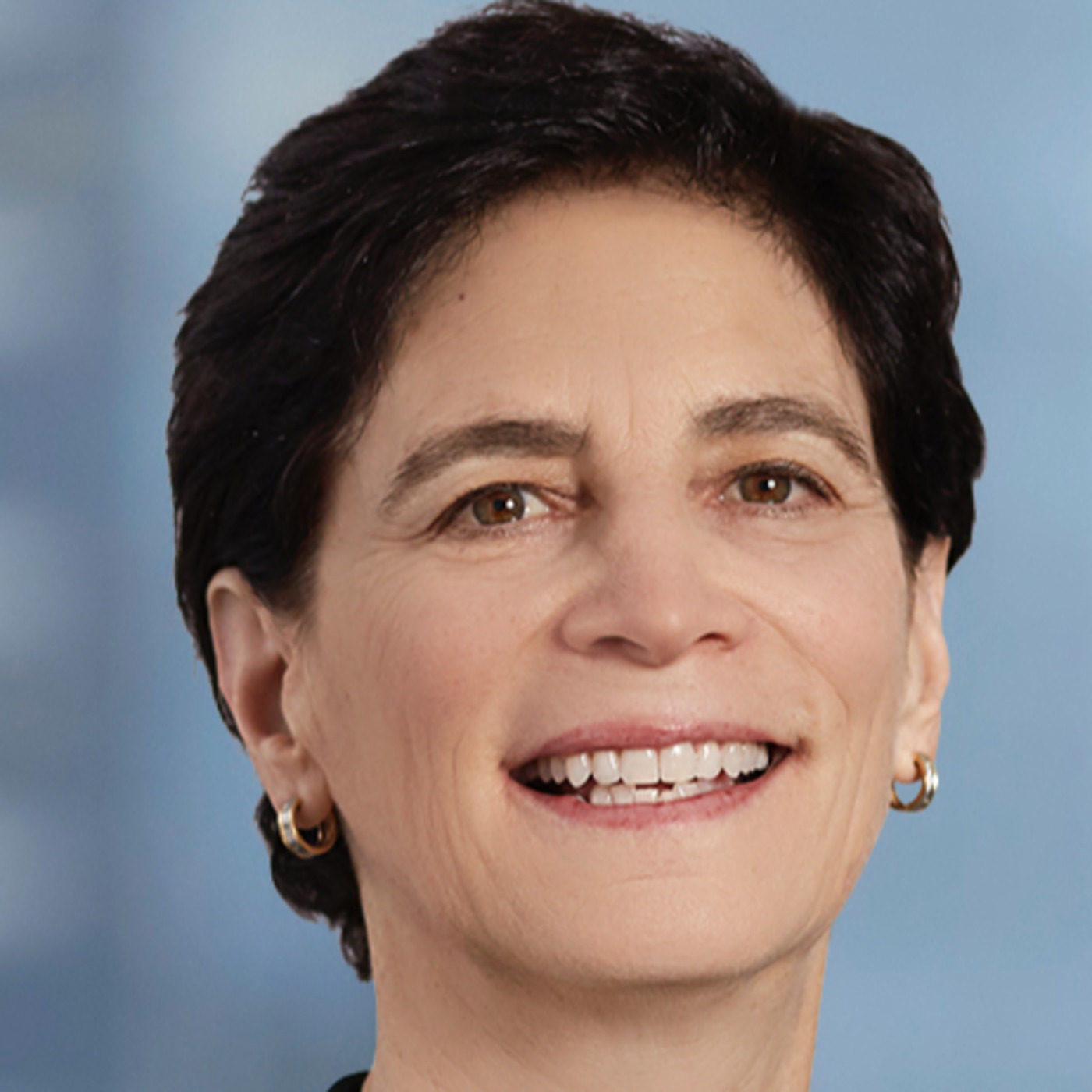
Aoifinn Devitt: I’m Aoifinn Devitt, and welcome to the 50 Faces Podcast, a podcast committed to revealing the richness and diversity of the world of investment by focusing on its people and their stories. I’m joined today by Eve Ellis, who is a wealth advisor with William Blair. She has a particular interest in socially responsible and impact investments and manages two proprietary portfolios, the Gender Parity Strategy and the Matterhorn Refinitiv Diversity and Inclusion Strategy. She’s also a member of the Forum for Sustainable and Responsible Investment. She has received multiple awards, including featuring on the Crain’s New York Notable Women in Financial Advice inaugural list in 2020 and the Forbes America’s Top Women Wealth Advisors Best in State. Welcome, Eve. Thanks for joining me today.
Eve Ellis: Thank you, Aoifinn. I’ve been enjoying listening to your podcast, so I’m especially happy to be here.
Aoifinn Devitt: Well, we’re delighted to have you. So let’s start with your background. Where did you grow up? What did you study? And how did you come to enter the world of wealth management?
Eve Ellis: Well, I grew up outside of Philadelphia, and I grew up playing competitive tennis. My route to the world of wealth management was a circuitous one. I went to Yale University and studied not economics, but rather American Studies, with an area of concentration in women’s studies. And then after Yale, I competed on the satellite pro tennis tour and traveled throughout Europe competing, including the qualifying rounds at Wimbledon. Then I taught tennis, coached the women’s varsity tennis team at Columbia University and Barnard College here in New York City. And this was in the ’90s. And between tennis and wealth management, I actually had a web consulting company And after 9/11, I decided that that was not a passion of mine. And as I remember it, I saw an ad that said, again, this is just from my memory, maybe not correct, I’m not sure, but I saw an ad that said, “Educators, attorneys, entrepreneurs, and accountants, come learn about being a financial advisor.” And I have to say, I was hooked. I get to coach people in a more important area of their lives than their tennis. Their financial lives. So as I said, it was not— it was a bit circuitous.
Aoifinn Devitt: Well, let’s go back to tennis for a second because I’m always intrigued by guests who have had a strong experience in sports or been competitive sports players because I think there’s a lot of skills, perhaps coaching, that has gone into your own sports career that has maybe been formative. What traits or skills did you take from tennis at that level into the work you do now?
Eve Ellis: Well, first, I would say I like to win. The gauge for winning has changed, or the definition has changed, meaning it’s no longer about winning matches or having my players win matches. It’s really about are we helping our clients accomplish their goals and objectives? That’s winning. And I’d say from coaching, I would say setting goals, being positive, and staying focused ourselves, but more importantly, Making sure our clients stay focused. There’s, there’s so much noise out there, as you know, Aoifinn, that our clients really need to stay focused on their own goals and really shut out the noise. So I’d say, you know, just goal setting and, and being focused on helping clients achieve their goals. That’s, that’s the win, and that’s what we look for.
Aoifinn Devitt: And moving into now discussing the wealth management world as a whole, Generating leads and business and new clients in the segment is a huge part of what wealth advisors do. What would you say have been the keys to your success in doing that?
Eve Ellis: Well, I would say there, there are probably 3 keys right off the bat that I’m thinking of. One is knowing who I am, knowing I am not the right person for everyone, and knowing how to ask for referrals for other like-minded individuals and families. Let me unpack this. First, knowing who I am. On the one hand, it’s kind of easy, but maybe not. I’ve been a feminist forever because I have always believed in equality and fairness for all. That means even in corporate America, but we’ll get to that later, I’m sure. Second, I know that my team is not necessarily the right team for everyone, so Nikolai, my partner Nikolai Chubankov, and I provide comprehensive wealth planning, often sophisticated planning. And, you know, some people want a hot stock tip. That’s not us, and we know that. And third, we understand that there are many like-minded individuals and families that not only believe in equality and fairness but want to align their investments with those values as well. And so, we ask for referrals because we bring resources to those who seek values alignment but don’t necessarily know where to look. In fact, sometimes they don’t even know that they can make the alignment. So, to us, asking for referrals is a way to educate as well as a way to build business.
Aoifinn Devitt: Let’s go back now to something you said about being a feminist because I’m sure that’s no surprise that that is a link to what you’ve created in terms of the a proprietary portfolio that focuses on gender parity. Can you talk a little bit about the origins of that portfolio and the other portfolio focused on diversity and inclusion?
Eve Ellis: Yeah, I mean, when I say values I’m, alignment, I’m, and being a feminist, I mean, the gender parity strategy and our diversity and inclusion are really top of mind. 10 years ago, we started the gender parity strategy when two things converged. First, our clients were asking for additional ways to invest in line with their values. And I was reading an abundance of research that showed that companies with more women on their boards had stronger financials than those companies with few or no women on their boards. So, we researched the financial strength of companies in our investable universe, our universe of all companies in the Russell 3000. With 3 or more women on their board. And we now include 3 or more women key executives too. But it’s really important to note that had the research not been prevalent, had the business case not been there, we would not have started what was then in the press called the Parity Portfolio, now the Gender Parity Strategy. So, it seems As though it makes sense for anyone who cares about equality and fairness to invest with their dollars being in line with who they are.
Aoifinn Devitt: And in terms of— you mentioned the 3 female board members perhaps as a minimum on some of the, the companies— what difference does that make in your experience in terms of how governance gets done, how decisions get made? Do you see that there is advantage of having better diversity and cognitive diversity that flows from that on these boards?
Eve Ellis: Yeah, I think that diversity breeds better decision-making, or leads to better decision-making, you know, and that can be diversity of thought, diversity of gender, diversity of race, ethnicity, LGBTQ. I mean, what I meant to say also, that in our diversity and inclusion portfolio, we’re looking at all these different issues in terms of gender, race, ethnicity, LGBTQ+, disability and really what policies companies set. When companies have, let’s say, strong family leave policies or strong hiring, promoting, retaining policies that are really— when I say strong, meaning diverse-focused, there’s a way that they’re being more forward-thinking and more achieving something strong for their employees and for their stakeholders in terms of being forward-thinking, making better decisions, bringing more thought, more diverse backgrounds into the thought process and into the decision-making process. We see them as being more forward-thinking and more fair to their stakeholders and that you’re going to get better decision-making. That way.
Aoifinn Devitt: When you look at perhaps your, your blueprint for these strategies versus your experience now that you’ve executed and implemented them, were there any surprises that you came across in terms of maybe companies that didn’t look great on the surface maybe, but actually looked like they actually did have a genuine gender parity approach, or, or the opposite?
Eve Ellis: I’m not sure if there were any surprises. I think initially there was a surprise a bit that there were not more companies to choose from that had that minimum of 3 or more women on their boards. But I will tell you, maybe one surprise was there was a company that we invested in, and I’m not allowed to say name companies, but that particular company had just instituted a program where their CEO was going to be instrumental in helping place their female employees on other companies’ boards. That, to me, was a positive surprise. They had 13 women that they had selected from all different areas of their company. As we know, getting onto boards means networking and having the right networks to be introduced. That CEO had set aside the time and his contacts to really work to get those women onto other company boards. They saw it as a win-win-win situation. And they placed, I think it was 12 of the 13 women on other boards. That was a surprise. That was early on. That was 10 years ago. It showed us that that was a forward-thinking company, forward-thinking CEO. Again, I can’t name names, but their financial strength represented what they were doing in terms of diversity and inclusion. Being, I know, just one piece of their contributor to their financial strength, but still it was important.
Aoifinn Devitt: Let’s talk about the client demand side. Maybe we can talk about ESG more broadly, but also for these products in particular. How have you seen the awareness and demand for ESG-integrated strategies across your client base?
Eve Ellis: Well, I guess there’s kind of a confluence of, or a meeting really, emerging of two things going on. One is ESG is growing, period, and the women’s market is growing, period. And so, I mean, if we take the growth of ESG and client demand, I mean, right now, over $17 trillion of managed assets are invested in sustainable investments. And according to Bloomberg LP, that number is growing rapidly, so rapidly that Bloomberg said that that number may rise to $50 trillion by 2025. So, ESG is rapidly growing, whether it’s about having an ESG overlay or actually having an ESG mission, as we do in both the gender parity and diversity and inclusion strategies. On the other side, we have the growing women’s market, which is currently at $70 trillion according to a study by the Boston Consulting Group. And they said that that number could rise to $93 trillion of assets controlled by women. So, they think that number could rise to $93 trillion being managed by women’s wealth by 2023. That’s next year. So, I’m not saying that these two strategies are only for women, they’re not. Our initial investors were men, were white men in these two portfolios. But I do think that for those who really want to see equality and fairness in corporate America, we’ve got, you know, the right environment to make that happen.
Aoifinn Devitt: I’d love to just dig in a little to that burgeoning this number you mentioned around female wealth, or wealth in the hands of females, that’s certainly something that is getting an increasing amount of attention recently. And I suppose, why is that, that it’s now growing? And how should it be serviced appropriately in your view? Do you think we have the right infrastructure in place to cater for that currently?
Eve Ellis: I think we have it. I think some of us had it earlier than others, but I think we have the infrastructure for for it. And I’m going to quote a colleague of mine, Laura Koy, about this because I think she sums it up really well. She’s the head of philanthropy strategy and ESG integration at William Blair. And this sort of sums up exactly what you’re asking about in terms of the infrastructure. But she said, “A great wealth transfer is upon us and women have a much higher propensity to give more more of their wealth and be very purposeful with it. Women are about finding purpose using more assets, meaning their human capital, their financial capital, their social capital to make the world a better place. And I think she hit the nail on the head because you’ve got growing women’s wealth, you’ve got the idea of wanting to do good in the world. And I think that the infrastructure is there because not only are the clients demanding it, but there are more and more asset managers who are noticing that clients are demanding it, and they also want the companies that they invest in to be the best they can be. And that means more than just the numbers, or if you will, the numbers will be affected positively or can be affected positively by doing the right thing.
Aoifinn Devitt: Let’s turn that lens on our own industry here now. You’re a senior woman in wealth management. Do you see the number of senior women that you’d like to see? How do you assess maybe the pipeline and diversity in the industry as a whole?
Eve Ellis: Well, I like to be positive, but we are not where we want to be. I mean, let’s look at— you could even look at the Matterhorn Refinitiv Diversity and an inclusion strategy and say, well, are the financial services companies ranking high or not in the strategy? And there is not an overweight to financial services, which to me indicates that we’re not where we want to be, not even close, but we’re also not where we used to be either. So, I’d say you’ve got more than a sprinkling of women in senior roles. You interviewed one of my colleagues, Stephanie Bramey, who’s our head of investment management at William Blair, and you did a wonderful interview with her and she’s inspiring. But the financial services industry— actually, I was at an event last night where some people were saying there’s the first-ever female CEO of a large bank. And while we’re all rejoicing in that, we’re also recognizing that it’s 2022 and it’s only the first. So, I think that whether the glass is half full or half empty, I think it depends on what day you get me. But we’re not where we want to be. Let’s put it that way. Parity means parity. That means 50%. So, that’s what we’re working on. And again, it’s also not just women, it’s about underrepresented people. So, you know, we’re also talking about people of color. We’re talking about diversity through and through and everything that it means. And it makes— it will make companies stronger. It will make the economy stronger. It will make businesses stronger. So there’s really not a viable reason not to work to achieve it.
Aoifinn Devitt: Let’s go back to your personal story now. Are there any key people over the course of your career who influenced influenced you, whether in your career or in life in general?
Eve Ellis: Certainly. I mean, I would say if we go way back, my father told me I could be whatever I wanted to be. Now, if we flash forward to today, there are so many people influencing my work within the firm. Laura Koy, our head of philanthropy, as I mentioned, you know, she’s helping our clients, really guide our clients as they strive to have more impact. I’d say Chris Brathwaite, who is our Blair partner who guides us with our entrepreneurial clients seeking to sell their businesses. Louise Lane, who was the first female advisor at our firm, sits on every Barron’s and Top Advisors major list. And, you know, she’s been a friend and a mentor to me. And in my life outside work, I’d say my wife, Annette, has influenced my choices for years.
Aoifinn Devitt: And in terms of any words of wisdom that either those people shared with you or that you derived on your own, or any creed or motto that you live by? Can you share anything there?
Eve Ellis: I would say, well, I once asked Gloria Steinem, who has become a friend, when does the work end? When do we win? And I really didn’t like her answer at the time, I have to say. She said, the battle goes on forever. And I now realize she’s right. It’s not to say we don’t have victories along the way, but really the battle does go on. And I’d say in terms of advice, let’s say really the motto I would say is look for opportunities to feel valued. And I’ve often given that advice to younger women. You need to feel valued at work. And one day, I was looking in the mirror and I was thinking, I’m not valued. And so, I made a change and I know it’s not easy to make a change, but I think look for opportunities to feel valued. I mean, here I am at Blair sitting on 4 committees within the firm all focused on ESG, gender, and diversity. And that means that for our clients, you know, we have access to anyone at the firm because we’re so engaged within the firm and so valued within the firm. So, you know, I’d say look for opportunities to feel valued. It energizes your work even if you didn’t know it needed to be energized. I just, you know, again, I just feel really fortunate to be in the role I’m in because I also feel as though, you know, look, I love my clients. I feel as though I can offer clients the best of all worlds. Again, whether they’re looking for ESG investing, whether they’re looking for sophisticated financial planning, or whether they’re looking to invest in private companies, or whether they’re looking to sell their business, you know, I just feel as though I’m fortunate because I’m all in.
Aoifinn Devitt: Well, thank you so much, Eve. You are one of those individuals who is doing the work. What we know is never done, but you are out there, you are driven, you mentioned how competitive you are, and you are putting your money where your mouth is with these proprietary products and letting us all see the proof of the pudding. So I want to thank you for coming here, sharing your insights, and for the work you continue to do on all of our behalves.
Eve Ellis: Well, thanks, Aoifinn. It’s been a pleasure. It’s really my clients who are doing what you’re saying. I’m the conduit. But anyway, thank you. It’s really been my pleasure and I really appreciate all the impactful work that you’re doing. So thanks.
Aoifinn Devitt: Well, thank you so much. I’m Aoifinn Devitt. Thank you for listening to the 50 Faces Podcast. If you liked what you heard and would like to tune in to hear more inspiring investors on their personal journeys, please subscribe on Apple Podcasts or wherever you get your podcasts. This podcast is for informational purposes only and should not be construed as investment advice, and all views are personal and should not be attributed to the organizations and affiliations of the host or any guest.
Aoifinn Devitt: This podcast was made possible by the kind support of Alvine Capital Management, a London-based specialist investment advisor and placement boutique.
Eve Ellis: I once asked Gloria Steinem, who has become a friend, when does the work end? When do we win? And I really didn’t like her answer at the time, I have to say. She said, the battle goes on forever. And I now realize she’s right. It’s not to say we don’t have victories along the way, but really the battle does go on. I’d say, in terms of advice, really the motto is look for opportunities to feel valued. I’ve often given that advice to younger women. You need to feel valued at work.
Aoifinn Devitt: I’m Aoifinn Devitt, and welcome to the 50 Faces Podcast, a podcast committed to revealing the richness and diversity of the world of investment by focusing on its people and their stories. I’m joined today by Eve Ellis, who is a wealth advisor with William Blair. She has a particular interest in socially responsible and impact investments and manages two proprietary portfolios, the Gender Parity Strategy and the Matterhorn Refinitiv Diversity and Inclusion Strategy. She’s also a member of the Forum for Sustainable and Responsible Investment. She has received multiple awards, including featuring on the Crain’s New York Notable Women in Financial Advice inaugural list in 2020 and the Forbes America’s Top Women Wealth Advisors Best in State. Welcome, Eve. Thanks for joining me today.
Eve Ellis: Thank you, Aoifinn. I’ve been enjoying listening to your podcast, so I’m especially happy to be here.
Aoifinn Devitt: Well, we’re delighted to have you. So let’s start with your background. Where did you grow up? What did you study? And how did you come to enter the world of wealth management?
Eve Ellis: Well, I grew up outside of Philadelphia, and I grew up playing competitive tennis. My route to the world of wealth management was a circuitous one. I went to Yale University and studied not economics, but rather American Studies, with an area of concentration in women’s studies. And then after Yale, I competed on the satellite pro tennis tour and traveled throughout Europe competing, including the qualifying rounds at Wimbledon. Then I taught tennis, coached the women’s varsity tennis team at Columbia University and Barnard College here in New York City. And this was in the ’90s. And between tennis and wealth management, I actually had a web consulting company And after 9/11, I decided that that was not a passion of mine. And as I remember it, I saw an ad that said, again, this is just from my memory, maybe not correct, I’m not sure, but I saw an ad that said, “Educators, attorneys, entrepreneurs, and accountants, come learn about being a financial advisor.” And I have to say, I was hooked. I get to coach people in a more important area of their lives than their tennis. Their financial lives. So as I said, it was not— it was a bit circuitous.
Aoifinn Devitt: Well, let’s go back to tennis for a second because I’m always intrigued by guests who have had a strong experience in sports or been competitive sports players because I think there’s a lot of skills, perhaps coaching, that has gone into your own sports career that has maybe been formative. What traits or skills did you take from tennis at that level into the work you do now?
Eve Ellis: Well, first, I would say I like to win. The gauge for winning has changed, or the definition has changed, meaning it’s no longer about winning matches or having my players win matches. It’s really about are we helping our clients accomplish their goals and objectives? That’s winning. And I’d say from coaching, I would say setting goals, being positive, and staying focused ourselves, but more importantly, Making sure our clients stay focused. There’s, there’s so much noise out there, as you know, Aoifinn, that our clients really need to stay focused on their own goals and really shut out the noise. So I’d say, you know, just goal setting and, and being focused on helping clients achieve their goals. That’s, that’s the win, and that’s what we look for.
Aoifinn Devitt: And moving into now discussing the wealth management world as a whole, Generating leads and business and new clients in the segment is a huge part of what wealth advisors do. What would you say have been the keys to your success in doing that?
Eve Ellis: Well, I would say there, there are probably 3 keys right off the bat that I’m thinking of. One is knowing who I am, knowing I am not the right person for everyone, and knowing how to ask for referrals for other like-minded individuals and families. Let me unpack this. First, knowing who I am. On the one hand, it’s kind of easy, but maybe not. I’ve been a feminist forever because I have always believed in equality and fairness for all. That means even in corporate America, but we’ll get to that later, I’m sure. Second, I know that my team is not necessarily the right team for everyone, so Nikolai, my partner Nikolai Chubankov, and I provide comprehensive wealth planning, often sophisticated planning. And, you know, some people want a hot stock tip. That’s not us, and we know that. And third, we understand that there are many like-minded individuals and families that not only believe in equality and fairness but want to align their investments with those values as well. And so, we ask for referrals because we bring resources to those who seek values alignment but don’t necessarily know where to look. In fact, sometimes they don’t even know that they can make the alignment. So, to us, asking for referrals is a way to educate as well as a way to build business.
Aoifinn Devitt: Let’s go back now to something you said about being a feminist because I’m sure that’s no surprise that that is a link to what you’ve created in terms of the a proprietary portfolio that focuses on gender parity. Can you talk a little bit about the origins of that portfolio and the other portfolio focused on diversity and inclusion?
Eve Ellis: Yeah, I mean, when I say values I’m, alignment, I’m, and being a feminist, I mean, the gender parity strategy and our diversity and inclusion are really top of mind. 10 years ago, we started the gender parity strategy when two things converged. First, our clients were asking for additional ways to invest in line with their values. And I was reading an abundance of research that showed that companies with more women on their boards had stronger financials than those companies with few or no women on their boards. So, we researched the financial strength of companies in our investable universe, our universe of all companies in the Russell 3000. With 3 or more women on their board. And we now include 3 or more women key executives too. But it’s really important to note that had the research not been prevalent, had the business case not been there, we would not have started what was then in the press called the Parity Portfolio, now the Gender Parity Strategy. So, it seems As though it makes sense for anyone who cares about equality and fairness to invest with their dollars being in line with who they are.
Aoifinn Devitt: And in terms of— you mentioned the 3 female board members perhaps as a minimum on some of the, the companies— what difference does that make in your experience in terms of how governance gets done, how decisions get made? Do you see that there is advantage of having better diversity and cognitive diversity that flows from that on these boards?
Eve Ellis: Yeah, I think that diversity breeds better decision-making, or leads to better decision-making, you know, and that can be diversity of thought, diversity of gender, diversity of race, ethnicity, LGBTQ. I mean, what I meant to say also, that in our diversity and inclusion portfolio, we’re looking at all these different issues in terms of gender, race, ethnicity, LGBTQ+, disability and really what policies companies set. When companies have, let’s say, strong family leave policies or strong hiring, promoting, retaining policies that are really— when I say strong, meaning diverse-focused, there’s a way that they’re being more forward-thinking and more achieving something strong for their employees and for their stakeholders in terms of being forward-thinking, making better decisions, bringing more thought, more diverse backgrounds into the thought process and into the decision-making process. We see them as being more forward-thinking and more fair to their stakeholders and that you’re going to get better decision-making. That way.
Aoifinn Devitt: When you look at perhaps your, your blueprint for these strategies versus your experience now that you’ve executed and implemented them, were there any surprises that you came across in terms of maybe companies that didn’t look great on the surface maybe, but actually looked like they actually did have a genuine gender parity approach, or, or the opposite?
Eve Ellis: I’m not sure if there were any surprises. I think initially there was a surprise a bit that there were not more companies to choose from that had that minimum of 3 or more women on their boards. But I will tell you, maybe one surprise was there was a company that we invested in, and I’m not allowed to say name companies, but that particular company had just instituted a program where their CEO was going to be instrumental in helping place their female employees on other companies’ boards. That, to me, was a positive surprise. They had 13 women that they had selected from all different areas of their company. As we know, getting onto boards means networking and having the right networks to be introduced. That CEO had set aside the time and his contacts to really work to get those women onto other company boards. They saw it as a win-win-win situation. And they placed, I think it was 12 of the 13 women on other boards. That was a surprise. That was early on. That was 10 years ago. It showed us that that was a forward-thinking company, forward-thinking CEO. Again, I can’t name names, but their financial strength represented what they were doing in terms of diversity and inclusion. Being, I know, just one piece of their contributor to their financial strength, but still it was important.
Aoifinn Devitt: Let’s talk about the client demand side. Maybe we can talk about ESG more broadly, but also for these products in particular. How have you seen the awareness and demand for ESG-integrated strategies across your client base?
Eve Ellis: Well, I guess there’s kind of a confluence of, or a meeting really, emerging of two things going on. One is ESG is growing, period, and the women’s market is growing, period. And so, I mean, if we take the growth of ESG and client demand, I mean, right now, over $17 trillion of managed assets are invested in sustainable investments. And according to Bloomberg LP, that number is growing rapidly, so rapidly that Bloomberg said that that number may rise to $50 trillion by 2025. So, ESG is rapidly growing, whether it’s about having an ESG overlay or actually having an ESG mission, as we do in both the gender parity and diversity and inclusion strategies. On the other side, we have the growing women’s market, which is currently at $70 trillion according to a study by the Boston Consulting Group. And they said that that number could rise to $93 trillion of assets controlled by women. So, they think that number could rise to $93 trillion being managed by women’s wealth by 2023. That’s next year. So, I’m not saying that these two strategies are only for women, they’re not. Our initial investors were men, were white men in these two portfolios. But I do think that for those who really want to see equality and fairness in corporate America, we’ve got, you know, the right environment to make that happen.
Aoifinn Devitt: I’d love to just dig in a little to that burgeoning this number you mentioned around female wealth, or wealth in the hands of females, that’s certainly something that is getting an increasing amount of attention recently. And I suppose, why is that, that it’s now growing? And how should it be serviced appropriately in your view? Do you think we have the right infrastructure in place to cater for that currently?
Eve Ellis: I think we have it. I think some of us had it earlier than others, but I think we have the infrastructure for for it. And I’m going to quote a colleague of mine, Laura Koy, about this because I think she sums it up really well. She’s the head of philanthropy strategy and ESG integration at William Blair. And this sort of sums up exactly what you’re asking about in terms of the infrastructure. But she said, “A great wealth transfer is upon us and women have a much higher propensity to give more more of their wealth and be very purposeful with it. Women are about finding purpose using more assets, meaning their human capital, their financial capital, their social capital to make the world a better place. And I think she hit the nail on the head because you’ve got growing women’s wealth, you’ve got the idea of wanting to do good in the world. And I think that the infrastructure is there because not only are the clients demanding it, but there are more and more asset managers who are noticing that clients are demanding it, and they also want the companies that they invest in to be the best they can be. And that means more than just the numbers, or if you will, the numbers will be affected positively or can be affected positively by doing the right thing.
Aoifinn Devitt: Let’s turn that lens on our own industry here now. You’re a senior woman in wealth management. Do you see the number of senior women that you’d like to see? How do you assess maybe the pipeline and diversity in the industry as a whole?
Eve Ellis: Well, I like to be positive, but we are not where we want to be. I mean, let’s look at— you could even look at the Matterhorn Refinitiv Diversity and an inclusion strategy and say, well, are the financial services companies ranking high or not in the strategy? And there is not an overweight to financial services, which to me indicates that we’re not where we want to be, not even close, but we’re also not where we used to be either. So, I’d say you’ve got more than a sprinkling of women in senior roles. You interviewed one of my colleagues, Stephanie Bramey, who’s our head of investment management at William Blair, and you did a wonderful interview with her and she’s inspiring. But the financial services industry— actually, I was at an event last night where some people were saying there’s the first-ever female CEO of a large bank. And while we’re all rejoicing in that, we’re also recognizing that it’s 2022 and it’s only the first. So, I think that whether the glass is half full or half empty, I think it depends on what day you get me. But we’re not where we want to be. Let’s put it that way. Parity means parity. That means 50%. So, that’s what we’re working on. And again, it’s also not just women, it’s about underrepresented people. So, you know, we’re also talking about people of color. We’re talking about diversity through and through and everything that it means. And it makes— it will make companies stronger. It will make the economy stronger. It will make businesses stronger. So there’s really not a viable reason not to work to achieve it.
Aoifinn Devitt: Let’s go back to your personal story now. Are there any key people over the course of your career who influenced influenced you, whether in your career or in life in general?
Eve Ellis: Certainly. I mean, I would say if we go way back, my father told me I could be whatever I wanted to be. Now, if we flash forward to today, there are so many people influencing my work within the firm. Laura Koy, our head of philanthropy, as I mentioned, you know, she’s helping our clients, really guide our clients as they strive to have more impact. I’d say Chris Brathwaite, who is our Blair partner who guides us with our entrepreneurial clients seeking to sell their businesses. Louise Lane, who was the first female advisor at our firm, sits on every Barron’s and Top Advisors major list. And, you know, she’s been a friend and a mentor to me. And in my life outside work, I’d say my wife, Annette, has influenced my choices for years.
Aoifinn Devitt: And in terms of any words of wisdom that either those people shared with you or that you derived on your own, or any creed or motto that you live by? Can you share anything there?
Eve Ellis: I would say, well, I once asked Gloria Steinem, who has become a friend, when does the work end? When do we win? And I really didn’t like her answer at the time, I have to say. She said, the battle goes on forever. And I now realize she’s right. It’s not to say we don’t have victories along the way, but really the battle does go on. And I’d say in terms of advice, let’s say really the motto I would say is look for opportunities to feel valued. And I’ve often given that advice to younger women. You need to feel valued at work. And one day, I was looking in the mirror and I was thinking, I’m not valued. And so, I made a change and I know it’s not easy to make a change, but I think look for opportunities to feel valued. I mean, here I am at Blair sitting on 4 committees within the firm all focused on ESG, gender, and diversity. And that means that for our clients, you know, we have access to anyone at the firm because we’re so engaged within the firm and so valued within the firm. So, you know, I’d say look for opportunities to feel valued. It energizes your work even if you didn’t know it needed to be energized. I just, you know, again, I just feel really fortunate to be in the role I’m in because I also feel as though, you know, look, I love my clients. I feel as though I can offer clients the best of all worlds. Again, whether they’re looking for ESG investing, whether they’re looking for sophisticated financial planning, or whether they’re looking to invest in private companies, or whether they’re looking to sell their business, you know, I just feel as though I’m fortunate because I’m all in.
Aoifinn Devitt: Well, thank you so much, Eve. You are one of those individuals who is doing the work. What we know is never done, but you are out there, you are driven, you mentioned how competitive you are, and you are putting your money where your mouth is with these proprietary products and letting us all see the proof of the pudding. So I want to thank you for coming here, sharing your insights, and for the work you continue to do on all of our behalves.
Eve Ellis: Well, thanks, Aoifinn. It’s been a pleasure. It’s really my clients who are doing what you’re saying. I’m the conduit. But anyway, thank you. It’s really been my pleasure and I really appreciate all the impactful work that you’re doing. So thanks.
Aoifinn Devitt: Well, thank you so much. I’m Aoifinn Devitt. Thank you for listening to the 50 Faces Podcast. If you liked what you heard and would like to tune in to hear more inspiring investors on their personal journeys, please subscribe on Apple Podcasts or wherever you get your podcasts. This podcast is for informational purposes only and should not be construed as investment advice, and all views are personal and should not be attributed to the organizations and affiliations of the host or any guest.