Aoifinn Devitt: This podcast is brought to you by the kind support of the Active Share Podcast. What does a two-time world-winning coach and MLB baseball team owner, top chef, and luxury fashion designer have in common? They’ve all been featured on the Active Share Podcast. If you’re seeking the less obvious and are curious about the ever-changing world and how it affects investing, the Active Share Podcast is for you. Hear thought-provoking conversations with thought leaders, company executives, and William Blair Investment Management’s own analysts and portfolio managers as they share unique perspectives on investing in a world that’s always evolving. Download the Active Share podcast on iTunes, Spotify, Google, Stitcher, and TuneIn.
Hardeep Rai: My son Eshan was born in 2006. At the last minute, there was a severe birthing complication, and he was the reason that I really changed the direction of my entire life, because I think I realized that everything that I’d been building and working towards in my life in terms of this pot of money and everything you wanted to be able to do became totally useless when Eshan was born, because I realized that that money that I had wouldn’t be able to reverse his brain damage. So I had to reconsider my life completely in so many different ways.
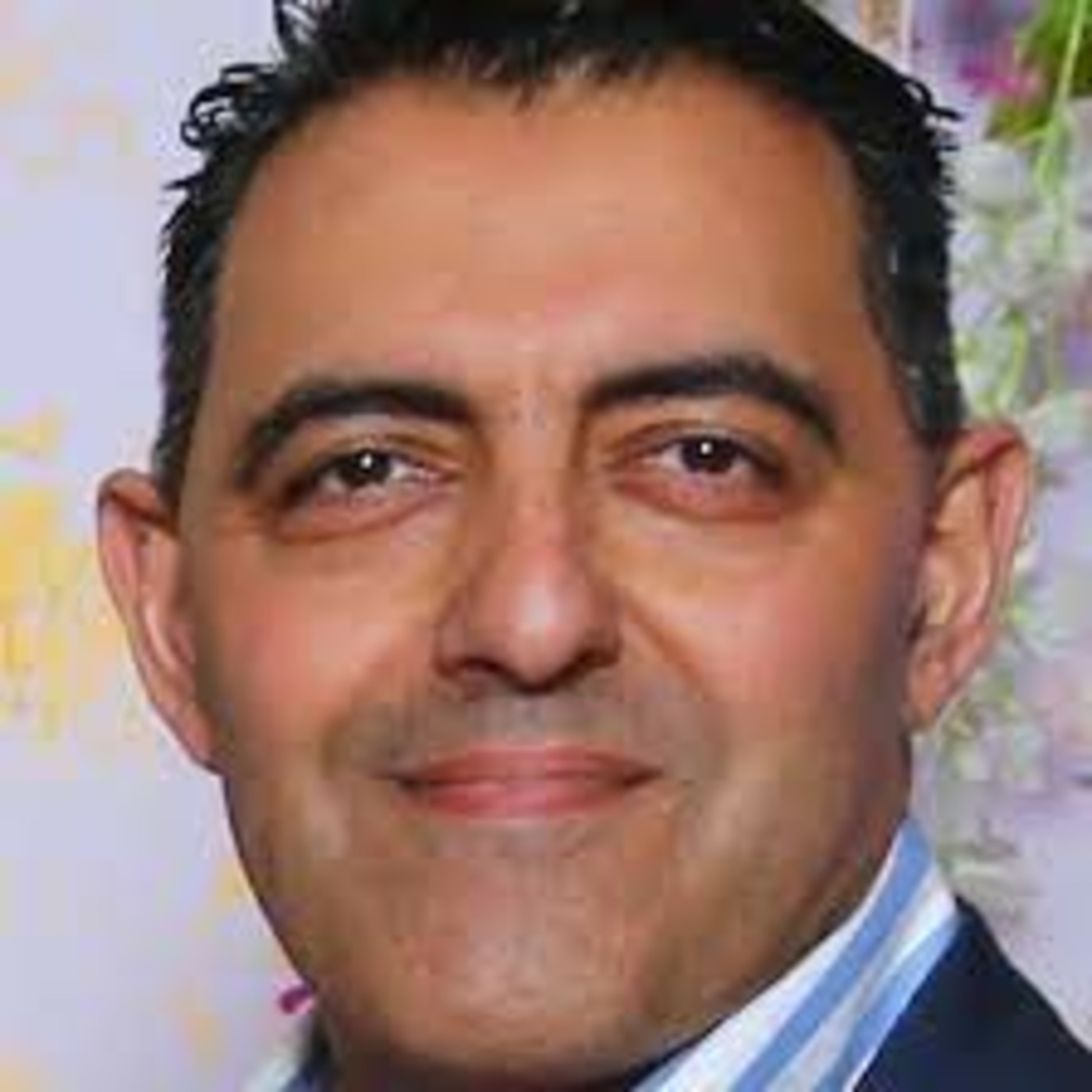
Aoifinn Devitt: I’m Aoifinn Devitt, and welcome to the 50 Faces Podcast, a podcast committed to revealing the richness and diversity of the world of investment. By focusing on its people and their stories. I’m joined today by Hardeep Rai, who is Group Chief Executive Officer at the Kaleidoscope Group of Companies, which enable disabled individuals to realize their full potential and find their purpose by enabling them to learn new skills, find their dream job, or start their own business. Kaleidoscope Investments, which invests in disabled individuals with great ideas, enables them to launch their own businesses. He’s a prominent advocate for the rights of disabled people, particularly in the City of London network, and is driven by an agenda of social impact and inclusion. Welcome, Hardeep. Thanks for joining me today.
Hardeep Rai: Thank you very much. Delighted to be with you.
Aoifinn Devitt: Can we start with your personal background and journey? Where did you grow up? What did you study? And how did the world of finance and investing make itself known to you?
Hardeep Rai: Thank you so much. So originally, I’m of Indian origin, but I grew up in London in the UK, and actually that’s primarily where I spent most of my life. I love London and I studied in London. Um, funnily enough, my background was in the days from an education point of view. I did my O levels and I did my A levels and I did my degree, and my degree was in law and economics. So my grandfather, who was a diplomat, actually wanted me to become a lawyer. But in the end, I think that for me, finance was always something that really excited me. And I think one of the reasons that I was excited by finance was because in those days, being a fund manager was something that really led to a lot of money, sort of in the late ’80s, early ’90s. It was very trendy to be a fund manager. So although my education was legal and economic, I ended up thinking that I wanted to go into banking. And my journey into banking was really funny actually, because even though I had this degree and master’s in law, I ended up becoming a secretary in the financial services industry to get my foot in the door. That’s how I actually had to do it. So I started off at a company called Newton Investment Management, and I worked there for about a year and a half. And my first role there was a secretary, Word for Windows, if you remember that, all these probably 25, 30 years ago. And then I sort of became a database administrator, and then I got a lucky break as a performance analyst. And I think sometimes in life you need that luck, don’t you? And for me, that luck was to be trained up as a performance analyst, and that’s really what got me into Gartmore, which was the hedge fund manager that I spent 13 years into. So that was my roots. It was quite unconventional, actually. It wasn’t what I thought would happen, but that’s how I first started getting involved into the world of finance. And then I spent a great 13 years at Goldman, sort of progressing over a period of time. And that was my introduction into the world.
Aoifinn Devitt: Interesting. I have a legal background myself, and I do think it’s actually a great training for some of the documentation, contract work, and just negotiation that goes on in finance and investing. So, definitely an interesting background there. Can you talk us through your transition from there then into your interest in mentoring startups and ultimately starting Kaleidoscope?
Hardeep Rai: Yes. So, what really happened was in my Citi career, I enjoyed it a phenomenal amount. And what I also did was I became a bit of an industry player. So, I would get involved in industry groups and representing Gartner on different panels and so on and so forth. And what then happened— and I sort of got to bring Eshan in at this point because he was actually, funny enough, the introduction into the mentoring world eventually. My son Eshan was born in 2006. At the last minute, there was a severe birthing complication, and he was the reason that I really changed the direction of my entire life, because I think I realized that everything that I’d been building and working towards in my life in terms of this pot of money and everything you wanted to be able to do became totally useless when Ishan was born because I realized that that money that I had wouldn’t be able to reverse his brain damage. So I had to reconsider my life completely in so many different ways. And one of them, from a work point of view, one of them was actually trying to do something that would enable me to stay at home more. So I decided to think about setting up my own business. I always had a real interest in investment and mentoring and startups, And actually, I got a very lucky break with a gentleman called James Caan, who used to work for— well, used to be at Dragon’s Den, one of the dragons on Dragon’s Den. And I ended up working for him for 2 years. And that was really my introduction into mentoring startups, because what he did is he mentored me into that startup world. And that was incredible. And actually, once I realized that it was something that it was so valuable, and he used to call it intelligent investing. So you put your money into something and you become a mentor with it too. So in the end, we built a business under James, and that’s how I first came across mentoring. And then I set up my own business, and this was actually before Kaleidoscape. It was a company called Equity Snake, and it was going to be very similar. We were going to invest in businesses and we were going to then mentor those businesses and startups. And I think it was during the time I had Equity Snake that I actually met Shane Bradley., and he approached me, and I always knew that I wanted to do something with disability because of my son, but I didn’t quite know what until I met Shane. And when he told me that people with disabilities really struggle to raise investment, for me, that was the perfect storm. It was me with my sort of investment and mentoring experience, and it was Shane with his experience of the disabled marketplace, and we sort of put both our heads together and thought, if we bring my experience to his experience, That’s how we actually founded Kaleidoscope Investments. So a company that would help people with disabilities to start their own businesses.
Aoifinn Devitt: And obviously your ability to empathize and to viscerally feel what some disabled people feel in this situation must have been brought about by your experience with Ishan. And it was actually a very passionate and personal LinkedIn post regarding Ishan that, that drew me to you. And that did actually go viral, as they say, on LinkedIn. I think it was notable because of the way you celebrated and the love that you showed in that post. Can you speak a little bit about that post and the reaction that it got?
Hardeep Rai: Yeah, thank you. I mean, that post, even till today, really moves me. And I think what was really beautiful about that post was it was so innocent. It was coming from a really genuine place. And I don’t know about you, but recently LinkedIn has driven me nuts because the amount of people that reach out to you, message you, sort of, it’s become very artificial, overly salesy in many, many as ways well. As well. But actually, what I do see nowadays is more genuine stories that are beginning to be shared, even though it’s a professional network. And for me, I first started sharing stories about Ishan on LinkedIn about 4 or 5 years ago. And I just really felt this year I wanted to just say something from the heart that was very sincere about Ishan and the effect that he has on me. Because I think the thing is, when any of us are touched by disability in some way, shape, or form, it really transitions our mindsets and it makes us realize there is another world out there. And that photo for me that I posted on that day was taken earlier last year at a time when Ishan was in hospital and we were in perfect harmony. It was just incredible with a child who is unable to speak, yet I felt the power of communication through this almost like spiritual connection.. And it’s my favorite photo of all time. So I used that photo on the post and then I just had a very small, simple, almost tribute to Eshin to thank him for how he’s fulfilled my life and helped me to understand purpose. And since that post, I mean, not that I’m a big one for statistics, but he’s had over 4.1 million views and I had over 2,000 comments, 53,000 reactions, people from all all over the world offering support for Kaleidoscope, from investment to donations, to entrepreneurs, to people looking for jobs, to people that just wanted to give up their time voluntarily to be a part of the cause, to parents reaching out for advice and guidance. There’s a lot of professional parents out there that don’t really share and don’t really talk to many people. And one of the things that came out of this post was actually setting up a sharing circle. For parents that could talk about their journeys with their children in that professional world. So it was a monumental experience for me. I’d never seen anything like it before. I sort of understood what it felt like to be a celebrity for a few weeks by having all these people connect with you. So it was very unexpected, but it was the most beautiful impact from that post.
Aoifinn Devitt: It was beautifully authentic. And thank you for raising awareness the way you do. So let’s move to that, because you are an active advocate in the city for better inclusion and access to employment for disabled individuals. It often seems to me that this disabled community is somewhat overlooked when we speak about diversity, equity, and inclusion. Can you paint a picture for what the landscape is like today and how well you think the City of London in particular is doing?
Hardeep Rai: I would have to start by saying that I think the City of London is massively improving in this area. I think there are some initiatives that have definitely raised the profile of disability. One of them is, of course, the Valuable 500, which was an initiative that was started by Caroline Casey, and it was all about getting the board of companies and CEOs to put disability onto their agenda. And so already, through the success of that initiative, there’s 500 companies worldwide that have signed up to getting disability into their organizations in a more meaningful way. Now, as we all know, there’s a big difference between sort of saying that you are going to commit to something and then actually doing it. And I think what I have personally witnessed over the last, I would say, probably a year and a half to 2 years, just before COVID and just after COVID, is a real shift in empathy and awareness around disability. It’s very marked. And I actually think that Through COVID, one of the things that most people realize, and this including a lot of employers, is that we all became disabled in some way, shape, or form through COVID because we actually couldn’t do anything. We had nowhere to go. We had no money to spend. We were actually stuck indoors. And that helped a lot of people really understand what people with disabilities go through. So I think as we come out of COVID in particular, given there’s a lot of sectors right now that are struggling with finding employees, I think this is a fantastic opportunity for people with disabilities to raise their profile and to be given the opportunities they genuinely deserve. As you said, I’m a very big advocate, and I think that I find it hugely frustrating because I’ve experienced this personally, sort of before Eshin and after Eshin, that we are discriminated against as people with disabilities. And I think the problem is trying to get companies to give us a chance. And London is, of course, very cosmopolitan. There’s a lot of startups in London. There’s a lot of SMEs in London. There’s a lot of people that have mindsets that are very alternative, typically. And that’s why I think, although we do look without— outside of London, of course, I think London is a fantastic ground to be promoting this level of diversity around disability. So I think there are the SMEs that are more open-minded to working with disabled people. But I know that there are a lot of corporates in the city that are also open to considering more people with disabilities. And funnily enough, we were approached by a hedge fund fairly recently. Now, they were quite formal in their approach, but I know how hedge funds work, right? And I know the lack of diversity that exists typically in hedge funds. And they actually said that they wanted to improve the diversity in their funnel. Of people that they would consider for roles within the business. And I thought that was a great step forward. It’s a step in the right direction. So I think more people have to be open-minded. They have to give them opportunities. But in addition to sort of giving opportunities, there have to be real roles that are available. Whilst I think that having internships and letting someone do work experience or shadow someone, whilst those are good things, Actually, if you think about the alternative perspectives that people with disabilities can bring to the table, you will be incredibly surprised at how much value they could add to the business. So I think it’s moving in the right direction from my personal experiences over the last year and a half.
Aoifinn Devitt: It’s so interesting, isn’t it? My son is a neurodivergent individual. He’s very capable in certain areas, but certainly needs some guiding hand and redirecting. And I would think that in the workplace, in order for neurodiverse individuals to be successful, it’s more than just getting them into the funnel. It’s about perhaps having a coach on hand, perhaps to guide them through certain situations, just as there might be an aide in a school situation. Have you thought about ways that we don’t just get them into the workforce, but we ensure that people with learning differences or just with different neurodivergence can really succeed?
Hardeep Rai: Yes, absolutely. So when we set up this recruitment business to try and get people with disabilities into employment, we very quickly realized exactly what you just said, and that is it’s critical for organizations to be aware of how to interact with people with disabilities, and not just people that they’re recruiting, but their own people, right? Because it’s critical they have to support their own staff. And this is where we were really surprised at how so many companies were. And actually, we ended up setting up an advisory business just to provide this level of awareness and training to people within organizations. And I think the way I look at it is the first thing you have to do is you have to fix your own place and make sure that you are supporting people with disabilities in your workplace. And how you do that is you have to encourage them to disclose their disabilities, right? And Some of the things we do, whether it’s motivational speech, whether it’s an awareness training session, whatever it may be, there’s got to be something around a webinar of some sort which enables people to feel comfortable in their workplace and to feel that they are well supported. So that’s the first thing. And then I think the second thing is when you do start to bring people in, absolutely like you said about work coaches, first of all, making sure that their onboarding process is really smooth, is really taking into account their particular disability. Because I think one big mistake people can make is think that just because they make an adaptation for a person in a wheelchair, that means that they’re comfortable with onboarding a person with a disability. As you all know, as well as I do, there’s so many different types of disabilities, particularly neurodivergent, as you mentioned, to do with your son. And they are particular needs that you need to consider. So there’s a lot of training that people need to do. But again, from my experience, companies are doing this. I mean, if I look at what our advisory business has done over the last year, year and a half, there’s a lot of organizations that are becoming more open to actually listening to diversity-related stories, taking people on board to help educate their teams about disability and actually diversity in general as well. I don’t just want to focus on disability. So I think there’s a willingness that is definitely coming into the marketplace. But I think that we are still some way away from people making a real impactful difference. So, for example, I know companies that still put projects like disability fairly low on their agenda, right? They’re on the agenda, but they’re fairly low on the agenda. And we need them to be higher up. So, there’s a lot of learning to be done there. And I, I’ll end by saying that in the UK in particular, we’re very, very fortunate with a scheme called Access to Work. So actually, when a person with a disability goes into employment, if they need a work coach, the government will actually pay for that, right? So the company doesn’t even need to pay for that. So there are some really good support mechanisms in place if they are required.
Aoifinn Devitt: That’s wonderful to hear. And I also think the rising awareness of mental health in the workplace is going to really push this conversation further because obviously mental health can obviously be a disability in itself. As well as it coexisting with other disabilities. And I think the more awareness, you mentioned disclosure being a first step to inclusion and treatment maybe, or acceptance, because there’s more disclosure around mental health now. As you said, we all have been subject to stress and extraordinary stress with COVID That hopefully will also help us with the conversation. So again, I’m encouraged by the work you’re doing as well as some of the progress we’re seeing. When it comes to entrepreneurship, Another area perhaps of different experiences, entrepreneurship might well be described as one of life’s great challenges for even anyone with the most advantages. How have you addressed disabled individuals who would like to start their own businesses and how have you made that a possibility?
Hardeep Rai: I could talk to you all day about this, but I’ll try and keep my answer relatively short. I mean, entrepreneurship is something I believe is sort of sort of in your blood. I really believe it’s not the kind of thing that you can be taught. It could be lying dormant beneath the surface, and something happens and all of a sudden you realize that you have an entrepreneurial streak in you. And I think that was very much my story. So although I’ve spent about 15, 16 years in employment, I’ve actually been a sort of closet entrepreneur or hidden entrepreneur all this time. And I knew that because I kept wanting to start businesses, and I always had these ideas about doing things in a different way. And I think the person that really pulled it out of me was James Caan, who was the ex-Dragon. And once I realized I had that streak and I suddenly wanted to set up my own business, I knew that that was the way that I wanted to go and that was going to be my direction. And I think what I’ve learned about people with disabilities— and you’re absolutely right, by the way, entrepreneurship is challenging for people without disabilities, let alone for people with disabilities. And I think I have the good fortune that just before I started Kaleidoscope, I actually had a business failure. And that company was like a mini Dragon’s Den. We were actually trying to invest in startups. But when I say they were not disabled-focused, they were just generally inclusive startups. But we didn’t actually have anybody that approached us from disabled backgrounds. So I was working with a lot of businesses and it was just sort of choosing the wrong partners, which is why it didn’t work. But the point there was entrepreneurship. I saw it from two perspectives. I saw it from a without disability perspective, and I saw it from a with disability perspective. And just from a very matter-of-fact point of view, after meeting 1,300+ disabled people from 65 different types of disabilities from 28 countries over 7 years, so that’s quite a big test bed, there were some phenomenal conclusions that we were able to draw. And the biggest one is actually the most obvious one. Which is people with disabilities think differently. It’s that simple. They think differently. And thinking differently when you’re an entrepreneur is actually a massive asset because you are constantly trying to differentiate yourself and demonstrate what your USPs are, your unique selling points. And actually, a lot of people with disabilities that we’ve engaged with over the years actually talk about their disability as part of their unique selling point. And we encourage that. So, you know, you’re moving away from a world where you’re actually trying to hide your disability, but you’re promoting your disability. And then you have people that think, well, the disabled world is actually quite a small world. People don’t realize that statistically there are just under 2 billion disabled people worldwide. 2 billion, just under, out of a population of almost 8 billion. So if you think about it, that’s about 1 in 4 people.. So when you worry about there not being a market of people with disabilities to buy your products and services, you are hugely mistaken, right? So that’s the thing. And then I think the element of support is essential for people with disabilities because you’ve got people that have got physical disabilities, and then you’ve got people that will have emotional or mental health-related disabilities, and they all have different support needs, and they all have different mentoring requirements. And that is sometimes when it can become bit more complex, you have to take the time to understand those individuals. And I think with Kaleidoscope, we’re very fortunate to be working with the government, to be in conversations with organizations like Innovate UK around how we can continue to support disabled entrepreneurs and really change the landscape for them. And I think one of the real big things for me that I feel very, very strongly about is that people with disabilities don’t get the chances that they deserve. And therefore, what they end up doing is they often change what it is that they want to do. Okay, and we developed an incubator program recently that actually encourages them to press reboot, to just pause, press reboot, think about what you do actually want to do. And if you’re in a role and you’re bored and you want to become an entrepreneur, then how can we help you to do that, right? So it is really aspirational in its mindset, and I think entrepreneurship is all about being aspirational. It is about having a vision, but it also takes a massive amount of grit and hard work and research and pain. And when I use the word pain, I mean pain in every respect, literally, from wanting to be awake all night thinking about your idea, pain from a money point of view, pain from a losing work-life balance point of view. There’s so much in entrepreneurship that is challenging but there’s also a phenomenal amount of reward. And I think for me, as Hardy now, you know, I sort of just turned early 50s, and I really feel that I’m on a path of purpose right now for the rest of my life. I’m not building Kaleidoscope to sell it. I want to build Kaleidoscope so that it leaves a legacy and an opportunity for people in many years and decades to come to have the opportunity to do what they deserve to do, rather than not having those opportunities around. So I’m very passionate about entrepreneurship, and I think it’s a wonderful thing to do if people have that desire within them to do it.
Aoifinn Devitt: It is so powerful. And one of the things I talk about when I think about my son and how people with disabilities are treated in general is avoiding the tyranny of low expectations. And what you’re doing and allowing a person to achieve their potential, that really is priceless. And many teachers would share that when they make an impact in the classroom. And it’s interesting that you mentioned that this is not a venture that’s been built with a view to being sold because the value you’re already enjoying really is impossible to put a value on. So thank you again. Well, let’s switch back to your personal reflections for a little bit. And you have had an extraordinary journey with lots of different seats at the table. Were there any key people along that journey who made an impact on you that you can share some of their wisdom?
Hardeep Rai: I think there are two people that come to mind. The first one is the obvious one, and that’s James Caan. Now, the reason I pick him is because he gave me an opportunity based on me not having the experience that he needed me to have. So he was looking for a very astute sales professional, somebody that really understood that world of sales and that could be a client director for his organization. And the funny thing was, I spent most of my life as a buyer. Okay. I’d never been in sales at all, but the fact that he sat with me and he enabled me to just talk and relax. He saw how very, very nervous I was at my interview, but yet he sort of flipped it. I was literally hyperventilating, by the way, at my interview. And what he did is he turned it around and he enabled me to relax and he spoke to me. And basically within 4 days, I got a role with him. And I think that opportunity that he gave me, it really is a once-in-a-lifetime opportunity. But by seeing the way that he operated, he encouraged me to operate in exactly the same way. So that opportunistic mindset that I have of trusting people that have a CV that’s got nothing to do with what I actually need is something that really has driven me. Okay, it’s really driven me. So that’s very, very powerful. So he was the first person. The second person that has inspired me is actually my son. Okay, because the reality is many of us have the opportunity to work with some really smart people, but actually what I learned from Ishan was the most powerful life lesson, which is there is a way to communicate without communicating, right? So we don’t communicate in a conventional way. We communicate through intuition. We communicate through feeling. We communicate through touch. We communicate through sensation. And that is what I have learned from Isha. So whilst I’ve been around some amazing scholars in my life and some amazing people, when I think about what Isha has really taught me, it’s the most powerful lesson in the world. And that’s why it’s changed me. I mean, I think I mentioned to you I’m quite religious. I’m a Christian. I follow my faith. I love it. But actually, when I think about what drives me and wakes me up, sort of makes me follow Kaleidoscope every day, it’s the lessons I’ve learned from my son. And I was just saying this to somebody yesterday, is that the beauty of his innocence has changed my mindset towards the people that I deal with. And I suppose that the challenge that I have is that I have to make sure that at the end of the day, I’m still running a business. I want the world to change their mindset towards people with disabilities, which means you shouldn’t be doing everything from a charitable point of view, right? You actually need people to look at disabled people not just as charitable, but actually people that can add value and can be quite commercial too. So it’s sort of balancing that mindset that I’ve had from my son versus that hedge fund commercially astute mindset that I have within my body as well. And and trying to get the right balance.
Aoifinn Devitt: Well, that really is very powerful. And my last question is around any creed or motto that you live by, maybe even, or any advice that you might have for your younger self.
Hardeep Rai: Yeah, do you know, I came up with a phrase fairly recently, which is, if you lead with purpose, people will follow and profit will come. Okay, so if you lead with purpose people will follow and profit will come. Now, we’re not at the point of profit just yet, but we’re certainly leading with purpose. And I have the most phenomenal team of people around me. And I think the one thing that I would say, and I actually already do say this to people that are a lot younger than me, is that it took me until my late 40s to realize what my life was all about, right? To realize what I was really doing. And I think we all jump into a rat race of fantastic jobs, great money, great lifestyle, great cars, all the things that we attribute purpose to and value to. But the reality is that sometimes you have to think deeper than that, and you need to think about what is it that you really want in your life. What talents do you have? What hidden talents do you have that are lying dormant within you that you could actually enlighten and invigorate and give some credence to that would give you the opportunity to do something different. So I think my advice would be that if you’re in a role or you’re doing something that you don’t feel very happy with, make that change. I mean, although it’s late 40s, I still hope I have many years ahead of me. Don’t wait until you’re too old to understand or find that purpose. Try and find it earlier on in life and be very impactful in what you do, because I’ve learned that there’s a lot more to just making money than we all think. And fulfillment and impact is very important. So that’s what I would say.
Aoifinn Devitt: Well, this is a wonderful place to bring our conversation to a close, Hardeep. When you speak about the 2 billion disabled individuals in the world, what I think of is a massive pool of untapped potential.
Hardeep Rai: Absolutely.
Aoifinn Devitt: And I feel that the work you’re doing is really unlocking some of that potential. And I can’t wait to see what the future holds. And our conversation here and your description of what you do really is a, a thing of beauty and impact. So thank you for the commitment you have and for the way you reframe disability as something to be celebrated and really to the potential to be unleashed. So thank you so much for coming and for sharing your insights with us.
Hardeep Rai: And thank you so much for giving me the opportunity and platform. I’m really grateful for it.
Aoifinn Devitt: I’m Aoifinn Devitt. Thank you for listening to the 50 Faces Podcast. If you liked what you heard and would like to tune in to hear more inspiring investors and their personal journeys, please subscribe on Apple Podcasts, wherever you get your podcasts. This podcast is for informational purposes only and should not be construed as investment advice, and all views are personal and should not be attributed to the organizations and affiliations of the host or any guest.
Aoifinn Devitt: This podcast is brought to you by the kind support of the Active Share Podcast. What does a two-time world-winning coach and MLB baseball team owner, top chef, and luxury fashion designer have in common? They’ve all been featured on the Active Share Podcast. If you’re seeking the less obvious and are curious about the ever-changing world and how it affects investing, the Active Share Podcast is for you. Hear thought-provoking conversations with thought leaders, company executives, and William Blair Investment Management’s own analysts and portfolio managers as they share unique perspectives on investing in a world that’s always evolving. Download the Active Share podcast on iTunes, Spotify, Google, Stitcher, and TuneIn.
Hardeep Rai: My son Eshan was born in 2006. At the last minute, there was a severe birthing complication, and he was the reason that I really changed the direction of my entire life, because I think I realized that everything that I’d been building and working towards in my life in terms of this pot of money and everything you wanted to be able to do became totally useless when Eshan was born, because I realized that that money that I had wouldn’t be able to reverse his brain damage. So I had to reconsider my life completely in so many different ways.
Aoifinn Devitt: I’m Aoifinn Devitt, and welcome to the 50 Faces Podcast, a podcast committed to revealing the richness and diversity of the world of investment. By focusing on its people and their stories. I’m joined today by Hardeep Rai, who is Group Chief Executive Officer at the Kaleidoscope Group of Companies, which enable disabled individuals to realize their full potential and find their purpose by enabling them to learn new skills, find their dream job, or start their own business. Kaleidoscope Investments, which invests in disabled individuals with great ideas, enables them to launch their own businesses. He’s a prominent advocate for the rights of disabled people, particularly in the City of London network, and is driven by an agenda of social impact and inclusion. Welcome, Hardeep. Thanks for joining me today.
Hardeep Rai: Thank you very much. Delighted to be with you.
Aoifinn Devitt: Can we start with your personal background and journey? Where did you grow up? What did you study? And how did the world of finance and investing make itself known to you?
Hardeep Rai: Thank you so much. So originally, I’m of Indian origin, but I grew up in London in the UK, and actually that’s primarily where I spent most of my life. I love London and I studied in London. Um, funnily enough, my background was in the days from an education point of view. I did my O levels and I did my A levels and I did my degree, and my degree was in law and economics. So my grandfather, who was a diplomat, actually wanted me to become a lawyer. But in the end, I think that for me, finance was always something that really excited me. And I think one of the reasons that I was excited by finance was because in those days, being a fund manager was something that really led to a lot of money, sort of in the late ’80s, early ’90s. It was very trendy to be a fund manager. So although my education was legal and economic, I ended up thinking that I wanted to go into banking. And my journey into banking was really funny actually, because even though I had this degree and master’s in law, I ended up becoming a secretary in the financial services industry to get my foot in the door. That’s how I actually had to do it. So I started off at a company called Newton Investment Management, and I worked there for about a year and a half. And my first role there was a secretary, Word for Windows, if you remember that, all these probably 25, 30 years ago. And then I sort of became a database administrator, and then I got a lucky break as a performance analyst. And I think sometimes in life you need that luck, don’t you? And for me, that luck was to be trained up as a performance analyst, and that’s really what got me into Gartmore, which was the hedge fund manager that I spent 13 years into. So that was my roots. It was quite unconventional, actually. It wasn’t what I thought would happen, but that’s how I first started getting involved into the world of finance. And then I spent a great 13 years at Goldman, sort of progressing over a period of time. And that was my introduction into the world.
Aoifinn Devitt: Interesting. I have a legal background myself, and I do think it’s actually a great training for some of the documentation, contract work, and just negotiation that goes on in finance and investing. So, definitely an interesting background there. Can you talk us through your transition from there then into your interest in mentoring startups and ultimately starting Kaleidoscope?
Hardeep Rai: Yes. So, what really happened was in my Citi career, I enjoyed it a phenomenal amount. And what I also did was I became a bit of an industry player. So, I would get involved in industry groups and representing Gartner on different panels and so on and so forth. And what then happened— and I sort of got to bring Eshan in at this point because he was actually, funny enough, the introduction into the mentoring world eventually. My son Eshan was born in 2006. At the last minute, there was a severe birthing complication, and he was the reason that I really changed the direction of my entire life, because I think I realized that everything that I’d been building and working towards in my life in terms of this pot of money and everything you wanted to be able to do became totally useless when Ishan was born because I realized that that money that I had wouldn’t be able to reverse his brain damage. So I had to reconsider my life completely in so many different ways. And one of them, from a work point of view, one of them was actually trying to do something that would enable me to stay at home more. So I decided to think about setting up my own business. I always had a real interest in investment and mentoring and startups, And actually, I got a very lucky break with a gentleman called James Caan, who used to work for— well, used to be at Dragon’s Den, one of the dragons on Dragon’s Den. And I ended up working for him for 2 years. And that was really my introduction into mentoring startups, because what he did is he mentored me into that startup world. And that was incredible. And actually, once I realized that it was something that it was so valuable, and he used to call it intelligent investing. So you put your money into something and you become a mentor with it too. So in the end, we built a business under James, and that’s how I first came across mentoring. And then I set up my own business, and this was actually before Kaleidoscape. It was a company called Equity Snake, and it was going to be very similar. We were going to invest in businesses and we were going to then mentor those businesses and startups. And I think it was during the time I had Equity Snake that I actually met Shane Bradley., and he approached me, and I always knew that I wanted to do something with disability because of my son, but I didn’t quite know what until I met Shane. And when he told me that people with disabilities really struggle to raise investment, for me, that was the perfect storm. It was me with my sort of investment and mentoring experience, and it was Shane with his experience of the disabled marketplace, and we sort of put both our heads together and thought, if we bring my experience to his experience, That’s how we actually founded Kaleidoscope Investments. So a company that would help people with disabilities to start their own businesses.
Aoifinn Devitt: And obviously your ability to empathize and to viscerally feel what some disabled people feel in this situation must have been brought about by your experience with Ishan. And it was actually a very passionate and personal LinkedIn post regarding Ishan that, that drew me to you. And that did actually go viral, as they say, on LinkedIn. I think it was notable because of the way you celebrated and the love that you showed in that post. Can you speak a little bit about that post and the reaction that it got?
Hardeep Rai: Yeah, thank you. I mean, that post, even till today, really moves me. And I think what was really beautiful about that post was it was so innocent. It was coming from a really genuine place. And I don’t know about you, but recently LinkedIn has driven me nuts because the amount of people that reach out to you, message you, sort of, it’s become very artificial, overly salesy in many, many as ways well. As well. But actually, what I do see nowadays is more genuine stories that are beginning to be shared, even though it’s a professional network. And for me, I first started sharing stories about Ishan on LinkedIn about 4 or 5 years ago. And I just really felt this year I wanted to just say something from the heart that was very sincere about Ishan and the effect that he has on me. Because I think the thing is, when any of us are touched by disability in some way, shape, or form, it really transitions our mindsets and it makes us realize there is another world out there. And that photo for me that I posted on that day was taken earlier last year at a time when Ishan was in hospital and we were in perfect harmony. It was just incredible with a child who is unable to speak, yet I felt the power of communication through this almost like spiritual connection.. And it’s my favorite photo of all time. So I used that photo on the post and then I just had a very small, simple, almost tribute to Eshin to thank him for how he’s fulfilled my life and helped me to understand purpose. And since that post, I mean, not that I’m a big one for statistics, but he’s had over 4.1 million views and I had over 2,000 comments, 53,000 reactions, people from all all over the world offering support for Kaleidoscope, from investment to donations, to entrepreneurs, to people looking for jobs, to people that just wanted to give up their time voluntarily to be a part of the cause, to parents reaching out for advice and guidance. There’s a lot of professional parents out there that don’t really share and don’t really talk to many people. And one of the things that came out of this post was actually setting up a sharing circle. For parents that could talk about their journeys with their children in that professional world. So it was a monumental experience for me. I’d never seen anything like it before. I sort of understood what it felt like to be a celebrity for a few weeks by having all these people connect with you. So it was very unexpected, but it was the most beautiful impact from that post.
Aoifinn Devitt: It was beautifully authentic. And thank you for raising awareness the way you do. So let’s move to that, because you are an active advocate in the city for better inclusion and access to employment for disabled individuals. It often seems to me that this disabled community is somewhat overlooked when we speak about diversity, equity, and inclusion. Can you paint a picture for what the landscape is like today and how well you think the City of London in particular is doing?
Hardeep Rai: I would have to start by saying that I think the City of London is massively improving in this area. I think there are some initiatives that have definitely raised the profile of disability. One of them is, of course, the Valuable 500, which was an initiative that was started by Caroline Casey, and it was all about getting the board of companies and CEOs to put disability onto their agenda. And so already, through the success of that initiative, there’s 500 companies worldwide that have signed up to getting disability into their organizations in a more meaningful way. Now, as we all know, there’s a big difference between sort of saying that you are going to commit to something and then actually doing it. And I think what I have personally witnessed over the last, I would say, probably a year and a half to 2 years, just before COVID and just after COVID, is a real shift in empathy and awareness around disability. It’s very marked. And I actually think that Through COVID, one of the things that most people realize, and this including a lot of employers, is that we all became disabled in some way, shape, or form through COVID because we actually couldn’t do anything. We had nowhere to go. We had no money to spend. We were actually stuck indoors. And that helped a lot of people really understand what people with disabilities go through. So I think as we come out of COVID in particular, given there’s a lot of sectors right now that are struggling with finding employees, I think this is a fantastic opportunity for people with disabilities to raise their profile and to be given the opportunities they genuinely deserve. As you said, I’m a very big advocate, and I think that I find it hugely frustrating because I’ve experienced this personally, sort of before Eshin and after Eshin, that we are discriminated against as people with disabilities. And I think the problem is trying to get companies to give us a chance. And London is, of course, very cosmopolitan. There’s a lot of startups in London. There’s a lot of SMEs in London. There’s a lot of people that have mindsets that are very alternative, typically. And that’s why I think, although we do look without— outside of London, of course, I think London is a fantastic ground to be promoting this level of diversity around disability. So I think there are the SMEs that are more open-minded to working with disabled people. But I know that there are a lot of corporates in the city that are also open to considering more people with disabilities. And funnily enough, we were approached by a hedge fund fairly recently. Now, they were quite formal in their approach, but I know how hedge funds work, right? And I know the lack of diversity that exists typically in hedge funds. And they actually said that they wanted to improve the diversity in their funnel. Of people that they would consider for roles within the business. And I thought that was a great step forward. It’s a step in the right direction. So I think more people have to be open-minded. They have to give them opportunities. But in addition to sort of giving opportunities, there have to be real roles that are available. Whilst I think that having internships and letting someone do work experience or shadow someone, whilst those are good things, Actually, if you think about the alternative perspectives that people with disabilities can bring to the table, you will be incredibly surprised at how much value they could add to the business. So I think it’s moving in the right direction from my personal experiences over the last year and a half.
Aoifinn Devitt: It’s so interesting, isn’t it? My son is a neurodivergent individual. He’s very capable in certain areas, but certainly needs some guiding hand and redirecting. And I would think that in the workplace, in order for neurodiverse individuals to be successful, it’s more than just getting them into the funnel. It’s about perhaps having a coach on hand, perhaps to guide them through certain situations, just as there might be an aide in a school situation. Have you thought about ways that we don’t just get them into the workforce, but we ensure that people with learning differences or just with different neurodivergence can really succeed?
Hardeep Rai: Yes, absolutely. So when we set up this recruitment business to try and get people with disabilities into employment, we very quickly realized exactly what you just said, and that is it’s critical for organizations to be aware of how to interact with people with disabilities, and not just people that they’re recruiting, but their own people, right? Because it’s critical they have to support their own staff. And this is where we were really surprised at how so many companies were. And actually, we ended up setting up an advisory business just to provide this level of awareness and training to people within organizations. And I think the way I look at it is the first thing you have to do is you have to fix your own place and make sure that you are supporting people with disabilities in your workplace. And how you do that is you have to encourage them to disclose their disabilities, right? And Some of the things we do, whether it’s motivational speech, whether it’s an awareness training session, whatever it may be, there’s got to be something around a webinar of some sort which enables people to feel comfortable in their workplace and to feel that they are well supported. So that’s the first thing. And then I think the second thing is when you do start to bring people in, absolutely like you said about work coaches, first of all, making sure that their onboarding process is really smooth, is really taking into account their particular disability. Because I think one big mistake people can make is think that just because they make an adaptation for a person in a wheelchair, that means that they’re comfortable with onboarding a person with a disability. As you all know, as well as I do, there’s so many different types of disabilities, particularly neurodivergent, as you mentioned, to do with your son. And they are particular needs that you need to consider. So there’s a lot of training that people need to do. But again, from my experience, companies are doing this. I mean, if I look at what our advisory business has done over the last year, year and a half, there’s a lot of organizations that are becoming more open to actually listening to diversity-related stories, taking people on board to help educate their teams about disability and actually diversity in general as well. I don’t just want to focus on disability. So I think there’s a willingness that is definitely coming into the marketplace. But I think that we are still some way away from people making a real impactful difference. So, for example, I know companies that still put projects like disability fairly low on their agenda, right? They’re on the agenda, but they’re fairly low on the agenda. And we need them to be higher up. So, there’s a lot of learning to be done there. And I, I’ll end by saying that in the UK in particular, we’re very, very fortunate with a scheme called Access to Work. So actually, when a person with a disability goes into employment, if they need a work coach, the government will actually pay for that, right? So the company doesn’t even need to pay for that. So there are some really good support mechanisms in place if they are required.
Aoifinn Devitt: That’s wonderful to hear. And I also think the rising awareness of mental health in the workplace is going to really push this conversation further because obviously mental health can obviously be a disability in itself. As well as it coexisting with other disabilities. And I think the more awareness, you mentioned disclosure being a first step to inclusion and treatment maybe, or acceptance, because there’s more disclosure around mental health now. As you said, we all have been subject to stress and extraordinary stress with COVID That hopefully will also help us with the conversation. So again, I’m encouraged by the work you’re doing as well as some of the progress we’re seeing. When it comes to entrepreneurship, Another area perhaps of different experiences, entrepreneurship might well be described as one of life’s great challenges for even anyone with the most advantages. How have you addressed disabled individuals who would like to start their own businesses and how have you made that a possibility?
Hardeep Rai: I could talk to you all day about this, but I’ll try and keep my answer relatively short. I mean, entrepreneurship is something I believe is sort of sort of in your blood. I really believe it’s not the kind of thing that you can be taught. It could be lying dormant beneath the surface, and something happens and all of a sudden you realize that you have an entrepreneurial streak in you. And I think that was very much my story. So although I’ve spent about 15, 16 years in employment, I’ve actually been a sort of closet entrepreneur or hidden entrepreneur all this time. And I knew that because I kept wanting to start businesses, and I always had these ideas about doing things in a different way. And I think the person that really pulled it out of me was James Caan, who was the ex-Dragon. And once I realized I had that streak and I suddenly wanted to set up my own business, I knew that that was the way that I wanted to go and that was going to be my direction. And I think what I’ve learned about people with disabilities— and you’re absolutely right, by the way, entrepreneurship is challenging for people without disabilities, let alone for people with disabilities. And I think I have the good fortune that just before I started Kaleidoscope, I actually had a business failure. And that company was like a mini Dragon’s Den. We were actually trying to invest in startups. But when I say they were not disabled-focused, they were just generally inclusive startups. But we didn’t actually have anybody that approached us from disabled backgrounds. So I was working with a lot of businesses and it was just sort of choosing the wrong partners, which is why it didn’t work. But the point there was entrepreneurship. I saw it from two perspectives. I saw it from a without disability perspective, and I saw it from a with disability perspective. And just from a very matter-of-fact point of view, after meeting 1,300+ disabled people from 65 different types of disabilities from 28 countries over 7 years, so that’s quite a big test bed, there were some phenomenal conclusions that we were able to draw. And the biggest one is actually the most obvious one. Which is people with disabilities think differently. It’s that simple. They think differently. And thinking differently when you’re an entrepreneur is actually a massive asset because you are constantly trying to differentiate yourself and demonstrate what your USPs are, your unique selling points. And actually, a lot of people with disabilities that we’ve engaged with over the years actually talk about their disability as part of their unique selling point. And we encourage that. So, you know, you’re moving away from a world where you’re actually trying to hide your disability, but you’re promoting your disability. And then you have people that think, well, the disabled world is actually quite a small world. People don’t realize that statistically there are just under 2 billion disabled people worldwide. 2 billion, just under, out of a population of almost 8 billion. So if you think about it, that’s about 1 in 4 people.. So when you worry about there not being a market of people with disabilities to buy your products and services, you are hugely mistaken, right? So that’s the thing. And then I think the element of support is essential for people with disabilities because you’ve got people that have got physical disabilities, and then you’ve got people that will have emotional or mental health-related disabilities, and they all have different support needs, and they all have different mentoring requirements. And that is sometimes when it can become bit more complex, you have to take the time to understand those individuals. And I think with Kaleidoscope, we’re very fortunate to be working with the government, to be in conversations with organizations like Innovate UK around how we can continue to support disabled entrepreneurs and really change the landscape for them. And I think one of the real big things for me that I feel very, very strongly about is that people with disabilities don’t get the chances that they deserve. And therefore, what they end up doing is they often change what it is that they want to do. Okay, and we developed an incubator program recently that actually encourages them to press reboot, to just pause, press reboot, think about what you do actually want to do. And if you’re in a role and you’re bored and you want to become an entrepreneur, then how can we help you to do that, right? So it is really aspirational in its mindset, and I think entrepreneurship is all about being aspirational. It is about having a vision, but it also takes a massive amount of grit and hard work and research and pain. And when I use the word pain, I mean pain in every respect, literally, from wanting to be awake all night thinking about your idea, pain from a money point of view, pain from a losing work-life balance point of view. There’s so much in entrepreneurship that is challenging but there’s also a phenomenal amount of reward. And I think for me, as Hardy now, you know, I sort of just turned early 50s, and I really feel that I’m on a path of purpose right now for the rest of my life. I’m not building Kaleidoscope to sell it. I want to build Kaleidoscope so that it leaves a legacy and an opportunity for people in many years and decades to come to have the opportunity to do what they deserve to do, rather than not having those opportunities around. So I’m very passionate about entrepreneurship, and I think it’s a wonderful thing to do if people have that desire within them to do it.
Aoifinn Devitt: It is so powerful. And one of the things I talk about when I think about my son and how people with disabilities are treated in general is avoiding the tyranny of low expectations. And what you’re doing and allowing a person to achieve their potential, that really is priceless. And many teachers would share that when they make an impact in the classroom. And it’s interesting that you mentioned that this is not a venture that’s been built with a view to being sold because the value you’re already enjoying really is impossible to put a value on. So thank you again. Well, let’s switch back to your personal reflections for a little bit. And you have had an extraordinary journey with lots of different seats at the table. Were there any key people along that journey who made an impact on you that you can share some of their wisdom?
Hardeep Rai: I think there are two people that come to mind. The first one is the obvious one, and that’s James Caan. Now, the reason I pick him is because he gave me an opportunity based on me not having the experience that he needed me to have. So he was looking for a very astute sales professional, somebody that really understood that world of sales and that could be a client director for his organization. And the funny thing was, I spent most of my life as a buyer. Okay. I’d never been in sales at all, but the fact that he sat with me and he enabled me to just talk and relax. He saw how very, very nervous I was at my interview, but yet he sort of flipped it. I was literally hyperventilating, by the way, at my interview. And what he did is he turned it around and he enabled me to relax and he spoke to me. And basically within 4 days, I got a role with him. And I think that opportunity that he gave me, it really is a once-in-a-lifetime opportunity. But by seeing the way that he operated, he encouraged me to operate in exactly the same way. So that opportunistic mindset that I have of trusting people that have a CV that’s got nothing to do with what I actually need is something that really has driven me. Okay, it’s really driven me. So that’s very, very powerful. So he was the first person. The second person that has inspired me is actually my son. Okay, because the reality is many of us have the opportunity to work with some really smart people, but actually what I learned from Ishan was the most powerful life lesson, which is there is a way to communicate without communicating, right? So we don’t communicate in a conventional way. We communicate through intuition. We communicate through feeling. We communicate through touch. We communicate through sensation. And that is what I have learned from Isha. So whilst I’ve been around some amazing scholars in my life and some amazing people, when I think about what Isha has really taught me, it’s the most powerful lesson in the world. And that’s why it’s changed me. I mean, I think I mentioned to you I’m quite religious. I’m a Christian. I follow my faith. I love it. But actually, when I think about what drives me and wakes me up, sort of makes me follow Kaleidoscope every day, it’s the lessons I’ve learned from my son. And I was just saying this to somebody yesterday, is that the beauty of his innocence has changed my mindset towards the people that I deal with. And I suppose that the challenge that I have is that I have to make sure that at the end of the day, I’m still running a business. I want the world to change their mindset towards people with disabilities, which means you shouldn’t be doing everything from a charitable point of view, right? You actually need people to look at disabled people not just as charitable, but actually people that can add value and can be quite commercial too. So it’s sort of balancing that mindset that I’ve had from my son versus that hedge fund commercially astute mindset that I have within my body as well. And and trying to get the right balance.
Aoifinn Devitt: Well, that really is very powerful. And my last question is around any creed or motto that you live by, maybe even, or any advice that you might have for your younger self.
Hardeep Rai: Yeah, do you know, I came up with a phrase fairly recently, which is, if you lead with purpose, people will follow and profit will come. Okay, so if you lead with purpose people will follow and profit will come. Now, we’re not at the point of profit just yet, but we’re certainly leading with purpose. And I have the most phenomenal team of people around me. And I think the one thing that I would say, and I actually already do say this to people that are a lot younger than me, is that it took me until my late 40s to realize what my life was all about, right? To realize what I was really doing. And I think we all jump into a rat race of fantastic jobs, great money, great lifestyle, great cars, all the things that we attribute purpose to and value to. But the reality is that sometimes you have to think deeper than that, and you need to think about what is it that you really want in your life. What talents do you have? What hidden talents do you have that are lying dormant within you that you could actually enlighten and invigorate and give some credence to that would give you the opportunity to do something different. So I think my advice would be that if you’re in a role or you’re doing something that you don’t feel very happy with, make that change. I mean, although it’s late 40s, I still hope I have many years ahead of me. Don’t wait until you’re too old to understand or find that purpose. Try and find it earlier on in life and be very impactful in what you do, because I’ve learned that there’s a lot more to just making money than we all think. And fulfillment and impact is very important. So that’s what I would say.
Aoifinn Devitt: Well, this is a wonderful place to bring our conversation to a close, Hardeep. When you speak about the 2 billion disabled individuals in the world, what I think of is a massive pool of untapped potential.
Hardeep Rai: Absolutely.
Aoifinn Devitt: And I feel that the work you’re doing is really unlocking some of that potential. And I can’t wait to see what the future holds. And our conversation here and your description of what you do really is a, a thing of beauty and impact. So thank you for the commitment you have and for the way you reframe disability as something to be celebrated and really to the potential to be unleashed. So thank you so much for coming and for sharing your insights with us.
Hardeep Rai: And thank you so much for giving me the opportunity and platform. I’m really grateful for it.
Aoifinn Devitt: I’m Aoifinn Devitt. Thank you for listening to the 50 Faces Podcast. If you liked what you heard and would like to tune in to hear more inspiring investors and their personal journeys, please subscribe on Apple Podcasts, wherever you get your podcasts. This podcast is for informational purposes only and should not be construed as investment advice, and all views are personal and should not be attributed to the organizations and affiliations of the host or any guest.