Aoifinn Devitt: Series 5 of the 2025 50 Faces podcast is kindly supported by Diamond Hill. Diamond Hill invests on behalf of clients through a shared commitment to its valuation-driven investment principles, long-term perspective, capacity discipline, and client alignment. An independent active asset manager with significant employee ownership, Diamond Hill’s investment strategies include differentiated US and non-US equity, alternative long-short equity, and fixed income.
Jo Natauri: Healthcare always needs to drive to efficiency. It is not an industry that has a lot of money floating around in it. Let’s take pharma, biotech out of the equation for a minute. The rest of the industry, which is the vast majority of healthcare, is all about finding efficiencies and optimizing care. So that’s where I think the fundamental opportunity is. To your point,— and I firmly believe this— I think there are places where private equity has a role to help drive that change and growth. And then there’s areas where private equity maybe should shy away from, because at the end of the day, it doesn’t matter what company you invest in or touch. The endgame of anything in healthcare is to do good. You are trying to drive better patient outcomes. And it’s funny, there’s like a rule of three that people in healthcare talk about. If it’s not good for the patient, if it’s not good for the provider, and ultimately not good from a cost-effectiveness, i.e., the payer, it’s probably not going to be a good investment because at some point those forces kind of catch up to you.
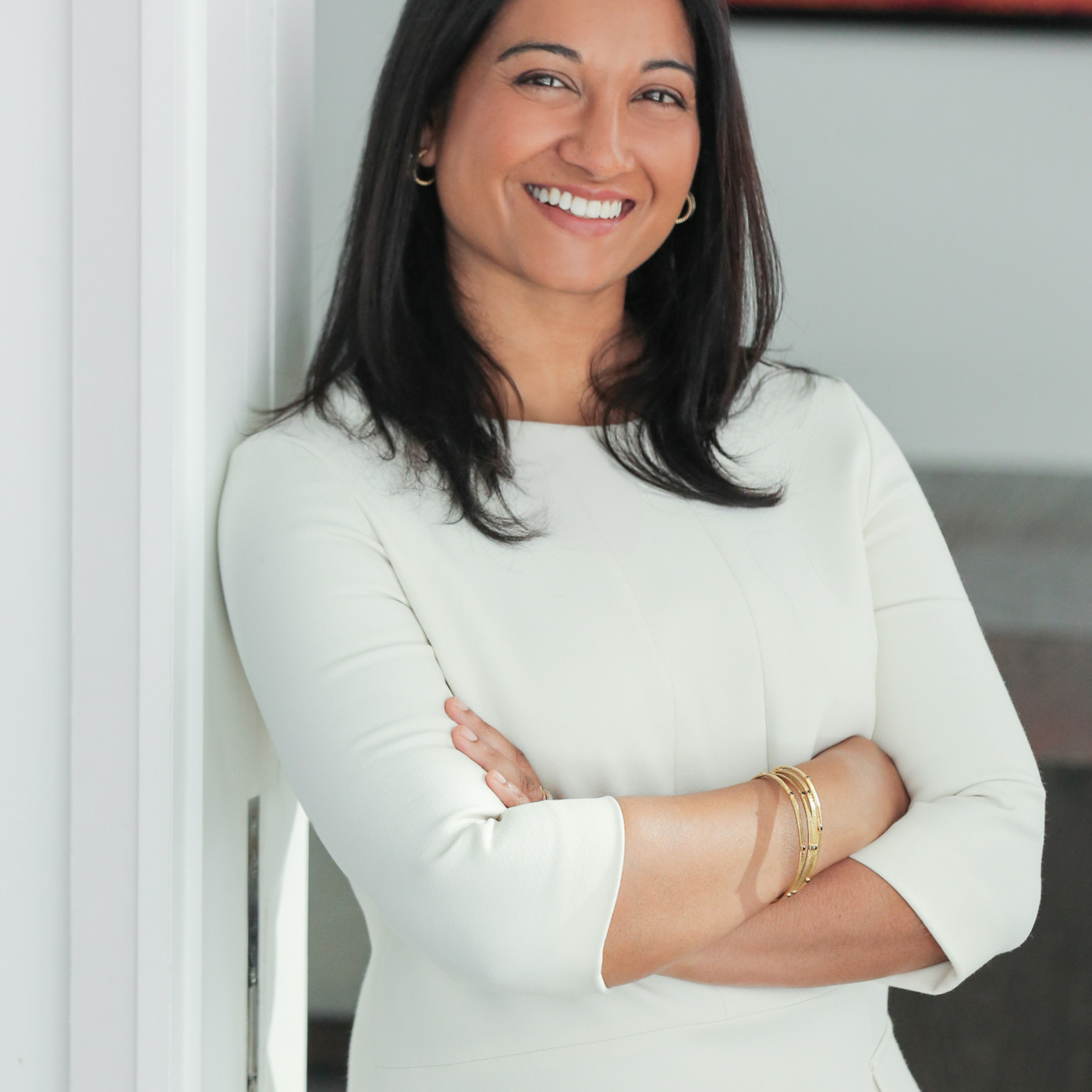
Aoifinn Devitt: I’m Aoifinn Devitt, and welcome to the 50 Faces Podcast, a podcast that showcases inspiring professionals in the world of investment and beyond by focusing on people and their stories. I’m joined today by Joe Natari, who is founder and managing partner of NVIDIA Capital Management, a healthcare-focused private equity firm founded in 2024 with a focus on middle market buyouts in North America. She was formerly Global Head of Healthcare Investing in the Merchant Banking Division of Goldman Sachs. Welcome, Jo, thanks for joining me today.
Jo Natauri: Thank you. Thank you for having me.
Aoifinn Devitt: Well, I’d love to start by talking about your career journey. Can you take us back to the very beginning and talk about what you studied and whether it took any surprising turns along the way?
Jo Natauri: That’s going way back, so 30-plus years at this point. But I’ve always been in the healthcare field, both at university and beyond. I actually had 3 majors in college: pre-med, biology, and economics, which was a little bit late to the game. But the idea was always to stay in the industry. At one point, I thought about getting into healthcare policy, but the idea of healthcare, the opportunity to support investments that ultimately do good for humanity, is something that’s always been appealing to me.
Aoifinn Devitt: Fascinating background there. And what made you then decide to channel this into healthcare investment as opposed to healthcare in its purest sense?
Jo Natauri: Yeah, so, you know, I think I initially started off and the econ degree was part of that. I felt to really have an impact in healthcare, you had to understand the business of healthcare. And so I started out in my career, not necessarily on the sciences, but as a healthcare investment banker. At a firm called Alex Brown, who was really the lead at the time when I joined in the space. So the idea was really, you know, let me do my turn in banking, get really integrated on the business side, and potentially go into the healthcare industry or healthcare policy. At least that was the idea at the time. But turns out I really love the business side of healthcare, the idea to help companies grow, especially in this space. And the variety of companies in healthcare that you can support was really appealing. So I ended up staying my whole career more on the finance side. I, like I said, started in banking, covered a lot of different industries while I did that, joined Goldman and stayed at Goldman for almost 20 years, but originally made partner on the investment banking side of the business where I led kind of over $200 billion of M&A transactions in the sector. It gave you a good grounding on, one, the strategic nature of healthcare. Healthcare is an industry that services itself. So the volume in M&A and the strategic activity tends to be higher than most other industries. And that’s something that I think is very important as you think about investing in the space. So did that for a period of time and in 2017 made my first investment. At Goldman, which was in a company called Avontour. Avontour was looking to buy a much larger company called VWR. We came in and supported New Mountain from a capital perspective, but also made a significant capital contribution ourselves as an investment in that business. And then post that investment was moved over to the investment side where I led global healthcare investing for the firm on the private side of the business, on the alternative side.
Aoifinn Devitt: Well, I can’t wait to launch into you painting a picture of a bit of the healthcare environment today. But before that, can you then take us through the step to go from Goldman, which is probably very established, secure surroundings with plenty of deal flow, into launching NVIDIA and your own firm?
Jo Natauri: Yeah, I would say it was a super scary step, something that wasn’t a quick decision. I think it took me over 2 years to make the call to leave. I’d been a partner for 12 years. We invested over $9 billion of capital into the healthcare space while I was running the business. And it wasn’t easy. It definitely wasn’t an easy decision, but I saw an opportunity in the market. When you look at the data, middle market healthcare is where the best returns are in private equity. Healthcare is the best performing subsector in private equity, but middle market is really where the returns work well. There’s a lot of sector-specific reasons for that. It’s at that point where you probably see the most number of opportunities from a private equity standpoint. You also have scale, and in healthcare, scale is very, very important. And the nature of the business is that you need to have executive-level talent that has spent a good chunk of their career in the specific area that you’re investing in. And typically in, in smaller companies, it’s hard to attract that executive talent. So from a risk-return standpoint, the best place in the market. And when I looked around, there really weren’t that many— even though the returns are great, there really weren’t that many specialized funds in the middle market for private equity. The vast majority of capital that gets deployed in the space come from generalist funds that need exposure to healthcare given its percentage of GDP. And it just felt like to me that the missing opportunity was bringing really specialized healthcare expertise into this part of the market. And so that, plus I had a handful of advisors who I’d known for a long time who wanted to come do this with me, people that I respected in the industry. And that was kind of the push that made me consider it. So long story, but it was not an easy decision for sure.
Aoifinn Devitt: And that’s a good segue to the kind of perception of healthcare today, because I think that might affect, well, the fundraising environment. Which you may have experienced since launching, and this was a level of interest in healthcare versus, say, other sectors. And could you just paint a picture for the healthcare dynamics today, just in terms of the percentage of GDP and where you think some of these opportunities are?
Jo Natauri: Yeah, so it’s typically, you know, almost a third of GDP is healthcare spend. The reason why healthcare is so interesting to me, and I think people who aren’t in the industry tend to view it as one big monolithic bucket. But healthcare, I think, is the only industry where you have many industry and many industry models within kind of the category of healthcare. You could be a biotech company, which is obviously very different from being a hospital, which is kind of the other side of the spectrum, and everything in between. You can have a tech company that’s healthcare, you can have a consumer company that’s healthcare, you can be an industrial manufacturing business in healthcare. And so the diversity in healthcare, I think, is sometimes underappreciated by the folks who don’t spend their whole lives in the space. And sometimes it is worrisome when you see healthcare in the headlines the way that it always is. But for people who are in the industry, regulatory, government, in the 30 years I’ve been in the sector, almost 30 years I’ve been in the sector, they’ve always been things to think about. If that makes sense. But the compelling reason to think about healthcare broadly is I think it’s the only industry where you have a permanent base of demand that for the foreseeable future, unfortunately, will be a permanent base of demand. But it’s an industry also fueled by innovation and change. And so those three things combined, I think if I were to simplify it, that’s why the returns in healthcare have been so good in private equity. There are always pockets to think about, think about investment opportunities because of those dynamics. You have growth and you have sustainable demand.
Aoifinn Devitt: And how about some of the idiosyncratic aspects of healthcare? I suppose the fact that it is obviously a necessity and you we’ve, know, there sometimes can be some controversy about the involvement of private equity in healthcare given the agency involved, I suppose, and also just the effect, for example, on cost cutting. And then equally the other dynamic of AI, Two very different areas. It’d be great if you could comment on those.
Jo Natauri: Two different areas and two, I think, interesting opportunities. So healthcare always needs to drive to efficiency. It is not an industry that has a lot of money floating around in it. Let’s take pharma, biotech out of the equation for a minute. The rest of the industry, which is the vast majority of healthcare, is all about finding efficiencies and optimizing care. So that’s where I think the fundamental opportunity is. To your point, and I firmly believe this, I think there are places where private equity has a role to help drive that change and growth. And then there’s areas where private equity maybe should shy away from, because at the end of the day, it doesn’t matter what company you invest in or touch, the endgame of anything in healthcare is to do good. You are trying to drive better patient outcomes. And it’s funny, there’s like a rule of three that people in healthcare talk about. If it’s not good for the patient, if it’s not good for the provider, and ultimately not good from a cost-effectiveness, i.e., the payer, it’s probably not going to be a good investment because at some point those forces kind of catch up to you. So doing it right, thinking about the constituencies the right way, actually makes for better investments. So there are things that you just want to stay away from generally. But again, it’s such a diverse industry. There’s also lots of opportunities to invest.
Aoifinn Devitt: Really interesting. And then just in terms of core beliefs, coming from Goldman— I spent time at Goldman myself, not as long as you did. But I often think that our origin places where we learn to be investors can really mold us. And sometimes these core beliefs can stay with us. Do you have— I mean, this is really interesting. And you talked about the core approach to health care, but to do good. Do you have any other core beliefs, preferences, kind of no-go areas?
Jo Natauri: Yeah, I mean, I think again, you’re right, Goldman tends to be pretty conservative, but I actually think it’s the right way to think about investing in this space. So there are things like returns based on increasing drug prices, we’re not going to do that. Really investing against vulnerable populations, also something that we’re probably not going to do. Interfering between physician and patient care, also something we’re not going to do. There’s a lot of areas that just reputationally that you want to stay away from reputationally. And I also think just from a moral standpoint, you just don’t want to do in this space. And I think that’s something we think about. It’s something our advisors who also have very high-profile reputations in the industry also don’t want us to do. So we’re really kind of fully aligned on that. I forgot to touch on the AI bit, which I know you did ask, just to kind of pivot a little bit. We’re pretty excited about AI in healthcare. You know, when you kind of get to the core of where that technology is going to have real meaningful impact, it’s in areas that have large datasets. Healthcare generates 30% of the global data. Every company we look at has a dataset because That’s part of being in the healthcare industry. And the operating efficiencies around what that technology can bring to the table, we’re already seeing the benefit of. A lot of healthcare costs are tied to misinformation or processes that can ultimately be done better. I think the first impact has already been felt in imaging. The ability for AI to crunch through images and be a supporting tool for the evaluation of images in healthcare. It’s now standard of care. So that’s already had a huge impact and we’re seeing that kind of across the industry. I think it’s going to be a great place to think about putting capital in the next decade or so.
Aoifinn Devitt: And it’s so interesting. Do you think in public markets that wave has been felt yet? We know that obviously the AI euphoria has hit the tech sector, but I suppose given you will ultimately look to exit, You will keep an eye on public markets in the healthcare arena too?
Jo Natauri: Yeah, no, I think it’s like any cycle. I lived through the internet bubble when anything.com was going public and everybody saw the promise of the internet. Ultimately what happens, I think, is there’s an infrastructure part of the public markets. I think that’s where we are right now. Ultimately it gets down to applications. That’s what happened to the internet. We don’t talk about Netscape anymore, right? Like, those were all big companies back in the day, but we talk about the impact of the internet in various companies. I think right now it’s been AI, the technology platform. I ultimately think it gets to AI-fueled applications, and I think that’s where healthcare is going to have its day in the sunshine because there will be a lot of applications in this sector.
Aoifinn Devitt: We’re going to take a short break to hear from the sponsor of this series, Diamond Hill. I sat down with Heather Brilliant, CEO of Diamond Hill, and asked her to talk about the culture of Diamond Hill as a boutique asset manager.
Speaker C: When I think about our world as defined by being a boutique, I’d say we’re really committed to making sure that we are very investment-led and investment-driven. I just think that’s critical when you’re a boutique because your point of differentiation is differentiation or performance. And in addition to that though, I’d say one of the things that I think has really helped at Diamond Hill is that we have additionally invested in making sure that we can have a higher level of client service and that we have the people, the technology, and the resources to make sure that we can deliver what our clients need from us on a more custom basis. Because that’s one of the things that I think being a boutique gives you an advantage in doing.
Aoifinn Devitt: And now back to the show. And I love that you mentioned earlier efficiency because clearly some of these will make the patient experience much more efficient, much more personalized, in a way could actually lead to better holistic health outcome because either through earlier detection or just through, I suppose, avoidance of needing to go to the emergency room or other areas with wearables, et cetera. So I suppose a really interesting upside And you just, if you could maybe help us just with, in terms of the middle market, the kind of operational alpha that you would seek to add in NVIDIA, what is the type of ideal, say, deal size and maybe exit strategy ultimately?
Jo Natauri: Yeah, so I think what we’re bringing to the table is kind of the large-cap industry expertise into the middle market, if I were to simplify our strategy and approach. The two areas we talked that I think across all of our platform companies we’re going to be pretty focused on. One is around the integration of data and tech. Unfortunately, healthcare is just always behind the curve for a lot of reasons, because it is complicated, there’s always a regulatory element. They tend to take a little bit longer to adopt newer technologies. I think focusing on that as an opportunity, we see that in almost every opportunity that we’re evaluating as a potential upside efficiency, and that could be as simple as optimizing call centers, right, to give you a basic example. But it also could be predictive assessment of data to improve customer experiences. So it has, I think, a wide variety of applications on the operating side that we’re kind of thinking through pretty much in every investment. The other pieces around talent and talent strategy, not necessarily the CEO, but kind of through the organization, in the middle market, that’s almost always an opportunity. So we think there’s a lot of potential upside there. And I think the final piece where I do think we are potentially differentiated is our reach into the space. All my partners have all been just in healthcare, anywhere from kind of 20 to 35 years in one sector. The relationships you develop, the access you get into the market, I do think is quite differentiated. The other area is just through our advisors. Again, very, very deep and across all aspects of healthcare from payer to pharma to distribution to diagnostics. They have been deep in basically the entire spectrum of healthcare. And that’s been great because it allows us to flex very quickly into what really matters and where we think we can drive value.
Aoifinn Devitt: And just pivoting then to your board roles, because clearly you rely a lot on your advisors and you probably have the same role for other companies. What do you seek to bring to the board roles and what makes a good board member in your view?
Jo Natauri: Yeah, I think that it’s partly our approach. From my experience, having both advised boards and then obviously sat on boards, being clear and direct tends to have the better outcomes. In terms of actually driving business opportunities. And so part of our approach is to really align with senior management before we make an investment on what we think are the key opportunities for value creation. Having a surprise is not something that works very well or very often. It tends to create more chaos than actual accomplishments. And so aligning both on strategy, where we want to make investments, but frankly, making sure everybody’s comfortable with the board strategy, i.e., who we’re bringing to the table, what their role could be, tends to drive and optimize outcomes. And so kind of clarity and simplicity— here are the things we’re going to focus on. For every investment, we try to identify 2 to 3 value creation opportunities that we can effectively implement in the first couple of years of our investment. And having that clarity up front just keeps things simple.
Aoifinn Devitt: And then just to move to some reflections. So a career that’s spanned a very successful stint at Goldman and now your own firm in a different sector, but bringing some of best practice into the mid-market. Were there any highs or lows that you can point to and maybe any lessons learned from any setbacks or any low points?
Jo Natauri: Yeah, so look, being a healthcare investor, I made some investments and I did not underwrite COVID. That was a very difficult period, especially when you could not deliver care in the same way that you normally could deliver care. And so working through that period, know, you it turned the industry upside down. We didn’t know when it was going to end. Capital markets were a mess, a lot of sleepless nights around a few investments, but the ability to kind of head down, partner with management, work through that period was a huge lesson learned. And I think that’s something that every investor has to go through because again, not something I think anybody underwrote, but to get through something like that and keep focused and keep the management team focused, it was a lot of great learning. In terms of the highs, I love having come to the investment side from being in the industry in different ways. I love this part and this chapter of what I’m doing. Supporting companies for the long term, helping companies grow, working with management teams, thinking through strategy in a more detailed, integrated way with these companies has been quite fulfilling. So really excited about this new chapter for myself.
Aoifinn Devitt: And was there anyone in particular along this journey— and this does not have to be an exhaustive list— that was a mentor that you learned a particular thing from or that influenced you in a particular way?
Jo Natauri: Yeah, I mean, I did work at Goldman. There are many mentors that I could point to. It’s hard to go through the whole list, but Rich Friedman, who I still keep in touch with, he’s just so good at investing. I feel like every conversation I have with him, I learn something more and something different. So he’s been a great mentor to me and frankly inspirational in terms of what I would like to get to someday. In terms of his investment acumen. So I definitely would list him, but many, many mentors. I mean, you can’t have a career without them, so hard to name them all.
Aoifinn Devitt: And just to ask a little bit more about that, because that’s such an intriguing thing, what makes an investor have such acumen that is so worthy of comment, was it in terms of being able to spot opportunities or a kind of managing of people, managing of opportunities? Anything in particular that stood out?
Jo Natauri: I mean, I think it’s all of the above, but where Rich is amazing is he can look at any business, any industry, any sector, every structure, and quickly get to the heart of the matter and what the risk— because all we do is we manage risk, right, when we think about investments. And that’s the lens he looks at everything through. And it’s really amazing how quick he is and knowledgeable he is with that.
Aoifinn Devitt: I think it really underscores the importance of the apprentice model we have though in investing. You know, when you work with people like that, you know, you learn something from being around them. So I think it just reinforces why we can’t lose that. And my last question is, any creed or motto that you live by or a piece of advice that you either heard or you have developed that you can leave us with?
Jo Natauri: Yeah, so it’s early advice, but the advice that was given to me early in my career was around looking up. So never settle for where you are. You have to kind of always think about the next chapter. And there are people who are doing your next chapter. So what can you learn from them? So I’ve tried to live by that my whole career, and I think it’s kind of worked out.
Aoifinn Devitt: So, and just my— I said I’m going to sneak another one in because it is so interesting. When you look across the healthcare arena now, if you were to maybe pick out one or two sectors that really interest you and excite you the get you up in the morning ’cause they think this is, and maybe one that isn’t yet as well known or as well understood because all the focus is on AI and data centers and energy. Do you think that there’s something that we’re missing? And I think of things like say women’s health or wearable devices or you maybe, know, the GLP-1s and anything that really you think is worthy of excitement.
Jo Natauri: Yeah, women’s health actually potentially one of our first investments will be in that space. I think there’s a renaissance around understanding women’s health. Menopause in particular is an area that’s been underinvested in, that there’s a lot more awareness both from women but also from insurance, the payers, employers. And so I think there’s going to be a lot more growth in that part of the market. One of the other areas we’re thinking through, and I think it’s going to be a big shift in healthcare, is thinking about low-acuity healthcare needs. One of the unfortunate trends in healthcare is costs are going to go up. We don’t think that abates necessarily. What that means is ultimately that burden is going to continue to be increasingly borne by consumers, not the traditional payers of the world. And for low-acuity healthcare needs, if you kind of split the bucket, we think consumers are going to have more of an influence in how they select their low-acuity care and how they pay for their low-acuity care. We think that’s a pretty fast-growing trend, and there’s lots of ways to kind of invest against that trend. But we’re spending some time there thinking through what those opportunities could be.
Aoifinn Devitt: Well, thank you so much, Jo. It is great to hear such enthusiasm for a segment that is, I think, often overlooked. And often I think we don’t take full account of just what a large percentage of GDP healthcare represents. Good luck with the new enterprise, and I look forward to hearing great things in the years to come. Thank you for sharing your insights with us.
Jo Natauri: Thank you so much. Appreciate it.
Aoifinn Devitt: I’m Aoifinn Devitt. Thank you for listening to the 50 Faces podcast. If you liked what you heard and would like to tune in to hear more inspiring professionals and their stories, please subscribe on Apple Podcasts, wherever you get your podcasts. This podcast is for informational purposes only and should not be construed as investment advice, and all views are personal and should not be attributed to the organizations and affiliations of the host or any guest.
Aoifinn Devitt: Series 5 of the 2025 50 Faces podcast is kindly supported by Diamond Hill. Diamond Hill invests on behalf of clients through a shared commitment to its valuation-driven investment principles, long-term perspective, capacity discipline, and client alignment. An independent active asset manager with significant employee ownership, Diamond Hill’s investment strategies include differentiated US and non-US equity, alternative long-short equity, and fixed income.
Jo Natauri: Healthcare always needs to drive to efficiency. It is not an industry that has a lot of money floating around in it. Let’s take pharma, biotech out of the equation for a minute. The rest of the industry, which is the vast majority of healthcare, is all about finding efficiencies and optimizing care. So that’s where I think the fundamental opportunity is. To your point,— and I firmly believe this— I think there are places where private equity has a role to help drive that change and growth. And then there’s areas where private equity maybe should shy away from, because at the end of the day, it doesn’t matter what company you invest in or touch. The endgame of anything in healthcare is to do good. You are trying to drive better patient outcomes. And it’s funny, there’s like a rule of three that people in healthcare talk about. If it’s not good for the patient, if it’s not good for the provider, and ultimately not good from a cost-effectiveness, i.e., the payer, it’s probably not going to be a good investment because at some point those forces kind of catch up to you.
Aoifinn Devitt: I’m Aoifinn Devitt, and welcome to the 50 Faces Podcast, a podcast that showcases inspiring professionals in the world of investment and beyond by focusing on people and their stories. I’m joined today by Joe Natari, who is founder and managing partner of NVIDIA Capital Management, a healthcare-focused private equity firm founded in 2024 with a focus on middle market buyouts in North America. She was formerly Global Head of Healthcare Investing in the Merchant Banking Division of Goldman Sachs. Welcome, Jo, thanks for joining me today.
Jo Natauri: Thank you. Thank you for having me.
Aoifinn Devitt: Well, I’d love to start by talking about your career journey. Can you take us back to the very beginning and talk about what you studied and whether it took any surprising turns along the way?
Jo Natauri: That’s going way back, so 30-plus years at this point. But I’ve always been in the healthcare field, both at university and beyond. I actually had 3 majors in college: pre-med, biology, and economics, which was a little bit late to the game. But the idea was always to stay in the industry. At one point, I thought about getting into healthcare policy, but the idea of healthcare, the opportunity to support investments that ultimately do good for humanity, is something that’s always been appealing to me.
Aoifinn Devitt: Fascinating background there. And what made you then decide to channel this into healthcare investment as opposed to healthcare in its purest sense?
Jo Natauri: Yeah, so, you know, I think I initially started off and the econ degree was part of that. I felt to really have an impact in healthcare, you had to understand the business of healthcare. And so I started out in my career, not necessarily on the sciences, but as a healthcare investment banker. At a firm called Alex Brown, who was really the lead at the time when I joined in the space. So the idea was really, you know, let me do my turn in banking, get really integrated on the business side, and potentially go into the healthcare industry or healthcare policy. At least that was the idea at the time. But turns out I really love the business side of healthcare, the idea to help companies grow, especially in this space. And the variety of companies in healthcare that you can support was really appealing. So I ended up staying my whole career more on the finance side. I, like I said, started in banking, covered a lot of different industries while I did that, joined Goldman and stayed at Goldman for almost 20 years, but originally made partner on the investment banking side of the business where I led kind of over $200 billion of M&A transactions in the sector. It gave you a good grounding on, one, the strategic nature of healthcare. Healthcare is an industry that services itself. So the volume in M&A and the strategic activity tends to be higher than most other industries. And that’s something that I think is very important as you think about investing in the space. So did that for a period of time and in 2017 made my first investment. At Goldman, which was in a company called Avontour. Avontour was looking to buy a much larger company called VWR. We came in and supported New Mountain from a capital perspective, but also made a significant capital contribution ourselves as an investment in that business. And then post that investment was moved over to the investment side where I led global healthcare investing for the firm on the private side of the business, on the alternative side.
Aoifinn Devitt: Well, I can’t wait to launch into you painting a picture of a bit of the healthcare environment today. But before that, can you then take us through the step to go from Goldman, which is probably very established, secure surroundings with plenty of deal flow, into launching NVIDIA and your own firm?
Jo Natauri: Yeah, I would say it was a super scary step, something that wasn’t a quick decision. I think it took me over 2 years to make the call to leave. I’d been a partner for 12 years. We invested over $9 billion of capital into the healthcare space while I was running the business. And it wasn’t easy. It definitely wasn’t an easy decision, but I saw an opportunity in the market. When you look at the data, middle market healthcare is where the best returns are in private equity. Healthcare is the best performing subsector in private equity, but middle market is really where the returns work well. There’s a lot of sector-specific reasons for that. It’s at that point where you probably see the most number of opportunities from a private equity standpoint. You also have scale, and in healthcare, scale is very, very important. And the nature of the business is that you need to have executive-level talent that has spent a good chunk of their career in the specific area that you’re investing in. And typically in, in smaller companies, it’s hard to attract that executive talent. So from a risk-return standpoint, the best place in the market. And when I looked around, there really weren’t that many— even though the returns are great, there really weren’t that many specialized funds in the middle market for private equity. The vast majority of capital that gets deployed in the space come from generalist funds that need exposure to healthcare given its percentage of GDP. And it just felt like to me that the missing opportunity was bringing really specialized healthcare expertise into this part of the market. And so that, plus I had a handful of advisors who I’d known for a long time who wanted to come do this with me, people that I respected in the industry. And that was kind of the push that made me consider it. So long story, but it was not an easy decision for sure.
Aoifinn Devitt: And that’s a good segue to the kind of perception of healthcare today, because I think that might affect, well, the fundraising environment. Which you may have experienced since launching, and this was a level of interest in healthcare versus, say, other sectors. And could you just paint a picture for the healthcare dynamics today, just in terms of the percentage of GDP and where you think some of these opportunities are?
Jo Natauri: Yeah, so it’s typically, you know, almost a third of GDP is healthcare spend. The reason why healthcare is so interesting to me, and I think people who aren’t in the industry tend to view it as one big monolithic bucket. But healthcare, I think, is the only industry where you have many industry and many industry models within kind of the category of healthcare. You could be a biotech company, which is obviously very different from being a hospital, which is kind of the other side of the spectrum, and everything in between. You can have a tech company that’s healthcare, you can have a consumer company that’s healthcare, you can be an industrial manufacturing business in healthcare. And so the diversity in healthcare, I think, is sometimes underappreciated by the folks who don’t spend their whole lives in the space. And sometimes it is worrisome when you see healthcare in the headlines the way that it always is. But for people who are in the industry, regulatory, government, in the 30 years I’ve been in the sector, almost 30 years I’ve been in the sector, they’ve always been things to think about. If that makes sense. But the compelling reason to think about healthcare broadly is I think it’s the only industry where you have a permanent base of demand that for the foreseeable future, unfortunately, will be a permanent base of demand. But it’s an industry also fueled by innovation and change. And so those three things combined, I think if I were to simplify it, that’s why the returns in healthcare have been so good in private equity. There are always pockets to think about, think about investment opportunities because of those dynamics. You have growth and you have sustainable demand.
Aoifinn Devitt: And how about some of the idiosyncratic aspects of healthcare? I suppose the fact that it is obviously a necessity and you we’ve, know, there sometimes can be some controversy about the involvement of private equity in healthcare given the agency involved, I suppose, and also just the effect, for example, on cost cutting. And then equally the other dynamic of AI, Two very different areas. It’d be great if you could comment on those.
Jo Natauri: Two different areas and two, I think, interesting opportunities. So healthcare always needs to drive to efficiency. It is not an industry that has a lot of money floating around in it. Let’s take pharma, biotech out of the equation for a minute. The rest of the industry, which is the vast majority of healthcare, is all about finding efficiencies and optimizing care. So that’s where I think the fundamental opportunity is. To your point, and I firmly believe this, I think there are places where private equity has a role to help drive that change and growth. And then there’s areas where private equity maybe should shy away from, because at the end of the day, it doesn’t matter what company you invest in or touch, the endgame of anything in healthcare is to do good. You are trying to drive better patient outcomes. And it’s funny, there’s like a rule of three that people in healthcare talk about. If it’s not good for the patient, if it’s not good for the provider, and ultimately not good from a cost-effectiveness, i.e., the payer, it’s probably not going to be a good investment because at some point those forces kind of catch up to you. So doing it right, thinking about the constituencies the right way, actually makes for better investments. So there are things that you just want to stay away from generally. But again, it’s such a diverse industry. There’s also lots of opportunities to invest.
Aoifinn Devitt: Really interesting. And then just in terms of core beliefs, coming from Goldman— I spent time at Goldman myself, not as long as you did. But I often think that our origin places where we learn to be investors can really mold us. And sometimes these core beliefs can stay with us. Do you have— I mean, this is really interesting. And you talked about the core approach to health care, but to do good. Do you have any other core beliefs, preferences, kind of no-go areas?
Jo Natauri: Yeah, I mean, I think again, you’re right, Goldman tends to be pretty conservative, but I actually think it’s the right way to think about investing in this space. So there are things like returns based on increasing drug prices, we’re not going to do that. Really investing against vulnerable populations, also something that we’re probably not going to do. Interfering between physician and patient care, also something we’re not going to do. There’s a lot of areas that just reputationally that you want to stay away from reputationally. And I also think just from a moral standpoint, you just don’t want to do in this space. And I think that’s something we think about. It’s something our advisors who also have very high-profile reputations in the industry also don’t want us to do. So we’re really kind of fully aligned on that. I forgot to touch on the AI bit, which I know you did ask, just to kind of pivot a little bit. We’re pretty excited about AI in healthcare. You know, when you kind of get to the core of where that technology is going to have real meaningful impact, it’s in areas that have large datasets. Healthcare generates 30% of the global data. Every company we look at has a dataset because That’s part of being in the healthcare industry. And the operating efficiencies around what that technology can bring to the table, we’re already seeing the benefit of. A lot of healthcare costs are tied to misinformation or processes that can ultimately be done better. I think the first impact has already been felt in imaging. The ability for AI to crunch through images and be a supporting tool for the evaluation of images in healthcare. It’s now standard of care. So that’s already had a huge impact and we’re seeing that kind of across the industry. I think it’s going to be a great place to think about putting capital in the next decade or so.
Aoifinn Devitt: And it’s so interesting. Do you think in public markets that wave has been felt yet? We know that obviously the AI euphoria has hit the tech sector, but I suppose given you will ultimately look to exit, You will keep an eye on public markets in the healthcare arena too?
Jo Natauri: Yeah, no, I think it’s like any cycle. I lived through the internet bubble when anything.com was going public and everybody saw the promise of the internet. Ultimately what happens, I think, is there’s an infrastructure part of the public markets. I think that’s where we are right now. Ultimately it gets down to applications. That’s what happened to the internet. We don’t talk about Netscape anymore, right? Like, those were all big companies back in the day, but we talk about the impact of the internet in various companies. I think right now it’s been AI, the technology platform. I ultimately think it gets to AI-fueled applications, and I think that’s where healthcare is going to have its day in the sunshine because there will be a lot of applications in this sector.
Aoifinn Devitt: We’re going to take a short break to hear from the sponsor of this series, Diamond Hill. I sat down with Heather Brilliant, CEO of Diamond Hill, and asked her to talk about the culture of Diamond Hill as a boutique asset manager.
Speaker C: When I think about our world as defined by being a boutique, I’d say we’re really committed to making sure that we are very investment-led and investment-driven. I just think that’s critical when you’re a boutique because your point of differentiation is differentiation or performance. And in addition to that though, I’d say one of the things that I think has really helped at Diamond Hill is that we have additionally invested in making sure that we can have a higher level of client service and that we have the people, the technology, and the resources to make sure that we can deliver what our clients need from us on a more custom basis. Because that’s one of the things that I think being a boutique gives you an advantage in doing.
Aoifinn Devitt: And now back to the show. And I love that you mentioned earlier efficiency because clearly some of these will make the patient experience much more efficient, much more personalized, in a way could actually lead to better holistic health outcome because either through earlier detection or just through, I suppose, avoidance of needing to go to the emergency room or other areas with wearables, et cetera. So I suppose a really interesting upside And you just, if you could maybe help us just with, in terms of the middle market, the kind of operational alpha that you would seek to add in NVIDIA, what is the type of ideal, say, deal size and maybe exit strategy ultimately?
Jo Natauri: Yeah, so I think what we’re bringing to the table is kind of the large-cap industry expertise into the middle market, if I were to simplify our strategy and approach. The two areas we talked that I think across all of our platform companies we’re going to be pretty focused on. One is around the integration of data and tech. Unfortunately, healthcare is just always behind the curve for a lot of reasons, because it is complicated, there’s always a regulatory element. They tend to take a little bit longer to adopt newer technologies. I think focusing on that as an opportunity, we see that in almost every opportunity that we’re evaluating as a potential upside efficiency, and that could be as simple as optimizing call centers, right, to give you a basic example. But it also could be predictive assessment of data to improve customer experiences. So it has, I think, a wide variety of applications on the operating side that we’re kind of thinking through pretty much in every investment. The other pieces around talent and talent strategy, not necessarily the CEO, but kind of through the organization, in the middle market, that’s almost always an opportunity. So we think there’s a lot of potential upside there. And I think the final piece where I do think we are potentially differentiated is our reach into the space. All my partners have all been just in healthcare, anywhere from kind of 20 to 35 years in one sector. The relationships you develop, the access you get into the market, I do think is quite differentiated. The other area is just through our advisors. Again, very, very deep and across all aspects of healthcare from payer to pharma to distribution to diagnostics. They have been deep in basically the entire spectrum of healthcare. And that’s been great because it allows us to flex very quickly into what really matters and where we think we can drive value.
Aoifinn Devitt: And just pivoting then to your board roles, because clearly you rely a lot on your advisors and you probably have the same role for other companies. What do you seek to bring to the board roles and what makes a good board member in your view?
Jo Natauri: Yeah, I think that it’s partly our approach. From my experience, having both advised boards and then obviously sat on boards, being clear and direct tends to have the better outcomes. In terms of actually driving business opportunities. And so part of our approach is to really align with senior management before we make an investment on what we think are the key opportunities for value creation. Having a surprise is not something that works very well or very often. It tends to create more chaos than actual accomplishments. And so aligning both on strategy, where we want to make investments, but frankly, making sure everybody’s comfortable with the board strategy, i.e., who we’re bringing to the table, what their role could be, tends to drive and optimize outcomes. And so kind of clarity and simplicity— here are the things we’re going to focus on. For every investment, we try to identify 2 to 3 value creation opportunities that we can effectively implement in the first couple of years of our investment. And having that clarity up front just keeps things simple.
Aoifinn Devitt: And then just to move to some reflections. So a career that’s spanned a very successful stint at Goldman and now your own firm in a different sector, but bringing some of best practice into the mid-market. Were there any highs or lows that you can point to and maybe any lessons learned from any setbacks or any low points?
Jo Natauri: Yeah, so look, being a healthcare investor, I made some investments and I did not underwrite COVID. That was a very difficult period, especially when you could not deliver care in the same way that you normally could deliver care. And so working through that period, know, you it turned the industry upside down. We didn’t know when it was going to end. Capital markets were a mess, a lot of sleepless nights around a few investments, but the ability to kind of head down, partner with management, work through that period was a huge lesson learned. And I think that’s something that every investor has to go through because again, not something I think anybody underwrote, but to get through something like that and keep focused and keep the management team focused, it was a lot of great learning. In terms of the highs, I love having come to the investment side from being in the industry in different ways. I love this part and this chapter of what I’m doing. Supporting companies for the long term, helping companies grow, working with management teams, thinking through strategy in a more detailed, integrated way with these companies has been quite fulfilling. So really excited about this new chapter for myself.
Aoifinn Devitt: And was there anyone in particular along this journey— and this does not have to be an exhaustive list— that was a mentor that you learned a particular thing from or that influenced you in a particular way?
Jo Natauri: Yeah, I mean, I did work at Goldman. There are many mentors that I could point to. It’s hard to go through the whole list, but Rich Friedman, who I still keep in touch with, he’s just so good at investing. I feel like every conversation I have with him, I learn something more and something different. So he’s been a great mentor to me and frankly inspirational in terms of what I would like to get to someday. In terms of his investment acumen. So I definitely would list him, but many, many mentors. I mean, you can’t have a career without them, so hard to name them all.
Aoifinn Devitt: And just to ask a little bit more about that, because that’s such an intriguing thing, what makes an investor have such acumen that is so worthy of comment, was it in terms of being able to spot opportunities or a kind of managing of people, managing of opportunities? Anything in particular that stood out?
Jo Natauri: I mean, I think it’s all of the above, but where Rich is amazing is he can look at any business, any industry, any sector, every structure, and quickly get to the heart of the matter and what the risk— because all we do is we manage risk, right, when we think about investments. And that’s the lens he looks at everything through. And it’s really amazing how quick he is and knowledgeable he is with that.
Aoifinn Devitt: I think it really underscores the importance of the apprentice model we have though in investing. You know, when you work with people like that, you know, you learn something from being around them. So I think it just reinforces why we can’t lose that. And my last question is, any creed or motto that you live by or a piece of advice that you either heard or you have developed that you can leave us with?
Jo Natauri: Yeah, so it’s early advice, but the advice that was given to me early in my career was around looking up. So never settle for where you are. You have to kind of always think about the next chapter. And there are people who are doing your next chapter. So what can you learn from them? So I’ve tried to live by that my whole career, and I think it’s kind of worked out.
Aoifinn Devitt: So, and just my— I said I’m going to sneak another one in because it is so interesting. When you look across the healthcare arena now, if you were to maybe pick out one or two sectors that really interest you and excite you the get you up in the morning ’cause they think this is, and maybe one that isn’t yet as well known or as well understood because all the focus is on AI and data centers and energy. Do you think that there’s something that we’re missing? And I think of things like say women’s health or wearable devices or you maybe, know, the GLP-1s and anything that really you think is worthy of excitement.
Jo Natauri: Yeah, women’s health actually potentially one of our first investments will be in that space. I think there’s a renaissance around understanding women’s health. Menopause in particular is an area that’s been underinvested in, that there’s a lot more awareness both from women but also from insurance, the payers, employers. And so I think there’s going to be a lot more growth in that part of the market. One of the other areas we’re thinking through, and I think it’s going to be a big shift in healthcare, is thinking about low-acuity healthcare needs. One of the unfortunate trends in healthcare is costs are going to go up. We don’t think that abates necessarily. What that means is ultimately that burden is going to continue to be increasingly borne by consumers, not the traditional payers of the world. And for low-acuity healthcare needs, if you kind of split the bucket, we think consumers are going to have more of an influence in how they select their low-acuity care and how they pay for their low-acuity care. We think that’s a pretty fast-growing trend, and there’s lots of ways to kind of invest against that trend. But we’re spending some time there thinking through what those opportunities could be.
Aoifinn Devitt: Well, thank you so much, Jo. It is great to hear such enthusiasm for a segment that is, I think, often overlooked. And often I think we don’t take full account of just what a large percentage of GDP healthcare represents. Good luck with the new enterprise, and I look forward to hearing great things in the years to come. Thank you for sharing your insights with us.
Jo Natauri: Thank you so much. Appreciate it.
Aoifinn Devitt: I’m Aoifinn Devitt. Thank you for listening to the 50 Faces podcast. If you liked what you heard and would like to tune in to hear more inspiring professionals and their stories, please subscribe on Apple Podcasts, wherever you get your podcasts. This podcast is for informational purposes only and should not be construed as investment advice, and all views are personal and should not be attributed to the organizations and affiliations of the host or any guest.