Aoifinn Devitt: This podcast series is kindly sponsored by Evanston Capital. For over 20 years, Evanston Capital has had a key focus in identifying early-stage investment managers it believes are capable of generating long-term value-added returns in complex, innovative strategy areas. The series is also sponsored by Alvine Capital. Alvine Capital is a specialist investment manager and placement boutique with a particular focus on alternative assets, a significant presence in London and Stockholm.
Klaus Peterson: You need to understand what you invest in and don’t believe just what people are telling you because it’s a nice big story and it’s exciting. Just questioning it and ask yourself, is this true? Is it possible?
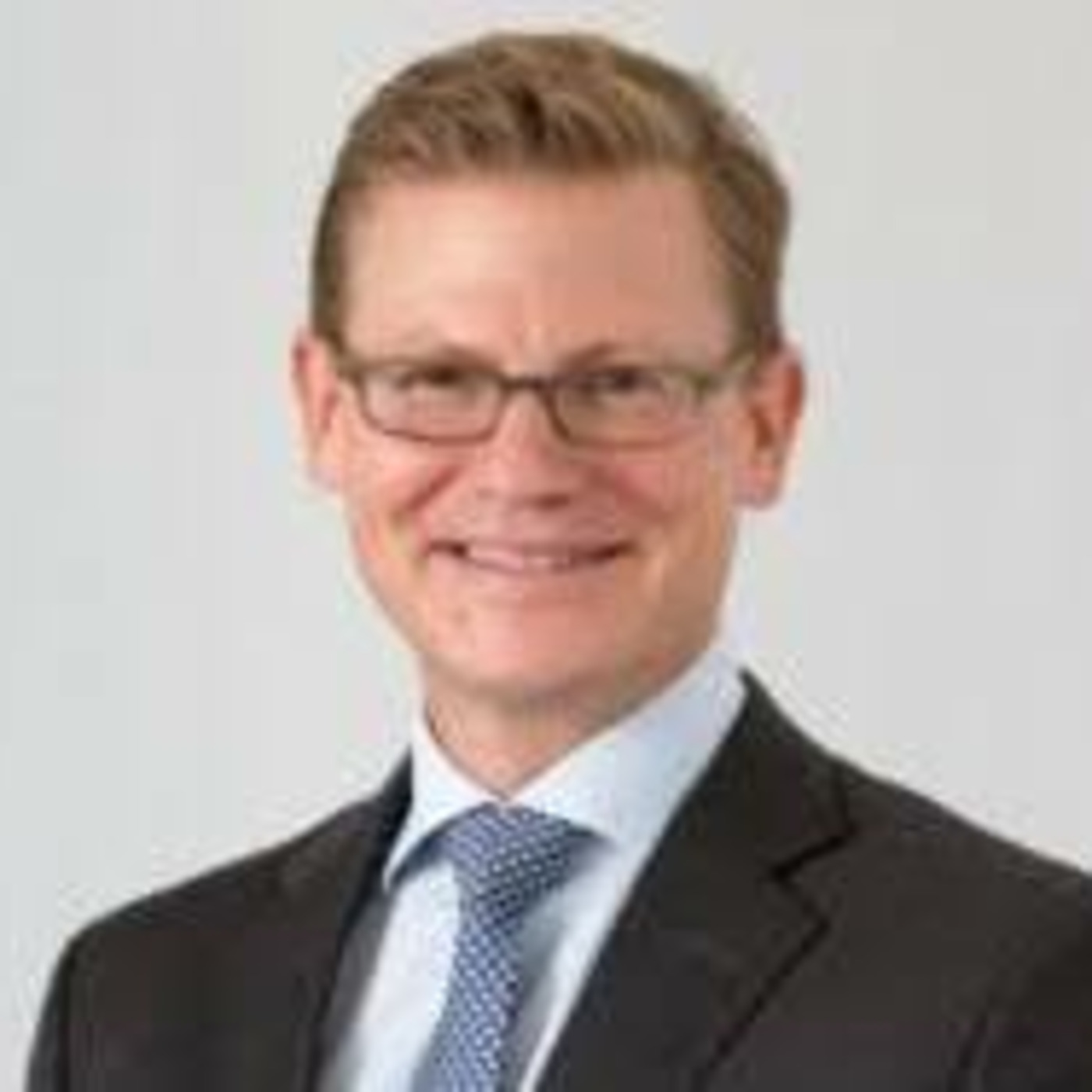
Aoifinn Devitt: I’m Aoifinn Devitt, and welcome to the 50 Faces Podcast, a podcast committed to revealing the richness and diversity of the world of investment by focusing on its people and their stories. I’m joined today by Claus Petersen, who’s a founding partner at Apera Asset Management based in Munich. Apera is a lower mid-market private debt investor that provides financing solutions to European SMEs and asset management services to investors. Apera focuses on the DACH region, United Kingdom, the Nordic countries, France, and Benelux. Apera was recently acquired by Franklin Templeton, a global investment management organization with $1.5 trillion assets under management, which included a global alternative asset management platform with $254 billion assets under management. Welcome, Klaas. Thanks for joining me today.
Klaus Peterson: Thank you. I’m happy to be here.
Aoifinn Devitt: Well, great to meet and hear all about Apera. But let’s start first with your background and interests and how you came to enter the world of investing and finance ultimately.
Klaus Peterson: Yeah, it’s quite interesting because it was a bit by chance and luck. I originally trained lawyer. I did the first and second sort of state exam in Germany. I started a bit abroad and then went for a postgraduate program to Columbia in New York. And then that sort of— I, I did law and business. I realized I really want to do the business side and had, after I applied, two options: either to go to BCG, and I thought I could start it in New York, but they said, oh, you need to go to Munich because They want to see you there. And I realized maybe my biggest value is not that I, I am smart and can work in New York. It’s more that I have a heritage that’s European. And the alternative was to go to Allianz and join and be an assistant of one of their board members. And I had two options there, either to join the regular insurance business or to go for ACP, Allianz Capital Partners, which was a newly set up business for alternative investments. And I spoke with a friend who had run through a program and said, oh, this is interesting. You should go to ACP. Nobody knows what it is. It’s private equity. It sounds really interesting. That’s what you should be doing. I didn’t know exactly what it was. You know, I’ve heard about it at university, as you can imagine. But then I said, let’s do that. And so literally, by a bit of chance and luck, I ended up not going to BCG, which I liked a lot because it’s a repeatable business. But I kind of followed the idea to say, before I go around and be shifted around, let’s settle a bit because I have been sort of changing homes every 2 years. Go to Munich, do this program, and let’s see what turns out. And I literally started all of a sudden in the alternatives world, which at that time began and I didn’t completely comprehend how interesting and exciting it actually is.
Aoifinn Devitt: Interesting. So not necessarily in the cards that you would end up in this arena, and you’re from Germany. That was all— you’ve been growing up pretty much in the same area of Germany your whole life?
Klaus Peterson: So no, so I grew up actually, I was born where the coal mines are called Mount Hoelz, a small place, moved down to Cologne, lived there a couple of years, and then for studies actually went to Freiburg, which is southern Germany. But then was in Geneva, was in different places, moved sort of every 2 years, and actually came back to Germany to go into the most southern part, Munich, which, to be honest, that’s a bit of a story also. I landed then there. Allianz is a different story, but I landed and thought, oh, this must be an exciting city, but it was boring compared to New York. No surprise. And so I had the you idea, know, I need to move to another big city before I’m getting too much attracted and I live back in here. But then I moved to London actually for 13 years.
Aoifinn Devitt: Fascinating. Well, my next question was about investment beliefs, but when you answer this, I wonder if you could give us a little bit of context maybe as to anything that, you know, may be typically Germanic perhaps about those beliefs. And the reason I ask that is there is a perception that German institutional investors have a certain maybe risk tolerance that is distinctive. Maybe yours is similar to that, or it’s its own risk tolerance. Could you just talk us through your investment beliefs and maybe give some color perhaps on maybe predominant German institutions, how they think.
Klaus Peterson: Yeah, I think with Allianz we have a typical German institution that has exactly that— risk-averse and more traditional conservative ideas. But they were very proactive. So the funny thing is they started alternatives at the time when people didn’t really know what it was, and was driven by a CFO who you said, know, why are the Americans, the smart guys who’d have developed many of you these, know, interesting tools, playing in my backyard? I’m Allianz, you know, I should be able to do it myself. That’s also the reason why they start. So it’s a combination of very conservative risk averse, but quite open-minded to understand what it is. And the interesting thing, one of my biggest lessons learned and kind of also what my investment belief is, I learned literally at Allianz when we were doing our first investments. And one of the chances we had was private equity we did was we could co-invest. And what does co-investment mean? You put your own money in there. Then Allianz said, so that it really works well, we give you 3 times leverage. You need to repay it, which you’d never think about. But you get this. And so we were doing an investment. I will never ever forget it. It was Bundesdruckerei, which was you the, know, note printing business of Germany. We couldn’t do the deal because we were so busy and gave it because Allianz had the relationship to another PE. I don’t want to name them. It doesn’t really matter. But we gave it to them and they re-invited us back as a co-investment. So co-investment for the institution. And then we were allowed to co-invest in this. And it sounded fantastic because it was the idea this boring printing business had an identification business. We’re doing smart cards, and the idea was, oh, smart cards will take off. Everybody will have at least 2 phones. We’re talking here 2001, and everybody will have some will, you phones, know, need all these smart cards. It’s going to be fantastic. And the boring printing business we can leave behind. So what happened is we were all excited, and we didn’t question whether people will you have, know, back in 2 2001, phones, or, you know, at least one. We just invested. And actually what happened is nobody wanted to have two phones. There was an exuberance a bit. They invested too much in new facilities, and all of a sudden the marketing didn’t take off and the whole business collapsed. The printing business, which we deemed to be boring, was the star. We unfortunately lost our money. The business went to the borrowers, and I learned the first lesson, which is kind of, you need to understand things. So if you invest, ask questions, try to understand it. Does it make sense when Nobody has one phone going forward. Everybody will have two phones and two smart cards. It just doesn’t make sense. Yeah. And so losing money, not only the old money, but, you know, three times that because you got leverage, teach me just a lesson. And a simple lesson for investment, I think you need to understand what you invest in and don’t believe just what people are telling you because it’s a nice big story and it’s exciting. Just questioning it and ask yourself, is this true? Is it possible?
Aoifinn Devitt: Really interesting. Well, we’ll come back to that when we get into your current focus at Apera, because I’d love to ask about some things you’re questioning today, because there are a lot of assumptions out there today which are very relevant to some of the projections within different asset classes. And well, moving now on to your role at Apera, can you tell us a little bit about your focus, the segment that you specialize in, and the backdrop for its strategies?
Klaus Peterson: Yes, it’s another kind of lesson that I learned. So when I was at Allianz, it was first private equity, and then was mezzanine, which was direct lending, i.e., sort of at the early because stage, it was only mezzanine. I moved on to London to join somebody called Park Square, who’s still in existence, which was the largest independent mess fund. We did mess, and then actually the financial crisis came along. We went to direct lending. At that time, people were saying, oh, lower mid-market, in particular Robin Dumont, that is, it’s risky, it’s not kind of so exciting. I said, I want to do this, and I went to BlueBay, which became later on Archment. And the reason why I’m telling this is, so I’m joining again a new startup. They were raising the first fund, and literally everybody in the industry at that stage had small funds, half a billion to a billion, and they were all in the lower mid-market. So the well, you market, know, deals between, call it, $20 to $50 million of debt volume. And then actually they grew very quickly, and also sort of BlueBay, we go you from, know, a billion fund first to $3.5 billion, $5 billion, $10 billion, and they had to leave the market behind. Not only BlueBay, But all the big guys, you take an Ares, all the big companies, they became so big so quickly that they had to focus on the bigger deals for obvious reasons. And we realized, or I realized at this stage, the terms have changed in the upper market. You know, you have higher leverage, higher LTV, there’s more competition, so also margins are tighter. Why don’t I go back to the market where I started? Because competition is lower there. We did a, a statistic analysis about the market. So the lower mid-market has over the last 10 years more than 700 deals. There are 22 funds active, and then they have not enough capital raised to meet the annual demand. And you go to the upper market, there’s more than 200 deals, so far less than 26 funds active, therefore raised more than $90 billion compared to a market size of roughly $56 billion. So it’s oversupplied capital and said, hey, I want to be in the market with less competition, there’s more opportunity to invest, and you have diversity. Because as that, you want to avoid risk, you want to be able to select, you want to have a big opportunity set. So that’s the background and the reasoning positioning of our pair. We are lower mid-market focused. We do everything from now, you know, senior secured credit, unit tranches to hybrid capital situations. So we’re quite broad, but we really serve and focus only on the lower mid-market.
Aoifinn Devitt: That’s fascinating in terms of just that kind of mismatch, I suppose, in terms of deal number and then people seeking. So it’s kind of definitely moving in your favor. And talk us through the macro backdrop, I suppose, to that right now. What are the banks doing? How is the lower middle market segment growing? Are there some of these canaries in the coal mine that we’ve seen in other segments of private credit? Are there strains?
Klaus Peterson: Yeah, so let’s pick that up from those canaries in the coal mine, which you have seen in the US with Tricolor and Ferris Brands. I think there were separate reasons for it. One is fraud, and if you’re honest, fraud can happen everywhere. And in an industry that is growing fast, at some times people who are growing with it, have the opportunity, don’t do enough due diligence. I think that breaks down to that too, because fraud, you know, sometimes it’s undetectable, so it’s very difficult, but sometimes also you need to do proper work. And if you look who was in there, I think is that some of the really big guys who looked at this all said no. That’s what I understand from the outside. I don’t want to say that as an excuse, but I think it’s interesting. Fraud can happen everywhere, but the big, you know, upper market, lower mid-market, it’s just something that’s prevalent. But if there’s too much exuberance, people get, you know, neglect, so to speak, simple rules. The market in Europe is behind the US, and however, the overall market has attracted a lot of capital. Let’s be honest, there’s lots of capital pouring into these markets and people getting a bit afraid. This is the bubble. Is is there, there too much capital chasing? What’s going on? I think there are two perspectives, one specific more to the lower mid-market and one in general. The lower mid-market still has an undersupply of capital. The interesting thing is businesses have no access to the liquid market, so they only have two options, either the banks or us. And when the global financial crisis came in Europe, people realized that the dependency on the banks is so significant that they introduced Basel II, III, and IV and forced the banks kind of out of this market or increasing much more capital to underlie, to underpin those investments. And that forced them out of the lower mid-market segment in particular. And you can see Statsigens, they had to have, used to have the majority of the business there, 55%, so reduced to 16, and it actually moved up to the upper market because there the numbers still work. So what I’m trying to say, why there is lots of capital, we don’t have the oversupply on our end at this stage, and there’s room to grow. Now, in the upper market, it’s a bit different. So could you say, is it just upper market problem, yes or no? I would say no, because also for the upper market, as for the lower mid-market, there’s a second door which we haven’t even opened yet, which is the sponsorless deal or the corporate deals. People talk about too much capital. I’m saying, you know what, you have the wrong perspective because Europe still is 20% only non-bank finance. Of the non-bank finance, 1% is the alternatives. So 80% is banks. That’s a tremendous opportunity if we open the door to corporate credit, which in the US is the opposite. 80% is non-bank finance. So we’re not going to be US, but if we go anywhere in that direction, we don’t have enough capital to meet that demand. And if you think about the big themes in Europe currently, we are underinvested. Our infrastructure is not so great. I mean, let’s look at Germany, let’s be honest. We have now €1 trillion dedicated to infrastructure and defense. Defense is another topic. There’s so much capital needed in order to really reinvest and improve the infrastructure. I think that will be a component. And so it doesn’t matter which market segment you are, there’s a tremendous opportunity. Is there exuberance? And I want to at least sort of address some of your questions there. Yes, there is definitely also exuberance. I think there’s definitely people who are, you know, have building businesses and they haven’t run through a cycle and we need to be cycle tested. And then we find out, you know, as they say, who’s naked, the water goes back and you see who’s naked. But I think that it’s not a generic structural problem. I think it’s a typical problem of an industry that’s growing and there’s some areas of exuberance is there. You can’t deny that.
Aoifinn Devitt: We’re going to take a quick break to hear from Evanston Capital Management one of the sponsors of this podcast series. I sat down with Adam Blitz, CEO and Co-CIO at Evanston Capital Management, and I asked him whether there were some things that were commonly missed in the evaluation process when it came to hedge funds.
Speaker C: In addition to some of the implementation issues, I think just the soft side of it is just continues to be underappreciated. What’s the culture within these firms? What’s the motivation of the key people? Within the firm, how does that motivation change over time? How does it change if they’ve had a period of great success and they’ve just been given this big incentive fee and economically they’re in a very different position than maybe they’ve been their whole life? Like, does that change their approach? Do they get more risk-averse? Do they start to focus their attention away from managing the portfolio, or are they just so passionate about investing driven, competitive, this is what they love to do, that even with that success, they continue to be fully motivated to continue to achieve future success. And those soft evaluations, they’re not going to pop off the page from an exposure report.
Aoifinn Devitt: And now back to the show. What about the lens that your work gives you into the functioning of the economy and say maybe the health of some of these borrowers and where they’re seeing, what they’re seeing with their suppliers? Clearly they’re raising capital, so they’re probably in a position of doing something with it. Can you give us a bit of insight, given that I’d say this market is pretty badly understood, I’m sure, outside of the actual country borders?
Klaus Peterson: Yeah, I think the interesting bit is if you look at Europe, it’s the same picture with the US. The majority of businesses is in the lower market. I don’t want to talk about the so small, small, small businesses. That’s tremendously more in the numbers with little economic impact. But the mid-market, the lower mid-market forms the backbone of Europe, but also in the US, it’s the same kind. Picture, while, you know, a couple of really large companies, yes, have a massive share and they’re more well understood. So our market segment is huge. It’s not as transparent, which is exactly what you said. So people don’t understand it at times and you say, know, how good are these companies? Is it a more inherent risk? And I would say no. I think it’s similar if you go in a lower mid-market deal that has no supplier concentration, no customer concentration, is pan-European, which it normally is because it’s not worldwide, it’s more European. You actually find that there are risks to cycles. It’s the same as a big business. It is just bigger because the opportunity is bigger, the market is bigger, and has then a global footprint, a global supplier base. It’s similar. It doesn’t really change. I’ve seen both. I’ve been through both cycles. The economy in Europe, this is interesting. I wouldn’t believe I would say thank you, Trump, because with the terrorists, he has shaken up actually Europe, maybe also the rest of the world, to say, look at yourself. You know, Make America Great is not a bad theme. I think it’s just like a wake-up call. Think about your own interests. I think that’s completely fair. And Europe should just wake up and say, we are a tremendous group of countries to lose. Probably we need to come closer together. We need to reduce barriers because then there’s a tremendous opportunity. And I think that’s what, you know, Europe has forgotten a bit. We feel too safe and we feel too kind of complacent at times in what we have, but we need to do something about it. And this is a wake-up call, in my view. Wake-up call means also, you know, things are okay. We go sideways. If you look at data, which is kind of PMIs for manufacturing and services, it’s literally going sideways because people want better frameworks. And I think that’s what we have to work on. Framework, for example, reduce taxes in Europe, a focus on investing in the infrastructure, which we have been denied. Think about defense too. Let’s be honest and let’s say thank you to the US and, and how they have supported Europe. We haven’t invested in our defense. We have depended on this NATO treaty. It’s now time for us to pay for our fair share and take up our responsibility. So I to have say, Europe is a tremendous opportunity, in particular also in the mid-market, because the mid-market is more European-focused. So we don’t— are not so much affected also by the tariff problem. But Europe needs to wake up and realize its potential and invest again and focus on itself a bit more.
Aoifinn Devitt: That’s a fascinating insight, and I think something that isn’t often well discussed. And I suppose then the other kind of pillar of these economies is their institutional investors, their pension funds, their insurance companies, they’re the users of your funds and the products. How do you see that the client use case is evolving for private credit? Do you see an appetite for it? Do you see them using this for income, for diversification, given the interest rate environment in Europe?
Klaus Peterson: Yeah, that’s a very interesting one. And then again, I think the interesting bit is many of these things have developed somewhere else. And again, we need to look to the US if we’re honest. Where private debt was on alternatives was developed first, and the Europeans came late to the game. And so also the institutions, institutional investors in Europe are still underallocated to alternatives. It only forms a small part. They woke up when for a long you period, know, interest rate environment was low. They couldn’t get any yield, so they started to look somewhere else, and so they discovered alternatives. But their allocations are still low. So this has, however, become something which is interesting from some additive return. He was seeking high return to something where they realized this should be core. This should no longer be something which is alternative, sounds like something exotic or special. This should become part of core. Because if we’re really honest, what we’re providing is debt, which is a commodity to a functioning economy and to different parts of it. And we are not in the risky part only, which is kind of what the LBOs are at times. We are actually also in the not so risky part with lower leverage, lower LTV. And so while this used to be an additional return, it’s coming more into the main kind of core allocations of the institutional investors. They started all in the US. It’s also interesting, they realized Europe, oh, it’s a big market, we have actually an established industry there. And the interesting thing for me, again, in recent, you know, since really the beginning of the year, again, thanks to Trump also, institutional investors have said you maybe, know, US shouldn’t be our only focus. Maybe Europe is another alternative that is interesting. And so not only the European institutional investors are focusing more on Europe, where this becomes a you fixed, know, income alternative or a complementation, you see them rotating out of liquid assets into actually private debt as an asset. But also the international investors are coming more to Europe saying, hey, this is a very true alternative. It’s the market that has the strongest growth. Yeah, and the strongest prospect, which is why if you then turn your focus from investors to actually asset managers, US asset managers have discovered true Europe as one of the biggest growth opportunities, and they have been kind of becoming very acquisitive or active in, in the European market.
Aoifinn Devitt: And of course, the currency exposure for a European investor, I suppose it obviates the danger of exposure to a weaker dollar, and likewise for the US investor, it gives exposure to diversification, certainly out of the dollar. So another great aspect. And then coming back to something you said earlier about understanding what you invest in, and I suppose having that skeptical eye perhaps when it comes to projections or forecasts of change in an industry. I don’t know if you could reflect on your 25 years in alternative credit now, seeing the industry evolve. Is there anything today that you’re really, I suppose, analyzing from first principles or questioning the conventional wisdom?
Klaus Peterson: I think the funny thing is it’s the conventional wisdom that prevails. In my view, it’s kind of going back to your roots, going back to the simple things to understand, does it make sense or not? Am I entering an exuberance? And am I entering into risk that I don’t understand? And if I don’t understand it, I shouldn’t be doing it. So same thing with, you know, I should only invest in something I I understand. Saw also when something develops too quickly, too fast, too big, ask myself, is this sustainable? Is it long-term, or is it just a potential bubble? You always will find out only after the fact, but it’s something that you just need to be mindful about. And the interesting thing for me, what I’ve learned over these 25 years, really, in our world, asset management, next to kind of do the right thing, know, you focus on the simple factors, is we are— it’s a people business. And in the people business, the problem is you have runaround assets, and assets do run away if you can’t incentivize, share, and align them. And I think our industry is waking up you that, know, sharing is a key element of this, and sharing the economics. And that means also sharing the equity. And the industry used to be a bit more— some individuals who are very strong, very smart, building these fantastic firms, but they had difficulties in sharing, and then you had that breakaway. From these institutions, which is kind of also, you can, you know, how you can explain the growth of the industry over time. But it has changed, has changed in many ways. In my view, I learned about the stations I had in my life where I was a bigger organization with people who were tremendously interesting and smart, but they had difficulties in sharing. And we have done the opposite for us and said, no, we share. But in our firm, the PA has a share of the business as the partner, and the true alignment of interest is a tremendous incentive or a tremendous feeling as a group that we all do it in the same way and we participate in the economics in the same way. And the interesting bit for me, this is nothing special and it’s nothing kind of difficult to understand. This is now becoming a prevailing theme in the industry. And even the investors, the LPs are saying, while we understand that there are leaders that need to be incentivized, we want to make sure that the team is incentivized in the right way.. And I think that’s one of, in my view, the great big themes currently, that where you don’t have it, you have seen sort of shakeouts of even very well-known names. And recently there is bearings that probably comes and springs to everybody’s mind. It’s a great business, still a great business, but they suffered a tremendous exodus of people because they weren’t properly incentivized and aligned.
Aoifinn Devitt: Really interesting insights there. And I think again, it just exactly exemplifies how constraints and challenges really do spark innovation and resilience. I’d love to continue on the reflection theme a little bit, but more on the personal side. So when you look back at the highs and lows of your career, anything you can mention, maybe any lessons learned from setbacks?
Klaus Peterson: Yeah, I think there’s one and another one, so to speak. And I think the lessons learned is really learning through failures. I think that’s kind of what I, you know, have learned most. And one of them was also we were at Pärks, we’re setting up a new strategy. Called Senior Credit Opportunities, and it was kind of a super CLO. CLOs used to be kind of 300 million vehicles, and our idea was we create a 1.2 billion vehicle with 300 million of equity and want to get debt of kind of 900 million from it. This was 2007, and we had aligned sort of a warehouse already from Citi. Those were the days we had a warehouse, and they want to take up that 900 million line to allow us then to really expand. And we had to go through a rating process. So CLOs is a bit of a rating arbitrage or, or playing this game. And instead of doing a simple model, which we had, we worked with Citi on as sophisticated as possible. Instead of doing it in 3 weeks, be done and get the contract signed and get the, you know, the rating from S&P, we worked 8, 9 weeks to optimize it. And the unfortunate thing was that in that time, it was summer 2007, the commercial paper market broke, and all of a sudden Citi said, and called, sorry, deal is off. Forget about the rating. We don’t do this. And we could have had a very simple model beforehand and executed that, but we were too focused on optimizing and making this. So that was the first thing. So all of a sudden that deal wouldn’t happen. We had a $4 million warehouse and they had somebody from New York coming to us and telling us, you know, the warehouse is for a year good, so you better find somebody buying your assets or, or, you know, you have to pay us back in a year’s time, which was the legal agreement. And you wouldn’t believe it, so we wind the clock forward to 2008. We finally found somebody who wanted to take it, which was Dresdner, who was the only active still. And at the weekend before we had Lehman, Dresdner said, “Yep, we’re doing this. We sign on Monday.” And we were thinking then when Lehman happened, nobody will sign. We’re doomed. But this is Germany again. They had said they’d sign it, so they signed it. We got on this. 3 of them was bought by Commerzbank. The whole thing ended in bad bank, and we learned a bit about contracts. And the reason why I’m saying this is a long story. It’s about keep things simple. Don’t try to optimize like hell. This is financial engineering, which we need to use some part of it. But if you are exuberant, maybe the opportunity goes away. You know, just think about execute something, make it simple, and then you will succeed. And the other thing is a contract is fair. You know what the contract says and it will be used. So if you have a 1-year warehouse, you need to pay it back in 1 year. If you sign a contract with somebody called Drayson and they get bought by Commerzbank, and then the Commerzbank says, you know, all these terms, we use them, maybe not in the way you thought, it’s just reality. That’s what you have to learn. It’s very simple. You know, you sign a contract, you need to assume that it will be used in the way it’s presented. Keep things simple, and I think you have a higher chance of being successful.
Aoifinn Devitt: Very interesting. And yes, a good lesson for today as things get increasingly complex and laden with buzzwords, certainly on the AI side of Have things. Any high points that you can reflect on that was really a moment where you said, this is why I do this, this is something I will remember?
Klaus Peterson: Yeah, I think the high points are quite repetitive, kind of, and it sounds really arrogant, I don’t mean it, but the, you know, starting up Hera was for me a high point. And then you have the ups and downs, let’s be honest. In between, you ask yourself why I’m doing you this, know, will this ever really work? When we’re sitting in the kitchen, which we you did, know, decided to do in the kitchen, sitting on on a, a computer, we all mapped it out and it always deviates. But the high points are, and I’m repeating, you then have a success. A success was, you know, closing your first fund, was tremendous. And then we thought, oh, from now on it’s going to be easier, but then you realize, no, you start fresh again and you do the whole thing again and it’s not as easy. But those high points, yeah, you have a success, you have convinced people about this is really interesting. We have the experience, the lower mid-market is interesting. That has been step by step, a development of high points, quote unquote, where we now see that people are waking up to the lower mid-market and saying, hey, lower mid-market, what you have said there and continuously have been giving us the evidence, we can see it. And that’s kind of for me, my high points are, you know, we have decided to go this journey, people joined me, we are a really big crew, we all believed in this, and we had our setbacks in between, let’s be really honest. So in between we had COVID, we had all these things which nobody could foresee, but continuing to go our journey and do it together brings you to the high points. And that, you know, doing it, you know, asset management is a team effort, doing that as a team That’s my high points, doing together, have the high point together. That’s tremendous rewarding.
Aoifinn Devitt: Well, that, that’s a very nice shout out to your other team members there. And then speaking of team members and mentors and inspiration, I always ask about whether you had any mentors or anyone in particular, and this does not have to be an exhaustive list, that was particularly influential on your career or life in general.
Klaus Peterson: So this is the funny thing. I mean, I was truly lucky to meet a lot of influential people and interesting people who had tremendous success. But my true heroes are my day-to-day heroes, to be very honest. The one you meet in the street and help a person to cross the or, street, you know, do something which is natural, but we all are tending like, oh, I can’t do this now, or I don’t have the time. So I think the true heroes for me are the day-by-day heroes, the simple things that make your life really happy and important. Now, because in the end, What do we need to be happy? We need to drink something, we need to eat something, we need a roof, and we need friends. Once you have that, everything else is excess, it’s luxury. But we quite often forget that because we chase all these glitzy, super nice things, which are not bad, don’t get me wrong, but I mean, true happiness is something else in my view.
Aoifinn Devitt: Well, that’s really interesting. It’s the first time I’ve heard that answer, believe me, after 400 podcasts, but I think it’s a beautiful recognition of the people that make our lives tick. And also, I would imagine in the lower middle market arena, you get to interact with what we would call maybe a mom-and-pop shop or some of the small business owners that are maybe closer to those kind of real-life people.
Klaus Peterson: Yes, that’s probably true, but we have everything. So we go from 10 million EBITDA, we have 50 million EBITDA, we have big companies, small companies, everything. But, uh, you know, I, I make this different. If you go— and it’s very interesting, very recently it happened to me— I was in a big building, buzzed with, you know, lots of important people. I was in the elevator, somebody else wanted to come in, and I kept the door open. And oh, that’s rare. You normally— people don’t do that. They try to get out. And I was like, like, hey, this is such a simple thing that we should be doing. And that’s what I mean. These are the things that make you happy. These are you the, know, people who do the normal day-to-day things. They’re important. That’s important. And if we really truly think about it, you know, what makes you happy? Yes, you know, I have had success financially. That makes me happy. But the dollar in my bank account doesn’t make me happy. But then, you know, the exchange with the people I live with, that is what I think truly makes you happy. And I think the most, you know, majority of people would probably agree to it. Why? Yes, we all don’t mind a good meal in a good restaurant or a nice journey somewhere which is exotic, but it’s the experience with your friends, the day-to-day things that truly, I think, makes you happy. And people who care about it are the ones you want to have you surrounding, I think. Yeah, we also need leaders, don’t get me wrong, I think these are tremendously important, but they get anywhere that recognition all the time. Let’s be honest, you know, all the true growth, great leaders, which we need, and we should recognize are important, but they wouldn’t be able to be important if it wouldn’t be for all and everybody else who function and is, is, is working together.
Aoifinn Devitt: That’s a really interesting reflection on what has an impact on us as well as where we have impact, which can also be very rewarding as well. So it brings me to my last question, which is around words of advice, and I think you’ve already given us quite a number here. Wisdom, a creed or motto, or maybe advice for your younger self, anything kind of in that general genre you can leave us with?
Klaus Peterson: Yeah, I think just, you know, do what is right, and we all know what it is. Yeah, and I was— it was really interesting, at one of my, my second job, we called it the red face test. Yeah, if we were going about things and we would talk about it, would it be the right thing to do? You know, the question was, you know, would it pass the red face test? Would you turn red if you have to explain it to somebody. And I think if you do that and this is your motto in life, I think, you know, you keep it pretty decent and you probably will be very successful because pretending to be something which you are not can get you so far, but somebody will find it out. And doing the right thing means also for investing, so you understand it, you need to understand it. So if you don’t understand it, don’t do it. So I think that’s a very simple thing, and you need to learn it because as a young person, to be honest, You know, I was excited of all these opportunities, and the world was not big enough for me. And, you know, with all this exuberance you have when you, you’re young, but that’s all right. You need to have this. You need to make and go your ways and bang your head somewhere. That’s really healthy. And then realize, you know, what it really is. It is not so complicated. Simple.
Aoifinn Devitt: Well, that’s wonderful, Claus. What a lovely human story we’ve woven here with lower middle market debt as the framework. I think that’s, as I said, has taken us in some unexpected twists and turns. Thank you so much for coming here and sharing your insights with us.
Klaus Peterson: No, thank you, Arifin. It was really a pleasure.
Aoifinn Devitt: I’m Aoifinn Devitt. Thank you for listening to the 50 Faces podcast. If you liked what you heard and would like to tune in to hear more inspiring investors on their personal journeys, please subscribe on Apple Podcasts or wherever you get your podcasts. This podcast is for informational purposes only and should not be construed as investment advice, and all views are personal and should not be attributed to the organizations and affiliations of the host or any guest.
Aoifinn Devitt: This podcast series is kindly sponsored by Evanston Capital. For over 20 years, Evanston Capital has had a key focus in identifying early-stage investment managers it believes are capable of generating long-term value-added returns in complex, innovative strategy areas. The series is also sponsored by Alvine Capital. Alvine Capital is a specialist investment manager and placement boutique with a particular focus on alternative assets, a significant presence in London and Stockholm.
Klaus Peterson: You need to understand what you invest in and don’t believe just what people are telling you because it’s a nice big story and it’s exciting. Just questioning it and ask yourself, is this true? Is it possible?
Aoifinn Devitt: I’m Aoifinn Devitt, and welcome to the 50 Faces Podcast, a podcast committed to revealing the richness and diversity of the world of investment by focusing on its people and their stories. I’m joined today by Claus Petersen, who’s a founding partner at Apera Asset Management based in Munich. Apera is a lower mid-market private debt investor that provides financing solutions to European SMEs and asset management services to investors. Apera focuses on the DACH region, United Kingdom, the Nordic countries, France, and Benelux. Apera was recently acquired by Franklin Templeton, a global investment management organization with $1.5 trillion assets under management, which included a global alternative asset management platform with $254 billion assets under management. Welcome, Klaas. Thanks for joining me today.
Klaus Peterson: Thank you. I’m happy to be here.
Aoifinn Devitt: Well, great to meet and hear all about Apera. But let’s start first with your background and interests and how you came to enter the world of investing and finance ultimately.
Klaus Peterson: Yeah, it’s quite interesting because it was a bit by chance and luck. I originally trained lawyer. I did the first and second sort of state exam in Germany. I started a bit abroad and then went for a postgraduate program to Columbia in New York. And then that sort of— I, I did law and business. I realized I really want to do the business side and had, after I applied, two options: either to go to BCG, and I thought I could start it in New York, but they said, oh, you need to go to Munich because They want to see you there. And I realized maybe my biggest value is not that I, I am smart and can work in New York. It’s more that I have a heritage that’s European. And the alternative was to go to Allianz and join and be an assistant of one of their board members. And I had two options there, either to join the regular insurance business or to go for ACP, Allianz Capital Partners, which was a newly set up business for alternative investments. And I spoke with a friend who had run through a program and said, oh, this is interesting. You should go to ACP. Nobody knows what it is. It’s private equity. It sounds really interesting. That’s what you should be doing. I didn’t know exactly what it was. You know, I’ve heard about it at university, as you can imagine. But then I said, let’s do that. And so literally, by a bit of chance and luck, I ended up not going to BCG, which I liked a lot because it’s a repeatable business. But I kind of followed the idea to say, before I go around and be shifted around, let’s settle a bit because I have been sort of changing homes every 2 years. Go to Munich, do this program, and let’s see what turns out. And I literally started all of a sudden in the alternatives world, which at that time began and I didn’t completely comprehend how interesting and exciting it actually is.
Aoifinn Devitt: Interesting. So not necessarily in the cards that you would end up in this arena, and you’re from Germany. That was all— you’ve been growing up pretty much in the same area of Germany your whole life?
Klaus Peterson: So no, so I grew up actually, I was born where the coal mines are called Mount Hoelz, a small place, moved down to Cologne, lived there a couple of years, and then for studies actually went to Freiburg, which is southern Germany. But then was in Geneva, was in different places, moved sort of every 2 years, and actually came back to Germany to go into the most southern part, Munich, which, to be honest, that’s a bit of a story also. I landed then there. Allianz is a different story, but I landed and thought, oh, this must be an exciting city, but it was boring compared to New York. No surprise. And so I had the you idea, know, I need to move to another big city before I’m getting too much attracted and I live back in here. But then I moved to London actually for 13 years.
Aoifinn Devitt: Fascinating. Well, my next question was about investment beliefs, but when you answer this, I wonder if you could give us a little bit of context maybe as to anything that, you know, may be typically Germanic perhaps about those beliefs. And the reason I ask that is there is a perception that German institutional investors have a certain maybe risk tolerance that is distinctive. Maybe yours is similar to that, or it’s its own risk tolerance. Could you just talk us through your investment beliefs and maybe give some color perhaps on maybe predominant German institutions, how they think.
Klaus Peterson: Yeah, I think with Allianz we have a typical German institution that has exactly that— risk-averse and more traditional conservative ideas. But they were very proactive. So the funny thing is they started alternatives at the time when people didn’t really know what it was, and was driven by a CFO who you said, know, why are the Americans, the smart guys who’d have developed many of you these, know, interesting tools, playing in my backyard? I’m Allianz, you know, I should be able to do it myself. That’s also the reason why they start. So it’s a combination of very conservative risk averse, but quite open-minded to understand what it is. And the interesting thing, one of my biggest lessons learned and kind of also what my investment belief is, I learned literally at Allianz when we were doing our first investments. And one of the chances we had was private equity we did was we could co-invest. And what does co-investment mean? You put your own money in there. Then Allianz said, so that it really works well, we give you 3 times leverage. You need to repay it, which you’d never think about. But you get this. And so we were doing an investment. I will never ever forget it. It was Bundesdruckerei, which was you the, know, note printing business of Germany. We couldn’t do the deal because we were so busy and gave it because Allianz had the relationship to another PE. I don’t want to name them. It doesn’t really matter. But we gave it to them and they re-invited us back as a co-investment. So co-investment for the institution. And then we were allowed to co-invest in this. And it sounded fantastic because it was the idea this boring printing business had an identification business. We’re doing smart cards, and the idea was, oh, smart cards will take off. Everybody will have at least 2 phones. We’re talking here 2001, and everybody will have some will, you phones, know, need all these smart cards. It’s going to be fantastic. And the boring printing business we can leave behind. So what happened is we were all excited, and we didn’t question whether people will you have, know, back in 2 2001, phones, or, you know, at least one. We just invested. And actually what happened is nobody wanted to have two phones. There was an exuberance a bit. They invested too much in new facilities, and all of a sudden the marketing didn’t take off and the whole business collapsed. The printing business, which we deemed to be boring, was the star. We unfortunately lost our money. The business went to the borrowers, and I learned the first lesson, which is kind of, you need to understand things. So if you invest, ask questions, try to understand it. Does it make sense when Nobody has one phone going forward. Everybody will have two phones and two smart cards. It just doesn’t make sense. Yeah. And so losing money, not only the old money, but, you know, three times that because you got leverage, teach me just a lesson. And a simple lesson for investment, I think you need to understand what you invest in and don’t believe just what people are telling you because it’s a nice big story and it’s exciting. Just questioning it and ask yourself, is this true? Is it possible?
Aoifinn Devitt: Really interesting. Well, we’ll come back to that when we get into your current focus at Apera, because I’d love to ask about some things you’re questioning today, because there are a lot of assumptions out there today which are very relevant to some of the projections within different asset classes. And well, moving now on to your role at Apera, can you tell us a little bit about your focus, the segment that you specialize in, and the backdrop for its strategies?
Klaus Peterson: Yes, it’s another kind of lesson that I learned. So when I was at Allianz, it was first private equity, and then was mezzanine, which was direct lending, i.e., sort of at the early because stage, it was only mezzanine. I moved on to London to join somebody called Park Square, who’s still in existence, which was the largest independent mess fund. We did mess, and then actually the financial crisis came along. We went to direct lending. At that time, people were saying, oh, lower mid-market, in particular Robin Dumont, that is, it’s risky, it’s not kind of so exciting. I said, I want to do this, and I went to BlueBay, which became later on Archment. And the reason why I’m telling this is, so I’m joining again a new startup. They were raising the first fund, and literally everybody in the industry at that stage had small funds, half a billion to a billion, and they were all in the lower mid-market. So the well, you market, know, deals between, call it, $20 to $50 million of debt volume. And then actually they grew very quickly, and also sort of BlueBay, we go you from, know, a billion fund first to $3.5 billion, $5 billion, $10 billion, and they had to leave the market behind. Not only BlueBay, But all the big guys, you take an Ares, all the big companies, they became so big so quickly that they had to focus on the bigger deals for obvious reasons. And we realized, or I realized at this stage, the terms have changed in the upper market. You know, you have higher leverage, higher LTV, there’s more competition, so also margins are tighter. Why don’t I go back to the market where I started? Because competition is lower there. We did a, a statistic analysis about the market. So the lower mid-market has over the last 10 years more than 700 deals. There are 22 funds active, and then they have not enough capital raised to meet the annual demand. And you go to the upper market, there’s more than 200 deals, so far less than 26 funds active, therefore raised more than $90 billion compared to a market size of roughly $56 billion. So it’s oversupplied capital and said, hey, I want to be in the market with less competition, there’s more opportunity to invest, and you have diversity. Because as that, you want to avoid risk, you want to be able to select, you want to have a big opportunity set. So that’s the background and the reasoning positioning of our pair. We are lower mid-market focused. We do everything from now, you know, senior secured credit, unit tranches to hybrid capital situations. So we’re quite broad, but we really serve and focus only on the lower mid-market.
Aoifinn Devitt: That’s fascinating in terms of just that kind of mismatch, I suppose, in terms of deal number and then people seeking. So it’s kind of definitely moving in your favor. And talk us through the macro backdrop, I suppose, to that right now. What are the banks doing? How is the lower middle market segment growing? Are there some of these canaries in the coal mine that we’ve seen in other segments of private credit? Are there strains?
Klaus Peterson: Yeah, so let’s pick that up from those canaries in the coal mine, which you have seen in the US with Tricolor and Ferris Brands. I think there were separate reasons for it. One is fraud, and if you’re honest, fraud can happen everywhere. And in an industry that is growing fast, at some times people who are growing with it, have the opportunity, don’t do enough due diligence. I think that breaks down to that too, because fraud, you know, sometimes it’s undetectable, so it’s very difficult, but sometimes also you need to do proper work. And if you look who was in there, I think is that some of the really big guys who looked at this all said no. That’s what I understand from the outside. I don’t want to say that as an excuse, but I think it’s interesting. Fraud can happen everywhere, but the big, you know, upper market, lower mid-market, it’s just something that’s prevalent. But if there’s too much exuberance, people get, you know, neglect, so to speak, simple rules. The market in Europe is behind the US, and however, the overall market has attracted a lot of capital. Let’s be honest, there’s lots of capital pouring into these markets and people getting a bit afraid. This is the bubble. Is is there, there too much capital chasing? What’s going on? I think there are two perspectives, one specific more to the lower mid-market and one in general. The lower mid-market still has an undersupply of capital. The interesting thing is businesses have no access to the liquid market, so they only have two options, either the banks or us. And when the global financial crisis came in Europe, people realized that the dependency on the banks is so significant that they introduced Basel II, III, and IV and forced the banks kind of out of this market or increasing much more capital to underlie, to underpin those investments. And that forced them out of the lower mid-market segment in particular. And you can see Statsigens, they had to have, used to have the majority of the business there, 55%, so reduced to 16, and it actually moved up to the upper market because there the numbers still work. So what I’m trying to say, why there is lots of capital, we don’t have the oversupply on our end at this stage, and there’s room to grow. Now, in the upper market, it’s a bit different. So could you say, is it just upper market problem, yes or no? I would say no, because also for the upper market, as for the lower mid-market, there’s a second door which we haven’t even opened yet, which is the sponsorless deal or the corporate deals. People talk about too much capital. I’m saying, you know what, you have the wrong perspective because Europe still is 20% only non-bank finance. Of the non-bank finance, 1% is the alternatives. So 80% is banks. That’s a tremendous opportunity if we open the door to corporate credit, which in the US is the opposite. 80% is non-bank finance. So we’re not going to be US, but if we go anywhere in that direction, we don’t have enough capital to meet that demand. And if you think about the big themes in Europe currently, we are underinvested. Our infrastructure is not so great. I mean, let’s look at Germany, let’s be honest. We have now €1 trillion dedicated to infrastructure and defense. Defense is another topic. There’s so much capital needed in order to really reinvest and improve the infrastructure. I think that will be a component. And so it doesn’t matter which market segment you are, there’s a tremendous opportunity. Is there exuberance? And I want to at least sort of address some of your questions there. Yes, there is definitely also exuberance. I think there’s definitely people who are, you know, have building businesses and they haven’t run through a cycle and we need to be cycle tested. And then we find out, you know, as they say, who’s naked, the water goes back and you see who’s naked. But I think that it’s not a generic structural problem. I think it’s a typical problem of an industry that’s growing and there’s some areas of exuberance is there. You can’t deny that.
Aoifinn Devitt: We’re going to take a quick break to hear from Evanston Capital Management one of the sponsors of this podcast series. I sat down with Adam Blitz, CEO and Co-CIO at Evanston Capital Management, and I asked him whether there were some things that were commonly missed in the evaluation process when it came to hedge funds.
Speaker C: In addition to some of the implementation issues, I think just the soft side of it is just continues to be underappreciated. What’s the culture within these firms? What’s the motivation of the key people? Within the firm, how does that motivation change over time? How does it change if they’ve had a period of great success and they’ve just been given this big incentive fee and economically they’re in a very different position than maybe they’ve been their whole life? Like, does that change their approach? Do they get more risk-averse? Do they start to focus their attention away from managing the portfolio, or are they just so passionate about investing driven, competitive, this is what they love to do, that even with that success, they continue to be fully motivated to continue to achieve future success. And those soft evaluations, they’re not going to pop off the page from an exposure report.
Aoifinn Devitt: And now back to the show. What about the lens that your work gives you into the functioning of the economy and say maybe the health of some of these borrowers and where they’re seeing, what they’re seeing with their suppliers? Clearly they’re raising capital, so they’re probably in a position of doing something with it. Can you give us a bit of insight, given that I’d say this market is pretty badly understood, I’m sure, outside of the actual country borders?
Klaus Peterson: Yeah, I think the interesting bit is if you look at Europe, it’s the same picture with the US. The majority of businesses is in the lower market. I don’t want to talk about the so small, small, small businesses. That’s tremendously more in the numbers with little economic impact. But the mid-market, the lower mid-market forms the backbone of Europe, but also in the US, it’s the same kind. Picture, while, you know, a couple of really large companies, yes, have a massive share and they’re more well understood. So our market segment is huge. It’s not as transparent, which is exactly what you said. So people don’t understand it at times and you say, know, how good are these companies? Is it a more inherent risk? And I would say no. I think it’s similar if you go in a lower mid-market deal that has no supplier concentration, no customer concentration, is pan-European, which it normally is because it’s not worldwide, it’s more European. You actually find that there are risks to cycles. It’s the same as a big business. It is just bigger because the opportunity is bigger, the market is bigger, and has then a global footprint, a global supplier base. It’s similar. It doesn’t really change. I’ve seen both. I’ve been through both cycles. The economy in Europe, this is interesting. I wouldn’t believe I would say thank you, Trump, because with the terrorists, he has shaken up actually Europe, maybe also the rest of the world, to say, look at yourself. You know, Make America Great is not a bad theme. I think it’s just like a wake-up call. Think about your own interests. I think that’s completely fair. And Europe should just wake up and say, we are a tremendous group of countries to lose. Probably we need to come closer together. We need to reduce barriers because then there’s a tremendous opportunity. And I think that’s what, you know, Europe has forgotten a bit. We feel too safe and we feel too kind of complacent at times in what we have, but we need to do something about it. And this is a wake-up call, in my view. Wake-up call means also, you know, things are okay. We go sideways. If you look at data, which is kind of PMIs for manufacturing and services, it’s literally going sideways because people want better frameworks. And I think that’s what we have to work on. Framework, for example, reduce taxes in Europe, a focus on investing in the infrastructure, which we have been denied. Think about defense too. Let’s be honest and let’s say thank you to the US and, and how they have supported Europe. We haven’t invested in our defense. We have depended on this NATO treaty. It’s now time for us to pay for our fair share and take up our responsibility. So I to have say, Europe is a tremendous opportunity, in particular also in the mid-market, because the mid-market is more European-focused. So we don’t— are not so much affected also by the tariff problem. But Europe needs to wake up and realize its potential and invest again and focus on itself a bit more.
Aoifinn Devitt: That’s a fascinating insight, and I think something that isn’t often well discussed. And I suppose then the other kind of pillar of these economies is their institutional investors, their pension funds, their insurance companies, they’re the users of your funds and the products. How do you see that the client use case is evolving for private credit? Do you see an appetite for it? Do you see them using this for income, for diversification, given the interest rate environment in Europe?
Klaus Peterson: Yeah, that’s a very interesting one. And then again, I think the interesting bit is many of these things have developed somewhere else. And again, we need to look to the US if we’re honest. Where private debt was on alternatives was developed first, and the Europeans came late to the game. And so also the institutions, institutional investors in Europe are still underallocated to alternatives. It only forms a small part. They woke up when for a long you period, know, interest rate environment was low. They couldn’t get any yield, so they started to look somewhere else, and so they discovered alternatives. But their allocations are still low. So this has, however, become something which is interesting from some additive return. He was seeking high return to something where they realized this should be core. This should no longer be something which is alternative, sounds like something exotic or special. This should become part of core. Because if we’re really honest, what we’re providing is debt, which is a commodity to a functioning economy and to different parts of it. And we are not in the risky part only, which is kind of what the LBOs are at times. We are actually also in the not so risky part with lower leverage, lower LTV. And so while this used to be an additional return, it’s coming more into the main kind of core allocations of the institutional investors. They started all in the US. It’s also interesting, they realized Europe, oh, it’s a big market, we have actually an established industry there. And the interesting thing for me, again, in recent, you know, since really the beginning of the year, again, thanks to Trump also, institutional investors have said you maybe, know, US shouldn’t be our only focus. Maybe Europe is another alternative that is interesting. And so not only the European institutional investors are focusing more on Europe, where this becomes a you fixed, know, income alternative or a complementation, you see them rotating out of liquid assets into actually private debt as an asset. But also the international investors are coming more to Europe saying, hey, this is a very true alternative. It’s the market that has the strongest growth. Yeah, and the strongest prospect, which is why if you then turn your focus from investors to actually asset managers, US asset managers have discovered true Europe as one of the biggest growth opportunities, and they have been kind of becoming very acquisitive or active in, in the European market.
Aoifinn Devitt: And of course, the currency exposure for a European investor, I suppose it obviates the danger of exposure to a weaker dollar, and likewise for the US investor, it gives exposure to diversification, certainly out of the dollar. So another great aspect. And then coming back to something you said earlier about understanding what you invest in, and I suppose having that skeptical eye perhaps when it comes to projections or forecasts of change in an industry. I don’t know if you could reflect on your 25 years in alternative credit now, seeing the industry evolve. Is there anything today that you’re really, I suppose, analyzing from first principles or questioning the conventional wisdom?
Klaus Peterson: I think the funny thing is it’s the conventional wisdom that prevails. In my view, it’s kind of going back to your roots, going back to the simple things to understand, does it make sense or not? Am I entering an exuberance? And am I entering into risk that I don’t understand? And if I don’t understand it, I shouldn’t be doing it. So same thing with, you know, I should only invest in something I I understand. Saw also when something develops too quickly, too fast, too big, ask myself, is this sustainable? Is it long-term, or is it just a potential bubble? You always will find out only after the fact, but it’s something that you just need to be mindful about. And the interesting thing for me, what I’ve learned over these 25 years, really, in our world, asset management, next to kind of do the right thing, know, you focus on the simple factors, is we are— it’s a people business. And in the people business, the problem is you have runaround assets, and assets do run away if you can’t incentivize, share, and align them. And I think our industry is waking up you that, know, sharing is a key element of this, and sharing the economics. And that means also sharing the equity. And the industry used to be a bit more— some individuals who are very strong, very smart, building these fantastic firms, but they had difficulties in sharing, and then you had that breakaway. From these institutions, which is kind of also, you can, you know, how you can explain the growth of the industry over time. But it has changed, has changed in many ways. In my view, I learned about the stations I had in my life where I was a bigger organization with people who were tremendously interesting and smart, but they had difficulties in sharing. And we have done the opposite for us and said, no, we share. But in our firm, the PA has a share of the business as the partner, and the true alignment of interest is a tremendous incentive or a tremendous feeling as a group that we all do it in the same way and we participate in the economics in the same way. And the interesting bit for me, this is nothing special and it’s nothing kind of difficult to understand. This is now becoming a prevailing theme in the industry. And even the investors, the LPs are saying, while we understand that there are leaders that need to be incentivized, we want to make sure that the team is incentivized in the right way.. And I think that’s one of, in my view, the great big themes currently, that where you don’t have it, you have seen sort of shakeouts of even very well-known names. And recently there is bearings that probably comes and springs to everybody’s mind. It’s a great business, still a great business, but they suffered a tremendous exodus of people because they weren’t properly incentivized and aligned.
Aoifinn Devitt: Really interesting insights there. And I think again, it just exactly exemplifies how constraints and challenges really do spark innovation and resilience. I’d love to continue on the reflection theme a little bit, but more on the personal side. So when you look back at the highs and lows of your career, anything you can mention, maybe any lessons learned from setbacks?
Klaus Peterson: Yeah, I think there’s one and another one, so to speak. And I think the lessons learned is really learning through failures. I think that’s kind of what I, you know, have learned most. And one of them was also we were at Pärks, we’re setting up a new strategy. Called Senior Credit Opportunities, and it was kind of a super CLO. CLOs used to be kind of 300 million vehicles, and our idea was we create a 1.2 billion vehicle with 300 million of equity and want to get debt of kind of 900 million from it. This was 2007, and we had aligned sort of a warehouse already from Citi. Those were the days we had a warehouse, and they want to take up that 900 million line to allow us then to really expand. And we had to go through a rating process. So CLOs is a bit of a rating arbitrage or, or playing this game. And instead of doing a simple model, which we had, we worked with Citi on as sophisticated as possible. Instead of doing it in 3 weeks, be done and get the contract signed and get the, you know, the rating from S&P, we worked 8, 9 weeks to optimize it. And the unfortunate thing was that in that time, it was summer 2007, the commercial paper market broke, and all of a sudden Citi said, and called, sorry, deal is off. Forget about the rating. We don’t do this. And we could have had a very simple model beforehand and executed that, but we were too focused on optimizing and making this. So that was the first thing. So all of a sudden that deal wouldn’t happen. We had a $4 million warehouse and they had somebody from New York coming to us and telling us, you know, the warehouse is for a year good, so you better find somebody buying your assets or, or, you know, you have to pay us back in a year’s time, which was the legal agreement. And you wouldn’t believe it, so we wind the clock forward to 2008. We finally found somebody who wanted to take it, which was Dresdner, who was the only active still. And at the weekend before we had Lehman, Dresdner said, “Yep, we’re doing this. We sign on Monday.” And we were thinking then when Lehman happened, nobody will sign. We’re doomed. But this is Germany again. They had said they’d sign it, so they signed it. We got on this. 3 of them was bought by Commerzbank. The whole thing ended in bad bank, and we learned a bit about contracts. And the reason why I’m saying this is a long story. It’s about keep things simple. Don’t try to optimize like hell. This is financial engineering, which we need to use some part of it. But if you are exuberant, maybe the opportunity goes away. You know, just think about execute something, make it simple, and then you will succeed. And the other thing is a contract is fair. You know what the contract says and it will be used. So if you have a 1-year warehouse, you need to pay it back in 1 year. If you sign a contract with somebody called Drayson and they get bought by Commerzbank, and then the Commerzbank says, you know, all these terms, we use them, maybe not in the way you thought, it’s just reality. That’s what you have to learn. It’s very simple. You know, you sign a contract, you need to assume that it will be used in the way it’s presented. Keep things simple, and I think you have a higher chance of being successful.
Aoifinn Devitt: Very interesting. And yes, a good lesson for today as things get increasingly complex and laden with buzzwords, certainly on the AI side of Have things. Any high points that you can reflect on that was really a moment where you said, this is why I do this, this is something I will remember?
Klaus Peterson: Yeah, I think the high points are quite repetitive, kind of, and it sounds really arrogant, I don’t mean it, but the, you know, starting up Hera was for me a high point. And then you have the ups and downs, let’s be honest. In between, you ask yourself why I’m doing you this, know, will this ever really work? When we’re sitting in the kitchen, which we you did, know, decided to do in the kitchen, sitting on on a, a computer, we all mapped it out and it always deviates. But the high points are, and I’m repeating, you then have a success. A success was, you know, closing your first fund, was tremendous. And then we thought, oh, from now on it’s going to be easier, but then you realize, no, you start fresh again and you do the whole thing again and it’s not as easy. But those high points, yeah, you have a success, you have convinced people about this is really interesting. We have the experience, the lower mid-market is interesting. That has been step by step, a development of high points, quote unquote, where we now see that people are waking up to the lower mid-market and saying, hey, lower mid-market, what you have said there and continuously have been giving us the evidence, we can see it. And that’s kind of for me, my high points are, you know, we have decided to go this journey, people joined me, we are a really big crew, we all believed in this, and we had our setbacks in between, let’s be really honest. So in between we had COVID, we had all these things which nobody could foresee, but continuing to go our journey and do it together brings you to the high points. And that, you know, doing it, you know, asset management is a team effort, doing that as a team That’s my high points, doing together, have the high point together. That’s tremendous rewarding.
Aoifinn Devitt: Well, that, that’s a very nice shout out to your other team members there. And then speaking of team members and mentors and inspiration, I always ask about whether you had any mentors or anyone in particular, and this does not have to be an exhaustive list, that was particularly influential on your career or life in general.
Klaus Peterson: So this is the funny thing. I mean, I was truly lucky to meet a lot of influential people and interesting people who had tremendous success. But my true heroes are my day-to-day heroes, to be very honest. The one you meet in the street and help a person to cross the or, street, you know, do something which is natural, but we all are tending like, oh, I can’t do this now, or I don’t have the time. So I think the true heroes for me are the day-by-day heroes, the simple things that make your life really happy and important. Now, because in the end, What do we need to be happy? We need to drink something, we need to eat something, we need a roof, and we need friends. Once you have that, everything else is excess, it’s luxury. But we quite often forget that because we chase all these glitzy, super nice things, which are not bad, don’t get me wrong, but I mean, true happiness is something else in my view.
Aoifinn Devitt: Well, that’s really interesting. It’s the first time I’ve heard that answer, believe me, after 400 podcasts, but I think it’s a beautiful recognition of the people that make our lives tick. And also, I would imagine in the lower middle market arena, you get to interact with what we would call maybe a mom-and-pop shop or some of the small business owners that are maybe closer to those kind of real-life people.
Klaus Peterson: Yes, that’s probably true, but we have everything. So we go from 10 million EBITDA, we have 50 million EBITDA, we have big companies, small companies, everything. But, uh, you know, I, I make this different. If you go— and it’s very interesting, very recently it happened to me— I was in a big building, buzzed with, you know, lots of important people. I was in the elevator, somebody else wanted to come in, and I kept the door open. And oh, that’s rare. You normally— people don’t do that. They try to get out. And I was like, like, hey, this is such a simple thing that we should be doing. And that’s what I mean. These are the things that make you happy. These are you the, know, people who do the normal day-to-day things. They’re important. That’s important. And if we really truly think about it, you know, what makes you happy? Yes, you know, I have had success financially. That makes me happy. But the dollar in my bank account doesn’t make me happy. But then, you know, the exchange with the people I live with, that is what I think truly makes you happy. And I think the most, you know, majority of people would probably agree to it. Why? Yes, we all don’t mind a good meal in a good restaurant or a nice journey somewhere which is exotic, but it’s the experience with your friends, the day-to-day things that truly, I think, makes you happy. And people who care about it are the ones you want to have you surrounding, I think. Yeah, we also need leaders, don’t get me wrong, I think these are tremendously important, but they get anywhere that recognition all the time. Let’s be honest, you know, all the true growth, great leaders, which we need, and we should recognize are important, but they wouldn’t be able to be important if it wouldn’t be for all and everybody else who function and is, is, is working together.
Aoifinn Devitt: That’s a really interesting reflection on what has an impact on us as well as where we have impact, which can also be very rewarding as well. So it brings me to my last question, which is around words of advice, and I think you’ve already given us quite a number here. Wisdom, a creed or motto, or maybe advice for your younger self, anything kind of in that general genre you can leave us with?
Klaus Peterson: Yeah, I think just, you know, do what is right, and we all know what it is. Yeah, and I was— it was really interesting, at one of my, my second job, we called it the red face test. Yeah, if we were going about things and we would talk about it, would it be the right thing to do? You know, the question was, you know, would it pass the red face test? Would you turn red if you have to explain it to somebody. And I think if you do that and this is your motto in life, I think, you know, you keep it pretty decent and you probably will be very successful because pretending to be something which you are not can get you so far, but somebody will find it out. And doing the right thing means also for investing, so you understand it, you need to understand it. So if you don’t understand it, don’t do it. So I think that’s a very simple thing, and you need to learn it because as a young person, to be honest, You know, I was excited of all these opportunities, and the world was not big enough for me. And, you know, with all this exuberance you have when you, you’re young, but that’s all right. You need to have this. You need to make and go your ways and bang your head somewhere. That’s really healthy. And then realize, you know, what it really is. It is not so complicated. Simple.
Aoifinn Devitt: Well, that’s wonderful, Claus. What a lovely human story we’ve woven here with lower middle market debt as the framework. I think that’s, as I said, has taken us in some unexpected twists and turns. Thank you so much for coming here and sharing your insights with us.
Klaus Peterson: No, thank you, Arifin. It was really a pleasure.
Aoifinn Devitt: I’m Aoifinn Devitt. Thank you for listening to the 50 Faces podcast. If you liked what you heard and would like to tune in to hear more inspiring investors on their personal journeys, please subscribe on Apple Podcasts or wherever you get your podcasts. This podcast is for informational purposes only and should not be construed as investment advice, and all views are personal and should not be attributed to the organizations and affiliations of the host or any guest.