Eefren Devidt: Brought to you with the kind support of Federated Hermes Inc., a leading global investment manager. Guided by their conviction that responsible investing is the best way to create wealth over the long term, their investment solutions span equity, fixed income, alternative and private markets, multi-asset and liquidity strategies, and a range of separately managed accounts distributed through intermediaries worldwide.
Les Bond: And it wasn’t really until I moved to Atlanta, Georgia, and had an opportunity to work with Andy Young and Maynard Jackson and Shirley Franklin, who were all mayors of the city of Atlanta, that I really learned about the nexus between political power and economic power because they all insisted on inclusion in terms of how the city of Atlanta went about its business. And they, of course, had influence on other mayors in other cities who wanted to do the same thing in their cities. And I recognized then that probably the most important thing in terms of changing the economic profile of the Black community in particular was to use that political power to force change in terms of inclusion at the table when it came to economic opportunity.
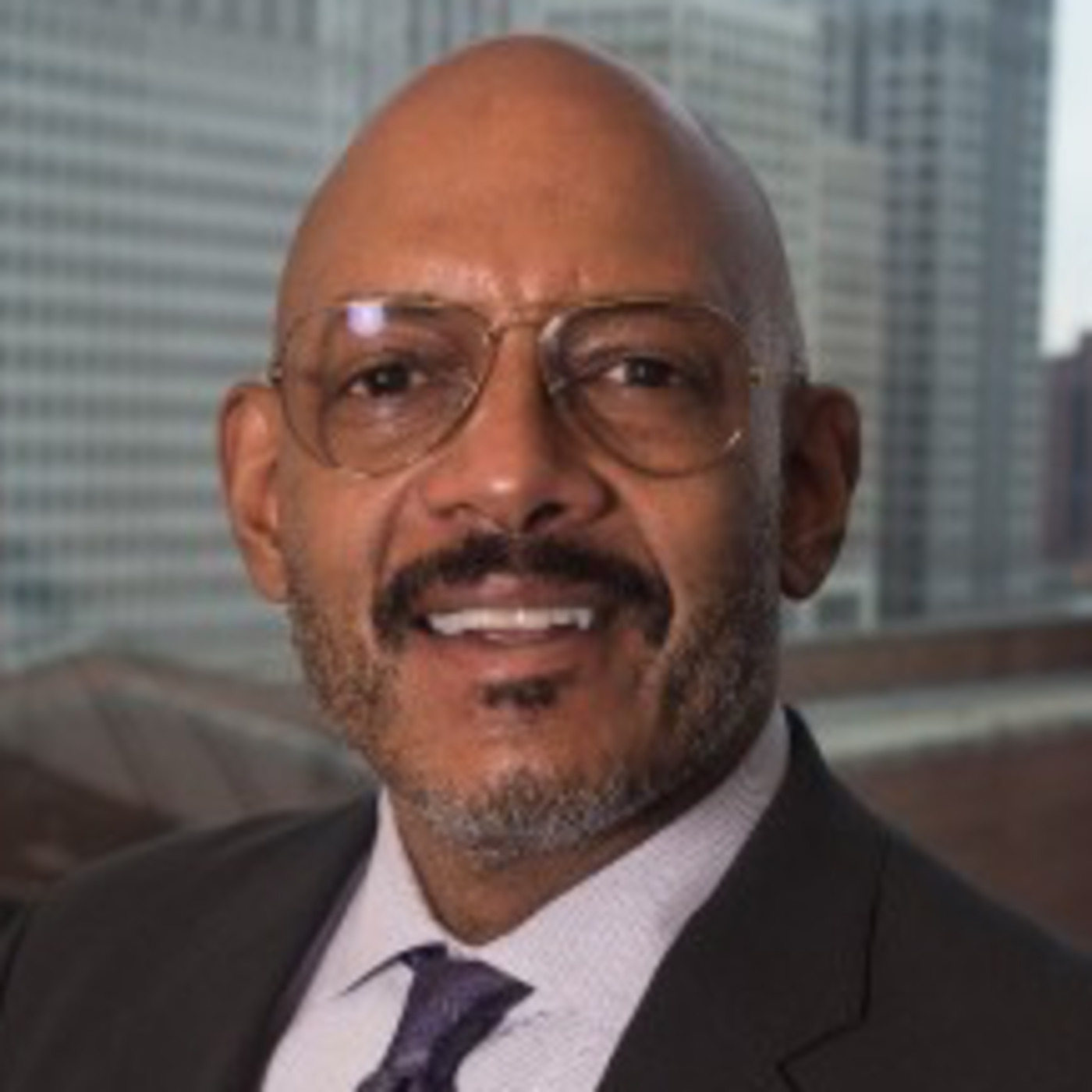
Eefren Devidt: I’m Eefren Devidt, and welcome to the 50 Faces Podcast, a podcast committed to revealing the richness and diversity of the world of investment by focusing on its people and their stories. I’m joined today by Les Bond, who’s CEO at Addix Asset Management,, a firm he founded over 20 years ago. Adex is an MBE-certified registered investment advisor which builds portfolios of emerging investment managers, in particular female and minority-owned firms. Welcome, Les. Thanks for joining me today.
Les Bond: Aoifinn, it’s so good to be here. Thanks so much for inviting me.
Eefren Devidt: Well, let’s start with your background. Where did you grow up? What did you study? And how did you come to enter the world of investing?
Les Bond: Yes, I, I grew up in St. Louis, Missouri, and went to an all-boys private school there, St. Louis Country Day High school and left there. I played football. We were state champions. So to my surprise, I caught the attention of some of the Ivy League schools, and I ended up going to Princeton University in 1975 and never played a down of football because I got injured before I went off to school. So I never played, but, you know, it was a great experience nonetheless. And that was the first part of my education.
Eefren Devidt: That sounds wonderful. And what did you study at Princeton? And did you always think about a job in finance?
Les Bond: No, you know, I really was never focused on finance as a child, you know, and I think it was only— I went to what was then the— I majored in public and international affairs, which was the Woodrow Wilson School at the time. And it was really then that I began to focus on on trade and economics. And that was sort of my introduction to finance, was in writing my thesis and some of my papers as a junior. My thesis advisor was Henry Beanen, who was president at Northwestern University for 15 years. But he sort of reordered my focus in terms of African studies, sub-Saharan African studies, on trade relationships with the Soviet Union. So that’s really where I began to, you know, start looking at finance and economic and those sorts of things. And when I graduated, I had no intentions of doing anything other than going to law school. But my mother’s brother, Vinnie Lyons, was the dean of the manager’s program at Northwestern. And Northwestern was one of the law schools that I applied to. So he encouraged me. He said, well, Les, if you just spend one more year in grad school, you can get your MBA as well. Which sounded great. And, and so I did complete the, the JD MBA program at Northwestern, and my other colleagues in the program, all of them were, with the exception of maybe 2 of the 10 of us, were focused on Wall Street opportunities. And so it was really my involvement with them and my experience in going to Northwestern, it was the first time that I really became aware of, of Wall Street and investment management. So I was a latecomer to in my education, and I did go on from the program and practice law, but I immediately realized that I did not like practicing law at all. And so I reinvented myself as an investment professional by going into government. That was really my first opportunity.
Eefren Devidt: That sounds really interesting. You’re certainly not the first guest on this podcast to have been a lapsed lawyer, or at least to have moved away from either law or medicine in some cases. I’d love to know, international trade and and some of the focus on Africa and the Soviet Union. And did you do any traveling at that time?
Les Bond: Yeah, I had the good fortune to visit Cuba in January of 1979, my senior year. My senior thesis was on Soviet trade with the sub-Saharan African countries. And my thesis was that the relationship between those African countries and the Soviet Union were out of balance. And in focusing on the trade relationship, the African countries were providing commodities in exchange for hardware, military hardware from the Soviet Union. And so with Cuba, the Soviets were providing that hardware, that military hardware in exchange for sugar. And so by going to Cuba, of course, I didn’t get to see any of the military equipment other than what was in the streets at the time. But I did get to visit some of the sugar— I would say plantations, but the sugar farms— and see some of the farming equipment that the Soviets had provided to the sub-Saharan African countries. They were less than substandard. So to the extent that I could elicit any comments from the Cubans, it was, you know, that this really isn’t working out the way that we thought it was going to work out. And at that time, of course, the United States was very much interested in the relationship relationship between the Soviets and the Cubans. And Dr. Bienen felt that my research was important to the extent that the United States was trying to impress upon third world countries who were entertaining relationships with the Soviet Union, you know, that it’s really— you’re not going to get what they say you’re going to get. And whereas the United States was offering dollars, you know, like aid dollars. So I don’t, I don’t know how really significant my research turned out being, but I felt like I had a interesting topic as I I was, as was preparing my thesis.
Eefren Devidt: Sure, an early exposure to the importance of diplomacy, breaking deals and building relationships, which clearly you’ve carried into the rest of your career. I’d love to ask more now about setting up ADEX and how you came to that, and maybe what the vision for that firm was.
Les Bond: Oh yeah, well, I really had focused on reinventing myself as a public finance investment banker, Because at that time, my lesson from being a lawyer was you have to have your clients sort of strapped to your back to really be successful. And it wasn’t likely that, you know, the clients that I had at Atlanta’s largest law firm were going to, you know, follow me anyplace on my own. So I focused on first on becoming a municipal bond lawyer, a municipal bond lawyer, but always with the idea that I would take the experience of learning how to be a bond lawyer, of having to learn how to structure tax-exempt debt. So I did that in the context of government. I worked for the Metropolitan Pier and Exposition Authority, which is there in Illinois, and it’s, it’s controlled both by the city of Chicago and the state of Illinois. So I worked there for a few years as in-house bond counsel, and then ultimately moved back to St. Louis, Missouri, where the controller of the city of St. Louis hired me to be both the general counsel to the department of finance, as well as having authority to negotiate the bond transactions that the city was undertaking, which were numerous at the time. So when I finished a couple of those deals, I was approached by an investment banking firm based out of Kansas City. I really wasn’t ready to go to Wall Street. I was always sort of a fear that I would not be able to make enough money to live in New York City. So I stayed in Missouri, and I’m so glad that I did because ultimately I realized that I was capable of starting a firm on my own. One of the people that I worked with at George K. Baum was Dennis Lloyd, and he was sort of my wingman in my efforts to identify opportunities to do public finance. And we started a firm called Columbia Capital. He lived in Kansas City, I lived in St. Louis. But the day that we incorporated, I got my first contract from the treasurer of the city of St. Louis, Larry Williams, who had known me when I was a kid. And so he gave me a very small contract to write the investment policy of the city of St. Louis. He liked that and he gave us the opportunity to become the in-house— well, the outsourced cash manager for the city of St. Louis. And that was basically managing a portfolio of about $300 million Treasuries and agency short-term, which, you know, really you wasn’t, know, rocket science for us. But it gave me an opportunity to really contrast and compare the opportunity as it relates to being a financial advisor, you know, for bond transactions. So those transactions, they come and they go, but the investment management part of it with the Treasurer’s Office was a constant. So we had— we, we were Managing treasuries and agencies for the city at, at 20 basis points, which is really kind of crazy because now I’m managing emerging markets small cap for about 20 basis points. So that just gives you an idea of what’s happened to our industry over the last 20 years.
Eefren Devidt: Certainly fee compression at its finest, but also I would imagine other changes in the industry include, you know, increased barriers to entry. As some of the costs mount just at the same time that the fees are coming down. Can you just maybe sort of paint a picture of how ADEX works with the emerging manager cohorts that you work with? Do you build portfolios? Do you provide assistance, introductions, generate leads? What exactly is the business model?
Les Bond: Well, we do a lot of things. I mean, we really function as sort of a hybrid between investment consultants and active managers. Because by definition, emerging managers are smaller, newer managers, but that also defines generally the universe of minority and women-owned firms in the United States. So when public plan sponsors decide that they want to create opportunities for minority and women firms, women-owned investment management firms, we’re sort of that bridge between the institutional fiduciary responsibility that trustees have in creating opportunities for these smaller, newer firms. They don’t really have the AUM that’s necessary to really compete with the bulge bracket firms in New York. And so they can’t take a full-on allocation. So let’s say, you know, it’s a $100 million portfolio. And so we take that allocation from public plan sponsors and we break that up. So at the very beginning, the legacy portfolios in the emerging manager space were all-cap mandates. For US equities. So we would disaggregate the Russell 1000 and we would have allocations then from small cap, mid cap, large cap. So 75% of those opportunities would be in large cap and then the balance would be in mid cap and small cap. And the idea there was to have a farm team, if you will, such that if through constructing these portfolios with, let’s say, 5 managers, maybe 2, no, let’s say 8 managers. We would have some managers actively in growth and value in both large cap and then the smaller capitalization. And we would have quantitative managers as well as some bottom-up stock pickers. So when we constructed these portfolios, we were really trying to broaden the spectrum instead of being more concentrated. We were really trying to spread out the dollars so that we could you oversee, know, the activities of these firms and see who did really well. And if we had— if we could identify one or two firms who were really doing well in their assignments in these very broad mandates, that, you know, they would have the opportunity to graduate into a direct relationship with our clients. So one of the things that we would do as we constructed these portfolios is try to identify newer, smaller firms because, of course, some of the emerging manager space includes you know, more well-seasoned firms, firms that have been in business for a long period of time, but a lot of it is trying to get— try to build the capacity of newer smaller firms. And so we would create small sleeves of investments for these new firms to give them an opportunity to grow their AUM and increase their revenues and to be able to go out and hire analysts. So we are very much— it’s a high-touch approach, to creating new firms and creating opportunities for other older firms when they want to develop new products. We work with them to develop those products by being the first investor with them. So we do a lot of things, we wear a lot of hats, but mostly what we are doing is we’re working hand in hand with with the, the managers to help them build their business in a sensible way.
Eefren Devidt: And we’ve certainly had a shout out to you and firms like you by another manager who has Cynthia Toussaint, who has enjoyed your services and certainly benefited from them. So thank you for the contribution you’re making. And I want to ask you about how the landscape has changed, because you’ve been in the industry now for some decades. Have you seen that the environment for emerging managers, women and minority-owned firms in particular, has it got more challenging in terms of the barriers to entry I mentioned earlier, and perhaps the availability of programs that are dedicated to them?
Les Bond: Yes, there’s a lot more challenges to starting an active investment management firm, particularly in global equities, because one, I mean, our first allocation was from the Chicago Teachers back in 2004, and it was $100 million. That was our first client. That I don’t think could happen in this environment. Now, at least not in the public plan space. And I think that’s just because it’s much more difficult, I think, to find the capital that’s necessary, the patient capital that’s necessary to build an active global equities firm, because the competition, of course, is, is really tough. But it’s not that it wasn’t tough 20 years ago, it was, but I think there was such a strong desire on the part of trustees who felt at that time you that, know, the industry had not had opportunities for minority and women-owned firms, that they wanted to make an impact in that area. And they certainly did. But one of the things that I’ve learned over the years is that emerging manager programs are— must necessarily be in complete alignment with the plan sponsors in terms of their portfolios, in terms of their investment objectives. That is made even more difficult in these times when you have underfunded public pension plans and there’s such a focus on return and on fee compression. So even though you were able to, if you were able to get an opportunity as an emerging manager, the revenues that you realize are going to be smaller in public markets as opposed to private markets. So what you see is young people who are interested in investment management are looking more and more so toward private markets because there’s more opportunity there. The fees are higher. And of course, with the challenges that public pension plans have and the need for liquidity to be able to pay out benefits, it’s very difficult to get into the space the way that I did in 2004. So yes, there’s been a lot of challenges, but I think we’re starting to— and in 2008 and 2009, we began to see sort of the commoditization of the large-cap space. Just because the market continued to go up and up and up, and the ability to create alpha got less and less and less. I think we see a little bit more now in terms of the opportunity in large cap. So we still have large cap portfolios and we still have exposure to large cap, but it’s very difficult. And that’s where most of the legacy opportunities in the emerging manager space came from.
Eefren Devidt: Speaking of— that’s very interesting. I think it’s particularly around aligning the objective of the fund with the objective of the emerging manager program.. That of course is essential to see it as fully integrated and a part of the solution as opposed to sort of a token gesture on the side that, that’s not helping matters. I’d love to talk about diversity in the industry too, because you have probably seen quite a bit, both from the vantage point of the managers themselves and the boards who are seeking to put more assets into these strategies, as well as just looking perhaps at established firms. What are your thoughts on how the industry’s diversity levels are And, today? You know, what we need to do to improve?
Les Bond: Yeah, you know, it’s— the track record of our industry is abysmal. The minority and women-owned firms manage less than 1% of all of the institutional assets in the world, which is ridiculous. But even beyond that, even beyond this, the entrepreneurial side of opportunities for minority firms, I mean, just the profile of the bulge bracket firms with respect to their own employees in the investment consulting space is abysmal. A lot of this is not because of intentional racism, I think. I think a lot of it is just the unintended biases that are built into the hiring of these elite firms and how they go about sourcing the talent within their own companies. But I mean, we see this not just in investment management. I think it’s more— I mean, there’s been a spotlight on it in the NFL, in the head coaching opportunities, is that there are these informal channels to obtaining these opportunities that don’t lend themselves to diversity and inclusion. And so we really have to look especially at this point in our nation’s history, given the Black Lives Matter movement and what came about after George Floyd’s murder and the insistence on addressing some of these problems in our society. And I think people are more honest about it right now, but I think it’s very difficult for what’s going on to become a movement and not just a moment, is people feeling like they’re being attacked because they’re being called out on their ideas and their unintended biases. They don’t want to talk about it. They feel attacked. But I mean, we are going to have to move beyond that, not just in investment management, but in our society. But if we look at the demographic trends in our country, It’s undeniable that we’re becoming browner and blacker and redder and yellower and more feminine every day. So it’s sort of the shape of the river as we go forward, and either people will manage it or it will manage them. So you have also going on at the same time, you have this, this cry for socially responsible investing. And I can’t believe I’m actually hearing this, but people on Wall Street talking about stakeholder capitalism and not just raw capitalism. So I think things are changing, but they’re going to change really slow. I think we’ve made a lot of progress over the last 20 years, but it doesn’t really show if you look at the numbers.
Eefren Devidt: Absolutely. Thank you for the work you’re doing, which is, I think, helping to make that moment stick and make it more of a movement. But it is as an ongoing challenge, as you rightly point out. I’d love to return to some personal reflections now and look back at your career. And were there any key people in that career? You mentioned some people that advised you maybe to go in a certain direction. Did you have any mentors or guidance that you, um, remember?
Les Bond: Yeah, I think my mother and father were— they were early adapters of making sure that I had mentors early on in my life because my father was a physician, my mother was an educator. I had a different kind of opportunity than poor kids and kids of color did back then because my parents had the resources to send us to private school. But I mean, we were side by side with kids who were less fortunate than, than we were. And, you know, I grew up in those neighborhoods, but I think I had outstanding mentors, and— but none of them were really in finance or business. They were in education and law. They were mostly people who were involved in the civil rights movement and politics. And so I sort of saw myself sort of moving in that direction when I was younger, and it wasn’t really until I moved to Atlanta, Georgia, and had an opportunity to work with Andy Young and Maynard Jackson and Shirley Franklin, who were all mayors of the city of Atlanta, that I really learned about the nexus between political power and economic power, because they all insisted on inclusion in terms of how the city of Atlanta went about its business. And they, of course, had influence on other mayors in other cities who wanted to do the same thing in their cities. So I had the opportunity to work with the mayor of Chicago, with Harold Washington, and then ultimately to go to St. Louis and work with the controller and treasurer of the city of St. Louis. And so I was very much influenced by that connection that nexus between politics and economic power. And I recognized then that probably the most important thing in terms of changing the economic profile of the Black community in particular was to use that political power to force change in terms of inclusion at the table when it came to economic opportunity. And those experiences for me really directed me into finance and investments because it was the creation of broker-dealer companies and investment management companies. I’m a contemporary of John Rogers. He went to Princeton. He was in the class behind me. I was very much influenced by him. And I was also influenced by Jim Reynolds, who was a classmate of mine at Northwestern’s Kellogg School.. And so, like I said, I really had no vision or optics on Wall Street as I went through college. And only then when I went to grad school that I really become focused on those kinds of opportunities. But I learned very quickly, and I was very fortunate because I had people who knew me from the time that I was a child who gave me opportunities that I otherwise would not have had. But again, that emphasizes the importance of those informal channels that really trigger these opportunities on Wall Street. It’s just those kinds of informal, not really apparent pathways to success that we really haven’t had in communities of color.
Eefren Devidt: That is so astute, I think, to point out how just how interconnected political power and economic empowerment are. And can’t really have one without the or other, at least we shouldn’t have one without the other. And when you think about any words of wisdom that any of these mentors or influences in your life shared with you, can you share any, or is there any creed or motto that you live by?
Les Bond: Yeah, I think it really goes back to my mother’s parents. I mean, a very deeply religious couple, but my grandfather, who had 6 kids and put them all through college and grad school and worked 3 or 4 jobs to be able to do that. It was pray like everything depends on God and work like everything depends on you. And so— and I think that was important. But I also think it was very important that they emphasized— and particularly my father emphasized humility. In that I think what I learned from my dad was that being humble makes optimism sustainable. And he also emphasized to me, he always said, treat people the way you want to be treated. I could not have been successful without the partners and the employees that I have. I was always encouraged by my family to be a leader, and it has been my privilege to really lead this company and the people that work there I’m very proud of the fact that most of the people that work at Addix have been with me for at least 7 years. That’s a wonderful thing that people really believe in my leadership style, which is, you know, why they never leave. I imagine that how much I pay them is also part of it. But again, as my dad said, treat people as you would want to be treated. But I think being humble really makes it all possible.
Eefren Devidt: Well, thank you so much, Les. It’s been a pleasure hearing from you. And I think now I know your secret. I I was, was wondering whether you would reveal it, but it has been that humility and the relationships that have been important to you since the very beginning and that you have cultivated and nurtured throughout your life. And I think the way you clearly lead with humility has led you to being a pillar, not just of our industry, but of the emerging manager community in particular. And I know they really value you for it. It. So thank you for coming here and for sharing your wisdom with us.
Les Bond: Thank you for those kind sentiments.
Eefren Devidt: I’m Aoifinn Devitt. Thank you for listening to the 50 Faces Podcast. If you liked what you heard and would like to tune in to hear more inspiring investors and their personal journeys, please subscribe on Apple Podcasts or wherever you get your podcasts. So my last question is whether you would have any words of wisdom for your younger self. Is there anything that you know now, maybe that you wish that young student at Princeton had known then?
Les Bond: Yes, I wish I had saved more money. Would— It I’d probably be retired by now.
Eefren Devidt: Well, I guess that’s advice we all could have given our younger selves.
Les Bond: Yes.
Eefren Devidt: This podcast is for informational purposes only and should not be construed as investment advice, and all views are personal and should not be attributed to the organizations and affiliations of the host or any guest.
Eefren Devidt: Brought to you with the kind support of Federated Hermes Inc., a leading global investment manager. Guided by their conviction that responsible investing is the best way to create wealth over the long term, their investment solutions span equity, fixed income, alternative and private markets, multi-asset and liquidity strategies, and a range of separately managed accounts distributed through intermediaries worldwide.
Les Bond: And it wasn’t really until I moved to Atlanta, Georgia, and had an opportunity to work with Andy Young and Maynard Jackson and Shirley Franklin, who were all mayors of the city of Atlanta, that I really learned about the nexus between political power and economic power because they all insisted on inclusion in terms of how the city of Atlanta went about its business. And they, of course, had influence on other mayors in other cities who wanted to do the same thing in their cities. And I recognized then that probably the most important thing in terms of changing the economic profile of the Black community in particular was to use that political power to force change in terms of inclusion at the table when it came to economic opportunity.
Eefren Devidt: I’m Eefren Devidt, and welcome to the 50 Faces Podcast, a podcast committed to revealing the richness and diversity of the world of investment by focusing on its people and their stories. I’m joined today by Les Bond, who’s CEO at Addix Asset Management,, a firm he founded over 20 years ago. Adex is an MBE-certified registered investment advisor which builds portfolios of emerging investment managers, in particular female and minority-owned firms. Welcome, Les. Thanks for joining me today.
Les Bond: Aoifinn, it’s so good to be here. Thanks so much for inviting me.
Eefren Devidt: Well, let’s start with your background. Where did you grow up? What did you study? And how did you come to enter the world of investing?
Les Bond: Yes, I, I grew up in St. Louis, Missouri, and went to an all-boys private school there, St. Louis Country Day High school and left there. I played football. We were state champions. So to my surprise, I caught the attention of some of the Ivy League schools, and I ended up going to Princeton University in 1975 and never played a down of football because I got injured before I went off to school. So I never played, but, you know, it was a great experience nonetheless. And that was the first part of my education.
Eefren Devidt: That sounds wonderful. And what did you study at Princeton? And did you always think about a job in finance?
Les Bond: No, you know, I really was never focused on finance as a child, you know, and I think it was only— I went to what was then the— I majored in public and international affairs, which was the Woodrow Wilson School at the time. And it was really then that I began to focus on on trade and economics. And that was sort of my introduction to finance, was in writing my thesis and some of my papers as a junior. My thesis advisor was Henry Beanen, who was president at Northwestern University for 15 years. But he sort of reordered my focus in terms of African studies, sub-Saharan African studies, on trade relationships with the Soviet Union. So that’s really where I began to, you know, start looking at finance and economic and those sorts of things. And when I graduated, I had no intentions of doing anything other than going to law school. But my mother’s brother, Vinnie Lyons, was the dean of the manager’s program at Northwestern. And Northwestern was one of the law schools that I applied to. So he encouraged me. He said, well, Les, if you just spend one more year in grad school, you can get your MBA as well. Which sounded great. And, and so I did complete the, the JD MBA program at Northwestern, and my other colleagues in the program, all of them were, with the exception of maybe 2 of the 10 of us, were focused on Wall Street opportunities. And so it was really my involvement with them and my experience in going to Northwestern, it was the first time that I really became aware of, of Wall Street and investment management. So I was a latecomer to in my education, and I did go on from the program and practice law, but I immediately realized that I did not like practicing law at all. And so I reinvented myself as an investment professional by going into government. That was really my first opportunity.
Eefren Devidt: That sounds really interesting. You’re certainly not the first guest on this podcast to have been a lapsed lawyer, or at least to have moved away from either law or medicine in some cases. I’d love to know, international trade and and some of the focus on Africa and the Soviet Union. And did you do any traveling at that time?
Les Bond: Yeah, I had the good fortune to visit Cuba in January of 1979, my senior year. My senior thesis was on Soviet trade with the sub-Saharan African countries. And my thesis was that the relationship between those African countries and the Soviet Union were out of balance. And in focusing on the trade relationship, the African countries were providing commodities in exchange for hardware, military hardware from the Soviet Union. And so with Cuba, the Soviets were providing that hardware, that military hardware in exchange for sugar. And so by going to Cuba, of course, I didn’t get to see any of the military equipment other than what was in the streets at the time. But I did get to visit some of the sugar— I would say plantations, but the sugar farms— and see some of the farming equipment that the Soviets had provided to the sub-Saharan African countries. They were less than substandard. So to the extent that I could elicit any comments from the Cubans, it was, you know, that this really isn’t working out the way that we thought it was going to work out. And at that time, of course, the United States was very much interested in the relationship relationship between the Soviets and the Cubans. And Dr. Bienen felt that my research was important to the extent that the United States was trying to impress upon third world countries who were entertaining relationships with the Soviet Union, you know, that it’s really— you’re not going to get what they say you’re going to get. And whereas the United States was offering dollars, you know, like aid dollars. So I don’t, I don’t know how really significant my research turned out being, but I felt like I had a interesting topic as I I was, as was preparing my thesis.
Eefren Devidt: Sure, an early exposure to the importance of diplomacy, breaking deals and building relationships, which clearly you’ve carried into the rest of your career. I’d love to ask more now about setting up ADEX and how you came to that, and maybe what the vision for that firm was.
Les Bond: Oh yeah, well, I really had focused on reinventing myself as a public finance investment banker, Because at that time, my lesson from being a lawyer was you have to have your clients sort of strapped to your back to really be successful. And it wasn’t likely that, you know, the clients that I had at Atlanta’s largest law firm were going to, you know, follow me anyplace on my own. So I focused on first on becoming a municipal bond lawyer, a municipal bond lawyer, but always with the idea that I would take the experience of learning how to be a bond lawyer, of having to learn how to structure tax-exempt debt. So I did that in the context of government. I worked for the Metropolitan Pier and Exposition Authority, which is there in Illinois, and it’s, it’s controlled both by the city of Chicago and the state of Illinois. So I worked there for a few years as in-house bond counsel, and then ultimately moved back to St. Louis, Missouri, where the controller of the city of St. Louis hired me to be both the general counsel to the department of finance, as well as having authority to negotiate the bond transactions that the city was undertaking, which were numerous at the time. So when I finished a couple of those deals, I was approached by an investment banking firm based out of Kansas City. I really wasn’t ready to go to Wall Street. I was always sort of a fear that I would not be able to make enough money to live in New York City. So I stayed in Missouri, and I’m so glad that I did because ultimately I realized that I was capable of starting a firm on my own. One of the people that I worked with at George K. Baum was Dennis Lloyd, and he was sort of my wingman in my efforts to identify opportunities to do public finance. And we started a firm called Columbia Capital. He lived in Kansas City, I lived in St. Louis. But the day that we incorporated, I got my first contract from the treasurer of the city of St. Louis, Larry Williams, who had known me when I was a kid. And so he gave me a very small contract to write the investment policy of the city of St. Louis. He liked that and he gave us the opportunity to become the in-house— well, the outsourced cash manager for the city of St. Louis. And that was basically managing a portfolio of about $300 million Treasuries and agency short-term, which, you know, really you wasn’t, know, rocket science for us. But it gave me an opportunity to really contrast and compare the opportunity as it relates to being a financial advisor, you know, for bond transactions. So those transactions, they come and they go, but the investment management part of it with the Treasurer’s Office was a constant. So we had— we, we were Managing treasuries and agencies for the city at, at 20 basis points, which is really kind of crazy because now I’m managing emerging markets small cap for about 20 basis points. So that just gives you an idea of what’s happened to our industry over the last 20 years.
Eefren Devidt: Certainly fee compression at its finest, but also I would imagine other changes in the industry include, you know, increased barriers to entry. As some of the costs mount just at the same time that the fees are coming down. Can you just maybe sort of paint a picture of how ADEX works with the emerging manager cohorts that you work with? Do you build portfolios? Do you provide assistance, introductions, generate leads? What exactly is the business model?
Les Bond: Well, we do a lot of things. I mean, we really function as sort of a hybrid between investment consultants and active managers. Because by definition, emerging managers are smaller, newer managers, but that also defines generally the universe of minority and women-owned firms in the United States. So when public plan sponsors decide that they want to create opportunities for minority and women firms, women-owned investment management firms, we’re sort of that bridge between the institutional fiduciary responsibility that trustees have in creating opportunities for these smaller, newer firms. They don’t really have the AUM that’s necessary to really compete with the bulge bracket firms in New York. And so they can’t take a full-on allocation. So let’s say, you know, it’s a $100 million portfolio. And so we take that allocation from public plan sponsors and we break that up. So at the very beginning, the legacy portfolios in the emerging manager space were all-cap mandates. For US equities. So we would disaggregate the Russell 1000 and we would have allocations then from small cap, mid cap, large cap. So 75% of those opportunities would be in large cap and then the balance would be in mid cap and small cap. And the idea there was to have a farm team, if you will, such that if through constructing these portfolios with, let’s say, 5 managers, maybe 2, no, let’s say 8 managers. We would have some managers actively in growth and value in both large cap and then the smaller capitalization. And we would have quantitative managers as well as some bottom-up stock pickers. So when we constructed these portfolios, we were really trying to broaden the spectrum instead of being more concentrated. We were really trying to spread out the dollars so that we could you oversee, know, the activities of these firms and see who did really well. And if we had— if we could identify one or two firms who were really doing well in their assignments in these very broad mandates, that, you know, they would have the opportunity to graduate into a direct relationship with our clients. So one of the things that we would do as we constructed these portfolios is try to identify newer, smaller firms because, of course, some of the emerging manager space includes you know, more well-seasoned firms, firms that have been in business for a long period of time, but a lot of it is trying to get— try to build the capacity of newer smaller firms. And so we would create small sleeves of investments for these new firms to give them an opportunity to grow their AUM and increase their revenues and to be able to go out and hire analysts. So we are very much— it’s a high-touch approach, to creating new firms and creating opportunities for other older firms when they want to develop new products. We work with them to develop those products by being the first investor with them. So we do a lot of things, we wear a lot of hats, but mostly what we are doing is we’re working hand in hand with with the, the managers to help them build their business in a sensible way.
Eefren Devidt: And we’ve certainly had a shout out to you and firms like you by another manager who has Cynthia Toussaint, who has enjoyed your services and certainly benefited from them. So thank you for the contribution you’re making. And I want to ask you about how the landscape has changed, because you’ve been in the industry now for some decades. Have you seen that the environment for emerging managers, women and minority-owned firms in particular, has it got more challenging in terms of the barriers to entry I mentioned earlier, and perhaps the availability of programs that are dedicated to them?
Les Bond: Yes, there’s a lot more challenges to starting an active investment management firm, particularly in global equities, because one, I mean, our first allocation was from the Chicago Teachers back in 2004, and it was $100 million. That was our first client. That I don’t think could happen in this environment. Now, at least not in the public plan space. And I think that’s just because it’s much more difficult, I think, to find the capital that’s necessary, the patient capital that’s necessary to build an active global equities firm, because the competition, of course, is, is really tough. But it’s not that it wasn’t tough 20 years ago, it was, but I think there was such a strong desire on the part of trustees who felt at that time you that, know, the industry had not had opportunities for minority and women-owned firms, that they wanted to make an impact in that area. And they certainly did. But one of the things that I’ve learned over the years is that emerging manager programs are— must necessarily be in complete alignment with the plan sponsors in terms of their portfolios, in terms of their investment objectives. That is made even more difficult in these times when you have underfunded public pension plans and there’s such a focus on return and on fee compression. So even though you were able to, if you were able to get an opportunity as an emerging manager, the revenues that you realize are going to be smaller in public markets as opposed to private markets. So what you see is young people who are interested in investment management are looking more and more so toward private markets because there’s more opportunity there. The fees are higher. And of course, with the challenges that public pension plans have and the need for liquidity to be able to pay out benefits, it’s very difficult to get into the space the way that I did in 2004. So yes, there’s been a lot of challenges, but I think we’re starting to— and in 2008 and 2009, we began to see sort of the commoditization of the large-cap space. Just because the market continued to go up and up and up, and the ability to create alpha got less and less and less. I think we see a little bit more now in terms of the opportunity in large cap. So we still have large cap portfolios and we still have exposure to large cap, but it’s very difficult. And that’s where most of the legacy opportunities in the emerging manager space came from.
Eefren Devidt: Speaking of— that’s very interesting. I think it’s particularly around aligning the objective of the fund with the objective of the emerging manager program.. That of course is essential to see it as fully integrated and a part of the solution as opposed to sort of a token gesture on the side that, that’s not helping matters. I’d love to talk about diversity in the industry too, because you have probably seen quite a bit, both from the vantage point of the managers themselves and the boards who are seeking to put more assets into these strategies, as well as just looking perhaps at established firms. What are your thoughts on how the industry’s diversity levels are And, today? You know, what we need to do to improve?
Les Bond: Yeah, you know, it’s— the track record of our industry is abysmal. The minority and women-owned firms manage less than 1% of all of the institutional assets in the world, which is ridiculous. But even beyond that, even beyond this, the entrepreneurial side of opportunities for minority firms, I mean, just the profile of the bulge bracket firms with respect to their own employees in the investment consulting space is abysmal. A lot of this is not because of intentional racism, I think. I think a lot of it is just the unintended biases that are built into the hiring of these elite firms and how they go about sourcing the talent within their own companies. But I mean, we see this not just in investment management. I think it’s more— I mean, there’s been a spotlight on it in the NFL, in the head coaching opportunities, is that there are these informal channels to obtaining these opportunities that don’t lend themselves to diversity and inclusion. And so we really have to look especially at this point in our nation’s history, given the Black Lives Matter movement and what came about after George Floyd’s murder and the insistence on addressing some of these problems in our society. And I think people are more honest about it right now, but I think it’s very difficult for what’s going on to become a movement and not just a moment, is people feeling like they’re being attacked because they’re being called out on their ideas and their unintended biases. They don’t want to talk about it. They feel attacked. But I mean, we are going to have to move beyond that, not just in investment management, but in our society. But if we look at the demographic trends in our country, It’s undeniable that we’re becoming browner and blacker and redder and yellower and more feminine every day. So it’s sort of the shape of the river as we go forward, and either people will manage it or it will manage them. So you have also going on at the same time, you have this, this cry for socially responsible investing. And I can’t believe I’m actually hearing this, but people on Wall Street talking about stakeholder capitalism and not just raw capitalism. So I think things are changing, but they’re going to change really slow. I think we’ve made a lot of progress over the last 20 years, but it doesn’t really show if you look at the numbers.
Eefren Devidt: Absolutely. Thank you for the work you’re doing, which is, I think, helping to make that moment stick and make it more of a movement. But it is as an ongoing challenge, as you rightly point out. I’d love to return to some personal reflections now and look back at your career. And were there any key people in that career? You mentioned some people that advised you maybe to go in a certain direction. Did you have any mentors or guidance that you, um, remember?
Les Bond: Yeah, I think my mother and father were— they were early adapters of making sure that I had mentors early on in my life because my father was a physician, my mother was an educator. I had a different kind of opportunity than poor kids and kids of color did back then because my parents had the resources to send us to private school. But I mean, we were side by side with kids who were less fortunate than, than we were. And, you know, I grew up in those neighborhoods, but I think I had outstanding mentors, and— but none of them were really in finance or business. They were in education and law. They were mostly people who were involved in the civil rights movement and politics. And so I sort of saw myself sort of moving in that direction when I was younger, and it wasn’t really until I moved to Atlanta, Georgia, and had an opportunity to work with Andy Young and Maynard Jackson and Shirley Franklin, who were all mayors of the city of Atlanta, that I really learned about the nexus between political power and economic power, because they all insisted on inclusion in terms of how the city of Atlanta went about its business. And they, of course, had influence on other mayors in other cities who wanted to do the same thing in their cities. So I had the opportunity to work with the mayor of Chicago, with Harold Washington, and then ultimately to go to St. Louis and work with the controller and treasurer of the city of St. Louis. And so I was very much influenced by that connection that nexus between politics and economic power. And I recognized then that probably the most important thing in terms of changing the economic profile of the Black community in particular was to use that political power to force change in terms of inclusion at the table when it came to economic opportunity. And those experiences for me really directed me into finance and investments because it was the creation of broker-dealer companies and investment management companies. I’m a contemporary of John Rogers. He went to Princeton. He was in the class behind me. I was very much influenced by him. And I was also influenced by Jim Reynolds, who was a classmate of mine at Northwestern’s Kellogg School.. And so, like I said, I really had no vision or optics on Wall Street as I went through college. And only then when I went to grad school that I really become focused on those kinds of opportunities. But I learned very quickly, and I was very fortunate because I had people who knew me from the time that I was a child who gave me opportunities that I otherwise would not have had. But again, that emphasizes the importance of those informal channels that really trigger these opportunities on Wall Street. It’s just those kinds of informal, not really apparent pathways to success that we really haven’t had in communities of color.
Eefren Devidt: That is so astute, I think, to point out how just how interconnected political power and economic empowerment are. And can’t really have one without the or other, at least we shouldn’t have one without the other. And when you think about any words of wisdom that any of these mentors or influences in your life shared with you, can you share any, or is there any creed or motto that you live by?
Les Bond: Yeah, I think it really goes back to my mother’s parents. I mean, a very deeply religious couple, but my grandfather, who had 6 kids and put them all through college and grad school and worked 3 or 4 jobs to be able to do that. It was pray like everything depends on God and work like everything depends on you. And so— and I think that was important. But I also think it was very important that they emphasized— and particularly my father emphasized humility. In that I think what I learned from my dad was that being humble makes optimism sustainable. And he also emphasized to me, he always said, treat people the way you want to be treated. I could not have been successful without the partners and the employees that I have. I was always encouraged by my family to be a leader, and it has been my privilege to really lead this company and the people that work there I’m very proud of the fact that most of the people that work at Addix have been with me for at least 7 years. That’s a wonderful thing that people really believe in my leadership style, which is, you know, why they never leave. I imagine that how much I pay them is also part of it. But again, as my dad said, treat people as you would want to be treated. But I think being humble really makes it all possible.
Eefren Devidt: Well, thank you so much, Les. It’s been a pleasure hearing from you. And I think now I know your secret. I I was, was wondering whether you would reveal it, but it has been that humility and the relationships that have been important to you since the very beginning and that you have cultivated and nurtured throughout your life. And I think the way you clearly lead with humility has led you to being a pillar, not just of our industry, but of the emerging manager community in particular. And I know they really value you for it. It. So thank you for coming here and for sharing your wisdom with us.
Les Bond: Thank you for those kind sentiments.
Eefren Devidt: I’m Aoifinn Devitt. Thank you for listening to the 50 Faces Podcast. If you liked what you heard and would like to tune in to hear more inspiring investors and their personal journeys, please subscribe on Apple Podcasts or wherever you get your podcasts. So my last question is whether you would have any words of wisdom for your younger self. Is there anything that you know now, maybe that you wish that young student at Princeton had known then?
Les Bond: Yes, I wish I had saved more money. Would— It I’d probably be retired by now.
Eefren Devidt: Well, I guess that’s advice we all could have given our younger selves.
Les Bond: Yes.
Eefren Devidt: This podcast is for informational purposes only and should not be construed as investment advice, and all views are personal and should not be attributed to the organizations and affiliations of the host or any guest.