Aoifinn Devitt: This experience was very significant and traumatic for me. Here I was at one of the top academic institutions in the United States, at Columbia University, with a highly experienced care team. And yet there was so much more that could have been done. And it brought to light for me the need and the opportunity within women’s health. And that’s what we’re going after at FemHealth Ventures.
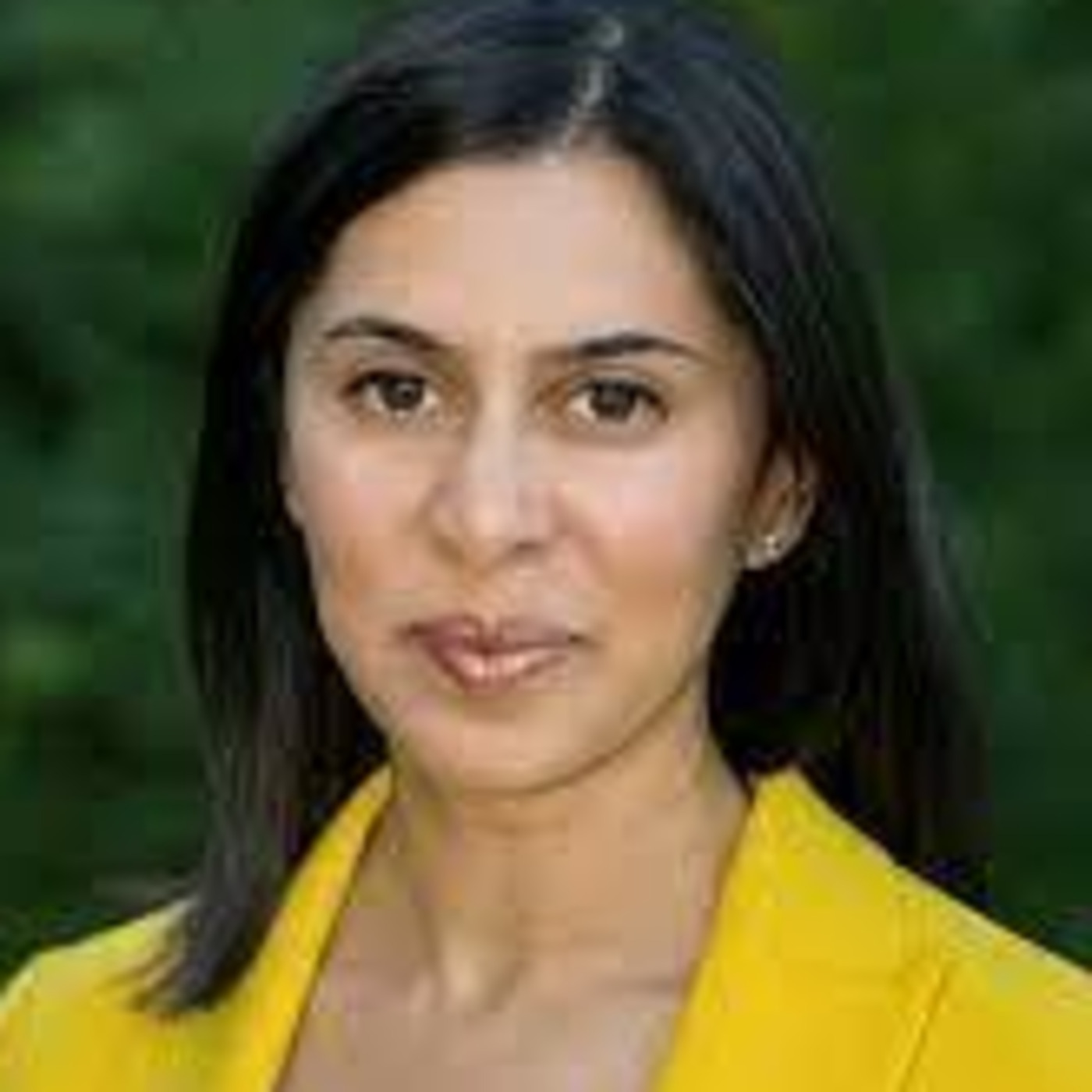
Maneesha: I’m Aoifinn Devitt, and welcome to the 50 Faces Podcast, a podcast committed to revealing the richness and diversity of the world of investment by focusing on its people and their stories. I’m joined today by Manisha Gheya, who’s managing partner and founder of FemHealth Ventures. A firm focused on providing investment capital to entrepreneurs focused on women’s health. Investing in healthcare since 2000, Maneesha has invested via public equities, private equities, and as a hedge fund specialist. She’s a senior advisor to Xsight Ventures, an ophthalmology-focused venture capital fund, and serves on multiple boards. Welcome, Maneesha. Thanks for joining me today.
Aoifinn Devitt: Thank you, Yifan, for having me. I’m excited to be here.
Maneesha: Well, let’s start first with your own background. Where did you grow up? What did you study? And how did you come to enter the world of investing?
Aoifinn Devitt: Sure. So I grew up in New Jersey, central Jersey, and I went to the University of Pennsylvania for my undergraduate work. I went in through a dual degree program in management and technology. So I got two degrees, one from Wharton and one from the School of Engineering. And subsequent to my undergraduate work, I right away went to an investment role at JPMorgan Partners. So essentially, I’ve been investing specifically in healthcare for 22 years now.
Maneesha: And was there something about your engineering background that attracted you to healthcare?
Aoifinn Devitt: So what I would say there is that I’ve always been interested in healthcare. I think as a teenager, I, I learned a little bit about genetics at the time, which was cutting edge, and always had an interest in the healthcare field. And the engineering background really provides a framework for approaching problems and problem solving, which has been very helpful in healthcare and including in healthcare investing.
Maneesha: It’s interesting that you’ve had experience on both the public and the private side. When it comes to maybe expressing an investment idea or gaining exposure to it, do you have any preference, or do you ever try to marry the two, public and private access?
Aoifinn Devitt: What I would say is I enjoy investing both in the public and the private markets. There are many elements that are similar across the investment analysis across those markets, but enacting the position is different in the private market versus the public market. And regarding putting them together, certainly. I think right now our vehicle is focused specifically on venture capital, so earlier stage private investments. But in the future, I foresee that there will be opportunities on the public side as well within women’s health. So we certainly would look to potentially expand into the public markets in the future.
Maneesha: And you shared with me your motivation for starting FemHealth, that it is a deeply personal, visceral connection to the area. Can you share with us what was behind your decision to start Fem Health?
Aoifinn Devitt: Sure. So what I would say is, for the first part, in my 22 years as a healthcare investor, I’ve again and again seen women’s health as underinvested and under-researched. And a large part of my passion for the space comes from my own personal experience. So I have a healthy daughter and I gave birth at Columbia University in New York City. And in brief, I’ll sort of tell you the story. She was born on a Sunday night. Her heart rate had gone down, so my OB decided to do an emergency C-section and she was born and healthy. But I didn’t feel so well afterwards. And it wasn’t until the next morning that my OB came in, took one look at me and realized that I had been bleeding internally the whole night. So she rushed me into the OR, back into the OR and brought in 3 additional surgeons. And the 4 of them spent 2 hours with me open looking for the source of the bleed. They couldn’t find the source of the bleed. So finally they closed me up and took me to the ICU and I was given a number of transfusions, 8 transfusions of blood and 2 transfusions of platelets. And it came to the point where the OB told my husband that she didn’t think I would make it to the next morning. So it got pretty bad. In addition, she sort of broke protocol and had them bring my newborn, my 1-day-old, into the ICU to see me. She didn’t think I had much longer, and she wanted me to have an opportunity to at least have a picture with my daughter. So I only remember bits and pieces of this since I was in and out of it in terms of consciousness. But my husband will recount every moment. I do recall being handed my daughter, and I remember the nurse having to put her hand underneath because I wasn’t strong enough to hold her by myself. And then in the subsequent hours, my body started catching up with the bleed. And after a few weeks in the hospital, I was able to come home. This experience was very significant and traumatic for me. Here I was at one of the top academic institutions in the United States at Columbia University with a highly experienced care team. And yet there was so much more that could have been done. And it brought to light for me the need and the opportunity within women’s health. And that’s what we’re going after at FemHealth Ventures.
Maneesha: Well, thank you for sharing that. And as someone who’s had been lucky enough to have healthy deliveries myself, I now don’t take any of it for granted. But it’s also quite appropriate that you’re starting with this issue of maternal health, because we can maybe talk a little bit about that just as a first avenue in terms of where FemHealth needs to go, because you’ve also shared some statistics about the US not ranking highly when it comes to, say, maternal health and the outcomes from others. Can you share a little bit about that and maybe some of the innovations you’re seeing in that area?
Aoifinn Devitt: Sure. So specifically, the United States ranks the worst out of the 10 top developed nations in terms of maternal mortality. And not only is it the worst if you take sort of large or as developed nations around the world, the best maternal mortality rate is in New Zealand, and the United States is, in terms of maternal mortality rates, is 10 times worse than New Zealand. So that’s quite significant, especially coming from a country like the United States that’s quite wealthy and has an advanced healthcare system. So it’s certainly an area where more work needs to be done. In terms of an investment, we’ve actually made an investment in a company that helps target maternal mortality specifically. It actually goes after emergency C-sections. And when I shared with you my personal story, I had an emergency C-section. So the reason that doctors do emergency C-sections is to save the fetus. So if they think the fetus is in trouble, they feel they need to rush in and save the fetus. And emergency C-sections are sort of stressful for the family members as well as the patient, and they’re intense for the doctor and the care team. And oftentimes emergency C-sections result in higher rates of complications and potential maternal morbidity and mortality. So in the case of how does the doctor make a decision to do an emergency C-section, the primary quantitative tool that he or she uses is the fetal heart rate monitor. It’s sort of a belt that goes across the belly of a laboring mother and it tries to determine the fetus’s heart rate. And based on that heart rate, the clinician is making the decision how well the fetus is doing and the decision on whether they need to rush in for an emergency C-section or if they can take their time. So this particular belt or fetal heart rate monitor is a great example of how there has been little development in women’s health for many years. So that monitor came out in the 1960s. And back then, the FDA didn’t even have a process for approving medical devices. So that device never went through an FDA approval process. It just came to market and people thought that machines would make people’s lives better. So they started using it. And not only is this an old device, it’s not that reliable. Up to 80% of the data that comes out of it is inconclusive for the OB. So the doctor does not know whether the fetus is okay or not. Okay. Now, the innovation that we invested in is a new tool to help clinicians. So a new quantitative tool. So very specifically, the company we invested in is a company called Radiant Oximetry, and they’ve developed a new tool to help monitor the fetus, a new quantitative tool. Essentially, you stick it on the belly of a laboring mother right below her belly button where the fetus’s skin is up against the maternal skin, and it shines a light through the mother’s skin to the The fetus. Fetus and figures out the fetus’s oxygen saturation. As a result, the OB now has an additional quantitative metric on which to make the determination: is the fetus okay or not? Do we need to rush in or not? So in other words, they can get a reading on the fetus’s oxygen level, and if the oxygen level is high enough, they may not need to do an emergency rush C-section, but they can actually take their time, which results in better outcomes for everyone involved. So that’s the idea. And that goes after maternal mortality in that it reduces the number of unnecessary emergency C-sections so that the clinician is only doing an emergency C-section where they are highly concerned about the health of the fetus. And we are very excited about the potential for this innovation to put a dent in the rate of maternal mortality in the United States.
Maneesha: Well, that’s so interesting, and it seems like a simple concept which perhaps just didn’t get investment or attention for, for many years. And of course, there you shared one case study, but there are many, many more other case studies like that that you have in your arsenal. So our listeners can of course follow up on that. But get back to the definitions here. How do you define FemHealth, which is the name of your firm but also obviously a name for an area?
Aoifinn Devitt: Sure, I would say two things. One is We’ve developed a concept called the FemHealth Framework, and the first key element of that framework is how we define women’s health. And we think about women’s health across three areas: conditions that affect only women, conditions that affect mostly women, and conditions that present differently in women. So conditions that affect only women, which is what most people think about as women’s health, is generally what an OB-GYN treats and reproductive health specifically. The second category, conditions that affect mostly women, includes things like migraines and autoimmune disease, which impact many more women than men. And the third category, conditions that present differently in women, includes things like heart disease, where most people are familiar with how a man might present with a heart attack, but they’re not necessarily familiar that a woman could present differently. For example, her symptoms could include things like stomach pain, which could be confused for a GI upset when it’s actually in some cases a sign of a heart attack. So we want the companies that we support to take into account these differences as they bring forward their products. And that’s sort of how we view the framework and the lens through which we look at women’s health. So we’re thinking about women’s health as not just the health of the reproductive organs, but the health of the whole woman. And we’re thinking about the opportunity as not a niche, but rather half the population.
Maneesha: And why is it that you think, say, this area of how cardiac arrest represents in a woman is so poorly known and why fem health as an area gets less attention than it should?
Aoifinn Devitt: So I think there’s two primary reasons. One is structural and one is societal. On the structural piece, until 1993, the FDA did not allow women in most clinical trials. So that’s pretty recent in many ways because even though that change happened about 30 years ago. It’s taken time for the impact to feed through the system. So as a result, many of the products that we have on the market today were never tested in women. They were tested in men only and then began being used in both men and women. And as a result, it’s only recently that people are starting to understand the gender differences between how the same disease could present differently in men versus women and how the same treatment could potentially have a different impact in men versus women. So that’s one key reason that people are not necessarily aware of these differences. The second reason why we are now becoming more aware of these differences is because of the society. In the last several years, there’s been a substantial increase in general interest around women’s health. So more and more innovators and entrepreneurs are developing solutions in this space, and as As a result, they’ve brought to light many of these differences and the way that they can better tailor their solutions to take into account differences between genders when they’re bringing forward their products.
Maneesha: And do you think there’s a gap in research funding for areas like this, or do you think that gap is closing as areas of fem health get some attention, more attention?
Aoifinn Devitt: I think there has been a gap historically, and I think increasingly, especially in the last several years, this idea of gender differences between how a disease presents and how it’s treated is getting more attention. And we’re increasingly seeing more and more research focused on this and more research dollars taking it into account as well. So I think there has been a gap, and fortunately, I think it’s closing.
Maneesha: And in terms of other underrepresentation, we’ve spoken on this podcast series about underrepresentation In medicine, we’ve spoken also about maybe even medical illustrations don’t represent women. They’re often of men. Do you think that is likely to change as well for the same reasons?
Aoifinn Devitt: I believe so. I think that in the future we would see an increase within the research community in terms of consideration of women. Another example I’d put out there is that most animal studies are still done in male animals, and I think that now people are starting to take that into account. There was an important article published last year encouraging early-stage research to be done in both male and female animals so that that research can be brought forward when those products are brought to humans as well.
Maneesha: And before we get into some of the nuts and bolts about how you approach investing and raising your own fund, I just want to briefly expand on that diversity point because we spoke about it now in medicine. You’re also in the investment world, have been focused on studying engineering as well. What’s your experience been like in terms of diversity across the fields you work in?
Aoifinn Devitt: I started in this field 22 years ago, and what I would say consistently is that there are few women investment professionals. There have been very few, and over the years that number has increased, which is very exciting. I think that some of what we spoke about in terms of not as high a rate of investment in women’s health specifically, some of that comes from investment funding and venture funding. And increasingly, as we are seeing more women in some of the investment roles, we are seeing more dollars put behind categories like women’s health. So I’m very excited about the increasing participation of women within the investment community and the types of innovations that it will bring forward.
Maneesha: Let’s talk about your experience as a founder now. Maybe you can talk about when you established FemHealth Ventures, what your experience of, say, capital raising has been, and how your mission is resonating with the investor group.
Aoifinn Devitt: Sure. So I started laying the foundations for this fund in 2019. We had our first close in the fourth quarter of 2021. What I would say is that the fundraising environment can vary during different time periods. Fortunately, our story is resonating. I think just Part of it is the general community having substantial interest within women’s health. And the second piece there, I would say, is the amount of innovation, the explosion in the amount of innovation we’re seeing in women’s health makes for a very exciting setting and timeframe for investors like us to identify and bring forward exciting opportunities. So we are looking forward to seeing additional exciting opportunities, as you mentioned, We’ve met with hundreds of companies already, many of which are developing technologies that are extremely compelling. And fortunately, our story and the types of innovations that we’re supporting are resonating with potential investors.
Maneesha: And just in terms of some of the nuts and bolts, at what stage do you invest with a company and what do you bring to the table besides capital? Do you bring other skills such as maybe industry insights, ability for them to gain other backers Yes.
Aoifinn Devitt: So we generally invest in Series A deals, but we will look earlier or later than that. In terms of what we bring to the table, we do bring capital, of course, but in addition to that, our expertise within women’s health is highly valued and sought after by entrepreneurs as well as other venture firms that we partner with in deals. So that’s part of what we bring to the table.
Maneesha: And the one last question I want to ask you about is the role you have on the ophthalmology-focused venture fund on the board there. That seems like an extraordinarily specific target area for a venture fund. Do you find that there are many funds that have such a narrow focus?
Aoifinn Devitt: There are not too many. I’ve come across a handful in terms of my career, and I think that funds like that are best suited for categories where there is a lot of innovation. Ophthalmology is an area, especially over the last several decades, I would say, has seen an influx of innovation in a lot of subcategories. So it makes sense in that specific area. And I’ve seen up to a handful of funds that are very focused like that.
Maneesha: Well, certainly my aunt is an ophthalmologist myself, and it’s an area of fascination for me. Getting back to some personal reflections now, when you look back at your career so far, would you say there were any high or low points that you could share?
Aoifinn Devitt: I think that I very much, I love investing in healthcare, and that’s what I’ve been doing for my entire career. So I would say all of it is quite high. I think the challenges that I’ve come across in my career, some of them have to do with my personal health. As I mentioned, I went through quite a traumatic situation during the birth of my daughter, which resulted in some complications, and that made it more challenging to devote the same energy to my investment roles. So I think that was a challenge that I came across and fortunately I was able to overcome. In addition, I think that as an investor there are always cycles. So some cycles are more challenging to invest in than others. This particular timeframe that we’re at right now actually presents an extremely compelling investment opportunity. So when the public markets have done what they just did, the private investments have the opportunity to make substantial returns in the subsequent time period. And that’s what we’re set up for. So I am just excited to go in terms of the upside opportunities that we’re seeing right now.
Maneesha: And of course, the nature of venture is some home runs, but some misses as well along the way. Were there any mistakes or maybe opportunities that didn’t work out that you learned lessons from?
Aoifinn Devitt: Yeah, I think one interesting learning across my investment career has been really thinking about patient psychology and how that affects the adoption of a product. So to be very specific, there are some products on the market where they would really help a patient and their condition, but patients don’t always have great compliance. There are some types of products that they don’t want to take. They don’t want to even feel sick or know that they have a disease. It impacts compliance substantially and can impact product penetration substantially. So I think that’s an example of something that I didn’t realize early in my career, and during the course of the various types of companies and situations that I came across, I increasingly understood the complexity of healthcare, including on that metric.
Maneesha: Absolutely. And looking at any mentors that you had throughout the course of your career or sponsor, Did anyone stand out for you?
Aoifinn Devitt: I would say I’ve been very fortunate to have had many fantastic mentors, both men and women, who have been supportive of my development in this career. I think in each of my roles, both in the private side as well as investing in the public markets, the strong support from mentors, including the individuals running the various funds that I work for, was quite instrumental in my development and my ability to be where I am today. So my advice to young people in this industry, as well as across other industries, would be to seek out mentors, try to touch base and, and connect with others either within your specific field or sometimes tangential to your field, such that you can learn new ideas, new concepts, and apply them as you build your career.
Maneesha: And when you think about any words of wisdom that you’ve received from any of these mentors or any creed or motto that you live by, is there anything you can share there?
Aoifinn Devitt: What I would say there is one thing that I learned early in my career is really to appreciate all the developments that people have made in the generations before me. The level of sort of healthcare and innovation today is only possible because we’re building on everything people have done before us. And I think that that appreciation for those and that which was done before us is something that’s very important and integral to how I view the world and to how I view the future of development. So part of my role today is to help put together the building blocks for the next generations and help create the foundations that they can later build on. To create the next set of innovations to help our population as a whole.
Maneesha: Well, that would be a lovely place to leave it, but I do have one last question, which is regarding the advice you might have for your younger self. I can only imagine that as a student at University of Pennsylvania focusing on engineering and business, you were extremely busy operating at the top of your game. Is there anything that you know now that you wish maybe you’d known additionally then?
Aoifinn Devitt: I think that what I would have said to my younger self is that I should continue to have vision and look forward to creating sort of my ideal. And that’s the advice I give to students. I regularly go back to Wharton as well as Harvard to speak with students. And what I tell them is try to put together the pieces, build up your experiences, and then later in your career you can sort of create your vision and build your ideal career. And that’s what I feel I’ve done today.. And I hope that in this role I can contribute to the community and help bring forward exciting innovations in women’s health to help the health of the population as a whole.
Maneesha: Well, you are doing that by amplifying the work that your underlying investors are doing and by the investments that you’re making and the pedestal that you’re on. And as a woman, as a mother, and as a mother of daughters, and as someone who is committed to finding the areas that are overlooked and ventilating them and amplifying them. I can’t thank you enough for the work you are doing. Your personal story really resonated with me. That visceral description, I think, for all of us is, is something that’s very poignant. And also, every single case study you’ve shared— and as I said, there are many more than you’ve shared here— has had an impact on me. I think there’s so much more to learn. And thank you for the work that you and your team at FemHealth are doing to shine a light on this.
Aoifinn Devitt: Thank you, Aoifinn. I really enjoyed the discussion today and thank you for putting together this podcast to share these types of ideas. I’m excited to be a part of it.
Maneesha: I’m Aoifinn Devitt. Thank you for listening to the 50 Faces Podcast. If you liked what you heard and would like to tune in to hear more inspiring investors on their personal journeys, please subscribe on Apple Podcasts or wherever you get your podcasts. This podcast is for informational purposes only and should not be construed as investment advice, and all views are personal and should not be attributed to the organizations and affiliations of the host or any guest.
Aoifinn Devitt: This experience was very significant and traumatic for me. Here I was at one of the top academic institutions in the United States, at Columbia University, with a highly experienced care team. And yet there was so much more that could have been done. And it brought to light for me the need and the opportunity within women’s health. And that’s what we’re going after at FemHealth Ventures.
Maneesha: I’m Aoifinn Devitt, and welcome to the 50 Faces Podcast, a podcast committed to revealing the richness and diversity of the world of investment by focusing on its people and their stories. I’m joined today by Manisha Gheya, who’s managing partner and founder of FemHealth Ventures. A firm focused on providing investment capital to entrepreneurs focused on women’s health. Investing in healthcare since 2000, Maneesha has invested via public equities, private equities, and as a hedge fund specialist. She’s a senior advisor to Xsight Ventures, an ophthalmology-focused venture capital fund, and serves on multiple boards. Welcome, Maneesha. Thanks for joining me today.
Aoifinn Devitt: Thank you, Yifan, for having me. I’m excited to be here.
Maneesha: Well, let’s start first with your own background. Where did you grow up? What did you study? And how did you come to enter the world of investing?
Aoifinn Devitt: Sure. So I grew up in New Jersey, central Jersey, and I went to the University of Pennsylvania for my undergraduate work. I went in through a dual degree program in management and technology. So I got two degrees, one from Wharton and one from the School of Engineering. And subsequent to my undergraduate work, I right away went to an investment role at JPMorgan Partners. So essentially, I’ve been investing specifically in healthcare for 22 years now.
Maneesha: And was there something about your engineering background that attracted you to healthcare?
Aoifinn Devitt: So what I would say there is that I’ve always been interested in healthcare. I think as a teenager, I, I learned a little bit about genetics at the time, which was cutting edge, and always had an interest in the healthcare field. And the engineering background really provides a framework for approaching problems and problem solving, which has been very helpful in healthcare and including in healthcare investing.
Maneesha: It’s interesting that you’ve had experience on both the public and the private side. When it comes to maybe expressing an investment idea or gaining exposure to it, do you have any preference, or do you ever try to marry the two, public and private access?
Aoifinn Devitt: What I would say is I enjoy investing both in the public and the private markets. There are many elements that are similar across the investment analysis across those markets, but enacting the position is different in the private market versus the public market. And regarding putting them together, certainly. I think right now our vehicle is focused specifically on venture capital, so earlier stage private investments. But in the future, I foresee that there will be opportunities on the public side as well within women’s health. So we certainly would look to potentially expand into the public markets in the future.
Maneesha: And you shared with me your motivation for starting FemHealth, that it is a deeply personal, visceral connection to the area. Can you share with us what was behind your decision to start Fem Health?
Aoifinn Devitt: Sure. So what I would say is, for the first part, in my 22 years as a healthcare investor, I’ve again and again seen women’s health as underinvested and under-researched. And a large part of my passion for the space comes from my own personal experience. So I have a healthy daughter and I gave birth at Columbia University in New York City. And in brief, I’ll sort of tell you the story. She was born on a Sunday night. Her heart rate had gone down, so my OB decided to do an emergency C-section and she was born and healthy. But I didn’t feel so well afterwards. And it wasn’t until the next morning that my OB came in, took one look at me and realized that I had been bleeding internally the whole night. So she rushed me into the OR, back into the OR and brought in 3 additional surgeons. And the 4 of them spent 2 hours with me open looking for the source of the bleed. They couldn’t find the source of the bleed. So finally they closed me up and took me to the ICU and I was given a number of transfusions, 8 transfusions of blood and 2 transfusions of platelets. And it came to the point where the OB told my husband that she didn’t think I would make it to the next morning. So it got pretty bad. In addition, she sort of broke protocol and had them bring my newborn, my 1-day-old, into the ICU to see me. She didn’t think I had much longer, and she wanted me to have an opportunity to at least have a picture with my daughter. So I only remember bits and pieces of this since I was in and out of it in terms of consciousness. But my husband will recount every moment. I do recall being handed my daughter, and I remember the nurse having to put her hand underneath because I wasn’t strong enough to hold her by myself. And then in the subsequent hours, my body started catching up with the bleed. And after a few weeks in the hospital, I was able to come home. This experience was very significant and traumatic for me. Here I was at one of the top academic institutions in the United States at Columbia University with a highly experienced care team. And yet there was so much more that could have been done. And it brought to light for me the need and the opportunity within women’s health. And that’s what we’re going after at FemHealth Ventures.
Maneesha: Well, thank you for sharing that. And as someone who’s had been lucky enough to have healthy deliveries myself, I now don’t take any of it for granted. But it’s also quite appropriate that you’re starting with this issue of maternal health, because we can maybe talk a little bit about that just as a first avenue in terms of where FemHealth needs to go, because you’ve also shared some statistics about the US not ranking highly when it comes to, say, maternal health and the outcomes from others. Can you share a little bit about that and maybe some of the innovations you’re seeing in that area?
Aoifinn Devitt: Sure. So specifically, the United States ranks the worst out of the 10 top developed nations in terms of maternal mortality. And not only is it the worst if you take sort of large or as developed nations around the world, the best maternal mortality rate is in New Zealand, and the United States is, in terms of maternal mortality rates, is 10 times worse than New Zealand. So that’s quite significant, especially coming from a country like the United States that’s quite wealthy and has an advanced healthcare system. So it’s certainly an area where more work needs to be done. In terms of an investment, we’ve actually made an investment in a company that helps target maternal mortality specifically. It actually goes after emergency C-sections. And when I shared with you my personal story, I had an emergency C-section. So the reason that doctors do emergency C-sections is to save the fetus. So if they think the fetus is in trouble, they feel they need to rush in and save the fetus. And emergency C-sections are sort of stressful for the family members as well as the patient, and they’re intense for the doctor and the care team. And oftentimes emergency C-sections result in higher rates of complications and potential maternal morbidity and mortality. So in the case of how does the doctor make a decision to do an emergency C-section, the primary quantitative tool that he or she uses is the fetal heart rate monitor. It’s sort of a belt that goes across the belly of a laboring mother and it tries to determine the fetus’s heart rate. And based on that heart rate, the clinician is making the decision how well the fetus is doing and the decision on whether they need to rush in for an emergency C-section or if they can take their time. So this particular belt or fetal heart rate monitor is a great example of how there has been little development in women’s health for many years. So that monitor came out in the 1960s. And back then, the FDA didn’t even have a process for approving medical devices. So that device never went through an FDA approval process. It just came to market and people thought that machines would make people’s lives better. So they started using it. And not only is this an old device, it’s not that reliable. Up to 80% of the data that comes out of it is inconclusive for the OB. So the doctor does not know whether the fetus is okay or not. Okay. Now, the innovation that we invested in is a new tool to help clinicians. So a new quantitative tool. So very specifically, the company we invested in is a company called Radiant Oximetry, and they’ve developed a new tool to help monitor the fetus, a new quantitative tool. Essentially, you stick it on the belly of a laboring mother right below her belly button where the fetus’s skin is up against the maternal skin, and it shines a light through the mother’s skin to the The fetus. Fetus and figures out the fetus’s oxygen saturation. As a result, the OB now has an additional quantitative metric on which to make the determination: is the fetus okay or not? Do we need to rush in or not? So in other words, they can get a reading on the fetus’s oxygen level, and if the oxygen level is high enough, they may not need to do an emergency rush C-section, but they can actually take their time, which results in better outcomes for everyone involved. So that’s the idea. And that goes after maternal mortality in that it reduces the number of unnecessary emergency C-sections so that the clinician is only doing an emergency C-section where they are highly concerned about the health of the fetus. And we are very excited about the potential for this innovation to put a dent in the rate of maternal mortality in the United States.
Maneesha: Well, that’s so interesting, and it seems like a simple concept which perhaps just didn’t get investment or attention for, for many years. And of course, there you shared one case study, but there are many, many more other case studies like that that you have in your arsenal. So our listeners can of course follow up on that. But get back to the definitions here. How do you define FemHealth, which is the name of your firm but also obviously a name for an area?
Aoifinn Devitt: Sure, I would say two things. One is We’ve developed a concept called the FemHealth Framework, and the first key element of that framework is how we define women’s health. And we think about women’s health across three areas: conditions that affect only women, conditions that affect mostly women, and conditions that present differently in women. So conditions that affect only women, which is what most people think about as women’s health, is generally what an OB-GYN treats and reproductive health specifically. The second category, conditions that affect mostly women, includes things like migraines and autoimmune disease, which impact many more women than men. And the third category, conditions that present differently in women, includes things like heart disease, where most people are familiar with how a man might present with a heart attack, but they’re not necessarily familiar that a woman could present differently. For example, her symptoms could include things like stomach pain, which could be confused for a GI upset when it’s actually in some cases a sign of a heart attack. So we want the companies that we support to take into account these differences as they bring forward their products. And that’s sort of how we view the framework and the lens through which we look at women’s health. So we’re thinking about women’s health as not just the health of the reproductive organs, but the health of the whole woman. And we’re thinking about the opportunity as not a niche, but rather half the population.
Maneesha: And why is it that you think, say, this area of how cardiac arrest represents in a woman is so poorly known and why fem health as an area gets less attention than it should?
Aoifinn Devitt: So I think there’s two primary reasons. One is structural and one is societal. On the structural piece, until 1993, the FDA did not allow women in most clinical trials. So that’s pretty recent in many ways because even though that change happened about 30 years ago. It’s taken time for the impact to feed through the system. So as a result, many of the products that we have on the market today were never tested in women. They were tested in men only and then began being used in both men and women. And as a result, it’s only recently that people are starting to understand the gender differences between how the same disease could present differently in men versus women and how the same treatment could potentially have a different impact in men versus women. So that’s one key reason that people are not necessarily aware of these differences. The second reason why we are now becoming more aware of these differences is because of the society. In the last several years, there’s been a substantial increase in general interest around women’s health. So more and more innovators and entrepreneurs are developing solutions in this space, and as As a result, they’ve brought to light many of these differences and the way that they can better tailor their solutions to take into account differences between genders when they’re bringing forward their products.
Maneesha: And do you think there’s a gap in research funding for areas like this, or do you think that gap is closing as areas of fem health get some attention, more attention?
Aoifinn Devitt: I think there has been a gap historically, and I think increasingly, especially in the last several years, this idea of gender differences between how a disease presents and how it’s treated is getting more attention. And we’re increasingly seeing more and more research focused on this and more research dollars taking it into account as well. So I think there has been a gap, and fortunately, I think it’s closing.
Maneesha: And in terms of other underrepresentation, we’ve spoken on this podcast series about underrepresentation In medicine, we’ve spoken also about maybe even medical illustrations don’t represent women. They’re often of men. Do you think that is likely to change as well for the same reasons?
Aoifinn Devitt: I believe so. I think that in the future we would see an increase within the research community in terms of consideration of women. Another example I’d put out there is that most animal studies are still done in male animals, and I think that now people are starting to take that into account. There was an important article published last year encouraging early-stage research to be done in both male and female animals so that that research can be brought forward when those products are brought to humans as well.
Maneesha: And before we get into some of the nuts and bolts about how you approach investing and raising your own fund, I just want to briefly expand on that diversity point because we spoke about it now in medicine. You’re also in the investment world, have been focused on studying engineering as well. What’s your experience been like in terms of diversity across the fields you work in?
Aoifinn Devitt: I started in this field 22 years ago, and what I would say consistently is that there are few women investment professionals. There have been very few, and over the years that number has increased, which is very exciting. I think that some of what we spoke about in terms of not as high a rate of investment in women’s health specifically, some of that comes from investment funding and venture funding. And increasingly, as we are seeing more women in some of the investment roles, we are seeing more dollars put behind categories like women’s health. So I’m very excited about the increasing participation of women within the investment community and the types of innovations that it will bring forward.
Maneesha: Let’s talk about your experience as a founder now. Maybe you can talk about when you established FemHealth Ventures, what your experience of, say, capital raising has been, and how your mission is resonating with the investor group.
Aoifinn Devitt: Sure. So I started laying the foundations for this fund in 2019. We had our first close in the fourth quarter of 2021. What I would say is that the fundraising environment can vary during different time periods. Fortunately, our story is resonating. I think just Part of it is the general community having substantial interest within women’s health. And the second piece there, I would say, is the amount of innovation, the explosion in the amount of innovation we’re seeing in women’s health makes for a very exciting setting and timeframe for investors like us to identify and bring forward exciting opportunities. So we are looking forward to seeing additional exciting opportunities, as you mentioned, We’ve met with hundreds of companies already, many of which are developing technologies that are extremely compelling. And fortunately, our story and the types of innovations that we’re supporting are resonating with potential investors.
Maneesha: And just in terms of some of the nuts and bolts, at what stage do you invest with a company and what do you bring to the table besides capital? Do you bring other skills such as maybe industry insights, ability for them to gain other backers Yes.
Aoifinn Devitt: So we generally invest in Series A deals, but we will look earlier or later than that. In terms of what we bring to the table, we do bring capital, of course, but in addition to that, our expertise within women’s health is highly valued and sought after by entrepreneurs as well as other venture firms that we partner with in deals. So that’s part of what we bring to the table.
Maneesha: And the one last question I want to ask you about is the role you have on the ophthalmology-focused venture fund on the board there. That seems like an extraordinarily specific target area for a venture fund. Do you find that there are many funds that have such a narrow focus?
Aoifinn Devitt: There are not too many. I’ve come across a handful in terms of my career, and I think that funds like that are best suited for categories where there is a lot of innovation. Ophthalmology is an area, especially over the last several decades, I would say, has seen an influx of innovation in a lot of subcategories. So it makes sense in that specific area. And I’ve seen up to a handful of funds that are very focused like that.
Maneesha: Well, certainly my aunt is an ophthalmologist myself, and it’s an area of fascination for me. Getting back to some personal reflections now, when you look back at your career so far, would you say there were any high or low points that you could share?
Aoifinn Devitt: I think that I very much, I love investing in healthcare, and that’s what I’ve been doing for my entire career. So I would say all of it is quite high. I think the challenges that I’ve come across in my career, some of them have to do with my personal health. As I mentioned, I went through quite a traumatic situation during the birth of my daughter, which resulted in some complications, and that made it more challenging to devote the same energy to my investment roles. So I think that was a challenge that I came across and fortunately I was able to overcome. In addition, I think that as an investor there are always cycles. So some cycles are more challenging to invest in than others. This particular timeframe that we’re at right now actually presents an extremely compelling investment opportunity. So when the public markets have done what they just did, the private investments have the opportunity to make substantial returns in the subsequent time period. And that’s what we’re set up for. So I am just excited to go in terms of the upside opportunities that we’re seeing right now.
Maneesha: And of course, the nature of venture is some home runs, but some misses as well along the way. Were there any mistakes or maybe opportunities that didn’t work out that you learned lessons from?
Aoifinn Devitt: Yeah, I think one interesting learning across my investment career has been really thinking about patient psychology and how that affects the adoption of a product. So to be very specific, there are some products on the market where they would really help a patient and their condition, but patients don’t always have great compliance. There are some types of products that they don’t want to take. They don’t want to even feel sick or know that they have a disease. It impacts compliance substantially and can impact product penetration substantially. So I think that’s an example of something that I didn’t realize early in my career, and during the course of the various types of companies and situations that I came across, I increasingly understood the complexity of healthcare, including on that metric.
Maneesha: Absolutely. And looking at any mentors that you had throughout the course of your career or sponsor, Did anyone stand out for you?
Aoifinn Devitt: I would say I’ve been very fortunate to have had many fantastic mentors, both men and women, who have been supportive of my development in this career. I think in each of my roles, both in the private side as well as investing in the public markets, the strong support from mentors, including the individuals running the various funds that I work for, was quite instrumental in my development and my ability to be where I am today. So my advice to young people in this industry, as well as across other industries, would be to seek out mentors, try to touch base and, and connect with others either within your specific field or sometimes tangential to your field, such that you can learn new ideas, new concepts, and apply them as you build your career.
Maneesha: And when you think about any words of wisdom that you’ve received from any of these mentors or any creed or motto that you live by, is there anything you can share there?
Aoifinn Devitt: What I would say there is one thing that I learned early in my career is really to appreciate all the developments that people have made in the generations before me. The level of sort of healthcare and innovation today is only possible because we’re building on everything people have done before us. And I think that that appreciation for those and that which was done before us is something that’s very important and integral to how I view the world and to how I view the future of development. So part of my role today is to help put together the building blocks for the next generations and help create the foundations that they can later build on. To create the next set of innovations to help our population as a whole.
Maneesha: Well, that would be a lovely place to leave it, but I do have one last question, which is regarding the advice you might have for your younger self. I can only imagine that as a student at University of Pennsylvania focusing on engineering and business, you were extremely busy operating at the top of your game. Is there anything that you know now that you wish maybe you’d known additionally then?
Aoifinn Devitt: I think that what I would have said to my younger self is that I should continue to have vision and look forward to creating sort of my ideal. And that’s the advice I give to students. I regularly go back to Wharton as well as Harvard to speak with students. And what I tell them is try to put together the pieces, build up your experiences, and then later in your career you can sort of create your vision and build your ideal career. And that’s what I feel I’ve done today.. And I hope that in this role I can contribute to the community and help bring forward exciting innovations in women’s health to help the health of the population as a whole.
Maneesha: Well, you are doing that by amplifying the work that your underlying investors are doing and by the investments that you’re making and the pedestal that you’re on. And as a woman, as a mother, and as a mother of daughters, and as someone who is committed to finding the areas that are overlooked and ventilating them and amplifying them. I can’t thank you enough for the work you are doing. Your personal story really resonated with me. That visceral description, I think, for all of us is, is something that’s very poignant. And also, every single case study you’ve shared— and as I said, there are many more than you’ve shared here— has had an impact on me. I think there’s so much more to learn. And thank you for the work that you and your team at FemHealth are doing to shine a light on this.
Aoifinn Devitt: Thank you, Aoifinn. I really enjoyed the discussion today and thank you for putting together this podcast to share these types of ideas. I’m excited to be a part of it.
Maneesha: I’m Aoifinn Devitt. Thank you for listening to the 50 Faces Podcast. If you liked what you heard and would like to tune in to hear more inspiring investors on their personal journeys, please subscribe on Apple Podcasts or wherever you get your podcasts. This podcast is for informational purposes only and should not be construed as investment advice, and all views are personal and should not be attributed to the organizations and affiliations of the host or any guest.