Aoifinn Devitt: This series was made possible by the kind support of Wellington Management, one of the world’s largest independent asset managers focused on delivering long-term investment excellence for clients and their beneficiaries, as well as Nile Capital Group, a sector-focused, operationally oriented private equity firm based in the Los Angeles area.
Mark Mwangi: We approached literally hundreds and hundreds of venture capital firms. You know, I think it was about 300, and of those, we probably started talking to about 70, went into second discussions with about 10 and ended up talking to the final 3, of which 2 were inbound. So my success rate was a failure rate of something like 99.7%. I think that gives you the sort of scale of how hard it is to actually raise.
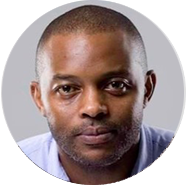
Aoifinn Devitt: I’m Aoifinn Devitt, and welcome to this 50 Faces Focus Series in which we showcase diverse founders and venture capital investors. I’m joined today by Mark Mwangi, who is the founder of Amitruck, a Kenya-based company which connects transporters, whether a motorbike, pickup truck, van, or even a large articulated truck, directly to clients, and aims to ensure convenient pricing and cut out a large part of the cost of goods. He’s also the co-founder of Dalwin, a natural gas exchange based in London. He was previously a senior investment manager at Pictet Asset Management in London, and prior to that worked in equity research at Bluecrest. One fun fact shared in another podcast is that he’s also a licensed pilot. Welcome, Marc. Thanks for joining me today.
Mark Mwangi: Thanks for having me.
Aoifinn Devitt: So there’s already a very interesting podcast which chronicles your journey and your business model at Amitruck on the Developing Founders podcast, and we have a link to that in the show notes here. So we won’t cover the same ground as that, but it is such a fascinating journey, I’d like to just include a little bit of it. So can you just maybe briefly talk us through your background, where you grew up and how you came to enter finance, first of all?
Mark Mwangi: Yeah, so I actually was born and raised in Kenya. I went to study maths at City University in London when I was still quite young. And due to unfortunate family circumstances, I had to put myself through school by driving a truck in and around Heathrow Airport at night. And that’s how I managed to fund my maths degree. Luckily for me, the silver lining in the cloud was that having done well in my degree as well as worked full-time, I managed to get into a graduate program in investment management. And basically that’s how I broke into investment banking.
Aoifinn Devitt: And then you made quite a big change by moving from investment banking, where I presume you could have continued and had a very successful career, to move to the world of startup land and start your own venture. Can you talk us through your thinking there?
Mark Mwangi: Yeah, so I think everyone thought I’d gone crazy, but I just became aware of the fact that there was more to life than just your bank balance, and the amount of time you’re spending in this world should be to do something more impactful. I wanted to do something that helped my home country and left a bit of a legacy and brought a bit more meaning to my life than just money.
Aoifinn Devitt: You had some experience of trucking, driving around Heathrow Airport. Why trucking? What was the thought process there?
Mark Mwangi: Well, at the time, being younger, it paid quite well, which helped because international fees, I think at City University were about £14,000 a year, plus you had your upkeep. Secondly, you could do it at night, which meant that I was free to study my maths degree during the day. And it wasn’t a job that most people wanted to do. It’s not a very social job. So I had the advantage of being flexible enough to do that.
Aoifinn Devitt: And then when we talked before this, you talked a little bit about the vision for Ametruck. Can you talk about that and how maybe transport costs factor into the cost of goods and what is the problem that Ametruck is designed to solve essentially?
Mark Mwangi: Yeah. So When we first identified the problem, it looked like you had 2 or 3 middlemen between a cargo owner and his vehicle, and they generally were taking, you know, up to 60% of the cost of delivery. And on top of that, if something happened to the load, it’s very hard for the cargo owner to work out exactly who’s liable. So you weren’t sure if your goods will get there safe from theft or damage. I mean, we’ve since now begun to understand the ramifications of this. It means that, you know, something like 60% of the cost of Colgate, you know, a big percentage of cost of medicines and other essential goods are basically transport. And the reason for that is because there isn’t a nice single place, or there wasn’t a nice single place where a transporter and a cargo owner could meet and compare the services that they’re offering. And that’s the space that Ametrak sits in, connecting that cargo owner to competitively priced, secure transport using technology.
Aoifinn Devitt: And when you look at the skill set that you’ve gained throughout your life so far through that discipline, I suppose that resilience you had to build and putting yourself through college, driving the actual trucks, and then a career in finance, which of the skills are you drawing upon now in your role as an entrepreneur?
Mark Mwangi: I think I spent some time on a private equity desk and running actual operational businesses, and that really helps understand the intricacies of business. So not just limiting me to the financial analysis statements and so on, but actually understanding things like culture, teams, boardrooms, customers’ interaction with the business, aligning incentives. And many of those are lessons that I bring with me today. And I think having driven the truck meant that I know what a really nice automated trucking system looks like with forklifts and coded pallets and, you know, lovely belts that pull the pallets in and off the truck. And then, you know, you sort of compare that with what we have here and you can see how much room there is to improve on the efficiency and the way we do things here in Africa.
Aoifinn Devitt: One of the focuses of this podcast is around capital raising for entrepreneurs and founders. Can you talk us through your experience of raising capital as a founder, maybe particularly in your case, and then we can talk a little bit about founders, the landscape more generally?
Mark Mwangi: I think Amitrak is one of the luckier ones. But the process can be very, very difficult. We approached literally hundreds and hundreds of venture capital firms. You know, I think it was about 300, and of those, we probably started talking to about 70, went into second discussions with about 10, and ended up talking to the final 3, of which 2 were inbound. So my success rate was a failure rate of something like 99.7%. I think that gives you the sort of scale of how hard it is to actually raise.
Aoifinn Devitt: And would you say that was a feature of being based in Kenya, maybe the number of VCs that were interested in investing there? Like, did you look to Africa-based VCs? Did you look globally?
Mark Mwangi: Yeah, so we looked globally. I think it’s difficult to raise anyway. I think the fact that you’re in Africa means that many of the global VC firms may not include Africa as an area of interest for them. So it definitely cuts out quite a lot of venture capitalists from looking at your business because you’re just not in an area they’re currently looking to invest in. And then once you get the set of investors who are looking at Africa, you then have the second step, which is to look at investors who would invest in Africa and look at logistics. And then the ones that would, you then have to find the ones that haven’t already got a competing startup. So you really bring down the numbers very quickly.
Aoifinn Devitt: And I just want to ask you a little bit about your mindset over what timeframe was this and how did you kind of keep getting back out there? Did you look for feedback from some of the nos or did you just put them aside and move on to the next challenge?
Mark Mwangi: I already knew that this was not going to be easy. So we actually started fundraising as soon as we set Amitrak up. And in the first 6 months, the trick was to go looking at investors who we knew would never put money in the business, and that was just to get our initial presentation corrected, to get and understand the kind of questions to expect from investors and hone those answers in, and basically also get some practice in how you pitch your startup to a venture capitalist and the kind of questions and interactions we can expect, and also just to get used to it so that you can now start the real serious process of the ones that you think will really invest.
Aoifinn Devitt: And have you ever given thought to just the state, I suppose, of diversity in the, whether the startup space or the venture capital space in particular? Do you have any observations on what you see from your perspective?
Mark Mwangi: So this one has been a touchy subject, especially over the last 2 years. And obviously the data is showing that not many Black-founded startups have received funding and those that have get a lot less. And it’s even worse for Black female founders. I’ve sort of been in this bit from two sides. When I was in investment banking, I was probably one of very few African investment managers, analysts, whatever position I was at the time. And I think there’s a bit of misunderstanding on both sides. On the VC side, I think it’s just the fact that there is such a high amount of trust and a high amount of uncertainty when funding a startup that it would only be natural for a venture capitalist to feel a relationship closer with a founder that looks and sounds and answers questions in the way that they expect them answered. And yes, you might argue that’s wrong and it leads to a racial bias, but, you know, I don’t think that they’re out there with hooded pillows over their heads. I think it’s just the fact that as they are looking through the startup community, the sort of founders they relate to have been to sort of their schools and worked in some of the businesses that they’ve worked in, and they’re just easier to form a rapport during the investment pitching process and the due diligence. And I think on the other side, we have not always had the sort of educational systems and cultural systems that lead us to present very early, learn to negotiate very early, and we don’t necessarily have the same circles. So for example, one of the things you learn as a startup founder, the way to be introduced to a VC, it’s much better to get an introduction from somebody they know and trust than it is for you to try and cold call or cold email them. Obviously, if you’re a startup in Africa, your circle might not include a lot of the American European VCs that are active in the space, and it takes a while before you get the intro. And I think this is just some of the things that will be sorted out by the ecosystem as more success stories come out of Africa and as we get bigger IPOs that will show the success. And I think it’ll sort through that.
Aoifinn Devitt: It’s interesting you said, I suppose optimistically, that it will be sorted out, but I would imagine there’s a lot of space right now for progress to happen, maybe whether it be mentors pushing into that area. Maybe it could be affinity groups or other groups that provide incubation or other support, or even governmental organizations. I know there are sovereign wealth funds in Africa perhaps that, that have a sleeve that could be dedicated to local innovators. Have you seen any of these that look promising?
Mark Mwangi: I haven’t seen anything tangible, but I’ve definitely been seeing a lot of news in and around focusing more on the minority founders. I’ve seen a lot of work happening around the female founders in Africa, but you’re right, the biggest hurdle to a startup in Africa today is probably the availability of capital.
Aoifinn Devitt: A story we’re seeing reflected around the world, actually. So it’s very interesting to have your own unique perspective. So just going back to your personal journey now, moving from investment banking in London to this startup in Kenya, I’m sure it does not come without a significant amount of highs and lows, perhaps. Can you talk us through any of those and maybe any lessons learned that you’ve taken from this experience so far?
Mark Mwangi: Yeah, so I think there’s just interesting little bits. Like, I remember being in banking, you were constantly at risk of having your job taken away because of underperforming. And actually, you’re constantly worried about, would I have a job this time next year? How will the markets treat me this year? And I think the same thing happens in the entrepreneurial world where you begin to realize that you are as worried as you are losing your job of losing your employees. And they are difficult to find when you’re looking for good ones and very difficult to keep and keep motivated. So that’s been an interesting sort of change in mindset with regards to how I view employment and employees. I think the other thing that maybe I could bring up was just the switch in mindset, you know, working at, say, Pictet Asset Management. I tried to follow quite closely the teachings of the likes of Warren Buffett and Charlie Munger and some of these value investors, and they believe in looking at very successful businesses with a very strong track record, with very good management and very good competitive moats. And now I’m sitting in the exact opposite side of that in a small business that has no history, where we’re still trying to work out how it’s going to keep growing. And you’re not necessarily assured it will survive. So it’s a very different, but a much more interesting and fulfilling way to spend your time because you are actually making a difference.
Aoifinn Devitt: And you had quite a graphic description of what some of the kind of day-to-day struggles, I suppose, in terms of the fires you’re putting out on a regular basis. And maybe with the pandemic disruption too, it’s been particularly volatile. Can you share how you describe the founder’s experience?
Mark Mwangi: I think you’re referring to crawling through glass naked.
Aoifinn Devitt: A fairly unforgettable image, yes.
Mark Mwangi: Yeah, yeah, it is. I’ve since heard someone else say it’s like trying to build my wings on the way down and the wood’s on fire and the hammer’s hot. But it’s also fun, right? That’s what makes it exciting. There are moments when you really question what you’re doing and you really, there’s a lot of soul searching. There are many times when you think that your business might not make it and then you walk it out and you get through the other side and there’s a sense of relief. But before you even get a chance to breathe in, something else comes up. So it’s quite a journey.
Aoifinn Devitt: But I would also think the mindset in finance, which is fairly highly charged, it actually can lend itself though to the mindset you need because you constantly need to be flexible and to pivot. And it’s certainly not dull, I would think, the life of a founder. So I suppose it did train you in some way.
Mark Mwangi: So I think from very early on when I was trying to put myself through my maths degree, I realized that you can make a sob story and you can always explain things away. And one of the things I remember thinking quite young was it’s almost like an athlete and someone with a disability trying to cross the road. You know, the truck will hit you both the same way. So you kind of have to try 10 times harder and ensure you get across before the truck does. And it doesn’t help anybody pointing at the athletes with any sort of jealousy or want or anything like that. And it’s that single focus mindset to get to a solution that maybe has helped me in my startup life where we don’t stop to explain what went wrong. Constantly sort of spinning our wheels trying to make sure we’re getting somewhere close to a solution.
Aoifinn Devitt: Absolutely. Getting back to the reflections, maybe were there any key people who influenced you throughout your life or that have really had an impression on you?
Mark Mwangi: I have to say, and this should actually go to the diversity discussion, so if you look at all the key people that have helped me through my career, They’ve all been white European middle-aged men, from my mentors when I went through Bluecrest Capital, my boss and mentor at Pictet Asset Management, when I was in private equity, my manager and boss then. All the people that actually have had a significant impact in terms of my career have all been European. So that just came to mind. The thing that maybe influenced me the most was just understanding that you can fail and survive. And that maybe was the single thing that helped me cross over from employment into entrepreneurship.
Aoifinn Devitt: And my last question is around any advice you would have for your younger self, knowing what you know now as a founder, kind of in the throes of startup phase, anything that you maybe back when you were 16, 17, that you wish you had known then?
Mark Mwangi: Yes, I wish I had come back home earlier. I think having success financially makes it more difficult for founders to take risks. Once you’ve tasted employment, salary, nice flat, nice car, it’s very hard to then think, I’m gonna give it all up and go set up shop in Africa where I have no track record, nobody knows who I am, and that’s a journey that I think would probably work much easier and better if you started immediately after finishing school. So I’d actually say that I would have told myself to come home, start early. And I always look back and wonder where I’d be had I done this 20, 25 years ago.
Aoifinn Devitt: And did it take you long to build that sort of social capital once you did move back to Kenya?
Mark Mwangi: I think I’m on the very beginning of still building that up. You know, I’ve been back for 2 and a half years now, and You’re not a name yet. Nobody knows who you are. So I’m as big as my startup Army Truck is and as big as my team enable it to be. So we are, we’re still working hard on helping clients and hopefully that delight works out as reputation at some point.
Aoifinn Devitt: Just want to follow up on one point you made, because I think it’s very interesting. You mentioned, you know, that the more you’ve worked, perhaps the more you’ve earned, the more you have to lose. More is at risk when you move to a startup. But I’ve also heard Adam Grant, who’s written a book about Think Again, that sometimes the most effective founders are the ones who mitigate their risks. They don’t risk it all. They don’t kind of just jump off a cliff, that they actually have backup plans. And what camp would you say you’ve fallen into? Would it be the— have you mitigated risk in terms of this career change, or was there a lot of risk involved?
Mark Mwangi: There’s a lot of risk involved. I mean, I definitely risked my income. It felt at the time like you were coming into a less organized society where some of the legal healthcare infrastructure maybe wasn’t as strong as it was in the UK. I suppose you can say that about most places, but I think what Adam’s probably referring to was more the that that’s not necessarily a limiting factor. I think if you’ve had a job already, then of course you’ll bring a lot of lessons that you’ve learned from your experience in those jobs back to your startup, and that’s great. But I actually think the thing that stops people from starting a, a business is the fact that they’re already in a comfortable lifestyle, and the idea of startup, which is literally asking questions about, is this a value-added service that customers will pay for the entire time? It then appears to be more risky than staying in employment. And maybe that psychology stops a lot of great minds from switching from careers in investment management, for example, like I did, and coming to solve real-world problems where they have much more of an impact on society and potentially could enrich them even more.
Aoifinn Devitt: Would you say that venture capitalists are looking for all-in type of risk, or are they looking for risk mitigation? Is there any one kind of message you’ve received in your discussions?
Mark Mwangi: Oh, I’ve definitely seen all-in. And, you know, you very quickly figure out that if you have— you’re spending your time doing anything else, if you’re not invested in the business, if you don’t have a significant holding and In fact, most of them will make you vest over 4 or 5 years so that you get a bit of your business back as you work after funding. And all those things would lead me to think that, you know, they really want sole focus, full-on risk to get things done.
Aoifinn Devitt: Well, this has been a fascinating discussion, Mark. Thank you so much for coming here and sharing your journey and your insights into the, I suppose, the somewhat volatile and thankless at times role of a founder. But I think you’ve really brought it to life for us. So Thank you for sharing your insights with us.
Mark Mwangi: No, thank you very much for, for having me.
Aoifinn Devitt: I’m Aoifinn Devitt. Thank you for listening to the 50 Faces Podcast. If you liked what you heard and would like to tune in to hear more inspiring investors and their personal journeys, please subscribe on Apple Podcasts or wherever you get your podcasts. This podcast is for informational purposes only and should not be construed as investment advice, and all views are personal and should not be attributed to the organizations and affiliations of the host or any guest.
Aoifinn Devitt: This series was made possible by the kind support of Wellington Management, one of the world’s largest independent asset managers focused on delivering long-term investment excellence for clients and their beneficiaries, as well as Nile Capital Group, a sector-focused, operationally oriented private equity firm based in the Los Angeles area.
Mark Mwangi: We approached literally hundreds and hundreds of venture capital firms. You know, I think it was about 300, and of those, we probably started talking to about 70, went into second discussions with about 10 and ended up talking to the final 3, of which 2 were inbound. So my success rate was a failure rate of something like 99.7%. I think that gives you the sort of scale of how hard it is to actually raise.
Aoifinn Devitt: I’m Aoifinn Devitt, and welcome to this 50 Faces Focus Series in which we showcase diverse founders and venture capital investors. I’m joined today by Mark Mwangi, who is the founder of Amitruck, a Kenya-based company which connects transporters, whether a motorbike, pickup truck, van, or even a large articulated truck, directly to clients, and aims to ensure convenient pricing and cut out a large part of the cost of goods. He’s also the co-founder of Dalwin, a natural gas exchange based in London. He was previously a senior investment manager at Pictet Asset Management in London, and prior to that worked in equity research at Bluecrest. One fun fact shared in another podcast is that he’s also a licensed pilot. Welcome, Marc. Thanks for joining me today.
Mark Mwangi: Thanks for having me.
Aoifinn Devitt: So there’s already a very interesting podcast which chronicles your journey and your business model at Amitruck on the Developing Founders podcast, and we have a link to that in the show notes here. So we won’t cover the same ground as that, but it is such a fascinating journey, I’d like to just include a little bit of it. So can you just maybe briefly talk us through your background, where you grew up and how you came to enter finance, first of all?
Mark Mwangi: Yeah, so I actually was born and raised in Kenya. I went to study maths at City University in London when I was still quite young. And due to unfortunate family circumstances, I had to put myself through school by driving a truck in and around Heathrow Airport at night. And that’s how I managed to fund my maths degree. Luckily for me, the silver lining in the cloud was that having done well in my degree as well as worked full-time, I managed to get into a graduate program in investment management. And basically that’s how I broke into investment banking.
Aoifinn Devitt: And then you made quite a big change by moving from investment banking, where I presume you could have continued and had a very successful career, to move to the world of startup land and start your own venture. Can you talk us through your thinking there?
Mark Mwangi: Yeah, so I think everyone thought I’d gone crazy, but I just became aware of the fact that there was more to life than just your bank balance, and the amount of time you’re spending in this world should be to do something more impactful. I wanted to do something that helped my home country and left a bit of a legacy and brought a bit more meaning to my life than just money.
Aoifinn Devitt: You had some experience of trucking, driving around Heathrow Airport. Why trucking? What was the thought process there?
Mark Mwangi: Well, at the time, being younger, it paid quite well, which helped because international fees, I think at City University were about £14,000 a year, plus you had your upkeep. Secondly, you could do it at night, which meant that I was free to study my maths degree during the day. And it wasn’t a job that most people wanted to do. It’s not a very social job. So I had the advantage of being flexible enough to do that.
Aoifinn Devitt: And then when we talked before this, you talked a little bit about the vision for Ametruck. Can you talk about that and how maybe transport costs factor into the cost of goods and what is the problem that Ametruck is designed to solve essentially?
Mark Mwangi: Yeah. So When we first identified the problem, it looked like you had 2 or 3 middlemen between a cargo owner and his vehicle, and they generally were taking, you know, up to 60% of the cost of delivery. And on top of that, if something happened to the load, it’s very hard for the cargo owner to work out exactly who’s liable. So you weren’t sure if your goods will get there safe from theft or damage. I mean, we’ve since now begun to understand the ramifications of this. It means that, you know, something like 60% of the cost of Colgate, you know, a big percentage of cost of medicines and other essential goods are basically transport. And the reason for that is because there isn’t a nice single place, or there wasn’t a nice single place where a transporter and a cargo owner could meet and compare the services that they’re offering. And that’s the space that Ametrak sits in, connecting that cargo owner to competitively priced, secure transport using technology.
Aoifinn Devitt: And when you look at the skill set that you’ve gained throughout your life so far through that discipline, I suppose that resilience you had to build and putting yourself through college, driving the actual trucks, and then a career in finance, which of the skills are you drawing upon now in your role as an entrepreneur?
Mark Mwangi: I think I spent some time on a private equity desk and running actual operational businesses, and that really helps understand the intricacies of business. So not just limiting me to the financial analysis statements and so on, but actually understanding things like culture, teams, boardrooms, customers’ interaction with the business, aligning incentives. And many of those are lessons that I bring with me today. And I think having driven the truck meant that I know what a really nice automated trucking system looks like with forklifts and coded pallets and, you know, lovely belts that pull the pallets in and off the truck. And then, you know, you sort of compare that with what we have here and you can see how much room there is to improve on the efficiency and the way we do things here in Africa.
Aoifinn Devitt: One of the focuses of this podcast is around capital raising for entrepreneurs and founders. Can you talk us through your experience of raising capital as a founder, maybe particularly in your case, and then we can talk a little bit about founders, the landscape more generally?
Mark Mwangi: I think Amitrak is one of the luckier ones. But the process can be very, very difficult. We approached literally hundreds and hundreds of venture capital firms. You know, I think it was about 300, and of those, we probably started talking to about 70, went into second discussions with about 10, and ended up talking to the final 3, of which 2 were inbound. So my success rate was a failure rate of something like 99.7%. I think that gives you the sort of scale of how hard it is to actually raise.
Aoifinn Devitt: And would you say that was a feature of being based in Kenya, maybe the number of VCs that were interested in investing there? Like, did you look to Africa-based VCs? Did you look globally?
Mark Mwangi: Yeah, so we looked globally. I think it’s difficult to raise anyway. I think the fact that you’re in Africa means that many of the global VC firms may not include Africa as an area of interest for them. So it definitely cuts out quite a lot of venture capitalists from looking at your business because you’re just not in an area they’re currently looking to invest in. And then once you get the set of investors who are looking at Africa, you then have the second step, which is to look at investors who would invest in Africa and look at logistics. And then the ones that would, you then have to find the ones that haven’t already got a competing startup. So you really bring down the numbers very quickly.
Aoifinn Devitt: And I just want to ask you a little bit about your mindset over what timeframe was this and how did you kind of keep getting back out there? Did you look for feedback from some of the nos or did you just put them aside and move on to the next challenge?
Mark Mwangi: I already knew that this was not going to be easy. So we actually started fundraising as soon as we set Amitrak up. And in the first 6 months, the trick was to go looking at investors who we knew would never put money in the business, and that was just to get our initial presentation corrected, to get and understand the kind of questions to expect from investors and hone those answers in, and basically also get some practice in how you pitch your startup to a venture capitalist and the kind of questions and interactions we can expect, and also just to get used to it so that you can now start the real serious process of the ones that you think will really invest.
Aoifinn Devitt: And have you ever given thought to just the state, I suppose, of diversity in the, whether the startup space or the venture capital space in particular? Do you have any observations on what you see from your perspective?
Mark Mwangi: So this one has been a touchy subject, especially over the last 2 years. And obviously the data is showing that not many Black-founded startups have received funding and those that have get a lot less. And it’s even worse for Black female founders. I’ve sort of been in this bit from two sides. When I was in investment banking, I was probably one of very few African investment managers, analysts, whatever position I was at the time. And I think there’s a bit of misunderstanding on both sides. On the VC side, I think it’s just the fact that there is such a high amount of trust and a high amount of uncertainty when funding a startup that it would only be natural for a venture capitalist to feel a relationship closer with a founder that looks and sounds and answers questions in the way that they expect them answered. And yes, you might argue that’s wrong and it leads to a racial bias, but, you know, I don’t think that they’re out there with hooded pillows over their heads. I think it’s just the fact that as they are looking through the startup community, the sort of founders they relate to have been to sort of their schools and worked in some of the businesses that they’ve worked in, and they’re just easier to form a rapport during the investment pitching process and the due diligence. And I think on the other side, we have not always had the sort of educational systems and cultural systems that lead us to present very early, learn to negotiate very early, and we don’t necessarily have the same circles. So for example, one of the things you learn as a startup founder, the way to be introduced to a VC, it’s much better to get an introduction from somebody they know and trust than it is for you to try and cold call or cold email them. Obviously, if you’re a startup in Africa, your circle might not include a lot of the American European VCs that are active in the space, and it takes a while before you get the intro. And I think this is just some of the things that will be sorted out by the ecosystem as more success stories come out of Africa and as we get bigger IPOs that will show the success. And I think it’ll sort through that.
Aoifinn Devitt: It’s interesting you said, I suppose optimistically, that it will be sorted out, but I would imagine there’s a lot of space right now for progress to happen, maybe whether it be mentors pushing into that area. Maybe it could be affinity groups or other groups that provide incubation or other support, or even governmental organizations. I know there are sovereign wealth funds in Africa perhaps that, that have a sleeve that could be dedicated to local innovators. Have you seen any of these that look promising?
Mark Mwangi: I haven’t seen anything tangible, but I’ve definitely been seeing a lot of news in and around focusing more on the minority founders. I’ve seen a lot of work happening around the female founders in Africa, but you’re right, the biggest hurdle to a startup in Africa today is probably the availability of capital.
Aoifinn Devitt: A story we’re seeing reflected around the world, actually. So it’s very interesting to have your own unique perspective. So just going back to your personal journey now, moving from investment banking in London to this startup in Kenya, I’m sure it does not come without a significant amount of highs and lows, perhaps. Can you talk us through any of those and maybe any lessons learned that you’ve taken from this experience so far?
Mark Mwangi: Yeah, so I think there’s just interesting little bits. Like, I remember being in banking, you were constantly at risk of having your job taken away because of underperforming. And actually, you’re constantly worried about, would I have a job this time next year? How will the markets treat me this year? And I think the same thing happens in the entrepreneurial world where you begin to realize that you are as worried as you are losing your job of losing your employees. And they are difficult to find when you’re looking for good ones and very difficult to keep and keep motivated. So that’s been an interesting sort of change in mindset with regards to how I view employment and employees. I think the other thing that maybe I could bring up was just the switch in mindset, you know, working at, say, Pictet Asset Management. I tried to follow quite closely the teachings of the likes of Warren Buffett and Charlie Munger and some of these value investors, and they believe in looking at very successful businesses with a very strong track record, with very good management and very good competitive moats. And now I’m sitting in the exact opposite side of that in a small business that has no history, where we’re still trying to work out how it’s going to keep growing. And you’re not necessarily assured it will survive. So it’s a very different, but a much more interesting and fulfilling way to spend your time because you are actually making a difference.
Aoifinn Devitt: And you had quite a graphic description of what some of the kind of day-to-day struggles, I suppose, in terms of the fires you’re putting out on a regular basis. And maybe with the pandemic disruption too, it’s been particularly volatile. Can you share how you describe the founder’s experience?
Mark Mwangi: I think you’re referring to crawling through glass naked.
Aoifinn Devitt: A fairly unforgettable image, yes.
Mark Mwangi: Yeah, yeah, it is. I’ve since heard someone else say it’s like trying to build my wings on the way down and the wood’s on fire and the hammer’s hot. But it’s also fun, right? That’s what makes it exciting. There are moments when you really question what you’re doing and you really, there’s a lot of soul searching. There are many times when you think that your business might not make it and then you walk it out and you get through the other side and there’s a sense of relief. But before you even get a chance to breathe in, something else comes up. So it’s quite a journey.
Aoifinn Devitt: But I would also think the mindset in finance, which is fairly highly charged, it actually can lend itself though to the mindset you need because you constantly need to be flexible and to pivot. And it’s certainly not dull, I would think, the life of a founder. So I suppose it did train you in some way.
Mark Mwangi: So I think from very early on when I was trying to put myself through my maths degree, I realized that you can make a sob story and you can always explain things away. And one of the things I remember thinking quite young was it’s almost like an athlete and someone with a disability trying to cross the road. You know, the truck will hit you both the same way. So you kind of have to try 10 times harder and ensure you get across before the truck does. And it doesn’t help anybody pointing at the athletes with any sort of jealousy or want or anything like that. And it’s that single focus mindset to get to a solution that maybe has helped me in my startup life where we don’t stop to explain what went wrong. Constantly sort of spinning our wheels trying to make sure we’re getting somewhere close to a solution.
Aoifinn Devitt: Absolutely. Getting back to the reflections, maybe were there any key people who influenced you throughout your life or that have really had an impression on you?
Mark Mwangi: I have to say, and this should actually go to the diversity discussion, so if you look at all the key people that have helped me through my career, They’ve all been white European middle-aged men, from my mentors when I went through Bluecrest Capital, my boss and mentor at Pictet Asset Management, when I was in private equity, my manager and boss then. All the people that actually have had a significant impact in terms of my career have all been European. So that just came to mind. The thing that maybe influenced me the most was just understanding that you can fail and survive. And that maybe was the single thing that helped me cross over from employment into entrepreneurship.
Aoifinn Devitt: And my last question is around any advice you would have for your younger self, knowing what you know now as a founder, kind of in the throes of startup phase, anything that you maybe back when you were 16, 17, that you wish you had known then?
Mark Mwangi: Yes, I wish I had come back home earlier. I think having success financially makes it more difficult for founders to take risks. Once you’ve tasted employment, salary, nice flat, nice car, it’s very hard to then think, I’m gonna give it all up and go set up shop in Africa where I have no track record, nobody knows who I am, and that’s a journey that I think would probably work much easier and better if you started immediately after finishing school. So I’d actually say that I would have told myself to come home, start early. And I always look back and wonder where I’d be had I done this 20, 25 years ago.
Aoifinn Devitt: And did it take you long to build that sort of social capital once you did move back to Kenya?
Mark Mwangi: I think I’m on the very beginning of still building that up. You know, I’ve been back for 2 and a half years now, and You’re not a name yet. Nobody knows who you are. So I’m as big as my startup Army Truck is and as big as my team enable it to be. So we are, we’re still working hard on helping clients and hopefully that delight works out as reputation at some point.
Aoifinn Devitt: Just want to follow up on one point you made, because I think it’s very interesting. You mentioned, you know, that the more you’ve worked, perhaps the more you’ve earned, the more you have to lose. More is at risk when you move to a startup. But I’ve also heard Adam Grant, who’s written a book about Think Again, that sometimes the most effective founders are the ones who mitigate their risks. They don’t risk it all. They don’t kind of just jump off a cliff, that they actually have backup plans. And what camp would you say you’ve fallen into? Would it be the— have you mitigated risk in terms of this career change, or was there a lot of risk involved?
Mark Mwangi: There’s a lot of risk involved. I mean, I definitely risked my income. It felt at the time like you were coming into a less organized society where some of the legal healthcare infrastructure maybe wasn’t as strong as it was in the UK. I suppose you can say that about most places, but I think what Adam’s probably referring to was more the that that’s not necessarily a limiting factor. I think if you’ve had a job already, then of course you’ll bring a lot of lessons that you’ve learned from your experience in those jobs back to your startup, and that’s great. But I actually think the thing that stops people from starting a, a business is the fact that they’re already in a comfortable lifestyle, and the idea of startup, which is literally asking questions about, is this a value-added service that customers will pay for the entire time? It then appears to be more risky than staying in employment. And maybe that psychology stops a lot of great minds from switching from careers in investment management, for example, like I did, and coming to solve real-world problems where they have much more of an impact on society and potentially could enrich them even more.
Aoifinn Devitt: Would you say that venture capitalists are looking for all-in type of risk, or are they looking for risk mitigation? Is there any one kind of message you’ve received in your discussions?
Mark Mwangi: Oh, I’ve definitely seen all-in. And, you know, you very quickly figure out that if you have— you’re spending your time doing anything else, if you’re not invested in the business, if you don’t have a significant holding and In fact, most of them will make you vest over 4 or 5 years so that you get a bit of your business back as you work after funding. And all those things would lead me to think that, you know, they really want sole focus, full-on risk to get things done.
Aoifinn Devitt: Well, this has been a fascinating discussion, Mark. Thank you so much for coming here and sharing your journey and your insights into the, I suppose, the somewhat volatile and thankless at times role of a founder. But I think you’ve really brought it to life for us. So Thank you for sharing your insights with us.
Mark Mwangi: No, thank you very much for, for having me.
Aoifinn Devitt: I’m Aoifinn Devitt. Thank you for listening to the 50 Faces Podcast. If you liked what you heard and would like to tune in to hear more inspiring investors and their personal journeys, please subscribe on Apple Podcasts or wherever you get your podcasts. This podcast is for informational purposes only and should not be construed as investment advice, and all views are personal and should not be attributed to the organizations and affiliations of the host or any guest.