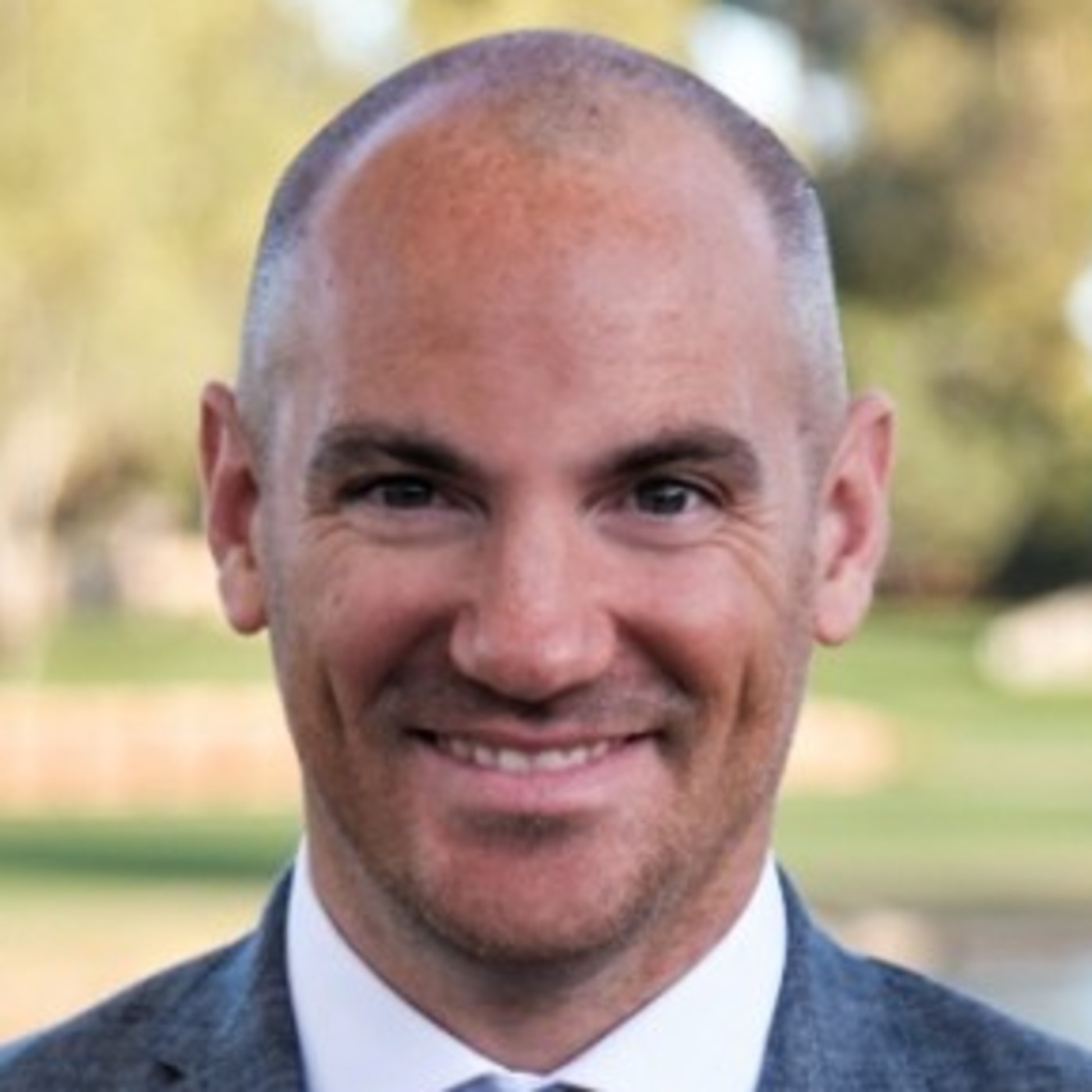
Aoifinn Devitt: This series was made possible by the kind support of Main Street Partners, a London-based independent and dedicated sustainable investment advisor that provides ESG multi-asset and multi-manager portfolios and a range of holistic portfolio analytics tools, including sustainability ratings and bespoke sustainability intelligence. It was also supported by Carbonado Partners, an industry expert in capital raising for all asset classes that endeavors to provide thoughtful solutions that address emerging managers’ perspectives and challenges. What do English football or soccer clubs, funeral homes, and esports have in common? They might just have fallen under our next guest’s data-driven and opportunity-seeking eye. Let’s hear more next. I’m Aoifinn Devitt, and welcome to the 50 Faces Podcast, a podcast committed to revealing the richness and diversity of the world of investment by focusing on its people and their stories. I’m joined today by Mark Steed, who is Chief Investment Officer at Arizona Public Safety Trust, a US public defined benefit fund with $13 billion in assets under management, where he has spent over 14 years. He describes himself as an investment ideas guy. And an out-of-the-box thinker at that. Welcome, Mark. Thanks for joining me today.
Mark Steed: Thank you very much, Aoifinn. It’s an honor to be here.
Aoifinn Devitt: Well, let’s start where we always start with these podcast discussions. Talk about your background and how you ended up pursuing a role in the investment world.
Mark Steed: Sure. So I you think, know, not to put everybody to sleep immediately, but it started when I was 10. When I was 10, I had a really unfortunate experience in that I was hit by a car and I broke several bones. So I was homebound for about 3 months and I didn’t have anything to do but watch TV and read books. And so during the day, my mom, who worked as a fundraising consultant for nonprofits, tasked me with watching the channel where the stock tickers went across the bottom of the screen. And I’d sit there and watch for a handful of tickers that she cared about and I’d yell them as I saw them, but they would go in alphabetical order and there were lots of them. So if I looked down or I missed it, I’d have to wait several minutes again and my mom would kind of run in exasperated and get back to work and then come back and check. And so that got me interested in stocks and just kind of investing. And that’s, I guess, where it always occupied a space in my head after that. I played sports growing up, and that’s where I picked up my love for stats in high school. When I was doing my undergrad, I lived in Nicaragua for 2 years, learned about kind of the economics of poverty, and I wondered why was it that it was institutionalized there and why was it some countries kind of seem to permanently be stuck in poverty. So I studied that in my coursework, began to understand the connection between capital markets, primary and secondary capital markets, and a country’s relationship to them and the quality of life for the average citizen. And I started to kind of appreciate that the capital markets provide long-term financing for strategic sectors of a country, right? And it’s a good risk management tool for the financial sector. So they really kind of contribute to the economic growth, which in turn has an impact on reduction of poverty and increases prosperity, I think. So I was studying private capital markets in grad school and focused on Central Eastern Europe at the time. And a friend told me about an internship he had with the Arizona Public Safety Trust. He thought I’d be interested in and recommended I apply for the internship. So I did back in 2008, and the rest is history.
Aoifinn Devitt: And from an internship ultimately to CIO. So what is at the forefront of your mind as a CIO of a large public fund today?
Mark Steed: I don’t think it’s dissimilar from— I think a lot of people you’ve had on the podcast generating returns will be harder going forward for sure. There’s questions about inflation, a lot of debate about how it’s defined, how it will impact portfolios. There’s lots of money that has moved into alternative asset classes over the last 10, 15 years. I I mean, think if you look at the average alternative allocation for institutional investors 15, 20 years ago, it was probably 2 or 3 times lower than it is today. So I think the spread above the public market equivalence is coming down. So I have all those market questions in my mind at any point in time and what we do about them and what levers can we pull and are we exhausting every possible effort and are there potential solutions out there that we think are feasible but might not be politically expedient and how much courage do we have in our conviction to bring those up? I guess I just feel like public pensions are at this crucial at a point in their history where their staff is more sophisticated now, some of their boards are more sophisticated, their portfolios are generally more opportunistic. And I just think it’s going to be harder going forward. And I think a lot of pensions are going to have to ask questions like, can we go to that next level? Do we bring more management in-house? Do we need to change something about the governance structure? Do we need to add leverage? I mean, these are ideas that require some courage. And I think, so I’ve got all that kind of sloshing around in my head at any point in time.
Aoifinn Devitt: And what level of funding do you have in the pension fund today?
Mark Steed: Yeah, we’re about 45% or so in the aggregate, but we’re different in that we have really, I think, 260 individual plans. And so some of those plans are really well funded and some of them are not. In the aggregate though, I think it’s probably about 45%, 50%. What’s going on in Arizona though is that a lot of these employers, mostly because we have a new executive director who came sort of the employer side, very sophisticated financially, and he’s been instrumental in liaising with the employer groups and talking to them about paying off their unfunded liabilities. So we’ve probably had, I don’t know, maybe 10 or so employers, it seems to me, 5 to 10 employers that have done some sort of pension finance, whether it’s a pension obligation bond or something similar to it. And we’re getting all these contributions coming into our system, and now some of the larger employers. So as I sit today, we have probably about 8% of our portfolio sitting in cash. A lot of these cities are just taking advantage of the low rates to pay off that debt.
Aoifinn Devitt: That might be deemed a quality problem to have cash flowing in at that rate, but it also presents some unique challenges. Obviously, with that level of funding, you really do need to achieve your return. There really is no substitute for that. So how do you think about using the cash, and is it a dry powder? Where are you looking for improving your returns?
Mark Steed: Well, fortunately right now, just from a fundamental standpoint, we haven’t been too anxious to put the money to work. So if we talked about with our trustees, we’ve said, look, we want to make sure we maintain some level of vintage diversification here. Now is not the time to increase risk materially in the portfolio, but we’ll get the money put to work. We’ve been building out sort of the income component of the portfolio for a long time. As you know, we’re continuing to build that. So a lot of that money will get pulled down once we finalize some of these agreements that we’ve been working on for the last year. But generally speaking, one of the tools that we developed was the ability to add about 10% leverage at the portfolio level. And one of the things that that allows us to do is if we have a large employer that’s contemplating paying off their unfunded liability, if we know it ahead of time, we can use the debt to make contributions to some of our illiquid investments and then pull it down once we get the contribution from the employer. We developed that tool, one, from a portfolio construction standpoint, but also two, to help smooth some of this these lumpy cash flows that are coming from our employers and to minimize the drag to the extent we can.
Aoifinn Devitt: And you talked a little about governance there. Can you tell me about what you think works well from a governance standpoint? And maybe if you were to design a public fund governance structure, what would you include there?
Mark Steed: Yeah, that’s a good question. So let me just describe how we’re doing it. So we have 9 trustees, 4 of whom are on the investment committee, and that the investment committee is tasked with oversight and broad policy compliance. Decision-making is delegated to the staff. So I found that the delegation of decision-making to staff is probably the strongest governance tool the board has because I think that discretion is just so competitive. It’s such an advantage. And as a CIO, you don’t want to lose it by doing something stupid. So I think that’s a very effective mechanism. And unfortunately, you know, where I Where I work, our history is very colorful. Fortunately, I haven’t had to deal with that as the CIO, but there’s been a lot of bad decisions made with just trustee involvement. I think that’s a very difficult model. So I would always come down and say, I think trustees need to stay kind of at the policy level and sort of the governance function. If I were to do it over, I don’t think there’s one model that works for everybody. I think if you’re large, you’re California or Wisconsin or Canadian plans or some of the Nordic plans, I think it makes a lot of sense to be running the portfolio in-house. You have economies of scale. It’s cost-effective to do it that way. If you’re a smaller fund like ourselves, you’re $13 billion, so we’re on the small end of US public pension plans, it’s not really tractable to build out an internal team even though really it’s cheaper to do that because we have the state pay scales, we’ve got statutes that would require certain disclosures of things that we invest in directly. So I think you have to look at the whole ecosystem and say, “Well, what works here? And what obligations do I have to my stakeholders and my public? What’s been the comfort level of the stakeholders historically? How big are we? What can we do from a budget standpoint?” And so I think if you’re a smaller plan, I think you have to figure out what your competitive advantage is. For us, it’s positive cash flow. And so what we have to do is we have a balance sheet, but we’re not really going to matter to some of the larger asset managers in terms of commitment that we could make. So we want to be agile, we want alignment, we want to be opportunistic. So for us, we find asset managers that are smaller. They’re not $100 billion plus in assets, but they might be somewhere between $10 and $30 billion in assets. And we can create these strategic partnerships with them that provide a lot of deal flow to us. And then we have the governance mechanism to actually act on those. And then it gets covered by reporting up to the board. All of that’s fully aligned. So I think the governance is just critical. And I think whatever you do, it has to make reasonable sense. I don’t think just because CalPERS is doing it means that we should do it, and just because we’re doing it doesn’t mean somebody else should be doing it. I guess that’s how I think about it.
Aoifinn Devitt: It is a process, right? It’s not something that is going to get solved in the short term, but I do think making incremental improvements in governance and also reflecting back perhaps through a feedback loop in terms of what works and maybe what decisions went well, what didn’t. It is a long road, but thanks for your contribution. To the discussion there. I want to go back to some of your studies. I know you have a master’s in predictive analytics, which I think is a fascinating area. And as our data lakes grow and our access to big data is improving, it’s an area that we’re all trying to get our heads around. How are you using this in the world of investing?
Mark Steed: Yeah, I love talking about this. I come from the view that like every decision is a prediction. And so, you know, fundamentally, I think when we make an investment, we’re either saying or making a recommendation for an investment, you’re either saying that this thing, this investment, whatever it is, stock, bond, is going to continue to do what it has, meaning on an absolute basis or a relative basis, it’s going to continue to outperform its peers or it’s going to continue to achieve returns above whatever level, or it’s going to do something that it hasn’t done so far. So this security or this manager is going to deliver a return either on a relative or absolute basis that it hasn’t done historically. Those are really kind of the two arguments you make. And to make that decision or that recommendation, you’re going to use sort of quantitative data and/or kind of qualitative data to argue your point. So that places a priority on quantitative and qualitative decision-making. So you need to know when and how much to rely on quantitative data and models and and I think when and how much to rely on intuition and just other qualitative factors. And so the way I’ve approached this personally and just for the team is to say, look, we have to be in relentless pursuit of improvement, quantitative and qualitative decision-making. And predictive analytics is really just— it’s part math and probabilities, it’s modeling, it’s using structured and unstructured data and there’s a component of data architecting and where do you get data and what systems do you use. And so I just think you have to have models to make people better, but I think you also need people to make models better. And so that’s sort of why we use it. Practically, what we’ve done is made advances in risk modeling. That’s the easiest thing to do first, and predictions in financial markets. And so we’ll use a mix of traditional regression models that But then we’ll use newer models like neural nets that are just better at handling certain types of data structures. And we’re really doing it not so that models run the world, but we want to be fluent and conversant and we want to understand models because they’re not useless. But the key is you have to know when to use them. You have to know if it’s appropriate. You have to know, do you have enough data to even make claims? What does the data allow you to say? It’s more important for us to express uncertainty than it is certainty.. And so, I just find that as a professional, if you kind of make decisions qualitatively or kind of on intuition, I think you’re kind of missing out. And if you’re a professional that’s making decisions exclusively just looking at numbers and modeling, I think you’re missing out. I just think it’s important to have that viewpoint represented in a team and to actively pursue it because I think you can learn to take the good and leave the bad.
Aoifinn Devitt: I think you make a very interesting point about certainty and uncertainty because I would say one of so one of the— the silver linings of the COVID disruption is that I think we’re all getting a lot more comfortable with uncertainty, which probably is something we have to do in order to stop making rash decisions to kind of hide out in certainty. What do you think, I mean, in terms of investment, how do you square that with the need to have conviction? How do you calibrate the level of uncertainty that you’re comfortable with and yet also have the conviction to make a decision?
Mark Steed: Yeah, that’s a good question. First of all, maximum uncertainty is like 50/50. The way it works, public safety is You have to be specific about what you’re recommending. So if you’re a PM and you’re recommending an investment in this manager or that we buy this ETF or invest in this company, whatever it is, you have to be specific about how success is defined. So what do we mean? Let’s take a private equity manager. Are you saying that the private equity manager is going to deliver returns in the top quartile of its peer group over a period of time, say for example, you have to say, I think it’s going to do X over this period of time, and I am 50, 60, 70, 80% confident that it’s going to happen. Uncertainty is kind of on a spectrum for me, and I don’t see it necessarily as certain and uncertain so much as if somebody tells me they’re 50% confident, that’s the coin flip. So I know that’s kind of max uncertainty in their minds, right? And if somebody tells me that they’re 80 or 90% confident, then they’re more certain about the outcome. And so I think in order to have progress as a team and to make better decisions, you need that accountability, but you can’t have accountability without really specific definitions of success and forecasts. So the way we look at that is, okay, we have the probabilities, 50, 60, 70%. So then it’s a question of the payouts, right? Well, so the idea isn’t that you’re 90% confident all the time because you could have a 90% probability type bet, but then the payout just doesn’t make any sense. Likewise, you could be 50/50, right? You have 50% confidence, but the payout might be 10 times if you’re right, but that would have a more attractive sort of risk-return profile. So I don’t push the team to be kind of on one end or the other. I don’t want them feeling like they have to say it’s 90, they’re 90% confident, 100%. What we want is calibration so that if you’re 60% confident, you’re 60% If right. You’re 90% confident, you’re 90% right. And that’s a healthier dialogue for the team. That’s kind of how we think about it.
Aoifinn Devitt: And the other point you made about models making people better. What kind of process do you have in place with your team to ensure that the team is continuously improving, continuously learning, learning from each other, and refining your methods?
Mark Steed: Well, first of all, I think it starts with asking about it, right? I have my, you know, one-on-ones with them. We talk about decisions they’ve made and recommendations they’ve made. I think you have to have that feedback as a group. You know, we have, I’d say, weekly forecasting exercises. So we have someone on the team who will say, “Hey, what’s the probability that this stock or this—” We’ve been focused on SPACs. “What’s probably the SPAC is going to close at this price or above by say next Friday, close of market?” And we do this every week, 2 or 3 things just to get everybody practicing. And we track it, we track everybody’s forecast and the outcome. That naturally just creates a more egalitarian approach because you can imagine if you’re the one on the team And your score is drifting lower than everybody else, you naturally want to improve. And so sometimes we’ll highlight, we’ll have people on the team share perspectives and what they do. I’ll find there’s all sorts of good websites and short videos, instructional videos that help with some of these tools, and I’ll send those out to the team. It’s a Spartan staff, I think, like a lot of pensions, and we don’t have endless time, so we just have to be efficient. And sometimes I think these informal trainings are better than than having something that’s super rigid that everybody has to go to every week or something like that. I put a huge emphasis on our conversations and I want us to have great conversations. I don’t want to get bogged down in tedious meetings that are really rigid and don’t allow for the team to kind of express themselves. But that means when you bring an idea forward, like we had an example the other day where somebody had a high conviction around— this was a manager, but the manager doesn’t have a very long track record. And so they started by presenting the track record and going through sort of like the expected outcome based on the historical performance. And it was really healthy to see the group say, well, wait a minute, you only have like 3 years worth of data here. This doesn’t really allow you to say anything. You need like hundreds of observations in order to have any conviction in the data. So somebody was saying this group is going to kind of continue to do what they’ve done and they were trying to use quantitative data to back it up, but you really couldn’t, right? There wasn’t really a model that you could use just because you didn’t have enough. You didn’t really have all that many observations. We look at the models and say, well, maybe we see them as kind of an excuse to ask questions. So maybe it should— maybe you see something that you can explain through intuition. So then we had to shift the argument to qualitative and kind of intuition. It’s great to do that. Where a lot of groups, I think, just fail is they let people make decisions through their gut, but they don’t really track and follow up whether the outcome was good or not and whether they meant for that outcome to happen, because maybe it happened on accident. So if you say, yeah, I don’t have any data, I can’t base this on the models, but I’m arguing here from intuition and kind of experience and anecdote, “And I think this will deliver X returns over this time period, and I’m 75% confident.” And if we track it over time, we go back and revisit it, that’s a good moment of self-reflection. And I just find that people at this level will— my team is great. They’re credentialed and very senior, and they have a tendency to just kind of self-correct anyway. They’ll go back and they’re honest and they’ll say, “Oh, I don’t know why I was so wrong on that one.” It just has to become part of the ethos of the group.
Aoifinn Devitt: And speaking of ideas, you have quite a lot of esoteric ideas, whether buying a soccer team or a football team, as they’d say in England, or investing in a funeral home, a chain of funeral homes, or applying leverage to assets that exhibit low volatility. Can you talk us through how you get comfortable with some of those esoteric ideas and maybe choose one that you’re particularly excited about?
Mark Steed: Sure. So everything for us just gets translated into probabilities of success and payouts. And so if you kind of like, in one way, if you swap sort of the asset description, right? Say football team in England or funeral home, golf courses, whatever. Macadamia nut farm, which we don’t have, but I’m just throwing it out there. And instead of describing what the asset is, but you just sort of describe the probabilities and potential payouts, then you’ll find that a lot of the esoteric investments really aren’t that dissimilar to each other. If you take a football team and I can say it’s a football team where I can say something, this is a thing that earns revenue but not earnings, and you’re going to have to put some money into it to keep it alive. But if it’s successful, then you’ll make multiples on your original investment. Then there’s an analog for that and it’s just venture capital. I don’t see esoteric other than I do concede that to the eyes of a stakeholder constituent, right? That those things do look different, which I don’t think is like a small thing. I do think you have to be certainly aware of how your constituents view things just to make sure that you’re creating trust in what you’re doing. But I think from a very more analytical view, I think everything just sort of gets pushed into probability to payout because that’s really the only way you can kind of You have apples and oranges and you need to kind of convert an apple to an orange. Once you kind of have a fair sense of probabilities and payouts, then you just need to make sure that you don’t have the same bet on across all the different positions, right? Or you have a handful of them. Going back to my previous comment, maximum certainty for me is 50%, because then somebody could say, well, hey, that’s all well and good. You have a football team here and okay, whatever, you think a 60% chance or whatever of tripling your money. “But how do you know you’re right? I mean, how many other investments have you made? I mean, maybe your conviction level should be lower.” My response is, “Yeah, like 50/50 because that’s a coin flip.” And if you’re 50/50, if your payout is appropriate, and I’d argue for a lot of— that’s actually not hard to calibrate because you can see other transactions, right? And that’s not usually questioned. Then it’s, yeah, I mean, if you’re 50/50 and you can make 3 or 4 times your money, that’s still a positive trade. And then when you look at sort of the dynamics of sports and football in particular, It’s got one of the youngest demographics. It’s a growing sport globally, unlike some of the other sports like American football that’s losing market share because of just the sensitivities around concussions. And you look at what’s driving the revenue of those types of investments, which are not correlated really to traditional economic factors. And then you start to look and say, well, can I create a portfolio of these across different sports and different lower leagues? I think that’s a relatively attractive trade-off, especially when most of us are looking at US, call it Russell 3000 or S&P 500, or maybe it’s FTSE, but over the next 10 years, I haven’t seen an estimate that puts those returns over 6 or 7%. So I think a lot of these investments will do better than traditional equity investments and they won’t be correlated. But the way we kind of approach these esoteric areas is we start with a little bit of capital. I think the trick is generally in life with investing is to try to figure out if you have proof of concept for as little capital at risk as possible, right? So you don’t want to flush a bunch of money down trying to figure out if something works. So we’ve been miserly that way. Can we risk a little bit of capital on the off chance this doesn’t work out? It’s not even a rounding error, but if it works, we’re looking at multiples. So for example, you got $5 million. If it goes to zero, it’s not noticeable unless you do a bunch of $5 million investments that don’t work out, but you want to be focused with that and you say like $5 million, but if it works out, it could be $20 to $30 million and that would actually generate some P&L at the top level. So you have to look for that skewed out, the skewness in the outcomes. But whether it’s golf courses or funeral homes or specific country, I think that’s sort of how we test it, right? It’s risking a little capital to get proof of concept before we scale it up. Those are the fun ones to talk about, but we’re also interested in just other areas. I think we’re trying to get our arms around sort of quantum computing, and of course, I’d be remiss if I didn’t mention blockchain. I just figured that somebody’s playing bingo and they just got a bingo. Those aren’t necessarily great investments, but I think there’s something there and we’re trying to figure out exactly how to access it. There’s other life sciences. We’ve actually been pretty bullish on life science investing for some time, and we think there’s been just huge advances there and will continue to be. A little bit of everything. But I should say though, we’re really careful not to get distracted by kind of the sexy things. Sometimes when we step back and we look at tactical allocation like this, first of all, all of the portfolio managers rotate around the asset classes. No one’s the equity person, nobody’s the private equity person. So if one of the asset classes is just fundamentally unattractive, like bonds for us, you don’t have somebody there whose job is at risk who’s trying to argue why we should stay invested. And I think that helped everybody sort of approach things a little more rationally and slightly more agnostic. But that’s to say that when we have all these ideas, whether it’s a football team or a funeral home, or maybe it’s an ETF, sector ETF, or maybe it’s a co-investment, right? So there’s all these things we can do that would create tracking error. The question is not what you’re doing, but how do you prioritize those? And we kind of have this 2×2 matrix, which is high conviction or high confidence and low confidence and high payout or high value-add and low value-add. You can have opportunities that you have high conviction in, they’re high value-add, they don’t usually stick around, and you should get as much of it as you can. And you have sort of high conviction but low value add, and that would be something like fee savings. That’s very scalable. If you pay less in fees, you’re definitely going to add value. You’re going to be 100% or 95% confident that that’s going to work out. And then you’ve got sort of low confidence and low payout, which is oddly, I’d say just don’t do those. But I think so many investors do those because it looks like a lot of just active decisions. That’s long-only kind of active decision-making. And What I find is that when your confidence is so low, like if you’re 50 or 60% confident, and you wouldn’t be 50 because that’s a coin flip and that’s useless, but if you’re kind of like 55, 60, 65% confident in this one manager that’s long-only equity or whatever, what I find the investment teams do is they don’t allocate to that idea with any materiality. So even if you’re right, it doesn’t really move the needle. And so that’s where you have kind of low confidence. You have to do a lot of them so that in the aggregate they work out. You can’t just do like 1 or 2. And so it’s been really interesting to me to see it because even we struggle with that. Someone will come and say, well, I think this will beat the S&P by 1 or 2%. I want to put $50 million in it. And you’re like, $50 million, we’re $13 billion here. That’s not going to do anything, right? But they don’t have any conviction to size it up. And so I think that’s a space where people have to be careful. And then you have kind of low confidence and high value add, which is where I kind of put venture capital. And those might make sense on the basis of the payouts. You need to kind of make multiples of your money. So when we look at that, we have opportunities to sort of take tracking error. Then it’s like, how do you allocate to all the opportunities you have? And sometimes saving money on fees generates— because you can scale that, it’s a high conviction idea that might generate more P&L than maybe the football team that makes 3 times its money because of how it’s sized. That’s kind of how we approach it. Sorry, that was a long answer.
Aoifinn Devitt: No, that’s great. And one thing want— I you brought up actually, which I did want to ask you about was I think you’re quite unique in the way you deliberately rotate your team around their specialty. I’m not sure where we sit in the world of investment, but many times in other specialties like law, people are getting more and more specialized. And I actually think that’s a shame because the investment world is mercurial, assets can come in and out of favor. And I think not only is it good to have a broad skillset, but also there can be a lot of cross-fertilization of ideas. Is that something you’ve seen as you continue this rotation?
Mark Steed: It is. I don’t know if that’s something you’ve seen too, because I’ve been with Arizona for 13, 14 years now, and you’ve got the sense for other institutional investors just given your experience. I would say that from my standpoint, I do see a benefit because one of the things that we regularly get asked about is inflation. And so when you talk about inflation, you need to understand that, well, what’s the equity view of it? What happens to equities? What happens to private equities? What happens to credit? Comes to bonds and what happens to private credit. And if we wanted to design a solution, again, do we go through equity markets or credit markets or do we go through derivative markets? And so I just think, again, for us, we’re a small team in the scheme of asset management. I think we’re actually pretty good size for a pension of $13 billion. I’ve got 3 portfolio managers and 4 analysts, and then I have 3 in ops and a lawyer and a paralegal. And that’s a good-sized team, but in the scheme of For some asset managers, that’s kind of small and it just doesn’t work to have one person who’s, when you’re sitting around a table, they’re the only one that knows anything about this investment idea. So I think the old school model, and I think some still maybe operate this way, is you kind of have one or two people who are kind of like, say, the private equity team and they have a consultant and then maybe they go back and forth and then maybe they meet with a group or maybe talk to the CIO. But I just think that at least for us, we haven’t had good results like that, it just makes more sense to rotate people around so that the person who used to cover that asset class can ask tougher questions, but not gotcha, so that they think about the questions that you forgot about. And then maybe you think about new ones that they didn’t think about. And also I think it just keeps people objective because they don’t have those relationships. The outgoing may have had preferences with certain groups and the incoming PM really isn’t going to. So I think it’s really uncomfortable. I think if you’re the PM, at first because you just don’t understand the language, the chart. I mean, you’re trying to figure things out and you’re worried about embarrassing your employer. Oftentimes, if you get rotated out of fixed income and you’re in real estate, you’re sitting across the table from somebody who you know they’re meeting with real estate experts everywhere else, but not you. And you’re just worried that you’re not putting the best foot forward. So I think that’s more like an ego thing, I think, maybe for the individual sometimes. And we do our best to explain to the visitors, potential and existing partners, like, hey, this is just kind of how we work, so don’t be offended. But I think it’s worked out for us that way. We have really good group discussions and people are open. They’re just not territorial. So that’s worked for us.
Aoifinn Devitt: So when you look back at your career, were there any key people that had an influence on you and in what way?
Mark Steed: One of the most influential people I had when I was in college was actually a choir teacher. So I was— well, I guess I am a trained classical singer. I grew up in a home where My parents wanted you to be well-rounded, and so you focus on academics, then you had to do something in performing arts and something sports-related. So when I was a teenager, I complained to my parents. I’m like, do I have to go to voice lessons? Do I have to sing? And don’t I have my freedom and my rights and on and on and on? Mom would say, yeah, you can choose to practice for 30 minutes or you can choose to practice for 2 hours. Your call. That’s kind of the home I grew up in. So I had a choir teacher in college who just had a lot of urgency to what he did and just lives with a lot of intention.. And he really taught me to be aware because when you’re a singer in an ensemble, you have to listen to others around you and not only hear what sounds they’re making and make sure that you’re responding, but also you’re kind of reading body language. That creates the best music. Sometimes it’s funny because you can tell when the group is tense. You’re just looking at people and you might be standing kind of— I was on one end of the ensemble and so I could see people across from me and it was like you can kind of tell when things were off. One time in particular, we were performing and somebody’s cell phone was going off in the audience. And it was kind of funny because the group kind of gravitated to the tone of the cell phone. And when the person finally shut it off, we were horribly out of key and you could just see everyone’s eyes were just terrified. We’re just looking at each other, but then it snapped back. So I learned a lot of lessons there. He taught me to be aware and the term he used was be fierce. But I think that took that to mean just be substantive, be somebody that people engage with. He was one. And my parents taught me to have empathy. That was, you know, be sensitive to your people around you, assume that they’re having a bad day. And then maybe obviously these two weren’t personal mentors of mine, but Ray Dalio, obviously Bridgewater, and Phil Tetlock, who wrote the book Superforecasting, was part of his research early on and as part of the Good Judgment Project. And these just are like, I’ve really learned a lot about intellectual humility from both of them and appreciate what they’re about.
Aoifinn Devitt: I love that, the mention of intellectual humility, something that is, I think, always a gift to bring through life. And also the reference to music because I was I was not trained in music myself, but my children have been, and I think there is so much you can learn about life through music and especially through playing, whether it be an orchestra or a choir, so much in terms of performance, dealing with setbacks, dealing with the possibility for things to go wrong up on stage when there’s no place to hide. It is a humbling yet a very gratifying exercise. Any pieces of advice that you have heard from some of these people or read or developed yourself, or any creed or motto that you live by?
Mark Steed: Yeah. I mean, for me, it’s be relentless. I think that’s it. It’s be relentless, better than average, go the extra mile, but do it without being an ass. I think that a lot. Wherever you are, to engage, right? If it’s your family, be the best person to your family. I see a lot of professionals that are great at the office, but then they’re just not engaged with their family or their kids. And lots of smart people in this industry and they have so much to offer, right? Or they volunteer to be on a board, but they don’t really pay attention, right? Sometimes we’re not good friends, right? We don’t proactively build those relationships and respond and follow up as we should with friends, spouses, right? So I just think that I have to remind myself all the time. It’s hard to do, but to, again, just relentless and better than average, go the extra mile, but be kind to people.
Aoifinn Devitt: It’s good advice. It’s kind of like exercise. It’s sometimes hard to do, but you rarely ever regret doing it.
Mark Steed: Yeah, that’s a good point.
Aoifinn Devitt: It is true. You never regret taking that yoga class or going for that run. Looking back to your younger self, is there any advice that you wish you could give yourself?
Mark Steed: My advice would be to stay peaceful, I think, and centered, and don’t let others’ chaos sort of dictate your emotional state and take that peace from you. The reason I think that’s important is because everyone’s job is just chaotic at some point. I have obviously a lot of experiences with my current employer that were very difficult, right? Just from a personal standpoint, interpersonal standpoint, very, really, really stressful. And I feel like I’ve come out of it stronger. But I think there are lots of opportunities to get distracted, to get anxious. And I just think that what I would tell my younger self is just live with integrity, stay peaceful and centered and firm. Set your boundaries where you need to. I wish somebody had told me that when I was a lot younger. Unfortunately, I learned the hard way, but at least I learned.
Aoifinn Devitt: I think your experience in Nicaragua probably had an impression there because I spent some time in emerging markets too, some of which were going through chaos. While I was there. But actually there can be pockets of serenity in the middle of that chaos. And often the chaos is not in your daily life. It may be as depicted by the media. So I think that trained you in some way.
Mark Steed: Yeah, I think that’s right. Yeah. And you’re right about Nicaragua. You get perspective, right? I mean, that’s the, I was there when they had Hurricane Mitch back in 2000 or ’99. I think it was probably ’99. It hit Nicaragua hard. And I remember being there and just the destruction. And I think that’s the case for everybody. You know, that’s why you want variety in life, right? You want to be well-traveled. You want to be cultured. You want to have friends. Because I think this all just brings perspective. And I think when you see how other people live, you go through stress yourself, I think that just gives you perspective. And I think that perspective brings happiness and fulfillment to your life, but it also just makes you a better friend and I think a better professional ultimately.
Aoifinn Devitt: Well, thanks so much, Mark. In the industry, I can always rely on you to bring fresh ideas, to be kind of comfortably off-piste in some of where you look for ideas, but I’ll know that they’re always executed with the most meticulous process and a deep humanity. So I’ve really enjoyed you sharing some of your wisdom here with us, and thank you.
Mark Steed: No, thank you. I appreciate it.
Aoifinn Devitt: I’m Aoifinn Devitt. Thank you for listening to the 50 Faces Podcast. If you liked what you heard and would like to tune in to hear more inspiring investors and their personal journeys, please subscribe on Apple Podcasts or wherever you get your podcasts. This podcast is for informational purposes only and should not be construed as investment advice, and all views are personal and should not attributed to the organizations and affiliations of the host or any guest.
Aoifinn Devitt: This series was made possible by the kind support of Main Street Partners, a London-based independent and dedicated sustainable investment advisor that provides ESG multi-asset and multi-manager portfolios and a range of holistic portfolio analytics tools, including sustainability ratings and bespoke sustainability intelligence. It was also supported by Carbonado Partners, an industry expert in capital raising for all asset classes that endeavors to provide thoughtful solutions that address emerging managers’ perspectives and challenges. What do English football or soccer clubs, funeral homes, and esports have in common? They might just have fallen under our next guest’s data-driven and opportunity-seeking eye. Let’s hear more next. I’m Aoifinn Devitt, and welcome to the 50 Faces Podcast, a podcast committed to revealing the richness and diversity of the world of investment by focusing on its people and their stories. I’m joined today by Mark Steed, who is Chief Investment Officer at Arizona Public Safety Trust, a US public defined benefit fund with $13 billion in assets under management, where he has spent over 14 years. He describes himself as an investment ideas guy. And an out-of-the-box thinker at that. Welcome, Mark. Thanks for joining me today.
Mark Steed: Thank you very much, Aoifinn. It’s an honor to be here.
Aoifinn Devitt: Well, let’s start where we always start with these podcast discussions. Talk about your background and how you ended up pursuing a role in the investment world.
Mark Steed: Sure. So I you think, know, not to put everybody to sleep immediately, but it started when I was 10. When I was 10, I had a really unfortunate experience in that I was hit by a car and I broke several bones. So I was homebound for about 3 months and I didn’t have anything to do but watch TV and read books. And so during the day, my mom, who worked as a fundraising consultant for nonprofits, tasked me with watching the channel where the stock tickers went across the bottom of the screen. And I’d sit there and watch for a handful of tickers that she cared about and I’d yell them as I saw them, but they would go in alphabetical order and there were lots of them. So if I looked down or I missed it, I’d have to wait several minutes again and my mom would kind of run in exasperated and get back to work and then come back and check. And so that got me interested in stocks and just kind of investing. And that’s, I guess, where it always occupied a space in my head after that. I played sports growing up, and that’s where I picked up my love for stats in high school. When I was doing my undergrad, I lived in Nicaragua for 2 years, learned about kind of the economics of poverty, and I wondered why was it that it was institutionalized there and why was it some countries kind of seem to permanently be stuck in poverty. So I studied that in my coursework, began to understand the connection between capital markets, primary and secondary capital markets, and a country’s relationship to them and the quality of life for the average citizen. And I started to kind of appreciate that the capital markets provide long-term financing for strategic sectors of a country, right? And it’s a good risk management tool for the financial sector. So they really kind of contribute to the economic growth, which in turn has an impact on reduction of poverty and increases prosperity, I think. So I was studying private capital markets in grad school and focused on Central Eastern Europe at the time. And a friend told me about an internship he had with the Arizona Public Safety Trust. He thought I’d be interested in and recommended I apply for the internship. So I did back in 2008, and the rest is history.
Aoifinn Devitt: And from an internship ultimately to CIO. So what is at the forefront of your mind as a CIO of a large public fund today?
Mark Steed: I don’t think it’s dissimilar from— I think a lot of people you’ve had on the podcast generating returns will be harder going forward for sure. There’s questions about inflation, a lot of debate about how it’s defined, how it will impact portfolios. There’s lots of money that has moved into alternative asset classes over the last 10, 15 years. I I mean, think if you look at the average alternative allocation for institutional investors 15, 20 years ago, it was probably 2 or 3 times lower than it is today. So I think the spread above the public market equivalence is coming down. So I have all those market questions in my mind at any point in time and what we do about them and what levers can we pull and are we exhausting every possible effort and are there potential solutions out there that we think are feasible but might not be politically expedient and how much courage do we have in our conviction to bring those up? I guess I just feel like public pensions are at this crucial at a point in their history where their staff is more sophisticated now, some of their boards are more sophisticated, their portfolios are generally more opportunistic. And I just think it’s going to be harder going forward. And I think a lot of pensions are going to have to ask questions like, can we go to that next level? Do we bring more management in-house? Do we need to change something about the governance structure? Do we need to add leverage? I mean, these are ideas that require some courage. And I think, so I’ve got all that kind of sloshing around in my head at any point in time.
Aoifinn Devitt: And what level of funding do you have in the pension fund today?
Mark Steed: Yeah, we’re about 45% or so in the aggregate, but we’re different in that we have really, I think, 260 individual plans. And so some of those plans are really well funded and some of them are not. In the aggregate though, I think it’s probably about 45%, 50%. What’s going on in Arizona though is that a lot of these employers, mostly because we have a new executive director who came sort of the employer side, very sophisticated financially, and he’s been instrumental in liaising with the employer groups and talking to them about paying off their unfunded liabilities. So we’ve probably had, I don’t know, maybe 10 or so employers, it seems to me, 5 to 10 employers that have done some sort of pension finance, whether it’s a pension obligation bond or something similar to it. And we’re getting all these contributions coming into our system, and now some of the larger employers. So as I sit today, we have probably about 8% of our portfolio sitting in cash. A lot of these cities are just taking advantage of the low rates to pay off that debt.
Aoifinn Devitt: That might be deemed a quality problem to have cash flowing in at that rate, but it also presents some unique challenges. Obviously, with that level of funding, you really do need to achieve your return. There really is no substitute for that. So how do you think about using the cash, and is it a dry powder? Where are you looking for improving your returns?
Mark Steed: Well, fortunately right now, just from a fundamental standpoint, we haven’t been too anxious to put the money to work. So if we talked about with our trustees, we’ve said, look, we want to make sure we maintain some level of vintage diversification here. Now is not the time to increase risk materially in the portfolio, but we’ll get the money put to work. We’ve been building out sort of the income component of the portfolio for a long time. As you know, we’re continuing to build that. So a lot of that money will get pulled down once we finalize some of these agreements that we’ve been working on for the last year. But generally speaking, one of the tools that we developed was the ability to add about 10% leverage at the portfolio level. And one of the things that that allows us to do is if we have a large employer that’s contemplating paying off their unfunded liability, if we know it ahead of time, we can use the debt to make contributions to some of our illiquid investments and then pull it down once we get the contribution from the employer. We developed that tool, one, from a portfolio construction standpoint, but also two, to help smooth some of this these lumpy cash flows that are coming from our employers and to minimize the drag to the extent we can.
Aoifinn Devitt: And you talked a little about governance there. Can you tell me about what you think works well from a governance standpoint? And maybe if you were to design a public fund governance structure, what would you include there?
Mark Steed: Yeah, that’s a good question. So let me just describe how we’re doing it. So we have 9 trustees, 4 of whom are on the investment committee, and that the investment committee is tasked with oversight and broad policy compliance. Decision-making is delegated to the staff. So I found that the delegation of decision-making to staff is probably the strongest governance tool the board has because I think that discretion is just so competitive. It’s such an advantage. And as a CIO, you don’t want to lose it by doing something stupid. So I think that’s a very effective mechanism. And unfortunately, you know, where I Where I work, our history is very colorful. Fortunately, I haven’t had to deal with that as the CIO, but there’s been a lot of bad decisions made with just trustee involvement. I think that’s a very difficult model. So I would always come down and say, I think trustees need to stay kind of at the policy level and sort of the governance function. If I were to do it over, I don’t think there’s one model that works for everybody. I think if you’re large, you’re California or Wisconsin or Canadian plans or some of the Nordic plans, I think it makes a lot of sense to be running the portfolio in-house. You have economies of scale. It’s cost-effective to do it that way. If you’re a smaller fund like ourselves, you’re $13 billion, so we’re on the small end of US public pension plans, it’s not really tractable to build out an internal team even though really it’s cheaper to do that because we have the state pay scales, we’ve got statutes that would require certain disclosures of things that we invest in directly. So I think you have to look at the whole ecosystem and say, “Well, what works here? And what obligations do I have to my stakeholders and my public? What’s been the comfort level of the stakeholders historically? How big are we? What can we do from a budget standpoint?” And so I think if you’re a smaller plan, I think you have to figure out what your competitive advantage is. For us, it’s positive cash flow. And so what we have to do is we have a balance sheet, but we’re not really going to matter to some of the larger asset managers in terms of commitment that we could make. So we want to be agile, we want alignment, we want to be opportunistic. So for us, we find asset managers that are smaller. They’re not $100 billion plus in assets, but they might be somewhere between $10 and $30 billion in assets. And we can create these strategic partnerships with them that provide a lot of deal flow to us. And then we have the governance mechanism to actually act on those. And then it gets covered by reporting up to the board. All of that’s fully aligned. So I think the governance is just critical. And I think whatever you do, it has to make reasonable sense. I don’t think just because CalPERS is doing it means that we should do it, and just because we’re doing it doesn’t mean somebody else should be doing it. I guess that’s how I think about it.
Aoifinn Devitt: It is a process, right? It’s not something that is going to get solved in the short term, but I do think making incremental improvements in governance and also reflecting back perhaps through a feedback loop in terms of what works and maybe what decisions went well, what didn’t. It is a long road, but thanks for your contribution. To the discussion there. I want to go back to some of your studies. I know you have a master’s in predictive analytics, which I think is a fascinating area. And as our data lakes grow and our access to big data is improving, it’s an area that we’re all trying to get our heads around. How are you using this in the world of investing?
Mark Steed: Yeah, I love talking about this. I come from the view that like every decision is a prediction. And so, you know, fundamentally, I think when we make an investment, we’re either saying or making a recommendation for an investment, you’re either saying that this thing, this investment, whatever it is, stock, bond, is going to continue to do what it has, meaning on an absolute basis or a relative basis, it’s going to continue to outperform its peers or it’s going to continue to achieve returns above whatever level, or it’s going to do something that it hasn’t done so far. So this security or this manager is going to deliver a return either on a relative or absolute basis that it hasn’t done historically. Those are really kind of the two arguments you make. And to make that decision or that recommendation, you’re going to use sort of quantitative data and/or kind of qualitative data to argue your point. So that places a priority on quantitative and qualitative decision-making. So you need to know when and how much to rely on quantitative data and models and and I think when and how much to rely on intuition and just other qualitative factors. And so the way I’ve approached this personally and just for the team is to say, look, we have to be in relentless pursuit of improvement, quantitative and qualitative decision-making. And predictive analytics is really just— it’s part math and probabilities, it’s modeling, it’s using structured and unstructured data and there’s a component of data architecting and where do you get data and what systems do you use. And so I just think you have to have models to make people better, but I think you also need people to make models better. And so that’s sort of why we use it. Practically, what we’ve done is made advances in risk modeling. That’s the easiest thing to do first, and predictions in financial markets. And so we’ll use a mix of traditional regression models that But then we’ll use newer models like neural nets that are just better at handling certain types of data structures. And we’re really doing it not so that models run the world, but we want to be fluent and conversant and we want to understand models because they’re not useless. But the key is you have to know when to use them. You have to know if it’s appropriate. You have to know, do you have enough data to even make claims? What does the data allow you to say? It’s more important for us to express uncertainty than it is certainty.. And so, I just find that as a professional, if you kind of make decisions qualitatively or kind of on intuition, I think you’re kind of missing out. And if you’re a professional that’s making decisions exclusively just looking at numbers and modeling, I think you’re missing out. I just think it’s important to have that viewpoint represented in a team and to actively pursue it because I think you can learn to take the good and leave the bad.
Aoifinn Devitt: I think you make a very interesting point about certainty and uncertainty because I would say one of so one of the— the silver linings of the COVID disruption is that I think we’re all getting a lot more comfortable with uncertainty, which probably is something we have to do in order to stop making rash decisions to kind of hide out in certainty. What do you think, I mean, in terms of investment, how do you square that with the need to have conviction? How do you calibrate the level of uncertainty that you’re comfortable with and yet also have the conviction to make a decision?
Mark Steed: Yeah, that’s a good question. First of all, maximum uncertainty is like 50/50. The way it works, public safety is You have to be specific about what you’re recommending. So if you’re a PM and you’re recommending an investment in this manager or that we buy this ETF or invest in this company, whatever it is, you have to be specific about how success is defined. So what do we mean? Let’s take a private equity manager. Are you saying that the private equity manager is going to deliver returns in the top quartile of its peer group over a period of time, say for example, you have to say, I think it’s going to do X over this period of time, and I am 50, 60, 70, 80% confident that it’s going to happen. Uncertainty is kind of on a spectrum for me, and I don’t see it necessarily as certain and uncertain so much as if somebody tells me they’re 50% confident, that’s the coin flip. So I know that’s kind of max uncertainty in their minds, right? And if somebody tells me that they’re 80 or 90% confident, then they’re more certain about the outcome. And so I think in order to have progress as a team and to make better decisions, you need that accountability, but you can’t have accountability without really specific definitions of success and forecasts. So the way we look at that is, okay, we have the probabilities, 50, 60, 70%. So then it’s a question of the payouts, right? Well, so the idea isn’t that you’re 90% confident all the time because you could have a 90% probability type bet, but then the payout just doesn’t make any sense. Likewise, you could be 50/50, right? You have 50% confidence, but the payout might be 10 times if you’re right, but that would have a more attractive sort of risk-return profile. So I don’t push the team to be kind of on one end or the other. I don’t want them feeling like they have to say it’s 90, they’re 90% confident, 100%. What we want is calibration so that if you’re 60% confident, you’re 60% If right. You’re 90% confident, you’re 90% right. And that’s a healthier dialogue for the team. That’s kind of how we think about it.
Aoifinn Devitt: And the other point you made about models making people better. What kind of process do you have in place with your team to ensure that the team is continuously improving, continuously learning, learning from each other, and refining your methods?
Mark Steed: Well, first of all, I think it starts with asking about it, right? I have my, you know, one-on-ones with them. We talk about decisions they’ve made and recommendations they’ve made. I think you have to have that feedback as a group. You know, we have, I’d say, weekly forecasting exercises. So we have someone on the team who will say, “Hey, what’s the probability that this stock or this—” We’ve been focused on SPACs. “What’s probably the SPAC is going to close at this price or above by say next Friday, close of market?” And we do this every week, 2 or 3 things just to get everybody practicing. And we track it, we track everybody’s forecast and the outcome. That naturally just creates a more egalitarian approach because you can imagine if you’re the one on the team And your score is drifting lower than everybody else, you naturally want to improve. And so sometimes we’ll highlight, we’ll have people on the team share perspectives and what they do. I’ll find there’s all sorts of good websites and short videos, instructional videos that help with some of these tools, and I’ll send those out to the team. It’s a Spartan staff, I think, like a lot of pensions, and we don’t have endless time, so we just have to be efficient. And sometimes I think these informal trainings are better than than having something that’s super rigid that everybody has to go to every week or something like that. I put a huge emphasis on our conversations and I want us to have great conversations. I don’t want to get bogged down in tedious meetings that are really rigid and don’t allow for the team to kind of express themselves. But that means when you bring an idea forward, like we had an example the other day where somebody had a high conviction around— this was a manager, but the manager doesn’t have a very long track record. And so they started by presenting the track record and going through sort of like the expected outcome based on the historical performance. And it was really healthy to see the group say, well, wait a minute, you only have like 3 years worth of data here. This doesn’t really allow you to say anything. You need like hundreds of observations in order to have any conviction in the data. So somebody was saying this group is going to kind of continue to do what they’ve done and they were trying to use quantitative data to back it up, but you really couldn’t, right? There wasn’t really a model that you could use just because you didn’t have enough. You didn’t really have all that many observations. We look at the models and say, well, maybe we see them as kind of an excuse to ask questions. So maybe it should— maybe you see something that you can explain through intuition. So then we had to shift the argument to qualitative and kind of intuition. It’s great to do that. Where a lot of groups, I think, just fail is they let people make decisions through their gut, but they don’t really track and follow up whether the outcome was good or not and whether they meant for that outcome to happen, because maybe it happened on accident. So if you say, yeah, I don’t have any data, I can’t base this on the models, but I’m arguing here from intuition and kind of experience and anecdote, “And I think this will deliver X returns over this time period, and I’m 75% confident.” And if we track it over time, we go back and revisit it, that’s a good moment of self-reflection. And I just find that people at this level will— my team is great. They’re credentialed and very senior, and they have a tendency to just kind of self-correct anyway. They’ll go back and they’re honest and they’ll say, “Oh, I don’t know why I was so wrong on that one.” It just has to become part of the ethos of the group.
Aoifinn Devitt: And speaking of ideas, you have quite a lot of esoteric ideas, whether buying a soccer team or a football team, as they’d say in England, or investing in a funeral home, a chain of funeral homes, or applying leverage to assets that exhibit low volatility. Can you talk us through how you get comfortable with some of those esoteric ideas and maybe choose one that you’re particularly excited about?
Mark Steed: Sure. So everything for us just gets translated into probabilities of success and payouts. And so if you kind of like, in one way, if you swap sort of the asset description, right? Say football team in England or funeral home, golf courses, whatever. Macadamia nut farm, which we don’t have, but I’m just throwing it out there. And instead of describing what the asset is, but you just sort of describe the probabilities and potential payouts, then you’ll find that a lot of the esoteric investments really aren’t that dissimilar to each other. If you take a football team and I can say it’s a football team where I can say something, this is a thing that earns revenue but not earnings, and you’re going to have to put some money into it to keep it alive. But if it’s successful, then you’ll make multiples on your original investment. Then there’s an analog for that and it’s just venture capital. I don’t see esoteric other than I do concede that to the eyes of a stakeholder constituent, right? That those things do look different, which I don’t think is like a small thing. I do think you have to be certainly aware of how your constituents view things just to make sure that you’re creating trust in what you’re doing. But I think from a very more analytical view, I think everything just sort of gets pushed into probability to payout because that’s really the only way you can kind of You have apples and oranges and you need to kind of convert an apple to an orange. Once you kind of have a fair sense of probabilities and payouts, then you just need to make sure that you don’t have the same bet on across all the different positions, right? Or you have a handful of them. Going back to my previous comment, maximum certainty for me is 50%, because then somebody could say, well, hey, that’s all well and good. You have a football team here and okay, whatever, you think a 60% chance or whatever of tripling your money. “But how do you know you’re right? I mean, how many other investments have you made? I mean, maybe your conviction level should be lower.” My response is, “Yeah, like 50/50 because that’s a coin flip.” And if you’re 50/50, if your payout is appropriate, and I’d argue for a lot of— that’s actually not hard to calibrate because you can see other transactions, right? And that’s not usually questioned. Then it’s, yeah, I mean, if you’re 50/50 and you can make 3 or 4 times your money, that’s still a positive trade. And then when you look at sort of the dynamics of sports and football in particular, It’s got one of the youngest demographics. It’s a growing sport globally, unlike some of the other sports like American football that’s losing market share because of just the sensitivities around concussions. And you look at what’s driving the revenue of those types of investments, which are not correlated really to traditional economic factors. And then you start to look and say, well, can I create a portfolio of these across different sports and different lower leagues? I think that’s a relatively attractive trade-off, especially when most of us are looking at US, call it Russell 3000 or S&P 500, or maybe it’s FTSE, but over the next 10 years, I haven’t seen an estimate that puts those returns over 6 or 7%. So I think a lot of these investments will do better than traditional equity investments and they won’t be correlated. But the way we kind of approach these esoteric areas is we start with a little bit of capital. I think the trick is generally in life with investing is to try to figure out if you have proof of concept for as little capital at risk as possible, right? So you don’t want to flush a bunch of money down trying to figure out if something works. So we’ve been miserly that way. Can we risk a little bit of capital on the off chance this doesn’t work out? It’s not even a rounding error, but if it works, we’re looking at multiples. So for example, you got $5 million. If it goes to zero, it’s not noticeable unless you do a bunch of $5 million investments that don’t work out, but you want to be focused with that and you say like $5 million, but if it works out, it could be $20 to $30 million and that would actually generate some P&L at the top level. So you have to look for that skewed out, the skewness in the outcomes. But whether it’s golf courses or funeral homes or specific country, I think that’s sort of how we test it, right? It’s risking a little capital to get proof of concept before we scale it up. Those are the fun ones to talk about, but we’re also interested in just other areas. I think we’re trying to get our arms around sort of quantum computing, and of course, I’d be remiss if I didn’t mention blockchain. I just figured that somebody’s playing bingo and they just got a bingo. Those aren’t necessarily great investments, but I think there’s something there and we’re trying to figure out exactly how to access it. There’s other life sciences. We’ve actually been pretty bullish on life science investing for some time, and we think there’s been just huge advances there and will continue to be. A little bit of everything. But I should say though, we’re really careful not to get distracted by kind of the sexy things. Sometimes when we step back and we look at tactical allocation like this, first of all, all of the portfolio managers rotate around the asset classes. No one’s the equity person, nobody’s the private equity person. So if one of the asset classes is just fundamentally unattractive, like bonds for us, you don’t have somebody there whose job is at risk who’s trying to argue why we should stay invested. And I think that helped everybody sort of approach things a little more rationally and slightly more agnostic. But that’s to say that when we have all these ideas, whether it’s a football team or a funeral home, or maybe it’s an ETF, sector ETF, or maybe it’s a co-investment, right? So there’s all these things we can do that would create tracking error. The question is not what you’re doing, but how do you prioritize those? And we kind of have this 2×2 matrix, which is high conviction or high confidence and low confidence and high payout or high value-add and low value-add. You can have opportunities that you have high conviction in, they’re high value-add, they don’t usually stick around, and you should get as much of it as you can. And you have sort of high conviction but low value add, and that would be something like fee savings. That’s very scalable. If you pay less in fees, you’re definitely going to add value. You’re going to be 100% or 95% confident that that’s going to work out. And then you’ve got sort of low confidence and low payout, which is oddly, I’d say just don’t do those. But I think so many investors do those because it looks like a lot of just active decisions. That’s long-only kind of active decision-making. And What I find is that when your confidence is so low, like if you’re 50 or 60% confident, and you wouldn’t be 50 because that’s a coin flip and that’s useless, but if you’re kind of like 55, 60, 65% confident in this one manager that’s long-only equity or whatever, what I find the investment teams do is they don’t allocate to that idea with any materiality. So even if you’re right, it doesn’t really move the needle. And so that’s where you have kind of low confidence. You have to do a lot of them so that in the aggregate they work out. You can’t just do like 1 or 2. And so it’s been really interesting to me to see it because even we struggle with that. Someone will come and say, well, I think this will beat the S&P by 1 or 2%. I want to put $50 million in it. And you’re like, $50 million, we’re $13 billion here. That’s not going to do anything, right? But they don’t have any conviction to size it up. And so I think that’s a space where people have to be careful. And then you have kind of low confidence and high value add, which is where I kind of put venture capital. And those might make sense on the basis of the payouts. You need to kind of make multiples of your money. So when we look at that, we have opportunities to sort of take tracking error. Then it’s like, how do you allocate to all the opportunities you have? And sometimes saving money on fees generates— because you can scale that, it’s a high conviction idea that might generate more P&L than maybe the football team that makes 3 times its money because of how it’s sized. That’s kind of how we approach it. Sorry, that was a long answer.
Aoifinn Devitt: No, that’s great. And one thing want— I you brought up actually, which I did want to ask you about was I think you’re quite unique in the way you deliberately rotate your team around their specialty. I’m not sure where we sit in the world of investment, but many times in other specialties like law, people are getting more and more specialized. And I actually think that’s a shame because the investment world is mercurial, assets can come in and out of favor. And I think not only is it good to have a broad skillset, but also there can be a lot of cross-fertilization of ideas. Is that something you’ve seen as you continue this rotation?
Mark Steed: It is. I don’t know if that’s something you’ve seen too, because I’ve been with Arizona for 13, 14 years now, and you’ve got the sense for other institutional investors just given your experience. I would say that from my standpoint, I do see a benefit because one of the things that we regularly get asked about is inflation. And so when you talk about inflation, you need to understand that, well, what’s the equity view of it? What happens to equities? What happens to private equities? What happens to credit? Comes to bonds and what happens to private credit. And if we wanted to design a solution, again, do we go through equity markets or credit markets or do we go through derivative markets? And so I just think, again, for us, we’re a small team in the scheme of asset management. I think we’re actually pretty good size for a pension of $13 billion. I’ve got 3 portfolio managers and 4 analysts, and then I have 3 in ops and a lawyer and a paralegal. And that’s a good-sized team, but in the scheme of For some asset managers, that’s kind of small and it just doesn’t work to have one person who’s, when you’re sitting around a table, they’re the only one that knows anything about this investment idea. So I think the old school model, and I think some still maybe operate this way, is you kind of have one or two people who are kind of like, say, the private equity team and they have a consultant and then maybe they go back and forth and then maybe they meet with a group or maybe talk to the CIO. But I just think that at least for us, we haven’t had good results like that, it just makes more sense to rotate people around so that the person who used to cover that asset class can ask tougher questions, but not gotcha, so that they think about the questions that you forgot about. And then maybe you think about new ones that they didn’t think about. And also I think it just keeps people objective because they don’t have those relationships. The outgoing may have had preferences with certain groups and the incoming PM really isn’t going to. So I think it’s really uncomfortable. I think if you’re the PM, at first because you just don’t understand the language, the chart. I mean, you’re trying to figure things out and you’re worried about embarrassing your employer. Oftentimes, if you get rotated out of fixed income and you’re in real estate, you’re sitting across the table from somebody who you know they’re meeting with real estate experts everywhere else, but not you. And you’re just worried that you’re not putting the best foot forward. So I think that’s more like an ego thing, I think, maybe for the individual sometimes. And we do our best to explain to the visitors, potential and existing partners, like, hey, this is just kind of how we work, so don’t be offended. But I think it’s worked out for us that way. We have really good group discussions and people are open. They’re just not territorial. So that’s worked for us.
Aoifinn Devitt: So when you look back at your career, were there any key people that had an influence on you and in what way?
Mark Steed: One of the most influential people I had when I was in college was actually a choir teacher. So I was— well, I guess I am a trained classical singer. I grew up in a home where My parents wanted you to be well-rounded, and so you focus on academics, then you had to do something in performing arts and something sports-related. So when I was a teenager, I complained to my parents. I’m like, do I have to go to voice lessons? Do I have to sing? And don’t I have my freedom and my rights and on and on and on? Mom would say, yeah, you can choose to practice for 30 minutes or you can choose to practice for 2 hours. Your call. That’s kind of the home I grew up in. So I had a choir teacher in college who just had a lot of urgency to what he did and just lives with a lot of intention.. And he really taught me to be aware because when you’re a singer in an ensemble, you have to listen to others around you and not only hear what sounds they’re making and make sure that you’re responding, but also you’re kind of reading body language. That creates the best music. Sometimes it’s funny because you can tell when the group is tense. You’re just looking at people and you might be standing kind of— I was on one end of the ensemble and so I could see people across from me and it was like you can kind of tell when things were off. One time in particular, we were performing and somebody’s cell phone was going off in the audience. And it was kind of funny because the group kind of gravitated to the tone of the cell phone. And when the person finally shut it off, we were horribly out of key and you could just see everyone’s eyes were just terrified. We’re just looking at each other, but then it snapped back. So I learned a lot of lessons there. He taught me to be aware and the term he used was be fierce. But I think that took that to mean just be substantive, be somebody that people engage with. He was one. And my parents taught me to have empathy. That was, you know, be sensitive to your people around you, assume that they’re having a bad day. And then maybe obviously these two weren’t personal mentors of mine, but Ray Dalio, obviously Bridgewater, and Phil Tetlock, who wrote the book Superforecasting, was part of his research early on and as part of the Good Judgment Project. And these just are like, I’ve really learned a lot about intellectual humility from both of them and appreciate what they’re about.
Aoifinn Devitt: I love that, the mention of intellectual humility, something that is, I think, always a gift to bring through life. And also the reference to music because I was I was not trained in music myself, but my children have been, and I think there is so much you can learn about life through music and especially through playing, whether it be an orchestra or a choir, so much in terms of performance, dealing with setbacks, dealing with the possibility for things to go wrong up on stage when there’s no place to hide. It is a humbling yet a very gratifying exercise. Any pieces of advice that you have heard from some of these people or read or developed yourself, or any creed or motto that you live by?
Mark Steed: Yeah. I mean, for me, it’s be relentless. I think that’s it. It’s be relentless, better than average, go the extra mile, but do it without being an ass. I think that a lot. Wherever you are, to engage, right? If it’s your family, be the best person to your family. I see a lot of professionals that are great at the office, but then they’re just not engaged with their family or their kids. And lots of smart people in this industry and they have so much to offer, right? Or they volunteer to be on a board, but they don’t really pay attention, right? Sometimes we’re not good friends, right? We don’t proactively build those relationships and respond and follow up as we should with friends, spouses, right? So I just think that I have to remind myself all the time. It’s hard to do, but to, again, just relentless and better than average, go the extra mile, but be kind to people.
Aoifinn Devitt: It’s good advice. It’s kind of like exercise. It’s sometimes hard to do, but you rarely ever regret doing it.
Mark Steed: Yeah, that’s a good point.
Aoifinn Devitt: It is true. You never regret taking that yoga class or going for that run. Looking back to your younger self, is there any advice that you wish you could give yourself?
Mark Steed: My advice would be to stay peaceful, I think, and centered, and don’t let others’ chaos sort of dictate your emotional state and take that peace from you. The reason I think that’s important is because everyone’s job is just chaotic at some point. I have obviously a lot of experiences with my current employer that were very difficult, right? Just from a personal standpoint, interpersonal standpoint, very, really, really stressful. And I feel like I’ve come out of it stronger. But I think there are lots of opportunities to get distracted, to get anxious. And I just think that what I would tell my younger self is just live with integrity, stay peaceful and centered and firm. Set your boundaries where you need to. I wish somebody had told me that when I was a lot younger. Unfortunately, I learned the hard way, but at least I learned.
Aoifinn Devitt: I think your experience in Nicaragua probably had an impression there because I spent some time in emerging markets too, some of which were going through chaos. While I was there. But actually there can be pockets of serenity in the middle of that chaos. And often the chaos is not in your daily life. It may be as depicted by the media. So I think that trained you in some way.
Mark Steed: Yeah, I think that’s right. Yeah. And you’re right about Nicaragua. You get perspective, right? I mean, that’s the, I was there when they had Hurricane Mitch back in 2000 or ’99. I think it was probably ’99. It hit Nicaragua hard. And I remember being there and just the destruction. And I think that’s the case for everybody. You know, that’s why you want variety in life, right? You want to be well-traveled. You want to be cultured. You want to have friends. Because I think this all just brings perspective. And I think when you see how other people live, you go through stress yourself, I think that just gives you perspective. And I think that perspective brings happiness and fulfillment to your life, but it also just makes you a better friend and I think a better professional ultimately.
Aoifinn Devitt: Well, thanks so much, Mark. In the industry, I can always rely on you to bring fresh ideas, to be kind of comfortably off-piste in some of where you look for ideas, but I’ll know that they’re always executed with the most meticulous process and a deep humanity. So I’ve really enjoyed you sharing some of your wisdom here with us, and thank you.
Mark Steed: No, thank you. I appreciate it.
Aoifinn Devitt: I’m Aoifinn Devitt. Thank you for listening to the 50 Faces Podcast. If you liked what you heard and would like to tune in to hear more inspiring investors and their personal journeys, please subscribe on Apple Podcasts or wherever you get your podcasts. This podcast is for informational purposes only and should not be construed as investment advice, and all views are personal and should not attributed to the organizations and affiliations of the host or any guest.