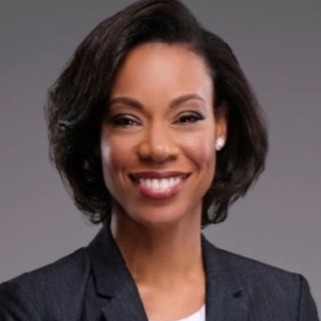
Tiffany McKeever is the founder of Consensus Healthcare Consultants, Inc. As an entrepreneur focused on population health equity and women’s health. The United States still has the highest rate of maternal deaths of any high income nation. Most of the maternal mortality Deaths now over 80% and all of them likely preventable.
Aoifinn Devitt: Public awareness is not just about education and textbook and this happened in this far distant country or to this one person or this one athlete. This is something that is happening to all of us that we are not being heard, right? So we’ve constantly talked about amplifying our voices, being brave about doing so. So I would just want to pull that caveat into what we mean by public awareness I’m Aoifinn Devitt, and welcome to the 50 Faces podcast.
Tiffany: In this focus series, we are focused on women’s health and maternal mortality in particular, and I’m delighted to be joined by Tiffany McKeever, who’s the founder of Consensus Healthcare Consultants Inc., which provides strategic advisory and innovation in the healthcare industry. As an entrepreneur focused on population health, equity, and women’s health, Tiffany’s innovation has been acknowledged by HIMSS with an appointment as one of the future top 50 Class of 21-22 innovators in the patient leader category for maternal health strategies and applications, and the top 200 femtech personalities globally. Prior to founding CHC Inc., Tiffany gained extensive experience in strategy and technical operation with experience over 20 years in big pharma. She’s passionate about startups in Israel and serves as president of Philadelphia-Israel Chamber of Commerce, which supports collaboration between regional US partners and Israeli companies. Welcome, Tiffany. Thanks for joining me today.
Aoifinn Devitt: Thank you for having me.
Tiffany: Well, this is a series about maternal mortality, and I’d love you to set the scene for us a little. Can you talk to us, starting from a high level and getting into definitions, about the scope of the maternal mortality problem in the US as we sit here in 2024?
Aoifinn Devitt: Sure, most certainly. So I just want to give a little bit of background to our listeners. So maternal mortality in the US is a significant public health issue with multifaceted causes. Federal agencies in the past have been quoted by saying it’s a very complex system to look at. And what I understand just from research is, is that in addition to the healthcare service delivery itself, our social systems themselves are actually complex and ever-changing. So this causes lots of challenges in the maternal mortality problem. If we actually look at the formal or universal definition of maternal mortality, it’s defined as deaths due to complications from pregnancy or childbirth occurring during pregnancy within, I guess, 42 days is what the global component is. We’ve since had some legislation that has changed in the United States that has moved that end of pregnancy date through 365 days. We can talk about that at a little bit of a later time as I just wanna go over some definitions right now. And maternal mortality ratio, which is also known as the MMR, is the number of deaths per 100,000 live births. So when we look at the current statistics in the United States, one of the highest maternal mortality rates is what we have among developed countries. And the MMR has been increasing over the past few decades, contrary to trends in many of the other developing nations. And what we’ve even seen is, is that some of the metrics that have come out post-COVID have significant concerns for us that those numbers have somewhat, in fact, doubled, particularly in the African American community with most of the maternal mortality deaths now over 80% and all of them likely preventable. And that was just actually published this month. And the United States, I guess, overall still continues to have the highest rate of maternal deaths of any high-income nation. And just to give you an example, some of the last metrics that we have, because the way this is bundled, we get the mortality review boards that review this each year or so. And some of the latest numbers that we had over 2022 is, is that approximately 22 maternal deaths in every 100 live births in the United States, which is far above rates for any other high-income country. The US maternal mortality is lowest in Asian American women and it’s still highest in African American women. So, someone like myself was very passionate about Black maternal health. I want to just talk a little bit about how I actually found myself in the space. If you don’t mind, we can chat about that a bit. In 2018, I was moving around. I’d started Consensus in 2017. Really, as you mentioned, me leaving the pharmaceutical space to really look at healthcare disparities and population health in our community and find out how I could better serve the community. And of course, in 2018, the maternal mortality numbers were published quite significant that I was 3 to 4 times more likely to die in the maternal health space here in the United States. I live in New Jersey. Our number is 47 out of the 50 states. So quite significant concern there. And at the time, I had 5 children. So as we looked at these stats, it’s the first time that you sort of catch your breath and say, wow, is that significant risk in some places? But I think what stood out most to us was the fact that highly educated women who actually had access to resources were still part of this number and still part of this preventable number. So that’s what really made me carve out a segment in Consensus Healthcare and population health specific to women’s health, and then of course specific to maternal health, focusing on healthcare inequity. So all of these numbers and these statistics that we see are quite alarming across the US in general for women’s health. But to just see it exacerbated, you know, in the community.
Tiffany: Just one of the areas in terms of definition, which you pointed out to me at our first discussions and I thought was so relevant, was that we talk a lot about death, but actually maternal injury, you said, is something that rarely gets measured and that can in fact be as certainly quite traumatizing and, you know, can be debilitating. When you speak about these numbers, are these just death numbers? Are we talking injury as well?
Aoifinn Devitt: So the injuries number, some of the numbers that we’ve seen in some of the zip codes, particularly in New York State, has an injury rate of 60% for African American women, which is a huge percent. And, you know, all of this really starts to tie into our experience in healthcare overall, right? And if those are some of the complex situations that we see, I think we have to get less sensitive about the structural components of healthcare, how it’s delivered in the US. We have to get truthful about racial bias that we have in the system. And in addition to that, you know, when I’ve done some of my studies here in the healthcare analytics program at Rutgers, we really started to look at the future of patient adherence and what that would look like from a policy standpoint and really where we’re able to sit with that. And is that a risk to us as African American women who are injured at 60%? How are we ourselves responsible for those white coat syndromes and all of the things that come with that where the onus is constantly pushed back to us about our healthcare system in the system that we somewhat don’t control. So those injury rates are where we start to hear the community start to talk about healthcare outside of the US healthcare system, where doulas and birth partners and all of those things, those advocates start to come in heavily. And we’ve had some sense of response for that with expansion of doula care, particularly in our state, but still have some access issues that we’re hearing in the periphery. So thank you for bringing that up because that 60% injury, right, we can come home and still have these issues in terms of how healthcare was delivered to us. And, you know, back to 2018 when we, we received the stats, it’s interesting when we talk about birthing partners because we were going through some of the things that were happening to the women at the time. And I have these 5 children and, you know, I’ve been married and I’m with my husband now 32 years. And I remember him saying, you know, Tiff, you went through some of that. Like, you were having the baby, but I was with you. And I remember the nurse not giving you pain medication. I remember them in a nurses’ meeting just as you delivered our first child, and someone forgot to write your script for your anesthesia. You just came directly off of anesthesia. It was my first delivery. It was quite painful. And my husband was running around trying to find the nurses, right? This mistake had happened. So that birthing partner piece, doula, whether you’re coupled or not, is very important. And he’s talking about a birth that I had at that time 23 years ago.
Tiffany: With a 23-year-old daughter myself, I know that time. And I suppose one of the conundrums that we’re facing is it’s one thing not to improve because we all know that improvement takes intentionality, it takes dedicated policy response, it takes follow-through, it takes funding. But to disimprove in this way, for the numbers to deteriorate, To what can you attribute that? Because you would think with the more connected world, more media coverage of these events, or maybe not, but certainly more awareness in medical education, that these at least should be becoming more front and center. Why are we deteriorating in terms of these numbers?
Aoifinn Devitt: Well, I think we look at the medical education in the US and, you know, we’ve been quite critical of the medical education. And candidly, I’ve had physicians say to me, We have challenges dealing across multicultural communities. We really need help and support in doing this. Some of the comments that I’ve received is, is that they spend a large amount of their time on social determinants of health conversations. When that walks through their door, they have a percentage of it that is clinical, which is a small percentage of it, particularly in the maternal health space. But the rest of the conversation is really around cultural congruence and social determinants of health, which is where you talked a little bit about the HIMSS award. What we really looked at from those insights— I can’t change the medical associations right now, how they roll out healthcare in the United States. But what I can do is provide tools that give patients early access in education. I can connect them to social determinants of health to take that out of the physician space. And then from there, I can connect them to community components where we’ve looked at some research where peer-to-peer engagement through healthcare service delivery helps increase some of our numbers. So depending on what it is that your state is doing and what your hospital system is doing, and then how much your physician group and the leadership and administration is advocating for that, particularly in safety net hospitals, right, where we see under-resourced, underrepresented patients. That is what is causing some of the numbers because that’s the crux of the healthcare system. The social components ebb and flow. So this is somewhat what I call the ghost in the system, which is really evident to us. And we cross out of healthcare from this point and get really honest about wealth in the United States, about payer models in the United States, about the iron triangle and triple aim around cost, access, and quality. And whether we really believe that for you to get good healthcare, it has to cost you lots of money. For you to get quality healthcare, it has to cost you lots of money, and those different types of things. So of course, in the economics, transportation, nutrition, education, behavioral health, which is a significant component of that, which we really haven’t talked about too much in the US. I don’t think that we’ve done a great job around mental health in the US, but that postpartum depression pieces of it is what’s extending us down into that 365 days. So we have to get much better about that. I think we can do better in talking about suicide rates and things like that. But if I was to pull us back through a clinical standpoint, we know the comorbidities that we have in the healthcare space, particularly in maternal health. And we do have some ghosts in the system like preeclampsia. It’s very scary. Like when we see these, when we get beyond the wealth and we say people have money and there’s physicians and You know, in 2018, African American women were the most educated. I think we may still hold that space in terms of the maternal mortality deaths. Most educated, most wealth at the time, still had this stark disparity. And you see it in athletes and all of these other things. And you say sort of, sort of what is that? I start to look at the structural pieces of the OB-GYN bundle. Now, there’s been some conversations that are from OB-GYNs to say, we almost want you to go to high risk because then we can see you more often and we can get over the addendums and all of the other kind kind of things. But that’s not really the way that I want to do healthcare. And we talked a little bit about my time in Israel and startup, but prior to going into that startup space, I was with academia and research in a very public healthcare system in Israel. They have 4 HMOs, but because they’re not actually run by ICD codes like we are here in the United States with bundles and different time points that we have to wait to see patients they’re able to research in a different kind of way. And some of that research, just to give an example, is a biomarker that sits at a time point that we never look at in the United States that is very much tied to hemorrhage. Now, if I was able to bring that biomarker, put it in a technology, source for it, and then find that at a certain time point, when we look at these maternal deaths and hemorrhage being one of the second or third in terms of what happens with unnecessary C-sections. We save so many lives.
Tiffany: And when it comes to funding, so you talked about if there seems to be a biomarker that relates to hemorrhage and if you could get, I suppose, the funding or the support to research that and to actually get that tracked. How do we bridge that gap? And I know we’ve spoken with other innovators and entrepreneurs, including from Israel, on this podcast, Karen Leshem, Maura Rosenfeld, And this is an ongoing problem. We’ve compared the status there and their healthcare system. They, they still have people who fall through the cracks there. Some of it’s cultural as opposed to based on, on race, but there’s still gaps. But there’s also a much more, I suppose, joined up nature of these efforts. What do you think is the funding gap? What would it take to get at a national level the attention to this area? Because every so many different strands of medicine are competing for funding.
Aoifinn Devitt: Mm-hmm. Yep. And when I created United We Raise during the COVID era, I talked to a lot of companies that work with payers. And the payer said to me, Tiffany, you’re 10, 15 years ahead of us. We’re not ready yet. The funding is not ready yet. We’re not ready. We’re not ready. We’re not ready is what we heard. What’s interesting is that as I’ve traveled globally, these researchers are actually in DC with us. They’re at the NIH. They’re at the CDC. They’re sitting on these steering committees. So my question to them was, so how are you here in the US with us, and for some reason or another, this has not moved to policy, this has not moved to the payer groups, this has not moved to the funding sections, these metrics? And I think what you have probably heard from Karen and from Maura, who are good colleagues and brilliant women in the space that they are, is, is that it’s really around the tension that we get in women’s health or the tension we don’t get in women’s health, right? I worked in the pharmaceutical space for, as you mentioned, over 2 decades. And I’ve run clinical trials, serious adverse event reporting, all of those different types of things. And it’s really about how we look at women in society, first of all, right? How we look at health outcomes research in ICER, how we price drugs for us, if they’re for us, right? How are we in clinical trials, all of that. So those are some of the root cause pieces of that. So to pull that all the way into funding where us as startups go into a funding space primarily with male funders talking about something in women’s health, it’s to somewhat of a degree a foreign concept to them. And those are, those are some of the challenges. So I’ll say, do these institutions have an equivalent ear, right, to it when these experts say something like, We see a biomarker at week 17, and in the United States, that patient isn’t coming in until week 20. And when she comes in through week 20, we know what happens at week 20, right? We take the diabetic drink, we do our diabetic tests, we get some genetic screening, those different types of things. But we would have had the option to see that biomarker 3 weeks earlier and then have that reported to us, right? Should you be high risk and need a cesarean section? These are some challenges and some things that we need to look at for you postpartum. And, you know, we wouldn’t go home in 3 days’ time and then wait for a 1-month checkup.
Tiffany: I suppose what would you like to see as action items? We know and we’ve discussed on previous podcasts some of the funds that have been put aside by the Biden administration and committed to women’s health. We have private philanthropists like Melinda French Gates, who is dedicating a fund to female founders that may flow through into women’s health through the tech venture that they perpetrate. What would you like to see as a list of action items that you think would gain bipartisan traction?
Aoifinn Devitt: Yeah, so I think some of the pieces since we dived a little bit into women’s health and down into maternal health, into Black maternal health, I’d like to move through this ladder of inference and the way we talked about funding and we talked about research down into funding. What I want to also talk about is the policy pieces itself and how we actually change that, which is how we distribute the money and how we look at underrepresented and under-resourced populations and why we do it that way. When we look at this funding and you hear it in the startup world, you know, Europe and the US, you’re going to have your ROI there. And I often talk about funding below the equator. Is how I, how I think about it. And it’s a little bit of a paradigm. Obviously, it’s not directly under the equator, but I think people understand what I’m saying about it. Some of the comments that we received when I actually moved into this space was because we were African American women, no one would invest in us. No one invests in African American women, and no one definitely invests in African American women health. So we looked at it as under-resourced, underrepresented, and of course they categorize us immediately as mission. And I think that when we look at it in that lens, when we look at research in that lens, when we look at funding in that lens, when we look at distribution in that lens, that is what is the crux of the issue of what is happening with us, right? And I think the design of looking at the African-American woman who can be wealthy and still be found in these places is some of the issues that those organizations have not looked at yet. Look, I was in pharma for 2.5 decades. Our household was at $500,000. If I lost that and lost COBRA, if I lost my job, lost my transportation, all of these other things, and then suddenly found myself in a federally qualified health system just so that I could get healthcare, pregnant, and then loss of life, you may not see that full trajectory of how that actually moves. And I think those nuances is what the United States actually misses when they distribute this money, because there’s no governance around weighting the population and how the actual healthcare is delivered. We just go right back into the medical textbook.
Tiffany: Fascinating. So tell me more then. So that’s perhaps African American women as a whole. What would be on your wishlist to change this?
Aoifinn Devitt: There definitely has to be policy change advocating for things like cell gene therapy. And we look at personalized medicine. I would hope that we would have some personalized social design that actually happens as well. We don’t need it person to person. Do we need it as group to group? That’s fine. Let’s stratify us in some kind of way that we at least feel whole. We’ve looked at healthcare reform in the United States. We looked at Obamacare. And yes, people got access. Was it really far away from home? I mean, I have a disabled father that I take care of. Yes, he had access, but I had to take him 55 minutes away for the services that he needed. Someone else may not have that opportunity to do so. So I think some of those policy access in a comprehensive way to match if we’re going into the future of personalized medicine has to happen at a social standpoint as well. And this is really about healthcare system reform and improving healthcare delivery. In addressing those systematic inequities that we have. And then as I mentioned before, you know, the onus is on us as well too. I mean, I say that sometimes in these spaces and women say, you know, we really don’t like that narrative. This is some things that are happening to us. And, you know, Consensus has taken the stance that it’s our responsibility too, but it’s our responsibility to educate and provide public awareness, which is why I do what I do, right? Why I’m passionate about what I do. So increasing awareness and education around things and maternal health issues is critically important. So when we see these startup companies that are doing that in multiple ways, in all of the parties that are doing healthcare service delivery, that is another degree of the design that we really have to look at when they are distributing money to people. It can’t go to just friends. It can’t go to just large systems that are part of the lobbyist group that look at it. I’ve looked at large amounts of money go to zip codes where We aren’t even there, and the number is not as disparaging as other places where they could be distributed. Has anyone looked at where there isn’t access down in the lower South, but they’re under the Bible Belt and birth control and all of those issues? So all of these things sort of lead up, you know, the debates were just last night and we were looking at somewhat of this discussion around Medicare, which I wish was flushed out a little bit more. Giving me really deep concern. But even those distribution channels need to have that sort of comprehensive look about how this money is used and how it’s distributed. And I think it’s important not to just distribute money for the sake of distributing money, which is— I don’t want to get too political, but for sort of tax curves or tax harbors in the space or sort of feel-good mission work. But we really have to get to healthcare and change our lens to do this for America.
Tiffany: And I think you make an excellent point. It’s almost like this needs to be a pincer motion in the sense that we cannot wait for policy change to get where it needs to get to. We cannot wait for equity in distribution or in recognition or in funding. There should be equity. I think we all know that. Whether we’ll see it in the next decade is another question. But what we can do is grassroots community movements. And one of the previous podcasts, Adonica Shaw, who spoke about My Wing Woman, again derived from her own experience. And I think that her own experience in receiving less than adequate healthcare led her to seek out a community whereby they could put language on their trauma, educate, heal, and build awareness and visibility. And that just came from grassroots. And it seems that it needs to be this kind of a pincer movement because unfortunately waiting for one side to get to where it needs to get to will not be adequate. So I have been, I think, humbled by what I’ve seen in the community of women who have suffered through negative healthcare events to rally and use this experience to do the better good in terms of ensuring that other women don’t have to go through this trauma.
Aoifinn Devitt: Yeah, I just wanted to just pull back a little bit to the point where you mentioned Wingwoman and Adonica Shaw. Since we’re talking a little bit about our global access and reach, I was one of the managing directors of the MedFemTech Congress. In Paris, France in May last year. And somewhat of the design that we did for this particular conference, which was important to Consensus at the time, was Voice of the Patient, which is where I met Adonica and I was able to interview her and to put these 6 women on the stage to really talk about what our healthcare experience is like. I can tell you that by the time these women finished with various experiences, I mean, all different cultural country differences, on this stage, there were physicians standing in front of us who had walked up to the stage because it was so powerful what these women had experienced in healthcare service delivery. And I think we need to talk about it more. Public awareness is not just about education and textbook and this happened in this far distant country or to this one person or this one athlete. This is something that is happening to all of us. That we are not being heard, right? So we’ve constantly talked about amplifying our voices, being brave about doing so. So I would just want to pull that caveat into what we mean by public awareness. And then I very much agree, United We Raise is very much grassroots. We realized that that was really the only way short of delivering babies at our home, right? But still really realize that should there be an emergency, we would go into that Western healthcare system. So where consensus at that juncture really sat on the spectrum of the maternal health space was really around data. 1 1 is always 2. I’m not gonna have these bipartisan arguments or nonpartisan arguments around what Democrats are saying versus what Republicans are saying. Are these numbers really real? Are they inflated? Was COVID real? All of these different types of things that happen in the healthcare space. That really stop and halt the conversation. And in Consensus, we’ve seen that because even in the sales cycle of United We Raise, a particular hospital that we were working with, just the 2 years past COVID, we lost a woman every month in that hospital system, every month. And then there’s another— I want to say there was another 6 or so that were really at high risk that were able to be saved. So these are real numbers that we are looking at, and we’re just really trying to— really, really trying to find the solution. There are instances where we are given information, just to pull back a little bit to the voice of the patient experience, where we can think we’re really educated, and a physician tells us something. And we had someone on the stage actually lose her children because where she read the medical paperwork She thought that she could just go to a clinic for some blood work the next day, and it was actually supposed to be translated as stat, like right now, go to the emergency room. So these mistakes that happen, how she could go a whole evening without that physician saying, we didn’t get a report from the emergency room, those types of things are just gaps and errors that are happening in the healthcare service delivery design. All of that to say of what I would like to see in the future, I don’t want postmortem reports from the maternal morbidity board that just sort of says, this is what happened, this is what our numbers look like, this is what we’ve seen. And then we do that again next year. We need some practical components where we are actually tying our investors to those outcomes that we saw and saying how we’re solving for them. And I think there’s significant opportunity. We can tell from this podcast lots of things that we can do just to pull us back to what is being defined as so complex. And in recent, I guess, months or so, probably about a year and a half or so, I’ve looked heavily more at policy and having some function down in DC because I can see great technologies that are coming to the forefront that are just not making it through because of the very lenses, the multiple lenses that we have talked about on this podcast.
Tiffany: Thank you so much, Tiffany. This series started 10 months ago with the tragic story of Tori Bowie, the Olympic sprinter who was found dead at her apartment at 8 months pregnant, having gone into premature labor. And my hashtag I used at that time was #RememberHerName. And I think you mentioned postmortems. I also don’t want to read any more about any more postmortems. I think we have to remember the names of the victims, that the cases, their case studies and their details, because it is only by remembering and these stories that we will be reminded of the triggers and not to have that happen again. So thank you so much for the work that you’re doing, both on your own, but also by supporting startups and founders who are committed to new technologies in that arena. And thank you for bringing together so many advocates of this important cause. Thank you for coming and sharing your insights with us.
Aoifinn Devitt: Yes, thank you so much for having me.
Tiffany: I’m Aoifinn Devitt. Thank you for listening to the 50 Faces podcast with this particular focus on maternal mortality within the framework of medicine and science. If you liked what you heard and would like to tune in to hear from more experts in this field, please tune in to Apple Podcasts or wherever you get your podcasts. This podcast is for informational purposes only and should not be construed as investment advice, and all views are personal and should not be attributed to the organizations and affiliations of the host or any guest.
Aoifinn Devitt: Public awareness is not just about education and textbook and this happened in this far distant country or to this one person or this one athlete. This is something that is happening to all of us that we are not being heard, right? So we’ve constantly talked about amplifying our voices, being brave about doing so. So I would just want to pull that caveat into what we mean by public awareness I’m Aoifinn Devitt, and welcome to the 50 Faces podcast.
Tiffany: In this focus series, we are focused on women’s health and maternal mortality in particular, and I’m delighted to be joined by Tiffany McKeever, who’s the founder of Consensus Healthcare Consultants Inc., which provides strategic advisory and innovation in the healthcare industry. As an entrepreneur focused on population health, equity, and women’s health, Tiffany’s innovation has been acknowledged by HIMSS with an appointment as one of the future top 50 Class of 21-22 innovators in the patient leader category for maternal health strategies and applications, and the top 200 femtech personalities globally. Prior to founding CHC Inc., Tiffany gained extensive experience in strategy and technical operation with experience over 20 years in big pharma. She’s passionate about startups in Israel and serves as president of Philadelphia-Israel Chamber of Commerce, which supports collaboration between regional US partners and Israeli companies. Welcome, Tiffany. Thanks for joining me today.
Aoifinn Devitt: Thank you for having me.
Tiffany: Well, this is a series about maternal mortality, and I’d love you to set the scene for us a little. Can you talk to us, starting from a high level and getting into definitions, about the scope of the maternal mortality problem in the US as we sit here in 2024?
Aoifinn Devitt: Sure, most certainly. So I just want to give a little bit of background to our listeners. So maternal mortality in the US is a significant public health issue with multifaceted causes. Federal agencies in the past have been quoted by saying it’s a very complex system to look at. And what I understand just from research is, is that in addition to the healthcare service delivery itself, our social systems themselves are actually complex and ever-changing. So this causes lots of challenges in the maternal mortality problem. If we actually look at the formal or universal definition of maternal mortality, it’s defined as deaths due to complications from pregnancy or childbirth occurring during pregnancy within, I guess, 42 days is what the global component is. We’ve since had some legislation that has changed in the United States that has moved that end of pregnancy date through 365 days. We can talk about that at a little bit of a later time as I just wanna go over some definitions right now. And maternal mortality ratio, which is also known as the MMR, is the number of deaths per 100,000 live births. So when we look at the current statistics in the United States, one of the highest maternal mortality rates is what we have among developed countries. And the MMR has been increasing over the past few decades, contrary to trends in many of the other developing nations. And what we’ve even seen is, is that some of the metrics that have come out post-COVID have significant concerns for us that those numbers have somewhat, in fact, doubled, particularly in the African American community with most of the maternal mortality deaths now over 80% and all of them likely preventable. And that was just actually published this month. And the United States, I guess, overall still continues to have the highest rate of maternal deaths of any high-income nation. And just to give you an example, some of the last metrics that we have, because the way this is bundled, we get the mortality review boards that review this each year or so. And some of the latest numbers that we had over 2022 is, is that approximately 22 maternal deaths in every 100 live births in the United States, which is far above rates for any other high-income country. The US maternal mortality is lowest in Asian American women and it’s still highest in African American women. So, someone like myself was very passionate about Black maternal health. I want to just talk a little bit about how I actually found myself in the space. If you don’t mind, we can chat about that a bit. In 2018, I was moving around. I’d started Consensus in 2017. Really, as you mentioned, me leaving the pharmaceutical space to really look at healthcare disparities and population health in our community and find out how I could better serve the community. And of course, in 2018, the maternal mortality numbers were published quite significant that I was 3 to 4 times more likely to die in the maternal health space here in the United States. I live in New Jersey. Our number is 47 out of the 50 states. So quite significant concern there. And at the time, I had 5 children. So as we looked at these stats, it’s the first time that you sort of catch your breath and say, wow, is that significant risk in some places? But I think what stood out most to us was the fact that highly educated women who actually had access to resources were still part of this number and still part of this preventable number. So that’s what really made me carve out a segment in Consensus Healthcare and population health specific to women’s health, and then of course specific to maternal health, focusing on healthcare inequity. So all of these numbers and these statistics that we see are quite alarming across the US in general for women’s health. But to just see it exacerbated, you know, in the community.
Tiffany: Just one of the areas in terms of definition, which you pointed out to me at our first discussions and I thought was so relevant, was that we talk a lot about death, but actually maternal injury, you said, is something that rarely gets measured and that can in fact be as certainly quite traumatizing and, you know, can be debilitating. When you speak about these numbers, are these just death numbers? Are we talking injury as well?
Aoifinn Devitt: So the injuries number, some of the numbers that we’ve seen in some of the zip codes, particularly in New York State, has an injury rate of 60% for African American women, which is a huge percent. And, you know, all of this really starts to tie into our experience in healthcare overall, right? And if those are some of the complex situations that we see, I think we have to get less sensitive about the structural components of healthcare, how it’s delivered in the US. We have to get truthful about racial bias that we have in the system. And in addition to that, you know, when I’ve done some of my studies here in the healthcare analytics program at Rutgers, we really started to look at the future of patient adherence and what that would look like from a policy standpoint and really where we’re able to sit with that. And is that a risk to us as African American women who are injured at 60%? How are we ourselves responsible for those white coat syndromes and all of the things that come with that where the onus is constantly pushed back to us about our healthcare system in the system that we somewhat don’t control. So those injury rates are where we start to hear the community start to talk about healthcare outside of the US healthcare system, where doulas and birth partners and all of those things, those advocates start to come in heavily. And we’ve had some sense of response for that with expansion of doula care, particularly in our state, but still have some access issues that we’re hearing in the periphery. So thank you for bringing that up because that 60% injury, right, we can come home and still have these issues in terms of how healthcare was delivered to us. And, you know, back to 2018 when we, we received the stats, it’s interesting when we talk about birthing partners because we were going through some of the things that were happening to the women at the time. And I have these 5 children and, you know, I’ve been married and I’m with my husband now 32 years. And I remember him saying, you know, Tiff, you went through some of that. Like, you were having the baby, but I was with you. And I remember the nurse not giving you pain medication. I remember them in a nurses’ meeting just as you delivered our first child, and someone forgot to write your script for your anesthesia. You just came directly off of anesthesia. It was my first delivery. It was quite painful. And my husband was running around trying to find the nurses, right? This mistake had happened. So that birthing partner piece, doula, whether you’re coupled or not, is very important. And he’s talking about a birth that I had at that time 23 years ago.
Tiffany: With a 23-year-old daughter myself, I know that time. And I suppose one of the conundrums that we’re facing is it’s one thing not to improve because we all know that improvement takes intentionality, it takes dedicated policy response, it takes follow-through, it takes funding. But to disimprove in this way, for the numbers to deteriorate, To what can you attribute that? Because you would think with the more connected world, more media coverage of these events, or maybe not, but certainly more awareness in medical education, that these at least should be becoming more front and center. Why are we deteriorating in terms of these numbers?
Aoifinn Devitt: Well, I think we look at the medical education in the US and, you know, we’ve been quite critical of the medical education. And candidly, I’ve had physicians say to me, We have challenges dealing across multicultural communities. We really need help and support in doing this. Some of the comments that I’ve received is, is that they spend a large amount of their time on social determinants of health conversations. When that walks through their door, they have a percentage of it that is clinical, which is a small percentage of it, particularly in the maternal health space. But the rest of the conversation is really around cultural congruence and social determinants of health, which is where you talked a little bit about the HIMSS award. What we really looked at from those insights— I can’t change the medical associations right now, how they roll out healthcare in the United States. But what I can do is provide tools that give patients early access in education. I can connect them to social determinants of health to take that out of the physician space. And then from there, I can connect them to community components where we’ve looked at some research where peer-to-peer engagement through healthcare service delivery helps increase some of our numbers. So depending on what it is that your state is doing and what your hospital system is doing, and then how much your physician group and the leadership and administration is advocating for that, particularly in safety net hospitals, right, where we see under-resourced, underrepresented patients. That is what is causing some of the numbers because that’s the crux of the healthcare system. The social components ebb and flow. So this is somewhat what I call the ghost in the system, which is really evident to us. And we cross out of healthcare from this point and get really honest about wealth in the United States, about payer models in the United States, about the iron triangle and triple aim around cost, access, and quality. And whether we really believe that for you to get good healthcare, it has to cost you lots of money. For you to get quality healthcare, it has to cost you lots of money, and those different types of things. So of course, in the economics, transportation, nutrition, education, behavioral health, which is a significant component of that, which we really haven’t talked about too much in the US. I don’t think that we’ve done a great job around mental health in the US, but that postpartum depression pieces of it is what’s extending us down into that 365 days. So we have to get much better about that. I think we can do better in talking about suicide rates and things like that. But if I was to pull us back through a clinical standpoint, we know the comorbidities that we have in the healthcare space, particularly in maternal health. And we do have some ghosts in the system like preeclampsia. It’s very scary. Like when we see these, when we get beyond the wealth and we say people have money and there’s physicians and You know, in 2018, African American women were the most educated. I think we may still hold that space in terms of the maternal mortality deaths. Most educated, most wealth at the time, still had this stark disparity. And you see it in athletes and all of these other things. And you say sort of, sort of what is that? I start to look at the structural pieces of the OB-GYN bundle. Now, there’s been some conversations that are from OB-GYNs to say, we almost want you to go to high risk because then we can see you more often and we can get over the addendums and all of the other kind kind of things. But that’s not really the way that I want to do healthcare. And we talked a little bit about my time in Israel and startup, but prior to going into that startup space, I was with academia and research in a very public healthcare system in Israel. They have 4 HMOs, but because they’re not actually run by ICD codes like we are here in the United States with bundles and different time points that we have to wait to see patients they’re able to research in a different kind of way. And some of that research, just to give an example, is a biomarker that sits at a time point that we never look at in the United States that is very much tied to hemorrhage. Now, if I was able to bring that biomarker, put it in a technology, source for it, and then find that at a certain time point, when we look at these maternal deaths and hemorrhage being one of the second or third in terms of what happens with unnecessary C-sections. We save so many lives.
Tiffany: And when it comes to funding, so you talked about if there seems to be a biomarker that relates to hemorrhage and if you could get, I suppose, the funding or the support to research that and to actually get that tracked. How do we bridge that gap? And I know we’ve spoken with other innovators and entrepreneurs, including from Israel, on this podcast, Karen Leshem, Maura Rosenfeld, And this is an ongoing problem. We’ve compared the status there and their healthcare system. They, they still have people who fall through the cracks there. Some of it’s cultural as opposed to based on, on race, but there’s still gaps. But there’s also a much more, I suppose, joined up nature of these efforts. What do you think is the funding gap? What would it take to get at a national level the attention to this area? Because every so many different strands of medicine are competing for funding.
Aoifinn Devitt: Mm-hmm. Yep. And when I created United We Raise during the COVID era, I talked to a lot of companies that work with payers. And the payer said to me, Tiffany, you’re 10, 15 years ahead of us. We’re not ready yet. The funding is not ready yet. We’re not ready. We’re not ready. We’re not ready is what we heard. What’s interesting is that as I’ve traveled globally, these researchers are actually in DC with us. They’re at the NIH. They’re at the CDC. They’re sitting on these steering committees. So my question to them was, so how are you here in the US with us, and for some reason or another, this has not moved to policy, this has not moved to the payer groups, this has not moved to the funding sections, these metrics? And I think what you have probably heard from Karen and from Maura, who are good colleagues and brilliant women in the space that they are, is, is that it’s really around the tension that we get in women’s health or the tension we don’t get in women’s health, right? I worked in the pharmaceutical space for, as you mentioned, over 2 decades. And I’ve run clinical trials, serious adverse event reporting, all of those different types of things. And it’s really about how we look at women in society, first of all, right? How we look at health outcomes research in ICER, how we price drugs for us, if they’re for us, right? How are we in clinical trials, all of that. So those are some of the root cause pieces of that. So to pull that all the way into funding where us as startups go into a funding space primarily with male funders talking about something in women’s health, it’s to somewhat of a degree a foreign concept to them. And those are, those are some of the challenges. So I’ll say, do these institutions have an equivalent ear, right, to it when these experts say something like, We see a biomarker at week 17, and in the United States, that patient isn’t coming in until week 20. And when she comes in through week 20, we know what happens at week 20, right? We take the diabetic drink, we do our diabetic tests, we get some genetic screening, those different types of things. But we would have had the option to see that biomarker 3 weeks earlier and then have that reported to us, right? Should you be high risk and need a cesarean section? These are some challenges and some things that we need to look at for you postpartum. And, you know, we wouldn’t go home in 3 days’ time and then wait for a 1-month checkup.
Tiffany: I suppose what would you like to see as action items? We know and we’ve discussed on previous podcasts some of the funds that have been put aside by the Biden administration and committed to women’s health. We have private philanthropists like Melinda French Gates, who is dedicating a fund to female founders that may flow through into women’s health through the tech venture that they perpetrate. What would you like to see as a list of action items that you think would gain bipartisan traction?
Aoifinn Devitt: Yeah, so I think some of the pieces since we dived a little bit into women’s health and down into maternal health, into Black maternal health, I’d like to move through this ladder of inference and the way we talked about funding and we talked about research down into funding. What I want to also talk about is the policy pieces itself and how we actually change that, which is how we distribute the money and how we look at underrepresented and under-resourced populations and why we do it that way. When we look at this funding and you hear it in the startup world, you know, Europe and the US, you’re going to have your ROI there. And I often talk about funding below the equator. Is how I, how I think about it. And it’s a little bit of a paradigm. Obviously, it’s not directly under the equator, but I think people understand what I’m saying about it. Some of the comments that we received when I actually moved into this space was because we were African American women, no one would invest in us. No one invests in African American women, and no one definitely invests in African American women health. So we looked at it as under-resourced, underrepresented, and of course they categorize us immediately as mission. And I think that when we look at it in that lens, when we look at research in that lens, when we look at funding in that lens, when we look at distribution in that lens, that is what is the crux of the issue of what is happening with us, right? And I think the design of looking at the African-American woman who can be wealthy and still be found in these places is some of the issues that those organizations have not looked at yet. Look, I was in pharma for 2.5 decades. Our household was at $500,000. If I lost that and lost COBRA, if I lost my job, lost my transportation, all of these other things, and then suddenly found myself in a federally qualified health system just so that I could get healthcare, pregnant, and then loss of life, you may not see that full trajectory of how that actually moves. And I think those nuances is what the United States actually misses when they distribute this money, because there’s no governance around weighting the population and how the actual healthcare is delivered. We just go right back into the medical textbook.
Tiffany: Fascinating. So tell me more then. So that’s perhaps African American women as a whole. What would be on your wishlist to change this?
Aoifinn Devitt: There definitely has to be policy change advocating for things like cell gene therapy. And we look at personalized medicine. I would hope that we would have some personalized social design that actually happens as well. We don’t need it person to person. Do we need it as group to group? That’s fine. Let’s stratify us in some kind of way that we at least feel whole. We’ve looked at healthcare reform in the United States. We looked at Obamacare. And yes, people got access. Was it really far away from home? I mean, I have a disabled father that I take care of. Yes, he had access, but I had to take him 55 minutes away for the services that he needed. Someone else may not have that opportunity to do so. So I think some of those policy access in a comprehensive way to match if we’re going into the future of personalized medicine has to happen at a social standpoint as well. And this is really about healthcare system reform and improving healthcare delivery. In addressing those systematic inequities that we have. And then as I mentioned before, you know, the onus is on us as well too. I mean, I say that sometimes in these spaces and women say, you know, we really don’t like that narrative. This is some things that are happening to us. And, you know, Consensus has taken the stance that it’s our responsibility too, but it’s our responsibility to educate and provide public awareness, which is why I do what I do, right? Why I’m passionate about what I do. So increasing awareness and education around things and maternal health issues is critically important. So when we see these startup companies that are doing that in multiple ways, in all of the parties that are doing healthcare service delivery, that is another degree of the design that we really have to look at when they are distributing money to people. It can’t go to just friends. It can’t go to just large systems that are part of the lobbyist group that look at it. I’ve looked at large amounts of money go to zip codes where We aren’t even there, and the number is not as disparaging as other places where they could be distributed. Has anyone looked at where there isn’t access down in the lower South, but they’re under the Bible Belt and birth control and all of those issues? So all of these things sort of lead up, you know, the debates were just last night and we were looking at somewhat of this discussion around Medicare, which I wish was flushed out a little bit more. Giving me really deep concern. But even those distribution channels need to have that sort of comprehensive look about how this money is used and how it’s distributed. And I think it’s important not to just distribute money for the sake of distributing money, which is— I don’t want to get too political, but for sort of tax curves or tax harbors in the space or sort of feel-good mission work. But we really have to get to healthcare and change our lens to do this for America.
Tiffany: And I think you make an excellent point. It’s almost like this needs to be a pincer motion in the sense that we cannot wait for policy change to get where it needs to get to. We cannot wait for equity in distribution or in recognition or in funding. There should be equity. I think we all know that. Whether we’ll see it in the next decade is another question. But what we can do is grassroots community movements. And one of the previous podcasts, Adonica Shaw, who spoke about My Wing Woman, again derived from her own experience. And I think that her own experience in receiving less than adequate healthcare led her to seek out a community whereby they could put language on their trauma, educate, heal, and build awareness and visibility. And that just came from grassroots. And it seems that it needs to be this kind of a pincer movement because unfortunately waiting for one side to get to where it needs to get to will not be adequate. So I have been, I think, humbled by what I’ve seen in the community of women who have suffered through negative healthcare events to rally and use this experience to do the better good in terms of ensuring that other women don’t have to go through this trauma.
Aoifinn Devitt: Yeah, I just wanted to just pull back a little bit to the point where you mentioned Wingwoman and Adonica Shaw. Since we’re talking a little bit about our global access and reach, I was one of the managing directors of the MedFemTech Congress. In Paris, France in May last year. And somewhat of the design that we did for this particular conference, which was important to Consensus at the time, was Voice of the Patient, which is where I met Adonica and I was able to interview her and to put these 6 women on the stage to really talk about what our healthcare experience is like. I can tell you that by the time these women finished with various experiences, I mean, all different cultural country differences, on this stage, there were physicians standing in front of us who had walked up to the stage because it was so powerful what these women had experienced in healthcare service delivery. And I think we need to talk about it more. Public awareness is not just about education and textbook and this happened in this far distant country or to this one person or this one athlete. This is something that is happening to all of us. That we are not being heard, right? So we’ve constantly talked about amplifying our voices, being brave about doing so. So I would just want to pull that caveat into what we mean by public awareness. And then I very much agree, United We Raise is very much grassroots. We realized that that was really the only way short of delivering babies at our home, right? But still really realize that should there be an emergency, we would go into that Western healthcare system. So where consensus at that juncture really sat on the spectrum of the maternal health space was really around data. 1 1 is always 2. I’m not gonna have these bipartisan arguments or nonpartisan arguments around what Democrats are saying versus what Republicans are saying. Are these numbers really real? Are they inflated? Was COVID real? All of these different types of things that happen in the healthcare space. That really stop and halt the conversation. And in Consensus, we’ve seen that because even in the sales cycle of United We Raise, a particular hospital that we were working with, just the 2 years past COVID, we lost a woman every month in that hospital system, every month. And then there’s another— I want to say there was another 6 or so that were really at high risk that were able to be saved. So these are real numbers that we are looking at, and we’re just really trying to— really, really trying to find the solution. There are instances where we are given information, just to pull back a little bit to the voice of the patient experience, where we can think we’re really educated, and a physician tells us something. And we had someone on the stage actually lose her children because where she read the medical paperwork She thought that she could just go to a clinic for some blood work the next day, and it was actually supposed to be translated as stat, like right now, go to the emergency room. So these mistakes that happen, how she could go a whole evening without that physician saying, we didn’t get a report from the emergency room, those types of things are just gaps and errors that are happening in the healthcare service delivery design. All of that to say of what I would like to see in the future, I don’t want postmortem reports from the maternal morbidity board that just sort of says, this is what happened, this is what our numbers look like, this is what we’ve seen. And then we do that again next year. We need some practical components where we are actually tying our investors to those outcomes that we saw and saying how we’re solving for them. And I think there’s significant opportunity. We can tell from this podcast lots of things that we can do just to pull us back to what is being defined as so complex. And in recent, I guess, months or so, probably about a year and a half or so, I’ve looked heavily more at policy and having some function down in DC because I can see great technologies that are coming to the forefront that are just not making it through because of the very lenses, the multiple lenses that we have talked about on this podcast.
Tiffany: Thank you so much, Tiffany. This series started 10 months ago with the tragic story of Tori Bowie, the Olympic sprinter who was found dead at her apartment at 8 months pregnant, having gone into premature labor. And my hashtag I used at that time was #RememberHerName. And I think you mentioned postmortems. I also don’t want to read any more about any more postmortems. I think we have to remember the names of the victims, that the cases, their case studies and their details, because it is only by remembering and these stories that we will be reminded of the triggers and not to have that happen again. So thank you so much for the work that you’re doing, both on your own, but also by supporting startups and founders who are committed to new technologies in that arena. And thank you for bringing together so many advocates of this important cause. Thank you for coming and sharing your insights with us.
Aoifinn Devitt: Yes, thank you so much for having me.
Tiffany: I’m Aoifinn Devitt. Thank you for listening to the 50 Faces podcast with this particular focus on maternal mortality within the framework of medicine and science. If you liked what you heard and would like to tune in to hear from more experts in this field, please tune in to Apple Podcasts or wherever you get your podcasts. This podcast is for informational purposes only and should not be construed as investment advice, and all views are personal and should not be attributed to the organizations and affiliations of the host or any guest.