Aoifinn Devitt: Brought to you with the kind support of DLA Piper Ireland.
Maud Sarliev: And in French, it’s: Impose ta chance, sers ton bonheur, et va ton vers risque. À te regarder, ils s’habitueront. So basically means stick to your guts, believe in yourself. It won’t be easy, but you’ll get there, and people will look at you and follow your path if they find it inspiring.
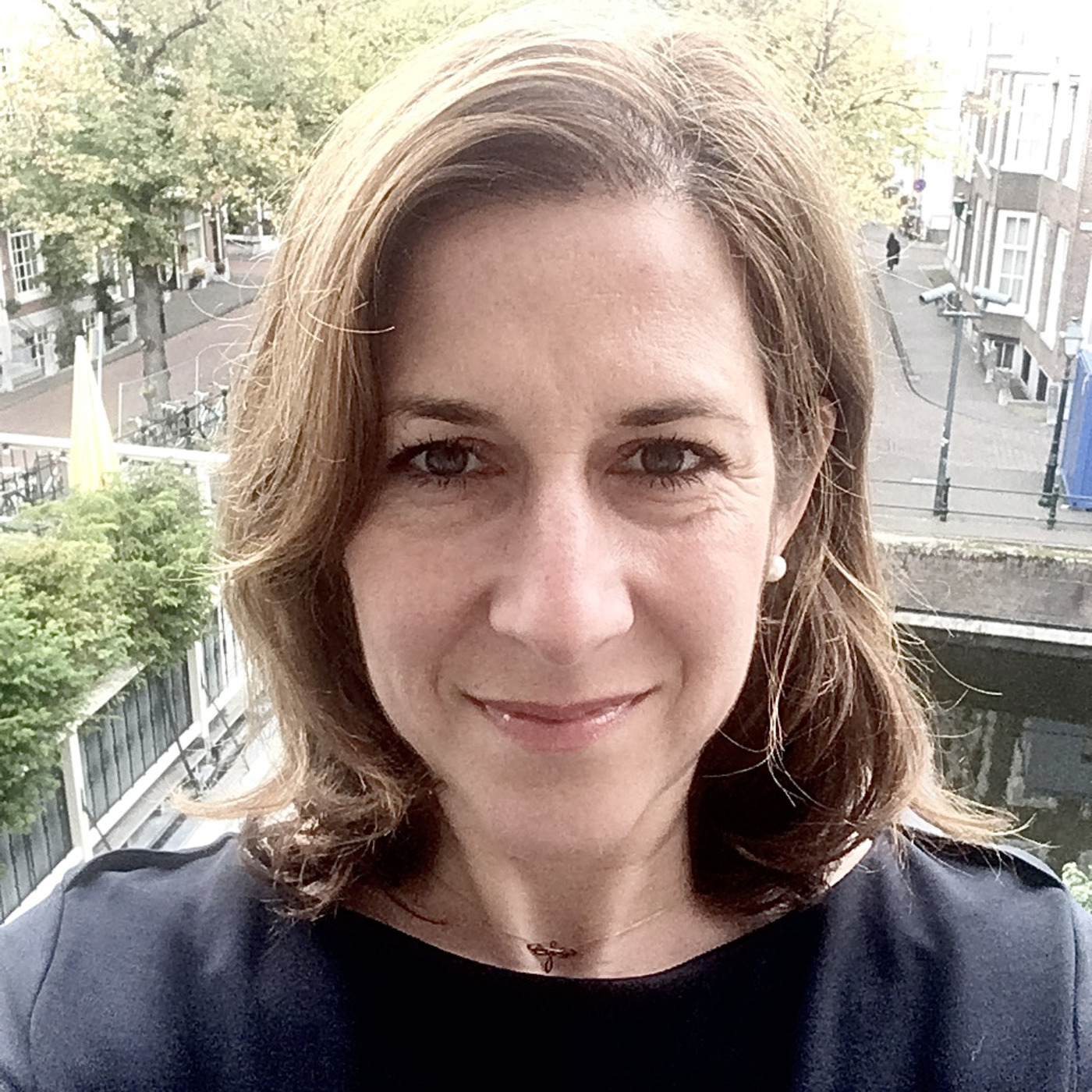
Aoifinn Devitt: I’m Aoifinn Devitt, and welcome to this 50 Faces Focus series which showcases the richness and diversity of inspiring people in the law. I’m joined today by Maud Sarliev, who is an expert in international criminal law, international humanitarian law, human rights, and a leading authority in the development of creative legal thinking to address the environmental and climate crisis. Her professional commitments and casework have taken her to conflict and post-conflict environments in Southeast Asia, the Middle East, Central and Eastern Africa, Latin America, the Balkans, and Eastern Europe. She is currently judge assessor with the French National Court of Asylum, a founder of Control Z focused on climate and environmental justice, in addition to numerous other roles. Maud grew up near the Massif Central in France and moved abroad to the Côte d’Ivoire as a young child. This experience of living abroad and being enmeshed in different cultures inspired her to choose law and commercial law in particular in order to enable her to have an international legal career. Welcome, Maud. Thanks for joining me today.
Maud Sarliev: Thank you. It’s a pleasure to be here.
Aoifinn Devitt: Let’s start by talking about your career journey and what first interested you in going into law and international law in particular.
Maud Sarliev: Initially, I read international and EU law because I wanted to learn and, and live abroad again, and I saw business law as the best way to achieve that, which I was wrong about, basically. I went from being a first-class honours student to being a failed commercial lawyer. Which was very hard to accept at the time, but probably the best thing that’s happened to me. So after that, I decided to start from scratch as an intern with the Khmer Rouge Tribunal in Cambodia, and the rest is history.
Aoifinn Devitt: It’s interesting, my next question is usually around surprising turns, but I guess that was the surprising turn there, finding your passion in a different area. I’d love to now talk about some of those areas, because international war crimes, human rights evaluations, huge issues, highly complex and systemic. And sometimes I would say it seems to the outsider that progress in making change is slow and can sometimes be protracted. How do you cope with maybe the lack of measurable success and lack of feedback in dealing with some of these big issues?
Maud Sarliev: When it comes to how to cope with it, I try to focus on the objective that the values that I stand for and the general interest rather than my own, which sounds very corny and perhaps self-indulgent, but it’s far, far from easy.
Aoifinn Devitt: I remember when we spoke earlier, you used the story by the Amerindian philosopher and environmentalist Pierre Rabhi to illustrate this point. So if you don’t mind, I’d like to just read this story now in full so that our listeners have a full appreciation of its beauty. The Hummingbird’s Tale by Pierre Rabhi. One day, a long time ago, and in a faraway place, or so the legend goes, there was a huge forest fire that was raging in the countryside. All the animals were terrified, running around in circles, screaming, crying, and helplessly watching the impending disaster. But there, in the middle of the flames and above the cowering animals, was a tiny hummingbird, busy flying from a small pond to the fire, each time fetching a few drops with its beak to throw on the flames. And then again, and then again. After a while, an old grouchy armadillo, annoyed by this ridiculous, useless agitation on the part of the hummingbird, cried out, “Tiny bird, don’t be a fool! It is not with those minuscule drops of water, one after the other, that you are going to put out the fire and save us all!” To which the hummingbird replied, “Could be, but I’m going to do my bit.” So a really beautiful story there that captures the idea of everyone doing their part. And you’re a leading authority in the development of creative legal thinking to address the environmental and climate crisis. Can you give us an example as to how this works exactly, this creativity?
Maud Sarliev: One good example is something that I remember from when I was reading family law and we were going back into history and the professor was telling us, yeah, and up until ’94 in France, adultery was a crime. And you’re like, what? I’m sorry. It took a long time to accept something that was already accepted in society and had been accepted in society for years. Maybe not as much as accepted as we would’ve wished for. So that’s what I see with the climate and environmental crisis is that the law is lingering behind, but there is so much will and determination from the scientific community, from parts of the legal community that I think the next step is to get the lawyers and the scientists together and have them take the bridges between their respective jargon and bubbles down and make each other understand where they’re coming from and where they want to go, and then bring that to policymakers so that the law is changed and adapted to the challenges of our time.
Aoifinn Devitt: No, it’s really interesting. I suppose around human rights and your right to, say, a clean environment And that seems an area that definitely lends itself to hybrid, or at least hybrid thinking. And then also there’s an increased awareness as well of ecocide, especially in the current situation in Ukraine, and a lot more media attention to that.
Maud Sarliev: We all depend on clean, like breathable air and clean water and edible food. And without a sustainable, healthy environment, there’s no access to that. And similarly with ecocide, ecocide is even more blurry in my view, because It all comes down to the fact that the environment is, as a notion, as a concept itself, is very dynamic and very fluid, so hard to define. But what’s incredibly interesting and also incredibly depressing when it comes to Ukraine and the conflict that’s been raging since even before February 2022, because it started in 2014 with the invasion of Donbas and Crimea and the annexation of Crimea, but it’s really like where everything seems to be shifting. And also there’s an alignment and presented alignment between the political will of a government and its president on the one hand, with a 10-point peace plan of President Zelensky that lists ecocide and clean water and nuclear and energy safety as each of the 10 points on the one hand. And on the other hand, a real strong and solid determination of the Prosecutor General’s Office to hold accountable those most responsible with the environmental impact of the conflict. And here, because the law is not there, they are pushing Instead of reinventing the wheel, the idea is to push for the interpretation of the existing provisions and see how far they can go and explore the limits of these provisions. And as you, I think you said, just to be clear, in Ukraine they have a provision in the Ukrainian Criminal Code that defines ecocide. And it’s going to be very interesting to see how the Ukrainian judiciary is going to approach that and explore indeed the limits of that particular provision. Similarly, they have another provision that allows for the transposition to some extent of international humanitarian law into the Ukrainian internal legal order. So what does that mean? Which provisions that already exist are going to be applied? To which extent? How can we demonstrate the existence of their elements? For example, you have a particular additional Protocol I to the Geneva Conventions, which is quite interesting because it defines in its Articles 35 and 55 as a war crime, like any attack that’s caused long-term widespread and severe damages to the environment. So how is that going to be interpreted? Then at the ICC level, before the International Criminal Court, if the prosecution’s office considers that there are reasonable grounds to believe that crimes under the jurisdiction of the ICC defined by the Rome Statute and impacting the environment have been committed.
Aoifinn Devitt: It’s interesting that you are, for the most part, trying to find the answers within existing law, existing legal frameworks, and not reinventing the wheel. Is that because that would just take too long?
Maud Sarliev: Unless you want to do it the French way and have a revolution in 1789 and end in 1873, trying to recreate everything has, in my view, never been the easiest and fastest and most constructive and effective approach. And when it comes to environment and climate, Most of the time, the legal frameworks are there, or the beginning of an interesting legal framework is there. So test it, see how it works, how it doesn’t work. And if it doesn’t, then you have a practical case, a study that you can use and work out from. I think everyone’s efforts is important in, in that particular field. And again, that goes back to building bridges, building bridges between the practitioners, between academics, between the scientists and the policymakers, to have everyone’s perspective on board and then take it there and see which solutions are the most acceptable for everyone. And that’s why the right to healthy environment, concepts like the right to healthy environment or ecocide, all the campaigners behind it, behind these two concepts and others, are so important. Similarly, in the Aboriginal culture or the Māori culture, brings along people whose interests are usually completely sidelined, such as the interests of indigenous people and communities who have a completely different approach to environment. They see it from a philosophical standpoint that’s not comparable to the way we look at it in, in the West. They give them rights and considers nature as an entity that should be protected for itself.
Aoifinn Devitt: I love that systems thinking approach and drawing inspiration from how other societies view the environment and I suppose the role it plays in their lives. So I think that that’s really interesting. When it comes to recognition of some of these crimes against the environment, do you think that society, despite the fact that they get a lot of media attention when they happen,, but then it blows over perhaps. Do you think that society is taking them sufficiently seriously?
Maud Sarliev: A lot of people do not necessarily realize that the environmental impact of a conflict is not about birds, bees, butterflies, or hummingbirds, but it’s about the future of, of mankind. Because when you have farm fields turned into minefields, when, when you have water contaminated by industrial pollution or oil spills, when you have the air turning and bore because of chemical plants exploding or any sort of industrial accident. It’s not only one person, one geographical location that’s impacted, it’s that person and their family and friends, and it’s for the generations to come and beyond. And one example that I usually use, which may come across as a bit shocking to people, is to me, when someone is a victim of rape, men or women, it’s not only them that’s being impacted, and it’s not only now, it’s also in the generations to come and beyond. If you look at the impact and damages caused by the Kakhovka Dam catastrophe disaster that happened a few days ago, a few weeks ago, Or if you look at the impact of what has happened in Nagasaki and Hiroshima with the nuclear weapons being used, isn’t it comparable? So it’s not only, again, birds, bees, butterflies, and hummingbirds dropping water to, um, raging fire. It’s really about us as humanity. We are shooting ourselves in the foot unless we adapt. Our legal framework and our policies to the stakes.
Aoifinn Devitt: Well, some very profound ideas, I think, to ponder there. So thank you for raising those and I think making them real for us because I think it has to be done. I’d like to just move from there to some reflections on your career so far. First question is around diversity. This is a podcast series that focuses on diversity quite a lot. We look at the evolution of diversity and inclusion throughout professions. From your experience in law, how has your experience of diversity been? Have you seen— is it improving throughout your career so far?
Maud Sarliev: Well, I’ve been really lucky. So in Cambodia, there was a lot of diversity because it was a hybrid tribunal with Cambodian colleagues, and within the national side of the tribunal, we had a lot of Westerners. It was more North represented South. And then in Kosovo, again, working with Kosovars and then the international sides, you wouldn’t have a lot of diversity in terms of color, to say the least. And in the Special Tribunal for Lebanon, again, you know, the Lebanese, there was a lot of Lebanese and Middle Eastern representation, which is completely normal. But on the international side, I saw a little bit of evolution towards important, but not as much as one would wish. And now what strikes me, now that I work a lot with my international colleagues in Ukraine and other conflict zones, is that I don’t see many women, I’ve got to say. So the not so positive developments that I notice, or have noticed lately, and that’s specific to my experience as a sure it’s going to change and evolve. And that being said, so from I started where I was convinced that women representation was no longer an issue and we’d already won that battle, I’ve noticed that you have fantastic networks such as the Atlas Network, which is a network of women in human rights, international criminal law, with a Facebook group and I think 6,000-7,000 members now, with little groups in different cities on all the continents, which is developing, and where we provide support to younger women— and women, sorry. And so that’s a really interesting and positive development. And another network that I find incredible in that same sort of vein, not only for women but for students around the world is the network that’s being built around the PiCTA competition, which is a competition on international humanitarian law and international public law. It’s taking place at least once a year in a different city of the world where there have been conflicts, and that summons and convenes teams of 3 students from all over the continents. You know, you have loads of African teams represented, loads of South American teams, loads of Asian teams, and that’s incredibly positive in terms of diversity. I was actually speaking in a lecture where I was invited by former Pictaist, as we call ourselves, last week to talk about environment, climate, and international criminal law and international humanitarian law and how bridges can be built in that respect. And I think it’s incredibly important to have the voices of our African young researchers, lawyers, and practitioners heard when it comes to these debates.
Aoifinn Devitt: Absolutely. Well, we’ll put links to all of those organizations in the show notes, so look forward to that. But just wanted to quickly now move to you advising young law student who wants to enter your field. As I, I said to a friend of ours, Angus, who also works in the same field, it does seem for some like the dream job. What advice would you give in terms of entering the field of international law? Any steps you recommend?
Maud Sarliev: If you think that’s your call, then just try and persist and be determined. I have many, many examples around me of people like Kip Hale is another one, and Angus and others who have been extremely persistent in their approach to the international world. And you have many ways to get in. You can go The UN or international tribunals, NGOs are not the only answers. You can work your way in through reaching out to your connections and, or just emailing someone that you find interesting, asking if that person you’re very impressed by doesn’t respond to your message. Well, you know, it’s not the end of the world. And you do that once and twice and three times, and, and you have a meeting and you share a coffee Or you have a phone call and, and you get advice from that particular person, and that’s one further on your career path. I’ve done that with many people I didn’t know and had never met before who had no problem to email me out of the blue, and I’m always very happy if I have the time, which is getting rarer and rarer. I’m always very happy to help out as much as I can with time I have.
Aoifinn Devitt: Well, you’ve mentioned two great people there. I brought up Angus Kelly, and of course Kip Hale appeared on the first series of this podcast. So thank you for that shout out. And my last question is really around wisdom. So when you look at, of course, your career, the people you’ve worked with, any wisdom that you have gathered that maybe you live by now that you can share?
Maud Sarliev: I think there’s a quote, another French poet, it’s a bit cliché, but It’s something that I read when I was about 19 or 20, and I didn’t understand it, and I sort of it made my motto without realizing. And I’ll say it in English, it’s: impose your chance, hold tight to your happiness, and go towards your risk. Looking your way, they will follow, or looking at you, they’ll get used to it. And in French, it’s: impose ta chance, serre ton bonheur, et va vers ton risque. À te regarder, ils s’habitueront. So basically means stick to your guts, believe in yourself. It won’t be easy, but you’ll get there and people will look at you and follow your path if they find it inspiring. So that’s sort of been like, it’s, it’s easy of course to come up with that. You’re not a young student and have realized that you’ve got nothing to prove, but things that you have to prove to yourself. So there’s that. And also the other thing is that don’t let anybody, including and perhaps most importantly yourself, tell you that you’re not worth it or too ambitious. That’s another thing that I’ve learned along the way.
Aoifinn Devitt: Well, those are beautiful words to leave us with, and I’m so glad you said them in French because I was going to ask that anyway, because that really made my evening. And thank you, Maud. Your creativity that really laces through all of your work is such a gift to the profession. And I think forcing us to think differently about established areas is what pushes us out of our comfort zone and into creating the solutions that we need in the future. So thank you so much for coming here and sharing your insights with us.
Maud Sarliev: Thank you. Thank you for inviting me.
Aoifinn Devitt: I’m Aoifinn Devitt. Thank you for listening to the 50 Faces of Focus podcast. If you liked what you heard and would like to tune in to hear from more inspiring lawyers and their stories, please follow us on Apple Podcasts or wherever you get your podcasts. This podcast is are information only and should not be construed as investment or legal advice. All views are personal and should not be attributed to the organizations of the host or any guest.
Aoifinn Devitt: Brought to you with the kind support of DLA Piper Ireland.
Maud Sarliev: And in French, it’s: Impose ta chance, sers ton bonheur, et va ton vers risque. À te regarder, ils s’habitueront. So basically means stick to your guts, believe in yourself. It won’t be easy, but you’ll get there, and people will look at you and follow your path if they find it inspiring.
Aoifinn Devitt: I’m Aoifinn Devitt, and welcome to this 50 Faces Focus series which showcases the richness and diversity of inspiring people in the law. I’m joined today by Maud Sarliev, who is an expert in international criminal law, international humanitarian law, human rights, and a leading authority in the development of creative legal thinking to address the environmental and climate crisis. Her professional commitments and casework have taken her to conflict and post-conflict environments in Southeast Asia, the Middle East, Central and Eastern Africa, Latin America, the Balkans, and Eastern Europe. She is currently judge assessor with the French National Court of Asylum, a founder of Control Z focused on climate and environmental justice, in addition to numerous other roles. Maud grew up near the Massif Central in France and moved abroad to the Côte d’Ivoire as a young child. This experience of living abroad and being enmeshed in different cultures inspired her to choose law and commercial law in particular in order to enable her to have an international legal career. Welcome, Maud. Thanks for joining me today.
Maud Sarliev: Thank you. It’s a pleasure to be here.
Aoifinn Devitt: Let’s start by talking about your career journey and what first interested you in going into law and international law in particular.
Maud Sarliev: Initially, I read international and EU law because I wanted to learn and, and live abroad again, and I saw business law as the best way to achieve that, which I was wrong about, basically. I went from being a first-class honours student to being a failed commercial lawyer. Which was very hard to accept at the time, but probably the best thing that’s happened to me. So after that, I decided to start from scratch as an intern with the Khmer Rouge Tribunal in Cambodia, and the rest is history.
Aoifinn Devitt: It’s interesting, my next question is usually around surprising turns, but I guess that was the surprising turn there, finding your passion in a different area. I’d love to now talk about some of those areas, because international war crimes, human rights evaluations, huge issues, highly complex and systemic. And sometimes I would say it seems to the outsider that progress in making change is slow and can sometimes be protracted. How do you cope with maybe the lack of measurable success and lack of feedback in dealing with some of these big issues?
Maud Sarliev: When it comes to how to cope with it, I try to focus on the objective that the values that I stand for and the general interest rather than my own, which sounds very corny and perhaps self-indulgent, but it’s far, far from easy.
Aoifinn Devitt: I remember when we spoke earlier, you used the story by the Amerindian philosopher and environmentalist Pierre Rabhi to illustrate this point. So if you don’t mind, I’d like to just read this story now in full so that our listeners have a full appreciation of its beauty. The Hummingbird’s Tale by Pierre Rabhi. One day, a long time ago, and in a faraway place, or so the legend goes, there was a huge forest fire that was raging in the countryside. All the animals were terrified, running around in circles, screaming, crying, and helplessly watching the impending disaster. But there, in the middle of the flames and above the cowering animals, was a tiny hummingbird, busy flying from a small pond to the fire, each time fetching a few drops with its beak to throw on the flames. And then again, and then again. After a while, an old grouchy armadillo, annoyed by this ridiculous, useless agitation on the part of the hummingbird, cried out, “Tiny bird, don’t be a fool! It is not with those minuscule drops of water, one after the other, that you are going to put out the fire and save us all!” To which the hummingbird replied, “Could be, but I’m going to do my bit.” So a really beautiful story there that captures the idea of everyone doing their part. And you’re a leading authority in the development of creative legal thinking to address the environmental and climate crisis. Can you give us an example as to how this works exactly, this creativity?
Maud Sarliev: One good example is something that I remember from when I was reading family law and we were going back into history and the professor was telling us, yeah, and up until ’94 in France, adultery was a crime. And you’re like, what? I’m sorry. It took a long time to accept something that was already accepted in society and had been accepted in society for years. Maybe not as much as accepted as we would’ve wished for. So that’s what I see with the climate and environmental crisis is that the law is lingering behind, but there is so much will and determination from the scientific community, from parts of the legal community that I think the next step is to get the lawyers and the scientists together and have them take the bridges between their respective jargon and bubbles down and make each other understand where they’re coming from and where they want to go, and then bring that to policymakers so that the law is changed and adapted to the challenges of our time.
Aoifinn Devitt: No, it’s really interesting. I suppose around human rights and your right to, say, a clean environment And that seems an area that definitely lends itself to hybrid, or at least hybrid thinking. And then also there’s an increased awareness as well of ecocide, especially in the current situation in Ukraine, and a lot more media attention to that.
Maud Sarliev: We all depend on clean, like breathable air and clean water and edible food. And without a sustainable, healthy environment, there’s no access to that. And similarly with ecocide, ecocide is even more blurry in my view, because It all comes down to the fact that the environment is, as a notion, as a concept itself, is very dynamic and very fluid, so hard to define. But what’s incredibly interesting and also incredibly depressing when it comes to Ukraine and the conflict that’s been raging since even before February 2022, because it started in 2014 with the invasion of Donbas and Crimea and the annexation of Crimea, but it’s really like where everything seems to be shifting. And also there’s an alignment and presented alignment between the political will of a government and its president on the one hand, with a 10-point peace plan of President Zelensky that lists ecocide and clean water and nuclear and energy safety as each of the 10 points on the one hand. And on the other hand, a real strong and solid determination of the Prosecutor General’s Office to hold accountable those most responsible with the environmental impact of the conflict. And here, because the law is not there, they are pushing Instead of reinventing the wheel, the idea is to push for the interpretation of the existing provisions and see how far they can go and explore the limits of these provisions. And as you, I think you said, just to be clear, in Ukraine they have a provision in the Ukrainian Criminal Code that defines ecocide. And it’s going to be very interesting to see how the Ukrainian judiciary is going to approach that and explore indeed the limits of that particular provision. Similarly, they have another provision that allows for the transposition to some extent of international humanitarian law into the Ukrainian internal legal order. So what does that mean? Which provisions that already exist are going to be applied? To which extent? How can we demonstrate the existence of their elements? For example, you have a particular additional Protocol I to the Geneva Conventions, which is quite interesting because it defines in its Articles 35 and 55 as a war crime, like any attack that’s caused long-term widespread and severe damages to the environment. So how is that going to be interpreted? Then at the ICC level, before the International Criminal Court, if the prosecution’s office considers that there are reasonable grounds to believe that crimes under the jurisdiction of the ICC defined by the Rome Statute and impacting the environment have been committed.
Aoifinn Devitt: It’s interesting that you are, for the most part, trying to find the answers within existing law, existing legal frameworks, and not reinventing the wheel. Is that because that would just take too long?
Maud Sarliev: Unless you want to do it the French way and have a revolution in 1789 and end in 1873, trying to recreate everything has, in my view, never been the easiest and fastest and most constructive and effective approach. And when it comes to environment and climate, Most of the time, the legal frameworks are there, or the beginning of an interesting legal framework is there. So test it, see how it works, how it doesn’t work. And if it doesn’t, then you have a practical case, a study that you can use and work out from. I think everyone’s efforts is important in, in that particular field. And again, that goes back to building bridges, building bridges between the practitioners, between academics, between the scientists and the policymakers, to have everyone’s perspective on board and then take it there and see which solutions are the most acceptable for everyone. And that’s why the right to healthy environment, concepts like the right to healthy environment or ecocide, all the campaigners behind it, behind these two concepts and others, are so important. Similarly, in the Aboriginal culture or the Māori culture, brings along people whose interests are usually completely sidelined, such as the interests of indigenous people and communities who have a completely different approach to environment. They see it from a philosophical standpoint that’s not comparable to the way we look at it in, in the West. They give them rights and considers nature as an entity that should be protected for itself.
Aoifinn Devitt: I love that systems thinking approach and drawing inspiration from how other societies view the environment and I suppose the role it plays in their lives. So I think that that’s really interesting. When it comes to recognition of some of these crimes against the environment, do you think that society, despite the fact that they get a lot of media attention when they happen,, but then it blows over perhaps. Do you think that society is taking them sufficiently seriously?
Maud Sarliev: A lot of people do not necessarily realize that the environmental impact of a conflict is not about birds, bees, butterflies, or hummingbirds, but it’s about the future of, of mankind. Because when you have farm fields turned into minefields, when, when you have water contaminated by industrial pollution or oil spills, when you have the air turning and bore because of chemical plants exploding or any sort of industrial accident. It’s not only one person, one geographical location that’s impacted, it’s that person and their family and friends, and it’s for the generations to come and beyond. And one example that I usually use, which may come across as a bit shocking to people, is to me, when someone is a victim of rape, men or women, it’s not only them that’s being impacted, and it’s not only now, it’s also in the generations to come and beyond. If you look at the impact and damages caused by the Kakhovka Dam catastrophe disaster that happened a few days ago, a few weeks ago, Or if you look at the impact of what has happened in Nagasaki and Hiroshima with the nuclear weapons being used, isn’t it comparable? So it’s not only, again, birds, bees, butterflies, and hummingbirds dropping water to, um, raging fire. It’s really about us as humanity. We are shooting ourselves in the foot unless we adapt. Our legal framework and our policies to the stakes.
Aoifinn Devitt: Well, some very profound ideas, I think, to ponder there. So thank you for raising those and I think making them real for us because I think it has to be done. I’d like to just move from there to some reflections on your career so far. First question is around diversity. This is a podcast series that focuses on diversity quite a lot. We look at the evolution of diversity and inclusion throughout professions. From your experience in law, how has your experience of diversity been? Have you seen— is it improving throughout your career so far?
Maud Sarliev: Well, I’ve been really lucky. So in Cambodia, there was a lot of diversity because it was a hybrid tribunal with Cambodian colleagues, and within the national side of the tribunal, we had a lot of Westerners. It was more North represented South. And then in Kosovo, again, working with Kosovars and then the international sides, you wouldn’t have a lot of diversity in terms of color, to say the least. And in the Special Tribunal for Lebanon, again, you know, the Lebanese, there was a lot of Lebanese and Middle Eastern representation, which is completely normal. But on the international side, I saw a little bit of evolution towards important, but not as much as one would wish. And now what strikes me, now that I work a lot with my international colleagues in Ukraine and other conflict zones, is that I don’t see many women, I’ve got to say. So the not so positive developments that I notice, or have noticed lately, and that’s specific to my experience as a sure it’s going to change and evolve. And that being said, so from I started where I was convinced that women representation was no longer an issue and we’d already won that battle, I’ve noticed that you have fantastic networks such as the Atlas Network, which is a network of women in human rights, international criminal law, with a Facebook group and I think 6,000-7,000 members now, with little groups in different cities on all the continents, which is developing, and where we provide support to younger women— and women, sorry. And so that’s a really interesting and positive development. And another network that I find incredible in that same sort of vein, not only for women but for students around the world is the network that’s being built around the PiCTA competition, which is a competition on international humanitarian law and international public law. It’s taking place at least once a year in a different city of the world where there have been conflicts, and that summons and convenes teams of 3 students from all over the continents. You know, you have loads of African teams represented, loads of South American teams, loads of Asian teams, and that’s incredibly positive in terms of diversity. I was actually speaking in a lecture where I was invited by former Pictaist, as we call ourselves, last week to talk about environment, climate, and international criminal law and international humanitarian law and how bridges can be built in that respect. And I think it’s incredibly important to have the voices of our African young researchers, lawyers, and practitioners heard when it comes to these debates.
Aoifinn Devitt: Absolutely. Well, we’ll put links to all of those organizations in the show notes, so look forward to that. But just wanted to quickly now move to you advising young law student who wants to enter your field. As I, I said to a friend of ours, Angus, who also works in the same field, it does seem for some like the dream job. What advice would you give in terms of entering the field of international law? Any steps you recommend?
Maud Sarliev: If you think that’s your call, then just try and persist and be determined. I have many, many examples around me of people like Kip Hale is another one, and Angus and others who have been extremely persistent in their approach to the international world. And you have many ways to get in. You can go The UN or international tribunals, NGOs are not the only answers. You can work your way in through reaching out to your connections and, or just emailing someone that you find interesting, asking if that person you’re very impressed by doesn’t respond to your message. Well, you know, it’s not the end of the world. And you do that once and twice and three times, and, and you have a meeting and you share a coffee Or you have a phone call and, and you get advice from that particular person, and that’s one further on your career path. I’ve done that with many people I didn’t know and had never met before who had no problem to email me out of the blue, and I’m always very happy if I have the time, which is getting rarer and rarer. I’m always very happy to help out as much as I can with time I have.
Aoifinn Devitt: Well, you’ve mentioned two great people there. I brought up Angus Kelly, and of course Kip Hale appeared on the first series of this podcast. So thank you for that shout out. And my last question is really around wisdom. So when you look at, of course, your career, the people you’ve worked with, any wisdom that you have gathered that maybe you live by now that you can share?
Maud Sarliev: I think there’s a quote, another French poet, it’s a bit cliché, but It’s something that I read when I was about 19 or 20, and I didn’t understand it, and I sort of it made my motto without realizing. And I’ll say it in English, it’s: impose your chance, hold tight to your happiness, and go towards your risk. Looking your way, they will follow, or looking at you, they’ll get used to it. And in French, it’s: impose ta chance, serre ton bonheur, et va vers ton risque. À te regarder, ils s’habitueront. So basically means stick to your guts, believe in yourself. It won’t be easy, but you’ll get there and people will look at you and follow your path if they find it inspiring. So that’s sort of been like, it’s, it’s easy of course to come up with that. You’re not a young student and have realized that you’ve got nothing to prove, but things that you have to prove to yourself. So there’s that. And also the other thing is that don’t let anybody, including and perhaps most importantly yourself, tell you that you’re not worth it or too ambitious. That’s another thing that I’ve learned along the way.
Aoifinn Devitt: Well, those are beautiful words to leave us with, and I’m so glad you said them in French because I was going to ask that anyway, because that really made my evening. And thank you, Maud. Your creativity that really laces through all of your work is such a gift to the profession. And I think forcing us to think differently about established areas is what pushes us out of our comfort zone and into creating the solutions that we need in the future. So thank you so much for coming here and sharing your insights with us.
Maud Sarliev: Thank you. Thank you for inviting me.
Aoifinn Devitt: I’m Aoifinn Devitt. Thank you for listening to the 50 Faces of Focus podcast. If you liked what you heard and would like to tune in to hear from more inspiring lawyers and their stories, please follow us on Apple Podcasts or wherever you get your podcasts. This podcast is are information only and should not be construed as investment or legal advice. All views are personal and should not be attributed to the organizations of the host or any guest.